


Abstract
The complex feeding behaviour of Panulirus ornatus remains a major limitation to the development of its aquaculture industry. Feed texture is central to feeding behaviour and is heavily influenced by the choice of binder. This study investigated binder-induced feed textures that enhance feeding behaviour and the apparent feed intake of P. ornatus. Fifty P. ornatus were subjected to five dietary treatments over a 14-day period. Diet 1 (control) was formulated with wheat gluten as the binder, while diets 2 to 5 combined wheat gluten with xanthan gum, guar gum, alginate, and transglutaminase, respectively. Feed texture was quantified using a texture analyzer, while feeding behaviour was assessed using EthoVision XT software. Guar gum exhibited the most durable and firmest pellets. However, wheat gluten alone optimised feeding behaviour, as indicated by the longest cumulative time spent in the feeding zone (87.46 ± 3.63%) and lowest frequency of entries and exits (21.67 ± 2.91 times). Moreover, wheat gluten yielded the highest apparent feed intake (0.98 ± 0.05% BW/day). Pellets produced with other additional binders resulted in decreased feeding behaviour metrics and apparent feed intake. In summary, wheat gluten as a sole binder produced a suitable texture, optimising feeding behaviour and apparent feed intake.
Key Contribution:
This study successfully identified a suitable texture produced by wheat gluten binder for optimising the feeding behaviour and apparent feed intake of P. ornatus.
1. Introduction
The tropical rock lobster (Panulirus ornatus) is one of the most economically valuable species in lobster aquaculture, with international demand rising annually [1,2,3]. However, the aquaculture production remains stagnant [4], due to reliance on trash fish and mixed fisheries bycatch-feed sources that are inconsistent and unsustainable [5]. The development of formulated feed is therefore urgently needed to support expansion of the lobster aquaculture industry [6].
Despite quantification of the macronutrient requirements of lobsters, feed acceptability remains a primary limitation to the implementation of formulated feeds [7,8,9], likely due to their unsuitable texture. As selective feeders, spiny lobsters accept or reject feed based on tactile evaluation by mechanoreceptors located in their mouthparts [10,11,12,13]. Inadequate feed texture often results in significant leachate loss and feed wastage, thereby reducing apparent feed intake and posing a major challenge to the development of effective formulated feed for spiny lobsters [6,14,15,16,17].
Feed binders, essential components in formulated feeds, are responsible for maintaining pellet integrity, water stability, and texture. Binders are typically classified as natural (e.g., wheat gluten, starch-based products, transglutaminase), modified (e.g., alginate, gums), or synthetic (e.g., formaldehyde, synthetic resin), each offering distinct contributions to pellet structure and durability [18,19,20,21]. Despite the ubiquitous use of wheat gluten, gums, alginate, and transglutaminase in formulated feeds [22], the comparative impact of these binders on feed texture and lobster feeding behaviour remains poorly understood.
While previous research has highlighted the importance of texture in lobster feed intake, texture itself has rarely been quantified objectively, making optimisation challenging. Further, texture has often been defined based on moisture content, producing “soft” or “hard” pellets [8,23], which are unlikely to reflect mechanical texture properties such as resistance to tension or compression forces [24]. Therefore, a more comprehensive assessment is required to accurately quantify texture using objective, mechanical measures.
Rather than broadly examining binder chemistry, the present study focuses on the comparative evaluation of key binder types to determine how they influence feed texture, feeding behaviour, and apparent feed intake in P. ornatus. The application of computer-aided behaviour analysis allows for a more detailed and precise assessment of lobster feeding activity [25]. To date, no scientific report has identified the optimal feed texture, achieved through appropriate binder selection, for enhancing feeding behaviour and apparent feed intake of P. ornatus.
This study, therefore, aims to fill a critical knowledge gap by determining how different binders influence feed texture and subsequently the feeding behaviour and apparent feed intake of tropical rock lobster (P. ornatus).
2. Materials and Methods
2.1. Experimental Animals and Experimental Design
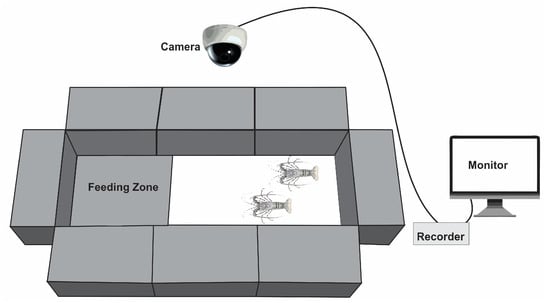
Fifty juveniles of P. ornatus (46.10 ± 1.14 g) were sourced from the Ornatas Hatchery Facility in Toomulla Beach, Queensland, Australia. Two lobsters each were placed in 25 rectangular tanks [26], which had a capacity of 78 L and a water flow rate of approximately 7.46 L min−1, providing 6.79 water exchange/hour. The animals were acclimated for two weeks prior to the start of the experiment, and they were fed the control diet (described in Section 2.2) during this period. The recirculating system maintained stable water quality parameters: pH 8.47 ± 0.03, temperature 27.8 ± 0.1 °C, salinity 35.3 ± 0.4 ppt, dissolved oxygen 114.5 ± 0.5% saturation, ammonia 0 mg L−1, nitrite 0.1 ± 0.1 mg L−1, and nitrate 18 ± 1.8 mg L−1. Each tank was equipped with textured flooring and a designated feeding zone (Figure 1). To simulate natural light conditions, tanks were covered with 90% UV-blocking shade cloth and maintained on a 12 h light/12 h dark photoperiod. A behaviour monitoring system was installed in each tank using an AHD 1080p PIR Bullet Camera (Concord Camera Corporation, Hollywood, CA, USA) mounted overhead. Cameras were connected to a Concord HD DVR system with infrared capability.
Figure 1.
Schematic representation of the experimental arena showing tank layout, feeding zone, and behaviour monitoring system.
A completely randomised design was used, with five different diets as treatments and five replications per treatment. Diet A (control) contained wheat gluten as a binder, while Diet B included wheat gluten and xanthan gum as binders. The remaining diets used the same binder as the control diet, with the addition of guar gum in Diet C, alginate in Diet D, and transglutaminase in Diet E.
2.2. Feed Production
The feed formulations (Table 1) were based on Nankervis and Jones [17]. The control diet was prepared by mixing the dry ingredients in an A200 Planetary Mixer (Hobart, Troy, OH, USA). The liquid ingredients (lecithin, glycerol, mussel homogenate, and water at 60% v/w of the dry ingredients) were blended separately. Mussel homogenate was obtained by homogenising mussel flesh with distilled water in a 5:1 (w/v) ratio. The dry materials were ground using an SR300 Rotor Beater Mill (Retsch, Haan, Germany) fitted with a 200 µm screen. The dry mix was then combined with the liquid ingredients and mixed thoroughly. The feed mixture was pelletised using a Dolly Pasta Machine (LA Monferrina S.P.S., Moncalieri, Italy) equipped with a 3 mm die plate and cut into strands that were 20–30 mm in length. The pellets were dried at 50 °C in a TD-700F Premium Dehydrating Oven (Thermoline, Wetherill Park, New South Wales, AUS) until a final moisture content of approximately 30% was reached. The finished pellets were stored at −17 °C until use [21]. Diets B, C, D, and E were prepared by incorporating 5% (w/w) of xanthan gum, guar gum, alginate, and transglutaminase, respectively, into 95% of the base control diet formulation.
Table 1.
Feed formulation.
The effect of the binder on texture is dose-dependent, with the binder alone creating very different textures compared to the matrix they create with the different feed ingredients. Transglutaminase, in particular, binds the other components of the feed rather than being an inert component that could be tested in isolation. Therefore, the other feed ingredients must be in the matrix in order to test the binder effect.
2.3. Texture Measurement
Tensile and firmness tests were performed using an FRTS 100-N Texture Analyzer (IMADA, Kanowari, Toyohasi, Japan). The tensile test was conducted by securing a 30 mm pellet strand at either end with clamps which were separated at a constant rate (5.0 mm/min) until fracturing, at which point the force was measured. The firmness test applied lateral compression using a 20 mm diameter disc probe, measuring the force required to compress a 3 mm diameter pellet by 1 mm.
2.4. Feeding Behaviour Recording and Analysis
During the 14-day trial, the lobsters were fed once daily at approximately 15:00, at a feeding rate of 1.5% of body weight. The feed was placed in the designated feeding zone, and feeding behaviour was recorded for two hours after feed was offered, as most attractants in the pellets are released within this period [27]. The video recordings were analysed using EthoVision XT 18 software (Noldus, Wageningen, the Netherlands) to determine the time spent in the feeding zone, the first-time interaction with the feeding zone, the frequency of moving in and out of the feeding zone, and the track paths of the lobsters [25].
2.5. Apparent Feed Intake Determination
The apparent feed intake was calculated based on Fitzgibbon et al.’s method [28]. Excess feed was collected each morning by syphoning. The syphoned material was captured using a 50 µm mesh screen. Excess feed was categorised into two types based on visual observations: non-feeding-related waste (NFRW), representing entirely uneaten pellets, and feeding-related waste (FRW), indicating feed that was partially consumed or masticated during feeding activity [23,29]. The collected samples were stored frozen at −17 °C until further analysis. Additionally, nutrient leaching was assessed for all diets by immersing feed (at 1.5% of body weight) overnight in tanks without lobsters, in triplicate, before being recovered and quantified in the same way as experimental feeding. All recovered excess feed samples were gently rinsed with deionised water to remove salts and then filtered in a Buchner funnel with MicroScience qualitative filter paper grade MS 2 size 185 mm. Samples were dried at 105 °C for 24 h in a TD-700F Premium Dehydrating Oven (Thermoline, Wetherill Park, New South Wales, Australia). Apparent feed intake (% body weight) was calculated as follows:
The recovery factor was calculated as follows:
2.6. Data Analysis
Data were tested for homogeneity of variance using Levene’s test and normality with Shapiro–Wilk W. One-way ANOVA was used to detect differences among treatment means, followed by Tukey’s post hoc test where significant differences occurred (p < 0.05). Leachate loss and excess feed data were log-transformed. A non-parametric Kruskal–Wallis test was performed for quantitative feeding behaviour data as the transformation was not effective. All statistical analyses were conducted using IBM SPSS Statistics 30.
3. Results
3.1. Texture of Pellets
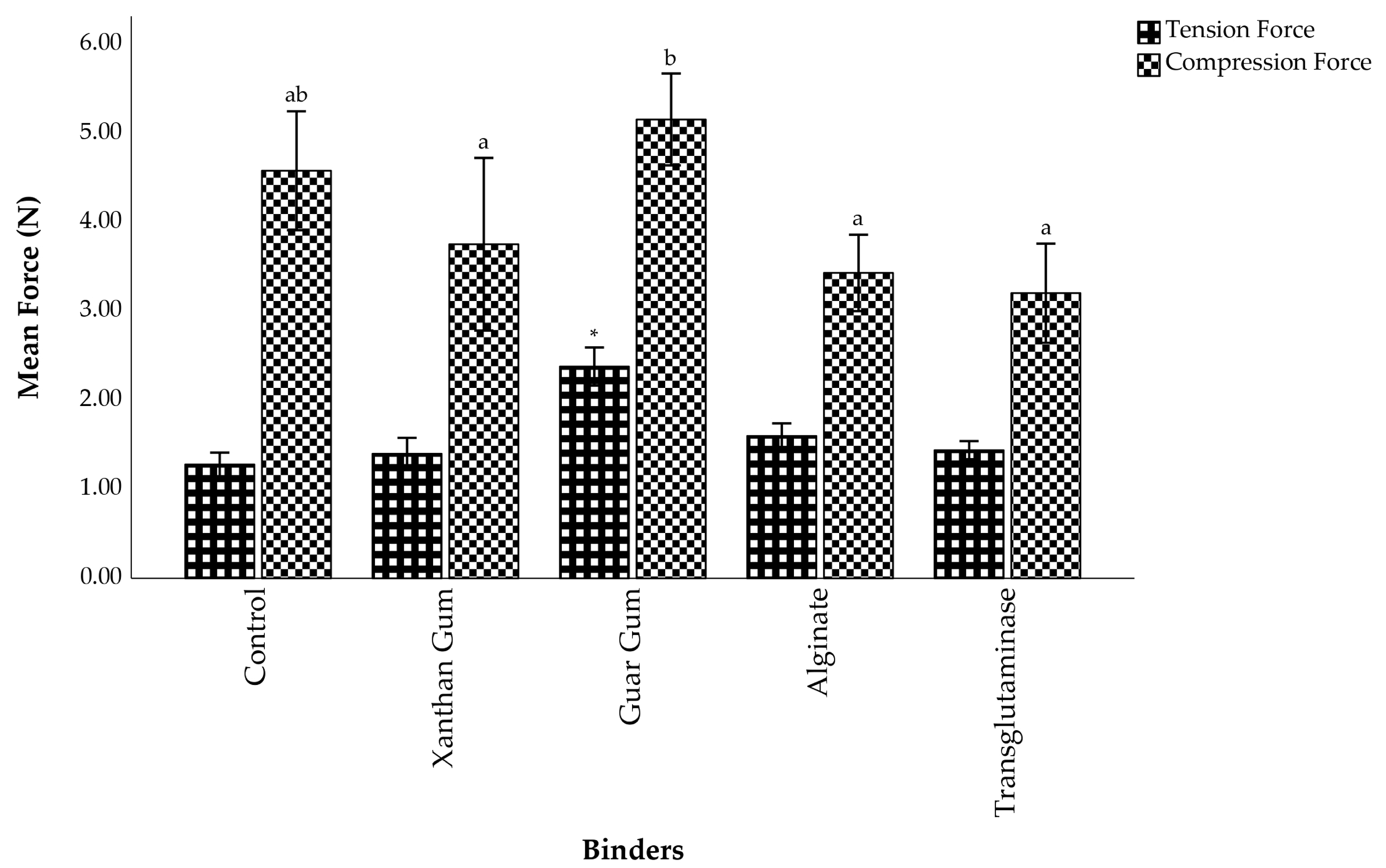
Among all the treatments, pellets bound with guar gum exhibited the highest resistance to tension force, followed by those with alginate (Figure 2). Specifically, the tensile strength of the control pellets was 1.28 ± 0.07 N. The strength increased slightly to 1.40 ± 0.09 N in the xanthan gum pellets. Alginate and transglutaminase treatments enhanced the resistance to tension force by 25% and 12.5%, yielding tensile strengths of 1.60 ± 0.07 N and 1.44 ± 0.05 N, respectively. The greatest resistance to tension force was 2.38 ± 0.11 N, achieved by guar gum pellets, which was significantly higher than all the other feeds (p < 0.05).
Figure 2.
Comparison of pellet texture (tension and compression force) in diets formulated with different binders. An asterisk (*) indicates a significant difference in tension force between binders (p < 0.05), while different superscript letters (a,b) denote significant differences in compression force among binders.
The resistance to compression force in control pellets was 4.58 ± 0.33 N. This value decreased to 3.75 ± 0.49 N, 3.43 ± 0.21 N, and 3.20 ± 0.62 N in pellets formulated with xanthan gum, alginate, and transglutaminase, respectively. In contrast, guar gum showed the highest resistance to compressive stress (5.15 ± 0.26 N). Statistical analysis confirmed that there was no significant difference between the control and guar gum pellets (p > 0.05). However, statistically significant differences were detected between guar gum and all other binders (p < 0.05).
3.2. Feeding Behaviour of Lobsters
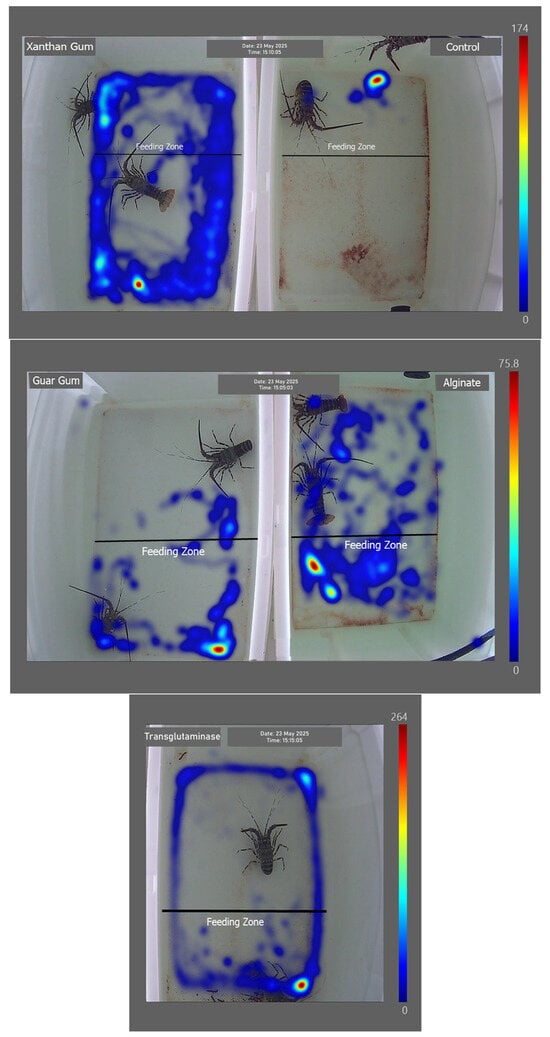
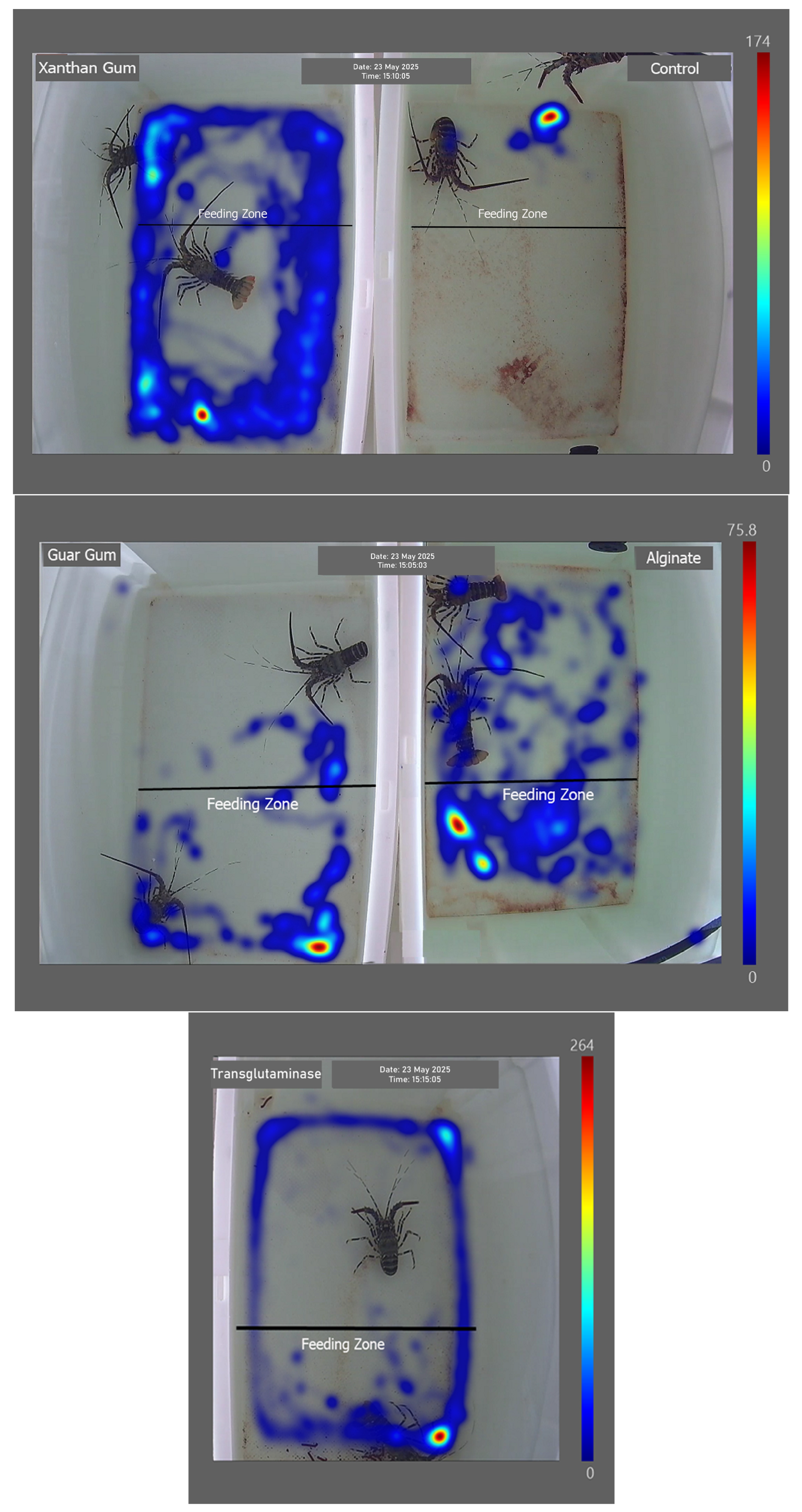
Lobsters fed with the control diet remained in the feeding zone throughout the observation period (Figure 3), exhibiting minimal movement (Figure S1). In contrast, individuals receiving the xanthan gum treatment were detected outside the feeding zone for extended periods. Lobsters fed diets containing guar gum, alginate, and transglutaminase spent a greater proportion of time within the feeding zone. However, they were also frequently detected outside the feeding zone, exhibiting high mobility.
Figure 3.
Heatmaps illustrate the feeding behaviour of P. ornatus under different binder treatments. Areas shaded in blue indicate brief lobster presence, while red areas represent prolonged occupancy within specific regions of the tank, particularly within the feeding zone.
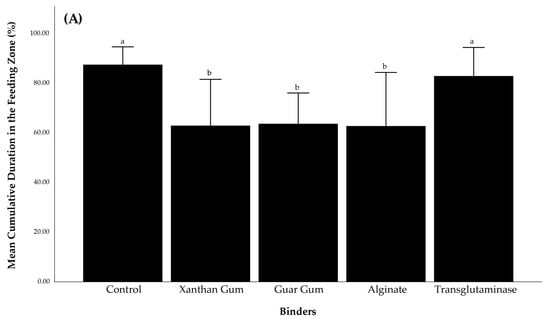
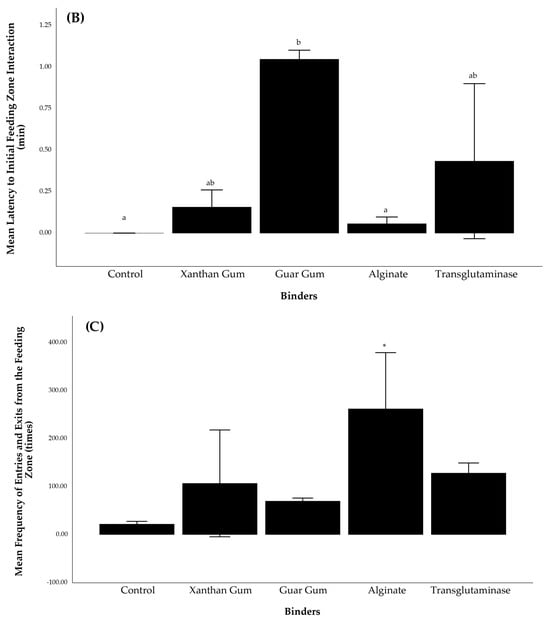
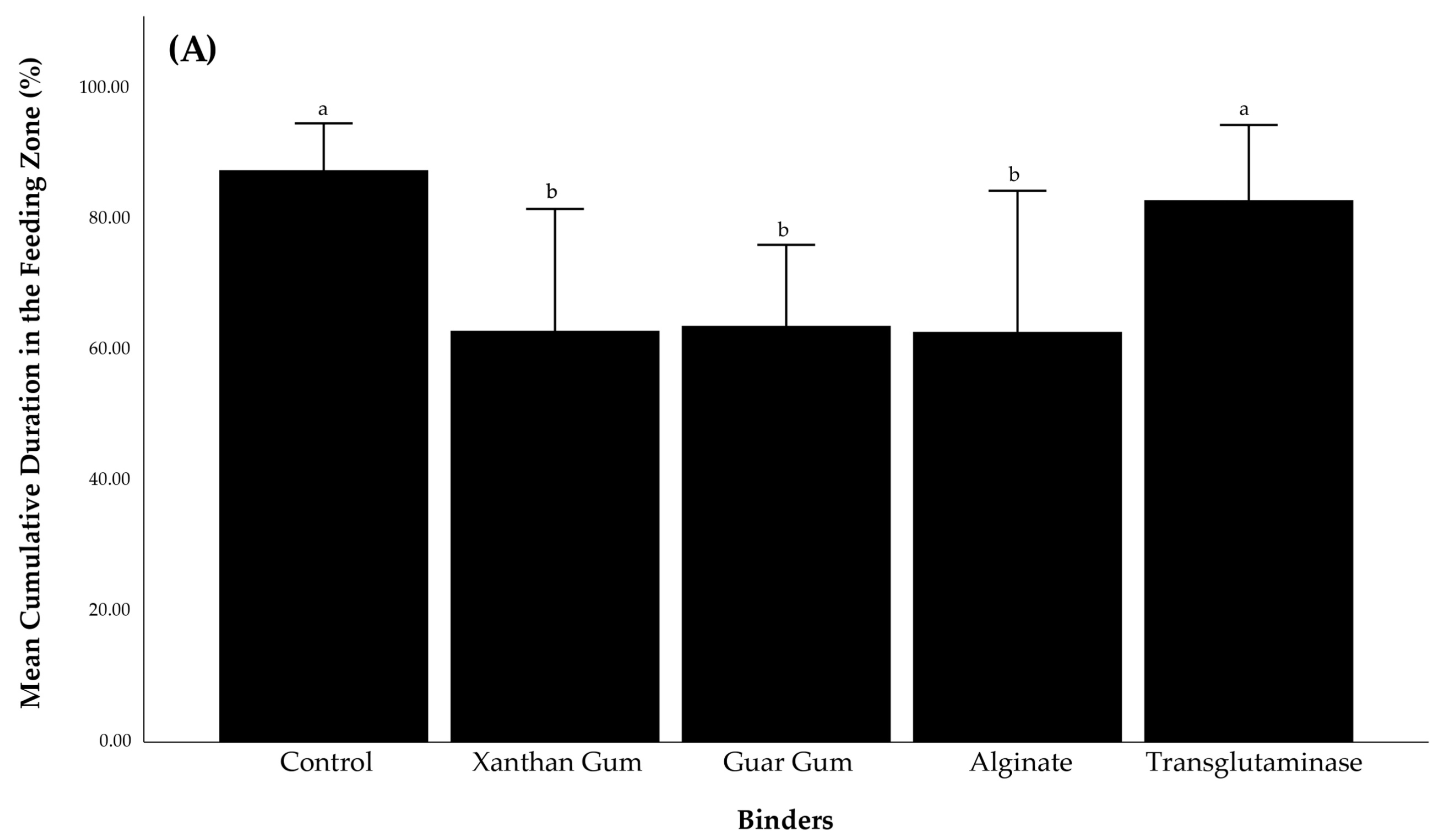
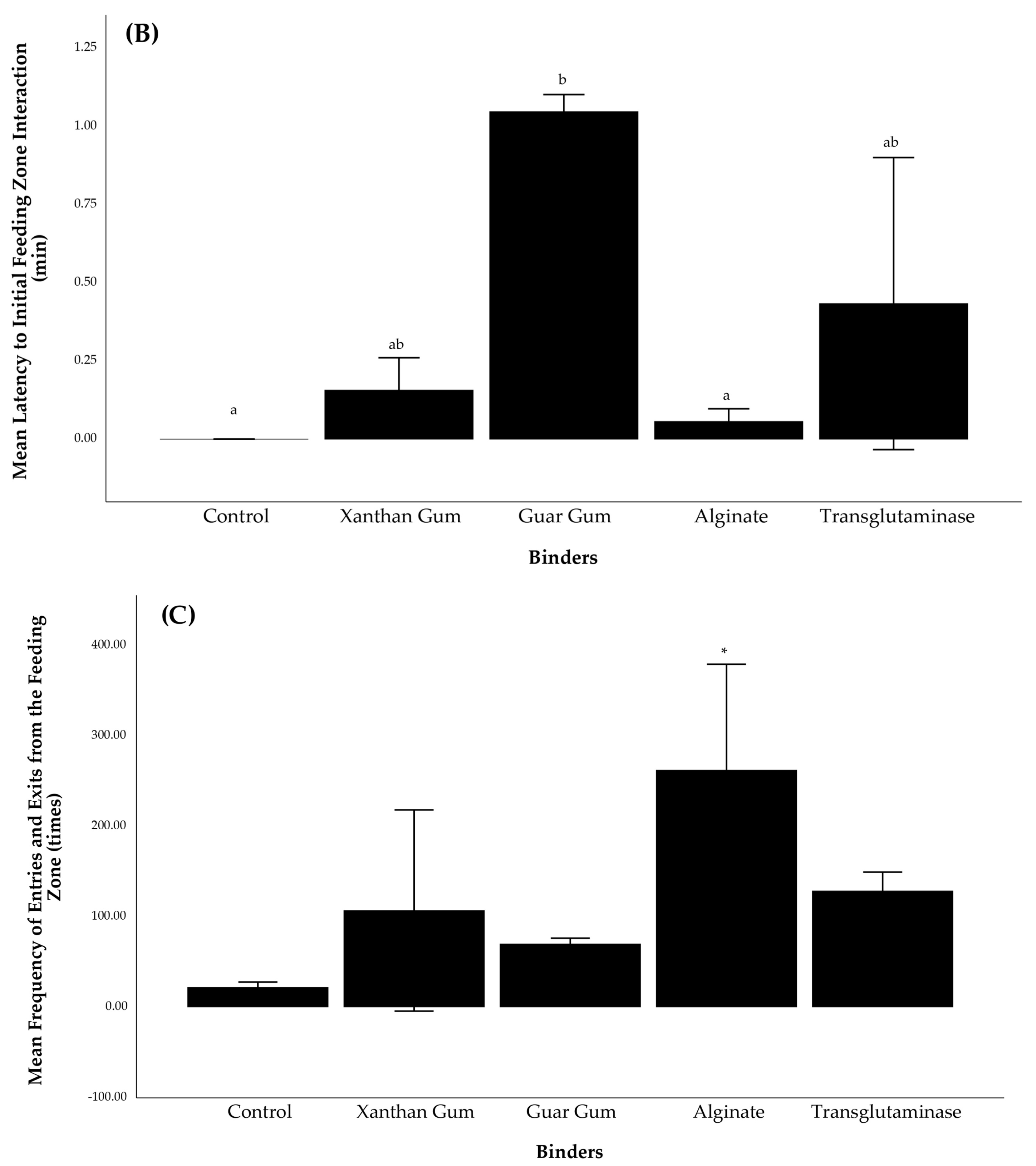
The longest cumulative duration in the feeding zone (87.46 ± 3.63%) was recorded for lobsters fed control pellets (Figure 4). Their initial interaction with the feeding zone was 0.00 ± 0.00 min as they started in the feeding zone before the feed was added. Additionally, they exhibited the lowest frequency of entering and exiting the zone (21.67 ± 2.91 times). Lobsters fed xanthan gum pellets had the lowest cumulative duration in the feeding zone (62.89 ± 9.36%), with a delayed first interaction (0.16 ± 0.05 min) and a markedly high frequency of movement in and out of the zone (106.67 ± 55.67 times).
Figure 4.
Quantitative analysis of feeding behaviour of P. ornatus (A). Cumulative duration in the feeding zone (B). Latency to initial feeding zone interaction (C). Frequency of entries and exits from the feeding zone. Different superscript letters (a,b) in (A,B) indicate significant differences among binders for cumulative feeding zone duration and latency to initial interaction, respectively (p < 0.05). An asterisk (*) in (C) indicates a significant difference in the frequency of feeding zone entries and exits (p < 0.05).
Lobster fed with guar gum, alginate, and transglutaminase bound pellets showed higher frequencies entering and leaving the feeding zone, resulting in a lower cumulative duration in the feeding zone than those fed the control pellets. Additionally, time to initially entering the feeding zone for guar gum (1.05 ± 0.03 min), alginate (0.06 ± 0.02 min), and transglutaminase (0.43 ± 0.23 min) treatments was also longer than the control treatment.
Statistical analyses revealed significant differences (p < 0.05) in cumulative duration within the feeding zone between the control group and other treatments (xanthan gum, guar gum, and alginate). Additionally, the frequency of entering and exiting the feeding zone differed significantly between the alginate and the other dietary treatments (p < 0.05).
3.3. Apparent Feed Intake, Leachate Loss, and Excess Feed
The control diet exhibited the highest apparent feed intake and lowest excess feed (Table 2). Specifically, the highest apparent feed intake in the control group was 0.98 ± 0.05% body weight (BW)/day, followed by transglutaminase (0.89 ± 0.03% BW/day), alginate (0.87 ± 0.09% BW/day), and guar gum (0.85 ± 0.07% BW/day). Xanthan gum resulted in the lowest apparent feed intake (0.76 ± 0.08% BW/day). Additionally, leachate loss was lowest in the control diet and alginate treatments, measured at 23.73 ± 1.01% dry matter (DM) and 23.44 ± 1.15% DM, respectively. In contrast, diets containing xanthan gum (26.59 ± 0.79% DM), guar gum (26.47 ± 1.11% DM), and transglutaminase (26.37 ± 1.00% DM) exhibited approximately 3% higher leachate loss.
Table 2.
Apparent feed intake, leachate loss, and excess feed of pellets.
The control diet also yielded the lowest total excess feed (0.62 ± 0.26 g DM), with no detectable non-feeding-related waste (NFRW). Consequently, all excess feed was attributed to feeding-related waste (FRW), which was the highest among the treatments (0.62 ± 0.29 g DM). The transglutaminase treatment produced a comparable amount of excess feed (0.69 ± 0.04 g DM), comprising both non-feeding-related waste (0.18 ± 0.07 g DM) and feeding-related waste (0.51 ± 0.07 g DM). Xanthan gum produced the highest total of excess feed (1.24 ± 0.38 g DM) among all treatments, followed by guar gum (0.97 ± 0.34 g DM) and alginate (0.80 ± 0.21 g DM). Each of these binders contributed to both non-feeding-related waste and feeding-related waste. Statistical analyses revealed no significantly different apparent feed intake, leachate loss, or excess feed (p > 0.05) among the treatments.
4. Discussion
The present study demonstrates that pellet texture, governed by binder type, plays a decisive role in optimising the feeding response of P. ornatus. Among all treatments, pellets formulated solely with wheat gluten binder enhanced feeding behaviour, likely due to their optimal texture and controlled release of attractants. Wheat gluten pellets exhibited the shortest orientation time, indicated by the fastest latency to initial feeding zone interaction. After the initiation of feeding, lobsters continued to ingest the pellets with minimal further movement, reflected by the lowest frequency in and out of the feeding zone, the highest cumulative time spent in the feeding zone, and the shortest track paths. Mastication was also efficient, resulting in no non-feeding-related waste. The actual texture of wheat gluten pellets therefore provides a useful baseline for a suitable feed texture for lobster, given the absence of prior information on texture requirements. This represents a novel and valuable contribution to lobster feed research. Additionally, wheat gluten pellets exhibited low leachate loss, suggesting that this binder effectively limits water infiltration and maintains pellet stability during immersion. The stability of pellets can be further maintained during mastication, resulting in the highest apparent feed intake. These findings align with previous research reporting superior water stability and growth performance in P. ornatus fed wheat gluten pellets relative to alginate-based formulations [30].
In contrast, xanthan gum produced pellets that were moderately durable but lacked sufficient firmness, and this texture did not improve feeding behaviour. The orientation phase for xanthan gum pellets was longer than that for wheat gluten pellets. This difference was not attributable to the different amount of attractant but likely due to the combination of xanthan gum and wheat gluten in the delayed release of the attractant. Moreover, xanthan gum pellets were masticated for a short period in the feeding zone and then rejected by the lobsters. These indicated that lobsters fed pellets containing xanthan gum exhibited extended exploratory or orientation behaviour rather than active feeding [31,32]. Additionally, the high leachate loss indicated poor water stability and limited nutrient retention, leading to the lowest apparent feed intake among the treatments. These observations highlight that increasing pellet durability alone is insufficient to optimise feeding performance.
The addition of guar gum produced the most durable and firm pellets, yet these mechanical advantages did not translate into improved feeding outcomes. Lobsters required the longest time for recognising guar gum pellets, suggesting that guar gum retarded attractant release even more than xanthan gum. Furthermore, lobsters experienced difficulty masticating the pellets, as indicated by the higher amount of excess feed than with wheat gluten pellets. This was probably due to the pellets being excessively hard in texture. Lobsters will reject food that is too hard [28] as their natural preference is softer items such as mussel flesh [9]. Additionally, although leachate loss was slightly lower than that of xanthan gum, guar gum pellets tended to swell and crack upon immersion. These findings align with previous studies reporting that pellets containing more than 2% guar gum exhibited rapid swelling and cracking, which negatively impacted feed intake [33,34].
Alginate-based pellets were slightly durable but less firm than wheat gluten, and this texture failed to optimise feeding behaviour. Lobsters exhibited the extended orientation, indicated by the highest frequency in and out of the feeding zone. This behaviour is detrimental because nutrient leaching becomes substantial within the first two hours of immersion [35]. Despite low leachate loss, alginate-bound diets resulted in reduced apparent feed intake, implying that physical stability during immersion does not ensure stability during mastication and palatability. Previous research has similarly reported poor digestible and growth performance in spiny lobsters and reduced feed intake in rainbow trout when alginate was used as a binder [30,34,36].
Transglutaminase produced textural characteristics comparable to xanthan gum and alginate, resulting in pellets that were moderately durable but less cohesive. Lobsters spent more time in the feeding zone. However, they did not directly ingest the pellets, resulting in a high amount of non-feeding-related waste. Moreover, extended orientation was also detected in transglutaminase pellets. Additionally, elevated leachate loss and reduced apparent feed intake further indicated poor water resistance and limited palatability, respectively. Although strong binding efficiency has been reported in other feeds that use transglutaminase as a binder [30,37], its cost and moderate textural performance limit its practical application in lobster feed formulation.
Comparatively, wheat gluten alone provides the most balanced combination of mechanical strength, water stability, and tactile acceptability, resulting in superior feeding responses. Guar gum, alginate, and transglutaminase produced textures that were either excessively firm or insufficiently cohesive, while xanthan gum offered moderate durability but poor palatability due to high leachate loss. These contrasts demonstrate that binder-driven pellet texture directly governs lobster feeding efficiency through a delicate balance between structural integrity and tactile perception. Thus, among the evaluated binders, the use of wheat gluten as the sole binder optimised feeding performance, aligning with the study’s objective of identifying functional binders for improved formulated diets in P. ornatus. This study clearly indicates that binder selection is pivotal in formulating textured feeds that support optimal feeding behaviour and nutrient utilisation in P. ornatus.
5. Conclusions
This study provides a comparative evaluation of five binders to determine their effectiveness in optimising feeding performance in P. ornatus. Among the tested binders, wheat gluten alone produced pellet textures that most effectively enhanced feeding behaviour and apparent feed intake, demonstrating an ideal balance between firmness, cohesion, and palatability. Guar gum generated the firmest pellets but substantially reduced feeding activity, whereas xanthan gum, alginate, and transglutaminase produced moderately durable yet less cohesive textures that were unable to maintain consistent feeding engagement.
Overall, this study emphasises the critical role played by binder selection in developing nutritionally balanced, behaviourally acceptable, and cost-effective formulated feeds for P. ornatus. Future research should investigate synergistic combinations of natural binders and assess long-term growth performance and nutrient utilisation outcomes to further refine binder optimisation strategies.
Supplementary Materials
The following supporting information can be downloaded at: https://www.mdpi.com/article/10.3390/fishes10120638/s1, Figure S1: Tracking paths of lobsters before and during feeding with different binders on the fifth day of the research.
Author Contributions
All authors contributed to the conception and design of the study. M.I. and N.H. were responsible for material preparation, data collection, and data analysis. M.I. drafted the initial version of the manuscript, and all authors provided critical feedback and revisions. S.K.D., C.J., and L.N. led the conceptualisation, review, and final editing of the manuscript. All authors have read and agreed to the published version of the manuscript.
Funding
This research is part of Muhsinul Ihsan’s Ph.D. project at James Cook University and is supported by the Beasiswa Indonesia Bangkit scholarship program—a collaborative initiative between the Ministry of Religious Affairs of the Republic of Indonesia and the Indonesia Endowment Fund for Education (LPDP), under grant number 119 TAHUN 2023.
Institutional Review Board Statement
Ethics Committee or Institutional Review Board approval is not required for this manuscript, as it references the JCU animal ethics document detailed in Section 2.
Informed Consent Statement
Not applicable.
Data Availability Statement
The data supporting the findings of this study are available from the corresponding authors upon reasonable request.
Acknowledgments
The authors gratefully acknowledge Ornatas Company for providing the experimental animals and technical support essential to this study. Acknowledgment is also extended to the team at the JCU Tropical Aquaculture and Innovations Lab (JCU TAIL) for their valuable support and contributions. During manuscript preparation, the author utilised AI tools (Copilot, version 1.25054.80.0) to enhance clarity and readability. The authors have reviewed and edited the output and take full responsibility for the content of this publication.
Conflicts of Interest
The authors declare no conflicts of interest.
Abbreviations
The following abbreviations are used in this manuscript:
| BW | Body Weight |
| DM | Dry Matter |
| SEM | Standard Error of Mean |
| NFRW | Non-Feeding-Related Waste |
| FRW | Feeding-Related Waste |
References
- Jones, C. Market perspective on farmed tropical lobster. In Spiny Lobster Aquaculture Development in Indonesia, Vietnam and Australia, Proceedings of the International Lobster Aquaculture Symposium held in Lombok, Indonesia, 22–25 April 2014; ACIAR: Canberra, ACT, Australia, 2015. [Google Scholar]
- Food and Agriculture Organization of the United Nation (FAO). The State of World Fisheries and Aquaculture 2024—Blue Transformation in Action; FAO: Rome, Italy, 2024. [Google Scholar]
- Food and Agriculture Organization of the United Nation (FAO). GLOBEFISH Information and Analysis on Markets and Trade of Fisheries and Aquaculture Products. Available online: https://openknowledge.fao.org/handle/20.500.14283/cc2009en (accessed on 16 October 2025).
- Jones, C.M.; Anh, T.L.; Priyambodo, B. Lobster aquaculture development in Vietnam and Indonesia. In Lobsters: Biology, Fisheries and Aquaculture; Radhakrishnan, E.V., Phillips, B.F., Achamveetil, G., Eds.; Springer: Singapore, 2019; pp. 541–570. [Google Scholar]
- Jones, C.M. Progress and obstacles in establishing rock lobster aquaculture in Indonesia. Bull. Mar. Sci. 2018, 94, 1223–1233. [Google Scholar] [CrossRef] [Scilit]
- Nankervis, L.; Jones, C. Recent advances and future directions in practical diet formulation and adoption in tropical palinurid lobster aquaculture. Rev. Aquac. 2022, 14, 1830–1842. [Google Scholar] [CrossRef] [Scilit]
- Smith, D.M.; Williams, K.C.; Irvin, S.; Barclay, M.; Tabrett, S. Development of a pelleted feed for juvenile tropical spiny lobster (Panulirus ornatus): Response to dietary protein and lipid. Aquac. Nutr. 2003, 9, 231–237. [Google Scholar] [CrossRef] [Scilit]
- Irvin, S.J.; Shanks, S. Tropical spiny lobster feed development: 2009–2013. In Spiny Lobster Aquaculture Development in Indonesia, Vietnam and Australia, Proceedings of the International Lobster Aquaculture Symposium held in Lombok, Indonesia, 22–25 April 2014; ACIAR: Canberra, ACT, Australia, 2015. [Google Scholar]
- Marchese, G.; Fitzgibbon, Q.P.; Trotter, A.J.; Carter, C.G.; Jones, C.M.; Smith, G.G. The influence of flesh ingredients format and krill meal on growth and feeding behaviour of juvenile tropical spiny lobster Panulirus ornatus. Aquaculture 2019, 499, 128–139. [Google Scholar] [CrossRef] [Scilit]
- Radhakrishnan, E.V.; Kizhakudan, J.K.; Phillips, B.F. Introduction to lobsters: Biology, Fisheries and Aquaculture. In Lobsters: Biology, Fisheries and Aquaculture; Radhakrishnan, E.V., Phillips, B.F., Achamveetil, G., Eds.; Springer: Singapore, 2019; pp. 1–33. [Google Scholar]
- Vedel, J.P. Cuticular mechanoreception in the antennal flagellum of the rock lobster Palinurus vulgaris. Comp. Biochem. Physiol. A Physiol. 1985, 80, 151–158. [Google Scholar] [CrossRef] [Scilit]
- Kropielnicka-Kruk, K.; Trotter, A.J.; Fitzgibbon, Q.P.; Carter, C.G.; McRae, J.; Smith, G.G. Functional morphology and ontogeny of mouthparts and mouth aperture of Panulirus ornatus and Sagmariasus verreauxi: Implications towards formulated feeds development. Aquaculture 2025, 595, 741503. [Google Scholar] [CrossRef] [Scilit]
- Smith, G.G.; Hall, M.W.; Salmon, M. Use of microspheres, fresh and microbound diets to ascertain dietary path, component size, and digestive gland functioning in phyllosoma of the spiny lobster Panulirus ornatus. N. Z. J. Mar. Freshw. Res. 2009, 43, 205–215. [Google Scholar] [CrossRef] [Scilit]
- Simon, C.J. Feed intake and its relation to foregut capacity in juvenile spiny lobster, Jasus edwardsii. N. Z. J. Mar. Freshw. Res. 2009, 43, 195–203. [Google Scholar] [CrossRef] [Scilit]
- Johnston, D.; Melville-Smith, R.; Hendriks, B. Survival and growth of western rock lobster Panulirus cygnus (George) fed formulated diets with and without fresh mussel supplement. Aquaculture 2007, 273, 108–117. [Google Scholar] [CrossRef] [Scilit]
- Jeffs, A. Status and challenges for advancing lobster aquaculture. J. Mar. Biol. Ass. India 2010, 52, 320–326. [Google Scholar]
- Jones, C.M. Advances in the culture of lobsters. In New Technologies in Aquaculture; Burnell, G., Allan, G., Eds.; Woodhead Publishing: New York, NY, USA, 2009; pp. 822–844. [Google Scholar]
- Guillaume, J. Formulation of feeds for aquaculture. In Nutrition and Feeding of Fish and Crustaceans; Guillaume, J., Sadisivam, K., Bergot, P., Metailler, R., Eds.; Springer: London, UK, 1999; pp. 309–323. [Google Scholar]
- Eman, Y.M.; Ümit, A.; Elsayed, M.Y.; Abdel-Wahab, A.A.-W.; Simon, J.D.; Ehab, R.E.-H.; Mohamed, S.H. Performance, physiological and immune responses of nile tilapia Oreochromis niloticus fed extruded pellet diets with different binders. Aquac. Rep. 2025, 43, 102944. [Google Scholar] [CrossRef] [Scilit]
- Houser, R.H.; Akiyama, D.M. Feed formulation principles. In Crustacean Nutrition; D’Abramo, L.R., Counklin, D.E., Akiyama, D.M., Eds.; World Aquaculture Society: Sorrento, LA, USA, 1997; pp. 493–519. [Google Scholar]
- O’Mahoney, M.; Mouzakitis, G.; Doyle, J.; Burnell, G. A novel konjac glucomannan-xanthan gum binder for aquaculture feeds: The effect of binder configuration on formulated feed stability, feed palatability and growth performance of the japanese abalone, Haliotis discus hannai. Aquac. Nutr. 2011, 17, 395–407. [Google Scholar] [CrossRef] [Scilit]
- Karim, A.; Naila, B.; Khwaja, S.; Hussain, S.I.; Ghafar, M. Evaluation of different starch binders on physical quality of fish feed pellets. Braz. J. Biol. 2024, 84, e256242. [Google Scholar] [CrossRef] [Scilit]
- Kropielnicka-Kruk, K.; Fitzgibbon, Q.P.; Codabaccus, M.B.; Trotter, A.J.; Carter, C.G.; Smith, G.G. Effect of feed texture and dimensions, on feed waste type and feeding efficiency in juvenile Sagmariasus verreauxi. Fishes 2023, 8, 553. [Google Scholar] [CrossRef] [Scilit]
- Jiang, B.; Tsao, R.; Li, Y.; Miao, M. Food Safety: Food Analysis Technologies/Techniques. In Encyclopedia in Agriculture and Food System; Van Alfen, K.N., Ed.; Elsevier: London, UK, 2014; pp. 273–288. [Google Scholar]
- Peters, C.; Vilamil, S.I.; Nankervis, L. The periodic feeding frequency of the juvenile tropical rock lobster (Panulirus ornatus) in the examination of chemo-attract diet performance and colour-contrast preference. Animals 2024, 14, 2971. [Google Scholar] [CrossRef] [Scilit] [PubMed]
- Jones, C.; Shanks, S. Requirements for the aquaculture of Panulirus ornatus in Australia. In Spiny Lobster Aquaculture in the Asia–Pacific Region, Proceedings of an International Symposium held at Nha Trang, Vietnam, 9–10 December 2008; ACIAR: Canberra, ACT, Australia, 2009. [Google Scholar]
- Williams, K. Rock Lobster Enhancement & Aquaculture Subprogram: The Nutrition of Juvenile and Adult Lobsters to Optimize Survival, Growth and Condition: Final Report of Project 2000/212 to Fisheries Research and Development Corporation; Report Number 2000/212; CSIRO Division of Marine Research: Hobart, TAS, Australia, 2003. [Google Scholar]
- Fitzgibbon, Q.P.; Simon, C.J.; Smith, G.G.; Carter, C.G.; Battaglene, S.C. Temperature dependent growth, feeding, nutritional condition and aerobic metabolism of juvenile spiny lobster, Sagmariasus verreauxi. Comp. Biochem. Physiol. Part A 2017, 207, 13–20. [Google Scholar] [CrossRef] [Scilit] [PubMed]
- Smith, D.M.; Irvin, S.J.; Mann, D. Optimising the physical form and dimensions of feed pellets for tropical spiny lobsters. In Spiny Lobster Aquaculture in the Asia–Pacific Region, Proceedings of an International Symposium held at Nha Trang, Vietnam, 9–10 December 2008; ACIAR: Canberra, ACT, Australia, 2009. [Google Scholar]
- Irvin, S.J.; Williams, K.C. Panulirus ornatus lobster feed development: From trash fish to formulated feeds. In Spiny Lobster Aquaculture in the Asia–Pacific Region, Proceedings of an International Symposium held at Nha Trang, Vietnam, 9–10 December 2008; ACIAR: Canberra, ACT, Australia, 2009. [Google Scholar]
- Lee, P.G.; Meyers, S.P. Chemoattraction and feeding stimulation. In Crustacean Nutrition; D’Abramo, L.R., Counklin, D.E., Akiyama, D.M., Eds.; World Aquaculture Society: Sorrento, LA, USA, 1997; pp. 292–352. [Google Scholar]
- Nunes, A.J.P.; Sá, M.V.C.; Andriola-Neto, F.F.; Lemos, D. Behavioral response to selected feed attractants and stimulants in Pacific white shrimp, Litopenaeus vannamei. Aquaculture 2006, 260, 244–254. [Google Scholar] [CrossRef] [Scilit]
- Ali, S.A.; Gopal, C.; Ramana, J.V.; Nazer, A.R. Effect of different sources of starch and guar gum on aqua stability of shrimp feed pellets. Indian. J. Fish. 2005, 52, 301–305. [Google Scholar]
- Saleela, K.N.; Somanath, B. Effects of binders on stability and palatability of formulated dry compounded diets for spiny lobster Panulirus homarus (Linnaeus, 1758). Indian. J. Fish. 2015, 62, 95–100. [Google Scholar]
- Williams, K.C.; Smith, D.M.; Irvin, S.J.; Barclay, M.C.; Tabrett, S.J. Water immersion time reduces the preference of juvenile tropical spiny lobster Panulirus ornatus for pelleted dry feeds and fresh mussel. Aquac. Nutr. 2005, 11, 415–426. [Google Scholar] [CrossRef] [Scilit]
- Simon, C.J. Identification of digestible carbohydrate sources for inclusion in formulated diets for juvenile spiny lobsters, Jasus edwardsii. Aquaculture 2009, 290, 275–282. [Google Scholar] [CrossRef] [Scilit]
- Auer, J.; Röhnisch, H.E.; Heupl, S.; Marinea, M.; Johansson, M.; Alminger, M.; Zamaratskaia, G.; Högberg, A.; Langton, M. The effect of transglutaminase and ultrasound pre-treatment on the structure and digestibility of pea protein emulsion gels. Food Hydrocoll. 2025, 169, 111620. [Google Scholar] [CrossRef] [Scilit]

Disclaimer/Publisher’s Note: The statements, opinions and data contained in all publications are solely those of the individual author(s) and contributor(s) and not of MDPI and/or the editor(s). MDPI and/or the editor(s) disclaim responsibility for any injury to people or property resulting from any ideas, methods, instructions or products referred to in the content. |
© 2025 by the authors. Licensee MDPI, Basel, Switzerland. This article is an open access article distributed under the terms and conditions of the Creative Commons Attribution (CC BY) license (https://creativecommons.org/licenses/by/4.0/).