
Abstract
The dynamic monitoring of fishing activities is fundamental to fishery management. Leveraging multi-year (2020–2023) AIS data from squid jigging vessels, this study employed a multi-level data mining and spatial statistical approach to decode the spatiotemporal patterns of fishing effort in the Southeast Pacific Ocean. Our analysis reveals a highly concentrated and cyclical operation model: temporally, 20% of days contributed 46% of the total effort; spatially, 30% of the fishing grounds accounted for 80% of the effort, forming four persistent hotspots. Vessels exhibited a distinct bimodal speed distribution, enabling clear behavioral differentiation. While no fishing was detected inside the seasonal no-take zone, activities were observed near its boundaries and Exclusive Economic Zones, highlighting compliance and potential risks. The significant spatial aggregation, strongest in June, underscores the tight linkage between fleet operations and resource distribution. These findings provide a scientific basis for spatially explicit management strategies to ensure the sustainable harvesting of squid resources.
Key Contributions:
This study integrates multi-year AIS data (2020–2023) with multi-scale spatial statistical models to comprehensively reveal the spatiotemporal dynamics of squid jigging fleets in the Southeast Pacific Ocean. It identifies bimodal speed distributions for behavior classification; quantifies spatial and temporal aggregation of fishing effort (30% area accounting for 80% effort; 20% of days for 46%), and delineates four persistent fishing hotspots. The analysis confirms vessel compliance with seasonal closures and highlights operational risks near EEZ boundaries. The findings provide a quantitative foundation for spatially explicit management and sustainable utilization of Dosidicus gigas resources.
1. Introduction
The giant squid (Dosidicus gigas), also known as the American giant squid, constitutes a significant economic cephalopod resource in the Southeast Pacific Ocean and serves as a primary target for distant-water fishing nations including China, Peru, and Chile [1]. Possessing substantial stock sizes and high development potential, it exerts profound influence on regional marine economic development, fishery trade, and food security, holding far-reaching significance for the sustainable development of regional marine economies and fisheries. With the persistent increase in global squid fishing intensity, issues such as heightened resource volatility and increased complexity in fishery management have become increasingly prominent. How to achieve the scientific conservation and sustainable utilization of Dosidicus gigas resources has thus emerged as a critical topic in international fishery governance.
Dynamic understanding of the spatial distribution patterns and characteristics of fishing activities is crucial for fishery management and sustainable development [2]. The spatiotemporal variation in factors such as fishing effort and vessel distribution not only reveals resource spatial distribution and vessel operational preferences but also provides indispensable data support for identifying overfishing risk zones, delineating marine protected areas, and implementing ecosystem-based management. Previous studies have examined the spatiotemporal distribution characteristics of squid fishery resources in the Southeast Pacific [1,3,4] and investigated the relationship between resource fluctuations and environmental factors [4,5,6]. Traditional fishery management often relies on lagging statistical reports and macro-level yield data [7], struggling to capture the real-time, fine-grained spatial dynamics of fishing activities across vast oceanic areas. Yet this dynamic information constitutes the core basis for achieving precise, science-based management.
The widespread adoption of Automatic Identification System (AIS) technology has provided high-precision, continuous, and extensive vessel trajectory data, offering an unprecedented data foundation for monitoring and analyzing fishing behavior. By mining AIS data, one can accurately identify vessel operation types [8,9], characterize the spatio-temporal patterns of fishing effort [10,11], and analyze vessel clustering behavior and its relationship with environmental factors [12,13]. This provides scientific support for fishery resource assessment and management strategy formulation. While spatial distribution characteristics of fishing vessels targeting squid in the northwestern Pacific [14,15], Argentine squid [16,17], and purse seine tuna in the central and western Pacific [18,19,20] have been documented, no literature exists analyzing the spatial operations of squid-trawling vessels in the southeastern Pacific. Conducting an AIS-based study of the spatial distribution characteristics of squid fishing vessels in the Southeast Pacific reveals their operational dynamics, seasonal variations, and movement patterns within key fishing grounds (such as offshore Peru and high seas areas). This aids in understanding the impact of human fishing activities on resource distribution. By identifying hotspots of fishing activity and periods of high-intensity operations, this research provides data support for establishing ecosystem-based fishery management measures—such as dynamic catch quota systems, vessel deployment recommendations, and marine spatial planning—thereby alleviating overfishing pressures, reducing ecological disturbance, and promoting the long-term sustainable use of squid resources.
This study aims to systematically analyze the spatial distribution patterns and seasonal variation characteristics of squid-trawling vessels in the Southeast Pacific by integrating AIS track mining, spatial statistics, and behavioral recognition techniques. It seeks to provide scientific evidence and decision-making references for fishery resource conservation, international cooperative management, and the sustainable development of China’s distant-water fisheries in this region.
2. Materials and Methods
2.1. Data Sources and Data Preprocessing
The MMSI number information of squid jigging vessels collected in this study is sourced from “Global Fishing Watch” (http://www.globalfishingwatch.org, accessed on 20 April 2024), with fishing vessel categories and international data indicated in reference [21]. Based on the MMSI numbers, a total of 526 squid jigging vessels operating in the Southeast Pacific were identified, including 506 from mainland China, 5 from Taiwan, China, 13 from South Korea, and 2 from other regions. Using the MMSI numbers, Automatic Identification System (AIS) dynamic time-series data, including date, longitude, latitude, course, and speed, were extracted. The AIS data used in this study cover the period from 2020 to 2023 and were sourced from Spire, a U.S. satellite operator. The AIS data were stored and managed in an SQL database and analyzed and visualized using MATLAB2022 and R4.2.1.
We selected the AIS data for these 526 fishing vessels individually by MMSI number, sorted by date and time, and excluded duplicate entries. As production fishing vessels typically do not exceed 15 knots in speed, this study employed AIS data within the 0–15 knot velocity range.
The AIS data for the 526 squid jigging vessels were selected based on their MMSI numbers and sorted by date and time. Duplicate time entries were removed, and AIS data with speeds ranging from 0 to 15 knots were retained, while data with speeds exceeding 15 knots were excluded. The date was converted into components of “year,” “month,” “day,” “hour,” “minute,” and “second,” and information such as “longitude,” “latitude,” “course,” and “speed” was selected. The time difference between consecutive position points for each vessel was calculated using the following formula:
In Equation (1), and represent the timestamps of two consecutive position points in the vessel’s navigation trajectory, with their difference, , denoting the time interval in hours. Data points with a time interval exceeding 24 h were excluded. Ultimately, a total of 24,001,730 data points were obtained for the 526 squid jigging vessels, covering the period from January 2020 to December 2023.
2.2. Study Area
Based on the spatial distribution characteristics of squid resources in the Southeast Pacific as described in Reference [22], this study designates the region spanning 120° W to 70° W and 25° S to 5° N as the study area. This area encompasses the Southeast Pacific and its adjacent waters, aiming to further analyze the distribution patterns of squid resources.
2.3. Identification of Fishing Vessel Operational Status
Squid jigging operations in the Southeast Pacific primarily rely on the phototactic behavior of squid, conducting fishing activities at night. During the day, vessels navigate at full speed, relying on experience to locate squid aggregation areas. At night, they activate fishing lights to attract squid to the preset fishing gear for capture. Throughout the fishing process, vessels maintain a drifting state with the current. The operational behavior of these vessels exhibits distinct speed and temporal characteristics.
Based on the behavioral characteristics of squid jigging vessels, specifically their nighttime stationary light-attraction fishing, this study employs two factors—speed and light intensity—for data mining to identify the operational status of squid jigging vessels. The operational status is determined using daytime/nighttime classification and speed thresholds. The Sola R package is used to calculate solar radiation, with a value of 0 defined as nighttime. Combined with the vessel’s speed data, a model for identifying the operational status of trajectory points is constructed, as expressed in the following formula:
In the equation, P represents the fishing status, with a value of 1 indicating fishing activity and 0 indicating non-fishing activity; Bo0 denotes light intensity; v represents vessel speed; and and represent the lower and upper bounds of the speed threshold, respectively. The speed thresholds are determined using a Gaussian Mixture Model (GMM). The calculation method for the time of each operational point is as follows:
In the equation, represents the duration of the k-th point in the extracted sequence of vessel trajectory points, and denotes the update time of the k-th trajectory point in the extracted sequence. For the first trajectory point, the time interval is calculated with respect to the subsequent point, while for the last trajectory point, the time interval is calculated with respect to the preceding point.
Fishing intensity is defined as the cumulative operational duration within a single 0.1° × 0.1° longitude-latitude grid, measured in hours, with the formula expressed as follows:
In the equation, represent the longitude and latitude, respectively, of the vertices of the 0.1° × 0.1° gridded map denotes the fishing intensity; and represents the cumulative operational duration of trajectory points within the grid.
2.4. Spatiotemporal Patterns
To visualize the spatial distribution of total fishing effort for squid jigging vessels in the Southeast Pacific, the cumulative fishing duration across all gear types was aggregated into grid cells, and the mean values from 2020 to 2023 were calculated to depict the overall spatial pattern. Subsequently, histograms and density curves of fishing duration within spatial grid cells were generated to distinguish and compare the spatial characteristics of different gear types. To quantify the degree of spatial aggregation of fishing effort, a Quantile–Quantile (Q–Q) plot was constructed, mapping the cumulative quantiles of fishing duration against the cumulative quantiles of fishing areas. Spatial grid cells were sorted by fishing duration to compute the cumulative quantiles, and the spatial aggregation levels of the primary gear types were compared.
In the temporal dimension, a similar approach was employed to analyze the time-series patterns of fishing effort. Daily fishing durations from 2020 to 2023 were aggregated, and density curves of daily fishing effort (i.e., daily operational duration) were plotted to examine temporal distribution characteristics. The peak of the density curve indicates the highest frequency of days when fishers operated at a specific effort intensity level. Additionally, a Quantile–Quantile (Q–Q) plot was used to illustrate the correspondence between the cumulative quantiles of fishing duration and the cumulative quantiles of fishing days, thereby elucidating the temporal aggregation intensity of fishing effort.
2.5. Spatial Statistical Analysis
2.5.1. Global Moran’s Index Parameter Calculation
To investigate the global spatial distribution pattern of fishing effort for squid jigging vessels within the study area, the Global Moran’s Index, a measure of spatial autocorrelation, was employed. The calculation formula is as follows [17]:
In Equation (5), n represents the number of samples, and denote the deviations of the attributes of features i and j from the mean attribute value of all samples, and is the spatial weight between features i and j. If features i and j are adjacent, then ; otherwise, .
The value of the Global Moran’s Index ranges from −1 to 1. A value greater than 0 indicates a clustered distribution of features across the study area, with values closer to 1 signifying a higher degree of clustering. Conversely, a value less than 0 indicates a dispersed distribution, with values closer to −1 reflecting a higher degree of dispersion. A value of 0 suggests a random distribution of features. In the ArcGIS2022 software environment, the Global Moran’s I tool provides a Z-score and a p-value. The Z-score represents the number of standard deviations, where a larger Z-score indicates a clustered distribution of features. The p-value represents the probability that the spatial distribution of features is random across the study area, with a smaller p-value indicating a lower likelihood of a random distribution pattern.
2.5.2. Hotspot Analysis Parameter Calculation
Hotspot Analysis (Getis-Ord Index) is an effective method for exploring the characteristics of local spatial clustering. It distinguishes the degree of spatial clustering through cold spots and hotspots. Unlike the global Moran’s I index mentioned above, the Getis-Ord index can effectively reflect the distribution of hot and cold spots of a variable in local areas.
To investigate the local spatial distribution patterns of fishing effort for tuna purse seine vessels within the study area, the Hotspot Analysis statistic, a method of spatial autocorrelation analysis, was employed. This approach identifies statistically significant hotspots of fishing effort distribution for the vessels. The calculation formula is as follows [18]:
In Equation (5), , , have the same meanings as in Equation (4). represents the mean attribute value of all samples, and S denotes the standard deviation.
In the ArcGIS software environment, the Hotspot Analysis tool returns a Z-score and a p-value, with interpretations similar to those provided by the Global Moran’s I tool. Statistically significant positive Z-scores indicate hotspots, where higher Z-scores signify tighter clustering of hotspots. Conversely, negative Z-scores indicate cold spots, with lower Z-scores reflecting tighter clustering of cold spots. In this study, a Z-score threshold of ±1.96 was adopted to delineate the study area into hotspot regions, cold spot regions, and randomly distributed regions. Hotspot regions indicate areas where high values of fishing effort are surrounded by other high values, revealing the locations where the fishing effort of tuna purse seine vessels exhibits significant spatial clustering.
3. Results and Analysis
3.1. Analysis of Individual Vessel Fishing Behavior
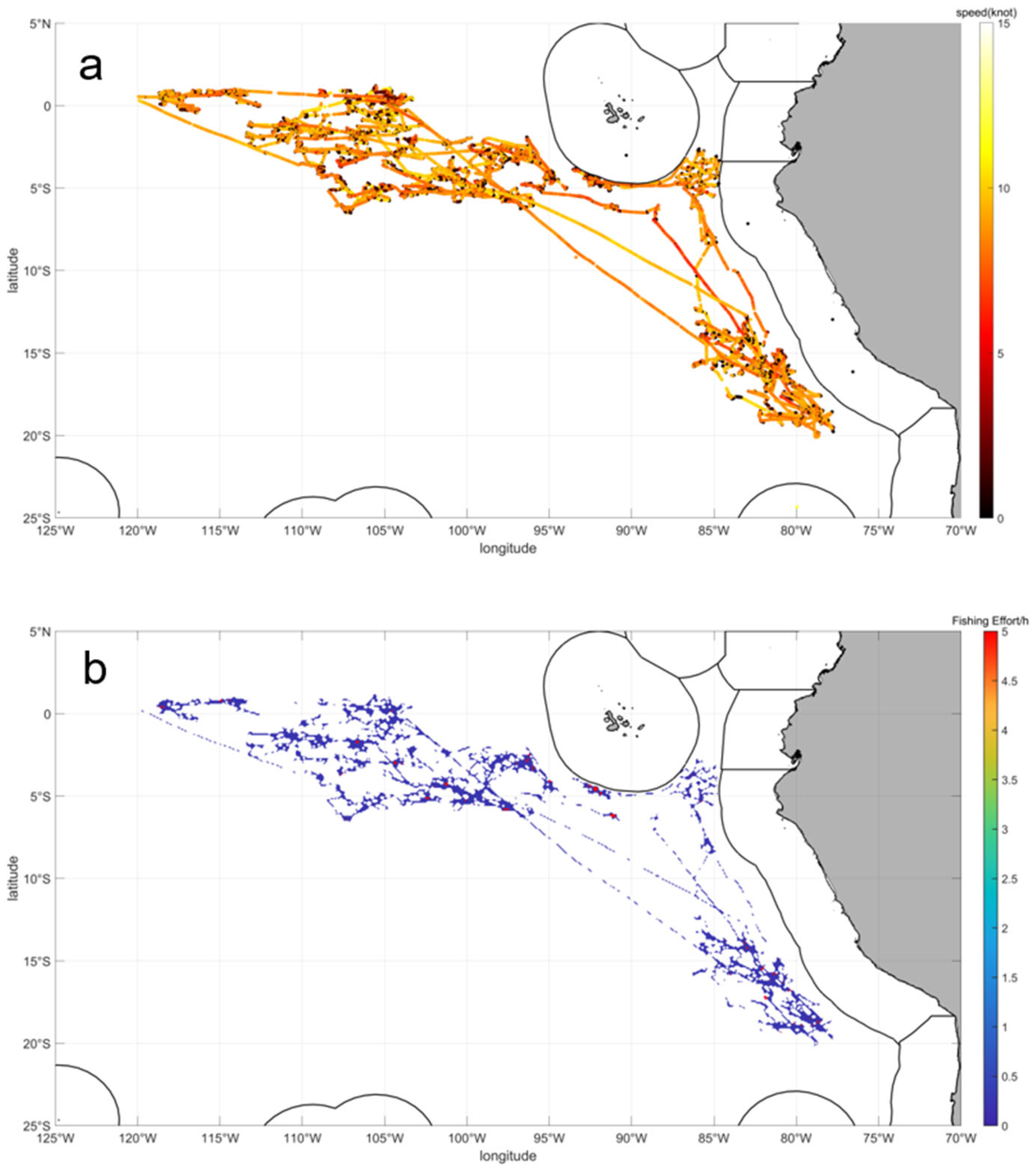
Figure 1 illustrates the trajectory of vessel speed and dwell time for the squid jigging vessel with MMSI number 412549081 from January 2020 to December 2023. The vessel speed trajectory map (Figure 1a) shows that the vessel’s trajectory during navigation consists of numerous discrete low-speed points interspersed with continuous high-speed navigation points. This pattern indicates that the vessel undertakes rapid transitions between different low-speed trajectory points, reflecting an operational mode characterized by alternating high-speed navigation to fishing grounds and fishing activities. The spatial dwell time map (Figure 1b) reveals that the vessel exhibits prolonged dwell times in certain areas, particularly between 25° S and 30° S and 90° W and 100° W, while dwell times at other trajectory points are relatively short. This suggests a pattern where the vessel remains in a specific area for extended periods before quickly relocating to another area for continued prolonged operations. A comparison of Figure 1a,b demonstrates that the discrete low-speed points in the speed map correspond to regions with longer dwell times, while continuous high-speed navigation points align with phases of minimal dwell time, elucidating the spatiotemporal behavior of squid jigging vessels during fishing and transit phases.
Figure 1.
(a) Fishing Vessel Operation Speed Map; (b) Stopover Time Trajectory Map.
3.2. Vessel Speed Analysis
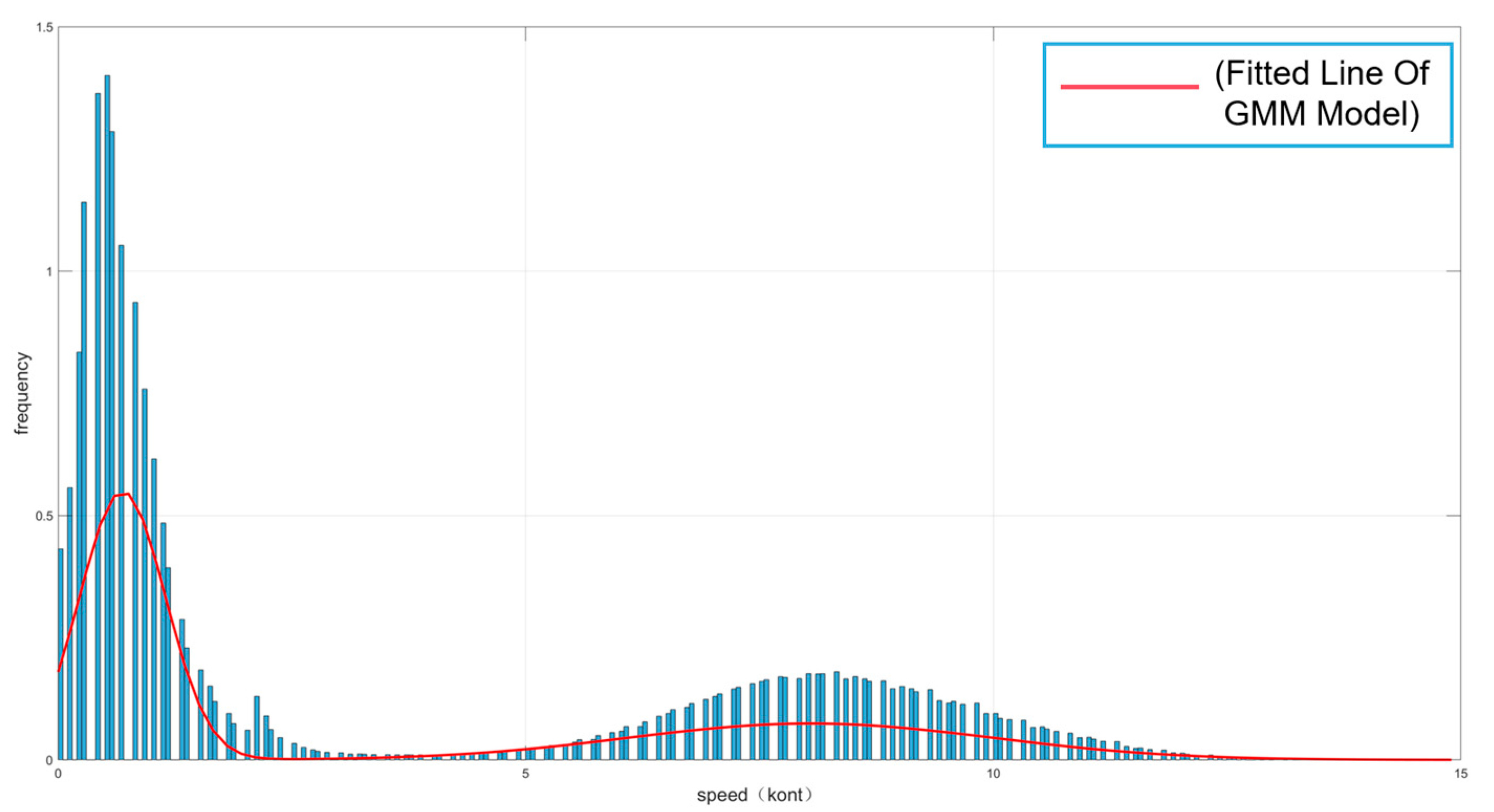
The speed distribution plot fitted with a Gaussian Mixture Model (GMM) curve reveals a distinct bimodal distribution for the navigational speeds of 526 squid jigging vessels in the Southeast Pacific. As shown in Figure 2, the first peak is primarily concentrated in the low-speed range around 0.5 knots, with a mean of 0.47 knots and a standard deviation of 0.27–0.28. The majority of vessel speeds are below 1.5 knots, indicating that most vessels are likely in fishing or low-speed cruising states. Consequently, this study defines 1.5 knots as the upper speed threshold for the fishing operational state. The second peak, occurring around 8 knots, likely corresponds to the cruising speed of squid jigging vessels in a non-fishing state.
Figure 2.
Interval distribution of speed.
3.3. Spatiotemporal Patterns of Fishing Effort
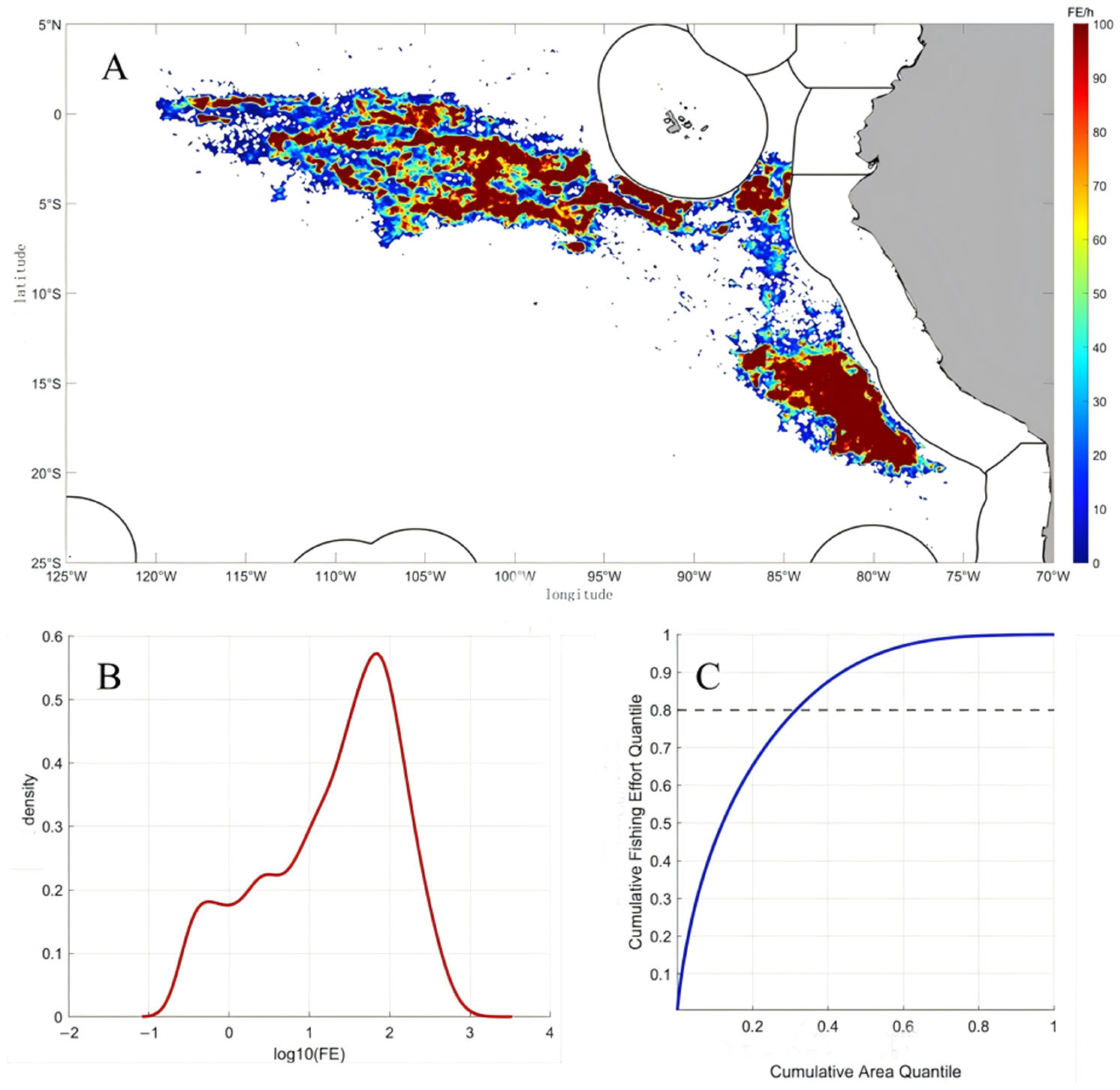
Figure 3 illustrates the spatial distribution of the annual average fishing effort for squid jigging vessels in the Southeast Pacific. Within 0.1° × 0.1° spatial grid cells, the annual fishing effort ranges from 0.25 to 1099.58 h, with a mean of 63.32 h and a median of 29.38 h per year. The spatial distribution of fishing activities is primarily concentrated in two regions (indicated by the boxed areas in the figure). The first region of fishing activity is distributed offshore the Peruvian Exclusive Economic Zone (EEZ). The second region spans from 5° S to the equator and between 83° W and 120° W. Figure 3 highlights multiple areas of high fishing intensity. The largest high-intensity fishing area is located near 15° S and 80° W, distributed along the EEZ. West of 105° W, large areas exhibit fishing activities, but the fishing intensity values are generally low.
Figure 3.
Distribution of average fishing effort: (A) FE (hours) in 0.25° × 0.25° grid cells. (B) Density curve of FE. (C) Q–Q plot of cumulative quantiles of fishing effort vs. fishing areas.
From 2020 to 2023, the fishing effort in the Southwest Pacific exhibited significant spatial clustering and heterogeneity. Figure 3A indicates that fishing activities are highly concentrated, forming core hotspot areas, while the effort in surrounding vast sea areas rapidly diminishes to extremely low levels. The kernel density distribution plot (Figure 3B) confirms a bimodal structure in the spatial distribution of fishing effort, with one peak representing highly intense and concentrated core fishing areas and the other corresponding to relatively dispersed areas of moderate to low fishing intensity. Together, these patterns characterize the operational mode of squid jigging vessels in this region. The Quantile–Quantile (Q-Q) plot (Figure 3C) demonstrates a high degree of spatial aggregation in fishing effort, revealing that 30% of the sea area contributes to 80% of the total fishing effort across all vessels.
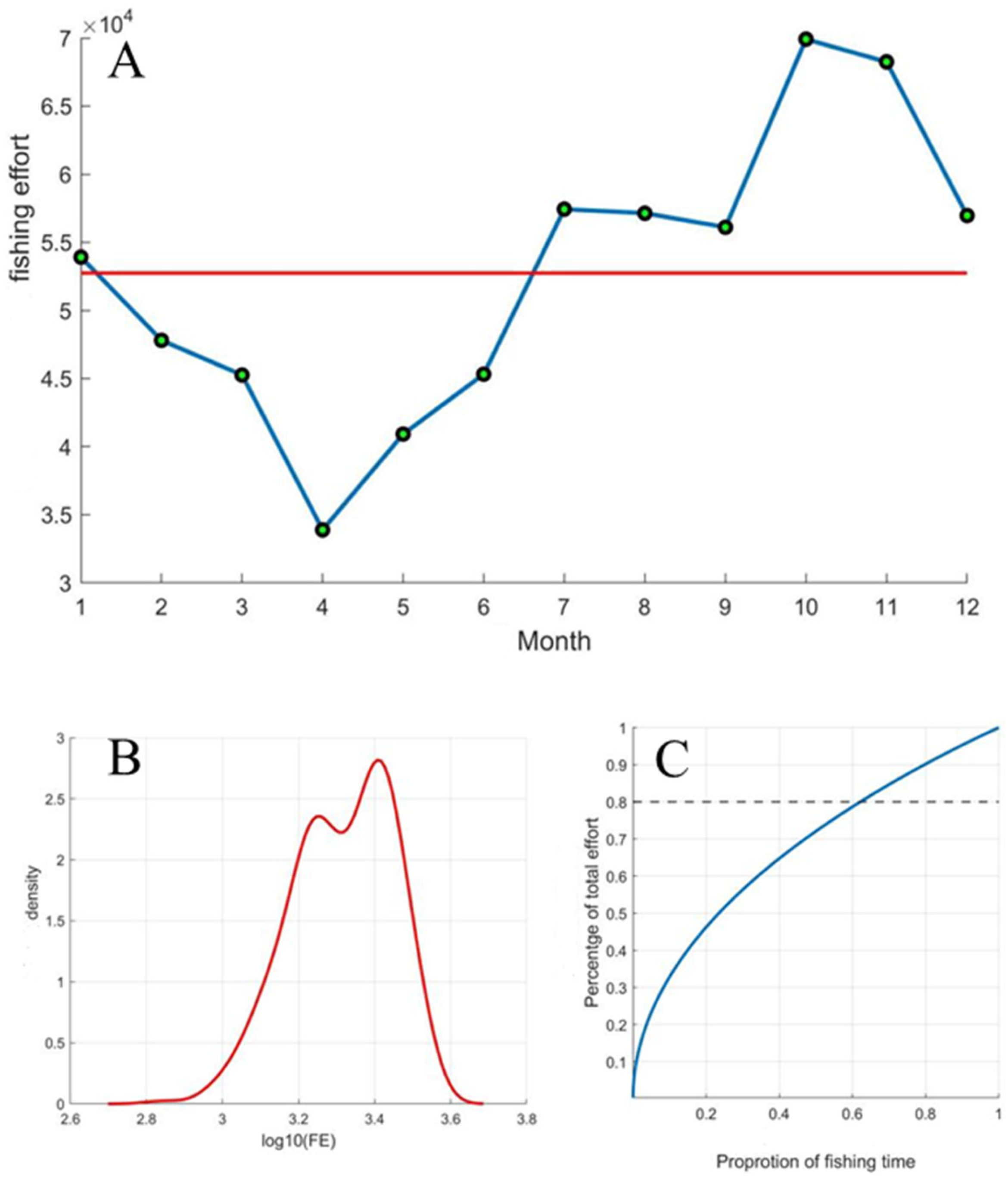
As shown in Figure 4, from 2020 to 2023, the monthly average fishing effort distribution of squid jigging vessels in the Southeast Pacific exhibits significant seasonal fluctuations, displaying a trend of initially low values followed by an increase. The fourth quarter represents the season with the highest fishing effort input. The monthly average fishing effort in January is 47,806 h, after which it decreases progressively each month, reaching its lowest point in April at 33,887 h. From May onward, the monthly average fishing effort increases with fluctuations, peaking in October at 69,910 h. The annual monthly average fishing effort from 2020 to 2023 is 52,740 h.
Figure 4.
Temporal distribution of fishing efforts: (A) The monthly distribution of fishing hours of all vessels. The red line represents the average fishing effort. (B) The density curves of histograms of fishing efforts (per day). (C) Q–Q plot of cumulative quantiles of fishing effort vs. fishing time.
The kernel density distribution plot (Figure 4B) confirms a bimodal structure in the daily temporal distribution of fishing effort. The density curve of daily fishing effort exhibits peak ranges between 3.2 and 3.4, corresponding to 1.5 to 2.5 thousand hours, with a median of 2.1 thousand hours per day. The Quantile–Quantile (Q–Q) plot analysis indicates a high degree of temporal concentration in fishing effort across vessel types: 20% of active fishing days contribute to 46% of the total fishing effort, while 62% of active fishing days account for 80% of the total fishing effort.
3.4. Monthly Distribution of Fishing Effort
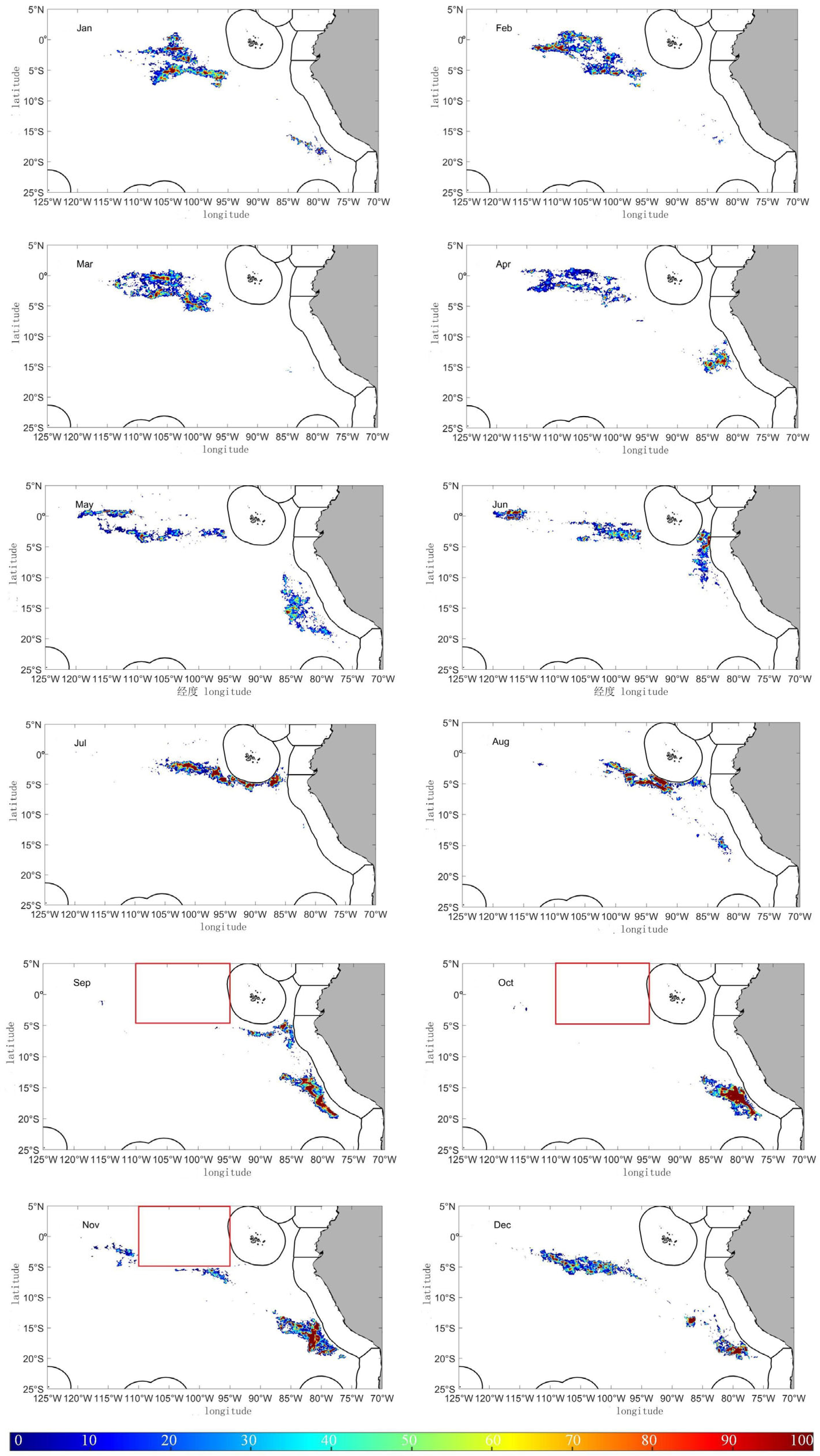
Figure 5 illustrates the monthly average spatial distribution of fishing intensity for squid jigging vessels in the Southeast Pacific from 2020 to 2023. The red box in the figure represents an approximate schematic of the designated no-fishing zone in China. The spatial distribution of fishing operations varies significantly across months, with squid jigging vessels exhibiting cyclical shifts between two primary fishing areas. From January to March, the vessels primarily operate in the region spanning 5° S to the equator and 90° W to 120° W. In April, a portion of the vessels begins fishing outside Peru’s Exclusive Economic Zone (EEZ). From May to June, the vessels in these two fishing areas shift eastward and northward, respectively, until July, when they primarily concentrate outside the EEZ of the Galápagos Islands. In August, a small number of vessels move southward to operate outside Peru’s EEZ, and by October, all vessels have shifted southward to fish outside Peru’s EEZ. Starting in October, some vessels begin relocating to the region between 5° S to the equator and 120° W to 90° W, and by January of the following year, all vessels are concentrated in this area. During the fishing moratorium period from 1 September to 30 November, no fishing effort was observed in the designated no-fishing zone.
Figure 5.
Distribution of average fishing effort from January to December. The red boxes indicate no-fishing zones.
3.5. Spatial Autocorrelation Analysis
3.5.1. Hotspot Analysis
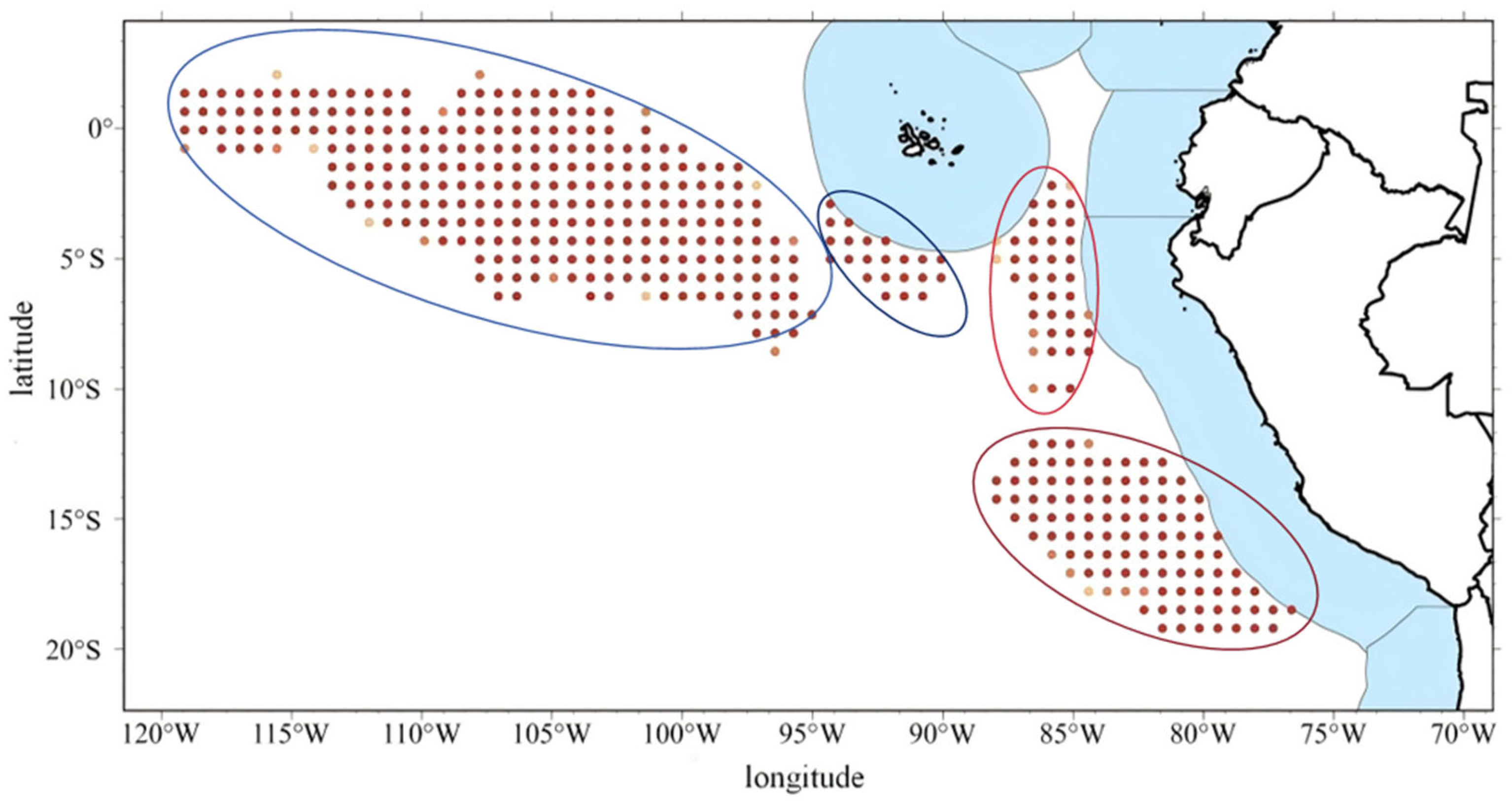
Figure 6 illustrates the distribution of fishing hotspots for squid jigging vessels in the Southeast Pacific from 2020 to 2023. The figure identifies four distinct hotspot areas of fishing activity throughout the year. The first fishing hotspot is located between 5°S and the equator, spanning 100° W to 115° W. This area exhibits a relatively dispersed spatial distribution but covers a large sea area. The second fishing hotspot is situated in the southern offshore region of Peru’s Exclusive Economic Zone (EEZ), covering a smaller area compared to the first hotspot but with a more concentrated spatial distribution. The third and fourth fishing hotspots are located outside the EEZ of the Galápagos Islands and in the high seas between the EEZ boundaries of Ecuador and Peru, respectively, both covering smaller sea areas.
Figure 6.
Hotspot Map. The circles represent the areas of intensive fishing effort.
3.5.2. Hotspot Analysis Global Moran’s Index Analysis
Table 1 presents the basic statistical characteristics and global spatial autocorrelation analysis results of the monthly fishing effort for squid jigging vessels, including mean, standard deviation, coefficient of variation, variance, skewness, kurtosis, Global Moran’s Index, Z-score, and p-value. The average fishing effort per grid cell across months in the study area shows little variation, ranging from 0.53 to 0.757 h. The standard deviation indicates significant variability in the fishing effort per grid cell across months. The coefficient of variation, consistently greater than 1, reveals a high degree of relative variability in fishing effort across different regions, suggesting the presence of extreme values. All months exhibit skewness values greater than 5, indicating a positively skewed distribution, with fishing effort per grid cell markedly skewed to the right. Kurtosis values far exceed 100, signifying a strongly leptokurtic distribution of fishing effort. The Global Moran’s Index for all months is positive, indicating a weak positive spatial autocorrelation in fishing effort across regions. The large Z-scores and p-values of zero for all months confirm that the spatial distribution of fishing operations for squid jigging vessels in the Southeast Pacific exhibits a significant clustered pattern across all months.
Table 1.
Ordinary statistics and global spatial autocorrelation for monthly fishing effort.
4. Discussion
4.1. AIS Data Transmission for Fishing Vessels
The AIS transmission rate refers to the frequency or accuracy with which fishing vessels broadcast their position, speed, and other relevant information to surrounding vessels and shore-based facilities via the Automatic Identification System (AIS). It reflects the proportion of successful AIS data transmissions within a specific time period. The AIS transmission rate significantly impacts data completeness, as a low transmission rate—where the AIS equipment fails to broadcast information consistently—can result in substantial data gaps when recording vessel activities. Increased vessel density can negatively affect the quality of AIS signal reception, as signals in high-density maritime areas are prone to interference and attenuation, leading to reduced signal quality. Additionally, AISs may not always remain active during fishing activities, with data gaps potentially arising from deliberate deactivation by fishers or transmission issues, resulting in incomplete coverage [23] and potential underestimation of fishing activities [24]. However, data gaps within acceptable limits are considered tolerable [14].
In this study, AIS data were collected from 526 squid jigging vessels operating in the Southeast Pacific, with vessels from mainland China constituting the vast majority. Chinese fishery management regulations mandate that vessels operating on the high seas maintain active AIS equipment. Consequently, the AIS data collected in this study are deemed reliable. The large sample size of vessels ensures that the minimal data gaps can be considered negligible, supporting the reliability of the analytical conclusions presented in this study.
4.2. Identification of Fishing Vessel Operational Status
Accurately distinguishing the operational status of fishing vessels is critical for mining spatial information related to fishing activities. Typically, vessel speed is used to determine the operational status of fishing vessels [25,26], with speed thresholds defined based on expert knowledge or statistical models [27,28,29,30]. This approach is straightforward and efficient, particularly for processing large volumes of vessel trajectory data. However, the operational status of fishing vessels is influenced by multiple factors, necessitating the consideration of various parameters to achieve accurate identification in practical applications. The statistical results of this study indicate a significant presence of low-speed trajectory points during daytime, despite squid jigging vessels not engaging in fishing activities during these hours. Failure to differentiate between daytime and nighttime data can lead to an overestimation of fishing effort and fishing ground pressure, potentially misguiding fishery research and management. To address this, the present study employed the SolaR package to calculate solar radiation, defining trajectory points with a solar radiation value of 0 as nighttime data, thereby effectively distinguishing between daytime and nighttime trajectory information. Deep learning techniques have shown promising results in identifying fishing vessel operational status. In the future, integrating deep learning methods with on-site survey data to develop models could further enhance the accuracy of operational status identification for fishing vessels.
4.3. Spatiotemporal Distribution of Fishing Effort
The spatial distribution map of fishing intensity indicates that the fishing activities of squid jigging vessels in the Southeast Pacific are primarily concentrated in two regions. These regions correspond to three squid jigging fishing grounds in the high seas of the Southeast Pacific, namely the Equatorial Fishing Ground, the Central Fishing Ground, and the Southern Fishing Ground [5]. The first fishing activity region encompasses the Equatorial and Central Fishing Grounds, while the second region corresponds to the Southern Fishing Ground. As the fishing season for squid jigging in the Southeast Pacific high seas spans the entire year, fishing operations occur in all months, with minimal variation in the total monthly fishing effort. This suggests relatively stable vessel numbers across months (Figure 4). Although a small number of vessels may shift from the Argentine squid jigging fishing ground to the Southeast Pacific during certain months, their impact on the total monthly fishing effort is minimal.
The fishing season for squid fishing in the equatorial fishing grounds of the high seas in the south-east Pacific is from January to March; the central fishing grounds primarily operate from June to August, while the southern fishing grounds mainly operate from April to May and October to November. The spatial charts of fishing intensity for each month in this paper indicate that fishing vessels shift operations across different fishing grounds. Both the temporal and spatial distribution of fishing intensity align with the temporal and spatial occurrence of each fishing ground. Consequently, the fishing intensity maps produced in this paper can reflect the spatial dynamics of fishery resources.
Spatial autocorrelation analysis indicates four fishing hotspots for squid longline vessels in the Southeast Pacific, corresponding spatially with three fishing grounds [5]. The first fishing hotspot aligns spatially with the equatorial fishing ground for Southeast Pacific squid longline. The second fishing hotspot corresponds spatially with the southern fishing ground for Southeast Pacific squid longline. The third and fourth fishing hotspots are distributed in the high seas beyond the exclusive economic zones (EEZs) of the Galápagos Islands and between the EEZ boundaries of Ecuador and Peru, corresponding to the central fishing ground of the Southeast Pacific squid longline fishery. The spatial alignment between hotspots and fishing grounds indicates that vessel activity hotspots derived from AIS position data mining can reveal potential spatial distributions of fishery resources. Spatial autocorrelation analysis indicates minimal variation in the average fishing effort deployed by squid fishing vessels across all months of the year in the SEP squid fishing grounds. This suggests stable monthly vessel numbers and fishing effort levels for squid fishing operations in this region from 2020 to 2023. The spatial aggregation of fishing vessel operations throughout the year indicates a concentrated spatial distribution of squid jigging vessels, reflecting the concentrated spatial distribution of fishery resources within this region.
4.4. Implications for Fishery Management
China has implemented a voluntary fishing moratorium in certain high seas areas since 2020, primarily targeting squid resources. This applies to Chinese-flagged squid jigging vessels, trawlers, and light-trap fishing vessels (including both spread nets and purse seines). In the Southeast Pacific, the prohibited fishing zone spans (5° N–5° S, 110° W–95° W) during the period from 1 September to 30 November. The monthly fishing effort chart depicted in Figure 5 indicates zero fishing effort within the prohibited zone (red box) during September to November, signifying no fishing vessels operating in this area. This demonstrates that China’s distant-water squid longline vessels have effectively complied with the fishing ban in this region. The spatial distribution of fishing effort in November reveals that some vessels operated close to the prohibited zone. Such behavior warrants careful consideration. The spatial fishing intensity map in Figure 5 further reveals that during certain months, numerous vessels operated in close proximity to the Exclusive Economic Zone (EEZ), creating a high risk of boundary violations. As the vessel tracks analyzed herein primarily originate from mainland Chinese vessels, China’s fishery management should impose stringent oversight on such vessels, mandating the maintenance of Automatic Identification System (AIS) activation to prevent international disputes.
4.5. Shortcomings and Outlook
This study exclusively examines the spatial distribution of squid-fishing vessels in the Southeast Pacific. Upon acquiring additional AIS data, an analysis of multi-year operational dynamics of fishing vessels in this region should be conducted. Furthermore, while this paper investigates the spatial distribution characteristics of squid-fishing vessels in the Southeast Pacific, it does not explore the underlying causes of spatial distribution changes in their fishing operations. Future research should integrate environmental factors closely linked to squid stock fluctuations in the Southeast Pacific to investigate how environmental variables influence the spatial distribution of squid-trawling vessels. This approach aims to develop predictive models for squid fishery resource management and fishing condition forecasting in this region.
5. Conclusions
Based on AIS data from the squid jigging fleet in the Southeast Pacific Ocean from 2020 to 2023, this study employed multi-level data mining and spatial statistical methods to characterize the spatiotemporal dynamics of the fleet, which exhibited high aggregation and regular movement patterns. The conclusions are as follows:
- (1)
- The fleet’s operations showed strong spatiotemporal aggregation, with a small proportion of core fishing grounds (30%) and key fishing days (20%) contributing to the majority (80%) of the total fishing effort. A stable pattern of seasonal cyclic migration between the equatorial fishing grounds and the offshore waters of Peru was observed.
- (2)
- The bimodal distribution of vessel speeds allowed for a clear differentiation between fishing and navigation states, providing methodological support for precise monitoring. The analysis confirmed that during the seasonal fishing moratorium, the Chinese fleet strictly complied with the fishing ban regulations, with no fishing activities detected within the prohibited zones.
- (3)
- The clearly defined fishing hotspots indicate priority areas for implementing spatially differentiated management and protecting critical habitats. Meanwhile, the intensive activities observed near Exclusive Economic Zone boundaries highlight the need for ongoing strengthened surveillance to mitigate potential transboundary risks, providing direct evidence for refined management and risk prevention.
Author Contributions
Conceptualization, Y.S. and S.Y.; methodology, Y.S. and J.S.; software, J.S. and W.W.; validation, J.S. and G.L.; formal analysis, J.S.; investigation, J.S. and G.L.; resources, Y.S. and S.Y.; data curation, J.S. and W.W.; writing—original draft preparation, J.S.; writing—review and editing, Y.Z., Y.S., S.Y. and J.S.; visualization, J.S.; supervision, Y.S. and S.Y.; project administration, Y.Z.; funding acquisition, Y.Z. All authors have read and agreed to the published version of the manuscript.
Funding
This research was funded by the National Key R&D Program of China (2023YFD2401301).
Institutional Review Board Statement
Not applicable.
Informed Consent Statement
Not applicable.
Data Availability Statement
The raw AIS data used in this study are licensed by Spire Global, Inc. and are not publicly available due to restrictions in the license agreement. However, the processed fishing effort datasets and the code used for analysis are available from the corresponding author upon reasonable request for academic and non-commercial purposes. The restrictions on the raw data do not preclude the replication of our study’s findings using the processed data we can share.
Acknowledgments
The authors of this study would like to thank all the researchers who contributed to the research process. Special thanks are expressed to the Copernicus Marine Environment Monitoring Service for providing oceanic environmental data and to Global Fishing Watch for providing fishing effort data.
Conflicts of Interest
The authors declare no conflicts of interest.
References
- Fang, X.; Zhang, Y.; Yu, W.; Chen, X. Geographical distribution variations of humboldt squid habitat in the eastern pacific ocean. Ecosyst. Health Sustain. 2023, 9, 0010. [Google Scholar] [CrossRef]
- Zhao, G.; Wu, Z.; Cui, X.; Fan, W.; Shi, Y.; Xiao, G.; Tang, F. Spatial temporal patterns of chub mackerel fishing ground in the northwest pacific based on spatial autocorrelation model. Acta Oceanol. Sin. 2022, 44, 22–35. [Google Scholar]
- Seto, K.L.; Miller, N.A.; Kroodsma, D.; Hanich, Q.; Miyahara, M.; Saito, R.; Boerder, K.; Tsuda, M.; Oozeki, Y.; Urrutia, S.O. Fishing through the cracks: The unregulated nature of global squid fisheries. Sci. Adv. 2023, 9, eadd8125. [Google Scholar] [CrossRef] [PubMed]
- Fang, X.; Yu, W.; Chen, X. Spatial distribution of fishing ground of jumbo flying squid dosidicus gigas in the equator in eastern pacific ocean. Fish. Sci. 2022, 41, 475–483. [Google Scholar]
- Zhang, H.; Li, Z.; Li, D.; Liu, L.; Chen, F.Z. Wb analysis on the fishery status of squid fishing in the high seas of southeast pacific ocean. J. Zhejiang Ocean Univ. 2022, 41, 294–298. [Google Scholar]
- Yu, W.; Feng, X.; Wen, J.; Wu, X.; Fang, X.; Cui, J.; Feng, Z.; Sheng, Y.; Zhao, Z.; Liu, B.; et al. The potential impacts of climate change on the life history and habitat of jumbo flying squid in the southeast Pacific Ocean: Overview and implications for fisheries management. Rev. Fish Biol. Fish. 2025, 35, 707–731. [Google Scholar] [CrossRef]
- Haimovici, M.; dos Santos, R.A.; Bainy, M.C.; Fischer, L.G.; Cardoso, L.G. Abundance, distribution and population dynamics of the short fin squid Illex argentinus in Southeastern and Southern Brazil. Fish. Res. 2014, 152, 1–12. [Google Scholar] [CrossRef]
- Kroodsma, D.; Miller, N.A.; Hochberg, T.; Park, J.; Clavelle, T. Ais-based methods for estimating fishing vessel activity and operations. Glob. Atlas AIS-Based Fish. Act. 2019, 13. Available online: http://www.fao.org/3/ca7012en/ca7012en.pdf (accessed on 16 October 2025).
- Natale, F.; Gibin, M.; Alessandrini, A.; Vespe, M.; Paulrud, A. Mapping fishing effort through AIS data. PLoS ONE 2015, 10, e0130746. [Google Scholar] [CrossRef]
- Taconet, M.; Kroodsma, D.; Fernandes, J. Global Atlas of Ais-Based Fishing Activity; FAO: Rome, Italy, 2019. [Google Scholar]
- Gonzalez-Mirelis, G.; Lindegarth, M.; Sköld, M. Using vessel monitoring system data to improve systematic conservation planning of a multiple-use marine protected area, the kosterhavet national park (Sweden). Ambio 2014, 43, 162–174. [Google Scholar] [CrossRef]
- Long, Z.; Zuo, G.; Zhang, T.; Zheng, J. Exploring nighttime fishing and its impact factors in the northwestern south China sea for sustainable fisheries. Sustainability 2025, 17, 8641. [Google Scholar] [CrossRef]
- Chen, R.; Wang, Y.; Wu, X.; Gao, Z. Identifying the key factors influencing spatial and temporal variations of regional coastal fishing activities. Ocean Coast. Manag. 2024, 248, 106940. [Google Scholar] [CrossRef]
- Fei, Y.; Yang, S.; Fan, W.; Shi, H.; Zhang, H.; Yuan, S. Relationship between the spatial and temporal distribution of squid-jigging vessels operations and marine environment in the north pacific ocean. J. Mar. Sci. Eng. 2022, 10, 550. [Google Scholar] [CrossRef]
- Yang, S.; Fei, Y.; Yu, L.; Tang, F.; Zhang, S.; Cheng, T.; Fan, W.; Yuan, S.; Zhang, H.; Jiang, K. The environmental niche of the squid-jigging fleet in the North Pacific Ocean based on automatic identification system data. Ecol. Indic. 2023, 155, 110934. [Google Scholar] [CrossRef]
- Liu, H.; Yu, W. Modeling the potential distribution of Argentine shortfin squid in the southwest Atlantic Ocean. J. Oceanol. Limnol. 2024, 43, 326–340. [Google Scholar] [CrossRef]
- Xiang, D.; Li, Y.; Jiang, K.; Han, H.; Wang, Y.; Yang, S.; Zhang, H.; Sun, Y. Environmental influences on Illex argentinus trawling grounds in the southwest Atlantic high seas. Fishes 2024, 9, 209. [Google Scholar] [CrossRef]
- Wang, W.; Fan, W.; Yu, L.; Wang, F.; Wu, Z.; Shi, J.; Cui, X.; Cheng, T.; Jin, W.; Wang, G.; et al. Analysis of multi-scale effects and spatial heterogeneity of environmental factors influencing purse seine tuna fishing activities in the Western and Central Pacific Ocean. Heliyon 2024, 10, e38099. [Google Scholar] [CrossRef] [PubMed]
- Yang, S.; Wang, L.; Fei, Y.; Zhang, S.; Yu, L.; Zhang, H.; Wang, F.; Wu, Y.; Wu, Z.; Wang, W.; et al. Spatio-temporal variability of fishing habitat suitability to tuna purse seine fleet in the Western and Central Pacific Ocean. Reg. Stud. Mar. Sci. 2024, 70, 103366. [Google Scholar] [CrossRef]
- Yang, S.; Zhang, S.; Zhou, W.; Cui, X.; Zhang, B.; Fan, W. Calculating the fishing effort of longline fishing vessel in the western and central pacific ocean using ais. Trans. Chin. Soc. Agric. Eng. 2020, 36, 198–203. [Google Scholar]
- Kroodsma, D.A.; Mayorga, J.; Hochberg, T.; Miller, N.A.; Boerder, K.; Ferretti, F.; Wilson, A.; Bergman, B.; White, T.D.; Block, B.A.; et al. Tracking the global footprint of fisheries. Science 2018, 359, 904–908. [Google Scholar] [CrossRef]
- Xuan, W.; Cui, G.; Li, Z.; Wei, Q.; Tao, Y.; Liu, L.; Chen, F.; Chen, X.; Zhu, W. Distribution and environmental dependency of small schools of squid dosidicus gigas and in the equator of eastern pacific ocean. Oceanol. Limnol. Sin. 2022, 53, 1234–1241. [Google Scholar]
- Chen, X.; Liu, B.; Chen, Y. A review of the development of Chinese distant-water squid jigging fisheries. Fish. Res. 2008, 89, 211–221. [Google Scholar] [CrossRef]
- Sant’aNa, R.; Kinas, P.G.; de Miranda, L.V.; Schwingel, P.R.; Castello, J.P.; Vieira, J.P. Bayesian state-space models with multiple CPUE data: The case of a mullet fishery. Sci. Mar. 2017, 81, 361–370. [Google Scholar] [CrossRef]
- Rowlands, G.; Brown, J.; Soule, B.; Boluda, P.T.; Rogers, A.D. Satellite surveillance of fishing vessel activity in the Ascension Island Exclusive Economic Zone and Marine Protected Area. Mar. Policy 2019, 101, 39–50. [Google Scholar] [CrossRef]
- Robards, M.D.; Silber, G.; Adams, J.; Arroyo, J.; Lorenzini, D.; Schwehr, K.; Amos, J. Conservation science and policy applications of the marine vessel Automatic Identification System (AIS)—A review. Bull. Mar. Sci. 2016, 92, 75–103. [Google Scholar] [CrossRef]
- Wawruch, R. Study reliability of the information about the CPA and TCPA indicated by the ship’s AIS. TransNav Int. J. Mar. Navig. Saf. Sea Transp. 2016, 10, 417–424. [Google Scholar] [CrossRef]
- Pitcher, T.; Kalikoski, D.; Pramod, G.; Short, K. Not honouring the code. Nature 2009, 457, 658–659. [Google Scholar] [CrossRef]
- Roberts, C.M.; McClean, C.J.; Veron, J.E.N.; Hawkins, J.P.; Allen, G.R.; McAllister, D.E.; Mittermeier, C.G.; Schueler, F.W.; Spalding, M.; Wells, F.; et al. Marine biodiversity hotspots and conservation priorities for tropical reefs. Science 2002, 295, 1280–1284. [Google Scholar] [CrossRef]
- Hall, G.B.; Close, C. Local knowledge assessment for a small-scale fishery using geographic information systems. Fish. Res. 2007, 83, 11–22. [Google Scholar] [CrossRef]
Disclaimer/Publisher’s Note: The statements, opinions and data contained in all publications are solely those of the individual author(s) and contributor(s) and not of MDPI and/or the editor(s). MDPI and/or the editor(s) disclaim responsibility for any injury to people or property resulting from any ideas, methods, instructions or products referred to in the content. |
© 2025 by the authors. Licensee MDPI, Basel, Switzerland. This article is an open access article distributed under the terms and conditions of the Creative Commons Attribution (CC BY) license (https://creativecommons.org/licenses/by/4.0/).