


Abstract
Fatal and serious injury rates remain unacceptably high in the construction industry. Leadership plays a critical role in safety management and serious and fatal injury prevention. However, limited research has examined industry practitioners’ perceptions of leadership and how it influences safety outcomes, particularly in the prevention of serious and fatal injuries in the construction industry. Therefore, a theoretical model for capturing perceptions of safety leadership was developed from a systematic literature review. To ensure that the labels and language used in the model can be understood by industry practitioners, a Delphi study was conducted involving twelve experts. Over three iterative rounds, the model was refined to include five leadership styles, seventeen elements, and eighty-five descriptive statements spanning the range from laissez-faire to transformational leadership. The refined model provides a comprehensive framework for understanding safety leadership and serves as a foundation for future empirical testing with frontline construction workers.
1. Introduction
Fatalities and serious injuries in the construction industry have remained unacceptably high worldwide over the past decade (Figure 1, Figure 2 and Figure 3). Leadership is vital for risk management and the prevention of serious and fatal injuries. However, previous research has predominantly focused on how leadership influences organisational safety culture, workers’ safety behaviour, and minor workplace injuries [1].
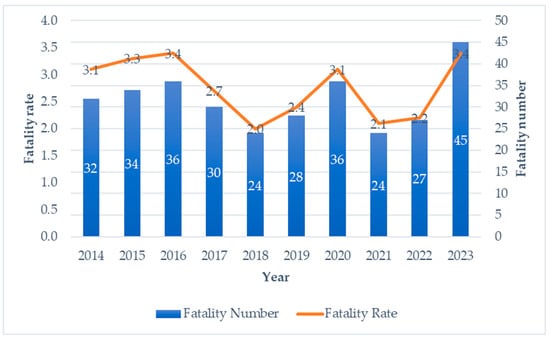
Figure 1.
Worker fatalities: number of fatalities and fatality rate, 2014 to 2023 in Australia Construction Industry [2].
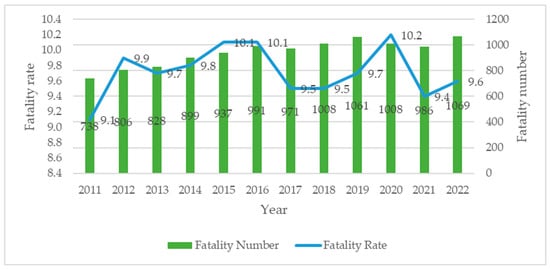
Figure 2.
Worker fatalities: number of fatalities and fatality rate, 2011 to 2022 in USA Construction Industry [3].
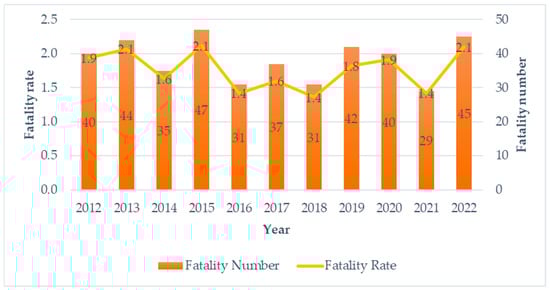
Figure 3.
Worker fatalities: number of fatalities and fatality rate, 2012 to 2022 in UK Construction Industry [4].
It is hypothesised that organisations with stronger leadership styles achieve better safety outcomes and lower rates of injuries and fatalities. Nevertheless, the systematic literature review revealed no articles or prior research that explored frontline workers’ perspectives on how different leadership styles influence safety. Therefore, further research is required to answer the following question: What leadership styles are perceived by frontline workers to contribute to better safety outcomes and less serious and fatal injuries in Australian construction industry?
In order to answer the question, information from the literature was transposed into a leadership model that could be used to survey frontline workers in a similar way to the other safety models [5,6,7,8]. The model described in this paper especially focuses on safety leadership in the construction industry. It consists of three parts comprising leadership styles, elements, and descriptive statements for each element across the different leadership styles. The styles of leadership described in this paper were adapted from Bass’s Full Range of Leadership Theory [9], which is widely accepted and recognised. The elements are very important components of construction industry safety and risk management systems. Then the descriptive statements were developed for each element in relation to each of the five leadership styles. As the model was grounded in academic sources, it required validating and testing to ensure it was understandable for industry practitioners. This article describes the research conducted to test and refine the model with industry experts using the Delphi technique.
Following three iterative rounds of the Delphi study, consensus was achieved across all components of the model. Specifically, all leadership styles and elements reached consensus in Round 1, eighty-eight statements in round 2, and thirty-three statements in round 3. The refined model comprises five leadership styles, seventeen elements, and eighty-five descriptive statements. It advances existing Full Range of Leadership Theory [9] by integrating these leadership styles, elements, and descriptive statements into a coherent and structured framework. Moreover, the model provides a practical self-assessment tool for organisations to evaluate leadership styles across seventeen elements, identify strengths and weaknesses in their safety management practices, and strategically allocate resources to improve leadership effectiveness and prevent serious and fatal injuries in the construction industry.
2. Delphi Study Method
The principle behind Delphi technique is the old proverb “Two heads are better than one” [10,11,12]. This premise is supported by other researchers; they assume that group opinion is more valid and reliable than individual opinion [11,13,14,15]. This assumption was explained by Oh [16] in his paper “Even when we know the best expert, his background knowledge is limited and accordingly his prediction may be less accurate than that from a group of experts”. Furthermore, de Villiers [17] remarked “pooled intelligence enhances individual judgement and captures the collective opinion of experts without being physically assembled.”
There are two approaches of developing questionnaires for Delphi studies. One is conventional Delphi, which use unstructured questions to extract opinions from the participants through an open-ended format; in essence, this is a brainstorming session [18]. The other one is modified Delphi, which devises structured questions, through a review of the literature, to pool opinions of individual expertise of the panellists [18]. Martino [12] found the participants are confused by the unstructured questions associated with conventional Delphi studies, while Uhl [19] indicated that a Delphi study with structured questions has significantly lower participant attrition compared to those with unstructured formats. In addition, Ludwig [20] disclosed that structured questionnaires minimise the expense and time of conducting a Delphi study compared with unstructured ones. In this Delphi study, a modified Delphi approach was adopted.
The modified Delphi technique employed involved using a panel of experts to review and refine the newly developed leadership model so that the language used in the model was understandable and credible from an industry practitioners’ perspective. The entire process of this Delphi study is portrayed in Figure 4. In general, for a successful outcome, this research was designed as a four-step process:
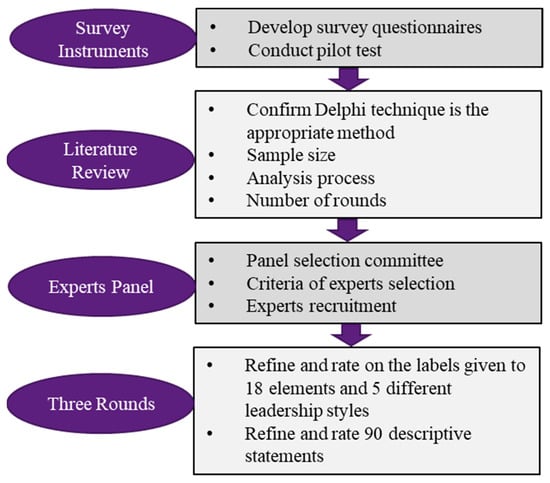
Figure 4.
Process of this Delphi study.
- Develop a survey instrument to test the leadership model, which includes conducting a pilot test to identify ambiguities in wording and check the layout of the instruments.
- Conduct a literature review to confirm that the Delphi technique is an appropriate method for the research and to decide sample size, analysis process, and number of rounds required to develop a refined model.
- Recruit experts using certain criteria through a panel selection committee.
- Implement three iterative rounds to review and refine the leadership model.
In order to accomplish this Delphi study, the researchers recruited members of an expert panel from April 2022, and completed the third round in October 2022. Each step of the process will be discussed in detail in the following paragraphs.
2.1. Survey Instrument Development
There were two instruments developed for this Delphi study. The first instrument covered 5 different leadership styles and 18 elements of the model. Clear definitions of leadership styles were provided to eliminate ambiguity and prevent the use of emotive language [15,21]. The questions were designed to be easy to read, using simple and concise language while avoiding lengthy or complex wording [15,22]. These design features aimed to enhance response quality [12] and participation rates [23]. Furthermore, ample space was provided for participants to provide comments or further justification for their responses [12,15,18]. This instrument was divided into the following four parts:
- The first part is an instruction providing context information and an explanation on how to complete the survey.
- The second part is a demographic question which collected experience, occupation, education, gender, and age data to allow the researchers to better understand and analyse the data.
- The third part is the context information, which included a brief overview of the leadership model, providing fundamental information in regard to the model and the background information; this part also explained the purpose of this research.
- The fourth part is questions about leadership styles and elements of the model, which originally derived from the systematic literature review [1]. Participants were asked to record their level of agreement with the labels given to the leadership styles and elements of safety management system using a four-point Likert scale where 1 meant Strongly Disagree, 2 meant Disagree, 3 meant Agree, and 4 meant Strongly Agree. The participants also had the option to select “Don’t know” if they do not have enough knowledge to rate particular leadership styles or elements given in the instrument. The neutral point was removed from the Likert scales intentionally because a neutral option provides very little information about the issues discussed and we prefer that the participants take a particular option. In other words, the nonneutral stance can promote a debate which aligns with the main objective of developing agreement and disagreement [24].
The second instrument reviewed the 90 descriptive statements that were contained within the model and were also derived from a literature review [1]. Similarly to the first instrument, this instrument also contained Delphi study instructions and a brief overview of the leadership model. This instrument then asked participants to rate each statement across 5 leadership styles for each element.
Before the commencement of the Delphi study, a pilot test was conducted to identify ambiguities in wording, check the layout of the instruments, and ensure the language used was understandable by the industry workforces. The pilot test served as the basis for the Delphi study; for this reason, it is desirable to do this test.
A couple of experts from high-risk industries that were not part of the panel of experts were invited to test the survey instrument. On average, the two experts have 23 years of experiences in their industry.
On the basis of feedback obtained from the pilot test, the labels of Element 3, Element 6, Element 7, Element 9, Element 10, and Element 15 were renamed.
- Element 3—“Balance when making a decision” was renamed to “Balance priorities when making a decision”.
- Element 6—“Risk management perception” was renamed to “Perception of risk”.
- Element 7—“Hierarchy of risk controls” was renamed to “Risk controls”.
- Element 9—“Procurement” was renamed to “Contractor procurement”.
- Element 10—“Contractor management” was renamed to “Contractor management on the job”.
- Element 15—“Events management” was renamed to “Actioning of events”.
Some minor wording changes were made to 15 descriptive statements, and the layout of 18 elements and 5 leadership styles was turned into bulleted lists to make them easier to read in the instruments on the advice of participants.
2.2. Selection of Experts
The selection of expert panellists is a critical step in the Delphi study, as it directly influences the quality of the research [25,26]. While there are numerous debates regarding the optimal number of experts required, existing studies indicate limited empirical evidence that panel size significantly affects the reliability [14,27] or validity [14] of consensus processes. Rather, the representativeness of a Delphi panel is determined by the qualities of its members rather than its number [28]. The Delphi technique does not aim for statistical representativeness but instead seeks to synthesise the informed opinions of the particular group [29]. Johnson [27] demonstrated that panels of around 15 experts produce reliable outcomes, with little chance that a different panel would yield significantly different results. He further suggested that even a panel of approximately 10 experts can generate reliable results. Consequently, this study targeted a panel size of 10 to 15 experts. The appropriate sample size ultimately depends on the purposes of the research, the expertise required, and the complexity of the research [19,30]. In line with Powell [28] and Keeney [15], greater emphasis was placed on achieving diversity in participants’ backgrounds and experiences rather than merely increasing the number of experts.
To date, no Delphi technique research has addressed the issue of what criteria should be utilised to recruit their experts. Oh [16] indicated that choosing appropriate experts is generally based on the judgement and discretion of the principal investigator. Later, this statement was supported by Sumsion [31], who stated that “there is no ready answer and it becomes the responsibility of each researcher to choose the most appropriate group of experts and defend that choice”. For the purpose of this research, the inclusion criteria used for the selection of experts was those who were knowledgeable and/or experienced in safety and/or risk management and/or leadership in the construction industry. Specifically, the participants recruited had to meet at least one of the three criteria established for panel selection:
- The participants have at least 5 years of engagement in safety and/or risk management in the construction industry. The senior management of the organisations in the industry are identified in a list, subject to meeting the aforementioned criteria, and they are invited to participate in Delphi survey;
- Leastwise the participants have 5 years of construction and/or project management experience in the construction industry;
- The professionals have a minimum of 5 years of experience in safety and/or risk management in the construction industry, and are recognised by a government, institute, or association.
The researcher recruited experts directly via snowball sampling [32], where selected experts could nominate other experts that met the abovementioned criteria.
Once the individual had been selected as an expert in the specific field, this expert received a formal email invitation to participate in the Delphi survey. The participants were informed about the research purpose, process, benefit, and the reason for being selected.
- The purpose of the Delphi study was explained to the participants along with the reasons for conducting this research, the significant meaning of the academia, and the implications for the construction industry.
- The process of the Delphi study stated how the survey works, how many rounds there were, the duration of the iterative process, and what efforts will be required from the participants. For this research, the prediction was that the Delphi study would involve up to 4 rounds over a 4-month period, with each round taking approximately 30–45 min to complete.
- The benefit of the Delphi study was illustrated to participants, including what they will gain from this survey, the benefit of having an opportunity to learn about the Delphi method, and an opportunity to hear the thoughts and gain information from other experts.
- The reason for being selected was described to the participants, namely why the individual was selected to participate in the survey.
A total of 21 experts were invited based on the established selection criteria; 15 were purposefully selected, and 6 were nominated through the Snowballing method. Eventually, 12 experts accepted the invitation, forming the final Delphi study panel. First, all panel members possessed substantial knowledge and experience in safety and risk management within the construction industry. This aligns with Klee [33], who emphasised that the primary criterion for expert selection is knowledge; however, this alone is insufficient unless the expert can apply it effectively to the problem. Second, all experts signed consent forms to confirm their commitment to the study. This was supported by Johnson [27] who advised that the success of a Delphi study depends on the commitment of participation and continued engagement throughout the process.
It should be further understood that this Delphi study adheres to the Guidelines of the ethical review process of The University of Queensland and the National Statement on Ethical Conduct in Human Research, and all the experts were informed that the participation is entirely voluntary and all information provided will be anonymous in compliance with the ethical research process approved by The University of Queensland. All the experts invited were asked to sign a generic consent form prior to conducting the Delphi study. These experts were informed that they have the rights to withdraw at any time without penalty, and the comments provided are anonymous; this information was presented on the invitation letter of the Delphi study.
2.3. Consensus of Delphi Study
According to the literature review, to achieve consensus of opinions or judgements of a group of experts is the primary objective of the Delphi study [15,34]. Nevertheless, there is no universal agreement to declare consensus, and no definition of consensus or methods to yield consensus. Usually, this decision rests on the shoulder of researchers to choose the proper method to constitute consensus based on the demand of research. Consideration also needs to be given to the fact that consensus may not be reached and in some situations may not be required; this ultimately depends on the purpose of Delphi study [35,36].
The researchers need realise that the decided consensus depends on the purpose of the research, and the reality that the higher the standards, the harder it is to reach consensus between the experts [37]. Keeney [15] recommended that the researchers need to declare the agreed consensus before the commencement of a Delphi study. In this Delphi study, the measure of central tendency (median) was employed to reflect the convergence of collective opinions, while the interquartile range (IQR) was utilised to assess the dispersion level of collective opinions. Consensus was considered to have been achieved when the median of expert panel responses reached 3, and the IQR was less than or equal to 2. Correspondingly, the iterative process stopped once the agreed consensus had been achieved [18]. Any items ranking below the threshold were updated based on the feedback from the expert panel, and then these updated items went to the next round of review by all experts.
In theory, the Delphi study can iterate as many rounds as are required until the consensus is reached. Through literature review, the number of rounds demanded is a contentious issue; this can vary from two to five rounds [36,38,39]. The number of iterative rounds to some extent depends on a few factors: these are degree of agreement, new information to gain, time available, and fatigue. The researcher has the responsibility of balancing between the number of rounds and the pragmatic factors. Also, when successive rounds tend to have very little new information gained, the excessive repetition is unacceptable to the group experts [12,40]. Another influencing factor that needs to be considered is the time available when deciding the number of rounds [15,29]. Furthermore, the experts may become fatigued after three iterative rounds, and this will further decrease the response rate and increase the attrition [41]. Although there is not a standard for the exact number of rounds, Delphi researchers pointed out, in most instances, three rounds proved sufficient to collect necessary information and achieve consensus [20,35,40,42].
In this Delphi study, the researchers employed a three-round interactive process. Even if there are some items that cannot achieve consensus after three rounds, the researcher decided to stop at this point, because sometimes dissensus is as important as consensus from a research-findings perspective. In round 1, panellists were asked to refine and rate eighteen elements and five leadership styles of this model. In round 2, panellists were asked to refine and rate ninety descriptive statements in the grid of this model. In round 3, panellists were asked to reconsider and rerate these updated statements based on the comments of experts from the second round. In each round, the responses of panellists were aggregated and analysed by researchers through IBM SPSS Statistics 26 software. A summary of controlled feedback and results of the previous round were included in the cover letter of the new round. This three-round Delphi study took about 4 months to complete. To illustrate how the Delphi study works, the three-round procedure is described in Figure 5.

Figure 5.
Three-round procedure of Delphi study.
3. Results
3.1. Round 1
The results from the demographic information revealed that on average, the expert panel has 20 years of experiences in the construction industry. Six of them hold safety professional roles, five of them construction and project management roles, and one of them an academic role. All of them have senior management positions in their own organisation. In total, 64% of the panellists have bachelor’s or master’s education, and the others have advanced diplomas or equivalent education. In the expert group, there are two female participants, and the rest of the participants are male. In total, 64% of the experts are over 55 years old.
The results from the round 1 review of element and leadership style labels were quite good. The response rate was 92%, with 11 experts completing and returning the round 1 survey, which included a total of 75 comments from experts. These were reviewed by researchers and used to update the elements, leadership styles, and statements in the model. The data analysis highlighted that all of the five styles of leadership and 10 of the 18 elements reached a median score of three, which means agree. The other eight elements reached a median of four, which means strongly agree. One element reached an IQR of two; all of the other 17 elements reached IQRs less than or equal to 1. At the conclusion of round 1, all the labels given to leadership styles and elements reached consensus as defined in Section 2.3. However, the leadership style “Management-by-exception Active” was renamed to “Proactive Leadership” based on the feedback from the expert panel, but the core meaning of the content was not changed. Two comments from the panellists are below:
One expert advised “Call this Proactive Leadership”.
Another expert commented “Title does not reflect the active nature of the work. This is not “Management by Exception” but proactively identifying and managing risk through multiple risk management processes.”
Four elements were also renamed based on the feedback from the expert panel, but the core meaning of these four elements remained unchanged. Element 1—Commitment has been renamed to “Commitment (e.g., attend safety walk and chair safety committee)”, because one expert advised “It’s important for leaders to talk about safety, attend safety walk and chair Health and Safety committees.” Element 5—People development has been renamed to “People Development (e.g., training and education)”, because one expert commented “Too generic in relation to risk management.”, Element 6—Perception of risk has been renamed to “Risk Assessment”, because one expert suggested to change to Risk Assessment. Element 17—Performance Measurement has been renamed to “Safety Performance Measurement”. Some of the comments regarding the labels were considered in the different descriptive statements of leadership model, which was reviewed in round 2. The results summary of round 1 is illustrated in Table A1 and Table A2.
3.2. Round 2
Round 2 secured a response rate of 91% with only one expert not returning the survey questionnaire. A total of 153 comments were received from panellists. At the conclusion of the second round, 73 statements reached a median of three, which means agree, and 16 statements reached a median of four, which means strongly agree. One statement of Management-by-exception Passive for Element 18 reached a median of two, which means disagree. One statement of Laissez-faire leadership for Element 6 reached a median of three, but an IQR of three, which means disagree; all the other 89 statements reached IQRs less than or equal to 2. The Likert scale ratings, median, and IQR of the distribution are illustrated in Table A3. However, following a thorough review and discussion of participant feedback within the research team, one element was renamed, another element was removed, and two statements were revised accordingly. The specific changes are outlined as follows:
- Element 11—“Safety Integrated in Supply Chain” was changed to “Safety in Design”.
- Element 15—“Actioning of Events” was removed from the model because this element has been covered in Element 14—“Event Report” and Element 16—“Event Investigation”.
- The statement of Management-by-exception Passive for element 18 “The leader punishes workers when safety target (e.g., injury rate) is not achieved.” was changed to “The leader does not react on changes in safety targets (e.g., injury rate)” because consensus was not reached.
- The statement of Laissez-faire Leadership for Element 6 statement “The leader allows fatal risks in the workplace to persist and often to become acceptable” was changed to “The leader does not consider safety risks or risk assessment information thereby allowing serious and fatal risks in the workplace to persist and often to become acceptable” because consensus was not reached.
In addition, 31 descriptive statements underwent minor revisions based on the comments of participants, despite already meeting the consensus criteria. These refinements were made to improve clarity and alignment with industry language. Consequently, the 33 updated statements were used to design the questionnaire of round 3.
3.3. Round 3
In round 3, the survey questionnaire consisted of 33 statements across 10 elements. All five statements of each element were presented in the grid of the model so that the panel members can consider the statements together with the others as a whole when they provide any comments. To avoid forcing consensus, the researchers intentionally did not provide feedback on individuals’ previous ratings and the collective median of the second round. There were two reasons for this. One is that the experts could be biassed by their responses from the previous round. The other is “when an expert sees himself in a minority and does not feel strongly about his position, that alone may be enough for him to change his answer” [29]. They were provided with a summary of the results of round 2, which included the consensus and dissensus of statements, elements renamed and removed, and the updated statements. The third round of the Delphi study was conducted in October 2022.
After completion of the third round, the response rate of round 3 was 90%, with one expert not responding to the survey. A total of 65 comments were received from panel members, and all the comments received were reviewed and analysed by researchers. At the conclusion of the third round, 33 statements achieved consensus based on the criteria of consensus defined in previous section, 26 statements reached a median of three, the other statements reached a median of four, and all the statements reached IQRs less than or equal to two (refer to Table A4).
Although all 33 statements reached consensus in round 3, one statement under Proactive Leadership of element 3 “The leader prioritises safety over other construction goals as long as the other construction goals are being met. If schedule and costs are under pressure, these will be prioritized ahead of safety.” was revised to “The leader prioritises safety over other construction goals as long as the other construction goals are being met. If schedule and costs are under pressure, these will be considered together with safety.” based on the feedback received. In addition, several minor edits, such as grammatical adjustments, were made without changing the core meaning of the statements. Ultimately, a refined and tested safety leadership model (presented in Table A5) was formed as the outcome of this Delphi study.
4. Discussion
On the whole, the response rate of every round is quite high in this study even though Delphi studies have been criticised for their low response rates [43] and high dropout rates [17,18,44]. According to Uhl [19], 83% would be considered an adequate response rate. Further to this, the researchers recommend that a 70% minimum response rate should be obtained for each round to maintain rigour when using the Delphi study [31,35,45]. However, there was no universal guidance regarding what level of response rate should be achieved according to the literature review. The response rates can vary from a very inadequate 10% [19] to an excellent 100% [46]. In order to maintain a high and stable response rate and low drop-off rate during the Delphi study, the researcher employed a variety of strategies to motivate and engage members of the panel in the whole process.
Firstly, the research process maintained the anonymity of experts’ responses, which, according to Rauch [47], can considerably increase the response rate. Furthermore, every expert signed off and returned a consent form to demonstrate their commitment before the commencement of the Delphi study. Johnson [27] stated the experts with commitment were interested and highly committed to participating in the study.
Secondly, the participants were kept informed with summaries of previous round results that highlighted the updated statements that were constructed based on their comments. This was done to keep the participants motivated and up to date with the Delphi study process. As stated by Sandrey [48], when motivating participants properly, the Delphi study enables experts to assume ownership of the study. Moreover, Sandrey [48] stressed that ongoing communication can be taken throughout the research process to retain panel participants. For this research a maximum of two reminders was used for each non-respondent in every round; even though Dillman [49] advocated three follow-up contacts, Beretta [50] suggested the ethics should be considered with this strategy because it seems likely that the experts would feel forced to continue, even though they wish to drop out, and Keeney [15] indicated that reminders could be considered coercion by the researcher to continue participation.
Thirdly, the motivation of participants can be influenced by the length of the study; participants may be fatigued after multiple rounds, which could lead to a reduction in expert responses [41]. Further, the participants sometimes become fatigued after two or three rounds [37], which may result in a low response rate. The researcher, in this iterative process, did not ask panellists to reconsider and rerate the agreed labels and statements without new information gained from comments of the previous round. Doing this would have consequently increased the workload and time spent for the experts due to the extra new rounds created. As stated by Keeney [15], the numbers of statements will not decrease as the rounds go on and the risk of expert’s dropout becomes greater.
In round 3, the participants were invited to reconsider and rerate the 33 updated statements, but they were not provided with individual scores of the statement in round 2 and the group median of round 2, because the experts can be biassed based on the statistical analysis, and there is a risk that “extreme opinions will be masked by the statistical analysis” [51]. When an expert realises they are in a minority and does not feel strongly about their position, that is enough for this expert to change their opinion due to strong group pressure to conform [27]. On the contrary, experts within a majority are reluctant to change their opinion, because they both mistakenly believe that the majority view is right. To make matters worse, experts with extreme views are more likely involved in dropouts than those experts within the majority [52]. Consequently, the consensus achieved is an artificial product because of the dropouts of participants with extreme views [53]. Additionally, Gordon [29] argued that the extreme views also represent a useful product.
To sum up, a high response rate and low attrition rate is achievable through applying various strategies across the different stages of the Delphi study. Moreover, the consistently high response rate demonstrates the reliability of the consensus achieved. The strong level of agreement among experts also indicates that the language and constructs used in the model were understandable, meaningful, and credible from the perspective of industry practitioners. Consequently, the newly developed leadership model has gained recognition and acceptance from industry experts. These outcomes provide the researcher with confidence to further test the model on a larger sample of frontline construction workers.
The researcher decided to stop this iterative process at round 3 because of three reasons. First, compared to the previous rounds, there was no extreme response “Strongly Disagree” in round 3. For most of the statements (31 out of 33), the responses have tended towards stability through two rounds iteration. As Rowe [54] stated, less variance is understood to mean greater consensus. Additionally, if either the consensus and/or stability of responses has been reached, the Delphi process completes [18]. Second, there were not new opinions generated from the comments of experts [27]. Third, participants may be fatigued after multiple rounds, which could lead to a reduction in expert responses. [41]. Most studies therefore limit the number of rounds to two or three [35]. Therefore, the researchers made decisions to stop this iterative process after the third round based on the needs and purpose of this Delphi study. In conclusion, a finalised leadership model was achieved after review and refinement by a group of experts through a Delphi study.
The nature of the construction industry presents significant challenges to safety leadership. This research addressed a critical gap: the absence of an integrated leadership model tailored for the construction industry. The proposed model extends Bass’s Full Range of Leadership Theory [9] by embedding leadership styles, elements, and statements into a structured framework. It enables the evaluation of safety leadership across seventeen organisational elements, offering construction companies a diagnostic tool to identify gaps between current and desired practices and to target improvements. Unlike previous models such as that of Stemn [8], which have been applied in the mining sector, this framework is developed for construction. In terms of practical contribution, the leadership model refined in this Delphi study provides a useful tool for construction organisations to assess their leadership styles across multiple elements. This self-assessment tool allows companies to systematically identify strengths and weaknesses in their leadership and safety management practices, evaluate their performance across projects and locations, and develop targeted strategies to enhance leadership effectiveness and safety outcomes.
The Delphi study was limited to Australian-focused experts with construction experience, but not frontline workers; the reliance on Australian experts may limit the transferability of the findings to other cultural or regulatory contexts. The panel also included only two female participants, leading to an under-representation of women’s perspectives. Moreover, the panel was predominantly composed of senior managers, which may have introduced bias and influenced the perspectives on leadership, thereby affecting the generalisability of the findings. Despite these constraints, the study generated valuable insights and contributes to leadership and safety practice. The inferences drawn are representative only of the populations studied. These limitations highlight the need for more diverse and broader studies to confirm its generalisability and strengthen its reliability. This can be achieved by collecting data across broader demographics, including international contexts such as the USA, UK, and other regions. The next stage of this research will involve applying the model to a broader sample of frontline construction workers to evaluate their perceptions of leadership. Understanding these perspectives is expected to yield new insights into improving leadership effectiveness and the management of serious and fatal risks in the construction industry.
5. Conclusions
This newly developed leadership model addresses a significant gap in the academic literature, as no prior research has established a framework specifically designed to capture frontline workers’ perceptions of leadership styles and their relationship to the prevention of serious and fatal injuries. The refined model extends Bass’s Full Range of Leadership Theory [9] by integrating leadership styles, elements, and statements into a structured framework. Importantly, this model offers practical value as a self-assessment tool for construction organisations, enabling them to evaluate leadership styles across multiple elements and identify both strengths and weaknesses in leadership and safety management practices. This diagnostic capability provides a starting point for organisations to prioritise resources and implement targeted strategies aimed at improving leadership effectiveness and preventing serious and fatal injuries in the construction industry.
Nevertheless, several limitations should be acknowledged. The Delphi study was limited to Australian-focused experts, with only two female participants, and the panel was predominantly composed of senior managers. These constraints may influence the generalisability of the findings. Therefore, further in-depth empirical research is recommended to systematically examine the reliability, applicability, and broader usefulness of this leadership model. To address this issue, this leadership model will be tested by frontline workers within the construction industry in future studies, and the feedback data of participants will be analysed accordingly.
Author Contributions
J.S. devised the research process, collected and analysed the data, and drafted the initial manuscript. M.H. supervised the research and contributed to the review, feedback, and revision of the manuscript. All authors have read and agreed to the published version of the manuscript.
Funding
This research project is funded by the Commonwealth Government of Australia and the University of Queensland.
Institutional Review Board Statement
The study was conducted in accordance with the Declaration of Helsinki and approved by the Human Research Ethics Committees of The University of Queensland (approval number 2021/HE000283 and date of approval 28 January 2022).
Data Availability Statement
Data are contained within the article.
Acknowledgments
We acknowledge the industry experts for their participation and support in the Delphi study. Their professional expertise, time, and insights greatly enriched the study and were invaluable to the research.
Conflicts of Interest
The authors declare no conflicts of interest.
Appendix A

Table A1.
Likert scale ratings, median, and IQR of distribution for leadership styles in round 1.
Table A1.
Likert scale ratings, median, and IQR of distribution for leadership styles in round 1.
| Participants | 1 | 2 | 3 | 4 | 5 | 6 | 7 | 8 | 9 | 10 | 11 | Median | IQR |
|---|---|---|---|---|---|---|---|---|---|---|---|---|---|
| Leadership Styles | |||||||||||||
| Laissez-faire Leadership | 3 | 3 | 3 | 4 | 3 | 3 | 2 | 4 | 1 | 4 | 4 | 3 | 1 |
| Management-by-exception Passive | 3 | 3 | 4 | 4 | 3 | 3 | 2 | 4 | 4 | 3 | 4 | 3 | 1 |
| Compliance Leadership | 3 | 3 | 3 | 4 | 4 | 3 | 4 | 4 | 4 | 3 | 2 | 3 | 1 |
| Proactive Leadership | 3 | 3 | 4 | 4 | 4 | 3 | 2 | 4 | 4 | 3 | 2 | 3 | 1 |
| Transformational Leadership | 3 | 3 | 4 | 3 | 3 | 3 | 4 | 4 | 4 | 3 | 4 | 3 | 1 |
Table A2.
Likert scale ratings, median, and IQR of distribution for elements in round 1.
Table A2.
Likert scale ratings, median, and IQR of distribution for elements in round 1.
| Participants | 1 | 2 | 3 | 4 | 5 | 6 | 7 | 8 | 9 | 10 | 11 | Median | IQR |
|---|---|---|---|---|---|---|---|---|---|---|---|---|---|
| Elements | |||||||||||||
| Element 1 | 3 | 3 | 4 | 4 | 4 | 4 | 4 | 4 | 3 | 4 | 4 | 4 | 1 |
| Element 2 | 3 | 3 | 4 | 3 | 2 | 4 | 4 | 3 | 1 | 3 | 4 | 3 | 1 |
| Element 3 | 3 | 3 | 4 | 3 | 9 | 4 | 4 | 3 | 3 | 3 | 3 | 3 | 1 |
| Element 4 | 4 | 3 | 3 | 4 | 3 | 4 | 4 | 4 | 1 | 4 | 4 | 4 | 1 |
| Element 5 | 4 | 3 | 4 | 3 | 3 | 4 | 4 | 4 | 1 | 3 | 4 | 4 | 1 |
| Element 6 | 2 | 3 | 4 | 3 | 2 | 4 | 4 | 4 | 3 | 2 | 4 | 3 | 2 |
| Element 7 | 3 | 3 | 4 | 3 | 2 | 4 | 4 | 3 | 3 | 4 | 4 | 3 | 1 |
| Element 8 | 3 | 3 | 4 | 4 | 2 | 4 | 4 | 3 | 3 | 3 | 2 | 3 | 1 |
| Element 9 | 3 | 3 | 3 | 3 | 3 | 4 | 4 | 3 | 3 | 3 | 2 | 3 | 0 |
| Element 10 | 4 | 3 | 3 | 3 | 2 | 4 | 4 | 4 | 1 | 3 | 3 | 3 | 1 |
| Element 11 | 4 | 3 | 4 | 3 | 3 | 3 | 4 | 3 | 3 | 3 | 3 | 3 | 1 |
| Element 12 | 4 | 3 | 4 | 3 | 9 | 4 | 4 | 4 | 3 | 4 | 4 | 4 | 1 |
| Element 13 | 4 | 3 | 4 | 4 | 9 | 4 | 4 | 4 | 3 | 3 | 4 | 4 | 1 |
| Element 14 | 4 | 3 | 4 | 3 | 3 | 3 | 4 | 9 | 3 | 3 | 3 | 3 | 1 |
| Element 15 | 4 | 3 | 4 | 3 | 2 | 4 | 4 | 4 | 3 | 4 | 3 | 4 | 1 |
| Element 16 | 4 | 3 | 4 | 4 | 3 | 4 | 4 | 4 | 1 | 4 | 2 | 4 | 1 |
| Element 17 | 4 | 3 | 3 | 4 | 2 | 4 | 4 | 3 | 1 | 3 | 4 | 3 | 1 |
| Element 18 | 4 | 3 | 4 | 4 | 2 | 3 | 4 | 3 | 1 | 4 | 4 | 4 | 1 |
Table A3.
Likert scale ratings, median, and IQR of distribution for 90 descriptive statements in round 2.
Table A3.
Likert scale ratings, median, and IQR of distribution for 90 descriptive statements in round 2.
| Participants | 1 | 3 | 4 | 5 | 6 | 7 | 8 | 9 | 10 | 11 | Median | IQR |
|---|---|---|---|---|---|---|---|---|---|---|---|---|
| Statements | ||||||||||||
| Element 1—Laissez-faire Leadership | 4 | 4 | 3 | 4 | 9 | 4 | 4 | 1 | 3 | 4 | 4 | 1 |
| Element 1—Management-by-exception Passive | 3 | 3 | 4 | 3 | 3 | 4 | 3 | 1 | 3 | 2 | 3 | 0 |
| Element 1—Compliance Leadership | 3 | 4 | 4 | 4 | 3 | 4 | 3 | 3 | 3 | 4 | 4 | 1 |
| Element 1—Proactive Leadership | 4 | 4 | 4 | 4 | 3 | 4 | 3 | 1 | 3 | 4 | 4 | 1 |
| Element 1—Transformational Leadership | 4 | 4 | 3 | 4 | 4 | 4 | 3 | 1 | 3 | 2 | 4 | 2 |
| Element 2—Laissez-faire Leadership | 3 | 3 | 3 | 4 | 9 | 2 | 4 | 1 | 2 | 4 | 3 | 2 |
| Element 2—Management-by-exception Passive | 3 | 3 | 3 | 3 | 3 | 2 | 4 | 3 | 2 | 4 | 3 | 0 |
| Element 2—Compliance Leadership | 4 | 4 | 3 | 3 | 3 | 4 | 3 | 3 | 2 | 2 | 3 | 1 |
| Element 2—Proactive Leadership | 4 | 4 | 4 | 3 | 4 | 4 | 3 | 1 | 3 | 4 | 4 | 1 |
| Element 2—Transformational Leadership | 4 | 4 | 4 | 4 | 4 | 9 | 3 | 3 | 3 | 4 | 4 | 1 |
| Element 3—Laissez-faire Leadership | 4 | 4 | 3 | 4 | 9 | 4 | 4 | 1 | 3 | 4 | 4 | 1 |
| Element 3—Management-by-exception Passive | 3 | 3 | 3 | 4 | 3 | 4 | 4 | 3 | 3 | 2 | 3 | 1 |
| Element 3—Compliance Leadership | 3 | 4 | 4 | 4 | 3 | 4 | 3 | 3 | 3 | 4 | 4 | 1 |
| Element 3—Proactive Leadership | 3 | 4 | 3 | 3 | 3 | 4 | 3 | 1 | 3 | 4 | 3 | 1 |
| Element 3—Transformational Leadership | 4 | 4 | 3 | 3 | 4 | 3 | 4 | 3 | 3 | 4 | 4 | 1 |
| Element 4—Laissez-faire Leadership | 3 | 4 | 3 | 4 | 9 | 4 | 2 | 1 | 3 | 4 | 3 | 2 |
| Element 4—Management-by-exception Passive | 3 | 4 | 3 | 4 | 3 | 4 | 3 | 3 | 3 | 4 | 3 | 1 |
| Element 4—Compliance Leadership | 4 | 4 | 3 | 3 | 3 | 3 | 3 | 3 | 2 | 4 | 3 | 1 |
| Element 4—Proactive Leadership | 4 | 4 | 3 | 3 | 4 | 3 | 3 | 3 | 2 | 4 | 3 | 1 |
| Element 4—Transformational Leadership | 4 | 4 | 4 | 4 | 4 | 4 | 3 | 1 | 3 | 4 | 4 | 1 |
| Element 5—Laissez-faire Leadership | 3 | 4 | 3 | 3 | 9 | 4 | 3 | 1 | 3 | 4 | 3 | 1 |
| Element 5—Management-by-exception Passive | 4 | 4 | 3 | 3 | 4 | 4 | 3 | 3 | 3 | 4 | 4 | 1 |
| Element 5—Compliance Leadership | 4 | 4 | 3 | 3 | 3 | 4 | 3 | 3 | 3 | 4 | 3 | 1 |
| Element 5—Proactive Leadership | 3 | 4 | 3 | 3 | 3 | 4 | 4 | 1 | 3 | 4 | 3 | 1 |
| Element 5—Transformational Leadership | 4 | 4 | 4 | 3 | 3 | 4 | 4 | 1 | 3 | 4 | 4 | 1 |
| Element 6—Laissez-faire Leadership | 4 | 4 | 3 | 4 | 9 | 4 | 3 | 1 | 1 | 2 | 3 | 3 |
| Element 6—Management-by-exception Passive | 4 | 4 | 3 | 2 | 3 | 3 | 3 | 3 | 1 | 3 | 3 | 0 |
| Element 6—Compliance Leadership | 4 | 4 | 3 | 3 | 3 | 3 | 3 | 3 | 1 | 4 | 3 | 1 |
| Element 6—Proactive Leadership | 2 | 4 | 4 | 3 | 4 | 3 | 3 | 3 | 1 | 3 | 3 | 1 |
| Element 6—Transformational Leadership | 4 | 4 | 3 | 3 | 4 | 4 | 3 | 3 | 1 | 4 | 4 | 1 |
| Element 7—Laissez-faire Leadership | 3 | 3 | 3 | 3 | 9 | 4 | 3 | 1 | 2 | 3 | 3 | 1 |
| Element 7—Management-by-exception Passive | 3 | 4 | 3 | 3 | 4 | 3 | 3 | 3 | 2 | 3 | 3 | 0 |
| Element 7—Compliance Leadership | 2 | 4 | 3 | 3 | 3 | 3 | 2 | 3 | 1 | 4 | 3 | 1 |
| Element 7—Proactive Leadership | 3 | 4 | 3 | 3 | 4 | 3 | 3 | 3 | 3 | 4 | 3 | 1 |
| Element 7—Transformational Leadership | 4 | 4 | 3 | 3 | 4 | 3 | 3 | 3 | 3 | 4 | 3 | 1 |
| Element 8—Laissez-faire Leadership | 3 | 4 | 3 | 3 | 9 | 3 | 3 | 1 | 2 | 4 | 3 | 1 |
| Element 8—Management-by-exception Passive | 3 | 4 | 3 | 3 | 3 | 3 | 3 | 3 | 2 | 4 | 3 | 0 |
| Element 8—Compliance Leadership | 3 | 4 | 3 | 3 | 4 | 3 | 3 | 3 | 2 | 2 | 3 | 0 |
| Element 8—Proactive Leadership | 3 | 4 | 3 | 3 | 3 | 3 | 3 | 3 | 2 | 4 | 3 | 0 |
| Element 8—Transformational Leadership | 4 | 4 | 3 | 3 | 4 | 3 | 3 | 3 | 2 | 4 | 3 | 1 |
| Element 9—Laissez-faire Leadership | 4 | 4 | 3 | 3 | 9 | 3 | 3 | 1 | 2 | 4 | 3 | 2 |
| Element 9—Management-by-exception Passive | 4 | 4 | 3 | 3 | 4 | 3 | 3 | 1 | 2 | 2 | 3 | 2 |
| Element 9—Compliance Leadership | 3 | 4 | 3 | 3 | 4 | 3 | 3 | 1 | 2 | 2 | 3 | 1 |
| Element 9—Proactive Leadership | 3 | 3 | 3 | 2 | 3 | 3 | 3 | 3 | 2 | 4 | 3 | 0 |
| Element 9—Transformational Leadership | 4 | 4 | 3 | 3 | 3 | 3 | 3 | 1 | 2 | 4 | 3 | 1 |
| Element 10—Laissez-faire Leadership | 4 | 4 | 4 | 4 | 9 | 4 | 3 | 1 | 3 | 4 | 4 | 2 |
| Element 10—Management-by-exception Passive | 3 | 3 | 3 | 4 | 4 | 4 | 3 | 3 | 3 | 4 | 3 | 1 |
| Element 10—Compliance Leadership | 3 | 4 | 3 | 3 | 3 | 4 | 3 | 3 | 3 | 4 | 3 | 1 |
| Element 10—Proactive Leadership | 3 | 3 | 3 | 4 | 4 | 4 | 3 | 3 | 3 | 4 | 3 | 1 |
| Element 10—Transformational Leadership | 4 | 4 | 3 | 3 | 4 | 4 | 3 | 3 | 3 | 4 | 4 | 1 |
| Element 11—Laissez-faire Leadership | 3 | 4 | 3 | 3 | 9 | 3 | 3 | 1 | 2 | 4 | 3 | 1 |
| Element 11—Management-by-exception Passive | 3 | 4 | 3 | 3 | 3 | 3 | 3 | 3 | 2 | 4 | 3 | 0 |
| Element 11—Compliance Leadership | 3 | 3 | 3 | 3 | 3 | 3 | 3 | 1 | 2 | 4 | 3 | 0 |
| Element 11—Proactive Leadership | 3 | 3 | 3 | 3 | 4 | 4 | 3 | 3 | 3 | 4 | 3 | 1 |
| Element 11—Transformational Leadership | 4 | 4 | 4 | 3 | 4 | 4 | 3 | 3 | 3 | 4 | 4 | 1 |
| Element 12—Laissez-faire Leadership | 3 | 4 | 3 | 3 | 9 | 3 | 3 | 1 | 3 | 4 | 3 | 1 |
| Element 12—Management-by-exception Passive | 3 | 3 | 3 | 3 | 3 | 3 | 3 | 3 | 3 | 4 | 3 | 0 |
| Element 12—Compliance Leadership | 3 | 4 | 3 | 2 | 3 | 3 | 3 | 3 | 3 | 4 | 3 | 0 |
| Element 12—Proactive Leadership | 3 | 3 | 3 | 3 | 3 | 3 | 3 | 1 | 3 | 4 | 3 | 0 |
| Element 12—Transformational Leadership | 3 | 4 | 3 | 3 | 3 | 3 | 3 | 3 | 3 | 4 | 3 | 0 |
| Element 13—Laissez-faire Leadership | 3 | 4 | 3 | 3 | 9 | 3 | 3 | 1 | 3 | 4 | 3 | 1 |
| Element 13—Management-by-exception Passive | 3 | 3 | 3 | 3 | 3 | 3 | 3 | 3 | 3 | 4 | 3 | 0 |
| Element 13—Compliance Leadership | 3 | 3 | 3 | 3 | 4 | 3 | 3 | 3 | 3 | 4 | 3 | 0 |
| Element 13—Proactive Leadership | 3 | 3 | 3 | 3 | 3 | 3 | 3 | 3 | 3 | 4 | 3 | 0 |
| Element 13—Transformational Leadership | 4 | 4 | 4 | 3 | 3 | 3 | 3 | 3 | 3 | 4 | 3 | 1 |
| Element 14—Laissez-faire Leadership | 4 | 4 | 3 | 3 | 9 | 3 | 4 | 1 | 3 | 3 | 3 | 1 |
| Element 14—Management-by-exception Passive | 4 | 4 | 3 | 2 | 3 | 3 | 3 | 1 | 3 | 1 | 3 | 1 |
| Element 14—Compliance Leadership | 3 | 3 | 3 | 3 | 3 | 3 | 3 | 3 | 3 | 4 | 3 | 0 |
| Element 14—Proactive Leadership | 3 | 4 | 3 | 3 | 3 | 3 | 3 | 3 | 3 | 4 | 3 | 0 |
| Element 14—Transformational Leadership | 3 | 4 | 3 | 3 | 3 | 3 | 3 | 3 | 3 | 4 | 3 | 0 |
| Element 15—Laissez-faire Leadership | 3 | 4 | 3 | 3 | 9 | 3 | 3 | 1 | 3 | 2 | 3 | 1 |
| Element 15—Management-by-exception Passive | 3 | 4 | 3 | 3 | 3 | 3 | 3 | 3 | 3 | 4 | 3 | 0 |
| Element 15—Compliance Leadership | 3 | 4 | 3 | 2 | 3 | 3 | 3 | 3 | 2 | 1 | 3 | 1 |
| Element 15—Proactive Leadership | 3 | 4 | 3 | 3 | 4 | 3 | 3 | 3 | 3 | 4 | 3 | 1 |
| Element 15—Transformational Leadership | 4 | 4 | 3 | 3 | 3 | 3 | 3 | 3 | 3 | 4 | 3 | 1 |
| Element 16—Laissez-faire Leadership | 4 | 4 | 3 | 3 | 9 | 4 | 3 | 1 | 3 | 4 | 3 | 1 |
| Element 16—Management-by-exception Passive | 4 | 4 | 3 | 3 | 3 | 3 | 3 | 3 | 2 | 4 | 3 | 1 |
| Element 16—Compliance Leadership | 3 | 3 | 3 | 2 | 3 | 3 | 3 | 3 | 2 | 4 | 3 | 0 |
| Element 16—Proactive Leadership | 3 | 4 | 3 | 3 | 4 | 3 | 3 | 1 | 3 | 4 | 3 | 1 |
| Element 16—Transformational Leadership | 2 | 4 | 3 | 3 | 4 | 4 | 3 | 3 | 3 | 4 | 3 | 1 |
| Element 17—Laissez-faire Leadership | 4 | 4 | 3 | 3 | 9 | 4 | 3 | 1 | 3 | 4 | 3 | 1 |
| Element 17—Management-by-exception Passive | 3 | 3 | 3 | 3 | 4 | 4 | 3 | 3 | 2 | 3 | 3 | 0 |
| Element 17—Compliance Leadership | 3 | 4 | 3 | 2 | 4 | 4 | 3 | 3 | 2 | 4 | 3 | 1 |
| Element 17—Proactive Leadership | 3 | 4 | 3 | 3 | 4 | 4 | 3 | 3 | 2 | 4 | 3 | 1 |
| Element 17—Transformational Leadership | 4 | 4 | 3 | 3 | 4 | 4 | 3 | 1 | 2 | 3 | 3 | 1 |
| Element 18—Laissez-faire Leadership | 3 | 3 | 3 | 3 | 9 | 3 | 3 | 1 | 3 | 4 | 3 | 0 |
| Element 18—Management-by-exception Passive | 3 | 3 | 3 | 2 | 2 | 3 | 9 | 1 | 2 | 1 | 2 | 2 |
| Element 18—Compliance Leadership | 3 | 3 | 4 | 3 | 3 | 3 | 2 | 1 | 2 | 2 | 3 | 1 |
| Element 18—Proactive Leadership | 3 | 4 | 4 | 3 | 3 | 3 | 3 | 1 | 2 | 4 | 3 | 1 |
| Element 18—Transformational Leadership | 4 | 4 | 3 | 3 | 3 | 3 | 3 | 1 | 2 | 4 | 3 | 1 |
Table A4.
Likert scale ratings, median, and IQR of distribution for 33 descriptive statements in round 3.
Table A4.
Likert scale ratings, median, and IQR of distribution for 33 descriptive statements in round 3.
| Participants | 1 | 4 | 5 | 6 | 7 | 8 | 9 | 10 | 11 | Median | IQR |
|---|---|---|---|---|---|---|---|---|---|---|---|
| Statements | |||||||||||
| Element 1—Laissez-faire Leadership | 4 | 3 | 3 | 3 | 3 | 4 | 4 | 3 | 4 | 3 | 1 |
| Element 1—Management-By-Exception Passive | 4 | 3 | 3 | 3 | 3 | 4 | 4 | 4 | 4 | 4 | 1 |
| Element 1—Transformational Leadership | 4 | 4 | 3 | 4 | 4 | 4 | 4 | 3 | 4 | 4 | 1 |
| Element 2—Laissez-faire Leadership | 4 | 3 | 3 | 3 | 3 | 3 | 4 | 3 | 3 | 3 | 1 |
| Element 2—Management-By-Exception Passive | 4 | 3 | 3 | 3 | 3 | 3 | 4 | 3 | 4 | 3 | 1 |
| Element 2—Compliance Leadership | 4 | 4 | 3 | 3 | 3 | 3 | 4 | 3 | 4 | 3 | 1 |
| Element 3—Management-By-Exception Passive | 4 | 3 | 3 | 3 | 3 | 4 | 4 | 3 | 4 | 3 | 1 |
| Element 3—Proactive Leadership | 2 | 9 | 3 | 3 | 2 | 4 | 4 | 2 | 2 | 3 | 2 |
| Element 5—Compliance Leadership | 4 | 4 | 3 | 3 | 3 | 3 | 4 | 3 | 4 | 3 | 1 |
| Element 6—Laissez-faire Leadership | 4 | 3 | 3 | 9 | 3 | 4 | 4 | 2 | 4 | 4 | 1 |
| Element 6—Management-By-Exception Passive | 4 | 3 | 3 | 3 | 3 | 3 | 4 | 2 | 3 | 3 | 1 |
| Element 6—Compliance Leadership | 4 | 3 | 3 | 3 | 3 | 3 | 4 | 3 | 4 | 3 | 1 |
| Element 6—Proactive Leadership | 2 | 4 | 3 | 4 | 3 | 3 | 4 | 4 | 4 | 4 | 1 |
| Element 6—Transformational Leadership | 2 | 4 | 3 | 4 | 3 | 3 | 4 | 3 | 4 | 3 | 1 |
| Element 7—Management-By-Exception Passive | 4 | 3 | 3 | 3 | 3 | 4 | 4 | 3 | 4 | 3 | 1 |
| Element 7—Compliance Leadership | 2 | 3 | 2 | 3 | 3 | 4 | 4 | 3 | 4 | 3 | 2 |
| Element 7—Proactive Leadership | 2 | 4 | 3 | 4 | 3 | 4 | 4 | 3 | 4 | 4 | 1 |
| Element 7—Transformational Leadership | 2 | 3 | 3 | 4 | 3 | 4 | 4 | 4 | 4 | 4 | 1 |
| Element 9—Laissez-faire Leadership | 4 | 3 | 3 | 3 | 3 | 4 | 4 | 2 | 4 | 3 | 1 |
| Element 9—Management-By-Exception Passive | 4 | 3 | 2 | 3 | 3 | 3 | 4 | 2 | 4 | 3 | 2 |
| Element 9—Compliance Leadership | 4 | 3 | 3 | 3 | 3 | 3 | 4 | 2 | 4 | 3 | 1 |
| Element 9—Proactive Leadership | 2 | 3 | 3 | 3 | 3 | 3 | 4 | 2 | 4 | 3 | 1 |
| Element 9—Transformational Leadership | 4 | 3 | 3 | 3 | 4 | 3 | 4 | 3 | 4 | 3 | 1 |
| Element 11—Laissez-faire Leadership | 4 | 3 | 3 | 9 | 3 | 3 | 4 | 3 | 4 | 3 | 1 |
| Element 11—Management-By-Exception Passive | 3 | 3 | 3 | 2 | 2 | 3 | 4 | 3 | 4 | 3 | 1 |
| Element 11—Compliance Leadership | 4 | 3 | 3 | 2 | 3 | 3 | 4 | 2 | 4 | 3 | 2 |
| Element 11—Proactive Leadership | 4 | 3 | 3 | 4 | 3 | 3 | 4 | 3 | 4 | 3 | 1 |
| Element 11—Transformational Leadership | 4 | 3 | 3 | 4 | 3 | 4 | 4 | 3 | 4 | 4 | 1 |
| Element 17—Management-By-Exception Passive | 4 | 3 | 3 | 3 | 3 | 3 | 4 | 2 | 4 | 3 | 1 |
| Element 17—Compliance Leadership | 4 | 3 | 3 | 3 | 3 | 3 | 4 | 2 | 4 | 3 | 1 |
| Element 17—Transformational Leadership | 2 | 3 | 3 | 4 | 3 | 3 | 4 | 2 | 4 | 3 | 2 |
| Element 18—Management-By-Exception Passive | 4 | 3 | 2 | 4 | 3 | 3 | 4 | 2 | 3 | 3 | 2 |
| Element 18—Compliance Leadership | 4 | 3 | 3 | 3 | 3 | 3 | 4 | 2 | 2 | 3 | 1 |
Table A5.
Safety leadership model.
Table A5.
Safety leadership model.
| Components of Model | Styles of Leadership | ||||
| Laissez-Faire Leadership | Management-By-Exception Passive | Compliance Leadership | Proactive Leadership | Transformational Leadership | |
| Element 1 Commitment (e.g., attend safety walk and chair safety committee) | The leader is indifferent to safety, avoids or does not commit to safety even when incidents occur, sees it as another person’s responsibility | The leader only takes actions when an incident happens but does not change his/her underlying behaviours | The leader has commitment to safety by meeting the minimum standards and legislation requirements | The leader has strong individual commitment to safety beyond compliance because of concerns to workers’ safety, and demonstrates this commitment by his/her behaviour | The leader has strong emotional commitment to safety because they have care and compassion for workers’ safety. They work hard to inspire others to join their philosophy and journey, they proactively seek to continually learn and improve their safety knowledge |
| Element 2 Approach to Decision Making | Laissez-Faire Leadership | Management-By-Exception Passive | Compliance Leadership | Proactive Leadership | Transformational Leadership |
| The leader avoids making decisions or taking actions to address an unsafe act or condition | The leader makes decisions or takes actions to address an unsafe act or condition only following on from an incident | The leader makes decisions or takes actions to maintain compliance with rules and legislation | The leader consults with and listens to workers and safety personnel before making decisions, and communicates their decision and decision criteria widely | The leader empowers frontline workers to make decisions to manage site specific problems with management support when needed, such as change the work methods or stop unsafe work | |
| Element 3 Balance Priorities When Making a Decision | Laissez-Faire Leadership | Management-By-Exception Passive | Compliance Leadership | Proactive Leadership | Transformational Leadership |
| The leader does not consider safety at all because they see it as conflicting with other construction goals, such as schedule and cost | The leader only considers safety in list of priorities with other construction goals when an accident has happened. Safety is not considered as a priority when there are no accidents | The leader considers the importance of safety according to the requirements in the contract or legislation | The leader prioritises safety over other construction goals as long as the other construction goals are being met. If schedule and costs are under pressure, these will be considered together with safety | The leader thinks and manages safety, schedule and cost in a holistic way, the priority will be balanced between these multiple goals according to the constantly changing context. By doing this, both safety and other goals can be improved | |
| Element 4 Communication | Laissez-Faire Leadership | Management-By-Exception Passive | Compliance Leadership | Proactive Leadership | Transformational Leadership |
| The leader never communicates any about safety through conversations, actions or by other means | The leader only communicates about safety with workers or other stakeholders when accidents happened, but safety is forgotten after a period without an accident | The leader communicates about safety from top down rather than bottom up, e.g., by sharing the requirements in the policy during formal meetings or written materials as required | The leader regularly communicates about safety with workers and other stakeholders by two-way communication during formal and informal conversations | The leader continuously communicates about safety and its importance during formal, informal and personal conversations with workers and other stakeholders. They listen to people’s needs and concerns and the process is transparent | |
| Element 5 People Development (e.g., training and education) | Laissez-Faire Leadership | Management-By-Exception Passive | Compliance Leadership | Proactive Leadership | Transformational Leadership |
| The leader does not provide safety related training opportunities to workers | The leader provides training to workers if required to after an accident, but sees it as cost rather than investment | The leader has people development plans for workers, asks them to learn knowledge and skills that are required from legal or company rule compliance perspective. Sees it as a cost but accepts that cost is necessary | The leader has people development plans in place and provides opportunities and resources for workers to learn new knowledge and generic skills. Leaders see it as investment rather than cost | The leader provides continual opportunities and resources for workers to learn new knowledge and skills according to the individual training needs analysis, and encourages them to challenge something that is ok to make it better. Also leads by example by investing in to increasing their own safety knowledge | |
| Element 6 Risk Assessment | Laissez-Faire Leadership | Management-By-Exception Passive | Compliance Leadership | Proactive Leadership | Transformational Leadership |
| The leader does not consider safety risks or risk assessment information thereby allowing fatal and serious risks in the workplace to persist and often to become acceptable | The leader tolerates safety risks to achieve production/commercials goals because s/he thinks the likelihood of fatal or serious injury is low | The leader supports risk assessments and develops standardised procedures and methods, and asks workers to comply as per minimum standard required by law | The leader organizes risk assessments and updates them and associated procedures and task methods based on feedback from inspections and audits especially for fatal and serious risk exposures | The leader keeps constantly monitoring and improving fatal & serious risk assessment information and risk management approaches in response to the constantly changing construction environment and by continuously learning new knowledge, technology, and methods | |
| Element 7 Risk Controls | Laissez-Faire Leadership | Management-By-Exception Passive | Compliance Leadership | Proactive Leadership | Transformational Leadership |
| The leader does not implement the risk controls at all | The leader only emphasizes the importance of controls after workers get injured and focuses on easy to apply controls such as PPE. There is no verification of implementation and emphasis wanes after period without accident | The leader prefers to adhere to the specific site-based rules and use of administrative controls (e.g., procedures and training) to manage fatal and serious risks on construction sites without any onsite verification of implementation | The leader prefers to adopt higher-level controls used in industry (e.g., engineering or technical controls such as Residual-Current Devices) with multiple controls used for fatal and serious risk tasks. Control implementation is checked periodically | The leader will seek eliminate risk or isolate workers from risk first then consider the combination of controls required to reduce fatal and serious risk to acceptable level. The leader maintains discomfort about control performance and constantly monitors their effectiveness in operation | |
| Element 8 Risk management priority | Laissez-Faire Leadership | Management-By-Exception Passive | Compliance Leadership | Proactive Leadership | Transformational Leadership |
| The leader does not recognise the need to manage minor or fatal & serious safety risks | The leader does not have a risk management plan in place, will take some actions after an incident happens, but just focuses on minor risks that can be fixed easily with low cost | The leader has a risk management plan in place, but it stays at the paper level, such as policies and procedures | The leader focuses on monitoring and verifying the fatal and serious risk management is implemented by workers effectively and thoroughly for risks that have fatal and serious injury potential | The leader not only focuses on the management of fatal and serious risk, but also encourages workers to identify and report the antecedents (weak signals) of fatal and serious risks | |
| Element 9 Contractor procurement | Laissez-Faire Leadership | Management-By-Exception Passive | Compliance Leadership | Proactive Leadership | Transformational Leadership |
| The leader does not do any assessment of contractor safety capacity and will accept any convenient/available contractor | The leader selects contractors with lowest price, looks at safety performance, qualification and capabilities but does not take into consideration | The leader selects contractors as long as they have relevant licences and certifications from legal perspective, but does not investigate actual safety performance | The leader selects contractors according to the safety prequalification, and their published safety performance but does not always probe deeper into actual on job performance | The leader selects contractors after investigating comprehensively their actual on job performance, which covers cost, technical, safety and capability. Leader is prepared to invest into increasing the safety performance of the contractor | |
| Element 10 Contractor Management on The Job | Laissez-Faire Leadership | Management-By-Exception Passive | Compliance Leadership | Proactive Leadership | Transformational Leadership |
| The leader does not put any safety monitoring or supervision on the contractors as s/he thinks safety management is the responsibility of the contractors | The leader may take some actions after accidents happened, but s/he thinks that the contractors hold all the responsibilities | The leader puts some supervision measures on the contractors, but just for legal compliance | The leader provides monitoring and supervision on contractors to make sure their safety performance is at a high standard | The leader sees contractors as part of the team, builds trust relationship and fully engages with them, and helps them integrate into company safety system, achieve the same safety expectations and also to continually improve them | |
| Element 11 Safety in Design | Laissez-Faire Leadership | Management-By-Exception Passive | Compliance Leadership | Proactive Leadership | Transformational Leadership |
| The leader does not consider safety in design | The leader considers improving safety in design after an accident happened | The leader considers safety in design as required by company policy or the law | The leader considers safety in design to reduce risk exposure of construction workers (e.g., doing assembly work at ground level and structural work is fabricated in factory) through design review prior to construction | The leader stimulates subordinates, peers and other companies to protect construction workers by continuously improving safety in design during the project life cycle | |
| Element 12 Leader-Subordinates Relationship | Laissez-Faire Leadership | Management-By-Exception Passive | Compliance Leadership | Proactive Leadership | Transformational Leadership |
| The leader has little interaction and engagement with subordinates | The leader has distant relationship with workers, only has some interaction and engagement with subordinates when something goes wrong | The leader has reporting relationship between superior and subordinates, the interaction and engagement is just limited to the work | The leader has quality relationship with subordinates, the leader not only cares about the work done by workers, but also cares about the personal life of the workers | The leader has trusting relationship with subordinates, frequently interacting with them, treating every worker with equal respect and fairness, and actively demonstrating the heartfelt care about the safety of workers | |
| Element 13 Leader-Stakeholders Relationship | Laissez-Faire Leadership | Management-By-Exception Passive | Compliance Leadership | Proactive Leadership | Transformational Leadership |
| The leader has very little interaction with and engagement with other stakeholders | The leader has some interaction and engagement with other stakeholders when something goes wrong, s/he has to get advice and support from other stakeholders to solve problems | The leader has some interaction and engagement with other stakeholders but just limited to the agreements in the contract | The leader has good interaction and engagement with other stakeholders, and actively seek advice and information in a cooperated and consultative way | The leader has strong social and professional interaction and engagement with other stakeholders, sharing resources (knowledge, ideas, machineries and equipment), and treats every stakeholder equally no matter they are clients, principal contractors or subcontractors | |
| Element 14 Event Report | Laissez-Faire Leadership | Management-By-Exception Passive | Compliance Leadership | Proactive Leadership | Transformational Leadership |
| The leader is dismissive or disinterested in reporting bad news (e.g., near miss with fatal and serious injury potential) | The leader only reports bad news when s/he has to, and blames or even punish workers | The leader asks workers to report bad news, just for complying with the legislation or policies but misses opportunities to resolve the problems, and there is no feedback to workers who reported | The leader encourages workers to report bad news, provides feedback (e.g., results of investigation) to workers, and recognises them for reporting | The leader appreciates and recognises workers reporting bad news, the leader will take it as learning opportunity to improve not only in safety, but across the whole business | |
| Element 15 Event Investigations | Laissez-Faire Leadership | Management-By-Exception Passive | Compliance Leadership | Proactive Leadership | Transformational Leadership |
| The leader does not organize investigations after accident happened | The leader conducts informal accidents investigations, believes the unsafe behaviours (human errors) are the root causes, and workers are blamed or even punished | The leader conducts accident investigations, but just focuses on the attribution of responsibilities according to legislation | The leader conducts formal investigations to analyse the root causes, and put actions and changes to policies and procedures in place to prevent accident recurrence | The leader takes the accidents as opportunities to learn through a systems-thinking lens and improve the management system, rather than fixing problems based on root causes analysis because the leader believes that all the factors are closely connected and interacted under the complex sociotechnical system | |
| Element 16 Safety Performance Measurement | Laissez-Faire Leadership | Management-By-Exception Passive | Compliance Leadership | Proactive Leadership | Transformational Leadership |
| The leader does not measure safety performance | The leader measures safety performance when forced to and uses reactive measures like TRIFR (total recordable injury frequency rate) or LTIFR (lost time injury frequency rates) | The leader measures safety performance based on the agreement in the contract or as required by legislation | The leader measures safety performance based on leading indicators (e.g., training, audit and initiatives) and fatal & serious injury rate (the number of fatal & serious injuries and recordable injuries with potential to be a fatal & serious injury—divided by hours worked) | The leader measures safety performance based on best practice, leading and lagging measures with focus on the antecedents (weak signal) which has fatal and serious injury potential. Would include both leading & lagging measures with focus on the antecedents. | |
| Element 17 Performance Recognition | Laissez-Faire Leadership | Management-By-Exception Passive | Compliance Leadership | Proactive Leadership | Transformational Leadership |
| The leader does not recognise individual or team safety performance | The leader recognises safety performance when an incident occurs | The leader recognises workers safety performance when they achieve collective lagging measures, such as 1,000,000 manhours without LTI (lost time injury) | The leader recognises individual safety performance, and provides workers with opportunities for continuous improvement | The leader recognizes workers by providing public recognition and honours based on their daily performance, and challenges them go beyond their self-interests for the collective goals | |
References
- Shen, J.; Hassall, M. Development of A Safety Leadership Model. under review.
- Safe Work Australia. Fatality Statistics. 2024. Available online: https://www.safeworkaustralia.gov.au/data-and-research/work-related-fatalities (accessed on 13 December 2024).
- U.S. Bureau of Labor Statistics Fatality Statistics. 2022. Available online: https://www.bls.gov/iif/home.htm (accessed on 25 April 2024).
- UK HSE. Fatality Statistics. 2023. Available online: https://www.hse.gov.uk/statistics/ (accessed on 25 April 2024).
- Fleming, M. Safety Culture Maturity Model. In Health and Safety Executive; Keil Centre: Norwich, UK, 2001. [Google Scholar]
- Hudson, P.T.W. Safety management and safety culture: The long, hard and winding road. Occup. Health Saf. Manag. Syst. 2001, 2001, 3–32. [Google Scholar]
- Oswald, D.; Lingard, H. Development of a frontline H&S leadership maturity model in the construction industry. Saf. Sci. 2019, 118, 674–686. [Google Scholar] [CrossRef]
- Stemn, E.; Bofinger, C.; Cliff, D.; Hassall, M.E. Investigating the Maturity of Incident Investigations of the Ghanaian Mining Industry and Its Effect on Safety Performance. Safety 2019, 5, 3. [Google Scholar] [CrossRef]
- Bass, B.M. Is there universality in the full range model of leadership? Int. J. Public Adm. 1996, 19, 731–761. [Google Scholar] [CrossRef]
- Dalkey, N. An experimental study of group opinion: The Delphi method. Futures J. Policy Plan. Futures Stud. 1969, 1, 408–426. [Google Scholar] [CrossRef]
- Rowe, G.; Wright, G.; Bolger, F. Delphi: A reevaluation of research and theory. Technol. Forecast. Soc. Change 1991, 39, 235–251. [Google Scholar] [CrossRef]
- Martino, J.P. Technological Forecasting for Decision Making, 3rd ed.; McGraw-Hill: Columbus, OH, USA, 1992. [Google Scholar]
- Campbell, R.M. A Methodological Study of the Utilization of Experts in Business Forecasting; ProQuest Dissertations & Theses: Ann Arbor, MI, USA, 1966. [Google Scholar]
- Murphy, M.; Black, N.; Lamping, D.; McKee, C.; Sanderson, C.; Askham, J.; Marteau, T. Consensus development methods, and their use in clinical guideline development. Health Technol. Assess. 1998, 2, 1–88. [Google Scholar] [CrossRef]
- Keeney, S.; Hasson, F.; McKenna, H.P. The Delphi Technique in Nursing and Health Research; Wiley-Blackwell: Hoboken, NJ, USA, 2011. [Google Scholar]
- Oh, K.H. Forecasting Through Hierarchical Delphi; The Ohio State University: Columbus, OH, USA, 1974. [Google Scholar]
- de Villiers, M.R.; de Villiers, P.J.T.; Kent, A.P. The Delphi technique in health sciences education research. Med. Teach. 2005, 27, 639–643. [Google Scholar] [CrossRef]
- Murry, J.W., Jr.; Hammons, J.O. Delphi: A versatile methodology for conducting qualitative research. Rev. High. Educ. 1995, 18, 423–436. [Google Scholar] [CrossRef]
- Uhl, N.P. Using the delphi technique in institutional planning. New Dir. Institutional Res. 1983, 1983, 81–94. [Google Scholar] [CrossRef]
- Ludwig, B.G. Internationalizing Extension: An Exploration of the Characteristics Evident in a State University Extension System That Achieves Internationalization; The Ohio State University: Columbus, OH, USA, 1994. [Google Scholar]
- Rowe, G.; Wright, G. Expert Opinions in Forecasting: The Role of the Delphi Technique. In Principles of Forecasting; Armstrong, J.S., Ed.; Springer: New York, NY, USA, 2001; pp. 125–144. [Google Scholar] [CrossRef]
- Siniscalco, M.T.; Auriat, N. Questionnaire Design. Quantitative Research Methods in Educational Planning; UNESCO IIEP: Paris, France, 2005; Available online: https://raharjo.staff.telkomuniversity.ac.id/files/2015/05/Questionnaire-Design.pdf (accessed on 13 December 2024).
- Edwards, P.; Roberts, I.; Clarke, M.; DiGuiseppi, C.; Pratap, S.; Wentz, R.; Kwan, I. Increasing response rates to postal questionnaires: Systematic review. BMJ 2002, 324, 1183–1185. [Google Scholar] [CrossRef] [PubMed]
- Turoff, M. The design of a policy Delphi. Technol. Forecast. Soc. Change 1970, 2, 149–171. [Google Scholar] [CrossRef]
- Judd, R.C. Use of Delphi methods in higher education. Technol. Forecast. Soc. Change 1972, 4, 173–186. [Google Scholar] [CrossRef]
- Jacobs, J.M. Essential Assessment Criteria for Physical Education Teacher Education Programs: A Delphi Study. Ph.D. Dissertation, West Virginia University, Morgantown, WV, USA, 1996. [Google Scholar]
- Johnson, J.L. A ten-year Delphi forecast in the electronics industry. Ind. Mark. Manag. 1976, 5, 45–55. [Google Scholar] [CrossRef]
- Powell, C. The Delphi technique: Myths and realities. J. Adv. Nurs. 2003, 41, 376–382. [Google Scholar] [CrossRef]
- Gordon, T.J. The delphi method. Futures Res. Methodol. 1994, 2, 1–30. [Google Scholar]
- Clayton, M.J. Delphi: A technique to harness expert opinion for critical decision-making tasks in education. Educ. Psychol. 1997, 17, 373–386. [Google Scholar] [CrossRef]
- Sumsion, T. The Delphi Technique: An Adaptive Research Tool. Br. J. Occup. Ther. 1998, 61, 153–156. [Google Scholar] [CrossRef]
- Snowball Sampling. 2004. Available online: http://methods.sagepub.com/reference/the-sage-encyclopedia-of-social-science-research-methods/n931.xml (accessed on 20 March 2022).
- Klee, A.J. The utilization of expert opinion in decision-making. AIChE J. 1972, 18, 1107–1115. [Google Scholar] [CrossRef]
- Dalkey, N.; Helmer, O. An Experimental Application of the DELPHI Method to the Use of Experts. Manag. Sci. 1963, 9, 458–467. [Google Scholar] [CrossRef]
- Walker, A.; Selfe, J. The Delphi method: A useful tool for the allied health researcher. Br. J. Ther. Rehabil. 1996, 3, 677–681. [Google Scholar] [CrossRef]
- Mullen, P.M. Delphi: Myths and reality. J. Health Organ. Manag. 2003, 17, 37–52. [Google Scholar] [CrossRef]
- Fink, A.; Kosecoff, J.; Chassin, M.; Brook, R.H. Consensus methods: Characteristics and guidelines for use. Am. J. Public Health 1984, 74, 979–983. [Google Scholar] [CrossRef] [PubMed]
- Delbecq, A.L.; Van de Ven, A.H.; Gustafson, D.H. Group Techniques for Program Planning: A Guide to Nominal Group and Delphi Processes; Scott Foresman: Glenview, IL, USA, 1975. [Google Scholar]
- Johnson, D.E.; Meiller, L.R.; Miller, L.C.; Summers, G.F. Needs Assessment: Theory and Methods; Iowa State University Press: Ames, IA, USA, 1987. [Google Scholar]
- Linstone, H.A.; Turoff, M. The Delphi Method: Techniques and Applications; Addison-Wesley Pub. Co., Advanced Book Program: London, UK, 1975. [Google Scholar]
- Whitman, N.I. The Committee Meeting Alternative: Using the Delphi Technique. J. Nurs. Adm. 1990, 20, 30–36. [Google Scholar] [CrossRef] [PubMed]
- Brooks, K.W. Delphi Technique: Expanding Applications. North Cent. Assoc. Q. 1979, 53, 377. [Google Scholar]
- Hsu, C.C.; Sandford, B.A. The Delphi technique: Making sense of consensus. Pract. Assess. Res. Eval. 2007, 12, 1–8. [Google Scholar]
- Sackman, H. Delphi Critique: Expert Opinion, Forecasting, and Group Process; Lexington Books: Lanham, MD, USA, 1974. [Google Scholar]
- Bork, C.E. Research in Physical Therapy; Lippincott: New York, NY, USA, 1993. [Google Scholar]
- Pilon, M.; Sullivan, S.J.; Coulombe, J. Persistent Vegetative State: Which Sensory-Motor Variables Should the Physiotherapist Measure? Brain Inj. 1995, 9, 365–376. [Google Scholar] [CrossRef]
- Rauch, W. The decision Delphi. Technol. Forecast. Soc. Change 1979, 15, 159–169. [Google Scholar] [CrossRef]
- Sandrey, M.A.; Bulger, S.M. The Delphi Method: An Approach for Facilitating Evidence Based Practice in Athletic Training. Athl. Train. Educ. J. 2008, 3, 135–142. [Google Scholar] [CrossRef]
- Dillman, D.A. Mail and Telephone Surveys: The Total Design Method; Wiley: New York, NY, USA, 1978. [Google Scholar]
- Beretta, R. A critical review of the Delphi technique. Nurse Res. 1996, 3, 79–89. [Google Scholar] [CrossRef]
- Rudy, S.F. A review of Delphi surveys conducted to establish research priorities by specialty nursing organizations from 1985 to 1995. ORL-Head Neck Nurs. 1996, 14, 16–24. [Google Scholar]
- Bardecki, M.J. Participants’ response to the Delphi method: An attitudinal perspective. Technol. Forecast. Soc. Change 1984, 25, 281–292. [Google Scholar] [CrossRef]
- Linstone, H.A. Eight basic pitfalls: A checklist. In The Delphi Method: Techniques and Applications; Addison-Wesley: London, UK, 1975; pp. 56–78. [Google Scholar]
- Rowe, G.; Wright, G. The Delphi technique as a forecasting tool: Issues and analysis. Int. J. Forecast. 1999, 15, 353–375. [Google Scholar] [CrossRef]
Disclaimer/Publisher’s Note: The statements, opinions and data contained in all publications are solely those of the individual author(s) and contributor(s) and not of MDPI and/or the editor(s). MDPI and/or the editor(s) disclaim responsibility for any injury to people or property resulting from any ideas, methods, instructions or products referred to in the content. |
© 2025 by the authors. Licensee MDPI, Basel, Switzerland. This article is an open access article distributed under the terms and conditions of the Creative Commons Attribution (CC BY) license (https://creativecommons.org/licenses/by/4.0/).