1. Introduction
The simultaneous flow of gas and liquid through a conduit is a phenomenon central to a vast array of industrial processes. Characterizing this complex flow depends on dynamic properties of the flow, such as velocities and mixture densities, which are affected by gas void fraction, the most fundamental governing parameter [
1,
2]. Its accurate estimation is not merely an academic exercise but a critical prerequisite for the safe design, efficient operation, and reliable analysis of systems across the nuclear, petroleum, and chemical processing industries [
1].
The volumetric void fraction of gas is frequently employed in experimental measurements, and it is used in numerical simulations employing Finite Volume Methods (FVMs) within computational cells. The gas void fraction (
) is mathematically defined as the ratio of the volume occupied by the gaseous phase (
) to the total volume occupied by the mixture (
) as given below:
The inherent slip, or relative velocity, between the lighter, faster-moving gas phase and the denser liquid phase presents a significant modeling challenge for the estimation of void fractions of phases. Over the decades, several modeling approaches have emerged to tackle this challenge. These range from simple empirical correlations and slip ratio models to the more physically robust and widely adopted drift–flux model [
3]. The success of any model is measured by its ability to provide accurate predictions across a wide range of operating conditions, fluid properties, and pipe geometries. One of the simpler approaches is the Homogeneous Equilibrium Model (HEM), which assumes no slip between the phases, and while computationally trivial, this assumption is rarely valid in vertical upward flow, where buoyancy effects are significant, often leading to considerable inaccuracies [
4]. A general equation was proposed by Butterworth to consider the effects of liquid properties on gas void fraction (Equation (2)) [
5].
The term
represents the gas quality,
and
introduce the liquid and gas densities, respectively, and the term
stands for the ratio of average gas velocity to average liquid velocity. There are various empirical correlations for the slip term, which are functions of parameters such as gas quality, density, and viscosity ratios in models such as Fauske, Zivi, Spedding and Chen, and Hamersma and Hart [
6,
7,
8,
9]. Some models, like Chisholm’s correlation and Smith’s correlation, found term
as a parameter and function of gas quality and density ratios [
10,
11]. These approaches are easy to use and straightforward; however, their application range is limited to specific conditions, thus, they need to be refined to make them applicable to specific cases.
The modeling of two-phase flow presents a fundamental trade-off between physical fidelity and computational feasibility [
12]. The simplest form of modeling is the HEM, which assumes both phases to move at the same velocity, a simplification that is often inaccurate for flow systems with significant slip [
4]. At the other end is the numerical solution to momentum and continuity equations, like Computational Fluid Dynamics (CFD). While mechanistically detailed, this approach includes many closure relationships for interfacial transfer terms (mass, momentum, and energy), which are often complex, uncertain, and a source of numerical instability [
13]. The Drift Flux Model (DFM) introduces a critical middle ground, offering a more sophisticated representation of phase slip than the HEM while avoiding the full complexity of solving continuity and momentum equations [
14].
The core strength of the DFM is its treatment of the two-phase mixture as a single fluid with its own mixture properties. The model is formulated based on a single momentum conservation equation for the mixture, which greatly simplifies the mathematical system and is widely used as a base for the estimation of two-phase velocities and void fraction distributions. The DFM’s theoretical framework is built on the relationship between area-averaged volumetric flux and phase velocities, which is defined by two key parameters: the distribution parameter (
), accounting for non-uniform velocity and phase concentration profiles, and the drift velocity (
), which addresses kinematic non-equilibrium [
14,
15,
16,
17,
18,
19]. The general representation of the DFM, which represents the relation between actual gas velocity (
) and mixture velocity (
), is as follows [
14]:
To better understand how these terms are being defined and how they are affecting the system, it is crucial to understand what values to expect for and terms.
introduces the area-averaged mixture volumetric flux, which is equal to the summation of superficial velocities of each phase
. In other words, the parameter introduces the total volume of mixture passing through a unit area per time.
accounts for the effects of non-uniform radial profiles of both
and
across the pipe’s cross-section, and it physically represents the covariance of the radial profiles of the void fraction and velocity [
14]. In a typical turbulent pipe flow, the velocity profile peaks at the center. If the gas bubbles also tend to concentrate in this high-velocity central region, the gas phase is transported more effectively than the mixture average, resulting in a value of
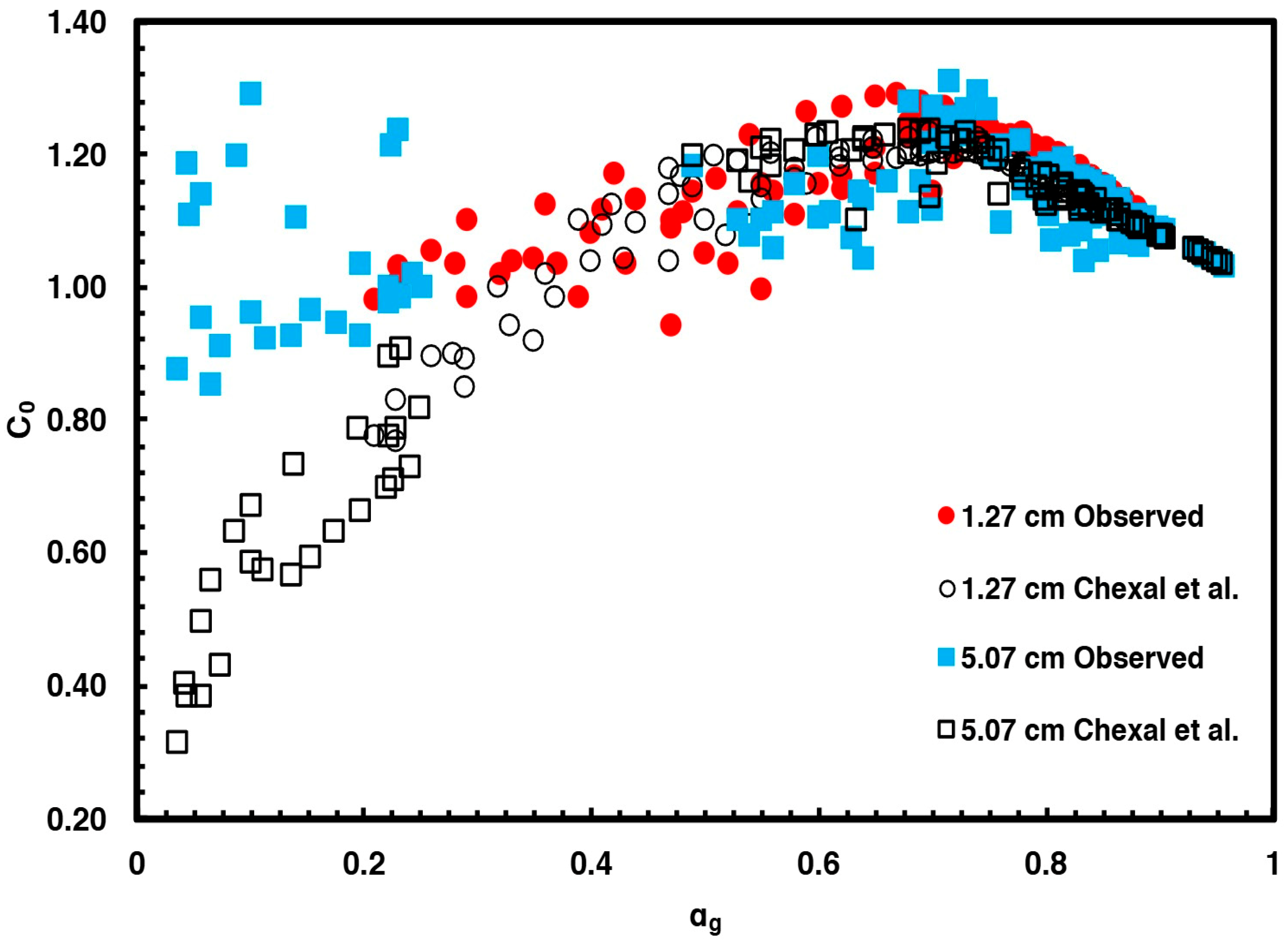
, and for dispersed two-phase flows that have moved beyond the simple bubbly regime, the asymptotic value of the distribution parameter is commonly accepted to be approximately 1.2 for upward flows in pipes [
17,
18,
20,
21].
represents the velocity of the gas phase relative to the mixture volumetric flux. It quantifies the local slip between the phases, which is primarily driven by the balance of local forces, most notably buoyancy (due to density differences) and hydrodynamic drag. This parameter captures the tendency of lighter gas bubbles to rise through the denser surrounding liquid, independent of the bulk motion of the mixture [
14,
21].
In simpler words, the DFM, formulated by Zuber–Findlay, separates two distinct contributions to phase slip: the global, profile-driven term represented by
and the local, force-balance-driven term represented by
[
14]. This model was developed under the assumption of constant phase densities and no phase change in the control volume, which makes it applicable to adiabatic, two-component flows systems [
14]. While the DFM provides a robust theoretical framework, its predictive accuracy is entirely contingent on the quality of the empirical or semi-empirical closure correlations used for these two parameters, but it is still a popular choice because it effectively balances predictive accuracy with computational simplicity [
17,
18,
22].
There are different models developed based on the DFM, and the differences between the models are mostly in the values of
and
, which are listed in
Table 1. However, their validity is often confined to the specific range of fluid properties, pipe diameters, pressures, and flow patterns for which they were developed. For instance, some DFM methods developed for either very small or very large pipes often fail to adequately model the distinct flow structures, particularly the stability of large bubbles, observed in medium-diameter channels [
23,
24]. Furthermore, some correlations perform well for bubbly flow but do not provide a good accuracy for annular flow, and vice versa [
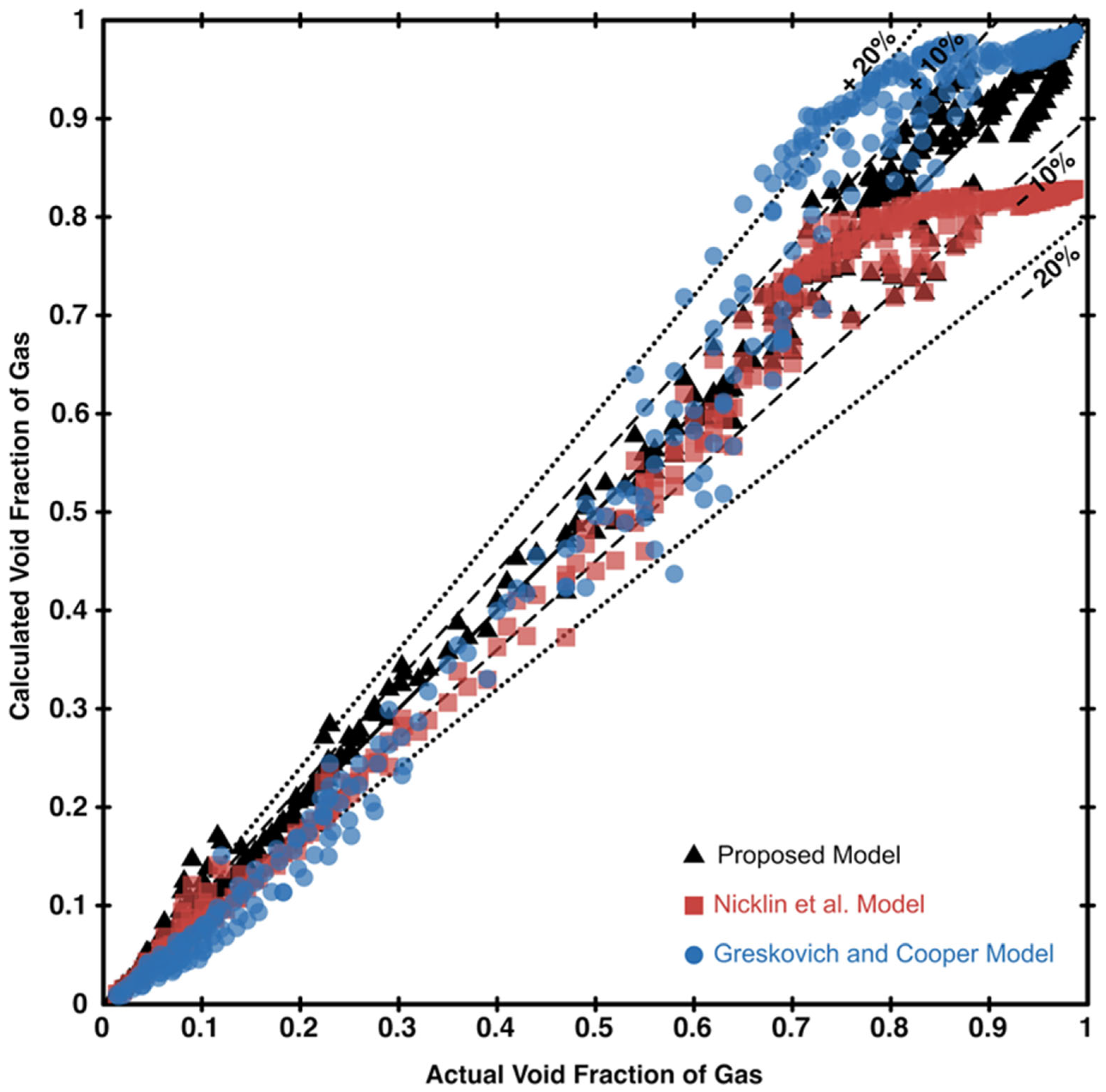
25]. For example, the correlation by Nicklin et al., a simple and popular model, shows acceptable performance for bubbly and slug flow systems but is unsatisfactory at high void fractions typical of annular flow [
26,
27]. Conversely, some annular flow models are inappropriate for dispersed flows. This dependency necessitates a priori knowledge of the flow pattern to select the appropriate correlation, which is a practical limitation, as the flow pattern itself is an outcome of the flow conditions. There were several attempts to create full-range correlations aimed to overcome this issue by providing continuous functions across all regimes, but they often rely on extensive curve fitting, which can sometimes obscure the underlying physics [
28]. Moreover, models derived from data fitting procedures are susceptible to a compensation error, where an inaccuracy in determining one parameter (e.g.,
) is mathematically compensated by an error in the other (e.g.,
), leading to a parameter set that fits the data but may lack a firm physical basis [
29]. Also, full-range models are often developed analytically based on a consistency principle, which assumes that theoretical velocity and void fraction profiles hold true across dispersed, transition, and separated flow regimes [
18]. A comparative study on 52 models was performed by Godbole et al., and the accuracy of several models in different void fraction zones and various flow patterns was analyzed. They found limitations of void fraction predictions for some of the better-performing models, like the Nicklin et al. model, in gas void fractions above 0.75 [
3].
Contemporary research has largely focused on overcoming the limitations of conventional DFM correlations, which are often not applicable over wide-ranging flow conditions or fail to capture complex flow physics accurately [
18,
30]. Dependency on the flow pattern, a specific range of
, or complex empirical correlations is a major shortcoming of models, which creates the need for genuinely full-range DFM models [
18,
30]. Another key issue is the inaccurate modeling of distribution parameters in developing flows. While these DFM closure parameters are typically assumed to be constant in the fully developed region, this assumption breaks down where flow profiles are actively evolving [
17].
Different models rely on a set of core assumptions, like specific operating conditions for key parameters of the drift–flux relationship, such as
and
, to characterize phase velocity differences and the void fraction [
18,
19]. To mechanistically model transitions between flow regimes, particularly the shift from dispersed to slug flow, a two-group bubble approach is frequently adopted, which classifies bubbles into small, dispersed (group-one) and large, cap/slug (group-two) types, a framework that aids in the analytical derivation of DFM parameters across these transitions [
23,
31].
Recent research has significantly advanced the DFM for estimating two-phase flow features across various pipe sizes and conditions. Hibiki and Tsukamoto developed a drift velocity model for the bubbly to beyond-bubbly transition in medium to large diameter pipes (5.08 to 30.5 cm) using a two-group approach to predict non-monotonic velocity behavior [
31]. Expanding the model’s scope, Hibiki et al. analytically derived a full-range DFM correlation for vertical pipes (diameters of 0.6 to 6.7 cm) that spans dispersed, transition, and separated flows [
18]. Specific applications have also been refined. For subcooled boiling in small diameter pipes (0.975 to 2.4 cm), Dong and Hibiki created a new void fraction model by pairing a flow quality model with the full-range DFM to improve axial profile predictions [
32]. Song and Hibiki proposed a two-group DFM for medium-sized diameter pipes (1.27 to 5.08 cm) [
23]. Finally, Nepomnyashchikh and Liburdy experimentally demonstrated that DFM parameters behave nonlinearly in a flow’s developing region, only reaching conventional asymptotic values as the flow fully develops [
17].
Although in some specific cases, the highest precision of predictions may be required, in applications such as gas lift, simplicity of models is preferred over an extreme precision offered by complicated models since operational conditions in long vertical pipes vary significantly, and dependency on case-specific models can cause more challenges and inaccuracies.
Table 1 shows some of the simplified models for estimation of DFM parameters in which
is the surface tension between the gas and liquid phase,
represents the acceleration due to gravity, and
is the Reynolds number.
Table 1.
Example of models representing the distribution parameter and the drift velocity for the DFM.
Table 1.
Example of models representing the distribution parameter and the drift velocity for the DFM.
| Model | Distribution Parameter | Drift Velocity | |
|---|
| Nicklin et al. [26] | | | (4) |
| Zuber and Findlay 1 [14] | | | (5) |
| Bonnecaze et al. [33] | | | (6) |
| Greskovich and Cooper [34] | | | (7) |
| Ishii 2 [16] | | | (8) |
| Pearson et al. [35] | | | (9) |
| Liao et al. 3 [36] | | | (10) |
| Morooka et al. [37] | | | (11) |
| Kokal and Stanislav [38] | | | (12) |
| Bestion [39] | | | (13) |
| Fabre and Line [40] | | | (14) |
2. Multiphase Flow of Liquid and Gas
Predicting flow pattern transitions is a central challenge in two-phase flow analysis. Early approaches relied on limited empirical maps, but a significant advancement was the development of mechanistic models, which predict transitions based on underlying physical principles. The model by Taitel et al. is a widely accepted example of this approach, offering greater physical insight and more reliable extrapolation compared to empirical methods [
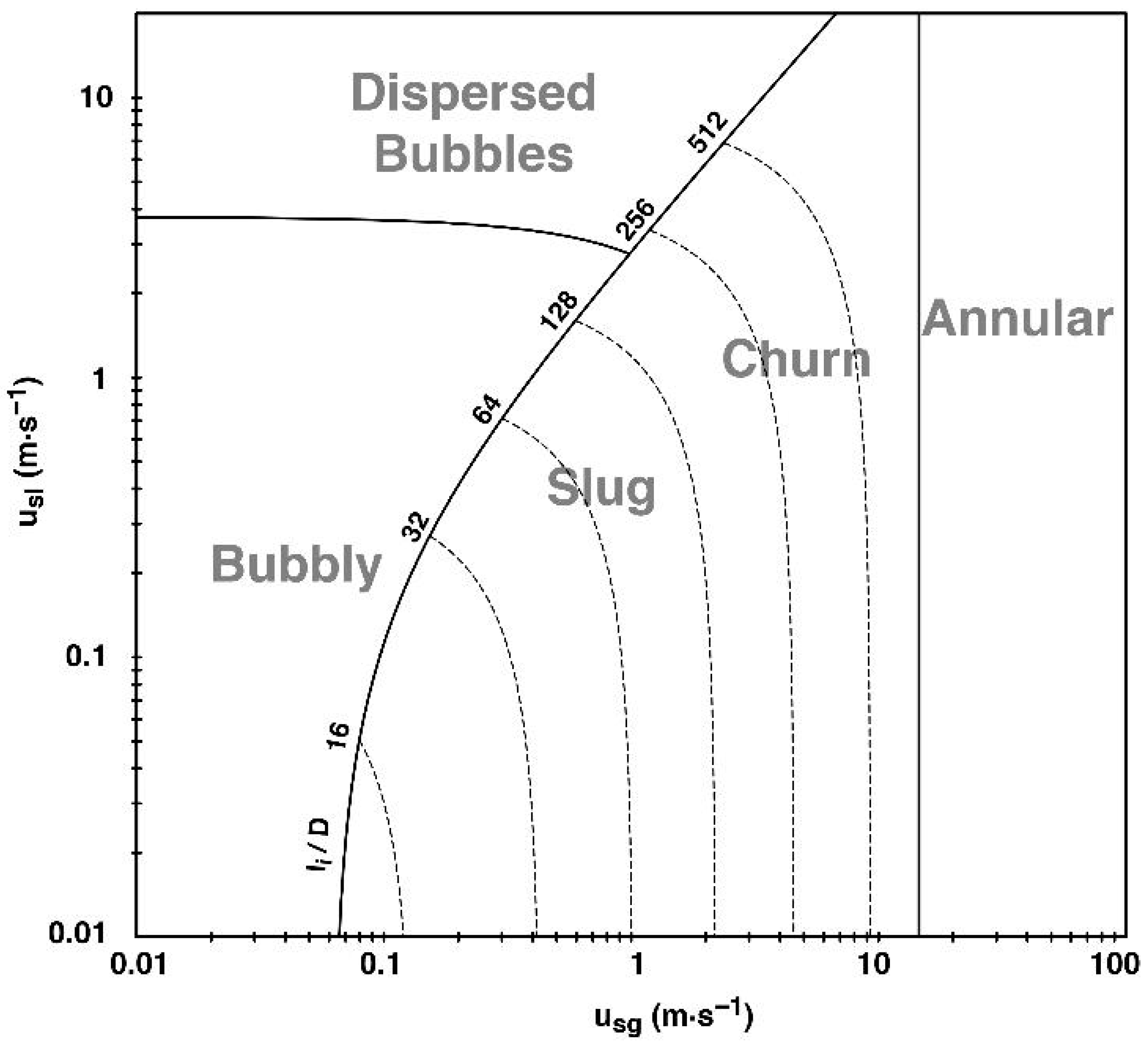
41]. The Taitel et al. map delineates flow pattern stability regions using superficial gas and liquid velocities as coordinates, modeling the physics of four key transition boundaries [
41]. A major advantage of this map is its practicality. For a given set of operating conditions (e.g., pipe geometry and fluid properties), the flow pattern can be predicted using only the superficial velocities of the two phases [
41].
Since the liquid phase is mostly acceptable to be considered as an incompressible flow, density can be assumed to be a constant value. However, the gas phase cannot be treated the same, as its density is highly affected by pressure variation, as shown by Equation (15), in which
can be calculated using Equation (16). Eventually, superficial velocities are presented in Equation (17a,b) for both phases, in which
is the local pressure and
,
, and
are the gas-specific constant, compressibility factor, and temperature, respectively.
Parameters and in Equations (17a,b) introduce the mass flow rate of liquid and gas phases. In a gas lift system with upward vertical flow, the behavior of each phase differs significantly, even in a simple isothermal, constant-diameter pipe. The superficial liquid velocity () remains constant along the entire length of the pipe. However, the superficial gas velocity () continuously increases as the fluid moves toward the outlet at the top. This is a direct result of a hydrostatic pressure drop, which reduces gas density and thus increases gas velocity to maintain a constant mass flow rate, which is a result of mass conservation. Although it may seem that the progression should appear as a horizontal trajectory on a Taitel et al. flow pattern map, this would not be a valid assumption since the flow map is constructed for a constant density of phase and since the boundaries defining the annular and slug/churn regions will be different based on densities.
2.1. Main Parameters for the Proposed Flow Pattern Map
Taitel et al.’s flow map’s primary limitation is that it separates the phase velocities, failing to show their combined contribution to the total flow. The physical impact of gas dominance depends heavily on the liquid velocity (the Y-coordinate). This is reflected in the map’s unbounded nature; it lacks an asymptote that would represent a physical limit on the combined mixture velocity.
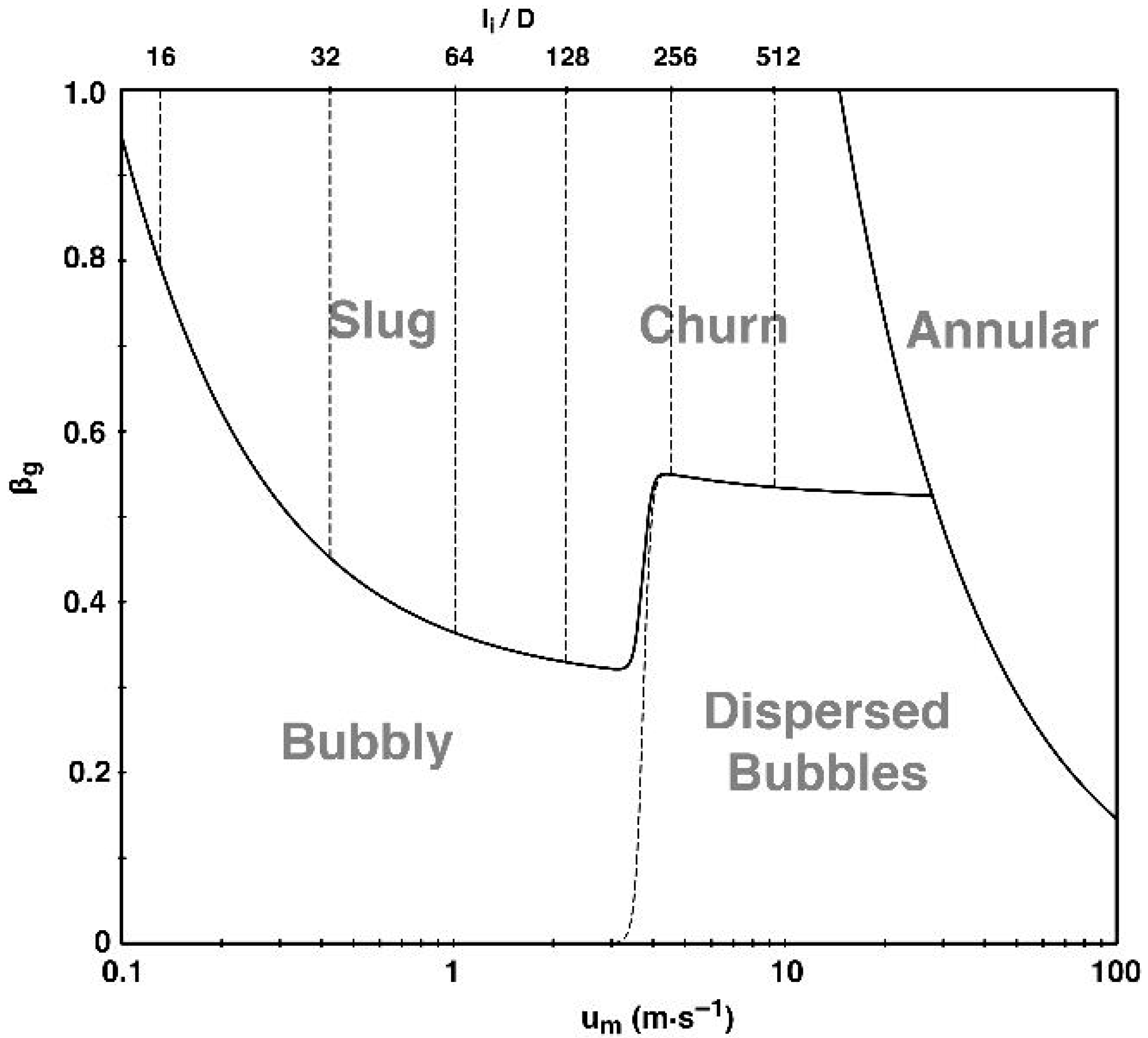
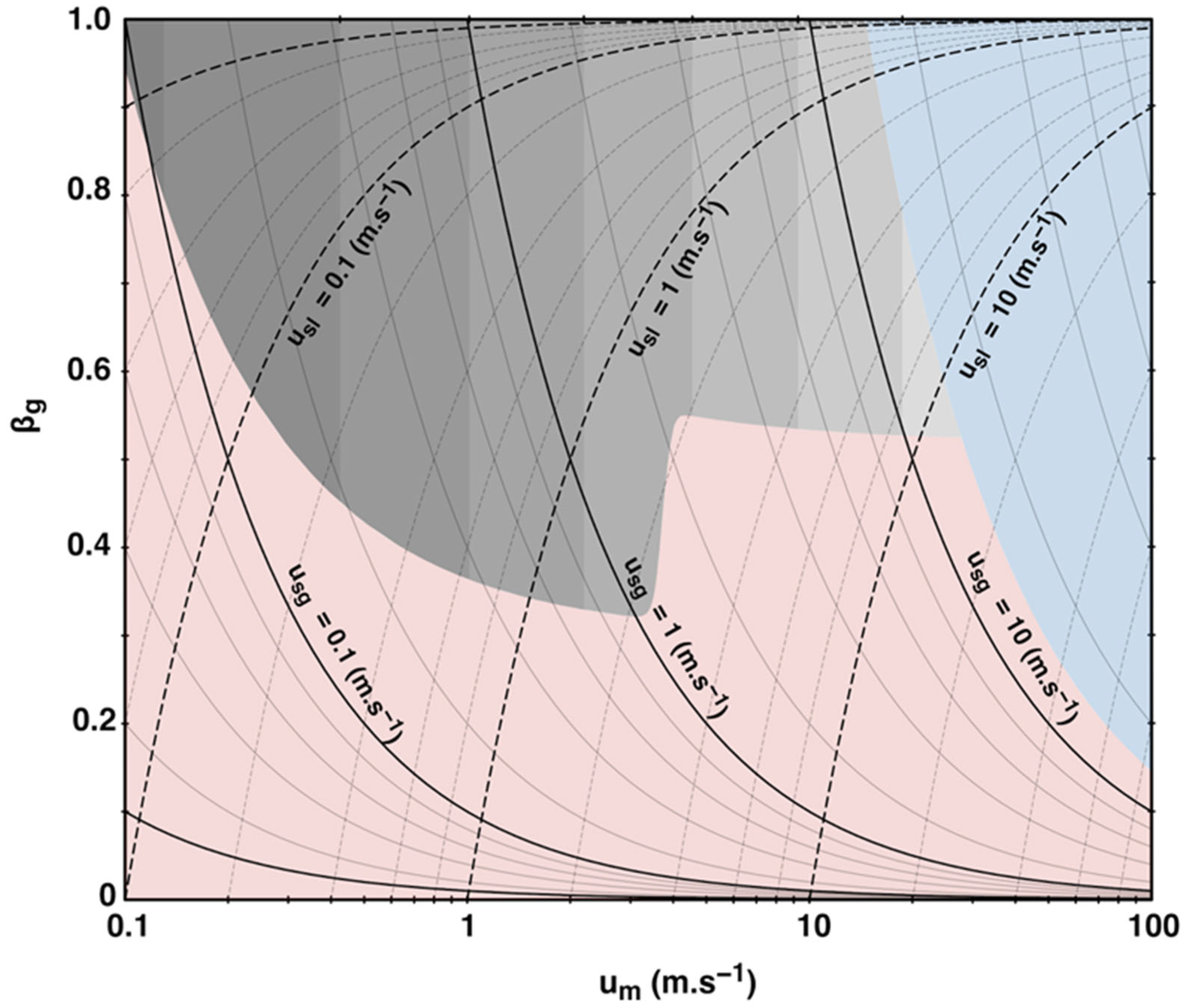
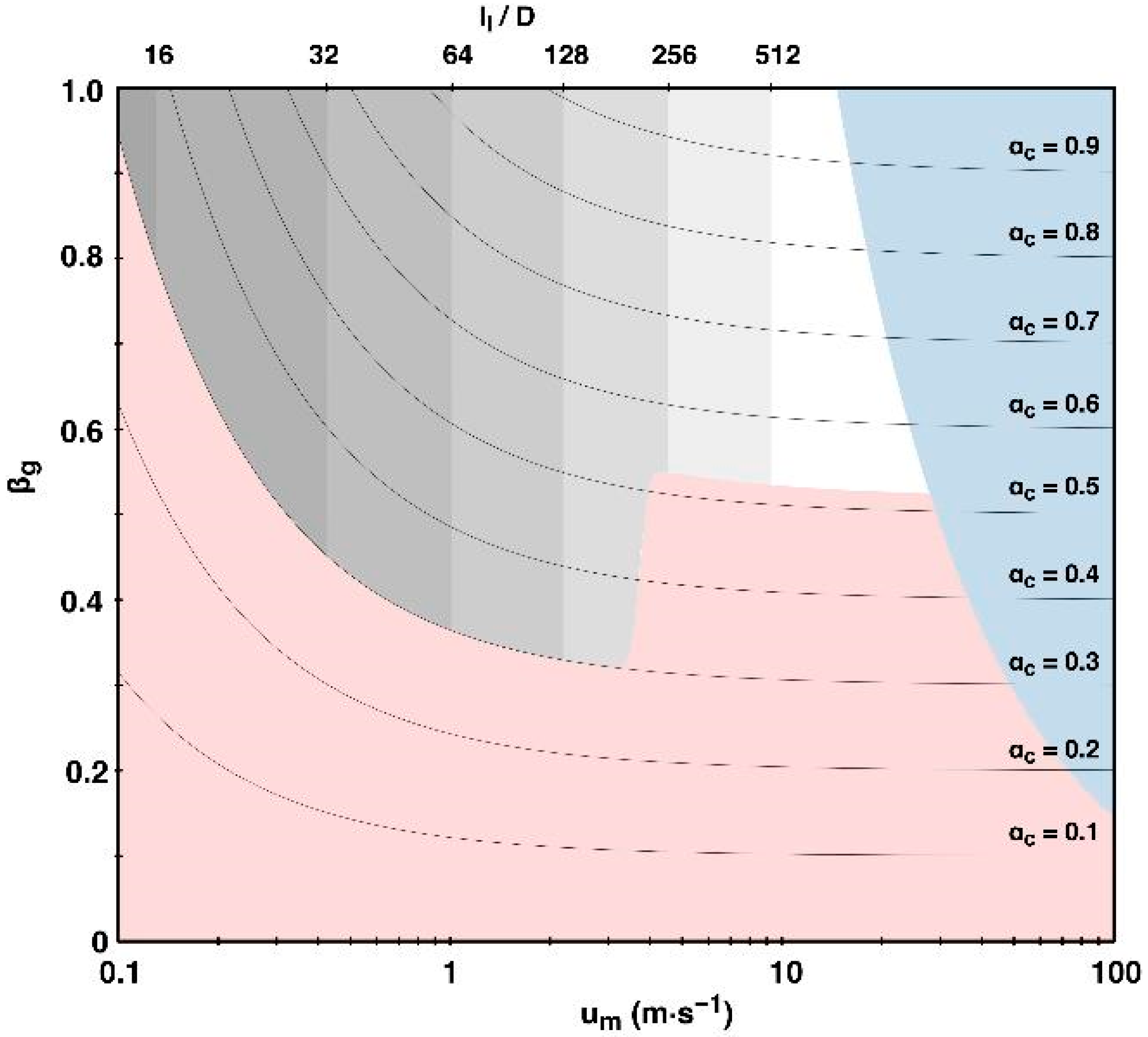
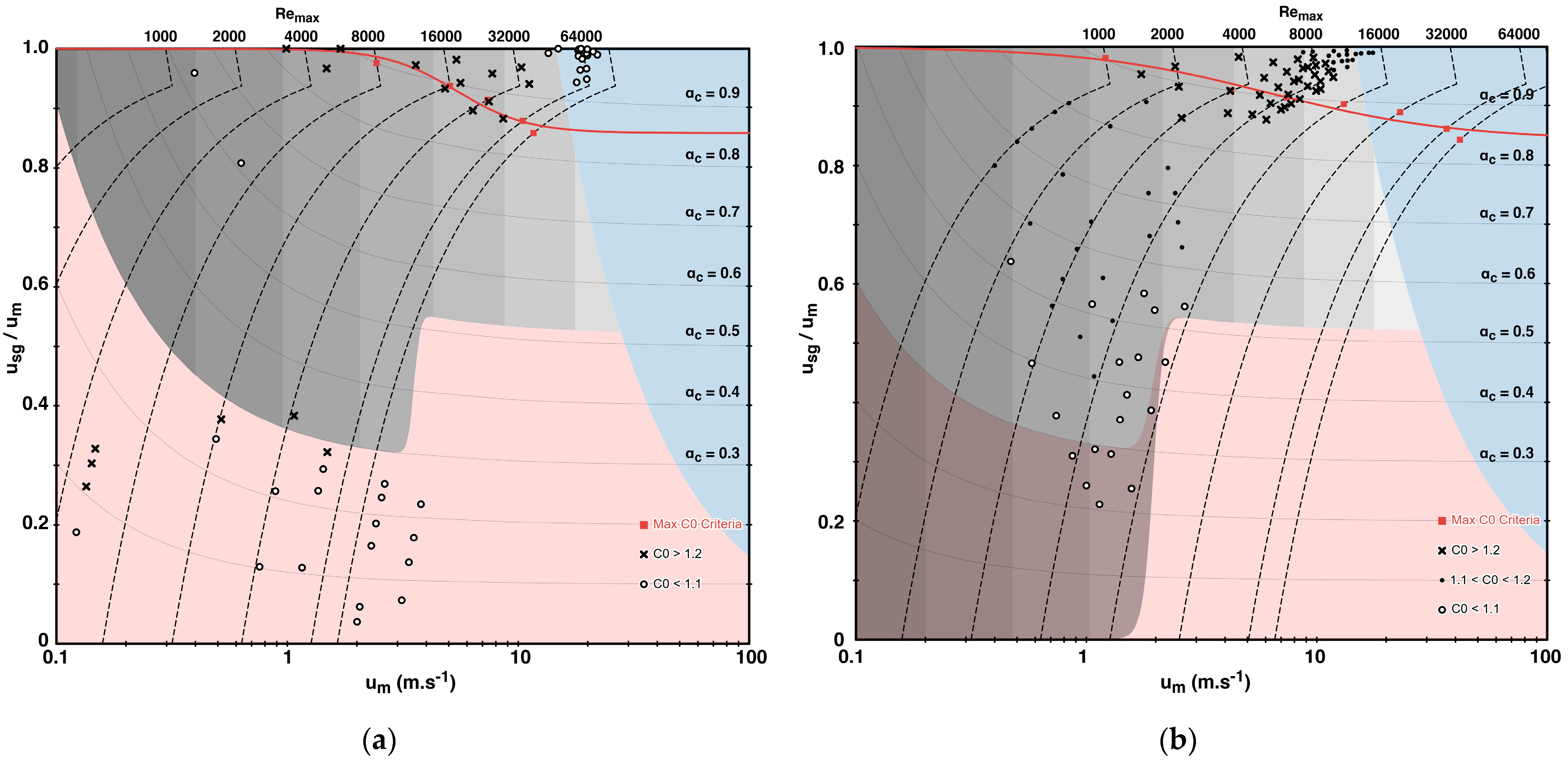
The proposed flow pattern map addresses a key limitation of the original Taitel et al. map, where conditions of high mixture velocity are scattered across the plot (e.g., top left, bottom right, or top right). It simplifies this by redefining the axes.
X-axis: Mixture Velocity ()
Instead of , the X-axis now represents , which can be calculated using Equation (18). This provides the major benefit of consolidating all high-velocity systems to the right side of the map. It also means that the X-axis directly correlates with the system’s overall volumetric flow rate.
Y-axis: Volumetric gas quality ()
The Y-axis is changed to represent . This is the ratio of the superficial gas velocity to the total mixture velocity, as mathematically represented in Equation (19). In the case of gas lift, in which mass flow rates are known instead of using superficial velocities as inputs, Equations (20) and (21) can be used to calculate and , respectively.
In Equations (18) and (19),
,
, and
are the volumetric flow rate of gas, the volumetric flow rate of the mixture, and the cross-sectional area of the pipe, respectively.
This revised visualization makes it easier to identify high-flow systems immediately. It also provides a more intuitive framework for understanding how factors like drift velocity affect gas void fraction estimations within the drift–flux model. Differences in the flow pattern map axis are presented in
Table 2.
is a dimensionless parameter that describes the gas phase’s fraction of the total volumetric flow, with its value always ranging from 0 to 1. When , the gas phase becomes more dominant, and . Conversely, if , the liquid phase becomes the dominant phase, and . In the case of equal contribution of each phase to the total volumetric flow rate, . In this case, the actual velocity of each phase is inversely proportional to the void fraction of the phase ().
Rewriting DFM equations in terms of
shows that the value of
would be a function of
,
,
, and
, as represented in Equation (22).
The DFM is based on drifting between phases; however, in the case of no slip, the flow profile would be flat, and there would be no drift between phases. Therefore, the values of and would be 1 and 0, respectively, which will simplify the correlation to . However, due to the nature of these flows, since drifting would likely happen, would be the lower limit for the value of . This also represents a limit to in the medium, too. Since gas rises faster than liquid, its void fraction will be less than the case of no slip. Thus, .
Still, further simplifications can be performed in case of the negligibility of the term
on higher mixture velocities. Based on most correlations represented in
Table 1, drift velocity is a function of pipe diameter and fluid densities; therefore, its value would stay constant, regardless of the value of superficial velocities. In case of having higher mixture velocities, the value of drift velocity would be far less than the value of mixture velocity (
) and can be neglected for further simplifications as
. This simplification requires high mixture velocity, which would likely happen in annular or dispersed bubble flow patterns.
2.2. Distribution-Weighted Void Fraction
The product of
and
can be intuitively conceptualized as the distribution-weighted void fraction (
) in Equation (23). While the standard void fraction simply quantifies the geometric space occupied by the gas, it fails to capture the dynamic realities of the flow. The key benefit of this weighted term is that it adjusts this simple fraction to account for how the gas is distributed across the pipe and correlated with the fluid’s velocity. Consequently, it provides a more physically meaningful value that better represents the effective gas transport, leading to more accurate predictions of complex two-phase flow behavior, such as slip velocity and pressure drop. Rewriting the DFM with the integration of
would result in the following equations:
2.3. Flow Pattern Transition Criteria
Taitel et al.’s flow pattern map was constructed by having different zones for each flow pattern based on the specific criteria for transitions between flow patterns [
41].
2.3.1. Transition of Bubbly to Slug Flow
The shift from bubbly flow to slug flow is a critical change in two-phase dynamics where small, dispersed gas bubbles merge into large gas pockets, known as Taylor bubbles that can span the entire pipe diameter [
41]. The physical mechanism driving this transition depends heavily on the liquid’s flow rate. According to Taitel et al., at low liquid velocities, slug flow can exist once
reaches a critical value of 0.25 to 0.30. At high liquid velocities, bubbly flow may still exist at higher void fractions, but it would not be possible to have bubbly flow above
value of 0.52 [
41]. They also believed that bubbly flow cannot exist on pipe diameters (
) smaller than a critical value presented in Equation (25) [
41].
Taitel et al. believed that the transition from bubbly flow to slug/churn can happen when
becomes higher than a certain value in Equation (26) [
41].
This relation can also be rewritten in terms of
in Equation (27). This means that if the gas volumetric quality becomes higher than a certain value, the flow would not be bubbly anymore.
2.3.2. Transition of Churn to Slug
As gas velocity increases beyond the stable slug flow limit, the system transitions to churn flow, a more turbulent and chaotic regime. The defining feature of churn flow is the erratic, oscillatory motion of the liquid [
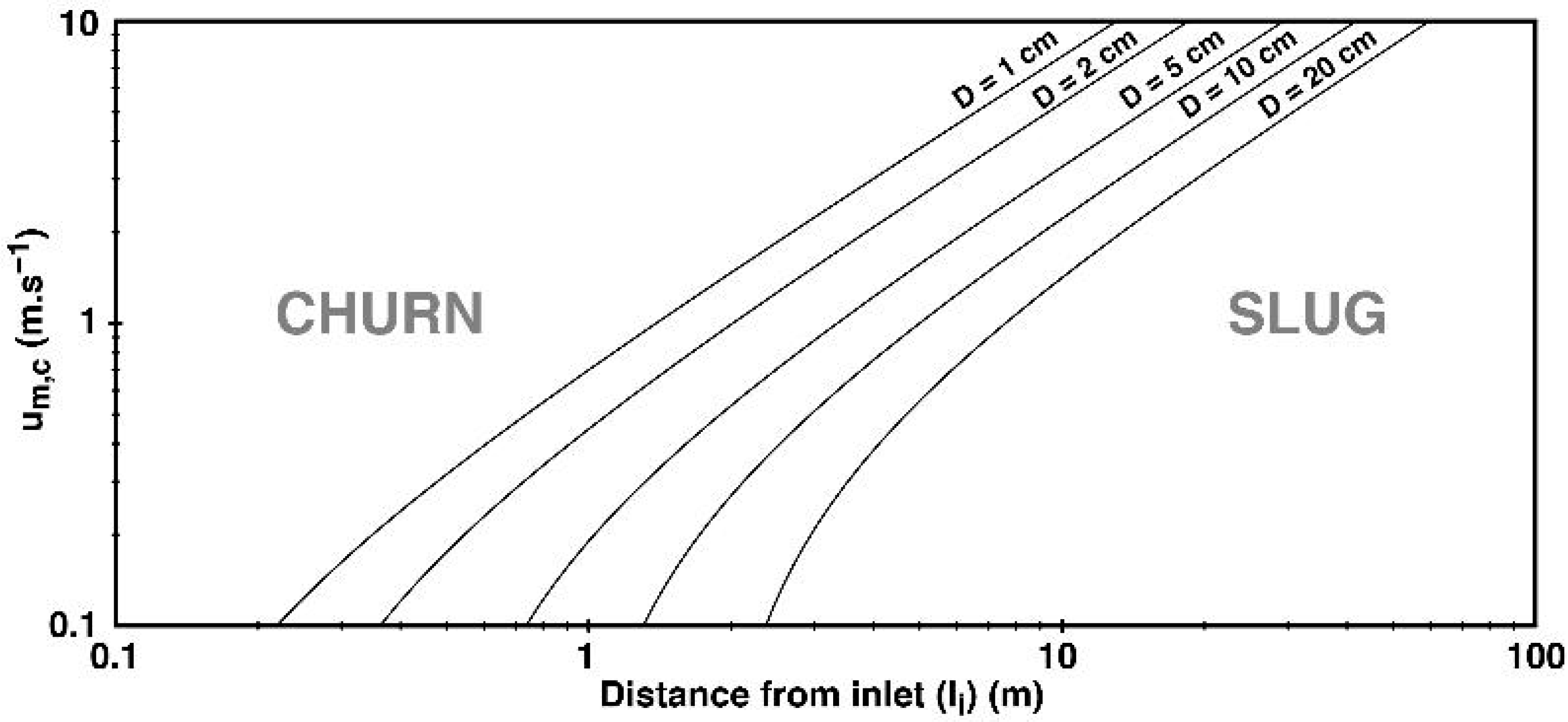
41]. Taitel et al. believed that the boundary of transition of churn and slug flow is a function of mixture velocity and a minimum distance from the inlet to develop stable slugs. In that case, if the point of interest is located closer to the inlet than the minimum distance required for slug formation, flow would be unstable and show churning behavior [
41]. For any
, there is a critical distance from inlet (
) represented in Equation (28) in which flow is still experiencing entry turbulence and slugs cannot form [
41]. Analogous to this, for any point of interest, with distance
from inlet, there is a maximum
above which stable slugs cannot exist (
) (Equation (29)) [
41].
Therefore, slug flow requires a specific distance from the entrance to have a chance of formation, and below that critical distance, it cannot exist (
[
41]. Analogues to this for a specific point in the pipe, mixture velocity should be less than a critical value (
; otherwise, Taylor bubbles become unstable, slugs cannot form, and churning is expected.
2.3.3. Transition to Annular Flow
At higher gas velocities, the chaotic, oscillating motion of churn flow gives way to the more structured annular flow regime. In this pattern, the gas forms a continuous, high-speed core that flows up the center of the pipe, carrying with it entrained droplets of the liquid phase, and the remaining liquid is distributed as a thin, wavy film that travels along the pipe’s inner wall [
41]. Taitel et al. believed that there is a critical gas core velocity below which annular flow would not be possible [
41]. This phenomenon is believed to happen when
becomes higher than critical value of Equation (30) [
41].
In terms of
, it can be presented by Equation (31). This means that for a specific mixture velocity, there is a lower limit of
above which the flow gets annular.
2.3.4. Transition of Bubbly and Dispersed Bubbly Flow
In the initial stage of bubbly flow, the gas phase exists as distinct bubbles dispersed throughout a continuous liquid. As the liquid flow rate increases, liquid turbulence becomes a dominant counteracting force. This turbulence is powerful enough to shred the gas phase into smaller, more spherical bubbles [
41]. This breakup mechanism actively suppresses coalescence, preventing the formation of larger slugs and creating a more stable and uniform finely dispersed bubbly flow, which depends on operating conditions and fluid properties, such as the kinematic viscosity of liquid (
). Transition to dispersed bubbles is expected to happen when mixture velocity becomes higher than a certain value, as presented in Equation (32) [
41].
Considering all these transitional zones, a flow map can be constructed by having the values of superficial velocities of liquid and gas and eventually distinguishing the flow pattern by knowing the position of the point of interest on the map.
2.3.5. Alternative Transition Criteria from Bubbly Flow
Integrating the DFM in the new flow pattern map gives an alternative for the criterion of transitioning from the bubble/dispersed bubble to the slug/churn region. Taitel et al.’s studies assumed that transitioning to slug will start when
reaches 0.25; they used correlations to estimate bubble rise velocity and drift velocity to determine the region [
41]. This transition boundary can also be structured using the DFM as a criterion. Thus, instead of using bubble rise velocity and drift velocity,
of 0.25 can be used in the DFM. Various studies and experiments suggested that the distribution parameter in transition zone of bubble to slug is approximately 1.2 [
17,
18,
20,
21,
26]. Implementing this value in Equation (22) will result in Equation (33), which represents the boundary of bubbly to the slug/churn flow pattern.
Their studies also mentioned the maximum
as 0.52 for bubbly flow at higher liquid velocities [
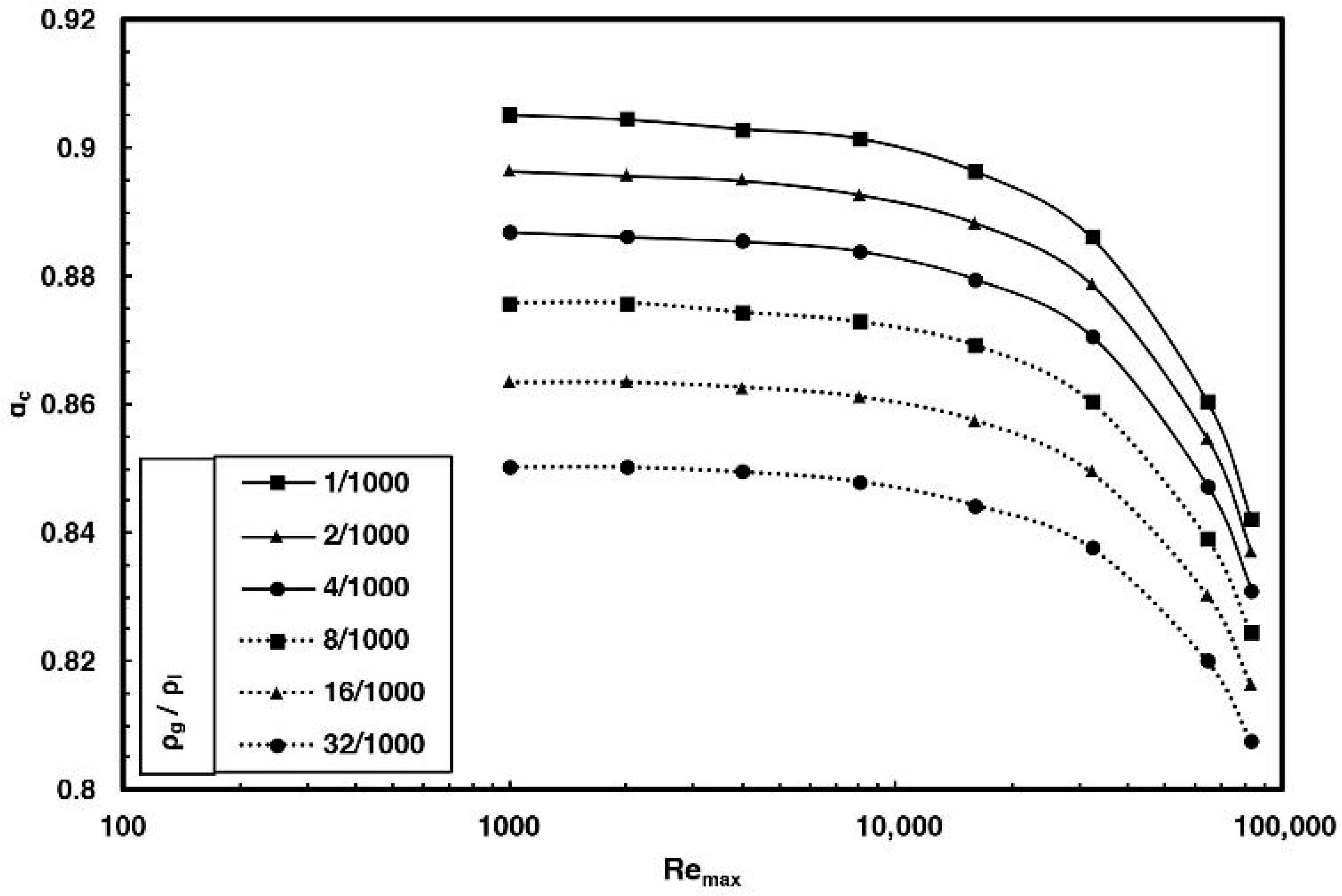
41]. Again, this void fraction can be used in the DFM; however, several studies have shown that at high superficial mixture velocities (
) and when the flow is in the dispersed bubble regime,
approaches unity [
16]. Accordingly, by considering the general form of the DFM given in Equation (22), the transition criterion from the dispersed bubble regime to the slug/churn regime can be expressed as Equation (34).
It should be noted that these zones are based on the assumptions well supported by the literature, and other flow patterns may exist in different zones in the flow map, but their presence may be unstable [
41].
2.4. Transition Criteria for Gas Lift Operations
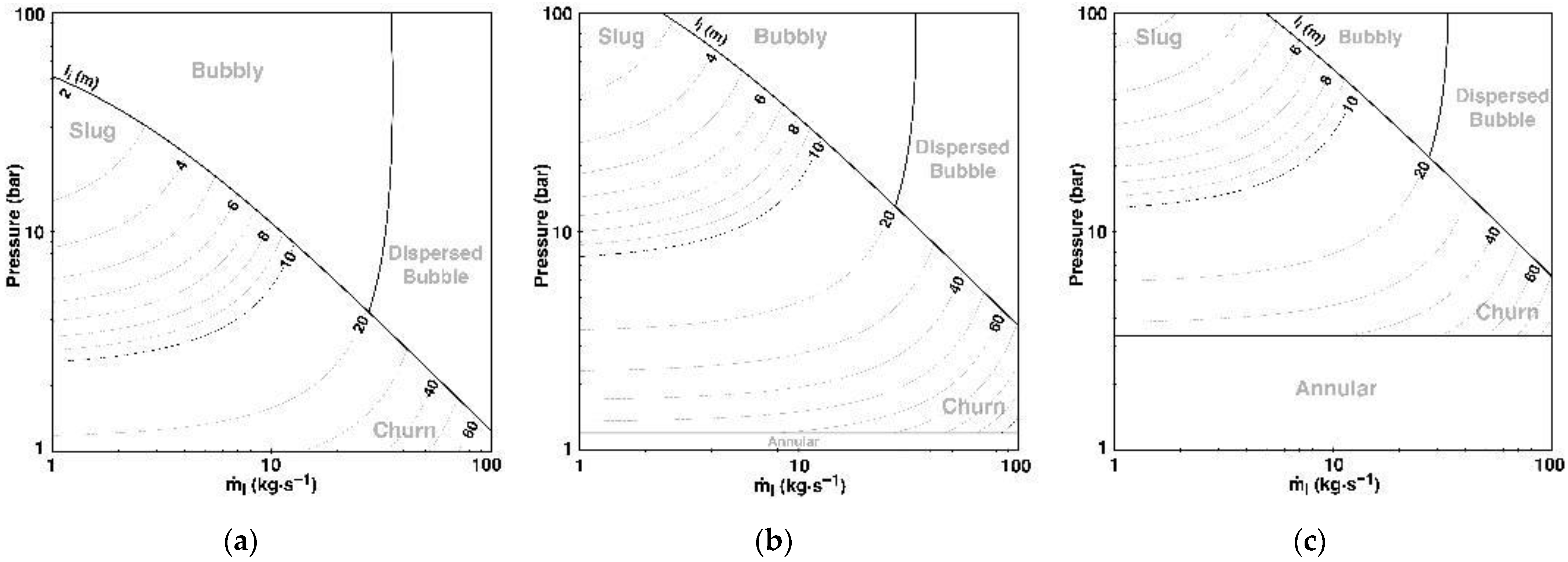
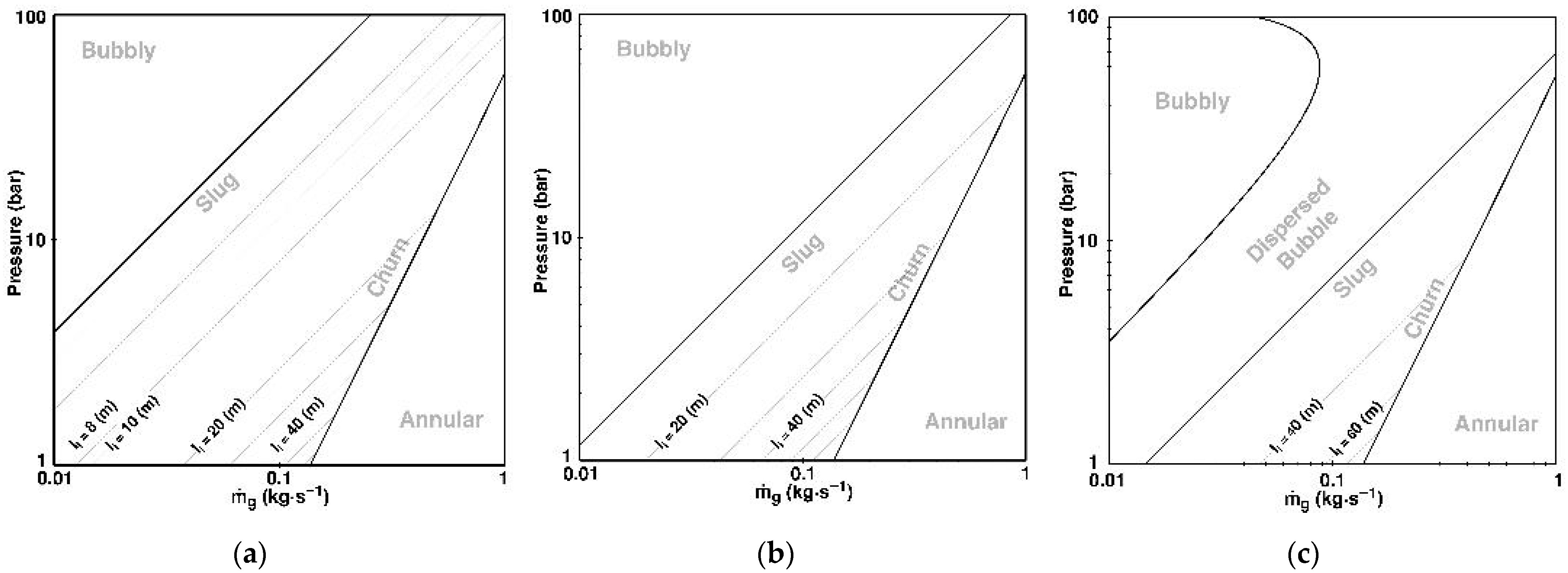
The primary goal of gas lift operations is to transport liquid from a depth to the surface by injecting gas, a process that utilizes the resulting buoyancy forces. In industrial applications, the objective is to optimize the liquid production rate for a specific, controlled gas injection rate. Under steady-state conditions, both the liquid and gas mass flow rates remain constant throughout the system [
42].
While analyzing these systems, the choice of flow parameter is critical. The superficial velocity of the liquid is relatively simple to determine, as it depends primarily on its mass flow rate () and the pipe diameter, assuming that the liquid is incompressible. However, calculating the gas superficial velocity is far more challenging since it is susceptible to high variations. This variability makes it an unreliable parameter when the local pressure is unknown. For this reason, the gas mass flow rate () is a more robust and suitable parameter for analysis. Since it is the controlled input and remains constant under steady conditions regardless of local pressure and temperature changes, it provides a stable basis for modeling and optimization.
Using Equation (17a,b) and the transition criteria of Taitel et al. for each flow pattern, rewriting correlations in terms of pressure will result in a general form of equations, such as Equation (35) [
41].
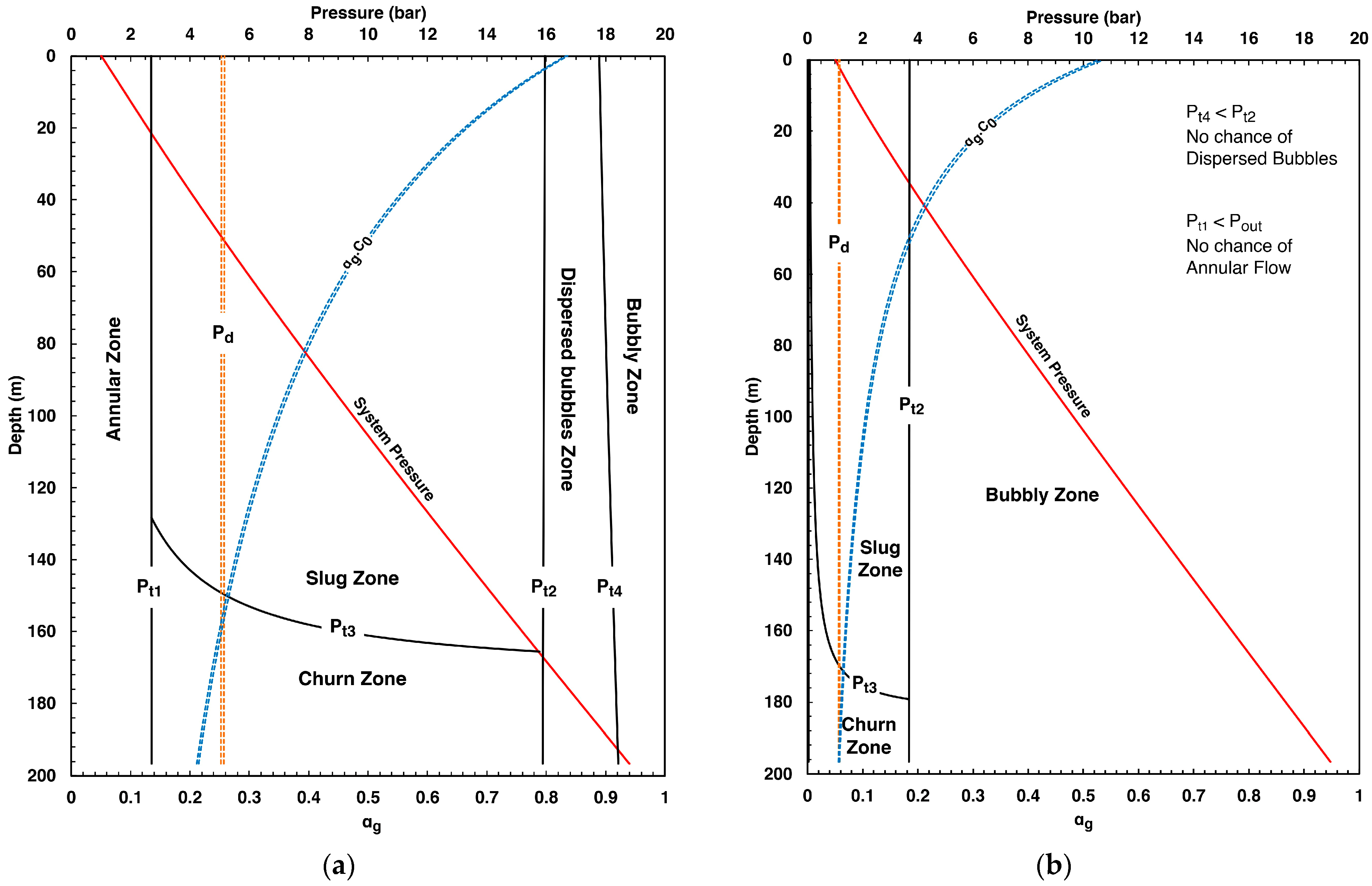
In Equation (35), is the pressure in which transition can happen, and , , and are constants depending on the flow pattern. is a function of fluid properties and flow pattern. is a small positive value considered to ensure non-negative values that may happen for the calculation of churning criteria at distances close to the inlet. The value of will be directly correlated with temperature and compressibility of gas; in the case of considering gas as ideal, it would only be a function of temperature. Further simplification can be performed by considering the system as an isotherm with no temperature variations alongside the flow path, which will result in constant . Flow patterns can be approximated by transforming the criteria used to develop flow pattern maps, and by comparing system pressure at the point of interest with these criteria, flow patterns can be found.
Table 3 presents the values of constants and parameters to be used in Equation (35) for transition criteria, which are based on the criteria introduced by Taitel et al. [
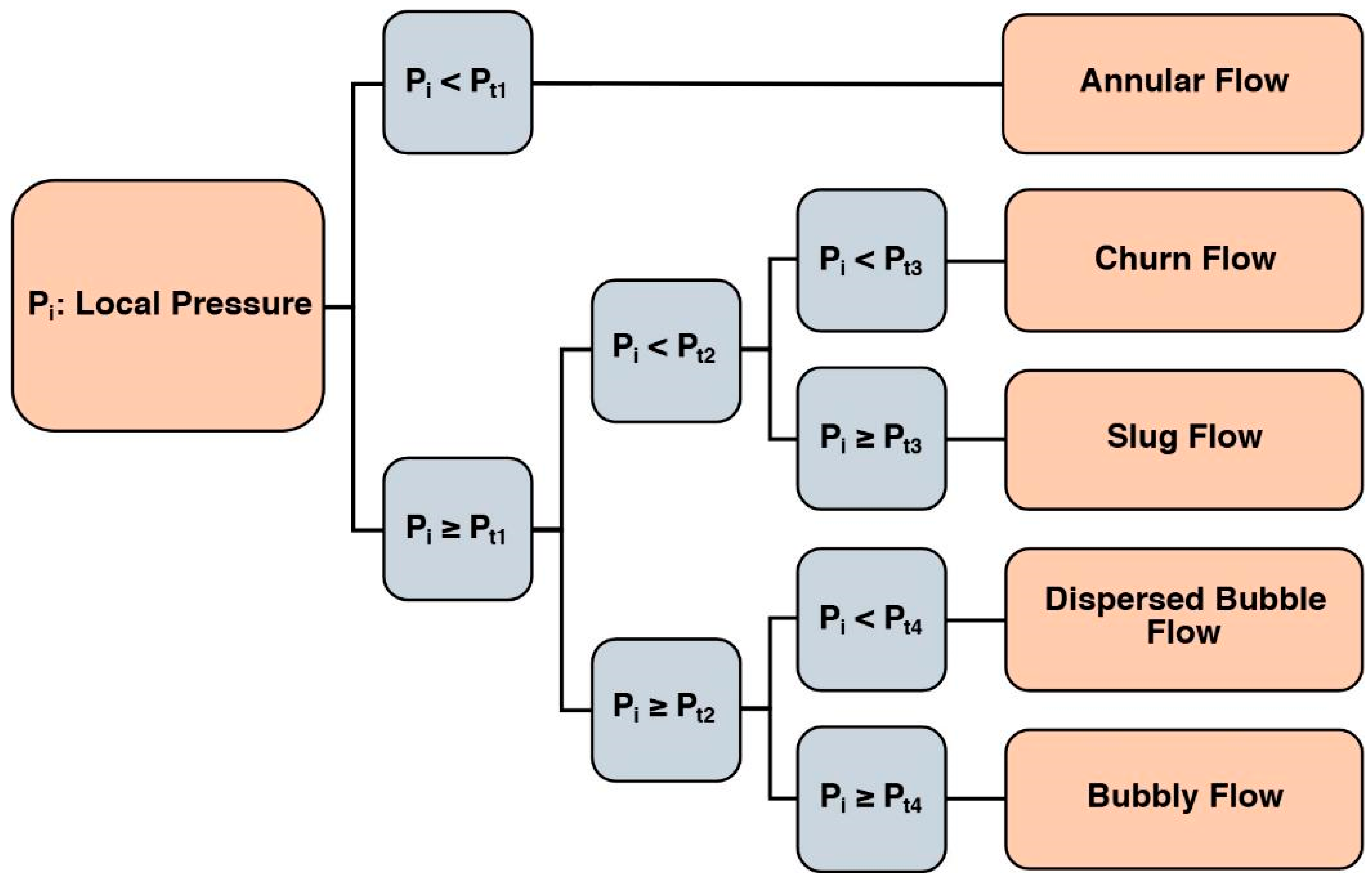
41]. After calculating values for transition criteria, based on the local pressure (
), a comparison algorithm according to the procedure in
Figure 1 can be used to categorize system flow patterns. At the first stage, based on the
value, it would be possible to determine whether the flow is annular or not. If not, the next stage would be to explore whether the flow would be in the slug/churn region or the bubbly/dispersed bubble region. The next stage would be to differentiate between the latter categories.
2.5. Drift–Flux with Pressure Approach
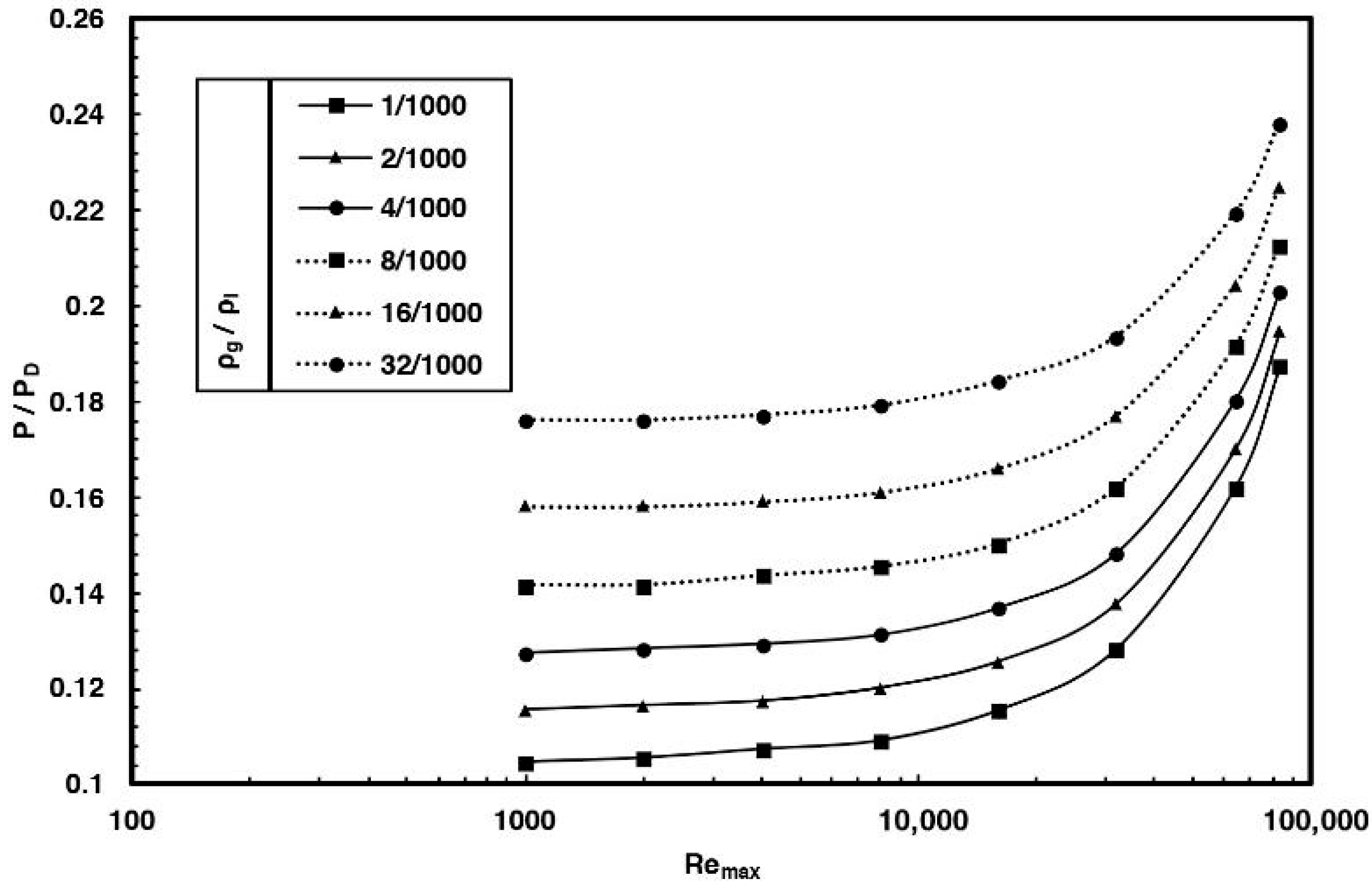
Following this principle, the DFM can be reformulated in terms of local pressure. This reformulation is achieved by expressing the superficial gas velocity as an explicit function of pressure. The local pressure,
, can be calculated using Equation (36), where parameter
, called drift pressure, is determined from Equation (37).
Parameters in Equation (37), which are represented in
Table 4, are structurally analogous to the transition pressure criteria expressed in Equation (35).
Table 4 presents a general form of the
equation as well as four different models for the calculation of
. Since DFMs are typically characterized by two key parameters of
and
, various models can be used to calculate the
term in
calculations.
may be simplified as a constant value in isothermal and ideal gas conditions, which makes it easier to correlate pressure at any point with
using Equation (36).
5. Conclusions
This study aimed to improve the predictive accuracy of the gas void fraction for vertical upward flow, specifically pertaining to gas lift systems. The investigation was motivated by the need to overcome the deficiencies of existing correlations without resorting to computationally intensive models. A method was developed to estimate the void fraction based on main operational inputs (e.g., phase superficial velocities or mass flow rates) for defined, steady-state thermodynamic conditions. Additionally, new approaches for developing flow pattern maps based on mixture velocity and mass flow rate scenarios were presented. The outcomes of this research are as follows.
A novel flow pattern map was developed by integrating the drift–flux model with the Taitel et al. transition criteria. Its coordinate system, based on mixture and phase volumetric flow rates, enhances its utility for industrial applications, such as gas lift.
A methodology was established to predict flow pattern evolution in long vertical pipes with large pressure variations, using the known injected gas mass flow rate as the primary input.
A structurally consistent set of correlations was formulated to estimate both transition pressures and drift–flux parameters, enabling predictive modeling of flow patterns.
The effect of the gas void fraction on flow dynamics was observed as a single term called the distribution-weighted gas void fraction (), which was later utilized to introduce a void fraction estimation model.
Analysis of a broad experimental dataset revealed that the distribution parameter () exhibits a non-monotonic behavior, attaining a peak value at a gas void fraction () of approximately 0.73 (corresponding to ) before decreasing at higher void fractions.
Comparative analysis showed that the proposed model significantly outperforms both simpler and more complex models, achieving about twofold improvement in overall accuracy while maintaining a non-iterative, computationally efficient structure.
The proposed approach demonstrated robust performance across a wide range of pipe diameters, maintaining a consistent level of accuracy where conventional models often degrade, making it highly suitable for practical engineering applications, such as gas lift.
The proposed model assumptions are the same as the drift–flux model and the Taitel et al. model. However, when implemented within a numerical simulation that utilizes a high-resolution computational grid, this approach makes it possible to capture the effects of temperature and pressure variations throughout the flow domain while considering isothermal conditions for each computational cell.
The parametric and simpler structure of the proposed model made it possible to incorporate data analysis techniques for fine-tuning the proposed model to better fit the operating conditions and experimental data.