1. Introduction
Colloidal gels are soft solid materials characterized by an interconnected network of submicrometer-sized particles that spans the entire volume of the dispersion medium [
1,
2,
3,
4,
5,
6,
7,
8]. This particle network is transient in nature and can be disrupted or fluidized under shear deformation. In many cases, once the shear is removed, the disrupted network can automatically reconstruct. When the particle concentration is sufficiently high, this recovery process may occur within minutes or even seconds [
9,
10,
11]. Consequently, the formation of the particle network can be regarded as the final arrested state of the colloidal system. Due to their inherent structural stability, colloidal gels are widely utilized in foods, pharmaceuticals, cosmetics, and paints. Their physical properties are primarily governed by the size and shape of the dispersed particles, the nature of interparticle interactions, the characteristics of the dispersion medium, and the spatial uniformity of the particle network [
1,
2,
3,
4,
5,
6,
7,
8,
9,
10,
11,
12].
A variety of methods have been proposed to identify the gel point [
13,
14,
15,
16,
17,
18,
19,
20,
21,
22,
23,
24,
25,
26] in colloidal systems, i.e., the moment at which a colloidal system transitions from a viscous liquid to an elastic solid. This sol–gel transition signifies the onset of solid-like behavior and plays a pivotal role in both fundamental understanding and practical applications. Accurate determination of the gelation point is essential for enabling precise control over the structural evolution of colloidal materials, mechanical properties, and overall performance. Common techniques include: (1) Tilt or inversion test [
13], which assesses gelation visually by the cessation of flow under gravity; (2) Elastic modulus threshold [
15,
16,
20], where a sudden rise in elastic modulus signals gelation; (3) Viscosity divergence [
16,
17,
18,
19], in which the steady shear viscosity approaches infinity; (4) Crossover method [
14,
15,
20], which detects the point when storage modulus
G′ exceeds loss modulus
G″; (5) Winter-Chambon method [
24,
25], where gelation occurs when the damping factor tan
δ becomes frequency-independent.
Among these methods, the tilt test is the most straightforward, though its qualitative nature limits accuracy. Methods relying on viscosity divergence or abrupt changes in modulus often require extrapolation and may be affected by singularities near the transition point [
15,
16,
17,
18,
19,
20]. In contrast, dynamic rheometric techniques can provide continuous, quantitative assessment throughout the gelation. Consequently, dynamic rheometers have become standard tools for tracking liquid-to-solid transitions and characterizing the properties of mature gels [
14,
15,
21,
22,
23,
24,
25,
26]. These measurements typically employ small strain amplitudes (≤1%) to ensure that the response of the test material remains within the linear viscoelastic regime, thereby preserving the integrity of the microstructure [
24,
25,
26].
Given the increasing reliance on dynamic rheometers to determine sol–gel transition behavior, it is important to clarify the role of oscillatory frequency in this context. Although high-frequency oscillations could conceivably influence the material’s microstructure, mechanical destruction is generally considered to be negligible during gel point identification, provided the strain amplitudes remain sufficiently low and within the linear viscoelastic regime. This assumption appears to be well-supported from both theoretical and experimental perspectives. Theoretically, it draws from the principles of critical phenomena and the physics of percolation networks in soft matter, which predict that the gel point exhibits universal characteristics that are independent of frequency variation [
27]. Experimentally, when frequency assignments are evenly spaced and strain amplitudes are carefully maintained within the linear regime, the crossover point of tan
δ consistently identifies the gelation point with high robustness, regardless of the specific frequency values [
24,
25,
26].
However, in the case of certain physically bonded systems, such as colloidal suspensions, emulsions, creams, and dairy products, dynamic rheometric techniques sometimes yield inconsistent results compared to chemically bonded systems [
14,
15,
23,
28,
29,
30]. These materials exhibit complex behavior near the gelation point, making the gelation point determination feel more like a subjective art or personalized methodology than a rigorously reproducible scientific process [
14,
15]. As a result, the perceived universality of gelation physics becomes obscured. Although several explanations have been proposed [
15], the foundational assumption of whether the classical rheological theory of gelation can still be applied to colloidal systems with finite attractive interactions and reversible aggregation kinetics has rarely been critically examined.
This study examines the validity of this assumption mentioned above. Utilizing a binary colloidal system composed of hydrophobic silica particles suspended in a synthetic organic oil, we observed a striking deviation. The gelation process of a colloidal suspension resembles the dynamics of a physically jammed particle system rather than that of an interconnected polymer network. Here, we present a detailed analysis of this departure behavior and briefly discuss its implications for advancing the fundamental understanding of gelation phenomena in colloidal systems.
2. Results and Discussion
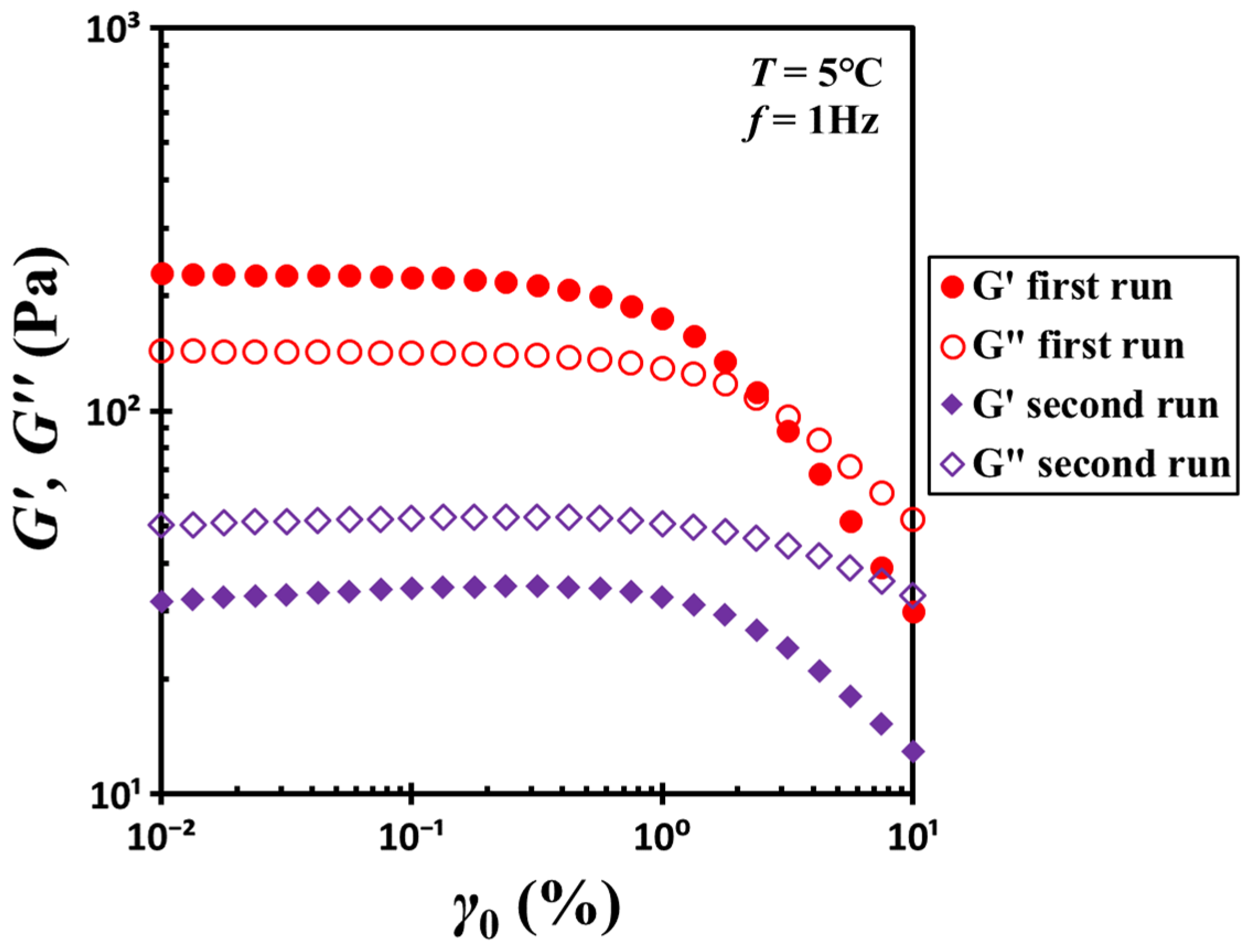
Figure 1 shows the rheological properties of a hydrophobic silica/DOP gel containing 10.4% silica by weight (volume fraction
ϕ = 0.04). At 5 °C, the initially loaded material exhibits solid-like behavior, as its storage modulus
G′ exceeds its loss modulus
G″. However, this solid-like response is maintained only under small deformations. As the strain amplitude increases,
G′ decreases beyond the yielding strain
γy (≈1%). As the strain further increases,
G′ and
G″ intersect, after which
G′ continues to decline and falls below
G″. A subsequent strain-sweep test conducted immediately after the first run confirms that
G′ remains consistently lower than
G″ throughout the entire strain range, indicating a full transition to fluid-like behavior.
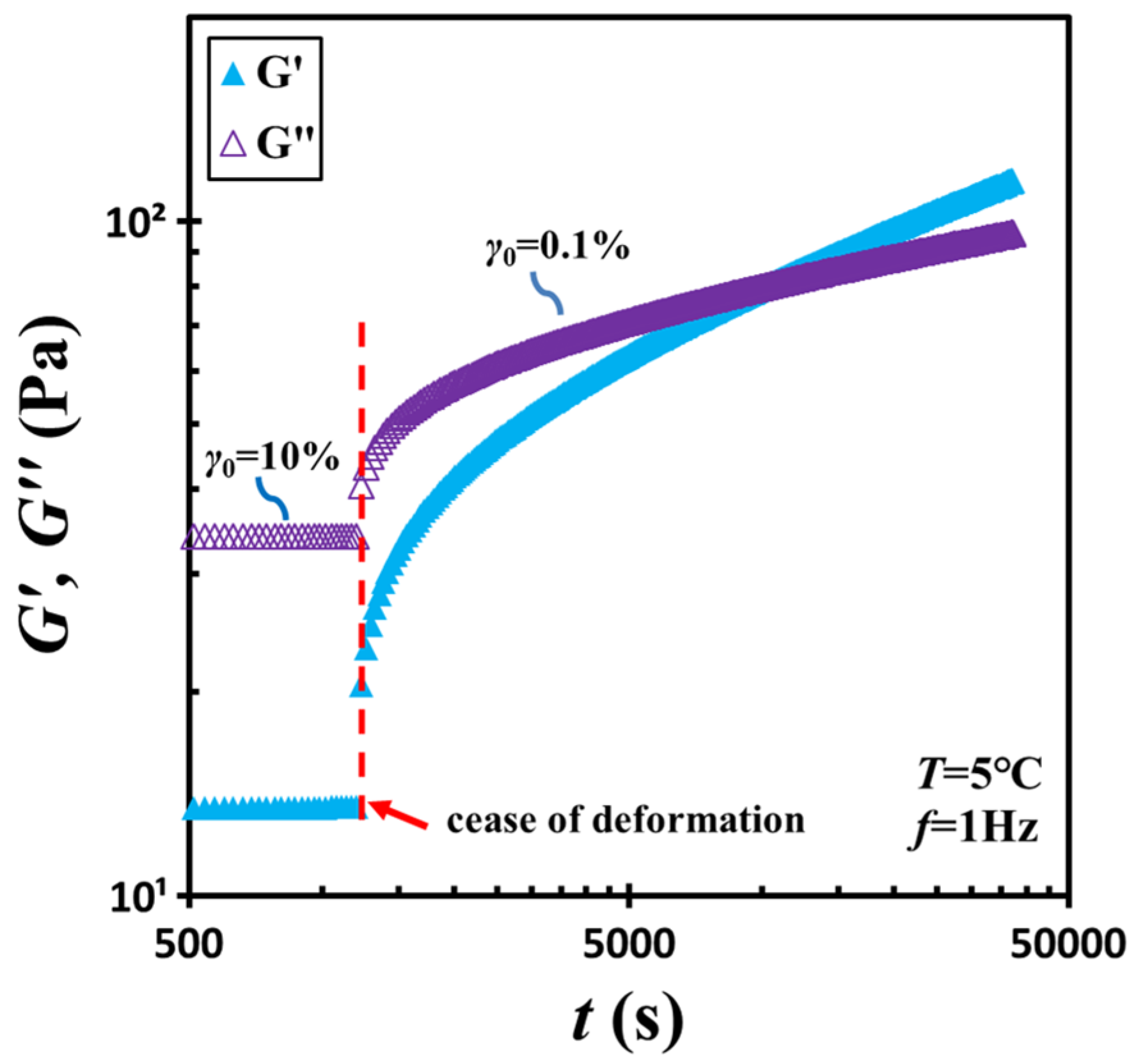
To examine structural recovery, the material was subjected to shear at 10% strain amplitude and a frequency of 1 Hz for an additional 20 min. Subsequently, the strain amplitude was abruptly reduced from 10% to 0.1%, and an oscillatory time-sweep test was conducted to monitor the temporal evolution of viscoelastic properties. Here, a strain amplitude of 0.1% was selected to ensure measurements remained within the linear viscoelastic regime while still generating sufficient torque signals. The result is shown in
Figure 2. Immediately following shear cessation, the material displayed liquid-like characteristics, evidenced by
G″ >
G′. As time increased, both moduli increased, with
G′ rising more rapidly than
G″. Their intersection occurred at a characteristic time (i.e.,
tc = 9000 s), beyond which the material transitioned back to a solid-like state as
G′ surpassed
G″.
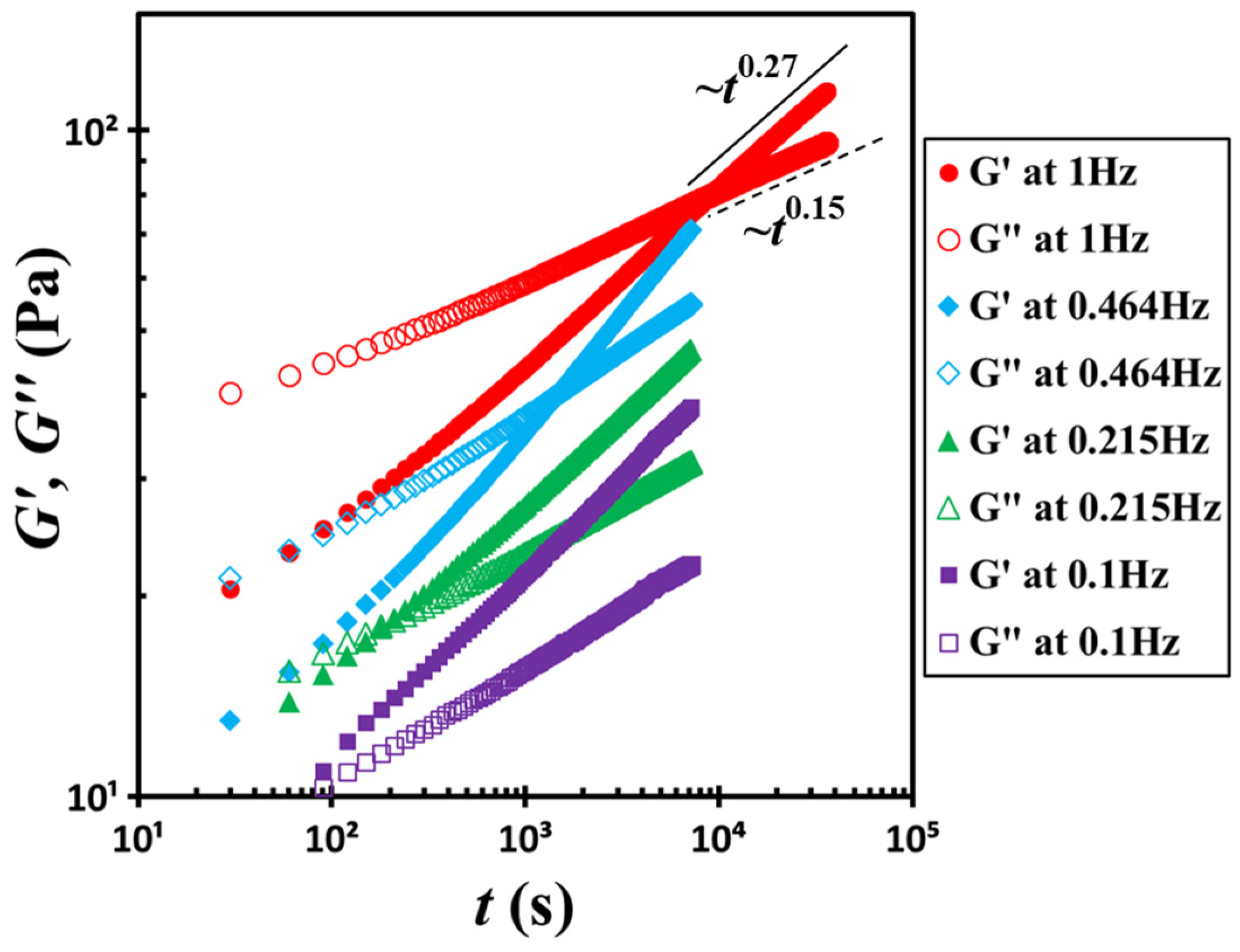
Figure 3 presents similar data for the same suspension measured at four different frequencies, 0.1, 0.215, 0.464, and 1 Hz. In this plot, the time origin was redefined as the moment of shear cessation. At all frequencies,
G′ and
G″ follow power-law scaling relationships with time
t:
G′~
t0.27 and
G″~
t0.15. However, the crossover time between
G′ and
G″ varies significantly with frequency. At
f = 0.1 Hz, the crossover occurs at
tc = 60 s, while at
f = 0.464 Hz, the crossover shifts to
tc = 1470 s. Furthermore, at
f = 1 Hz, the crossover is delayed to
tc = 9000 s. This crossover time marks the onset of structural arrest in the suspension under specific test conditions. Apparently, increasing the probe frequency prolongs the crossover time. Notably, the dramatic shift from 60 s to 9000 s over a relatively modest change in frequency (approximately one order of magnitude) is unexpected and prompts a critical question: Is this pronounced effect primarily governed by the probe frequency itself, or is it a consequence of the associated strain amplitude or shear rate amplitude?
To investigate the role of strain amplitude
γ0 or shear rate amplitude
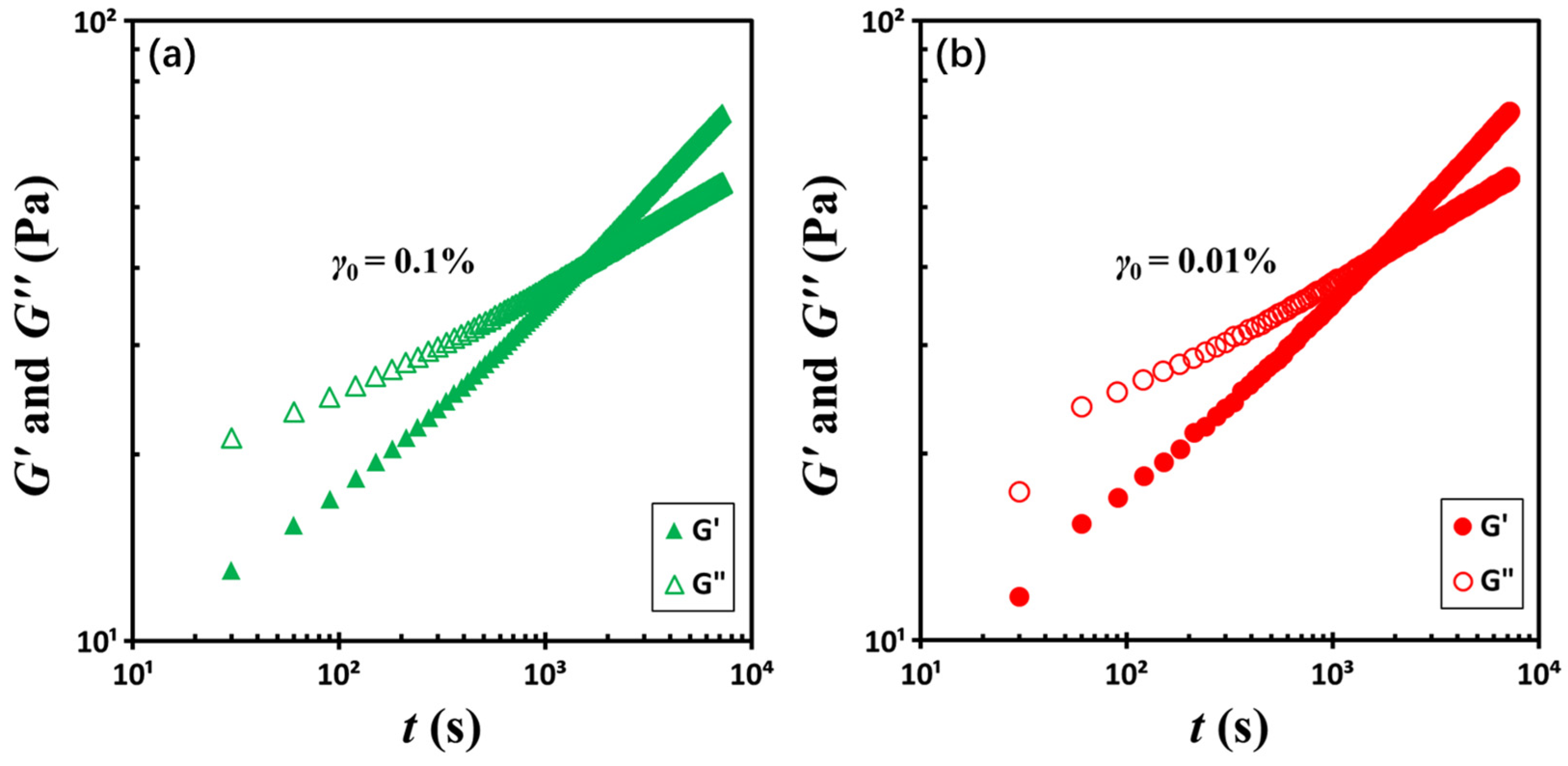
, two time-sweep experiments were then performed at a constant frequency of 0.464 Hz but with differing strain amplitudes: 0.1% and 0.01%. According to the relationship
, a tenfold increase in strain amplitude results in a corresponding tenfold increase in shear rate amplitude.
Figure 4 presents a comparison of the two datasets. For clarity, the two datasets are presented in separate figures, grouped by strain level, to prevent the appearance of overlap. Despite the significant change in shear rate, the crossover times remain relatively consistent, measured at
tc = 1470 ± 60 s for
γ0 = 0.1%, and
tc = 1560 ± 60 s for
γ0 = 0.01%. This marginal discrepancy contrasts sharply with the over two orders of magnitude difference in crossover times observed in
Figure 3, suggesting that strain amplitude or shear rate amplitude is not the dominant parameter. Rather, test frequency appears to be the principal factor governing the crossover point.
Nevertheless, it should be noted that the crossover point between the storage modulus
G′ and the loss modulus
G″ should not be regarded as a definitive criterion for determining the gel point. Tung and Dynes [
23] observed that in chemically bonded polymer gels, when the frequency increases tenfold, the frequency dependence of the crossover point increases by about 1 min. Winter [
26] found that this crossover point occurs near the gel point of chemically bonded gels, but not exactly at the gel point. He and his coworkers [
24,
25,
26] proposed that a reliable experimental methodology of the critical threshold should be the frequency-independence of the loss tangent tan
δ.
In order to determine the gelation point, frequency sweep measurements were conducted along the temporal evolution shown in
Figure 4, with a frequency range from 10 Hz to 0.1 Hz. These measurements are like snapshots in time [
24,
25,
26], enabling continuous tracking of the change in viscoelastic properties, thereby providing the rheological features of the transition from liquid to solid behavior.
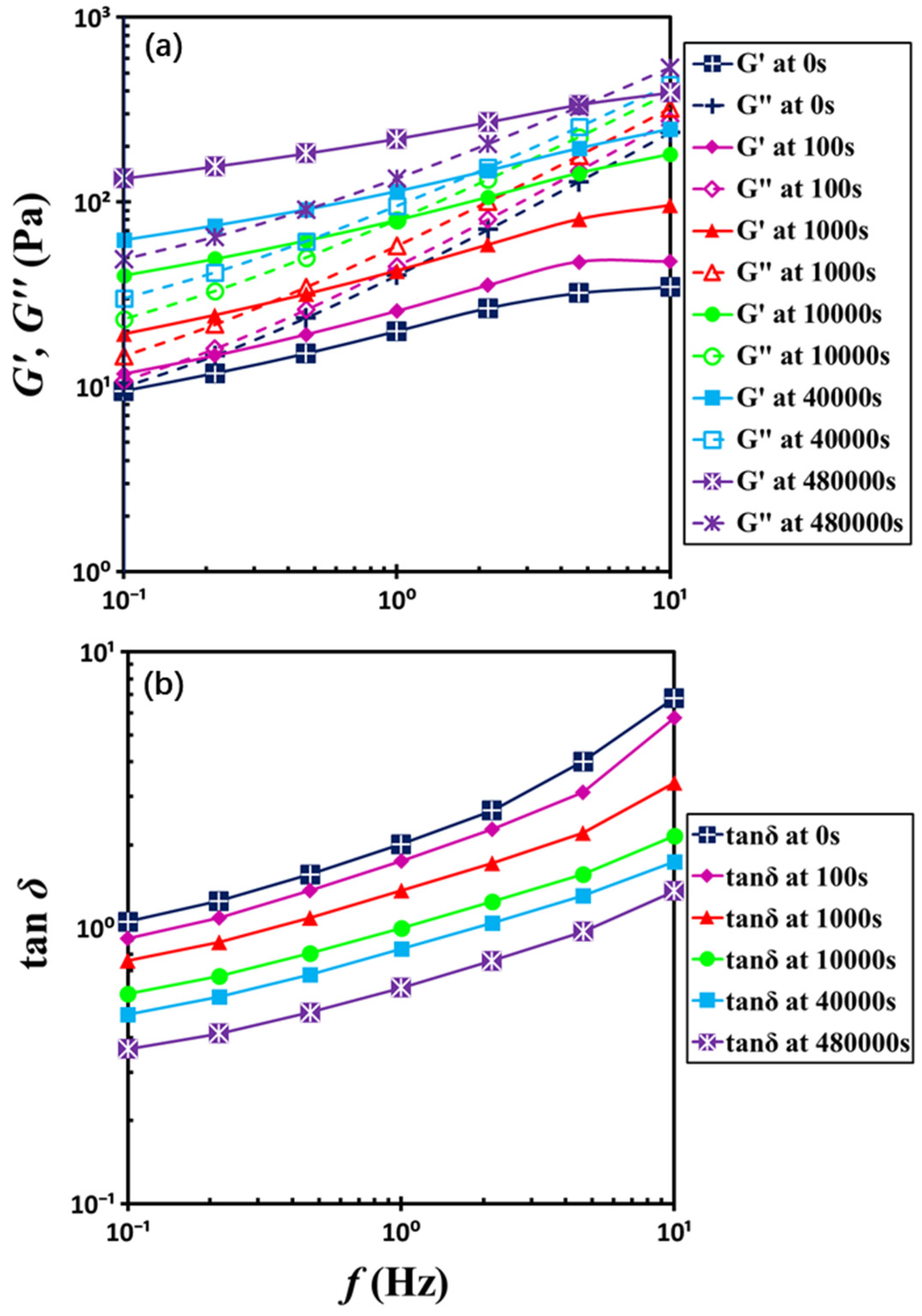
Figure 5 illustrates the frequency sweep results for six distinct waiting times. At low rest times,
G″ remains higher than
G′ across most of the frequency range, consistent with liquid-like characteristics. At extended waiting times during gelation, however, the system exhibits
G′ surpassing
G″, reflecting the emergence of solid-like characteristics. Intriguingly, at high frequencies (e.g.,
f = 10 Hz), the loss modulus
G″ exceeds the storage modulus
G′, indicating a predominantly liquid-like response, whereas at lower frequencies
G′ surpasses
G″, signifying solid-like behavior. As gelation progresses, the dynamic moduli
G′ and
G″ increase over time and the crossover point of
G′ and
G″ shifts toward higher frequencies, revealing unique dynamic microstructural evolution during the solidification.
The observed viscoelastic crossover phenomenon represents a notable departure from the classical rheological behavior typically exhibited by polymers. In conventional polymer melts or solutions, the dynamics are governed by chain relaxation processes [
31], resulting in elastic or solid-like behavior (
G′ >
G″) at high frequencies and liquid-like terminal flow (
G″ >
G′) at low frequencies. Similarly, physically crosslinked gels [
32] also display liquid-like behavior at low frequencies due to the reversible nature of their physical crosslinks, which can break and reform over time. When subjected to sufficiently low-frequency deformation, these dynamic bonds have plenty of time to reorganize, leading to a fluid-like response.
The colloidal gel examined in this study is likewise a physically bonded system, characterized by a percolated network of submicrometer-sized attractive particles that spans the entire volume of the dispersion medium. However, it exhibits an inverted frequency-dependent trend. Unlike typical polymer gels, this colloidal system behaves as an elastic solid at rest and transitions to a fluid state only under sufficient mechanical excitation. This inverted frequency-dependent behavior suggests that the particulate microstructure manifests a unique rheological signature, where solid-like behavior dominates at low frequencies due to the stability of the network, and yielding occurs only when the applied stress disrupts the structure.
Supporting evidence from the literature includes the work of Trappe et al. [
33], who examined several attractive colloidal systems and observed similar inverted frequency dependence during the sol–gel transition. They attributed this phenomenon to the concept of “jamming,” which shares fundamental physical principles with glass formation [
34]. Consequently, the inverted viscoelastic trend observed during the liquid-to-solid transition can be rationalized within this framework. However, the implications of such anomalous behavior on classical rheological theory of gelation were not addressed in their analysis.
The inverted frequency dependence observed during the sol–gel transition leads to a marked deviation in the behavior of the loss factor, tan
δ, from the classical rheological definition of the gel point. As illustrated in
Figure 5b, tan
δ for the colloidal gel increases monotonically with frequency across all temporal snapshots. This trend contrasts sharply with classical gelation theory [
35], which typically describes a decreasing, concave-up profile of tan
δ prior to the gel point, a frequency-independent plateau at the gel point, and an increasing, concave-down trajectory thereafter. The persistent concave-up increase in tan
δ throughout the sol–gel transition suggests that relaxation mechanisms have been evolved throughout the frequency-sweep process, reflecting the dynamics of a physically jamming system of particles [
2] rather than that of an interconnected polymer gel. Consequently, the classical framework of gelation fails to adequately capture the rheological characteristics of this colloidal system.
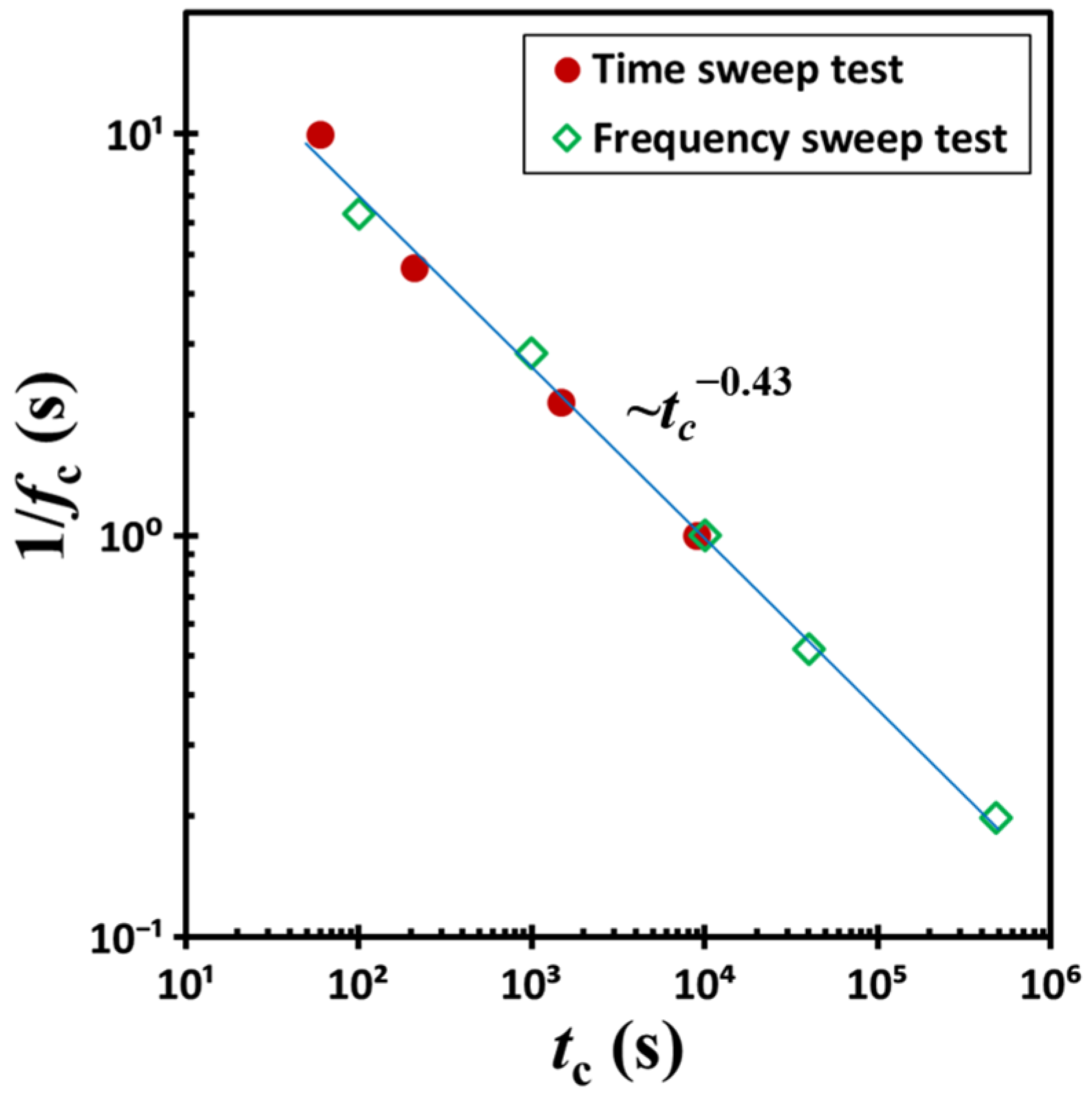
By extracting the crossover time
tc and corresponding shear frequency
fc from
Figure 3 and
Figure 5 at the point where the storage modulus
G′ and loss modulus
G″ intersect, we constructed
Figure 6 to further analyze the data. In this framework, the reciprocal of
fc defines the oscillation period:
pc = 1/
fc. When plotted on a dual logarithmic scale, a clear linear correlation emerges between
pc and
tc, derived from both time-sweep experiments at varying shear frequencies and frequency-sweep experiments at differing waiting times. Again, samples subjected to longer waiting periods exhibit proportionally lower values of
pc. This trend follows a simple power-law relationship:
pc∼
tc−0.43. According to this scaling,
pc tends toward infinity as
tc approaches zero, implying that the corresponding shear frequency
fc approaches zero.
However, experimental validation of this extrapolation remains challenging, as it lies beyond the practical limits of current measurement techniques. Nonetheless, visual observations reveal that the colloidal suspension swiftly regains its gel-like state following the cessation of shear deformation induced by vigorous stirring. In particular, a tilt test at 23 °C demonstrates that structural recovery occurs within a minute, suggesting rapid reformation of the gel network in the absence of mechanical disturbance. Nevertheless, it should be noted that
Figure 6 reveals a striking result: a two-order-of-magnitude change in excitation frequency
f leads to an approximately five-order-of-magnitude shift in the crossover time
tc.
To interpret the unexpected frequency dependence of the liquid-to-solid transition behavior, it is essential to consider the inherent tendency of attractive particles in a liquid medium to agglomerate and form a jammed network. The transition from a liquid-like to a solid-like state is likely governed by the collective dynamics of the dispersed particles. When structural rearrangements within the system occur on timescales comparable to those of the imposed oscillatory shear, the external mechanical perturbation can significantly influence the formation and evolution of the particle network. This interplay between intrinsic particle motion and applied frequency may explain the observed rheological response.
A rough estimate of the characteristic frequency of Brownian motion of filler particles [
36,
37] can be derived from the Stokes-Einstein relation:
D/
a2 =
kT/6π
ηa3, where
T is the temperature,
k is the Boltzmann constant,
η is the viscosity of the medium,
D is the diffusion coefficient of a colloidal particle, and
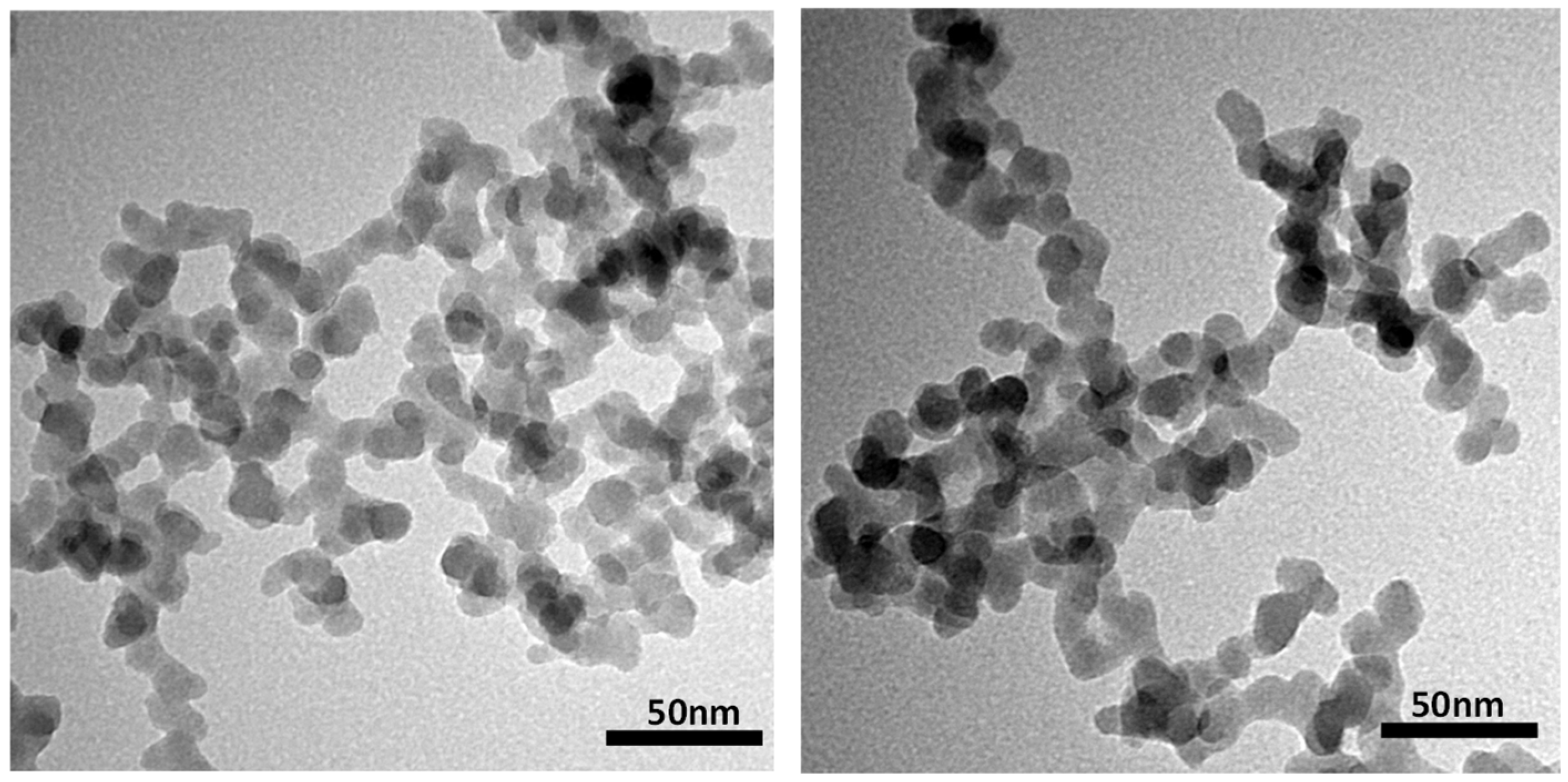
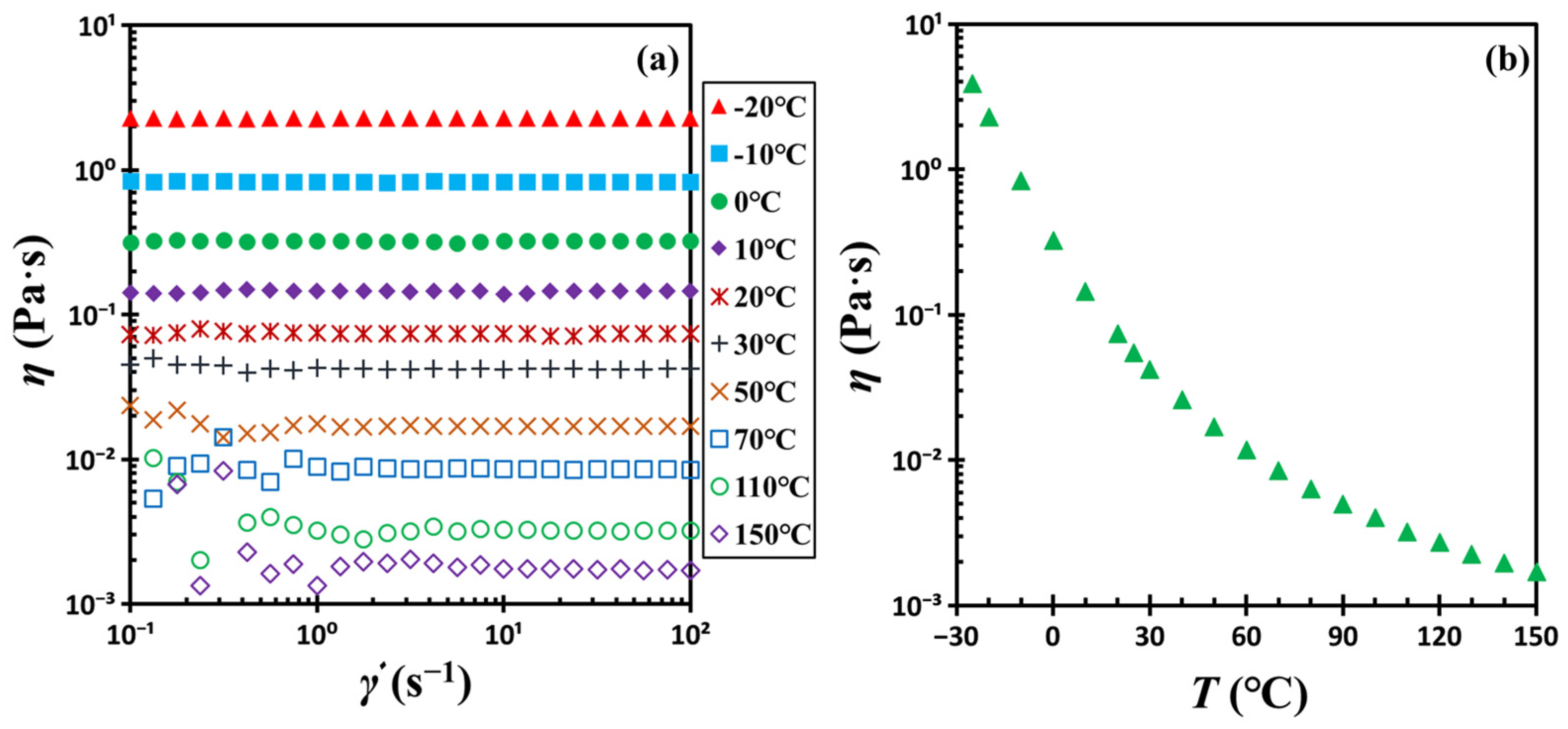
a is the particle radius. In this colloidal suspension, the mobile entities are fumed silica aggregates, with diameters on the order of several hundred nanometers. Considering the viscosity of the dispersion medium (or DOP) at 5 °C is approximately 0.22 Pa·s, the estimated frequency (
D/
a2) of particle motion falls within the range of 1 to 10 Hz. Remarkably, this range aligns closely with the shear frequencies employed during rheological measurements. The overlap of these timescales implies that structural rearrangements of filler particles may occur at a rate comparable to that of the applied mechanical perturbation.
We anticipate that this phenomenon may be prevalent across a range of colloidal systems, including emulsions, creams, and dairy products, where the sizes of dispersed particles typically span from submicrometers to several micrometers. The present findings underscore the potential relevance of particle-jamming physics in shaping the formulation and processing behavior of such systems, particularly in dairy applications. Accordingly, the observed deviations from classical theoretical predictions in certain colloidal food systems [
14,
15,
23,
28,
29,
30] may arise from a similar underlying mechanism, where particle dynamics and externally applied mechanical excitation are intertwined together. This interplay offers a plausible explanation for these discrepancies frequently reported in the literature.
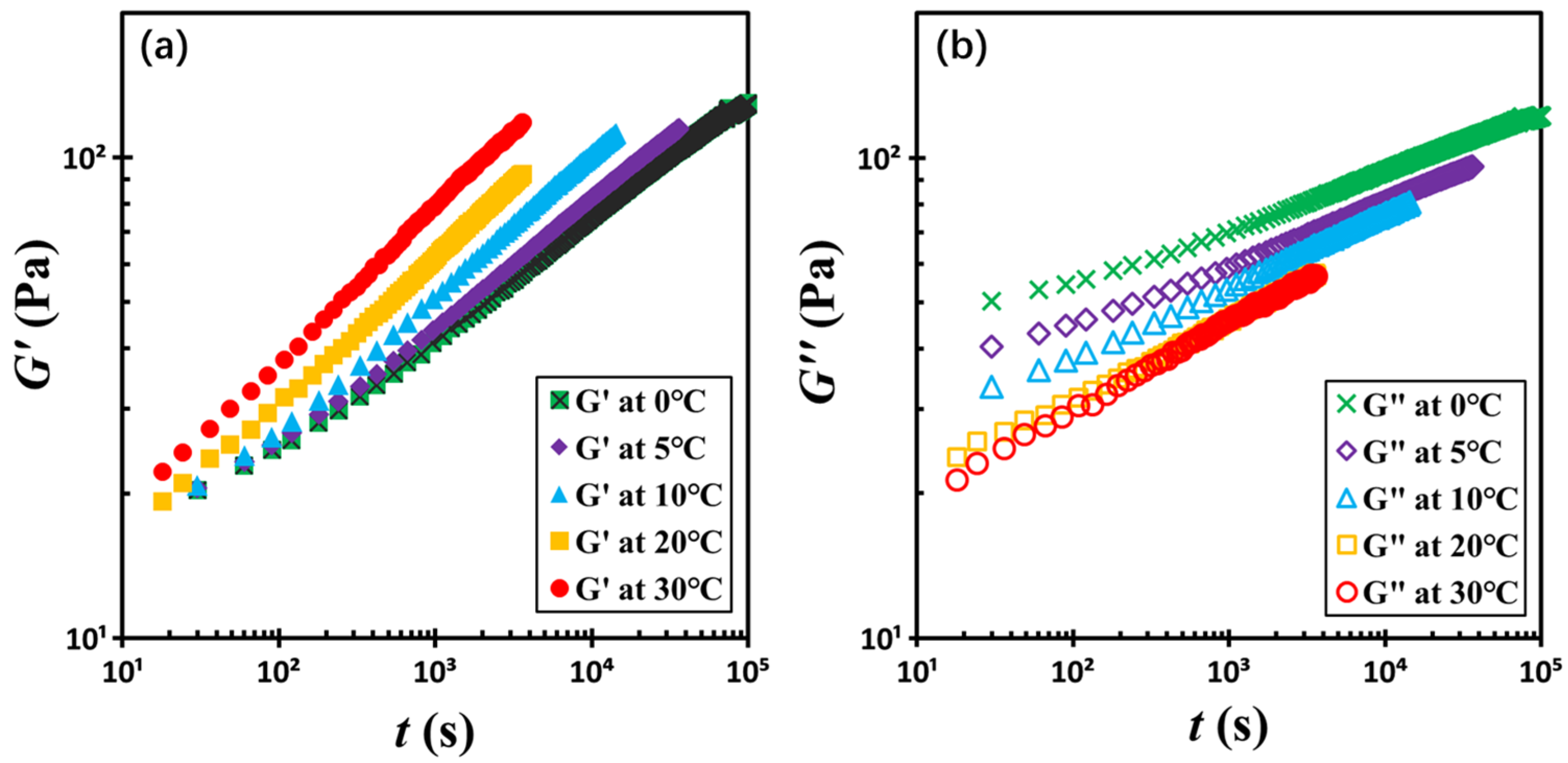
To assess the influence of temperature on the rheological behavior of silica-filled colloidal gels, we investigated the time-dependent evolution of the dynamic moduli
G′ and
G″ at 1 Hz across a temperature range of 0 to 30 °C. For clarity, five representative datasets at seven different temperatures are presented in
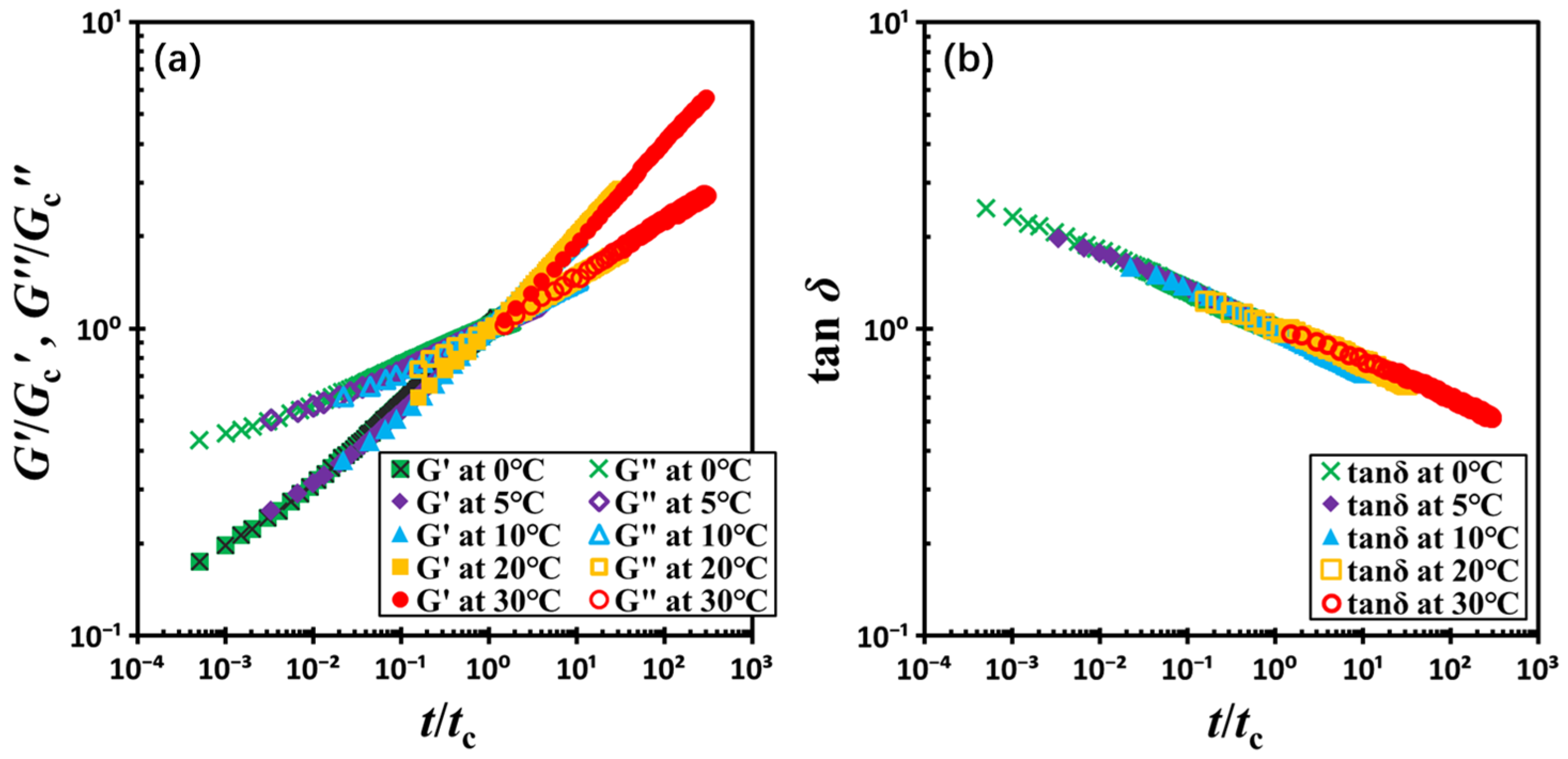
Figure 7. Remarkably, the moduli evolution curves obtained at different temperatures can be collapsed onto a single master curve through a two-step normalization process. First,
G′ and
G″ are normalized by their respective critical values
Gc′ and
Gc″ at the crossover point. Second, the time axis is rescaled by the critical crossover time
tc, yielding the reduced time scale
t/
tc. This approach enables a unified picture of structural recovery dynamics across various temperatures.
Figure 8 illustrates the resulting master curve. In the regime where
t/
tc < 1, the material exhibits liquid-like behavior, characterized by
G′ <
G″. Conversely, for
t/
tc > 1, the material transitions into a solid-like state with
G′ >
G″. The point
t/
tc = 1 signifies the onset of kinetic arrest, marking the transition from a viscous fluid-like state to an elastic solid-like state. This temperature-independent master curve behavior suggests that, within the experimental range, the kinetics of gel formation in this colloidal system is primarily dominated by the relative time evolution rather than the absolute temperature.
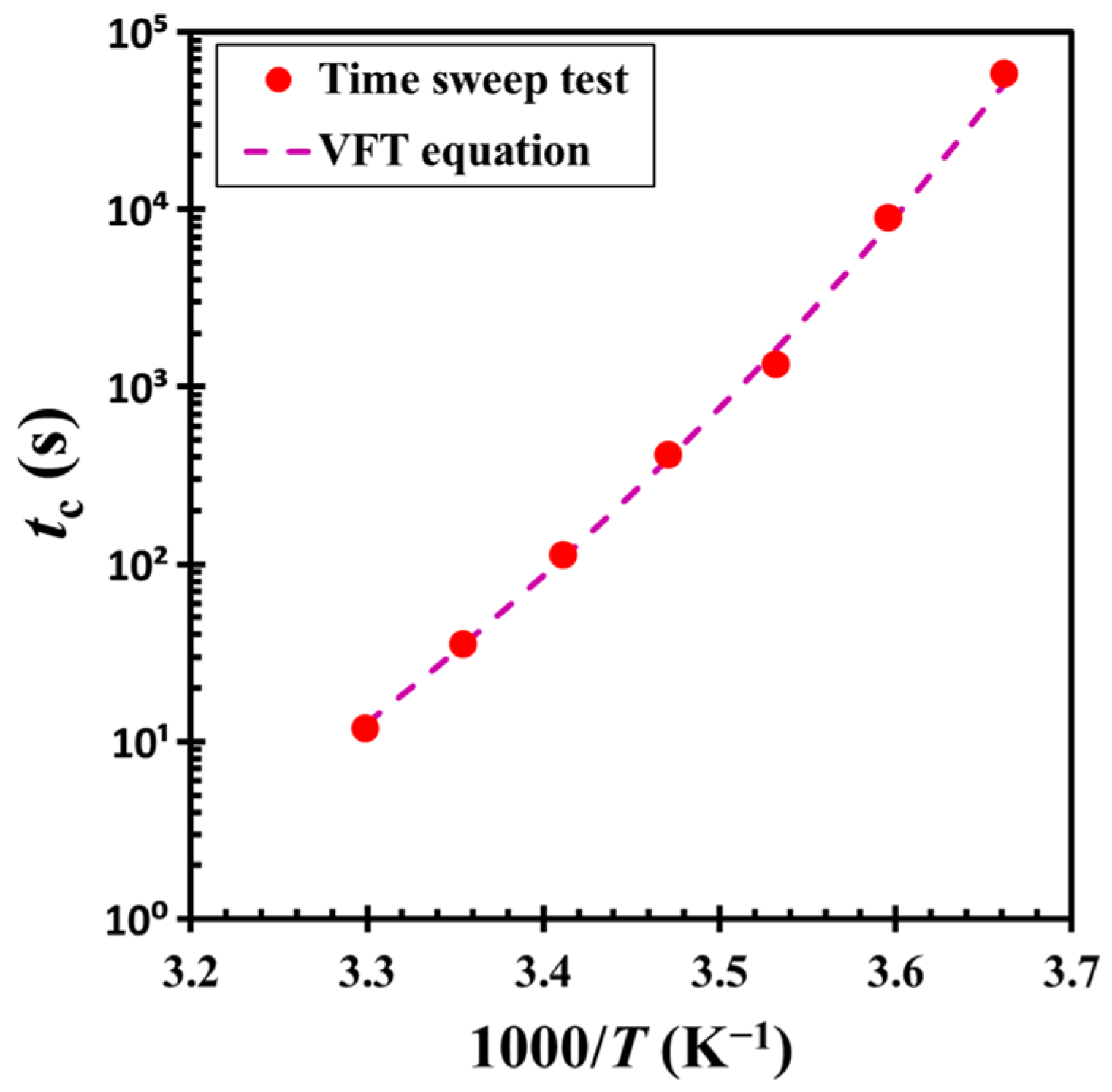
The master curve analysis indicates that the material undergoes gelation via a consistent kinetic mechanism across different temperatures. However, the critical crossover time
tc displays a pronounced temperature dependence, as shown in
Figure 9. This relationship is well described by the Vogel-Fulcher-Tammann (VFT) equation [
38]:
tc =
A exp[
B/(
T −
T0)], where
A = 2.20 × 10
−8 s and
B = 2074.84 K, and
T0 = 200.22 K represents the Vogel-Fulcher-Tammann temperature. The equation captures the marked deceleration of gelation dynamics as the temperature approaches
T0 from above, consistent with the experimental observations. Notably,
T0 is close to the glass transition temperature of DOP (
Tg = −85.75 °C or 187.40 K), suggesting that the dispersion medium plays a significant role in the gelation process. As the temperature approaches
Tg, the viscosity of the medium increases dramatically, significantly limiting particle mobility. This suppression of particle motion near
Tg results in a significant extension of the crossover time, underscoring the critical influence of medium viscosity on the kinetics of structural evolution.
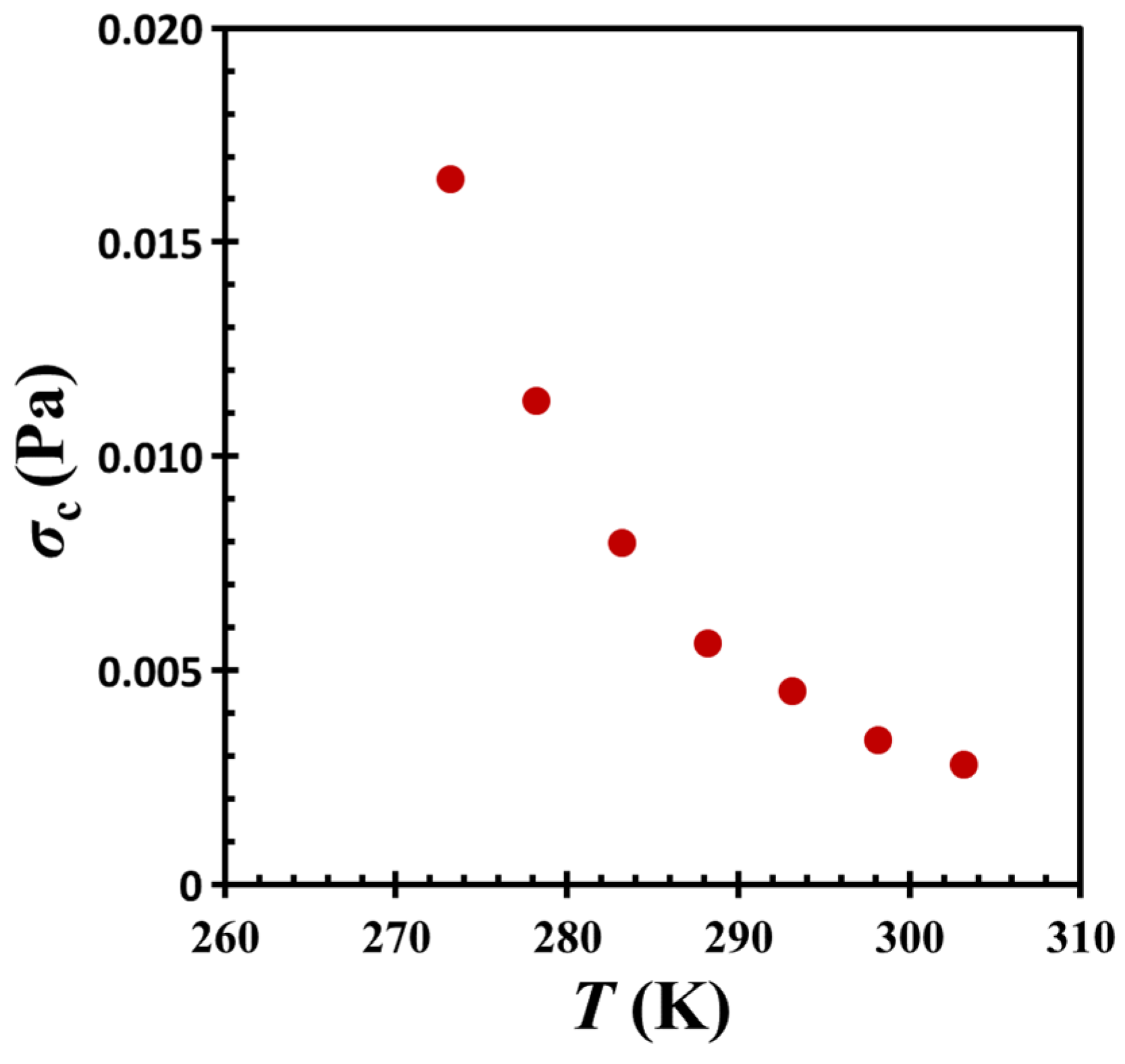
We notice that in the related literature [
2,
33,
34], shear stress
σ is usually employed to characterize the jamming phase diagram. In the present study, the maximum stress is defined by
σ = │
G*│
γ0, where
G* is the complex modulus of the material and
γ0 is the strain amplitude. This equation allows that the critical stress
σc (= │
Gc*│
γ0) at the crossover point (or jamming transition) can be estimated accordingly.
Figure 10 depicts the relationship between temperature
T and critical stress
σc for the colloidal gel under investigation. Notably, the behavior observed in the oil-hydrophobic silica particle mixture remains consistent with the iso-concentration plane of the jamming phase diagram reported by Trappe et al. [
33], following a monotonic concave trajectory. This observation further supports the interpretation of the colloidal system as a gel governed by particle jamming dynamics.
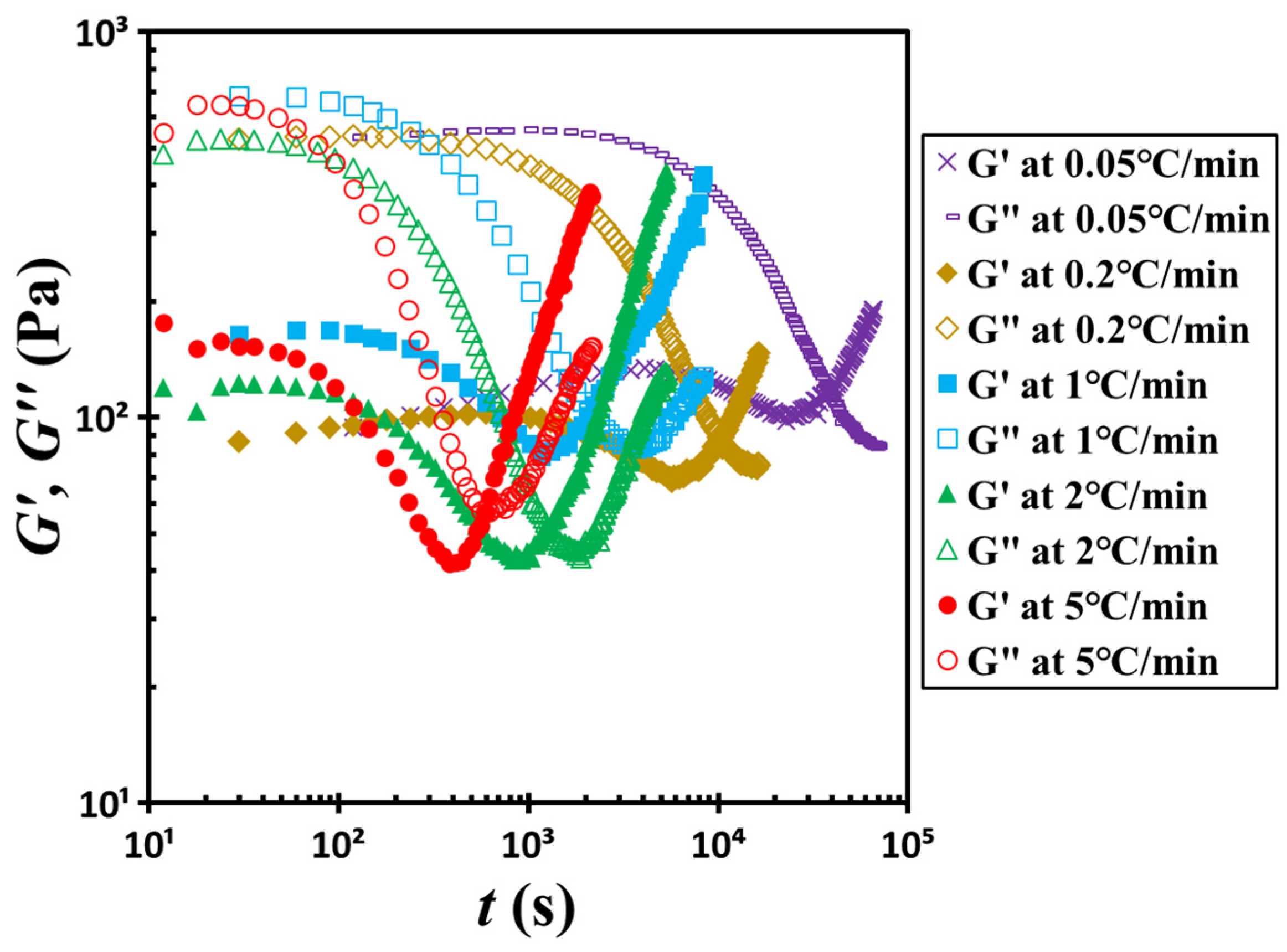
To further verify the influence of temperature on the sol–gel transition behavior, we conducted a series of non-isothermal temperature ramp-up experiments.
Figure 11 presents the time-dependent evolution of the storage modulus
G′ and loss modulus
G″ under heating rates ranging from 0.05 to 5 °C/min. At the beginning of each test, the material displays liquid-like rheological characteristics, with
G″ significantly exceeding
G′. As the temperature increases, both moduli gradually decline, with
G″ decreasing more rapidly than
G′. Eventually, the curves reach their respective minima and then intersect at a characteristic crossover time
tc. Beyond this point, both
G′ and
G″ begin to rise, with
G′ increasing more sharply, which signals a transition to solid-like behavior as
G′ surpasses
G″.
Importantly, the crossover time
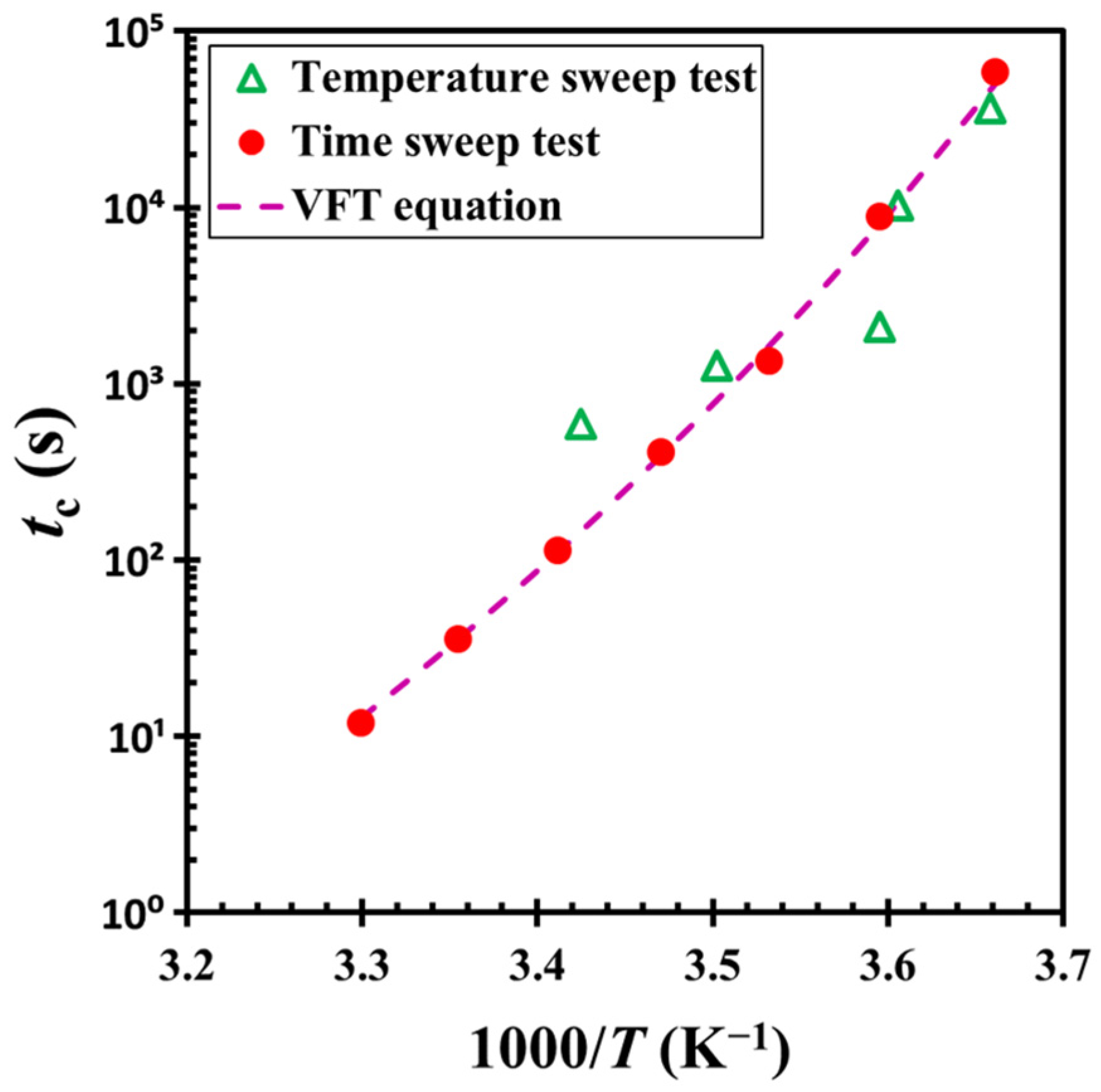
tc shortens with increasing heating rate, indicating that higher temperatures accelerate the structural evolution associated with the gelation. We extracted the
tc values from these ramp-up experiments and incorporated them into
Figure 9 for comparison. A summary of these results is provided in
Figure 12. As shown, the temperature dependence of
tc under non-isothermal conditions follows the same trend predicted by the VFT relationship. However, the data exhibit greater scatter in this case compared to those obtained under isothermal conditions. This variability is likely due to the discrepancies between the rheometer’s thermal chamber temperature and the actual sample temperature, which may not be uniform throughout the non-isothermal testing process.
The combined effects of shear frequency
f and temperature
T on the crossover time
tc are well captured by the following empirical relationship:
tc = 2.20 × 10
−8 f1/0.43 exp [2074.84/(
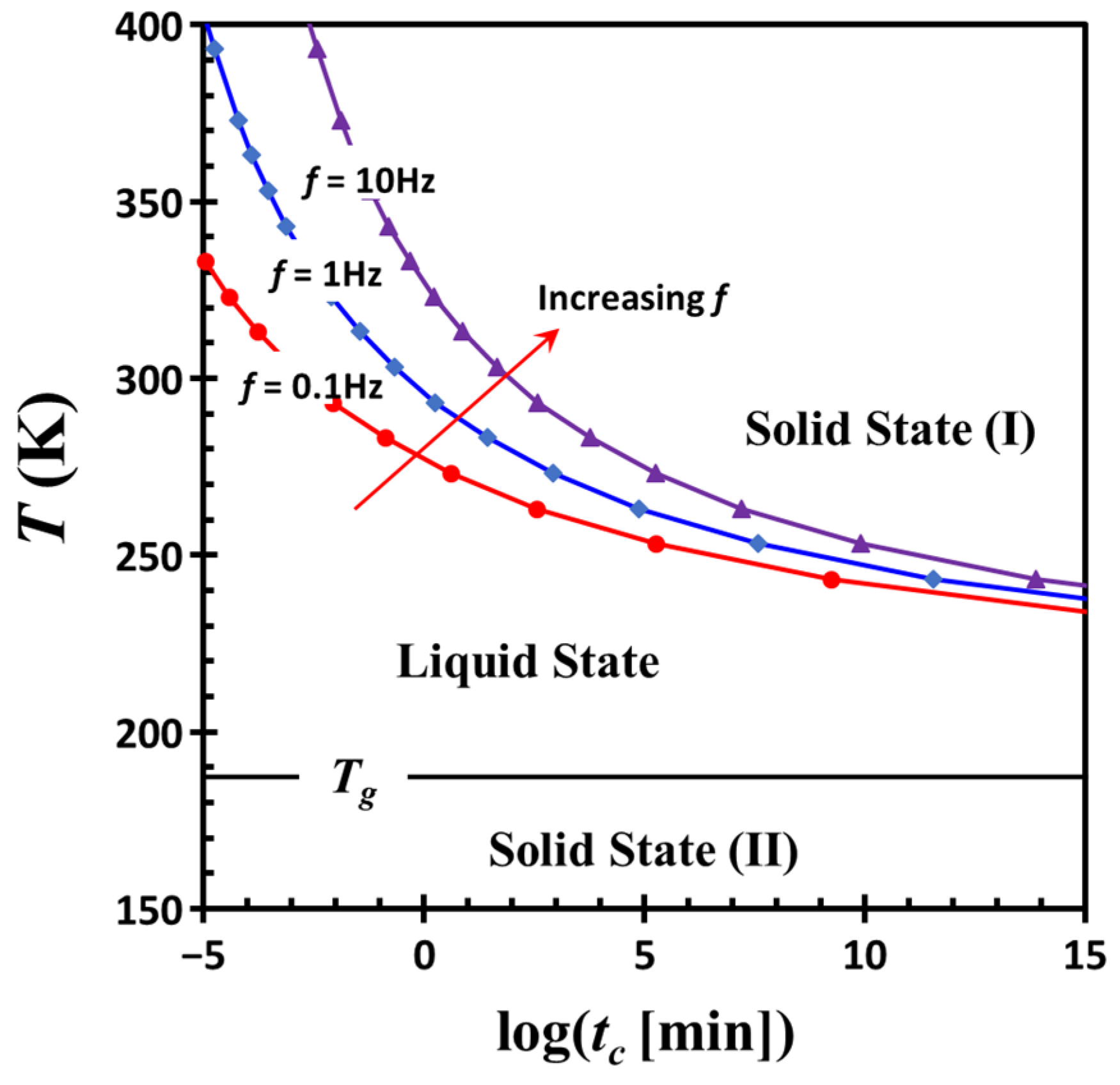
T − 200.22)]. Using this equation, a time-temperature transformation diagram [
39] is constructed (
Figure 13), illustrating the transition between liquid-like and solid-like states as a function of time, temperature, and excitation frequency. This diagram highlights several key features, including the glass transition temperature
Tg of the dispersion medium, commonly referred to as the vitrification point, and the boundaries between liquid and solid regions. The diagram also reflects the frequency-dependent nature of colloidal network structures, distinguishing two types of solid-like behavior. Solid state (I) refers to the formation of an interconnected network of colloidal particles within the dispersion medium, while solid state (II) corresponds to the vitrification of the medium itself. The liquid state lies between these two states. It is a non-equilibrium state and its existence range strongly depends on temperature and frequency. The phase boundary between the liquid state and solid state (I) is highly sensitive to excitation frequency, shifting upward with increasing frequency. In contrast, the boundary between the liquid state and solid state (II) remains relatively stable, governed by the molecular-level vitrification of DOP. Importantly, the solidification process of the latter occurs independently of the formation of a colloidal particle network.
This framework offers a conceptual basis for understanding the physical behavior of colloidal systems, in which the liquid-to-solid transition results from interparticle interactions, external perturbations, and the properties of the dispersion medium. By mapping the rheological transformations that occur under varying temperature, time, or frequency conditions, the diagram may serve as a valuable tool for optimizing the design of colloidal systems, as many of which support commercially important products and everyday applications. Further exploration of this diagram across different materials may yield deeper insights into their rheological characteristics and design potential.