1. Summary
The rapid digitalization of power systems and the widespread deployment of smart meters have enabled the collection of large volumes of electricity consumption data. Such datasets provide valuable insights into consumer behavior, opportunities for improving energy efficiency, and strategies for enhancing grid operation. Recent studies have demonstrated that data-driven approaches are highly effective in identifying consumption patterns and detecting anomalies, both of which are crucial for optimizing energy management and mitigating operational risks [
1]. In particular, the analysis of building electricity consumption has become a central research topic, given the significant share of global energy demand attributable to this sector.
This study introduces a dataset of electrical measurements collected between April 2024 and December 2024 in a university laboratory block. The dataset includes three-phase voltages, three-phase currents, active and reactive power (per phase and total), apparent power, power factor (per phase and global), and system frequency. Measurements were recorded at 10 min intervals, resulting in 79 files with 432 records each, for a total of approximately 34,128 entries. The data was acquired using smart meters capable of automatically storing measurements in a cloud-based repository, ensuring both continuous monitoring and secure access. Such a dataset provides a robust foundation for analyzing load profiles, detecting anomalies, optimizing energy consumption, and supporting predictive maintenance in modern electrical systems [
2].
With the growing availability of high-resolution smart meter data, advanced clustering and pattern recognition techniques have been widely applied to characterize electricity consumption dynamics. For instance, clustering methods make it possible to identify groups of users with similar load profiles, which in turn supports demand response programs and tailored efficiency measures [
3]. These approaches are particularly relevant in the context of big data applications, where large-scale and heterogeneous datasets must be efficiently processed to extract actionable knowledge. However, the usefulness of electricity consumption datasets strongly depends on their quality and reliability. As noted in [
4], issues such as missing values, measurement errors, and noise can significantly affect the accuracy of subsequent analyses and predictive models. Ensuring high-quality data acquisition and preprocessing is therefore a prerequisite for the successful application of data-driven methods in the smart grid environment. Moreover, recent studies emphasize the role of data normalization and preprocessing strategies in enhancing the predictive performance of machine learning models applied to energy forecasting tasks [
5].
Beyond methodological considerations, there is also a growing focus on the practical application of energy consumption analysis in public and commercial buildings. As highlighted in [
6], efficiency measures in public facilities play a vital role in achieving sustainability goals and reducing operational costs. Combining advanced data analytics with targeted efficiency strategies provides a powerful framework for improving building energy performance. This motivates the present study, which aims to contribute to ongoing research by presenting a high-quality dataset that can be used to support energy management, forecasting, and anomaly detection in building environments.
Previous work has also highlighted the importance of developing comprehensive datasets for energy research. For instance, ref. [
7] reviewed a range of electrical energy datasets, focusing on the technologies and methodologies used for data acquisition in industrial and residential contexts. Their review considered parameters such as voltage, current, active power, reactive power, apparent power, and energy consumption—variables that are typically collected by utility companies for billing purposes, as well as by researchers developing new applications. The study emphasized hardware and software strategies for data acquisition, identified key applications such as load profiling, demand forecasting, and non-technical loss detection, and discussed both the challenges and opportunities associated with such datasets. Based on these findings, it is clear that datasets containing parameters similar to those presented in this work are fundamental for enabling reproducible and transferable research.
Notable examples of publicly available datasets include the UK-DALE dataset, which is widely used due to its high time resolution and extensive coverage of measured variables. It is often referenced in studies on non-intrusive load monitoring (NILM), demand-side management, and energy disaggregation algorithms [
8]. Another example is CustData ED2 (Portugal), which contains high-frequency measurements of voltage, current, active power, and reactive power, along with appliance-level data. Initially designed for load analysis, it has since been applied to anomaly detection, predictive modeling, and residential energy optimization [
9]. These features make such datasets particularly relevant for bridging traditional power system studies with modern artificial intelligence methods.
In the present case, measurements were collected using high-accuracy power analyzers installed at the point of common coupling in the low-voltage distribution system of a university laboratory. The data was automatically stored and organized into files of 432 records each. Validation checks, consistency analysis, and outlier removal were applied to improve dataset quality. As a result, the dataset can be considered a reliable source for studies on forecasting, load analysis, anomaly detection, and energy optimization. Furthermore, its detailed structure makes it suitable for training and testing artificial intelligence (AI) algorithms. The availability of such granular measurements facilitates the development of advanced applications for smart energy management in university laboratories, including automated load optimization, predictive maintenance, and anomaly detection, thereby contributing to the advancement of smart campus initiatives. The data described in this paper can be found at the following link:
https://doi.org/10.5281/zenodo.17107425.
2. Data Description
The measurements were carried out on the electrical network of a university laboratory block, which includes a faculty office, an administrative office, four laboratories, a storage room, and two computer rooms. The laboratories are equipped with AC and DC power supplies, AC and DC motors, generators, transformers, and resistive, inductive, and capacitive modules. In addition, computers are present in the corresponding rooms. Therefore, the load of the block is a combination of resistive, inductive, and capacitive components, as well as electronic equipment, which varies depending on the academic and administrative activities taking place during the analyzed period.
A detailed description of the dataset is essential to ensure its usability and reproducibility for future research. This chapter outlines the main characteristics of the electrical measurement dataset collected in a university laboratory block between April 2024 and December 2024. The dataset includes multi-parameter measurements such as three-phase voltages, currents, active and reactive power per phase and total, power factor per phase and global, and system frequency. Data were recorded automatically every 10 min using high-accuracy smart meters, resulting in 79 files with 432 records each and approximately 34,128 entries in total. The following sections describe the dataset structure, time coverage, and representative examples, providing a clear overview of its organization and potential applications in smart energy research. Each row represents one timestamp, and the dataset includes multi-phase electrical parameters organized into the following columns:
Timestamp (DD-MM-YYYY HH:MM:SS): Date and time of the measurement.
Phase Voltages [V]: RMS values of voltages for Phase A, Phase B, and Phase C.
Phase Currents [A]: RMS values of currents for Phase A, Phase B, and Phase C.
Reactive Power [kvar]: Instantaneous reactive power measured per phase (A, B, C) and total.
Active Power [kW]: Instantaneous real power measured per phase (A, B, C) and total.
Power Factor [-]: Power factor calculated per phase and for the total load.
Frequency [Hz]: Instantaneous system frequency.
To illustrate the structure and content of the dataset,
Table 1 presents a representative excerpt of the recorded measurements. Each row corresponds to a timestamp with a 10 min sampling interval, and the columns include three-phase voltages, currents, active and reactive power per phase and total, power factor per phase and global, and system frequency. This excerpt demonstrates the level of detail provided in the dataset, which enables comprehensive analyses of load behavior, power quality, energy efficiency, and overall performance within the university laboratory environment. The notation used in
Table 1 is defined as follows.
,
, and
represent the phase-to-neutral voltages of phases A, B, and C, respectively, expressed in volts (V).
,
, and
correspond to the line currents in amperes (A) for each of the three phases.
,
, and
denote the active power per phase in kilowatts (kW), while
is the total active power of the system. Similarly,
,
, and
indicate the reactive power per phase in kilovolt-amperes reactive (kvar), and
is the total reactive power.
,
, and
correspond to the power factor of each phase, and
represents the global system power factor. Finally, the column
Freq refers to the system frequency measured in hertz (Hz).
In the database used for the analysis, the power factor global () values were not computed by the authors but were directly obtained from the Siemens PAC3120 meterThe Siemens PAC3120 meter used in this study is manufactured by Siemens AG, a company headquartered in Nuremberg, Germany. The specific equipment was sourced and is commercially used in Colombia, where it complies with local technical standards and has been widely implemented for energy measurement and monitoring applications. To differentiate between inductive and capacitive conditions without altering the raw output files, a convention was adopted in which the digit preceding the decimal point indicates the sign of the power factor: a “1” denotes inductive behavior, and a “0” denotes capacitive behavior. Thus, a record such as “1.999” corresponds to an inductive power factor of 0.999, while “0.950” corresponds to a capacitive power factor of 0.950. This interpretation ensured consistency in data handling, and the validity of the results can be confirmed by applying the conventional formula.
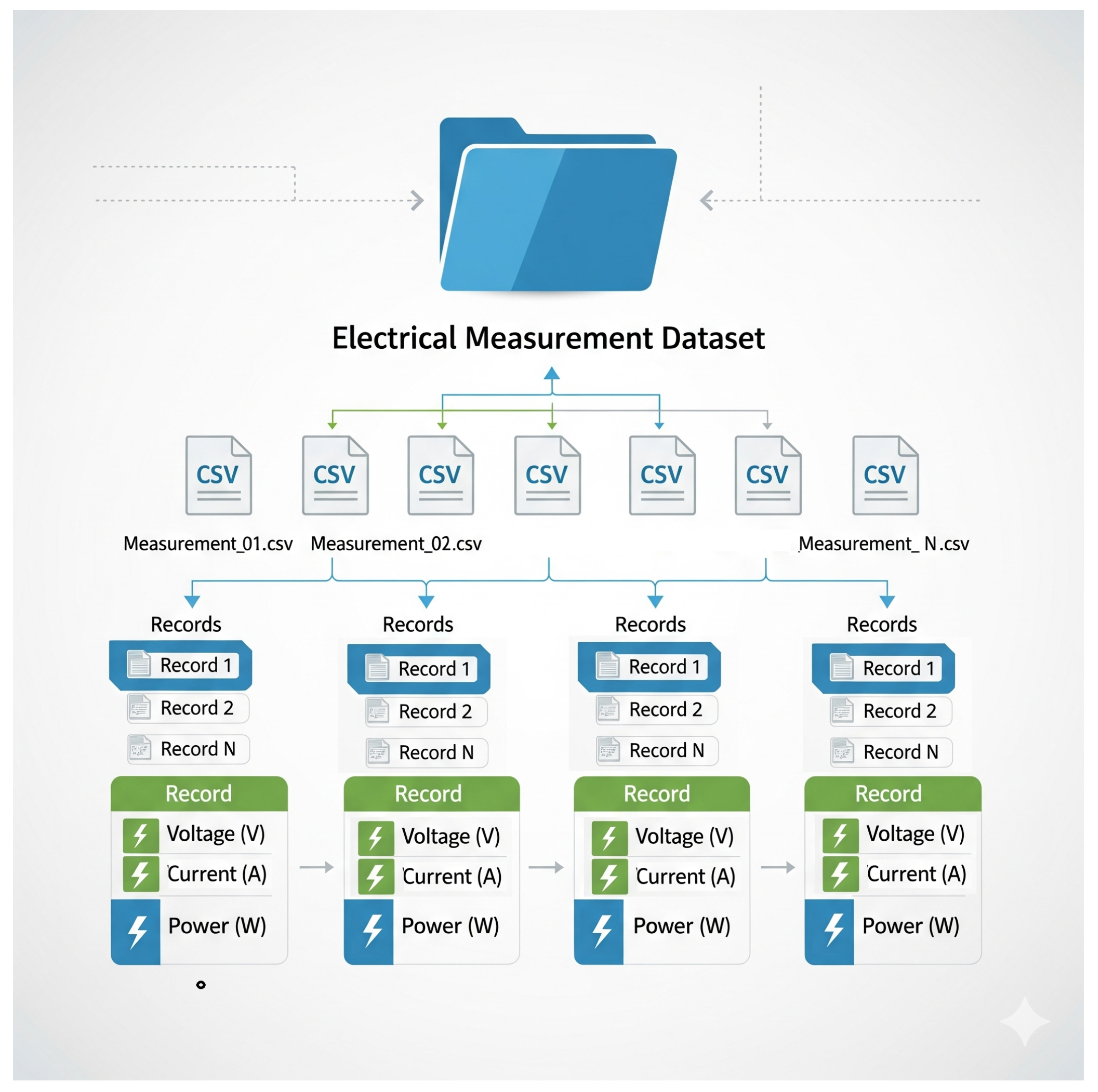
In order to provide a clear overview of the dataset organization,
Figure 1 illustrates the overall structure of the recorded data. The diagram shows the hierarchical arrangement of the measured parameters, including voltages, currents, active and reactive power, power factor, and frequency, which were acquired with a 10 min sampling interval. This representation helps to visualize how the information is grouped and facilitates its understanding for subsequent use in energy monitoring, analysis, and modeling applications.
3. Methods
The method implemented for the construction of the dataset was designed to ensure both the accuracy of the electrical measurements and the integrity of data storage and management. The process was developed in several stages, covering the acquisition of electrical signals through to the final organization of the records in the cloud. The steps are described in detail below.
3.1. Acquisition of Electrical Signals Using Current Transformers
To measure the currents of the three phases in the low-voltage system, current transformers (CTs) with a ratio of 100/5 A and accuracy class 0.5 were installed. These sensors ensure an appropriate reduction of current magnitudes, allowing the meter to operate within its nominal range without compromising measurement precision.
The KCT-16 split-core current transformer stands out for its practical design and precise measurement capabilities. It features a clamp-on split-core construction, allowing for safe and convenient installation around live conductors without requiring disconnection. The device supports a primary current range typically between 100 A and 200 A, with corresponding secondary outputs such as 33.3 mA, 40 mA, or 66.7 mA, maintaining high accuracy (class 0.5 or 1.0) at standard power frequencies of 50–60 Hz. Its compact, lightweight form factor, compliance with CAT III insulation standards, and resistance to environmental factors make it particularly suitable for retrofitting existing installations and continuous electrical monitoring applications [
10,
11].
The KCT-16 has been employed in applied measurement and monitoring systems owing to its accuracy and ease of deployment. For example, it has been used in energy usage analysis setups where its split-core design enables non-disruptive installation on live circuits. Moreover, in studies involving power quality and smart grid analytics, its reliable performance under varying load conditions has supported effective characterization of three-phase electrical systems. Koul (2024) has emphasized the importance of using accurately rated current transformers such as the KCT-16 in electrical monitoring contexts to enhance the fidelity of load profiling and anomaly detection algorithms [
12].
3.2. Measurement of Electrical Parameters with the Siemens PAC3120 Meter
The signals obtained from the CTs were processed by the multifunctional meter Siemens PAC3120The Siemens PAC3120 meter used in this study is manufactured by Siemens AG, a company headquartered in Nuremberg, Germany. The specific equipment was sourced and is commercially used in Colombia, where it complies with local technical standards and has been widely implemented for energy measurement and monitoring applications. This device provided RMS values of voltage and current, as well as the computation of active power, reactive power, apparent power, power factor, and system frequency. The Siemens PAC3120 is widely used in energy monitoring applications due to its reliability and compliance with industrial precision standards.
The Siemens Sentron PAC3120 is a compact, panel-mounted power monitoring device intended for low-voltage electrical distribution systems. It supports single-, two-, and three-phase configurations across TN, TT, and IT systems. The instrument measures RMS voltage and current, active, reactive, and apparent power, power factor, system frequency, and energy consumption with daily and monthly logging. It also offers configurable averaging intervals from 3 s up to one year and includes digital I/O for pulse outputs and limit alarms [
13].
Specific academic studies focusing on the PAC3120 are limited; however, multifunctional electronic energy meters with similar capabilities have been successfully implemented in high-accuracy monitoring systems. For example, a three-phase multifunction electronic energy meter was developed and evaluated for its performance in industrial environments, demonstrating the viability of using such devices in advanced monitoring applications [
14].
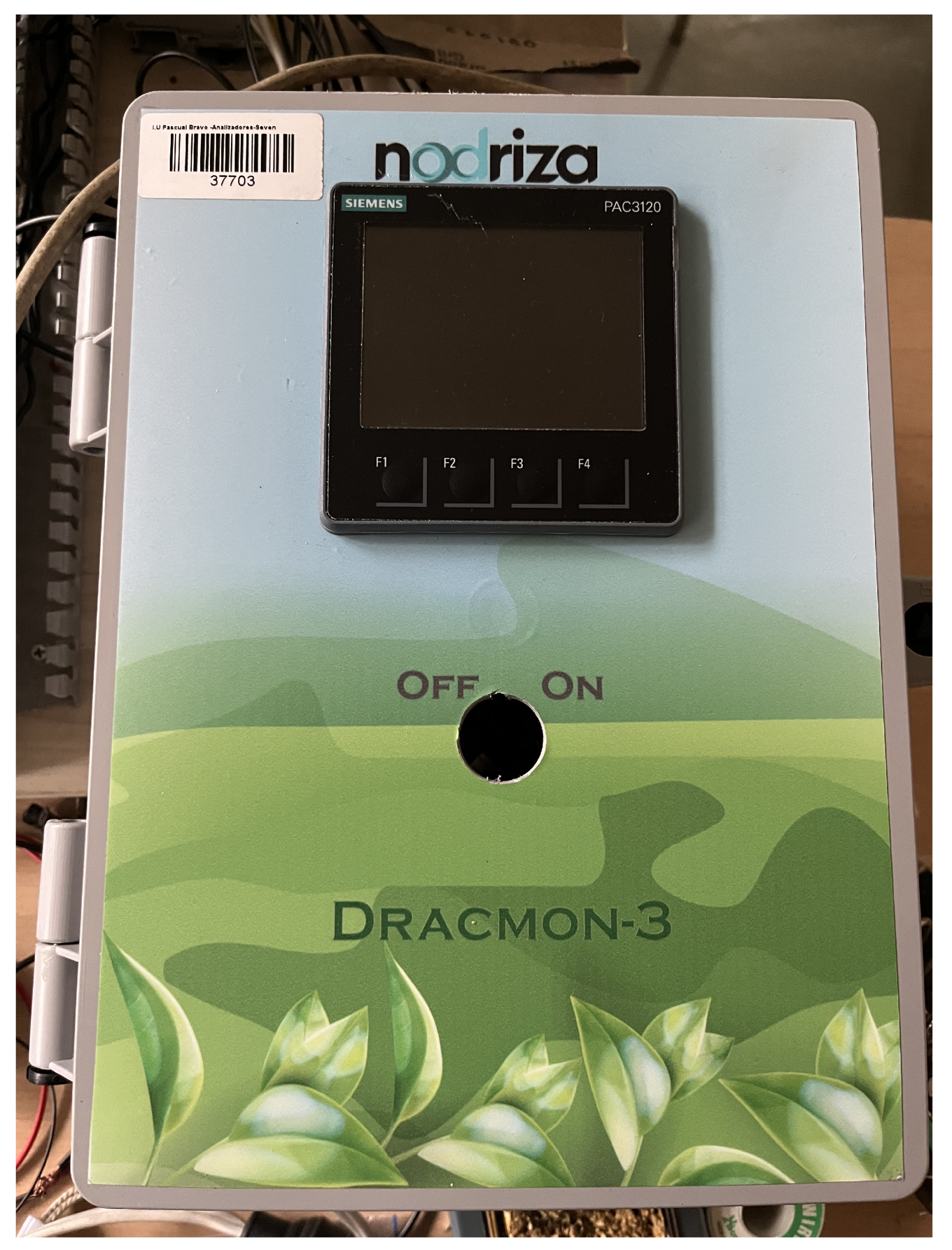
Figure 2 illustrates the Siemens PAC3120 device employed in the experimental setup.
According to the manufacturer’s documentation, the Siemens PAC3120 calculates power values by performing a digital sampling of voltage and current waveforms using its internal A/D converters. The device applies the root mean square (RMS) method to determine fundamental electrical quantities and then computes instantaneous products of voltage and current samples to obtain active power. Reactive power is derived using a quadrature component method, while apparent power is obtained from the product of RMS voltage and RMS current. This approach follows the principles of the Fryze power theory, which provides meaningful results even under non-sinusoidal conditions, where harmonics and other distortions are present in the grid.
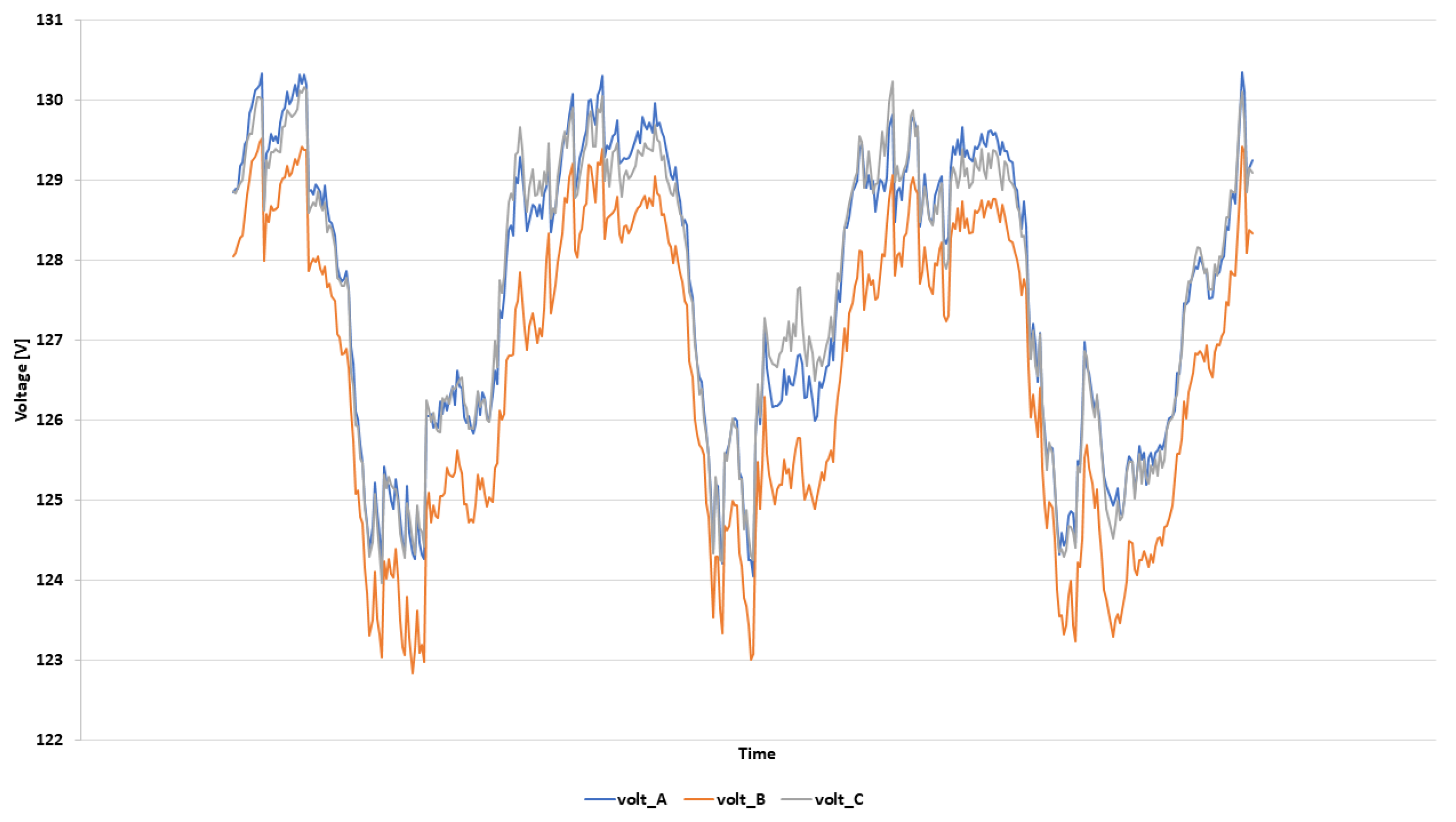
Figure 3 shows the voltages measured for each phase during the observation period, while
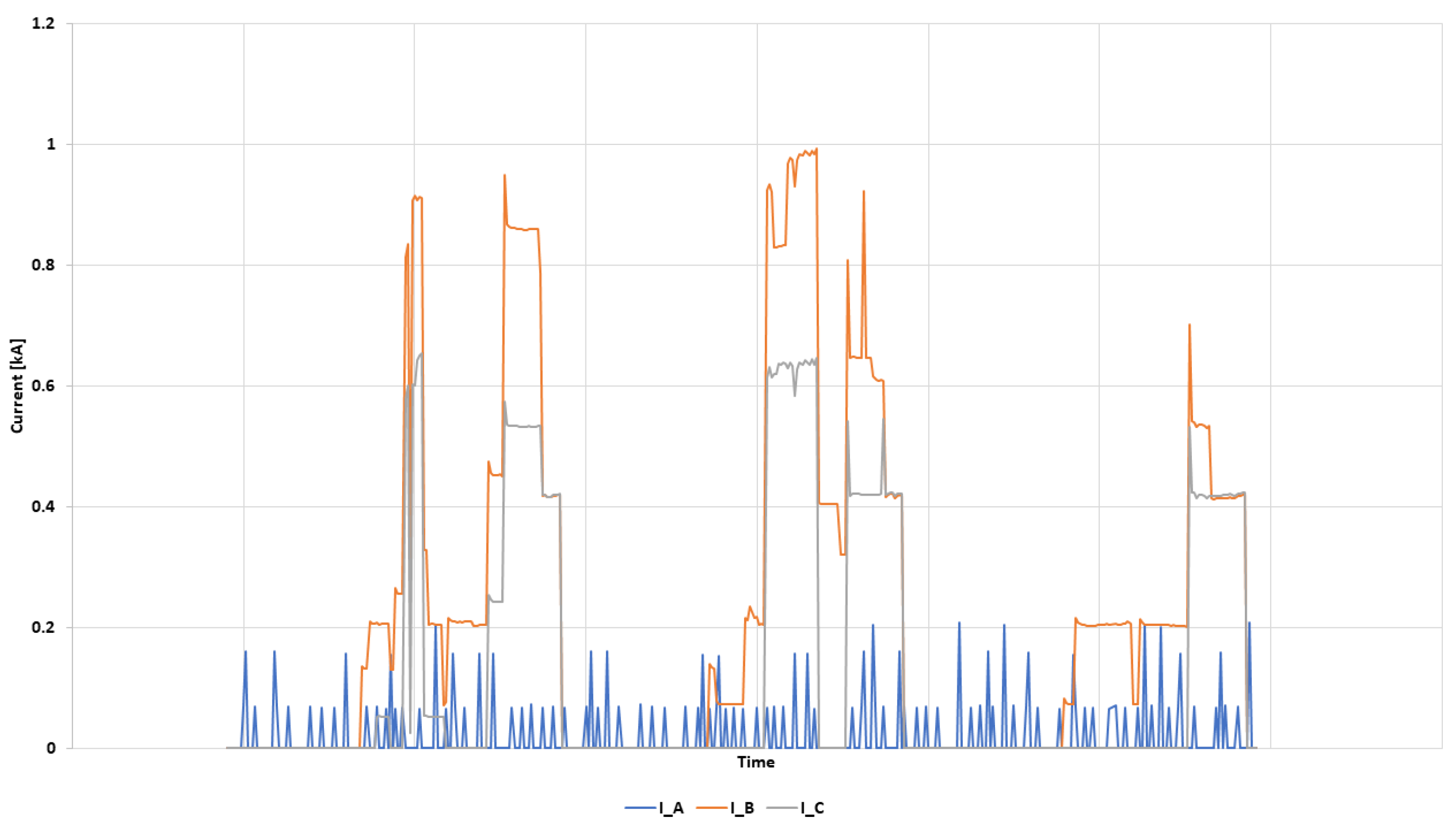
Figure 4 presents the currents recorded within the same time frame. These plots allow for the analysis of the electrical variables’ behavior and help identify possible correlations between voltage and current values.
From
Figure 3, it can be observed that there is a slight increase in voltage during nighttime hours, with Phase A consistently showing higher voltage values compared to the other phases. In
Figure 4, an imbalance between the phases is evident: Phase B registers the highest current, while Phase A exhibits a more stable demand. In contrast, the other phases show more fluctuations in their current profiles, indicating less steady load behavior.
3.3. Data Transmission Through Modbus RTU Communication
The PAC3120 meter communicated with a Tecvolución AMP1E programmable logic controller (PLC) via the Modbus RTU protocol over an RS-485 connection. This configuration ensured robust data transfer in electrical environments, offering low latency and high resistance to electromagnetic interference.
Modbus RTU is a widely adopted serial communication protocol in industrial control systems due to its simplicity, efficiency, and robustness. It operates on a master–slave architecture, allowing a single master to poll one or more slave devices. Communication is performed via a compact binary representation, ensuring low latency and high reliability even in electrically noisy environments. It is especially prevalent in energy monitoring and automation applications where deterministic data exchange and minimal overhead are required [
15].
Complementing Modbus RTU, RS-485 serves as the physical layer for serial communication, offering differential signaling over twisted-pair wiring that ensures high noise immunity and support for multi-drop networks. This makes RS-485 ideal for connecting multiple field devices over extended distances (up to 1 km) in harsh industrial settings. Its compatibility with Modbus RTU has made this combination the standard for communication in smart metering and building automation systems [
15].
3.4. Cloud Connection via the University Wi-Fi Network
The AMP1E PLC was connected to the university’s Wi-Fi network, enabling the automatic transfer of data records to a cloud repository. This step eliminated the need for manual downloads and ensured the remote availability of measurements in near real-time.
The AMP1E microcontroller-based programmable logic controller (PLC) belongs to Tecvolución’s Microgrades line and offers a high degree of connectivity suited for industrial automation. It is available in models with eight universal inputs and eight transistor outputs, or variants with 12 inputs and four outputs. These inputs are configurable and support a wide variety of signal types—including NPN/PNP digital, 4–20 mA, Vdc, Vac, and resistive sensors—making the device versatile for both analog and digital signal acquisition. The PLC also includes reliable power management (supporting 7–35 Vdc supply), real-time clock (RTC), nonvolatile memory, LED status indicators for power, I/O, and communications, and a durable flameproof plastic enclosure designed for industrial environments [
16].
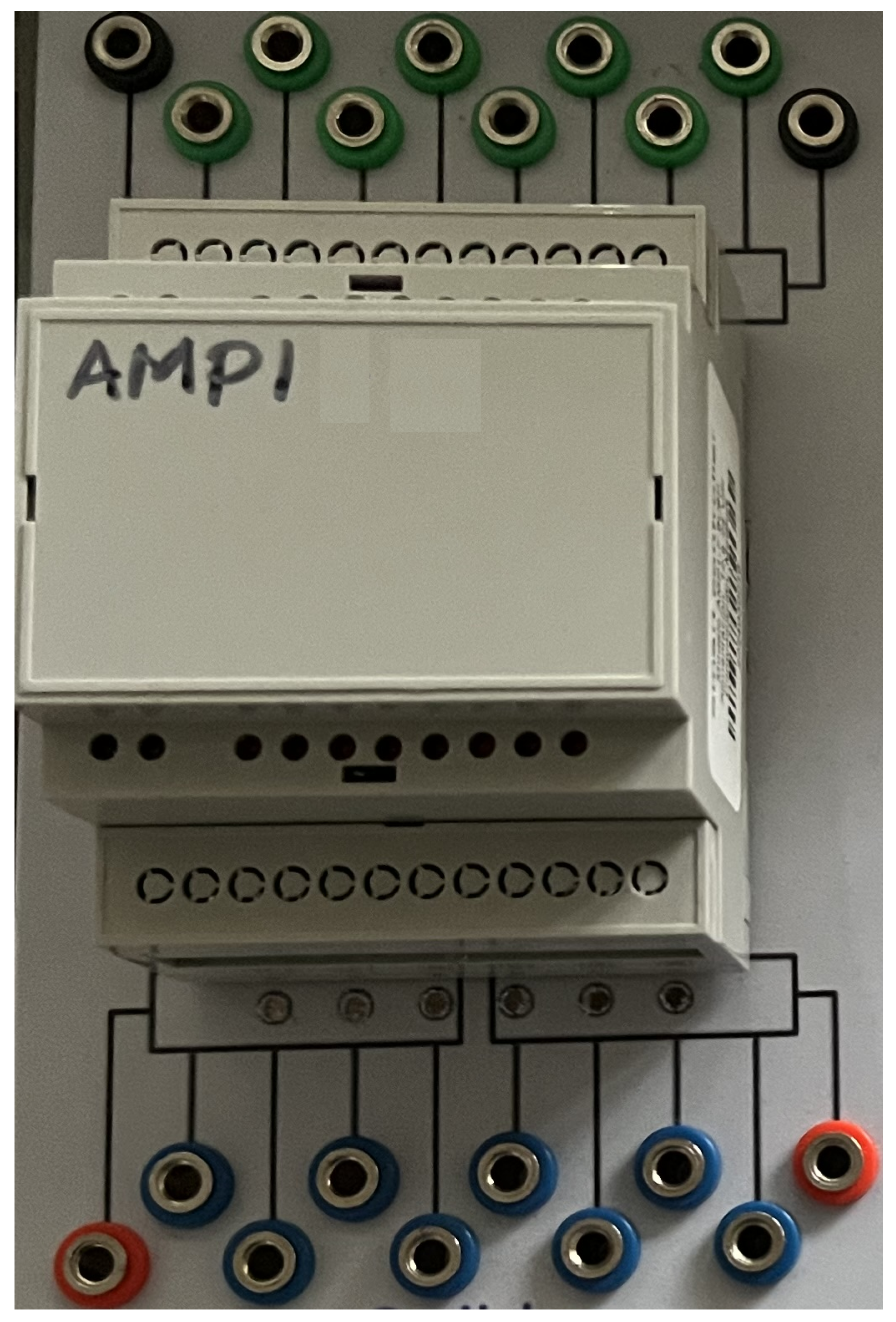
Figure 5 shows the Tecvolución AMP1E employed in this study.
For communication and expandability, the AMP1E PLC supports RS-485 serial interfaces with Modbus RTU protocol, enabling both programming and data exchange over the same bus, and allowing for centralized or distributed expansion via Tecvolución’s proprietary RS-485 Mgdexp protocol. It also features connectivity modules such as RS-485 to USB, Zigbee, Bluetooth, Wi-Fi, Ethernet, and GPRS, as well as an HMI interface using a ribbon cable to connect a Tablet PC as operator panel—demonstrating its flexibility and suitability for modern IoT-integrated control architectures [
16].
3.5. Data Curation
To ensure the reliability and usability of the dataset, a systematic data curation process was implemented. This process focused on verifying data integrity, removing inconsistencies, and organizing the records into a consistent and standardized format for further analysis.
First, the raw measurements obtained from the Siemens PAC3120 energy meter through the AMP1E PLC were inspected for completeness. Missing timestamps or partially recorded entries were identified and flagged. In cases where data loss was minimal and did not affect continuity, records were interpolated based on neighboring values; otherwise, missing entries were left blank to preserve dataset transparency.
Second, validation rules were applied to detect outliers and anomalous values. These included physical plausibility checks such as ensuring voltage levels remained within the expected operational range of the low-voltage distribution system, currents were consistent with the rated capacity of the installation, and active, reactive, and apparent power satisfied the power triangle relationships. Records that did not meet these criteria were excluded or corrected after cross-verification.
Finally, consistency tests were performed on phase and total values. For example, the sum of per-phase active power was compared against the total active power recorded, and similar checks were conducted for reactive power and power factor. Discrepancies beyond a defined tolerance were flagged for review.
Through this curation workflow, the dataset achieves a high standard of quality, enabling accurate analyses and facilitating its integration into applications such as load forecasting, anomaly detection, and intelligent energy management.
3.6. Automation of Processing and File Organization
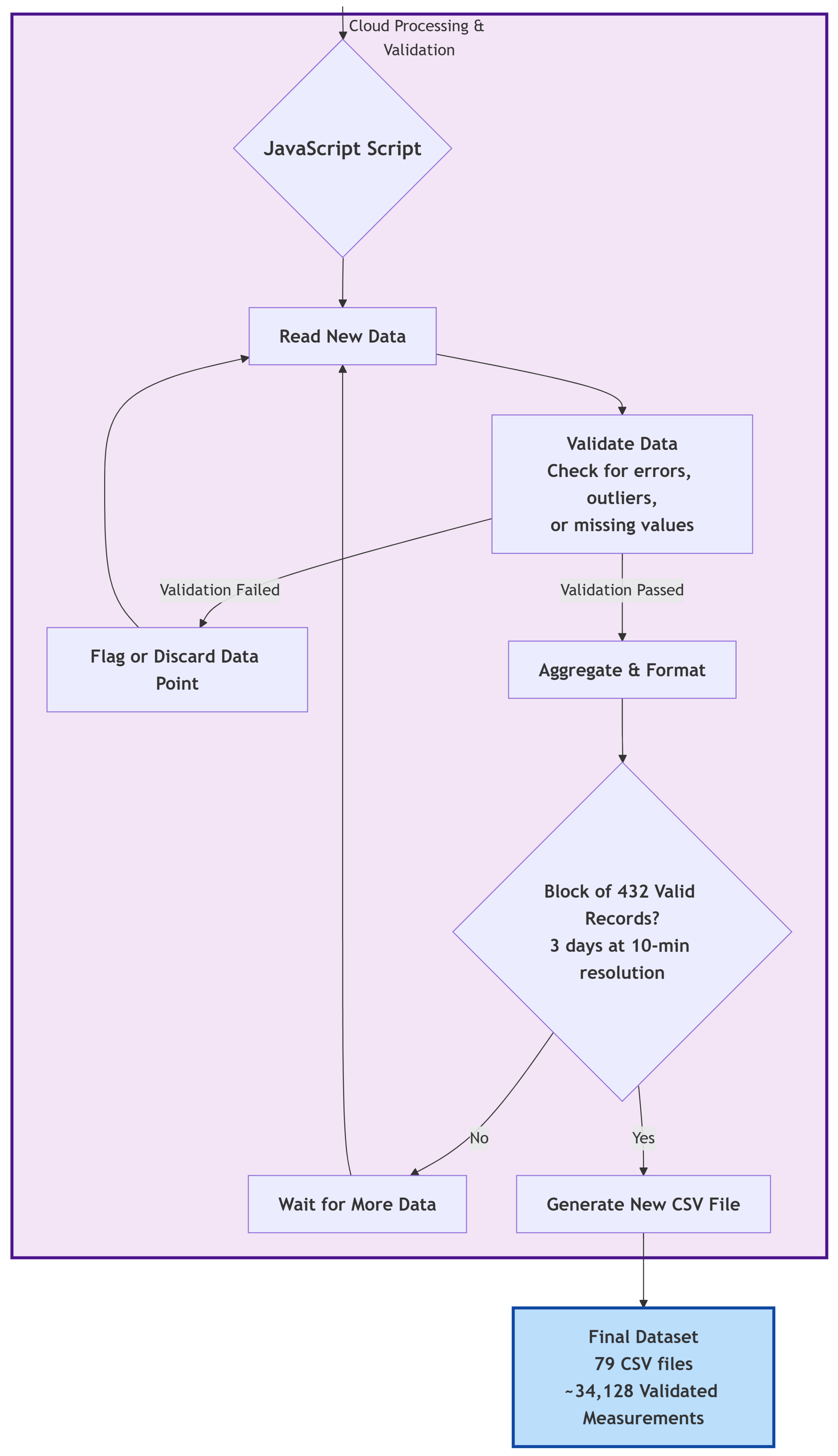
Once stored in the cloud, the data were processed using a custom JavaScript script, which organized the records into .csv files. The algorithm grouped the measurements into blocks of 432 records (equivalent to three days of measurements with a 10-min resolution), automatically generating a new file once the threshold was reached. This approach facilitated data management and maintained a standardized format for subsequent analysis.
Overall, this methodology guarantees a continuous data flow from acquisition to structured storage, with a focus on the precision of the instruments, the reliability of the communication protocol, and the automation of processing and organization.
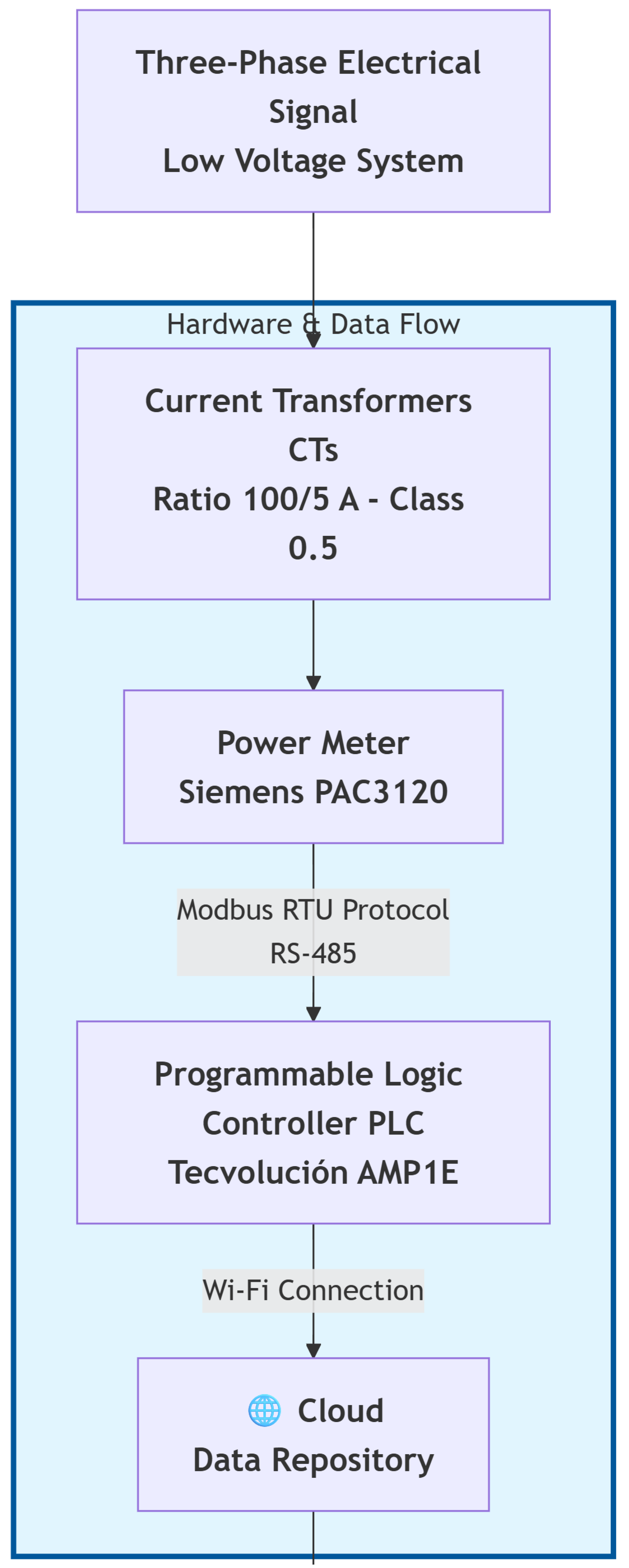
To provide a clear overview of the methodology followed for the development of the dataset,
Figure 6 and
Figure 7 present a schematic representation of the measurement and data processing workflow. The diagram summarizes each stage, starting from the acquisition of electrical signals using current transformers and the Siemens PAC3120 meter, followed by data transmission through the Modbus RTU protocol and the Tecvolución AMP1E PLC, the connection to the cloud via the university Wi-Fi network, and finally the automated organization of records into CSV files. This graphical representation highlights the sequential structure of the process and facilitates the understanding of the data acquisition and management strategy.
3.7. Measurement Accuracy of the Siemens PAC3120
According to the technical documentation, the Siemens PAC3120 power meter provides the following measurement accuracy under standard operating conditions:
Voltage: .
Current: .
Active power (P): .
Reactive power (Q): .
Apparent power (S): .
Power factor (PF): .
These accuracies comply with IEC 61557 and IEC 62053 standards for power monitoring devices.
3.8. Power and Power Factor Equations
In a three-phase system, the active power, reactive power, and apparent power are defined as:
where
and
represent the RMS voltage and current in phase
i, and
is the phase angle between them.
Finally, the total power factor is given by:
4. Conclusions
This work presents a comprehensive dataset of electrical measurements collected from a university laboratory block, covering the period from April to December 2024. The dataset includes detailed information on three-phase voltages, currents, active and reactive power per phase and total, power factor, and system frequency, with a consistent sampling interval of ten minutes. The acquisition process was carried out using high-accuracy instrumentation and standardized communication protocols, ensuring both precision and reliability of the measurements.
Beyond its descriptive value, the dataset constitutes a valuable resource for a broad range of research and applied studies. It enables detailed analyses of load profiles, power quality, and system behavior under realistic operating conditions, while also supporting the development of forecasting models, anomaly detection methods, and optimization strategies. Furthermore, by providing open access to structured and validated data, this work facilitates the training of artificial intelligence algorithms aimed at intelligent energy management within educational environments. Overall, the dataset contributes not only to the advancement of smart energy applications but also to fostering collaboration between academia and industry in the pursuit of sustainable and efficient power systems.
The presented database has certain limitations that should be acknowledged. First, the measurements are restricted to a single university laboratory block, which may limit the generalization of results to other types of buildings or larger-scale electrical systems. Additionally, while data were recorded continuously, occasional issues such as communication delays and the need for validation led to minor data cleaning procedures. Another limitation is that the dataset only contains normal operating conditions, as institutional policies did not permit interventions to capture faulty scenarios. Despite these constraints, the database provides a reliable foundation for research in smart energy systems. Future work will focus on expanding the dataset to other buildings within the campus, increasing the temporal resolution of measurements, and integrating complementary variables (e.g., environmental conditions or occupancy data) to enable broader applications in forecasting, anomaly detection, and energy efficiency analysis.



 ,
,