Deep Eutectic Solvents Mediated Extraction of a Pectin Polysaccharide from Processed Sweet Potato By-Products: Optimization and Characterization Studies


Abstract
1. Introduction
2. Materials and Methods
2.1. Materials and Reagents
2.2. Preparation and DES Type Screening
2.3. Extraction of DESP by DESs
2.4. Single-Factor Experiment Design
2.5. Response Surface Methodology Design
2.6. Characterization of DESP
2.6.1. Mw Determination and Monosaccharide Composition Analysis
2.6.2. FT−IR and NMR Analysis
2.6.3. SEM Analysis
2.6.4. XRD Analysis
2.7. Determination of In Vitro Anti-Inflammatory Activities
2.8. Statistical Analysis
3. Results and Discussion
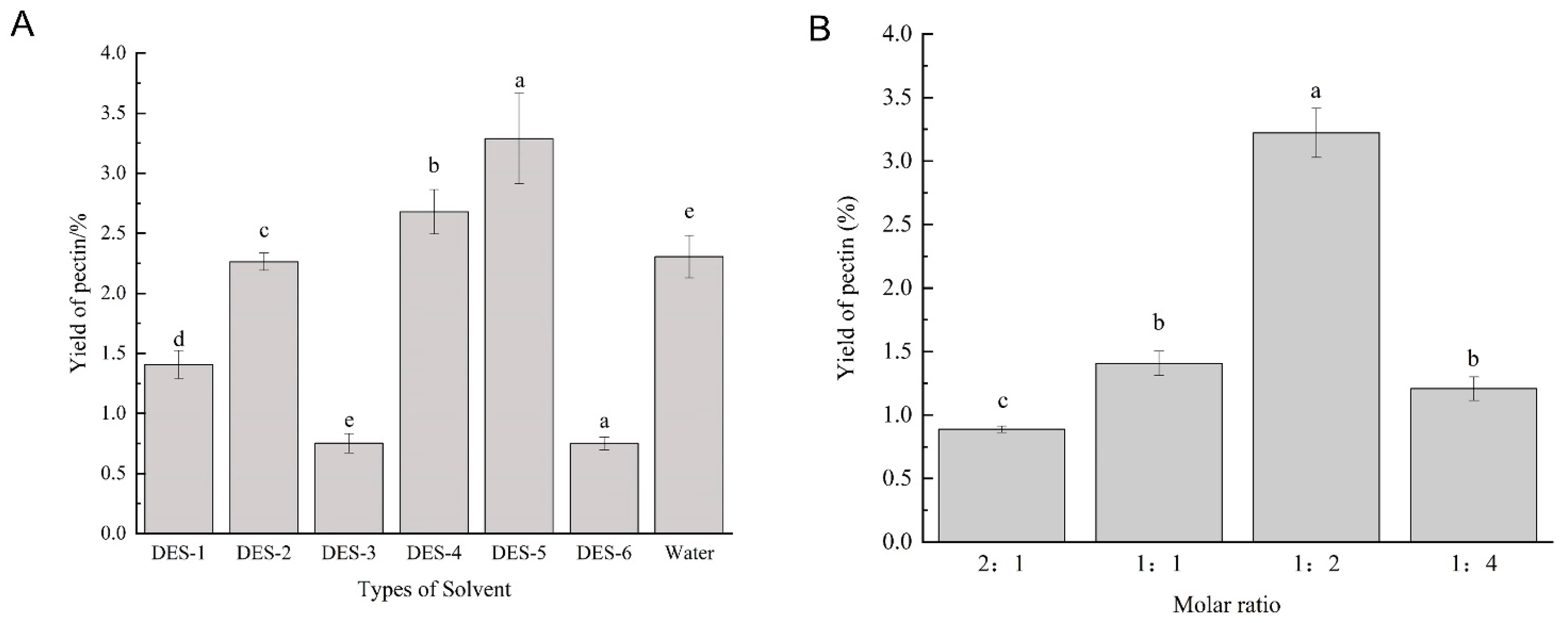
3.1. DES Type and Molar Ratio Screening
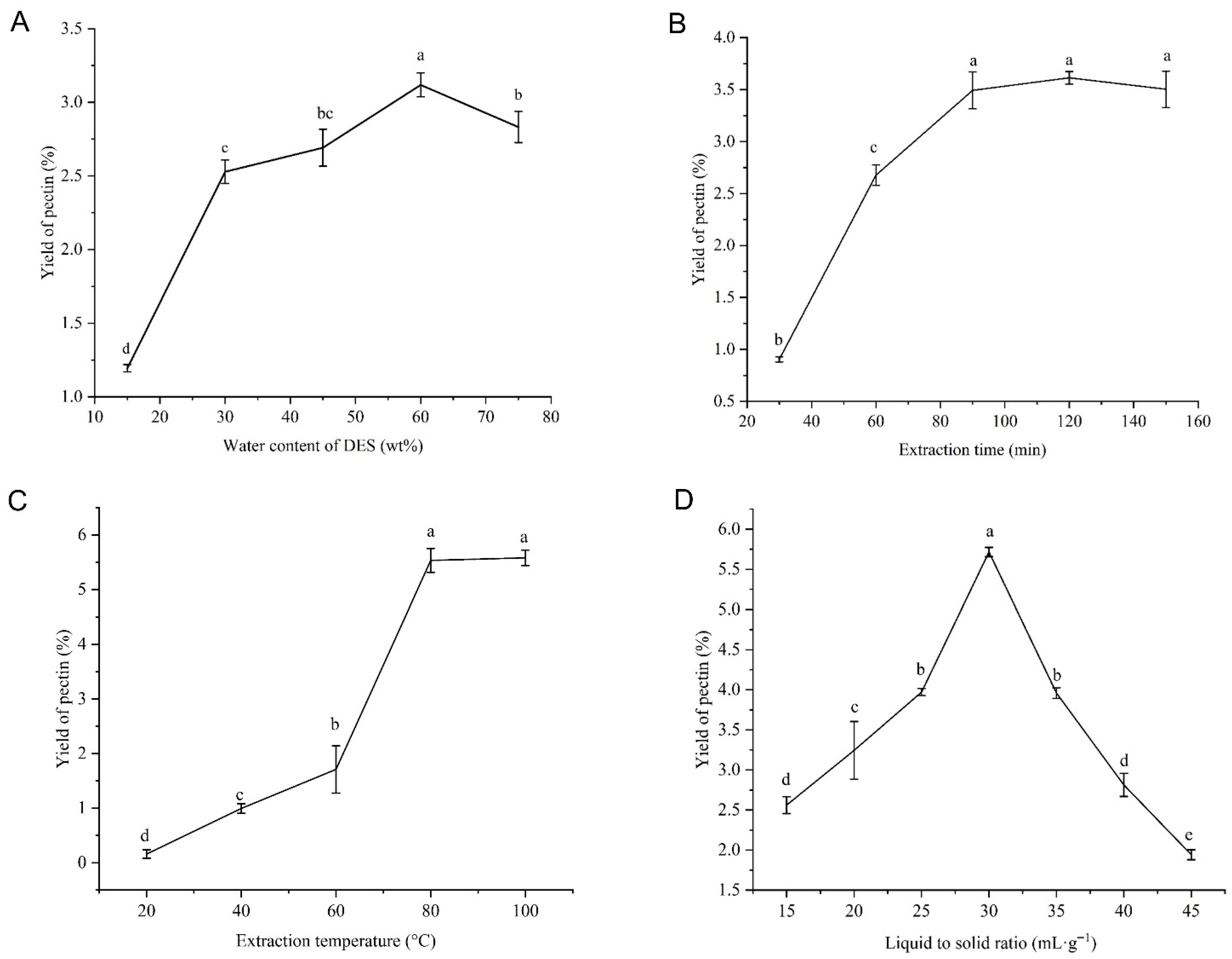
3.2. Single-Factor Experiments
3.3. Box–Behnken Design and Analysis
3.3.1. Analysis of the Quadratic Regression Model
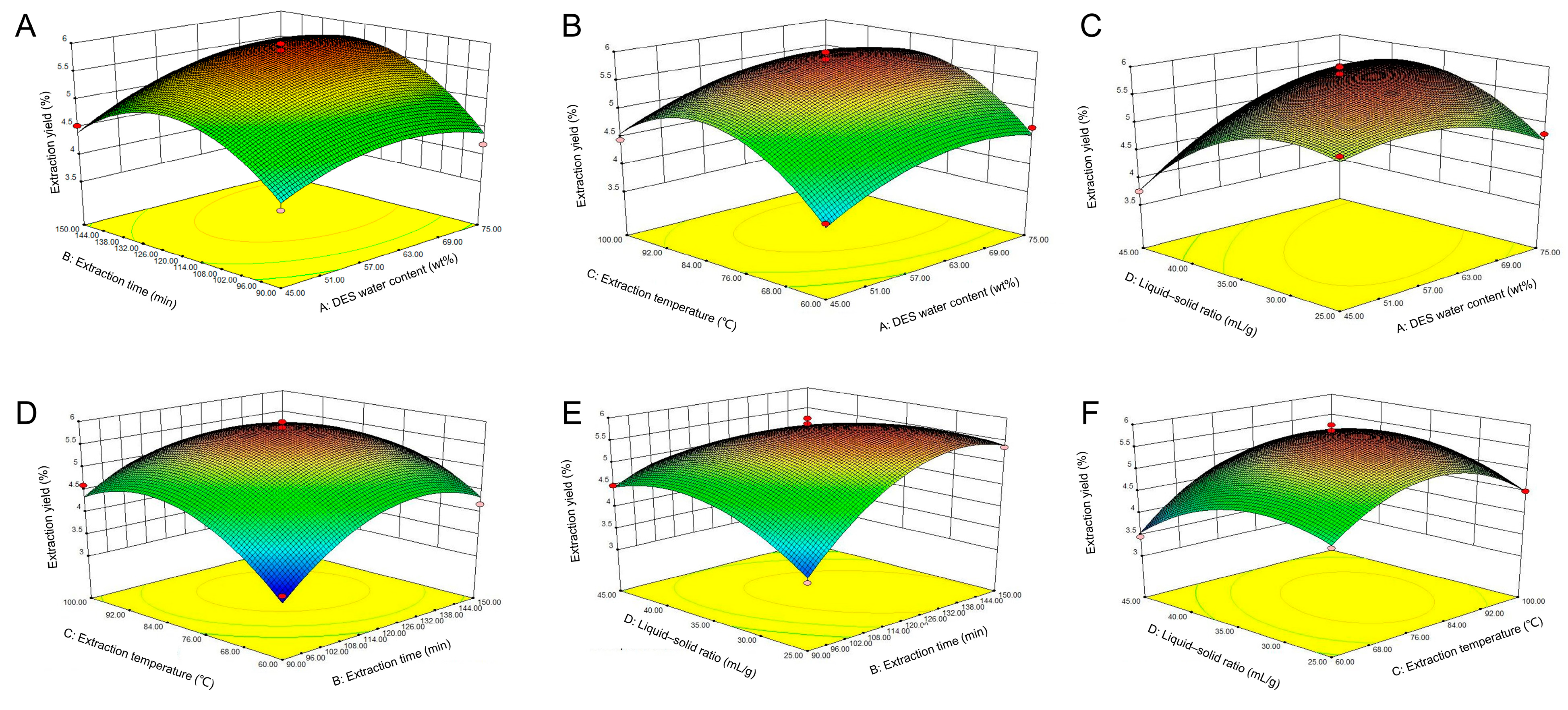
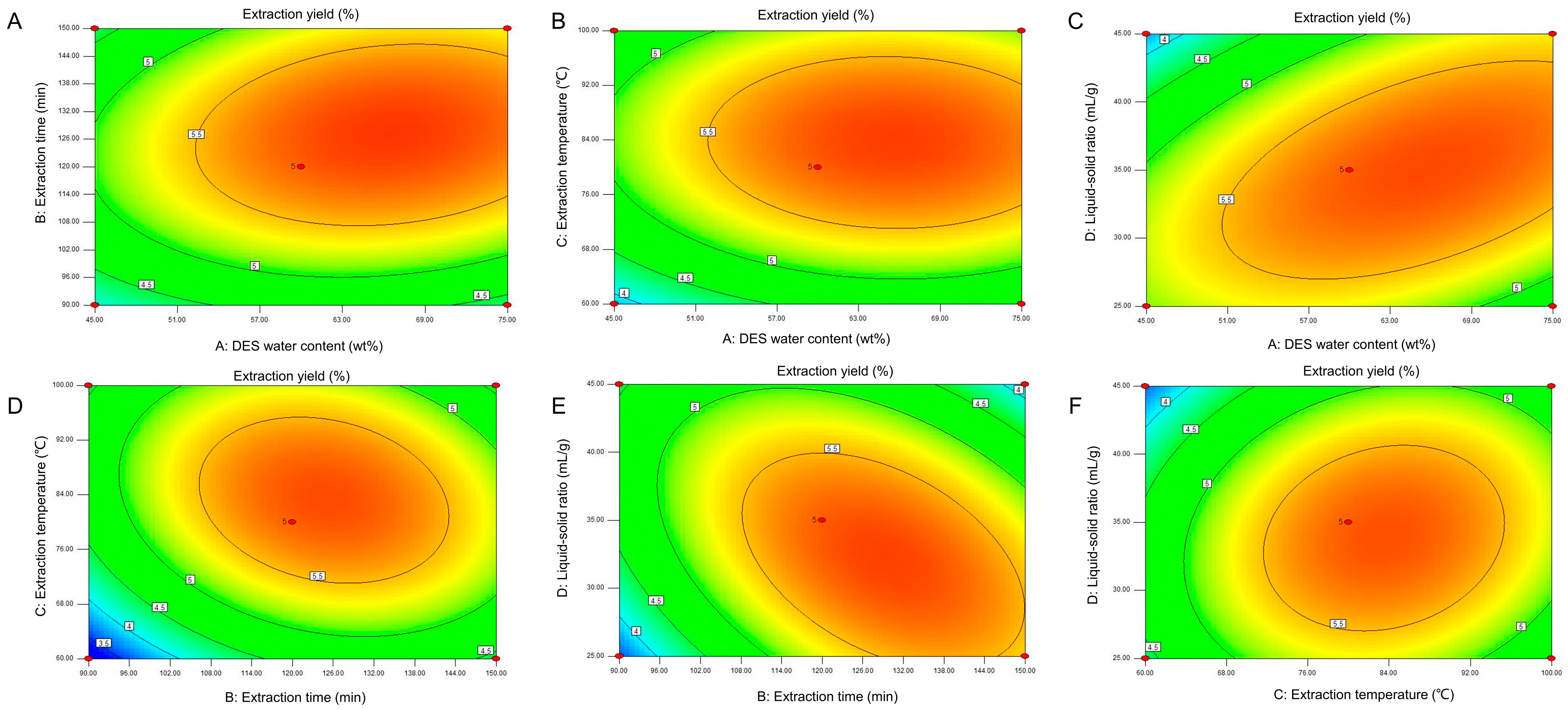
3.3.2. Analysis of Response Surfaces
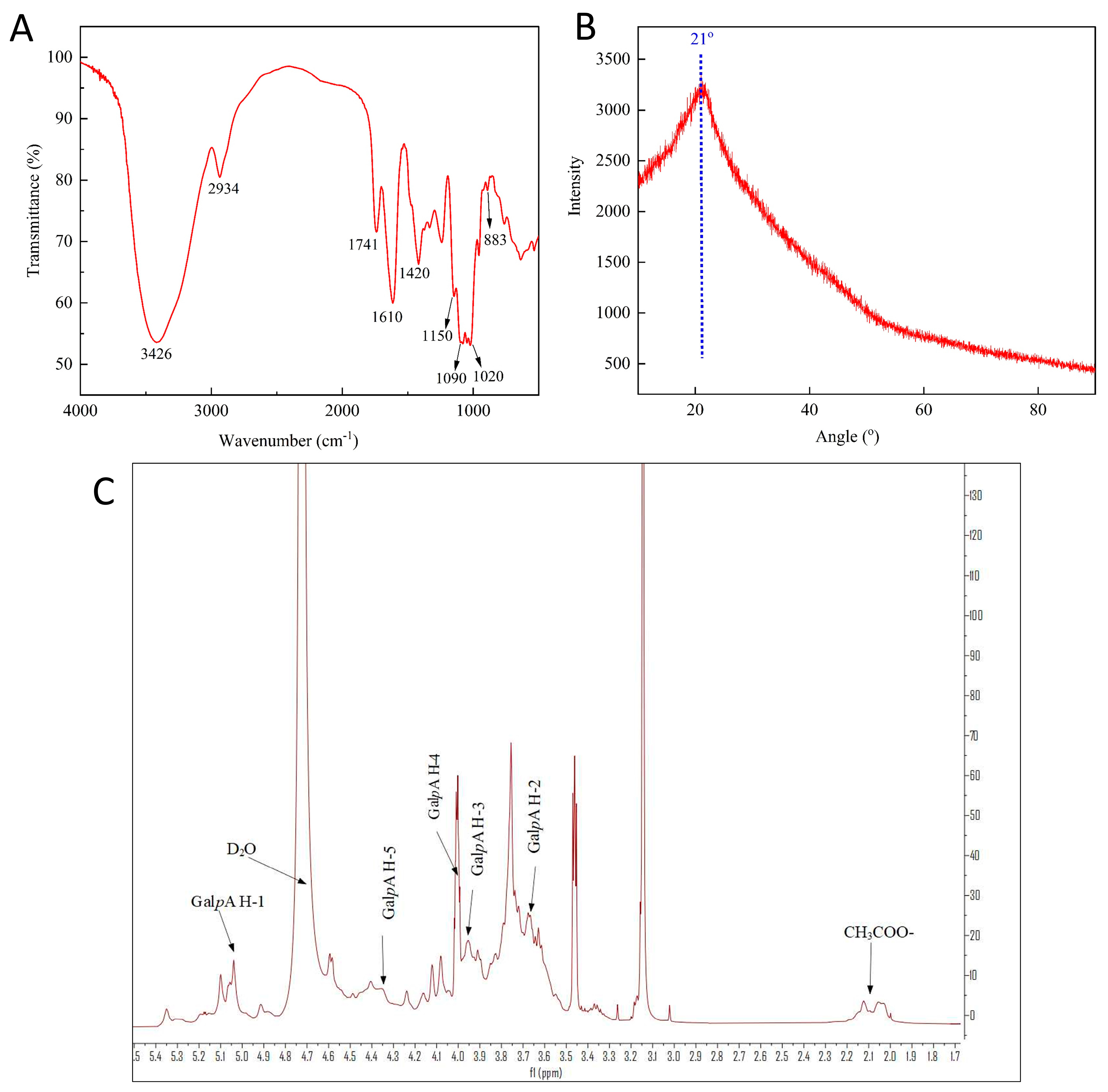
3.4. Structural Characterization of DESP
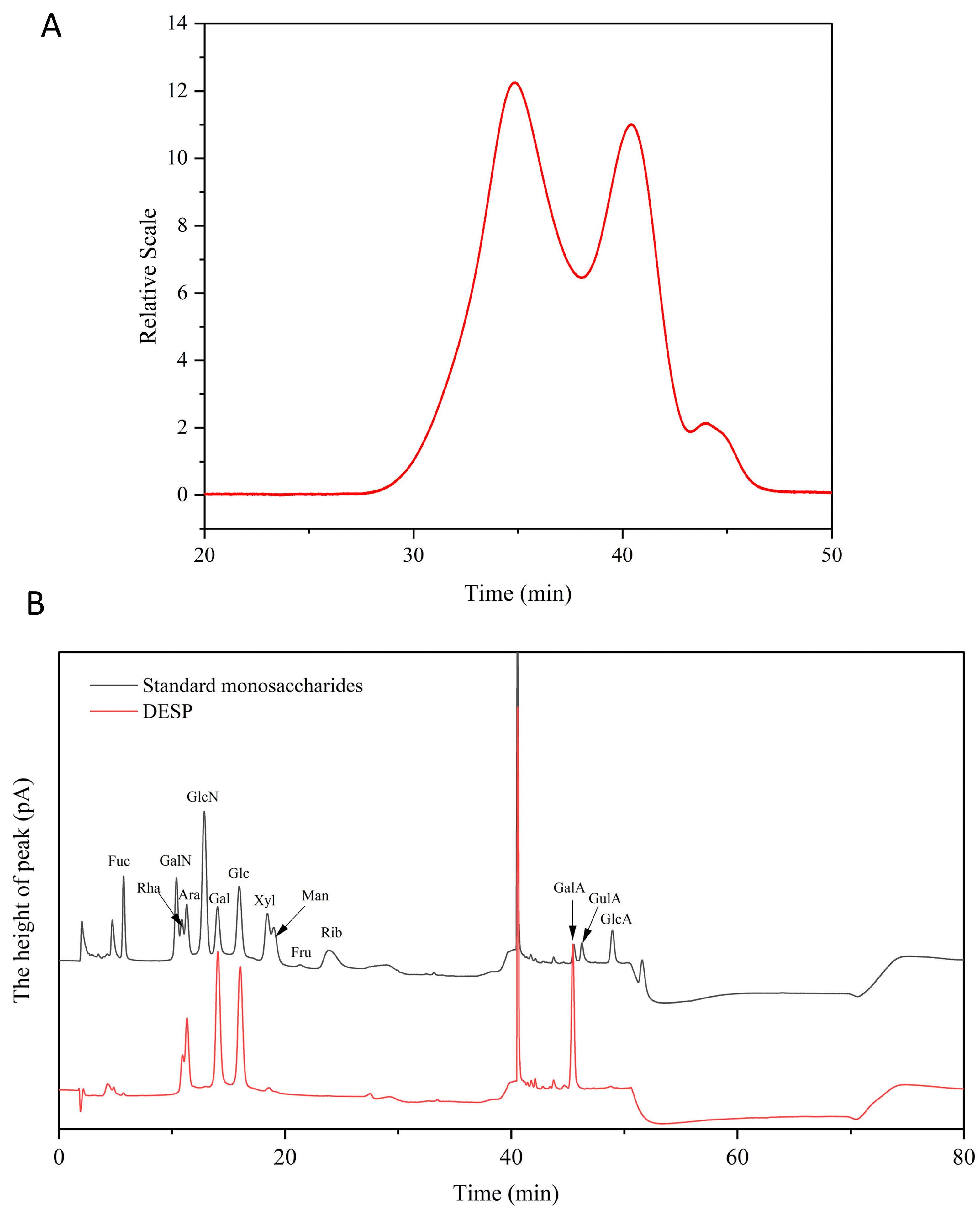
3.4.1. The Yields and Mw
3.4.2. Monosaccharides Composition
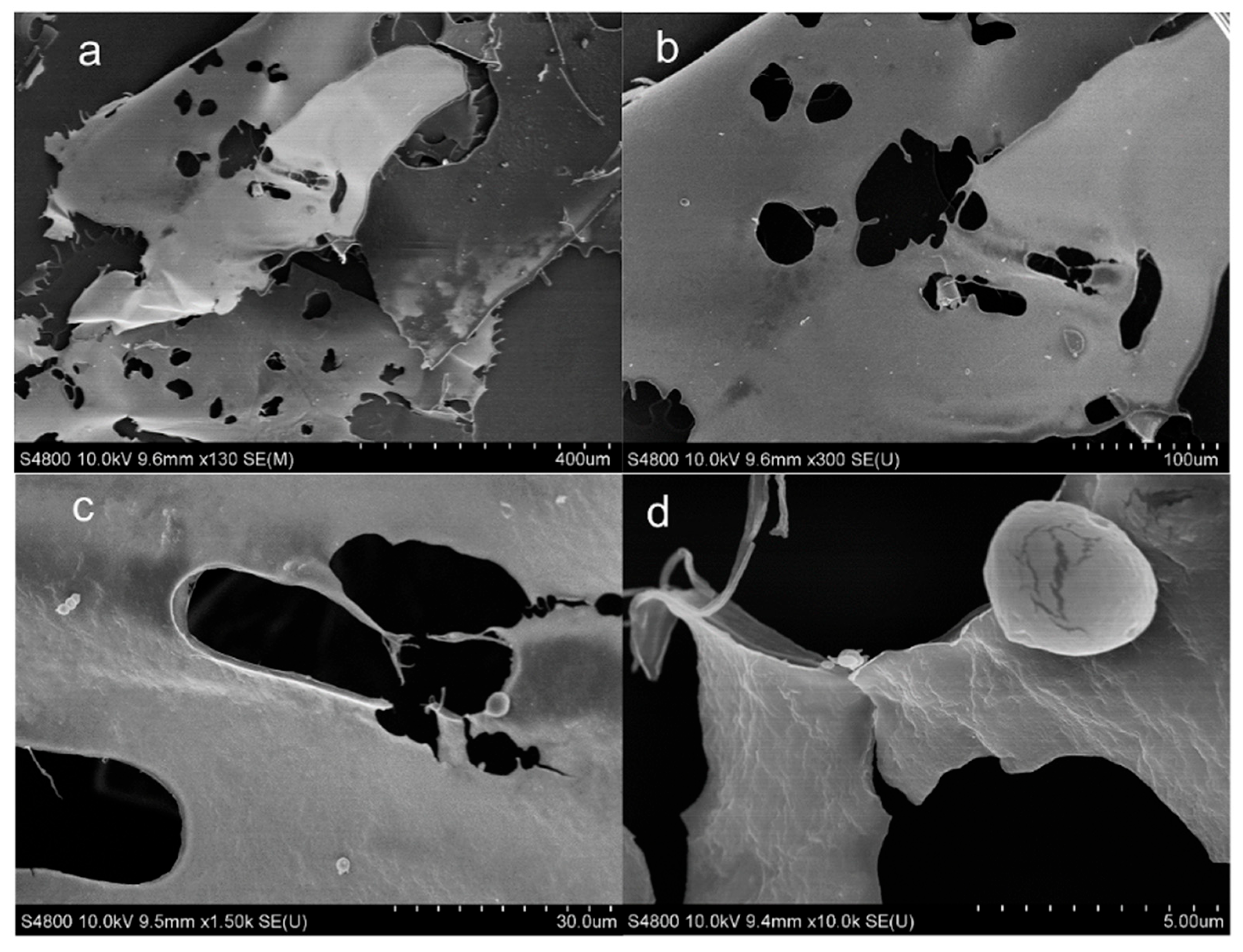
3.4.3. Scanning Electron Microscopy
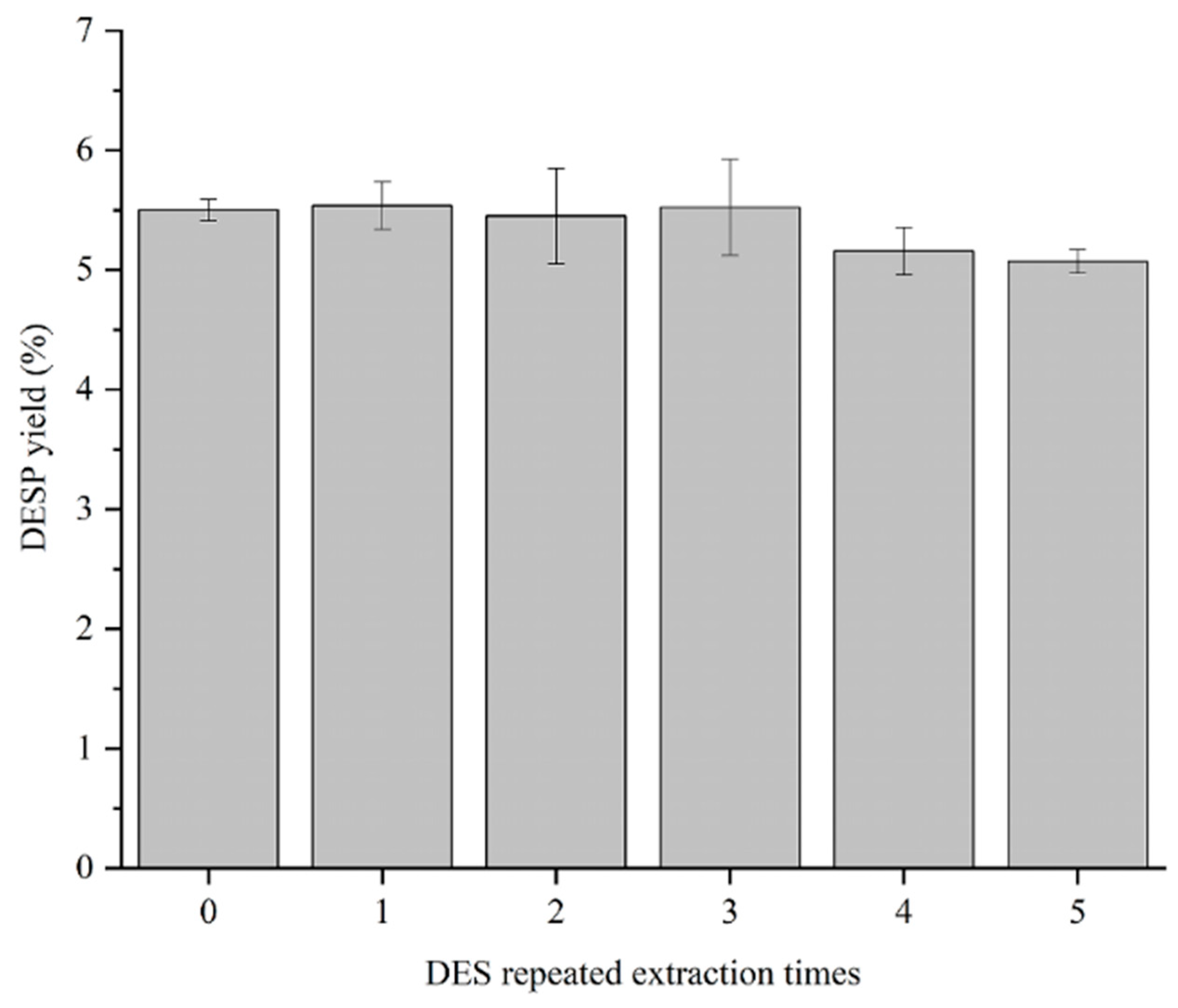
3.5. Effect of Reuse of DES on the Yield of DESP
3.6. In Vitro Anti-Inflammatory Activity
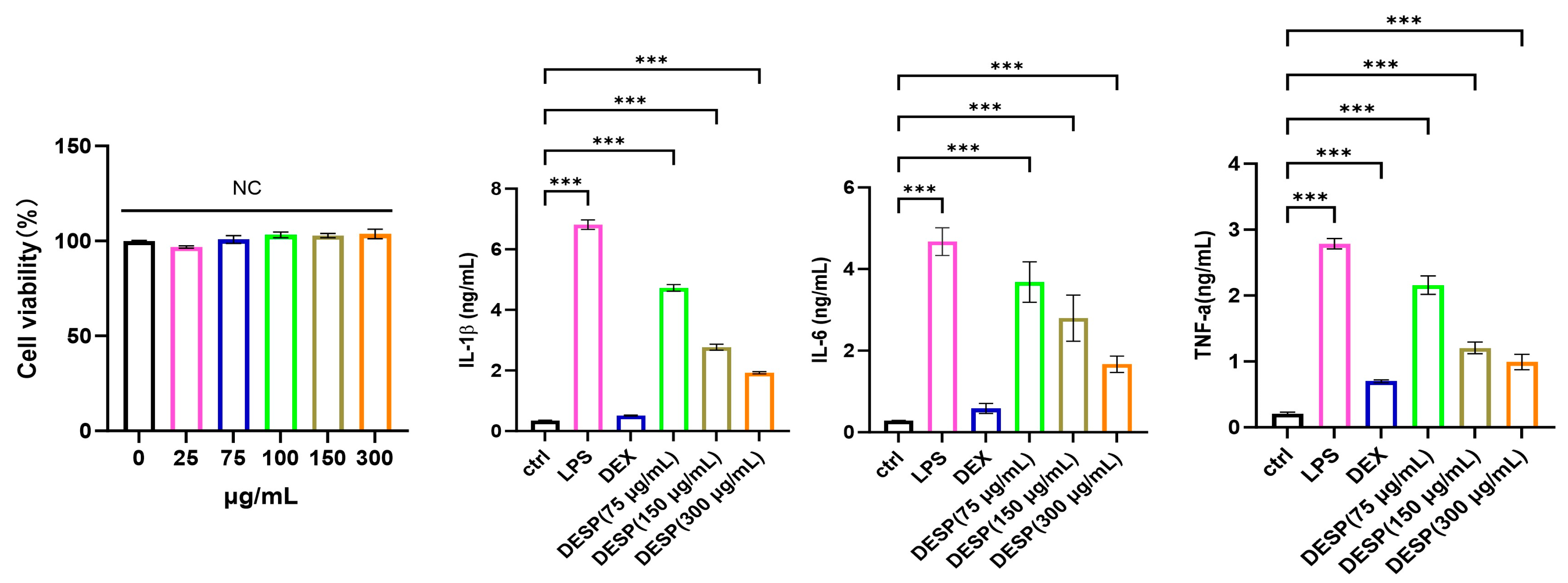
3.6.1. iBMDM Cell Viability
3.6.2. Effect of DESP Concentrations on Cytokine Secretion
3.7. Comparison of the Effects Between the DES Extraction and Traditional Extraction
4. Conclusions
Supplementary Materials
Author Contributions
Funding
Institutional Review Board Statement
Informed Consent Statement
Data Availability Statement
Conflicts of Interest
References
- Osamede Airouyuwa, J.; Sivapragasam, N.; Ali Redha, A.; Maqsood, S. Sustainable green extraction of anthocyanins and carotenoids using deep eutectic solvents (DES): A review of recent developments. Food. Chem. 2024, 448, 139061. [Google Scholar] [CrossRef] [Scilit]
- Morozova, O.V.; Vasil’eva, I.S.; Shumakovich, G.P.; Zaitseva, E.A.; Yaropolov, A.I. Deep Eutectic Solvents for Biotechnology Applications. Biochemistry 2023, 88, S150–S175. [Google Scholar] [CrossRef] [Scilit]
- Zhang, X.J.; Liu, Z.T.; Chen, X.Q.; Zhang, T.T.; Zhang, Y. Deep eutectic solvent combined with ultrasound technology: A promising integrated extraction strategy for anthocyanins and polyphenols from blueberry pomace. Food. Chem. 2023, 422, 136224. [Google Scholar] [CrossRef] [Scilit]
- Tan, T.; Zhang, M.; Wan, Y.; Qiu, H. Utilization of deep eutectic solvents as novel mobile phase additives for improving the separation of bioactive quaternary alkaloids. Talanta 2016, 149, 85–90. [Google Scholar] [CrossRef] [Scilit]
- Tian, Y.; Zhu, M.; Hu, T.; Liu, C. Natural deep eutectic solvent-A novel green solvent for protein stabilization. Int. J. Biol. Macromol. 2023, 247, 125477. [Google Scholar] [CrossRef] [Scilit] [PubMed]
- Bamigbade, G.B.; Subhash, A.J.; Al-Ramadi, B.; Kamal-Eldin, A.; Gan, R.Y.; Liu, S.Q.; Ayyash, M. Gut microbiota modulation, prebiotic and bioactive characteristics of date pomace polysaccharides extracted by microwave-assisted deep eutectic solvent. Int. J. Biol. Macromol. 2024, 262, 130167. [Google Scholar] [CrossRef] [Scilit] [PubMed]
- Dammak, M.I.; Mzoughi, Z.; Chakroun, I.; Mansour, H.B.; Le Cerf, D.; Majdoub, H. Optimization of polysaccharides extraction from quince peels: Partial characterization, antioxidant and antiproliferative properties. Nat. Prod. Res. 2020, 34, 1470–1474. [Google Scholar] [CrossRef] [Scilit] [PubMed]
- Guo, H.; Fu, M.X.; Zhao, Y.X.; Li, H.; Li, H.B.; Wu, D.T.; Gan, R.Y. The Chemical, Structural, and Biological Properties of Crude Polysaccharides from Sweet Tea (Lithocarpus litseifolius (Hance) Chun) Based on Different Extraction Technologies. Foods 2021, 10, 1779. [Google Scholar] [CrossRef] [Scilit]
- Chen, X.; Wang, R.; Tan, Z. Extraction and purification of grape seed polysaccharides using pH-switchable deep eutectic solvents-based three-phase partitioning. Food Chem. 2023, 412, 135557. [Google Scholar] [CrossRef] [Scilit]
- Zhang, J.; Zeng, X.; Liu, G.; Wen, C.; Xu, X. Extraction of Lentinus Edodes Polysaccharides with Ultrasound Enhanced with Deep Eutectic Solvent and Their Structural Characterization and Antioxidant Activity. Chem. Biodivers. 2024, 21, e202400141. [Google Scholar] [CrossRef] [Scilit]
- Gao, Y.; Fan, M.; Cheng, X.; Liu, X.; Yang, H.; Ma, W.; Guo, M.; Li, L. Deep eutectic solvent: Synthesis, classification, properties and application in macromolecular substances. Int. J. Biol. Macromol. 2024, 278 Pt 2, 134593. [Google Scholar] [CrossRef] [Scilit]
- Liu, H.; Lin, J.; Hu, Y.; Lei, H.; Zhang, Q.; Tao, X.; Niu, H. Deep eutectic solvent (DES)-assisted extraction of pectin from Ficus carica Linn. Peel: Optimization, partial structure characterization, functional and antioxidant activities. J. Sci. Food Agric. 2024, 104, 5149–5162. [Google Scholar] [CrossRef] [Scilit] [PubMed]
- Lin, X.; Liu, Y.; Wang, R.; Dai, J.; Wang, L.; Zhang, J. Extraction of pectins from renewable grapefruit (Citrus paradisi) peels us-ing deep eutectic solvents and analysis of their structural and physicochemical properties. Int. J. Biol. Macromol. 2024, 254, 127785. [Google Scholar] [CrossRef] [Scilit] [PubMed]
- Lin, J.; Lin, J.; Tao, X.; Zhang, D.; Chen, S.; Fu, X.; Luo, Y.; Zheng, J.; Liu, L.; Niu, H. Extraction and Characterization of Clausena lansium (Lour.) Skeels Fruit Pectin Based on Deep Eutectic Solvent. Chem. Biodivers. 2025, 22, e01358. [Google Scholar] [CrossRef] [Scilit]
- Shafie, M.H.; Yusof, R.; Gan, C.Y. Deep eutectic solvents (DES) mediated extraction of pectin from Averrhoa bilimbi: Optimization and characterization studies. Carbohydr. Polym. 2019, 216, 303–311. [Google Scholar] [CrossRef] [Scilit]
- Meng, Y.; Sui, X.; Pan, X.; Zhang, X.; Sui, H.; Xu, T.; Zhang, H.; Liu, T.; Liu, J.; Ge, P. Density-oriented deep eutectic solvent-based system for the selective separation of polysaccharides from Astragalus membranaceus var. Mongholicus under ultrasound-assisted conditions. Ultrason. Sonochem. 2023, 98, 106522. [Google Scholar] [CrossRef] [Scilit]
- Arachchige, M.P.M.; Mu, T.; Ma, M. Structural, physicochemical and emulsifying properties of sweet potato pectin treated by high hydrostatic pressure and/or pectinase: A comparative study. J. Sci. Food Agric. 2020, 100, 4911–4920. [Google Scholar] [CrossRef] [Scilit] [PubMed]
- Mudugamuwa Arachchige, M.P.; Mu, T.; Ma, M. Effect of high hydrostatic pressure-assisted pectinase modification on the Pb2+ adsorption capacity of pectin isolated from sweet potato residue. Chemosphere 2021, 262, 128102. [Google Scholar] [CrossRef] [Scilit]
- Mei, X.; Mu, T.H.; Han, J.J. Composition and physicochemical properties of dietary fiber extracted from residues of 10 varieties of sweet potato by a sieving method. J. Agric. Food Chem. 2010, 58, 7305–7310. [Google Scholar] [CrossRef] [Scilit]
- Hao, Z.; Wang, D.; Chen, H.; Sun, J.; Xu, Y. Sweet potato starch residue as starting material to prepare polyacrylonitrile adsorbent via SI-SET-LRP. J. Agric. Food Chem. 2014, 62, 1765–1770. [Google Scholar] [CrossRef] [Scilit]
- Sharma, S.K.; Bansal, S.; Mangal, M.; Dixit, A.K.; Gupta, R.K.; Mangal, A.K. Utilization of Food Processing By-products as Dietary, Functional, and Novel Fiber: A Review. Crit. Rev. Food Sci. Nutr. 2016, 56, 1647–1661. [Google Scholar] [CrossRef] [Scilit] [PubMed]
- Jurendić, T.; Ščetar, M. Aronia melanocarpa Products and By-Products for Health and Nutrition: A Review. Antioxidants 2021, 10, 1052. [Google Scholar] [CrossRef] [Scilit]
- Bermúdez-Oria, A.; Castejón, M.L.; Fernández-Prior, Á.; Rodríguez-Gutiérrez, G.; Fernández-Bolaños, J. An Acid-Free Alternative to Pectin Production from the Cell Walls of Olive Oil Waste and Different Fruits Using Choline Chloride. Foods 2023, 12, 4166. [Google Scholar] [CrossRef] [Scilit] [PubMed]
- Kazemi, M.; Khodaiyan, F.; Hosseini, S.S. Utilization of food processing wastes of eggplant as a high potential pectin source and characterization of extracted pectin. Food. Chem. 2019, 294, 339–346. [Google Scholar] [CrossRef] [Scilit] [PubMed]
- Yao, T.; Wang, C.; Liang, L.; Xiang, X.; Zhou, H.; Zhou, W.; Hou, R.; Wang, T.; He, L.; Bin, S.; et al. Effects of fermented sweet potato residue on nutrient digestibility, meat quality, and intestinal microbes in broilers. Anim. Nutr. 2024, 17, 75–86. [Google Scholar] [CrossRef] [Scilit]
- Kazunori, T.; Jun-Ichi, A.; Amane, I.; Kaori, S.; Syunsaku, M.; Susumu, H. Preparation of pectin from sweetpotato residue and its characterization. J. Appl. Glycosci. 2000, 47, 201–206. [Google Scholar] [CrossRef] [Scilit]
- Zhang, W.; Sun, J.; Li, Q.; Liu, C.; Yue, R.; Zhang, Y.; Niu, F.; Zhu, H.; Ma, C.; Deng, S. Effects of different extraction solvents on the compositions, primary structures, and anti-inflammatory activity of pectin from sweet potato processing by-products. Carbohydr. Polym. 2025, 347, 122766. [Google Scholar] [CrossRef] [Scilit]
- Chen, L.; Yang, Y.Y.; Zhou, R.R.; Fang, L.Z.; Zhao, D.; Cai, P.; Yu, R.; Zhang, S.H.; Huang, J.H. The extraction of phenolic acids and polysaccharides from Lilium lancifolium Thunb. using a deep eutectic solvent. Anal Methods 2021, 13, 1226–1231. [Google Scholar] [CrossRef] [Scilit]
- Feng, S.; Tang, M.; Jiang, Z.; Ruan, Y.; Liu, L.; Kong, Q.; Xiang, Z.; Chen, T.; Zhou, L.; Yang, H.; et al. Optimization of Extraction Process, Structure Characterization, and Antioxidant Activity of Polysaccharides from Different Parts of Camellia oleifera Abel. Foods 2022, 11, 3185. [Google Scholar] [CrossRef] [Scilit]
- Xie, L.; Yan, H.; Han, L.; Cui, L.; Hussain, H.; Feng, Q.; Zhao, Y.; Zhang, Z.; Li, J.; Aziz, S.; et al. Structural characterization and anti-inflammatory activity of neutral polysaccharides from American ginseng. Int. J. Biol. Macromol. 2023, 248, 125586. [Google Scholar] [CrossRef] [Scilit]
- Jiao, X.; Li, F.; Zhao, J.; Wei, Y.; Zhang, L.; Wang, H.; Yu, W.; Li, Q. Structural diversity and physicochemical properties of polysaccharides isolated from pumpkin (Cucurbita moschata) by different methods. Food Res. Int. 2023, 163, 112157. [Google Scholar] [CrossRef] [Scilit]
- Zdanowicz, M.; Wilpiszewska, K.; Spychaj, T. Deep eutectic solvents for polysaccharides processing. A review. Carbohydr. Polym. 2018, 200, 361–380. [Google Scholar] [CrossRef] [Scilit]
- Feng, S.; Zhang, J.; Luo, X.; Xu, Z.; Liu, K.; Chen, T.; Zhou, L.; Ding, C. Green extraction of polysaccharides from Camellia oleifera fruit shell using tailor-made deep eutectic solvents. Int. J. Biol. Macromol. 2023, 253, 127286. [Google Scholar] [CrossRef] [Scilit]
- Aktaş, H.; Kurek, M.A. Deep eutectic solvents for the extraction of polyphenols from food plants. Food Chem. 2024, 444, 138629. [Google Scholar] [CrossRef] [Scilit]
- Jiang, Z.M.; Wang, L.J.; Gao, Z.; Zhuang, B.; Yin, Q.; Liu, E.H. Green and efficient extraction of different types of bioactive alkaloids using deep eutectic solvents. Microchem. J. 2019, 145, 345–353. [Google Scholar] [CrossRef] [Scilit]
- He, Q.; Lei, Q.; Huang, S.; Zhou, Y.; Liu, Y.; Zhou, S.; Peng, D.; Deng, X.; Xue, J.; Li, X.; et al. Effective extraction of bioactive alkaloids from the roots of Stephania tetrandra by deep eutectic solvents-based ultrasound-assisted extraction. J. Chromatogr. A 2023, 1689, 463746. [Google Scholar] [CrossRef] [Scilit]
- Gao, C.; Cai, C.; Liu, J.; Wang, Y.; Chen, Y.; Wang, L.; Tan, Z. Extraction and preliminary purification of polysaccharides from Camellia oleifera Abel. seed cake using a thermoseparating aqueous two-phase system based on EOPO copolymer and deep eutectic solvents. Food Chem. 2020, 313, 126164. [Google Scholar] [CrossRef] [Scilit] [PubMed]
- Guo, X.; Guo, X.; Meng, H.; Zhang, B.; Yu, S. Using the high temperature resistant pH electrode to auxiliarily study the sugar beet pectin extraction under different extraction conditions. Food Hydrocoll. 2017, 70, 105–113. [Google Scholar] [CrossRef] [Scilit]
- Yang, G.; Su, F.; Hu, D.; Ruan, C.; Che, P.; Zhang, Y.; Wang, J. Optimization of the Extraction Process and Antioxidant Activity of Polysaccharide Extracted from Centipeda minima. Chem. Biodivers. 2023, 20, e202200626. [Google Scholar] [CrossRef] [Scilit]
- Chen, R.; Li, S.; Liu, C.; Yang, S.; Li, X. Ultrasound complex enzymes assisted extraction and biochemical activities of polysaccharides from epimedium leaves. Process Biochem. 2012, 47, 2040. [Google Scholar] [CrossRef] [Scilit]
- Vathsala, V.; Singh, S.P.; Bishnoi, M.; Varghese, E.; Saurabh, V.; Khandelwal, A.; Kaur, C. Ultrasound-assisted extraction (UAE) and characterization of citrus peel pectin: Comparison between pummelo (Citrus grandis L. Osbeck) and sweet lime (Citrus limetta Risso). Sustain. Chem. Pharm. 2024, 37, 101357. [Google Scholar] [CrossRef] [Scilit]
- Weremfo, A.; Abassah-Oppong, S.; Adulley, F.; Dabie, K.; Seidu-Larry, S. Response surface methodology as a tool to optimize the extraction of bioactive compounds from plant sources. J. Sci. Food Agric. 2023, 103, 26–36. [Google Scholar] [CrossRef] [Scilit] [PubMed]
- Fu, M.; Sun, X.; Fei, C.; Li, D.; Zhang, D.; Tuo, X.; Gao, S.; Han, X.; Xiu, J.; Wang, J. Optimization and characterization of pectin extracted from hawthorn by deep eutectic solvent. Int. J. Biol. Macromol. 2024, 256, 128688. [Google Scholar] [CrossRef] [Scilit] [PubMed]
- Boateng, I.D. Evaluating the status quo of deep eutectic solvent in food chemistry. Potentials and limitations. Food Chem. 2023, 406, 135079. [Google Scholar] [CrossRef] [Scilit]
- Nie, J.; Chen, D.; Lu, Y. Deep eutectic solvents based ultrasonic extraction of polysaccharides from edible brown Seaweed Sargassum horneri. J. Mar. Sci. Eng. 2020, 8, 440. [Google Scholar] [CrossRef] [Scilit]
- Mukhopadhyay, S.; Mukherjee, S.; Hayyan, A.; Hayyan, M.; Hashim, M.A.; Gupta, B.S. Green and efficient extraction of polysaccharides from brown seaweed by adding deep eutectic solvent in subcritical water hydrolysis. J. Clean. Prod. 2018, 198, 1474–1484. [Google Scholar] [CrossRef] [Scilit]
- Wang, M.; Wang, J.; Zhang, Y.; Xia, Q.; Bi, W.; Yang, X.; da Chen, D.Y. Fast environment-friendly ball mill-assisted deep eutectic solvent-based extraction of natural products. J. Chromatogr. A 2016, 1443, 262. [Google Scholar] [CrossRef] [Scilit] [PubMed]
- Liu, C.M.; Guo, X.J.; Liang, R.H.; Liu, W.; Chen, J. Alkylated pectin: Molecular characterization, conformational change and gel property. Food. Hydrocoll. 2017, 69, 341–349. [Google Scholar] [CrossRef] [Scilit]
- Turan, O.; Isci, A.; Ylmaz, M.S.; Tolun, A.; Sakiyan, O. Microwave-assisted extraction of pectin from orange peel using deep eutectic solvents. Sustain. Chem. Pharm. 2024, 37, 101352. [Google Scholar] [CrossRef] [Scilit]
- Qin, Z.; Liu, H.M.; Cheng, X.C.; Wang, X.D. Effect of drying pretreatment methods on structure and properties of pectins extracted from Chinese quince fruit. Int. J. Biol. Macromol. 2019, 137, 801–808. [Google Scholar] [CrossRef] [Scilit]
- Hu, S.; Wang, J.; Nie, S.; Wang, Q.; Xu, X. Chain conformations and steady-shear viscosity properties of pectic polysaccharides from apple and tomato. Food Chem. X 2022, 14, 100296. [Google Scholar] [CrossRef] [Scilit]
- Hosseini, S.S.; Khodaiyan, F.; Kazemi, M.; Najari, Z. Optimization and characterization of pectin extracted from sour orange peel by ultrasound assisted method. Int. J. Biol. Macromol. 2019, 125, 621–629. [Google Scholar] [CrossRef] [Scilit]
- Jiao, Y.; Kuang, H.; Hu, J.; Chen, Q. Structural characterization and anti-hypoxia activities of polysaccharides from the sporocarp, fermentation broth and cultured mycelium of Agaricus bitorquis (quel.) sacc. Chaidam in mice. J. Funct. Foods. 2018, 51, 75–85. [Google Scholar] [CrossRef] [Scilit]
- Shu, Z.; Yang, Y.; Xing, N.; Wang, Y.; Wang, Q.; Kuang, H. Structural characterization and immunomodulatory activity of a pectic polysaccharide (calb-4) from Fructus aurantia. Int. J. Biol. Macromol. 2018, 116, 831–839. [Google Scholar] [CrossRef] [Scilit]
- Zheng, Y.; Zhang, S.; Wang, Q.; Lu, X.; Lin, L.; Tian, Y.; Xiao, J.; Zheng, B. Characterization and hypoglycemic activity of a β-pyran polysaccharides from bamboo shoot (Leleba oldhami Nakal) shells. Carbohydr. Polym. 2016, 144, 438–446. [Google Scholar] [CrossRef] [Scilit] [PubMed]
- Gharibzahedi, S.M.T.; Smith, B.; Guo, Y. Pectin extraction from common fig skin by different methods: The physicochemical, rheological, functional, and structural evaluations. Int. J. Biol. Macromol. 2019, 136, 275–283. [Google Scholar] [CrossRef] [Scilit] [PubMed]
- Song, C.; Huang, F.; Liu, L.; Zhou, Q.; Zhang, D.; Fang, Q.; Lei, H.; Niu, H. Characterization and prebiotic properties of pectin polysaccharide from Clausena lansium (Lour.) Skeels fruit. Int. J. Biol. Macromol. 2022, 194, 412–421. [Google Scholar] [CrossRef] [Scilit]
- Hou, J.; Gong, H.; Gong, Z.; Tan, X.; Qin, X.; Nie, J.; Zhu, H.; Zhong, S. Structural characterization and anti-inflammatory activities of a purified polysaccharide from fruits remnants of Alpinia zerumbet (Pers.) Burtt. et Smith. Int. J. Biol. Macromol. 2024, 267, 131534. [Google Scholar] [CrossRef] [Scilit]



| Abbreviation | HBA | HBD | Molar Ratio |
|---|---|---|---|
| DES-1 | Choline chloride | 1,3-Propylene glycol | 1:2 |
| DES-2 | Choline chloride | Glycerol | 1:2 |
| DES-3 | Choline chloride | Citric acid | 1:4 |
| DES-4 | Potassium carbonate | Glycerol | 1:4 |
| DES-5 | Choline chloride | Urea | 1:2 |
| DES-6 | Choline chloride | 1,4-Butanediol | 1:2 |
| Independent Variables | Levels | ||
|---|---|---|---|
| −1 | 0 | 1 | |
| A DES water content (wt. %) | 45 | 60 | 75 |
| B Extraction time (min) | 90 | 120 | 150 |
| C Extraction temperature (°C) | 60 | 80 | 100 |
| D Liquid–solid ratio (mL·g−1) | 25 | 35 | 45 |
| Run | A wt.% | B min | C °C | D mL·g−1 | Y/% |
|---|---|---|---|---|---|
| 1 | 60 | 120 | 60 | 25 | 4.37 |
| 2 | 75 | 90 | 80 | 35 | 4.19 |
| 3 | 75 | 120 | 100 | 35 | 5.01 |
| 4 | 60 | 90 | 100 | 35 | 4.69 |
| 5 | 75 | 120 | 80 | 45 | 5.32 |
| 6 | 60 | 90 | 80 | 25 | 3.43 |
| 7 | 60 | 90 | 60 | 35 | 3.30 |
| 8 | 60 | 120 | 80 | 35 | 5.59 |
| 9 | 75 | 120 | 80 | 25 | 4.77 |
| 10 | 45 | 120 | 60 | 35 | 3.89 |
| 11 | 60 | 150 | 80 | 25 | 5.39 |
| 12 | 75 | 120 | 60 | 35 | 4.61 |
| 13 | 45 | 120 | 80 | 45 | 3.70 |
| 14 | 45 | 90 | 80 | 35 | 3.99 |
| 15 | 45 | 120 | 80 | 25 | 5.19 |
| 16 | 60 | 120 | 80 | 35 | 5.69 |
| 17 | 60 | 120 | 60 | 45 | 3.51 |
| 18 | 60 | 120 | 100 | 45 | 4.65 |
| 19 | 60 | 120 | 80 | 35 | 5.87 |
| 20 | 60 | 150 | 80 | 45 | 3.88 |
| 21 | 75 | 150 | 80 | 35 | 5.38 |
| 22 | 45 | 120 | 100 | 35 | 4.45 |
| 23 | 60 | 150 | 60 | 35 | 4.22 |
| 24 | 60 | 150 | 100 | 35 | 4.33 |
| 25 | 60 | 120 | 80 | 35 | 5.99 |
| 26 | 60 | 120 | 100 | 25 | 4.57 |
| 27 | 60 | 90 | 80 | 45 | 4.43 |
| 28 | 60 | 120 | 80 | 35 | 5.59 |
| 29 | 45 | 150 | 80 | 35 | 4.48 |
| Source | Sum of Squares | df | Mean Square | F Value | p-Value Prob > F | Significant |
|---|---|---|---|---|---|---|
| Model | 15.54 | 14 | 1.11 | 41.16 | <0.0001 | *** |
| A | 1.07 | 1 | 1.07 | 39.61 | <0.0001 | *** |
| B | 1.11 | 1 | 1.11 | 41.17 | <0.0001 | *** |
| C | 1.20 | 1 | 1.20 | 44.63 | <0.0001 | *** |
| D | 0.41 | 1 | 0.41 | 15.37 | 0.0015 | ** |
| AB | 0.12 | 1 | 0.12 | 4.54 | 0.0513 | |
| AC | 0.01 | 1 | 0.01 | 0.24 | 0.6337 | |
| AD | 1.04 | 1 | 1.04 | 38.58 | <0.0001 | *** |
| BC | 0.41 | 1 | 0.41 | 15.19 | 0.0016 | ** |
| BD | 1.58 | 1 | 1.58 | 58.41 | <0.0001 | *** |
| CD | 0.22 | 1 | 0.22 | 8.19 | 0.0125 | * |
| A2 | 1.07 | 1 | 1.07 | 39.80 | <0.0001 | *** |
| B2 | 4.31 | 1 | 4.31 | 159.98 | <0.0001 | *** |
| C2 | 4.46 | 1 | 4.46 | 165.42 | <0.0001 | *** |
| D2 | 2.56 | 1 | 2.56 | 94.87 | <0.0001 | *** |
| Residual | 0.38 | 14 | 0.03 | |||
| Lack of Fit | 0.25 | 10 | 0.03 | 0.79 | 0.6534 | |
| Pure Error | 0.13 | 4 | 0.03 | |||
| Cor Total | 15.92 | 28 | ||||
| R2 | 0.9763 | |||||
| R2adj | 0.9526 | |||||
| R2pred | 0.8968 | |||||
| Adeq precision | 21.89 | |||||
| C.V.% | 3.54 |
| Samples | DESP | HWSP [27] | HASP [27] |
|---|---|---|---|
| Yields (%, w/w) | 5.6 | 2.3 | 2.1 |
| Mn (kDa) | 17.61 | 39.25 | 51.97 |
| Mw (kDa) | 20.90 | 58.41 | 69.81 |
| Pectin Samples | DESP | HWSP [27] | HASP [27] |
|---|---|---|---|
| Chemical composition | |||
| Total sugar content (%, w/w) | 92.8 ± 1.21 | 91.9 ± 1.64 | 91.5 ± 1.77 |
| Monosaccharide (mol %) | |||
| Rha | 4.13 ± 0.40 | 10.49 ± 0.18 | 11.04 ± 0.45 |
| Ara | 12.10 ± 0.85 | 8.58 ± 0.50 | 2.16 ± 0.13 |
| Gal | 17.90 ± 0.20 | 33.62 ± 1.41 | 22.62 ± 0.94 |
| Glc | 25.63 ± 0.76 | 6.12 ± 0.75 | 6.46 ± 0.46 |
| Xyl | 1.07 ± 0.12 | 0.74 ± 0.12 | 0.99 ± 0.05 |
| Man | 0.57 ± 0.058 | 0.49 ± 0.070 | 0.66 ± 0.11 |
| GalA | 47.07 ± 1.58 | 41.50 ± 0.82 | 54.13 ± 0.75 |
| GlcA | - | 1.43 ± 0.13 | 1.41 ± 0.07 |
| HG/% | 42.93 ± 1.40 | 31.07 ± 0.65 | 43.08 ± 0.72 |
| RG-I/% | 38.27 ± 1.71 | 63.19 ± 1.34 | 46.87 ± 1.89 |
| (Ara + Gal)/Rha | 7.26 ± 0.57 | 4.02 ± 0.05 | 2.25 ± 0.05 |
| DE/% | 26.15 | 47.48 | 14.26 |
Disclaimer/Publisher’s Note: The statements, opinions and data contained in all publications are solely those of the individual author(s) and contributor(s) and not of MDPI and/or the editor(s). MDPI and/or the editor(s) disclaim responsibility for any injury to people or property resulting from any ideas, methods, instructions or products referred to in the content. |
© 2026 by the authors. Licensee MDPI, Basel, Switzerland. This article is an open access article distributed under the terms and conditions of the Creative Commons Attribution (CC BY) license.
Share and Cite
Zhang, W.; Liu, K.; Sun, J.; Liang, X.; Guo, J.; Li, Q.; Liu, C. Deep Eutectic Solvents Mediated Extraction of a Pectin Polysaccharide from Processed Sweet Potato By-Products: Optimization and Characterization Studies. Foods 2026, 15, 388. https://doi.org/10.3390/foods15020388
Zhang W, Liu K, Sun J, Liang X, Guo J, Li Q, Liu C. Deep Eutectic Solvents Mediated Extraction of a Pectin Polysaccharide from Processed Sweet Potato By-Products: Optimization and Characterization Studies. Foods. 2026; 15(2):388. https://doi.org/10.3390/foods15020388
Chicago/Turabian StyleZhang, Wenting, Ke Liu, Jian Sun, Xiaoxue Liang, Juntao Guo, Qiang Li, and Chanmin Liu. 2026. "Deep Eutectic Solvents Mediated Extraction of a Pectin Polysaccharide from Processed Sweet Potato By-Products: Optimization and Characterization Studies" Foods 15, no. 2: 388. https://doi.org/10.3390/foods15020388
APA StyleZhang, W., Liu, K., Sun, J., Liang, X., Guo, J., Li, Q., & Liu, C. (2026). Deep Eutectic Solvents Mediated Extraction of a Pectin Polysaccharide from Processed Sweet Potato By-Products: Optimization and Characterization Studies. Foods, 15(2), 388. https://doi.org/10.3390/foods15020388