Skip to Content
FoodsFoods
  • Editor’s Choice
  • Review
  • Open Access

25 March 2022

Public Health Response to the SARS-CoV-2 Pandemic: Concern about Ultra-Processed Food Consumption


,
,
,
,
,
,
and
1
Unit of Data Sciences and Technology Innovation for Population Health, National Institute of Gastroenterology IRCCS “Saverio de Bellis”, Research Hospital, Castellana Grotte, 70013 Bari, Italy
2
Unit of Geriatrics and Internal Medicine, National Institute of Gastroenterology IRCCS “Saverio de Bellis”, Research Hospital, Castellana Grotte, 70013 Bari, Italy
3
Section of Internal Medicine, Geriatrics, Endocrinology, and Rare Disease, Interdisciplinary Department of Medicine, School of Medicine, University of Bari, 70124 Bari, Italy
4
Unit of Endocrinology, Metabolic Disease & Clinical Nutrition, Hospital “A. Perrino”, 72100 Brindisi, Italy

Abstract

Introduction: There is scientific consistency in the concept of ultra-processed foods (UPFs) as a descriptor of an unhealthy diet. The most recent literature points to troubling evidence that policies adopted to address the SARS-CoV-2 pandemic may have contributed to diverting eating habits toward a poorer diet. Considering the historically unique SARS-CoV-2 pandemic lockdown scenario, and the health burden imposed by UPFs on human health, it is critical to investigate how the epidemic has influenced UPF intake directly. Reviewing the literature, we aimed to assess the changes in the consumption of UPFs during the pandemic lockdown compared to previous habits in the general population. Methods: Consulting six databases, we examined articles investigating the consumption of UPFs according to the NOVA classification both before the SARS-CoV-2 pandemic and during lockdowns. In total, 28 reports were included in the final analysis. Results: A clear trend of an increasing consumption of sweets (chocolate, candy, cookies, pastries, cakes, desserts, and confectionery, 31.75% increase vs. 21.06% decrease), packaged fatty or salty snacks (23.71% increase vs. 20.73% decrease), and baked goods (bread products, pizza, and sandwiches, 28.03% increase vs. 13.5% decrease) emerged, versus a decrease in ready-to-eat dishes (16.2% increase vs. 22.62% decrease) and ready-made meals (10.6% increase vs. 31.43% decrease), such as instant soups, canned foods, fast food, and chips, as well as sugary drinks in general (14.55% increase vs. 22.65% decrease). No trend was observed for processed meat consumption. Conclusion: The current pandemic scenario raises concerns about the increased consumption of UPFs, especially sweets, snacks, and baked goods, and points to an urgent need to implement policy strategies to manage the trade in these foods from a preventive perspective.

1. Introduction

Before the SARS-CoV-2 pandemic, 3 billion people were estimated to be unable to afford healthy food [1]. Recently, the Global Food Policy Report 2021 predicted a spike in estimates between 2020 and 2022 [2]. Indeed, among the severe health and economic consequences of the SARS-CoV-2 pandemic, and their impact on food systems and supply chains, we are experiencing an increase in low-quality, nutrient-deprived diets, inevitably leading to an increase in nutrition-related, chronic non-communicable diseases, all of which were already at all-time highs even before the pandemic. From the public health standpoint, SARS-CoV-2 has highlighted the challenges posed by our current dysfunctional food systems and policies. However, the root cause goes back to the nearly 30-year phenomenon of the “nutrition transition” [3], since the start of the widespread availability of sugar, salt, saturated fat, refined grains, and ultra-processed foods (UPFs) in the marketplace. The term “ultra-processed foods” derives from the NOVA classification, widely used in the literature, which divided foods into four categories according to the level of processing to which they are subjected. UPFs are made by performing a series of industrial steps of fractionation and reassembly of ingredients and additives, which are then wrapped in attractive packaging. Additives include those that mimic or enhance the organoleptic characteristics of food. The processes and ingredients used in the production of UPFs make them ready-to-eat, hyper-palatable, and cost-effective. The economy and attractiveness of ultra-processed foods and their massive advertising campaigns explain why they contribute to about half of the total dietary energy consumed in high-income countries, and are increasing in popularity in low- and middle-income countries. Ultra-processed foods, especially fast foods, are generally consumed in greater quantities out of home and in social situations [4]. Fast food restaurants are popular meeting places, especially for teenagers. Indeed, drinking sugar-sweetened beverages is often associated with the consumption of other foods in cafés and restaurants [5]. On the contrary, snack consumption is much more common at home or at work, especially when watching TV or playing video games. Salty snacks, sweets, candies, and sugary drinks are popular snack choices [6]. This transition has boosted the expanding epidemic of obesity and chronic lifestyle diseases, whose prevalence has increased tenfold in the last four decades, partly due to the nutritional imbalance provided by these foods at excessive consumption rates.
Of note, no age group is exempt from the effects of this transition, which is bringing about malnourishment among infants and young children, and a nutritional imbalance in aging adults, thus exacerbating the course of their physiological physical decline [7]. In practice, during the SARS-CoV-2 pandemic, governments worldwide have focused on implementing various measures to manage the viral spread. Thus, in addition to combinations of complete or partial lockdowns, travel restrictions, and immigration restrictions, the closure of restaurants and other food retailers, and the suspension or curtailment of activities and informal food businesses for weeks or months at a time, have been enforced. Along with travel and transportation restrictions, jobs were lost among food workers, farmworkers, and other sectors along food value chains, and crops were wasted, and the supply of nutritious perishable foods suffered. At the same time, massive job and income losses lowered consumer demand for relatively expensive healthy foods and fresh fruits and vegetables, which disproportionately affected low-income families. Additional factors contributing to the decline of demand for these fresh, nutrient-rich foods were temporary price increases, as well as a lack of home refrigeration and adequate storage facilities, which prevented the purchase of large quantities of perishables during lockdown periods, poor distribution of fresh foods, and also, the misperception that fresh foods (especially those of animal origin) were a risk factor for viral transmission [8].
Research efforts are currently directed toward striving to shed light on how lifestyle, the transition to smart working, and the processes mentioned above have led to changes in eating habits and patterns. Here, we previously reviewed preliminary data, and found an upward trend in the consumption of home-cooked meals, carbohydrate-rich foods, and snacks [9]. These latter are part of the so-called comfort foods—in other words, foods whose consumption provides consolation or a feeling of wellbeing due to their palatability and sweet taste releasing serotonin. For example, when considering beverages, there was increased consumption of coffee and tea during the pandemic due to their mood-modulating capacity [10].
Nevertheless, comfort foods also include sweets, fried foods, and snack foods, most often made by processing, and featuring tasty flavors and attractive packaging. Because of their soothing effect, depressed people tend to eat more UPFs; although, conversely, consumption of UPFs has been positively associated with depressive symptoms [11]. Top guidelines for a healthy diet strongly advise against the consumption of UPFs because of their nutritional composition: energy-dense, with a high content of saturated and trans fats, sugars, sodium, and low fiber content [12]. It is easy to understand how regular consumption of these foods may negatively impact health.
Given the historically unprecedented SARS-CoV-2 pandemic lockdown setting, and the health burden levied by UPFs on human health, it seems important to analyze how the pandemic has directly impacted UPFs intake. The present study aimed to assess the changes in the consumption of UPFs during the pandemic lockdown compared to previous habits in the general population, by means of a semi-quantitative review of recent literature.

2. Materials and Methods

The present is a narrative review article. Given primordial data and the topic’s novelty, we opted for a quantitative approach. Following the Preferred Reporting Items for Systematic reviews and Meta-Analyses (PRISMA) guidelines [13], we conducted individual searches in the US National Library of Medicine (PubMed), Medical Literature Analysis and Retrieval System Online (MEDLINE), EMBASE, Scopus, Ovid, and Google Scholar to find original articles investigating any differences in dietary habits during SARS-CoV-2 lockdown. In particular, our focus was to select studies examining differences in the consumption of UPFs. Our search strategy approach also accounted for the grey literature using the largest archive of preprints (https://arxiv.org/) (accessed on 20 February 2022) in the study selection process, and the http://www.opengrey.eu/ (accessed on 20 February 2022) database to access abstracts of notable conferences and other non-peer-reviewed material. To carry out the selection process, and further refine the search strategy on the UPFs, we selected studies that investigated frequencies of the consumption of all foods during the pandemic, regardless of whether NOVA was used as an assessment tool in the studies themselves. Only in a second step, we used the NOVA classification, referring to UPFs belonging to the fourth category. Briefly, the NOVA classification, first developed by Monteiro, builds on the level of food processing, and consists of four groups, i.e., unprocessed or minimally processed foods, processed culinary ingredients, processed foods, and UPFs [14]. The latter category of UPFs covers many ingredients such as food additives, colors, flavorings, and emulsifiers usually used to improve the palatability of the finished product or to mask its defects, including canned or bottled foods. As food items, UPFs are low-cost, high-fat, high-sugar, and high-salt foods, mass-produced by global multinationals, designed for an extended shelf life, and widely promoted commercially [15]. They include carbonated soft drinks, sweets, fatty or salty packaged snacks, chocolate or candy, biscuits, pastries, cakes, and sugary breakfast cereals, fruit juices, energy drinks, processed meat (sausages, hamburgers, hot dogs, and other reconstituted meat), fast food, pasta and pizza dishes, instant soups, ready-to-eat meals, desserts, and vegetable substitutes [16]. The research strategy applied to the e-sources is shown in Table 1.
Table 1. Search strategy used in the US National Library of Medicine (PubMed) and Medical Literature Analysis and Retrieval System Online (MEDLINE), and adapted to the other sources, according to selected descriptors.
As the topic is young, and the SARS-CoV-2 pandemic research period is limited, no skimming of the study population, design, or setting was applied. For the same reason, no age range was applied to the research population either. Using an Excel spreadsheet, two investigators (SDN, RZ) searched for publications separately and in duplicate, reviewing titles and abstracts of selected articles, screening full texts, and selecting articles for inclusion in this analysis.
For the present synthesis, original articles that explored dietary habits, specifically the consumption of UPFs before and during SARS-CoV-2 through online or telephone questionnaires reporting weekly or monthly food intake, met the inclusion criteria. Letters, systematic reviews, and meta-analyses were not considered. Then, all studies that provided only a snapshot of UPFs consumption during confinement were omitted in favor of those that reported before-and-after comparisons. Data were tabulated by the researchers for general information such as study design, setting, sample size and demographics (age and sex), country, dietary assessment tool, UPF diet exposure, main results, and summary of findings in terms of increased (↑) or decreased (↓) UPF consumption. Data were double-checked by a third senior researcher (FC) to address discrepancies and solve disagreements.
To foster conceptual simplification in drawing conclusions on the findings, the UPFs were grouped into eight categories [17], i.e., (1) sweets (chocolate, candies, cookies, pastries, cakes, desserts, and confectionery), (2) sugary drinks (carbonated soft drinks, fruit juices, sodas, and energy drinks), (3) snacks (packaged fatty or salty snacks), (4) ready-to-eat dishes (instant soups, ready-to-eat meals, and canned foods), (5) processed meats (sausage, meat derivatives, and cold cuts), (6) packaged baked goods (packaged bread products, pizza, and sandwiches), (7) delivery foods (fast foods and potato chips), and (8) cereals and energy bars (sugary breakfast cereals).

3. Results

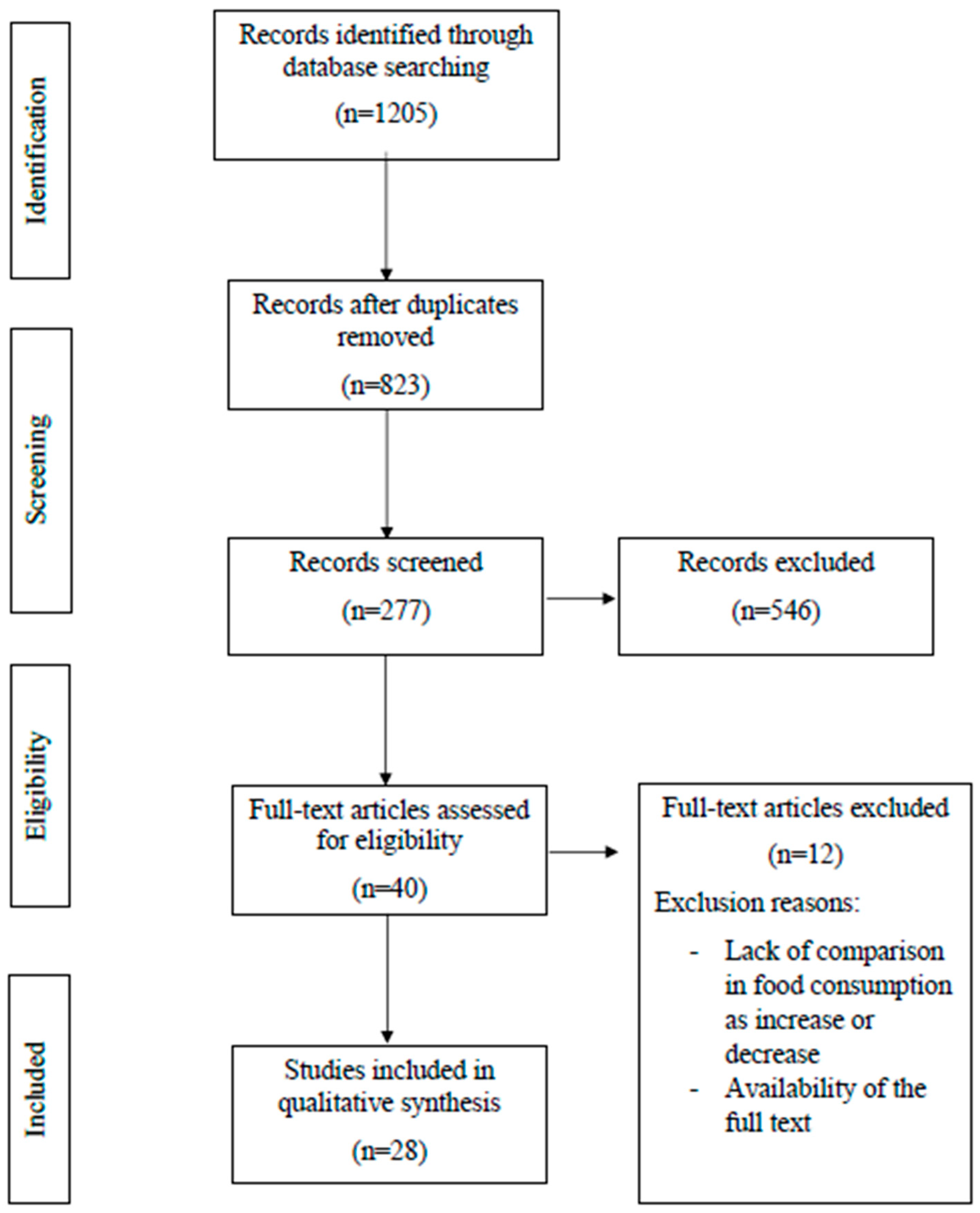
The preliminary literature search, updated to December, 2021, yielded 1205 records. After excluding duplicates, 823 were considered potentially relevant, and were retained for the analysis of titles and abstracts. Then, 546 were excluded because they did not fit the attributes of the review approach or objective. After reviewing the full text of the remaining 277 records, only 28 met the inclusion criteria and were included in the final quantitative analysis [18,19,20,21,22,23,24,25,26,27,28,29,30,31,32,33,34,35,36,37,38,39,40,41,42,43,44,45]. Figure 1 shows a flowchart of the literature screening process.
Figure 1. Flowchart of the literature screening process.
Details of the design (cohort or cross-sectional), sample size (N) and sex ratio (%), minimum age or age range, setting (community or hospital), and country of the individual studies are shown in Table 2. The cross-sectional outnumbered the longitudinal design, whereas the recruitment settings were primarily community-based (100%, N = 28). The geographic distribution of studies spanned, in descending order of study prevalence, Europe (N = 19/28), America (N = 5), Asia (N = 3/28), and Africa (N = 1). Subjects were adults (18+) in most of the selected studies (23 of 28 studies, or 82%). Among all 123,608 subjects in the studies, gender was poorly balanced (approximately 33% males), and the geographic distribution of subjects ran through the following ascending order: 2970 African; 7132 Asian; 51,509 American; and 61,997 European. Concerning the representativeness of the sampling, the majority of studies used non-probability online surveys, i.e., river sampling, only two studies used telephone questionnaires [33,35], and just one survey enrolled participants within a school-based setting [44]. In total, 103 food and beverage entries belonging to the UPFs category, which were investigated in studies as single or food group consumption questions by the Food Frequency Questionnaire (FFQ), were counted. The most frequently examined UPF items were sweets (26 out of 103), sugary drinks (17 out of 103), and snacks (19 out of 103).
Table 2. Selected studies investigating changes in ultra-processed food consumption during the period of SARS-CoV-2 lockdown compared with previous habits (N = 28).
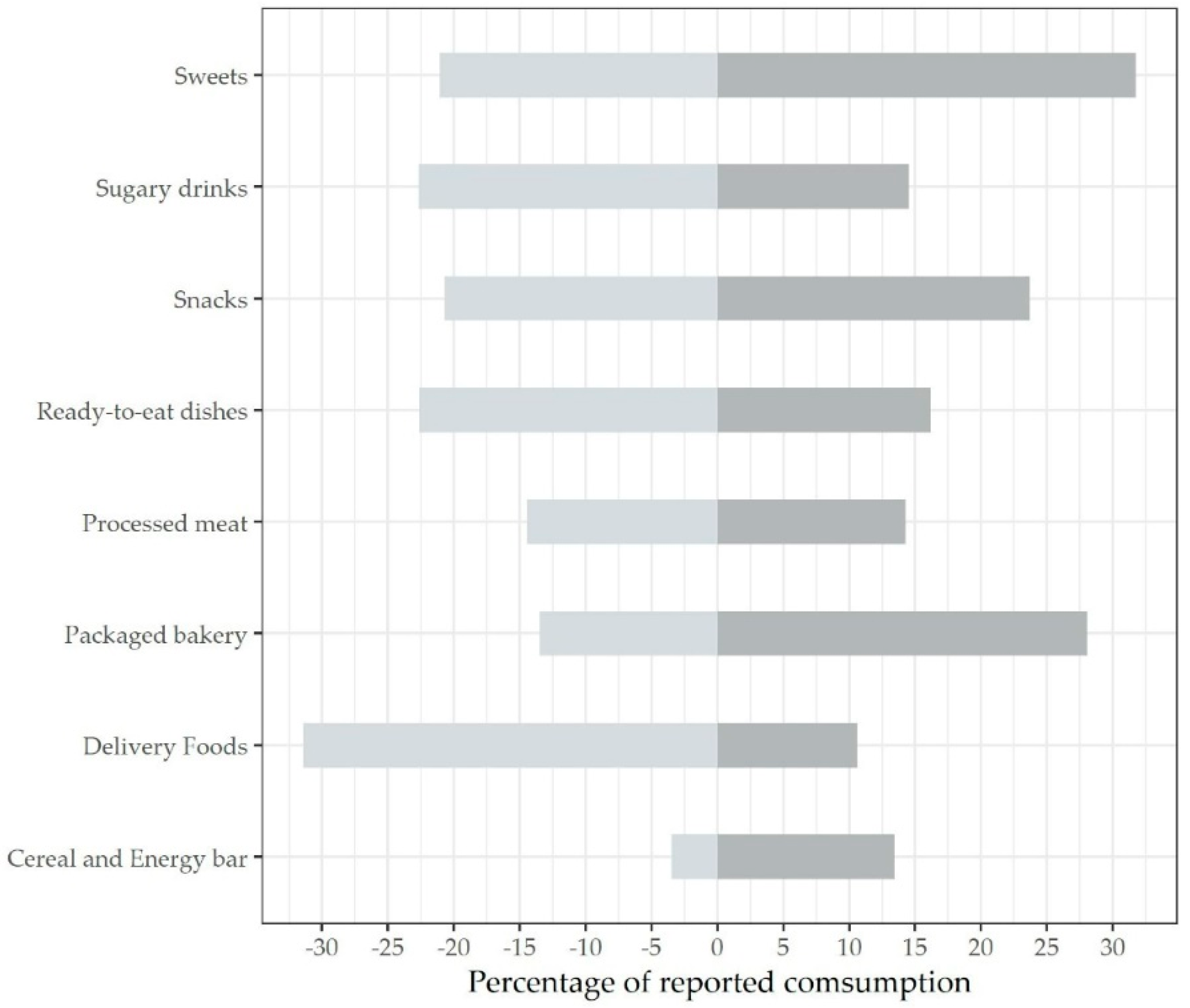
To optimize the summarizing of findings, conceptually similar UPFs entries were grouped into 8 categories. Thus, all data were reported as mean increased or decreased consumption for each UPFs category (Figure 2). Sweets (31.75% increase vs. 21.06% decrease), packaged baked goods (28.03% increase vs. 13.5% decrease), snacks (23.71% increase vs. 20.73% decrease), and breakfast cereals (13.45% increase vs. 3.5% decrease) showed a clear upward trend. However, only two studies focused on analyzing the latter food item [19,24]. By contrast, sugary drinks (14.55% increase vs. 22.65% decrease), ready-to-eat dishes (16.2% increase vs. 22.62% decrease), and delivery foods (10.6% increase vs. 31.43% decrease) showed a clear downward trend. No tendency was noticed for processed meat consumption (14.27% increase vs. 14.47% decrease). Figure 2 shows a graphic overview of the findings.
Figure 2. Percentage of reported consumption.

4. Discussion

We reviewed the existing literature on the consumption of UPFs in the context of the SARS-CoV-2 pandemic, focusing on studies that drew comparisons of consumption against pre-pandemic lockdown dietary habits. Our findings showed a clear upward trend for the consumption of sweets (chocolate, candies, cookies, pastries, cakes, desserts, and confectionery), snacks (packaged fatty or salty snacks), and bakery products (packaged bread products, pizza, and sandwiches), versus a decrease in ready-to-eat or delivery foods (instant soups, ready-to-eat meals, canned foods, fast foods, and potato chips), and sugary drinks (carbonated soft drinks, fruit juices, sodas, and energy drinks). No trend was observed for processed meat consumption. On this latter food group, a likely explanation for the lack of increase in consumption may lie in the fact that the COVID-19 pandemic affected meat production and the supply chain, causing a change in meat prices. Initially, prices of meat and meat products increased due to lower production and increased demand as a result of the panic. Subsequently, both production and demand for meat decreased significantly due to blockade restrictions and lower consumer purchasing power, which likely translates into lower meat consumption (and prices).
As regards the UPFs reported to have shown an increased consumption, the data require proper interpretation within a pandemic framework from a social and economic perspective. On one hand, affordability, much sought after during the SARS-CoV-2 health crash that placed many workers at risk of financial restrictions, was easily translated into choosing low-quality foods with a low nutritional value and typically high-calorie levels, saturated fat, trans fat, simple sugars, and sodium. Chocolate, sweets, candy, and snacks, also called “comfort foods”, fall more within this category of food items than any other. Furthermore, chocolate and candies are especially considered as comfort foods, and consumed most frequently in cases of depressive symptoms, since they can improve mood [46]. Precisely due to this positive effect on improving mood, it is easy to understand why their consumption intensified during the SARS-CoV-2 lockdown when social isolation and estrangement from relatives were already causing psychological distress, stress, and bad mood. Along this same line of thinking, nerve drinks, such as coffee and tea, were found to have an increased consumption during lockdowns [10]. However, the exceptional circumstances of the shutdown provided a positive opportunity for some people to spend more time cooking at home; though that attitude improved culinary approaches, it most often led to increased cooking of carbohydrate-dense foods, such as pizza, bread, and baked goods [9]. The desire to cook, especially foods that involve kneading, results in increased consumption of baked goods, which is generally not helpful in managing weight control during a pandemic and subsequent sedentary lifestyle. Furthermore, carbohydrate-dense foods are often tapped for their ability to compensate for physiological drops in blood sugar and serotonin. The increased availability of simple sugars, by raising insulin levels, induces greater storage of tryptophan within cells to synthesize serotonin.
As for UPFs showing a reduced consumption, we noticed a drop in ready-to-eat or delivery foods (instant soups, ready-to-eat meals, canned foods, fast foods, and potato chips), and sugary drinks (carbonated soft drinks, fruit juices, sodas, and energy drinks). To explain these findings against a pandemic background, consumers who spent more time in their homes opted to cook, and so, relied less on ready-to-eat dishes. Indeed, even though ready-to-eat food is popular overall, during the peak of the pandemic, there was a real shift toward cooking and baking at home, corroborating our findings on a reduced consumption of ready-to-eat meals and delivery foods. In reality, consumers of ready-to-eat meals usually tend to be financially wealthy and time-poor, but during lockdown, everyone had more time and, likely, less money.
Finally, the consumption of sugary drinks also decreased during lockdowns, reflecting the fact that most of them (alcoholic or not, carbonated or not) are commonly enjoyed in specific situations, such as parties, at movies, meals out, and so on [47]. However, due to the orders to stay home, social situations typically associated with sugary drink consumption were almost non-existent during periods of SARS-CoV-2 lockdowns [10,48]. As to energy drinks, in particular, which also fall in this category, the decline in consumption is likely attributable to the closure of gyms throughout the lockdown period, and hence, to reduced physical activity [49]. Moreover, it is not surprising that consumption was down, as these drinks carry insomnia and restlessness as side effects, which were already prevalent during the lockdown [50].
During the lockdown, an increase in the frequency of food intake has been reported, especially in the consumption of snacks and unhealthy foods. In addition, preliminary studies highlight increases in body weight and BMI since pandemic onset as linked to less healthy food choices [51]. Among these, increased consumption of UPFs may impact the overall health in terms of excess weight, visceral fat, and metabolic syndrome [52]. Furthermore, higher UPF consumption is linked to higher risks of cardiovascular, coronary, and cerebrovascular diseases [53]; a higher overall risk of cancer, including breast cancer [54]; and physical frailty in older adults [55]. The effects of a diet high in UPFs, and nutritionally unbalanced, can also impact the severity and outcomes of SARS-CoV-2 infection. Hospitalization, severe illness, and mortality from SARS-CoV-2 infection are all more likely in people with comorbidities such as obesity, diabetes, and hypertension [56].
Some limitations of the study should be considered. The small amount of data and heterogeneity of variables related to the different survey questionnaires used to investigate diet during the lockdown period lower the reliability of this summary in terms of qualitative consistency. Also, the European predominance of the selected studies left little room for a global view of consumption trends. Regarding representativeness of sampling, the majority of studies used online non-probability surveys, i.e., river sampling; as known, this sampling leads to coverage bias since not all subpopulations are proportionally represented, or even not at all in digital media. Lastly, although the cumulative examined population size was satisfactory, it should be noted that the sample size was extremely low, at fewer than 100 sample units for a minority group of three studies.

5. Conclusions

In this study, we gave an overview of existing data on changes in UPF consumption driven by SARS-CoV-2 lockdown to derive a synthesis hitherto lacking in the literature. The main findings were a clear upward trend in the consumption of sweets (chocolate, candy, cookies, pastries, cakes, desserts, and confectionery), snacks (packaged fatty or salty snacks), and baked goods (packaged bread, pizza, and sandwiches), versus a decrease in ready-to-eat and delivery foods (instant soups, canned foods, fast foods, and chips) and sugary drinks (carbonated beverages, juices, sodas, and energy drinks). No tendency was inferred for processed meat consumption.
In light of the well-known human health effect of UPF consumption in all age groups, and the continuing health emergency, knowledge on this topic needs to be further expanded and managed from a preventive perspective. These preliminary data may offer guidance in formulating specific dietary recommendations to better address this public health challenge.

Author Contributions

Conceptualization, research, resource provision, data collection, writing original version: S.D.N. and R.Z. Methodology: F.C. Writing—review and editing: R.S., V.T. and G.D.P. Supervision: R.S., G.D.P., A.S. and G.L. Visualization: R.S. All authors contributed to the article, and approved the submitted version. All authors have read and agreed to the published version of the manuscript.

Funding

This work was supported by the Italian Ministry of Health with “Ricerca Corrente 2020” funds.

Data Availability Statement

The original contributions presented in the study are included in the article; further inquiries can be directed to the corresponding author.

Conflicts of Interest

The authors declare no conflict of interest.

Correction Statement

This article has been republished with a minor correction to the existing affiliation information. This change does not affect the scientific content of the article.

References

  1. Cost and Affordability of Healthy Diets across and within Countries; FAO: Rome, Italy, 2020.
  2. Swinnen, J.; McDermott, J.; Yosef, S. Beyond the Pandemic: Transforming Food Systems after COVID-19; IPFRI: Washington, DC, USA, 2021. [Google Scholar] [CrossRef]
  3. Popkin, B.M.; Adair, L.S.; Ng, S.W. Global nutrition transition and the pandemic of obesity in developing countries. Nutr. Rev. 2012, 70, 3–21. [Google Scholar] [CrossRef] [PubMed]
  4. Andrade, G.C.; Gombi-Vaca, M.F.; Louzada, M.L.D.C.; Azeredo, C.M.; Levy, R.B. The consumption of ultra-processed foods according to eating out occasions. Public Health Nutr. 2020, 23, 1041–1048. [Google Scholar] [CrossRef]
  5. McNaughton, S.A.; Pendergast, F.J.; Worsley, A.; Leech, R.M. Eating occasion situational factors and sug-ar-sweetened beverage consumption in young adults. Int. J. Behav. Nutr. Phys. Act. 2020, 17, 71. [Google Scholar] [CrossRef] [PubMed]
  6. Hess, J.M.; Jonnalagadda, S.S.; Slavin, J.L. What Is a Snack, Why Do We Snack, and How Can We Choose Better Snacks? A Review of the Definitions of Snacking, Motivations to Snack, Contributions to Dietary Intake, and Recommendations for Improvement. Adv. Nutr. 2016, 7, 466–475. [Google Scholar] [CrossRef]
  7. Zupo, R.; Castellana, F.; Bortone, I.; Griseta, C.; Sardone, R.; Lampignano, L.; Lozupone, M.; Solfrizzi, V.; Castellana, M.; Giannelli, G.; et al. Nutritional domains in frailty tools: Working towards an operational definition of nutritional frailty. Ageing Res. Rev. 2020, 64, 101148. [Google Scholar] [CrossRef]
  8. The Lancet Diabetes Endocrinology. Food policies: In times of COVID-19 and beyond. Lancet Diabetes Endocrinol. 2021, 9, 319. [Google Scholar] [CrossRef]
  9. Zupo, R.; Castellana, F.; Sardone, R.; Sila, A.; Giagulli, V.A.; Triggiani, V.; Cincione, R.I.; Giannelli, G.; De Pergola, G. Preliminary Trajectories in Dietary Behaviors during the COVID-19 Pandemic: A Public Health Call to Action to Face Obesity. Int. J. Environ. Res. Public Health 2020, 17, 7073. [Google Scholar] [CrossRef]
  10. Castellana, F.; De Nucci, S.; De Pergola, G.; Di Chito, M.; Lisco, G.; Triggiani, V.; Sardone, R.; Zupo, R. Trends in Coffee and Tea Consumption during the COVID-19 Pandemic. Foods 2021, 10, 2458. [Google Scholar] [CrossRef] [PubMed]
  11. Zheng, L.; Sun, J.; Yu, X.; Zhang, D. Ultra-Processed Food Is Positively Associated With Depressive Symptoms Among United States Adults. Front. Nutr. 2020, 7, 302. [Google Scholar] [CrossRef]
  12. World Health Organization (WHO). Healthy Diet: Key Facts. 2018. Available online: https://www.who.int/news-room/fact-sheets/detail/healthy-diet (accessed on 25 January 2022).
  13. Page, M.J.; Moher, D.; Bossuyt, P.M.; Boutron, I.; Hoffmann, T.C.; Mulrow, C.D.; Shamseer, L.; Tetzlaff, J.M.; Akl, E.A.; Brennan, S.E.; et al. PRISMA 2020 explanation and elaboration: Updated guidance and exemplars for reporting sys-tematic reviews. BMJ 2021, 372, n160. [Google Scholar] [CrossRef]
  14. Monteiro, C.A.; Cannon, G.; Moubarac, J.-C.; Levy, R.B.; Louzada, M.L.C.; Jaime, P.C. The UN Decade of Nutrition, the NOVA Food Classification and the Trouble with Ultra-Processing. Public Health Nutr. 2018, 21, 5–17. [Google Scholar] [CrossRef] [PubMed]
  15. Gibney, M.J. Ultra-Processed Foods: Definitions and Policy Issues. Curr. Dev. Nutr. 2018, 3, nzy077. [Google Scholar] [CrossRef] [PubMed]
  16. Ultra-Processed Foods, Diet Quality, and Health Using the NOVA Classification System. 2019. Available online: https://www.fao.org/fsnforum/resources/fsn-resources/ultra-processed-foods-diet-quality-and-health-using-nova-classification (accessed on 22 November 2021).
  17. Monteiro, C.A.; Cannon, G.; Levy, R.B.; Moubarac, J.-C.; Louzada, M.L.C.; Rauber, F.; Khandpur, N.; Cediel, G.; Neri, D.; Martinez-Steele, E.; et al. Ultra-Processed Foods: What They Are and How to Identify Them. Public Health Nutr. 2019, 22, 936–941. [Google Scholar] [CrossRef] [PubMed]
  18. Luo, Y.; Chen, L.; Xu, F.; Gao, X.; Han, D.; Na, L. Investigation on knowledge, attitudes and practices about food safety and nutrition in the China during the epidemic of corona virus disease 2019. Public Health Nutr. 2021, 24, 267–274. [Google Scholar] [CrossRef] [PubMed]
  19. Deschasaux-Tanguy, M.; Druesne-Pecollo, N.; Esseddik, Y.; de Edelenyi, F.S.; Allès, B.; Andreeva, V.A.; Baudry, J.; Char-reire, H.; Deschamps, V.; Egnell, M.; et al. Diet and physical activity during the coronavirus disease 2019 (COVID-19) lockdown (March-May 2020): Results from the French NutriNet-Santé cohort study. Am. J. Clin. Nutr. 2021, 113, 924–938. [Google Scholar] [CrossRef]
  20. Di Renzo, L.; Gualtieri, P.; Pivari, F.; Soldati, L.; Attinà, A.; Cinelli, G.; Leggeri, C.; Caparello, G.; Barrea, L.; Scerbo, F.; et al. Eating habits and lifestyle changes during COVID-19 lockdown: An Italian survey. J. Transl. Med. 2020, 18, 229. [Google Scholar] [CrossRef]
  21. Malta, D.C.; Szwarcwald, C.L.; Barros, M.B.D.A.; Gomes, C.S.; Machado, Í.E.; Souza, P.R.B., Jr.; de Romero, D.E.; Lima, M.G.; Damacena, G.N.; Pina, M.D.F.; et al. The COVID-19 Pandemic and changes in adult Brazilian lifestyles: A cross-sectional study, 2020. Epidemiol. Serv. Saude 2020, 29, e2020407. [Google Scholar] [CrossRef]
  22. Skotnicka, M.; Karwowska, K.; Kłobukowski, F.; Wasilewska, E.; Małgorzewicz, S. Dietary Habits before and during the COVID-19 Epidemic in Selected European Countries. Nutrients 2021, 13, 1690. [Google Scholar] [CrossRef]
  23. Celorio-Sardà, R.; Comas-Basté, O.; Latorre-Moratalla, M.L.; Zerón-Rugerio, M.F.; Urpi-Sarda, M.; Illán-Villanueva, M.; Farran-Codina, A.; Izquierdo-Pulido, M.; Vidal-Carou, M.D.C. Effect of COVID-19 Lockdown on Dietary Habits and Lifestyle of Food Science Students and Professionals from Spain. Nutrients 2021, 13, 1494. [Google Scholar] [CrossRef]
  24. Bin Zarah, A.; Enriquez-Marulanda, J.; Andrade, J.M. Relationship between Dietary Habits, Food Attitudes and Food Security Status among Adults Living within the United States Three Months Post-Mandated Quarantine: A Cross-Sectional Study. Nutrients 2020, 12, 3468. [Google Scholar] [CrossRef]
  25. Fanelli, R. Changes in the Food-Related Behaviour of Italian Consumers during the COVID-19 Pandemic. Foods 2021, 10, 169. [Google Scholar] [CrossRef] [PubMed]
  26. Dobrowolski, H.; Włodarek, D. Body Mass, Physical Activity and Eating Habits Changes during the First COVID-19 Pandemic Lockdown in Poland. Int. J. Environ. Res. Public Health 2021, 18, 5682. [Google Scholar] [CrossRef] [PubMed]
  27. Sulejmani, E.; Hyseni, A.; Xhabiri, G.; Rodríguez-Pérez, C. Relationship in dietary habits variations during COVID-19 lockdown in Kosovo: The COVIDiet study. Appetite 2021, 164, 105244. [Google Scholar] [CrossRef] [PubMed]
  28. Yang, G.-Y.; Lin, X.-L.; Fang, A.-P.; Zhu, H.-L. Eating Habits and Lifestyles during the Initial Stage of the COVID-19 Lockdown in China: A Cross-Sectional Study. Nutrients 2021, 13, 970. [Google Scholar] [CrossRef] [PubMed]
  29. Grant, F.; Scalvedi, M.; Scognamiglio, U.; Turrini, A.; Rossi, L. Eating Habits during the COVID-19 Lockdown in Italy: The Nutritional and Lifestyle Side Effects of the Pandemic. Nutrients 2021, 13, 2279. [Google Scholar] [CrossRef]
  30. Pujia, R.; Ferro, Y.; Maurotti, S.; Khoory, J.; Gazzaruso, C.; Pujia, A.; Montalcini, T.; Mazza, E. The Effects of COVID-19 on the Eating Habits of Children and Adolescents in Italy: A Pilot Survey Study. Nutrients 2021, 13, 2641. [Google Scholar] [CrossRef]
  31. Cheikh Ismail, L.; Osaili, T.M.; Mohamad, M.N.; Al Marzouqi, A.; Jarrar, A.H.; Zampelas, A.; Habib-Mourad, C.; Omar Abu Jamous, D.; Ali, H.I.; Al Sabbah, H.; et al. Assessment of eating habits and lifestyle during the coronavirus 2019 pandemic in the Middle East and North Africa region: A cross-sectional study. Br. J. Nutr. 2021, 126, 757–766. [Google Scholar] [CrossRef]
  32. Sinisterra Loaiza, L.I.; Vázquez Belda, B.; Miranda López, J.M.; Cepeda, A.; Cardelle Cobas, A. Food habits in the Ga-lician population during confinement byCOVID-19. Nutr. Hosp. 2020, 37, 1190–1196. [Google Scholar]
  33. Ruiz-Roso, M.B.; Knott-Torcal, C.; Matilla-Escalante, D.C.; Garcimartín, A.; Sampedro-Nuñez, M.A.; Dávalos, A.; Marazuela, M. COVID-19 Lockdown and Changes of the Dietary Pattern and Physical Activity Habits in a Cohort of Patients with Type 2 Diabetes Mellitus. Nutrients 2020, 12, 2327. [Google Scholar] [CrossRef]
  34. Grabia, M.; Markiewicz-Żukowska, R.; Puścion-Jakubik, A.; Bielecka, J.; Nowakowski, P.; Gromkowska-Kępka, K.; Mielcarek, K.; Socha, K. The Nutritional and Health Effects of the COVID-19 Pandemic on Patients with Diabetes Mellitus. Nutrients 2020, 12, 3013. [Google Scholar] [CrossRef]
  35. Bonaccio, M.; Costanzo, S.; Ruggiero, E.; Persichillo, M.; Esposito, S.; Olivieri, M.; Di Castelnuovo, A.; Cerletti, C.; Donati, M.B.; de Gaetano, G.; et al. Changes in ultra-processed food consumption during the first Italian lockdown fol-lowing the COVID-19 pandemic and major correlates: Results from two population-based cohorts. Public Health Nutr. 2021, 24, 3905–3915. [Google Scholar] [CrossRef] [PubMed]
  36. Davila-Torres, D.M.; Vilcas-Solís, G.E.; Rodríguez-Vásquez, M.; Calizaya-Milla, Y.E.; Saintila, J. Eating habits and mental health among rugby players of the Peruvian pre-selection during the second quarantine due to the COVID-19 pandemic. SAGE Open Med. 2021, 9, 20503121211043718. [Google Scholar] [CrossRef] [PubMed]
  37. Silva, M.; Gregório, M.; Santos, R.; Marques, A.; Rodrigues, B.; Godinho, C.; Silva, C.; Mendes, R.; Graça, P.; Arriaga, M.; et al. Towards an In-Depth Understanding of Physical Activity and Eating Behaviours during COVID-19 Social Confinement: A Combined Approach from a Portuguese National Survey. Nutrients 2021, 13, 2685. [Google Scholar] [CrossRef] [PubMed]
  38. Sánchez-Sánchez, E.; Díaz-Jimenez, J.; Rosety, I.; Alférez, M.; Díaz, A.; Rosety, M.; Ordonez, F.; Rosety-Rodriguez, M. Perceived Stress and Increased Food Consumption during the ‘Third Wave’ of the COVID-19 Pandemic in Spain. Nutrients 2021, 13, 2380. [Google Scholar] [CrossRef]
  39. Giacalone, D.; Frøst, M.B.; Rodríguez-Pérez, C. Reported Changes in Dietary Habits During the COVID-19 Lock-down in the Danish Population: The Danish COVIDiet Study. Front. Nutr. 2020, 7, 592112. [Google Scholar] [CrossRef]
  40. Pertuz-Cruz, S.L.; Molina-Montes, E.; Rodríguez-Pérez, C.; Guerra-Hernández, E.J.; de Rangel, O.P.C.; Artacho, R.; Verardo, V.; Ruiz-Lopez, M.D.; García-Villanova, B. Exploring Dietary Behavior Changes Due to the COVID-19 Confinement in Colombia: A National and Regional Survey Study. Front. Nutr. 2021, 8, 644800. [Google Scholar] [CrossRef]
  41. Scarmozzino, F.; Visioli, F. COVID-19 and the Subsequent Lockdown Modified Dietary Habits of Almost Half the Population in an Italian Sample. Foods 2020, 9, 675. [Google Scholar] [CrossRef]
  42. Galali, Y. The impact of COVID-19 confinement on the eating habits and lifestyle changes: A cross sectional study. Food Sci. Nutr. 2021, 9, 2105–2113. [Google Scholar] [CrossRef]
  43. Romeo-Arroyo, E.; Mora, M.; Vázquez-Araújo, L. Consumer behavior in confinement times: Food choice and cooking attitudes in Spain. Int. J. Gastron. Food Sci. 2020, 21, 100226. [Google Scholar] [CrossRef]
  44. Skolmowska, D.; Głąbska, D.; Guzek, D. Differences in Adolescents’ Food Habits Checklist (AFHC) Scores before and during Pandemic in a Population-Based Sample: Polish Adolescents’ COVID-19 Experience (PLACE-19) Study. Nutrients 2021, 13, 1663. [Google Scholar] [CrossRef]
  45. Sadler, J.; Thapaliya, G.; Jansen, E.; Aghababian, A.; Smith, K.; Carnell, S. COVID-19 Stress and Food Intake: Protective and Risk Factors for Stress-Related Palatable Food Intake in U.S. Adults. Nutrients 2021, 13, 901. [Google Scholar] [CrossRef] [PubMed]
  46. Rose, N.; Koperski, S.; Golomb, B.A. Mood food: Chocolate and depressive symptoms in a cross-sectional analysis. Arch. Intern. Med. 2010, 170, 699–703. [Google Scholar] [CrossRef] [PubMed]
  47. Lomann, M.; Claassen, M.A.; Papies, E.K. The influence of COVID-19 lockdown in the UK on the consumption of sugar-sweetened beverages and water. Appetite 2021, 169, 105497. [Google Scholar] [CrossRef]
  48. Acuff, S.F.; Strickland, J.C.; Tucker, J.A.; Murphy, J.G. Changes in alcohol use during COVID-19 and associations with contextual and individual difference variables: A systematic review and meta-analysis. Psychol. Addict. Behav. 2022, 36, 1–19. [Google Scholar] [CrossRef] [PubMed]
  49. Kaur, H.; Singh, T.; Arya, Y.K.; Mittal, S. Physical Fitness and Exercise During the COVID-19 Pandemic: A Qualita-tive Enquiry. Front. Psychol. 2020, 11, 590172. [Google Scholar] [CrossRef] [PubMed]
  50. Nadeem, I.M.; Shanmugaraj, A.; Sakha, S.; Horner, N.S.; Ayeni, O.R.; Khan, M. Energy Drinks and Their Adverse Health Effects: A Systematic Review and Meta-analysis. Sports Health 2020, 13, 265–277. [Google Scholar] [CrossRef]
  51. Neira, C.; Godinho, R.; Rincón, F.; Mardones, R.; Pedroso, J. Consequences of the COVID-19 Syndemic for Nutritional Health: A Systematic Review. Nutrients 2021, 13, 1168. [Google Scholar] [CrossRef]
  52. Pagliai, G.; Dinu, M.; Madarena, M.P.; Bonaccio, M.; Iacoviello, L.; Sofi, F. Consumption of ultra-processed foods and health status: A systematic review and meta-analysis. Br. J. Nutr. 2020, 125, 308–318. [Google Scholar] [CrossRef]
  53. Srour, B.; Fezeu, L.K.; Kesse-Guyot, E.; Allès, B.; Méjean, C.; Andrianasolo, R.M.; Chazelas, E.; Deschasaux, M.; Hercberg, S.; Galan, P.; et al. Ultra-processed food intake and risk of cardiovascular disease: Prospective cohort study (Nu-triNet-Santé). BMJ 2019, 365, l1451. [Google Scholar] [CrossRef]
  54. Fiolet, T.; Srour, B.; Sellem, L.; Kesse-Guyot, E.; Allès, B.; Méjean, C.; Deschasaux, M.; Fassier, P.; Latino-Martel, P.; Beslay, M.; et al. Consumption of ultra-processed foods and cancer risk: Results from NutriNet-Santé prospective co-hort. BMJ 2018, 360, k322. [Google Scholar] [CrossRef]
  55. Sandoval-Insausti, H.; Blanco-Rojo, R.; Graciani, A.; López-García, E.; Moreno-Franco, B.; Laclaustra, M.; Donat-Vargas, C.; Ordovás, J.M.; Rodríguez-Artalejo, F.; Guallar-Castillón, P. Ultra-processed Food Consumption and Incident Frailty: A Prospective Cohort Study of Older Adults. J. Gerontol. Ser. A 2019, 75, 1126–1133. [Google Scholar] [CrossRef] [PubMed]
  56. Silverio, R.; Gonçalves, D.C.; Andrade, M.F.; Seelaender, M. Coronavirus Disease 2019 (COVID-19) and Nutritional Status: The Missing Link? Adv. Nutr. 2021, 12, 682–692. [Google Scholar] [CrossRef] [PubMed]
Publisher’s Note: MDPI stays neutral with regard to jurisdictional claims in published maps and institutional affiliations.

Article Metrics

Citations

Article Access Statistics

Multiple requests from the same IP address are counted as one view.