


Dermatopathology, Volume 8, Issue 4 (December 2021) – 11 articles
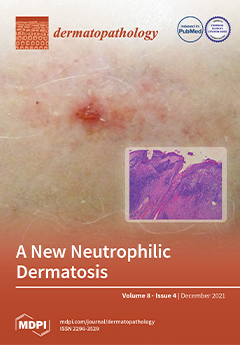
Cover Story (view full-size image):
Erosive pustular dermatosis of the scalp (EPDS) is an enigmatic condition, and its diagnosis depends mainly on the recognition of the evolving clinical features, supported by histopathology. Moreover, the histopathologic changes depend on the examined lesion, the disease stage, and the biopsy site. In this retrospective study, we gain more insight into the disease through the review of the epidemiological, clinical, histopathological, therapeutic, and follow-up data of 50 EPDS cases. A continuing, intraepidermal/intrafollicular spongiform pustule formation with a chronically impaired, wound healing process gradually leads to scarring alopecia, as clearly evidenced in the histopathological sections. The clinicopathologic similarities with other neutrophilic dermatoses suggest this condition should be included in this spectrum, where pathergy plays a pathogenetic role.View this paper
- Issues are regarded as officially published after their release is announced to the table of contents alert mailing list.
- You may sign up for e-mail alerts to receive table of contents of newly released issues.
- PDF is the official format for papers published in both, html and pdf forms. To view the papers in pdf format, click on the "PDF Full-text" link, and use the free Adobe Reader to open them.
Previous Issue
Next Issue
