Innovative Bio(Nano)Sensor Designs for Cortisol Stress Hormone Detection: A Continuous Progress




Abstract
1. Introduction
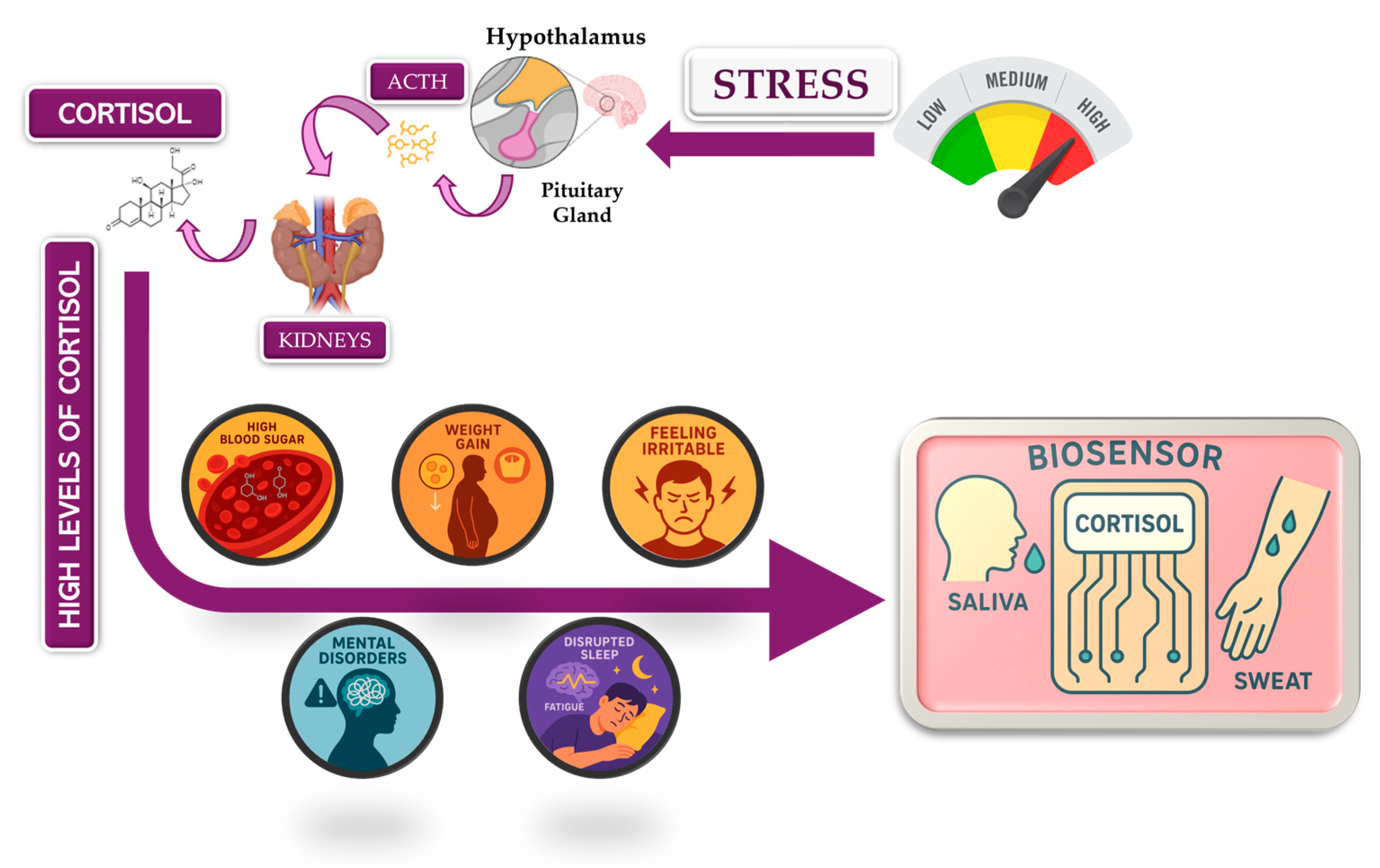
1.1. Cortisol—The Biomarker of Stress
1.2. Conventional Analytical Tools for Cortisol Monitoring
1.3. Societal and Economic Impact
2. Non-Plasmonic Sensor Designs for Cortisol Detection
2.1. Polymeric Nanosystems for Cortisol Detection
2.2. Optical (Nano)Fiber-Based Sensors for Cortisol Detection
2.3. Electrochemical Sensor Designs for Cortisol Detection
2.4. Capacitive and Piezoelectric Sensors for Cortisol Detection
2.5. Aptamer-Based Sensors for Cortisol Detection
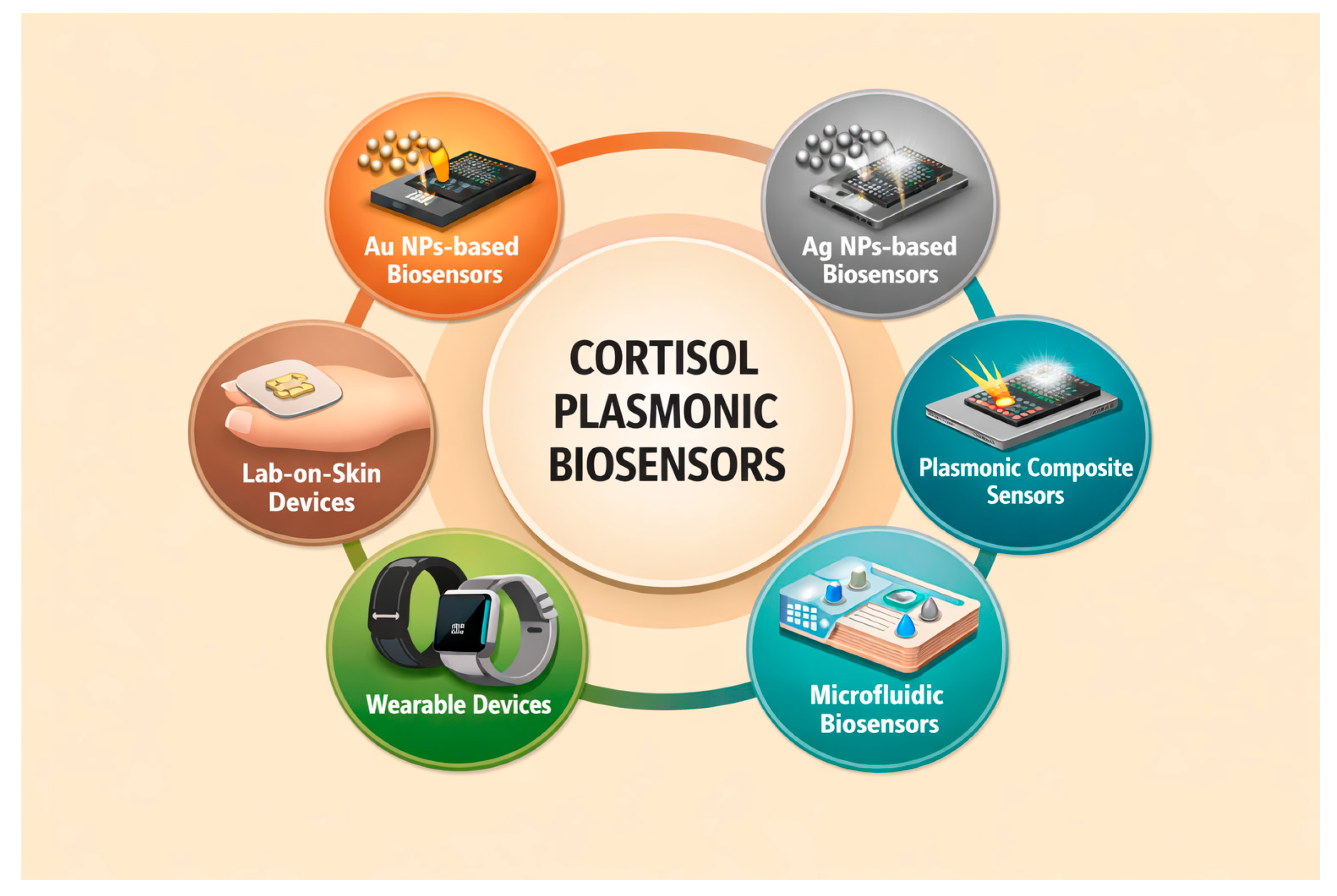
3. Plasmonic Sensor Designs
3.1. Plasmonic Monometallic Nanoparticles
3.1.1. Gold Nanoparticle (Au NPs)-Based Biosensors
3.1.2. Silver Nanoparticles (Ag NPs)-Based Biosensors
3.2. Plasmonic Composite Sensors
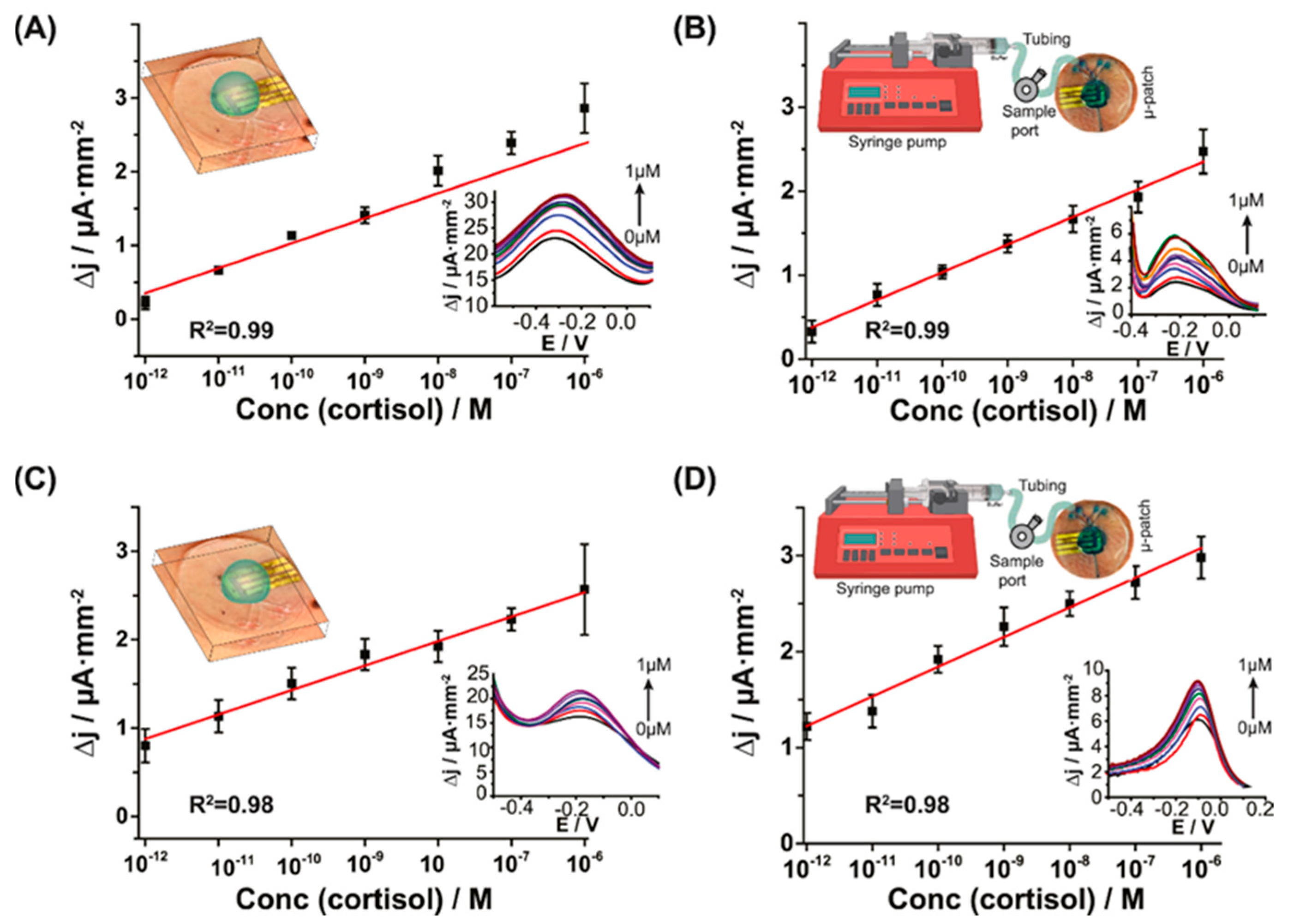
3.3. Microfluidic Cortisol Biosensors
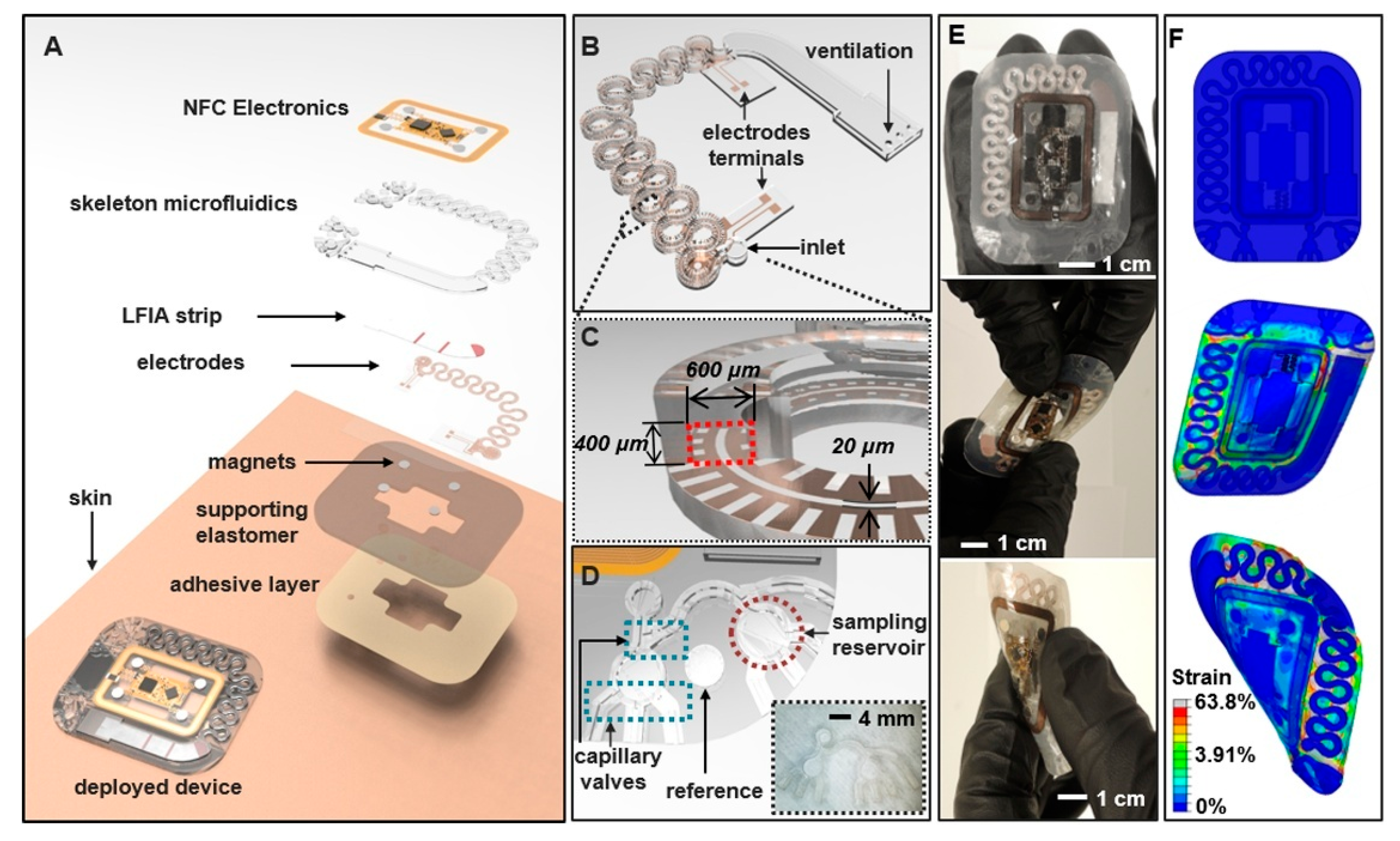
3.4. Wearable and Lab-on-Skin Sensors
4. Recent Developments in Cortisol Continuous Monitoring Devices
5. Challenges and Future Directions
6. Conclusions
Author Contributions
Funding
Data Availability Statement
Conflicts of Interest
Abbreviations
| HPA | Hypothalamus–Pituitary–Adrenal Axis |
| ACTH | Adrenocorticotropic Hormone |
| ISF | Interstitial Fluid |
| LC-MS | Liquid Chromatography–Mass Spectrometry |
| HPLC | High-Precision Liquid Chromatography |
| MS | Mass Spectroscopy |
| ELISA | Enzyme-Linked Immunoassays |
| TLC | Thin-Layer Chromatography |
| ALT | Alkaline Phosphatase |
| HRP | Horseradish Peroxidase |
| CFI | Cortisol Free Index |
| MIPs | Molecularly Imprinted Polymers |
| PDMS | Polydimethylsiloxane |
| PI | Polyimide |
| POFs | Bragg Grating-Based Polymer Optical Fibers |
| β-CD | Β-Cyclodextrin |
| QCM | Quartz Crystal Microbalance |
| NMR | Nuclear Magnetic Resonance |
| Ag | Silver |
| Au | Gold |
| Cu | Copper |
| Pt | Platinum |
| Au NPs | Gold Nanoparticles |
| SPR | Surface Plasmon Resonance |
| SERS | Surface-Enhanced Raman Scattering |
| LSPR | Localized Surface Plasmon Resonance |
| TEM | Transmission Electron Microscopy |
| DLS | Dynamic Light Scattering |
| Ag NPs | Silver Nanoparticles |
| PBS | Phosphate-Buffered Saline |
| DPV | Differential Pulse Voltammetry |
| TISS | Target-Induced Structural Switching |
| MWCT | Multi-Walled Carbon Nanotubes |
| LFA | Lateral Flow Assays |
| CL | Chemiluminescent |
| HRV | Heart-Rate Variability |
| EMG | Electromyogram |
| LIG | Laser-Induced Graphene |
| IoT | Internet Of Things |
| AuNCs | Gold Nanocubes |
| CS | Chitosan |
| Cr | Chromium |
| HEC | Hydroxyethyl Cellulose |
| MOF | Metal–Organic Frameworks |
| CNT | Carbon Nanotubes |
| SAW | Surface Acoustic Wave |
| AI | Artificial Intelligence |
| ML | Machine Learning |
References
- Cay, M.; Ozbag, D.; Ucar, C.; Altay, Z.; Senol, D.; Yildiz, S. The Effect of Cortisol Level Increasing Due to Stress in Healthy Young Individuals on Dynamic and Static Balance Scores. North. Clin. Istanb. 2017, 5, 295–301. [Google Scholar] [CrossRef]
- Howarth, E.J.; O’Connor, D.B.; Panagioti, M.; Hodkinson, A.; Wilding, S.; Johnson, J. Are Stressful Life Events Prospectively Associated with Increased Suicidal Ideation and Behaviour? A Systematic Review and Meta-Analysis. J. Affect. Disord. 2020, 266, 731–742. [Google Scholar] [CrossRef]
- Rogerson, O.; Wilding, S.; Prudenzi, A.; O’Connor, D.B. Effectiveness of Stress Management Interventions to Change Cortisol Levels: A Systematic Review and Meta-Analysis. Psychoneuroendocrinology 2024, 159, 106415. [Google Scholar] [CrossRef]
- Grosser, L.; Knayfati, S.; Yates, C.; Dorrian, J.; Banks, S. Cortisol and Shiftwork: A Scoping Review. Sleep Med. Rev. 2022, 64, 101581. [Google Scholar] [CrossRef] [PubMed]
- Thau, L.; Gandhi, J.; Sharma, S. Physiology, Cortisol. In StatPearls; StatPearls Publishing: Orlando, FL, USA, 2025. [Google Scholar]
- Vignesh, V.; Castro-Dominguez, B.; James, T.D.; Gamble-Turner, J.M.; Lightman, S.; Reis, N.M. Advancements in Cortisol Detection: From Conventional Methods to Next-Generation Technologies for Enhanced Hormone Monitoring. ACS Sens. 2024, 9, 1666–1681. [Google Scholar] [CrossRef]
- Knezevic, E.; Nenic, K.; Milanovic, V.; Knezevic, N.N. The Role of Cortisol in Chronic Stress, Neurodegenerative Diseases, and Psychological Disorders. Cells 2023, 12, 2726. [Google Scholar] [CrossRef]
- Panton, K.K.; Mikkelsen, G.; Irgens, W.Ø.; Hovde, A.K.; Killingmo, M.W.; Øien, M.A.; Thorsby, P.M.; Åsberg, A. New Reference Intervals for Cortisol, Cortisol Binding Globulin and Free Cortisol Index in Women Using Ethinyl Estradiol. Scand. J. Clin. Lab. Investig. 2019, 79, 314–319. [Google Scholar] [CrossRef] [PubMed]
- Zhang, Y.; Lai, Q.; Chen, W.; Zhang, C.; Mo, L.; Liu, Z. Recent Advance in Cortisol Immunosensing Technologies and Devices. Chemosensors 2023, 11, 90. [Google Scholar] [CrossRef]
- Kaushik, A.; Vasudev, A.; Arya, S.K.; Pasha, S.K.; Bhansali, S. Recent Advances in Cortisol Sensing Technologies for Point-of-Care Application. Biosens. Bioelectron. 2014, 53, 499–512. [Google Scholar] [CrossRef]
- Lee, S.; Lim, H.-S.; Shin, H.-J.; Kim, S.-A.; Park, J.; Kim, H.-C.; Kim, H.; Kim, H.J.; Kim, Y.-T.; Lee, K.-R.; et al. Simultaneous Determination of Cortisol and Cortisone from Human Serum by Liquid Chromatography-Tandem Mass Spectrometry. J. Anal. Methods Chem. 2014, 2014, 787483. [Google Scholar] [CrossRef]
- Ljubijankić, N.; Popović-Javorić, R.; Šćeta, S.; Šapčanin, A.; Tahirović, I.; Sofić, E. Daily Fluctuation of Cortisol in the Saliva and Serum of Healthy Persons. Bosn. J. Basic Med. Sci. 2008, 8, 110–115. [Google Scholar] [CrossRef] [PubMed]
- Iqbal, T.; Elahi, A.; Wijns, W.; Shahzad, A. Cortisol Detection Methods for Stress Monitoring in Connected Health. Health Sci. Rev. 2023, 6, 100079. [Google Scholar] [CrossRef]
- Russell, E.; Koren, G.; Rieder, M.; Van Uum, S.H.M. The Detection of Cortisol in Human Sweat: Implications for Measurement of Cortisol in Hair. Ther. Drug Monit. 2014, 36, 30–34. [Google Scholar] [CrossRef]
- Venugopal, M.; Arya, S.K.; Chornokur, G.; Bhansali, S. A Realtime and Continuous Assessment of Cortisol in ISF Using Electrochemical Impedance Spectroscopy. Sens. Actuators A Phys. 2011, 172, 154–160. [Google Scholar] [CrossRef]
- Koren, G.; Walsh Rn, G.; Tokmakejian, S.; Van Uum, S.H.M. Measurement of Cortisol in Human Hair as a Biomarker of Systemic Exposure. Clin. Investig. Med. 2007, 30, E183–E191. [Google Scholar] [CrossRef]
- Turpeinen, U.; Hämäläinen, E. Determination of Cortisol in Serum, Saliva and Urine. Best Pract. Res. Clin. Endocrinol. Metab. 2013, 27, 795–801. [Google Scholar] [CrossRef] [PubMed]
- Levine, A.; Zagoory-Sharon, O.; Feldman, R.; Lewis, J.G.; Weller, A. Measuring Cortisol in Human Psychobiological Studies. Physiol. Behav. 2007, 90, 43–53. [Google Scholar] [CrossRef]
- Le Roux, C.W.; Chapman, G.A.; Kong, W.M.; Dhillo, W.S.; Jones, J.; Alaghband-Zadeh, J. Free Cortisol Index Is Better Than Serum Total Cortisol in Determining Hypothalamic-Pituitary-Adrenal Status in Patients Undergoing Surgery. J. Clin. Endocrinol. Metab. 2003, 88, 2045–2048. [Google Scholar] [CrossRef]
- Hawley, J.M.; Owen, L.J.; Lockhart, S.J.; Monaghan, P.J.; Armston, A.; Chadwick, C.A.; Wilshaw, H.; Freire, M.; Perry, L.; Keevil, B.G. Serum Cortisol: An Up-To-Date Assessment of Routine Assay Performance. Clin. Chem. 2016, 62, 1220–1229. [Google Scholar] [CrossRef]
- Boumba, V.A.; Ziavrou, K.S.; Vougiouklakis, T. Hair as a Biological Indicator of Drug Use, Drug Abuse or Chronic Exposure to Environmental Toxicants. Int. J. Toxicol. 2006, 25, 143–163. [Google Scholar] [CrossRef]
- Koren, L.; Mokady, O.; Karaskov, T.; Klein, J.; Koren, G.; Geffen, E. A Novel Method Using Hair for Determining Hormonal Levels in Wildlife. Anim. Behav. 2002, 63, 403–406. [Google Scholar] [CrossRef]
- Van Ockenburg, S.L.; Schenk, H.M.; Van Der Veen, A.; Van Rossum, E.F.C.; Kema, I.P.; Rosmalen, J.G.M. The Relationship between 63 Days of 24-h Urinary Free Cortisol and Hair Cortisol Levels in 10 Healthy Individuals. Psychoneuroendocrinology 2016, 73, 142–147. [Google Scholar] [CrossRef]
- Dhull, N.; Kaur, G.; Gupta, V.; Tomar, M. Highly Sensitive and Non-Invasive Electrochemical Immunosensor for Salivary Cortisol Detection. Sens. Actuators B Chem. 2019, 293, 281–288. [Google Scholar] [CrossRef]
- Gatti, R.; Antonelli, G.; Prearo, M.; Spinella, P.; Cappellin, E.; De Palo, E.F. Cortisol Assays and Diagnostic Laboratory Procedures in Human Biological Fluids. Clin. Biochem. 2009, 42, 1205–1217. [Google Scholar] [CrossRef]
- Perogamvros, I.; Owen, L.J.; Keevil, B.G.; Brabant, G.; Trainer, P.J. Measurement of Salivary Cortisol with Liquid Chromatography-Tandem Mass Spectrometry in Patients Undergoing Dynamic Endocrine Testing. Clin. Endocrinol. 2010, 72, 17–21. [Google Scholar] [CrossRef] [PubMed]
- Murphy, B.E.P.; Jachan, C. Clinical Evaluation of Urinary Cortisol Determinations by Competitive Protein-Binding Radioassay. J. Clin. Endocrinol. Metab. 1968, 28, 343–348. [Google Scholar] [CrossRef]
- Krasowski, M.D.; Drees, D.; Morris, C.S.; Maakestad, J.; Blau, J.L.; Ekins, S. Cross-Reactivity of Steroid Hormone Immunoassays: Clinical Significance and Two-Dimensional Molecular Similarity Prediction. BMC Clin. Pathol. 2014, 14, 33. [Google Scholar] [CrossRef]
- Huayllas, M.K.P.; Netzel, B.C.; Singh, R.J.; Kater, C.E. Serum Cortisol Levels via Radioimmunoassay vs Liquid Chromatography Mass Spectrophotometry in Healthy Control Subjects and Patients with Adrenal Incidentalomas. Lab. Med. 2018, 49, 259–267. [Google Scholar] [CrossRef] [PubMed]
- El-Farhan, N.; Rees, D.A.; Evans, C. Measuring Cortisol in Serum, Urine and Saliva–Are Our Assays Good Enough? Ann. Clin. Biochem. 2017, 54, 308–322. [Google Scholar] [CrossRef]
- Zea, M.; Bellagambi, F.G.; Ben Halima, H.; Zine, N.; Jaffrezic-Renault, N.; Villa, R.; Gabriel, G.; Errachid, A. Electrochemical Sensors for Cortisol Detections: Almost There. TrAC Trends Anal. Chem. 2020, 132, 116058. [Google Scholar] [CrossRef]
- Tomiyama, A.J. Stress and Obesity. Annu. Rev. Psychol. 2019, 70, 703–718. [Google Scholar] [CrossRef]
- Lee, J.H.; Meyer, E.J.; Nenke, M.A.; Lightman, S.L.; Torpy, D.J. Cortisol, Stress, and Disease—Bidirectional Associations; Role for Corticosteroid-Binding Globulin? J. Clin. Endocrinol. Metab. 2024, 109, 2161–2172. [Google Scholar] [CrossRef]
- Ahmed, T.; Powner, M.B.; Qassem, M.; Kyriacou, P.A. Rapid Optical Determination of Salivary Cortisol Responses in Individuals Undergoing Physiological and Psychological Stress. Sci. Rep. 2024, 14, 31578. [Google Scholar] [CrossRef]
- Kim, Y.-H.; Lee, K.; Jung, H.; Kang, H.K.; Jo, J.; Park, I.-K.; Lee, H.H. Direct Immune-Detection of Cortisol by Chemiresistor Graphene Oxide Sensor. Biosens. Bioelectron. 2017, 98, 473–477. [Google Scholar] [CrossRef]
- Patil, M.; Mukherji, P.; Wadhai, V.M. Depression Detection Using Blood Cortisol Levels with Machine Learning Algorithms. In Proceedings of the 2023 Global Conference on Information Technologies and Communications (GCITC), Bangalore, India, 1–3 December 2023; pp. 1–5. [Google Scholar]
- Casals, G.; Ballesteros, M.A.; Zamora, A.; Martínez, I.; Fernández-Varo, G.; Mora, M.; Hanzu, F.A.; Morales-Ruiz, M. LC-HRMS and GC-MS Profiling of Urine Free Cortisol, Cortisone, 6Β-, and 18-Hydroxycortisol for the Evaluation of Glucocorticoid and Mineralocorticoid Disorders. Biomolecules 2024, 14, 558. [Google Scholar] [CrossRef] [PubMed]
- Chaudhary, S.; Passi, A.; Jindal, S.; Goyal, K. LC-MS/MS: A Powerful Tool for Modern Analytical Science: Fundamentals, Techniques, Applications and Innovations. J. Liq. Chromatogr. Relat. Technol. 2025, 48, 191–201. [Google Scholar] [CrossRef]
- Jia, M.; Chew, W.M.; Feinstein, Y.; Skeath, P.; Sternberg, E.M. Quantification of Cortisol in Human Eccrine Sweat by Liquid Chromatography–Tandem Mass Spectrometry. Analyst 2016, 141, 2053–2060. [Google Scholar] [CrossRef]
- Chen, B.; Lyu, H.; Xu, X.; Wang, C. Simultaneous Quantification of Cortisol and Cortisone in Serums and Saliva from Depressive Patients by Supported Liquid Extraction Coupled to HPLC–MS/MSs. Acta Chromatogr. 2020, 32, 269–275. [Google Scholar] [CrossRef]
- Aydin, S.; Emre, E.; Ugur, K.; Aydin, M.A.; Sahin, İ.; Cinar, V.; Akbulut, T. An Overview of ELISA: A Review and Update on Best Laboratory Practices for Quantifying Peptides and Proteins in Biological Fluids. J. Int. Med. Res. 2025, 53, 03000605251315913. [Google Scholar] [CrossRef] [PubMed]
- Aydin, S. A Short History, Principles, and Types of ELISA, and Our Laboratory Experience with Peptide/Protein Analyses Using ELISA. Peptides 2015, 72, 4–15. [Google Scholar] [CrossRef]
- Mizuhata, K.; Taniguchi, H.; Hikita, N.; Shimada, M.; Morokuma, S. Effects of Breastfeeding on Stress Measured by Saliva Cortisol Level and Perceived Stress. Asian/Pac. Isl. Nurs. J. 2020, 5, 128–138. [Google Scholar] [CrossRef] [PubMed]
- Butts, C.D.; Bloom, M.S.; Frye, C.A.; Walf, A.A.; Parsons, P.J.; Steuerwald, A.J.; Ilonze, C.; Fujimoto, V.Y. Urine Cortisol Concentration as a Biomarker of Stress Is Unrelated to IVF Outcomes in Women and Men. J. Assist. Reprod. Genet. 2014, 31, 1647–1653. [Google Scholar] [CrossRef][Green Version]
- Albahli, B.F.; Alrasheed, N.M.; Alabdulrazaq, R.S.; Alasmari, D.S.; Ahmed, M.M. Association between Schizophrenia and Periodontal Disease in Relation to Cortisol Levels: An ELISA-Based Descriptive Analysis. Egypt. J. Neurol. Psychiatry Neurosurg. 2021, 57, 168. [Google Scholar] [CrossRef]
- Sakamoto, S.; Putalun, W.; Vimolmangkang, S.; Phoolcharoen, W.; Shoyama, Y.; Tanaka, H.; Morimoto, S. Enzyme-Linked Immunosorbent Assay for the Quantitative/Qualitative Analysis of Plant Secondary Metabolites. J. Nat. Med. 2018, 72, 32–42. [Google Scholar] [CrossRef]
- Daly, M.; Macchia, L. Global Trends in Emotional Distress. Proc. Natl. Acad. Sci. USA 2023, 120, e2216207120. [Google Scholar] [CrossRef]
- Alotiby, A. Immunology of Stress: A Review Article. J. Clin. Med. 2024, 13, 6394. [Google Scholar] [CrossRef]
- Whitworth, J.A.; Williamson, P.M.; Mangos, G.; Kelly, J.J. Cardiovascular Consequences of Cortisol Excess. Vasc. Health Risk Manag. 2005, 1, 291–299. [Google Scholar] [CrossRef]
- Lu, S.; Chen, Y.; Song, J.; Ren, L.; Du, J.; Shen, D.; Peng, J.; Yin, Y.; Li, X.; Wang, Y.; et al. Cortisol Regulates Neonatal Lung Development via Smoothened. Respir. Res. 2025, 26, 27. [Google Scholar] [CrossRef] [PubMed]
- Karunyam, B.V.; Abdul Karim, A.K.; Naina Mohamed, I.; Ugusman, A.; Mohamed, W.M.Y.; Faizal, A.M.; Abu, M.A.; Kumar, J. Infertility and Cortisol: A Systematic Review. Front. Endocrinol. 2023, 14, 1147306. [Google Scholar] [CrossRef]
- Katsuhara, S.; Yokomoto-Umakoshi, M.; Umakoshi, H.; Matsuda, Y.; Iwahashi, N.; Kaneko, H.; Ogata, M.; Fukumoto, T.; Terada, E.; Sakamoto, R.; et al. Impact of Cortisol on Reduction in Muscle Strength and Mass: A Mendelian Randomization Study. J. Clin. Endocrinol. Metab. 2022, 107, e1477–e1487. [Google Scholar] [CrossRef] [PubMed]
- Chen, Y.; Lyga, J. Brain-Skin Connection: Stress, Inflammation and Skin Aging. Inflamm. Allergy Drug Targets 2014, 13, 177–190. [Google Scholar] [CrossRef] [PubMed]
- Sabel, B.A.; Wang, J.; Cárdenas-Morales, L.; Faiq, M.; Heim, C. Mental Stress as Consequence and Cause of Vision Loss: The Dawn of Psychosomatic Ophthalmology for Preventive and Personalized Medicine. EPMA J. 2018, 9, 133–160. [Google Scholar] [CrossRef]
- WHO. The Global Burden of Mental Disorders and the Need for a Comprehensive, Coordinated Response from Health and Social Sectors at the Country Level. Available online: https://apps.who.int/gb/ebwha/pdf_files/eb130/b130_9-en.pdf (accessed on 18 November 2025).
- Stress. Available online: https://www.who.int/news-room/questions-and-answers/item/stress (accessed on 18 November 2025).
- Hassard, J.; Teoh, K.R.H.; Visockaite, G.; Dewe, P.; Cox, T. The Cost of Work-Related Stress to Society: A Systematic Review. J. Occup. Health Psychol. 2018, 23, 1–17. [Google Scholar] [CrossRef]
- Smith, M.D.; Wesselbaum, D. Global Evidence on the Prevalence of and Risk Factors Associated with Stress. J. Affect. Disord. 2025, 374, 179–183. [Google Scholar] [CrossRef] [PubMed]
- Haupt, K.; Mosbach, K. Molecularly Imprinted Polymers and Their Use in Biomimetic Sensors. Chem. Rev. 2000, 100, 2495–2504. [Google Scholar] [CrossRef] [PubMed]
- Yulianti, E.S.; Rahman, S.F.; Whulanza, Y. Molecularly Imprinted Polymer-Based Sensor for Electrochemical Detection of Cortisol. Biosensors 2022, 12, 1090. [Google Scholar] [CrossRef]
- Li, N.; Zhang, Z.; Tian, T.; Sun, L.; Xu, L.; Wang, J.; Hui, N. A Double-Conducting Polymer Nanowire-Based Electrochemical Aptasensor for Highly Sensitive and Low Fouling Detection of Cortisol in Saliva. Microchim. Acta 2024, 191, 600. [Google Scholar] [CrossRef]
- Unger, C.; Lieberzeit, P.A. Molecularly Imprinted Thin Film Surfaces in Sensing: Chances and Challenges. React. Funct. Polym. 2021, 161, 104855. [Google Scholar] [CrossRef]
- Karuppaiah, G.; Lee, M.-H.; Bhansali, S.; Manickam, P. Electrochemical Sensors for Cortisol Detection: Principles, Designs, Fabrication, and Characterisation. Biosens. Bioelectron. 2023, 239, 115600. [Google Scholar] [CrossRef]
- Yeasmin, S.; Wu, B.; Liu, Y.; Ullah, A.; Cheng, L.-J. Nano Gold-Doped Molecularly Imprinted Electrochemical Sensor for Rapid and Ultrasensitive Cortisol Detection. Biosens. Bioelectron. 2022, 206, 114142. [Google Scholar] [CrossRef]
- Kim, S.; Lee, B.; Reeder, J.T.; Seo, S.H.; Lee, S.-U.; Hourlier-Fargette, A.; Shin, J.; Sekine, Y.; Jeong, H.; Oh, Y.S.; et al. Soft, Skin-Interfaced Microfluidic Systems with Integrated Immunoassays, Fluorometric Sensors, and Impedance Measurement Capabilities. Proc. Natl. Acad. Sci. USA 2020, 117, 27906–27915. [Google Scholar] [CrossRef]
- Leitao, C.; Pereira, S.O.; Alberto, N.; Lobry, M.; Loyez, M.; Costa, F.M.; Pinto, J.L.; Caucheteur, C.; Marques, C. Cortisol In-Fiber Ultrasensitive Plasmonic Immunosensing. IEEE Sens. J. 2020, 21, 3028–3034. [Google Scholar] [CrossRef]
- Qin, J.; Wang, W.; Cao, L. Photonic Hydrogel Sensing System for Wearable and Noninvasive Cortisol Monitoring. ACS Appl. Polym. Mater. 2023, 5, 7079–7089. [Google Scholar] [CrossRef]
- Tan, Q.; Wu, S.; Liu, Z.; Chen, X.; He, S. Polished Hollow Core Bragg Fiber Sensor for Simultaneous Measurement of Cortisol Concentration and Temperature. Opt. Express 2023, 31, 25662. [Google Scholar] [CrossRef]
- Murase, N.; Taniguchi, S.; Takano, E.; Kitayama, Y.; Takeuchi, T. A Molecularly Imprinted Nanocavity-Based Fluorescence Polarization Assay Platform for Cortisol Sensing. J. Mater. Chem. B 2016, 4, 1770–1777. [Google Scholar] [CrossRef]
- Sun, B.; Gou, Y.; Ma, Y.; Zheng, X.; Bai, R.; Ahmed Abdelmoaty, A.A.; Hu, F. Investigate Electrochemical Immunosensor of Cortisol Based on Gold Nanoparticles/Magnetic Functionalized Reduced Graphene Oxide. Biosens. Bioelectron. 2017, 88, 55–62. [Google Scholar] [CrossRef] [PubMed]
- Kämäräinen, S.; Mäki, M.; Tolonen, T.; Palleschi, G.; Virtanen, V.; Micheli, L.; Sesay, A.M. Disposable Electrochemical Immunosensor for Cortisol Determination in Human Saliva. Talanta 2018, 188, 50–57. [Google Scholar] [CrossRef] [PubMed]
- Rison, S.; Rajeev, R.; Bhat, V.S.; Mathews, A.T.; Varghese, A.; Hegde, G. Non-Enzymatic Electrochemical Determination of Salivary Cortisol Using ZnO-Graphene Nanocomposites. RSC Adv. 2021, 11, 37877–37885. [Google Scholar] [CrossRef] [PubMed]
- Hossain, N.I.; Noushin, T.; Tabassum, S. StressFit: A Hybrid Wearable Physicochemical Sensor Suite for Simultaneously Measuring Electromyogram and Sweat Cortisol. Sci. Rep. 2024, 14, 29667. [Google Scholar] [CrossRef]
- Huang, S.; Gao, Y.; Hu, Y.; Shen, F.; Jin, Z.; Cho, Y. Recent Development of Piezoelectric Biosensors for Physiological Signal Detection and Machine Learning Assisted Cardiovascular Disease Diagnosis. RSC Adv. 2023, 13, 29174–29194. [Google Scholar] [CrossRef]
- Attili, B.S.; Suleiman, A.A. A Piezoelectric Immunosensor for the Detection of Cortisol. Anal. Lett. 1995, 28, 2149–2159. [Google Scholar] [CrossRef]
- Panahi, Z.; Ren, T.; Halpern, J.M. Nanostructured Cyclodextrin-Mediated Surface for Capacitive Determination of Cortisol in Multiple Biofluids. ACS Appl. Mater. Interfaces 2022, 14, 42374–42387. [Google Scholar] [CrossRef]
- Khan, M.S.; Misra, S.K.; Wang, Z.; Daza, E.; Schwartz-Duval, A.S.; Kus, J.M.; Pan, D.; Pan, D. Paper-Based Analytical Biosensor Chip Designed from Graphene-Nanoplatelet-Amphiphilic-Diblock-Co-Polymer Composite for Cortisol Detection in Human Saliva. Anal. Chem. 2017, 89, 2107–2115. [Google Scholar] [CrossRef]
- Naik, A.R.; Zhou, Y.; Dey, A.A.; Arellano, D.L.G.; Okoroanyanwu, U.; Secor, E.B.; Hersam, M.C.; Morse, J.; Rothstein, J.P.; Carter, K.R.; et al. Printed Microfluidic Sweat Sensing Platform for Cortisol and Glucose Detection. Lab Chip 2022, 22, 156–169. [Google Scholar] [CrossRef] [PubMed]
- Lu, L.; Ding, W.; Liu, J.; Yang, B. Flexible PVDF Based Piezoelectric Nanogenerators. Nano Energy 2020, 78, 105251. [Google Scholar] [CrossRef]
- Kim, J.; Campbell, A.S.; de Ávila, B.E.-F.; Wang, J. Wearable Biosensors for Healthcare Monitoring. Nat. Biotechnol. 2019, 37, 389–406. [Google Scholar] [CrossRef]
- Pires, N.; Dong, T.; Hanke, U.; Hoivik, N. Recent Developments in Optical Detection Technologies in Lab-on-a-Chip Devices for Biosensing Applications. Sensors 2014, 14, 15458–15479. [Google Scholar] [CrossRef] [PubMed]
- Kim, G.; Ahn, H.; Chaj Ulloa, J.; Gao, W. Microneedle Sensors for Dermal Interstitial Fluid Analysis. Med-X 2024, 2, 15. [Google Scholar] [CrossRef]
- Ito, T.; Aoki, N.; Shinobu, W.; Suzuki, K. Duplicate Analysis of Cortisol for Stress Check Using QCM with a Self–Suction Flow System. Procedia Eng. 2014, 87, 296–299. [Google Scholar] [CrossRef][Green Version]
- Suzuki, M.; Sekimoto, J.; Fukunaga, K.; Kakio, S.; Yanagitani, T. High Overtone Mode Bulk Acoustic Wave Resonators with Polarization Inverted ScAlN or SiAlN/AlN Films for next-Generation High Frequency Communication Systems. Jpn. J. Appl. Phys. 2025, 64, 040803. [Google Scholar] [CrossRef]
- Schrittwieser, S.; Pelaz, B.; Parak, W.; Lentijo-Mozo, S.; Soulantica, K.; Dieckhoff, J.; Ludwig, F.; Guenther, A.; Tschöpe, A.; Schotter, J. Homogeneous Biosensing Based on Magnetic Particle Labels. Sensors 2016, 16, 828. [Google Scholar] [CrossRef]
- Singh, N.K.; Chung, S.; Chang, A.-Y.; Wang, J.; Hall, D.A. A Non-Invasive Wearable Stress Patch for Real-Time Cortisol Monitoring Using a Pseudoknot-Assisted Aptamer. Biosens. Bioelectron. 2023, 227, 115097. [Google Scholar] [CrossRef]
- Ou, W.; Zhou, B.; Shen, J.; Zhao, C.; Li, Y.Y.; Lu, J. Plasmonic Metal Nanostructures: Concepts, Challenges and Opportunities in Photo-Mediated Chemical Transformations. iScience 2021, 24, 101982. [Google Scholar] [CrossRef] [PubMed]
- Saleh, T.A. Properties of Nanoadsorbents and Adsorption Mechanisms. In Interface Science and Technology; Elsevier: Amsterdam, The Netherlands, 2022; Volume 34, pp. 233–263. ISBN 978-0-12-849876-7. [Google Scholar]
- Wu, T.; Kheiri, S.; Hickman, R.J.; Tao, H.; Wu, T.C.; Yang, Z.-B.; Ge, X.; Zhang, W.; Abolhasani, M.; Liu, K.; et al. Self-Driving Lab for the Photochemical Synthesis of Plasmonic Nanoparticles with Targeted Structural and Optical Properties. Nat. Commun. 2025, 16, 1473. [Google Scholar] [CrossRef] [PubMed]
- Hammami, I.; Alabdallah, N.M.; Jomaa, A.A.; Kamoun, M. Gold Nanoparticles: Synthesis Properties and Applications. J. King Saud Univ. Sci. 2021, 33, 101560. [Google Scholar] [CrossRef]
- Kalimuthu, K.; Cha, B.S.; Kim, S.; Park, K.S. Eco-Friendly Synthesis and Biomedical Applications of Gold Nanoparticles: A Review. Microchem. J. 2020, 152, 104296. [Google Scholar] [CrossRef]
- Zhao, J.; Wang, L.; Fu, D.; Zhao, D.; Wang, Y.; Yuan, Q.; Zhu, Y.; Yang, J.; Yang, F. Gold Nanoparticles Amplified Microcantilever Biosensor for Detecting Protein Biomarkers with High Sensitivity. Sens. Actuators A Phys. 2021, 321, 112563. [Google Scholar] [CrossRef]
- Ferrari, E. Gold Nanoparticle-Based Plasmonic Biosensors. Biosensors 2023, 13, 411. [Google Scholar] [CrossRef]
- Tessaro, L.; Aquino, A.; Carvalho, A.P.A.D.; Conte-Junior, C.A. A Systematic Review on Gold Nanoparticles Based-Optical Biosensors for Influenza Virus Detection. Sens. Actuators Rep. 2021, 3, 100060. [Google Scholar] [CrossRef]
- Kumalasari, M.R.; Alfanaar, R.; Andreani, A.S. Gold Nanoparticles (AuNPs): A Versatile Material for Biosensor Application. Talanta Open 2024, 9, 100327. [Google Scholar] [CrossRef]
- Kim, Y.; Yang, J.; Hur, H.; Oh, S.; Lee, H.H. Highly Sensitive Colorimetric Assay of Cortisol Using Cortisol Antibody and Aptamer Sandwich Assay. Biosensors 2021, 11, 163. [Google Scholar] [CrossRef] [PubMed]
- Sharma, V.; Sharma, T.K.; Kaur, I. Electrochemical Detection of Cortisol Using a Structure-Switching Aptamer Immobilized on Gold Nanoparticles-Modified Screen-Printed Electrodes. J. Appl. Electrochem. 2023, 53, 1765–1776. [Google Scholar] [CrossRef]
- Tanaka, Y.; Salleh, N.A.B.M.; Tan, M.R.; Vij, S.; Wee, C.L.; Sutarlie, L.; Su, X. A Gold Nanoparticle-Based Cortisol Aptasensor for Non-Invasive Detection of Fish Stress. Biomolecules 2024, 14, 818. [Google Scholar] [CrossRef]
- Yılmaz, G.E.; Saylan, Y.; Göktürk, I.; Yılmaz, F.; Denizli, A. Selective Amplification of Plasmonic Sensor Signal for Cortisol Detection Using Gold Nanoparticles. Biosensors 2022, 12, 482. [Google Scholar] [CrossRef]
- Mani, A.; Anirudhan, T.S. Electrochemical Sensing of Cortisol by Gold Nanoparticle Incorporated Carboxylated Graphene Oxide Based Molecularly Imprinted Polymer. Chem. Eng. J. 2024, 493, 152654. [Google Scholar] [CrossRef]
- Jing, L.Y.; Fan, Y.; Chen, B.Z.; Li, D.; He, Y.T.; Zhang, G.L.; Liang, L.; Du, J.; Wang, Y.; Guo, D.X. An Aptamer-Integrated Conductive Microneedle Biosensor for Real-Time Transdermal Cortisol Monitoring. Chem. Eng. J. 2024, 502, 157488. [Google Scholar] [CrossRef]
- Jayaprakash, M.; Kannappan, S. An Overview of a Sustainable Approach to the Biosynthesis of AgNPs for Electrochemical Sensors. Arab. J. Chem. 2022, 15, 104324. [Google Scholar] [CrossRef]
- Shama, N.A.; Aşır, S.; Göktürk, I.; Yılmaz, F.; Türkmen, D.; Denizli, A. Electrochemical Detection of Cortisol by Silver Nanoparticle-Modified Molecularly Imprinted Polymer-Coated Pencil Graphite Electrodes. ACS Omega 2023, 8, 29202–29212. [Google Scholar] [CrossRef] [PubMed]
- Mortazavi Moghadam, F.; Bigdeli, M.; Tamayol, A.; Shin, S.R. TISS Nanobiosensor for Salivary Cortisol Measurement by Aptamer Ag Nanocluster SAIE Supraparticle Structure. Sens. Actuators B Chem. 2021, 344, 130160. [Google Scholar] [CrossRef]
- Kant, K.; Beeram, R.; Cao, Y.; Dos Santos, P.S.S.; González-Cabaleiro, L.; García-Lojo, D.; Guo, H.; Joung, Y.; Kothadiya, S.; Lafuente, M.; et al. Plasmonic Nanoparticle Sensors: Current Progress, Challenges, and Future Prospects. Nanoscale Horiz. 2024, 9, 2085–2166. [Google Scholar] [CrossRef]
- Andryskova, P.; Prucek, R. Multimetallic Nanostructures: Innovations and Applications in Environmental Remediation, Biosensing, and Medical Technologies. Nanoscale 2025. [Google Scholar] [CrossRef]
- Li, Y.; Guo, H.; Yin, Z.; Lyle, K.; Tian, L. Metal–Organic Frameworks for Preserving the Functionality of Plasmonic Nanosensors. ACS Appl. Mater. Interfaces 2021, 13, 5564–5573. [Google Scholar] [CrossRef] [PubMed]
- Borse, S.; Murthy, Z.V.P.; Kailasa, S.K. Synthesis of Gold and Copper Bimetallic Nanoclusters with Papain for Fluorescence Detection of Cortisone in Biological Samples. Anal. Bioanal. Chem. 2023, 415, 335–343. [Google Scholar] [CrossRef] [PubMed]
- Huang, Z.; Chen, H.; Ye, H.; Chen, Z.; Jaffrezic-Renault, N.; Guo, Z. An Ultrasensitive Aptamer-Antibody Sandwich Cortisol Sensor for the Noninvasive Monitoring of Stress State. Biosens. Bioelectron. 2021, 190, 113451. [Google Scholar] [CrossRef]
- Zhang, S.; He, Z.; Zhao, W.; Liu, C.; Zhou, S.; Ibrahim, O.O.; Wang, C.; Wang, Q. Innovative Material-Based Wearable Non-Invasive Electrochemical Sweat Sensors towards Biomedical Applications. Nanomaterials 2024, 14, 857. [Google Scholar] [CrossRef]
- Tu, W.; Sun, M.; Lu, T.; Chen, Y.; Zhou, Y.; Zhang, C.; Ni, Z.; Li, X.; Hu, T. Wearable Electrochemical Aptasensor Based on MXene@gold Nanoparticles for Non-Invasive Sweat Cortisol Detection. Biosens. Bioelectron. 2025, 287, 117736. [Google Scholar] [CrossRef]
- Hu, Y.; Jiang, T. Electrochemical Detection of Cortisol Using a Molecularly Imprinted Au-Decorated SiC/β-Cyclodextrin Nanocomposite Sensor in Human Sweat. Int. J. Electrochem. Sci. 2025, 20, 101093. [Google Scholar] [CrossRef]
- Whitesides, G.M. The Origins and the Future of Microfluidics. Nature 2006, 442, 368–373. [Google Scholar] [CrossRef]
- Sia, S.K.; Kricka, L.J. Microfluidics and Point-of-Care Testing. Lab Chip 2008, 8, 1982. [Google Scholar] [CrossRef]
- Chin, C.D.; Linder, V.; Sia, S.K. Commercialization of Microfluidic Point-of-Care Diagnostic Devices. Lab Chip 2012, 12, 2118. [Google Scholar] [CrossRef]
- Xiang, N.; Ni, Z. Microfluidics for Biomedical Applications. Biosensors 2023, 13, 161. [Google Scholar] [CrossRef] [PubMed]
- Yew, M.; Ren, Y.; Koh, K.S.; Sun, C.; Snape, C. A Review of State-of-the-Art Microfluidic Technologies for Environmental Applications: Detection and Remediation. Glob. Chall. 2019, 3, 1800060. [Google Scholar] [CrossRef]
- Behera, P.P.; Kumar, N.; Kumari, M.; Kumar, S.; Mondal, P.K.; Arun, R.K. Integrated Microfluidic Devices for Point-of-Care Detection of Bio-Analytes and Disease. Sens. Diagn. 2023, 2, 1437–1459. [Google Scholar] [CrossRef]
- Wang, Z.; Shah, A.; Lee, H.; Lee, C.H. Microfluidic Technologies for Wearable and Implantable Biomedical Devices. Lab Chip 2025, 25, 4542–4576. [Google Scholar] [CrossRef]
- Cai, Y.; Sun, R.; Ren, Y.; Gou, Y. Development of Droplet-Based Microfluidics in Generation, Manipulation and Biomedical Application. Microchem. J. 2025, 211, 113101. [Google Scholar] [CrossRef]
- Xiong, S.; Zhu, C.; Wang, C.; Dong, P.; Wu, X. SERS-Based Pump-Free Microfluidic Chip Sensor for Highly Sensitive Competitive Immunoassay of Cortisol in Human Sweat. Lab Chip 2024, 24, 5384–5397. [Google Scholar] [CrossRef] [PubMed]
- Sanghavi, B.J.; Moore, J.A.; Chávez, J.L.; Hagen, J.A.; Kelley-Loughnane, N.; Chou, C.-F.; Swami, N.S. Aptamer-Functionalized Nanoparticles for Surface Immobilization-Free Electrochemical Detection of Cortisol in a Microfluidic Device. Biosens. Bioelectron. 2016, 78, 244–252. [Google Scholar] [CrossRef]
- Kim, H.T.; Jin, E.; Lee, M.-H. Portable Chemiluminescence-Based Lateral Flow Assay Platform for the Detection of Cortisol in Human Serum. Biosensors 2021, 11, 191. [Google Scholar] [CrossRef]
- Balasamy, S.; Atchudan, R.; Arya, S.; Sundramoorthy, A.K. Emerging Trends in Wearable and Non-Invasive Cortisol Sensing Technologies—A Review. J. Mater. Chem. B 2025, 13, 13154–13183. [Google Scholar] [CrossRef]
- Ding, Y.; Tan, K.; Sheng, L.; Ren, H.; Su, Z.; Yang, H.; Zhang, X.; Li, J.; Hu, P. Integrated Mental Stress Smartwatch Based on Sweat Cortisol and HRV Sensors. Biosens. Bioelectron. 2024, 265, 116691. [Google Scholar] [CrossRef]
- Ok, J.; Park, S.; Jung, Y.H.; Kim, T. Wearable and Implantable Cortisol-Sensing Electronics for Stress Monitoring. Adv. Mater. 2024, 36, 2211595. [Google Scholar] [CrossRef]
- Nan, M.; Darmawan, B.A.; Go, G.; Zheng, S.; Lee, J.; Kim, S.; Lee, T.; Choi, E.; Park, J.-O.; Bang, D. Wearable Localized Surface Plasmon Resonance-Based Biosensor with Highly Sensitive and Direct Detection of Cortisol in Human Sweat. Biosensors 2023, 13, 184. [Google Scholar] [CrossRef]
- Periyasamy, T.; Asrafali, S.P.; Lee, J. Hydrogels for Translucent Wearable Electronics: Innovations in Materials, Integration, and Applications. Gels 2025, 11, 372. [Google Scholar] [CrossRef]
- Won, D.; Bang, J.; Choi, S.H.; Pyun, K.R.; Jeong, S.; Lee, Y.; Ko, S.H. Transparent Electronics for Wearable Electronics Application. Chem. Rev. 2023, 123, 9982–10078. [Google Scholar] [CrossRef]
- Deng, Z.; Hu, T.; Lei, Q.; He, J.; Ma, P.X.; Guo, B. Stimuli-Responsive Conductive Nanocomposite Hydrogels with High Stretchability, Self-Healing, Adhesiveness, and 3D Printability for Human Motion Sensing. ACS Appl. Mater. Interfaces 2019, 11, 6796–6808. [Google Scholar] [CrossRef]
- Chen, J.; Peng, Q.; Thundat, T.; Zeng, H. Stretchable, Injectable, and Self-Healing Conductive Hydrogel Enabled by Multiple Hydrogen Bonding toward Wearable Electronics. Chem. Mater. 2019, 31, 4553–4563. [Google Scholar] [CrossRef]
- Karuppaiah, G.; Velayutham, J.; Sethy, N.K.; Manickam, P. DNA Aptamer and Gold-Nanofiller Integrated Hybrid Hydrogel Network for Electrochemical Detection of Salivary Cortisol. Mater. Lett. 2023, 342, 134310. [Google Scholar] [CrossRef]
- Kuruvinashetti, K.; Komeili, A.; Sanati Nezhad, A. Autonomous Wearable Sensing Enabled by Capillary Microfluidics: A Review. Lab Chip 2025, 25, 3879–3920. [Google Scholar] [CrossRef]
- Pour, S.R.S.; Calabria, D.; Emamiamin, A.; Lazzarini, E.; Pace, A.; Guardigli, M.; Zangheri, M.; Mirasoli, M. Microfluidic-Based Non-Invasive Wearable Biosensors for Real-Time Monitoring of Sweat Biomarkers. Biosensors 2024, 14, 29. [Google Scholar] [CrossRef] [PubMed]
- Golparvar, A.; Thenot, L.; Boukhayma, A.; Carrara, S. Soft Epidermal Paperfluidics for Sweat Analysis by Ratiometric Raman Spectroscopy. Biosensors 2023, 14, 12. [Google Scholar] [CrossRef]
- Li, X.; Wan, S.; Pronay, T.S.; Yang, X.; Gao, B.; Lim, C.T. Toward Next-Generation Smart Medical Care Wearables: Where Microfluidics Meet Microneedles. Nanoscale Horiz. 2025, 10, 1815–1837. [Google Scholar] [CrossRef]
- Xing, Z.; Hui, J.; Lin, B.; Wu, Z.; Mao, H. Recent Advances in Wearable Sensors for the Monitoring of Sweat: A Comprehensive Tendency Summary. Chemosensors 2023, 11, 470. [Google Scholar] [CrossRef]
- Hu, M.; Zhu, K.; Wei, J.; Xu, Z.; Yang, K.; Wu, L.; Zong, S.; Wang, Z. Wearable Microfluidic SERS Patch Based on Silk Fibroin for the Non-Invasive Monitoring of Sweat Cortisol and pH. Sens. Actuators B Chem. 2025, 427, 137152. [Google Scholar] [CrossRef]
- Hellhammer, D.H.; Wüst, S.; Kudielka, B.M. Salivary Cortisol as a Biomarker in Stress Research. Psychoneuroendocrinology 2009, 34, 163–171. [Google Scholar] [CrossRef] [PubMed]
- Zhou, Y.; He, L.; Zhang, M.; Chen, M.; Wu, Y.; Liu, L.; Qi, L.; Zhang, B.; Yang, X.; He, X.; et al. An Aptamer-Responsive Microneedle Patch Sensor Platform Combining with Hybridization Chain Reaction Amplification for Detection of Steroid Hormone Cortisol in Skin Interstitial Fluid. Biosens. Bioelectron. 2025, 269, 116935. [Google Scholar] [CrossRef]
- Aroche, A.F.; Nissan, H.E.; Daniele, M.A. Hydrogel-Forming Microneedles and Applications in Interstitial Fluid Diagnostic Devices. Adv. Healthc. Mater. 2025, 14, 2401782. [Google Scholar] [CrossRef] [PubMed]
- Mugo, S.M.; Lu, W.; Wood, M.; Lemieux, S. Wearable Microneedle Dual Electrochemical Sensor for Simultaneous pH and Cortisol Detection in Sweat. Electrochem. Sci. Adv. 2022, 2, e2100039. [Google Scholar] [CrossRef]
- Wang, B.; Zhao, C.; Wang, Z.; Yang, K.-A.; Cheng, X.; Liu, W.; Yu, W.; Lin, S.; Zhao, Y.; Cheung, K.M.; et al. Wearable Aptamer-Field-Effect Transistor Sensing System for Noninvasive Cortisol Monitoring. Sci. Adv. 2022, 8, eabk0967. [Google Scholar] [CrossRef]
- Marx, K.A. Quartz Crystal Microbalance: A Useful Tool for Studying Thin Polymer Films and Complex Biomolecular Systems at the Solution−Surface Interface. Biomacromolecules 2003, 4, 1099–1120. [Google Scholar] [CrossRef]
- Topol, E.J. Individualized Medicine from Prewomb to Tomb. Cell 2014, 157, 241–253. [Google Scholar] [CrossRef]
- Truong, H.; Hoang, T.; Chung, K.; Lee, L.P. Plasmonic Biosensors and Actuators for Integrated Point-of-Care Diagnostics. npj Biosens. 2025, 2, 45. [Google Scholar] [CrossRef]
- Nagata, M.; Wilson, E.D.; Ikebukuro, K.; Sode, K. Challenges in Realizing Therapeutic Antibody Biosensing. Trends Biotechnol. 2025, S0167779925002641. [Google Scholar] [CrossRef] [PubMed]
- Yoo, H.; Jo, H.; Oh, S.S. Detection and beyond: Challenges and Advances in Aptamer-Based Biosensors. Mater. Adv. 2020, 1, 2663–2687. [Google Scholar] [CrossRef]
- Balasamy, S.; Atchudan, R.; Arya, S.; Gunasekaran, B.M.; Nesakumar, N.; Sundramoorthy, A.K. Cortisol: Biosensing and Detection Strategies. Clin. Chim. Acta 2024, 562, 119888. [Google Scholar] [CrossRef] [PubMed]



| Biological Availability | Cortisol Level | Refs. |
|---|---|---|
| Blood | in the morning: 25 µg/mL at midnight: 2 µg/mL | [10,11] |
| Serum and Plasma | in the morning: 45–227 ng/mL at midnight: 17–141 ng/mL | [12] |
| Urine | 36–137 µg/24 h | [13] |
| Sweat | 8–142 ng/mL | [14] |
| ISF | in the morning: 12–34 ng/mL at midnight: 9–13 ng/mL | [15] |
| Hair | 1.7–153.2 pg/mL | [16] |
| Saliva | 0.5–0.05 µg/dL | [17] |
| Non-Conventional Biological Fluids as Cortisol Source | Limitations of Classical Extraction Techniques | Refs. |
|---|---|---|
| Urine |
| [27,28,29,30] |
| Sweat |
| [31] |
| ISF |
| [13,15] |
| Human hair |
| [14,16,21,23] |
| Saliva |
| [25,26] |
| Sensor Category | Principle | Materials | Sample/ Application | Limit of Detection (LOD) | Refs. |
|---|---|---|---|---|---|
| Hydrogel-based photonic sensors | Cortisol binding induces volumetric and refractive index changes in a photonic crystal hydrogel, leading to a visible colorimetric shift | Photonic crystal hydrogel composed of cortisol-responsive polymer network | Human sweat (artificial sweat and on-body testing) | 1.7 nM | [67] |
| Polymeric Bragg grating sensors | Cortisol interaction alters the effective refractive index of the Bragg fiber, producing a measurable Bragg wavelength or transmission spectrum shift | Polished hollow-core Bragg fiber functionalized with cortisol-specific aptamer | Artificial saliva/biofluids (proof-of-concept wearable sensing) | 4.3 pM | [68] |
| Fluorescence-based optical sensors | Cortisol binding to selective molecularly imprinted sites modulates fluorescence polarization/anisotropy | Core–shell MIP nanoparticles using cortisol-21-monomethacrylate template | Aqueous solutions (laboratory assays) | 80 nM | [69] |
| Composite Materials | Detection Mechanism | Biofluid | Limit of Detection (LOD) | Key Features | Refs. |
|---|---|---|---|---|---|
| MIP-based biosensor with Ag core–Au NPs | Surface-enhanced Raman scattering (SERS) | Saliva | 10 pM | Electrodeposition and self-polymerization; enhanced electromagnetic field due to metallic nanoparticles; high selectivity against interferents; stable in artificial saliva; wide linear response | [108] |
| Papain-stabilized bimetallic Au–Cu nanoclusters | Fluorescence-based sensing | Urine and plasma | 1.89 nM | High analytical sensitivity; negligible interference from other biomolecules; validated for stability and reproducibility; selective toward cortisone | [109] |
| Nanocomposite: MWCNT + ordered mesoporous carbon CMK-3 + Ag NPs + aptamer–antibody sandwich on glassy carbon electrode | Electrochemical signal amplification/sandwich detection | Human saliva | 0.09 pg/mL | Non-invasive; aptamer attached via amide bonds; signal amplification from metallic nanoparticles; aptamer–antibody sandwich design; demonstrates stress-level differentiation between participants | [110] |
| MIP-Au NPs | Electrochemical | Spiked saliva | 0.09 pg/mL | High affinity; antibody-free; large surface area | [64] |
| AuNP-incorporated carboxylated graphene oxide-based MIP | Electrochemical | Blood serum | 0.61 × 10⁻¹⁴ M | Enhanced electron transfer; electrocatalysis | [100] |
| MXene-Au NPs | Electrochemical | Sweat | ~pM | Real-time monitoring; wearable, non-invasive | [111] |
| Au-decorated SiC/β-cyclodextrin nanocomposite | Electrochemical | Sweat | ~nM | High selectivity; wearable compatible | [112] |
Disclaimer/Publisher’s Note: The statements, opinions and data contained in all publications are solely those of the individual author(s) and contributor(s) and not of MDPI and/or the editor(s). MDPI and/or the editor(s) disclaim responsibility for any injury to people or property resulting from any ideas, methods, instructions or products referred to in the content. |
© 2026 by the authors. Licensee MDPI, Basel, Switzerland. This article is an open access article distributed under the terms and conditions of the Creative Commons Attribution (CC BY) license.
Share and Cite
Nicolae-Maranciuc, A.; Chicea, D.; Campu, A. Innovative Bio(Nano)Sensor Designs for Cortisol Stress Hormone Detection: A Continuous Progress. Processes 2026, 14, 239. https://doi.org/10.3390/pr14020239
Nicolae-Maranciuc A, Chicea D, Campu A. Innovative Bio(Nano)Sensor Designs for Cortisol Stress Hormone Detection: A Continuous Progress. Processes. 2026; 14(2):239. https://doi.org/10.3390/pr14020239
Chicago/Turabian StyleNicolae-Maranciuc, Alexandra, Dan Chicea, and Andreea Campu. 2026. "Innovative Bio(Nano)Sensor Designs for Cortisol Stress Hormone Detection: A Continuous Progress" Processes 14, no. 2: 239. https://doi.org/10.3390/pr14020239
APA StyleNicolae-Maranciuc, A., Chicea, D., & Campu, A. (2026). Innovative Bio(Nano)Sensor Designs for Cortisol Stress Hormone Detection: A Continuous Progress. Processes, 14(2), 239. https://doi.org/10.3390/pr14020239