Abstract
The increasing demand for lithium in energy storage technologies has renewed interest in clay-type deposits as alternative resources to brines and hard rock ores. This study investigates the leaching behavior of a Mexican clay-type lithium ore through conventional, hot, and pressure leaching using sulfuric acid. Mineralogical characterization (XRD and SEM–EDS) revealed that montmorillonite (~56 wt.%) is the primary lithium-bearing phase. Conventional leaching with 1–8 M H2SO4 resulted in limited lithium dissolution (<30% after 24 h), whereas hot leaching at 80 °C increased extraction to ~39%. Pressure leaching with oxygen overpressure significantly enhanced lithium dissolution, achieving ~64% within 180 min under 8 M H2SO4 and 80 °C. Kinetic modeling using a pseudo-first-order model accurately reproduced the extraction profiles, yielding increasing rate constants and equilibrium conversions with temperature. The low activation energy (~12 kJ·mol−1) indicates that lithium dissolution proceeds through weakly activated reaction–solution interactions rather than diffusion through a product layer. These findings provide a mechanistic basis for understanding lithium release from clay-hosted ores and highlight the importance of optimizing acid concentration, temperature, and oxygen availability to improve hydrometallurgical processing of clay-type lithium deposits.
1. Introduction
The growing demand for clean energy technologies has significantly increased the need for lithium, a critical element in the production of rechargeable batteries for electric and hybrid vehicles and portable electronic devices. The transition towards renewable energy sources and the electrification of transportation require efficient energy storage systems. Lithium-ion batteries play a central role in this due to their high energy density, low weight, and excellent electrochemical performance [1]. This positions lithium as one of the most strategic resources for reducing greenhouse gas emissions and mitigating climate change [2].
Lithium is traditionally extracted from two primary sources: brine and pegmatites. Brine deposits located in the so-called “lithium triangle” (Bolivia, Chile, Argentina) account for the most significant reserves, whereas pegmatites are mainly exploited in Australia and China. Global assessments indicate that brines account for approximately 58% of the identified resources, while hard rock deposits account for around 26% [3,4,5,6,7,8]. However, recent studies emphasize that the geographic concentration of lithium reserves poses a strategic and environmental challenge, especially in regions where water availability is crucial for brine processing [9,10]. These concerns further support the exploration of alternative sources, such as lithium-bearing clays, which are widely distributed and could diversify the supply chain.
From a metallurgical perspective, hydrometallurgical processing offers a flexible and selective route for lithium recovery from clay-type ores, as it operates under comparatively moderate conditions and allows direct interaction between acidic solutions and the aluminosilicate matrix. However, the effectiveness of hydrometallurgical leaching is strongly influenced by the structural incorporation of lithium within clay minerals, which limits dissolution under mild conditions.
Despite their abundance, the processing of lithium clays is technically challenging. In minerals such as montmorillonite and hectorite, lithium is structurally incorporated into the octahedral sheets or interlayer positions of the aluminosilicate lattice, hindering its liberation through conventional acid leaching. These structural constraints typically result in recoveries of less than 30% under moderate conditions [11,12].
The following reactions are presented as simplified representations of the fundamental steps of lithium release from montmorillonite in sulfuric acid medium:
Ion exchange of interlayer with protons:
Proton attack on the aluminosilicate framework:
Formation of lithium sulfate in solution:
However, the released Al3+ and may undergo hydrolysis and polymerization, leading to secondary precipitation that limits lithium recovery:
These secondary reactions form amorphous silica gels or basic aluminum sulfates, which can coat the mineral surface and inhibit further dissolution [13,14,15]. For this reason, conventional atmospheric leaching is generally inefficient for lithium recovery from clay-type ores.
Alternative routes, such as roasting, alkaline treatment, or pressure leaching, have been proposed to overcome these limitations. Studies have shown that higher pressures and temperatures enhance dissolution kinetics, preventing reprecipitation and improving lithium recovery from refractory clay matrices [16,17].
In Mexico, lithium has recently attracted significant attention following the discovery of clay-type deposits, particularly in Sonora, Baja California, San Luis Potosí, and Zacatecas. According to national reports, reserves are estimated at 1.7 million metric tons, positioning the country among the top ten worldwide [18,19]. However, industrial production remains limited, and scientific research on the metallurgical processing of these clays is scarce. The lack of applied studies on leaching behavior and process optimization is a significant limitation for evaluating the true potential of these deposits.
Therefore, developing extraction technologies suited to the mineralogical characteristics of Mexican clays is essential for their industrial exploitation. Pressure leaching offers a viable approach to improving lithium recovery by combining high temperature, pressure, and oxidizing conditions. These parameters not only accelerate reaction rates but may also alter the dissolution mechanism compared with conventional leaching. Understanding the kinetics of lithium dissolution is essential for evaluating the rate-controlling phenomena under intensified leaching conditions. Previous studies have often applied shrinking-core or diffusion-based models to clay-type ores; however, their suitability depends strongly on the curvature of the extraction profiles and the formation of product layers. In systems where dissolution approaches equilibrium exponentially, alternative formulations—such as pseudo-first-order models—may more accurately describe leaching behavior. Therefore, kinetic modeling plays a central role in identifying the mechanism governing lithium release and guiding process optimization under pressure leaching conditions [5,8].
Recent advances in hydrometallurgical research have highlighted that combining pressure leaching with optimized acid concentrations can significantly increase lithium recovery and reduce environmental impact compared to roasting [20,21]. Furthermore, studies on process intensification suggest that adopting kinetic modeling tools is essential for understanding extraction mechanisms and guiding industrial applications [22]. This growing body of research underscores the importance of developing sustainable and scalable technologies for lithium recovery from clay-type deposits, particularly in countries like Mexico, where such resources could become strategically relevant. At present, no fully established industrial process exists for lithium extraction from clay-type deposits. In Mexico, these resources remain at the exploration and evaluation stage, which motivates experimental studies to assess feasible extraction routes. This study aims to investigate the leaching behavior of a Mexican clay-type lithium ore under conventional, hot, and pressurized sulfuric acid leaching conditions. The effects of temperature, acid concentration, and oxygen overpressure on lithium dissolution are evaluated. In addition, a pseudo-first-order kinetic model is applied to elucidate the controlling mechanism of lithium release and to provide a basis for process optimization within a hydrometallurgical framework.
2. Materials and Methods
A representative sample of clay-type lithium ore was collected from the Sierra of Sonora, northwestern Mexico, and prepared for testing. The material was weighed, dry ground using a jaw crusher, and homogenized. A representative head sample was obtained for physical and chemical characterization.
Mineralogical characterization of the sample was carried out by X-ray diffraction (XRD) using a PANalytical X’Pert PRO diffractometer (Malvern PANalytical B.V., Almelo, The Netherlands) equipped with a Cu Kα radiation source (λ = 1.5406 Å), operating at 40 kV and 30 mA. Data were collected over a 2θ range of 5–70° with a step size of 0.02°, and phase identification was performed using standard reference databases. Microstructural and elemental characterization was subsequently performed using a Phenom ProX desktop scanning electron microscope (Thermo Fisher Scientific, Eindhoven, The Netherlands) equipped with an integrated energy-dispersive X-ray spectroscopy (SEM–EDS) detector. SEM analyses were conducted at 15–20 kV to examine particle morphology, while EDS analyses were conducted in multiple representative areas and particles to determine the elemental composition and ensure compositional representativeness.
For chemical characterization, subsamples were digested using procedures tailored to the target elements. Aqua regia digestion was applied as a standard acid method, while four-acid digestion was used for multi-element analysis. Sodium peroxide fusion was employed to ensure the complete dissolution of silicate phases, and three-acid digestion was used as an alternative acid mixture for comparison purposes.
Base metals were quantified as weight percentages, whereas lithium was determined in solution by atomic absorption spectrometry (AAS) and is reported as concentration rather than percentage, as this format reflects the analytical output and allows direct comparison with leaching results. AAS measurements were performed using a PerkinElmerAAnalyst 400 Atomic Absorption Spectrometer (PerkinElmer Inc., Waltham, MA, USA), equipped with a deuterium background correction system and element-specific hollow cathode lamps.
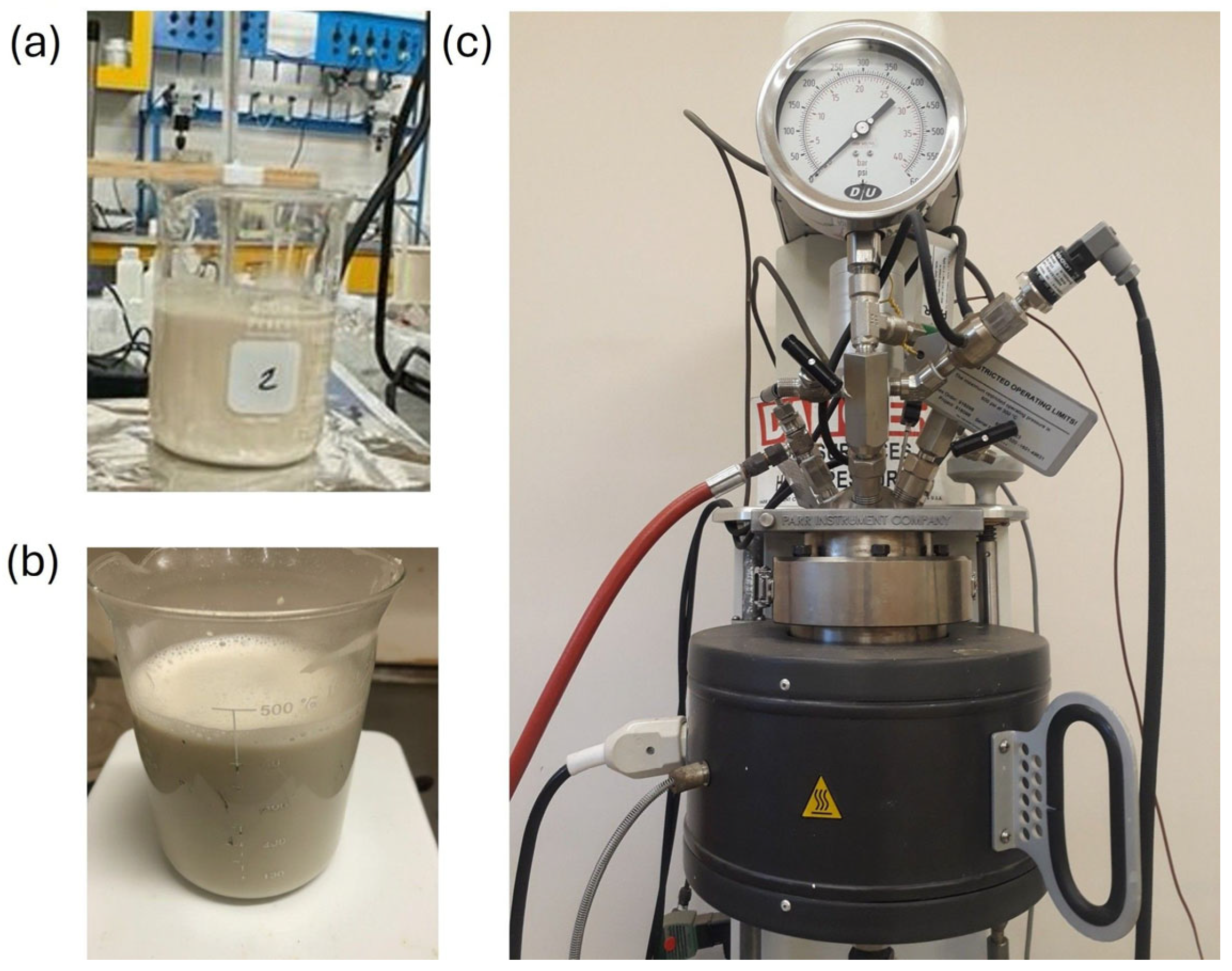
Subsamples were prepared for particle size distribution analysis and leaching experiments. Granulometric sieve analysis was performed on the mineral sample using Tyler meshes of +5, −5 + 10, −10 + 18, −18 + 35, −35 + 40, −40 + 80, −80 + 100, −100 + 140, −140 + 200, −200 + 325, and −325 with an overall size of 80% passing. The prepared sample was subjected to metallurgical tests under three leaching modes: conventional, hot, and simultaneous pressure leaching/oxidation. Conventional and hot leaching experiments were conducted in a 1 L glass batch reactor equipped with mechanical agitation at 600 rpm to ensure complete suspension of the solid particles and minimize external mass-transfer limitations. Pressure leaching/oxidation tests were performed in a 1 L Parr autoclave with temperature and pressure control systems. The experimental setup, including both the batch reactor (for conventional and hot leaching) and the pressure vessel, is schematically illustrated in Figure 1. The variables and parameters evaluated (Table 1) were sulfuric acid concentration (1–8 M), particle size fractions (105 and 149 µm), temperature (30, 60, and 80 °C for hot and pressure leaching/oxidation), oxygen partial pressure (50 psi for pressure leaching/oxidation), and residence time ranging from 0.5 to 24 h depending on the system. The solid concentration was fixed at 20 wt.% in all tests, and mechanical stirring was maintained at 600 rpm.
Figure 1.
Experimental setups for the leaching tests: (a) conventional leaching, (b) hot leaching, and (c) pressure leaching/oxidation in a 1 L Parr autoclave.
Table 1.
Experimental variables and operating parameters for conventional, hot, and pressure leaching/oxidation tests.
Conventional leaching provided a baseline for lithium dissolution under mild conditions, while hot leaching allowed assessment of the effect of thermal energy and acid concentration on reaction kinetics. Pressure leaching incorporated oxygen overpressure as a critical variable, enabling comparison between atmospheric and intensified hydrometallurgical conditions. The residence times were adjusted according to the expected kinetics: longer intervals (up to 24 h) for conventional and hot leaching, and shorter intervals (up to 3 h) for pressure leaching [23,24].
To describe the dissolution kinetics of lithium during pressure leaching, a pseudo-first-order kinetic model was used, which has been widely applied to leaching processes where the reaction rate depends on the approach to equilibrium [25,26,27,28]. The instantaneous lithium extraction fraction, α(t), was calculated as the ratio between the amount of lithium dissolved in solution at time t and the initial lithium content in the solid feed:
where is the lithium concentration in solution at time t, V is the solution volume, is the mass of solid, and is the initial lithium content in the solid.
This formulation assumes that the rate of dissolution is proportional to the difference between the equilibrium extraction (αeq) and the instantaneous extraction (α), and is expressed as
The integrated form of Equation (7) can be expressed as
α(t) = αeq (1 − e−kt)
Nonlinear regression was performed using the integrated form of the pseudo-first-order model (Equation (8)). The apparent rate constant (k) and the equilibrium extraction (αeq) were simultaneously estimated by minimizing the sum of squared residuals between the experimental extraction data and the model predictions.
The temperature dependence of the apparent rate constant was analyzed using the Arrhenius equation [29]:
where k0 is the pre-exponential factor, Ea is the apparent activation energy (J·mol−1), R is the universal gas constant, and T is the absolute temperature (K). The linear relationship between ln k and 1/T was used to determine Ea.
3. Results
3.1. Mineralogical Characterization
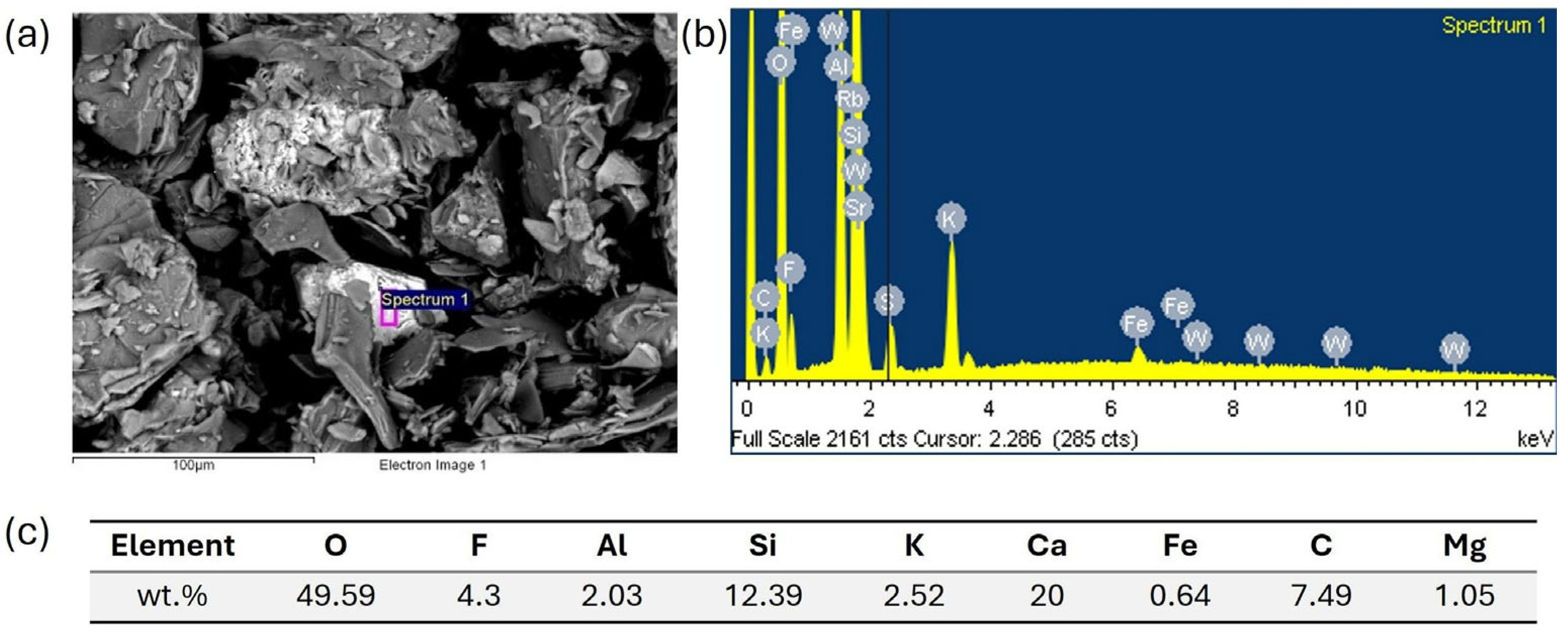
The mineralogical and microstructural characterization of the clay-type lithium ore sample was carried out to identify the dominant phases and understand the textural features that may influence lithium release during leaching. SEM–EDS analysis (Figure 2) revealed a heterogeneous morphology characterized by angular particles and irregular surfaces resulting from mechanical grinding. The backscattered electron micrograph (Figure 2a) shows a fine-grained matrix composed predominantly of aluminosilicate phases. The corresponding EDS spectrum (Figure 2b) confirmed the presence of oxygen, silicon, and aluminum as the significant elements, together with minor concentrations of potassium, calcium, iron, and magnesium. The elemental composition obtained from spot analysis (Figure 2c) indicates that silicon (12.39 wt.%) and aluminum (2.03 wt.%) are associated with clay minerals, whereas potassium and calcium likely originate from feldspar and carbonate phases. The relatively high oxygen content (49.59 wt.%) reflects the dominance of silicate and oxide minerals in the sample. These microstructural and chemical observations support the idea that lithium is hosted within a complex aluminosilicate matrix, which may influence its leaching response under the different hydrometallurgical conditions evaluated in this study.
Figure 2.
SEM-EDS characterization of the clay-type lithium ore: (a) backscattered electron micrograph showing the morphology of particles, (b) EDS spectrum of a representative point analysis, and (c) elemental composition (wt.%) of the analyzed area.
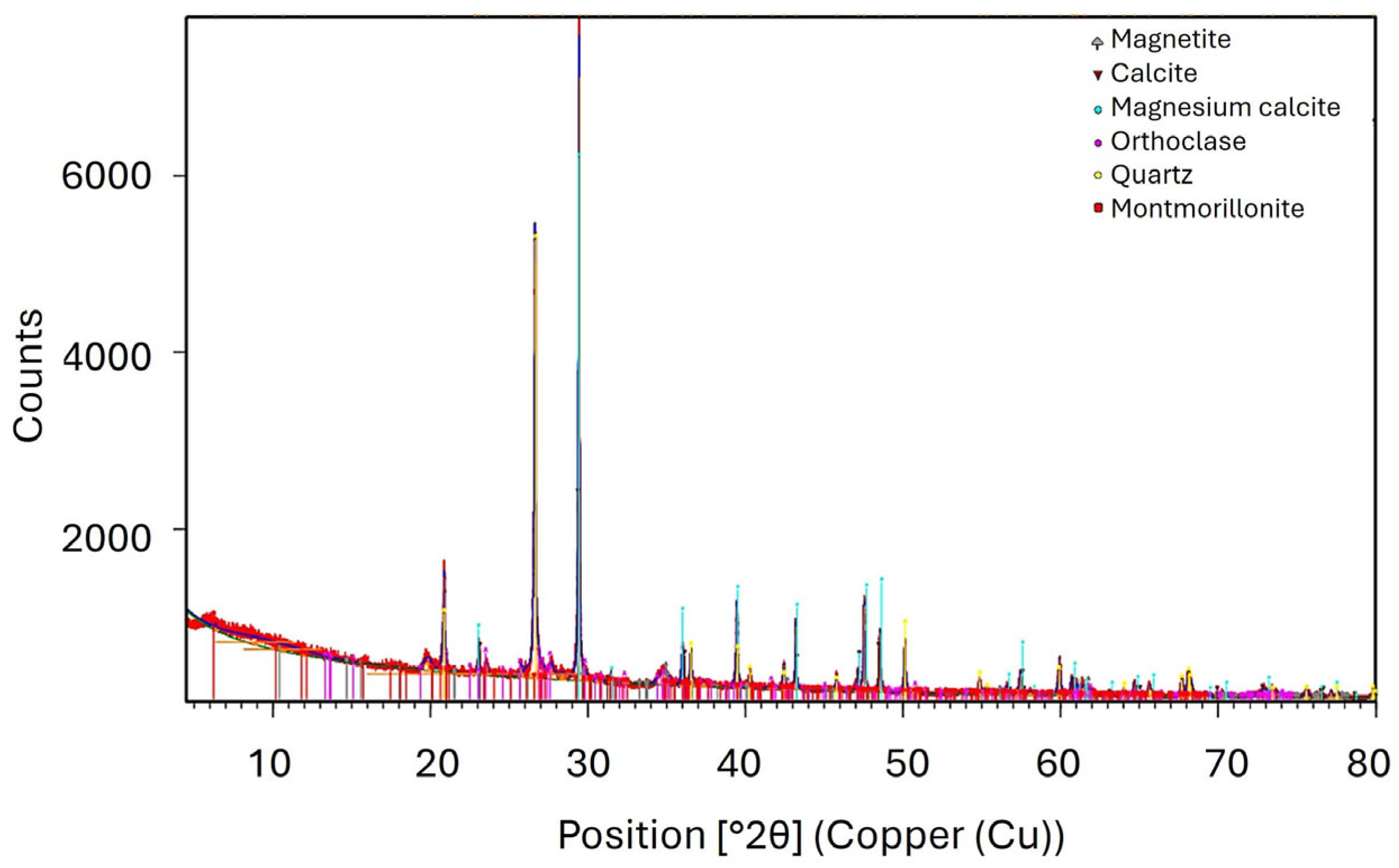
The X-ray diffraction (XRD) pattern of the clay-type lithium ore is shown in Figure 3. The diffractogram reveals that the sample is primarily composed of quartz, calcite, and montmorillonite. Minor phases include magnetite, magnesium calcite, and orthoclase. The identification of montmorillonite is particularly significant, as this clay mineral is commonly associated with lithium-bearing deposits, where lithium can substitute for Mg2+ in the octahedral sheet of the aluminosilicate structure. These findings are consistent with the mineralogical reconstruction presented in Table 2, which confirms montmorillonite as the dominant phase (56.2 wt.%), followed by quartz (22.8 wt.%) and carbonate minerals. Similar mineralogical assemblages—dominated by quartz, calcite, and montmorillonite—have been reported in clay-type lithium deposits in Sonora, Mexico [19,30], supporting the potential of these materials as alternative lithium resources. The presence of accessory minerals such as magnetite and feldspars suggests minor detrital contributions that may influence gangue behavior during leaching.
Figure 3.
X-Ray Diffraction (XRD) pattern of the clay-type lithium ore sample.
Table 2.
Mineralogical reconstruction of the clay-type lithium sample.
The chemical characterization of the clay sample varied depending on the digestion method used (Table 3). Aqua regia digestion produced the highest Ca (8.17%), K (4.63%), Fe (1.02%), and Al (4.35%) contents, reflecting efficient dissolution of carbonates and easily leachable phases. Lithium exceeded 10,000 mg/L, and the repeat analysis (8786 mg/L) confirmed good reproducibility. Four-acid digestion yielded lower Al (3.42%), Ca (5.97%), K (3.78%), and Mg (1.44%), indicating partial dissolution of aluminosilicates. Lithium (9057 mg/L) remained consistent with aqua regia values, supporting the reliability of Li quantification. Sodium peroxide fusion yielded limited elemental recovery (Fe at 0.81%), suggesting selective decomposition of silicates without complete dissolution of carbonate-associated elements. Overall, the digestion results corroborate the dominance of aluminosilicate and carbonate phases and confirm the ore’s high lithium content.
Table 3.
The chemical composition of the clay sample was determined using different digestion methods.
3.2. Granulometric Analysis
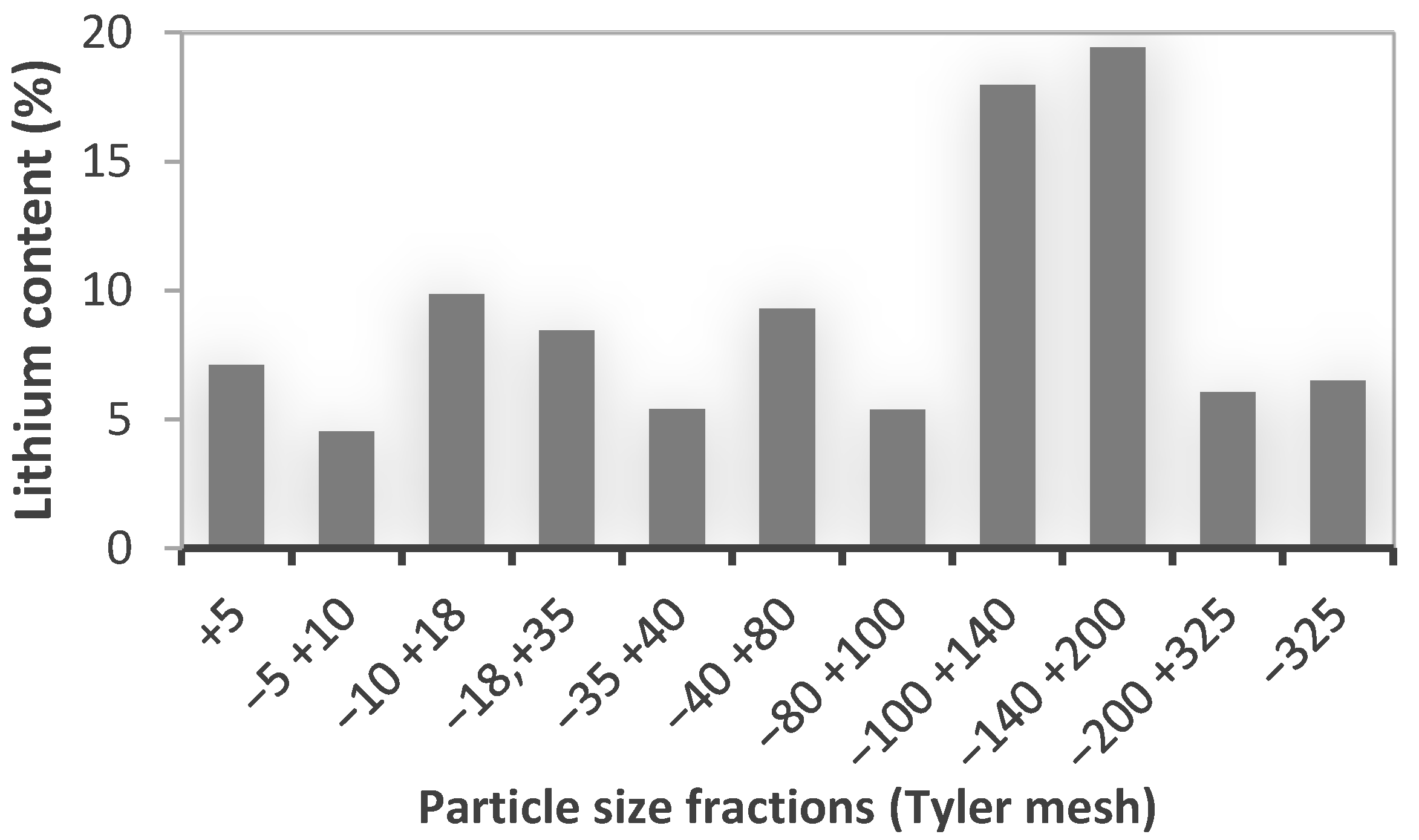
The particle-size distribution of lithium in the sample shows a distinct enrichment toward finer fractions, as illustrated in Figure 4. The highest lithium contents were observed in the −100, +140 and −140, +200 Tyler mesh fractions, corresponding to average particle sizes of approximately 149 µm and 105 µm, respectively. These fractions were therefore selected for the subsequent leaching experiments. This enrichment pattern indicates that lithium-bearing phases are preferentially concentrated in the fine material due to improved mineral liberation and partial exposure of lithium-bearing microstructures during grinding. In contrast, the coarser fractions (+5 to −40, +80 Tyler) exhibited lower lithium contents, likely reflecting incomplete liberation or encapsulation within the gangue matrix. The agreement between the granulometric behavior shown in Figure 4 and the particle sizes employed in the leaching methodology confirms that finer fractions represent the most reactive and representative feed for hydrometallurgical processing.
Figure 4.
Metallic lithium content (%) as a function of particle size fraction.
3.3. Conventional Leaching Tests
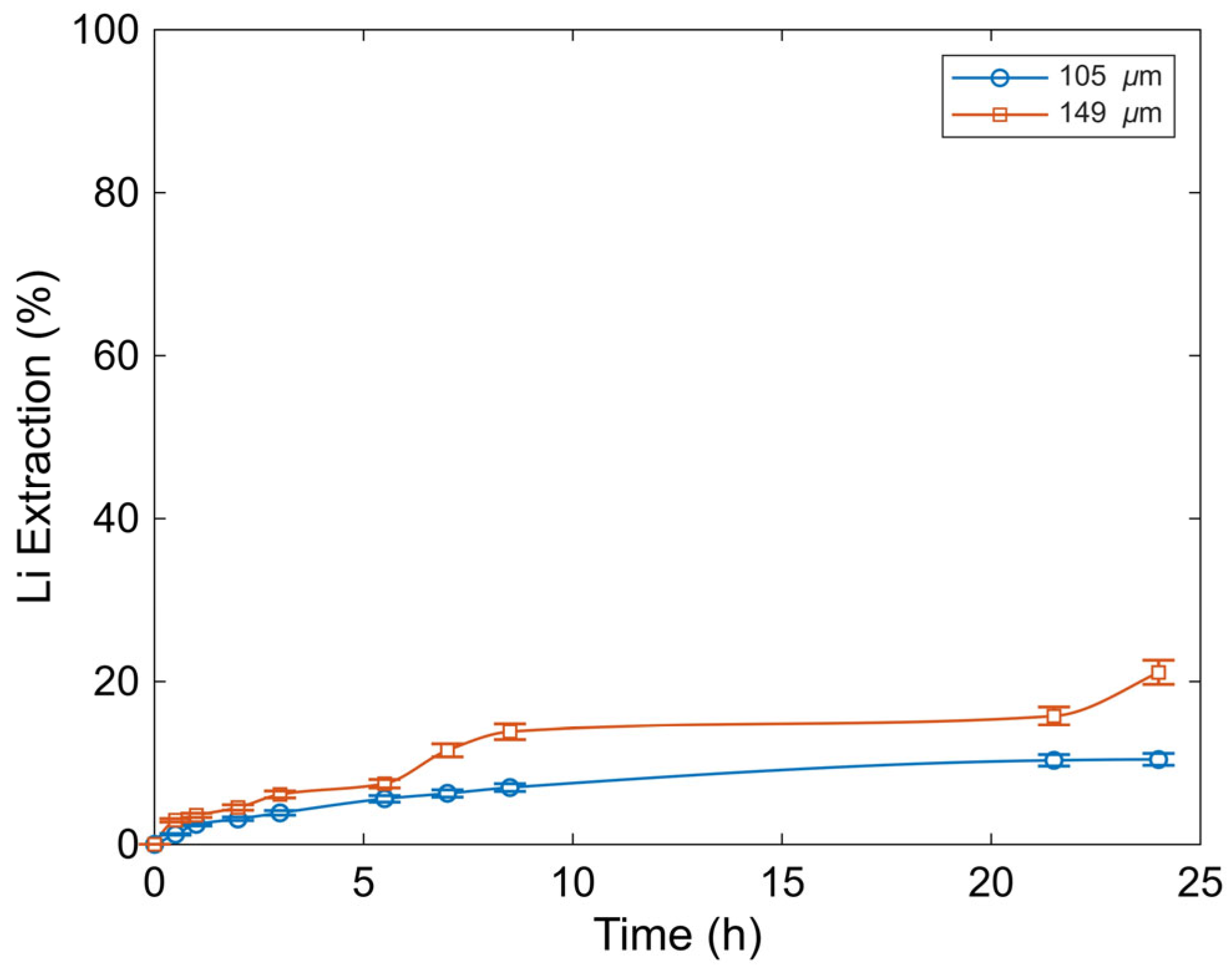
Lithium extraction behavior under conventional atmospheric leaching using 1 M H2SO4 at particle sizes of 105 and 149 µm is illustrated in Figure 5. In both cases, lithium dissolution increased progressively over time, with a rapid initial extraction during the first 5–7 h, followed by a slower approach to stabilization. After 24 h, the coarser fraction (149 µm) reached nearly 21% lithium extraction, whereas the finer fraction (105 µm) achieved only ~12–13%. This result is counterintuitive, as finer particles are generally expected to enhance leaching performance due to their higher specific surface area. In clay-type systems, however, reduced recovery for finer particle sizes has been frequently reported and may be associated with particle agglomeration, reduced permeability of the particle bed, or secondary precipitation phenomena occurring during acid leaching. These effects can hinder effective acid–solid contact and limit diffusion, ultimately offsetting the benefits of increased surface area. Similar anomalous behavior has been reported for clay-hosted lithium ores, where excessive fines negatively affect permeability and mass transfer during acid leaching processes [31,32,33].
Figure 5.
Lithium extraction in solution as a function of time during conventional leaching.
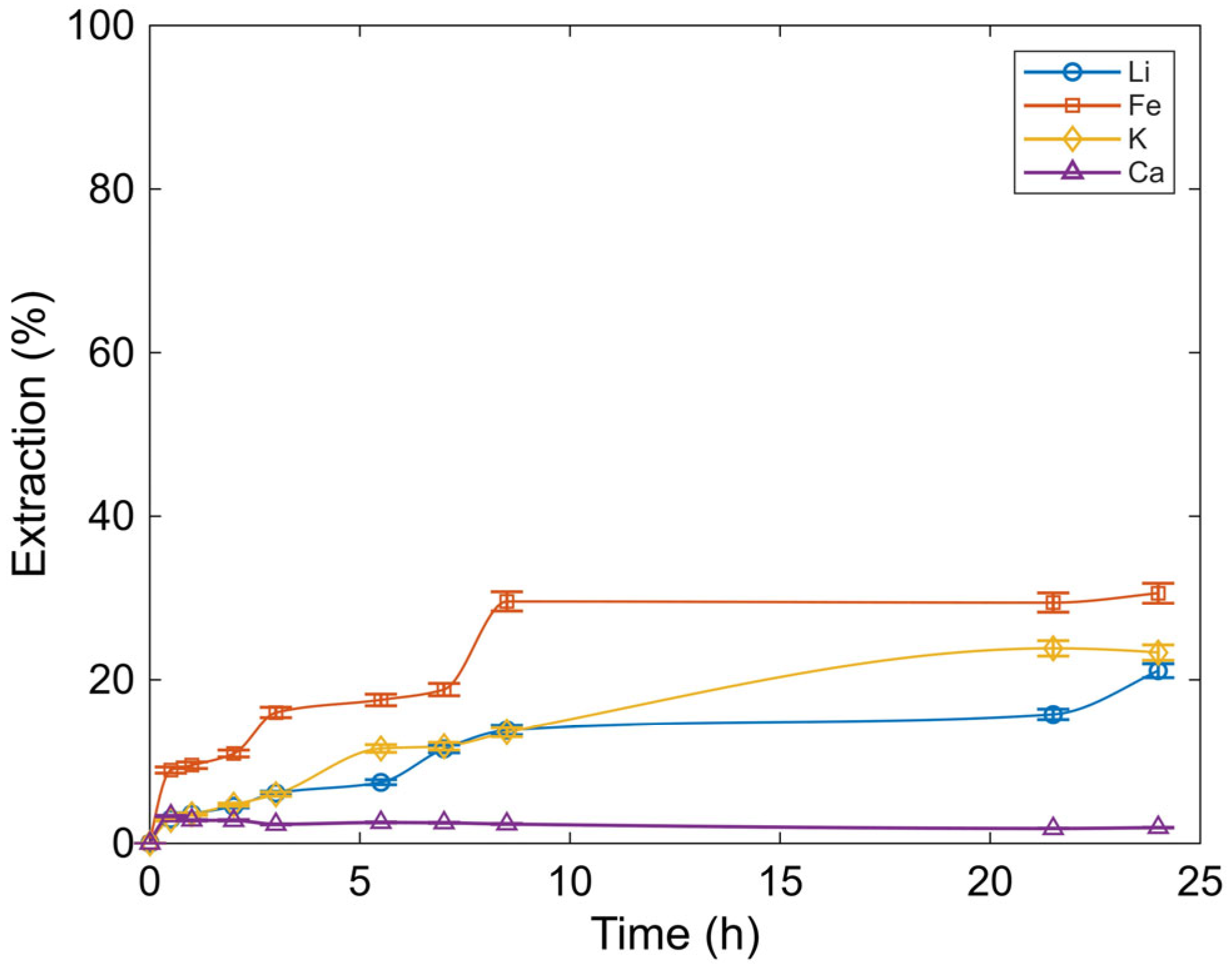
The dissolution profiles indicate that under mild conditions, lithium recovery remains limited, with both curves approaching a plateau after approximately 8–10 h. This behavior suggests the presence of kinetic limitations commonly observed during atmospheric leaching of clay-type ores, which may arise from restricted access to lithium-bearing sites and potential initial consumption of the lixiviant by acid-reactive gangue minerals (e.g., calcite) present in the ore. Such constraints are consistent with prior studies, which report that atmospheric acid leaching rarely yields moderate lithium recoveries from clay-type lithium ores [34,35]. Figure 6 clearly shows contrasting dissolution behaviors of lithium and its accompanying elements under conventional leaching conditions. Potassium exhibited the highest dissolution rate, reaching approximately 22% after 24 h, reflecting the relatively high solubility of K-bearing phases such as feldspars and micas [20,21]. Calcium remained consistently low (<5%) throughout the experiment, suggesting limited release from carbonate or gypsum-like phases and possible secondary precipitation [15,36]. Iron initially increased to about 30% before stabilizing, likely due to hydrolysis and precipitation, which limit its solubility under acidic conditions [15]. In contrast, lithium dissolution progressed slowly and remained below 15% after 24 h, confirming its refractory behavior under atmospheric sulfuric acid leaching.
Figure 6.
Extraction of lithium, iron, potassium, and calcium during conventional leaching (1 M H2SO4, 149 µm, 600 rpm, 20 wt.% solids).
Although potassium dissolution is more pronounced due to the higher solubility of K-bearing silicates, its release is generally interpreted as an initial indicator of framework disruption; however, lithium extraction remains limited because Li+ is strongly retained within the aluminosilicate structure, consistent with previous observations of partial Li–K decoupling in clay-hosted ores. The comparative behavior of these elements underscores the limited selectivity of conventional leaching. While potassium and iron exhibit partial dissolution, lithium extraction remains poor because it is incorporated into the aluminosilicate structure of clay minerals. Overall, these results demonstrate that atmospheric acid leaching is not an efficient route for lithium recovery from clay-type ores, highlighting the need to intensify the process through hot or pressure leaching to overcome the mineralogical constraints of these materials [21,32].
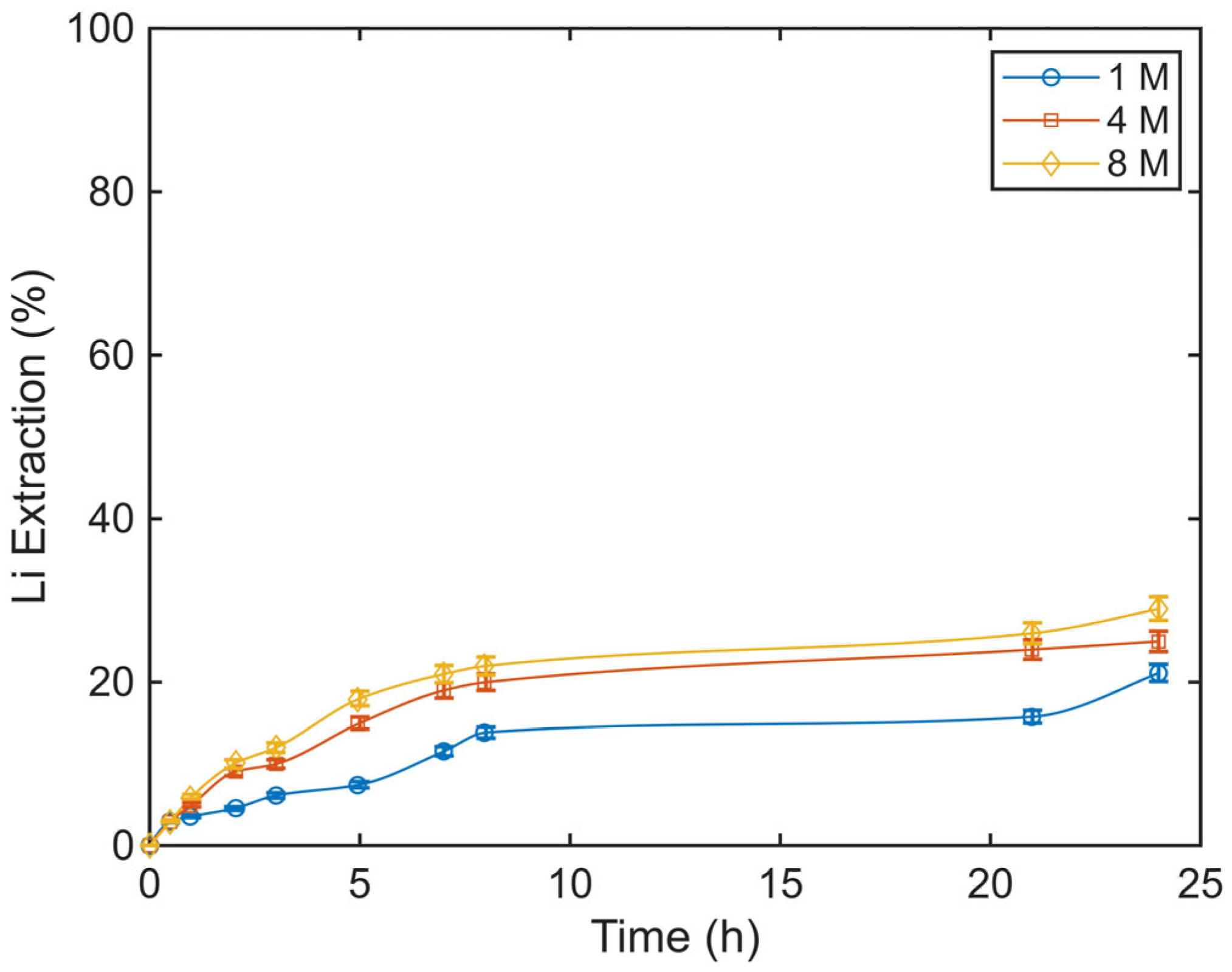
Figure 7 extends the analysis of lithium dissolution under atmospheric conditions by evaluating the effect of sulfuric acid concentration at fixed particle size (149 μm). Increasing H2SO4 concentration from 1 to 8 M led to a progressive enhancement in lithium extraction, reaching approximately 21%, 26%, and 29% after 24 h, respectively. This trend confirms that higher proton activity promotes aluminosilicate breakdown and accelerates lithium release; however, the global extraction remains markedly limited even at elevated acid concentration.
Figure 7.
Lithium extraction as a function of time during conventional atmospheric leaching at different sulfuric acid concentrations (1–8 M H2SO4, 149 μm, 600 rpm, 20 wt.% solids).
Notably, the dissolution profiles retained the characteristic behavior previously observed in Figure 5, with rapid leaching during the first 5–8 h followed by a deceleration towards a quasi-plateau. This kinetic response is consistent with diffusion-controlled mechanisms, likely associated with silica-rich product layer formation and the refractory nature of clay-type lithium minerals. Such constraints explain why extending leaching duration or increasing acid concentration alone does not yield substantial improvements in recovery. When compared with the dissolution behavior of co-leached elements in Figure 6, the limited enhancement of lithium extraction at high acid loadings further highlights its strong mineralogical binding within the aluminosilicate matrix. While K and Fe exhibit greater sensitivity to acidic conditions, lithium displays comparatively inert behavior, reinforcing the notion that conventional leaching has intrinsic limitations that cannot be overcome solely by chemical strengthening. Collectively, Figure 7 demonstrates that although increasing H2SO4 concentration improves lithium recovery to some extent, the maximum extraction remains below ~30% under atmospheric leaching. These results underscore the need for process intensification strategies—such as temperature elevation or oxygen overpressure—to achieve meaningful dissolution of refractory lithium phases. The subsequent sections evaluate the effect of thermal activation (hot leaching) and pressure leaching conditions to overcome these mineralogical and kinetic barriers.
3.4. Hot Leaching
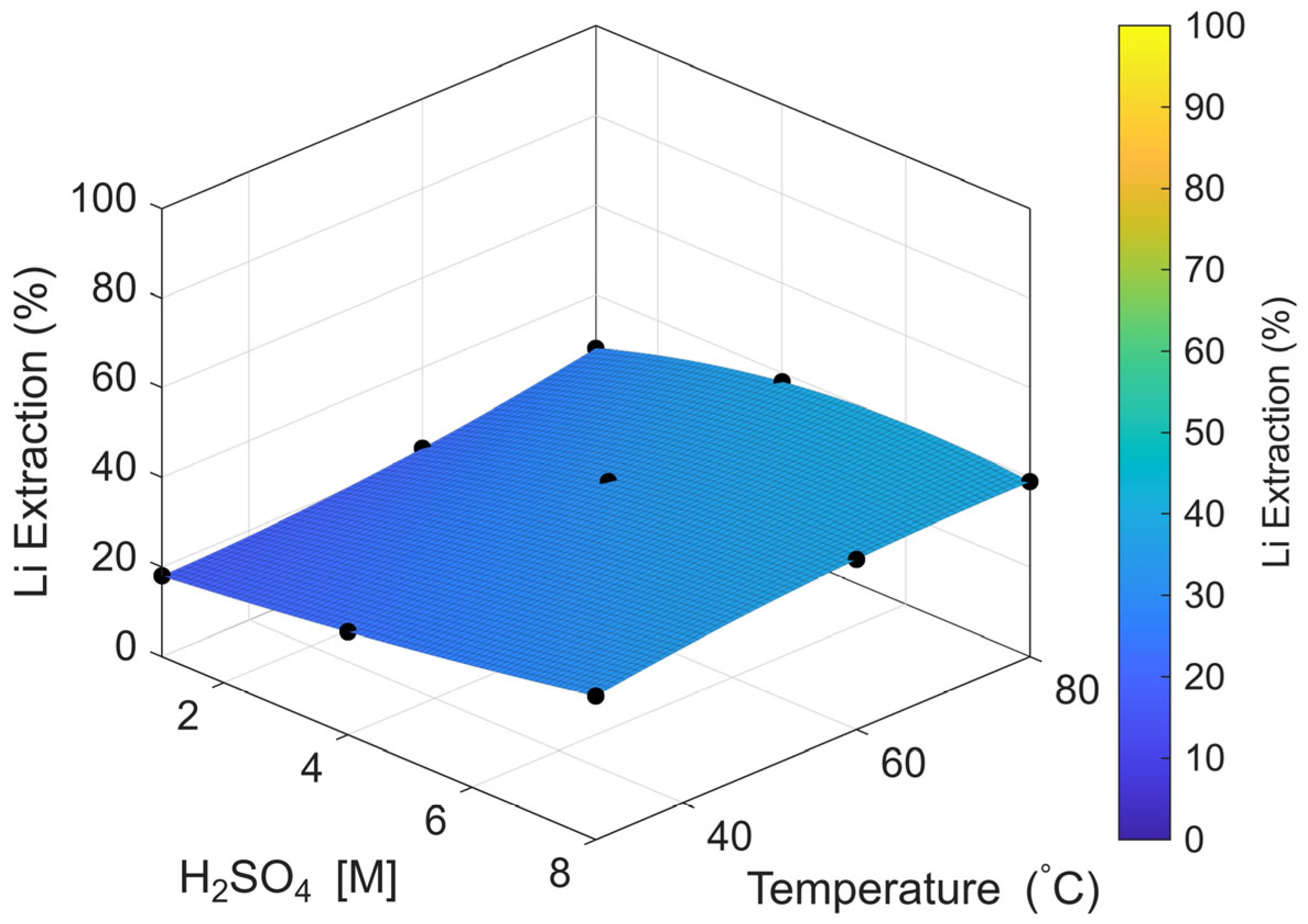
The effect of temperature and sulfuric acid concentration on lithium extraction under hot leaching conditions is shown in Figure 8. Lithium recovery increased progressively when both variables were raised, indicating a combined thermal and chemical activation of the aluminosilicate matrix. At 30 °C, extraction remained low across all acid concentrations (<~20% after 24 h), consistent with the limited reactivity of clay-type lithium ores under near-ambient conditions. Increasing the temperature to 60 °C enhanced dissolution, with lithium extraction rising to approximately 37% at high acid concentrations, reflecting the role of thermal energy in promoting bond disruption and facilitating ion release from silicate lattices [15,37].
Figure 8.
Response surface of lithium extraction (%) as a function of sulfuric acid concentration (1–8 M) and temperature (30–80 °C) under hot leaching conditions.
The highest dissolution occurred at 80 °C and 8 M H2SO4, reaching ~39% after 24 h, indicating a significant but still incomplete breakdown of lithium-bearing phases.
The smooth curvature of the response surface indicates diminishing gains at elevated concentrations and temperatures, suggesting that easily accessible lithium sites are depleted early while more strongly bonded lithium remains structurally retained within the aluminosilicate framework. This behavior is consistent with previous reports emphasizing the refractory nature of clay-hosted lithium and the formation of dissolution-resistant silica-rich residues that limit long-term extraction even under intensified leaching conditions [37]. The rapid initial increase, followed by a gradual leveling of extraction, suggests that once primary reactive sites are exposed and consumed, further dissolution is constrained by slow structural rearrangement and by the restricted accessibility of residual lithium.
Overall, the response surface in Figure 8 demonstrates that hot leaching enhances lithium recovery compared with atmospheric leaching by combining thermal activation and high proton activity; however, the maximum extraction remains below ~40%, underscoring the persistent mineralogical limitations that restrict complete liberation of lithium from clay minerals under non-pressurized conditions.
3.5. Pressure Leaching/Oxidation
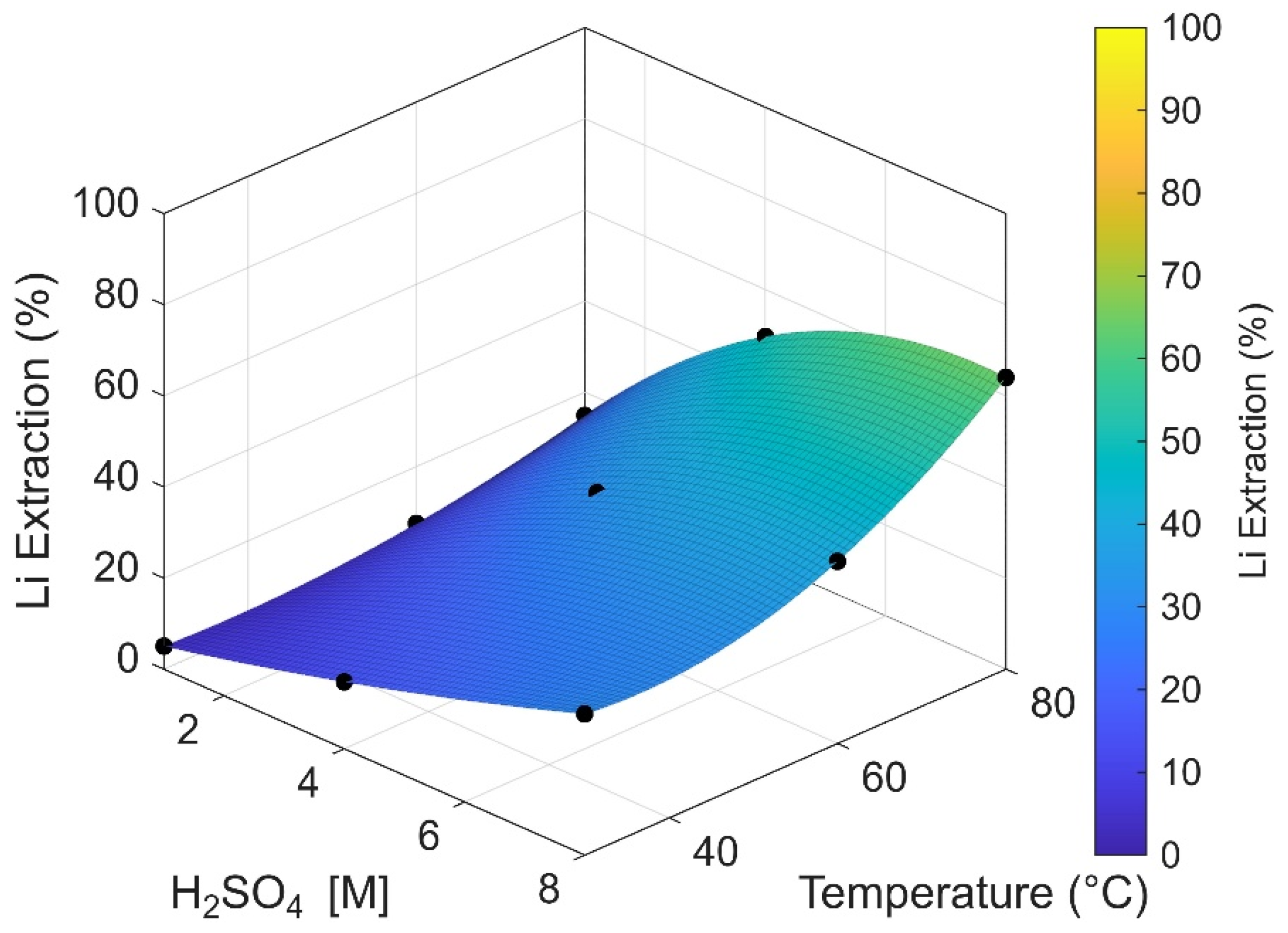
The simultaneous increase in acid concentration and temperature strongly enhances the reactivity of lithium-bearing clay phases during pressure leaching. Figure 9 illustrates the three-dimensional response surface of lithium extraction as a function of sulfuric acid concentration (0–8 M) and temperature (30–80 °C). The surface clearly shows the strong interaction between the two variables. At low acid concentrations and temperatures below 40 °C, lithium recovery remained under 20%, reflecting the limited reactivity of the aluminosilicate structure under mild conditions. In contrast, recoveries increased substantially with higher acid concentrations and temperatures, reaching approximately 64% at 8 M H2SO4, 80 °C after 180 min. The fitted surface closely matched the experimental data, confirming the robustness of the interpolation.
Figure 9.
Response surface of lithium extraction (%) as a function of sulfuric acid concentration (0–8 M) and temperature (30–80 °C) under pressure leaching conditions.
From a theoretical perspective, these results highlight the combined influence of proton availability and thermal activation. At low concentrations, limited proton activity hinders both the ion exchange of interlayer and the proton attack on the aluminosilicate framework, resulting in poor dissolution. Increasing acid concentration enhances these reactions, while higher temperatures accelerate bond cleavage within the clay lattice and suppress secondary precipitation of silica or aluminum species. Similar observations have been reported for lithium-bearing minerals, such as lepidolite and montmorillonite, where higher acid strengths and elevated temperatures significantly enhance dissolution kinetics [38,39].
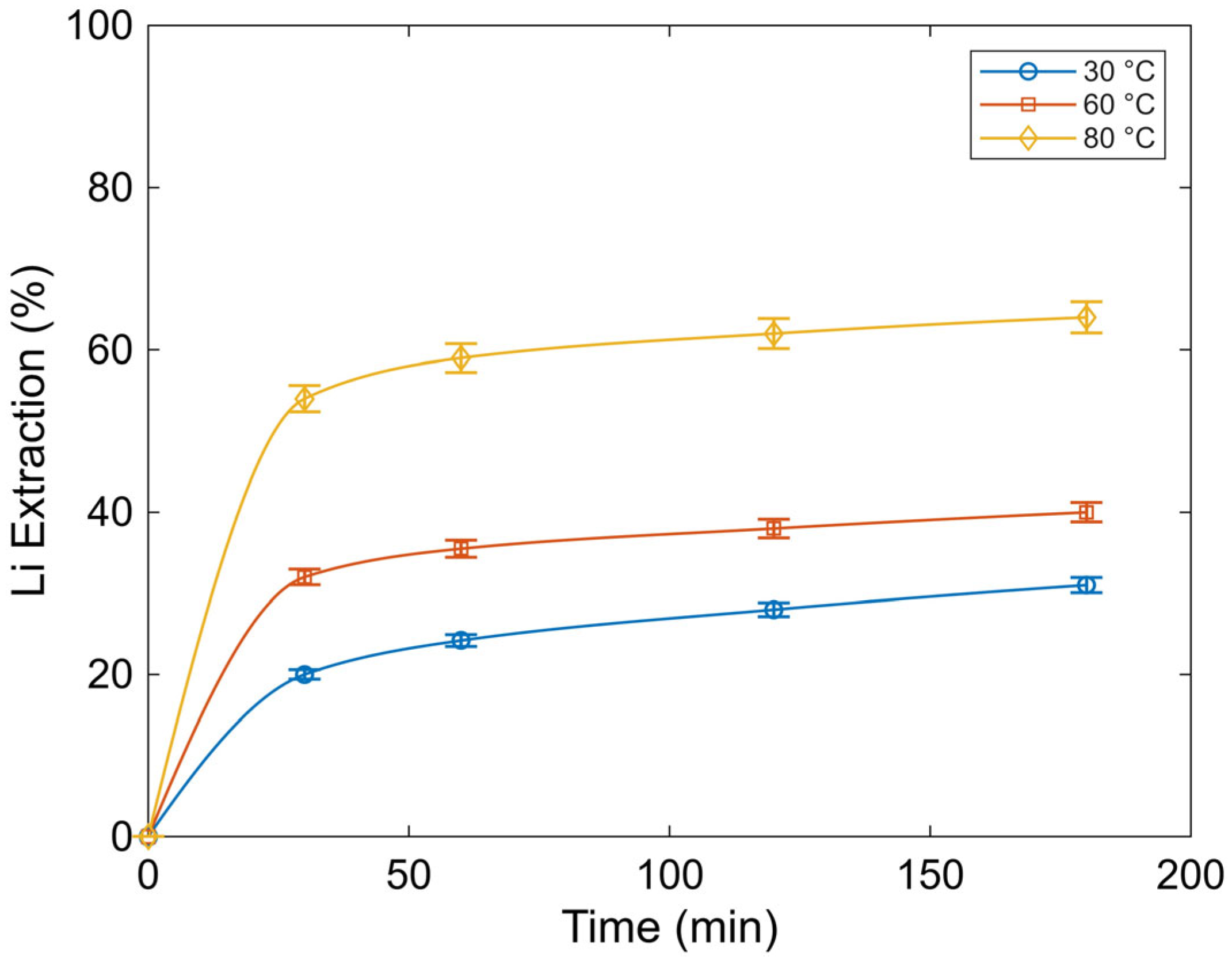
The influence of temperature (30, 60, and 80 °C) on lithium extraction under pressure leaching conditions at 50 psi O2 is shown in Figure 10. The results indicate a strong dependence of both leaching kinetics and final lithium extraction on temperature. At 30 °C, lithium extraction progressed slowly, reaching approximately 30% after 180 min, reflecting sluggish dissolution under mild thermal conditions. Increasing the temperature to 60 °C significantly enhanced the extraction rate, resulting in lithium recoveries of about 40% at the end of the leaching period. At 80 °C, a rapid initial increase in lithium extraction was observed, followed by a gradual approach to a plateau of approximately 64%, suggesting that higher temperatures promote faster dissolution. In contrast, the system progressively approaches equilibrium under the studied conditions. The tendency toward a plateau at elevated temperatures may be associated with secondary phenomena such as silica gel formation, aluminum hydrolysis, or surface passivation, which have been reported during acid leaching of clay-type materials and aluminosilicates [35,40,41,42]. These processes can limit further lithium release by reducing effective surface area or hindering mass transfer, particularly at higher temperatures and prolonged leaching times.
Figure 10.
Effect of temperature (30, 60, and 80 °C) on lithium extraction under pressure leaching conditions with 8 M H2SO4 and 50 psi O2.
The comparative profiles indicate that lithium dissolution under pressure leaching is governed by the interplay between thermal activation and secondary reactions occurring at elevated temperature and oxygen overpressure. Although higher temperatures (80 °C) promote faster initial dissolution and higher overall extraction, the early approach to a plateau suggests the increasing influence of secondary processes—such as silica gel formation, aluminum hydrolysis, or basic sulfate precipitation—that may restrict further lithium release. In contrast, intermediate temperatures (60 °C) provide a more gradual and sustained increase in extraction, highlighting the importance of balancing reaction kinetics and passivation phenomena. These observations emphasize the need to identify an optimal operating window that maximizes lithium recovery while minimizing adverse surface effects, supported by kinetic modeling to ensure stable and efficient leaching conditions.
3.6. Kinetic Modeling of Lithium Dissolution
The dissolution kinetics of lithium during pressure leaching were evaluated using the pseudo-first-order model described in Section 2. This formulation was selected because the extraction curves exhibited an exponential approach to equilibrium, which is characteristic of systems where the rate of dissolution is governed by the difference between the equilibrium extraction (αeq) and the instantaneous extraction (α). Such behavior is commonly associated with reaction–solution interactions rather than with diffusion through a continuous product layer. The model was fitted by nonlinear regression using Equation (8), yielding the apparent rate constant (k) and the equilibrium extraction (αeq) for each temperature.
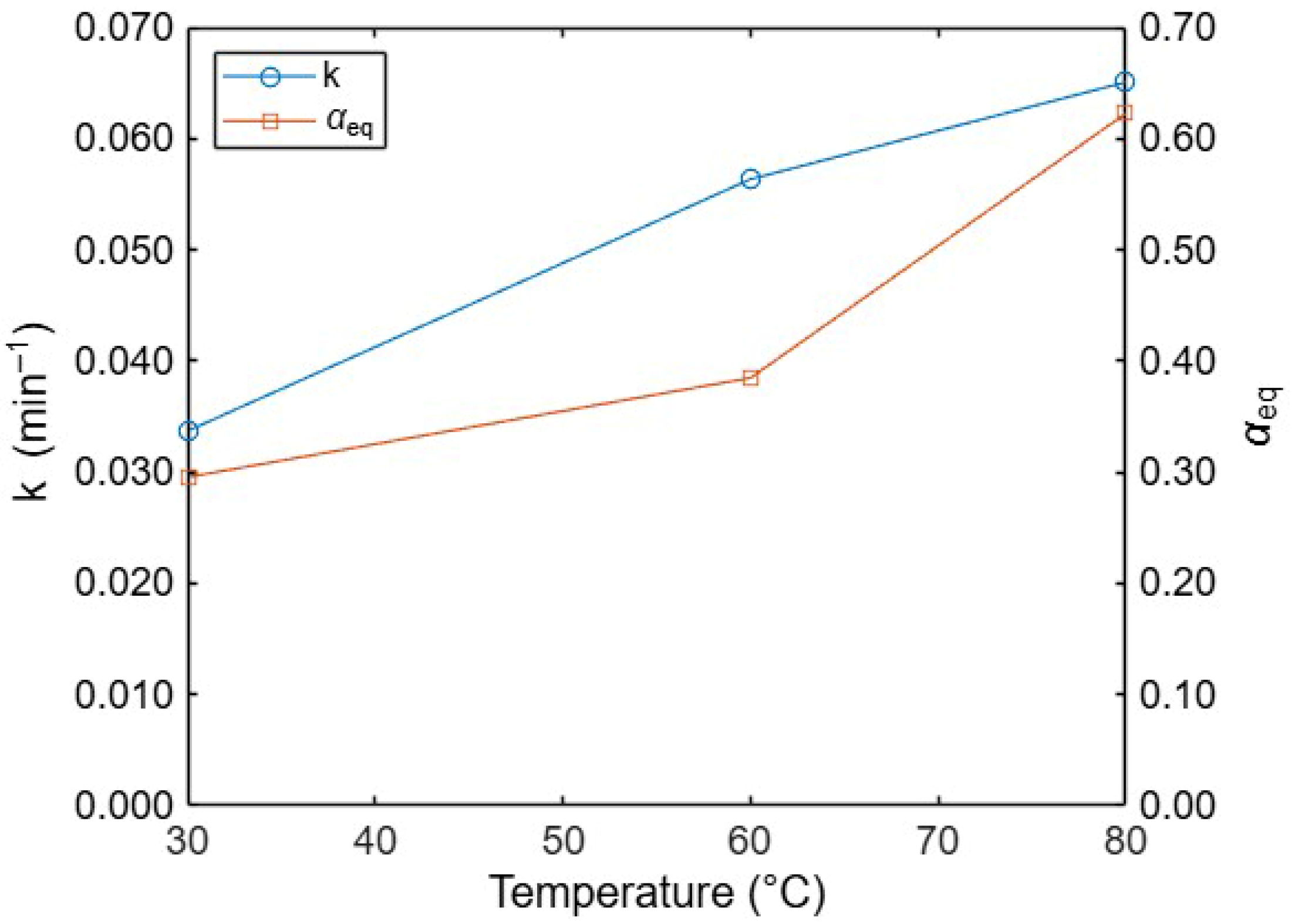
The temperature dependence of the kinetic parameters obtained from the model is summarized in Figure 11, which shows the variation in the apparent rate constant and the equilibrium extraction with temperature. At 30 °C, lithium dissolution proceeds slowly, with a low apparent rate constant (k = 3.1 × 10⁻³ min−1) and limited equilibrium extraction (αeq ≈ 0.31), indicating restricted accessibility of lithium-bearing sites under mild thermal conditions. Increasing the temperature to 60 °C significantly enhances both parameters (k = 6.4 × 10⁻³ min−1 and αeq ≈ 0.40), reflecting increased disruption of the aluminosilicate structure and improved lithium mobility. At 80 °C, the highest values are obtained (k = 1.23 × 10⁻² min−1 and αeq ≈ 0.64), demonstrating that elevated temperature strongly accelerates lithium dissolution and increases the overall extent of extraction.
Figure 11.
Variation in K and αeq as a function of temperature for the pseudo-first-order kinetic model.
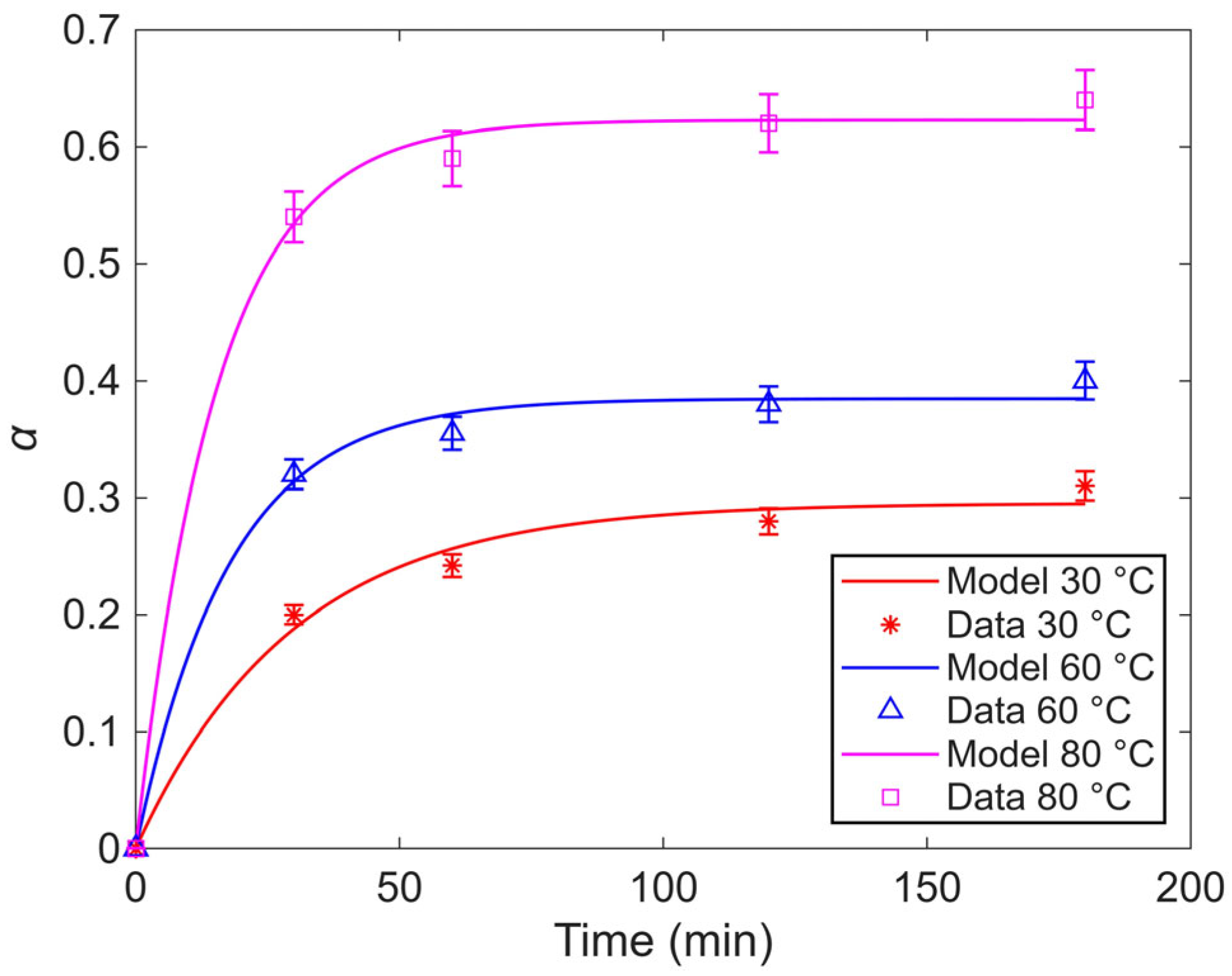
Figure 12 compares the experimental extraction curves with the model predictions. The pseudo-first-order model accurately reproduced the curvature and the asymptotic approach to equilibrium at all evaluated temperatures. The strong agreement between the model and the data indicates that lithium dissolution under pressure leaching is controlled by weakly activated reaction–solution interactions rather than by solid-state diffusion or product layer resistance. The characteristic exponential shape of the extraction curves supports this interpretation.
Figure 12.
Experimental and model-fitted lithium extraction curves at 30, 60, and 80 °C using the pseudo-first-order kinetic model.
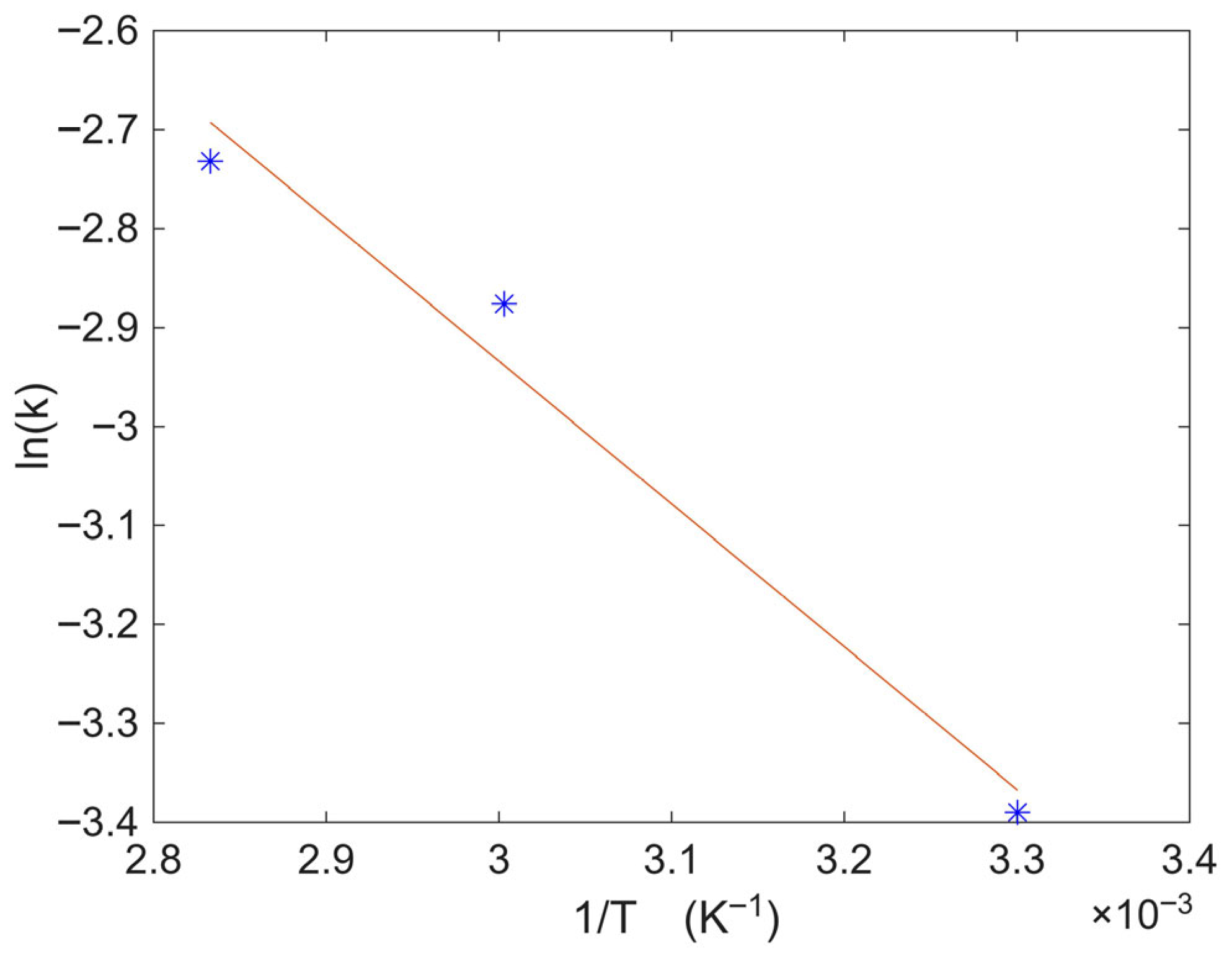
To assess the influence of temperature on the dissolution rate, the dependence of the apparent rate constant (k) on temperature was evaluated using the Arrhenius equation (Equation (9)). The Arrhenius plot of ln k versus 1/T is shown in Figure 13. A linear relationship was obtained over the investigated temperature range, confirming Arrhenius-type behavior for lithium dissolution under pressure leaching conditions. From the slope of the linear fit, the apparent activation energy was calculated as Ea = 12.1 kJ·mol−1. In hydrometallurgical systems, apparent activation energy values below approximately 20 kJ·mol−1 are commonly associated with weakly activated reaction–solution or ion-exchange controlled processes, whereas higher values (typically >40 kJ·mol−1) are characteristic of chemically controlled surface reactions, and intermediate values are often linked to diffusion-controlled mechanisms. The Ea value obtained in this study falls within the range reported for weakly activated dissolution processes in clay minerals. Although similar activation energies are sometimes associated with diffusion-limited behavior, this interpretation applies only when diffusion-based kinetic models adequately fit the experimental data, which is not the case under the present conditions. Instead, the combination of low Ea, the increase in αeq with temperature, and the excellent fit of the pseudo-first-order model supports a reaction-controlled dissolution mechanism [43,44].
Figure 13.
Arrhenius plot used to determine the apparent activation energy (Ea) for the pseudo-first-order lithium dissolution model under pressure leaching conditions.
Overall, the kinetic modeling results provide a mechanistic basis for interpreting lithium dissolution under pressure leaching. The increasing values of k and αeq with temperature, together with the low activation energy, highlight the important role of thermal activation in weakening the aluminosilicate structure and facilitating lithium release. These findings have direct implications for process optimization and scale-up, as they demonstrate that enhanced lithium recovery can be achieved by increasing temperature and oxygen availability rather than relying on extended residence times.
4. Conclusions
The mineralogical and chemical characterization of the Mexican clay-type lithium ore showed that the sample is dominated by montmorillonite, quartz, and calcite, with montmorillonite acting as the primary Li-bearing phase. The structural incorporation of lithium into the aluminosilicate framework accounts for its limited solubility under mild leaching conditions. Accordingly, conventional atmospheric leaching using moderate-to-high sulfuric acid concentrations (1–8 M) resulted in restricted lithium recoveries (<30% after 24 h), even when both acid strength and temperature (up to 80 °C) were increased. Although elevated proton activity and thermal input accelerated dissolution, hot leaching only enhanced lithium extraction moderately (to ~39%), confirming that temperature alone cannot overcome the strong structural retention of Li+ within the clay matrix.
In contrast, pressure leaching under oxygen overpressure (50 psi) significantly improved lithium dissolution, achieving a maximum recovery of ~64% at 8 M H2SO4 and 80 °C. While this level of extraction does not represent complete dissolution of lithium-bearing phases, it constitutes a marked improvement over atmospheric and hot leaching routes, demonstrating the combined effectiveness of acid concentration, moderate temperature, and oxygen availability in promoting Li release from clay-type ores. These outcomes reinforce the need for process intensification to access structurally bound lithium and provide a basis for strategies such as controlled preactivation, reagent optimization, or multi-stage leaching to enhance recovery further.
Kinetic modeling using a pseudo-first-order formulation adequately described the extraction curves, yielding temperature-dependent increases in both the rate constant and the equilibrium extraction. The low apparent activation energy (~12 kJ·mol−1) indicates that lithium dissolution proceeds via weakly activated reaction–solution interactions rather than diffusion through a product layer, consistent with the kinetic interpretation that oxygen availability and thermal activation enhance access to Li-bearing sites. The strong agreement between the model and the experimental data confirms that pressure leaching effectively shifts dissolution behavior toward reaction-controlled kinetics, enabling higher recoveries under intensified conditions.
Together, the mineralogical evidence, leaching performance, and kinetic interpretation establish a coherent framework for designing and optimizing hydrometallurgical strategies for Li recovery from clay-hosted ores. The results highlight the importance of controlling acid concentration, temperature, and oxygen partial pressure to enhance extraction efficiencies and suggest that the future development of more sustainable and scalable processes may benefit from reagent-assisted activation, catalytic oxidative additives, or modular multi-step leaching configurations to weaken the aluminosilicate structure further and increase lithium liberation.
Author Contributions
G.L.L.-S.: Methodology, experimental work, data curation, writing—original draft preparation. J.L.V.-G.: Conceptualization, validation, supervision, resources, project administration, writing—original draft preparation, critical review and editing. M.M.S.-C.: Conceptualization, data curation, validation, supervision, writing—original draft preparation, critical review and editing. D.M.M.-F.: Involved in methodology, analytical work, and validation. M.A.V.-M. and G.T.-M.: Contribution to data analysis, methodology, validation. M.A.E.-R.: conceptualization, validation, review and editing. J.C.S.-U. conceptualization, validation, review and editing. All authors have read and agreed to the published version of the manuscript.
Funding
This research received no external funding.
Data Availability Statement
The original contributions presented in this study are included in the article. Further inquiries can be directed to the corresponding authors.
Acknowledgments
G.L.L.S. gratefully acknowledges the scholarship granted by SECIHTI, which contributed to the completion of this work. The authors also thank the Laboratory of Analytical and Environmental Analysis of the Department of Chemical Engineering and Metallurgy, Universidad de Sonora, for their support with the analytical determinations. Additional support was provided by the National Laboratory of Geochemistry and Mineralogy (LANGEM) and the X-Ray Diffraction Laboratory of the Institute of Geology, Universidad Nacional Autónoma de México (UNAM), for access to their analytical facilities.
Conflicts of Interest
The authors declare no conflicts of interest.
References
- Bauer, D.; Khazdozian, H.; Mehta, J.; Nguyen, R.; Severson, M.; Vaagensmith, B.; Toba, L.; Zhang, B.; Hossain, T.; Sibal, A.; et al. Critical Materials Strategy; Idaho National Laboratory (INL): Idaho Falls, ID, USA, 2023. [Google Scholar]
- Masson-Delmotte, V.; Zhai, P.; Pirani, A.; Connors, S.L.; Péan, C.; Berger, S.; Caud, N.; Chen, Y.; Goldfarb, L.; Gomis, M.I.; et al. Climate Change 2021: The Physical Science Basis, the Working Group I Contribution to the Sixth Assessment Report; Cambridge University Press: Cambridge, UK, 2022; pp. 1–35. [Google Scholar] [CrossRef]
- Evans, R.K. An Abundance of Lithium; World Lithium: Santiago, Chile, 2008. [Google Scholar]
- Yaksic, A.; Tilton, J.E. Using the cumulative availability curve to assess the threat of mineral depletion: The case of lithium. Resour. Policy 2009, 34, 185–194. [Google Scholar] [CrossRef]
- Gruber, P.W.; Medina, P.A.; Keoleian, G.A.; Kesler, S.E.; Everson, M.P.; Wallington, T.J. Global lithium availability: A constraint for electric vehicles? J. Ind. Ecol. 2011, 15, 760–775. [Google Scholar] [CrossRef]
- Evans, R.K. Lithium Reserves and Resources. Energy 1978, 3, 379–385. [Google Scholar] [CrossRef]
- Mohr, S.H.; Mudd, G.M.; Giurco, D. Lithium Resources and Production: Critical Assessment and Global Projections. Minerals 2012, 2, 65–84. [Google Scholar] [CrossRef]
- Kesler, S.E.; Gruber, P.W.; Medina, P.A.; Keoleian, G.A.; Everson, M.P.; Wallington, T.J. Global lithium resources: Relative importance of pegmatite, brine and other deposits. Ore Geol. Rev. 2012, 48, 55–69. [Google Scholar] [CrossRef]
- Grosjean, C.; Miranda, P.H.; Perrin, M.; Poggi, P. Assessment of world lithium resources and consequences of their geographic distribution on the expected development of the electric vehicle industry. Renew. Sustain. Energy Rev. 2012, 16, 1735–1744. [Google Scholar] [CrossRef]
- Flexer, V.; Baspineiro, C.F.; Galli, C.I. Lithium recovery from brines: A vital raw material for green energies with a potential environmental impact in its mining and processing. Sci. Total Environ. 2018, 639, 1188–1204. [Google Scholar] [CrossRef]
- Liu, J.; Xu, R.; Sun, W.; Wang, L.; Zhang, Y. Lithium Extraction from Lithium-Bearing Clay Minerals by Calcination-Leaching Method. Minerals 2024, 14, 248. [Google Scholar] [CrossRef]
- Lien, R.H. Recovery of Lithium from a Montmorillonite-Type Clay; US Department of the Interior, Bureau of Mines: Washington, DC, USA, 1985; Volume 8967. [Google Scholar]
- Kazadi, D.M.; Groot, D.R.; Steenkamp, J.D.; Pöllmannb, H. Control of silica polymerization during ferromanganese slag sulphuric acid digestion and water leaching. Hydrometallurgy 2016, 166, 214–221. [Google Scholar] [CrossRef]
- Binnemans, K.; Jones, P.T. Solvometallurgy: An Emerging Branch of Extractive Metallurgy. J. Sustain. Metall. 2017, 3, 570–600. [Google Scholar] [CrossRef]
- Zhang, Y.; Liu, M.; Zhu, G.; Liu, R.; Cao, Y. Lithium Extraction from a Clay-Type Lithium Ore Using a Mixed Solution of Sulfuric Acid and Ferric Chloride. Sep. Purif. Technol. 2025, 354, 129439. [Google Scholar] [CrossRef]
- Amer, A.M. The hydrometallurgical extraction of lithium from Egyptian montmorillonite-type clay. JOM 2008, 60, 55–57. [Google Scholar] [CrossRef]
- Porvali, A.; Chernyaev, A.; Shukla, S.; Lundström, M. Lithium Ion Battery Active Material Dissolution Kinetics in Fe (II)/Fe (III) Catalyzed Cu-H2SO4 Leaching System. Sep. Purif. Technol. 2020, 236, 116305. [Google Scholar] [CrossRef]
- Secretaría de Economía. Perfil del Mercado del Litio 2017; Gobierno de México: Ciudad de México, México, 2017; Available online: https://www.gob.mx/cms/uploads/attachment/file/287805/Perfil_Litio_2017.pdf (accessed on 1 November 2025).
- US Geological Survey. Mineral Commodities Summary 2021; U.S. Geological Survey: Reston, VA, USA, 2021. [Google Scholar] [CrossRef]
- Liu, Y.; Ma, B.; Lü, Y.; Wang, C.; Chen, Y. A review of lithium extraction from natural resources. Int. J. Miner. Metall. Mater. 2023, 30, 209–224. [Google Scholar] [CrossRef]
- Younes, N.N.; Turan, M.D.; Erdem, M. Overcoming clay structure challenges in lithium recovery from boron waste using high-temperature pressure acid leaching. Can J. Chem. Eng. 2025, 103, 2851–2863. [Google Scholar] [CrossRef]
- Russo, V.; Grénman, H.; Cogliano, T.; Tesser, R.; Salmi, T. Advanced shrinking particle model for fluid-reactive solid systems. Front. Chem. Eng. Sec. Chem. React. Eng. 2020, 2, 577505. [Google Scholar] [CrossRef]
- Levenspiel, O. Chemical reaction engineering. Ind. Eng. Chem. Res. 1999, 38, 4140–4143. [Google Scholar] [CrossRef]
- Habashi, F. Textbook of Hydrometallurgy, 2nd ed.; Métallurgie Extractive Québec: Quebec City, QC, Canada, 1999; ISBN 2-980-3247-0-1. [Google Scholar]
- Sohn, H.Y. Noncatalytic fluid–solid reactions. In Chemical Reaction Engineering; Levenspiel, O., Ed.; John Wiley & Sons: Hoboken, NJ, USA, 1978; pp. 484–505. [Google Scholar]
- Olanipekun, E. A kinetic study of the leaching of a Nigerian ilmenite ore by hydrochloric acid. Hydrometallurgy 1999, 53, 1–10. [Google Scholar] [CrossRef]
- Levenspiel, O. Chemical Reaction Engineering, 3rd ed.; Wiley: New York, NY, USA, 1999. [Google Scholar]
- Habashi, F. Principles of Extractive Metallurgy, Volume II: Hydrometallurgy; Gordon and Breach Science Publishers: New York, NY, USA, 1970. [Google Scholar]
- Arrhenius, S. On the reaction velocity of the inversion of cane sugar by acids. Z. Phys. Chem. 1889, 4, 226–248. [Google Scholar] [CrossRef]
- Romero, B.Y. Recuperación de Litio Con Lixiviación Ultrasónica. Ingeniería en Metalurgia y Materiales. Instituto Politécnico Nacional; Escuela Superior de Ingeniería Química e Industrias Extractivas: Mexico City, Mexico, 2016. [Google Scholar]
- Bourg, I.C.; Ajo-Franklin, J.B. Clay, Water, and Salt: Controls on the Permeability of Fine-Grained Sedimentary Rocks. Acc. Chem. Res. 2017, 50, 2067–2074. [Google Scholar] [CrossRef]
- Choubey, P.K.; Dinkar, O.S.; Panda, R.; Kumari, A.; Jha, M.K.; Pathak, D.D. Selective extraction and separation of Li, Co and Mn from leach liquor of discarded lithium ion batteries (LIBs). Waste Manag. 2021, 121, 452–457. [Google Scholar] [CrossRef] [PubMed]
- Gutiérrez, J.S.; Navedo, J.G.; Soriano-Redondo, A. Atacama imperilled by lithium mining. Nature 2018, 557, 492. [Google Scholar] [CrossRef] [PubMed]
- Guo, H.; Yu, H.; Zhou, A.; Lv, M.; Wang, Q.; Kuang, G.; Wang, H. Kinetics of leaching lithium from α-spodumene in enhanced acid treatment using HF/H2SO4 as medium. Trans. Nonferr. Met. Soc. China 2019, 29, 407–415. [Google Scholar] [CrossRef]
- Rosales, G.D.; Pinna, E.G.; Suarez, D.S.; Rodriguez, M.H. Recovery Process of Li, Al and Si from Lepidolite by Leaching with HF. Minerals 2017, 7, 36. [Google Scholar] [CrossRef]
- Crocker, L.; Lien, R.H. Lithium and Its Recovery from Low-Grade Nevada Clays; Bureau of Mines, Department of Interior: Washington, DC, USA, 1987; pp. 8–9. [Google Scholar]
- Chen, H.; Zhang, L.; Pan, J.; Long, X.; He, X.; Zhou, C. Study on modes of occurrence and enhanced leaching of critical metals (lithium, niobum, and rare earth elements) in coal gangue. J. Environ. Chem. Eng. 2022, 10, 108818. [Google Scholar] [CrossRef]
- Gao, L.; Wang, H.; Li, J.; Wang, M. Recovery of Lithium from Lepidolite by Sulfuric Acid and Separation of Al/Li by Nanofiltration. Minerals 2020, 10, 981. [Google Scholar] [CrossRef]
- Liu, J.L.; Yin, Z.L.; Li, X.H.; Hu, Q.Y.; Wei, L.I.U. Recovery of valuable metals from lepidolite by atmosphere leaching and kinetics on dissolution of lithium. Trans. Nonferrous Met. Soc. China 2019, 29, 641–649. [Google Scholar] [CrossRef]
- Chen, Z.; Peng, R.; Xiang, Z.; Liu, F.; Wang, J.; Chen, X. Low-Acid Leaching for Preferential Lithium Extraction and Preparation of Lithium Carbonate from Rare Earth Molten Salt Electrolytic Slag. Metals 2024, 14, 1303. [Google Scholar] [CrossRef]
- Gu, J.; Liang, B.; Luo, X.; Zhang, X.; Yuan, W.; Xiao, B.; Tang, X. Recent Advances and Future Prospects of Lithium Recovery from Low-Grade Lithium Resources: A Review. Inorganics 2025, 13, 4. [Google Scholar] [CrossRef]
- Zhang, X.; Zhao, J.; Li, Y.; An, D.; Cheng, H.; Ma, Y.; Song, H. Mineral Phase Transformation and Leaching Behavior During the Roasting–Acid–Leaching Process of Clay-Type Lithium Ore in the Qaidam Basin. Minerals 2025, 15, 777. [Google Scholar] [CrossRef]
- Zhong, W.; Yang, L.; Rao, F.; Tong, L.; Feng, H. Efficient Extraction of Lithium from Calcined Kaolin Lithium Clay with Dilute Sulfuric Acid. Minerals 2024, 14, 359. [Google Scholar] [CrossRef]
- Wang, H.-D.; Zhou, A.-A.; Guo, H.; Lü, M.-H.; Yu, H.-Z. Kinetics of leaching lithium from lepidolite using mixture of hydrofluoric and sulfuric acid. J. Cent. South Univ. 2020, 27, 27–36. [Google Scholar] [CrossRef]
Disclaimer/Publisher’s Note: The statements, opinions and data contained in all publications are solely those of the individual author(s) and contributor(s) and not of MDPI and/or the editor(s). MDPI and/or the editor(s) disclaim responsibility for any injury to people or property resulting from any ideas, methods, instructions or products referred to in the content. |
© 2026 by the authors. Licensee MDPI, Basel, Switzerland. This article is an open access article distributed under the terms and conditions of the Creative Commons Attribution (CC BY) license.