


Abstract
Road construction has historically played a pivotal role in infrastructure development, addressing society’s growing mobility needs. Selecting sub-base and base layer aggregates requires materials that are mechanically durable, compliant with engineering standards, cost-effective, and sustainable. Locally sourcing aggregates enhances economic efficiency while reducing the environmental impact. In Southeastern Anatolia, particularly in Diyarbakır, extensive investments in roads, highways, and high-speed rail have increased the demand for high-quality aggregates. Karacadağ basalt, a locally abundant volcanic rock, offers a promising alternative. Its use not only reduces raw material costs but also aids in rehabilitating surface agricultural lands, supporting sustainable urban development and resource conservation. This study assesses the suitability of Karacadağ basalt as a sub-base and base material for highway construction. Two mixtures, namely PMT (Primary Mixture Type) and PMAT (Primary Mixture Alternative Type), were prepared and tested by the Ninth Regional Directorate of Highways using standardized methods including sieve analysis, methylene blue index, Los Angeles abrasion, Weather Resistance, and California Bearing Ratio (CBR) tests. Results indicate that Karacadağ basalt meets all relevant Turkish Highways Technical Specifications. These findings highlight the material’s potential as a sustainable, locally sourced aggregate for infrastructure applications, while suggesting that further testing across diverse quarry sites could enhance reliability and promote wider adoption.
1. Introduction
The sustainable use of local construction materials has gained increasing attention in recent years, particularly in the context of reducing carbon emissions, minimizing transportation costs, and promoting circular economy practices in infrastructure development. Basalt, as a widely distributed volcanic rock, has historically played an important role in both architectural and engineering applications. Its durability, high load-bearing capacity, and resistance to weathering have made it a preferred material for pavements, buildings, and cultural monuments across different regions.
In Turkey, the Karacadağ volcanic plateau represents one of the country’s largest basalt reserves, covering an area of approximately 130 km in diameter. Diyarbakır and its surrounding regions have extensively utilized this basalt in construction for centuries, demonstrating its long-term performance and cultural significance. The material’s regional abundance positions it as a strategic resource for infrastructure, particularly in road sub-base and base applications, where sustainability, cost-effectiveness, and durability are of central concern.
Despite its widespread vernacular use, Karacadağ basalt has not been systematically evaluated under standardized engineering tests for modern highway construction. Previous studies have mainly focused on the general physical and chemical characteristics of volcanic rocks, yet there remains a gap in the literature concerning the mechanical, durability, and compaction properties of Karacadağ basalt in compliance with ASTM, EN, and Turkish Highway Specifications. Addressing this gap is critical to support both local infrastructure projects and broader sustainability goals.
Therefore, the objective of this study is to assess the suitability of Karacadağ basalt as a sustainable aggregate material for road sub-base and base layers. A series of experimental tests, including sieve analysis, methylene blue index, Los Angeles abrasion, magnesium sulfate soundness, and California Bearing Ratio (CBR), were conducted to evaluate its performance. The findings are discussed in the context of mechanical strength, durability under climatic conditions, and environmental advantages of using locally sourced materials in road construction.
Geological and Cultural Context of Basalt Use in Diyarbakır
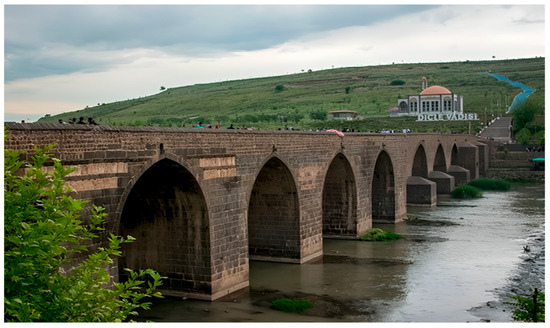
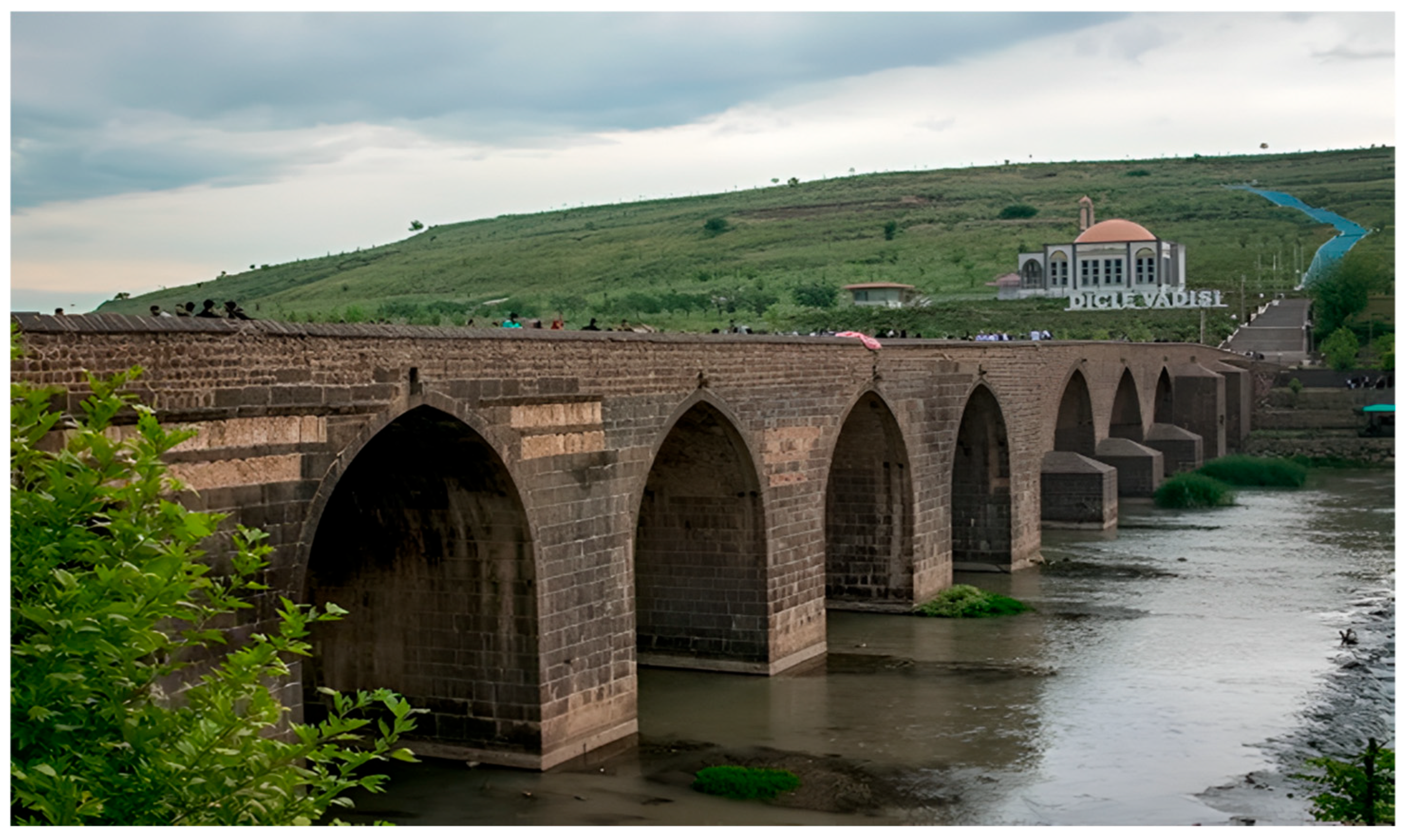
Karacadağ, located in the Southeastern Anatolia Region of Türkiye, experienced a major volcanic eruption thousands of years ago. As a result, basalt—a type of volcanic aggregate—spread across a wide area, forming a superficial layer approximately 130 km in diameter. Karacadağ basalt has long been used in the construction industry and historical architecture, and it remains a relevant building material today. It has been utilized in significant structures such as the Diyarbakır city walls, traditional Diyarbakır houses, and the Ten-Eyed Bridge.
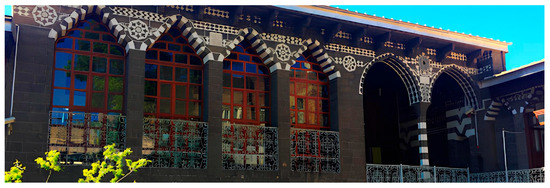
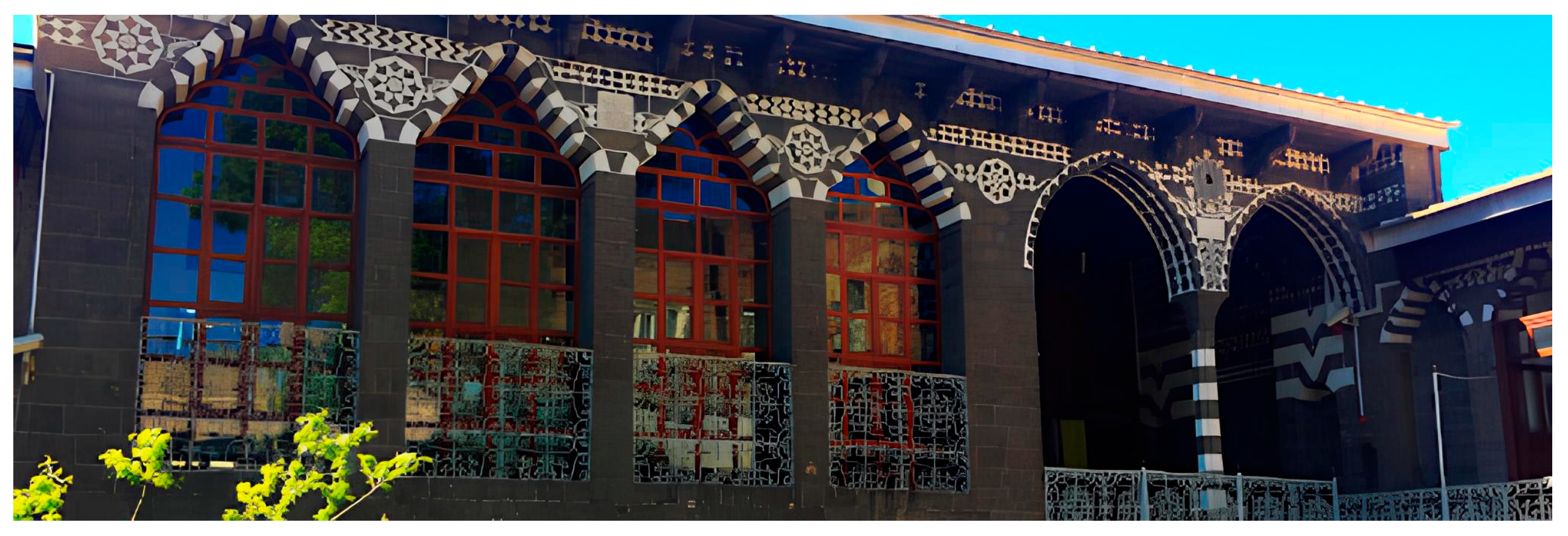
Given the high cost of material procurement in road construction, the local use of Karacadağ volcanic basalt offers considerable economic advantages for regional infrastructure projects (Figure 1 and Figure 2).
Figure 1.
A traditional Diyarbakır house constructed with locally sourced Karacadağ basalt, exemplifying the regional use of volcanic stone in vernacular architecture.
Figure 2.
The historic Ten-Eyed Bridge (On Gözlü Köprü) in Diyarbakır, constructed with Karacadağ volcanic basalt, illustrating its long-standing structural application in regional civil engineering.
The use of Karacadağ volcanic basalt in road construction projects offers financial and environmental benefits by enabling the removal of basalt from arable lands, allowing these lands to be reclaimed for agricultural use. The extracted basalt can then be utilized as aggregate in nearby infrastructure projects, reducing transportation costs, and contributing to sustainable regional development.
The chemical composition of Karacadağ basalt has been reported by Acar (2002) and Daniş (2019) [1,2]. The rock is characterized by high silica (SiO2 ≈ 47–50%), alumina (Al2O3 ≈ 15%), and iron oxides (Fe2O3 ≈ 10–12%), with additional components including CaO, MgO, TiO2, and minor alkalis. Such composition is typical of basaltic rocks and contributes to the material’s low porosity and strong resistance to weathering. Compared with conventional aggregates such as limestone, Karacadağ basalt provides superior durability due to its dense microstructure and mineralogical stability.
At various stages of construction, natural resources are extensively utilized for raw material procurement. However, the excessive consumption of these resources can jeopardize future material availability. To promote sustainability, sourcing alternative materials contributes both to the conservation of natural resources and to the introduction of new, viable options. The construction industry, being one of the largest consumers of natural resources, relies heavily on aggregates, which dominate concrete, asphalt, and unbound granular layers [3,4]. Recent assessments further emphasize that the environmental impacts of virgin aggregate production are considerable, reinforcing the need for sustainable alternatives [5]. As a result, the most consumed materials per capita worldwide are water and aggregates, respectively [6].
Following the Great Wall of China, the Diyarbakır city walls represent one of the strongest, widest, and longest fortifications in the world, enclosing the historic city center of Diyarbakır [7]. These walls were constructed using Karacadağ volcanic basalt. According to his description, the walls lie along the eastern edge of the extensive basalt plateau, stretching from the Tigris River to Mount Karacadağ, and are composed of two main sections: the Inner Fortress and the Outer Fortress.
Basalt was commonly used in the form of calibrated rubble stone, finely cut blocks, and facing stone throughout the Diyarbakır city walls. He described the typical stones used in coursed rubble masonry as rectangular or polygonal blocks with edges smoothed by hammering. For restoration purposes, he emphasized that thin-cut stones should not reduce the section thickness beyond 15 cm on the side and bed surfaces, and the minimum size of each stone block should be at least 20 cm [8].
According to chemical analyses conducted by Acar (2002) on Karacadağ basalt samples, the material consists of 46–50% silica, 13–15% aluminum, 4–5% iron oxide, 1–1.5% potassium, 0.2–0.7% phosphate, and 2–3% titanium [1]. In terms of mineralogical composition, basalt contains 17–30% olivine, 15–17% pyroxene, 5–6% secondary epidote, 45–50% labradorite, and 7–8% of minor minerals such as hematite, magnetite, and sphene. Acar also emphasized that, while basalt demonstrates a low polishability and is difficult to cut compared to marble, it is highly suitable for use as a gravel material.
Karacadağ basalt is a versatile and contemporary construction material due to its applicability in both interior and exterior architectural elements, as well as its relative ease of cutting and shaping [9]. However, despite its low cost and wide availability, the material remains underutilized due to the limited knowledge of its thermal and physico-mechanical properties and the skilled workmanship it demands. In their study, the authors tested 168 samples from four different quarries and concluded that Karacadağ basalt meets the national standards for use in the construction industry.
The suitability of volcanic basalt as a granular construction material has been attributed to its uniform particle size after crushing, high resistance to deterioration, consistent color, low porosity, abundant reserves, and impermeability to UV radiation [10].
Diyarbakır’s historical structures and urban fabric are visually dominated by basalt stone, to the extent that the city has become symbolically associated with it. He advocated for the official registration and geographical indication of ‘Diyarbakır Basalt Stone’ as a city-specific resource to ensure its protection, traceability, and sustainable utilization [11].
In a related study on sustainable construction materials, Kilumile et al. (2020) examined the performance of historical repair mortars made with recycled concrete and brick aggregates combined with hydraulic lime binders [12]. Their findings revealed that recycled burnt brick sand mortar (RBSM) exhibited a significantly higher flexural and compressive strength compared to recycled concrete sand mortar (RCSM) and conventional natural sand mortar (NSM). For instance, at 28 days, the flexural strength of RBSM and RCSM exceeded that of the control by 300% and 68%, respectively.
Gabbro–diabase–basalt formations are primarily classified within the basic rock group, although they are occasionally included in the hard marble category [13]. He emphasized their specialized applications, highlighting their superior hardness (approximately twice that of carbonate marbles), high abrasion resistance, good polishability, and acid resistance. However, he also noted that their processing and cutting present considerable challenges due to this hardness.
In another study, the feasibility of utilizing steelworks slag as a road base and sub-base material in four different road sections was examined through finite element and axisymmetric analyses [14]. The findings demonstrated that steelworks slag can serve as an effective alternative to natural aggregates in road superstructures. It was further emphasized that incorporating slag solely in the sub-base layer improves performance under repeated traffic loads while conserving natural resources. The authors also recommended that future research should consider climatic factors such as moisture variation, groundwater conditions, and freeze–thaw cycles, which significantly influence road performance.
Vesicular basalts and basaltic lavas are formed through the release of volcanic gases, which create voids that are later filled with secondary minerals. Basalt formations—such as spilite, pillow lava, flows, and extensive plateaus—are widespread across Turkey and were predominantly formed during the post-Miocene and early Quaternary periods [15].
An analysis of the structural materials used in the Diyarbakır city walls revealed that denser ‘male’ basalt was employed in architectural elements such as columns and lintels, while the more porous ‘female’ basalt was more commonly used in other parts. Traditional mortars of old Diyarbakır architecture were identified as lime-based, with special additives such as egg whites incorporated in surface decorations, particularly in courtyard structures [16].
A total of 40 basalt samples collected from quarry and crusher sites in Diyarbakır and its surrounding areas were examined in terms of their physical, mineralogical, petrographic, and chemical properties [2]. The study found that Karacadağ basalts, streambed sands and gravels, and the Euphrates formation (composed of hard, massive rocks) were most suitable for aggregate and concrete applications, whereas units like the Hoya and Şelmo formations—with a high chalk content—were deemed unsuitable due to unfavorable lithological characteristics.
Natural basalt from Elazığ’s Maden District was used in concrete production, with evaluations made of its thermal conductivity, mechanical strength, and resistance to microorganisms [17]. Their findings showed that both the basalt aggregate and the resulting concrete were resistant to Clostridium bacteria in anaerobic conditions, offering additional benefits for long-term material durability.
Basalt and sedimentary limestone aggregates from the Isparta, Polatlı, and Emirdağ regions were tested for their suitability in road sub-base and base layers [18]. They reported that the physical performance of basalt varied regionally. The freeze–thaw loss for Polatlı basalt was only 1%, and all aggregate samples met standard limits for frost and abrasion resistance. Their results suggested that basalt is better suited for flexible pavement construction, while limestone is more appropriate for subgrade and sub-base applications.
An experimental study was carried out to investigate the influence of different aggregate types (basalt, limestone, and river) and bituminous binders (B 50/70 and B 160/220) on the mechanical performance of hot mix asphalt [19]. Asphalt mixtures were prepared with varying bitumen contents (4–6%), and Marshall stability tests were used to determine the optimal binder content. They concluded that mixtures using limestone aggregate with B 160/220 binder provided the best balance of economic and mechanical performance.
In light of these findings and the rich historical use of Diyarbakır basalt in architecture, its usability as a sub-base and base material in modern road construction projects has been extensively explored. Promoting its use supports sustainable urban development and regional material efficiency.
However, despite its historical and regional importance, Karacadağ basalt has not been comprehensively evaluated as a sustainable alternative for modern road construction. Previous studies have mostly focused on its physical or chemical properties, but a systematic assessment of its mechanical performance and durability within sub-base and base applications is lacking. Therefore, the aim of this study is to investigate the suitability of Karacadağ basalt through standardized laboratory tests (sieve analysis, methylene blue, Los Angeles abrasion, magnesium sulfate soundness, and California Bearing Ratio) and to demonstrate its potential as an eco-friendly and locally sourced aggregate for sustainable infrastructure.
2. Materials and Methods
The collected basalt blocks were first subjected to primary crushing using a jaw crusher (Utest UTA-0601, Utest, Ankara, Türkiye), followed by secondary crushing with an impact crusher (Fritsch Pulverisette, Fritsch GmbH, Idar-Oberstein, Germany) to achieve the required gradation. To obtain fine materials passing sieve sizes No. 10, No. 40, and No. 200, the aggregates were further processed through a laboratory-scale ball mill and sieving system. The crushing procedure was performed in multiple cycles, each lasting approximately 3–5 min, until the target particle size fractions were obtained. This ensured that uniform gradation was achieved from the naturally coarse basalt rock, making the material suitable for standardized testing (Table 1).
Table 1.
Sample codes and descriptions used in this study.
For the preparation of test samples, large basalt blocks were initially crushed using a jaw crusher, followed by further reduction in size with an impact crusher. Fine fractions passing ASTM sieve sizes No. 10 (2.0 mm), No. 40 (0.425 mm), and No. 200 (0.075 mm) were obtained using a laboratory-scale ball mill. Gradation was confirmed through ASTM/AASHTO sieve standards. All compaction was carried out using the Standard Proctor method to ensure reproducibility of the test specimens.
2.1. Methylene Blue Test
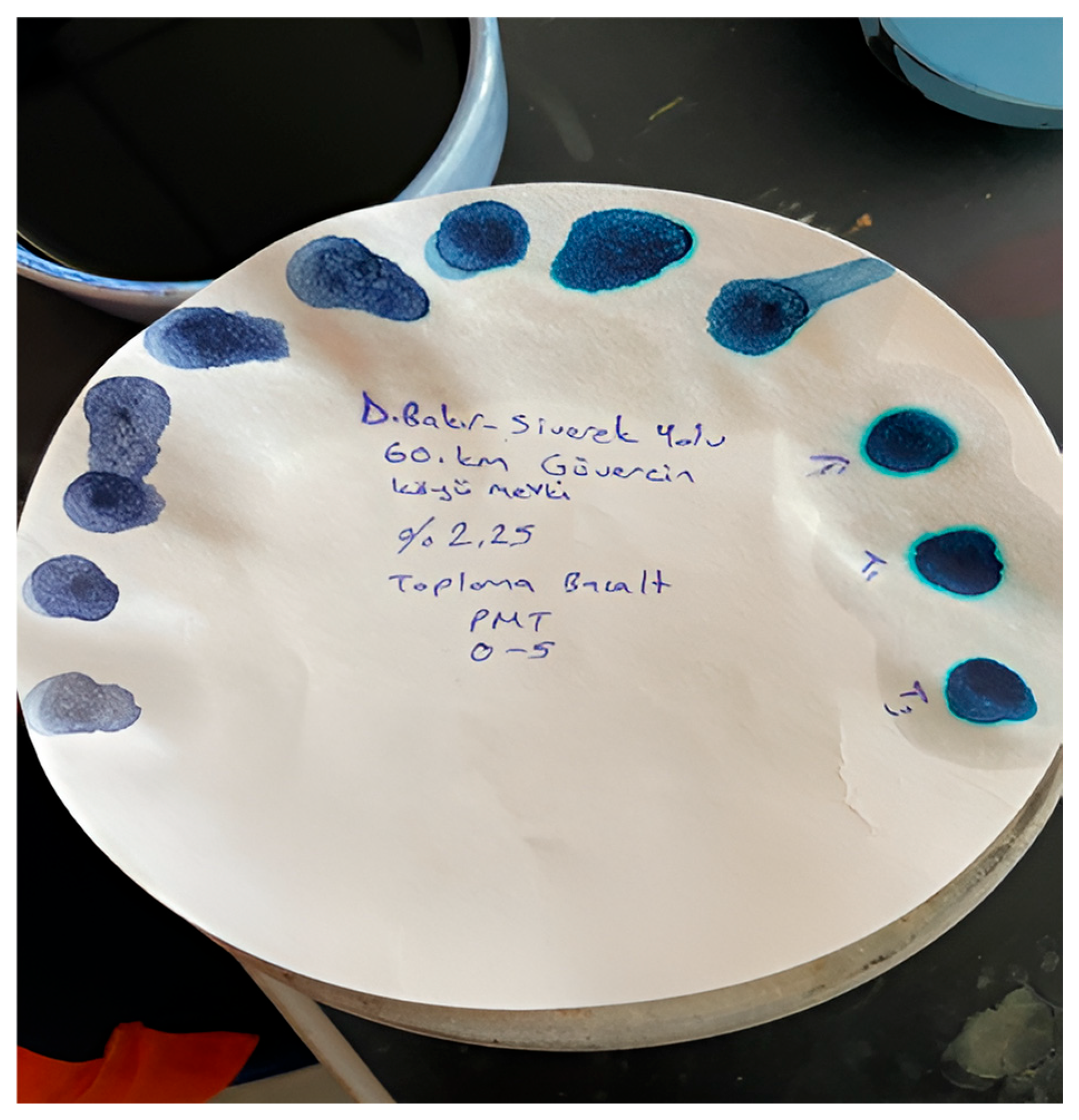
In this experiment, 200 g of a homogeneous basalt sample was oven-dried at 110 °C and allowed to cool to room temperature before being transferred into a beaker. Methylene blue solution (5 mL per increment) was added stepwise at one-minute intervals, with continuous stirring at 600 rpm to ensure uniform dispersion. After the ninth addition, a visible blue halo appeared, indicating the saturation point. To confirm the endpoint, three additional drops were applied and verified on filter paper. The methylene blue index (MB value) was calculated accordingly. This procedure followed ASTM C837—Standard Test Method for Methylene Blue Index of Clay and was cross-checked with methods reported in the literature [20,21,22].
2.2. Los Angeles Abrasion Test
The test is named after Los Angeles, California, where it was originally developed in the early 20th century, and it has since become a globally recognized method for assessing aggregate resistance to abrasion and impact. Approximately 5000 ± 10 g of basalt aggregate was placed into the Los Angeles abrasion machine with 11 steel balls (UTA-0601, Utest, Ankara, Türkiye) and rotated for 500 revolutions. After testing, the sample was sieved through a 1.7 mm sieve, the retained fraction was washed, oven-dried at 105 °C, and weighed to calculate abrasion loss. The abrasion value was obtained by comparing the initial and final weights. This test was conducted in accordance with ASTM C131/C131M—Standard Test Method for Resistance to Degradation of Small-Size Coarse Aggregate by Abrasion and Impact and EN 1097-2—Tests for Mechanical and Physical Properties of Aggregates—Part 2 [23,24].
2.3. Weather Resistance Test (MgSO4)
Weathering resistance was evaluated using magnesium sulfate soundness tests (ASTM C88, EN 1367-2) on two basalt mixtures, HT1 and HT2. HT1 (498.1 g) and HT2 (499.6 g) were immersed in MgSO4 solution under identical conditions using baskets No. 6 and No. 3, respectively [25,26]. After immersion and drying cycles, the weight loss was recorded to calculate the soundness value. This procedure allowed for comparison of fragmentation rates of PMT and PMAT mixtures, providing an assessment of durability under simulated weathering.
2.4. California Bearing Ratio (CBR) Test
The test was first introduced by the California Division of Highways in the 1920s to evaluate the bearing capacity of subgrade soils and aggregates for pavement design, and it remains one of the most widely applied geotechnical tests today. The load-bearing capacity of basalt mixtures was determined by California Bearing Ratio (CBR) tests conducted with the Geocomp LOADTRAC-II apparatus (Geocomp Inc., Boxborough, MA, USA). Three samples (CBR7, CBR8, and CBR9) were compacted under [Standard Proctor/Modified Proctor—sizin deneme koşulunuza göre] conditions, and penetration tests were performed at 2.5 mm and 5.0 mm displacements. Load–penetration curves were obtained, and the CBR values were calculated. Tests were conducted in accordance with ASTM D1883—Standard Test Method for CBR of Laboratory-Compacted Soils and Turkish Highways Technical Specifications (KGM, 2022) [27,28].
2.5. Geological Setting and Sampling Location
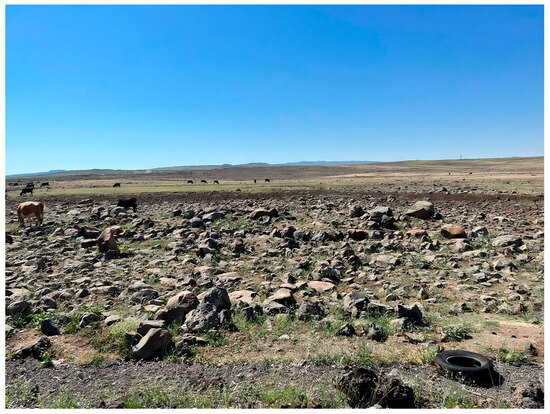
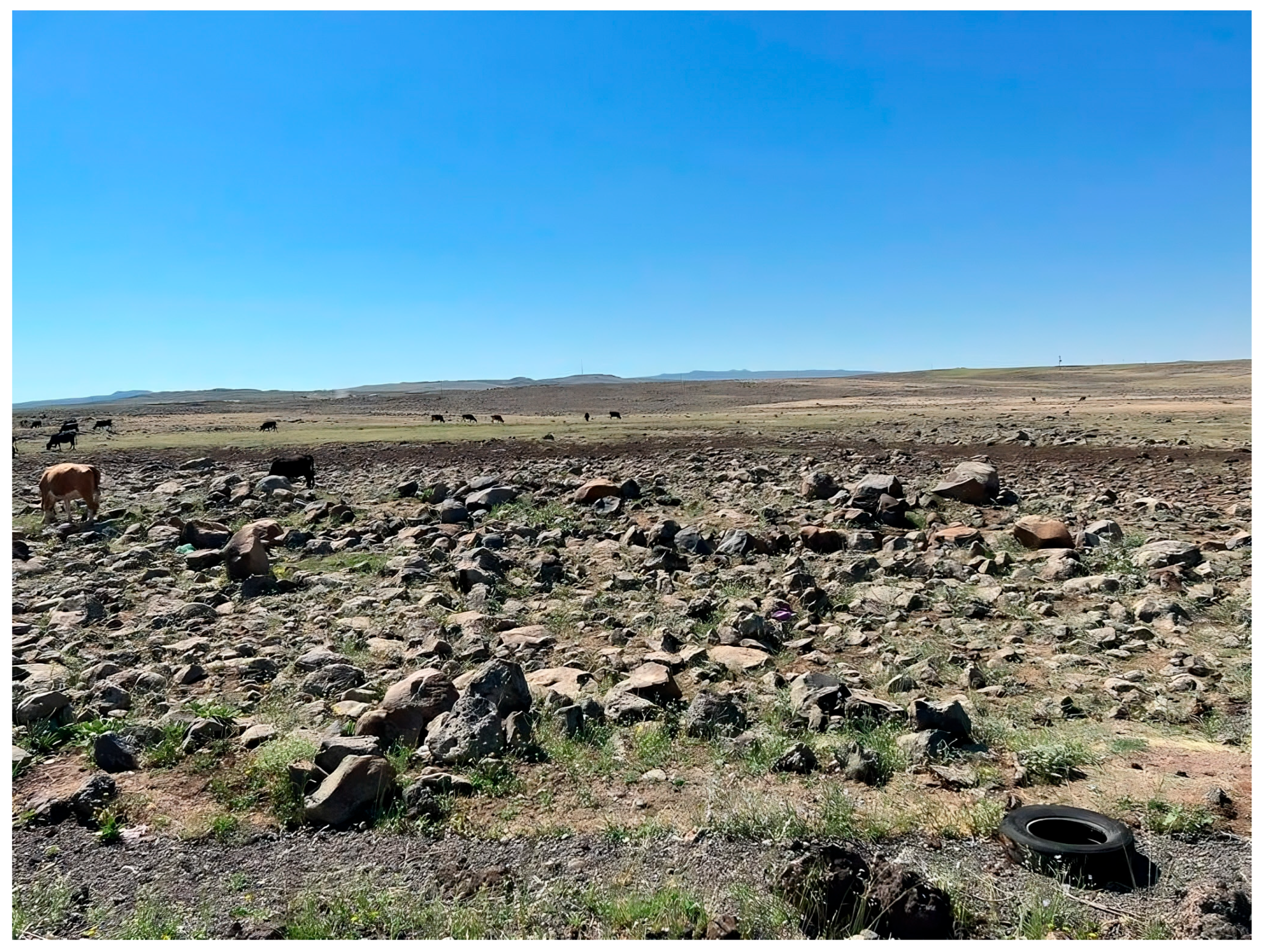
Diyarbakır is located atop a vast basalt plateau formed by historical lava flows originating from the Karacadağ volcano [17]. These basalt flows extend in three main directions: eastward toward Diyarbakır–Mardin, westward toward Diyarbakır–Şanlıurfa, and northward toward Diyarbakır–Elazığ, forming continuous plateaus with diameters of approximately 120–130 km (Figure 3).
Figure 3.
Surface distribution of Karacadağ volcanic basalt in rural and agricultural areas of Southeastern Turkey, indicating its widespread availability and potential for aggregate extraction.
Diyarbakır, situated in the Southeastern Anatolia Region of Turkey, has been a cradle of civilization since the Hurrian period. Its architectural identity is strongly shaped by the widespread use of basalt stone, particularly in the city walls, towers, narrow streets, monumental religious structures (mosques, churches), bathhouses, caravanserais, and traditional courtyard homes. This extensive use of basalt not only contributes to the preservation of cultural heritage but also ensures architectural continuity across centuries.
The abundant and regionally accessible basalt makes it a highly sustainable and valuable resource, supporting both historical preservation and modern infrastructure development.
Photographs above illustrate the natural distribution of Karacadağ volcanic basalt, both in rural areas and within the urban fabric. Although the land is suitable for agriculture, the presence of surface basalt significantly hinders agricultural activities.
For the experimental studies in this research, Karacadağ basalt was collected from the vicinity of Güvercin village, located at the 60th kilometer of the Diyarbakır–Şanlıurfa highway. The basalt stones were broken down to obtain test samples.
The collected material was subsequently subjected to a series of standardized laboratory tests, including sieve analysis, methylene blue test, California Bearing Ratio (CBR) test, Los Angeles abrasion test, and Weather Resistance test (MgSO4), in order to evaluate its suitability for use as road base and sub-base material.
3. Results
Aggregate Processing Flow of Karacadag Basalt
The transformation of Karacadag volcanic basalt from raw rock to a qualified sub-base or base material follows a systematic and controlled series of industrial processes. Figure 4. presents the standardized process flow, which begins with the surface extraction of basalt from agricultural lands where the material naturally accumulates as a superficial layer. This initial step not only provides access to the raw material but also facilitates the reclamation of arable land for agricultural use, contributing to regional sustainability.
Figure 4.
Particle size distribution curve of PMAT mixture.
Following extraction, the material is subjected to primary and secondary crushing to achieve the required particle size ranges. The crushing process is typically performed using jaw crushers and impact crushers and is optimized to minimize the energy input while maximizing throughput. The energy consumption at this stage can be reduced further by integrating variable frequency drives (VFDs) and renewable energy sources such as solar-powered equipment.
After size reduction, the crushed basalt undergoes vibratory screening to classify aggregates into different size fractions based on construction requirements. This is followed by a washing phase, which removes clay and other fine impurities. The washing water is often recycled through a closed-loop system to minimize freshwater usage and reduce environmental discharge.
The processed aggregates are then stockpiled according to size classes and subjected to quality control tests, such as sieve analysis, methylene blue index, and Los Angeles abrasion testing, ensuring compliance with national and international road construction specifications (e.g., ASTM, EN, and Turkish Highways Technical Specifications).
From a process engineering perspective, this chain represents a low-complexity but resource-intensive operation that can be further optimized using data-driven monitoring tools such as SCADA systems, real-time particle size sensors, and process simulation software. These improvements not only enhance the operational efficiency but also align with circular economy and green construction goals by reducing material waste, carbon emissions, and operational costs.
The bulk density of Karacadağ basalt is approximately 2.95 g/cm3 (unit weight ≈ 29.0 kN/m3), which is higher than that of conventional limestone aggregates (2.70 g/cm3; 26.5 kN/m3) and standard asphalt mixtures (2.40 g/cm3; 24.0 kN/m3). This higher density provides Karacadağ basalt with a superior mechanical performance and durability compared with conventional road aggregates.
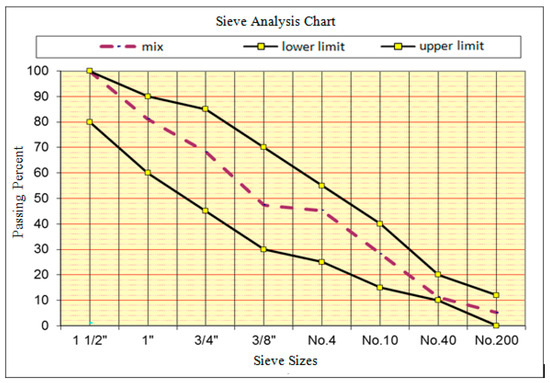
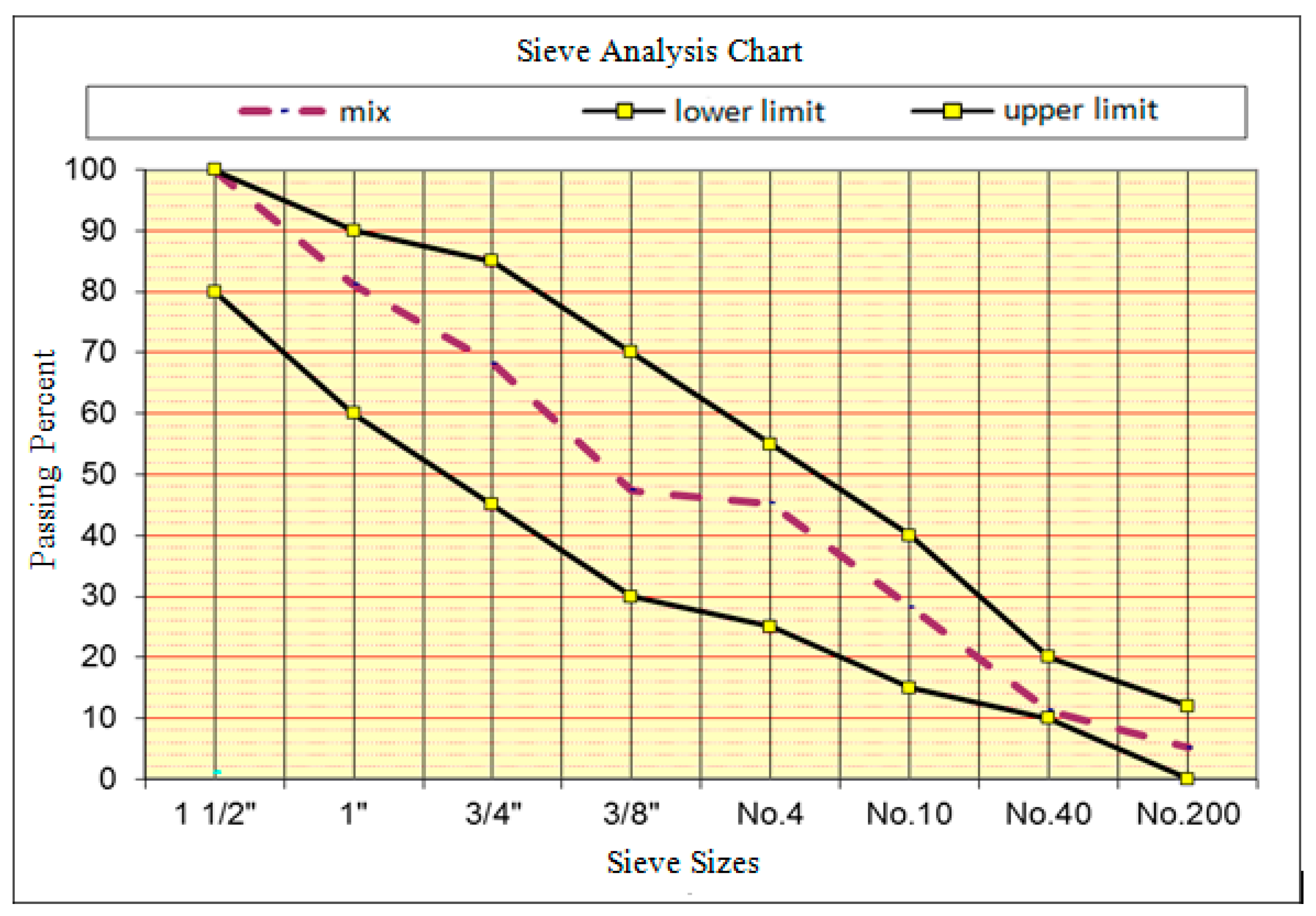
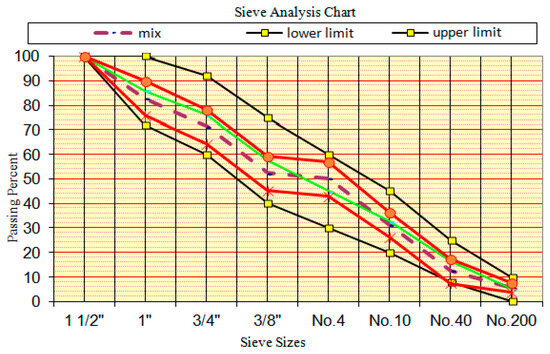
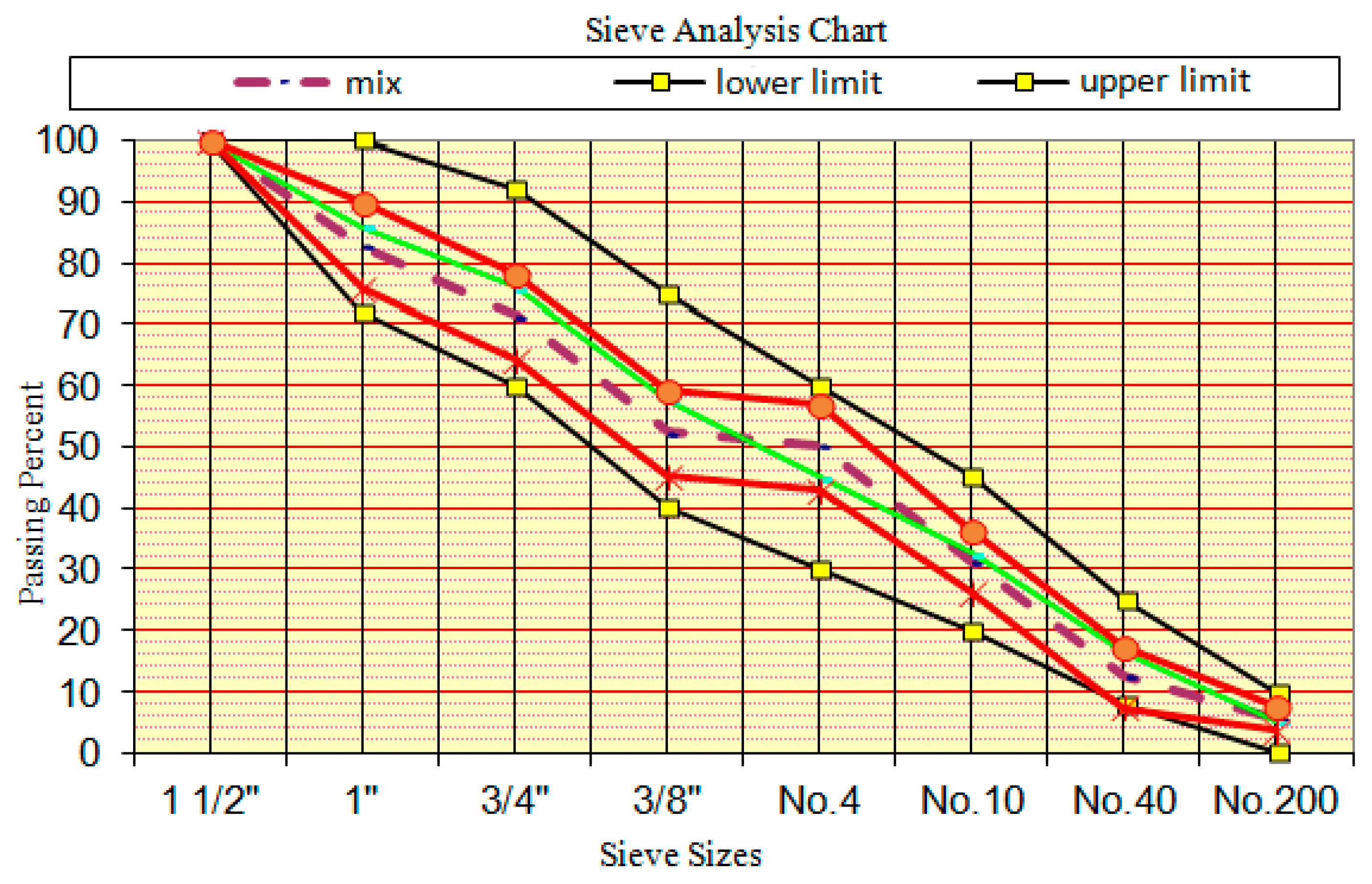
As a result of the sieve analysis, two distinct grading curves were obtained for the PMT and PMAT mixtures. These results were used to adjust the crusher settings in order to meet the desired particle size distribution. The detailed outcomes of the sieve analysis are presented in Figure 4.
As illustrated in the sub-base gradation curve (Figure 5), the particle size distribution of the prepared mixtures falls within the acceptable range for sub-base materials, as defined by standard specifications (Turkish Highways Technical Specification, 2022 or AASHTO M147) [28,29]. The analysis reveals that all particle sizes conform to the upper and lower boundary limits, with the exception of the portion passing through the 40 mm sieve, which closely approaches the lower limit line. This minor deviation does not pose a technical issue, as the overall gradation remains well-graded and within specification tolerances. The proximity to the lower bound at this fraction may even improve compaction characteristics and stability. Therefore, the gradation is considered suitable for use as a sub-base material in road construction applications. In Figure 5, the designations No. 40, No. 200, etc., refer to standard ASTM/AASHTO sieve sizes, where the number denotes the mesh count per linear inch. Specifically, No. 40 corresponds to 0.425 mm openings and No. 200 corresponds to 0.075 mm openings.
Figure 5.
Particle size distribution curve of PMT mixture.
An analysis of the PMT gradation curve reveals that the particle size distribution of the mixture falls within the specified upper and lower boundary limits for sub-base materials. Similarly to the PMAT mixture, the PMT sample approaches the lower specification limit at the 40 mm sieve size.
Despite this slight deviation, the overall gradation remains well-graded and continuous, supporting good compaction behavior and structural stability. Therefore, the PMT mixture is also considered an ideal candidate for use in the sub-base layers. The gradation results are summarized in Table 2, conducted in accordance with the standard limits defined in [28,29].
Table 2.
Sieve analysis results of PMT and PMAT mixtures.
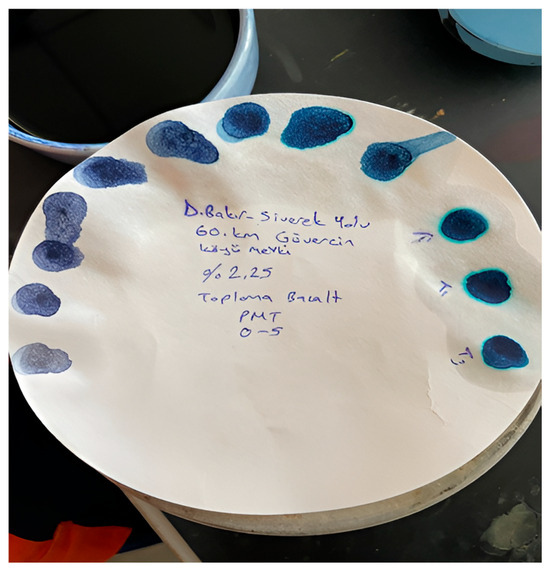
According to the methylene blue test (Figure 6), the MB value was 2.25, indicating low clay content and high aggregate purity. This finding is consistent with the Los Angeles abrasion value of 23.3%, which confirms the mechanical stability of Karacadağ basalt and its compliance with Turkish Highway Specifications.
Figure 6.
Methylene blue test result for Karacadağ basalt (MB = 2.25).
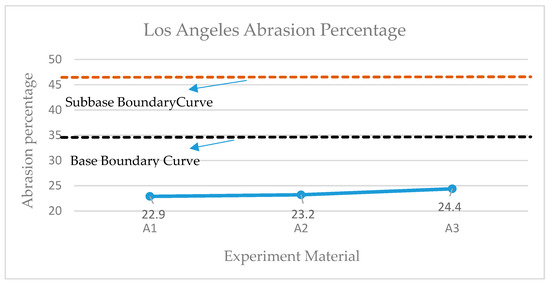
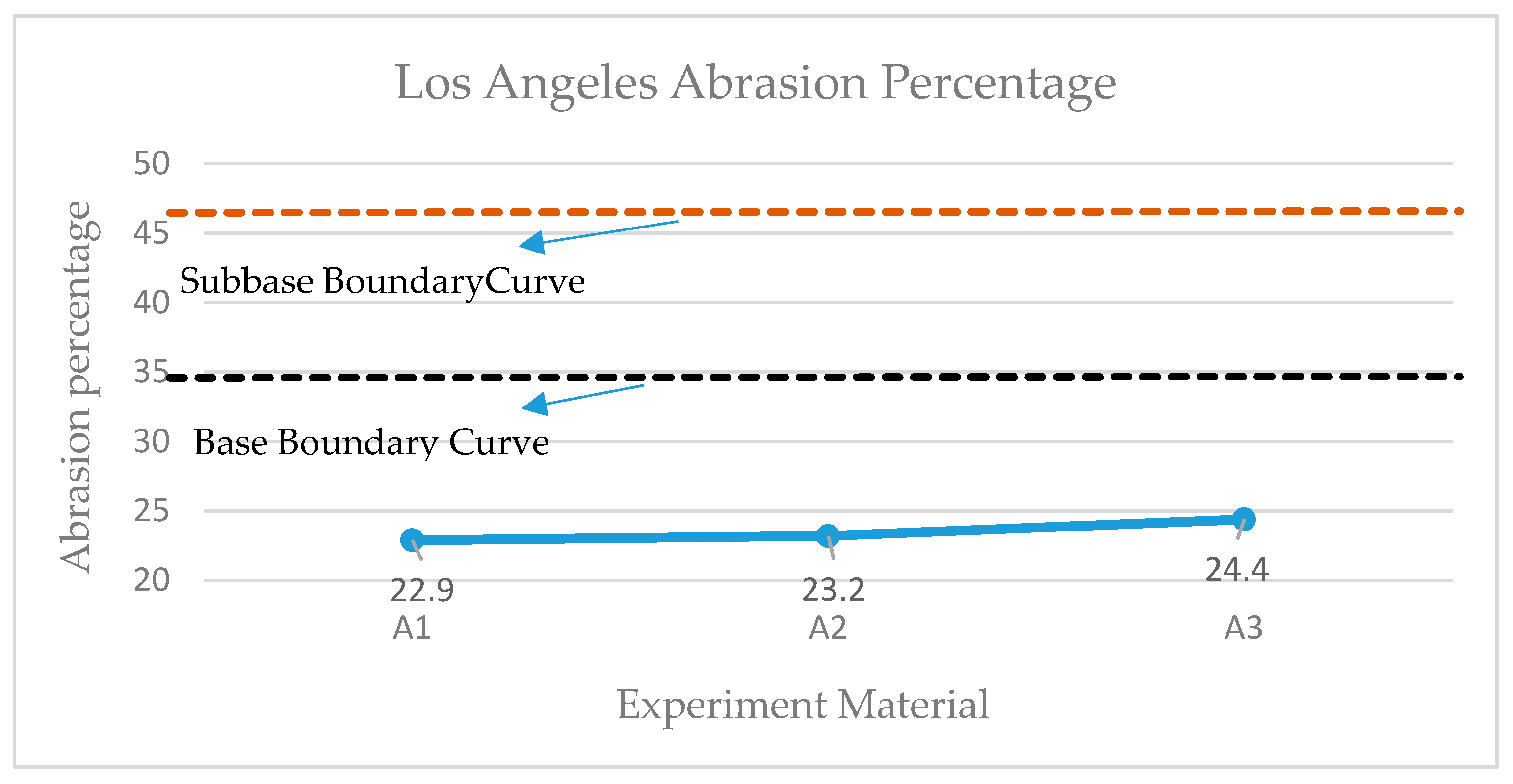
According to road material standards, the acceptable abrasion limits are ≤45 (LA45) for sub-base materials and ≤35 (LA35) for base course materials (ASTM C131, 2020; Turkish Highways Technical Specification, 2022) [23,28]. The average LA value of 23.3 falls well below both thresholds.
This confirms that the material exhibits sufficient resistance to abrasion and is suitable for use as both a sub-base and base course material in pavement construction. The detailed results are presented in Figure 7.
Figure 7.
Los Angeles abrasion results of Karacadağ basalt samples (average LA = 23.3).
As illustrated in the figure, the test results demonstrate that the material exhibits sufficient resistance for use in highway sub-base and base course construction. The abrasion and degradation observed after immersion in the magnesium sulfate solution remained within the acceptable range, indicating good weathering performance.
Following immersion and drying, the weights of the samples were measured, and the detailed results are presented in Table 3.
Table 3.
MgSO4 soundness test results for HT1 and HT2 mixtures.
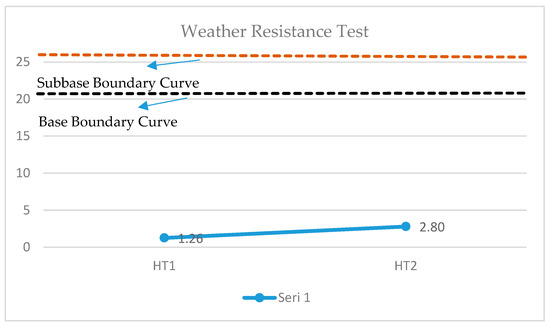
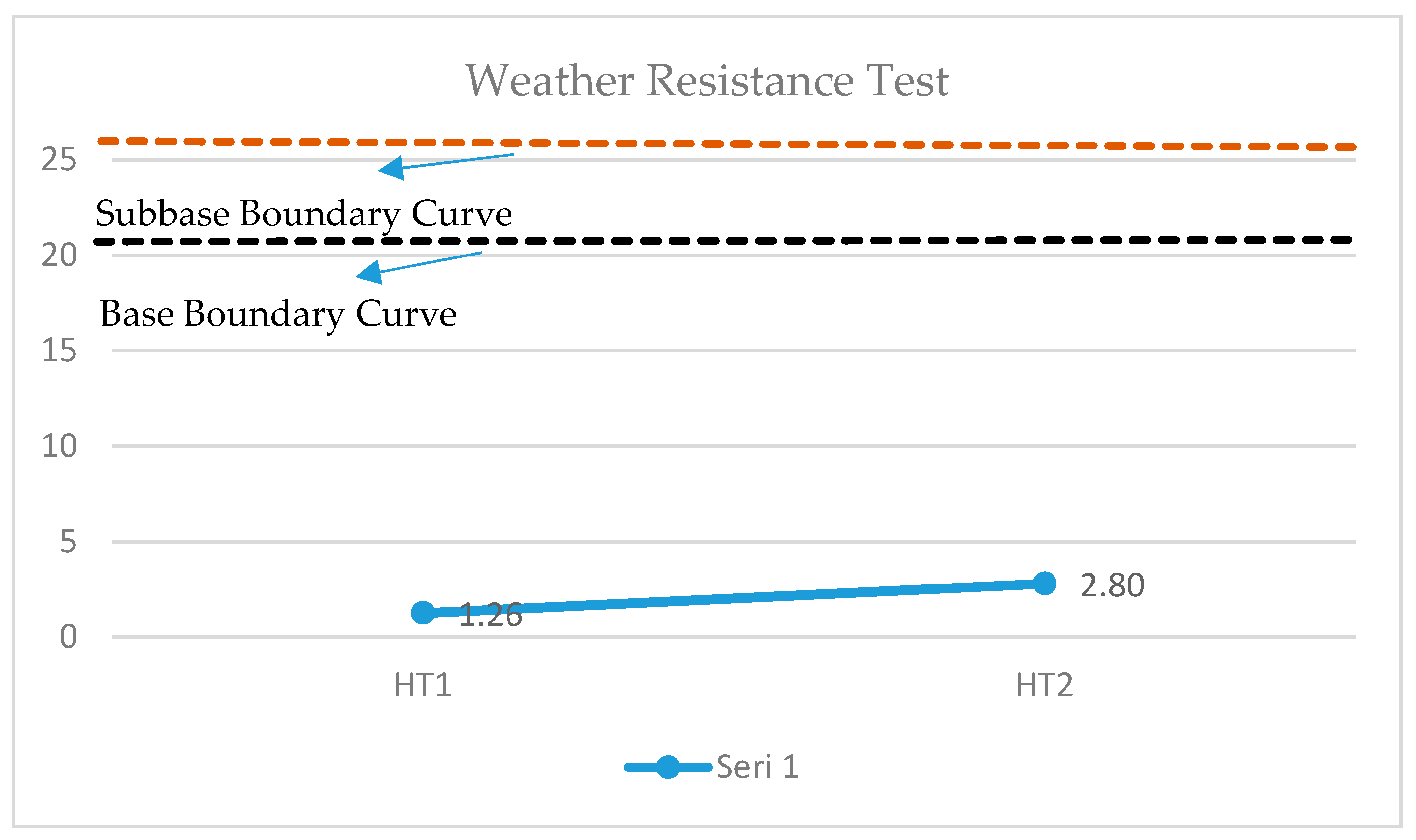
The MgSO4 soundness values ranged between 1.26% and 2.80%, demonstrating a high durability against freeze–thaw cycles and remaining well below the 20% limit specified in the standards. Similarly, the California Bearing Ratio (CBR) test results ranged from 139 to 152, confirming the exceptional load-bearing capacity of Karacadağ basalt. The swelling ratio was determined as 0%, which is also within acceptable limits. Together, these results highlight the superior mechanical and durability properties of Karacadağ basalt and support its suitability for use in the base and sub-base layers of road infrastructure.
In light of the experimental findings, the performance of Karacadağ volcanic basalt was evaluated against the boundary limits defined for sub-base and base materials in road construction.
For the sub-base layer, the measured mass loss (MS) was 2.80%, which complies with the acceptable limit of ≤25% (MS25), as defined by the Turkish Highways Technical Specifications (KGM, 2022) [23,28]. Similarly, for the base course, the MS value was 1.26%, also within the prescribed limit of ≤20% (MS20). These results, illustrated in Figure 8, demonstrate that the material meets the gradation and durability requirements for both layers.
Figure 8.
MgSO4 soundness test results of HT1 and HT2 mixtures.
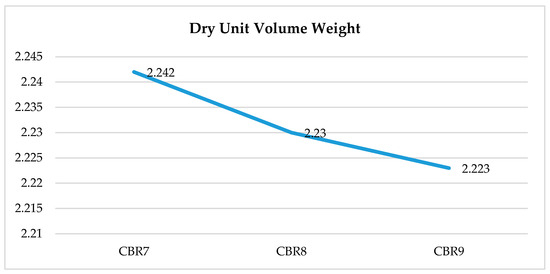
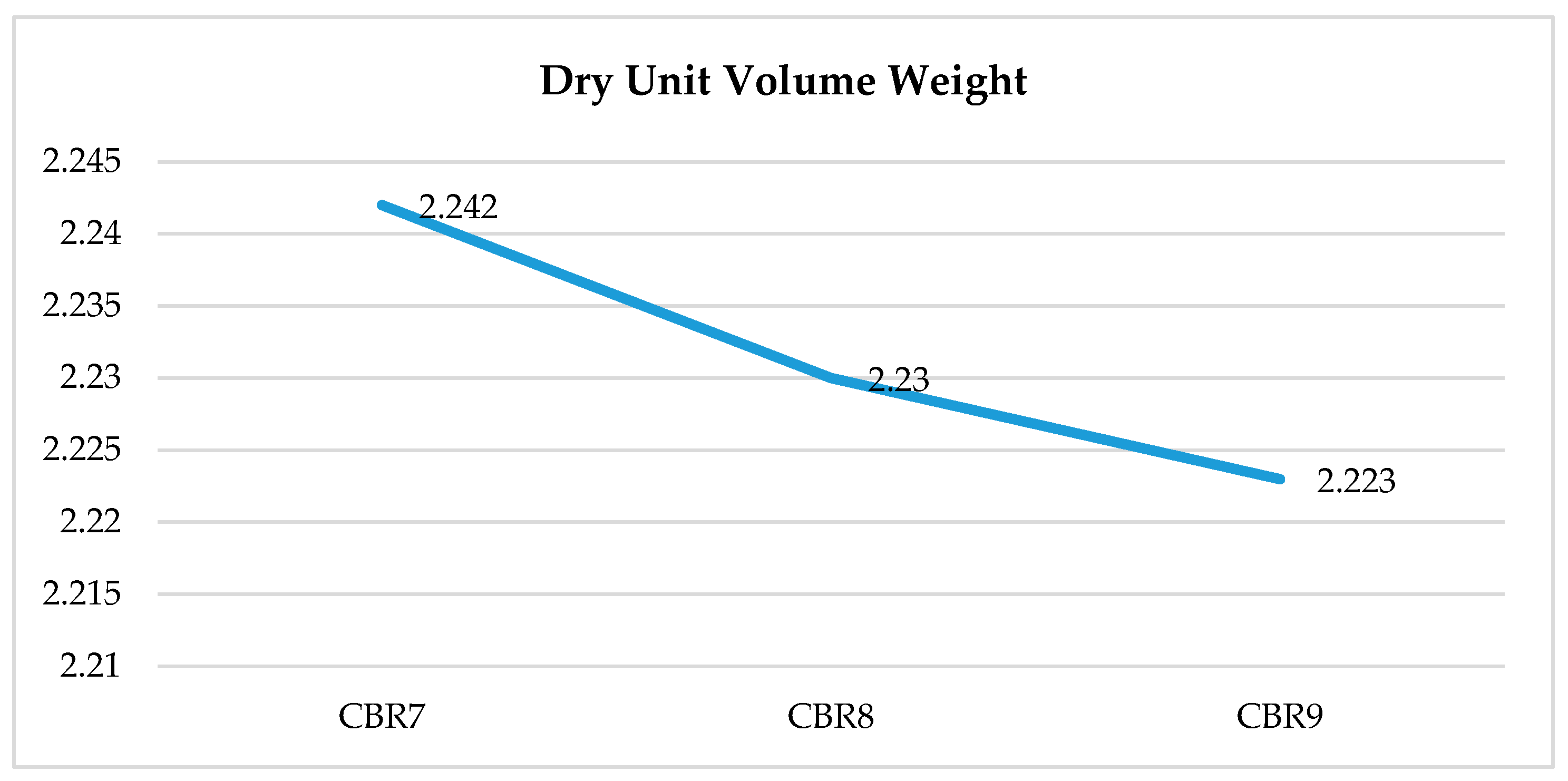
Additionally, the results of the California Bearing Ratio (CBR) test, conducted in accordance with ASTM D1883-16 standards, revealed a swelling ratio of 0%. This value is well below the allowable limit of <0.5%, confirming the material’s dimensional stability when subjected to moisture variations [27,28]. A post-experiment photograph of the sample taken from the tank after demolding visually confirms the absence of swelling (Table 4; Figure 9 and Figure 10).
Table 4.
CBR results with MDD, OMC, and swelling ratio of Karacadağ basalt mixtures.
Figure 9.
Dry unit weight values obtained during compaction tests.
Figure 10.
Optimum Moisture Content curve of Karacadağ basalt mixtures.
In summary, the tested Karacadağ volcanic basalt satisfies both the mechanical and durability criteria, supporting its suitability for use as a sub-base and base course material in highway infrastructure applications.
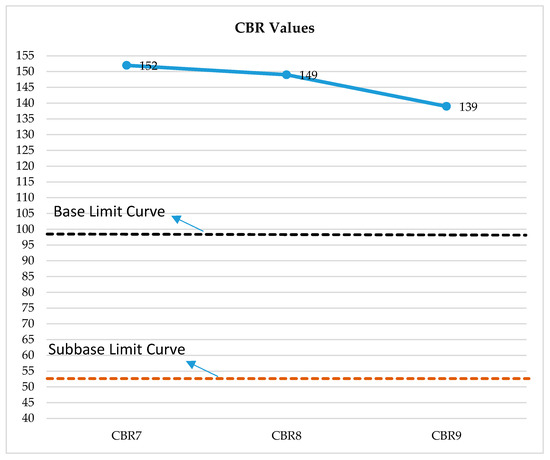
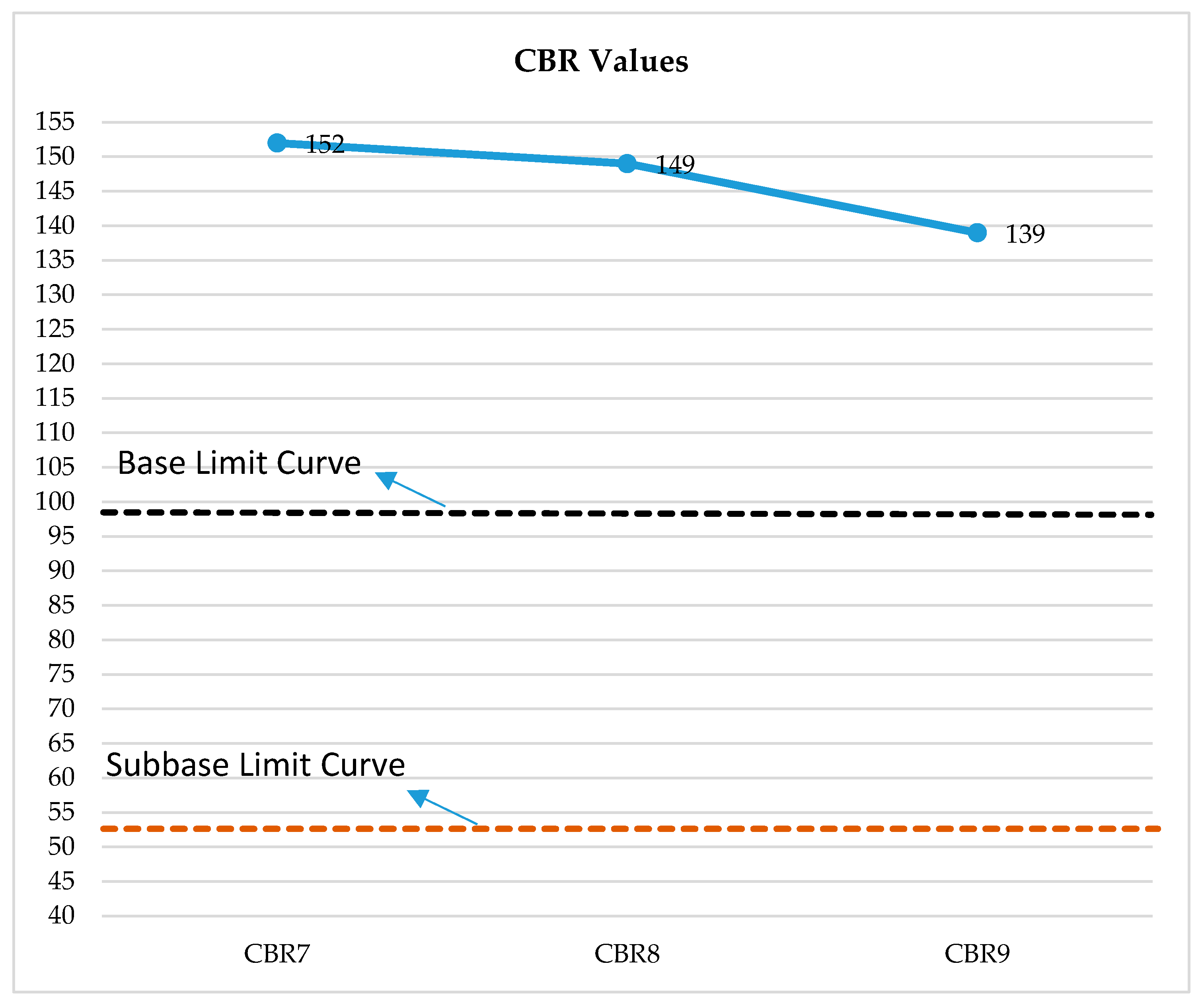
According to the CBR test results, the materials labeled CBR7, CBR8, and CBR9 yielded values significantly higher than the minimum required limits defined for road construction: CBR ≥ 50 for sub-base layers and CBR ≥ 100 for base layers [27,28].
The California Bearing Ratio (CBR) tests were conducted under soaked conditions (96 h water immersion), and the samples were compacted using the Standard Proctor method, in accordance with ASTM D1883 [27]. The penetration loads were recorded at both 2.5 mm and 5.0 mm penetration depths. For the three samples (CBR7, CBR8, and CBR9), the calculated CBR values at the 2.5 mm penetration were 152, 149, and 139, respectively, while the corresponding 5.0 mm penetration values were lower, as expected, but still above the specification limits. According to ASTM standards, the 2.5 mm penetration values are considered decisive; thus, all three mixtures significantly exceeded the minimum required thresholds of ≥50 for sub-base and ≥100 for base layers. The load–penetration curve is presented in Figure 11, confirming the uniformity and reliability of the results (Table 5).
Figure 11.
Load–penetration curves of CBR7, CBR8, and CBR9 mixtures.
Table 5.
Summary of mechanical and durability characteristics of Karacadağ basalt.
Similarly, the CBR test was repeated on three separately compacted samples (CBR7, CBR8, and CBR9), producing values of 152, 149, and 139 at the 2.5 mm penetration. The mean value of 146.7 with a standard deviation of 6.8 demonstrates the acceptable consistency for heterogeneous aggregate materials.
In addition to the bearing capacity, compaction characteristics were evaluated. The Maximum Dry Density (MDD) of the mixtures was determined to be 2.24 g/cm3 (22.4 kN/m3), while the Optimum Moisture Content (OMC) was approximately 6.5%, as illustrated in Figure 10. These values demonstrate favorable compaction behavior and confirm the suitability of Karacadağ basalt for road sub-base applications. The swelling ratio was measured at 0%, which is well below the allowable limit of <0.5%, confirming excellent dimensional stability.
These results indicate that the tested Karacadağ basalt mixtures possess an excellent load-bearing capacity, confirming their suitability for use as a sub-base material in highway pavement systems. Although the CBR values exceeded the base course threshold, the material’s application is recommended primarily for sub-base layers, given the variability and particle size characteristics.
The test was intentionally repeated three times to ensure the reliability of the results, especially due to the coarse and heterogeneous nature of the material, which may influence the compaction and penetration uniformity. The consistency observed across the three trials supports the accuracy of the measurement. The results are presented in Figure 11.
4. Discussion
4.1. Mechanical and Durability Implications
Diyarbakır experiences hot, dry summers with peak daily temperatures often exceeding 40 °C, and cold winters with mean minima below −5 °C and frequent frost events. These climatic extremes highlight the importance of the freeze–thaw tests conducted in this study, as they replicate real field conditions relevant to infrastructure performance.
The experimental findings confirm that Karacadağ basalt exhibits strong mechanical and durability properties, making it highly suitable for road sub-base and base applications. The Los Angeles abrasion test yielded an average value of 23.3%, which is well below the allowable limits defined by ASTM C131 (2020) and Turkish Highways Technical Specifications (KGM, 2022), indicating that the basalt aggregates possess a sufficient resistance to mechanical wear and impact [23,28].
These findings are consistent with Uğur et al. (2021), who demonstrated the high mechanical performance of volcanic rocks in pavement structures [30]. Likewise, Orhan et al. (2020) reported lower CBR values for conventional aggregates, highlighting the superior bearing capacity of Karacadağ basalt, as evidenced by the exceptionally high CBR results obtained in this study (152, 149, and 139 at 2.5 mm penetration, all exceeding ASTM D1883 and KGM thresholds) [17,27].
From an environmental perspective, the local availability of Karacadağ basalt minimizes transport distances, thereby reducing CO2 emissions, which is in line with the sustainability frameworks highlighted [6]. Moreover, its extraction from agricultural lands contributes to land restoration, aligning with sustainable land-use practices. Similar sustainability-driven benefits of locally sourced materials in road construction were reported [18,31].
Overall, these findings confirm that Karacadağ basalt not only meets engineering requirements but also supports long-term sustainability goals in infrastructure development.
However, a limitation of this study is that all samples were sourced exclusively from the Güvercin village quarry. Considering the 130 km-wide Karacadağ volcanic plateau, geological variability is expected. Future work should therefore include sampling from multiple quarry sites to assess consistency across the formation [32].
In contrast to the tests on basalts from Isparta, conducted mainly for regional comparisons, the first full compliance dataset for Karacadağ basalt under Turkish Highway Specifications (KGM, 2022) is presented [18,28]. Moreover, our work uniquely highlights the dual benefit of aggregate sourcing and agricultural land reclamation, which has not been addressed in previous studies [12].
Although the number of test replicates was limited to three per experiment, the low variability across results indicates statistical reliability. This approach aligns with common practices in aggregate testing, where material heterogeneity makes triplicate testing sufficient to establish reproducibility and compliance with standards.
Comparable volcanic contexts such as the Chain of Puys in Clermont-Ferrand (France) and Pico Island in the Azores also demonstrate the long-term use of basalt in construction. Lessons from these regions highlight the importance of durability, abundance, and sustainable extraction in integrating volcanic materials into modern infrastructure.
While Karacadağ basalt provides a reliable and locally abundant source of natural aggregates, sustainable development also requires the integration of recycled or waste materials. Previous studies have demonstrated that recycled aggregates and industrial by-products such as steel slag can serve as effective substitutes in pavement layers. Future work should therefore include comparative evaluations of Karacadağ basalt alongside recycled aggregates to maximize environmental benefits [12,14].
4.2. Environmental and Energy Aspects of Basalt Processing
The processing of Karacadag basalt presents notable environmental benefits in comparison to traditional aggregate sources, primarily due to its local extraction and efficient processing methods.
The use of local basalt reduces transportation distances, thereby lowering CO2 emissions. In addition, water and energy savings are expected during processing (12–15 kWh/ton, 85% water recycling), although these values should be validated by a life cycle assessment or pilot-scale studies. Together, these factors emphasize the environmental and energy-related advantages of Karacadağ basalt.
The energy consumption of the processing chain—including crushing, screening, and washing—is estimated at approximately 12–15 kWh per ton of basalt processed. Efforts to integrate renewable energy sources, such as solar-powered crushing and screening units, could further reduce the carbon intensity of production. Implementing energy-efficient equipment and optimizing process flows also contribute to lowering operational energy demands.
Moreover, waste generation during processing is minimized through careful sorting and the high recovery rates of usable aggregate fractions. The by-products and fines produced are either recycled back into the production process or repurposed for alternative applications, supporting circular economy principles.
Collectively, these environmental and energy-conscious approaches ensure that the Karacadag basalt processing aligns with sustainable infrastructure goals. The integration of local sourcing, water recycling, energy efficiency, and waste minimization exemplifies a holistic strategy that supports both environmental stewardship and economic viability in aggregate production.
4.3. Optimization Perspective for Mixture Design
Based on the mechanical test results, the PMAT mixture exhibited a marginally superior compaction and bearing capacity compared to the PMT mixture, though both formulations satisfied the relevant specification criteria. This indicates that while both mixtures are viable for road sub-base applications, optimization could further enhance the performance and cost-efficiency.
To determine the optimal mixture design, future research should incorporate multi-criteria decision-making (MCDM) methodologies such as the Analytic Hierarchy Process (AHP) or Technique for Order of Preference by Similarity to Ideal Solution (TOPSIS). These tools enable the systematic evaluation and ranking of mixture alternatives by integrating multiple performance indicators, including the California Bearing Ratio (CBR), abrasion resistance, weathering durability, and overall material cost. Employing such approaches facilitates informed decision-making that balances the mechanical performance with economic and environmental considerations.
Additionally, the development of predictive models based on regression analysis or machine learning techniques can provide valuable insights into how variations in mixture composition affect mechanical properties. These models would allow engineers to forecast performance outcomes for different blend ratios without the need for exhaustive experimental testing, accelerating the design process and enabling real-time optimization.
Standardizing mixture designs through data-driven approaches not only improves resource utilization by minimizing material waste but also enhances the structural reliability and longevity of constructed pavements. Ultimately, adopting these optimization frameworks supports sustainable construction practices by reducing costs, conserving natural resources, and ensuring durable infrastructure.
Future studies should also explore integrating process simulation and real-world performance monitoring to continuously refine mixture designs. This holistic approach will enable the development of adaptable, high-performance sub-base materials tailored to specific project requirements and environmental conditions.
4.4. Future Prospects and Process Simulation
Future research initiatives stand to benefit significantly from the integration of advanced process simulation tools to optimize basalt crushing and screening operations. By modeling the entire production chain, from raw material extraction to final aggregate grading, simulation can identify energy-intensive stages and bottlenecks, enabling targeted interventions that reduce energy consumption and enhance material quality. Such digital twins of the production process facilitate the scenario analysis, supporting decision-making under varying operational conditions.
The incorporation of automated control systems and artificial intelligence (AI)-based monitoring further enhances process efficiency by enabling real-time adjustments to equipment settings, predictive maintenance, and quality control. These technologies minimize human error, reduce downtime, and optimize resource use, thereby lowering operational costs and improving product consistency.
In parallel, investigating strategies for by-product utilization within a circular economy framework presents an opportunity to reduce waste generation and promote sustainability. For instance, fine particles or rejects from basalt processing can be repurposed as filler materials, road base stabilizers, or even in innovative construction composites. Such valorization not only diminishes the environmental footprint but also creates added economic value.
The ongoing trend towards digitalization and smart manufacturing is expected to revolutionize aggregate production, fostering the development of next-generation facilities that balance high productivity, cost-effectiveness, and environmental responsibility. Embracing these innovations aligns the industry with global sustainable development goals, facilitating the transition to greener infrastructure and resource-efficient construction practices.
Future research should also consider integrating process simulation with geographic information systems (GIS) and supply chain analytics to optimize not only the production but also the logistics and material distribution networks, maximizing the overall system sustainability and resilience.
Turkey is characterized by diverse climatic and geological conditions, including frequent frost events, challenging soil structures, and complex topography. These factors significantly affect the durability and stability of road infrastructure. Problems such as volumetric changes, frost heaves, insufficient bearing capacity in subgrade and base layers, and structural weaknesses necessitate the enhancement of both the physical and chemical properties of stabilization materials [33,34]. To ensure long-term performance, highway engineers must develop and improve locally available materials to support or replace conventional pavement systems [31].
Beyond road infrastructure, the same quarries may serve the restoration projects of vernacular monuments such as bridges and Diyarbakır’s historic city walls. This dual role reinforces basalt’s cultural and engineering significance, although the primary focus of this paper remains on infrastructure.
In this study, Karacadağ volcanic basalt, a widely available surface rock in the Southeastern Anatolia Region, was evaluated through a series of laboratory tests to assess its suitability for road sub-base and base applications. The tests conducted included the sieve analysis, Los Angeles abrasion test, Weather Resistance test (MgSO4), methylene blue test, and California Bearing Ratio (CBR) test.
Sieve Analysis showed that the particle size distribution of the prepared mixtures (PMT and PMAT) remained within the standard gradation limits defined for sub-base and base materials. This indicates that the material is well-graded and suitable for structural layer compaction [28].
Los Angeles abrasion test results yielded the average abrasion values of LA = 23.3, which satisfy the required thresholds of ≤45 for the sub-base and ≤35 for the base layers. These values confirm that Karacadağ basalt exhibits sufficient resistance to mechanical wear and impact [23,30].
Weather Resistance testing using a magnesium sulfate solution demonstrated that the material had low mass loss percentages (MS = 2.80% for sub-base, MS = 1.26% for base), meeting the specified limits of ≤25% and ≤20%, respectively. This suggests that Karacadağ basalt has a strong resistance to weather-induced deterioration, including freeze–thaw cycles [28,35].
Methylene blue test results (MB = 2.25) indicated a low presence of clay minerals and fines, remaining well below the allowable limits of ≤5.5 for the sub-base and ≤4.5 for the base materials. This confirms the favorable mineralogical composition in terms of plasticity and water sensitivity [20].
CBR testing showed values significantly higher than the minimum requirements (CBR ≥ 50 for sub-base and CBR ≥ 100 for base), with no observable swelling (0%) after water immersion. This proves the high load-bearing capacity and volume stability of the material, especially in wet subgrade conditions [17,27]. In conclusion, the physical, mechanical, and durability-related properties of Karacadağ basalt demonstrate that it is a viable alternative aggregate for use in road construction. Its abundance and regional accessibility offer economic and environmental advantages, aligning with the goals of sustainable infrastructure development.
A further limitation is the lack of comparative testing with conventional aggregates such as limestone. Including such comparisons in future studies would enable clearer quantification of the performance advantages of Karacadağ basalt.
Future research should also integrate numerical simulations of basalt mixtures into finite element modeling (e.g., PLAXIS, ABAQUS) to evaluate pavement performance under combined traffic loading and climatic stresses. This step is necessary before extending the research to supply chain optimization.
5. Conclusions
This study assessed the potential of Karacadağ basalt as a sustainable road construction material through standardized laboratory tests. The results confirmed that the gradation characteristics of both PMT and PMAT mixtures fall within the specified limits, ensuring suitable particle size distribution for compaction [28,29]. The average Los Angeles abrasion value (23.3%) was well below the thresholds of ASTM C131 (2020) and EN 1097-2 (2020), demonstrating excellent wear resistance consistently [23,24,30]. Similarly, magnesium sulfate soundness values (1.26–2.80%) satisfied the requirements of EN 1367-2 (2009), confirming strong durability against freeze–thaw cycles, as also observed by Çoban et al. (2019). The methylene blue index (2.25) further indicated minimal clay content, supporting filtration and stability [20,26,35].
The load-bearing capacity was validated through soaked CBR results of 152, 149, and 139, which exceeded the required specification limits (≥50 for sub-base, ≥100 for base) according to ASTM D1883 (2016) [20]. When compared with other volcanic aggregates, Karacadağ basalt demonstrated a superior performance [17]. Compaction properties, with a Maximum Dry Density (2.24 g/cm3) and Optimum Moisture Content (6.5%), confirmed favorable field applicability under standard conditions [28]. From a sustainability perspective, the local availability of Karacadağ basalt reduces transportation costs and CO2 emissions while enabling agricultural land reclamation [6,31]. Taken together, these findings demonstrate that Karacadağ basalt is a technically and environmentally viable alternative to conventional aggregates for sub-base and base layers, aligning with sustainable construction principles by conserving resources, minimizing the environmental impact, and supporting regional economic development.
Author Contributions
Conceptualization, M.H.A. and M.E.T.; methodology, M.H.A.; software, M.E.T.; validation, M.H.A. and M.E.T.; formal analysis, M.H.A.; investigation, M.H.A.; resources, M.E.T.; data curation, M.H.A.; writing—original draft preparation, M.H.A.; writing—review and editing, M.E.T.; visualization, M.H.A.; supervision, M.H.A.; project administration, M.H.A. All authors have read and agreed to the published version of the manuscript.
Funding
This research received no external funding.
Data Availability Statement
The original contributions presented in this study are included in the article. Further inquiries can be directed to the corresponding author.
Conflicts of Interest
The authors declare no conflicts of interest.
References
- Acar, M. Chemical and Mineralogical Properties of Karacadağ Basalt. J. Geol. Sci. 2002, 15, 85–92. [Google Scholar]
- Daniş, A. Diyarbakır ve Çevresindeki Bazaltların Beton Agregası Olarak Değerlendirilmesi. İnşaat Malzemeleri Derg. 2019, 8, 28–36. [Google Scholar]
- Rahman, M.M.; Mohajerani, A.; Giustozzi, F.; Kurmus, H. Sustainability assessment of using recycled aggregates in road pavements. Sustainability 2020, 12, 4313. [Google Scholar] [CrossRef] [Scilit]
- Vijerathne, D.; Wahala, S.; Illankoon, C. Impact of Crushed Natural Aggregate on Environmental Performance in Sri Lanka. Builings. 2024, 14, 2770. [Google Scholar] [CrossRef] [Scilit]
- de Bortoli, A. Understanding the environmental impacts of virgin aggregates: Critical literature review and primary comprehensive Life Cycle Assessments. arXiv 2025, arXiv:2501.10457. [Google Scholar]
- UNEP. Global Material Flows and Resource Productivity: Assessment Report for the UNEP International Resource Panel; United Nations Environment Programme: Paris, France, 2016. [Google Scholar]
- Sözen, M. Diyarbakır Surları: Tarihsel ve Yapısal Değerlendirme. Tarih Toplum Derg. 1971, 5, 24–32. [Google Scholar]
- Kanat, T. Diyarbakır Surlarında Kullanılan Taş Malzeme ve Teknik Özellikleri. Restorasyon Derg. 1996, 3, 45–52. [Google Scholar]
- Gümüşçü, S.; Turgut, P. Investigation of Physical and Mechanical Properties of Karacadağ Basalt. Constr. Build. Mater. 2012, 34, 700–708. [Google Scholar] [CrossRef] [Scilit]
- Lefond, S.J. Industrial Rocks and Minerals; American Institute of Mining, Metallurgical, and Petroleum Engineers: New York, NY, USA, 1975. [Google Scholar]
- Dağtekin, E. Diyarbakır Kenti Kimliğinde Bazalt Taşının Rolü ve Korunması. Mimar. Kent Araştırmaları Derg. 2017, 4, 50–60. [Google Scholar]
- Kilumile, M.; Fernández, L.; Segarra, M. Recycled Aggregates in Historical Repair Mortars: Performance in Hydraulic Lime Binders. Materials 2020, 13, 3983. [Google Scholar] [CrossRef] [Scilit]
- Uz, A. Sert Taşların Sınıflandırılması ve Özel Kullanım Alanları. MTA Derg. 1990, 111, 33–42. [Google Scholar]
- Karadağ, H.; Fırat, S.; Işık, N.S. Utilization of steel slag as road base and subbase material. J. Polytech. 2020, 23, 799–812. [Google Scholar] [CrossRef] [Scilit]
- Ünsal, A. Türkiye’de Volkanik Kayaçların Yayılışı ve Özellikleri. Türkiye Jeol. Bülteni 1993, 36, 289–301. [Google Scholar]
- Dursun, F.; Topal, T. Material Properties of Basalt Used in the Diyarbakır City Walls. In Les Jardins de l’Hevsel, Paradis Intranquilles; Assénat, M., Ed.; Institut Français D’études Anatoliennes: Beyoğlu, Türkiye, 2018. [Google Scholar] [CrossRef] [Scilit]
- Orhan, M.; Tuncer, K.; Güler, H. Geotechnical Evaluation of Local Volcanic Aggregates. Geomech. J. 2020, 18, 145–156. [Google Scholar]
- Meng, Y.; Chen, Z.; Wang, Z.; Lu, H.; Qing, G.; Liu, Z.; Wang, Y. Evaluating the Anti-Skid Performance of Asphalt Pavements with Basalt and Limestone Composite Aggregates: Testing and Prediction. Buildings 2024, 14, 2339. [Google Scholar] [CrossRef] [Scilit]
- Yılmaz, A. Engineering properties of basalt aggregates in terms of use in granular layers of flexible pavements. Case Stud. Constr. Mater. 2022, 17, e01182. [Google Scholar] [CrossRef] [Scilit]
- ASTM C837-09; Standard Test Method for Methylene Blue Index of Clay. ASTM International: West Conshohocken, PA, USA, 2016.
- Lagaly, G. Methylene Blue Test for Characterization of Clay Minerals and Their Surfaces. Clay Miner. 1993, 28, 387–395. [Google Scholar]
- Jepsen, R.A.; Lick, W.; McNeil, J. Estimating Clay Content in Fine Aggregates Using Methylene Blue Test. J. Test. Eval. 2003, 31, 283–289. [Google Scholar]
- ASTM C131/C131M-20; Standard Test Method for Resistance to Degradation of Small-Size Coarse Aggregate by Abrasion and Impact in the Los Angeles Machine. ASTM International: West Conshohocken, PA, USA, 2020.
- EN 1097-2; Tests for Mechanical and Physical Properties of Aggregates—Part 2: Resistance to Fragmentation. CEN: Brussels, Belgium, 2020.
- ASTM C88/C88M-18; Standard Test Method for Soundness of Aggregates by Use of Sodium Sulfate or Magnesium Sulfate. ASTM International: West Conshohocken, PA, USA, 2018.
- EN 1367-2; Tests for Thermal and Weathering Properties of Aggregates—Part 2: Magnesium Sulfate Test. CEN: Brussels, Belgium, 2009.
- ASTM D1883-16; Standard Test Method for CBR (California Bearing Ratio) of Laboratory-Compacted Soils. ASTM International: West Conshohocken, PA, USA, 2016.
- General Directorate of Highways (KGM). Highway Construction Technical Specifications; Republic of Türkiye Ministry of Transport and Infrastructure: Ankara, Türkiye, 2022.
- American Association of State Highway and Transportation Officials (AASHTO). Standard Specification for Materials for Aggregate and Soil–Aggregate Subbase, Base, and Surface Courses (AASHTO M 147); AASHTO: Washington, DC, USA, 2017. [Google Scholar]
- Uğur, İ.; Polat, H.; Arslan, M. Mechanical Performance of Volcanic Rocks in Infrastructure Applications. Constr. Build. Mater. 2021, 305, 124735. [Google Scholar] [CrossRef] [Scilit]
- Boardman, C.R.; Glass, S.V.; Zelinka, S.L. Moisture Redistribution in Full-Scale Wood-Frame Wall Assemblies: Measurements and Engineering Approximation. Buildings 2020, 10, 141. [Google Scholar] [CrossRef] [Scilit]
- Tuğrul, A.; Zarif, I.H. Correlation of Mineralogical and Textural Characteristics with Engineering Properties of Selected Granitic Rocks from Turkey. Eng. Geol. 1999, 51, 303–317. [Google Scholar] [CrossRef] [Scilit]
- Özaydın, K.; Topçu, İ.B. Don Olaylarının Yol Yapılarındaki Etkileri Üzerine Laboratuvar Değerlendirmesi. Yapı Teknol. Elektron. Derg. 2013, 9, 45–55. [Google Scholar]
- Yıldırım, Z. Stabilizasyon Malzemelerinin Yol Üstyapısındaki Uygulamaları Üzerine Bir Değerlendirme. İnşaat Mühendisliği Derg. 2018, 25, 87–95. [Google Scholar]
- Çoban, A.; Demir, M.; Sezer, A. Weathering Resistance of Natural Stones in Freeze–Thaw Environments. Cold Reg. Sci. Technol. 2019, 165, 102793. [Google Scholar] [CrossRef] [Scilit]

Disclaimer/Publisher’s Note: The statements, opinions and data contained in all publications are solely those of the individual author(s) and contributor(s) and not of MDPI and/or the editor(s). MDPI and/or the editor(s) disclaim responsibility for any injury to people or property resulting from any ideas, methods, instructions or products referred to in the content. |
© 2025 by the authors. Licensee MDPI, Basel, Switzerland. This article is an open access article distributed under the terms and conditions of the Creative Commons Attribution (CC BY) license (https://creativecommons.org/licenses/by/4.0/).