


Abstract
Tight sandstone gas constitutes a strategically significant resource in the exploration of unconventional hydrocarbon systems. Current understanding of the geochemical composition and genesis of tight sandstone gas in the Daning–Jixian Block, southeastern Ordos Basin, is insufficient, which hampers a comprehensive assessment of its resource potential. This study is the first to systematically investigate the geochemical characteristics and genetic origin of high-maturity tight sandstone gas in the southeastern Ordos Basin’s Daning–Jixian Block. Gas specimens were systematically acquired from multiple stratigraphic units within the reservoir interval and subjected to compositional and carbon–hydrogen isotope analysis. Compared with other gas fields in the Ordos Basin, the Daning–Jixian Block has higher average methane concentration, and notably lower ethane and propane concentrations; its average δ13C1 and δ2H-CH4 is heavier, while δ13C2 and δ13C3 are lighter. Based on the δ13C1-δ2H-CH4 diagram, all gas samples from the block and other basin gas fields fall into the geothermal, hydrothermal and crystalline gas domain, indicating gas genesis associated with over-mature organic matter interacting with external hydrogen. Milkov genetic diagram analysis reveals that the natural gas consists of primarily early-stage kerogen-cracking gas, with a minor contribution from crude oil-derived gas originating from Carboniferous–Permian source rocks. Notably, samples from Daning–Jixian exhibit a unique δ13C1 > δ13C2 reversal, attributed to mixing effects between gas from highly mature kerogen and gas from secondary cracking of crude oil. Consequently, ethane carbon isotopes alone are insufficient for definitive genetic classification. These findings provide a new geochemical interpretation framework for analogous high-maturity tight gas reservoirs.
1. Introduction
The growing global demand for clean energy has positioned unconventional energy resources as a focal point in energy research [1]. Tight sandstone gas, a subtype of tight gas and a significant component of unconventional natural gas resources, predominantly occurs in sandstone reservoirs characterized by permeability ranging from low to ultra-low levels [2]. Due to the inherently tight geological characteristics of such reservoirs, natural gas production from individual wells is generally low without artificial stimulation. Consequently, large-scale hydraulic fracturing and reservoir engineering techniques are essential to achieve economically viable gas extraction [3,4,5]. Tight sandstone gas is widely distributed across numerous petroliferous basins worldwide with abundant resources [6], serving as a significant replacement for conventional oil and gas energy. The Ordos Basin, recognized as a pivotal hydrocarbon basin in China, hosts extensive tight sandstone gas reserves with significant exploitation potential [7], particularly in the Daning–Jixian area, which has attracted widespread attention and in-depth investigation [8,9].
In 2014, gas tests conducted in the sandstone reservoirs within the Shanxi Formation of the Daning–Jixian Block yielded remarkable production rates, marking a breakthrough in the prospecting and exploitation of coal-derived tight gas reservoirs within this region [10]. The Shan 23 gas layer recorded an initial average daily gas production of 23,469.23 m3/d in the first year [11]. Previous studies in the Daning–Jixian area have primarily focused on petrological characteristics, pore structure, reservoir physical properties, and their controlling factors [12,13,14,15], providing crucial insights for reservoir characterization and sweet-spot prediction.
The formation of tight-sandstone gas accumulations is controlled by a suite of interrelated factors, encompassing the organic-rich source rocks’ hydrocarbon generation potential, the diagenetic compaction and cementation processes that reduce reservoir permeability, and mechanisms of gas migration and accumulation [16,17,18]. Diverse source rocks—including marine and terrestrial organic-rich mudstones and shales, as well as coal seams—provide abundant gas sources for tight sandstone gas systems. Although substantial work has focused on the geochemistry and origins of tight gas in the Ordos Basin (e.g., in the Zizhou, Mizhi, Yulin, Sulige, Wushenqi, and Shixi gas fields) [19,20], most studies have concentrated on the central-northern basin sectors, resulting in few published studies on the geochemical mechanisms in the southeastern Daning–Jixian Block. Comprehensive investigation of geochemical signatures of tight sandstone gas can elucidate its formation mechanisms and provide guidance for future exploration and development in the Daning–Jixian area. The novelty lies in providing the first comprehensive genetic interpretation of high-maturity tight sandstone gas in this block, offering a scalable reference for similar highly mature to over-mature coal-measure tight gas systems.
2. Geological Setting
The Daning–Jixian Block is situated on the eastern margin of the Ordos Basin. The Upper Paleozoic stratigraphic sequence in this area consists, in ascending stratigraphic order, of the Carboniferous Benxi Formation, followed by the Carboniferous-Permian Taiyuan Formation, and the Permian Shanxi, Shihezi, and Shiqianfeng Formations, with a cumulative sedimentary thickness of approximately 800 m [21].
In the study area, the Upper Paleozoic source rocks are classified as coal-bearing successions deposited in marine–terrestrial transitional settings, dominated by Carboniferous–Permian coal seams, carbonaceous mudstones, and dark mudstones [22]. The principal gas-bearing intervals for tight sandstone gas include the Benxi and Taiyuan Formations, along with the Shan2, Shan1, and He8 Members. The reservoirs are buried at depths of 1745–2680 m, with measured permeability and porosity averaging 0.46 mD and 6.9% [23].
3. Sampling and Analytical Methods
Distinct well sites within the study area exhibit variability in their production layers. Natural gas samples were harvested at the wellhead and subsequently submitted to Geological Experiment Testing Center of Xi’an Shiyou University for determinations of gas composition and C-H isotope ratios. The natural gas samples collected at the wellhead were pure gas that had undergone prior gas–water separation at the production facility, ensuring the absence of formation water, free water, or condensate. Since the samples were already free of moisture and liquid hydrocarbons, no additional drying process was required. Gas composition was ascertained via an Agilent 7890B gas chromatograph in accordance with the Chinese National Standard “Analysis of Natural Gas Composition—Gas Chromatography” (GB/T 13610-2020) [24]. The analytical precision for CH4 was determined to be ±0.5%, ensuring the accuracy and reliability of the compositional analysis results. Carbon and hydrogen isotopes were analyzed using an isotope ratio mass spectrometer (Isoprime VISION), adhering to the petroleum and natural gas industry standards “Analysis Method for Carbon and Oxygen Isotopes in Organic Matter and Carbonate” (SY/T 5238-2019) [25,26] and “Analysis of Hydrogen Isotope in Petroleum, Rock Extracts, and Kerogen”(SY/T 7313-2016) [27]. For carbon isotope determination, a continuous flow analysis approach was employed. Carbon and hydrogen isotope values are expressed in per mil (‰), referenced against the VPDB and VSMOW international standards, respectively. Analytical results are systematically compiled in Table 1 and Table 2 [28].

Table 1.
Gas composition testing results (unit: %).
Table 2.
Gas isotope testing results.
4. Discussion
4.1. Natural Gas Composition Characteristics
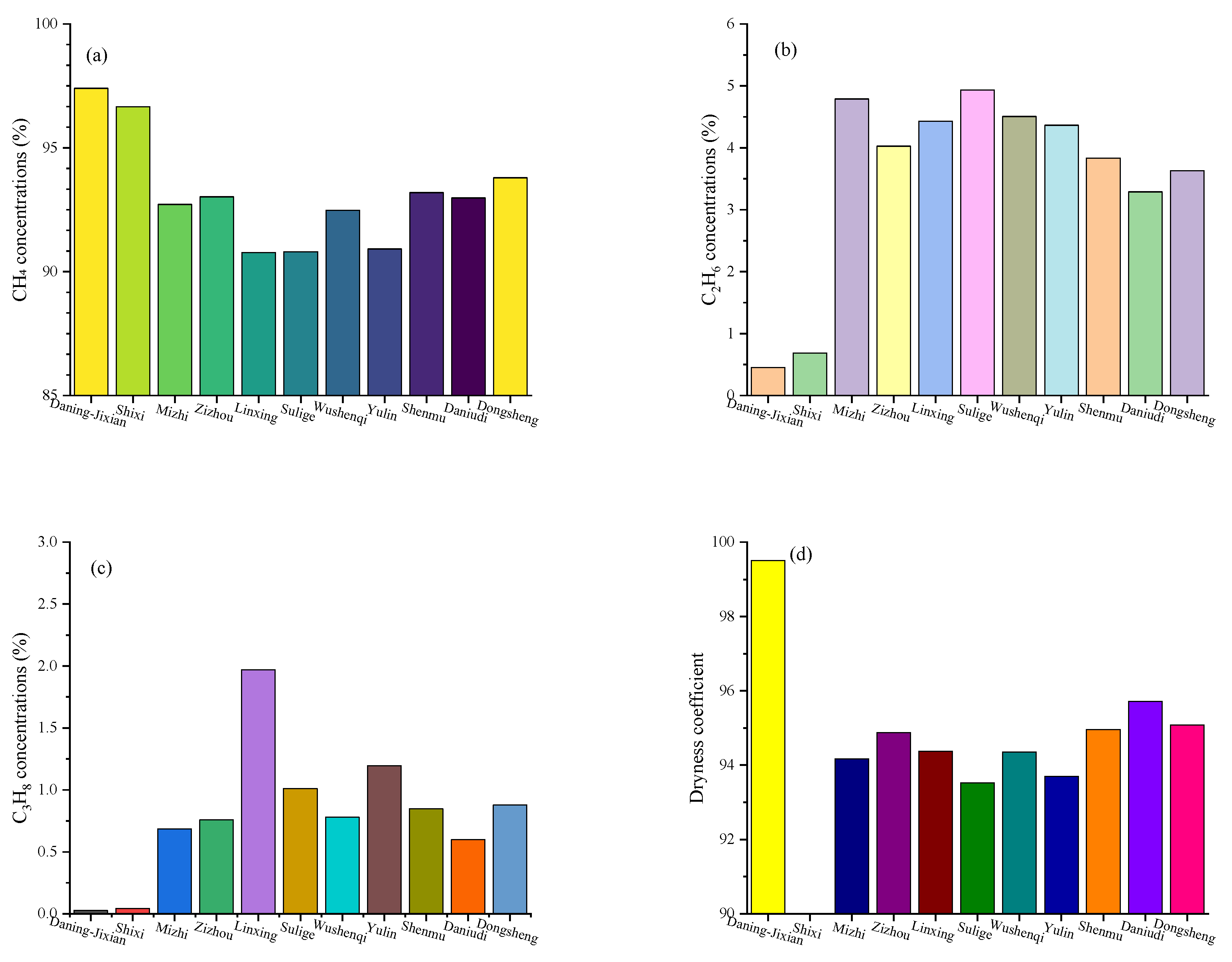
In the tight sandstone gas reservoirs from the Benxi Formation to the He8 Member in the Daning–Jixian Block, the methane (CH4) content consistently exceeds 93%, with an average value higher than the 95% methane content reported for coalbed methane from the No. 8 coal seam of the Taiyuan Formation in this area. The ethane (C2H6) concentration ranges between 0.09% and 0.84%, while propane (C3H8) levels vary from 0.01% to 0.06%. The ethane-to-propane ratio falls within 9.00–30.00, and the dryness coefficient (C1/∑C1–C3) is universally above 99%, classifying the gas as dry gas. Comprehensive analysis of methane concentration, dryness coefficient, and the ethane/propane ratio indicates that the natural gas from the Daning–Jixian Block shares characteristics with the Daniudi gas field (Ordos Basin) and is classified as coal-derived cracked gas (Table 1) [28,29].
Comparative assessment with other gas fields across the Ordos Basin indicates that the Daning–Jixian Block exhibits a comparatively higher average methane concentration, whereas the Linxing and Sulige gas fields demonstrate relatively lower methane levels. The average ethane and propane concentrations in the Daning–Jixian Block are notably lower than those in other gas fields; specifically, the Mizhi and Sulige gas fields register higher ethane concentrations, and the Linxing block shows elevated propane levels. Furthermore, the dryness coefficient of the gas in the Daning–Jixian Block is significantly greater than that observed in other gas fields. The Shixi Block, owing to its geographical proximity to the Daning–Jixian Block, displays analogous profiles in hydrocarbon gas concentrations [19,20,28,29,30,31] (Figure 1).
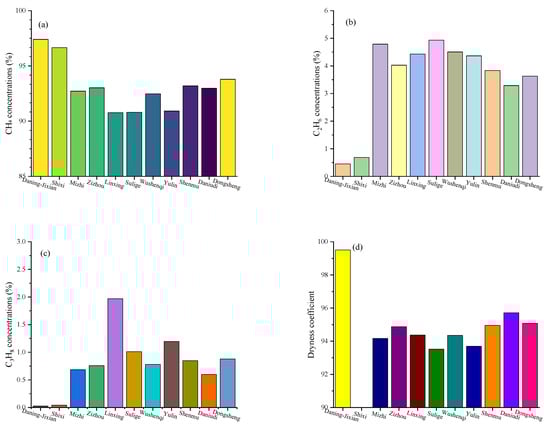
Figure 1.
Comparative analysis of average hydrocarbon gas parameters between the Daning–Jixian Block and other gas fields. (a) Comparative analysis of average CH4 concentrations; (b) comparative analysis of average C2H4 concentrations; (c) comparative analysis of average C3H8 concentrations; (d) comparative analysis of average dryness coefficient.
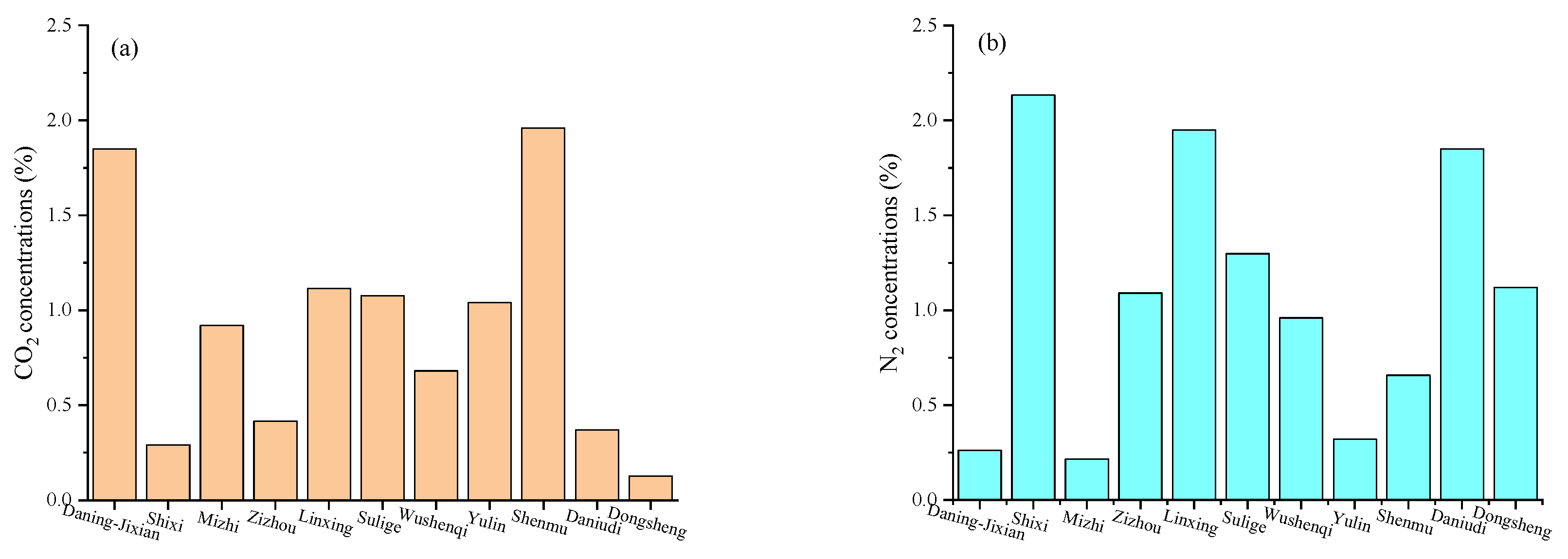
Based on reservoir characterization investigations conducted in the Yanchang exploration block of the southeastern Ordos Basin by Zhou et al. [32], dark mudstones and coal measures in the Benxi Formation and Shan2 Member serve as the primary source rocks. The Benxi Formation and Shan2 Member of the Daning–Jixian Block belong to source-in situ accumulation, whereas Shan1 Member and He8 Member, situated above the main source rocks, represent near-source accumulation with primarily vertical charging through secondary migration. Along the migration pathway in coal-measure systems where CO2 is consumed by methanogenesis or mineral reactions, N2 concentration tends to increase while CO2 concentration decreases [30]. The generally lower CO2 and higher N2 content observed in He8 Member and Shan1 Member suggest vertical migration of natural gas into these intervals (Figure 2) [33].
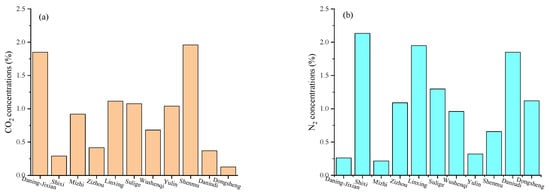
Figure 2.
Comparative analysis of average non-hydrocarbon gas parameters between the Daning–Jixian Block and other gas fields. (a) Comparative analysis of average CO2 concentrations; (b) comparative analysis of average N2 concentrations.
4.2. Stable Isotopic Characteristics
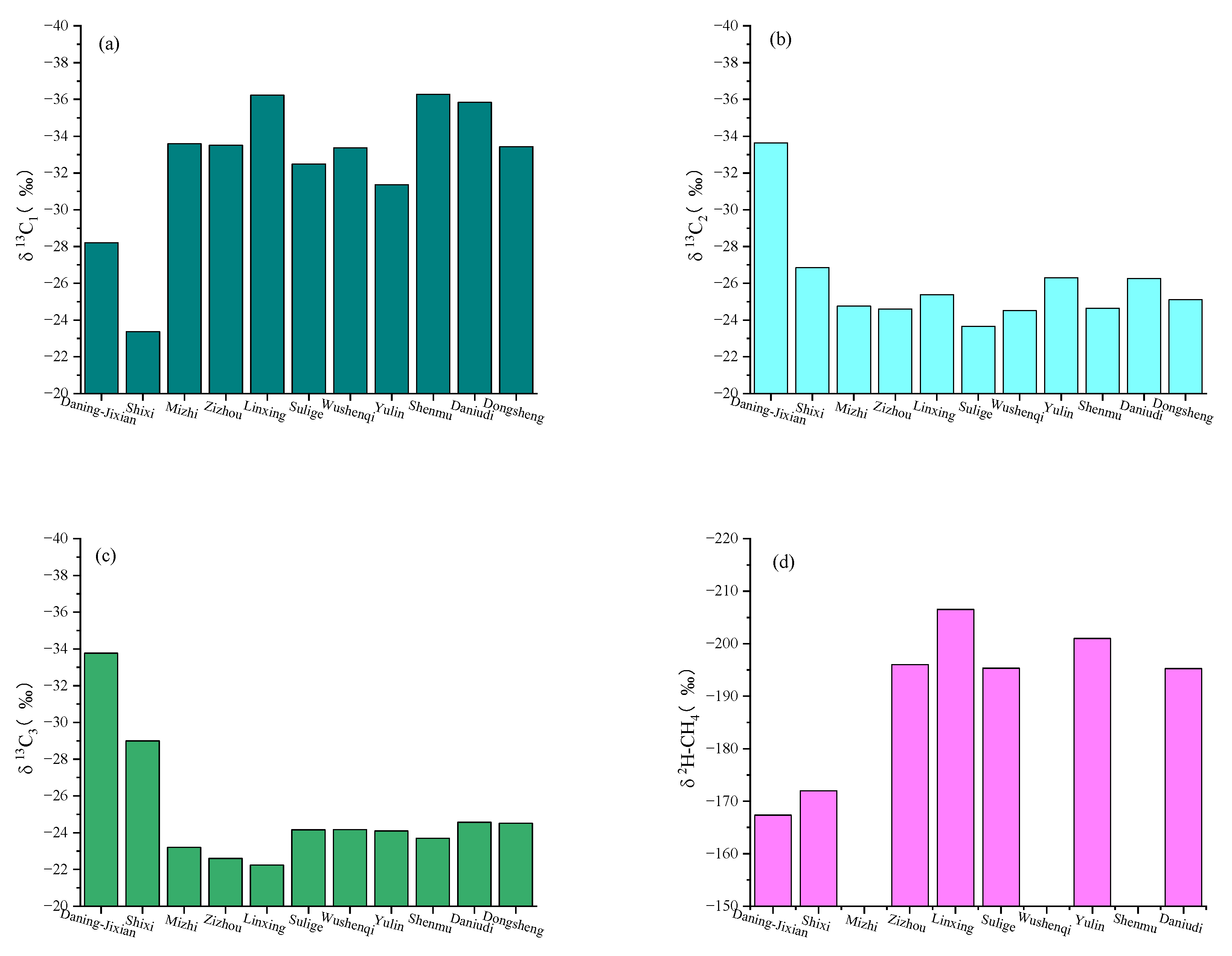
In the tight sandstone gas reservoirs of the Daning–Jixian Block, the content of propane, and especially butane and heavier hydrocarbons, is very low. Consequently, the measured stable carbon isotope values for these components are for reference only (Table 2). The natural gas in the Upper Paleozoic tight sandstone gas reservoirs of the Daning–Jixian Block exhibits average δ13C1, δ13C2, and δ13C3 values of −28.20‰, −33.64‰, and −33.77‰, respectively. The average δ13C1 value is heavier compared to other gas fields, while the average δ13C2 and δ13C3 values are significantly lighter [19,20,28,29,30,31] (Figure 3a–c). In contrast, coalbed methane (CBM) in this region exhibits significantly lighter δ13C1 values, spanning −72.35‰ to −27.43‰, with mean values of −40.53‰ (Coal Seam No. 5) and −41.88‰ (Coal Seam No. 8) [34]. During the over-mature stage (Ro > 2.0%), organic matter mainly generates methane, also known as dry gas [35]. Due to the very high maturity and the dry composition of the natural gas in the study area, hydrogen isotopes were only detected for methane, with values primarily ranging from −161.8‰ to −170.9‰ and an average of −167.34‰. The abundance of other components is too low for reliable hydrogen isotope analysis; any detected values are for reference only. The average δ2H-CH4 value is heavier than that of other gas fields [19,20,28,29,30,31] (Figure 3d). Theoretically, methane carbon isotope values decrease along the gas migration pathway. However, the relatively heavier isotopic values observed in He8 Member and Shan1 Member compared to other layers suggest a complex scenario involving both dynamic fractionation and migration fractionation effects [28,30].
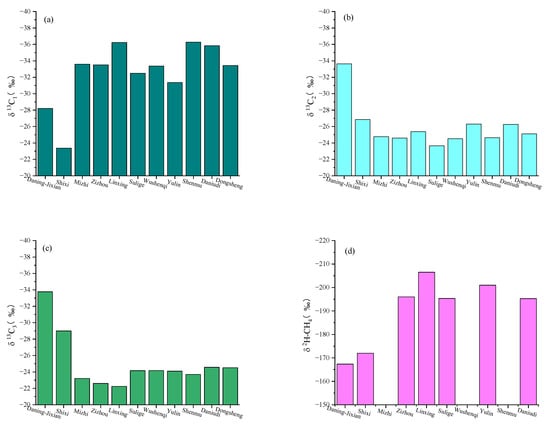
Figure 3.
Characteristics of stable carbon isotopes of hydrocarbon components in natural gas from tight gas reservoirs in the Daning–Jixian Block and other gas fields. (a) Comparative analysis of average δ13C1; (b) comparative analysis of average δ13C2; (c) comparative analysis of average δ13C3; (d) comparative analysis of average δ2H-CH4.
4.3. Analysis of Origin and Genetic
Based on the analysis of natural gas compositional data and hydrocarbon carbon and hydrogen isotopic compositions, combined with classical diagnostic diagrams, the genetic origin of natural gas can be discriminated and interpreted. Building upon previous research, this study further conducts a targeted analysis by employing diagnostic diagrams specifically applicable to the study area, aiming to provide more accurate insights into the genesis and origin of natural gas in the Daning–Jixian Block.
4.3.1. Genetic Analysis
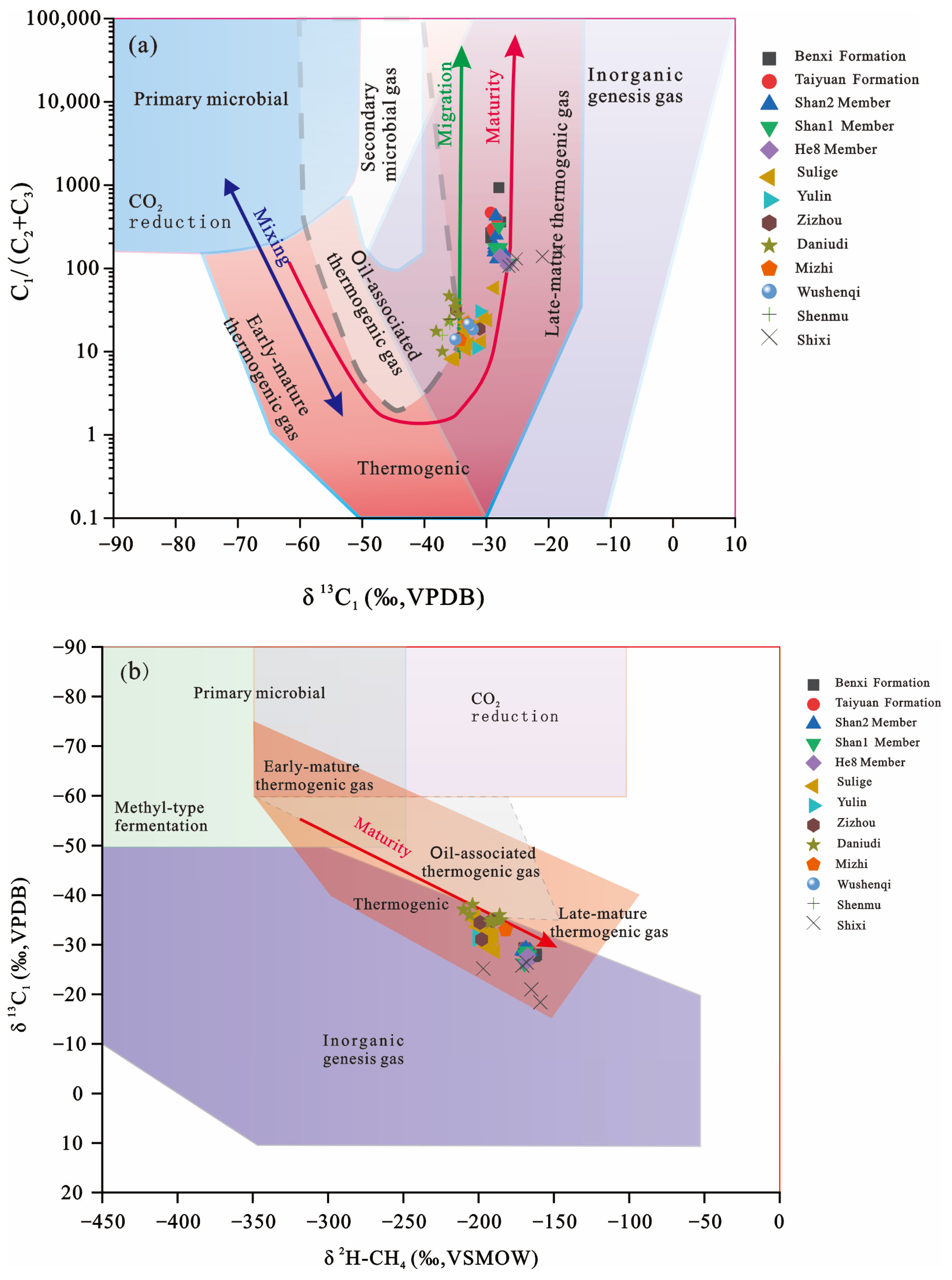
The carbon isotope diagram (δ13C1–δ13C2–δ13C3) established by Dai Jinxing et al. [36] was utilized for comparative analysis of the Daning–Jixian area, and other gas fields in the Ordos Basin revealed distinct characteristics in the Daning–Jixian Block. The natural gas samples from this block did not plot within any defined genetic identification zones, yielding inconclusive results [28]. Furthermore, on the diagrams based on δ13C1 and C1/(C2 + C3) proposed by Bernard et al. [37] and Whiticar [38], the natural gas from the Daning–Jixian Block is plotted within or adjacent to the high-maturity thermogenic gas domain characteristic of Type III kerogen [28]. Consequently, the application of these templates for genetic identification of the tight sandstone gas in the Daning–Jixian Block also exhibits limitations.
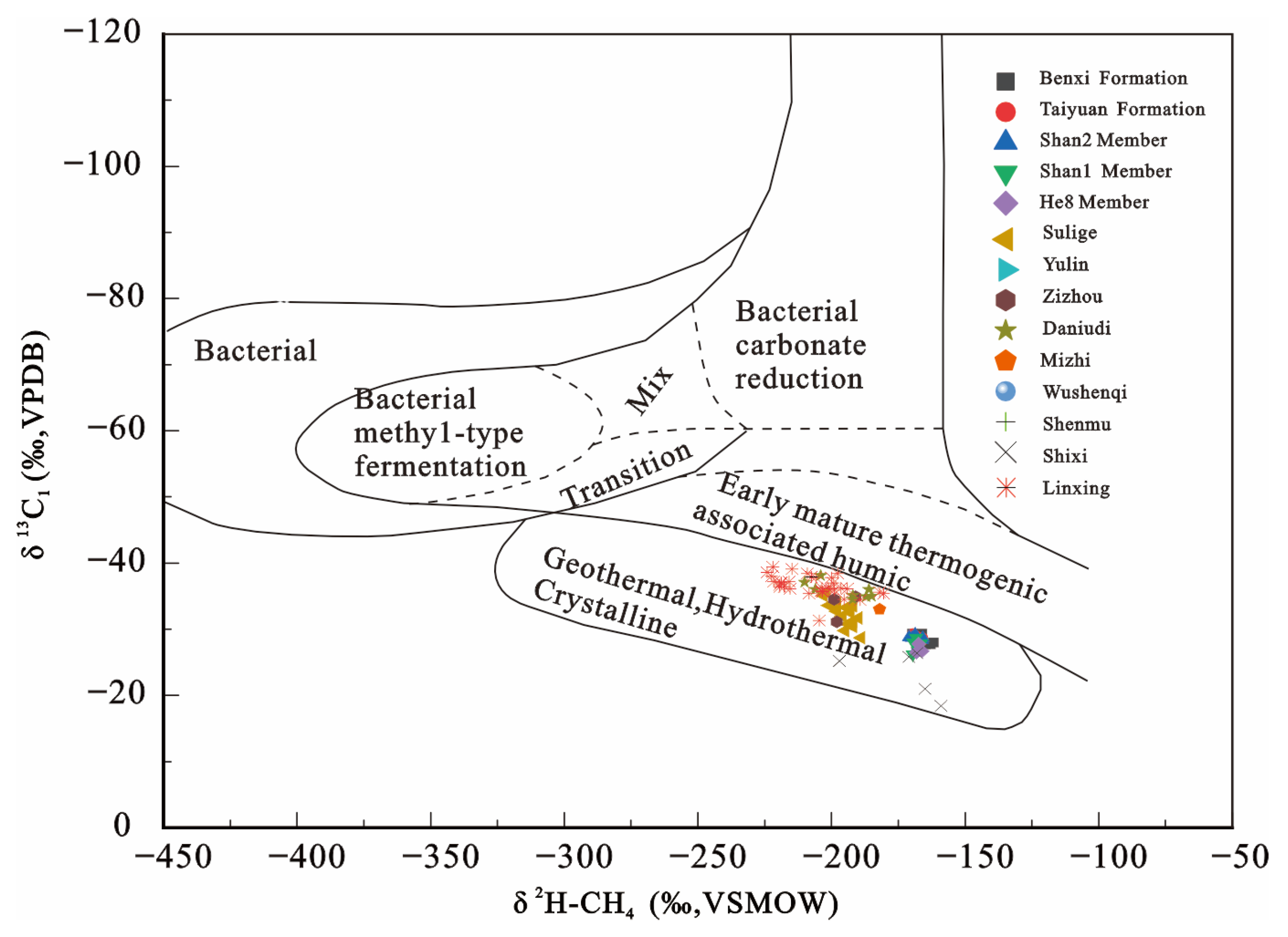
In the present study, the classical Whiticar diagram based on δ13C1 and δ2H-CH4 was employed [38]. Results demonstrate that all gas samples from the Daning–Jixian Block and other gas fields across the Ordos Basin fall within the domain of geothermal, hydrothermal, and crystalline gases. This suggests that the gas genesis is related to the interaction of over-mature organic matter with external hydrogen [20] (Figure 4).
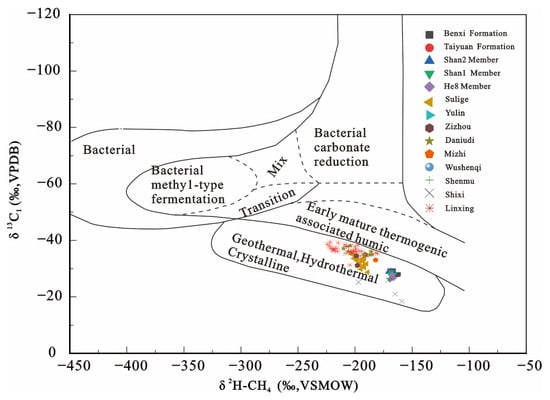
Figure 4.
Identification diagram based on δ13C1 and δ2H-CH4.
Milkov et al. [39] further revised previous genetic identification diagrams using a global dataset of 20,621 natural gas samples, encompassing 76 countries and regions across six continental landmasses. On the Milkov diagram, the gas samples from the study area entirely fall within the field of thermogenic gas with relatively high maturity (Figure 5a). The gas samples from other areas in the Ordos Basin demonstrate distribution within the thermogenic gas domain on the Milkov diagram, exhibiting comparatively lower thermal maturity. Notably, samples from fields like Daniudi and Zizhou also exhibit characteristics associated with oil-associated gas. The genetic identification diagram based on methane carbon and hydrogen isotopes also shows that the tight sandstone gas samples from Ordos Basin belong to thermogenic gas, with the Daning–Jixian Block exhibiting higher maturity (Figure 5b).
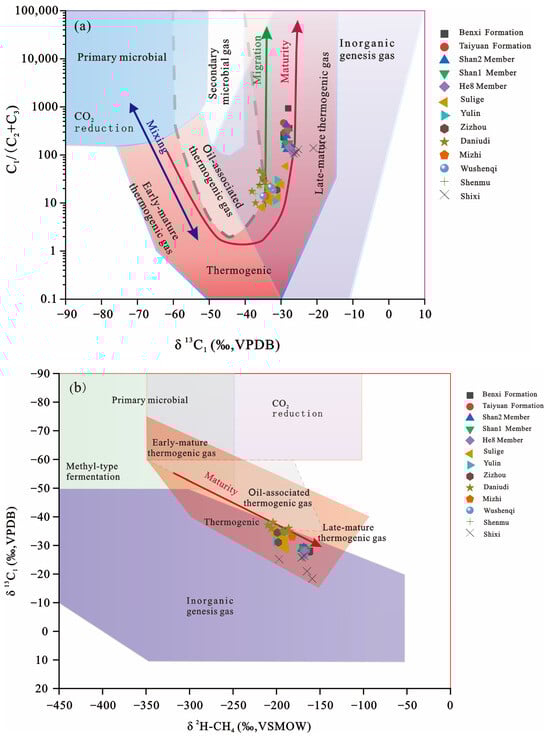
Figure 5.
Genetic characterization of natural gas based on Milkov’s diagram. (a) Plot of δ13C1 versus C1/(C2 + C3); (b) plot of δ2H-CH4 versus δ13C1.
4.3.2. Origin Analysis
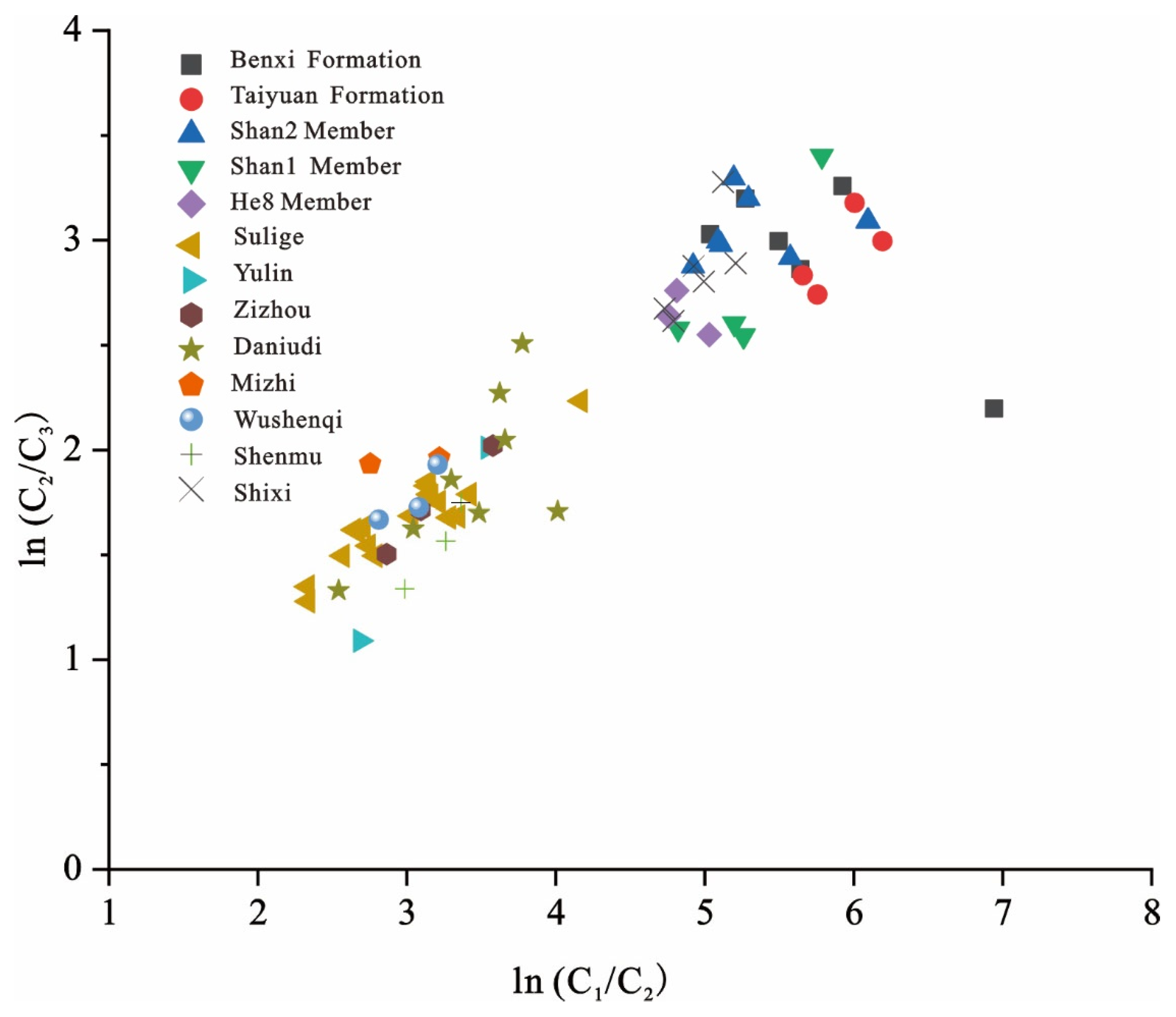
The primary cracking of kerogen marks the stage of abundant methane generation, leading to a rapid increase in the methane-to-ethane concentration ratio. In contrast, crude oil-cracked gas shows a significant increase in propane content. Therefore, the cross-plot of ln(C1/C2) versus ln(C2/C3) is often used as a key indicator for genetic characterization of natural gas [40,41,42]. The natural gas from the Daning–Jixian Block demonstrates markedly elevated ln(C1/C2) and ln(C2/C3) relative to other gas fields, a phenomenon attributed to its advanced thermal evolution stage. The variation range of ln(C2/C3) differs among formations, with the Benxi Formation and Shan1 Member showing a larger range, suggesting that the tight gas accumulation was predominantly sourced from the primary cracking of kerogen, with a potential minor contribution from crude oil-cracked gas (Figure 6).
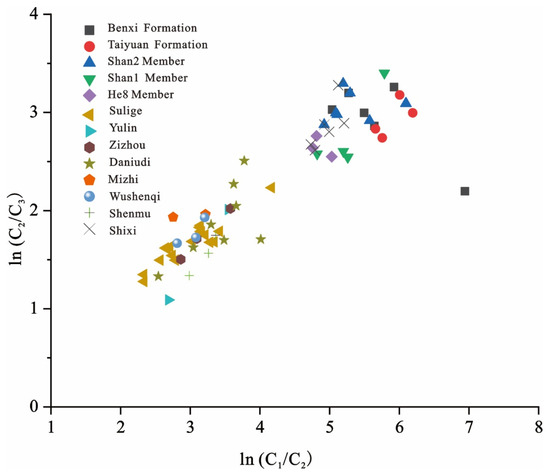
Figure 6.
Identification diagram based on ln(C1/C2) versus ln(C2/C3).
Previous research results indicate the presence of carbonaceous asphalt inclusions in the study area, interpreted as thermally mature residues from crude oil cracking during the terminal Early Cretaceous. During this period, the paleo-temperature in the range of 160–200 °C caused the complete transformation of crude oil into cracked gas and carbonaceous asphalt [43]. Geochemical cross-plots of samples from the study area show an intermediate position, suggesting contribution from both Type II and Type III kerogen-derived gases [28]. This finding is consistent with research results from the Zhidan–Ganquan area [42]. In summary, the Daning–Jixian Block gas accumulations originate from early-stage kerogen cracking in Carboniferous–Permian source rocks, with a subordinate contribution from crude-oil cracking.
4.4. Stable Carbon Isotope Series
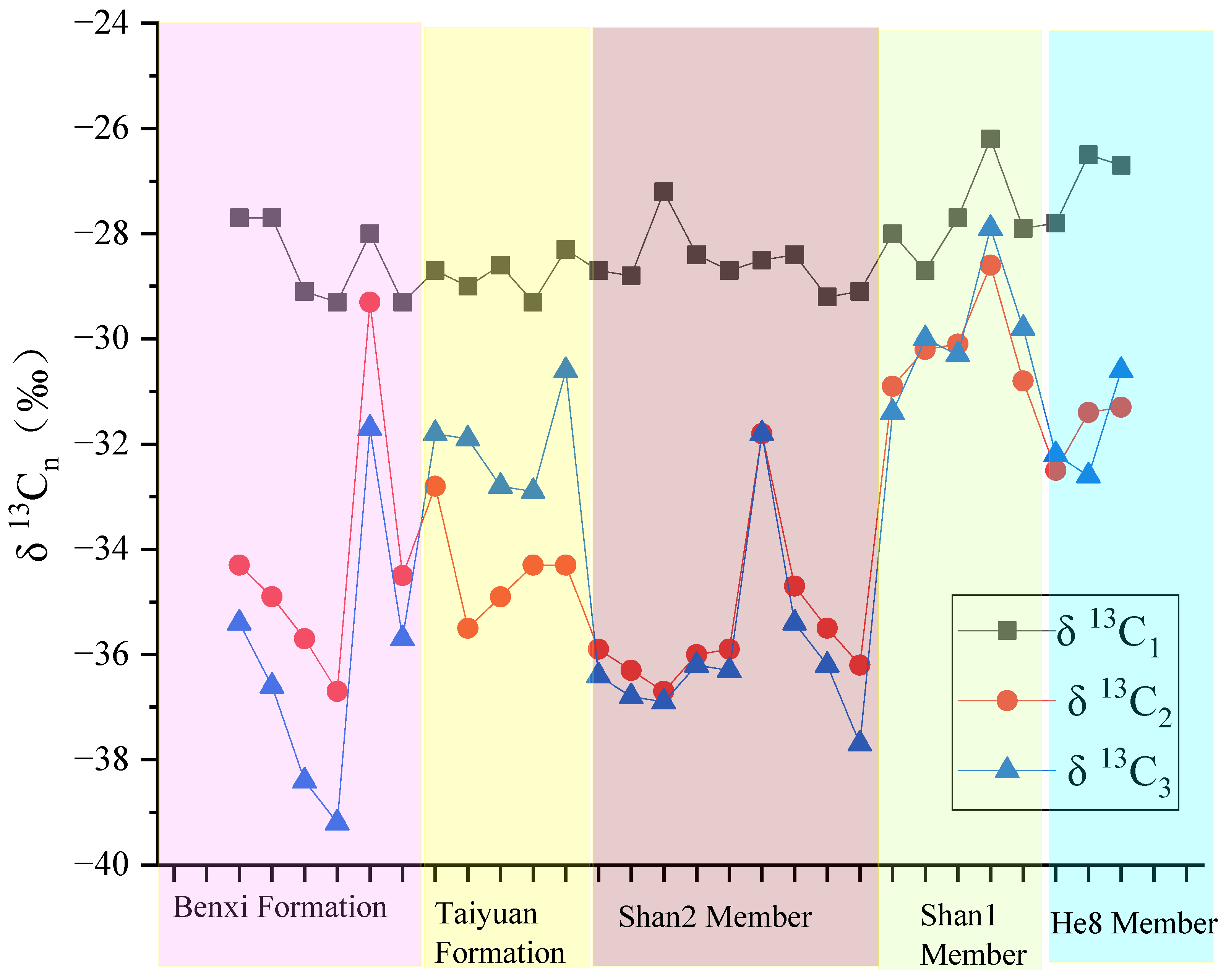
Previous studies have shown that a reversed sequence of primary stable carbon isotopes and δ13C1 values greater than −30‰ are key indicators for identifying inorganic genesis gas [44,45,46]. The distribution patterns of among light hydrocarbons (C1–C3) can be influenced by various secondary processes such as mixing, high temperatures, bacterial oxidation, and diffusion [47]. Significant variations in carbon isotopic compositions are observed across different strata in the Daning–Jixian Block. Gases from the Benxi Formation and the Shan2 Member predominantly exhibit a fully reversed sequence (δ13C1 > δ13C2 > δ13C3). In contrast, samples from the Taiyuan Formation, along with some from the Shan 1 Member and He 8 Member, display a partially reversed sequence (δ13C1 > δ13C2 < δ13C3). Compared to other gas fields in the Ordos Basin, the Upper Paleozoic natural gases from the Dongsheng, Linxing, Daniudi, Yulin, Zizhou, and Mizhi gas fields, located in the northern and eastern parts of the basin, primarily show a normal carbon isotopic sequence (δ13C1 < δ13C2 < δ13C3). A partially reversed sequence (δ13C1 < δ13C2 > δ13C3) is observed in some samples from the central basin areas, including the Sulige and Wushenqi gas fields, as well as parts of the Shixi Block [19,20,28,29,30,31].
This comparative analysis reveals that the Daning–Jixian Block in the southeastern basin exhibits characteristics distinct from other gas fields. All samples from this block display a δ13C1 > δ13C2 reversal. Furthermore, the difference between δ13C2 and δ13C3 values is generally small, whereas a more substantial isotopic discrepancy exists between δ13C1 and the heavier homologues (δ13C2, δ13C3) (Figure 7).
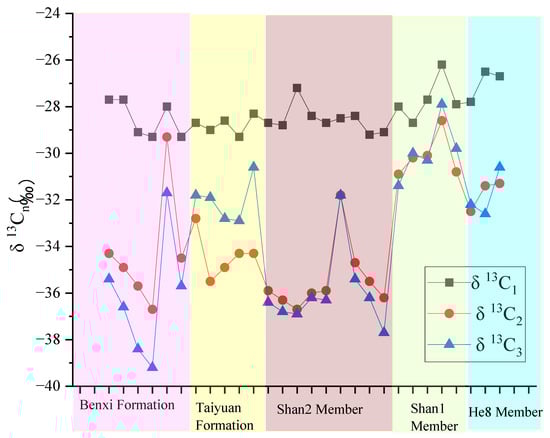
Figure 7.
Comparison of δ13C1, δ13C2, and δ13C3 values of natural gases from different strata in the Daning–Jixian Block.
A systematic southward increase in source rock maturity is observed within the Ordos Basin. Consequently, the carbon isotope distribution pattern of methane and its homologues evolves gradually from a positive carbon isotope sequence in the north, to a partially reversed sequence, and finally to a fully reversed sequence (i.e., a negative carbon isotope sequence) [47,48]. This trend can be attributed to the commingling of natural gases with distinct genetic origin [49]. Geochemically, the southeastern Ordos Basin features source rocks enriched in Type III kerogen, which is currently within the high maturity to over-mature thermal evolution stage, resulting in significant dry gas generation [22]. Therefore, based on an integrated assessment, the reversal of stable carbon isotopes observed in the study area’s multi-stratigraphic natural gases is interpreted to be associated with the elevated thermal maturity of the kerogen and mixing with crude oil-cracking gas.
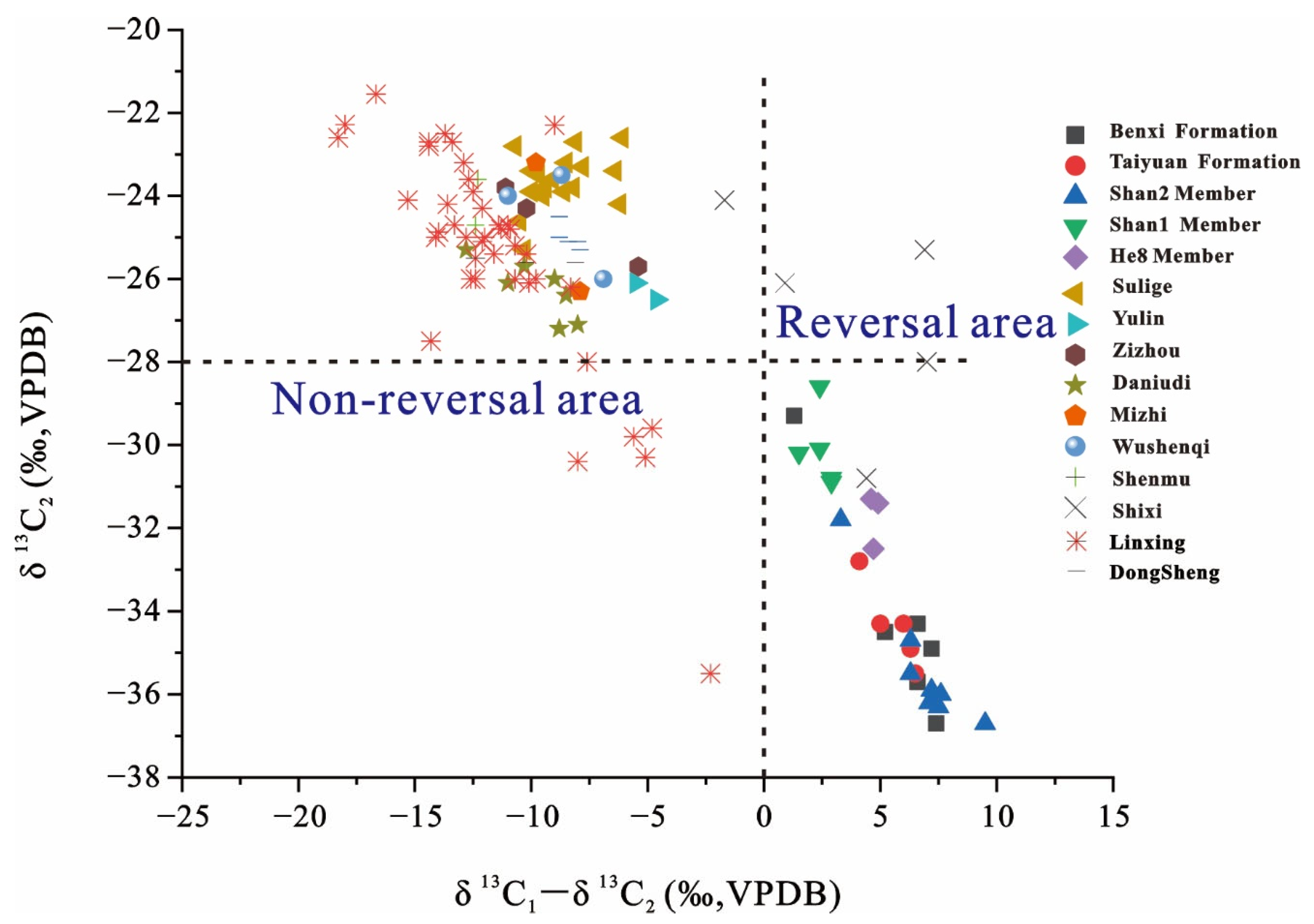
The ethane carbon isotope signature (δ13C2) serves as a key proxy for discriminating between coal-derived gas and oil-derived gas, employing a widely recognized benchmark wherein values heavier than −28‰ are diagnostic of the former, and values lighter than −28‰ suggest the latter [47]. However, all δ13C2 values in the Daning–Jixian Block are less than −28‰ (Figure 8). This is attributed to the exceptionally high thermal maturity, which has caused reversal of the ethane carbon isotope values, leading to the lighter ethane carbon isotope signatures observed [29]. This aligns with the findings of Peng et al. [50], who reported that both coal-derived gas and oil-derived gas exhibit alkane gas carbon isotope sequence reversal during the high-maturity-to-over-mature stage. Consequently, the ethane carbon isotope value alone cannot be reliably used for delineation of the natural gas provenance in the study area.
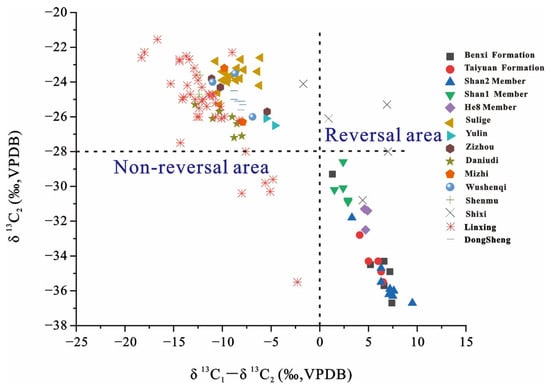
Figure 8.
Correlation between δ13C1–δ13C2 and δ13C2 for natural gas in the Daning–Jixian Block and comparison with typical tight sandstone gas fields in the Ordos Basin.
5. Conclusions
This study systematically investigates the geochemical characteristics and genetic mechanisms of natural gas in the Paleozoic sandstone reservoirs of the Daning–Jixian Block, southern Ordos Basin, based on molecular composition and stable isotope (δ13C1–3, δD-CH4) data. The key conclusions are as follows:
- (1)
- Comparative assessment with other gas fields across the Ordos Basin indicates that the Daning–Jixian Block exhibits a comparatively higher average methane concentration. The average ethane and propane concentrations in the Daning–Jixian Block are notably lower than those in other gas fields. Furthermore, the dryness coefficient of the gas in the Daning–Jixian Block is significantly greater than that observed in other gas fields. The generally lower CO2 and higher N2 content observed in He8 Member and Shan1 Member suggest vertical migration of natural gas into these intervals.
- (2)
- The natural gas in the Upper Paleozoic tight sandstone gas reservoirs of the Daning–Jixian Block exhibits average δ13C1, δ13C2, and δ13C3 values of −28.20‰, −33.64‰, and −33.77‰, respectively. The average δ13C1 value is heavier compared to other gas fields, while the average δ13C2 and δ13C3 values are significantly lighter. The average δ2H-CH4 value is heavier than that of other gas fields. The relatively heavier isotopic values observed in He8 Member and Shan1 Member compared to other layers suggest a complex scenario involving both dynamic fractionation and migration fractionation effects.
- (3)
- The high maturity of kerogen in the Daning–Jixian area limits the application of some commonly used genetic identification diagrams. The classical Whiticar diagram based on δ13C1 and δ2H-CH4 was employed, revealing that all gas samples from the Daning–Jixian Block and other gas fields across the Ordos Basin fall into the domain of geothermal, hydrothermal, and crystalline gases, which suggests that the gas genesis is associated with the interaction of over-mature organic matter with external hydrogen. The Milkov diagram indicates that natural gases sampled from the other producing fields in the Ordos Basin consistently fall within the canonical coal-derived gas field with relatively lower maturity, with some samples from fields like Daniudi and Zizhou also exhibiting characteristics of oil-associated gas. In contrast, the study area contains thermogenic gas with higher maturity. The Daning–Jixian Block gas accumulations originate from early-stage kerogen cracking in Carboniferous–Permian source rocks, with a subordinate contribution from crude-oil cracking.
- (4)
- The Daning–Jixian Block exhibits characteristics distinct from other gas fields. All samples from this block display a δ13C1 > δ13C2 reversal. This is interpreted to be associated with the elevated thermal maturity of the kerogen and mixing with crude oil-cracking gas. This process causes the reversal and lighter values of ethane carbon isotopes. Consequently, the ethane carbon isotope value alone cannot be reliably used for delineation of the natural gas provenance in the study area.
These findings not only deepen the academic understanding of tight sandstone gas accumulation mechanisms in high-maturity coal-measure systems but also provide critical practical guidance for industrial exploration and development. First, they offer a reliable basis for resource potential evaluation and sweet-spot prediction—essential for guiding industrial exploration deployment in the Daning–Jixian Block and analogous regions. Second, the identification of geochemical tracers and the interpretation of δ13C1 > δ13C2 reversal mechanisms enable industrial sectors to accurately characterize gas accumulation processes, supporting targeted reservoir stimulation and optimization of development schemes to address challenges posed by ultra-low permeability.
Author Contributions
Conceptualization, B.W., M.C., H.T. and J.S.; methodology, B.W., M.C., H.T., J.S., L.L., X.L., B.C., B.Y., Z.Z. and Z.Q.; investigation, B.W., M.C., H.T., J.S., L.L., X.L., B.C., B.Y. and Z.Z.; writing—original draft preparation, B.W.; writing—review and editing, M.C.; project administration, M.C. All authors have read and agreed to the published version of the manuscript.
Funding
This research was funded by the Key Application Science and Technology Project of PetroChina Company Limited (grant number 2023ZZ18-01) and Science and Technology Funding Project of Huaneng Group Headquarters (grant number HNKJ20-H87).
Data Availability Statement
The original contributions presented in this study are included in this article; further inquiries can be directed to the corresponding author.
Conflicts of Interest
Authors Ming Chen, Haonian Tian and Junyi Sun were employed by the PetroChina Coalbed Methane Company Limited Linfen Branch. Authors Xing Liang, Baoshi Yu and Zhuo Zhang were employed by the PetroChina Zhejiang Oilfield Company. Author Benliang Chen was employed by the company Huainan Mining (Group) Co., Ltd. The remaining authors declare that the research was conducted in the absence of any commercial or financial relationships that could be construed as a potential conflict of interest. The authors declare that this study received funding from Key Application Science and Technology Project of PetroChina Company Limited. The funder had the following involvement with the study: study design, collection, analysis.
References
- Li, S.K.; Liu, J.; Zhu, Y.M.; Ma, Y.J.; Liu, X.M. A study on the characteristics of unconventional natural gas reservoirs in the Julu block of northwestern Linqing Depression, Bohai Bay Basin. Nat. Gas Geosci. 2025, 36, 221–239. [Google Scholar]
- Li, S.Z. Research on Forming Conditions and Regionalization of Tight Gas in Turpan-Hami Basin. Master’s Thesis, China University of Petroleum (East China), Beijing, China, 2015. [Google Scholar]
- Li, P.Y.; He, X.D.; Zhou, C.J.; Xie, Y.G.; Shi, H. Mineral compositions and microstructural characteristics of the tight sandstone reservoir in the Sulige area and their potential influence on hydraulic fracturing. Hydrogeol. Eng. Geol. 2023, 50, 1–11. [Google Scholar]
- Jiang, Y.D.; Xie, C.L.; Song, X.; Liu, Z.J. Physical Simulation and Acoustic Emission Characteristics of Sandstone Hydraulic Fracturing under True Triaxial. Chin. J. Undergr. Space Eng. 2024, 20, 1145–1151+1159. [Google Scholar]
- Khormali, A.; Ahmadi, S.; Aleksandrov, A.N. Analysis of reservoir rock permeability changes due to solid precipitation during waterflooding using artificial neural network. J. Pet. Explor. Prod. Technol. 2025, 15, 17. [Google Scholar] [CrossRef]
- Wang, Q.; Zhang, W.; Jiang, N.; Qu, X.J.; Lei, T.; Luo, L.; Cai, X.Y.; Wang, J.; Zhang, M.K.; Tan, X.F. The control mechanism of deformable compositions on tight sandstone reservoirs: An example of the Shanxi Formation in the H well area of the Daniudi gas field in the Ordos Basin. Acta Petrol. Mineral. 2025, 44, 128–140. [Google Scholar]
- Zhong, J.Z. Research on Intelligent Lithology Identification Method Based on Sandstone THIN Section. Master’s Thesis, Taiyuan University of Technology, 2023. [Google Scholar]
- Wu, Y.; Wang, G.; Wang, Q.R. Difficulties and Development Direction of Medium and Low-rank Coalbed Methane Industry in Xinjiang Region. China Coalbed Methane 2023, 20, 3–5+20. [Google Scholar]
- Guo, Q.Q. Subject: Secondary Pore Development Pattern and Formation Mechanism of He 8 Member in Daning-Jixian Area of Ordos Basin, China. Master’s Thesis, Xi’an Shiyou University, Xi’an, China, 2023. [Google Scholar]
- Zhang, K.; Dou, S.J.; Gao, H.H.; Shi, S.; Li, T.; Tang, G.; Yang, B. Application of Spectral Recovery and Waveform Inversion in Thin Reservoir Prediction in Daning Jixian Block. J. Jilin Univ. Earth Sci. Ed. 2024, 54, 2142–2153. [Google Scholar]
- Sun, J.; Chen, M.; Wang, B.; Wang, G.; Tian, H.; Hou, J.; Zhu, B. Analysis of Factors Influencing Tight Sandstone Gas Production and Identification of Favorable Gas Layers in the Shan 23 Sub-Member of the Daning-Jixian Block, Eastern Ordos Basin. Processes 2024, 12, 1810. [Google Scholar] [CrossRef]
- Shi, S.W. Study on Comprehensive Evaluation Method of Tight Sandstone Gas Reservoir. Master’s Thesis, Xi’an Shiyou University, Xi’an, China, 2016. [Google Scholar]
- Zhao, L.M.; Wen, G.H.; Li, X.T.; Li, X.; Li, Y.Z.; Shi, X.S.; Yang, M.M. Evaluation of the “Sweet Spot Area” of Tight Sandstone Gas Reservoirs in the Shanxi Formation 2–3 Sub-member of the Daning-Jixian Block in the Ordos Basin. Nat. Gas Ind. 2018, 38, 5–10. [Google Scholar]
- Guo, L.L.; Li, Z.B.; Zhang, W.; Lin, W.J.; Yang, M.M.; Zhao, Y. Analysis of pore structure of main tight sandstone reservoirs in Daning-Jixian Block of Ordos Basin. Nat. Gas Ind. 2018, 38, 18–23. [Google Scholar]
- Shi, S.; Er, C.; Zhang, W.; Zhao, J.Z.; Zhang, Y.X.; Teng, Y.X. Pore Structure Characteristics of Upper Paleozoic Tight Reservoir in Daning—Jixian Area of Ordos Basin and Its Relationship with Clay Minerals. J. Xi’an Shiyou Univ. Nat. Sci. Ed. 2023, 38, 1–9. [Google Scholar]
- Liu, L. Study on the Tight Sandstone Gas Accumulation Law of Strata Bearing Coal in Linxing District of the Ordos Basin, China. PhD Thesis, China University of Geosciences, Beijing, China, 2017. [Google Scholar]
- Yong, L.I.; Weikai, X.U.; Jixian, G.; Peng, W.; Chuanqi, T.; Yang, T.; Yile, Z. Mechanism of coal measure gas accumulation under integrated control of “source reservoir-transport system”: A case study from east margin of Ordos Basin. J. China Coal Soc. 2021, 46, 2440–2453. [Google Scholar]
- Dang, J.C. Study on Natural Gas Enrichment Rules and Sweet Spot Evaluation of He8 Member in Daning-Jixian Area. Master’s Thesis, Xi’an Shiyou University, Xi’an, China, 2023. [Google Scholar]
- Dai, J.X.; Ni, Y.Y.; Hu, G.Y.; Huang, S.P.; Liao, F.R.; Yu, C.; Gong, D.Y.; Wu, W. Stable carbon and hydrogen isotopes of gases from the large tight gas fields in China. Sci. China Earth Sci. 2014, 44, 563–578. [Google Scholar] [CrossRef]
- Liu, C.; Lei, M.Y.; Sun, B.L.; Wang, X. Origin and process of carbon isotopic reversal of tight sandstone gas in the Shixi gas field, eastern margin of Ordos Basin. Int. J. Coal Geol. 2023, 276, 104327. [Google Scholar] [CrossRef]
- Tian, Y. Study on the Optimization of Tight Gas Reservoir Development Scheme in Daji Gas Field. Master’s Thesis, China University of Petroleum, Beijing, China, 2023. [Google Scholar]
- Shi, Z.; Zhao, J.Z.; Sun, X.W.; Shi, S.; Zhao, L.M.; Li, J. Characteristics and hydrocarbon generation potential of Upper Paleozoic coal measure source rocks in the southeastern Ordos Basin. Nat. Gas Geosci. 2023, 34, 1612–1626. [Google Scholar]
- Chen, M.; Wang, B.; Tian, H.; Sun, J.; Liu, L.; Liang, X.; Chen, B.; Yu, B.; Zhang, Z. Multilayer Gas-Bearing System and Productivity Characteristics in Carboniferous–Permian Tight Sandstones: Taking the Daning–Jixian Block, Eastern Ordos Basin, as an Example. Energies 2025, 18, 2398. [Google Scholar] [CrossRef]
- GB/T 13610-2020; Analysis of Natural Gas Composition—Gas Chromatography. State Administration for Market Regulation, National Standardization Administration: Beijing, China, 2020.
- Zheng, P.; Shi, Y.H.; Zou, C.Y.; Kong, L.M.; Wang, L.S.; Liu, J.Z. Natural gas sources in the Dengying and Longwangmiao Fms in the Gaoshiti-Maoxi area, Sichuan Basin. Natur. Gas Ind. 2014, 34, 50–54. [Google Scholar]
- SY/T 5238-2019; Analysis Method for Carbon and Oxygen Isotopes in Organic Matter and Carbonate. National Energy Administration: Beijing, China, 2019.
- SY/T 7313-2016; Analysis of Hydrogen Isotope in Petroleum, Rock Extracts, and Kerogen. National Energy Administration: Beijing, China, 2016.
- Dai, J.; Li, J.; Zhao, J. Giant Gas Fields and Gas Sources in China; Petroleum Industry Press: Beijing, China, 2024; pp. 157–170. [Google Scholar]
- Sun, J.N. The Gas Kitchen and the Origin of Natural Gas in the Daniudi Area and Surrounding Area of Ordos Basin. Master’s Thesis, China University of Petroleum, Beijing, China, 2023. [Google Scholar]
- Shen, J.; Li, K.X.; Zhang, H.W.; Shabbiri, K.; Hu, Q.J.; Zhang, C. The geochemical characteristics, origin, migration and accumulation modes of deep coal-measure gas in the west of Linxing block at the eastern margin of Ordos Basin. J. Nat. Gas Sci. Eng. 2021, 91, 103965. [Google Scholar] [CrossRef]
- Peng, W.; Hu, G.; Huang, S.; Fang, C.; Liu, D.; Feng, Z.; Han, W.; Jiang, R.; Chen, H. Natural gas geochemical characteristics and genetic analysis: A case study of the Dongsheng gas field in the Ordos basin of China. J. China Univ. Min. Technol. 2017, 46, 74–84. [Google Scholar]
- Zhou, J.S.; Wang, N.X.; Zhao, Q.P.; Yin, X.; Lin, G.F.; Cao, Y.; Li, Y.Y.; Han, X.Q. Natural gas accumulation characteristics in the Upper Paleozoic in the Yanchang exploration block of southeastern Ordos Basin. Natur. Gas Ind. 2014, 34, 34–41. [Google Scholar]
- Liu, H.L.; Liu, S.B.; Zhou, D.; Liu, W.; Jin, S.D. Geochemical indicators for tracing the source and migration of the tight sandstone gas in western Sichuan Basin. Nat. Gas Geosci. 2021, 32, 1127–1141. [Google Scholar]
- Mou, X.; Wang, K.; Yao, X.L. Genesis Analysis of CBM in Daning-Jixian Region. China Coalbed Methane 2016, 13, 26–30. [Google Scholar]
- Chen, J.; Wang, X.; Chen, J.; Ni, Y.; Xiang, B.; Liao, F.; He, W.; Yao, L.; Li, E. New equation to decipher the relationship between carbon isotopic composition of methane and maturity of gas source rocks. Sci. China Earth Sci. 2021, 64, 470–493. [Google Scholar] [CrossRef]
- Dai, J.X.; Ni, Y.Y.; Huang, S.P.; Liao, F.R.; Yu, C.; Gong, D.Y.; Wu, W. Significant function of coal-derived gas study for natural gas industry development in China. Nat. Gas Geosci. 2014, 25, 1–22. [Google Scholar]
- Bernard, B.B.; Brooks, J.M.; Sackett, W.M. Natural gas seepage in the Gulf of Mexico. Earth Planet. Sci. Lett. 1976, 31, 48–54. [Google Scholar] [CrossRef]
- Whiticar, M.J. Carbon and hydrogen isotope systematics of bacterial formation and oxidation of methane. Chem. Geol. 1999, 161, 291–314. [Google Scholar] [CrossRef]
- Milkov, A.; Etiope, G. Revised genetic diagrams for natural gases based on a global dataset of >20,000 samples. Org. Geochem. 2018, 125, 109–120. [Google Scholar] [CrossRef]
- Qu, Z.Y. Shale Gas Generation and Variation in Stable Carbon and Hydrogen Isotope Compositions. Master’s Thesis, Guangzhou Institute of Geochemistry, University of Chinese Academy of Sciences, Guangzhou, China, 2015. [Google Scholar]
- Zheng, D.Y.; Jiang, F.J.; Liu, T.S.; Pang, X.Q.; Chen, X.Z.; Shao, X.H.; Li, L.L.; Huyan, Y.Y. Genetic Types and Sources of Natural Gas in Linxing Area, the Eastern Margin of Ordos Basin, China. J. Earth Sci. Environ. 2018, 40, 203–214. [Google Scholar]
- Chen, J.J.; Zhao, J.Z.; Li, J.; Cao, Q.; Wang, Z. Geochemical characteristics of upper paleozoic natural gas in southern Ordos Basin: A case study of Zhidan-Ganquan area. Sci. Technol. Eng. 2020, 20, 10598–10604. [Google Scholar]
- Zhang, J.Q.; Zhao, J.Z.; Li, J.; Yang, X. Characteristic of fluid inclusions in upper Paleozoic He 8 member of Daning-Jixian block, southeastern Ordos Basin and its significance for hydrocarbon accumulation. J. Xi’an Shiyou Univ. Nat. Sci. Ed. 2024, 39, 34–41+142. [Google Scholar]
- Dai, J.X.; Shi, X.; Wei, Y.Z. Summary of the abiogenic origin theory and the abiogenic gas pools (fields). Acta Pet. Sin. 2001, 6, 5–10. [Google Scholar]
- Li, J.; Zhao, J.Z.; Wang, D.X.; Sun, L.Y.; Ren, J.F.; Wu, C.Y.; Wu, W.T.; Zhao, Z.L.; Qu, F.T. Genesis and source of the Ordovician mid-assemblage natural gas in the east side of the central paleo-uplift, Ordos Basin. Acta Pet. Sin. 2016, 37, 821–831. [Google Scholar]
- Zhang, M.; Song, D.F.; Wang, T.G.; He, F.Q.; Zhang, W.; An, C.; Liu, Y.; Lu, Z.G. Geochemical characteristics and sources of natural gas in Hangjinqi area of ordos Basin. Pet. Geol. Exp. 2024, 46, 124–135. [Google Scholar]
- Ni, Y.Y.; Zhang, J.C.; Yao, L.M.; Dong, G.L.; Wang, Y.; Wang, L.; Chen, J.P. Application of carbon and hydrogen isotopes in the natural gas origin study. Nat. Gas Geosci. 2024, 35, 1897–1909. [Google Scholar] [CrossRef]
- Dai, J.X.; Ni, Y.Y.; Gong, D.Y.; Feng, Z.Q.; Liu, D.; Peng, W.L.; Han, W.X. Geochemical characteristics of gases from the largest tight sand gas field (Sulige) and shale gas field (Fuling) in China. Mar. Pet. Geol. 2017, 79, 426–438. [Google Scholar] [CrossRef]
- Zhang, T.; Wang, X.F.; Jin, X.H.; Meng, Q.Q.; Wang, Y.R.; Chen, X.Y.; Zhang, W.; Zhang, J. Geochemical characteristics and genesis of Paleozoic natural gas in the southern Ordos Basin. Nat. Gas Geosci. 2024, 35, 1616–1625. [Google Scholar] [CrossRef]
- Peng, W.; Liu, Q.; Hu, G.; Lü, Y.; Meng, Q.; Guo, F.; Guan, H. A New Interpretation of Carbon Isotope Series Reverse of Highly-Over Mature Alkane Gases: Demethylation of Aromatic Hydrocarbons. Earth Sci. 2020, 45, 1308–1314. [Google Scholar]
Disclaimer/Publisher’s Note: The statements, opinions and data contained in all publications are solely those of the individual author(s) and contributor(s) and not of MDPI and/or the editor(s). MDPI and/or the editor(s) disclaim responsibility for any injury to people or property resulting from any ideas, methods, instructions or products referred to in the content. |
© 2025 by the authors. Licensee MDPI, Basel, Switzerland. This article is an open access article distributed under the terms and conditions of the Creative Commons Attribution (CC BY) license (https://creativecommons.org/licenses/by/4.0/).