Abstract
This study presents a bibliometric review of scientific progress concerning the synergy between microbial fuel cells (MFCs) and textile dye remediation. Drawing from the Scopus database, the analysis spans the years 2005–2025 and applies systematic filters to derive a final corpus of 239 articles compatible with Bibliometrix software (4.2.1). Quantitative and structural analyses were conducted using RStudio with the Bibliometrix package, thematic network visualizations via VOSviewer (1.6.19), and frequency matrices, citation rates, and international collaboration indicators organized in Excel. Results reveal exponential growth in scholarly output, particularly within Environmental Sciences, Chemical Engineering, and Microbiology. China and India lead in publication volume, while countries such as the United Kingdom, United States, and Australia show high impact and international collaboration. Co-authorship networks reflect consolidated clusters, though connectivity gaps remain among emerging authors. Bioresource Technology is identified as a central journal, with terms like “wastewater treatment” and “microbial fuel cell” indicating thematic consolidation. Opportunities still exist in areas such as explainable artificial intelligence, integration with microalgae, and heavy metal remediation. Highly cited articles contribute key technical insights, highlighting hybrid configurations and advancements in electrode materials. Strategic mapping suggests that MFCs have evolved from experimental concepts to viable alternatives in industrial sustainability, though scalability, operational costs, and geographic representation remain significant challenges. This bibliometric review not only maps accumulated knowledge but also serves as a strategic compass for guiding future research toward integrated, accessible, and replicable bioelectrochemical technologies for textile dye treatment.
1. Introduction
The textile industry generates large volumes of wastewater containing persistent dyes and high organic loads, creating an urgent need for sustainable treatment solutions that also address energy recovery [1]. During dyeing processes, synthetic dyes are used, yet most are not fully fixed to the fibers, resulting in liquid discharges with high organic loads, persistent coloration, and toxic compounds [2]. These effluents degrade water quality, reduce sunlight penetration in aquatic ecosystems, and disrupt photosynthetic processes, compromising biodiversity. Furthermore, many dyes, especially azo compounds, can degrade under anaerobic conditions to form aromatic amines, some of which are potentially mutagenic or carcinogenic [3]. In light of this, technological solutions are needed that not only mitigate environmental impact but also promote energy sustainability [4]. In this context, microbial fuel cells (MFCs) have emerged as a promising alternative, enabling the simultaneous generation of electrical energy and removal of organic contaminants [5]. However, their large-scale implementation faces technical, economic, and regulatory challenges [6]. The integration of wastewater treatment and renewable energy production is increasingly urgent within the framework of the Sustainable Development Goals (SDGs), particularly SDG 6 (clean water) and SDG 7 (affordable and clean energy) [7].
Over the past two decades, MFCs have gained scientific attention for their ability to convert chemical energy from organic compounds into electricity through electrogenic microorganisms [8]. This technology has been successfully applied to the degradation of various pollutants, including textile dye such as Reactive Black 5, Methylene Blue, and Acid Orange 7 [9]. The synergy between bioelectric production and dye removal has been demonstrated in dual-chamber configurations, continuous-flow systems, and hybrid reactors [10]. Recent studies report decolorization efficiencies exceeding 90% in under 24 h, along with power densities that, while modest, are sufficient to power sensors or environmental monitoring devices [11]. Additionally, the use of low-cost materials has been explored, including graphite electrodes, ceramic membranes, and biocathodes with natural catalysts. Despite these advances, challenges remain related to biofilm stability, microbial selectivity, and system scalability [12]. Literature has also begun addressing sustainability aspects such as life cycle analysis and integration with other treatment technologies, reflecting a more holistic approach to environmental remediation [13].
Among the most relevant studies is that of Cárdenas Mendoza et al. (2023), who applied an electro-oxidation system with titanium electrodes to decolorize current textile dyes, achieving a 99.1% decolorization efficiency and demonstrating the viability of reusing treated water in dyeing processes [14,15]. Meanwhile, Torres C. (2023) evaluated the biodecolorization of textile dye using immobilized yeasts, achieving over 90% removal in six hours and significantly reducing effluent toxicity [16]. Lastly, Cabrera A. (2022) demonstrated the successful use of Pleurotus ostreatus mycelium for effluent decolorization without prior sterilization, with treatment times ranging from 24 to 72 h [17]. These studies highlight growing interest in sustainable biotechnological solutions for textile wastewater treatment. Given the exponential rise in publications on MFCs applied to textile dye decolorization, a bibliometric analysis is warranted to map scientific progress in this synergy [17]. Such analysis provides a quantitative and structural overview of accumulated knowledge, identifying trends, gaps, key actors, and collaboration networks [18].
In a field as interdisciplinary as this—spanning microbiology, environmental engineering, materials science, and applied chemistry—bibliometrics allows for the identification of dominant approaches, influential journals, and leading research countries [19]. It also enables assessment of emerging technologies such as biocathodes, nanomaterials, and alternative carbon sources. Bibliometric tools facilitate the tracking of temporal trends in key terms, including “bioelectricity,” “azo dyes,” “textile dyes,” and “simultaneous treatment” [20]. This information is essential for guiding future research, optimizing resources, and fostering international collaboration. Furthermore, bibliometric analysis can reveal the transition from purely experimental studies to more integrated approaches that consider economic, social, and environmental dimensions [21]. While numerous reviews exist on microbial fuel cells for wastewater treatment and various bibliometric analyses address textile dye degradation, this study represents the first comprehensive bibliometric analysis specifically examining the synergy between MFCs and textile dye decolorization. Unlike conventional MFC reviews that focus primarily on energy output or general wastewater treatment applications, our analysis uniquely integrates the dual perspective of simultaneous energy sustainability and environmental remediation. This combined approach reveals emerging technological paradigms where bioelectricity generation becomes an enabling factor for sustainable wastewater treatment, rather than merely an added benefit. Furthermore, by employing bibliometric network analysis, we identify not only research trends but also the structural knowledge gaps and interdisciplinary bridges required to advance this specific application domain.
This study aims to answer a set of strategic questions that guide the bibliometric analysis of the synergy between microbial fuel cells (MFCs) and textile dye remediation: Q1: How has scientific development evolved regarding MFCs applied to textile wastewater treatment between 2005 and 2025, and how has this emerging field matured in terms of volume and research consolidation? Q2: Which countries, institutions, and authors have led this line of research, and what international collaboration dynamics have shaped its scientific structure? Q3: Which journals are the most influential in this area, and how are co-citation networks organized to support thematic consolidation? Q4: What strategic themes and intellectual clusters have emerged as central nodes, and how specialized are they in terms of frequency and relevance? Q5: Which scientific terms show sustained growth, and which reveal thematic gaps that may represent opportunities for innovation? Q6: How is scientific productivity distributed across disciplines, and what interdisciplinary approaches are driving integrated solutions for industrial sustainability? Q7: What are the characteristics of the most cited articles, and what contributions have they made to academic discourse on bioelectrochemical technologies for effluent treatment? Q8: What geographical, thematic, or methodological gaps persist in the use of MFCs as a sustainable technology, and how can these be addressed to strengthen applicability in diverse and real-world contexts?
2. Materials and Methods
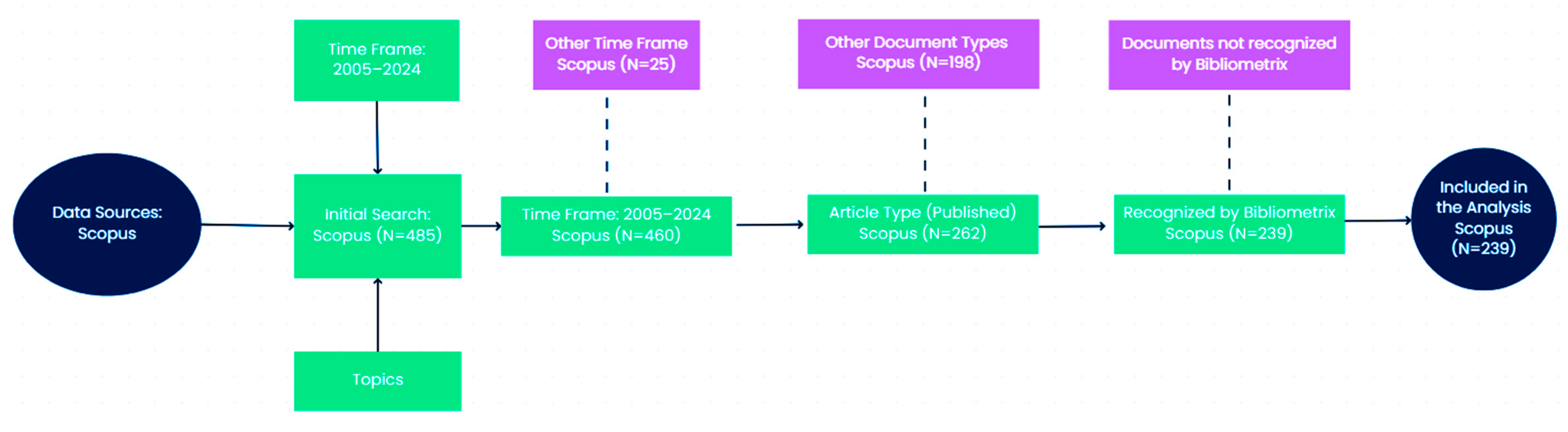
This study was conducted using a bibliometric approach with the aim of mapping the scientific production related to the application of microbial fuel cells (MFCs) in the remediation of textile dyes, considering aspects of energy sustainability and environmental cleanup. The primary source of information was the Scopus database, selected for its interdisciplinary coverage and structured metadata, which enable robust and replicable analysis. The search spanned the period from 2005 to 2025, allowing the evaluation of two decades of scientific research in the field. The search strategy employed Boolean operators and carefully selected key terms (“microbial fuel cell” OR “MFC” OR “bioelectrochemical” OR “biofuel cell”) AND (“organic dye” OR “dye” OR “colorant” OR “pigment”) AND (“decolorization” OR “removal” OR “degradation” OR “treatment”) AND (“wastewater” OR “effluent” OR “pollutant” OR “contaminant”) AND (“bioremediation” OR “biodegradation” OR “environmental” OR “sustainability”), encompassing bioelectrochemical technologies, textile dyes, bioremediation processes, and sustainability. This search initially retrieved 485 documents. Filters were then applied to exclude publications outside the defined time frame (N = 25) and non-peer-reviewed articles (N = 198), resulting in a refined set of 262 articles. A compatibility check with the Bibliometrix package in RStudio version 4.2 was subsequently performed, eliminating 23 records unrecognized by the software. The final corpus for bibliometric analysis comprised 239 documents (see Figure 1).
Figure 1.
Flow diagram of the bibliometric methodological framework.
Data processing was conducted in RStudio using the Bibliometrix package, which enables quantitative, structural, and relational analyses of scientific production. This tool facilitated the generation of metrics such as annual productivity, international collaboration, co-citation between authors and journals, thematic evolution of keywords, and co-authorship networks. Additionally, VOSviewer was employed to complement the visualization of scientific networks, thematic clusters, and co-citation relationships, allowing for the identification of intellectual clusters, core journals in the field, and author communities with high collaboration density. Microsoft Excel was used to manage tabular data and complementary graphics, enabling the organization of results into frequency matrices, country-level comparisons, normalized citation rates, and graphical representations of annual and cumulative publication trends. Excel also supported the calculation of complementary indicators such as the international collaboration rate (MCP%) and the average number of citations per document—key metrics for assessing the field’s global impact and connectivity. All procedures were carried out in accordance with ethical principles, ensuring methodological traceability and transparency. Each step was documented, original data integrity was maintained, and reproducibility conditions were guaranteed for future studies. This comprehensive methodology not only provides insight into the current state of research on MFCs and textile decontamination but also offers a structured foundation for identifying thematic gaps, innovation opportunities, and emerging research lines. The co-authorship network (Figures) was generated using the Bibliometrix package in RStudio and visualized with VOSviewer. Authors with a minimum of two publications in the corpus were included to ensure meaningful visibility. Names are presented using the format ‘Last name, First initial’ (e.g., Pant, D.), extracted directly from Scopus metadata. Node size is proportional to the number of published documents, and the links represent scientific collaborations between authors.
2.1. Classification of Research Areas
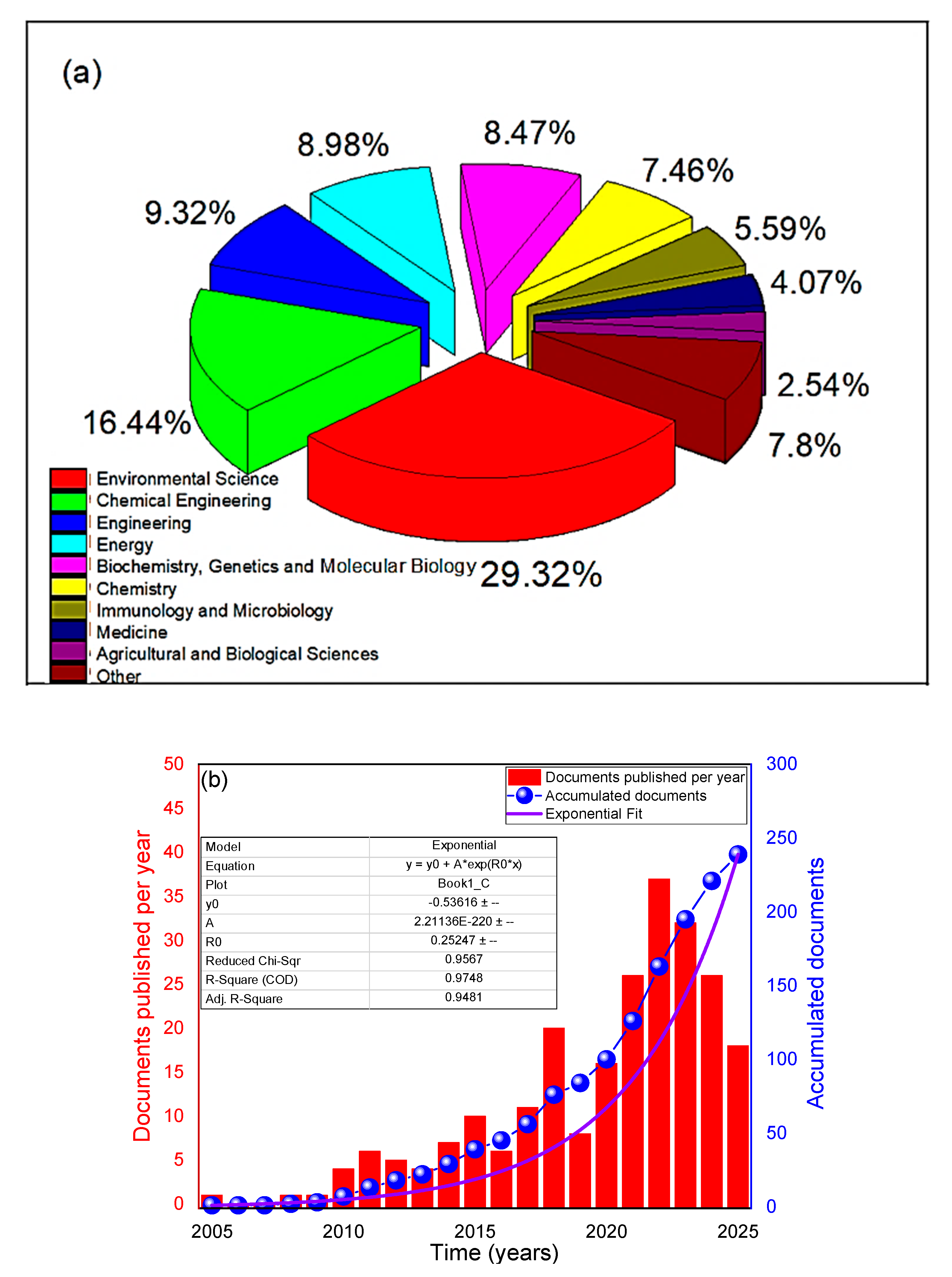
Documents were categorized according to the subject area classification provided by Scopus. Since individual publications can be assigned to multiple research areas, the sum of documents across all categories exceeds the total number of publications in our corpus (N = 239). The percentage values represent the proportion of documents in each research area relative to the total number of area assignments across all categories.
2.2. Limitations of the Bibliometric Approach
While this bibliometric analysis provides valuable insights into the research landscape of MFCs applied to textile dye decolorization, several inherent limitations must be acknowledged:
Database Selection Bias: Our exclusive reliance on Scopus, while justified by its comprehensive coverage and structured metadata, introduces certain biases. Scopus tends to over-represent English-language journals and publications from Western countries, potentially underrepresenting research output from regions with strong textile industries but lower scientific visibility, such as Southeast Asia and Latin America.
Keyword Dependency: The study’s outcomes are inherently dependent on the selected search string. Relevant studies using alternative terminology or published in languages other than English may have been excluded, despite their potential contributions to the field.
Geographic Representation Gap: There is a notable underrepresentation of publications from low-income textile-producing countries despite their significant environmental challenges. This reflects broader disparities in global scientific publishing rather than the actual relevance or application potential of MFC technology in these regions.
Despite these limitations, the methodological transparency and systematic approach employed ensures the reproducibility and validity of our findings within the defined scope.
3. Results and Analysis
3.1. Thematic Evolution and Dynamics of Scientific Publications
Figure 2a illustrates the distribution of documents across research areas. Environmental Science shows the strongest representation with 157 documents, accounting for 28.9% of the total category assignments. This multi-category classification reflects the interdisciplinary nature of MFC research. This predominance confirms that research on microbial fuel cells and textile dye decontamination is directed primarily at addressing ecological challenges, particularly those related to sustainability and wastewater treatment [22]. Significant contributions from Chemical Engineering (16%) and Energy (9.2%) highlight the interest in designing efficient energy systems, underscoring the importance of electrochemical conversion processes in industrial contexts. The Engineering field adds another 9%, reinforcing the technological dimension of the issue, while Biochemistry, Genetics and Molecular Biology (8.7%) and Microbiology (5.7%) support the role of biological processes—such as microbial activity in energy generation and contaminant biodegradation. These data indicate that although the research originates in environmental domains, it relies heavily on chemical and biological disciplines to strengthen its theoretical and experimental foundation [23]. Other areas such as Medicine (4.1%), Materials Science, Agricultural Sciences, and Computer Science (all below 3%) appear with lower frequency, suggesting potential avenues for expansion into clinical applications, new functional materials, digital simulations, and even integration of artificial intelligence into these processes. The inclusion of fields like Business, Management and Accounting, Economics, and Social Sciences, although marginal, reflects an emerging interest in exploring the social, economic, and organizational impact of these sustainable technologies.
Figure 2.
Thematic distribution and temporal growth of scientific production. (a) Distribution of documents by research area according to Scopus classification (2005–2025). (b) Annual and cumulative production of publications, with exponential adjustment (Data extracted from Scopus and analyzed with Bibliometrix in RStudio).
Figure 2b presents the evolution of research output in the field, based on Scopus data from 2005 to 2025. Red bars represent the number of documents published annually, while blue dots indicate the cumulative total. An exponential fitting curve is included to model the cumulative growth of scientific literature in this area, accompanied by statistical parameters that validate its robustness. The annual publication pattern reveals an upward trend, with a more pronounced increase beginning around 2015. This suggests a rising interest among the scientific community in technologies that combine energy generation and wastewater treatment, aligning with the Sustainable Development Goals [24]. The exponential model shows excellent fit until 2022 (R2 = 0.9748), after which a slight deviation is observed. This divergence may be attributed to several factors: (1) the natural maturation of research fields where initial exponential growth stabilizes, (2) potential delays in database indexing for recent publications, and (3) the impact of global events such as the COVID-19 pandemic on research productivity during 2020–2022. Despite this recent moderation, the overall trend confirms sustained interest and knowledge accumulation in this field. The mathematical model, expressed as y = y0 + A·exp(R0·x)), yielded parameters (y0 = −0.53616, A = 2.21136 × 10−220, R0 = 0.25247) that point to an initially negligible growth rate, followed by substantial expansion in recent years. This trend is typical of emerging fields that, after an initial exploratory phase, enter a stage of consolidation and thematic diversification. The cumulative presence of over 200 publications by 2025 indicates a critical mass of knowledge capable of supporting more advanced technological developments and interdisciplinary collaboration. These results not only illustrate the quantitative growth of research but also suggest the progressive maturation of the field [25]. The combination of bioelectric generation and environmental remediation through MFCs has moved beyond experimental novelty, establishing itself as a distinct line of inquiry capable of attracting investment, generating patents, and contributing to sustainable solutions for the textile industry. As such, this visualization serves as a key tool for contextualizing the bibliometric analysis and projecting future research trajectories [26].
3.2. Geographical Distribution of Scientific Productivity
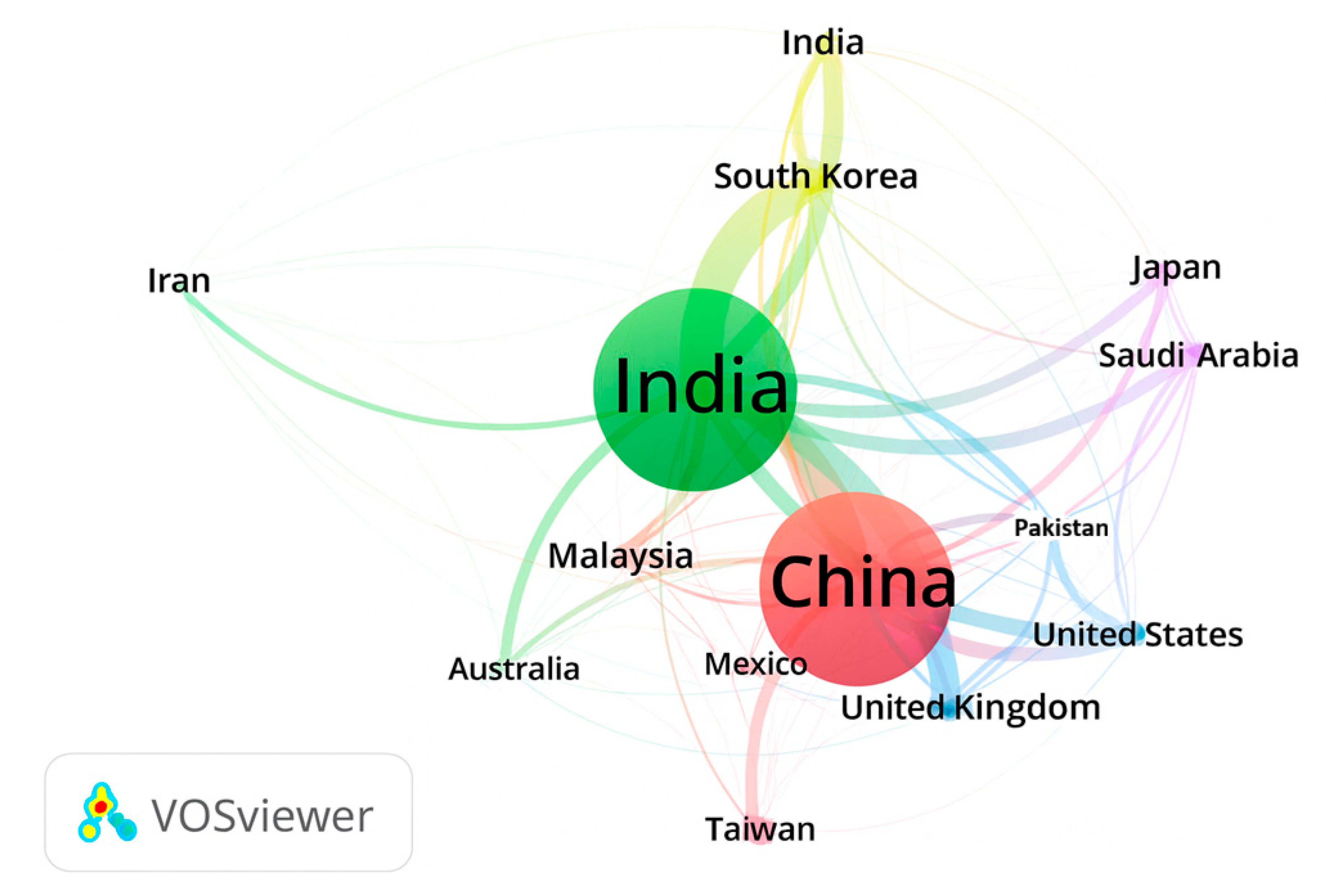
Figure 3 displays the international collaboration map for the field, where the prominent roles of India and China immediately stand out as central hubs within this scientific network, each marked by numerous connections that reveal an active and diverse cooperation dynamic. This visualization not only maps scientific partnerships but also reflects global research priorities and illustrates how certain countries have the lead in addressing critical environmental challenges taken through sustainable technologies [27]. India, occupying the most prominent central node, acts as a bridge between Asia, the Middle East, and the West. Its collaboration with countries such as Iran, Australia, and the United Kingdom suggests an open and exchange-oriented research strategy. China, closely aligned in both size and connectivity, demonstrates a strong investment in applied science and an ambitious international projection. This symbolic and technical proximity between India and China on the map may reflect not only technological competition but also a shared vision for addressing industrial waste management through sustainable innovation.
Figure 3.
International collaboration network between countries. Generated with VOSviewer from co-authorship data in Scopus (2005–2025). The analysis includes all documents in the corpus (N = 239).
Likewise, countries such as Malaysia, Japan, and Saudi Arabia exemplify how MFC-related science has attracted interest across regions with diverse economic and environmental contexts. Although some nodes are smaller in size, their multiple connections suggest a key role as technical partners or knowledge recipients. In other words, while they may not lead in publication volume, they are essential to the dissemination and validation of the knowledge being produced [28].
Table 1 provides a quantitative snapshot of scientific leadership in the field of microbial fuel cells (MFCs) applied to textile dye decolorization—an emerging technology that seeks to merge energy sustainability with environmental remediation. China’s leadership in publication volume (38 publications) aligns with its national circular economy strategy and substantial R&D investment in sustainable technologies. As the world’s largest textile producer, China faces significant regulatory pressure to address industrial wastewater, driving research into innovative solutions like MFCs. Similarly, India’s focus on low-cost, decentralized MFC systems reflects its need for affordable wastewater treatment in densely populated urban areas with limited infrastructure. This leadership aligns with its national circular economy strategy, which has driven large-scale policies for industrial waste recycling and treatment [29]. India ranks second with 33 publications and 468 citations, distinguished for its focus on decentralized, low-cost solutions, particularly relevant in densely populated urban settings like Delhi, where waste management remains a critical challenge [30]. Notably, countries such as the United Kingdom (38.8) and the United States (33.29) report high average citations per publication, despite having fewer total publications. This suggests that their contributions, although less frequent, are highly influential and potentially focused on theoretical frameworks or disruptive innovations [31]. Both countries also exhibit high levels of international collaboration—80% for the UK and 57.1% for the US—reinforcing their roles as knowledge transfer hubs. Australia stands out as well, with 62.5% of its publications involving international co-authorship and an average of 24.75 citations per article, signaling an open and globally integrated research strategy. In contrast, countries such as Iran and Egypt show lower rates of international collaboration, which may limit the global visibility of their research, despite maintaining a respectable level of scientific output. The presence of countries like Malaysia, Saudi Arabia, and South Korea reflects the growing geographic diversification of research on MFCs. Saudi Arabia, for instance, has invested in sustainable technologies such as green hydrogen and carbon capture, which may explain its interest in bioelectrochemical systems like MFCs [32].
Table 1.
Scientific production and citation impact by country in Mfc–textile dye research.
The geographic distribution of scientific productivity in MFC research for textile dye treatment reflects underlying structural and policy drivers rather than merely research capacity. China’s dominance (38 publications, 721 citations) aligns strategically with its “Ecological Civilization” national policy and substantial state investment in circular economy technologies. As the world’s largest textile producer, facing severe environmental challenges from industrial wastewater, China has prioritized bioremediation technologies through national research grants and institutional mandates. Similarly, India’s strong research output responds to its urgent need for decentralized, low-cost wastewater solutions in densely populated regions where conventional treatment infrastructure is inadequate. The high citation impact from Western countries like the United Kingdom and United States, despite lower publication volumes, suggests a focus on fundamental breakthroughs and theoretical frameworks rather than applied research. This pattern mirrors global innovation dynamics where developed countries often pioneer conceptual advances while emerging economies lead in context-specific applications. Furthermore, the limited representation from Latin American and African nations—despite significant textile industries in countries like Brazil and Bangladesh—highlights how research priorities are shaped by funding availability, research infrastructure, and policy focus rather than environmental need alone.
3.3. Evaluation of High-Impact Research Contributions
Table 2 highlights the most influential articles in the field, with Holkar CR (2016), published in the Journal of Environmental Management, standing out as the most cited work—garnering 1633 global citations and a normalized citation rate of 5.50. This positions the article as the most impactful in terms of international reach. Its critical approach to textile wastewater treatment has been widely referenced, underscoring the urgency and relevance of the topic on the global environmental agenda [33]. Reviews of this nature are key to establishing robust theoretical frameworks and guiding future research toward sustainable solutions. Next is the study by Pant D (2010) in Bioresource Technology, with 1051 global citations. While its normalized citation rate is lower (2.56), the work is notable for its analysis of substrates in MFCs for energy production—an essential aspect of the shift toward clean technologies [34]. The use of organic waste as substrates in MFCs has recently gained attention due to its dual benefit: contaminant treatment and bioelectricity generation. An intriguing case is Saravanan A (2021) in Chemosphere, which, despite its relatively recent publication, has accumulated 978 global citations and boasts the highest normalized rate in the table [11,12]. This suggests a rapid and significant impact, likely linked to the post-pandemic emergence in research on sustainable development and emerging technologies [35]. Other articles, such as Solís M (2012) and Ali H (2010), explore the biodegradation and decolorization of azo dyes—persistent pollutants in the textile industry. Although their citation numbers are lower (758 and 689, respectively), their technical relevance remains high given the toxicity and resistance of azo dyes to conventional treatments [36,37]. Studies by Vikrant K (2018) and Wang H (2015) are also noteworthy for their focus on bioremediation and energy harvesting, respectively. These investigations reflect a growing trend toward integrating treatment processes with energy generation, positioning MFCs as a promising technology for advancing circular economy principles [38,39]. The findings reveal a dynamic research ecosystem at the intersection of textile wastewater treatment, sustainability, and energy generation. The evolution of normalized citation rates also suggests that more recent articles are gaining momentum, indicating a possible paradigm shift toward more integrated and eco-friendly solutions.
Table 2.
Top-Cited Articles in Microbial Fuel Cell Research Applied to Textile dyes.
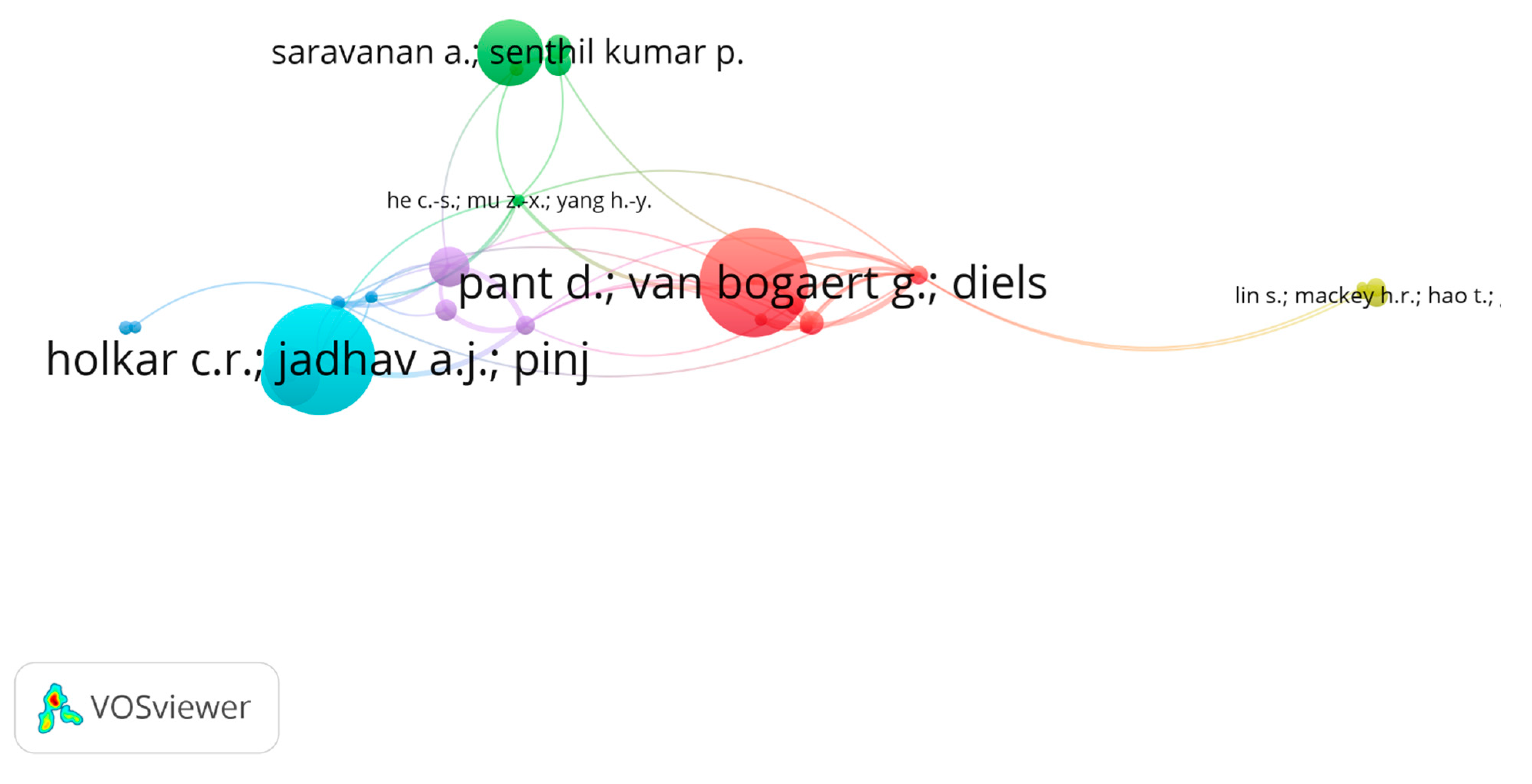
Figure 4 depicts a connectivity network, where each node represents an author and its size reflects the frequency of publications or co-authorships. The links between nodes indicate scientific collaborations, while the color coding organizes research communities with a high density of interaction. Two main clusters stand out: one led by Pant D., Van Bogaert G., and Diels L., and another by Holkar C.R., Jadhav A.J., and Pinjari D.V. The first cluster is associated with studies on MFCs applied to industrial effluent remediation, while the second focuses on advanced oxidation processes and biodegradation of textile dyes. Both groups have produced a significant volume of publications, suggesting they serve as key reference points in the field. However, there are notable gaps in connectivity among certain authors. For instance, the group comprising Lin S., Mackey H.R., and Hao T. appears isolated, with few links to dominant clusters. This may suggest a lack of interdisciplinary collaboration or a distinct thematic orientation—perhaps more focused on environmental engineering or urban wastewater treatment. This disconnect presents an opportunity for future research to integrate bioelectrochemical approaches with conventional treatment technologies [43]. Additionally, some authors with mid- or small-sized nodes, such as Kumar G. and Vikrant K., may be emerging as new contributors in the field. Their integration into broader research networks could accelerate innovation, especially if they explore hybrid applications such as MFCs coupled with photocatalytic or enzymatic processes [44]—a growing trend according to recent studies in Journal of Environmental Management and Bioresource Technology. Another evident gap is the limited representation of authors from regions with high textile production, such as Southeast Asia and Latin America. This suggests a geographical disparity in scientific collaboration, despite the fact that these regions face critical challenges in effluent management. Encouraging South–South or North–South cooperation could enrich the field by introducing contextualized perspectives and locally adapted solutions. This not only identifies existing hubs of scientific leadership but also reveals unexplored frontiers for collaboration. Bridging these gaps could be key to advancing more holistic, sustainable, and globally inclusive solutions for textile dye remediation through bioelectrochemical technologies [45].
Figure 4.
Scientific collaboration network generated through bibliometric analysis of co-authorship. Authors with ≥2 publications in the study domain are shown; the node size corresponds to the total number of documents (VOSviewer using normalized Scopus data).
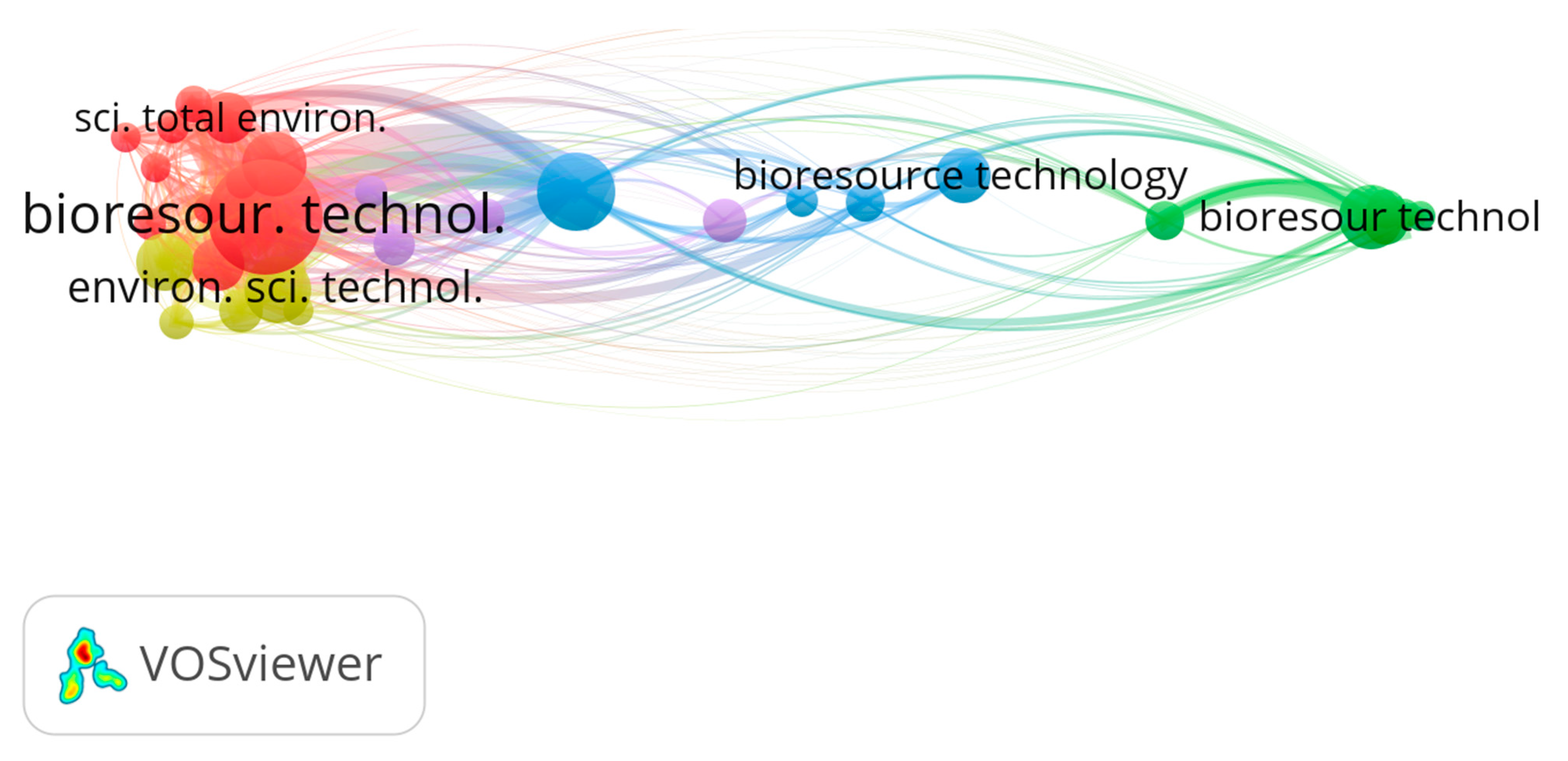
Figure 5 reveals a robust and interconnected structure among leading scientific journals, with Bioresource Technology appearing at the center of the map as the dominant node. This positioning reflects its pivotal role in shaping academic discourse around sustainable innovation and microbial fuel cells (MFCs). Its high impact is evident through frequent co-citations with prestigious journals such as Science of the Total Environment, Environmental Science & Technology, and Journal of Hazardous Materials, indicating strong thematic cohesion around waste valorization, contaminant remediation, and strategies for advancing a circular bioeconomy. The analysis, generated using VOSviewer, shows clearly defined groupings that reflect specialized subdomains. One cluster focuses on chemical engineering and bioprocess optimization, while another concentrates on environmental impact assessment and sustainability metrics [46]. These patterns align with recent trends observed in databases like Scopus, where interdisciplinary approaches increasingly incorporate artificial intelligence, life cycle analysis, and environmental metrics to evaluate biotechnological solutions. Journals such as Chemosphere and Environmental Research Letters have gained prominence for addressing emerging contaminants and climate resilience, highlighting a shift in research priorities in response to global challenges.
Figure 5.
Network of relationships between scientific journals based on co-citation. Generated with VOSviewer using Scopus data (2005–2025). Nodes represent journals; size according to co-citation frequency (performed with Bibliometrix in RStudio on the complete corpus, N = 239).
The structure of this network also underscores the growing importance of collaborative and transdisciplinary research. Journals with strong co-citation links often share common methodological frameworks, including the use of bibliometric tools such as Bibliometrix and VOSviewer to map the scientific landscape [47]. The presence of publications like Frontiers in Microbiology and Journal of Cleaner Production further suggests a convergence between microbiological innovation and industrial sustainability. This phenomenon aligns with global publication trends, with countries such as China, the United States, and India leading in research output and citation in environmental engineering. Thus, the co-citation network not only identifies the intellectual core of sustainability-focused research but also reflects the dynamic evolution of scientific thought. The centrality of Bioresource Technology and its connections to other influential journals solidify its role as a cornerstone in advancing environmental innovation. These findings offer a strategic guide for researchers aiming to position their work within influential publication ecosystems and contribute to the international scientific dialogue on sustainability.
Table 3 provides a comparative overview of the leading scientific journals in the field. Bioresource Technology clearly leads in terms of productivity and impact, with 28 articles, an h-index of 22, and over 3800 citations—positioning it as the central reference for research on sustainability-oriented biotechnologies. Chemosphere and Journal of Hazardous Materials follow closely, each with substantial output and high citation levels, underscoring their relevance in studies on emerging contaminants and remediation processes. The m-index, which adjusts impact based on years since first publication, shows that Environmental Research (1500) and Science of the Total Environment (1003) have gained notable influence in a shorter time span, suggesting interest in their content among recent rising studies. This trend aligns with current bibliometric findings highlighting the emergence of interdisciplinary approaches in environmental engineering, including applications of artificial intelligence, life cycle assessment, and emerging technologies like blockchain to optimize sustainable processes. However, notable gaps are also evident [48]. For instance, journals such as Journal of Hazardous, Toxic, and Radioactive Waste and Environmental Science and Pollution Research exhibit low h- and g-indices, which may indicate limited thematic consolidation or lower international visibility. Additionally, most of the analyzed journals originate from countries with strong research infrastructure (e.g., the United States, China, and European nations), revealing the underrepresentation of lower-income regions in scientific production related to MFCs and textile decontamination. Another important gap is the limited integration of socioeconomic indicators and environmental justice frameworks in the published studies. While the use of tools like VOSviewer and Bibliometrix for mapping collaboration and co-citation networks is expanding, there is still a need to deepen the analysis of the social impact of these technologies—especially within vulnerable communities. Emerging themes like AI-guided optimization and hybrid bioremediation systems face barriers to mainstream adoption due to several factors: (1) interdisciplinary knowledge gaps between computer science and environmental engineering, (2) limited accessibility of AI tools for MFC researchers, and (3) the preference for established experimental approaches over data-driven methodologies in traditional environmental science circles. Bridging these domains requires collaborative frameworks and demonstration of clear performance advantages over conventional methods.
Table 3.
Scientific journals on environmental technology: Production and impact. Sustainable energy and simultaneous decontamination: Bibliometric review of the synergy between MFCs and textile dye decolorization.
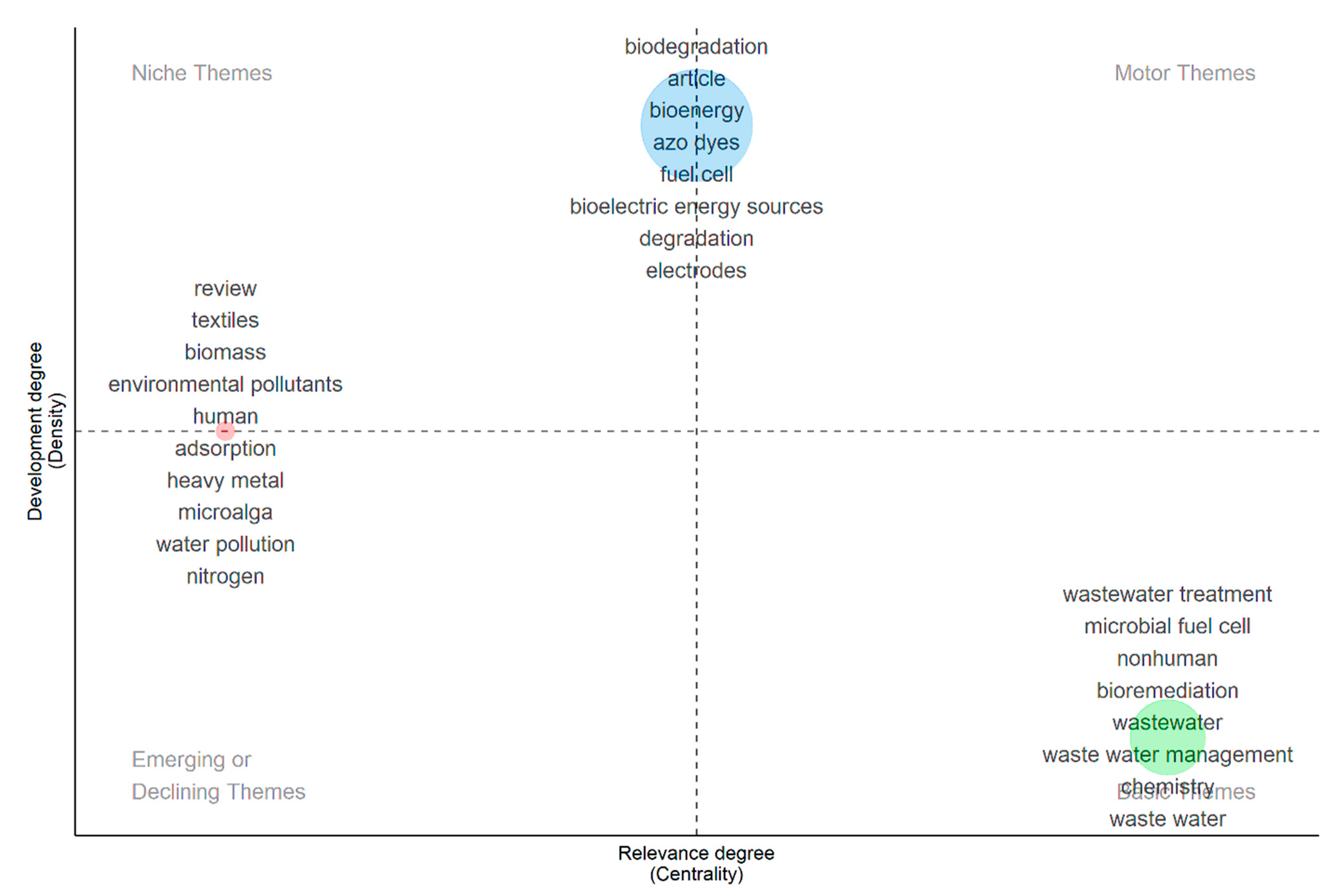
Figure 6 illustrates a diverse thematic structure in research on microbial fuel cells (MFCs) applied to textile wastewater treatment. In the Basic Themes quadrant (lower right), prominent terms such as “wastewater treatment,” “microbial fuel cell,” “bioremediation,” and “enzymes” reflect well-established concepts that form the foundation of this field. These findings indicate a consolidation of core research focused on MFC efficiency in removing organic contaminants while simultaneously generating bioelectricity [49]. Recent research suggests MFCs can achieve COD reductions above 80% and generate power densities up to 0.32 W/m3 using textile dyes as substrates [36]. In the Niche Themes quadrant (upper left), terms like “azo dyes,” “bioelectric energy sources,” and “electrodes” suggest technical specialization in the degradation of synthetic dyes and in the development of materials aimed at enhancing electrochemical performance. While these topics are technically relevant, their low centrality implies they are not yet fully integrated into the mainstream of research. For example, the use of advanced electrodes such as graphene or metal-doped materials remains exploratory and lacks standardization for industrial applications [49,50].
Figure 6.
Strategic diagram of research topics. Developed with Bibliometrix in RStudio using keyword data from Scopus (2005–2025). The diagram classifies topics according to density (internal development) and centrality (external relationship). Quadrants: TR = Driving Topics, TN = Niche Topics, TE = Emerging/Declining Topics, TB = Core Topics.
The emerging or declining themes quadrant (lower left) appears relatively sparse, which could indicate limited exploration in nascent areas or an ongoing thematic transition not yet consolidated. However, terms like “adsorption,” “heavy metal,” and “microalgae” in this quadrant point to promising research opportunities in integrating MFCs with hybrid processes such as bioadsorption or microalgae-based treatments for heavy metal removal. These combinations have yielded encouraging results in pilot studies but still face challenges regarding scalability and sustained efficiency [51].
Among the most significant gaps is the minimal incorporation of explainable artificial intelligence (XAI) to optimize MFC performance, alongside the underrepresentation of developing countries in scientific output on this topic [52]. Furthermore, most studies remain focused on controlled laboratory conditions, without sufficiently addressing the variability of real effluents or the costs associated with industrial-scale implementation [52]. Among the most significant gaps is the minimal incorporation of explainable artificial intelligence (XAI) to optimize MFC performance, alongside the underrepresentation of developing countries in scientific output on this topic [52]. Furthermore, most studies remain focused on controlled laboratory conditions, without sufficiently addressing the variability of real effluents or the costs associated with industrial-scale implementation [52]. Taken together, the strategic analysis reveals a rapidly expanding research domain, with consolidated thematic cores and specialized technical areas—yet it also highlights clear opportunities to advance toward more integrated, accessible, and sustainable solutions.
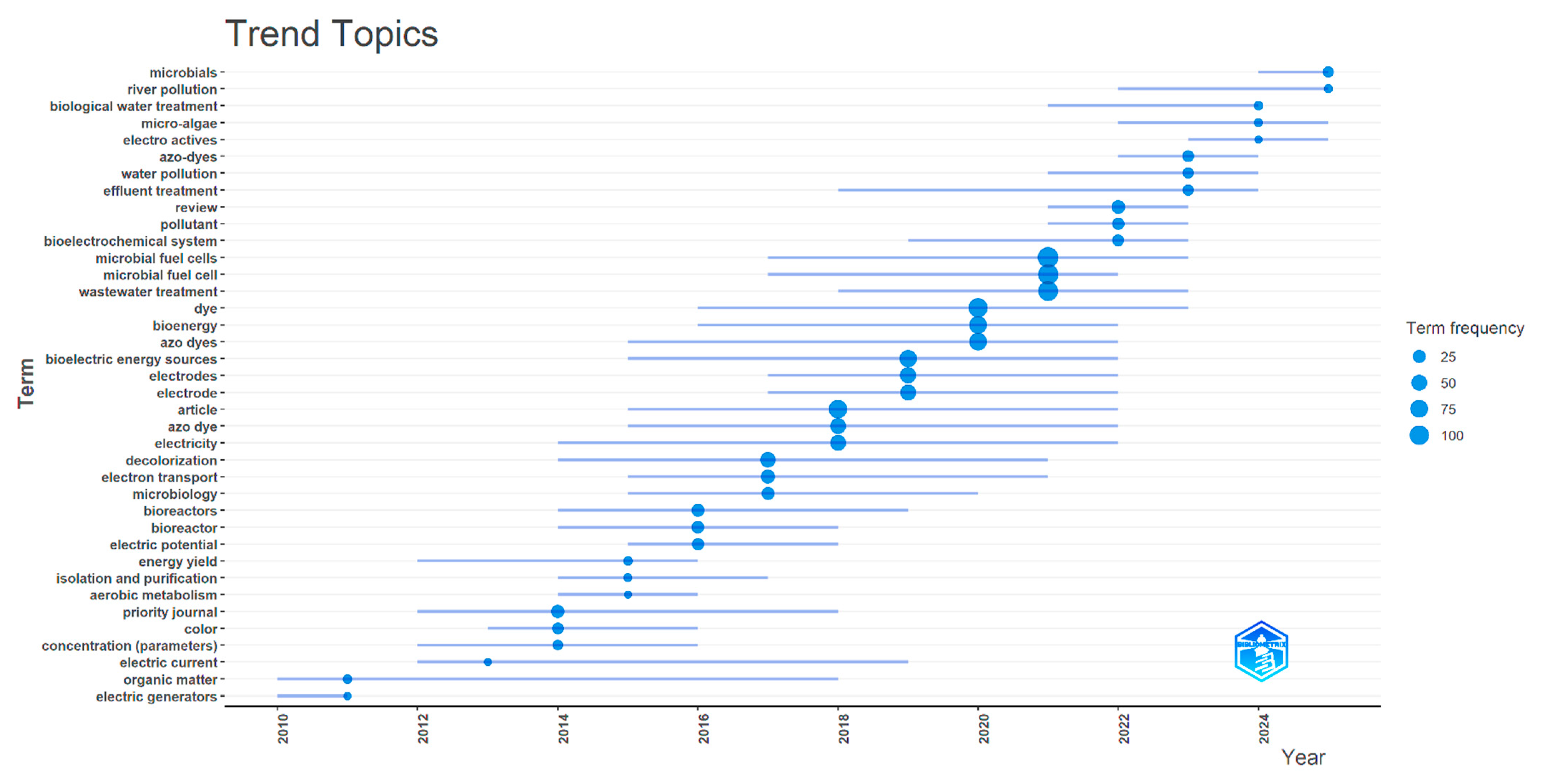
Figure 7 presents the temporal evolution of key scientific terms, revealing clear thematic consolidation around microbial fuel cells (MFCs) applied to textile wastewater treatment. Terms such as “microbial fuel cell”, “wastewater treatment”, “bioelectricity”, and “decolorization” have shown consistent and growing prevalence—indicating their establishment as pillars of research in sustainable energy and simultaneous contaminant removal [53]. Notably, “microbial fuel cell” has maintained over 75 mentions per year in the past decade, reflecting its consolidation as an emerging technology for converting organic waste into electricity. A recent bibliometric analysis reports that China leads scientific production in this field, with over 2700 indexed publications in Scopus between 1990 and 2022. The term “decolorization” has also gained prominence, especially in studies addressing the degradation of azo dyes commonly found in textile dyes. Recent research demonstrates MFCs achieving color removal efficiencies above 80% when using electrodes modified with nanomaterials such as graphene or metal oxides [54,55]. In contrast, “bioelectricity” shows a more moderate trajectory, suggesting that although energy generation is a key benefit of MFCs, it has yet to be fully integrated into industrial-scale applications [56].
Figure 7.
Temporal evolution of key bibliometric terms. Generated with Bibliometrix in RStudio from keyword analysis in Scopus (2005–2025). Shows the annual frequency of terms related to MFCs and textile water treatment. The data were processed and visualized using Bibliometrix and Microsoft Excel.
Among the most notable research gaps are the underexplored terms “heavy metals,” “microalgae,” and “adsorption,” which appear sporadically in Figure 7. This suggests limited research into hybrid systems that combine MFCs with biosorption or microalgae-based processes for improved heavy metal removal. Additionally, explainable artificial intelligence (XAI) remains scarcely applied to MFC optimization—despite its potential to enhance operational efficiency (energy conversion) and reduce costs [57]. Overall, the thematic landscape reflects a robust evolution around MFCs and textile wastewater treatment, while also revealing clear opportunities to expand research toward hybrid technologies, predictive analytics, and industrial scalability [58,59]. Integrating new terms and methodologies may increase the real-world impact of these technologies across diverse socio-environmental contexts.
3.4. Development Horizons and Outstanding Challenges in MFC Integration into Treatment Plants
The future research landscape on microbial fuel cells for textile dye remediation points toward better optimization of electrode materials and cell architecture. Beyond the technical challenges of scalability and cost, it is crucial to consider the environmental impacts and emerging risks associated with water treatment systems. A significant risk is the spread of antibiotic resistance genes within bacterial communities. A recent study by Rong et al. (2025) demonstrated that tetracyclines exert a notable generational effect by promoting the conjugative transfer of plasmids among bacteria in wastewater [59]. This phenomenon underscores the need to evaluate and mitigate the potential dissemination of antimicrobial resistance in the design of new remediation technologies. Furthermore, fundamental materials research demonstrates how raw material selection critically influences carbon-based electrode properties. Al-Majali et al. (2025) show that the precursor materials for carbon foams directly affect key characteristics including conductivity, porosity, and thermal stability [60]. Connecting such fundamental material insights to applied bioelectrochemical systems could address the electrode optimization challenges identified in our niche themes analysis (Figure 6), particularly for enhancing dye removal efficiency and energy recovery in textile wastewater applications. Real-world scalability and implementation of MFCs in treatment facilities also require advances in reactor design and microbial consortium management. A critical challenge lies in maintaining stable and active biofilms under fluctuating effluent conditions, where chemical composition can vary significantly. Specialized literature emphasizes the need to optimize operating parameters (pH, temperature, nutrients) and develop cost-effective, durable membranes or separators [61]. Furthermore, CW–MFC systems (constructed wetland–MFCs) have shown promising results in treatment and energy generation, but greater attention is needed to chamber geometry and hydrodynamic balance to maximize removal rates and reduce internal energy losses [62].
An emerging trend involves the incorporation of explainable artificial intelligence (XAI) and predictive modeling to control and optimize MFCs [63]. Most existing studies rely on conventional statistical analyses, yet the adoption of machine learning and XAI algorithms could help identify optimal operational patterns, forecast system failures, and autonomously adjust parameters in real time [63]. Although still rare in the current literature, this digital application could minimize performance variability and reduce monitoring costs—bringing the technology closer to commercial maturity [64]. The exponential growth in publications since 2015 contrasts sharply with the limited industrial adoption of MFCs. This publication-application gap stems from persistent technical hurdles: electrode biofouling reduces long-term stability, capital costs remain prohibitive for large-scale implementation, and real textile dyes’ variable composition challenges consistent performance. While laboratory studies report promising results, transitioning to industrial settings requires addressing these scalability barriers through materials innovation and cost-reduction strategies [65]. While China, India, and the United States undeniably lead in scientific output and citations, high-effluent-producing regions such as Latin America, Sub-Saharan Africa, and Southeast Asia are underrepresented in studies and international collaborations. Bridging this gap will require fostering South–South and North–South networks, promoting technology transfer, and adapting MFC solutions to local contexts by assessing impacts on vulnerable communities and ecosystem services. Finally, aligning research with the Sustainable Development Goals (SDGs) demands the integration of life cycle analysis, economic assessment, and policy frameworks. Carbon emissions traceability, water footprint, and reuse potential of treated water should be modeled from the design phase [66,67]. Additionally, synergies between MFCs and emerging technologies—such as blockchain for byproduct traceability or integration with waste management systems—offer a holistic framework where environmental remediation and energy generation contribute to circular economies [68]. These interdisciplinary and transdisciplinary approaches will shape the research agenda in the decade ahead.
Our bibliometric analysis reveals critical gaps that define clear research priorities. The underrepresentation of ‘techno-economic analysis’ in keyword networks (Figure 7) indicates that future studies must prioritize economic feasibility assessments to bridge the lab-to-industry gap. Specifically, cost–benefit analyses of nanomaterial electrodes should evaluate whether their performance advantages justify the 3–5× cost increase compared to conventional carbon electrodes.
Similarly, the absence of ‘life-cycle assessment’ terms in strategic diagrams (Figure 6) highlights the need to evaluate environmental trade-offs in MFC implementations. Future work should quantify the carbon footprint of MFC systems compared to conventional treatment, particularly assessing whether bioelectricity generation offsets embedded energy in electrode fabrication.
The geographic clustering in authorship networks (Figure 4), with limited representation from high-textile-producing regions like Southeast Asia, underscores the necessity of context-specific pilot-scale validation. Rather than universal designs, future research should develop modular MFC configurations adaptable to the variable effluent characteristics and economic constraints of textile clusters in developing economies.
Furthermore, the isolated position of ‘explainable AI’ in thematic evolution maps (Figure 7) suggests that bridging this conceptual gap requires demonstrating tangible benefits. Research should focus on developing interpretable machine learning models that not only predict MFC performance but also provide actionable insights into biofilm management and operational optimization.
4. Conclusions
This study represents the first comprehensive bibliometric analysis specifically examining the synergy between microbial fuel cells and textile wastewater decolorization from an integrated energy-sustainability perspective. The real-world implications of our findings are significant: MFC technology offers a pathway toward circular economy models in the textile industry by transforming wastewater treatment from an energy-consuming process to an energy-generating one. For industrial practitioners, our identified research priorities—particularly in electrode materials, hybrid systems, and scalability—provide a strategic roadmap for developing cost-effective solutions that address both environmental compliance and energy efficiency challenges in textile manufacturing hubs. Regarding Q1, the data reveals a steady evolution in scientific output between 2005 and 2025, with a notable emergence after 2015—reflecting growing interest in hybrid solutions that combine bioelectricity generation and environmental remediation. This consolidation of a multidisciplinary approach confirms the transition from exploratory studies to more complex and scalable models. For Q2, the findings show that countries such as China and India lead in scientific production, both in number of publications and citation impact. However, the high level of international collaboration observed in countries like Australia, the United Kingdom, and the United States suggests the presence of strategic knowledge-transfer nodes. This implies global connectivity is a key factor in the development of sustainable technologies, although significant geographic gaps remain in such regions as Latin America and Africa.
In relation to Q3, Bioresource Technology has been identified as the most influential journal in the field, forming strong co-citation networks with publications focused on sustainability, environmental engineering, and applied biotechnologies. This editorial centrality reinforces the scientific legitimacy of MFCs as a viable and increasingly recognized technological option. Findings related to Q4 reveal well-defined thematic clusters, strategically focused on dye biodegradation, electrode design, and energy efficiency. VOSviewer visualizations confirm the existence of consolidated research communities, although gaps in connectivity between emerging authors and isolated thematic lines suggest opportunities for greater interdisciplinary integration. Regarding Q5, terms such as “MFC,” “wastewater treatment,” and “bioremediation” show ascending trajectories and have become core discursive elements. Conversely, the limited occurrence of concepts like “microalgae,” “adsorption,” or “explainable artificial intelligence” indicates room to extend the knowledge frontier toward hybrid technologies and predictive frameworks. Q6 highlights Environmental Science, Chemical Engineering, and Microbiology as the dominant disciplines, affirming the interdisciplinary nature of the field. However, areas such as Materials Science, Computer Science, and Business remain underrepresented—offering expansion potential for studies on economic viability, waste management, and digital simulation.
For Q7, the most highly cited articles offer critical reviews and theoretical frameworks that have shaped the technical and conceptual development of MFCs. Normalized citation metrics show that recent contributions with strong structures can rapidly achieve visibility. Finally, Q8 points to methodological and geographic gaps, including limited use of real-world scenarios, scarce inclusion of vulnerable regions, and minimal integration of socioeconomic criteria. Overcoming these limitations will require fostering inclusive collaboration networks, adapting technologies to local contexts, and promoting transdisciplinary research that bridges environmental sustainability with social justice.
Author Contributions
Conceptualization, S.J.R.-F. and R.L.; Data curation, F.D. and D.D.-N.; Formal analysis, M.G.C.; Investigation S.J.R.-F. and M.G.C.; Software, R.N.-N. and A.A.-M.; Validation, A.A.-M.; Writing—original draft, S.J.R.-F. and R.L. All authors have read and agreed to the published version of the manuscript.
Funding
This research has been financed by the Universidad Autonoma del Peru.
Data Availability Statement
No new data were created or analyzed in this study.
Conflicts of Interest
The authors declare no conflict of interest.
References
- Kwakye, J.M.; Ekechukwu, D.E.; Ogundipe, O.B. Policy approaches for bioenergy development in response to climate change: A conceptual analysis. World J. Adv. Eng. Technol. Sci. 2024, 12, 299–306. [Google Scholar] [CrossRef]
- Sharma, R.; Choudhary, P.; Thakur, G.; Pathak, A.; Singh, S.; Kumar, A.; Lo, S.-L.; Kumar, P. Sustainable management of biowaste to bioenergy: A critical review on biogas production and techno-economic challenges. Biomass Bioenergy 2025, 196, 107734. [Google Scholar] [CrossRef]
- de Almeida, E.J.R.; Halfeld, G.G.; Reginatto, V.; de Andrade, A.R. Simultaneous energy generation, decolorization, and detoxification of the azo dye Procion Red MX-5B in a microbial fuel cell. J. Environ. Chem. Eng. 2021, 9, 106221. [Google Scholar] [CrossRef]
- Sonu, K.; Sogani, M.; Syed, Z.; Rajvanshi, J. Treatment of Textile Textile dyer with Simultaneous Bio-electricity Generation in Microbial Fuel Cell: A Review. In Microbial Remediation of Hazardous Chemicals from Water & Industrial Wastewater Treatment Plant; Springer: Berlin/Heidelberg, Germany, 2024; pp. 219–243. [Google Scholar]
- Kusumlata; Ambade, B.; Kumar, A.; Gautam, S. Sustainable solutions: Reviewing the future of textile dye contaminant removal with emerging biological treatments. Limnol. Rev. 2024, 24, 126–149. [Google Scholar] [CrossRef]
- Deka, R.; Shreya, S.; Mourya, M.; Sirotiya, V.; Rai, A.; Khan, M.J.; Vinayak, V.; Ahirwar, A.; Schoefs, B.; Bilal, M.; et al. A techno-economic approach for eliminating dye pollutants from industrial effluent employing microalgae through microbial fuel cells: Barriers and perspectives. Environ. Res. 2022, 212, 113454. [Google Scholar] [CrossRef] [PubMed]
- Hassan, M.; Kanwal, S.; Singh, R.S.; Sa, M.A.; Anwar, M.; Zhao, C. Current challenges and future perspectives associated with configuration of microbial fuel cell for simultaneous energy generation and wastewater treatment. Int. J. Hydrog. Energy 2024, 50, 323–350. [Google Scholar] [CrossRef]
- Banerjee, S. Simultaneous Treatment of Wastewater with Energy Recovery: A Microbial Fuel Cell Approach. In Application of Microbial Technology in Wastewater Treatment and Bioenergy Recovery; Springer Nature: Singapore, 2024; pp. 447–463. [Google Scholar]
- Apollon, W.; Rusyn, I.; González-Gamboa, N.; Kuleshova, T.; Luna-Maldonado, A.I.; Vidales-Contreras, J.A.; Kamaraj, S.K. Improvement of zero waste sustainable recovery using microbial energy generation systems: A comprehensive review. Sci. Total Environ. 2022, 817, 153055. [Google Scholar] [CrossRef]
- Mahmud, J.; Hastuti, P.; Rafif, M.F.; Santoso, I.; Purnama, R.A.; Zubair, M.; Dahmir, F.; Sadikin, B.S.; Fifianny, H.; Utomo, S.; et al. Prioritizing Renewable Energy Research Using Quantitative and Qualitative Approaches of Technology Foresight. Preprint 2025. under review. [Google Scholar] [CrossRef]
- Kesarwani, S.; Panwar, D.; Mal, J.; Pradhan, N.; Rani, R. Constructed wetland coupled microbial fuel cell: A clean technology for sustainable treatment of wastewater and bioelectricity generation. Fermentation 2022, 9, 6. [Google Scholar] [CrossRef]
- Jiao, H.; He, X.; Sun, J.; Elsamahy, T.; Al-Tohamy, R.; Kornaros, M.; Ali, S.S. A critical review on sustainable biorefinery approaches and strategies for wastewater treatment and production of value-added products. Energy Ecol. Environ. 2024, 9, 1–24. [Google Scholar] [CrossRef]
- Rafaqat, S.; Ali, N.; Torres, C.; Rittmann, B. Recent progress in treatment of dyes wastewater using microbial-electro-Fenton technology. RSC Adv. 2022, 12, 17104–17137. [Google Scholar] [CrossRef]
- Ira, R.; Deswal, S.; Prakash, T. Role of the Microbial Community in Energy Recovery via Wastewater Treatment. In Application of Microbial Technology in Wastewater Treatment and Bioenergy Recovery; Springer Nature: Singapore, 2024; pp. 213–249. [Google Scholar]
- Cárdenas Mendoza, T.J.; Quinto Sánchez, M.; Hermoza Guerra, E.G.; Uribe Valenzuela, C.L. Decoloración de efluentes textiles que contienen colorantes reactivos mediante el método de electro-oxidación con electrodos de titanio. Rev. Soc. Química Perú 2023, 89, 227–239. [Google Scholar] [CrossRef]
- Torres, C. Extracción de las betalaínas de la remolacha ecuatoriana mediante diferentes métodos de espectroscopía para la industria textil extraction of betalains from ecuadorian. Focuscience 2023, 1, 20–32. [Google Scholar]
- Cabrera Acatitla, E. Degradación del colorante azoico violeta 51 por los hongos de la pudrición blanca: Pleurotus ostreatus (Jacq. Ex Fr.) Kummer., Psilocybe cubensis (Singer) y Psilocybe yungensis (Singer & AH Sm.) (Basidiomycota). 2022. Available online: https://repositorioinstitucional.buap.mx/items/2f305b88-e951-4127-817c-2fdaed881060 (accessed on 3 December 2025).
- Singh, S.; Singh, A.; Asthana, R.K. Strategies for bioenergy and biofuels from algae biomass. In Microalgal Biofuels; Woodhead Publishing: London, UK, 2025; pp. 21–43. [Google Scholar]
- Molatudi, L.E.; Kunene, T.J.; Mashifana, T. Strategies for Biomethane Purification: A Critical Review and New Approaches. GCB Bioenergy 2025, 17, e70040. [Google Scholar] [CrossRef]
- Erlwein, A.; Ruppert, H. Sustainability of a synergistic bioenergy campus concept. Biomass Bioenergy 2025, 200, 108007. [Google Scholar] [CrossRef]
- Eweade, B.S.; Joof, F.; Adebayo, T.S. Analyzing India’s coal, natural gas, and biomass energy consumption: Evidence from a Fourier technique to promote sustainable development. In Natural Resources Forum; Blackwell Publishing Ltd.: Oxford, UK, 2025; Volume 49, pp. 1238–1256. [Google Scholar]
- Zhang, J.; Zhuge, C.; Huang, Q.; Wang, B.; Li, Y.E.; Oosterveer, P. Farmers’ decisions on crop residues utilization, greenhouse gases reduction and subsidy of crop residue-based bioenergy: An agent-based life cycle model. Sustain. Prod. Consum. 2025, 55, 24–36. [Google Scholar] [CrossRef]
- Srivastava, A.; Rani, R.M.; Patle, D.S.; Kumar, S. Emerging bioremediation technologies for the treatment of textile wastewater containing synthetic dyes: A comprehensive review. J. Chem. Technol. Biotechnol. 2022, 97, 26–41. [Google Scholar] [CrossRef]
- Umar, A.; Mubeen, M.; Ali, I.; Iftikhar, Y.; Sohail, M.A.; Sajid, A.; Zhou, L.; Kumar, A.; Solanki, M.K.; Divvela, P.K. Harnessing fungal bio-electricity: A promising path to a cleaner environment. Front. Microbiol. 2024, 14, 1291904. [Google Scholar] [CrossRef] [PubMed]
- Li, L.; Chai, W.; Sun, C.; Huang, L.; Sheng, T.; Song, Z.; Ma, F. Role of microalgae-bacterial consortium in wastewater treatment: A review. J. Environ. Manag. 2024, 360, 121226. [Google Scholar] [CrossRef]
- Sathianesan Vimala, S.M.; González-Vázquez, O.F.; Moreno-Virgen, M.D.R.; Kamaraj, S.K.; Sathianesan Vimala, S.M.; Hernández-Montoya, V.; Tovar-Gómez, R. Removal of Priority Water Pollutants Using Adsorption and Oxidation Process Combined with Sustainable Energy Production. In Metal, Metal-Oxides and Metal-Organic Frameworks for Environmental Remediation; Springer International Publishing: Cham, Switzerland, 2021; pp. 117–145. [Google Scholar]
- Jindo, K.; Ghaffari, G.; Lamichhane, M.; Lazarus, A.; Sawada, Y.; Langeveld, H. Assessment of trade-off balance of maize stover use for bioenergy and soil erosion mitigation in Western Kenya. Front. Sustain. Food Syst. 2025, 9, 1409457. [Google Scholar] [CrossRef]
- Guo, W.; Guo, T.; Zhang, Y.; Yin, L.; Dai, Y. Progress on simultaneous photocatalytic degradation of pollutants and production of clean energy: A review. Chemosphere 2023, 339, 139486. [Google Scholar] [CrossRef]
- Sebastian, R.M.; Billal, M.M.; Kumar, A. The development of a framework to assess waste and biomass availability: A case study for Canada. Resour. Conserv. Recycl. 2025, 215, 108170. [Google Scholar] [CrossRef]
- Makepa, D.C.; Chihobo, C.H.; Musademba, D. Technological advancements in biofuel, bioproducts, and bioenergy production from fast pyrolysis of lignocellulosic biomass. In Biofuels and Bioenergy; Elsevier Science Ltd.: Amsterdam, The Netherlands, 2025. [Google Scholar]
- Sharma, K.; Pandit, S.; Mathuriya, A.S.; Gupta, P.K.; Pant, K.; Jadhav, D.A. Microbial electrochemical treatment of methyl red dye degradation using co-culture method. Water 2022, 15, 56. [Google Scholar] [CrossRef]
- Mohd Firdaus, R.; Abdul Mulok Oon, N.; Aroua, M.K.; Gew, L.T. The P-graph approach in optimal synthesis and planning of waste management towards achieving sustainable development goals: A systematic review. Waste Manag. Res. 2025, 43, 455–473. [Google Scholar] [CrossRef] [PubMed]
- Holkar, C.R.; Jadhav, A.J.; Pinjari, D.V.; Mahamuni, N.M.; Pandit, A.B. A critical review on textile wastewater treatments: Possible approaches. J. Environ. Manag. 2016, 182, 351–366. [Google Scholar] [CrossRef] [PubMed]
- Pant, D.; Van Bogaert, G.; Diels, L.; Vanbroekhoven, K. A review of the substrates used in microbial fuel cells (MFCs) for sustainable energy production. Bioresour. Technol. 2010, 101, 1533–1543. [Google Scholar] [CrossRef]
- Saravanan, A.; Kumar, P.S.; Jeevanantham, S.; Karishma, S.; Tajsabreen, B.; Yaashikaa, P.R.; Reshma, B. Effective water/wastewater treatment methodologies for toxic pollutants removal: Processes and applications towards sustainable development. Chemosphere 2021, 280, 130595. [Google Scholar] [CrossRef]
- Solís, M.; Solís, A.; Pérez, H.I.; Manjarrez, N.; Flores, M. Microbial decolouration of azo dyes: A review. Process Biochem. 2012, 47, 1723–1748. [Google Scholar] [CrossRef]
- Ali, H. Biodegradation of synthetic dyes—A review. Water Air Soil Pollut. 2010, 213, 251–273. [Google Scholar] [CrossRef]
- Vikrant, K.; Giri, B.S.; Raza, N.; Roy, K.; Kim, K.H.; Rai, B.N.; Singh, R.S. Recent advancements in bioremediation of dye: Current status and challenges. Bioresour. Technol. 2018, 253, 355–367. [Google Scholar] [CrossRef]
- Wang, H.; Park, J.D.; Ren, Z.J. Practical energy harvesting for microbial fuel cells: A review. Environ. Sci. Technol. 2015, 49, 3267–3277. [Google Scholar] [CrossRef]
- Ieropoulos, I.A.; Greenman, J.; Melhuish, C.; Hart, J. Comparative study of three types of microbial fuel cell. Enzym. Microb. Technol. 2005, 37, 238–245. [Google Scholar] [CrossRef]
- Sun, J.; Li, W.; Li, Y.; Hu, Y.; Zhang, Y. Redox mediator enhanced simultaneous decolorization of azo dye and bioelectricity generation in air-cathode microbial fuel cell. Bioresour. Technol. 2013, 142, 407–414. [Google Scholar] [CrossRef]
- Fang, Z.; Song, H.L.; Cang, N.; Li, X.N. Electricity production from Azo textile dyer using a microbial fuel cell coupled constructed wetland operating under different operating conditions. Biosens. Bioelectron. 2015, 68, 135–141. [Google Scholar] [CrossRef]
- Tripathi, M.; Singh, S.; Pathak, S.; Kasaudhan, J.; Mishra, A.; Bala, S.; Pathak, N.; Garg, D.; Singh, R.; Singh, P.; et al. Recent strategies for the remediation of textile dyes from wastewater: A systematic review. Toxics 2023, 11, 940. [Google Scholar] [CrossRef]
- Huang, W.; Liu, S.; Zhang, T.; Wu, H.; Pu, S. Bibliometric analysis and systematic review of electrochemical methods for environmental remediation. J. Environ. Sci. 2024, 144, 113–136. [Google Scholar] [CrossRef]
- Islam, M.T.; Al Mamun, M.A.; Halim, A.F.M.F.; Peila, R.; Sanchez Ramirez, D.O. Current trends in textile wastewater treatment—Bibliometric review. Environ. Sci. Pollut. Res. 2024, 31, 19166–19184. [Google Scholar] [CrossRef]
- Urbina-Suarez, N.A.; Angel-Ospina, A.C.; Lopez-Barrera, G.L.; Barajas-Solano, A.F.; Machuca-Martínez, F. S-curve and landscape maps for the analysis of trends on industrial textile wastewater treatment. Environ. Adv. 2024, 15, 100491. [Google Scholar] [CrossRef]
- Huang, M.; Zhao, L.; Chen, D.; Liu, J.; Hu, S.; Li, Y.; Yang, Y.; Wang, Z. Bibliometric analysis and systematic review of electrogenic bacteria in constructed wetland-microbial fuel cell: Key factors and pollutant removal. J. Clean. Prod. 2024, 451, 142018. [Google Scholar] [CrossRef]
- Radeef, A.Y.; Najim, A.A. Microbial fuel cell: The renewable and sustainable magical system for wastewater treatment and bioenergy recovery. Energy 360 2024, 1, 100001. [Google Scholar] [CrossRef]
- Alcaide, F.; Sirés, I.; Brillas, E.; Cabot, P.L. Coupling wastewater treatment with fuel cells and hydrogen technology. Curr. Opin. Electrochem. 2024, 45, 101530. [Google Scholar] [CrossRef]
- Zahran, M. Iron-and carbon-based nanocomposites as anode modifiers in microbial fuel cells for wastewater treatment and power generation applications. J. Water Process Eng. 2024, 64, 105679. [Google Scholar] [CrossRef]
- Yan, H. Bibliometric Analysis on Socio-Technological Innovation in Water Governance Under the High Water-Intensive Industry Perspective: A Case Based on the CDP Water Impact Index Report. Master’s Thesis, City University of Hong Kong, Kowloon, China, 2023. [Google Scholar]
- Olvera-Vargas, H.; Trellu, C.; Nidheesh, P.V.; Mousset, E.; Ganiyu, S.O.; Martínez-Huitle, C.A.; Oturan, M.A.; Zhou, M. Challenges and opportunities for large-scale applications of the electro-Fenton process. Water Res. 2024, 266, 122430. [Google Scholar] [CrossRef]
- Guo, J.; Zhou, T.; Guo, H.; Ge, C.; Lu, J. Application of nano-TiO2@ adsorbent composites in the treatment of textile dyer: A review. J. Eng. Fibers Fabr. 2025, 20, 15589250251329450. [Google Scholar]
- Ahmed, M.A.; Mohamed, A.A. Advances in ultrasound-assisted synthesis of photocatalysts and sonophotocatalytic processes: A review. Iscience 2024, 27, 108583. [Google Scholar] [CrossRef]
- Sabina, R.; Hussain, N. Circular Economy and Life Cycle. In Dye Pollution from Textile Industry: Challenges and Opportunities for Sustainable Development; Springer: Berlin/Heidelberg, Germany, 2024; p. 351. [Google Scholar]
- Mittal, Y.; Dwivedi, S.; Gupta, S.; Panja, R.; Saket, P.; Patro, A.; Yadav, A.K.; Saeed, T.; Martínez, F. Progressive Transformation of Microbial Fuel Cells (MFC s) to Sediment MFC s, Plant MFC s, and Constructed Wetland Integrated MFC s. Microb. Electrochem. Technol. Fundam. Appl. 2023, 2, 407–444. [Google Scholar]
- Gupta, E.; Roy, A.; Kumar, S.; Nand, S.; Mishra, V.K.; Patel, A.; Srivastava, P.K.; Srivastava, S. Recovery of Bioelectricity Generation from Wastewater Resources Using Constructed Wetlands by Adoption of Microbial Fuel Cell Technology. In Integrated Bioeletrochemical–Constructed Wetland System for Future Sustainable Wastewater Treatment; Springer Nature: Singapore, 2025; pp. 67–96. [Google Scholar]
- Liu, Y.; Kong, C.; Liu, L.; Jiang, X.; Liu, C.; Liu, F.; Wang, Y.; Sun, J. Progress in copper-based supported heterogeneous electro-Fenton catalysts. Chem. Eng. J. 2024, 486, 150217. [Google Scholar] [CrossRef]
- Rong, L.; Zhang, B.; Qiu, H.; Zhang, H.; Yu, J.; Yuan, Q.; Luo, X.; Wu, L.; Chen, H.; Mo, Y.; et al. Significant generational effects of tetracyclines upon the promoting plasmid-mediated conjugative transfer between typical wastewater bacteria and its mechanisms. Water Res. 2025, 287, 124290. [Google Scholar] [CrossRef] [PubMed]
- Al-Majali, M.R.; Zhang, M.; Al-Majali, Y.T.; Trembly, J.P. Impact of raw material on thermo-physical properties of carbon foam. Can. J. Chem. Eng. 2025, 103, 1309–1318. [Google Scholar] [CrossRef]
- Randhawa, J.S. Methodologies for the Detection and Remediation of Organic Micropollutants in Terrestrial Ecosystems. In Organic Micropollutants in Aquatic and Terrestrial Environments; Springer Nature: Cham, Switzerland, 2024; pp. 159–179. [Google Scholar]
- Liaqat, I.; Rehman, A.; Yang, G.; Ali, S.; Arshad, M. Turning Waste into Power: Bioenergy from Textile dye Treatment. In Enzymes in Textile Processing: A Climate Changes Mitigation Approach: Textile Industry, Enzymes, and SDGs; Springer: Berlin/Heidelberg, Germany, 2025; pp. 303–330. [Google Scholar]
- Echejiuba, C.J.; Ogugbue, C.J.; Obuekwe, I.S. Enhanced azo dye (Sudan G) decolorization and simultaneous electricity generation using a bacterial consortium in a dual-chamber microbial fuel cell. Stud. Univ. Babes-Bolyai Biol. 2025, 70, 85–120. [Google Scholar] [CrossRef]
- Chaurasiya, A.; Budania, Y.; Shah, G.; Mishra, A.; Singh, S. Carbon-based electrodes for photo-bio-electrocatalytic microbial fuel and electrolysis cells: Advances and perspectives. Mater. Horiz. 2025, 12, 7865–7893. [Google Scholar] [CrossRef]
- Tyagi, S.; Kapoor, R.T.; Singh, R.; Shah, M.P. Insights on microbial enzymes mediated biodegradation of Azo dyes: A sustainable strategy for environment clean up. Bioremediat. J. 2025, 1–43. [Google Scholar] [CrossRef]
- Dhillon, S.K.; Chung, T.H.; Dhar, B.R. Bioremediation meets biosensing: Leveraging microbial electrochemical cell-based biosensors. In Reviews in Environmental Science and Bio/Technology; Springer: Berlin/Heidelberg, Germany, 2025; pp. 1–41. [Google Scholar]
- Varsha, V.S.; Boreda, T.; Pailla, S.R.; Kambhampati, Y.; Gourav, T.; Yadavalli, R.; Nagendranatha Reddy, C.; Vijaya Laxmi, G.; Nadimpalli, S. Nanotechnology and Microbes: Revolutionizing Water Management. In Nano-Microbiology for Sustainable Development; Springer Nature: Cham, Switzerland, 2025; pp. 293–329. [Google Scholar]
- Adesiyan, I.M.; Feruke-Bello, Y.M.; Owoseni, M.C.; Adepoju, O.A. Advances in Microbial Wastewater TreatmentSystems. In Wastewater Treatment Through Nature-Based Solutions: Achieving Sustainable Development Goal 6; Springer Nature: Singapore, 2025; pp. 63–93. [Google Scholar]
Disclaimer/Publisher’s Note: The statements, opinions and data contained in all publications are solely those of the individual author(s) and contributor(s) and not of MDPI and/or the editor(s). MDPI and/or the editor(s) disclaim responsibility for any injury to people or property resulting from any ideas, methods, instructions or products referred to in the content. |
© 2025 by the authors. Licensee MDPI, Basel, Switzerland. This article is an open access article distributed under the terms and conditions of the Creative Commons Attribution (CC BY) license (https://creativecommons.org/licenses/by/4.0/).