Postnatal Steroids in Preterm Infants: A Narrative Review Series—Part 1: Inflammatory Modulation and Respiratory Impacts
 , , and
Highlights
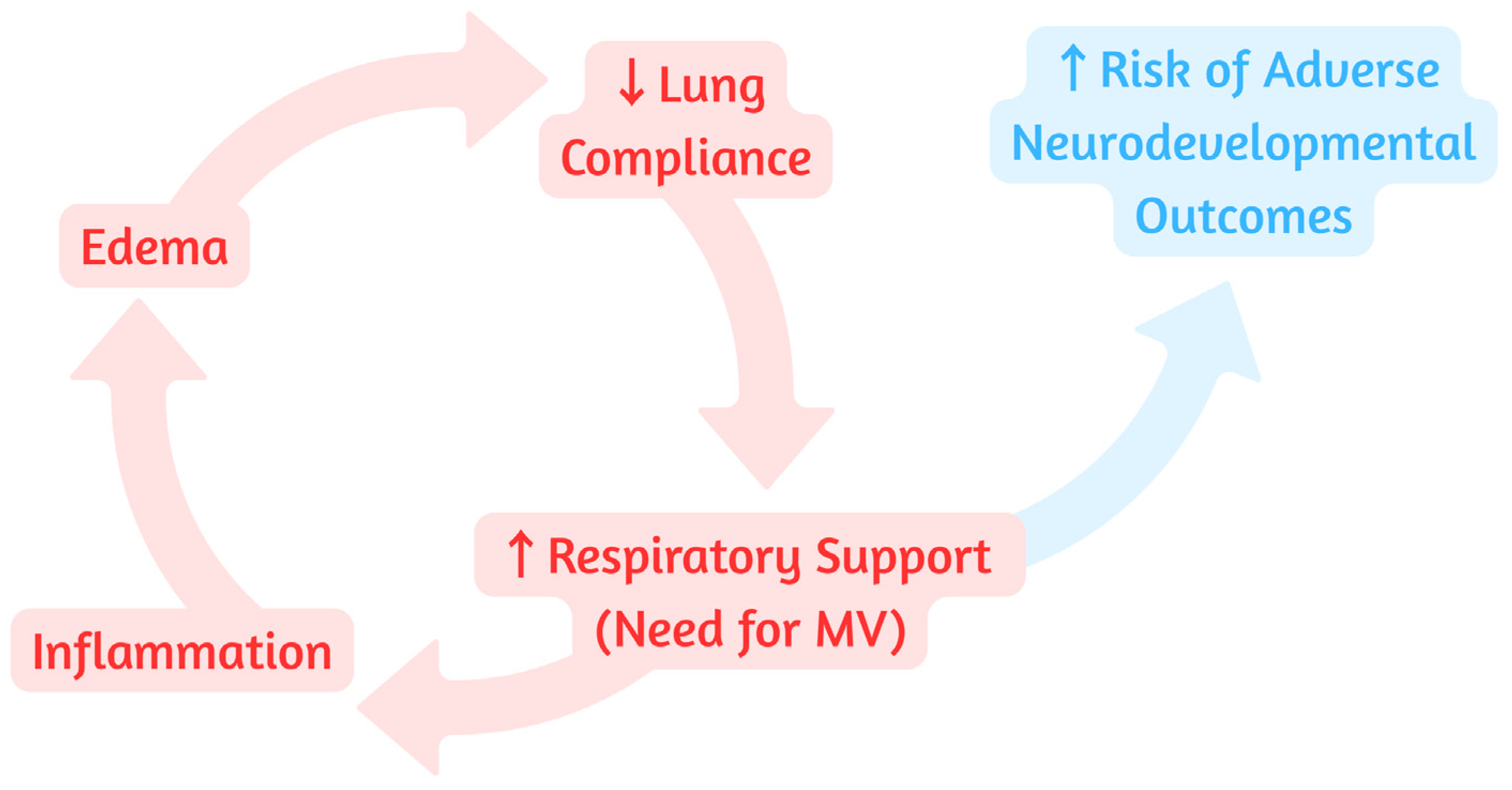
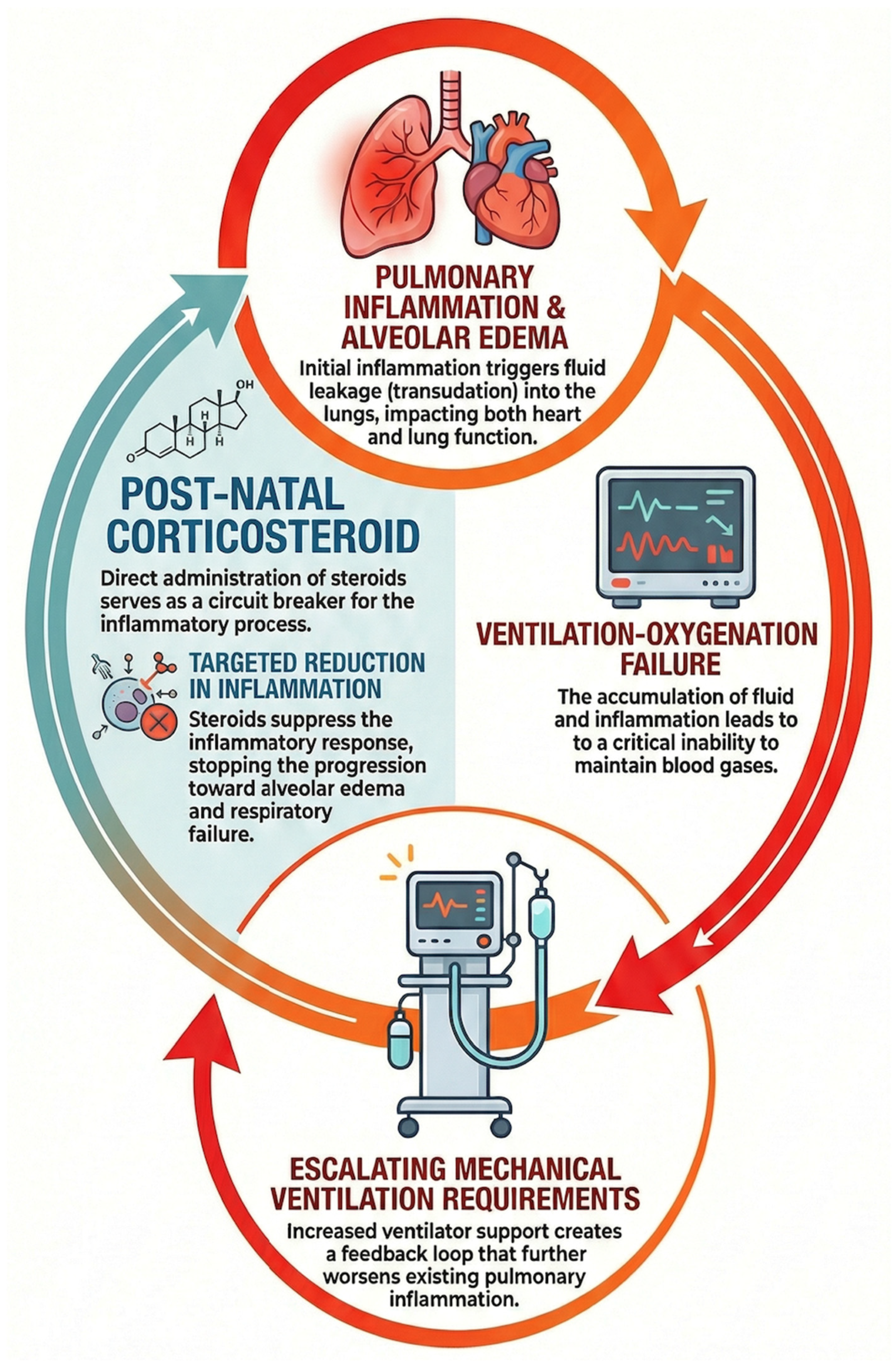
- Extremely preterm infants experience persistent pulmonary inflammation and impaired lung development, and postnatal corticosteroids can reduce inflammation, facilitate mechanical ventilation weaning, and improve short-term respiratory outcomes.
- Evidence from clinical trials shows meaningful differences between corticosteroid regimens, such as low-dose dexamethasone versus hydrocortisone, in efficacy and side-effect profiles, while emerging physiology-based monitoring tools may help individualize treatment.
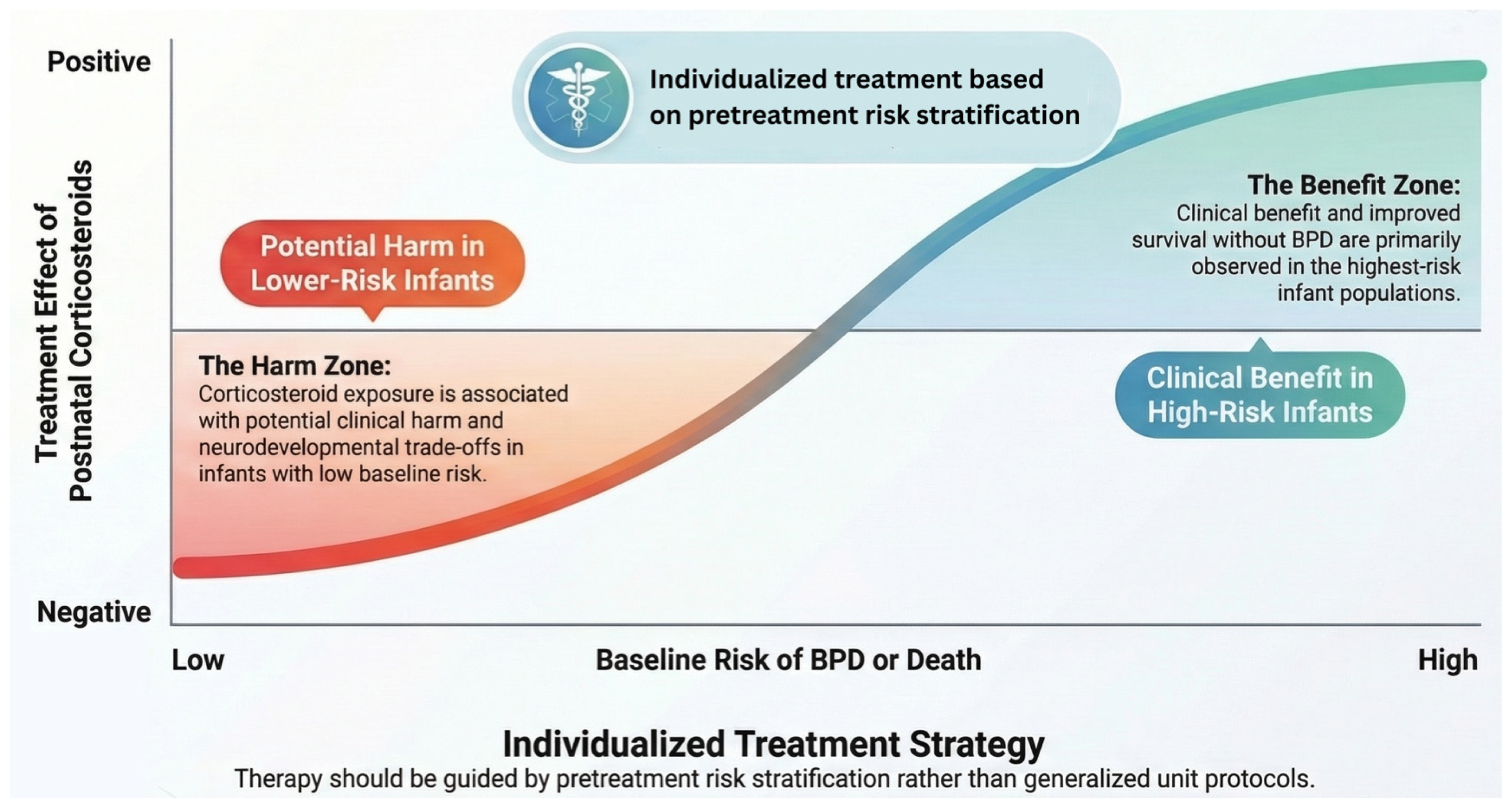
- A more individualized, physiology-informed approach to postnatal corticosteroid therapy may optimize timing, dosing, and patient selection, improving respiratory outcomes while minimizing systemic risks.
- Integrating mechanistic insights with clinical evidence supports moving away from uniform protocols toward tailored strategies that balance therapeutic benefits with potential long-term trade-offs.
Abstract
1. Introduction
2. Prematurity and Evolving Lung Injury
3. Postnatal Corticosteroids
3.1. Anti-Inflammatory Mechanisms of Action
3.1.1. Hydrocortisone
3.1.2. Dexamethasone and Betamethasone
3.1.3. Prednisone/Prednisolone and Methylprednisolone
3.1.4. Budesonide
3.2. Mode of Delivery
3.2.1. Systemic (Intravenous or Oral) Route
3.2.2. Inhaled Route
3.2.3. Intratracheal Route
4. Current Status of the Use of Systemic Postnatal Corticosteroids for BPD
5. Non-Invasive Modalities for Monitoring Pulmonary Status Before/During and After Postnatal Corticosteroid Use
5.1. Lung Ultrasound
5.2. Respiratory Oscillometry and Respiratory System Reactance (Xrs)
5.3. Electrical Impedance Tomography (EIT)
5.4. Static Pulmonary Imaging
5.5. A Physiology-Driven Decision-Making Framework
- Phase 1: Identification of High-Risk Candidates. Infants remaining on invasive mechanical ventilation after the first postnatal week with increasing oxygen requirements should be prioritized for evaluation.
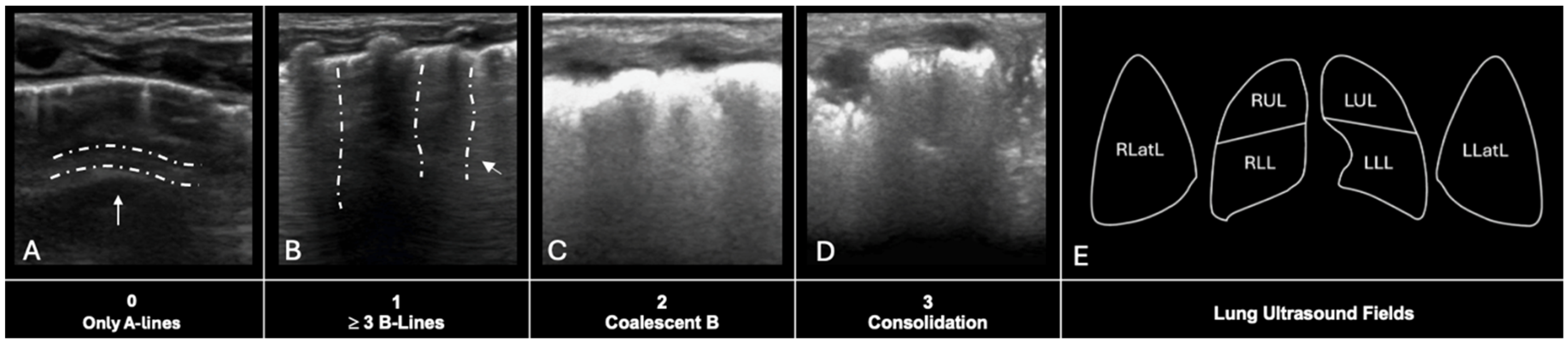
- Phase 2: Physiological Assessment. Clinicians should utilize non-invasive tools, such as LUS, to confirm a high inflammatory/edema burden. High airway resistance as measured by respiratory oscillometry may further support the need for intervention.
- Phase 3: Regimen Selection. Based on the assessment, the framework suggests low-dose dexamethasone (DART regimen) for infants difficult to extubate after day 7, or hydrocortisone for those with evolving disease earlier in the clinical course.
- Phase 4: Monitoring for Response and Harm. Following initiation, serial monitoring with LUS and bedside echocardiography (for cardiac side effects) ensures that the treatment is both effective and safe.
6. Conclusions
7. Directions for Future Research
- Characterize the temporal effects of corticosteroids on lung structure and function, using serial assessments with lung ultrasound, oscillometry, and electrical impedance tomography.
- Define normative trajectories and thresholds for these physiologic markers in steroid-treated versus untreated infants.
- Correlate pulmonary changes with systemic responses, including cardiac remodeling, ductal dynamics, and autonomic regulation, to identify physiologic phenotypes of steroid responders and non-responders.
- Develop predictive models that integrate multimodal data to guide real-time steroid decision-making.
Author Contributions
Funding
Institutional Review Board Statement
Informed Consent Statement
Data Availability Statement
Acknowledgments
Conflicts of Interest
Abbreviations
| PMA | Post-menstrual age |
| RA | Room air |
| PPV | Positive pressure ventilation |
| NCPAP | Nasal continuous positive airway pressure |
| IPPV | Intermittent positive pressure ventilation |
| NIPPV | Non-invasive positive pressure ventilation |
| NC | Nasal cannula |
| HFNC | High-flow nasal cannula |
| SIPAP | Synchronized inspiratory positive airway pressure |
| NIHFV | Non-invasive high-flow ventilation |
| MV | Mechanical ventilation |
| HC | Hydrocortisone |
| Dexa | Dexamethasone |
| Beta | Betamethasone |
| GC | Glucocorticoid |
| MC | Mineralocorticoid |
| PREMILOC | Trial to Prevent Bronchopulmonary Dysplasia in Very Preterm Neonates |
| NSAIDs | Non-steroidal anti-inflammatory drugs |
| NDI | Neurodevelopmental impairment |
| NEuroSIS | Neonatal European Study of Inhaled Steroids |
| PLUSS | Intratracheal Budesonide Mixed with Surfactant for Extremely Preterm Infants: The PLUSS Randomized Trial |
| IV | Intravenous |
| PO | Oral |
References
- Ramaswamy, V.V.; Bandyopadhyay, T.; Nanda, D.; Bandiya, P.; Ahmed, J.; Garg, A.; Roehr, C.C.; Nangia, S. Assessment of Postnatal Corticosteroids for the Prevention of Bronchopulmonary Dysplasia in Preterm Neonates: A Systematic Review and Network Meta-analysis. JAMA Pediatr. 2021, 175, e206826. [Google Scholar] [CrossRef] [PubMed]
- Thébaud, B.; Goss, K.N.; Laughon, M.; Whitsett, J.A.; Abman, S.H.; Steinhorn, R.H.; Aschner, J.L.; Davis, P.G.; McGrath-Morrow, S.A.; Soll, R.F.; et al. Bronchopulmonary dysplasia. Nat. Rev. Dis. Primers 2019, 5, 78. [Google Scholar] [CrossRef] [PubMed]
- Mandell, E.W.; Kratimenos, P.; Abman, S.H.; Steinhorn, R.H. Drugs for the Prevention and Treatment of Bronchopulmonary Dysplasia. Clin. Perinatol. 2019, 46, 291–310. [Google Scholar] [CrossRef] [PubMed]
- Doyle, L.W.; Mainzer, R.; Cheong, J.L.Y. Systemic Postnatal Corticosteroids, Bronchopulmonary Dysplasia, and Survival Free of Cerebral Palsy. JAMA Pediatr. 2025, 179, 65–72. [Google Scholar] [CrossRef]
- Cheong, J.L.Y.; Doyle, L.W. Long-term effects of postnatal corticosteroids to prevent or treat bronchopulmonary dysplasia: Balancing the risks and benefits. Semin. Fetal Neonatal Med. 2019, 24, 197–201. [Google Scholar] [CrossRef]
- Nuytten, A.; Behal, H.; Duhamel, A.; Jarreau, P.-H.; Mazela, J.; Milligan, D.; Gortner, L.; Piedvache, A.; Zeitlin, J.; Truffert, P.; et al. Evidence-Based Neonatal Unit Practices and Determinants of Postnatal Corticosteroid-Use in Preterm Births below 30 Weeks GA in Europe. A Population-Based Cohort Study. PLoS ONE 2017, 12, e0170234. [Google Scholar] [CrossRef]
- Poindexter, B.B.; Feng, R.; Schmidt, B.; Aschner, J.L.; Ballard, R.A.; Hamvas, A.; Reynolds, A.M.; Shaw, P.A.; Jobe, A.H. Comparisons and Limitations of Current Definitions of Bronchopulmonary Dysplasia for the Prematurity and Respiratory Outcomes Program. Ann. Am. Thorac. Soc. 2015, 12, 1822–1830. [Google Scholar] [CrossRef]
- Lemyre, B.; Dunn, M.; Thebaud, B. Postnatal corticosteroids to prevent or treat bronchopulmonary dysplasia in preterm infants. Paediatr. Child Health 2020, 25, 322–331. [Google Scholar] [CrossRef]
- Cummings, J.J.; Pramanik, A.K. Postnatal Corticosteroids to Prevent or Treat Chronic Lung Disease Following Preterm Birth. Pediatrics 2022, 149, e2022057530. [Google Scholar] [CrossRef]
- Northway, W.H., Jr.; Rosan, R.C.; Porter, D.Y. Pulmonary disease following respirator therapy of hyaline-membrane disease. Bronchopulmonary dysplasia. N. Engl. J. Med. 1967, 276, 357–368. [Google Scholar] [CrossRef]
- Jobe, A.J. The new BPD: An arrest of lung development. Pediatr. Res. 1999, 46, 641–643. [Google Scholar] [CrossRef] [PubMed]
- López, E.S.; Rodríguez, E.M.; Navarro, C.R.; Sánchez-Luna, M. Initial respiratory management in preterm infants and bronchopulmonary dysplasia. Clinics 2011, 66, 823–827. [Google Scholar] [CrossRef] [PubMed]
- Jobe, A.H.; Bancalari, E. Bronchopulmonary dysplasia. Am. J. Respir. Crit. Care Med. 2001, 163, 1723–1729. [Google Scholar] [CrossRef] [PubMed]
- Higgins, R.D.; Jobe, A.H.; Koso-Thomas, M.; Bancalari, E.; Viscardi, R.M.; Hartert, T.V.; Ryan, R.M.; Kallapur, S.G.; Steinhorn, R.H.; Konduri, G.G.; et al. Bronchopulmonary Dysplasia: Executive Summary of a Workshop. J. Pediatr. 2018, 197, 300–308. [Google Scholar] [CrossRef]
- Jobe, A.H. The new bronchopulmonary dysplasia. Curr. Opin. Pediatr. 2011, 23, 167–172. [Google Scholar] [CrossRef]
- Jensen, E.A.; Dysart, K.; Gantz, M.G.; McDonald, S.; Bamat, N.A.; Keszler, M.; Kirpalani, H.; Laughon, M.M.; Poindexter, B.B.; Duncan, A.F.; et al. The Diagnosis of Bronchopulmonary Dysplasia in Very Preterm Infants. An Evidence-based Approach. Am. J. Respir. Crit. Care Med. 2019, 200, 751–759. [Google Scholar] [CrossRef]
- Abman, S.H.; Collaco, J.M.; Shepherd, E.G.; Keszler, M.; Cuevas-Guaman, M.; Welty, S.E.; Truog, W.E.; McGrath-Morrow, S.A.; Moore, P.E.; Rhein, L.M.; et al. Interdisciplinary Care of Children with Severe Bronchopulmonary Dysplasia. J. Pediatr. 2017, 181, 12–28.e11. [Google Scholar] [CrossRef]
- Fakhoury, K.F.; Sellers, C.; Smith, E.O.; Rama, J.A.; Fan, L.L. Serial measurements of lung function in a cohort of young children with bronchopulmonary dysplasia. Pediatrics 2010, 125, e1441–e1447. [Google Scholar] [CrossRef]
- Fawke, J.; Lum, S.; Kirkby, J.; Hennessy, E.; Marlow, N.; Rowell, V.; Thomas, S.; Stocks, J. Lung function and respiratory symptoms at 11 years in children born extremely preterm: The EPICure study. Am. J. Respir. Crit. Care Med. 2010, 182, 237–245. [Google Scholar] [CrossRef]
- Davidson, L.M.; Berkelhamer, S.K. Bronchopulmonary Dysplasia: Chronic Lung Disease of Infancy and Long-Term Pulmonary Outcomes. J. Clin. Med. 2017, 6, 4. [Google Scholar] [CrossRef]
- Trittmann, J.K.; Nelin, L.D.; Klebanoff, M.A. Bronchopulmonary dysplasia and neurodevelopmental outcome in extremely preterm neonates. Eur. J. Pediatr. 2013, 172, 1173–1180. [Google Scholar] [CrossRef] [PubMed]
- Walsh, M.C.; Yao, Q.; Gettner, P.; Hale, E.; Collins, M.; Hensman, A.; Everette, R.; Peters, N.; Miller, N.; Muran, G.; et al. Impact of a physiologic definition on bronchopulmonary dysplasia rates. Pediatrics 2004, 114, 1305–1311. [Google Scholar] [CrossRef] [PubMed]
- Walsh, M.C.; Wilson-Costello, D.; Zadell, A.; Newman, N.; Fanaroff, A. Safety, reliability, and validity of a physiologic definition of bronchopulmonary dysplasia. J. Perinatol. 2003, 23, 451–456. [Google Scholar] [CrossRef] [PubMed]
- Beltempo, M.; Shah, P.; Yoon, E.W.; Chan, P.; Balachandran, N. Annual Report 2018; The Canadian Neonatal Network: Toronto, ON, Canada, 2018. [Google Scholar]
- Mukerji, A.; Read, B.; Su, Y.C.; Barbosa de Oliveira, C.; Louis, D.; Makary, H.; Zwicker, J.; Thomas, K.; Dunn, M.; Shah, P.S. Severity of Bronchopulmonary Dysplasia Using a Contemporary Canadian Definition and Early Childhood Outcomes: A Population-Based Cohort Study. J. Pediatr. 2025, 287, 114763. [Google Scholar] [CrossRef]
- Fanaroff, A.A.; Stoll, B.J.; Wright, L.L.; Carlo, W.A.; Ehrenkranz, R.A.; Stark, A.R.; Bauer, C.R.; Donovan, E.F.; Korones, S.B.; Laptook, A.R.; et al. Trends in neonatal morbidity and mortality for very low birthweight infants. Am. J. Obstet. Gynecol. 2007, 196, 147.e1–147.e8. [Google Scholar] [CrossRef]
- Stoll, B.J.; Hansen, N.I.; Bell, E.F.; Shankaran, S.; Laptook, A.R.; Walsh, M.C.; Hale, E.C.; Newman, N.S.; Schibler, K.; Carlo, W.A.; et al. Neonatal outcomes of extremely preterm infants from the NICHD Neonatal Research Network. Pediatrics 2010, 126, 443–456. [Google Scholar] [CrossRef]
- Horbar, J.D.; Carpenter, J.H.; Badger, G.J.; Kenny, M.J.; Soll, R.F.; Morrow, K.A.; Buzas, J.S. Mortality and neonatal morbidity among infants 501 to 1500 grams from 2000 to 2009. Pediatrics 2012, 129, 1019–1026. [Google Scholar] [CrossRef]
- Löfberg, L.; Abrahamsson, T.; Björklund, L.J.; Hellström Westas, L.; Farooqi, A.; Domellöf, M.; Ådén, U.; Gadsbøll, C.; Källén, K.; Ley, D.; et al. Respiratory support and bronchopulmonary dysplasia in infants born at 22–26 weeks gestation in Sweden, 2004–2007 and 2014–2016. Eur. Respir. J. 2025, 65, 2401203. [Google Scholar] [CrossRef]
- Lee, S.M.; Sie, L.; Liu, J.; Profit, J.; Lee, H.C. Evaluation of Trends in Bronchopulmonary Dysplasia and Respiratory Support Practice for Very Low Birth Weight Infants: A Population-Based Cohort Study. J. Pediatr. 2022, 243, 47–52.e42. [Google Scholar] [CrossRef]
- Galambos, C.; Sims-Lucas, S.; Abman, S.H. Histologic evidence of intrapulmonary anastomoses by three-dimensional reconstruction in severe bronchopulmonary dysplasia. Ann. Am. Thorac. Soc. 2013, 10, 474–481. [Google Scholar] [CrossRef]
- Gorenflo, M.; Vogel, M.; Obladen, M. Pulmonary vascular changes in bronchopulmonary dysplasia: A clinicopathologic correlation in short- and long-term survivors. Pediatr. Pathol. 1991, 11, 851–866. [Google Scholar] [CrossRef]
- Speer, C.P. Inflammation and bronchopulmonary dysplasia: A continuing story. Semin. Fetal Neonatal Med. 2006, 11, 354–362. [Google Scholar] [CrossRef] [PubMed]
- Lin, M.; Stewart, M.T.; Zefi, S.; Mateti, K.V.; Gauthier, A.; Sharma, B.; Martinez, L.R.; Ashby, C.R.; Mantell, L.L., Jr. Dual effects of supplemental oxygen on pulmonary infection, inflammatory lung injury, and neuromodulation in aging and COVID-19. Free Radic. Biol. Med. 2022, 190, 247–263. [Google Scholar] [CrossRef] [PubMed]
- Wang, S.H.; Tsao, P.N. Phenotypes of Bronchopulmonary Dysplasia. Int. J. Mol. Sci. 2020, 21, 6112. [Google Scholar] [CrossRef] [PubMed]
- Bancalari, E. Corticosteroids and neonatal chronic lung disease. Eur. J. Pediatr. 1998, 157, S31–S37. [Google Scholar] [CrossRef]
- Collaco, J.M.; McGrath-Morrow, S.A. Bronchopulmonary dysplasia as a determinant of respiratory outcomes in adult life. Pediatr. Pulmonol. 2021, 56, 3464–3471. [Google Scholar] [CrossRef]
- Martin, R.J.; Wang, K.; Köroğlu, O.; Di Fiore, J.; Kc, P. Intermittent hypoxic episodes in preterm infants: Do they matter? Neonatology 2011, 100, 303–310. [Google Scholar] [CrossRef]
- Doyle, L.W.; Ranganathan, S.; Mainzer, R.M.; Cheong, J.L.Y. Relationships of Severity of Bronchopulmonary Dysplasia with Adverse Neurodevelopmental Outcomes and Poor Respiratory Function at 7–8 Years of Age. J. Pediatr. 2024, 269, 114005. [Google Scholar] [CrossRef]
- Czock, D.; Keller, F.; Rasche, F.M.; Häussler, U. Pharmacokinetics and pharmacodynamics of systemically administered glucocorticoids. Clin. Pharmacokinet. 2005, 44, 61–98. [Google Scholar] [CrossRef]
- Olaloko, O.; Mohammed, R.; Ojha, U. Evaluating the use of corticosteroids in preventing and treating bronchopulmonary dysplasia in preterm neonates. Int. J. Gen. Med. 2018, 11, 265–274. [Google Scholar] [CrossRef]
- McKay, L.I.; Cidlowski, J.A. Physiologic and Pharmacologic Effects of Corticosteroids. In Holland-Frei Cancer Medicine, 6th ed.; BC Decker: Hamilton, ON, Canada, 2003. Available online: https://www.ncbi.nlm.nih.gov/books/NBK13780/ (accessed on 22 December 2025).
- Williams, D.M. Clinical Pharmacology of Corticosteroids. Respir. Care 2018, 63, 655–670. [Google Scholar] [CrossRef]
- Adcock, I.M.; Mumby, S. Glucocorticoids. Handb. Exp. Pharmacol. 2017, 237, 171–196. [Google Scholar] [PubMed]
- Fuller, P.J.; Young, M.J. Mechanisms of mineralocorticoid action. Hypertension 2005, 46, 1227–1235. [Google Scholar] [CrossRef] [PubMed]
- Htun, Z.T.; Schulz, E.V.; Desai, R.K.; Marasch, J.L.; McPherson, C.C.; Mastrandrea, L.D.; Jobe, A.H.; Ryan, R.M. Postnatal steroid management in preterm infants with evolving bronchopulmonary dysplasia. J. Perinatol. 2021, 41, 1783–1796. [Google Scholar] [CrossRef] [PubMed]
- Brunton, L.L.; Hilal-Dandan, R.; Knollmann, B.C. Goodman and Gilman’s: The Pharmacological Basis of Therapeutics, 13th ed.; McGraw-Hill Education: New York, NY, USA, 2017. [Google Scholar]
- McEvoy, C.T.; Ballard, P.L.; Ward, R.M.; Rower, J.E.; Wadhawan, R.; Hudak, M.L.; Weitkamp, J.H.; Harris, J.; Asselin, J.; Chapin, C.; et al. Dose-escalation trial of budesonide in surfactant for prevention of bronchopulmonary dysplasia in extremely low gestational age high-risk newborns (SASSIE). Pediatr. Res. 2020, 88, 629–636. [Google Scholar] [CrossRef]
- Baud, O.; Maury, L.; Lebail, F.; Ramful, D.; El Moussawi, F.; Nicaise, C.; Zupan-Simunek, V.; Coursol, A.; Beuchée, A.; Bolot, P.; et al. Effect of early low-dose hydrocortisone on survival without bronchopulmonary dysplasia in extremely preterm infants (PREMILOC): A double-blind, placebo-controlled, multicentre, randomised trial. Lancet 2016, 387, 1827–1836. [Google Scholar] [CrossRef]
- Onland, W.; Cools, F.; Kroon, A.; Rademaker, K.; Merkus, M.P.; Dijk, P.H.; van Straaten, H.L.; Te Pas, A.B.; Mohns, T.; Bruneel, E.; et al. Effect of Hydrocortisone Therapy Initiated 7 to 14 Days After Birth on Mortality or Bronchopulmonary Dysplasia Among Very Preterm Infants Receiving Mechanical Ventilation: A Randomized Clinical Trial. JAMA 2019, 321, 354–363. [Google Scholar] [CrossRef]
- Committee on Fetus Newborn; Watterberg, K.L.; Walsh, M.C.; Li, L.; Chawla, S.; D’Angio, C.T.; Goldberg, R.N.; Hintz, S.R.; Laughon, M.M.; Yoder, B.A.; et al. Hydrocortisone to Improve Survival without Bronchopulmonary Dysplasia. N. Engl. J. Med. 2022, 386, 1121–1131. [Google Scholar] [CrossRef]
- Doyle, L.W.; Cheong, J.L.; Ehrenkranz, R.A.; Halliday, H.L. Early (<8 days) systemic postnatal corticosteroids for prevention of bronchopulmonary dysplasia in preterm infants. Cochrane Database Syst. Rev. 2017, 10, Cd001146. [Google Scholar]
- Doyle, L.W.; Davis, P.G.; Morley, C.J.; McPhee, A.; Carlin, J.B. Low-dose dexamethasone facilitates extubation among chronically ventilator-dependent infants: A multicenter, international, randomized, controlled trial. Pediatrics 2006, 117, 75–83. [Google Scholar] [CrossRef]
- Schmidt, A.F.; Kemp, M.W.; Rittenschober-Böhm, J.; Kannan, P.S.; Usuda, H.; Saito, M.; Furfaro, L.; Watanabe, S.; Stock, S.; Kramer, B.W.; et al. Low-dose betamethasone-acetate for fetal lung maturation in preterm sheep. Am. J. Obstet. Gynecol. 2018, 218, 132.e1–132.e9. [Google Scholar] [CrossRef] [PubMed]
- Remy, A.; Vincent, M.; Pastor-Diez, B.; Picaud, J.C. Late postnatal steroid treatment using oral betamethasone can help to close ductus arteriosus in extremely preterm infants who cannot be weaned from ventilation. Eur. J. Pediatr. 2024, 184, 50. [Google Scholar] [CrossRef] [PubMed]
- Bhandari, A.; Schramm, C.M.; Kimble, C.; Pappagallo, M.; Hussain, N. Effect of a short course of prednisolone in infants with oxygen-dependent bronchopulmonary dysplasia. Pediatrics 2008, 121, e344–e349. [Google Scholar] [CrossRef] [PubMed]
- Linafelter, A.; Cuna, A.; Liu, C.; Quigley, A.; Truog, W.E.; Sampath, V.; Oschman, A. Extended course of prednisolone in infants with severe bronchopulmonary dysplasia. Early Hum. Dev. 2019, 136, 1–6. [Google Scholar] [CrossRef]
- André, P.; Thébaud, B.; Odièvre, M.H.; Razafimahefa, H.; Zupan, V.; Dehan, M.; Lacaze-Masmonteil, T. Methylprednisolone, an alternative to dexamethasone in very premature infants at risk of chronic lung disease. Intensive Care Med. 2000, 26, 1496–1500. [Google Scholar] [CrossRef]
- Reynaud, J.; Dreyfus, L.; Coutier, L.; Butin, M.; Godbert, I.; Baudin, F.; Horvat, C.; Reix, P. Efficacy and tolerance of intravenous methylprednisolone pulses in children with severe bronchopulmonary dysplasia requiring respiratory support. Pediatr. Pulmonol. 2025, 60, e27344. [Google Scholar] [CrossRef]
- Billion, E.; Hadchouel, A.; Garcelon, N.; Delacourt, C.; Drummond, D. Intravenous pulses of methylprednisolone for infants with severe bronchopulmonary dysplasia and respiratory support after 3 months of age. Pediatr. Pulmonol. 2021, 56, 74–82. [Google Scholar] [CrossRef]
- Bassler, D.; Plavka, R.; Shinwell, E.S.; Hallman, M.; Jarreau, P.H.; Carnielli, V.; Van den Anker, J.N.; Meisner, C.; Engel, C.; Schwab, M.; et al. Early Inhaled Budesonide for the Prevention of Bronchopulmonary Dysplasia. N. Engl. J. Med. 2015, 373, 1497–1506. [Google Scholar] [CrossRef]
- Yeh, T.F.; Lin, H.C.; Chang, C.H.; Wu, T.S.; Su, B.H.; Li, T.C.; Pyati, S.; Tsai, C.H. Early intratracheal instillation of budesonide using surfactant as a vehicle to prevent chronic lung disease in preterm infants: A pilot study. Pediatrics 2008, 121, e1310–e1318. [Google Scholar] [CrossRef]
- Yeh, T.F.; Chen, C.M.; Wu, S.Y.; Husan, Z.; Li, T.C.; Hsieh, W.S.; Tsai, C.H.; Lin, H.C. Intratracheal Administration of Budesonide/Surfactant to Prevent Bronchopulmonary Dysplasia. Am. J. Respir. Crit. Care Med. 2016, 193, 86–95. [Google Scholar] [CrossRef]
- Manley, B.J.; Kamlin, C.O.F.; Donath, S.M.; Francis, K.L.; Cheong, J.L.Y.; Dargaville, P.A.; Dawson, J.A.; Jacobs, S.E.; Birch, P.; Resnick, S.M.; et al. Intratracheal Budesonide Mixed With Surfactant for Extremely Preterm Infants: The PLUSS Randomized Clinical Trial. JAMA 2024, 332, 1889–1899. [Google Scholar] [CrossRef] [PubMed]
- Ambalavanan, N.; Carlo, W.A.; Nowak, K.J.; Wiener, L.E.; Cosby, S.S.; Bhatt, A.J.; Watterberg, K.L.; Poindexter, B.B.; Keszler, M.; D’Angio, C.T.; et al. Early Intratracheal Budesonide to Reduce Bronchopulmonary Dysplasia in Extremely Preterm Infants: The Budesonide in Babies (BiB) Randomized Clinical Trial. JAMA 2025, 334, 1452–1462. [Google Scholar] [CrossRef] [PubMed]
- Alsaleem, M.; Malik, A.; Lakshminrusimha, S.; Kumar, V.H. Hydrocortisone Improves Oxygenation Index and Systolic Blood Pressure in Term Infants With Persistent Pulmonary Hypertension. Clin. Med. Insights Pediatr. 2019, 13, 1179556519888918. [Google Scholar] [CrossRef] [PubMed]
- Buchwald, P.; Bodor, N. Soft glucocorticoid design: Structural elements and physicochemical parameters determining receptor-binding affinity. Pharmazie 2004, 59, 396–404. [Google Scholar]
- Information NCfB. PubChem Compound Summary for CID 5754, Hydrocortisone 2025. Available online: https://pubchem.ncbi.nlm.nih.gov/compound/Hydrocortisone (accessed on 5 March 2026).
- Cheng, W.H.; Tu, L.H.; Chiang, M.C.; Chen, Y.N.; Wu, W.H.; Hsu, K.H. The Association Between Perinatal Pharmacologic Treatments and Spontaneous Intestinal Perforation in Extremely Preterm Infants: A Propensity Score Matching Study. Children 2025, 12, 142. [Google Scholar] [CrossRef]
- Timmermans, S.; Souffriau, J.; Libert, C. A General Introduction to Glucocorticoid Biology. Front. Immunol. 2019, 10, 1545. [Google Scholar] [CrossRef]
- Marr, B.L.; Mettelman, B.B.; Bode, M.M.; Gross, S.J. Randomized Trial of 42-Day Compared with 9-Day Courses of Dexamethasone for the Treatment of Evolving Bronchopulmonary Dysplasia in Extremely Preterm Infants. J. Pediatr. 2019, 211, 20–26.e21. [Google Scholar] [CrossRef]
- Hantoushzadeh, S.; Saleh, M.; Aghajanian, S. Which corticosteroid is a better option for antenatal fetal lung maturation? Pediatr. Res. 2022, 92, 915. [Google Scholar] [CrossRef]
- Jobe, A.H.; Kemp, M.; Schmidt, A.; Takahashi, T.; Newnham, J.; Milad, M. Antenatal corticosteroids: A reappraisal of the drug formulation and dose. Pediatr. Res. 2021, 89, 318–325. [Google Scholar] [CrossRef]
- Ryan, R.M.; Ahmed, Q.; Lakshminrusimha, S. Inflammatory mediators in the immunobiology of bronchopulmonary dysplasia. Clin. Rev. Allergy Immunol. 2008, 34, 174–190. [Google Scholar] [CrossRef]
- Littenberg, B.; Gluck, E.H. A controlled trial of methylprednisolone in the emergency treatment of acute asthma. N. Engl. J. Med. 1986, 314, 150–152. [Google Scholar] [CrossRef] [PubMed]
- Meduri, G.U.; Headley, A.S.; Golden, E.; Carson, S.J.; Umberger, R.A.; Kelso, T.; Tolley, E.A. Effect of prolonged methylprednisolone therapy in unresolving acute respiratory distress syndrome: A randomized controlled trial. JAMA 1998, 280, 159–165. [Google Scholar] [CrossRef] [PubMed]
- Doyle, L.W.; Cheong, J.L.; Ehrenkranz, R.A.; Halliday, H.L. Late (>7 days) systemic postnatal corticosteroids for prevention of bronchopulmonary dysplasia in preterm infants. Cochrane Database Syst. Rev. 2017, 10, Cd001145. [Google Scholar] [PubMed]
- Jensen, E.A.; Wiener, L.E.; Rysavy, M.A.; Dysart, K.C.; Gantz, M.G.; Eichenwald, E.C.; Greenberg, R.G.; Harmon, H.M.; Laughon, M.M.; Watterberg, K.L.; et al. Assessment of Corticosteroid Therapy and Death or Disability According to Pretreatment Risk of Death or Bronchopulmonary Dysplasia in Extremely Preterm Infants. JAMA Netw. Open 2023, 6, e2312277. [Google Scholar] [CrossRef]
- Rüegger, C.M.; Bassler, D. Alternatives to systemic postnatal corticosteroids: Inhaled, nebulized and intratracheal. Semin. Fetal Neonatal Med. 2019, 24, 207–212. [Google Scholar] [CrossRef]
- Mazela, J.; Polin, R.A. Aerosol delivery to ventilated newborn infants: Historical challenges and new directions. Eur. J. Pediatr. 2011, 170, 433–444. [Google Scholar] [CrossRef]
- Hess, D.R. (Ed.) Nebulizers: Principles and performance. Respir. Care 2000, 45, 609–622. [Google Scholar]
- Rubin, B.K. Inhaled corticosteroids: Devices and deposition. Paediatr. Respir. Rev. 2004, 5, S103–S106. [Google Scholar] [CrossRef]
- Newman, S.P. (Ed.) Principles of metered-dose inhaler design. Respir. Care 2005, 50, 1177–1188. [Google Scholar]
- Schüepp, K.G.; Straub, D.; Möller, A.; Wildhaber, J.H. (Eds.) Deposition of aerosols in infants and children. J. Aerosol Med. 2004, 17, 153–156. [Google Scholar]
- Tal, A.; Golan, H.; Grauer, N.; Aviram, M.; Albin, D.; Quastel, M.R. Deposition pattern of radiolabeled salbutamol inhaled from a metered-dose inhaler by means of a spacer with mask in young children with airway obstruction. J. Pediatr. 1996, 128, 479–484. [Google Scholar] [CrossRef]
- Amirav, I.; Balanov, I.; Gorenberg, M.; Groshar, D.; Luder, A.S. Nebuliser hood compared to mask in wheezy infants: Aerosol therapy without tears! Arch. Dis. Child. 2003, 88, 719–723. [Google Scholar] [CrossRef]
- Amirav, I.; Balanov, I.; Gorenberg, M.; Luder, A.S.; Newhouse, M.T. Groshar D: β-agonist aerosol distribution in respiratory syncytial virus bronchiolitis in infants. J. Nucl. Med. 2002, 43, 487–491. [Google Scholar]
- Mallol, J.; Rattray, S.; Walker, G.; Cook, D.; Robertson, C.F. Aerosol deposition in infants with cystic fibrosis. Pediatr. Pulmonol. 1996, 21, 276–281. [Google Scholar] [CrossRef]
- Chua, H.L.; Collis, G.G.; Newbury, A.M.; Chan, K.; Bower, G.D.; Sly, P.D.; Le Souef, P.N. The influence of age on aerosol deposition in children with cystic fibrosis. Eur. J. Pediatr. 1994, 7, 2185–2191. [Google Scholar] [CrossRef]
- Salmon, B.; Wilson, N.M. How much aerosol reaches the lungs of wheezy infants and toddlers? Arch. Dis. Child. 1990, 65, 401–403. [Google Scholar] [CrossRef]
- Lugo, R.A.; Ballard, J. Albuterol delivery from a metered-dose inhaler with spacer is reduced following short-duration manual ventilation in a neonatal ventilator-lung model. Respir. Care 2004, 49, 1029–1034. [Google Scholar] [PubMed]
- Lugo, R.A.; Kenney, J.K.; Keenan, J.; Salyer, J.W.; Ballard, J.; Ward, R.M. Albuterol delivery in a neonatal ventilated lung model: Nebulization versus chlorofluorocarbon- and hydrofluoroalkane-pressurized metered dose inhalers. Pediatr. Pulmonol. 2001, 31, 247–254. [Google Scholar] [CrossRef] [PubMed]
- DiBlasi, R.M.; Coppolo, D.P.; Nagel, M.W.; Doyle, C.C.; Avvakoumova, V.I.; Ali, R.S.; Mitchell, J.P. A novel, versatile valved holding chamber for delivering inhaled medications to neonates and small children: Laboratory simulation of delivery options. Respir. Care 2010, 55, 419–426. [Google Scholar] [PubMed]
- Pelkonen, A.S.; Nikander, K.; Turpeinen, M. Jet nebulization of budesonide suspension into a neonatal ventilator circuit: Synchronized versus continuous nebulizer flow. Pediatr. Pulmonol. 1997, 24, 282–286. [Google Scholar] [CrossRef]
- Minocchieri, S.; Burren, J.M.; Bachmann, M.A.; Stern, G.; Wildhaber, J.; Buob, S.; Schindel, R.; Kraemer, R.; Frey, U.P.; Nelle, M. Development of the premature infant nose throat-model (PrINT-Model)-an upper airway replica of a premature neonate for the study of aerosol delivery. Pediatr. Res. 2008, 64, 141–146. [Google Scholar] [CrossRef]
- Fok, T.F.; Monkman, S.; Dolovich, M.; Gray, S.; Coates, G.; Paes, B.; Rashid, F.; Newhouse, M.; Kirpalani, H. Efficiency of aerosol medication delivery from a metered dose inhaler versus jet nebulizer in infants with bronchopulmonary dysplasia. Pediatr. Pulmonol. 1996, 21, 301–309. [Google Scholar] [CrossRef]
- Jónsson, B.; Eriksson, M.; Söder, O.; Broberger, U.; Lagercrantz, H. Budesonide delivered by dosimetric jet nebulization to preterm very low birthweight infants at high risk for development of chronic lung disease. Acta Paediatr. 2000, 89, 1449–1455. [Google Scholar] [CrossRef]
- Cole, C.H.; Colton, T.; Shah, B.L.; Abbasi, S.; MacKinnon, B.L.; Demissie, S.; Frantz, I.D., 3rd. Early inhaled glucocorticoid therapy to prevent bronchopulmonary dysplasia. N. Engl. J. Med. 1999, 340, 1005–1010. [Google Scholar] [CrossRef]
- Shah, S.S.; Ohlsson, A.; Halliday, H.L.; Shah, V.S. Inhaled versus systemic corticosteroids for preventing bronchopulmonary dysplasia in ventilated very low birth weight preterm neonates. Cochrane Database Syst. Rev. 2017, 10, Cd002058. [Google Scholar] [CrossRef]
- Halliday, H.L.; Patterson, C.C.; Halahakoon, C.W. A multicenter, randomized open study of early corticosteroid treatment (OSECT) in preterm infants with respiratory illness: Comparison of early and late treatment and of dexamethasone and inhaled budesonide. Pediatrics 2001, 107, 232–240. [Google Scholar] [CrossRef] [PubMed]
- Jangaard, K.A.; Stinson, D.A.; Allen, A.C.; Vincer, M.J. Early prophylactic inhaled beclomethasone in infants less than 1250 g for the prevention of chronic lung disease. Paediatr. Child Health 2002, 7, 13–19. [Google Scholar] [CrossRef]
- Nakamura, T.; Yonemoto, N.; Nakayama, M.; Hirano, S.; Aotani, H.; Kusuda, S.; Fujimura, M.; Tamura, M. Early inhaled steroid use in extremely low birthweight infants: A randomised controlled trial. Arch. Dis. Child. Fetal Neonatal Ed. 2016, 101, F552–F556. [Google Scholar] [CrossRef] [PubMed]
- Clouse, B.J.; Jadcherla, S.R.; Slaughter, J.L. Systematic Review of Inhaled Bronchodilator and Corticosteroid Therapies in Infants with Bronchopulmonary Dysplasia: Implications and Future Directions. PLoS ONE 2016, 11, e0148188. [Google Scholar] [CrossRef] [PubMed]
- Onland, W.; Offringa, M.; van Kaam, A. Late (≥7 days) inhaled corticosteroids to reduce bronchopulmonary dysplasia in preterm infants. Cochrane Database Syst. Rev. 2022, 12, Cd002311. [Google Scholar]
- Boel, L.; Banerjee, S.; Chakraborty, M. Postnatal steroids in extreme preterm infants: Intra-tracheal instillation using surfactant as a vehicle. Paediatr. Respir. Rev. 2018, 25, 78–84. [Google Scholar] [CrossRef]
- Venkataraman, R.; Kamaluddeen, M.; Hasan, S.U.; Robertson, H.L.; Lodha, A. Intratracheal Administration of Budesonide-Surfactant in Prevention of Bronchopulmonary Dysplasia in Very Low Birth Weight Infants: A Systematic Review and Meta-Analysis. Pediatr. Pulmonol. 2017, 52, 968–975. [Google Scholar] [CrossRef]
- Liggins, G.C.; Howie, R.N. A controlled trial of antepartum glucocorticoid treatment for prevention of the repiratory distress syndrome in premature infants. Pediatrics 1972, 50, 515–525. [Google Scholar] [CrossRef]
- Mammel, M.C.; Green, T.P.; Johnson, D.E.; Thompson, T.R. Controlled trial of dexamethasone therapy in infants with bronchopulmonary dysplasia. Lancet 1983, 1, 1356–1358. [Google Scholar] [CrossRef]
- Avery, G.B.; Fletcher, A.B.; Kaplan, M.; Brudno, D.S. Controlled trial of dexamethasone in respirator-dependent infants with bronchopulmonary dysplasia. Pediatrics 1985, 75, 106–111. [Google Scholar] [CrossRef]
- Hack, M.; Fanaroff, A.A. Outcomes of children of extremely low birthweight and gestational age in the 1990’s. Early Hum. Dev. 1999, 53, 193–218. [Google Scholar] [CrossRef] [PubMed]
- Yeh, T.F.; Lin, Y.J.; Huang, C.C.; Chen, Y.J.; Lin, C.H.; Lin, H.C.; Hsieh, W.S.; Lien, Y.J. Early dexamethasone therapy in preterm infants: A follow-up study. Pediatrics 1998, 101, E7. [Google Scholar] [CrossRef]
- Committee on Fetus and Newborn. Postnatal Corticosteroids to Treat or Prevent Chronic Lung Disease in Preterm Infants. Pediatrics 2002, 109, 330–338. [Google Scholar] [CrossRef] [PubMed]
- Doyle, L.W.; Davis, P.G.; Morley, C.J.; McPhee, A.; Carlin, J.B. Outcome at 2 years of age of infants from the DART study: A multicenter, international, randomized, controlled trial of low-dose dexamethasone. Pediatrics 2007, 119, 716–721. [Google Scholar] [CrossRef] [PubMed]
- Doyle, L.W.; Halliday, H.L.; Ehrenkranz, R.A.; Davis, P.G.; Sinclair, J.C. An update on the impact of postnatal systemic corticosteroids on mortality and cerebral palsy in preterm infants: Effect modification by risk of bronchopulmonary dysplasia. J. Pediatr. 2014, 165, 1258–1260. [Google Scholar] [CrossRef]
- van de Loo, M.; van Kaam, A.; Offringa, M.; Doyle, L.W.; Cooper, C.; Onland, W. Corticosteroids for the prevention and treatment of bronchopulmonary dysplasia: An overview of systematic reviews. Cochrane Database Syst. Rev. 2024, 2024, CD013271. [Google Scholar] [CrossRef]
- Onland, W.; van de Loo, M.; Offringa, M.; van Kaam, A. Systemic corticosteroid regimens for prevention of bronchopulmonary dysplasia in preterm infants. Cochrane Database Syst. Rev. 2023, 3, Cd010941. [Google Scholar]
- Doyle, L.W.; Cheong, J.L.; Hay, S.; Manley, B.J.; Halliday, H.L. Late (≥7 days) systemic postnatal corticosteroids for prevention of bronchopulmonary dysplasia in preterm infants. Cochrane Database Syst. Rev. 2021, 11, Cd001145. [Google Scholar] [CrossRef]
- Boscarino, G.; Cardilli, V.; Conti, M.G.; Liguori, F.; Repole, P.; Parisi, P.; Terrin, G. Outcomes of postnatal systemic corticosteroids administration in ventilated preterm newborns: A systematic review of randomized controlled trials. Front. Pediatr. 2024, 12, 1344337. [Google Scholar] [CrossRef] [PubMed]
- Uno, H.; Lohmiller, L.; Thieme, C.; Kemnitz, J.W.; Engle, M.J.; Roecker, E.B.; Farrell, P.M. Brain damage induced by prenatal exposure to dexamethasone in fetal rhesus macaques, I. Hippocampus. Brain Res. Dev. Brain Res. 1990, 53, 157–167. [Google Scholar] [CrossRef]
- Uno, H.; Eisele, S.; Sakai, A.; Shelton, S.; Baker, E.; DeJesus, O.; Holden, J. Neurotoxicity of glucocorticoids in the primate brain. Horm. Behav. 1994, 28, 336–348. [Google Scholar] [CrossRef] [PubMed]
- Chandwani, R.; Kline, J.; Altaye, M.; Parikh, N. Postnatal dexamethasone treatment for preterm infants at high risk for bronchopulmonary dysplasia is associated with improved regional brain volumes: A prospective cohort study. Arch. Dis. Child. Fetal Neonatal Ed 2025, 111, F74–F81. [Google Scholar] [CrossRef] [PubMed]
- Corroyer, S.; Nabeyrat, E.; Clement, A. Involvement of the cell cycle inhibitor CIP1/WAF1 in lung alveolar epithelial cell growth arrest induced by glucocorticoids. Endocrinology 1997, 138, 3677–3685. [Google Scholar] [CrossRef]
- Parikh, S.; Reichman, B.; Kusuda, S.; Adams, M.; Lehtonen, L.; Vento, M.; Norman, M.; San Feliciano, L.; Isayama, T.; Hakansson, S.; et al. Trends, Characteristic, and Outcomes of Preterm Infants Who Received Postnatal Corticosteroid: A Cohort Study from 7 High-Income Countries. Neonatology 2023, 120, 517–526. [Google Scholar] [CrossRef]
- Jenkinson, A.C.; Kaltsogianni, O.; Dassios, T.; Greenough, A. Postnatal corticosteroid usage in United Kingdom and Ireland neonatal units. Acta Paediatr. 2023, 112, 2503–2506. [Google Scholar] [CrossRef]
- Yao, S.; Uthaya, S.; Gale, C.; Modi, N.; Battersby, C. Postnatal corticosteroid use for prevention or treatment of bronchopulmonary dysplasia in England and Wales 2012–2019: A retrospective population cohort study. BMJ Open 2022, 12, e063835. [Google Scholar] [CrossRef]
- Kandraju, H.; Jasani, B.; Shah, P.S.; Church, P.T.; Luu, T.M.; Ye, X.Y.; Stavel, M.; Mukerji, A.; Shah, V.; The Cnn, I.; et al. Timing of Systemic Steroids and Neurodevelopmental Outcomes in Infants < 29 Weeks Gestation. Children 2022, 9, 1687. [Google Scholar] [CrossRef]
- Doyle, L.W.; Cheong, J.L.Y. Postnatal corticosteroids to prevent or treat bronchopulmonary dysplasia—Who might benefit? Semin. Fetal Neonatal Med. 2017, 22, 290–295. [Google Scholar] [CrossRef]
- Keszler, M.; Sant’Anna, G. Mechanical Ventilation and Bronchopulmonary Dysplasia. Clin. Perinatol. 2015, 42, 781–796. [Google Scholar] [CrossRef]
- Sant’Anna, G.; Shalish, W. Weaning from mechanical ventilation and assessment of extubation readiness. Semin. Perinatol. 2024, 48, 151890. [Google Scholar] [CrossRef] [PubMed]
- Syltern, J. Scandinavian perspectives on life support at the border of viability. Front. Pediatr. 2024, 12, 1394077. [Google Scholar] [CrossRef] [PubMed]
- Mokra, D.; Mikolka, P.; Kosutova, P.; Mokry, J. Corticosteroids in Acute Lung Injury: The Dilemma Continues. Int. J. Mol. Sci. 2019, 20, 4765. [Google Scholar] [CrossRef] [PubMed]
- Chen, M.; Cai, H.; Klein, J.D.; Laur, O.; Chen, G. Dexamethasone increases aquaporin-2 protein expression in ex vivo inner medullary collecting duct suspensions. Front. Physiol. 2015, 6, 310. [Google Scholar] [CrossRef]
- Kurepa, D.; Zaghloul, N.; Watkins, L.; Liu, J. Neonatal lung ultrasound exam guidelines. J. Perinatol. 2018, 38, 11–22. [Google Scholar] [CrossRef]
- Brat, R.; Yousef, N.; Klifa, R.; Reynaud, S.; Shankar Aguilera, S.; De Luca, D. Lung Ultrasonography Score to Evaluate Oxygenation and Surfactant Need in Neonates Treated With Continuous Positive Airway Pressure. JAMA Pediatr. 2015, 169, e151797. [Google Scholar] [CrossRef]
- De Martino, L.; Yousef, N.; Ben-Ammar, R.; Raimondi, F.; Shankar-Aguilera, S.; De Luca, D. Lung Ultrasound Score Predicts Surfactant Need in Extremely Preterm Neonates. Pediatrics 2018, 142, e20180463. [Google Scholar] [CrossRef]
- Alonso-Ojembarrena, A.; Lubián-López, S.P. Lung ultrasound score as early predictor of bronchopulmonary dysplasia in very low birth weight infants. Pediatr. Pulmonol. 2019, 54, 1404–1409. [Google Scholar] [CrossRef]
- Kelner, J.; Moote, D.; Shah, R.; Anuar, A.; Golioto, A. Lung Ultrasound Score for Prediction of Surfactant Administration in Preterm Infants with Respiratory Failure. J. Perinatol. 2024, 44, 1258–1263. [Google Scholar] [CrossRef]
- Raimondi, F.; Migliaro, F.; Corsini, I.; Meneghin, F.; Pierri, L.; Salomè, S.; Perri, A.; Aversa, S.; Nobile, S.; Lama, S.; et al. Neonatal Lung Ultrasound and Surfactant Administration: A Pragmatic, Multicenter Study. Chest 2021, 160, 2178–2186. [Google Scholar] [CrossRef]
- Corsini, I.; Lenzi, M.B.; Ciarcià, M.; Matina, F.; Petoello, E.; Flore, A.I.; Nogara, S.; Gangemi, A.; Fusco, M.; Capasso, L.; et al. Comparison among three lung ultrasound scores used to predict the need for surfactant replacement therapy: A retrospective diagnostic accuracy study in a cohort of preterm infants. Eur. J. Pediatr. 2023, 182, 5375–5383. [Google Scholar] [CrossRef] [PubMed]
- Patel, J.; Weinberger, B.; Pulju, M.; Galanti, S.G.; Kasniya, G.; Gupta, V.; Kurepa, D. Lung Ultrasound Assessment of Regional Distribution of Pulmonary Edema and Atelectasis in Infants with Evolving Bronchopulmonary Dysplasia. Diagnostics 2024, 14, 2341. [Google Scholar] [CrossRef] [PubMed]
- Martini, S.; Corsini, I.; Corvaglia, L.; Suryawanshi, P.; Chan, B.; Singh, Y. A scoping review of echocardiographic and lung ultrasound biomarkers of bronchopulmonary dysplasia in preterm infants. Front. Pediatr. 2023, 11, 1067323. [Google Scholar] [CrossRef] [PubMed]
- Khandelwal, S.; Datta, V.; Anand, R.; Devabathina, N.B. Role of lung ultrasound score in early prediction of bronchopulmonary dysplasia in preterm neonates. J. Neonatal-Perinat. Med. 2025, 18, 52–60. [Google Scholar] [CrossRef]
- Loi, B.; Vigo, G.; Baraldi, E.; Raimondi, F.; Carnielli, V.P.; Mosca, F.; De Luca, D. Lung Ultrasound to Monitor Extremely Preterm Infants and Predict Bronchopulmonary Dysplasia. A Multicenter Longitudinal Cohort Study. Am. J. Respir. Crit. Care Med. 2021, 203, 1398–1409. [Google Scholar] [CrossRef]
- Hoshino, Y.; Arai, J.; Miura, R.; Takeuchi, S.; Yukitake, Y.; Kajikawa, D.; Kamakura, T.; Horigome, H. Lung Ultrasound for Predicting the Respiratory Outcome in Patients with Bronchopulmonary Dysplasia. Am. J. Perinatol. 2022, 39, 1229–1235. [Google Scholar] [CrossRef]
- Savoia, M.; Miletic, P.; Martino, M.; Morassutti, F. Lung ultrasound score follows the chronic pulmonary insufficiency of prematurity trajectory in early infancy. Eur. J. Pediatr. 2022, 181, 4157–4166. [Google Scholar] [CrossRef]
- Sun, Y.H.; Yuan, L.; Du, Y.; Zhou, J.G.; Lin, S.B.; Zhang, R.; Dong, Y.; Chen, C. Characterization of lung ultrasound imaging in preterm infants with bronchopulmonary dysplasia. Clin. Hemorheol. Microcirc. 2022, 80, 83–95. [Google Scholar] [CrossRef]
- Liu, X.; Lv, X.; Jin, D.; Li, H.; Wu, H. Lung ultrasound predicts the development of bronchopulmonary dysplasia: A prospective observational diagnostic accuracy study. Eur. J. Pediatr. 2021, 180, 2781–2789. [Google Scholar] [CrossRef]
- Radulova, P.; Vakrilova, L.; Hitrova-Nikolova, S.; Dimitrova, V. Lung ultrasound in premature infants as an early predictor of bronchopulmonary dysplasia. J. Clin. Ultrasound 2022, 50, 1322–1327. [Google Scholar] [CrossRef]
- Loganathan, P.K.; Meau-Petit, V.; Bhojnagarwala, B.; Nair, V.; Holmes, J.; Occhipinti, A.; Montasser, M. Serial lung ultrasound in predicting the need for surfactant and respiratory course in preterm infants-multicentre observational study (SLURP). Eur. J. Pediatr. 2025, 184, 356. [Google Scholar] [CrossRef] [PubMed]
- Zannin, E.; Neumann, R.P.; Dellacà, R.; Schulzke, S.M. Forced oscillation measurements in the first week of life and pulmonary outcome in very preterm infants on noninvasive respiratory support. Pediatr. Res. 2019, 86, 382–388. [Google Scholar] [CrossRef] [PubMed]
- Zannin, E.; Rigotti, C.; Neumann, R.P.; Dellacà, R.L.; Schulzke, S.; Ventura, M.L. Oscillatory mechanics at 36 weeks post-menstrual age as markers of lung disease in preterm infants: A cohort study. Eur. Respir. J. 2022, 59, 2103023. [Google Scholar] [CrossRef] [PubMed]
- Veneroni, C.; Wallström, L.; Sindelar, R.; Dellaca, R.L. Oscillatory respiratory mechanics on the first day of life improves prediction of respiratory outcomes in extremely preterm newborns. Pediatr. Res. 2019, 85, 312–317. [Google Scholar] [CrossRef]
- Dellacà, R.L.; Veneroni, C.; Vendettuoli, V.; Zannin, E.; Matassa, P.G.; Pedotti, A.; Colnaghi, M.; Mosca, F. Relationship between respiratory impedance and positive end-expiratory pressure in mechanically ventilated neonates. Intensive Care Med. 2013, 39, 511–519. [Google Scholar] [CrossRef]
- Dellacà, R.L.; Zannin, E.; Sancini, G.; Rivolta, I.; Leone, B.E.; Pedotti, A.; Miserocchi, G. Changes in the mechanical properties of the respiratory system during the development of interstitial lung edema. Respir. Res. 2008, 9, 51. [Google Scholar] [CrossRef]
- Dellacà, R.L.; Santus, P.; Aliverti, A.; Stevenson, N.; Centanni, S.; Macklem, P.T.; Pedotti, A.; Calverley, P.M. Detection of expiratory flow limitation in COPD using the forced oscillation technique. Eur. Respir. J. 2004, 23, 232–240. [Google Scholar] [CrossRef]
- Dellaca, R.L.; Andersson Olerud, M.; Zannin, E.; Kostic, P.; Pompilio, P.P.; Hedenstierna, G.; Pedotti, A.; Frykholm, P. Lung recruitment assessed by total respiratory system input reactance. Intensive Care Med. 2009, 35, 2164–2172. [Google Scholar] [CrossRef]
- Zannin, E.; Ventura, M.L.; Dellacà, R.L.; Natile, M.; Tagliabue, P.; Perkins, E.J.; Sourial, M.; Bhatia, R.; Dargaville, P.A.; Tingay, D.G. Optimal mean airway pressure during high-frequency oscillatory ventilation determined by measurement of respiratory system reactance. Pediatr. Res. 2014, 75, 493–499. [Google Scholar] [CrossRef]
- Sarkar, S.; Jadhav, U.; Ghewade, B.; Sarkar, S.; Wagh, P. Oscillometry in Lung Function Assessment: A Comprehensive Review of Current Insights and Challenges. Cureus 2023, 15, e47935. [Google Scholar] [CrossRef] [PubMed]
- Zannin, E.; Rigotti, C.; Schulzke, S.M.; Sindelar, R.; Werther, T.; Lavizzari, A.; Neumann, R.P.; Wallström, L.; Mosca, F.; Luisa Ventura, M.; et al. Early respiratory system reactance predicts respiratory outcomes in preterm infants: A retrospective, multicentre study. Eur. Respir. J. 2024, 65, 2400246. [Google Scholar] [CrossRef] [PubMed]
- Mansouri, S.; Alharbi, Y.; Haddad, F.; Chabcoub, S.; Alshrouf, A.; Abd-Elghany, A.A. Electrical Impedance Tomography—Recent Applications and Developments. J. Electr. Bioimpedance 2021, 12, 50–62. [Google Scholar] [CrossRef] [PubMed]
- Ako, A.A.; Ismaiel, A.; Rastogi, S. Electrical impedance tomography in neonates: A review. Pediatr. Res. 2025, 98, 431–441. [Google Scholar] [CrossRef]
- Gaertner, V.D.; Mühlbacher, T.; Waldmann, A.D.; Bassler, D.; Rüegger, C.M. Early prediction of pulmonary outcomes in preterm infants using electrical impedance tomography. Front. Pediatr. 2023, 11, 1167077. [Google Scholar] [CrossRef]
- Brown, B.H.; Primhak, R.A.; Smallwood, R.H.; Milnes, P.; Narracott, A.J.; Jackson, M.J. Neonatal lungs: Maturational changes in lung resistivity spectra. Med. Biol. Eng. Comput. 2002, 40, 506–511. [Google Scholar] [CrossRef]
- May, C.; Prendergast, M.; Salman, S.; Rafferty, G.F.; Greenough, A. Chest radiograph thoracic areas and lung volumes in infants developing bronchopulmonary dysplasia. Pediatr. Pulmonol. 2009, 44, 80–85. [Google Scholar] [CrossRef]
- Gilfillan, M.; Bhandari, A.; Bhandari, V. Diagnosis and management of bronchopulmonary dysplasia. BMJ 2021, 375, n1974. [Google Scholar] [CrossRef]
- Cristea, A.I.; Ren, C.L.; Amin, R.; Eldredge, L.C.; Levin, J.C.; Majmudar, P.P.; May, A.E.; Rose, R.S.; Tracy, M.C.; Watters, K.F.; et al. Outpatient Respiratory Management of Infants, Children, and Adolescents with Post-Prematurity Respiratory Disease: An Official American Thoracic Society Clinical Practice Guideline. Am. J. Respir. Crit. Care Med. 2021, 204, e115–e133. [Google Scholar] [CrossRef]



| Definition | Nil | Grade 1 or Mild | Grade 2 or Moderate | Grade 3 or Severe |
|---|---|---|---|---|
| Jobe (2001) [13] | O2 duration for <28 days after birth | On RA | Need for <30% O2 | Need for ≥30% O2 and/or positive pressure (PPV or NCPAP) |
| Walsh (2003, 2004) [22,23] | On RA with an O2 saturation ≥ 88%, or passing a timed, continuously monitored oxygen reduction test | On MV, CPAP or with supplemental O2 > 0.30 without additional testing
| ||
| Abman (2017) [17] | O2 treatment for <28 days and breathing RA | O2 treatment ≥ 28 days and breathing RA | O2 treatment ≥ 28 days and receiving < 30% O2 | Type 1: O2 treatment ≥ 28 days and ≥30% O2 or NCPAP/HFNC; Type 2: O2 treatment ≥ 28 days and MV |
| Higgins (2018) [14] | No assessment of O2 duration and no oxygen or other respiratory support at 36 weeks PMA | No invasive IPPV; or NCPAP, NIPPV or LFNC ≥ 3 L/min, FiO2 21; or LFNC 1- < 3 L/min, FiO2 22–29; or hood FiO2 22–29; or LFNC < 1 L/min, FiO2 22–70 | Invasive IPPV, FiO2 21; or NCPAP, NIPPV or LFNC ≥ 3 L/min, FiO2 21; or LFNC 1- < 3 L/min, FiO2 ≥30; or hood FiO2 of ≥30; or LFNC < 1 L/min, FiO2 > 70 | Invasive IPPV, FiO2 at >21; or NCPAP, NIPPV or LFNC ≥ 3 L/min, FiO2 at ≥30 |
| Jensen (2019) [16] | No assessment of O2 duration, and no O2 or other respiratory support at 36 weeks PMA | LFNC ≤ 2 L/min regardless of FiO2 and no other respiratory support | NCPAP, NIPPV, or LFNC >2 L/min regardless of FiO2 | Invasive PPV regardless of FiO2 |
| CNN (2018) [24] | No respiratory support, and if there is it is for an acute event (the infant prior to this event was on RA for a prolonged period) | Headbox or incubator, FiO2 > 21; or LFNC < 0.1 L/min, FiO2 100; or LFNC < 1.5 L/min, FiO2 21–99 | LFNC ≥ 0.1 L/min, FiO2 100; or LFNC ≥ 1.5 L/min, FiO2 ≥ 21–29; or CPAP, SIPAP, NIPPV, NIHFV, FiO2 21–29 | LFNC ≥ 1.5 L/min, FiO2 ≥ 30; or CPAP, SIPAP, NIPPV, NIHFV, FiO2 ≥ 30; or MV (intubated), FiO2 ≥ 21–100 |
| Mode of Delivery | Steroid | Mechanism of Action | |||
|---|---|---|---|---|---|
| Equivalent Dose (mg) | Potency | Half-Life (h) | |||
| GC | MC | ||||
| Systemic (IV or PO) | HC | 20 | 1 | 1 | 8–12 |
| Dexa | 0.75 | 25 | 0 | 36–54 | |
| Beta | 0.75 | 25 | 0 | 36–54 | |
| Prednisone/olone | 5 | 4 | 0.8 | 12–36 | |
| Methylprednisone/olone | 4 | 5 | 0.5 | 12–36 | |
| Inhaled | Budesonide | 0.375 | 9 | ~0 | 2–3 |
| Intratracheal | Budesonide + Surfactant | ||||
| Mode of Delivery | Steroid | Evidence in Preterm Infants with Evolving BPD | Primary Clinical Role | Level of Evidence |
|---|---|---|---|---|
| Systemic (IV or PO) | HC (early * low dose) | PREMILOC: Increased survival without BPD; potential risk of GI perforation when combined with NSAIDs or sepsis [49]. | Early prophylaxis and BPD prevention | Moderate (multiple RCTs, e.g., PREMILOC) |
| HC (high dose) | STOP-BPD: No improvement in survival without BPD (when administered between days 7 and 14) [50]. NICHD HC Trial: Not substantially higher survival without modest/severe BPD (when administered between days 14 and 28) [51]. | Treatment of established BPD in ventilated infants | Moderate (RCTs with negative or mixed results, e.g., STOP-BPD) | |
| Dexa (early high dose) | Established efficacy in reducing BPD; associated with increased risk of GI perforation and cerebral palsy in early studies [52]. | Facilitation of extubation and weaning from mechanical ventilation | High (strong RCT evidence of efficacy but also significant harm) | |
| Dexa (late low dose) | DART: Underpowered trial given the small sample size. Facilitates extubation; reduces time spent on ventilation, especially in very preterm, very low-birth-weight infants; less concern about neurodevelopment compared to early high-dose regimens [53]. | Historical BPD prevention (no longer recommended due to safety) | High (strong evidence from RCTs and meta-analyses, e.g., DART) | |
| Beta | Primarily used antenatally for fetal lung maturation [54]; limited data on postnatal use; associations with PDA closure [55]. | Antenatal fetal lung maturation (primary); potential postnatal role in facilitating PDA closure | Low (limited postnatal data; primarily observational) | |
| Prednis-one/olone | Limited neonatal BPD data (no prospective RCT has been performed evaluating its effectiveness in treating BPD); demonstrated association with weaning respiratory support and supplemental oxygen when given after 36 weeks PMA [56,57]. | Management of refractory BPD and late weaning (often >36 weeks PMA) | Low (primarily observational data/case series; no prospective RCTs) | |
| Methyl- prednis one/olone | Limited evidence; preliminary results have shown associations with successful weaning of respiratory support [58,59] but also with no improvement in pulmonary severity scores and high numbers of infections [60]. | |||
| Inhaled | Budesonide | NEuroSIS trial: Reduced BPD incidence but with increased mortality; not recommended for routine use [61]. | Early BPD prevention (routine use currently not advised) | Moderate (large RCTs, e.g., NEuroSIS; safety concerns remain) |
| Intratracheal | Budesonide + surfactant | Yeh et al.: Reduced BPD/death in pilot/multicenter RCTs without immediate adverse effects [62,63]. PLUSS: No clear benefit in survival without BPD [64]. BiB Trial: No reduced risk of BPD or death at 36 weeks PMA [65]. | Prevention of BPD in extremely preterm infants | Moderate (mixed results from large RCTs, e.g., Yeh et al. vs. PLUSS/BiB) |
| Monitoring Tool | Clinical Parameters Assessed | Strengths | Limitations | Potential Role in Steroid Decision-Making |
|---|---|---|---|---|
| Lung Ultrasound (LUS) | Lung aeration, interstitial fluid, and BPD severity | Bedside, radiation-free; validated scoring | Operator-dependent; no universal scoring standard | Guides timing of initiation based on lung fluid/densification; monitors real-time recovery |
| Respiratory Oscillometry and Respiratory System Reactance (Xrs) | Airway resistance and lung compliance | Bedside; predictive of BPD risk by day 7 | Requires specialized equipment and expertise | Early risk prediction to identify candidates for steroids; monitors airway changes |
| Electrical Impedance Tomography (EIT) | Regional ventilation and aeration maps | Real-time; tracks ventilation distribution | Primarily research use; requires expertise | Tracks acute response to therapy via ventilation homogeneity; stratifies responders |
| Static Pulmonary Imaging (CXR, CT, MRI) | Structural detail and BPD phenotype | High resolution; widely available (CXR) | Radiation (CT); technically demanding (MRI) | Long-term phenotyping; primarily for research and longitudinal follow-up |
Disclaimer/Publisher’s Note: The statements, opinions and data contained in all publications are solely those of the individual author(s) and contributor(s) and not of MDPI and/or the editor(s). MDPI and/or the editor(s) disclaim responsibility for any injury to people or property resulting from any ideas, methods, instructions or products referred to in the content. |
© 2026 by the authors. Licensee MDPI, Basel, Switzerland. This article is an open access article distributed under the terms and conditions of the Creative Commons Attribution (CC BY) license.
Share and Cite
Plessas-Azurduy, P.; Lapointe, A.; Wutthigate, P.; Spénard, S.; Beltempo, M.; Shalish, W.; Sant’Anna, G.; Altit, G. Postnatal Steroids in Preterm Infants: A Narrative Review Series—Part 1: Inflammatory Modulation and Respiratory Impacts. Children 2026, 13, 384. https://doi.org/10.3390/children13030384
Plessas-Azurduy P, Lapointe A, Wutthigate P, Spénard S, Beltempo M, Shalish W, Sant’Anna G, Altit G. Postnatal Steroids in Preterm Infants: A Narrative Review Series—Part 1: Inflammatory Modulation and Respiratory Impacts. Children. 2026; 13(3):384. https://doi.org/10.3390/children13030384
Chicago/Turabian StylePlessas-Azurduy, Phoenix, Anie Lapointe, Punnanee Wutthigate, Sarah Spénard, Marc Beltempo, Wissam Shalish, Guilherme Sant’Anna, and Gabriel Altit. 2026. "Postnatal Steroids in Preterm Infants: A Narrative Review Series—Part 1: Inflammatory Modulation and Respiratory Impacts" Children 13, no. 3: 384. https://doi.org/10.3390/children13030384
APA StylePlessas-Azurduy, P., Lapointe, A., Wutthigate, P., Spénard, S., Beltempo, M., Shalish, W., Sant’Anna, G., & Altit, G. (2026). Postnatal Steroids in Preterm Infants: A Narrative Review Series—Part 1: Inflammatory Modulation and Respiratory Impacts. Children, 13(3), 384. https://doi.org/10.3390/children13030384