


Methodological Characteristics, Physiological and Physical Effects, and Future Directions for Combined Training in Soccer: A Systematic Review

 , ,
, ,  , ,
, ,  ,
,  and
and 
Abstract
1. Introduction
2. Methods
2.1. Eligibility Criteria
2.2. Information Sources and Search
2.3. Data Extraction
2.4. Data Items
2.5. Assessment of Methodological Quality
3. Results
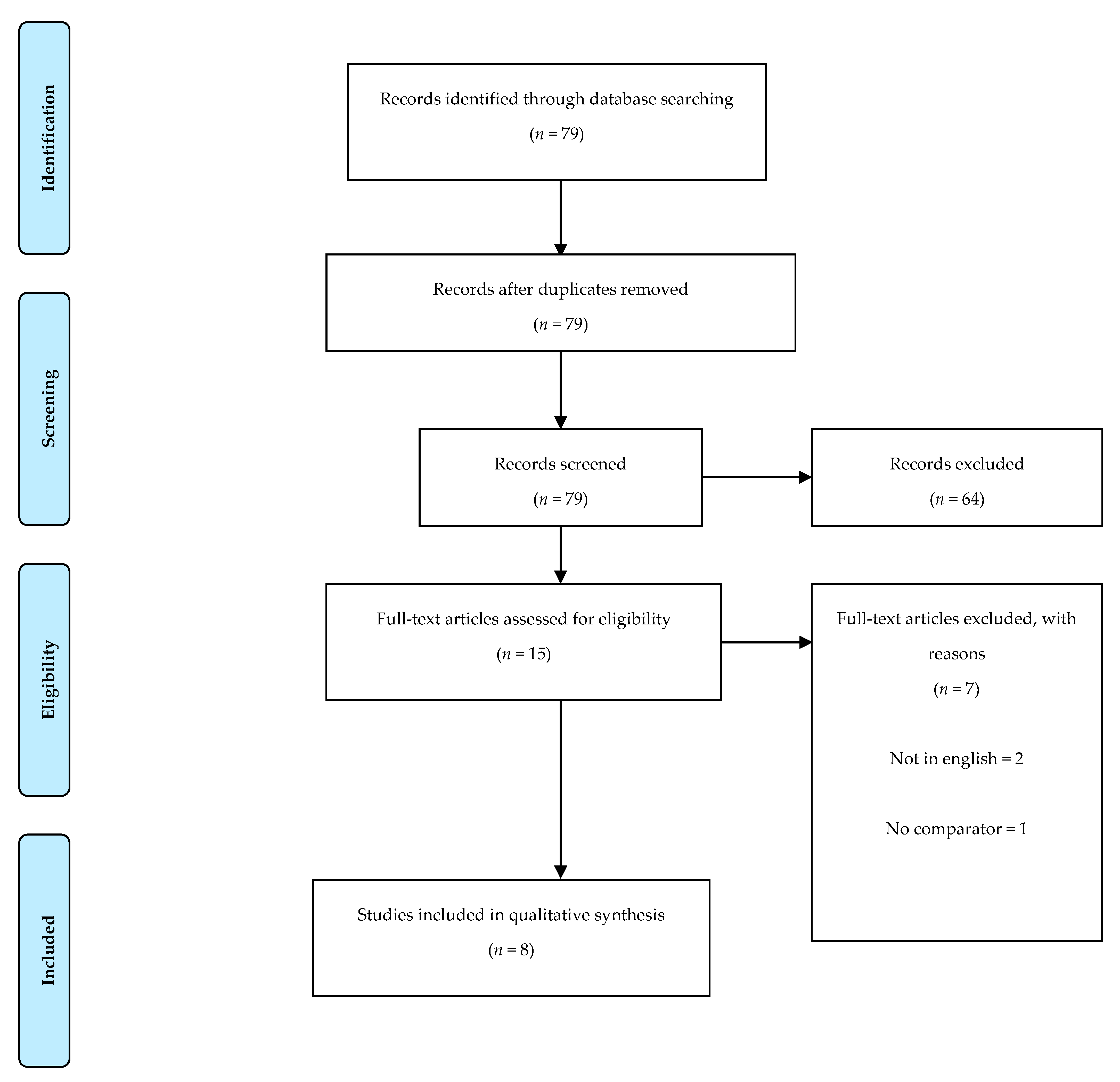
3.1. Study Identification and Selection
3.2. Study Characteristics and Training Protocols
3.3. Methodological Quality
3.4. Results of Individual Studies: Acute (Immediate) Effects
3.5. Results of Individual Studies: Chronic (Adaptations) Effects
4. Discussion
4.1. Discussion of Evidence: Acute Effects
4.1.1. Hormonal Responses
4.1.2. Strength and Power
4.1.3. External Load
4.1.4. Internal Load
4.2. Discussion of Evidence: Adaptations
4.2.1. Muscle Architecture
4.2.2. Strength and Power
4.2.3. Aerobic
4.2.4. Jumping
4.2.5. Sprinting
4.2.6. Change-of-Direction
4.2.7. Repeated Sprint Ability
4.3. Study Limitations, Future Research, and Practical Applications
- (1)
- To reduce the impact of the interference mechanisms, strength training should be done 3–6 h before or after endurance training. If not possible, athletes should be supported with additional protein and carbohydrate ingestion between sessions.
- (2)
- (3)
- The higher the contraction, such as sprinting and jump training, the more fatigue interferes, since this type of work should be done fully rested. Therefore, RSA (6 × 30 m with 30″ rest) is not a valid way to train sprinting. However, it is valid if complete rests are given between sets, so this is suggested to be done first, whether followed by strength or endurance training.
- (4)
- Volume seems to be the most robust predictor of fatigue, whether in RT or ET. So, the volume of variables should be manipulated according to players’ fitness levels and training experience.
- (5)
- When training young players, interference does not seem to play a big role. Nevertheless, when training for technical improvements, fatigue can hinder learning, and so this type of work should be done first.
- -
- 2 sessions per week of CT;
- -
- begin the strength training with free weights or body weight exercises, without plyometrics;
- -
- the progressive overload principle should be applied with the inclusion of plyometric exercises, but without achieving failure;
- -
- switch between upper and lower limb exercises;
- -
- 2–4 sets with a range of 20-4 repetitions, 50–85% of 1 RM per free weight and/or body weight exercise;
- -
- 2–5 sets with a range of 3–10 repetitions per plyometric exercise;
- -
- rest period should allow full recovery to avoid excessive fatigue.
5. Conclusions
Author Contributions
Funding
Acknowledgments
Conflicts of Interest
References
- De Souza, E.O.; Tricoli, V.; Roschel, H.; Brum, P.C.; Bacurau, A.V.N.; Ferreira, J.C.B.; Aoki, M.S.; Neves, M., Jr.; Aihara, A.Y.; Da Rocha Correa Fernandes, A.; et al. Molecular adaptations to concurrent training. Int. J. Sport. Med. 2013, 34, 207–213. [Google Scholar] [CrossRef] [Scilit]
- Murlasits, Z.; Kneffel, Z.; Thalib, L. The physiological effects of concurrent strength and endurance training sequence: A systematic review and meta-analysis. J. Sport. Sci. 2018, 36, 1212–1219. [Google Scholar] [CrossRef] [Scilit]
- Nader, G.A. Concurrent strength and endurance training: From molecules to man. Med. Sci. Sport. Exerc. 2006, 38, 1965–1970. [Google Scholar] [CrossRef] [Scilit]
- Di Salvo, V.; Baron, R.; Tschan, H.; Calderon Montero, F.J.; Bachl, N.; Pigozzi, F. Performance characteristics according to playing position in elite soccer. Int. J. Sport. Med. 2007, 28, 222–227. [Google Scholar] [CrossRef] [Scilit]
- Stolen, T.; Chamari, K.; Castagna, C.; Wisloff, U. Physiology of soccer: An update. Sport. Med. 2005, 35, 501–536. [Google Scholar] [CrossRef] [Scilit] [PubMed]
- Enright, K.; Morton, J.; Iga, J.; Drust, B. Implementing concurrent-training and nutritional strategies in professional football: A complex challenge for coaches and practitioners. Sci. Med. Footb. 2017, 1, 65–73. [Google Scholar] [CrossRef] [Scilit]
- Kotzamanidis, C.; Chatzopoulos, D.; Michailidis, C.; Papaiakovou, G.; Dimitris, P. The Effect of a Combined High-Intensity Strength and Speed Training Program on the Running and Jumping Ability of Soccer Players. J. Strength Cond. Res. 2005, 19, 369–375. [Google Scholar]
- Orendurff, M.S.; Walker, J.D.; Jovanovic, M.; Tulchin, K.L.; Levy, M.; Hoffmann, D.K. Intensity and duration of intermitt ent exercise and recovery during a soccer match. J. Strength Cond. Res. 2010, 24, 2683–2692. [Google Scholar] [CrossRef] [Scilit]
- Bangsbo, J.; Mohr, M.; Krustrup, P. Physical and metabolic demands of training and match-play in the elite football player. J. Sport. Sci. 2006, 24, 665–674. [Google Scholar] [CrossRef] [Scilit] [PubMed]
- Faude, O.; Koch, T.; Meyer, T. Straight sprinting is the most frequent action in goal situations in professional football. J. Sport. Sci. 2012, 30, 625–631. [Google Scholar] [CrossRef] [Scilit] [PubMed]
- Fereday, K.; Hills, S.P.; Russell, M.; Smith, J.; Cunningham, D.J.; Shearer, D.; McNarry, M.; Kilduff, L.P. A comparison of rolling averages versus discrete time epochs for assessing the worst-case scenario locomotor demands of professional soccer match-play. J. Sci. Med. Sport 2020, 23, 764–769. [Google Scholar] [CrossRef] [Scilit] [PubMed]
- Wing, C.E.; Turner, A.N.; Bishop, C.J. Importance of strength and power on key performance indicators in elite youth soccer. J. Strength Cond. Res. 2020, 34, 2006–2014. [Google Scholar] [CrossRef] [Scilit] [PubMed]
- Harrison, C.B.; Gill, N.D.; Kinugasa, T.; Kilding, A.E. Development of aerobic fitness in young team sport athletes. Sport. Med. 2015, 45, 969–983. [Google Scholar] [CrossRef] [Scilit]
- Loturco, I.; Kobal, R.; Kitamura, K.; Cal Abad, C.C.; Faust, B.; Almeida, L.; Pereira, L.A. Mixed training methods: Effects of combining resisted sprints or plyometrics with optimum power loads on sprint and agility performance in professional soccer players. Front. Physiol. 2017, 8, 1034. [Google Scholar] [CrossRef] [Scilit] [PubMed]
- Brachman, A.; Kamieniarz, A.; Michalska, J.; Pawłowski, M.; Słomka, K.J.; Juras, G. Balance training programs in athletes—A systematic review. J. Hum. Kinet. 2017, 58, 45–64. [Google Scholar] [CrossRef] [Scilit] [PubMed]
- Suchomel, T.J.; Nimphius, S.; Stone, M.H. The importance of muscular strength in athletic performance. Sport. Med. 2016, 46, 1419–1449. [Google Scholar] [CrossRef] [Scilit] [PubMed]
- Clemente, F.M. The threats of small-sided soccer games. Strength Cond. J. 2020, 42, 100–105. [Google Scholar] [CrossRef] [Scilit]
- Støren, Ø.; Helgerud, J.; Støa, E.M.; Hoff, J. Maximal strength training improves running economy in distance runners. Med. Sci. Sport. Exerc. 2008, 40, 1087–1092. [Google Scholar] [CrossRef] [Scilit]
- Ross, A.; Gill, N.; Cronin, J. Match analysis and player characteristics in rugby sevens. Sport. Med. 2014, 44, 357–367. [Google Scholar] [CrossRef] [Scilit]
- Wilson, J.M.; Marin, P.J.; Rhea, M.R.; Wilson, S.M.C.; Loenneke, J.P.; Anderson, J.C. Concurrent training: A meta-analysis examining interference of aerobic and resistance exercises. J. Strength Cond. Res. 2012, 26, 2293–2307. [Google Scholar] [CrossRef] [Scilit]
- Methenitis, S. A Brief review on concurrent training: From laboratory to the field. Sports 2018, 6, 127. [Google Scholar] [CrossRef] [Scilit]
- Izquierdo, M.; García, J. Strategies to optimize concurrent training of strength and aerobic fitness for rowing and canoeing strategies to optimize concurrent training of strength and aerobic fitness for rowing and canoeing. Sport. Med. 2011, 41, 329–343. [Google Scholar]
- Balsalobre-Fernández, C.; Santos-Concejero, J.; Grivas, G.V. Effects of strength training on running economy in highly trained runners: A systematic review with meta-analysis of controlled trials. J. Strength Cond. Res. 2016, 30, 2361–2368. [Google Scholar] [CrossRef] [Scilit]
- Baar, K. Using molecular biology to maximize concurrent training. Sport. Med. 2014, 44, 117–125. [Google Scholar] [CrossRef] [Scilit]
- Green, S.; Higgins, J. Cochrane Handbook for Systematic Reviews of Interventions; John Wiley & Sons: Hoboken, NJ, USA, 2005. [Google Scholar]
- Moher, D.; Liberati, A.; Tetzlaff, J.; Altman, D.G. Preferred reporting items for systematic reviews and meta-analyses: The PRISMA statement. PLoS Med. 2009, 6, e1000097. [Google Scholar] [CrossRef] [Scilit]
- Collaboration, C. Data Extraction Template for Included Studies. Available online: https://cccrg.cochrane.org/sites/cccrg.cochrane.org/files/public/uploads/det_2015_revised_final_june_20_2016_nov_29_revised.doc (accessed on 2 January 2021).
- Impellizzeri, F.M.; Marcora, S.M.; Coutts, A.J. Internal and external training load: 15 years on. Int. J. Sport. Physiol. Perform. 2019, 14, 270–273. [Google Scholar] [CrossRef] [Scilit] [PubMed]
- Sterne, J.A.C.; Savović, J.; Page, M.J.; Elbers, R.G.; Blencowe, N.S.; Boutron, I.; Cates, C.J.; Cheng, H.-Y.; Corbett, M.S.; Eldridge, S.M.; et al. RoB 2: A revised tool for assessing risk of bias in randomised trials. BMJ 2019, 366, l4898. [Google Scholar] [CrossRef] [Scilit] [PubMed]
- Sterne, J.A.; Hernán, M.A.; Reeves, B.C.; Savović, J.; Berkman, N.D.; Viswanathan, M.; Henry, D.; Altman, D.G.; Ansari, M.T.; Boutron, I.; et al. ROBINS-I: A tool for assessing risk of bias in non-randomised studies of interventions. BMJ 2016, 355, i4919. [Google Scholar] [CrossRef] [Scilit] [PubMed]
- Sparkes, W.; Turner, A.N.; Weston, M.; Russell, M.; Johnston, M.J.; Kilduff, L.P. The effect of training order on neuromuscular, endocrine and mood response to small-sided games and resistance training sessions over a 24-h period. J. Sci. Med. Sport 2020, 23, 866–871. [Google Scholar] [CrossRef] [Scilit] [PubMed]
- Enright, K.; Morton, J.; John, I.G.A.; Drust, B. Hormonal responses during two different concurrent-training trials in youth elite soccer players: Does changing the organization of training impact the hormonal response to concurrent exercise? J. Sport. Med. Phys. Fit. 2018, 58, 699–706. [Google Scholar]
- Enright, K.; Morton, J.; Iga, J.; Drust, B. The effect of concurrent training organisation in youth elite soccer players. Eur. J. Appl. Physiol. 2015, 115, 2367–2381. [Google Scholar] [CrossRef] [Scilit] [PubMed]
- Kargarfard, M.; Tajvand, S.; Rabbani, A.; Clemente, F.M.; Jalilvand, F. Effects of combined plyometric and speed training on change of direction, linear speed, and repeated sprint ability in young soccer players: A pilot study. Kinesiology 2020, 52, 85–93. [Google Scholar] [CrossRef] [Scilit]
- Makhlouf, I.; Castagna, C.; Manzi, V.; Laurencelle, L.; Behm, D.G.; Chaouachi, A. Effect of sequencing strength and endurance training in young male soccer players. J. Strength Cond. Res. 2016, 30, 841–850. [Google Scholar] [CrossRef] [Scilit] [PubMed]
- McGawley, K.; Andersson, P.I. The order of concurrent training does not affect soccer-related performance adaptations. Int. J. Sport. Med. 2013, 34, 983–990. [Google Scholar] [CrossRef] [Scilit]
- Cook, C.J.; Kilduff, L.P.; Crewther, B.T.; Beaven, M.; West, D.J. Morning based strength training improves afternoon physical performance in rugby union players. J. Sci. Med. Sport 2014, 17, 317–321. [Google Scholar] [CrossRef] [Scilit] [PubMed]
- Silva, P.; Dos Santos, E.; Grishin, M.; Rocha, J.M. Validity of heart rate-based indices to measure training load and intensity in elite football players. J. Strength Cond. Res. 2018, 32, 2340–2347. [Google Scholar] [CrossRef] [Scilit]
- Schoenfeld, B.J.; Ogborn, D.; Krieger, J.W. Dose-response relationship between weekly resistance training volume and increases in muscle mass: A systematic review and meta-analysis. J. Sport. Sci. 2017, 35, 1073–1082. [Google Scholar] [CrossRef] [Scilit]
- Eklund, D.; Pulverenti, T.; Bankers, S.; Avela, J.; Newton, R.; Schumann, M.; Häkkinen, K. Neuromuscular adaptations to different modes of combined strength and endurance training. Int. J. Sport. Med. 2015, 36, 120–129. [Google Scholar] [CrossRef] [Scilit]
- Machek, S.B.; Hwang, P.S.; Cardaci, T.D.; Wilburn, D.T.; Bagley, J.R.; Blake, D.T.; Galpin, A.J.; Willoughby, D.S. Myosin heavy chain composition, creatine analogues, and the relationship of muscle creatine content and fast-twitch proportion to Wilks coefficient in powerlifters. J. Strength Cond. Res. 2020, 34, 3022–3030. [Google Scholar] [CrossRef] [Scilit]
- Wilson, G.J. The specificity of strength training: The effect of posture. Eur. J. Appl. Physiol. Occup. Physiol. 1996, 73, 346–352. [Google Scholar] [CrossRef] [Scilit]
- Harris, G.R.; Stone, M.H.; O’Bryant, H.S.; Proulx, C.M.; Johnson, R.L. Short-term performance effects of high power, high force, or combined weight-training methods. J. Strength Cond. Res. 2000, 14, 14–20. [Google Scholar]
- Young, W.B. Transfer of strength and power training to sports performance. Int. J. Sport. Physiol. Perform. 2006, 1, 74–83. [Google Scholar] [CrossRef] [Scilit]
- Kumagai, K.; Abe, T.; Brechue, W.F.; Ryushi, T.; Takano, S.; Mizuno, M. Sprint performance is related to muscle fascicle length in male 100-m sprinters. J. Appl. Physiol. 2000, 88, 811–816. [Google Scholar] [CrossRef] [Scilit]
- Musch, J.; Grondin, S. Unequal competition as an impediment to personal development: A review of the relative age effect in sport. Dev. Rev. 2001, 21, 147–167. [Google Scholar] [CrossRef] [Scilit]
- Lloyd, R.S.; Oliver, J.L. The youth physical development model: A new approach to long-term athletic development. Strength Cond. J. 2012, 34, 61–72. [Google Scholar] [CrossRef] [Scilit]
- Markovic, G.; Mikulic, P. Neuro-musculoskeletal and performance adaptations to lower-extremity plyometric training. Sport. Med. 2010, 40, 859–895. [Google Scholar] [CrossRef] [Scilit]
- National Strength and Conditioning Association. Developing Agility and Quickness; Dawes, J., Ed.; Human Kinetics: Champaign, IL, USA, 2018; ISBN 9781492569510. [Google Scholar]
- Spurrs, R.W.; Murphy, A.J.; Watsford, M.L. The effect of plyometric training on distance running performance. Eur. J. Appl. Physiol. 2003, 89, 1–7. [Google Scholar] [CrossRef] [Scilit] [PubMed]
- Da Silva, J.F.; Guglielmo, L.G.A.; Bishop, D. Relationship between different measures of aerobic fitness and repeated-sprint ability in elite soccer players. J. Strength Cond. Res. 2010, 24, 2115–2121. [Google Scholar] [CrossRef] [Scilit]
- Crewther, B.T.; Cook, C.; Cardinale, M.; Weatherby, R.P.; Lowe, T. Two emerging concepts for elite athletes neuromuscular system and the dose-response training role of these endogenous hormones. Sport. Med. 2011, 41, 103–123. [Google Scholar] [CrossRef] [Scilit]
- Lorenz, D. Postactivation potentiation: An introduction. Int. J. Sports Phys. Ther. 2011, 6, 234–240. [Google Scholar]
- Stone, M.H.; Sands, W.A.; Pierce, K.C.; Ramsey, M.W.; Haff, G.G. Power and power potentiation among strength-power athletes: Preliminary study. Int. J. Sport. Physiol. Perform. 2008, 3, 55–67. [Google Scholar] [CrossRef] [Scilit]
- Aarts, H.; Van Honk, J. Testosterone and unconscious positive priming increase human motivation separately. Neuroreport 2009, 20, 1300–1303. [Google Scholar] [CrossRef] [Scilit] [PubMed]
- Crewther, B.T.; Cook, C.J.; Gaviglio, C.M.; Kilduff, L.P.; Drawer, S. Baseline strength can influence the ability of salivary free testosterone to predict squat and sprinting performance. J. Strength Cond. Res. 2012, 26, 261–268. [Google Scholar] [CrossRef] [Scilit]
- Jeukendrup, A.E. Carbohydrate intake during exercise and performance. Nutrition 2004, 20, 669–677. [Google Scholar] [CrossRef] [Scilit] [PubMed]
- Martinez, D. From the field-directed topic: The use of reactive strength index, reactive strength infex modified, and flight time: Contraction time as monitoring tools. J. Aust. Strength Cond. 2006, 24, 37–41. [Google Scholar]
- Coffey, V.G.; Pilegaard, H.; Garnham, A.P.; O’Brien, B.J.; Hawley, J.A. Consecutive bouts of diverse contractile activity alter acute responses in human skeletal muscle. J. Appl. Physiol. 2009, 106, 1187–1197. [Google Scholar] [CrossRef] [Scilit] [PubMed]
- Sabag, A.; Najafi, A.; Michael, S.; Esgin, T.; Halaki, M.; Hackett, D. The compatibility of concurrent high intensity interval training and resistance training for muscular strength and hypertrophy: A systematic review and meta-analysis. J. Sport. Sci. 2018, 36, 2472–2483. [Google Scholar] [CrossRef] [Scilit]
- Perez-Schindler, J.; Hamilton, D.L.; Moore, D.R.; Baar, K.; Philp, A. Nutritional strategies to support concurrent training. Eur. J. Sport Sci. 2015, 15, 41–52. [Google Scholar] [CrossRef] [Scilit] [PubMed]
- Häkkinen, K.; Alen, M.; Kraemer, W.J.; Gorostiaga, E.; Izquierdo, M.; Rusko, H.; Mikkola, J.; Häkkinen, A.; Valkeinen, H.; Kaarakainen, E.; et al. Neuromuscular adaptations during concurrent strength and endurance training versus strength training. Eur. J. Appl. Physiol. 2003, 89, 42–52. [Google Scholar] [CrossRef] [Scilit] [PubMed]
- Reggiani, C.; Schiaffino, S. Muscle hypertrophy and muscle strength: Dependent or independent variables? A provocative review. Eur. J. Transl. Myol. 2020, 30, 9311. [Google Scholar] [CrossRef] [Scilit]
- Wilson, J.M.; Loenneke, J.P.; Jo, E.; Wilson, G.J.; Zourdos, M.C.; Kim, J.-S. The effects of endurance, strength, and power training on muscle fiber type shifting. J. Strength Cond. Res. 2012, 26, 1724–1729. [Google Scholar] [CrossRef] [Scilit]
- Impellizzeri, F.M.; Marcora, S.M.; Castagna, C.; Reilly, T.; Sassi, A.; Iaia, F.M.; Rampinini, E. Physiological and performance effects of generic versus specific aerobic training in soccer players. Int. J. Sport. Med. 2006, 27, 483–492. [Google Scholar] [CrossRef] [Scilit] [PubMed]
- Hakkinen, K.; Alen, M.; Kallinen, M.; Newton, R.U.; Kraemer, W.J. Neuromuscular adaptation during prolonged strength training, detraining and re-strength-training in middle-aged and elderly people. Eur. J. Appl. Physiol. 2000, 83, 51–62. [Google Scholar] [CrossRef] [Scilit] [PubMed]
- Alén, M.; Häkkinen, K.; Komi, P.V. Changes in neuromuscular performance and muscle fiber characteristics of elite power athletes self-administering androgenic and anabolic steroids. Acta Physiol. Scand. 1984, 122, 535–544. [Google Scholar] [CrossRef] [Scilit] [PubMed]
- Falk, B.; Dotan, R. Child-adult differences in the recovery from high-intensity exercise. Exerc. Sport Sci. Rev. 2006, 34, 107–112. [Google Scholar] [CrossRef] [Scilit] [PubMed]
- Ratel, S.; Duché, P.; Williams, C.A. Muscle fatigue during high-intensity exercise in children. Sport. Med. 2006, 36, 1031–1065. [Google Scholar] [CrossRef] [Scilit] [PubMed]
- Hammami, M.; Negra, Y.; Shephard, R.J.; Chelly, M.S. Effects of leg contrast strength training on sprint, agility and repeated change of direction performance in male soccer players. J. Sport. Med. Phys. Fit. 2017, 57, 1424–1431. [Google Scholar]
- Tabata, I.; Nishimura, K.; Kouzaki, M.; Hirai, Y.; Ogita, F.; Miyachi, M.; Yamamoto, K. Effects of moderate-intensity endurance and high-intensity intermittent training on anaerobic capacity and VO(2max). Med. Sci. Sport. Exerc. 1996, 28, 1327–1330. [Google Scholar] [CrossRef] [Scilit]
- Bangsbo, J.; Iaia, F.M.; Krustrup, P. The Yo-Yo intermittent recovery test: A useful tool for evaluation of physical performance in intermittent sports. Sport. Med. 2008, 38, 37–51. [Google Scholar] [CrossRef] [Scilit]
- Baker, D. Recent trends in high-intensity aerobic training for field sports. Prof. Strength Cond. 2011, 22, 3–8. [Google Scholar]


| PICOS | Inclusion Criteria | Exclusion Criteria |
|---|---|---|
| Population | Soccer players of any age or sex without injury or illness reported | Others sports than soccer, players with injuries or illness |
| Intervention | Intervention is CT using strength (e.g., including any type of structured strength training, namely, resistance training, plyometrics, calisthenics) and endurance or sprinting or balance or mobility training | Interventions not including strength and endurance or sprinting or balance or mobility training in the same protocol |
| Comparator | Compared with control (passive control with just regular field-based training and no other additional program reported) or other intervention group (active control with field-based training and other intervention protocol not consisting in CT, or even single interventions of strength or endurance training) | No compared with passive control or other intervention group |
| Outcome | At least one pre- or post-acute and/or chronic outcome (acute response: immediate response of a physical or physiological variable in response to the exercise; chronic response: adaptations promoted by the training intervention, consisting in permanent changes in physical or physiological variables) related to physiological (e.g., heart rate responses, blood lactate concentrations, oxygen uptake, rate of perceived exertion) and physical (e.g., strength and power, speed, change-of-direction, aerobic capacity) measures | No pre-post data related to acute and/or chronic physiological and physical measures |
| Study design | The study designs must have at least two groups (randomized or non-randomized). | Descriptive studies or observational analytic. |
| Additional criteria | Only original and full-text studies written in English | Written in other language than English. Other article types than original (e.g., reviews, letters to editors, trial registrations, proposals for protocols, editorials, book chapters and conference abstracts). |
| Study | N | Age (SD) | Competitive Level | Design | Outcomes | Tests Used in the Original Studies | Measures Extracted from the Tests |
|---|---|---|---|---|---|---|---|
| [33] | 15 | 17.3 ± 1.6 | English Premier League | Players where split in two groups. CT training was employed in both groups 2x/week for 5 weeks, alternating CT order. | Chronic responses: muscle morphology, jumping ability, sprint ability, strength. |
|
|
| [6] | 21 | 26 ± 0 4 | English “Championship” | 10-week observational study. Internal data (sRPE and heart rate) and external load (GPS, volume RT), training modality frequency and dietary intake. | Acute responses: Internal load, external load. | Observational study. Heart Rata data GPS Data Training Load RT Volume Load RT Training Intensity (1RM Based) |
|
| [32] | 13 | 17.0 ± 0.2. | English Premier League | Athletes were taken twice a week to the laboratory in 2 consecutive weeks. Week 1, baseline testing, week 2, two different CT trails were employed (CT1 and CT2). Before, during and after each trail, venous blood samples were collected | Acute responses: Hormonal response |
|
|
| [34] | 24 | CG= 17.6 ± 0.4 CDG = 17.8 ± 0.8 CWG = 17.8 ± 0.6 | Second division, Iran League | All groups attended to technical/tactical soccer training during 6 weeks CWD performed on Tuesday plyometric training and on Saturdays Speed training. The CDG training included all three modalities in the same session (Saturdays). | Chronic responses: agility ability, sprint ability, power endurance |
|
|
| [7] | 35 | COM = 17.0 ± 1.1 STR = 17.1 ± 1.1 CG= 17.8 ± 0.3 | Healthy male volunteers (CG) and soccer players (COM and STR) | During 13 weeks, 2 groups of followed one STR, and COM. | Chronic responses: Strength, sprint ability, jumping ability. |
|
|
| [35] | 57 | 13.7 ± 0.5 | First Division Tunisian | For 12 weeks 3 groups trained in different training sequence. SE in a single session, ES in a single session, both 2/week and ASE (4x/week). | Chronic responses: Aerobic capacity, strength, jumping ability, power, agility ability. |
|
|
| [36] | 18 | 23 ± 4 | Professional and semi-professional Swedish I Division | A 5-week with two groups, one would perform HIT followed by STR the other STR followed by HIT. CT sessions were carried out 3 times per week (Tuesdays, Thursday and Fridays), 30 min of HIT or STR followed by the remaining modality. Soccer technical and tactical field sessions were performed on Mondays and Wednesdays. | Chronic responses: Body composition, jumping ability, strength, agility ability, sprint, aerobic capacity, power endurance |
|
|
| [31] | 14 | 22.1 ± 3.1 | Semi-Professional | 2 CT training order, either SSG training followed by STR (SSG + RES) or STR followed by SSG, both with a 2-h interval. Players were given 72 h of rest between CT sessions. Data was collected before (0 h) and after (24 h) in both protocols. Saliva was also collected prior to the second training session (+2 h) during both protocols so assess readiness to undertake the second session of the day) | Acute responses: Hormonal response, power, internal load, external load. |
|
|
| Study | Duration (w) | d/w | CT Sessions Number | Total Number of Sessions | Strength Training | Other Training | Type of CT (Within or Between Sessions) | Protocol of Strength Training | Protocol of the Other Training Method |
|---|---|---|---|---|---|---|---|---|---|
| [33] | 5 weeks | 2 days/week | 10 | 20 regular soccer sessions + 5 games | Maximum Strength | Soccer Specific Endurance Training | Both groups did CT training in the same day. Endurance + Strength group had ~120′ difference between session, while Strength + Endurance group had ~30′–45′ difference. | Strength program consisted in 4 sets of 6 reps (~85% 1 RM) of Parallel Back Squat, deadlift, stiff-leg deadlift and front lunge. Also 3 sets of 8 reps of the Nordic hamstring was performed. | ~20′ dynamic warm up ~25′ SSG (4 versus 4, possession. Each game lasted 4′ at an intensity ~85–95% Heart Rate max. Between each game 3′ of active recovery was allocated. Pitch size was 37 x 27.) 10′ of rest interval between SSG and Technical and tactical work was given. ~50′ Technical and tactical work |
| [6] | 10 weeks | Week 1–3, 5–3 days a week. Weeks 4–10, 1 day a week | 17 | 49 regular session + 11 games + 17 Strength sessions | Maximum Strength | Specific Soccer Endurance | Resistance training followed by Specific soccer endurance or Specific soccer endurance followed by resistance training. The order was not consistent but always performed on the same day. | Upper body only (n = 8) 6 RM, n = 1; 8 RM, n = 3; 10 RM, n = 3; 12 RM, n = 1. Lower body only (n = 4) 6 RM, n = 3; 8 RM, n = 1. Full body (n = 5) 4 RM, n = 1; 5 RM, n = 3; 8 RM, n = 1. | Soccer specific endurance was performed at 10:30, typically lasted 74 ± 5 |
| [32] | 2 weeks | 2 days a week | 4 | There was no regular soccer training, at least described in the article. 4 sessions | Maximum Strength | Soccer Specific Endurance | Soccer Specific Endurance Training followed by Resistance Training with ~105′ difference between them or Resistance training followed by Soccer Specific Endurance Training performed in the same day with ~60′ difference between them. | The strength training consisted of 4 sets of 6 reps (~85% 1RM) of Parallel Back Squat, deadlift, stiff-leg deadlift and front lunge. Also 3 sets of 8 reps of the Nordic hamstring were performed. | Soccer Specific Endurance Training consisted in a dynamic warm up (~20′), small-sided-games (~25′) and a technical and tactical work (~50′). SSG involved a 4v4 possession format with a duration of 4′ at an intensity of ~85–95% Heart Rate max. Pitch size was 37 m x 27 m and between each game, 3′ of active recovery were allocated. |
| [34] | 6 weeks | CWG 2 days a week CDG 1 day per week | CG (n = 0) CWG (n = 12) CDG (n = 6) | CG (n = 30) CWG (n = 42) CDG (n = 36) | - | Plyometric, Speed, Soccer Specific Endurance | CWG group had two types of CT training, on Tuesday, plyometrics and soccer specific endurance and on Saturday speed and soccer specific endurance withing the same session. The CDG group had CT training also on Tuesday and Saturday, but both speed and plyometric were performed concurrently with soccer specific endurance within the same session. | Both the CDG and CWG performed the same Plyometric and Speed programs, the difference was if it was on the same day (CDG) or in the same week (CWD). Plyometric training consisted in 4 exercises, in two different vectors (vertical and horizontal) with a bilateral and a unilateral version of the plyometric. For all plyometric exercises repetition scheme was between 2 and 3 reps, with a weekly progression of one set per week starting at 2 or 3 sets and ending with 5 or 6 sets. Speed training consisted in 10, 20 and 30 m linear sprints starting with 4, 3 and 2 sets respectively, and a weekly progression of 2 sets for the 10 and 20 m sprint and 1 set for the 30 m. Rest time between sets was 30′’ for the 10 m sprint, 45′’ for the 20 m and 60′’ for 30 m. Also 5 and 10 m sprints with a 180° COD were employed. 5/5 and 10/5/10 with 2 sets with 60′’ rest and 1 set with 120′’ rest between sets, respectively with a progression on adding a set per week. | |
| [7] | 13 weeks | Weeks 1–4, 3 times per week. Weeks 5–13, 2 times per week. | 18 | There was no regular soccer training, at least described in the article. Only that they were physically active students or soccer players. | Maximum Strength | Speed Training | Strength training followed by Speed Training withing the same session. | The intensities for each subperiod were 8 RM, 6 RM and 3 RM, respectively. For each selected intensity, 4 sets with 3′ of rest between them were given. Loads were increased whenever the subject was able to perform more than the target repetitions. | Speed work was performed by doing 4,5 and 6 for their respective subperiod. Maximal repetitions of 30 m sprint were performed with a 3′ rest between every repetition. |
| [35] | 12 weeks | 2 days a week for SE and ES groups. 4 days a week for ASE group | SE and ES (n = 24) ASE (n = 48) | SE and ES + regular training (n = 72) ASE + Regular Training (n = 96) | Maximum Strength, Hypertrophy, Power | Plyometric, Endurance | Both groups, ES and SE performed concurrent training within the same session (Tuesday and Thursday), only a 15′ recovery period separate them. ASE group performed endurance on separate days. | Strength training changed every 4 weeks, ending up with 3 different blocks, being the first two more focused on strength and hypertrophy and the third one more on power development. The first two blocks consisted in a mixture of compound and isolated movements with 3 sets of 10 to 15 reps and 3 sets of 6 to 10 reps respectively. The last block used a more power development approach including Olympic lifting and plyometrics for 3 sets of 5 to 8 reps. | Endurance training intensity was prescribed based on individual MAS. Training consisted in 2 rounds of 10–16 sets of 15′’ of high-intensity running with 15′’ passive recovery at an intensity between 110–120% |
| [36] | 5 weeks | 3 days per week | 15 | 25 sessions, plus 5 Pilates sessions | Maximum Strength and Power | Endurance, Soccer Specific Endurance | Endurance followed by Strength or Strength followed by Endurance within the same session | Strength session on Tuesday and Thursday were gym based compromised 2–3 sets of 5–10 reps with a progression overload on resistance exercises from 75–90% 1 RM over the 5-week period. On Friday’s sessions were focused on power, explosivity and core development, 3 sets of 3–20 repetitions were completed depending on the exercise, also, exercises were performed in a super-set order. | HIT on Tuesdays included a mix of intervals lasting 5–20′ and rest periods lasting between 10–90′. On Thursday, HIT involved repeated explosive actions using ladders, hurdles and multi-directional running. Lastly, on Friday, involved a completion of 4–5 rounds of 4–5′ work and 2–3′ rest, with players performing a soccer-specific dribbling track for the first 2 weeks and a 3 vs 3 small-sided game on a 20 × 30 m pitch at a HRmax 90–95%. |
| [31] | 2 weeks | 1 day per week | 1 | 2 | Maximum Strength | Soccer Specific Endurance | Soccer Specific Endurance followed by Strength Training or Strength Training followed by Soccer Specific Training within the same day (2-h difference) | Strength Training included Back Squat, Romanian Deadlift and Barbell Hip Thrust. All performed at an intensity of 85% of 1RM for 4 sets of 4 with a 4′ of inter-set recovery. Each exercise was preceded by 2 sets of 4 repetitions at 50% and 70% 1 RM. | Players performed 6 × 7′ with 2′ rest between each set to allow them to drink water. Pitch size was 24 × 29 with full-size goals. |
| Study | D1 | D2 | D3 | D4 | D5 | Overall |
|---|---|---|---|---|---|---|
| [7] |  |  | | | | |
| [35] | | | | | | |
| Study | D1 | D2 | D3 | D4 | D5 | D6 | D7 | Overall |
|---|---|---|---|---|---|---|---|---|
| [33] | | | | |  | | | |
| [6] | | | | | | | | |
| [32] | | | | | | | | |
| [34] | | | | | | | | |
| [36] | | | | | | | | |
| [31] | | | | | | | | |
| Study | Internal Load (IL)/External Load (EL) | ||
|---|---|---|---|
| [6] | IL: Comparing Average sRPE (AU) for football-specific ET between groups (RT + ET, 7 ± 1; ET + RT, 6 ± 1; p = 0.05) showing a significant difference. EL: Comparing total distance covered (m) during the football specific ETC between groups (avg. RT + ET, 5942 ± 1057; ET + RT, 6213 ± 958;) showing significant differences. | ||
| Study | Hormonal Response | ||
| [32] | No main effect between trails regarding Cortisol concentration (mmol/L) (p = 0.07). A moderate ES between conditions at time point 4 (13:45) (ES = −0.95). Time point 1 (8:00) to time point 2 (9:45) CT1 Cortisol (mml/L), very large effect (reduction) (ES = 2.17). Time point 3 (12:30) to time point 4 (13:45) CT1 Cortisol (mmol/L), large effect (reduction) (ES = 1.24). Time point 4 (13:45) to time point 5 (15:15) CT1 Cortisol (mmol/L), large effect (reduction) (ES = 1.14). Time point 3 (12:30) to time point 4 (13:45) CT1 Cortisol (mmol/L), small effect size (no change) (ES = −0.35). Time point 1 (8:00) to time point 2 (9:45) CT2 Cortisol (mmol/L), large effect size (reduction) (ES = 1.9). Time point 4 (13:45) to point 5 (15:15) CT2 Cortisol (mmol/L), very large effect size (reduction) (ES = 2.10) When compared between trails, there was no main effect observed between trails (p = 0.22). Between trails there was a moderate effect in time point 3 (12:30) (ES = 0.63). Between trails Testosterone AUC, there was a moderate effect (ES = 0.71) (CT1; 300 ± 76 versus CT2; 244 ± 81) No change in Testosterone (mmol/l) pre to post-training in either exercises mode (S; ES = 0.04, E; ES = −0.11). Time point 3 (12:30) to time point 4 (13:45) CT1 Testosterone (mmol/L), large effect size (reduction) (ES = 1.34) (p = 0.01). No statistical differences in growth hormone concentration (ug/L) between trails (p = 0.21). Between trails comparison Growth Hormone concentration (ug/L) in time point 3 showed a moderate effect (ES = 0.82). Between trails comparison Growth Hormone concentration (ug/L) in time point 4 showed a moderate effect (ES = 0.72). Between trails comparison Growth Hormone AUC was observed (CT1; 14 ± 11 versus CT2; 5 ± 9; ES= −1.08). Time point 3 (12:30) to time point 4 (13:45) CT1 Growth Hormone concentration (ug/L), large effect (reduction) (ES= 1.38). Time point 4 (13:45) to time point 5 (15:15) CT1 Growth Hormone concentration (ug/L), moderate effect (increase) (ES= −0.86). Time point 4 (13:45) to time point 5 (15:15) CT2 Growth Hormone concentration (ug/L), large effect (ES = −1.08). Time point 1 (8:00) to time point 4 (9:45) CT2 Growth Hormone concentration (ug/L), moderate effect (ES= −0.77). | ||
| Study | Hormonal Response | Strength and Power | Internal Load (IL) / External load (EL) |
| [31] | Testosterone concentration (pg/mL) on pre (0 h) SSG + RT −4.4 (32.5) (trivial, ES = 0.07) vs. RT + SSG 17.0 (25.3) (small, ES = 0.27). Trail difference, moderate effect size (ES= 0.73). Testosterone concentration (pg/mL) on pre (2 h) SSG + RT −48.0 (35.9) (moderate, ES = 0.89) vs. RT + SSG −33.2 (34.3) (small, ES = 0.59). Trail difference, small effect size (ES= 0.42). Testosterone concentration (pg/mL) pre (24 h) SSG + RT −1.3 (71.8) (trivial, ES = 0.02) vs. RT + SSG −14.0 (62.0) (small, ES = 0.24). Trail difference, trivial effect size (ES= 0.19). Cortisol concentration (pg/mL) pre (0 h) SSG + RT −0.066 (0.279) (small, ES = 0.30) vs RES + SSG −0.057 (0.217) (small, ES = 0.31). Trail difference, trivial effect size (ES= 0.04). Cortisol concentration (pg/mL) pre (2 h) SSG + RT −0.310 (0.192) (large, ES = 1.89) vs RT + SSG −0.251 (0.178) (large, ES = 1.72). Trail difference small effect size (ES= 0.32). Cortisol concentration (pg/mL) pre (24 h) SSG + RES −0.065 (0.208) (small, ES = 0.36) vs RT + SSG −0.033 (0.173) (small, ES = 0.21). Trail difference trivial effect size (ES= 0.17). T/C ratio (AU) pre (0 h) SSG + RT 102.6 (216.9) (small, ES = 0.52) vs RT + SSG 112.9 (115.0) (moderate, ES = 0.73). Trail difference, trivial effect size (ES= 0.06). T/C ratio (AU) pre (2 h) SSG + RT 322.1 (237.7) (large, ES = 1.73) vs RES + SSG 261.8 (232.4) (large, ES = 1.41). Trail difference small effect size (ES= 0.26). T/C ratio (AU) pre (24 h) SSG + RT 35.7 (117.7) (small, ES = 0.35) vs RES + SSG −11.0 (98.6) (trivial, ES = 0.10). Trail difference, small effect size (ES= 0.43). | Jump height (cm) on pre (0 h) SSG + RT −2.2 (3.1) (small, ES = 0.4) vs. RT + SSG −4.1 (2.6) (moderate, ES = 0.67). Trail difference −1.9 (3.3), moderate effect size (ES= 0.68). Jump height (cm) pre (24 h) SSG + RT −2.6 (4.9) (small, ES = 0.49) vs. RT + SSG −1.3 (2.0) (small, ES = 0.25). Trail difference 1.2 (5.4) there is a small effect size (ES= 0.33). CMJ relative PPO (W/kg) on pre (0 h) SSG + RT −0.84 (2.75) (trivial, ES =0.12) vs. RT + SSG −3.53 (2.48) (small, ES = 0.5). Trail difference −2.69 (3.30) moderate effect size (ES= 1.03). CMJ relative PPO (W/kg) on pre (24 h) SSG + RT −1.95 (3.81) (small, ES = 0.31) vs. RT + SSG −1.56 (2.30) (small, ES = 0.25. Trail difference −0.37 (4.19) trivial effect size (ES= 0.12). | IL: Mood score (AU) in the SSG + RT pre (0 h) 8.6 (9.1) AU, moderate effect size (ES = 0.72) and pre (24 h) 5.3 (11.1) AU small effect size (ES = 0.44). Mood score (AU) the RT + SSG pre (0 h) 3.2 (11.4) AU, small effect size (ES = 0.24) and pre (24 h) 4.0 (8.5) AU, small effect size (0.29). Mood score (AU) RT + SSG vs SSG + RT pre (0 h), there is a small effect size (ES = 0.52). Mood score (AU) in the RT + SSG vs SSG + RES pre (24 h), trivial effect size (ES = 0.14) RPE score (AU) between groups (SSG + RT, 7.3 ± 1.0 AU; RT + SSG,7.6 ± 1.1 AU), there were similar measurements. EL: Player total distance (m) between groups (SSG + RT, 4659 ± 611 m;RTS + SSG, 4660 ± 583 m), there were similar measurements. Players High speed running distance (m) between groups SSG + RT, 65 ± 16 m; RES + SSG,58 ± 13 m) there were similar measurements. PlayerloadTM (AU) between group (SSG + RT, 470 ± 72 AU; RT + SSG, 465 ± 75 AU), there were similar measurements. |
| Study | Strength and Power | Muscle Architecture | Aerobic | Sprinting | Jumping | COD | RSA |
|---|---|---|---|---|---|---|---|
| [33] | HBS 1RM (kg) in both groups, greater magnitude in E + S (19.1%) vs S + E (10.3%) and an effect size of −0.54 and −1.79 respectively. HBS 1RM (kg) S + E pre-test 121.9 (23.9) to post-test 134.4 (22.10) (ES = −0.54). HBS 1RM (kg) E + S pre-test 115.7 (10.20) to post- test 137.8 (14.10) (ES= −1.79). Isometric peak force MVC (N) force (p = 0.391), quadriceps strength (60°/sCon (p = 0.25), at 180°/s Con (p = 0.16) 120°/s Ecc (p = 0.11) no statistical difference pre to post-test. Isometric loading rate had a significant increased (p = 0.02) with training. Isometric loading rate S + E pre-test 1018 (427) to post-test to 1225 (389). Moderate effect size (−0.5). Isometric loading the E + S pre-test 1185 (316) to post-test to 1508 (295). large effect size (−1.05). Concentric Hamstring torque at 60°/s for the S + E pre-test 108 (18) to post-test 121 (22). Moderate effect size (−0.64). Concentric Hamstring torque at 60°/s for the E + S pre-test 120 (23) to post-test 143 (25). Large effect size (−0.95). Concentric Hamstring torque at 180°/s for the S + E pre-test 106 (20) to post-test 116 (19). Moderate effect size (−0.51). Concentric Hamstring torque at 180°/s for the E + S pre-test 115 (14) to post-test 128 (21). Moderate effect size (−0.72). Eccentric Hamstring torque at 120°/s for the S + E pre-test 133 (23) to post-test 155 (22). Moderate effect size (−0.78). Eccentric Hamstring torque at 120°/s for the E + S pre-test 156 (21) to post-test 192 (25). Large effect size (−1.55). Concentric hamstring torque at 180°/s (p= 0.03). Concentric Quadriceps torque at 180°/s (p = 0.02). Eccentric Hamstring torque at 120°/s (p = 0.001). Ratio concentric hamstring/quadriceps torque at 60°/s (p = 0.01). Ratio concentric hamstring at 60°/s to eccentric quadriceps torque at 120°/s (p = 0.05). | No group interactions were observed. Whole muscle thickness at either distal (MT-D) (p = 0.15) mid (MT-D) (p = 0.33) or proximal (MT-P) (p = 0.43) and FL-M (p = 0.08). MT-D had a 8.8% increase in the E + S, although not significant. Fascicle angle of pentation increased in both groups (p = 0.02) (S + E 7.9%, E + S 14.3%). Large effect size in E + S (−1.76), S + E moderate effect size (−0.72). | - | Significant effect in 10-m sprint time (s) (p = 0.02). No effect on training organization on 10 and 30-m sprint time (s) (p = 0.09; S + E;0; vs E + S; −0.25). 10-m sprint time (s) S + E pre-test 1.72 (0.65) to post-test 1.72 (0.76). No effect size (0). 10-m sprint time (s) E + S pre-test 1.80 (0.36) to post-test 1.70 (0.42). Small effect size (0.25). 30-m sprint time (s) S + E pre-test 4.22 (0.23) to post-test 4.21 (0.20). Trivial effect size (0.04). 30-m sprint time (s) E + S pre-test 4.29 (0.73) to post-test 4.19 (0.12). Small effect size (0.19). | Squat jump height (cm) significantly improved (p ≤ 0.01). No difference between groups. Squat jump height (cm) S + E pre-test 38.9 (2.9) to post-test 41.8 (2.4). Large effect size (−1.08). Squat jump height (cm) E + S pre-test 38.0 (5.7) to post-test 41.1 (5.2). Moderate effect size (−0.56). CMJ height (cm) did not change (p = 0.53). CMJ height (cm) S + E pre-test 39.2 (4.7) to post-test 39.2 (3.3). Trivial effect size (0). CMJ height (cm) E + S pre-test 40.7 (1.9) to post-test 41.4 (2.8). Small effect size (−0.29). | - | - |
| [34] | - | - | - | 30-m sprint time (s) CDG, pre-test 4.21 (0.24) to post-test 4.00 (0.07), very likely moderate effect (improvement) (−4.9%, [−7.7% to −2.0%]), ES −0.80 [−1.28 to −0.32]). 30-m sprint time (s) CWG, pre-test 4.29 (0.21) to post-test 4.23 (0.17), possibly small effect (improvement) (−1.5%, [−3.3 to 0.3%]), ES −0.28 [−0.62 to 0.06])). Likely small and very likely moderate greater LS improvements CWG (2.7%, [0.1 to 5.4%]), ES 0.54 [0.01 to 1.06]) and CDG (6.3%, [2.7 to 10.1%]), ES 1.08 [0.48 to 1.69]) than in CG, respectively. Group sprint time (s) comparison, CDG and GWC, showed likely moderate (3.5%, [0.1 to 7.1%]), ES 0.71 [0.03 to 1.39]) greater improvement observed for the CDG group. | - | COD time (s), CDG, pre 2.67 (0.11) to post 2.56 (0.13), moderate effect (improvement) ((−4.2%, [−6.4 to −1.8]), ES −0.94 [−1.47 to −0.41])). COD time (s), CWG, pre 2.80 (0.13) to post 2.66 (0.19) moderate effect (improvements) (−5.0%, [−7.7 to −2.2%]), ES −0.97 [−1.52 to −0.42]) Group COD time (s) differences, CDG and GWC, showed very likely moderate improvements in CDG (4.1%, [1.5 to 6.8%]), ES 0.79 [0.29 to 1.28]) and CWG (5.0%, [1.9 to 8.3%]), ES 0.85 [0.32 to 1.37]) than in CG. Group COD time (s), CDG and GWC, showed trivial differences (−0.89%, [−4.3 to 2.7%]), ES −0.15 [−0.74 to 0.44]). | RSA time (s) CWG, pre-test 27.02 (1.28) to post-test 26.67 (0.73), possibly a small effect (improvement) (−1.2%, [−3.3 to 0.8]), ES −0.24 [−0.64 to 0.16]). RSA time (s) CDG, pre-test 26.48 (1.09) to post- test 26.11 (1.20), possibly a small effect (improvement) (−1.4%, [−3.6 to 0.8%]), ES −0.31 [−0.79 to 0.17]). Possibly small greater improvements in RSA were observed in CDG (1.65%, [−0.8 to 4.2%]), ES 0.36 [−0.19 to 0.91]) and CWG (1.45%, [−0.9 to 3.9%]), ES 0.36 [−0.23 to 0.95]) than in CG. Group RSA time (s) comparison, CDG and GWC, showed trivial differences (0.18%, [−2.6 to 3.1%]), ES 0.04 [−0.62 to 0.70]). |
| [7] | Squat 1RM (kg) COM pre-test 139.58 (18.14) to post-test 151.66 (20.59). Significant difference. Squat 1RM (kg) STR pre-test 140.45 (15.56) to post-test 154.54 (15.72). Significant difference. Squat 1RM (kg) CG pre-test 138.33 (18.14) to post-test 140.41 (13.39). No significant difference. Step up 1RM (kg) COM group pre-test 64.16 (6.33) to post-test 75.41 (8.38). Significant difference. Step up 1RM (kg) STR pre-test 65.45 (7.56) to post-test 76.36 (7.10). Significant difference. Step up 1RM (kg) CG pre-test 69.16 (5.14) to post-test 71.25 (4.33). Significant no difference. Leg curl 1RM (kg) COM pre-test 50.41 (5.41) to post-test 59.58 (5.82). Significant difference. Leg curl 1RM (kg) STR pre-test 53.63 (6.74) to post-test 62.27 (5.64). Significant difference. Leg curl 1RM (kg) CG pre-test 51.25 (4.33) to post-test 52.50 (5.43). No significant difference. | - | - | 30-m sprint time (s) COM pre-test 4.34 (0.17) to post-test 4.19 (0.14). Significant difference. 30-m sprint time (s) STR pre-test 4.33 (0.17) to post-test 4.31 (0.16). No significant difference. 30-m sprint time (s) CG pre-test 4.50 (0.21) to post-test 4.48 (0.20). Showing no significant difference. | Squat jump height (cm) COM pre-test 25.51 (2.51) to post-test 27.50 (3.36). Showing significant difference. Squat jump height (cm) STR pre-test 25.71 (3.14) to post-test 26.19 (3.14). No significant difference. Squat jump height (cm) CG group pre-test 25.80 (2.46) to post-test 26.06 (2.56). No significant difference. Squat jump significantly improved only for COM group (p < 0.01) Drop jump o significant difference in all 3 groups. CMJ height (cm) significant difference pre to post COM group. No Significant changes STR and CG. | - | - |
| [35] | 1 RM bench load lifted (kg), ES, pre-test 36.43 (11.55) to post-test 53.93 (21.14), differences pre-post-test. 1RM bench load lifted (kg), SE, between pre-test 49.67 (14.57) to post-test 95.40 (17.78), differences. 1RM bench load lifted (kg), ASE pre-test 31.96 (7.55) to post-test 40.57 (10.45), significant differences. 1 RM squat load lifted (kg), ES pre-test 88.93 (17.89) to post-test 130.93 (29.93), significant differences. 1 RM squat load lifted (kg) SE pre-test 95.40 (17.78) to post-test 134.07 (29.15), significant differences. 1 RM squat load lifted (kg) ASE pre-test 81.50 (10.60) to post-test 114.14 (18.76), showing significant differences. Significant differences in changes between ES and ASE 1 RM bench load lifted (kg). Significant differences in changes between SE and ASE 1 RM squat load lifted (kg) Med ball toss distance (cm) ES pre-test 3.71 (0.45) to post-test 3.97 (0.56) significant differences. Med ball toss distance (cm) SE pre-test 3.81 (0.40) to post-test 4.01 (0.59) showing significant differences. Med ball toss distance (cm) ASE pre-test 3.53 (0.41) to post-test 3.86 (0.46) showing significant differences. No significant differences in changes between groups Med-ball toss distance (cm) | - | MAS velocity (km/h) ES pre-test 14.61 (1.02) to post-test 15.39 (1.00), significant differences. MAS velocity (km/h) SE pre-test 14.80 (1.11) to post-test 15.50 (1.24), significant differences. MAS velocity (km/h) ASE pre-test 15.00 (0.90) to post-test 15.61 (0.90), significant differences. Yo-Yo IR1 distance (m) ES pre-test 931 (177) to post-test 1663 (219), significant differences. Yo-Yo IR1 distance (m), SE pre-test 1034 (308) to post-test 1642 (339), significant differences pre-post-test. Yo-Yo IR1 distance (m) ASE pre-test 974 (273) to post-test 1505 (306), significant differences. No significant between group (ES, SE, ASE) differences in MAS velocity. No significant between group (ES, SE, ASE) differences in Yo-Yo IR1 distance (m). | 10-m sprint time (s) ES pre-test 2.07 (0.09) to post-test 1.95 (0.10), significant differences pre-post-test. 10-m sprint time (s) SE pre-test 2.08 (0.09) to post-test 1.99 (0.12), showing significant differences. 10-m sprint time (s) ASE pre-test 2.19 (0.09) to post-test 2.04 (0.08), significant differences pre-post-test. 30-m sprint time (s) ES pre-test 4.94 (0.21) to post-test 4.81 (0.24), significant differences pre-post-test. 30-m sprint time (s), SE pre-test 5.02 (0.28) to post-test 4.86 (0.23), significant differences pre-post-test. 30-m sprint time (s) ASE pre-test 5.24 (0.21) to post-test 4.94 (0.20), significant differences. Significant difference between ES and ASE in 10-m (p = 0.01) and 30-m (p = 0.05) Significant difference between SE and ASE in 10-m (p = 0.05). | Squat jump height (cm) ES pre-test 35.28 (4.60) to post-test 38.85 (4.39), no significant differences pre-post-test. Squat jump height (cm), SE between pre-test 33.76 (4.17) to post-test 37.29 (2.97), significant differences Squat jump height (cm) ASE pre-test 31.02 (2.05) to post-test 35.25 (4.43), significant differences CMJ jump height (cm) ES pre-test 38.06 (4.65) to post-test 39.01 (4.42), no significant differences. CMJ jump height (cm) SE pre-test 36.60 (3.79) to post-test 39.27 (3.02), significant differences. CMJ jump height (cm ASE pre-test 34.80 (2.12) to post-test 37.58 (4.25), significant differences. | 15-m agility time (s) ES pre-test 3.74 (0.17) to post-test 3.58 (0.18), showing significant differences. 15-m agility time (s) SE pre-test 3.70 (0.21) to post-test 3.64 (0.22), not showing significant differences. 15-m agility time (s) ASE g pre-test 3.88 (0.19) to post-test 3.66 (0.11), showing significant differences. 15-m agility no significant differences in changes pre to post between intervention groups. 15-m agility ball time (s) ES pre-test 4.99 (0.25) to post-test 4.86 (0.17), showing no significant differences. 15-m agility ball time (s) SE pre-test 5.15 (0.41) to post-test 4.83 (0.26), showing significant differences. 15-m agility ball time (s) ASE pre-test 5.03 (0.25) to post-test 4.91 (0.28), showing no significant differences. 15-m agility ball no significant differences in changes pre to post between intervention groups. | - |
| [36] | Squat 1RM (kg) HIT-STR pre-test 99 (15) to post-test 117 (17). ES = 0.98 (0.32). %change 19.7 (11.0). Squat 1RM (kg) STR-HIT pre-test 107 (19) to post-test 127 (21). ES = 0.98 (0.32). %change 19.1 (15.6). Lunge 1RM (kg) HIT-STR pre-test 70 (11) to post-test 88 (10). ES = 1.13 (0.32). %change 28.5 (15.7). Lunge 1RM (kg) STR-HIT pre-test 77 (15) to post-test 91 (18). ES = 1.13 (0.32). %change 19.1 (17.0). Chin Ups repetitions (AU) HIT-STR pre-test 8 (5) to post-test 10 (5). ES = 0.45 (0.23). %change 65.3 (127.4). Chin Ups repetitions (AU) on STR-HIT pre-test 9 (3) to post-test 11 (6). ES = 0.45 (0.23). %change 22.9 (23.8). Hanging Sit ups repetitions (AU) HIT-STR pre-test 21 (6) to post-test 23 (5). ES = 0.42 (0.28). %change 14.5 (21.4). Hanging Sit ups repetitions (AU) STR-HIT pre-test 22 (4) to post-test 23 (2). ES = 0.42 (0.28). %change 9.7 (11.0). | - | Yo-Yo IR2 distance (m) HIT-STR pre-test 769 (105) to post-test 875 (152). ES = 0.73 (0.38). %change 15.4 (19.2). Yo-Yo IR2 distance (m) STR-HIT pre-test 729 (202) to post-test 867 (188). ES= 0.73 (0.38). %change 22.9 (27.2). No significant differences in changes between groups. | 10-m sprint time (s) HIT-STR pre-test 1.78 (0.05) to post-test 1.76 (0.05). ES= 0.52 (0.39). %change 1.4 (2.8). 10-m sprint time (s) STR-HIT pre-test 1.74 (0.08) to post-test 1.70 (0.04). ES= 0.52 (0.39). %change 2.2 (2.6). | CMJ height (cm) HIT-STR pre-test 42.3 (3.5) to post-test 45.2 (4.1). ES= 0.46 (0.35). %change 7.0 (6.0). CMJ height (cm) STR-HIT pre-test 44.8 (3.7) to post-test 45.5 (5.0). ES= 0.46 (0.35). %change 1.9 (6.9). | Agility time (s) HIT-STR pre-test 9.38 (0.23) to post-test 9.28 (0.23). ES = 0.40 (0.31). %change 1.1 (1.5). Agility time (s) STR-HIT pre-test 9.30 (0.18) to post-test 9.22 (0.25). ES = 0.40 (0.31). %change 0.9 (1.5). | RSA time (s) HIT-STR pre-test 27.7 (0.5) to post-test 27.2 (0.6). ES = 0.45 (0.31). %change 1.9 (1.5). RSA time (s) STR-HIT pre-test 26.8 (0.9) to post-test 26.6 (0.7). ES = 0.45 (0.31). %change 0.8 (1.7). RSA performance no significant difference in changes between groups RSA performance dec (%) HIT-STR pre-test 4.7 (1.6) to post-test 3.6 (1.0). ES= 0.88 (0.64). %change 19.6 (35.1). RSA performance dec (%) STR-HIT pre-test 5.2 (1.1) to post-test 4.2 (1.3). ES = 0.88 (0.64). %change 16.8 (29.8). |
Publisher’s Note: MDPI stays neutral with regard to jurisdictional claims in published maps and institutional affiliations. |
© 2021 by the authors. Licensee MDPI, Basel, Switzerland. This article is an open access article distributed under the terms and conditions of the Creative Commons Attribution (CC BY) license (https://creativecommons.org/licenses/by/4.0/).
Share and Cite
Ribeiro, J.; Afonso, J.; Camões, M.; Sarmento, H.; Sá, M.; Lima, R.; Oliveira, R.; Clemente, F.M. Methodological Characteristics, Physiological and Physical Effects, and Future Directions for Combined Training in Soccer: A Systematic Review. Healthcare 2021, 9, 1075. https://doi.org/10.3390/healthcare9081075
Ribeiro J, Afonso J, Camões M, Sarmento H, Sá M, Lima R, Oliveira R, Clemente FM. Methodological Characteristics, Physiological and Physical Effects, and Future Directions for Combined Training in Soccer: A Systematic Review. Healthcare. 2021; 9(8):1075. https://doi.org/10.3390/healthcare9081075
Chicago/Turabian StyleRibeiro, Jorge, José Afonso, Miguel Camões, Hugo Sarmento, Mário Sá, Ricardo Lima, Rafael Oliveira, and Filipe Manuel Clemente. 2021. "Methodological Characteristics, Physiological and Physical Effects, and Future Directions for Combined Training in Soccer: A Systematic Review" Healthcare 9, no. 8: 1075. https://doi.org/10.3390/healthcare9081075
APA StyleRibeiro, J., Afonso, J., Camões, M., Sarmento, H., Sá, M., Lima, R., Oliveira, R., & Clemente, F. M. (2021). Methodological Characteristics, Physiological and Physical Effects, and Future Directions for Combined Training in Soccer: A Systematic Review. Healthcare, 9(8), 1075. https://doi.org/10.3390/healthcare9081075

