


Abstract
This paper constructs a decision-making model of a dual-channel supply chain based on different carbon trading policies and discusses the impact of different carbon quota allocation methods adopted by the government on the dual-channel supply chain. Under the restriction of carbon quota trading policy, with the goal of maximizing enterprise profit, this paper compares and analyzes the influence of carbon emission quotas and carbon trading prices on the profits of the dual-channel supply chain and obtains the optimal decision-making model for enterprise channel selection. The example calculation shows that the profit level of manufacturers and retailers will be significantly affected by different carbon quota allocation policies along with the development of channels. The profit of manufacturers is positively correlated with the amount of carbon allowances, and the relationship with the carbon trading price shows different trends under different allocation policies regarding carbon allowances. The retailer’s profit in the dual channel is not affected by the amount of carbon quota and the price of carbon trading, and the relationship between the retailer’s profit and the amount of carbon quota and the price of carbon trading in the single channel shows different trends under different carbon quota allocation policies.
MSC:
90B06; 90C05
1. Introduction
At present, the problem of global warming and over-consumption of resources is becoming more and more serious. As an important mechanism for pricing greenhouse gas emissions, carbon emissions trading has become increasingly important, has played an important role in incentivizing enterprises to save energy consumption and control greenhouse gas emissions, has been adopted and implemented by an increasing number of countries and regions, and has become an important tool for the international community to tackle climate and resource issues. In 1997, the United Nations Framework Convention on Climate Change established the Kyoto Protocol, which proposed a cooperative mechanism for international trading of emission reduction credits. In 2005, EU countries started establishing a greenhouse gas emissions trading system (EU-ETS); the system covers more than 31 countries and controls about 45% of Europe’s total carbon emissions. Since 2007, the United States has adopted the Western Climate Initiative (WCI) and the regional greenhouse gas emission reduction initiative (RGGI). China’s carbon market is also developing rapidly, due to the decision of the Central Committee of the Communist Party of China to further deepen reform in an all-round way and promote chinese-style modernization that was adopted at the third plenary session of the 20th Central Committee of the Communist Party of China in 2024, stressing the need to deepen institutional reform for ecological conservation, promote carbon reduction, pollution reduction, green expansion, and growth in a coordinated manner, and improve the mechanism for green and low-carbon development. The grandfathering method and the benchmarking method are currently the most typical free carbon emission quota allocation methods in the international community. The grandfathering emission method is a method in which the government determines the total carbon emission quota for a certain period based on the historical carbon emission levels of enterprises. The benchmarking method is a method in which the government determines the carbon emission benchmark value for a certain type of product based on the carbon emission data of the enterprise’s industry. While responding to government regulation and the allocation of carbon emission rights and quotas, enterprises will also be affected by the low-carbon consumption tendency of consumers and thus choose to develop low-carbon production technologies (Wang, Q. Q., & Xu, H, 2018) [1]. Therefore, supply chain enterprises must consider the impact of consumers’ low-carbon preferences on the overall supply chain profits. With the vigorous development of the e-commerce economy, an increasing number of enterprises are actively developing online channel operations. To achieve sustainable profits in fierce market competition, the online-offline dual-channel supply chain has become the preferred operation strategy for most enterprises (Tian, L et al., 2018) [2]. In the operation environment of two-channel supply chain, the low-carbon preference and channel preference of consumers make the decision-making process more complicated. Therefore, it is of great significance to study how dual-channel supply chain enterprises make decisions to improve their profit level when facing different carbon allocation policies that affect grandfathering allocation and benchmarking allocation.
The current research focuses on supply chain management under the government’s carbon quota allocation policy and dual-channel supply chain channel selection against the background of carbon quota trading. Benjaafar and his colleagues (2012) first discussed the impact of carbon trading on supply chain operations and management under government carbon allocation policies; they found that the existence of carbon regulation can significantly increase the value of supply chain collaboration [3]. Zhang Lihao and his colleagues (2019) studied supply chain strategy selection under the consideration of carbon quotas and trading mechanisms, carbon emission reduction technology input, and consumers’ low-carbon preferences [4]. Wang et al. (2019) examined the impact of carbon quota policies on supply chain members to verify the effectiveness of government carbon quota policies [5]. Jin Yanxin et al. (2025) studied the impact of manufacturers’ channel encroachment on supply chain profits, sales volume, and carbon emissions under the carbon trading mechanism, considering consumers’ low-carbon preferences and advertising strategies [6]. Wang et al. (2020) studied supply chain production and carbon reduction strategies based on carbon policy regulation [7]. Xia Xiqiang and his colleagues (2024) studied the impact of government subsidies on original manufacturers and remanufacturers in a closed-loop supply chain under two different carbon allocation modes: the historical emission method and the baseline method [8]. Xu Jianteng et al. (2023) analysed the historical method and baseline allocation of carbon allowances under the business of a robust emission reduction strategy [9]. Zhu et al. (2024) constructed game models to analyze the impacts of the grandfathering mechanism and benchmarking mechanism on corporate emission reduction, benefits, and the environment in the authorized remanufacturing supply chain [10]. Guo et al. (2025) explored the impacts of e-commerce platform mode (agency, manufacturer-led/reselling, platform-led reselling) and carbon quota allocation mechanism (grandfathering, benchmarking) selection on manufacturers’ optimal decisions, supply chain coordination, and social welfare under the cap-and-trade scheme with green operations [11]. Ji et al. (2017) compared the impact of historical and baseline approaches on corporate decision-making, profits, and social welfare; the benchmark approach was found to be more effective than the historical approach in motivating manufacturers to produce low-carbon products and in motivating retailers to promote low-carbon products [12]. Han Xiaoya et al. (2024) found that carbon caps, trade policy, and consumer awareness of environmental protection significantly impact the choice of business marketing model [13]. Wang Kai et al. (2023) found that different government policies on carbon allocation would affect the determination of optimal supply chain policies [14]. Leimin et al. (2024) found that firms using the benchmark approach make more profits when factors change than those using the grandfathering (historical emission method) approach and are more stable in market competition [15]. Existing studies have focused on the carbon reduction behaviour and production decisions of manufacturers and retailers in a single-channel supply chain under the government’s carbon quota allocation mechanism; there is little consideration of the impact of consumer channel preferences on a dual-channel supply chain subject to different government carbon allocation mechanisms when the supply chain opens up online channels. In the study of channel selection in a dual-channel supply chain in the context of carbon quota trading, Zhang et al. (2017) [12] studied the emission reduction behaviour of supply chain members in the retail channel and dual channel situations when considering both cap-and-trade regulation and low-carbon preferences of consumers, and they found that joint emission reduction strategies were more beneficial to both manufacturers and retailers. Yang et al. (2014) [16] studied the impact of low-carbon policies on channel coordination in a two-echelon supply chain consisting of one supplier and one retailer. Previous studies have analyzed and compared the impacts of four low-carbon policies on channel coordination: the basic model, carbon emission model, carbon emission trading model, and carbon tax model. Yang Shihui and others (2017) have studied the impact of the cost of carbon emissions and manufacturers’ investment in carbon reduction on a two-channel low-carbon supply chain dominated by manufacturers; it was found that the carbon emission cost per unit product sold in traditional retail channels determines the existence of a dual-channel supply chain [17]. Sun Jiannan and others’ (2018) comprehensive considerations of low-carbon consumer and channel preferences seek a low-carbon supply chain optimal emission reduction boundary [18]. Zhang and his colleagues (2023) have studied how hard it is to reduce emissions in a two-channel supply chain and how to make optimal decisions on channel selection with the goal of profit maximization. Manufacturers can make more profits by opening online channels or investing in carbon reduction, and retailers’ profits are not affected by carbon cap-and-trade policies [19]. Wu Wenqi et al. (2024) found that carbon cap-and-trade policies improved the profitability of the power battery recycling supply chain [20]. Zhang Danlu et al. (2024) compared the impact of the carbon trading price and carbon emission coefficient on enterprises’ optimal decision-making [21]. Wang Dao et al. (2024) found that the government’s allocation of carbon allowances to retailers can improve the overall carbon emission reduction benefits of the supply chain [22]. Li Jin et al. (2024) found that only the appropriate carbon price can guarantee the promotion of manufacturers to achieve optimal emission reduction [23]. The existing research mainly focuses on the comparative analysis of the carbon quota level, with or without carbon emission reduction behaviour of the two-channel supply chain emission reduction decision-making and channel selection decision-making; little consideration has been given to the impact of different carbon allocation policies on profits and channel selection in a two-channel supply chain. Therefore, given the existing research on the government’s implementation of different carbon allocation policies, the supply chain enterprises lack a single dual-channel operating strategy for profit changes; the single-channel and dual-channel supply chain decision-making models of carbon allocation policy based on historical emission methods and carbon allocation policy based on a benchmark method are constructed, taking a supply chain composed of the government, a single manufacturer, a single retailer, and a consumer as the research object. The profit situation of single-channel supply chain and dual-channel supply chain under two kinds of carbon quota allocation policies are analyzed comparatively. Furthermore, the influence of the carbon emission quota and carbon trading price on the profit of single-channel and dual-channel supply chains is analyzed by numerical simulation.
The structure of this paper is as follows: the second part introduces the logical framework, model parameters, and research assumptions; the decision-making models of single-channel and dual-channel supply chains under carbon allocation policy based on a historical emission method and carbon allocation policy based on benchmark method are constructed, and the optimal profit situation is solved. The fifth part discusses the innovation, limitation, and prospects of this paper and the sixth part summarizes the content of this paper.
2. Research Framework and Basic Assumptions
The participants in this game include the government, manufacturers, retailers, and consumers. The government implements different carbon trading policies such as the grandfathering method and benchmarking method to constrain the supply chain enterprises.
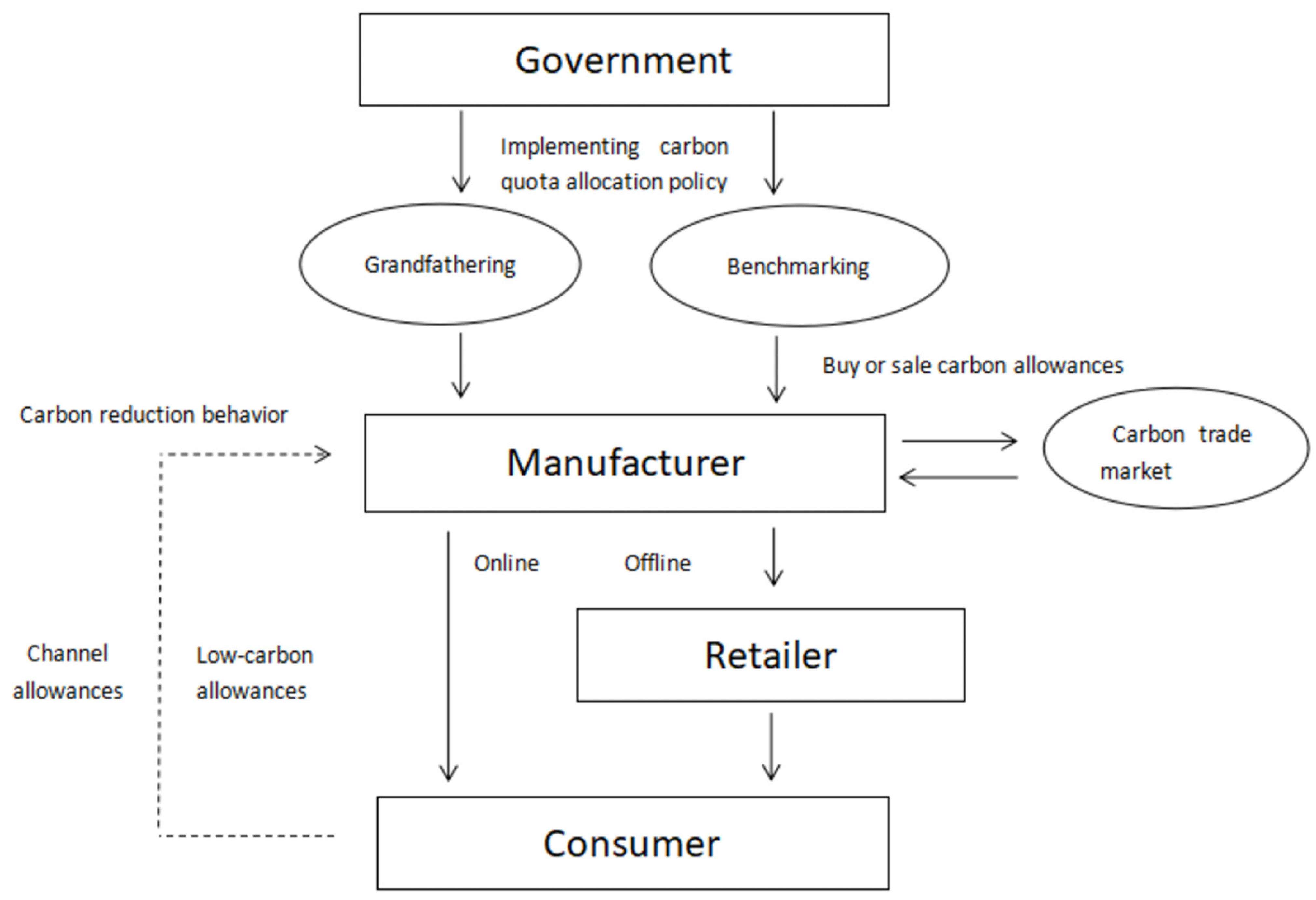
The supply chain consists of one manufacturer and one retailer. The manufacturer engages in the production and sales of products and is subject to the constraint of stipulated carbon quotas. Within a certain period, it obtains free carbon quotas allocated by the government. When lacking carbon quotas, it needs to purchase corresponding carbon quotas at the unit carbon quota trading price p_e from the carbon trading market or carry out carbon reduction activities to reduce carbon emissions. When there are remaining carbon quotas, it can sell them in the carbon trading market at the unit carbon quota trading price p_e, thereby obtaining corresponding profits. The manufacturer has two sales channels. It can directly sell products to consumers through the online channel or through retailers to consumers through the offline channel. The purchasing behavior of consumers is determined by the consumer utility, which is influenced by channel preferences and low-carbon preferences. When the manufacturer decides to sell through both online and offline channels, a new game participant, the retailer, emerges.
The retailer engages in the sales of products. Since it does not engage in production and manufacturing activities that generate carbon emissions, it is not subject to the carbon quota allocation policy constraints. The two-channel supply chain structure adopted in this study under the carbon quota allocation policy is depicted in Figure 1.
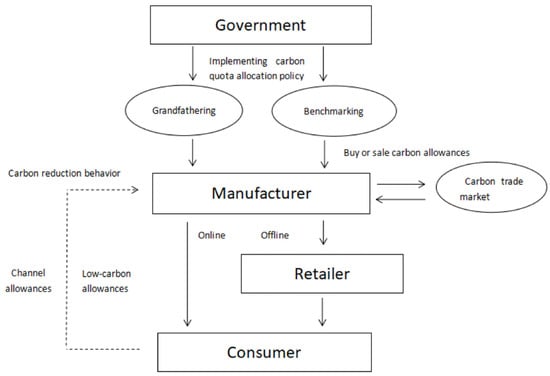
Figure 1.
Two-channel supply chain structure under carbon quota allocation policy.
2.1. Model Parameters
The model parameters used in this article and their implications are described in Table 1.

Table 1.
Model parameters and their implications.
2.2. Model Assumptions
Assumption 1.
The supply chain is faced with the historical emissions law and the benchmarking allocation: the two most typical current free carbon quota allocation policies. The historical emission method is used to determine the total amount of carbon emission quota as
based on the carbon emission data of the enterprise’s history; the standard method is to determine the carbon emission quota of unit product as
based on the carbon emission data of the industry in which the enterprise produces the product.
Assumption 2.
When a manufacturer makes an investment in reducing carbon emissions, the level of emission reduction is positively correlated with the cost of investment in reducing carbon emissions, but we need to consider the cost of investment in carbon emission reduction and the price of carbon quota trading, which is
. The cost of investment in carbon emission reduction is the cost of carbon quota trading: .
Assumption 3.
The supply chain in this paper is a single manufacturer and a single retailer. The manufacturer produces and sells a single product, the retailer sells a single product, and the product market demand is uniformly distributed [0, 1] (Zhang et al., 2023) [19], while the consumer purchasing behavior depends on consumer utility .
3. Model Construction and Solution
Building a model of consumer utility when consumers buy products through offline channels is done as follows: . Consumers’ willingness to buy also depends on channel preference, while consumers’ acceptance of online channels is , . The expression of the consumer utility function that the consumer acquires when making an online purchase is . When the consumer benefit function is satisfied, and , the consumer can only buy the product through the offline channel; when the consumer benefit function is satisfied, and , the consumer can only buy the product through the online channel; when the consumer benefit function is satisfied, , online and offline channels exist at the same time. The two-channel supply chain online and offline channel demand is simplified as follows: [13]. In single-channel and dual-channel supply chains, the profit function of the retailer is composed of the income and expenditure of the products sold offline. In contrast, in single-channel supply chains, the profit function of the manufacturer consists of the profit and loss of the product sold offline, the profit and loss of trading carbon emission allowances and the cost of reducing emissions consist of four parts: the profit and loss of the products sold online, the profit and loss of the products sold offline, the profit and loss of the trading of carbon emission allowances, and the cost of reducing emissions. In addition, in order to distinguish between the historical emission method and the baseline method, the profit and loss of trading carbon emission allowances in constructing the profit function of the supply chain, when calculating the profit and loss carbon quota of an enterprise under the historical emission method, is calculated by multiplying the carbon emission quota per unit product consumed by the enterprise and the sales volume of the product, and then subtracting the total carbon quota of the historical method. When calculating a company’s profit and loss carbon allowances under the baseline method, using the method of multiplying the difference between the carbon emission allowances per unit of product consumed by the enterprise in the process of production minus the carbon allowances per unit of the baseline method and the sales volume of the product, this paper analyzes and calculates the profit situation of enterprises under the single-channel and dual-channel production and management modes when they are faced with different carbon quota allocation policies.
3.1. Single Channel Decision-Making Under the Historical Emission Method
Profit function:
Theorem 1.
Under this model, the optimal decision of the supply chain is ,
, and
, and the profit of each main body of the supply chain is
. In the single-channel decision-making model under the historical emission method, there are the unit price
, wholesale price
, and carbon emission reduction rate, which make manufacturers and suppliers obtain optimal profits.
The certification process is as follows:
Solution:
Let , then we obtain the following:
Put into and about and Second-order Hessian matrix:
When , the Hessian matrix is negative definite, that is, there exists an equilibrium solution for with respect to and . , simultaneously, we obtain the following result:
By putting and , into , then we obtain:
By putting , and into the profit functions of each entity, the solution is obtained:
Corollary 1.
In the single-line under-channel decision-making model of the historical emission method, the optimal profit of manufacturers is affected by the total carbon quota of the historical method, and increases with the increase in the total carbon quota of the historical method. The proof is as follows:
There was a positive correlation between them.
3.2. Single-Channel Decision-Making Under the Benchmark Method
Theorem 2.
Under this model, the optimal decision of the supply chain is and
, and the optimal profit of each main body of the
,
. That is, in the single-channel decision-making model based on the benchmark method, the
unit price
and wholesale price make the manufacturer and supplier obtain the optimal profit.
Let , then we obtain the following:
Put into , then we get , about . The second-order Hessian matrix is as follows:
When , the Hessian matrix is negative definite, that is, there exists an equilibrium solution for with respect to and . , simultaneously, we obtain the following result:
Put into , then we get the following:
Put , and into the profit functions of each entity, then the solution is obtained:
Corollary 2.
In the single-channel decision-making model under the baseline method, the profits of manufacturers and retailers are affected by the carbon quota of the baseline unit product, and increase with the increase in the carbon quota of the baseline unit product. The proof is as follows:
The two were positively correlated with each other.
Corollary 3.
In the single-channel decision-making model under the baseline method, the profits of manufacturers and retailers are affected by the carbon price, and when the carbon emission per unit product is lower than the carbon quota per unit product under the baseline method, the optimal profits of manufacturers and retailers increase as the carbon price increases.
At that time,
And the two were positively correlated with each other.
3.3. Two-Channel Decision-Making Under Historical Emission Method
Theorem 3.
Under this model, the optimal decision of the supply chain is , , and , and the optimal profit of each main body of supply chain is . That is, in the two-channel decision-making model based on the historical emission method, there exists a , , and .
Let , then we get:
Put into , then we get about , and . The third-order Hessian matrix is as follows:
When and also , The Hessian matrix is negative definite. L , , and simultaneously, then we obtain the result:
Put , and into , then we get:
Put , , , and into the profit functions of each entity, then the solution is obtained:
Corollary 4.
In the two-channel decision-making model of the historical emission method, the profits of manufacturers are affected by the historical total carbon quota, and increase with the increase in the historical total carbon quota. The proof is as follows:
Positive correlation.
3.4. Two-Channel Decision-Making Under the Benchmark Method
Theorem 4.
Under this model, the optimal decision of the supply chain is , , and , and the profit of each main body of the supply chain is and , respectively. In the two-channel decision-making model based on the benchmark method, there exists the , and .
Let , then we get the following:
Put into , then we get , about , . The third-order Hessian matrix is as follows:
When and also , the Hessian matrix is negative definite. Let , , and simultaneously, then we obtain the result:
Put , and into , then we get:
Put , , and into the profit functions of each entity, then the solution is obtained:
Corollary 5.
In the two-channel decision-making model of the benchmark method, the optimal profit of the manufacturer is affected by the carbon quota per unit product of the benchmark method and increases with the increase in the carbon quota per unit product of the benchmark method. The proof is as follows:
Positive correlation.
Corollary 6.
In the two-channel decision model of the benchmark method, the best profit of the manufacturer is affected by the carbon price, and at that time, the best profit of the manufacturer increases with the increase in the carbon price.
4. Example Analysis
In order to demonstrate and test the above conclusions more intuitively, and further analyze the impact of the carbon quota and carbon trading price on the profits of the dual-channel supply chain, according to the range of relative parameters of Xia Xiqiang (Xia et al., 2024) [8] and Zhang Lingrong (Zhang et al., 2023) [19], the relevant parameters are selected for single-channel and dual-channel supply chain decision-making models under the historical emission method and benchmark method. Based on the supply chain game theory and consumer utility theory under carbon trading policies, this study refers to the classic parameter settings for carbon emission reduction and dual-channel operations in the manufacturing industry. Specifically, the value ranges of core parameters are selected through a focus comparison and analysis using historical empirical methods based on industrial carbon emission statistics, actual data from the carbon trading market, and peer research, clarifying the alignment between these parameter value ranges and real-world production as well as policy requirements. = 0.5 (consumer online channel acceptance) refers to market research data from Xia et al. (2024) [8], with the value falling within the actual market range of [0, 1]; = 1.8 (carbon emissions per unit product) refers to manufacturing carbon emission statistics from Zhang et al. (2023) [19], in line with the industry average, = 0.4, Cm = 0. 19, Cr = 0. 08, M = 20, = 2, = 0.9, and = 0.9.
4.1. Sensitivity Analysis of Manufacturer and Retailer Profits to Carbon Allowances
4.1.1. Sensitivity Analysis of the Gross Carbon Allowances of Manufacturers and Retailers to the Gross Carbon Allowances Under the Historical Emissions Approach
Under the historical emission method, the total carbon quota is determined according to the historical emission of the enterprise, and the interval is found near the basic model parameters [1.5, 2.5].
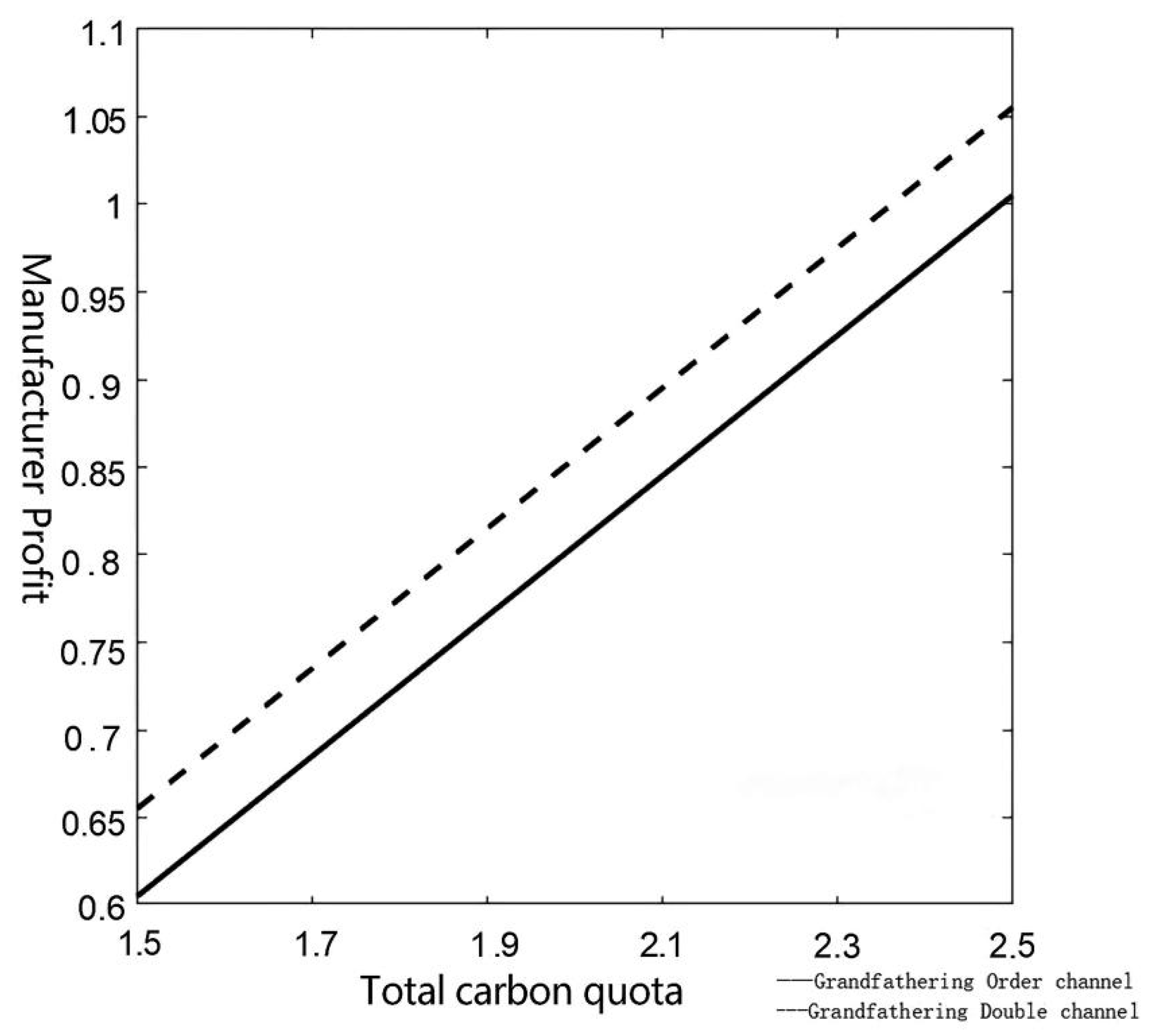
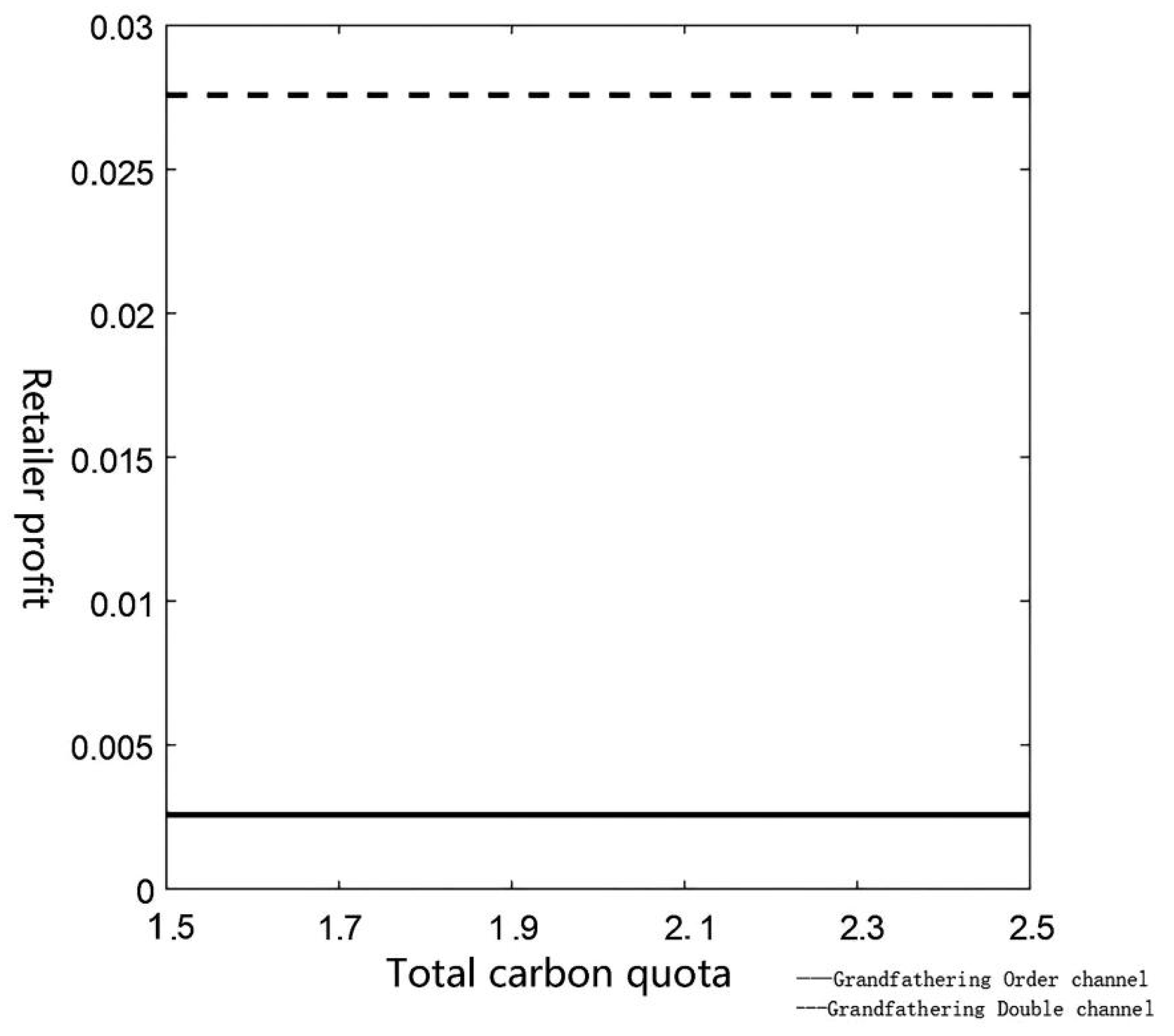
From Figure 2 and Figure 3, we can find that the profits of manufacturers and retailers in the two-channel supply chain under the historical emission method are higher than those of manufacturers and retailers in the single-channel supply chain; this shows that when the government implements the carbon quota allocation policy of the grandfathering allocation, opening a dual-channel supply chain can effectively improve the profit level of each main body in the supply chain. The total carbon allocation under the historical carbon allocation policy has a positive impact on the profits of manufacturers, and the earnings of manufacturers under both single and double channels increase with the increase in the total carbon allocation under the historical method. This is because manufacturers are subject to carbon quotas during the manufacturing process. As the total carbon quota increases, the pressure on manufacturers to reduce emissions decreases, and the costs of reducing emissions decrease accordingly. The prices of the products produced are reduced, consumer demand is increased, and the profits of manufacturers and enterprises are increased. The profits of retailers are not affected by the total amount of carbon allowances under the historical carbon allocation policy; this is because, compared with the unit carbon quota of the baseline method, the historical emission method allocates a fixed total carbon quota according to the carbon emission level of the enterprise in the past period, which is not related to the sales volume of the enterprise’s products in the current cycle. Retailers’ profits are determined by wholesale prices and sales volumes, so they are not affected by the historical total carbon quota. The comparative effects of Model 1 and Model 3 based on different variables are shown in Figure 2 and Figure 3.
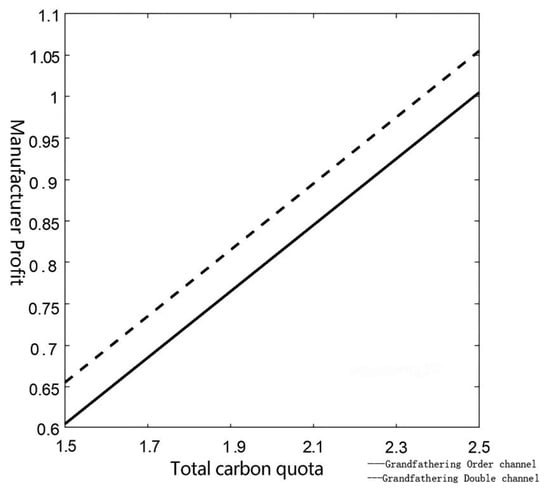
Figure 2.
Effects in Models 1 and 3.
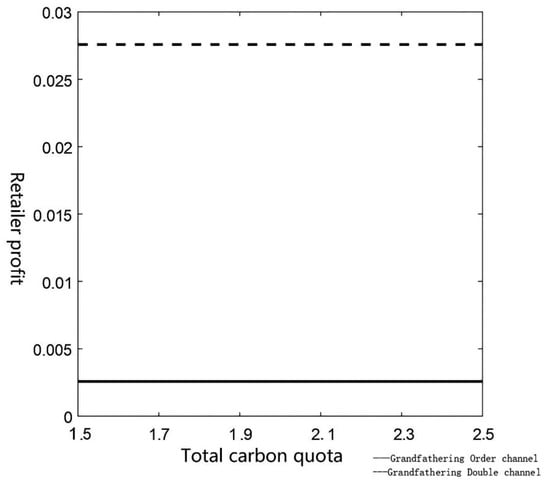
Figure 3.
Effects in models 1 and 3.
4.1.2. Sensitivity Analysis of Manufacturer and Retailer Profits to Unit Carbon Allowances Under the Baseline Approach
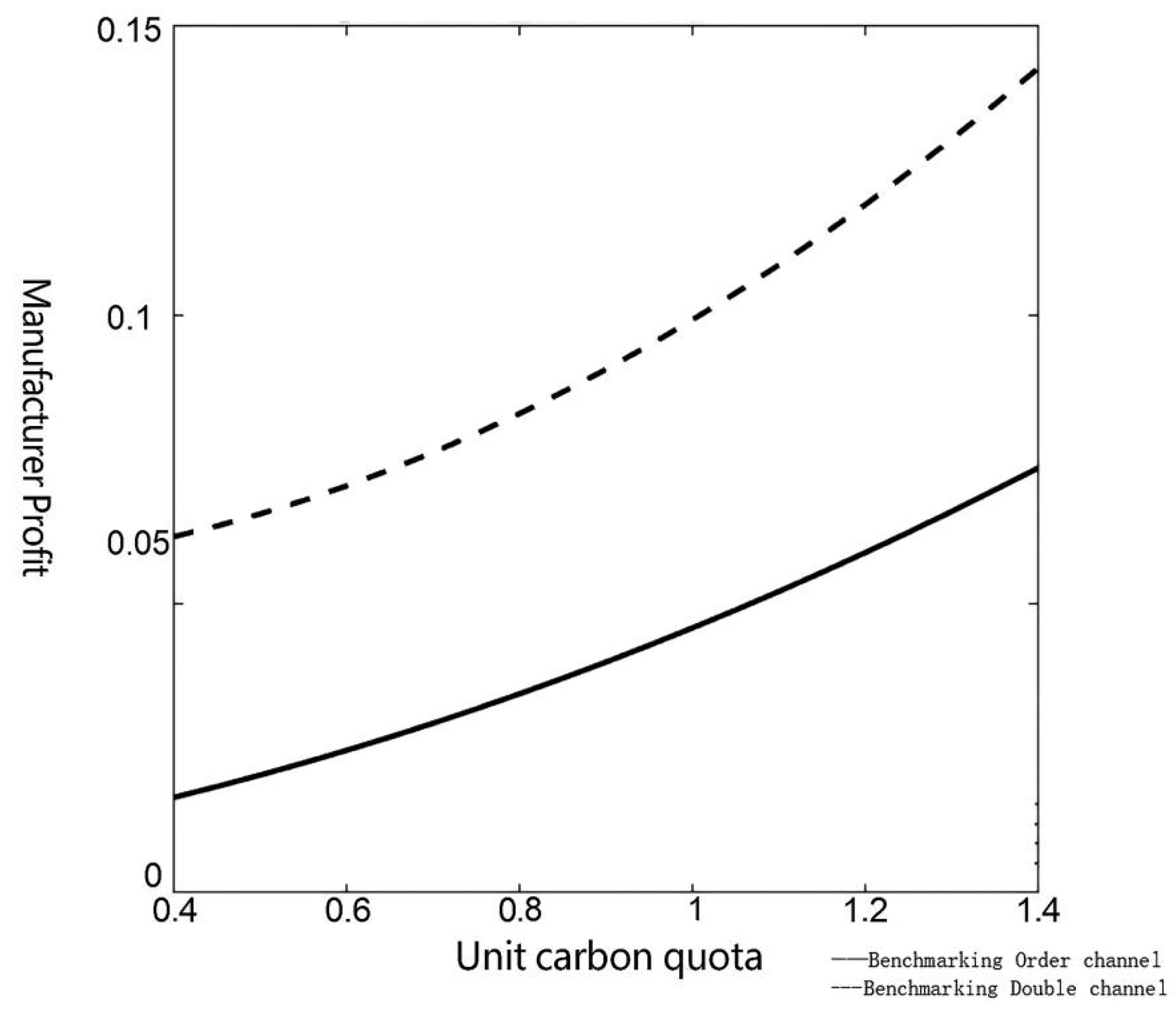
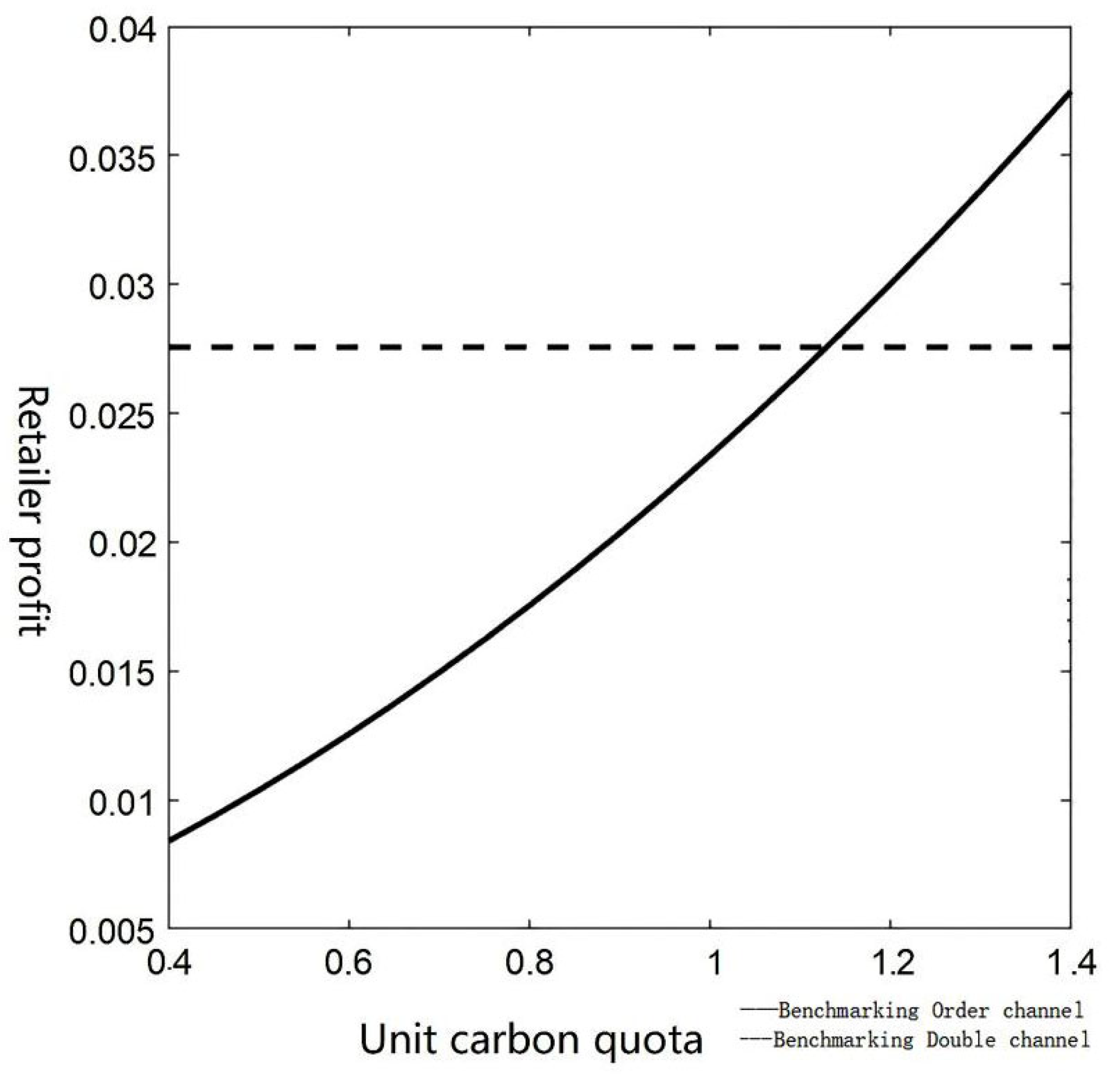
Under the baseline method, the carbon quota is determined according to the industry’s emissions in which the enterprise is located, and the interval is found near the basic model parameters [0.2, 1.2].
From Figure 4 and Figure 5, it can be found that, when the government implements the carbon quota allocation policy of the benchmarking allocation, the profit level of the manufacturers and retailers under the single channel increases with the increase in the carbon quota. This is because, with the increase in carbon allowances per unit of product, there is less pressure on companies to reduce emissions, reducing the cost of reducing emissions for supply chain companies and thus making the total cost fall, which in turn reduces the price of products and stimulates consumer demand and increased sales of products, resulting in higher overall profits in the supply chain. Compared to the historical emissions method, the baseline method allocates carbon allowances based on the level of carbon emissions per unit of the product produced by the enterprise. In practice, it also needs to consider the actual sales volume of products, which has an impact on the profit level of retailers. In the two-channel supply chain, the profit level of manufacturers increases with the increase in carbon quota per unit product; the profits of the manufacturers in the two-channel supply chain are higher than those in the single-channel supply chain, which shows that the two-channel supply chain can effectively improve the profits of the manufacturers when the government implements the carbon quota allocation policy. When the unit carbon quota is low, the profit level of the retailers in the two-channel supply chain is higher than that of the single-channel retailers. When > and > 0, the profit of single-channel retailers surpasses that of dual-channel retailers, and the profit gap between single-channel and dual-channel retailers widens as the unit carbon quota increases. This indicates that establishing an online channel supply chain negatively impacts retailers’ profits. The comparative effects of Model 2 and Model 4 based on different variables are shown in Figure 4 and Figure 5.
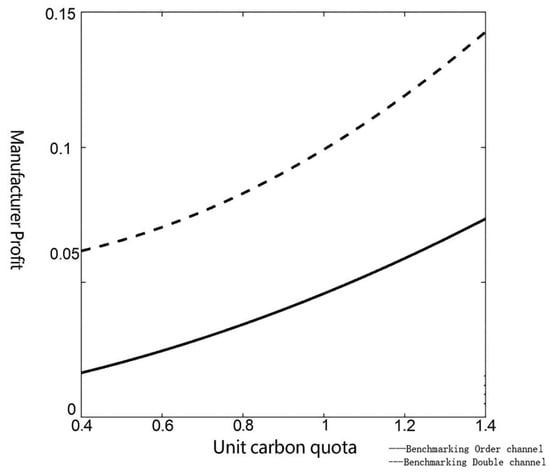
Figure 4.
Effects in models 2 and 4.
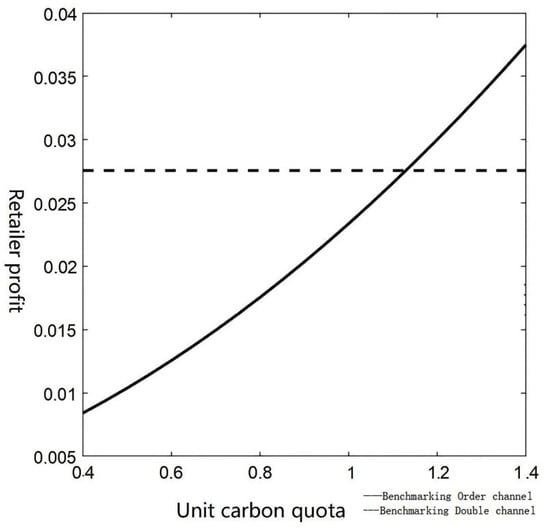
Figure 5.
Effects on models 2 and 4.
4.2. Sensitivity of Manufacturers’ and Retailers’ Profits to Carbon Prices
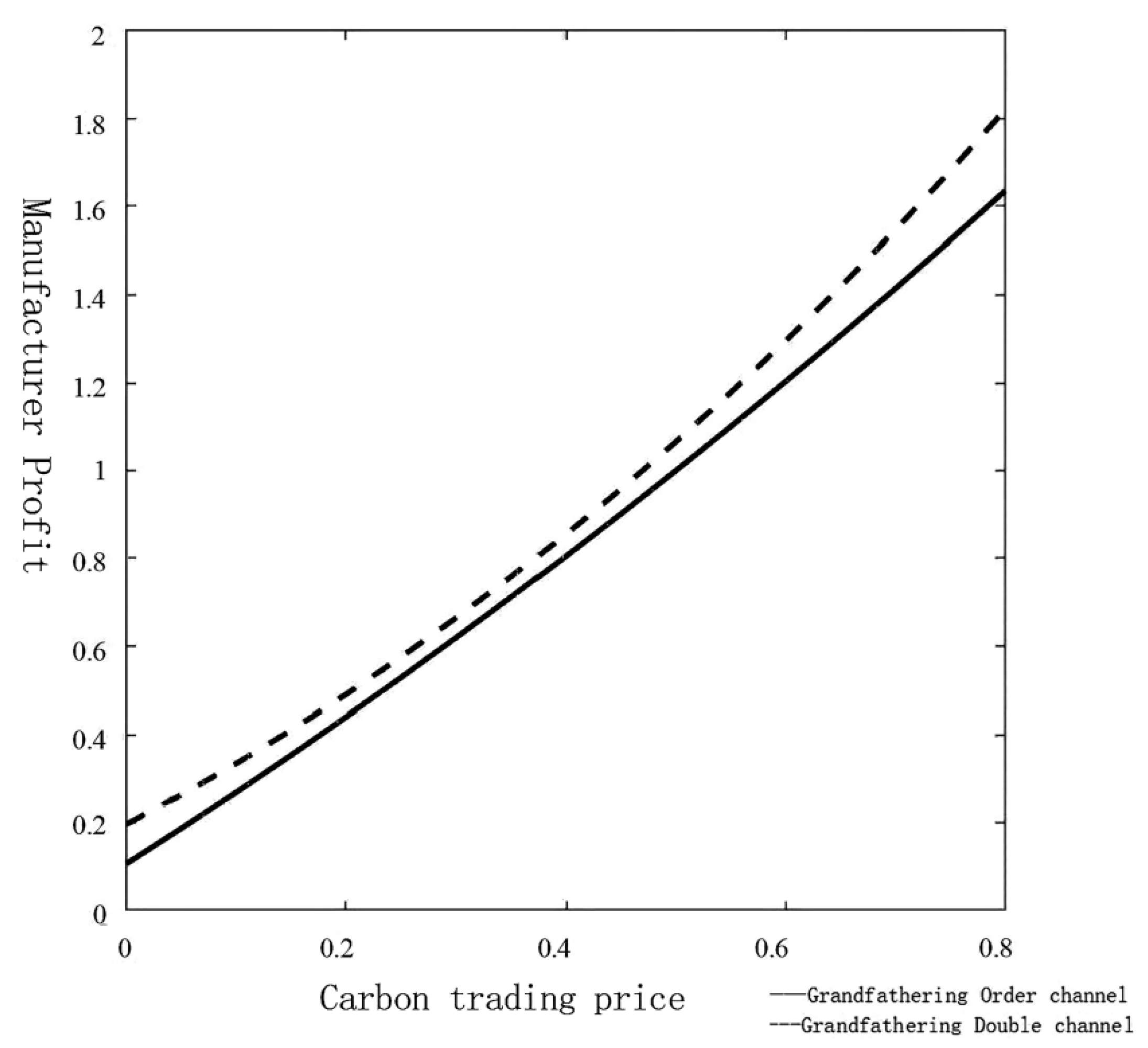
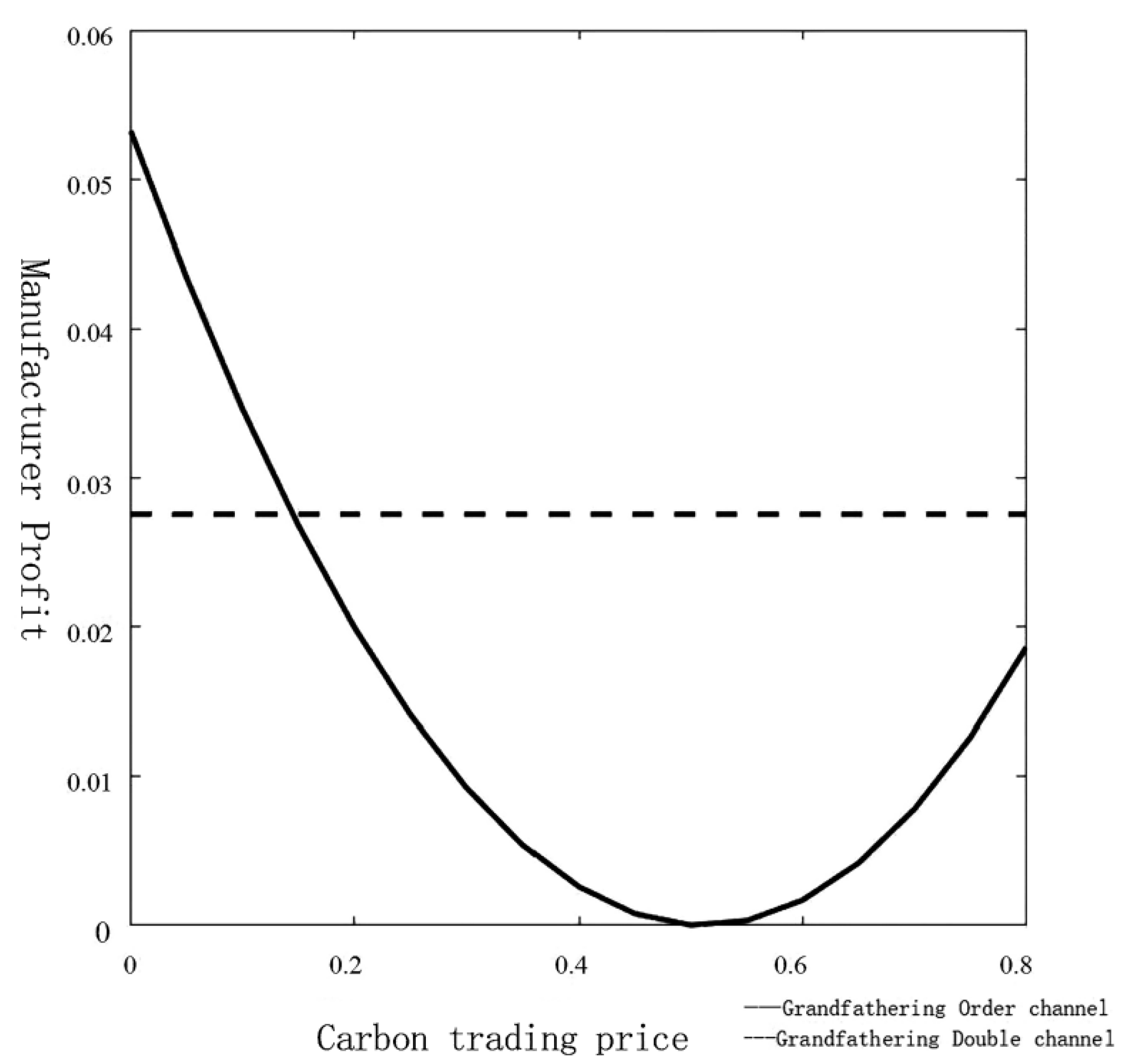
To analyze the impact of carbon prices on the profits of manufacturers and retailers and to further analyze the difference in the impact of carbon prices on profits under the two modes of carbon allocation, we select near the basic model parameters [0,0.8] to study the impact of changes on profits.
4.2.1. Sensitivity Analysis of Manufacturers’ and Retailers’ Profits to Carbon Trading Prices Under the Historical Emissions Approach
From Figure 6 and Figure 7, it can be found that, when the government implements the carbon quota allocation policy of the grandfathering allocation, the profits of the manufacturers under both single and double channels increase with the increase in the carbon quota trading price. This is because, as carbon prices rise, manufacturers’ carbon management costs rise, but at the same time manufacturers can make a profit by selling their remaining carbon allowances on the carbon market. As carbon prices rise, the marginal cost of reducing carbon emissions falls as the scale of investment in reducing carbon emissions increases. At this point, reducing carbon emissions costs less than the profit from selling the remaining carbon allowances. With the rise in the price of carbon quotas, retailers’ profits under a single channel will decrease and then increase. In the two-channel supply chain, the price of carbon quota does not affect the profit of the retailers. This is because the difference between sales through the offline channel and the wholesale price through the offline channel is independent of the carbon quota trading price. The profits of the manufacturers in the two-channel supply chain are higher than those in the single-channel supply chain, and opening up an online channel can effectively provide manufacturers with profits, which is consistent with the reasoning above. When the price of carbon allowances is low, the profits of single-channel retailers are greater than those of dual-channel retailers; with the increase in the price of carbon trading, the profit of the retailers in the single channel is gradually lower than that of the retailers in double channels, and the creation of online channels does not necessarily increase the profits of retailers. Factors such as the amount of carbon allowances and the price of carbon trading in the carbon market also need to be considered in order to decide whether to open a dual-channel supply chain. The comparative effects of Model 1 and Model 3 based on different variables are shown in Figure 6 and Figure 7.
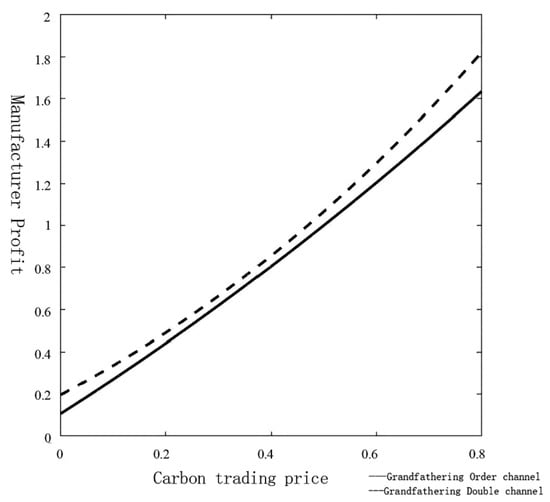
Figure 6.
Effects in models 1 and 3.
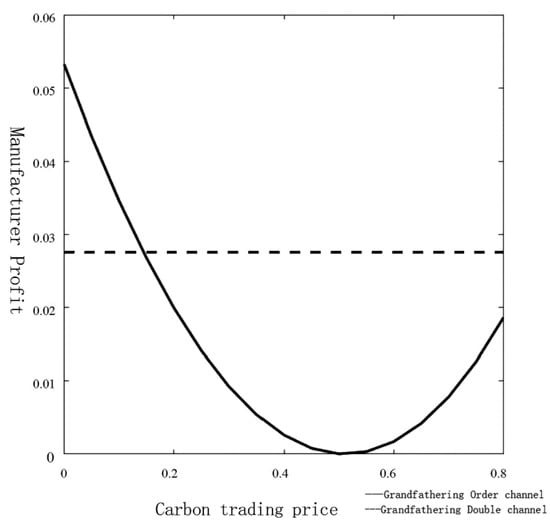
Figure 7.
Effects in models 1 and 3.
4.2.2. Sensitivity Analysis of Manufacturers’ and Retailers’ Profits to Carbon Trading Prices Under the Manufacturing Benchmark Under the Historical Emissions Approach
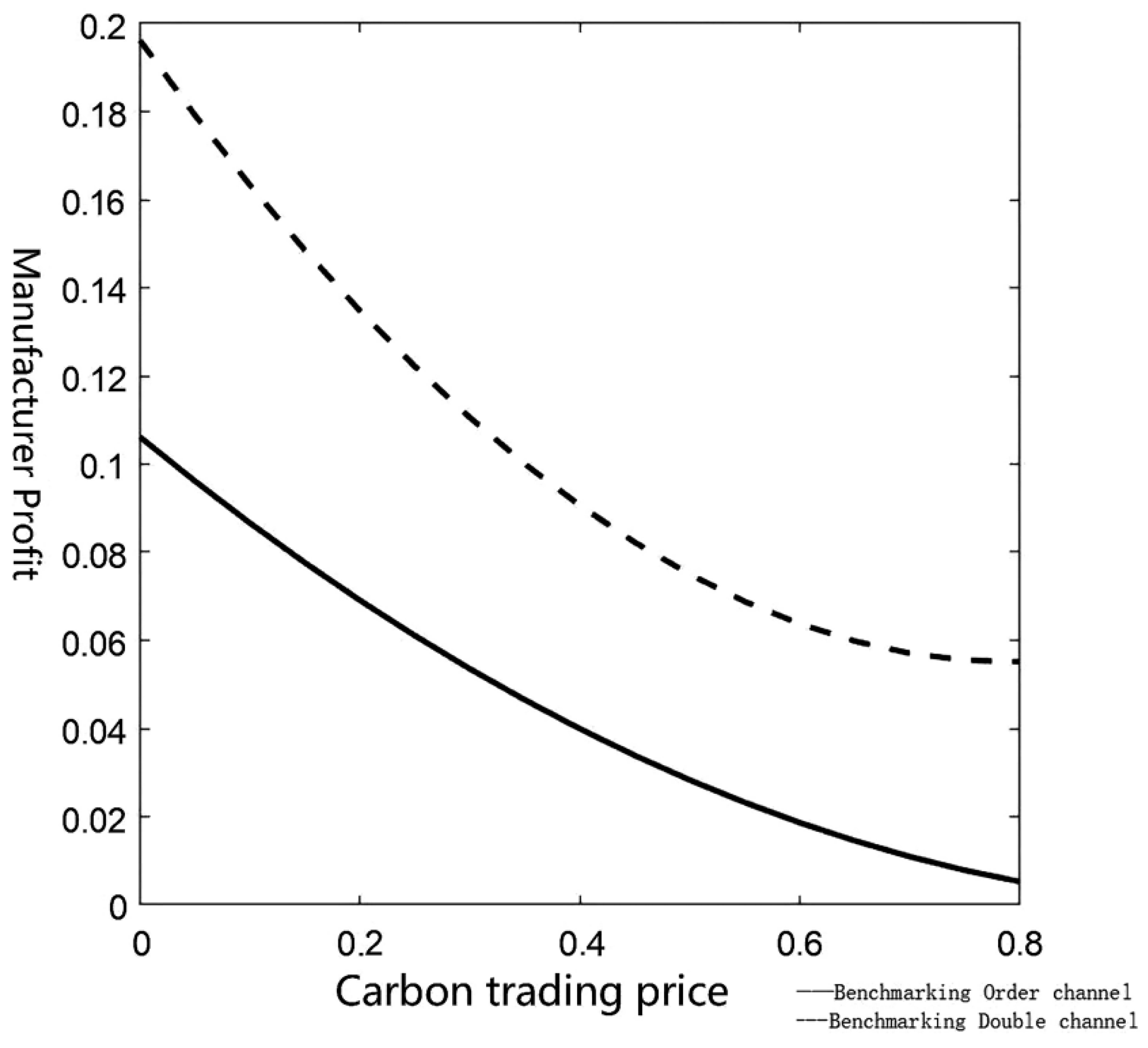
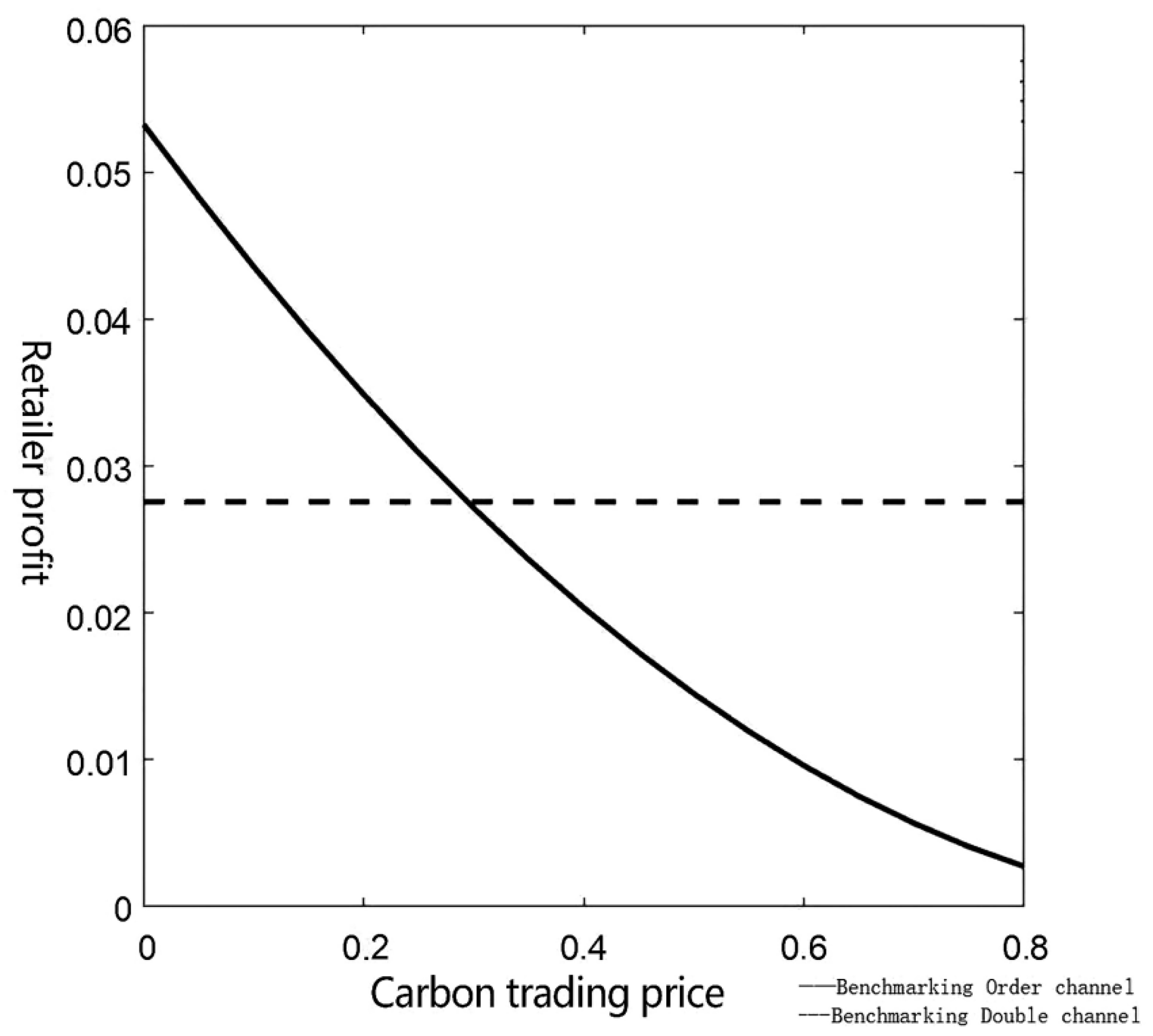
Figure 8 and Figure 9 show that, when the government implements the carbon quota allocation policy of the benchmarking allocation, the profits of both single-channel and dual-channel manufacturers decrease as the carbon price increases. This is because manufacturers need to invest heavily in emissions reduction under the benchmark policy to meet the requirements for carbon emissions, and when the price of carbon trading increases, the cost to manufacturers of purchasing carbon credits from the carbon market to meet emissions requirements also increases; profits for single-channel retailers decrease as the price of carbon increases, while, for dual-channel retailers, retailers’ profits are not affected by the carbon price because the difference between sales in the offline channel and the wholesale price in the offline channel is independent of the carbon price; it is the same as the historical emissions method. When the government implements the carbon quota allocation policy of the benchmarking allocation, the profits of manufacturers after opening up online channels are higher than those of manufacturers under a single channel, and this suggests that opening up online channels in the face of benchmarking (baseline method) policies can also lead to higher profits for manufacturers, while the profits of retailers in a single channel are higher than those of retailers in a dual channel when carbon prices are lower. As carbon prices rise, the profits of single-channel retailers continue to fall below those of dual-channel retailers, which also shows that opening up online channels does not necessarily increase retailers’ profits. It is necessary to consider the influence of the carbon quota and carbon trading price in the carbon market in order to make decisions regarding channel selection in supply chain management. The comparative effects of Model 2 and Model 4 based on different variables are shown in Figure 8 and Figure 9.
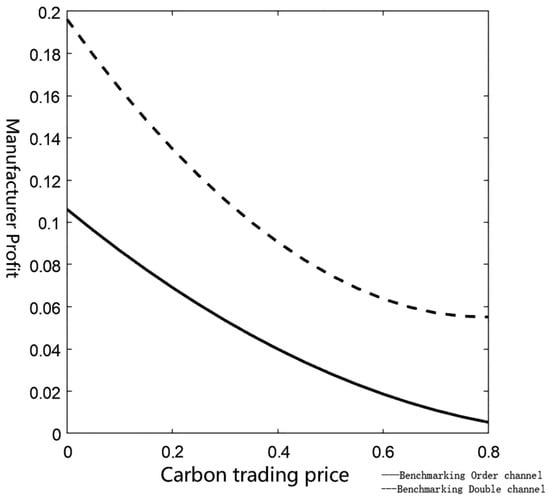
Figure 8.
Effects in models 2 and 4.
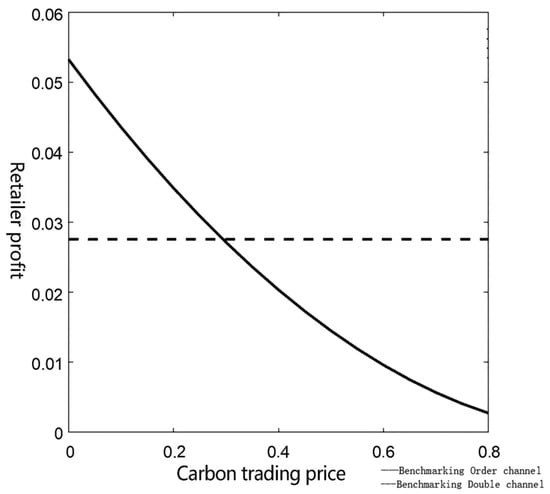
Figure 9.
Effects in models 2 and 4.
4.3. Results Summary and Discussion
To clearly present the profit change rules under different carbon quota policies and channel modes, the core conclusions are summarized in the following Table 2.
Table 2.
Summary results table.
As shown in Table 2, the profit of dual-channel retailers is not affected by the total carbon quota and carbon price, and is only determined by the difference between the wholesale price and the offline retail price. This finding reveals the “carbon policy immunity” characteristic of dual-channel retailers, which provides a theoretical basis for supply chain enterprises to formulate channel selection strategies under carbon emission constraints.
5. Discussion
5.1. Research Significance
The research results of this paper suggest that, when faced with the government’s implementation of grandfathering allocation and benchmarking allocation of carbon quota allocation policy, active attention should be paid to the total carbon quota under the historical method and the unit carbon quota under the benchmark method, as well as the carbon trading price under the two allocation policies and to the selection of appropriate channels according to the market environment, actively exploring online marketing channels, and improving the operation of the dual-channel supply chain to achieve the maximum of their interests. For retailers to open a dual-channel supply chain, they need to pay attention to the difference in profit levels under the two carbon allocation policies as carbon allowances change and actively open up online channels when the government implements grandfathering allocation, seeking cooperation to improve their profit level. The government needs to take into account factors such as unit carbon quota and carbon trading price when implementing the benchmarking allocation and make a careful decision regarding the selection of supply chain channels. The government can set a reasonable carbon quota trading policy, set a reasonable carbon quota, and take appropriate measures to regulate the carbon price to promote the emission reduction of supply chain enterprises and multi-channel supply chain development and improvement; at the same time, we should increase low-carbon publicity to improve consumers’ low-carbon preference, improve the profit level of supply chain enterprises, and promote the healthy development of social and environmental benefits and economic benefits.
5.2. Points of Innovation
- (1)
- This paper integrates the government’s various carbon quota allocation policies with profit variations of supply chain enterprises under single- and dual-channel models for analysis. Previous studies have provided preliminary exploration in this area. For instance, Wang et al. (2023) [14] examined the impact of different carbon quota allocation policies on the optimal strategies of supply chains (Wang et al., 2023) [14], while Zhang et al. investigated the emission reduction behaviors of supply chain members under cap-and-trade regulation and consumer low-carbon preferences in single- and dual-channel contexts. Their findings revealed that a joint emission reduction strategy benefits both manufacturers and retailers (Ji et al., 2017) [12]. Building on these studies, this paper further analyzes the impact of different carbon quota policies on the profits of enterprises under dual-channel and single-channel models, thereby establishing a novel research perspective.
- (2)
- Based on the aforementioned innovations, this paper delves deeper into the influence of carbon quota allocation and carbon trading prices on the profits of single- and dual-channel supply chains under different carbon quota allocation policies. Existing research, such as that by Zhang et al., compared the effects of carbon trading prices and carbon emission coefficients on firms’ optimal decisions (Zhang et al., 2024) [21]. Similarly, Li et al. found that appropriate carbon prices could effectively incentivize manufacturers to achieve optimal emission reduction levels (Li et al., 2024) [23]. Building upon these findings, this paper provides a more granular analysis of the impacts of changes in carbon quota levels and carbon trading prices under different policy scenarios, offering practical insights for supply chain stakeholders in channel selection and operational decision-making.
5.3. Research Limitations and Prospects
The study has the following limitations.
- (1)
- In simulating the profit models of single-channel and dual-channel supply chains under different carbon quota allocation policies, the parameter values used were primarily based on the ranges proposed by previous scholars in authoritative journals. This reliance on existing literature may impact the practical applicability of the models.
- (2)
- This paper assumes that supply chain enterprises’ decision-making objective is profit maximization. However, in real-world scenarios, factors such as corporate social image may also influence these enterprises’ operational decisions. This singular assumption may result in an incomplete representation of actual corporate behaviour.
Future research can consider the following aspects for optimization and improvement.
- (1)
- Collaborating with relevant institutions and enterprises to collect more extensive and representative data, thereby conducting broader numerical simulations to comprehensively validate and refine the profit models.
- (2)
- Incorporating social image and corporate rationality into the models to account for their potential influence on supply chain decision-making. This approach would enable the development of decision-making models more aligned with real-world scenarios and provide a more comprehensive understanding of supply chain enterprises’ decision-making behaviour.
6. Conclusions
This paper designs four supply chain decision models based on two different carbon quota allocation policies: the historical emission method and the benchmarking method. These models include the single offline channel under the historical method, the single offline channel under the benchmarking method, the dual channel under the historical method, and the dual channel under the benchmarking method. This study finds that establishing an online dual-channel supply chain can effectively enhance manufacturers’ profits when the government implements carbon quota allocation policies based on the historical emission method or the benchmarking method. Additionally, opening an online channel can increase retailers’ profits when the initial carbon quota and carbon trading price fall within a specific range.
Under the historical emission method, manufacturers’ profits positively correlate with the total carbon quota and carbon trading price; as the total carbon quota and carbon trading price increase, manufacturers’ profits also increase. However, in a dual-channel supply chain, retailers’ profits are not influenced by the total carbon quota or carbon trading price. Similarly, in a single offline channel, retailers’ profits are unaffected by the total carbon quota but decrease first and then increase as the carbon trading price rises.
Under the benchmarking method, manufacturers’ profits are positively correlated with the unit carbon quota but negatively correlated with the carbon trading price. In a dual-channel supply chain, retailers’ profits are unaffected by the unit carbon quota or the carbon trading price. However, in a single offline channel, retailers’ profits increase with the unit carbon quota but decrease with rising carbon trading prices.
In a single-channel supply chain, retailers’ profitability differs under the two carbon quota allocation policies. Under the historical emission method, retailers’ profits are unaffected by the total carbon quota, and opening a dual-channel supply chain can effectively enhance their profits. In contrast, under the benchmarking method, retailers’ profits increase with the unit carbon quota. However, opening a dual-channel supply chain may harm retailers’ profits when the unit carbon quota becomes sufficiently large.
Author Contributions
Conceptualization, H.S. and J.L.; methodology, H.S.; investigation, J.L. and S.L.; resources, J.Z.; writing—review and editing, H.S. and J.Z.; supervision, J.Z.; All authors have read and agreed to the published version of the manuscript.
Funding
The APC was funded by Xi’an International Studies University. Xi’an International Studies University (XISU), a prestigious public foreign language university located in Xi’an, Shaanxi Province, China. Founded in 1951, XISU is a key higher education institution dedicated to foreign language education and interdisciplinary research spanning literature, economics, management, law, and other fields.
Data Availability Statement
The original contributions presented in this study are included in the article. Further inquiries can be directed to the corresponding author.
Conflicts of Interest
All authors declare no potential conflicts of interest that could inappropriately influence or bias the conduct or outcomes of this research. Note on the “Center for Global South Economic and Trade Cooperation”: This is a non-profit research institute affiliated with Xi’an International Studies University, dedicated to academic research and the integration of academic resources. The collaboration for this paper is based on the center’s existing research accumulation in the field of low-carbon supply chain development, aiming to pool academic strengths to deepen the research on the impact of carbon quota policies on dual-channel supply chain decisions. During the entire research and writing process, the center had no economic interest ties, cooperative agreements, or other potential relationships with any individuals, commercial entities, or organizations that could affect the objectivity, impartiality, or integrity of this research. All authors confirm that the above statements are true, accurate, and complete, and assume full responsibility for any discrepancies or omissions.
References
- Wang, Q.Q.; Xu, H. A review of China’s carbon trading market. Renew. Sustain. Energy Rev. 2018, 91, 613–619. [Google Scholar] [CrossRef]
- Tian, L.; Vakharia, A.J.; Tan, Y.; Wang, R. Marketplace, reseller, or hybrid: Strategic analysis of an emerging e-commerce model. Prod. Oper. Manag. 2018, 27, 1595–1610. [Google Scholar] [CrossRef]
- Benjaafar, S.; Li, Y.; Daskin, M. Carbon footprint and the management of supply chains: Insights from simple models. IEEE Trans. Autom. Sci. Eng. 2012, 10, 99–116. [Google Scholar] [CrossRef]
- Zhang, L.H.; Dong, K.; Zhang, R. Supply chain strategy selection based on carbon quota trading and emission reduction technology. Chin. Manag. Sci. 2019, 27, 63–72. [Google Scholar]
- Wang, W.; Zhou, C.; Li, X. Carbon reduction in a supply chain via dynamic carbon emission quotas. J. Clean. Prod. 2019, 240, 118244. [Google Scholar] [CrossRef]
- Jin, Y.X. The Impact of Manufacturers’ Channel Encroachment Strategies Considering Consumer Preferences Under the Carbon Trading Mechanism; Beijing University of Chemical Technology: Beijing, China, 2025. [Google Scholar] [CrossRef]
- Wang, Z.; Brownlee, A.E.I.; Wu, Q. Production and joint emission reduction decisions based on two-way cost-sharing contract under cap-and-trade regulation. Comput. Ind. Eng. 2020, 146, 106549. [Google Scholar] [CrossRef]
- Xia, X.Q.; Li, P.H.; Jia, J.H.; Chen, S. Impact of government subsidies on manufacturing/remanufacturing under different carbon allocation mechanisms. Chin. Manag. Sci. 2024, 33, 313–324. [Google Scholar]
- Xu, J.T.; Gao, Y.; Bai, Q.G. Robust emission reduction strategy under different quota allocation methods of carbon trading policy. J. Manag. Eng. 2023, 37, 191–200. [Google Scholar]
- Zhu, Q.H.; Xia, X.Q.; Li, M.Y.; Wu, R. The effect of carbon allowance allocation methods on authorized remanufacturing. J. Manag. Sci. China 2024, 27, 60–75. [Google Scholar] [CrossRef]
- Yang, Q.; Liu, Y.; Ji, K.K.; Deng, Y.; Guo, Q.Z.; Duan, Z.L. Research on provincial transportation carbon quota allocation in China from the perspective of crisis transformation. Environ. Pollut. Control 2025, 47, 122–127. [Google Scholar] [CrossRef]
- Ji, J.; Zhang, Z.; Yang, L. Comparisons of initial carbon allowance allocation rules in an O2O retail supply chain with the cap-and-trade regulation. Int. J. Prod. Econ. 2017, 187, 68–84. [Google Scholar] [CrossRef]
- Han, X.Y.; Yang, X.Y.; Zhang, H.C. Optimization strategies for green platform supply chain systems under carbon trading policies. Syst. Sci. Math. 2024, 45, 398–412. [Google Scholar] [CrossRef]
- Wang, K.; Liu, L.; Zeng, H. Supply chain emission reduction strategies under carbon tax and carbon trading mechanisms. Technol. Innov. Manag. 2023, 44, 292–299. [Google Scholar] [CrossRef]
- Abdulrehman, K.; Yang, J.H.; Lei, M. Price decision analysis of oligopoly firms considering low-carbon preferences under different carbon allocation mechanisms. Econ. Res. Ref. 2024, 1, 86–103. [Google Scholar] [CrossRef]
- Yang, L.; Zheng, C.; Xu, M. Comparisons of low carbon policies in supply chain coordination. J. Syst. Sci. Syst. Eng. 2014, 23, 342–361. [Google Scholar] [CrossRef]
- Yang, S.H.; Xiao, D.D. Channel selection and coordination in two-level low-carbon supply chains. Soft Sci. 2017, 31, 92–98. [Google Scholar] [CrossRef]
- Sun, J.N.; Xiao, Z.D. Emission reduction strategies for low-carbon supply chains considering dual consumer preferences. Chin. Manag. Sci. 2018, 26, 49–56. [Google Scholar] [CrossRef]
- Zhang, L.R.; Xu, H.; Li, Y.F. Emission reduction decisions in dual-channel supply chains under carbon trading. J. Manag. Eng. 2023, 37, 90–98. [Google Scholar] [CrossRef]
- Wu, W.Q.; Zhang, M. Decision analysis of closed-loop supply chains for power batteries under carbon trading and subsidy policies. Chin. Manag. Sci. 2024, 33, 340–354. [Google Scholar]
- Zhang, D.L.; Li, F.; Liang, L. Carbon emission reduction decisions considering consumers’ dynamic green perception under carbon trading. Chin. Manag. Sci. 2024, 33, 269–281. [Google Scholar]
- Wang, D.P.; Yin, Y.; Zhu, M.Y. Research on Emission Reduction Decision of Supply Chain Based on Different Carbon Quota Trading Path. Oper. Res. Manag. 2024, 33, 35–41. [Google Scholar]
- Li, J.; Jiang, H.Q.; Ding, S.Q. Emission reduction strategies and policy design for competitive supply chains under carbon cap-and-trade mechanisms. Chin. Manag. Sci. 2025, 33, 360–368. [Google Scholar] [CrossRef]
Disclaimer/Publisher’s Note: The statements, opinions and data contained in all publications are solely those of the individual author(s) and contributor(s) and not of MDPI and/or the editor(s). MDPI and/or the editor(s) disclaim responsibility for any injury to people or property resulting from any ideas, methods, instructions or products referred to in the content. |
© 2026 by the authors. Licensee MDPI, Basel, Switzerland. This article is an open access article distributed under the terms and conditions of the Creative Commons Attribution (CC BY) license.