1. Introduction
Any system, process, or plant can experience delays in information transmission. In most systems, delays can be neglected; however, if the delay is significant, it can cause the system to become unstable, and therefore, the specified task cannot be correctly performed. For instance, if a mobile robot is navigating a warehouse and detects a potential collision due to a communication delay, it is highly likely to collide. In this context, in 1957, Smith developed a control technique that allows systems with constant delays in control inputs to be controlled. The significant disadvantage of this approach is that the open-loop system must be stable, and its performance depends on the accuracy of the no-delay model.
On the other hand, omnidirectional mobile robots have been widely used in industry and academia due to their diverse range of applications and their ability to move in any direction without needing to orient themselves.
In [
1], the authors have demonstrated that passivity-based controller techniques are robust against communication delays. In [
2], the authors proposed a decentralized output-feedback controller for fully-actuated Euler–Lagrange networks subject to time–varying delays. In the same context, a torque-controlled approach for nonholonomic mobile robots under time-varying communication delays has been developed in [
3]. A nonlinear prediction-observer scheme based on a sub-prediction strategy is designed in [
4] to address the trajectory-tracking problem for a differential-drive mobile robot subject to a constant time delay. Similarly, in [
5], the authors estimate the future value of a particular class of linear systems with time delay at the input and output by employing a full-information predictor-observer.
Works that have tackled communication delays in the omnidirectional mobile robots can be found in [
6]. The authors proposed a control framework for multiple vehicles to cooperatively transport an object in a cluster environment, accounting for time-varying communication delays and networks with directed spanning trees. A model predictive control scheme has been designed in [
7] to address steering delays in a four-wheel independent-steering robot during high-speed trajectory tracking. In [
8], the authors have simulated the remote control of an omnidirectional robot over a wireless network, accounting for time-varying delays. Additionally, in [
9], authors have proposed a modification of the Smith Predictor to remove the disturbances originated by a terrain of an unknown slope.
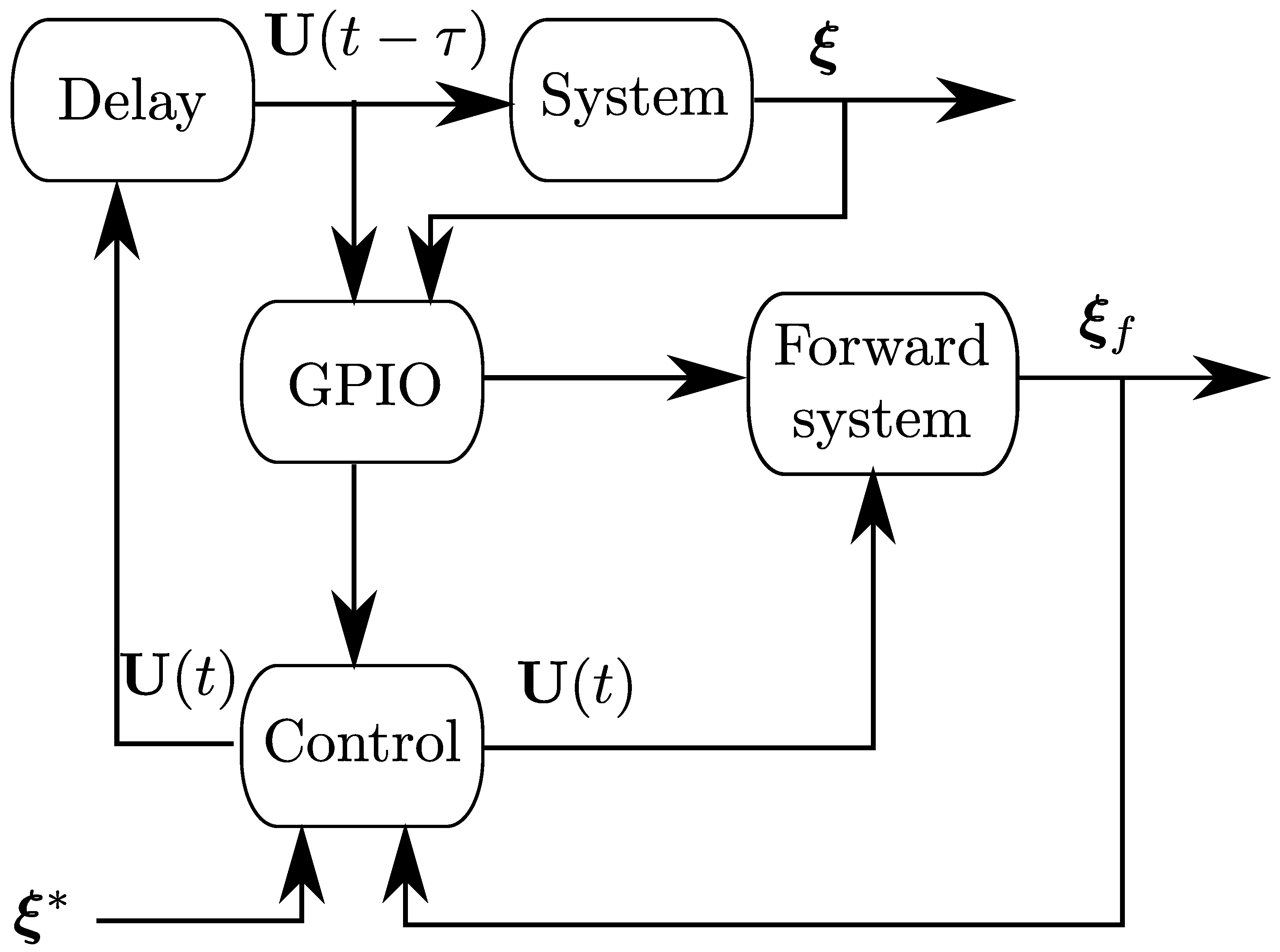
A critical problem with the omnidirectional kinematic model subject to input time delays is that the control gain depends on the orientation variable, requiring a prediction-based approach to the state. However, this prediction can be complex in a disturbed nonlinear model such as the disturbed omnidirectional robot. Besides, the stability analysis of the disturbed control gain may imply several hypotheses that can involve some operation bounds or the possible use of H infinity approaches that, in contrast with Active Disturbance Rejection Control (ADRC) schemes, involve an extensive knowledge of the system and the external disturbances. To reduce the complexity of the analysis while ensuring a simple control scheme, the differential flatness property of the system can be used along with a feedforward linearization approach, which consists of using the feedforward gain term (depending on the desired predicted pose term, which is available if the reference trajectory is predefined) instead of the actual predicted state. For example, in [
10], the authors proved that some nonlinear systems with the differential flat property are linearizable by a nominal feedforward strategy when the initial condition is known. As the authors present, this scheme is exact when the distance between the same pose and the desired pose is not too large. Still, possible errors can be compensated for via a robust scheme that can be formulated by robustly compensating the predicted generalized disturbance input (including the feedforward linearization error) using an Extended State Observer (ESO), as in the scheme proposed in [
11]. Further information concerning convergence, robustness, and its successful application in mobile robotics can be found in [
12,
13]. In that sense, in [
12], a methodology for analyzing robustness to parametric uncertainty in the design of control for nonlinear flat systems, as a specific combination of a nominal feedforward input and a simple feedback stabilizing control, is studied.
In this work, robust control of the kinematic model of a time-delayed omnidirectional robot is achieved using an ESO-based disturbance prediction scheme based on the Taylor series approximation. This prediction requires knowledge of the constant time delay and a set of finite-time derivatives of the disturbance. Since the control gain involves the vehicle’s rotation matrix, the orientation angle is compensated with its desired term to obtain a feedforward linearization, with the resulting linearization error lumped into the generalized disturbance input. The stability of the equilibrium (tracking and estimation errors) can be ensured in an ultimate bounded form using a quadratic Lyapunov functional. Some experimental tests validate the proposal’s correct behavior using a set of performance metrics.
The article is divided into the following sections:
Section 2 includes the mathematical model of the system and the problem formulation.
Section 3 presents the robust controller approach and the stability test.
Section 4 presents a numerical simulation comparison and experimental results from an actual omnidirectional robot that illustrate the effectiveness of the proposal. Finally,
Section 5 states some concluding remarks and offers future insights.
2. System Model and Problem Formulation
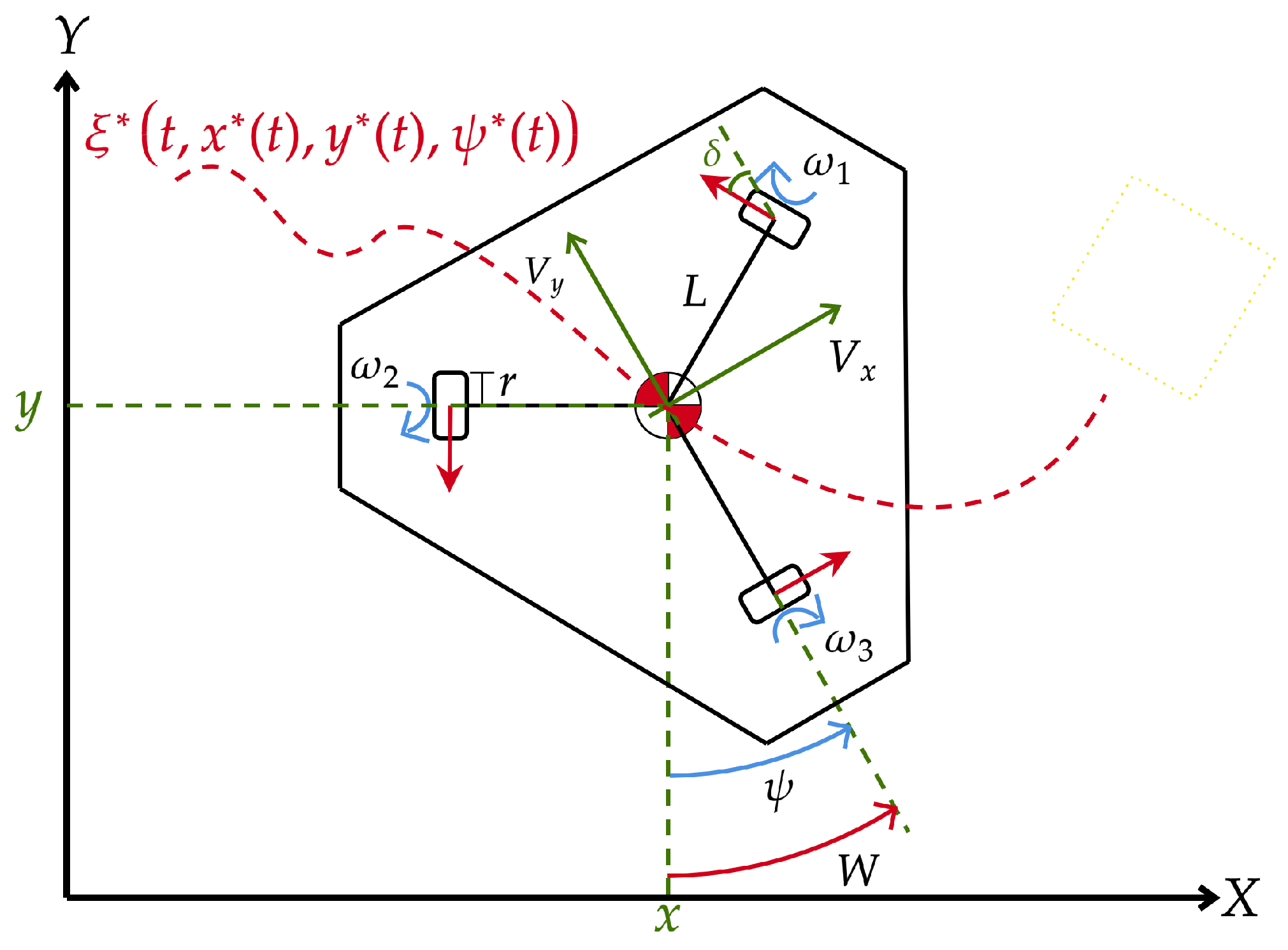
Figure 1 shows a top view of the omnidirectional robot configuration. The fixed frame
provides the position of an arbitrary point. It is addressed as the global position coordinate frame. Denote
as the center of mass position coordinates in the axes
X and
Y respectively,
is the robot orientation angle (which denotes
Z axis rotation of the mobile frame concerning the global coordinate frame). The following equations represent the kinematic model of the omnidirectional robot with input delay:
where the pose vector of the robot is defined as
, which is formed by the cartesian coordinates and the robot planar orientation coordinate. The system is supposed to be exposed to external disturbances of different nature that are lumped into a generalized disturbance vector represented by
. Last vector, though unknown, is assumed to be bounded for all time
.
Since the orientation of the robot is regarding the
Z axis, the rotation matrix of the omnidirectional robot is of the form:
The time delayed control input assuming a constant time delay
,
, includes the cartesian linear velocity inputs, represented by the variables
, and the angular velocity (normal to the
Z axis), say
. Besides, the angular velocity of the robot wheels vector is given by
, whose relation with the control input is computed as follows [
14]:
where the parameter
denotes the distance between the robot center of mass and each wheel center. The wheel radius is given by
,
is the angle between each wheel and the normal to the adjacent wheel, here
.
2.1. Flatness of the System and Feedforward Linearization
The system (
1) without external disturbances is differentially flat with flat outputs denoted by the pose vector, since all the system variables can be directly expressed in terms of the flat outputs and their first time derivative. This property allows the use of the feedforward linearization procedure, which is given by the following lemmas [
15,
16]:
Lemma 1. The application of the nominal input to the system (1) with a consistent set of initial conditions, that is, , leads to a trajectory of (1) which exists on a time interval , ; this trajectory corresponds to that of a linear system, in Brunovský’s canonical form, for which the input is composed of appropriate time derivatives of the nominal flat output. Lemma 2. The application of the nominal inputto the system (1) with a non-consistent initial condition, in other words, , which is sufficiently close to , leads to a trajectory of (1), which exists on an interval of finite amplitude of I. This trajectory remains in the neighborhood of on , i.e., the trajectory remains in the neighborhood of the nominal trajectory on the interval . The last Lemma provides an alternative procedure for computing the predicted state-dependent control gain of the system using the nominal state, which is available at all times, while compensating for feedforward linearization errors via the ESO.
2.2. Problem Formulation
Consider the disturbed omnidirectional robot model with a simplified controlled representation, as shown in (
1). It is desired to move the generalized coordinates position according to a reference trajectory
via a suitable robust control
despite the non-modeled dynamics, external disturbances, and the constant time delay in the control input, respectively.
4. Results
In the first part of this section, a comparison is made, through numerical simulations, between the proposed strategy and the one given in [
4]. Subsequently, in the second part, the results obtained on an experimental platform are presented.
4.1. Numerical Simulations
The simulations were performed in MATLAB
®-Simulink
® R2023b software. For comparison purposes, the control strategy designed in [
4] was adapted, where a non-linear prediction-observer scheme estimates the future values of the state at a constant time delay in the input signal. The observer initial conditions are:
,
, with
a
zero vector; and the initial conditions for the omnidirectional robot are:
. Considering an observer with
states, then, Equation (
11) yields
Thus, to set up the observer gains, we choose
,
rad/s, and
, which yields
and
The desired trajectory is a Lissajous curve given by the following parametric functions:
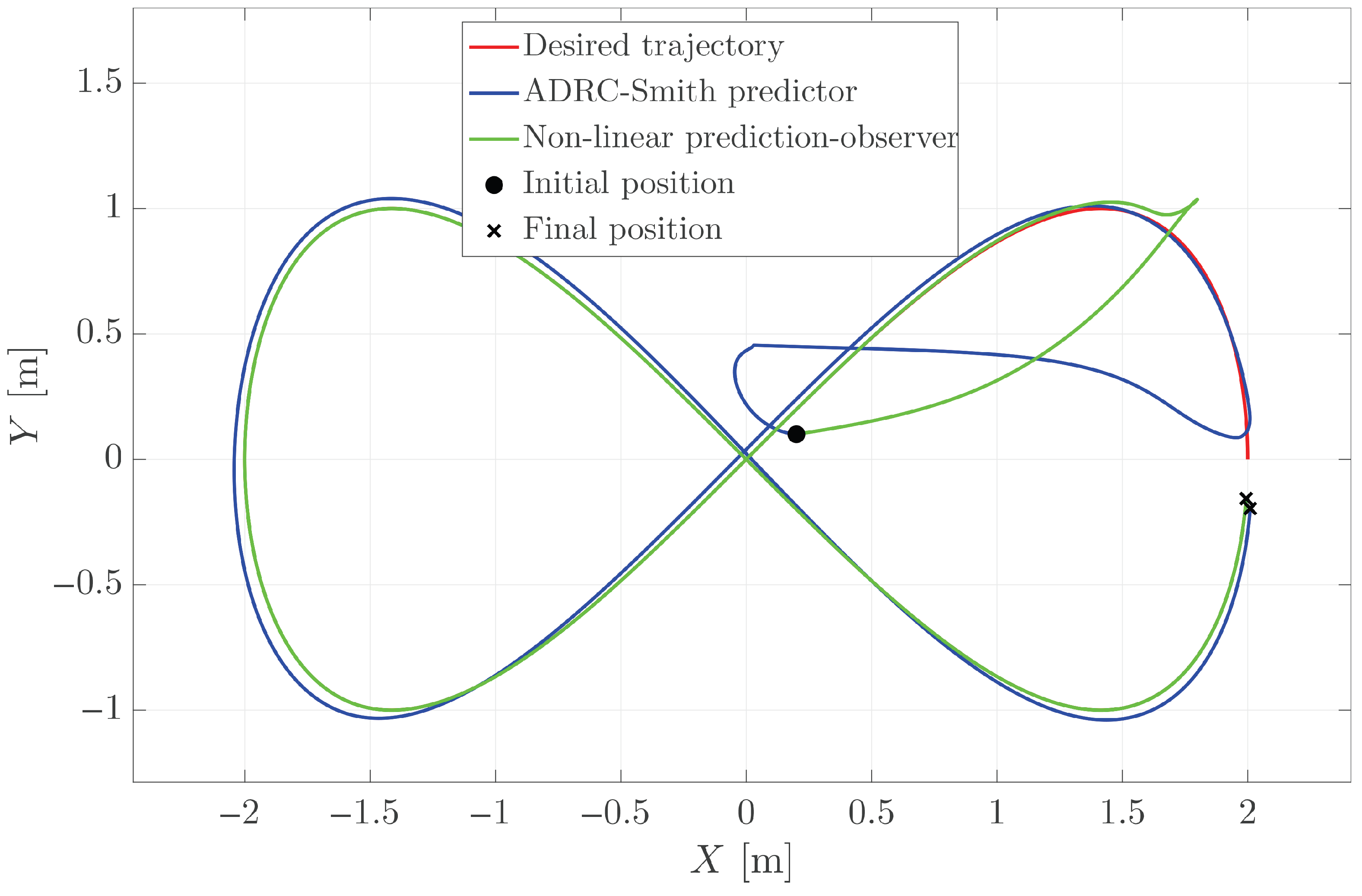
Figure 3 illustrates the motion of the omnidirectional robot as it follows the desired trajectory with a delay of
s. Note that, using the scheme in [
4], the vehicle follows the desired trajectory more effectively compared to the proposed approach. This is because no external disturbances were implemented. In this respect, the scheme we propose addresses both external disturbances and delays.
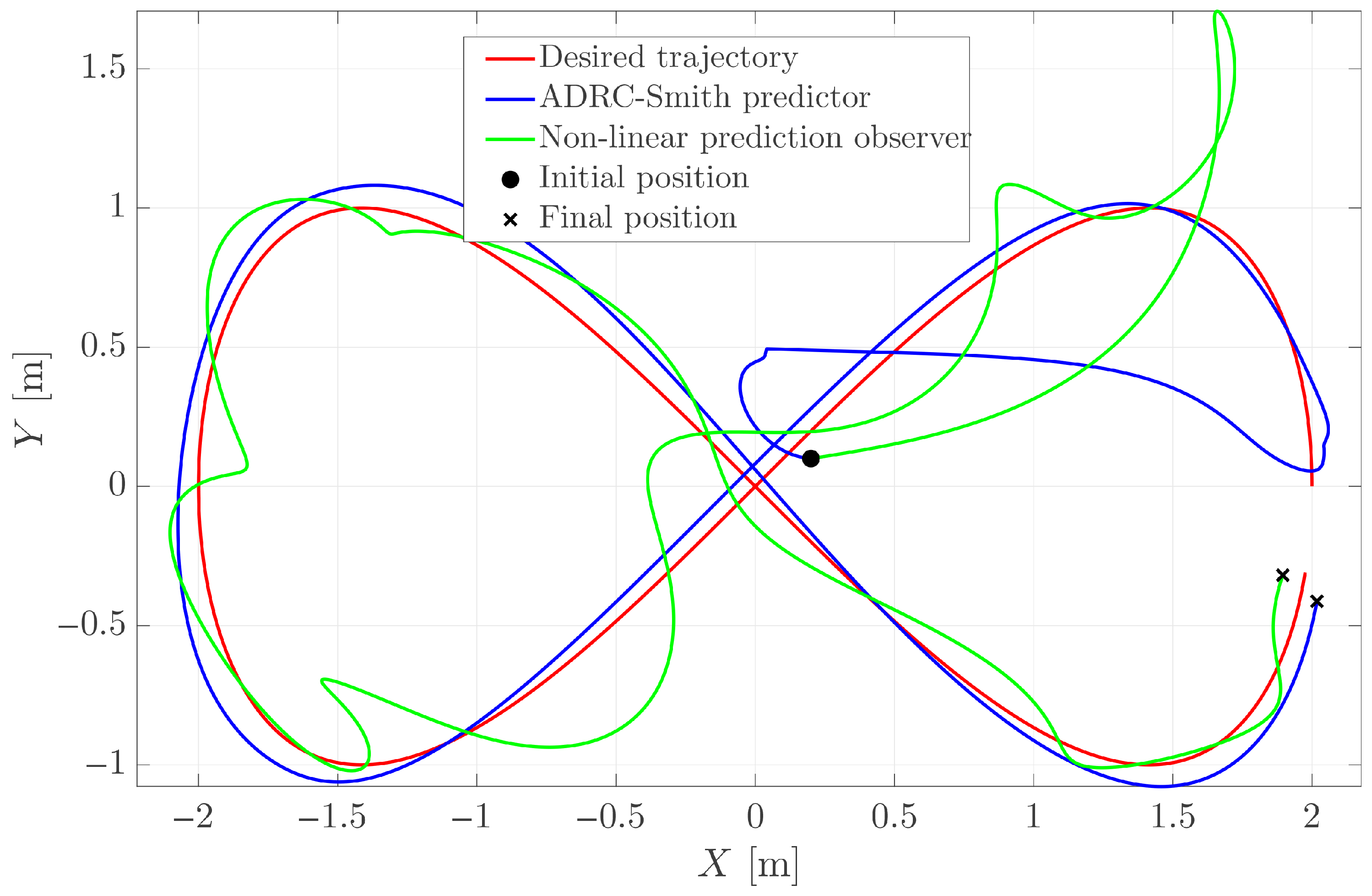
After increasing the delay to 1 s,
Figure 4 shows how the vehicle, using scheme [
4], is no longer able to follow the desired trajectory. Furthermore, it is evident that, at least in simulation, the proposed scheme can handle longer delays than in [
4].
4.2. Real-Time Experiments
To determine the effectiveness of the proposed approach, real-time experiments with an omnidirectional mobile robot were carried out through MATLAB®-Simulink® R2022b software. The omnidirectional robot has reflective markers, which are used by the VICON® Tracker software v3.10, and a set of 10 infrared cameras, Bonita, with a precision of mm to determine the robot’s position and orientation in a 5 m × 4 m area. The omnidirectional robot was constructed by employing three 12 V POLOLU 37D gear motors. The STM32F4 Discovery board is then used for data acquisition. Communication between the computer and the mobile robot is performed in real time via the publicly available “waijung1504” MATLAB®-Simulink® R2022b library over Bluetooth, using an ESP32 microcontroller with a sampling time of s.
Considering an observer with
states, then, Equation (
11) yields
Thus, to set up the observer gains, we choose
,
rad/s, and
, which yields
and
The experiments consider different time delays and different orders for the observer . We assume that a higher-order observer yields a better estimate of the perturbation. Furthermore, different delays were applied to determine the highest delay the system can handle experimentally.
The desired trajectory is a Lissajous curve given by the following parametric functions:
Based on the above,
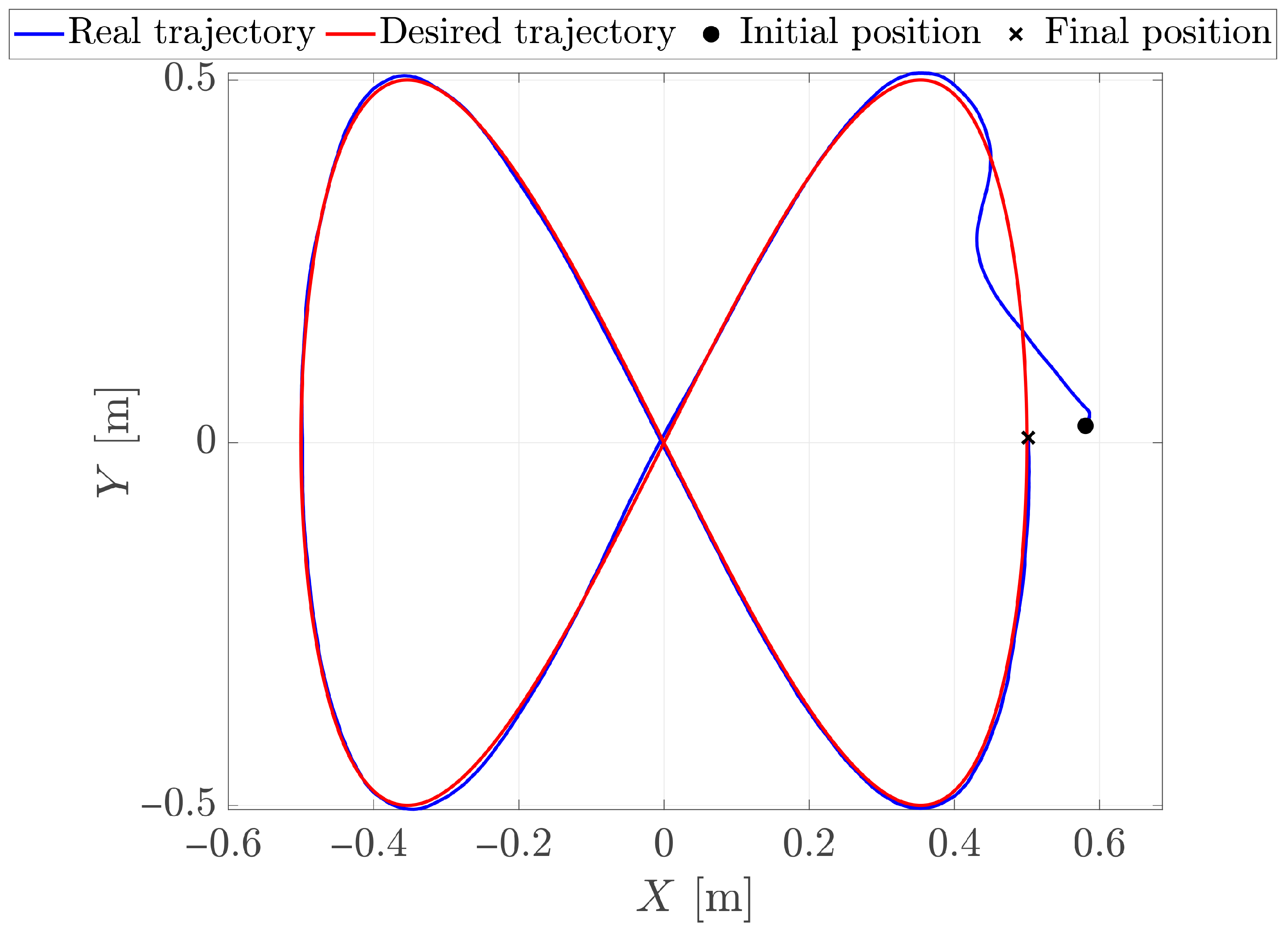
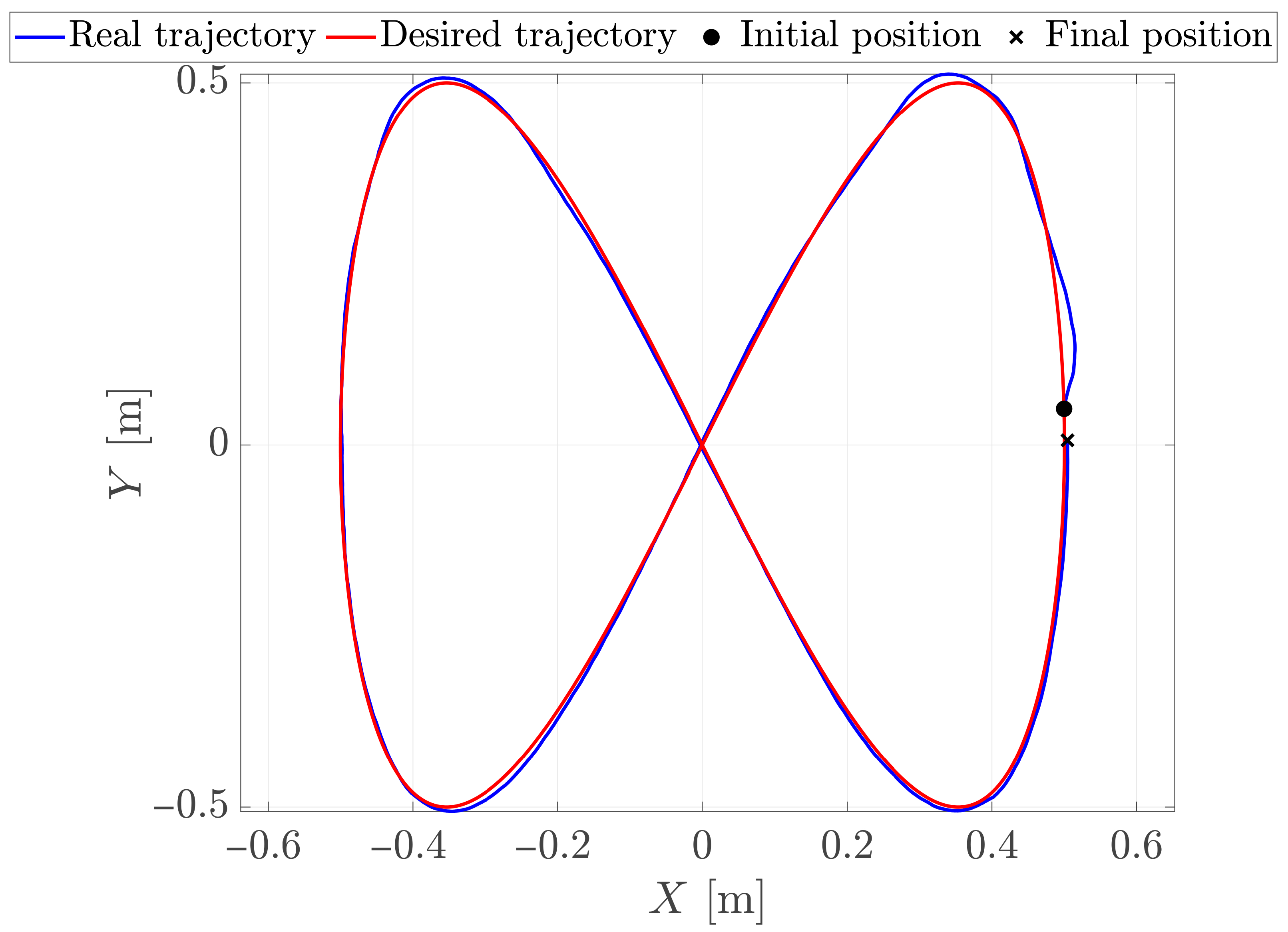
Figure 5 illustrates a comparison between the real trajectory and desired trajectory performed by the mobile robot with a delay of
s and an observer with
states. In this case, the delay is 20 times the sample time of
s. The observer initial conditions are:
,
, with
a
zero vector; and the initial conditions for the omnidirectional robot are:
.
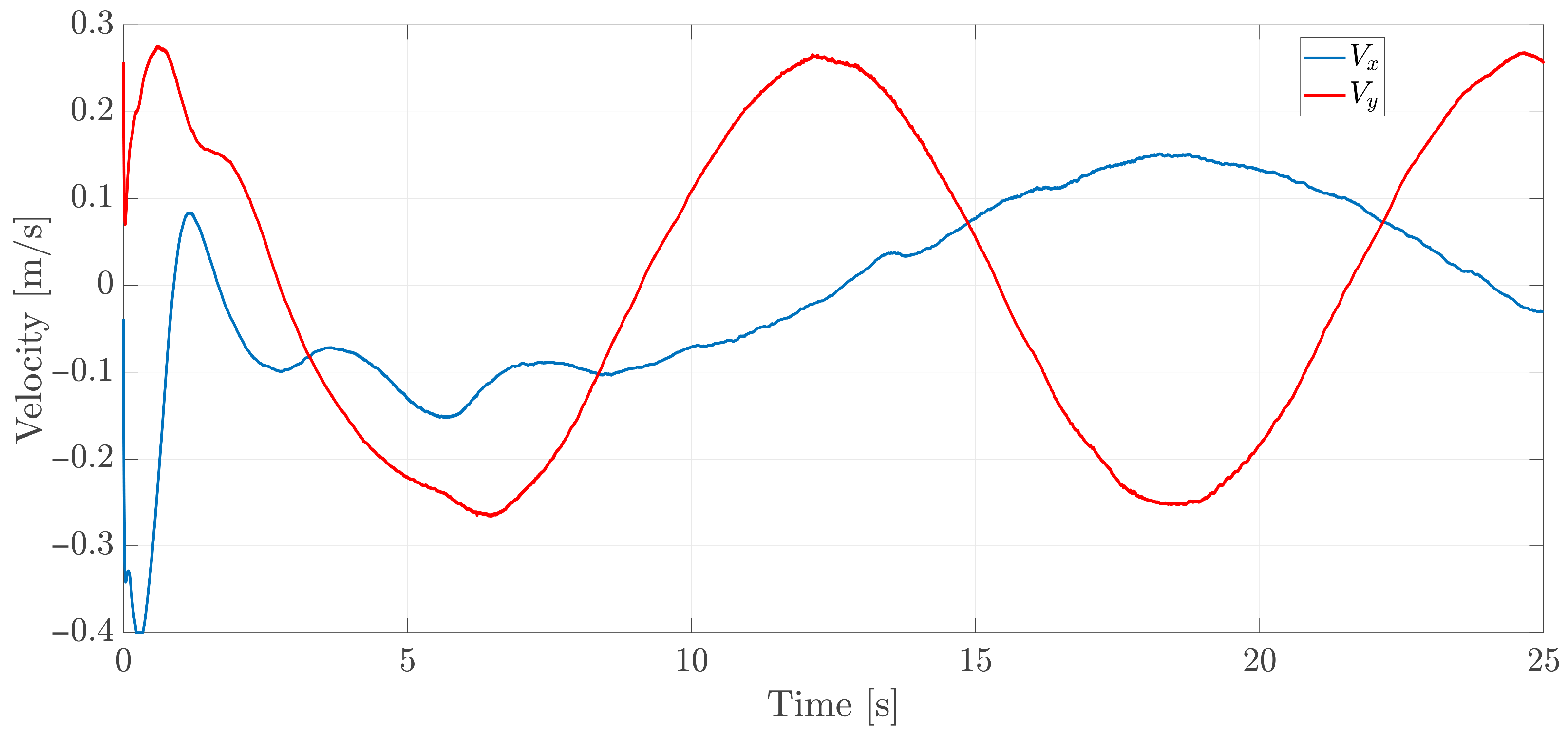
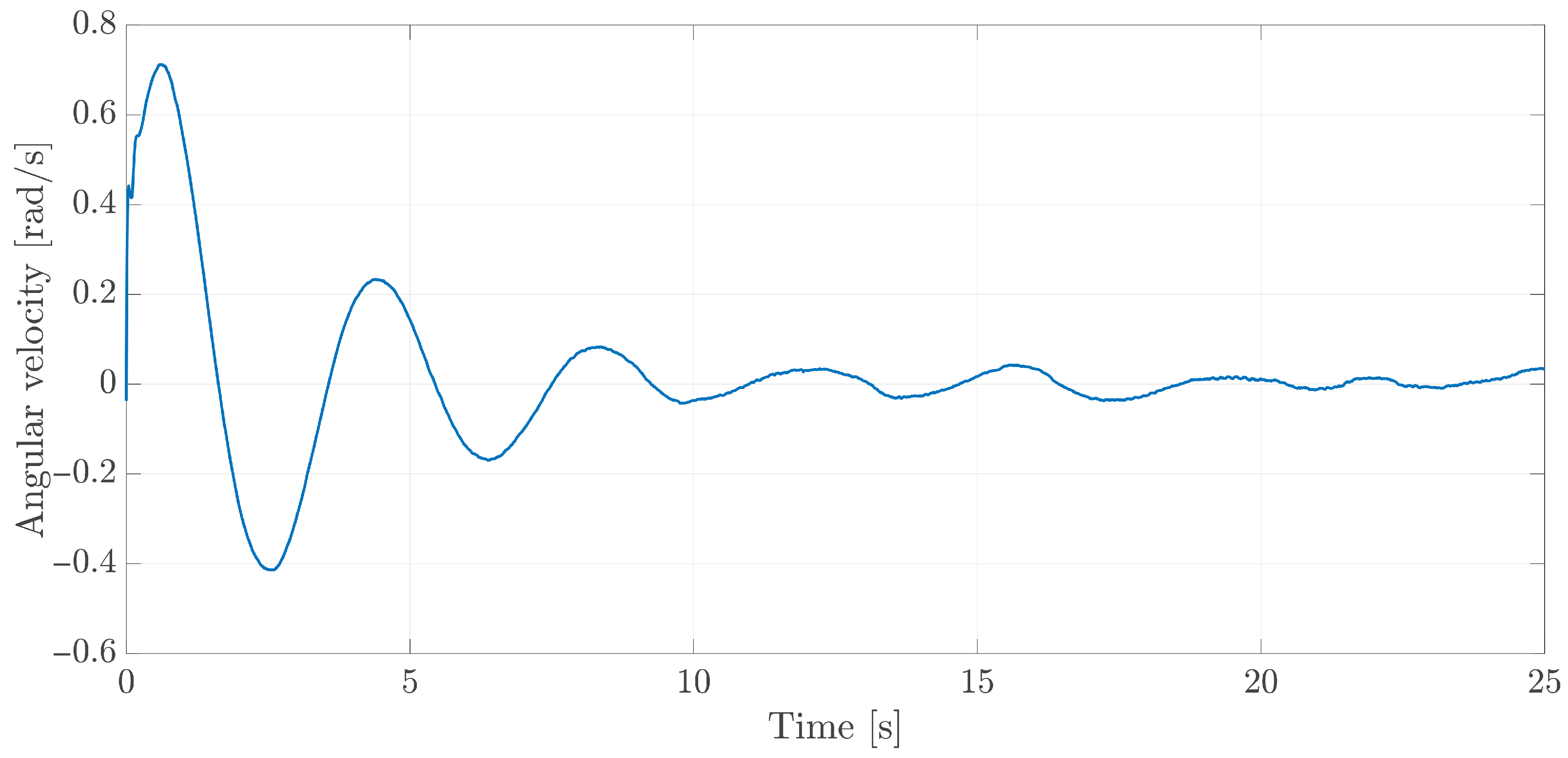
Figure 6 and
Figure 7 show the required velocities of the omnidirectional mobile robot to perform its motion and follow the desired trajectory. One can note that the control inputs are feasible and remain bounded by the system, that is,
m/s and
rad/s.
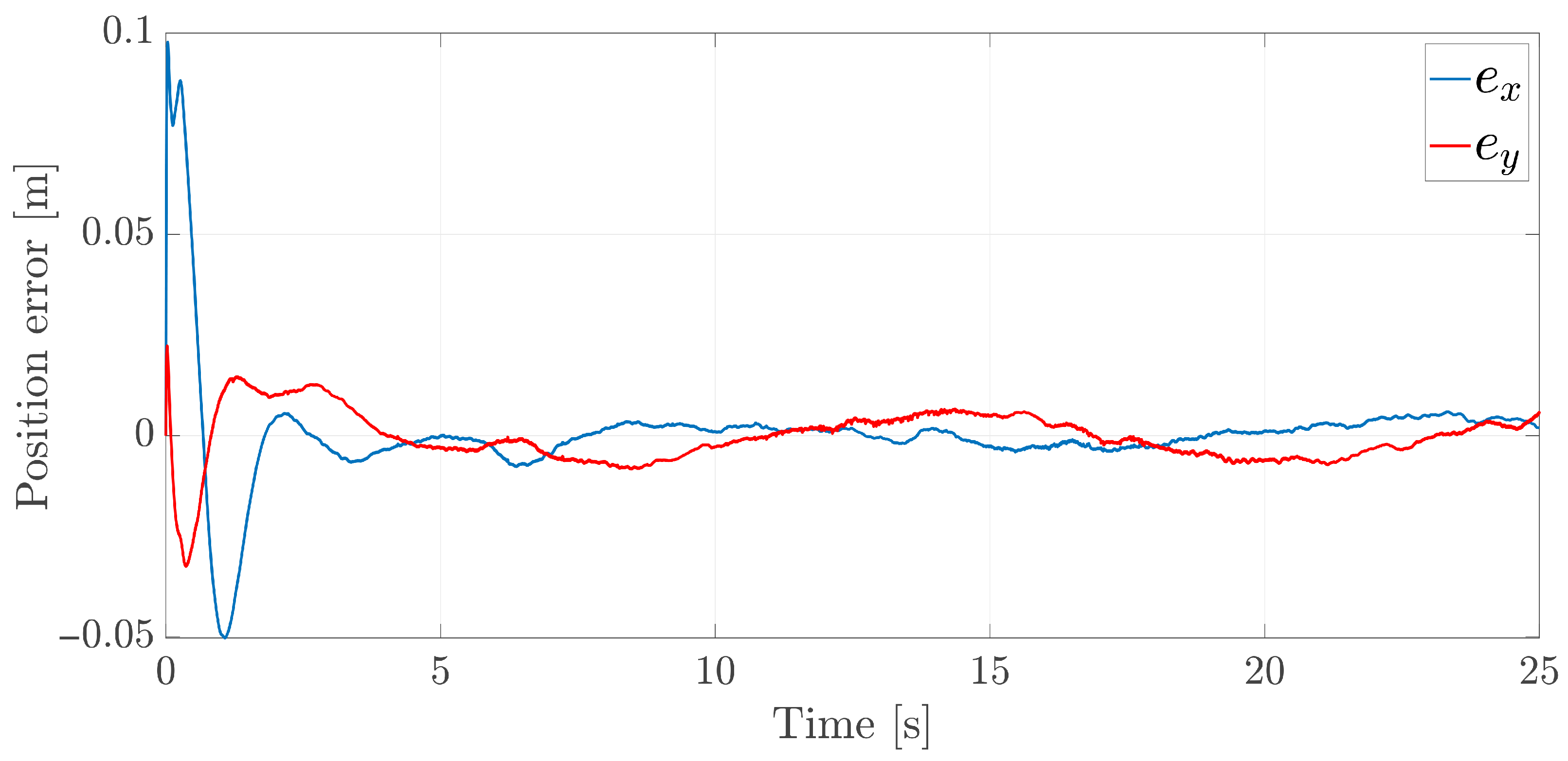
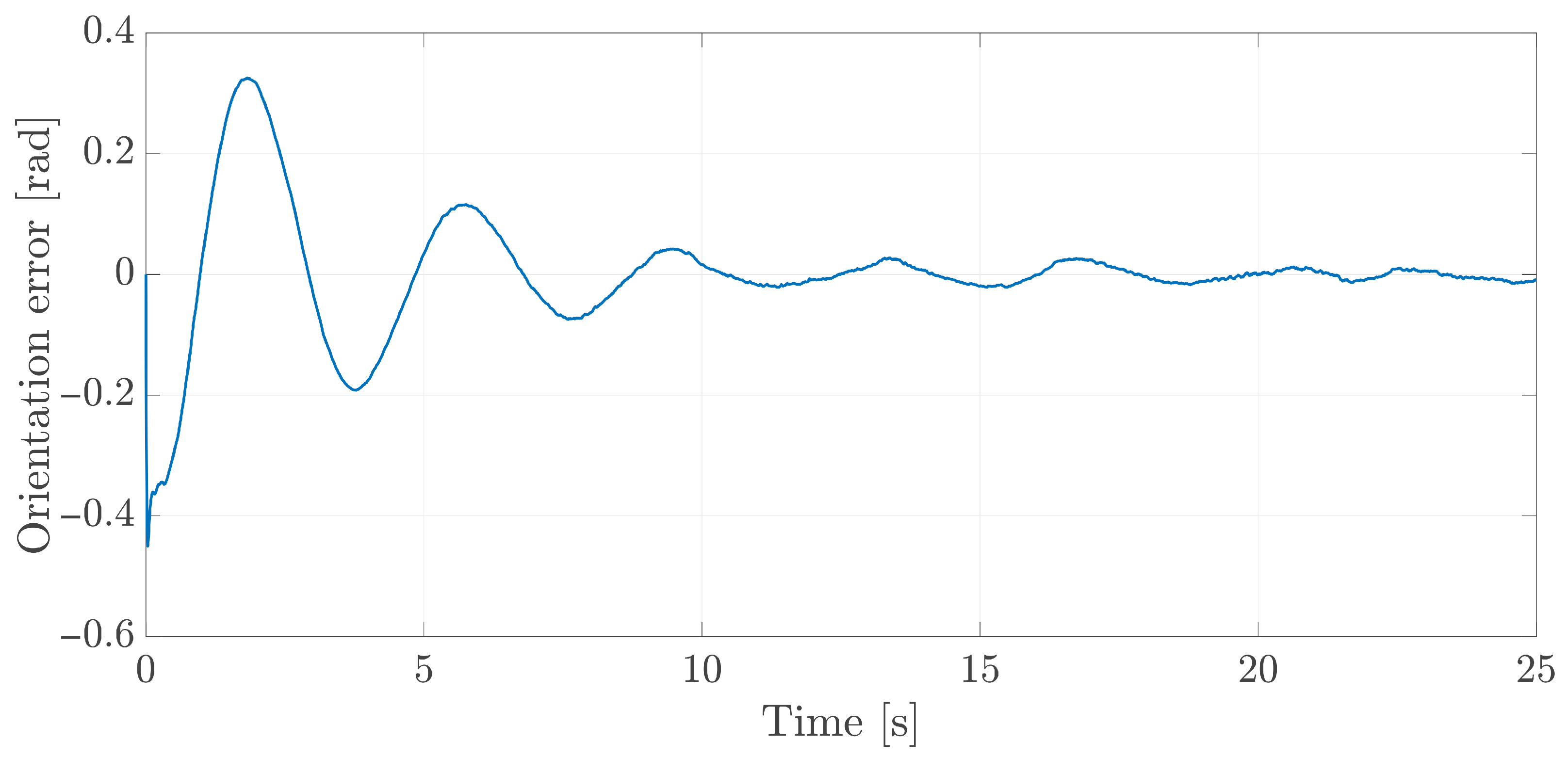
From
Figure 8 and
Figure 9, one can realize that the position and orientation errors are bounded and are oscillating around zero.
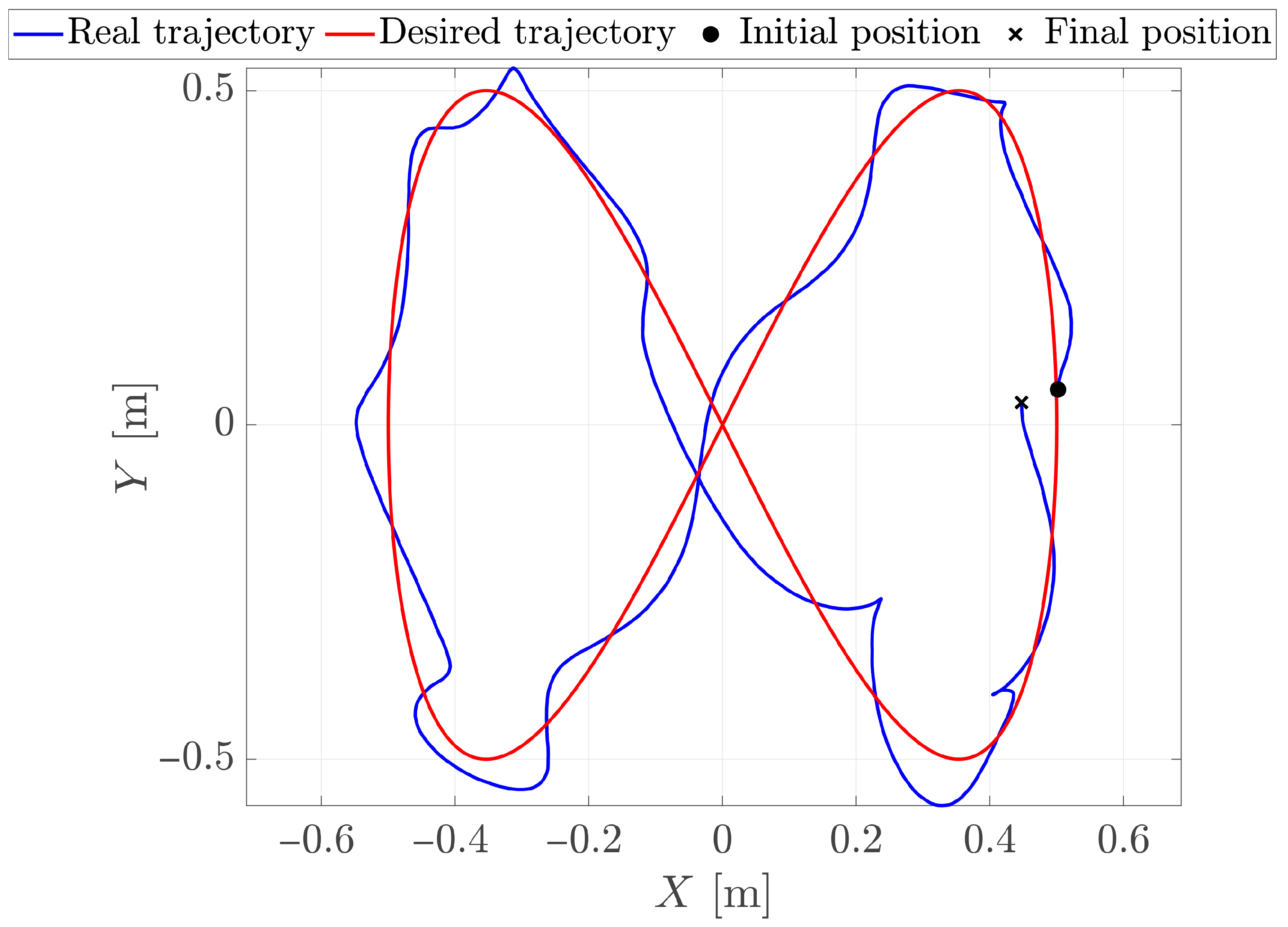
To visualize the behavior of the system when the delay increases,
Figure 10 and
Figure 11 present the trajectory in the plane of the omnidirectional robot with
s and
s, respectively. Comparing
Figure 5 and
Figure 10, one can see that the robot’s performance is quite similar, and the system can handle a delay of
s, which is 40 times the sample time. On the other hand, when
s,
Figure 11 shows that the desired trajectory has not been followed correctly, and the position errors have increased. Therefore, for this system in particular, the maximum delay it can handle without affecting performance is
s.
To quantitatively compare the results obtained with different delays and observer order, the mean square error MSE and the integral of the absolute error IAE were calculated as follows
with
.
Table 1,
Table 2 and
Table 3 shows the results obtained.
Comparing the RMSE value in
Table 1,
Table 2 and
Table 3, one can find out that the best behavior is obtained when the delay is of
s and using an observer with
states, since the RMSE is less than when using an observer of higher order. For the IAE performance index, the results vary. For the position error
, the smallest value of IAE is obtained when using an observer with
states and a delay of
s. On the other hand, for the position error
, the lower value of IAE is obtained when using an observer with
states and a delay of
s. Finally, for the orientation error
, the lower value of IAE is obtained by employing an observer with
states and a delay of
s. This could be due to the robot’s different initial conditions. What is clear is that having more states does not necessarily imply better trajectory-tracking performance.
Remark 1. Although the delay is treated as constant in the controller design, in practice, the actual delay may differ from the nominal value due to estimation errors, computation and communication jitter, among others. Such a delay mismatch introduces prediction errors in the compensated control input, which can be interpreted as an additional disturbance acting on the system. For small delay mismatches, the closed-loop system exhibits robustness. The experimental results, obtained under real-time conditions where minor delay variations are unavoidable, indicate that the proposed control scheme tolerates moderate delay uncertainty. Nevertheless, for large delay uncertainties or time-varying delays, the proposed controller may experience significant performance degradation or even instability. Addressing this issue would require adaptive delay estimation or other control techniques, which are left for future work.
5. Conclusions
This paper focused on designing a control strategy for path tracking in an omnidirectional robot subject to control input delays, using the ADRC approach and a predictor. Using the second Lyapunov method, it was proven that the closed-loop system is ultimately bounded. To support the theoretical framework, real-time experiments were conducted with different observer orders to estimate disturbances and various delays. Specifically, the most considerable delay this system can handle without affecting its performance was s. Considering a larger delay would significantly affect the system’s behavior and, consequently, trajectory tracking.
Since the delay compensation is based on a predictor structure, minor mismatches between the assumed and actual delay result in bounded prediction errors. Consequently, the closed-loop system exhibits robustness to moderate delay uncertainties, provided that the mismatch remains within a tolerable range. Furthermore, it was noted that the controller’s performance is sensitive to the observer’s order and gains, and that performing both tasks (predicting system behavior and canceling disturbances) is difficult.
As future work, studies with variable and bounded time delays will be included, incorporating possible gain adjustments to verify the robustness of the control strategy with respect to these changes.