


Abstract
Several previous empirical research studies have defined and operationalized entrepreneurial resilience (ENTR-RISC) as either a construct with multiple dimensions or a construct with a single dimension. While only a few previous research studies have assessed some components of the presumed dimensionality of ENTR-RISC, no research has attempted to assess the dimensional structure of ENTR-RISC amid the COVID-19 pandemic using different alternative competing models. In order to acquire a deeper understanding of the dimensional characteristics of the ENTR-RISC construct, this research assessed its dimensionality by comparing existing models’ goodness of fit (GoF), and the best model that fitted the data was further tested using various confirmatory factor analysis (CFA) models (a second-order factor model, an oblique first-factor model, and a single-factor model) on quantitative data gathered from 590 SME entrepreneurs in Kingdom of Saudi Arabia (KSA). The results of analyzing the tested models via structural equation modeling (SEM) and the AMOS program indicated that the ENTR-RISC construct has a multidimensional three-factor structure. Even though this research helps in the advancement of ENTR-RISC practice and theory, further research is required to test the dimensionality of ENTR-RISC in greater depth. The findings of this study may encourage further research on this topic and stimulate a much-needed discussion on the dimensional structure of the ENTR-RISC concept.
MSC:
91Cxx
1. Introduction
Entrepreneurial resilience (ENTR-RISC) represents the qualities of entrepreneurs that enable them to survive and succeed in times of adversity. Over five decades ago, the concept of ENTR-RISC captured the attention of academics, professionals, and policymakers [1,2,3,4,5,6,7,8,9,10,11,12,13,14,15,16,17,18,19]. Even though these attempts have substantially expanded our general knowledge of ENTR-RISC best practices before, amid, and after the economic crash, the current COVID-19 crisis has entirely different conditions, and its effects on ENTR-RISC need more investigation. Relying too heavily on the findings from previous crises could involve “fighting new battles with old weapons” [20]. As studies in this area are still in their early stage, both academics and professionals need more empirical-based evidence to fully understand the dimensional structure of ENTR-RISC amid the COVID-19 pandemic.
In this context, several empirical studies have investigated the impacts of ENTR-RISC on numerous disciplines, including tourism management [1,3,4,21], supply chain management [5,6,7,8], SMEs’ performance [9,10,11,12], competitive advantage [13,14,15,16,22], and firm performance [17,18,19,23,24].
Some of these research studies investigated and operationalize ENTR-RISC as an unobserved latent multidimensional concept that encompasses several distinctive but connected factors measured by some variables that reflect each factor. On the other hand, a number of research studies made the implicit assumption that ENTR-RISC is unidimensional and that, consequently, all variables reflect only one dimension. While some research studies tested the multidimensionality structure of the ENTR-RISC by using a limited number of methods including the coefficient alpha, and explanatory and confirmatory factor analysis (EFA and CFA), several other research studies, particularly those that made the implicit assumption of the unidimensionality of ENTR-RISC, did not empirically assess the construct’s dimensional structure. The previous lack of empirical evidence regarding the dimensional structure of the ENTR-RISC construct hinders the development of ENTR-RISC theory and practice. Obviously, assessing the dimensional structure of the ENTR-RISC construct as an element of the procedures of testing the construct’s validity is a crucial precondition for investigating the impact of the latent unobserved independent construct on another dependent latent construct [25]. Given the limited empirical evidence on testing the dimensional structure of the ENTR-RISC construct and the drawbacks of the methods and techniques that have been applied in the previous studies to assess the dimensional structure of ENTR-RISC, this research study attempted to assess the dimensional nature of the ENTR-RISC construct using structural equation modeling and SEM and different competing CFA models on a set of data collected from 590 entrepreneurs of small and micro-sized enterprises (SMEs) in the Kingdom of Saudi Arabia (KSA)
2. Literature Review
The Dimensionality of Entrepreneurial Resilience: Limitations in Previous Studies
ENTR-RISC’s dimensionality was tested in previous studies by applying a number of methods such as the coefficient alpha, EFA, and one type of confirmatory factor analysis (CFA). Coefficient alpha (a) can be used to assess the construct’s reliability (internal consistency), where, if some items are used to measure a single factor, the correlated items must have a high correlation value [26]. Nevertheless, coefficient alpha (as a test of the reliability of internal consistency) is a condition of but an insufficient techniques to test the unidimensional structure of the constructs used [27]. Furthermore, variables can be rationally correlated but multidimensional at the same time [28]. Unidimensionality and reliability are not equivalent [29]. Regardless of the dimensionality structure of the measure, adding items can increase its reliability [30,31]. As a result, it is possible to achieve a good coefficient alpha value that is acceptable despite the fact that the measurement has multiple dimensions [29].
Similarly, EFA has frequently been used for decades to evaluate dimensionality [29]. The EFA test can be conducted to determine the number of dimensions in a given measure and the variables that carry the most weight in each dimension [32,33,34,35]. Nevertheless, even if a factor is unidimensional, there may be several factors, consisting of many variables, which set the parameters for the construct; in other words, even though many factors can measure a certain construct, this does not define its dimensionality [29]. Anderson and Gerbing [27] concluded that “EFA is a poor ending point for the construction of unidimensional scale”. EFA extracts the most greatly correlated variables into a single separated factor [35]; nevertheless, items may be extremely correlated for a variety of possibilities, in addition to being a measure of a single factor [29]. The EFA rotation and extraction method (i.e., direct oblimin) lets the dimensions be freely correlated [36]. Two main possibilities can explain the high correlation between the dimensions, and each possibility leads to distinct assumptions. First, the extracted dimensions may be assumed to measure a second higher-order dimension. This presupposes that the extracted number of dimensions are measures of a higher-order factor. Second, the factor’s high correlation might be a result of the factor reflecting different distinct construct dimensions [29]. EFA tests are regularly used where the study variables are then aggregated with a composite score of the items that are proposed to measure each dimension [32,33]; nevertheless, a “composite score is meaningful only if each of the measures is acceptable unidimensional” [30]. Lastly, if one is unaware of the multidimensional structure of the applied scale, problems may arise and the estimations of the scale may be incorrect, leading to erroneous assumptions regarding the measure used [29].
Given the limitations of both EFA and (a), the CFA test may be conducted to measure the dimensionality of a specific construct within the study’s validity procedures. CFA with SEM allows the testing of various distinct models to evaluate the psychometric qualities and the dimensional structure of the study’s scale [37]. As an advanced data analysis method to test the causal correlations among latent unobserved constructs [33,37,38], CFA can be used to assess the construct validity in any research [37,38]. However, statistically significant correlations and factor loadings in CFA do not certainly imply that the factors measure a higher-order dimension [29]. Nevertheless, by testing several competing models in CFA, we may gain a greater understanding of the dimensional structure of a concept [29,33]. By running SEM, scholars have various opportunities (model structures) when assessing their scale’s validity: the factors could be designed to be freely correlated, designed and structured to be correlated to measure one single construct, or structured to measure a higher-order factor [37]. Without assessing these different models, we will be unable to propose that the statistically significant relationships are a result of dimensions measuring the same predefined construct [29].
Despite the commonly acknowledged benefits of using multiple models in one study context, the use of multiple models in one study context remains controversial. The literature review implies that such an attempt to assess the dimensional structure of a particular construct has infrequently been adopted. Indeed, to the author’s knowledge, no previous empirical study has been detected that assesses the dimensionality of ENTR-RISC using these different three models in one study context.
After reviewing the methods that can be used to test the dimensionality of the scale, the literature that measures ENTR-RISC was reviewed to find out how ENTR-RISC was structured in previous studies as a unidimensional or a multidimensional construct, and whether this was an assumption or a finding, as well as which statistical technique was used to test this assumption or obtain this finding. This review aimed to find an appropriate method to test the current study’s dimensional structure of the ENTR-RISC construct.
Windle et al. [39] evaluated 19 resilience measures and found that the psychometric properties of these measures differed significantly, with some being superior to others. Additionally, all scales had several limitations concerning their psychometric properties. One exception was the Connor–Davidson Resilience Scale (CD-RISC), which possesses the highest psychometric ratings.
Connor and Davidson [40] created the CD-RISC, a reliable and valid resilience scale intended to address the shortcomings of other scales, such as a lack of general acceptability and applicability. The CD-RISC scale was built and derived from different previous resources such as the studies of Rutter [41], Kobasa [42], and Lyons [43]. Originally, the scale was multidimensional with a five-factor structure: high standards, personal competence, and tenacity (eight variables); tolerance of negative impacts, trust in one’s instinct, and strengthening the impacts of strain (seven variables); secure relationships and positive acceptance of change (five variables); control (three variables); and spiritual stimulus (two variables).
The CD-RISC is a self-rated scale of resilience and was developed on the basis of the authors’ operational definition of resilience, which is the capability to “thrive in the face of adversity”. Since its appearance in 2003, the CD-RISC has been tested, retested, and validated in different geographical and industrial contexts with a variety of samples, and has been revised into several versions. The CD-RISC has 25 items, which are assessed on a five-Likert point scale ranging from 0 to 4: true nearly all of the time (4), often true (3), sometimes true (2), rarely true (1), and not true at all (0). The five factors are “personal competence, high standards, and tenacity”, “trust in one’s instincts, tolerance of negative effects, and strengthening effects of stress”, “positive acceptance of change and secure relationships”, “control”, and “spiritual influences”. The items related to each factor are illustrated in Table 1.
Table 1.
Original Connor–Davidson resilience scale (CD-RISC) and other extracted scales.
However, After multiple improvements, and validations, previous empirical studies found the scale to fit different dimensional structures such as the original five-factor model [39,44,45,46], the three-factor model [4,47,48,49], a unidimensional 10-item structure [50], and a unidimensional six-item structure [51].
Campbell-Sills and Stein [50] built a revised form of the CD-RISC with only a 10-item scale out of the 25 original items on the scale and validated its unidimensionality with high factor loadings using a sample of 1743 undergraduates. Similarly, Smith et al. [51] extracted a brief unidimensional six-item resilience scale from the original 25 multidimensional items, aimed at measuring the key and the main sense of resilience, that is “the ability to bounce back from stress” [51]. These mixed results of using the CD-RISC scale as a five- or three-dimensional construct or a 10-item or 5-item unidimensional construct, as illustrated in Table 1, might be due to different samples, data analysis techniques, and contexts. The current study hypothesized and compared four alternative models, as shown in Table 1 (the original CD-RISC multidimensional five-factor structure model, the revised CD-RISC multidimensional three-factor model, the revised CD-RISC unidimensional 10-item model, and the abstracted CD-RISC unidimensional 6-item model) in the same context to avoid these discrepancies in previous empirical studies.
3. Methodology
3.1. Sampling and Methods
The population of the current study included all entrepreneurs in small and micro-enterprises such as the owners of food trucks, fast food restaurants, travel agents, estate management offices, and mobile phone shops in KSA. Small and micro-enterprises were chosen on the basis of two criteria: self-funding and direct supervision of the company [52]. According to KSA regulations, micro-businesses should have no more than five full-time employees while small businesses should have 6–49 full-time employees. Twenty-five enumerators were recruited to distribute and collect the study survey in Al Ahsa province (the largest Eastern province in KSA). This technique was adopted to evade the usual poor mail or online survey response [53,54]. The enumerators were trained to prevent the danger of COVID-19 infection during data collection.
Before proceeding with the survey, entrepreneurs were invited to sign a letter of consent. The enumerators were previously trained to narrate the survey questions aloud in an understandable manner and write down the respondents’ replies in the appropriate spaces. In total, 590 valid responses were collected from 600 entrepreneurs for the study. Ten responses were eliminated due to incomplete answers. The data were collected in March 2022.
The original 25-item Connor–Davidson resilience scale (CD-RISC) was utilized to operationalize ENTR-RISC. A five-point Likert scale was used in creating the survey, where 5 indicates “strongly agree ”and 1 means “strongly disagree”.
3.2. Data Analysis Techniques
SEM was used to compare the four models that measure ENTR-RISC (the CD-RISC multidimensional five-factor model, multidimensional three-factor model, the unidimensional 10-item model, and the unidimensional 6-item model). SEM via the AMOS program was selected and used in our study over other similar programs, such as Smart PLS, due to the large sample size (N = 1250) in our study, its confirmatory (not exploratory) nature, its ability to assess and evaluate complex and multivariate models, and its prevalence among scholars in prior related research [33,34,37]; Smart PLS can be conducted in empirical studies that suffer from a small sample size and are exploratory in nature with a complicated research model.
The goodness of fit (GoF) criteria in the four tested models were compared to find the best-fitting model. The anticipated covariance matrix (k) was statistically compared with the actually tested covariance matrix (S) to assess the model fit. When these two matrices are close, the model fits better than the other models [33]. Chi-square (χ2) is considered the main criterion of model fit, as it can give mathematical evidence of the variance between the real observed covariance matrix (S) and the anticipated covariance matrix (∑k) by applying this formula: χ2 = (N − 1) ∗ (S − (∑k)), where N is the study sample size [33]. The χ2 score is associated with the study’s sample size, as χ2 rises with a high sample size. Similarly, the SEM ∑k is impacted by the number of parameters that are allowed to be freely correlated, so the degrees of freedom (df; the difference between the number of parameters estimated and the number of data points) also affects the χ2 score [37]. Unlike other well-known statistical techniques, in SEM, the researcher prefers to have an insignificant p-value (>0.5) to have evidence that both ∑k and S are matched, and we can accept the model’s fit to data. However, because the χ2 value is regularly influenced by the sample size and degrees of freedom, other GoF criteria should be applied. Consequently, additional GoF metrics, as depicted in Table 2, were used in the model comparison process as suggested by Bryne [37], Hair et al. [33], and Tabachnick and Fidell [34]. IBM SPSS Version 24 and IBM AMOS Version 24 global versions were used for data analysis.
Table 2.
SEM GoF criteria.
The best-fitted model was then subjected to first-order CFA to assess the construct’s reliability, discriminant validity, and convergent validity. Three models were created to find out if the best-fitted model was a multidimensional construct (an oblique factor model), a second-order multidimensional construct (a higher-order model), or a unidimensional construct (a one-dimensional model)
4. Results and Discussion
4.1. Demographics and Profiles of the Targeted Entrepreneurs
The majority (60%) of the investigated businesses were categorized as micro-businesses with fewer than five full-time employees, while 40% were small businesses with 5 to 49 full-time employees. Moreover, 55% of the respondents had 5 to 10 years of experience in their business, while 40% had fewer than 5 years of experience and 5% had run their own business for more than 10 years. Males (92%) and married entrepreneurs (75%) were the most dominant in our investigation, with ages between 22 and 60 years old (81%). The number (35%) of entrepreneurs who owned and ran fast-food restaurants was slightly higher than the number of those who owned and ran food trucks (33%) and travel agency owners (20%), followed by owners of mobile phone shops (6%) and estate managers (6%), as shown in Table 3. The majority (70%) of participating entrepreneurs had a college degree, and 20% had a high school degree or lower, while only 10% had an MBA. Table 2 provides an overview of the investigated entrepreneurs’ demographics and business profiles. Table 4 also provides some descriptive statistics, where the minimum and maximum scores were 1 and 5, respectively. The minimum mean score of the respondents’ replies was 3.26 while the maximum value was 4.13. Similarly, the standard deviations of the replies were between 0.895 and 1.079. Finally, the values of kurtosis and skewness did not exceed 2 or −2. Given all the descriptive data, the data are normally distributed around their mean.
Table 3.
Entrepreneurs’ demographics and business profiles.
Table 4.
Descriptive statistics.
4.2. Model Comparison
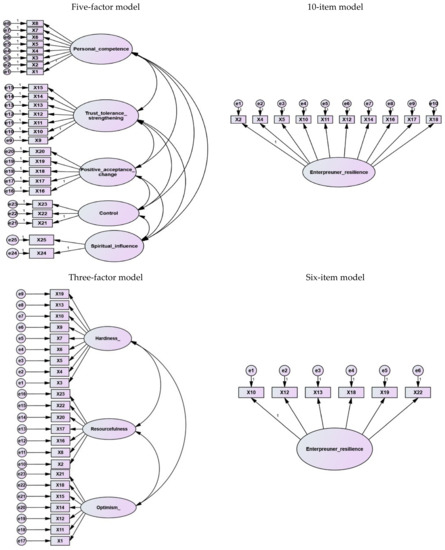
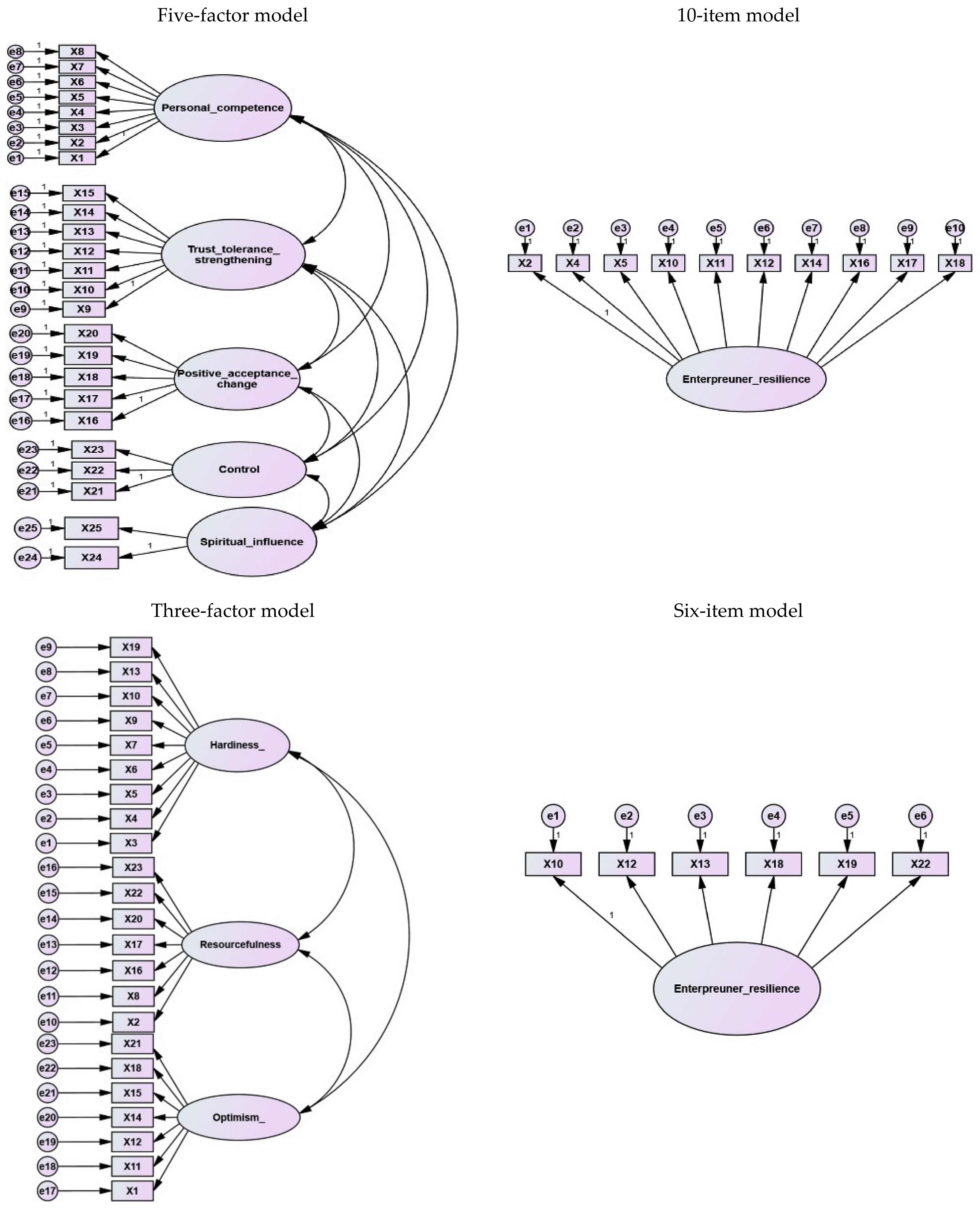
The four models pictured in Figure 1 were compared with each other to identify the best model that fitted the data well. The first model is the original CD-RISC multidimensional five-factor structure model that has 25 items, the second model is the revised CD-RISC unidimensional 10-item model, the third model is the abstracted CD-RISC unidimensional six-item model, and, finally, the fourth model is the revised CD-RISC multidimensional three-factor model that has 21 items, as shown in Figure 1.
Figure 1.
Model comparison.
Table 5 displays the GoF criteria for the comparison of the four hypothesized models. The results of Wheaton et al.’s [55] relative chi-square (χ2/df) value failed to meet the threshold level of 3.00 [34] for Models 1, 2, and 3; however, the score of relative χ2 (0.3) was satisfactory for Model 4. This implies that Model 4 is consistent with the collected data, but Models 1–3 are not. Furthermore, the findings in Table 5 demonstrate that the other incremental and absolute fit metrics for Models 1–3 strongly deviate from the satisfactory fit scores for these metrics. For example, the RMSEA (root mean square error of approximation) scores failed to meet the suggested threshold value of below 0.05 [56], varying from 0.212 for Model 1 to 0.306 for Model 2 and 0.294 for Model 3. This indicates that Models 1–3, with undefined but optimized parameter scores, do not adequately fit the population covariance matrix, if one is available. If we take the CFI (comparative fit index) as another illustration of the poor fit of Models 1–3, as shown in Table 5, the CFI scores for these models (1–3) are below the suggested adequate threshold value of 0.90 [57]. Consequently, Models 1–3 demonstrated an unsatisfactory fit compared with the null model (in which all relationships are constrained to equal zero). In general, the results presented in Table 3 indicate that the GoF metrics for Models 1, 2, and 3 diverge from the satisfactory fit criteria for the incremental and absolute fit measures. This suggests that our data do not support these models and the proposed dimensional structure of their variables. Model 4, compared with Models 1, 2, and 3, has incremental and absolute fit metrics that comply with the satisfactory fit scores for these criteria (see Table 5). Furthermore, the parsimonious fit values (PCFI, and PNFI) for Model 4 are higher than those of Models 1,2, and 3. This implies that Model 4 has superior fit to the data.
Table 5.
Results of the comparative models tested.
4.3. Best Fitting Model: Three Alternative Model Structures
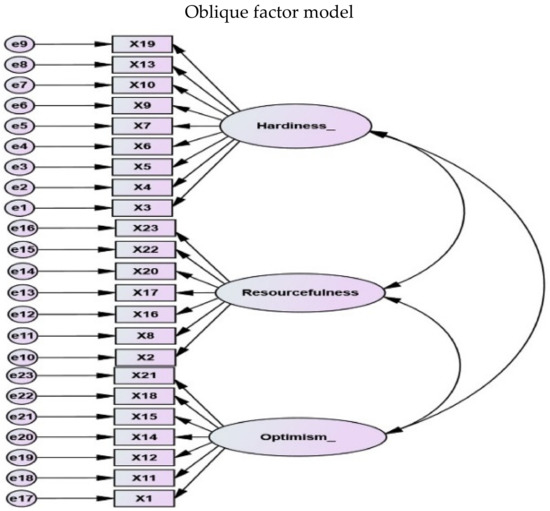
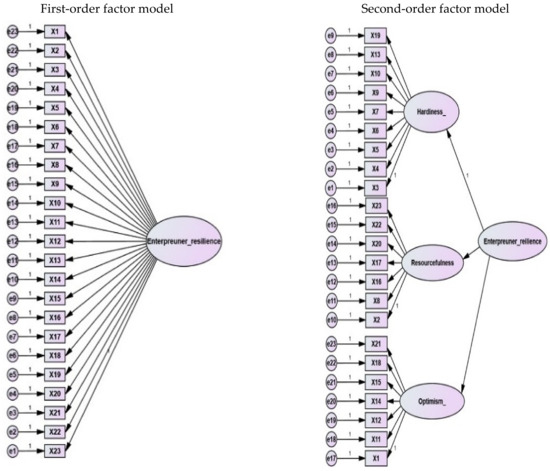
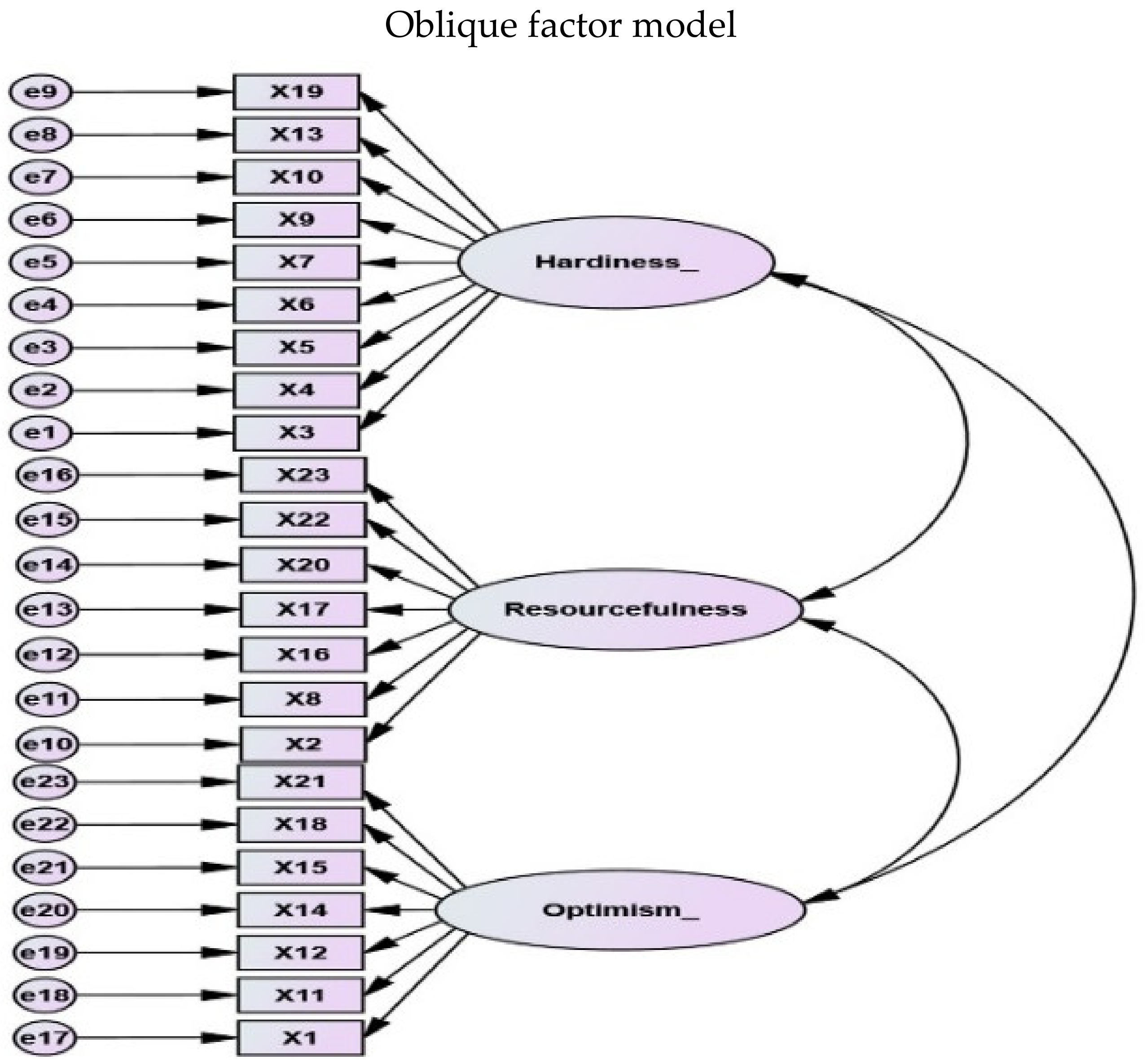
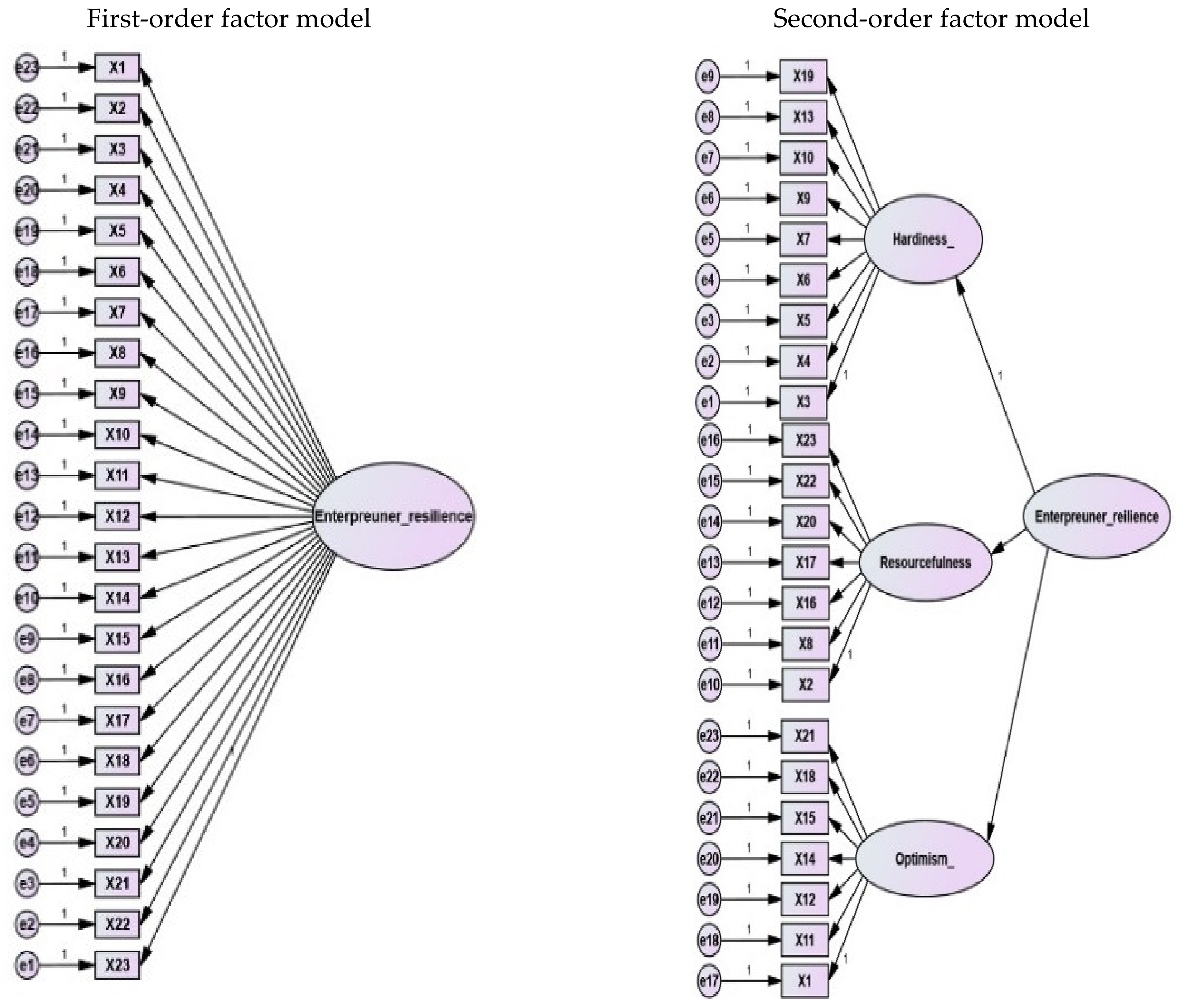
In testing the dimensional structure of the study construct, most previous studies used only one type of CFA [58]; however, CFA can be used to evaluate various models in order to gain a deeper understanding of the dimensional qualities of a construct [29,33]. These models include one that allows any and all factors to be freely correlated with one another (the oblique factor model), a model in which every factor is correlated with every other factor because every factor measures the same higher-order factor (the higher-order factor model), as well as a model in which all indicators are used to determine if they measure one factor (the one-factor model) [38]. The scholar cannot suppose that the correlation of the statistically significant items/factors is due to the items/factors measuring the same dimension without first testing these three models [29]. Consequently, the best model (Model 4, the three-factor structure model) that fitted our data well was then subjected to CFA to generate three different alternative models, as shown in Figure 2.
Figure 2.
Three alternative models.
As shown in Table 6, the oblique factor model’s GoF indices are: χ2/df = 2.2725, p < 0.001, RMSEA = 0.030, SRMR = 0.027, CFI = 0.934, TLI = 0.926, NFI = 0.925, PCFI = 0.838, and PNFI = 0.830, which showed a satisfactory model fit, while the GoF indices of the second-order factor structure mode were: χ2/df = 6.2 p < 0.001, RMSEA = 0.323, SRMR = 0.318, CFI = 0.684, TLI = 0.652, NFI = 0.677, PCFI = 0.621, and PNFI = 0.616 and the unidimensional model’s GoF indices were: χ2/df = 6.9, p < 0.001, RMSEA = 0.232, SRMR = 0.287, CFI = 0.684, TLI = 0.657, NFI = 0.678, PCFI = 0.623, and PNFI = 0.652, failing to show a satisfactory model fit. The previous results indicate that Manzano García and Ayala Calvo’s [47] three-factor first-order oblique factor model can be used to measure ENTR-RISC. This scale has three dimensions named hardiness (nine variables), optimism (seven variables), and resourcefulness (seven variables).
Table 6.
Comparison of three alternative models.
Hardiness (nine items) is a measure of an entrepreneur’s capability for self-control as well as their openness to facing new challenges in the face of change Kobasa [59]. Entrepreneurs’ resourcefulness has seven items that describe the skills, abilities, and competencies that enable them to be confident in their resources to manage, control, and change the consequences of the adverse circumstances [47,48]. Optimism has seven reflective variables that determine the ability to remain positive in the face of hardship [60].
4.4. Manzano García and Ayala Calvo’s Three-Factor Model: Validity and Reliability Test
The three factors that represent the ENTR-RISC scale have a high internal consistency and coefficient alpha (a) value as shown in Table 7: hardiness (a = 0.903), resourcefulness (a= 0.921), and optimism (a = 0.937). These results were supported when running CFA for the multidimensional three-factor model with the best fit, which further demonstrated the reliability and validity of the measurement scale. Composite reliability (CR) and average variance extracted (AVE) was calculated according to the formulas [33,61] below:
where λ is the standardized factor loading for variables, i stands for its error variance, and n is the number of variables.
Table 7.
Convergent and discriminant validity of the reflective three-factor model.
CR scores were calculated for the three ENTR-RISC factors and showed a high internal consistency: for example, the CR of hardiness was calculated as shown below:
For hardiness (nine items), CR = (0.905 + 0.885 + 0.919 + 0.894 + 0.975 + 0.960 + 0.942 + 0.916 + 0.962)2/(0.905 + 0.885 + 0.919 + 0.894 + 0.975 + 0.960 + 0.942 + 0.916 + 0.962)2 + 0.149 + 0.170 + 0.078 + 0.133 + 0.094 + 0.115 + 0.094 + 0.177 = (8.353)2/= (8.353)2 + 1.01 = 0.985, as shown in Table 7. Similarly, the CR values for resourcefulness (0.984) and optimism (0.960) both exceeded the threshold value of 0.70 [31]. Furthermore, the results in Table 7 demonstrated the satisfactory convergent validity of the scales, as all the standardized factor loadings (SFL) were adequately high and statistically significant, with the average variance extracted (AVE) exceeding the value of 0.50 for all factors. The AVE was calculated according to Hair et al.’s [33] formula.
For example, for optimism, AVE = (0.887)2 + (0.888)2 + (0.873)2 + (0.803)2 + (0.911)2 + (0.868)2 + (0.924)2/7 = 0.890, as shown in Table 4.
Similarly, the values of resourcefulness (AVE = 0.900) and optimism (AVE = 0.890) exceeded the suggested threshold of 0.50, as recommended by Hair et al. [33]. Furthermore, as shown in Table 4, the AVE values for all factors surpassed the values of the maximum shared variance (MSV), which implies the satisfactory and adequate discriminant validity of the three factors used to measure ENTR-RISC [33]. Finally, the discriminant validity was further supported and assured, as the AVE square root scores for the three factors (the bold values in the diagonal line) exceeded the intercorrelation scores of the dimensions (scores that are below the bold diagonal) as illustrated in Table 7.
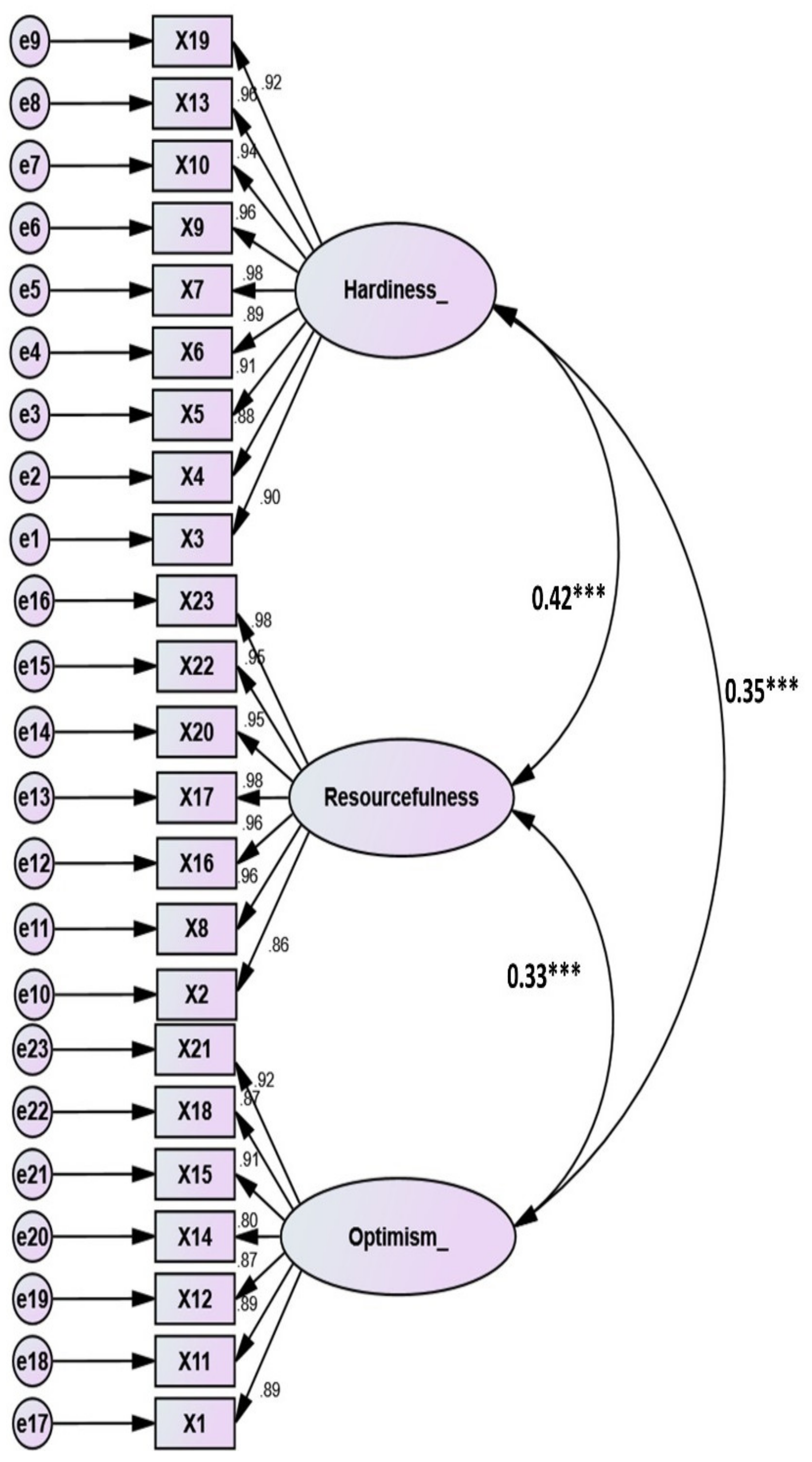
The CFA results also showed that the correlations among the three factors (as shown in Figure 3 and Table 7) were significant and positive. Hardiness and resourcefulness were found to have the highest correlation (r = 0.42, t-value = 14.639, p < 0.001), hardiness and optimism had a medium correlation (r = 0.35, t-value = 12.531, p < 0.001), and the lowest correlation coefficient was found between resourcefulness and optimism (β 0.33, t-value = 11.825, p < 0.01).
Figure 3.
Three-factor measurement and structural model. ***: significant level less than 0.001.
5. Conclusions
This study aimed to review and test the various scales that were used in previous studies to measure ENTR-RISC, especially amid the outbreak of the COVID-19 pandemic. The obstruction of activities by governments and restrictions imposed in the commercial context had adverse effects on the performance of microenterprises (e.g., restaurants) [62,63,64]. A literature review showed that numerous scales have been used to measure ENTR-RISC. However, the lack of a well-validated scale for ENTR-RISC impedes the development of a suitable psychosocial model of ENTR-RISC. The Connor–Davidson resilience scale [40] is one exception (CD-RISC). The CD-RISC is a 25-item self-reported scale that measures resilience. After several attempts to test, retest, and validate the CD-RISC scale in previous studies, the original five-factor scale has been revised with different versions that have emerged, such as the three-factor multidimensional scale, the unidimensional 10-item scale, and the multidimensional six-item scale. Given the lack of solid empirical evidence and the mixed results regarding the dimensionality of the ENTR-RISC construct, and the limitations of the techniques used to test the construct’s dimensionality, further research was required. Our study collected a set of data from 590 entrepreneurs of micro- and small businesses in KSA and compared the GoF of these four models using SEM and AMOS software.
The best model that showed a satisfactory GoF criterion (the three-factor multidimensional model) was further assessed with three alternative CFA models (the higher-order factor model, the oblique factor model, and the one-factor model). Since, by using multiple CFA models in one study, a researcher can gain a deeper understanding of a construct’s dimensional psychometric properties [29], the findings of our study offer solid evidence that ENTR-RISC possesses a multidimensional structure rather than a unidimensional one. This is a valuable result from a theoretical standpoint because the assumptions regarding the dimensional structure of the ENTR-RISC scale have implications for the selection of methodological approaches to measure the effects of ENTR-RISC [25]. Consequently, the findings of our study contribute to a better understanding of the dimensional structure of ENTR-RISC and may help future efforts to measure the impacts of ENTR-RISC. From a practical standpoint, the findings of our study may help decision-makers, as they highlight the existence of multiple dimensions of ENTR-RISC that may impact enterprises’ performance. However, our study was conducted in one context (i.e., micro- and small enterprises in KSA) and a limited number of businesses (i.e., fast food, travel agencies, estate management, and mobile phone shops), which necessitates additional research testing the dimensionality of the ENTR-RISC construct in other regional and industrial contexts. Therefore, the limitations of our study, as well as the theoretical and practical implications of determining the dimensional structure of the ENTR-RISC scale, may serve to encourage further research on this topic and inspire a much-needed discussion on the dimensional structure of the ENTR-RISC scale.
Funding
This work was supported by the Saudi Investment Bank Chair for Investment Awareness Studies, the Deanship of Scientific Research, and the Vice Presidency for Graduate Studies and Scientific Research, King Faisal University, Saudi Arabia (Grant No. CHAIR127).
Institutional Review Board Statement
The study was conducted according to the guidelines of the Declaration of Helsinki and approved by the deanship of scientific research ethical committee, King Faisal University (project number: CHAIR127; date of approval: 1 May 2022).
Informed Consent Statement
Informed consent was obtained from all subjects involved in the study.
Data Availability Statement
Data are available upon request from researchers who meet the eligibility criteria. Kindly contact the first author privately through e-mail.
Acknowledgments
The authors acknowledge the Saudi Investment Bank Chair for Investment Awareness Studies in Saudi Arabia, the Deanship of Scientific Research, and the Vice Presidency for Graduate Studies and Scientific Research, King Faisal University, Saudi Arabia (Grant No. CHAIR127).
Conflicts of Interest
The authors declare no conflict of interest.
References
- Haddoud, M.Y.; Onjewu, A.-K.E.; Al-Azab, M.R.; Elbaz, A.M. The Psychological Drivers of Entrepreneurial Resilience in the Tourism Sector. J. Bus. Res. 2022, 141, 702–712. [Google Scholar] [CrossRef] [Scilit]
- Prayag, G. Symbiotic Relationship or Not? Understanding Resilience and Crisis Management in Tourism. Tour. Manag. Perspect. 2018, 25, 133–135. [Google Scholar] [CrossRef] [Scilit]
- Sobaih, A.E.E.; Elshaer, I.; Hasanein, A.M.; Abdelaziz, A.S. Responses to COVID-19: The role of performance in the relationship between small hospitality enterprises’ resilience and sustainable tourism development. Int. J. Hosp. Manag. 2021, 94, 102824. [Google Scholar] [CrossRef] [Scilit]
- Elshaer, I.A.; Saad, S.K. Entrepreneurial Resilience and Business Continuity in the Tourism and Hospitality Industry: The Role of Adaptive Performance and Institutional Orientation. Tour. Rev. 2021. [Google Scholar] [CrossRef] [Scilit]
- Mandal, S.; Saravanan, D. Exploring the Influence of Strategic Orientations on Tourism Supply Chain Agility and Resilience: An Empirical Investigation. Tour. Plan. Dev. 2019, 16, 612–636. [Google Scholar] [CrossRef] [Scilit]
- Ketchen, D.J., Jr.; Craighead, C.W. Toward a Theory of Supply Chain Entrepreneurial Embeddedness in Disrupted and Normal States. J. Supply Chain. Manag. 2021, 57, 50–57. [Google Scholar] [CrossRef] [Scilit]
- Al-Hakimi, M.A.; Borade, D.B. The Impact of Entrepreneurial Orientation on the Supply Chain Resilience. Cogent Bus. Manag. 2020, 7, 1847990. [Google Scholar] [CrossRef] [Scilit]
- Al-Hakimi, M.A.; Borade, D.B.; Saleh, M.H. The Mediating Role of Innovation between Entrepreneurial Orientation and Supply Chain Resilience. Asia-Pac. J. Bus. Adm. 2021. [Google Scholar] [CrossRef] [Scilit]
- Branicki, L.J.; Sullivan-Taylor, B.; Livschitz, S.R. How Entrepreneurial Resilience Generates Resilient SMEs. Int. J. Entrep. Behav. Res. 2018, 24, 1244–1263. [Google Scholar] [CrossRef] [Scilit]
- Saad, M.H.; Hagelaar, G.; van der Velde, G.; Omta, S.W.F. Conceptualization of SMEs’ Business Resilience: A Systematic Literature Review. Cogent Bus. Manag. 2021, 8, 1938347. [Google Scholar] [CrossRef] [Scilit]
- Zutshi, A.; Mendy, J.; Sharma, G.D.; Thomas, A.; Sarker, T. From Challenges to Creativity: Enhancing SMEs’ Resilience in the Context of COVID-19. Sustainability 2021, 13, 6542. [Google Scholar] [CrossRef] [Scilit]
- Zighan, S.; Abualqumboz, M.; Dwaikat, N.; Alkalha, Z. The Role of Entrepreneurial Orientation in Developing SMEs Resilience Capabilities throughout COVID-19. Int. J. Entrep. Innov. 2021, 14657503211046849. [Google Scholar] [CrossRef] [Scilit]
- Hsu, B.-X.; Chen, Y.-M. Industrial Policy, Social Capital, Human Capital, and Firm-Level Competitive Advantage. Int. Entrep. Manag. J. 2019, 15, 883–903. [Google Scholar] [CrossRef] [Scilit]
- Muñoz, P.; Kimmitt, J. Social Mission as Competitive Advantage: A Configurational Analysis of the Strategic Conditions of Social Entrepreneurship. J. Bus. Res. 2019, 101, 854–861. [Google Scholar] [CrossRef] [Scilit]
- Sharma, S.; Sharma, S.K. Probing the Links between Team Resilience, Competitive Advantage, and Organizational Effectiveness: Evidence from Information Technology Industry. Bus. Perspect. Res. 2020, 8, 289–307. [Google Scholar] [CrossRef] [Scilit]
- Ferreira, J.; Coelho, A. Dynamic Capabilities, Innovation and Branding Capabilities and Their Impact on Competitive Advantage and SME’s Performance in Portugal: The Moderating Effects of Entrepreneurial Orientation. Int. J. Innov. Sci. 2020, 12, 255–286. [Google Scholar] [CrossRef] [Scilit]
- Fatoki, O. The Impact of Entrepreneurial Resilience on the Success of Small and Medium Enterprises in South Africa. Sustainability 2018, 10, 2527. [Google Scholar] [CrossRef] [Scilit]
- Awotoye, Y.; Singh, R.P. Entrepreneurial Resilience, High Impact Challenges, and Firm Performance. J. Manag. Policy Pract. 2017, 18, 28–37. [Google Scholar]
- Santoro, G.; Bertoldi, B.; Giachino, C.; Candelo, E. Exploring the Relationship between Entrepreneurial Resilience and Success: The Moderating Role of Stakeholders’ Engagement. J. Bus. Res. 2020, 119, 142–150. [Google Scholar] [CrossRef] [Scilit]
- Mason, C. The Coronavirus Economic Crisis: Its Impact on Venture Capital and High Growth Enterprises; Publications Office of the European Union: Luxembourg, 2020. [Google Scholar]
- Prayag, G.; Ozanne, L.K.; de Vries, H. Psychological Capital, Coping Mechanisms and Organizational Resilience: Insights from the 2016 Kaikoura Earthquake, New Zealand. Tour. Manag. Perspect. 2020, 34, 100637. [Google Scholar]
- de Oliveira Teixeira, E.; Werther, W.B., Jr. Resilience: Continuous Renewal of Competitive Advantages. Bus. Horiz. 2013, 56, 333–342. [Google Scholar] [CrossRef] [Scilit]
- Nyikos, G.; Soha, B.; Béres, A. Entrepreneurial Resilience and Firm Performance during the COVID-19 Crisis-Evidence from Hungary. Reg. Stat. 2021, 11, 29–59. [Google Scholar]
- Santoro, G.; Messeni-Petruzzelli, A.; Del Giudice, M. Searching for Resilience: The Impact of Employee-Level and Entrepreneur-Level Resilience on Firm Performance in Small Family Firms. Small Bus. Econ. 2021, 57, 455–471. [Google Scholar] [CrossRef] [Scilit]
- John, O.P.; Benet-Martínez, V. Measurement: Reliability, Construct Validation, and Scale Construction. In Handbook of Research Methods in Social and Personality Psychology; Cambridge University Press: Cambridge, UK, 2000. [Google Scholar]
- Blumberg, B.; Cooper, D.; Schindler, P. EBOOK: Business Research Methods; McGraw Hill: New York, NY, USA, 2014. [Google Scholar]
- Anderson, J.C.; Gerbing, D.W. Some Methods for Respecifying Measurement Models to Obtain Unidimensional Construct Measurement. J. Mark. Res. 1982, 19, 453–460. [Google Scholar] [CrossRef] [Scilit]
- Cortina, J.M. What Is Coefficient Alpha? An Examination of Theory and Applications. J. Appl. Psychol. 1993, 78, 98. [Google Scholar] [CrossRef]
- McGartland Rubio, D.; Berg-Weger, M.; Tebb, S.S. Using Structural Equation Modeling to Test for Multidimensionality. Struct. Equ. Modeling 2001, 8, 613–626. [Google Scholar] [CrossRef] [Scilit]
- Gerbing, D.W.; Anderson, J.C. An Updated Paradigm for Scale Development Incorporating Unidimensionality and Its Assessment. J. Mark. Res. 1988, 25, 186–192. [Google Scholar] [CrossRef] [Scilit]
- Nunnally, J.C. Psychometric Theory 3E; Tata McGraw-Hill Education: New York, NY, USA, 1994. [Google Scholar]
- Field, A. Discovering Statistics Using SPSS; Sage Publications Ltd.: Newbury Park, CA, USA, 2006. [Google Scholar]
- Hair, J.F.; Gabriel, M.; Patel, V. AMOS Covariance-Based Structural Equation Modeling (CB-SEM): Guidelines on Its Application as a Marketing Research Tool. Braz. J. Mark. 2014, 13, 44–55. [Google Scholar]
- Tabachnick, B.G.; Fidell, L.S.; Ullman, J.B. Using Multivariate Statistics; Pearson: Boston, MA, USA, 2007; Volume 5, pp. 481–498. [Google Scholar]
- Pallant, J. SPSS Survival Manual; Routledge: London, UK, 2001. [Google Scholar]
- Hooper, D.; Coughlan, J.; Mullen, M.R. Structural equation modelling: Guidelines for determining model fit. Electron. J. Bus. Res. Methods 2008, 6, 53–60. [Google Scholar]
- Byrne, B.M. Structural Equation Modeling with Mplus: Basic Concepts, Applications, and Programming; Routledge: London, UK, 2013. [Google Scholar]
- Kline, R.B. Principles and Practice of Structural Equation Modeling, 3rd ed.; Guilford: New York, NY, USA, 2011. [Google Scholar]
- Windle, G.; Bennett, K.M.; Noyes, J. A Methodological Review of Resilience Measurement Scales. Health Qual. Life Outcomes 2011, 9, 8. [Google Scholar] [CrossRef] [Scilit]
- Connor, K.M.; Davidson, J.R. Development of a New Resilience Scale: The Connor-Davidson Resilience Scale (CD-RISC). Depress. Anxiety 2003, 18, 76–82. [Google Scholar] [CrossRef] [Scilit]
- Rutter, M. Resilience in the Face of Adversity: Protective Factors and Resistance to Psychiatric Disorder. Br. J. Psychiatry 1985, 147, 598–611. [Google Scholar] [CrossRef] [Scilit]
- Kobasa, S.C. Stressful Life Events, Personality, and Health: An Inquiry into Hardiness. J. Personal. Soc. Psychol. 1979, 37, 1. [Google Scholar] [CrossRef]
- Lyons, J.A. Strategies for Assessing the Potential for Positive Adjustment Following Trauma. J. Trauma. Stress 1991, 4, 93–111. [Google Scholar] [CrossRef]
- Pangallo, A.; Zibarras, L.; Lewis, R.; Flaxman, P. Resilience through the Lens of Interactionism: A Systematic Review. Psychol. Assess. 2015, 27, 1. [Google Scholar] [CrossRef] [Scilit]
- Yu, X.; Lau, J.T.; Mak, W.W.; Zhang, J.; Lui, W.W. Factor Structure and Psychometric Properties of the Connor-Davidson Resilience Scale among Chinese Adolescents. Compr. Psychiatry 2011, 52, 218–224. [Google Scholar] [CrossRef] [Scilit]
- Jowkar, B.; Friborg, O.; Hjemdal, O. Cross-Cultural Validation of the Resilience Scale for Adults (RSA) in Iran. Scand. J. Psychol. 2010, 51, 418–425. [Google Scholar] [CrossRef] [Scilit]
- Manzano García, G.; Ayala Calvo, J.C. Psychometric Properties of Connor-Davidson Resilience Scale in a Spanish Sample of Entrepreneurs. Psicothema 2013, 25, 245–251. [Google Scholar]
- Ayala, J.-C.; Manzano, G. The Resilience of the Entrepreneur. Influence on the Success of the Business. A Longitudinal Analysis. J. Econ. Psychol. 2014, 42, 126–135. [Google Scholar] [CrossRef] [Scilit]
- Karaırmak, Ö. Establishing the Psychometric Qualities of the Connor–Davidson Resilience Scale (CD-RISC) Using Exploratory and Confirmatory Factor Analysis in a Trauma Survivor Sample. Psychiatry Res. 2010, 179, 350–356. [Google Scholar] [CrossRef] [Scilit]
- Campbell-Sills, L.; Stein, M.B. Psychometric Analysis and Refinement of the Connor–Davidson Resilience Scale (CD-RISC): Validation of a 10-Item Measure of Resilience. J. Trauma. Stress Off. Publ. Int. Soc. Trauma. Stress Stud. 2007, 20, 1019–1028. [Google Scholar] [CrossRef] [Scilit]
- Smith, B.W.; Dalen, J.; Wiggins, K.; Tooley, E.; Christopher, P.; Bernard, J. The Brief Resilience Scale: Assessing the Ability to Bounce Back. Int. J. Behav. Med. 2008, 15, 194–200. [Google Scholar] [CrossRef] [Scilit]
- Thomas, R.; Shaw, G.; Page, S.J. Understanding Small Firms in Tourism: A Perspective on Research Trends and Challenges. Tour. Manag. 2011, 32, 963–976. [Google Scholar] [CrossRef] [Scilit]
- Kittleson, M.J. Response Rate Via The. Health Values 1995, 18, 27–29. [Google Scholar]
- Parker, L. Collecting Data the E-Mail Way. Train. Dev. 1992, 46, 52–55. [Google Scholar]
- Wheaton, B.; Muthen, B.; Alwin, D.F.; Summers, G.F. Assessing Reliability and Stability in Panel Models. Sociol. Methodol. 1977, 8, 84–136. [Google Scholar] [CrossRef] [Scilit]
- Steiger, J.H. A Note on Multiple Sample Extensions of the RMSEA Fit index. Struct. Equ. Model. A Multidiscip. J. 1998, 5, 411–419. [Google Scholar] [CrossRef] [Scilit]
- Hu, L.; Bentler, P.M. Cutoff Criteria for Fit Indexes in Covariance Structure Analysis: Conventional Criteria versus New Alternatives. Struct. Equ. Modeling 1999, 6, 1–55. [Google Scholar] [CrossRef] [Scilit]
- Elshaer, I.A.; Augustyn, M.M. Testing the Dimensionality of the Quality Management Construct. Total Qual. Manag. Bus. Excell. 2016, 27, 353–367. [Google Scholar] [CrossRef] [Scilit]
- Kobasa, S.C.; Maddi, S.R.; Kahn, S. Hardiness and Health: A Prospective Study. J. Personal. Soc. Psychol. 1982, 42, 168–177. [Google Scholar] [CrossRef]
- Bullough, A.; Renko, M. Entrepreneurial Resilience during Challenging Times. Bus. Horiz. 2013, 56, 343–350. [Google Scholar] [CrossRef] [Scilit]
- Fornell, C.; Larcker, D.F. Structural Equation Models with Unobservable Variables and Measurement Error: Algebra and Statistics. J. Mark. Res. 1981, 18, 382–388. [Google Scholar] [CrossRef] [Scilit]
- Türkeș, M.C.; Stăncioiu, A.F.; Băltescu, C.A.; Marinescu, R.-C. Resilience Innovations and the Use of Food Order & Delivery Platforms by the Romanian Restaurants during the COVID-19 Pandemic. J. Theor. Appl. Electron. Commer. Res. 2021, 16, 3218–3247. [Google Scholar] [CrossRef] [Scilit]
- Azazz, A.M.S.; Elshaer, I.A. Amid COVID-19 Pandemic, Entrepreneurial Resilience and Creative Performance with the Mediating Role of Institutional Orientation: A Quantitative Investigation Using Structural Equation Modeling. Mathematics 2022, 10, 2127. [Google Scholar] [CrossRef] [Scilit]
- Elshaer, I.A.; Azazz, A.M.S. Amid the COVID-19 Pandemic, Unethical Behavior in the Name of the Company: The Role of Job Insecurity, Job Embeddedness, and Turnover Intention. Int. J. Environ. Res. Public Health 2022, 19, 247. [Google Scholar] [CrossRef] [Scilit]


Publisher’s Note: MDPI stays neutral with regard to jurisdictional claims in published maps and institutional affiliations. |
© 2022 by the author. Licensee MDPI, Basel, Switzerland. This article is an open access article distributed under the terms and conditions of the Creative Commons Attribution (CC BY) license (https://creativecommons.org/licenses/by/4.0/).