


Abstract
Augmented Reality (AR) is transforming education by integrating digital and real-world elements to create immersive and practical learning experiences. AR offers unique benefits in education, such as enhancing student engagement, facilitating understanding of complex concepts through visualizations, and promoting collaborative learning. However, it also faces significant barriers, including high costs, technological limitations, and a lack of standardized evaluation frameworks. Drawing on examples across STEM (Science, Technology, Engineering, and Mathematics), humanities, and arts education, this article highlights how AR can effectively enhance learning outcomes. This narrative review synthesizes recent research on AR in education, drawing on empirical and conceptual studies across different educational levels and domains. Additionally, this paper examines the relationship between AR and major learning theories, presenting relevant case studies and the application of AR across various educational domains and target audiences. The review offers practical recommendations for educators, instructional designers, and researchers aiming to integrate AR into formal and informal learning environments, and introduces the ARCADE framework (Align–Rationale–Configure–Activate–Document–Evolve) as an actionable cycle to guide the design, implementation, and reporting of AR-based educational interventions.
1. Introduction
In the digital age, the education landscape is undergoing an unprecedented transformation. The rapid evolution of technologies is redefining not only how we live and work, but also how we learn (McDiarmid & Zhao, 2022). In an increasingly interconnected world, the development of innovative and engaging ways to advance students’ knowledge is no longer an option, but a necessity. Among these emerging technologies, Augmented Reality (AR) stands out for its potential to make learning more interactive, personalized, and close to real-world experiences (Al-Ansi et al., 2023; Garzón et al., 2021). The search for new educational strategies is not limited to improving academic performance but also aims to stimulate students’ curiosity, enthusiasm, and participation. In this context, AR offers a promising answer, integrating virtual and real-world content to create immersive educational experiences that overcome the limitations of traditional teaching.
Within the context described above, this paper provides an education-centered narrative review of AR. The primary objective is to support educators, instructional designers, and researchers by clarifying the educationally relevant aspects of AR and by explaining how recurrent AR affordances relate to major learning theories and how these theory-linked mechanisms connect to educational outcomes across domains (e.g., STEM, humanities, and arts).
While AR entails important technical and historical developments, the primary lens of this review remains educational. Accordingly, the overview of AR definitions, typologies, and technological evolution is included only to the extent that it clarifies the instructional affordances that underpin learning design decisions (e.g., in situ overlays, spatial anchoring, interaction, collaboration) and the constraints that may shape implementation. The core contribution is therefore a theory-informed synthesis that maps AR features and learning mechanisms to learning theories and commonly assessed outcomes, and derives design and methodological recommendations to support sustainable, human-centered AR implementations in educational practice. To operationalize these proposed directions, we introduce the ARCADE framework (Align–Rationale–Configure–Activate–Document–Evolve), an actionable cycle intended to support coherent design, implementation, and reporting choices in educational AR.
Compared with prior reviews, this narrative review shifts the emphasis from descriptive trend mapping toward a theory-informed synthesis with practice-oriented guidance, providing a broader synthesis that (a) connects AR to major learning theories, (b) maps applications across STEM, humanities, and arts, and (c) discusses design and methodological recommendations for sustainable, human-centered AR solutions in education. For example, Garzón et al. (2021) provided a broad historical and technological overview of educational AR, whereas the present review explicitly links recurrent AR features to major learning theories and derives design and methodological recommendations for sustainable, human-centered implementations. Similarly, Akçayır and Akçayır’s (2017) systematic review examined publication trends, learner populations, AR technologies, and reported advantages and challenges. In contrast, this paper offers a theory-informed narrative review that broadens the educational domains considered and provides a synthesis grounded in learning theories, along with actionable recommendations for adopting AR in educational settings.
2. Methodological Approach
This paper is based on a narrative review of the literature on AR in education. Rather than aiming at an exhaustive, protocol-driven synthesis, a narrative review allows for a flexible integration of empirical and conceptual studies and for a critical discussion of how AR has been framed and implemented across different educational levels and domains.
Searches were last updated in October 2025. No strict publication-year window was imposed. However, screening and selection primarily focused on recent works that reflect the diffusion of mobile and wearable AR in educational contexts. Literature searches were conducted iteratively in Scopus and Web of Science and complemented by backward and forward citation tracking of key papers. Search queries combined AR-related terms with education-related terms and domain-specific keywords. Illustrative search strings included: augmented reality AND education AND learning; augmented reality AND teaching; augmented reality AND language learning; augmented reality AND humanities OR arts. Retrieved records were screened at the title and abstract level for relevance to AR in educational settings and then assessed in full text against the inclusion and exclusion criteria reported above.
For this review, we included peer-reviewed journal articles, conference proceedings, and book chapters that (a) addressed AR applications in educational settings (from early childhood to higher and adult education, as well as informal learning), (b) reported empirical data and/or presented theoretical or design frameworks relevant to teaching and learning, and (c) were published in English. We excluded studies focusing exclusively on technical aspects (e.g., hardware optimization, tracking algorithms) without a clear educational component, as well as non-scholarly reports or commercial white papers.
The case studies presented in the subsequent sections were selected as illustrative examples using purposeful criteria: explicit links to learning theory, clear descriptions of AR features and the learning context, an empirical evaluation (e.g., learning, cognitive, or behavioral outcomes), and coverage across educational domains and levels. When multiple candidates met these criteria, preference was given to more recent and/or widely cited studies.
The analysis proceeded in two steps. First, studies were grouped by their educational contribution: (a) theory-informed learning mechanisms and instructional principles, (b) empirical applications and evidence across educational (e.g., STEM, humanities, and arts), and across educational levels, and (c) implementation, evaluation, and ethical/practical constraints. Second, within each group, the selected papers were examined to identify recurring themes, methodological trends, and gaps in the literature.
3. Exploring the Basics of Augmented Reality
3.1. Definitions and Differences Between Augmented Reality, Virtual Reality, and Mixed Reality
AR can be situated within Milgram and Kishino’s Reality-Virtuality Continuum, where an AR image is defined as “any representation which involves the augmentation, or enhancement, of a real environment-based image with some kind of virtual (computer-generated) image content” (Milgram et al., 1994). AR, according to another common definition, is “the superimposition of digital elements (computer graphics, text, video, or audio) in the real world” (Azuma, 1997). Czok et al. (2023), integrating these perspectives, define AR as “a technology that supplements reality with digital content that is interactive, real-time, and functionally 3D-registered, accessible through handheld or wearable devices”. With AR, the real environment is “enriched” with computer-generated virtual objects that the user cannot manipulate. The user can observe and listen to sounds from the real environment. Devices used to access AR content include smartphones, tablets, computers, and Head-Mounted Displays (HMDs) ‘open’ (like glasses with transparent lenses) (Pallavicini, 2020).
Although they are often confused with each other, AR differs from both Virtual Reality (VR) and Mixed Reality (MR) (Table 1). VR refers to a digital (computer-created) environment in which people are fully immersed and can interact. Stimuli from the outside world (visual and auditory) are not perceived, thanks to the use of ‘closed’ HMDs (goggles like diving masks, but with wholly obscured lenses) (Pallavicini, 2020). Instead, the term MR refers to a technology that presents real-world and virtual objects on a single display. Digital objects, unlike AR, do not overlap but are ‘anchored’ in and interact with the real environment and are manipulable by the user (Pallavicini, 2020).
Table 1.
Differences between AR, VR, and MR.
3.2. Origins and Evolution
AR has only recently gained widespread acceptance, but its origins—like those of VR—can be traced back to the early 1960s. In this period, Ivan Sutherland, a young researcher at the Massachusetts Institute of Technology (MIT) in Boston, developed “Sketchpad”, a primitive form of computer graphics that laid the foundation for the current graphical interfaces used in VR (Sutherland, 1964). In parallel, Morton Heilig patented “Sensorama”, a mechanical device that created an immersive, multisensory cinematic experience (Heilig, 1962), while Douglas Engelbart founded the Augmentation Research Center (ARC) at Stanford University to develop computers and display systems to enhance human capabilities (Pallavicini, 2020). In 1968, Sutherland published a scientific paper entitled “The Ultimate Display”, describing a visor with interactive graphics and feedback devices, and developed the first HMD to immerse viewers in an artificial 3-D environment, known as “The Sword of Damocles” (Pallavicini, 2020).
The term “Augmented Reality” was coined in 1990 by Thomas Caudell and David Mizell, Boeing Company researchers who developed an HMD to simplify cable assembly, a complex and error-prone process (Caudell & Mizell, 2003). In the late 1990s, Feiner et al. (1997) created a roving machine for their university’s campus that combined 3D superimposed AR graphics with the mobility of mobile computing, using a head-worn 3D display and a portable 2D display with a trackpad to provide various information about the campus (Feiner et al., 1997). In the 2000s, experimental AR applications expanded into entertainment (e.g., early AR gaming concepts such as AR Quake), although high costs initially limited adoption beyond research settings (Das et al., 2017).
During the 2010s, AR became mainstream through smartphones, enabled by built-in cameras and GPS, and popularized by location-based and overlay-driven experiences, including the AR games Paranormal Activity: Sanctuary and Zombies, Run! (Das et al., 2017). At the same time, wearable AR reemerged through consumer and industrial initiatives (e.g., Google Glass), highlighting both the potential of always-available AR and the challenges of privacy, practicality, and public acceptance. The decade also saw the consolidation of MR headsets (e.g., Microsoft HoloLens) that supported spatial mapping and interactive holographic content, accelerating professional applications and strengthening interest in educational use cases (Sünger & Çankaya, 2019). A crucial year for the spread of AR was 2016, when Niantic, in collaboration with Game Freak, The Pokémon Company, and Nintendo, launched Pokémon Go. This mobile game uses geolocation and AR, drawing inspiration from the Pokémon video game series that began in 1996. In 2016, Pokémon Go became the mobile game of the year, with more than 650 million downloads and about 5 million active users, generating over $5 billion in revenue (Kumparak, 2017).
More recently, several models of AR-compatible HMDs—such as Microsoft HoloLens, the Magic Leap One, or the more recent Apple Vision Pro—have been released, becoming advanced, easy to use, and with a wider FOV (Field Of View), that is “the extent of the environment observable by the human eye” (Fang et al., 2023). Many technological advances have broadened the feasibility of AR across domains, including education (Waisberg et al., 2024a, 2024b), while also raising new questions about effective pedagogical integration, accessibility, and sustainable implementation.
4. Key Hardware Elements and Different Types of AR Systems
From an educational perspective, hardware and tracking choices matter primarily because they constrain key learning affordances (e.g., hands-free embodied interaction, in situ contextualization, shared workspaces) and the amount of extraneous cognitive load introduced by the interface. To keep the focus on education, the following overview is intentionally concise.
4.1. Displays
Hardware components of AR systems include displays, input devices, tracking, and computers (Carmigniani & Furht, 2011; Haneefa et al., 2024). Displays are subdivided according to the operational distance between the AR system and humans (from nearest to farthest) into (Fang et al., 2023):
Wearable AR: It uses HMDs (e.g., Apple Vision Pro, Microsoft HoloLens), which are devices worn on the user’s head and placed in front of the eyes to display three-dimensional digital content (Fang et al., 2023). HMDs for AR are characterized by leaving the user’s hands free, which is why they are widely used in areas including industry (Funk et al., 2016; Häkkilä et al., 2018), such as training specialized operators in the maintenance of complex machinery (Fang et al., 2023), and medicine (Eckert et al., 2019).
Mobile AR: Mobile devices such as smartphones and tablets for AR are enabled by the availability of powerful, low-cost hardware. For this reason and because of the low cost, this type of AR is the most adopted in the educational field (Al-Ansi et al., 2023). However, a significant disadvantage is that these devices require one or both hands for display and interaction (Carmigniani & Furht, 2011). Currently, the two main classes of portable AR displays are smartphones and tablets. Thanks to technological advances, smartphones combine powerful Central Processing Units (CPUs), cameras, accelerometers, GPS, and solid-state compasses, making them an exciting platform for AR. However, their small display size is not ideal for 3D user interfaces. Tablets offer more power than smartphones but are more expensive and heavier, making them less practical for prolonged one-handed use. Smartphones and tablets with AR capabilities (e.g., ARKit for iOS and ARCore for Android) enable these technologies. For example, by using apps such as HP Reveal and linking the AR content to a QR code, students can use their mobile device to activate a three-dimensional visualization. More versatile than bar codes, QR codes have recently become very popular for introducing AR to schools (Anderson, 2019).
Spatial Augmented Reality (SAR): This AR system projects graphic information directly onto physical objects, eliminating the need to wear displays. It does not require users to wear additional equipment, making it a compelling option for various industries (Bimber & Raskar, 2005; Carmigniani & Furht, 2011). Spatial displays integrate technology into the environment, allowing easy scalability for groups of users and facilitating collaboration (Fang et al., 2023). Unlike mobile and wearable AR, spatial AR systems do not require users to carry or wear devices, as the fixed infrastructure manages the tracking. This makes spatial AR particularly suitable for large-scale or public installations, such as those in museums or industrial settings (Carmigniani & Furht, 2011; Fang et al., 2023).
4.2. Tracking Systems
Tracking devices consist of digital cameras and/or other optical sensors, such as GPS, accelerometers, solid-state compasses, and wireless sensors (Arena et al., 2022). Each of these technologies has a different level of accuracy and depends significantly on the type of system being developed (Carmigniani & Furht, 2011). Wearable AR systems use cameras, depth sensors, accelerometers, and gyroscopes to map the environment and track head movements in real-time, ensuring precise positioning of virtual objects and enhancing immersion. They often use inside-out tracking to determine users’ positions without external markers. In contrast, mobile-AR systems rely on smartphone and tablet sensors—cameras, accelerometers, gyroscopes, and GPS—to overlay digital content on real-world images, dynamically adapting for applications such as navigation. Spatial AR systems take a different approach, using cameras, depth sensors, and external projectors installed in the environment. These systems map the physical space and track users’ movements within it. Cameras and sensors monitor position and gestures while a central computer dynamically processes the data to adjust the projected digital content.
Several researchers classified AR interfaces into two levels based on their tracking techniques. (Fan et al., 2020):
- Image-based AR: includes marker-based and markerless solutions that use image recognition techniques to track an object and its position.
- Location-based AR: uses position data to identify an object and its position (Cheng & Tsai, 2013; Koutromanos et al., 2015).
4.3. Input Devices
There are several types of input devices for AR systems, and the type of display and the applications primarily determine their selection for use (Arena et al., 2022; Carmigniani & Furht, 2011). In more detail, wearable AR systems feature gesture recognition sensors, voice commands, and controllers such as wands or rings for seamless interaction, making them ideal for industrial design, simulations, and collaborative tasks. On the other hand, mobile AR systems rely on touchscreen gestures (e.g., tapping and swiping) and built-in cameras for intuitive interaction. Voice commands and motion sensors enable hands-free operation, making them versatile for navigation, gaming, and retail. Finally, Spatial AR systems use external cameras, depth sensors, and sometimes motion-sensing gloves or handheld controllers for precise interaction. Voice recognition and environmental sensors enhance experiences in interactive installations, museums, and large-scale simulations, supporting multiple users in shared spaces.
4.4. Computer
AR systems require a robust CPU and ample Random Access Memory (RAM) to process images captured by the camera effectively (Carmigniani & Furht, 2011). Mobile-AR relies on built-in smartphone and tablet processors to manage cameras, accelerometers, gyroscopes, and GPS, seamlessly overlaying digital content on the physical environment. By contrast, wearable AR integrates optimized processors within HMDs. These handle the data stream from cameras, depth sensors, and motion trackers, ensuring precise tracking of movements and environmental details for a smooth, immersive experience. Spatial AR, in contrast, depends on a central high-performance computer connected to projectors and sensors installed in the environment. This system processes data to map physical spaces and dynamically adjusts holographic projections, enabling accurate, dynamic, large-scale AR experiences (Carmigniani & Furht, 2011).
5. Augmented Reality, Education, and Theories of Learning
5.1. From Embodied Interaction to Embodied Cognition
To understand the link between AR and learning, it is first necessary to delve into the concept of embodied interaction, as defined by Kay (1990) as a process of gradually integrating technology into the user’s body to make human–computer interaction as natural as possible (Biocca, 1997; Dourish, 2001). This perspective, known as “direct manipulation”, argues that people should interact with digital objects in the same way they manipulate physical objects, without having to learn new commands, by simply adapting their perceptual-motor patterns to the interface (Morganti & Riva, 2006).
AR and other immersive media (VR and MR) are regarded as the ultimate examples of the evolution of technological interfaces toward progressive embodiment (Biocca, 1997; Durlach & Mavor, 1995; Kay, 1990). This means that such systems seek to integrate the human body into interacting with the digital world, making the experience more natural and intuitive. This type of embodied interaction allows innate perceptual-motor skills to interact with the digital environment, creating a more direct and intuitive connection between the user and the technology.
Linked to the concept of embodied interaction, the focus on the user’s physical embodiment in interacting with digital objects is embodied cognition, which is also fundamental to understanding the links between AR and learning. Specifically, embodied cognition proposes that the mind and body are interconnected, with the body playing a crucial role in information processing and thinking (Damasio, 1994). Thought requires bodily mediation to originate and adapt to the body itself; in a word, it is “embodied.” This view of the relationship between mind and body belongs to a current of cognitive psychology developed in recent decades of the previous century, which arose to explain the organization of thought and the role of the body in this process: the “bodily” or “embodied” cognitive psychology (A. Clark, 2008; Varela et al., 1991). This theoretical perspective developed in open opposition to computational cognitive psychology, popular in the 1940s and 1950s, which viewed the mind as a “huge computer,” a processor of sensory information into symbolic representations (Fodor, 1983). In contrast, embodied cognitive psychology argues that the organization of thought cannot be understood without the contextualized experience of a body-environment system (A. Clark, 2008; Shapiro, 2010).
Embodied cognitive psychology is inspired by phenomenological philosophy, particularly the ideas of Martin Heidegger and Maurice Merleau-Ponty. Heidegger was one of the first to highlight the importance of the body in thought (Heidegger, 1927), while Merleau-Ponty described the body as the “medium through which men conceive the world in its totality” (Merleau-Ponty, 1945). According to embodied cognitive psychology, the body acts as a mediator of all experiences, functioning both as a processing system for the information gathered and as a framework for the neural processes of the mind (Bechara & Damasio, 2005; Damasio, 1994). The concept is also highlighted in Conceptual Metaphor Theory, which emphasizes that our knowledge of the world is embodied, that is, constructed based on bodily experiences in the surrounding environment (Lakoff & Johnson, 1980).
5.2. Situated Learning, Experiential Learning, and the Contiguity Principle of Multimedia Learning
Embodied cognition emphasizes how thinking arises from the contextualized interaction between the body and the environment, aligning closely with the principles of the critical learning theories described below. In practical terms, an embodied perspective suggests that learning benefits are most likely when AR supports purposeful sensorimotor coupling, allowing learners to manipulate anchored virtual objects, move around them, and receive immediate feedback. To prevent interaction from becoming an end in itself, embodied AR activities should be aligned with explicit learning goals such as spatial reasoning or procedural understanding and should include brief prompts that direct attention to relevant features, for example, by asking learners to compare what changes before and after an action.
Situated Learning Theory: The latter argues that learning is inextricably linked to the social and physical context in which it occurs, emphasizing the importance of hands-on interaction and direct experience in knowledge acquisition (Lave & Wenger, 1991). This theoretical framework underscores that knowledge is not an abstract entity to be acquired passively but rather a social process that develops through active participation and practice within a community. For example, in an apprenticeship, learning occurs through observation and immersion in the practices and discourses of the professional community, enabling students to acquire skills in a natural, integrated way.
AR can create situated learning environments where students interact with digital content in their physical surroundings, enhancing their understanding through direct, contextualized engagement. Contextual visualization presents virtual information in a real-world context, helping students build knowledge while learning about interactivity and enabling bodily interactions with virtual content. Previous studies have shown that these features increase student motivation and foster various educational applications (Teng et al., 2017). For example, in an educational context, students can explore 3-D models of molecular structures, solar systems, or historical reconstructions, thereby facilitating deeper, more meaningful learning (Bacca et al., 2014). AR enables learners to engage in authentic tasks that reflect real-world practices, thereby supporting the situated learning model (Bower et al., 2014; Zhang et al., 2020). From a situated learning lens, the educational value of AR depends on whether contextual augmentation is integrated into an authentic task structure rather than presented as contextual decoration. This typically requires clear goals and role expectations, structured guidance through checklists, prompts, and progressive disclosure, and a debriefing phase that connects in-context experience to abstract concepts.
- -
- Case Study: Santos et al. explored AR applications for situated vocabulary learning, leveraging multimedia learning theory to design an AR system for handheld devices (Santos et al., 2016). Their study focused on developing and evaluating AR applications for learning Filipino and German vocabulary in authentic contexts. The AR system allowed users to interact with virtual content, including text, images, audio, and animations, superimposed onto the real environment. Compared to non-AR methods, AR-supported learning improved vocabulary retention and enhanced motivation, attention, and satisfaction (Santos et al., 2016). This case study highlights a key boundary condition: situated vocabulary gains are more likely when AR cues closely match the learner’s perceptual context and multimedia elements are integrated to minimize split attention.
Experiential Learning (Kolb et al., 2000): It is based on the idea that direct experience is the core of the learning process. According to Kolb, learning is a continuous cycle comprising four stages: concrete experience, reflective observation, abstract conceptualization, and active experimentation (Kolb et al., 2000). This model emphasizes the importance of having practical experience and reflecting on it to transform it into applicable knowledge. For example, in a science laboratory, students observe and actively experiment with phenomena, reflect on the results, and apply the new knowledge to real problems.
AR enhances experiential learning by merging real and virtual environments, enabling students to interact with virtual objects and engage in realistic simulations. This approach fosters a cycle of experience, reflection, and application, enabling students to understand complex concepts better through direct interaction. Students can work together to tackle problems, exchange ideas, and build knowledge more dynamically and engagingly. By incorporating AR into experiential learning, traditional teaching methods can be transformed, offering new opportunities for active and immersive educational experiences (Teng et al., 2017).
In experiential learning terms, AR is most effective when it supports the whole learning cycle, moving from concrete engagement to guided reflection, conceptualization, and active experimentation, rather than merely offering an immersive experience. This implies structuring activities so that learners first engage with a task, then reflect through prompts, link their observations to underlying concepts, and apply what they learned in a new attempt. Collaboration should also be deliberately structured through roles and explicit peer-feedback criteria rather than assumed to emerge spontaneously.
- -
- Case Study: Wu and Huang investigated the application of AR in an interactive design course to foster experiential and situated learning (C. Wu & Huang, 2020). Their study involved 62 university students divided into 17 groups tasked with designing AR applications. The course was structured around key activities, including case analysis, project planning, peer reviews, and performance presentations. Grounded in Kolb’s experiential learning theory and the situated learning model, the instructional design emphasized real-world contexts and collaboration. Results revealed that 15 of 17 groups successfully integrated AR technology with prior knowledge, creating applications such as games and educational tools. Students reported improved creativity, teamwork, and understanding of AR technologies (C. Wu & Huang, 2020). Notably, this type of design-focused task may have its greatest impact on higher-order outcomes, such as creativity, teamwork, and design competence, which are often undermeasured in AR research. More detailed reporting of group processes, including collaboration quality and the content of peer feedback, as well as implementation conditions such as teacher facilitation, time constraints, and technical reliability, would help explain variability across groups and improve reproducibility in classroom settings.
Contiguity Principle of Multimedia Learning (R. C. Clark & Mayer, 2011; Mayer, 2009): This principle emphasizes aligning text with corresponding graphics or objects, meaning that text should not be physically separated from the visuals it describes. Applied to AR, the contiguity principle implies that overlays should be placed as close as possible to the referent objects and introduced at the moment they become instructionally relevant. However, AR interfaces can also increase extraneous load through clutter, redundant labels, or competing visual cues. Therefore, design should emphasize minimal essential overlays, signaling (highlight what matters), and segmentation (progressive disclosure). Evaluation should combine learning outcomes with cognitive-efficiency indicators such as perceived load, task time, and error rates, since contiguity benefits often emerge as reduced split attention and more efficient processing rather than higher immediate scores alone.
AR technology can create a visualization tool for electromagnetic fields, which are typically invisible to students (Buchau et al., 2009; Ibáñez et al., 2014). In such a system, AR overlays a visual representation of the electromagnetic field in the real world, allowing students to see and understand its spatial distribution. Students can gain a more intuitive grasp of abstract, difficult-to-comprehend concepts by visualizing electromagnetic fields directly in their surroundings. This hands-on interaction with the augmented visuals helps bridge the gap between theoretical knowledge and practical understanding, making the learning process more engaging and effective (Teng et al., 2017).
- -
- Case Study: Krüger and Bodemer investigated the application of multimedia design principles in AR learning environments, focusing on the spatial contiguity and coherence principles (Bacca-Acosta et al., 2022). Two studies examined the impact of these principles on cognitive load and knowledge acquisition. In the first study, with 80 participants, researchers examined the spatial integration of virtual and physical elements in AR. Participants experienced an integrated or separated design, with virtual textual information either overlaid on real-world visuals or presented separately on a tablet. Results suggested minor improvements in reducing extraneous cognitive load and enhancing performance with integrated designs, though most effects were not statistically significant. The second study, involving 130 participants, explored the coherence principle by manipulating the addition of matching or non-matching virtual sounds in an AR environment. Contrary to expectations, non-matching sounds did not significantly increase cognitive or task load compared to matching or no sounds (Bacca-Acosta et al., 2022).
5.3. Constructivism, Sociocultural Theory, and Connectivism
In addition to the theories listed in the preceding paragraphs, other conceptual frameworks are particularly interesting concerning the use of AR for education, specifically (Zhang et al., 2020):
Constructivism: First coined by Piaget and later developed by Vygotsky, this perspective posits that learners actively construct their understanding and knowledge of the world through experiences and reflection (Bruner, 1997; Dewey, 1916; Jonassen, 1991; Piaget, 1973). This theory emphasizes that learning is an active, constructive process where the learner builds on prior knowledge to create new understandings (Dewey, 1916).
In the context of AR, constructivism is particularly relevant, as this technology enables the overlay of digital information in the real world, providing an interactive and immersive learning experience (M. Wang et al., 2018). This model aligns with the principles of constructivism, emphasizing active, experience-based, and collaborative learning (Afnan & Puspitawati, 2024; Techakosit & Wannapiroon, 2015). AR facilitates knowledge construction by bridging theoretical understanding and practical applications, improving student engagement and motivation (Y. W. Chen et al., 2019). Constructivism is particularly useful in fields like STEM (Science, Technology, Engineering, and Mathematics), where practical, experiential learning is essential for skill development (Hsu et al., 2017; Ibáñez & Delgado-Kloos, 2018; Sırakaya & Alsancak Sırakaya, 2022).
From a constructivist standpoint, AR is expected to be most effective when it supports learners’ active meaning-making, allowing students to explore, test ideas, and revise their understanding based on feedback rather than passively consuming overlays. This implies designing AR tasks as guided inquiry or problem-based activities with explicit prompts, opportunities for comparison and iteration, and a structured debrief to connect exploration to formal concepts. Accordingly, evaluation should go beyond immediate factual performance and include indicators of conceptual understanding and transfer (e.g., explanation quality, application to novel cases), as well as process measures that reflect constructive activity (e.g., strategy use, interaction traces), since “engagement” alone does not guarantee knowledge construction.
- -
- Case Study: Safadel and White explored the use of AR in teaching molecular biology, emphasizing its potential to improve the visualization and comprehension of complex 3D macromolecular structures (Safadel & White, 2019). The study involved 60 university students randomly assigned to either a traditional 2D instructional condition or an AR-enhanced environment. In the AR condition, students used mobile devices to interact with 3D models of molecules, such as DNA, enabling them to rotate, manipulate, and observe structures from multiple perspectives. This AR approach aligned with constructivist and situated learning theories, as it engaged students in active exploration and contextualized learning tasks. Results demonstrated that students in the AR group reported higher satisfaction and usability, and a better understanding of molecular structures, than those in the 2D group (Safadel & White, 2019). This study also points to a key boundary condition for constructivist AR: benefits are more likely when exploration is scaffolded, and learners are prompted to articulate what the visualizations imply, rather than simply manipulating models superficially.
Sociocultural Theory: Originally developed by Lev Vygotsky, this theoretical perspective emphasizes the fundamental role of social interaction in the development of cognition (Vygotsky, 1978).
AR technologies enhance sociocultural learning by facilitating collaborative and interactive experiences (Dunleavy et al., 2009; Hellermann et al., 2017; H. Y. Wang et al., 2017). For instance, to facilitate learning a foreign language, AR can create scenarios in which learners interact with virtual characters or peers in real time, practicing language skills in contextually rich environments (Godwin-Jones, 2016; Hellermann et al., 2017; Sydorenko et al., 2019). A sociocultural lens highlights that AR is not only a representational tool but also a mediational means that can shape joint attention, dialogue, and participation. From an educational perspective, this means that collaborative AR activities should be deliberately structured by defining roles and interdependence, embedding prompts for dialogue and negotiation, and providing teacher facilitation or system scaffolds to sustain productive interaction, particularly in heterogeneous groups. Outcomes should therefore include measures of collaboration quality (e.g., interaction patterns, communication/argumentation quality, equitable participation) in addition to learning gains, since the mechanism of change is mediated social interaction rather than exposure to content alone.
- -
- Case Study: Teo et al. (2022) explored the application of an AR game to improve comprehension of English for Medical Purposes (EMP) among 240 Asian medical undergraduates aged 19–21 (Teo et al., 2022). The AR games integrated multimedia elements into real-life healthcare scenarios, allowing students to practice listening and reading comprehension collaboratively under teacher guidance. AR games created real-life-like scenarios for students to practice comprehension collaboratively, integrating verbal and non-verbal cues to simulate professional contexts. This approach facilitated shared responsibility for learning and enhanced cognitive processes, mainly when students of varying proficiency levels collaborated in heterogeneous groups. The study emphasized that teacher immediacy—close interpersonal communication with students—reduced psychological distance and improved engagement, aligning with the sociocultural focus on mediated learning through interaction (Teo et al., 2022). This case study is particularly informative in showing that teacher-related variables, such as guidance, immediacy, and classroom facilitation, can be decisive implementation conditions for AR-supported collaboration.
Connectivism: Introduced by George Siemens and Stephen Downes (Downes, 2007; Siemens, 2004). Connectivism is a learning theory for the digital age that emphasizes the role of social and technological networks in learning (Greenwood & Wang, 2018; M. Wang et al., 2018). According to this theoretical framework, knowledge is distributed across a network of connections, and learning involves the ability to construct and traverse those networks (Downes, 2007).
AR facilitates connectivist learning by allowing learners to access and interact with various digital resources and networks (Greenwood & Wang, 2018; Techakosit & Wannapiroon, 2015; M. Wang et al., 2018). For example, AR can be integrated with other digital tools to create a rich, interconnected learning environment that enhances collaboration and knowledge-sharing (Alam & Mohanty, 2023; Zamiri & Esmaeili, 2024). In addition, AR can support collaborative learning environments, where learners work together to solve problems and achieve common learning goals, thereby fostering a community of practice essential for cognitive development (Greenwood & Wang, 2018).
Within a connectivist perspective, the learning benefit of AR lies less in immersion and more in enabling learners to access, navigate, and contribute to distributed knowledge resources through networked tools. This suggests designing tasks that require learners to search, curate, and share information, connect evidence across sources, and reflect on how their network supports understanding (e.g., creating annotated AR-linked resources, peer knowledge-sharing workflows). Evaluation should include outcomes sensitive to networked learning—such as information literacy, quality of resource curation, knowledge-sharing behaviors, and collaboration patterns—alongside domain achievement, as these indicators capture the core connectivist mechanism.
- -
- Case Study: Techakosit and Wannapiroon (2015) investigated the design and evaluation of a connectivism learning environment integrated into an AR science laboratory to enhance scientific literacy. The study was conducted in two phases: designing the AR-based learning environment and evaluating its suitability with the input of seven experts in connectivism, AR, and scientific literacy. The AR learning environment was structured around four key components: the learning environment, a process to enhance scientific literacy, environmental characteristics, and measures to foster scientific literacy. The design emphasized connectivist principles, where learners engage in a networked environment to share, research, and reflect on scientific concepts. The AR component enabled students to perform hands-on experiments, collaborate in real time, and visualize complex scientific concepts interactively. Expert evaluations highlighted the environment’s suitability, with ratings indicating a high potential to promote problem-solving skills, collaborative learning, and a deeper understanding of science. The study concluded that integrating AR into science education fosters scientific literacy by bridging theoretical concepts with practical, technology-mediated experiences (Techakosit & Wannapiroon, 2015). Because this case study emphasizes design and expert evaluation, it also underscores the importance of examining implementation and learning effects in authentic classroom settings.
Cognitive Load Theory (CLT): This conceptual framework emphasizes the role of working and long-term memory in learning, highlighting how excessive cognitive load can hinder information processing and retention (Chandler & Sweller, 1991; Moreno, 2004; Sweller et al., 2011). CLT categorizes cognitive load into intrinsic (i.e., related to task complexity and prior knowledge), extraneous (i.e., linked to instructional design), and germane (i.e., effort for schema construction) (Chandler & Sweller, 1991; Sweller, 1988). Effective instructional materials should minimize extraneous load and optimize germane load by using strategies such as segmenting information, integrating multimedia, and employing visual aids (Mayer, 2012).
AR supports CLT by breaking complex concepts into manageable parts, aiding schema construction, and interactive learning. However, poorly designed AR can increase extraneous load, underscoring the need for careful design to balance engagement and cognitive efficiency segments (Buchner et al., 2022; Dunleavy et al., 2009; Elford et al., 2022). From a CLT standpoint, AR improves learning by reducing extraneous processing (e.g., split attention, complex spatial integration) and by supporting germane processing through well-timed guidance and coherent multimodal integration. This implies minimal essential overlays, segmentation/progressive disclosure, and scaffolding calibrated to prior knowledge (novices typically benefit from stronger guidance, whereas experts may require less). Significantly, CLT predicts that null or negative effects can arise when interaction friction, tracking instability, or dense overlays increase extraneous load. Therefore, studies should explicitly measure cognitive load (ideally distinguishing extraneous from intrinsic demands) and report usability/technical breakdowns, alongside achievement and transfer, to interpret heterogeneous outcomes.
- -
- Case Study: A practical example of an AR application concerning CLT can be seen in a study conducted by Küçük et al., which evaluated an AR application named “MagicBook” (Küçük et al., 2016). Seventy second-year medical students were divided into experimental and control groups. The experimental group used the “MagicBook” to learn neuroanatomy, while the control group used traditional learning methods. The “MagicBook” integrates traditional printed books with AR technology using mobile devices. Students interact with the book by scanning visual markers on the pages using the Aurasma app on their mobile devices. This interaction superimposes multimedia content, such as 3D animations and videos, onto the book pages, allowing students to visualize anatomical structures dynamically and interactively. The results showed that the “MagicBook” students achieved higher academic performance and reported lower cognitive load than the control group. The AR application helped make abstract anatomical concepts more concrete, reducing the mental effort required to understand these concepts. The “MagicBook” enabled information processing through visual and verbal channels, enhancing knowledge transfer to long-term memory (Küçük et al., 2016). This example illustrates how AR can function as an integration tool by aligning visual and verbal information and making spatial relations more concrete, which is consistent with reduced extraneous cognitive load.
6. Educational Topics Addressed by AR and Targeted Age Groups
6.1. Growth in the Number of Studies on AR in Education
Since its introduction 50 years ago, AR technology has been adopted across various fields, including the military, medicine, engineering, and education (Sirakaya & Cakmak, 2018). Research on AR in education has experienced significant growth over the last few decades, with distinct periods of development reflecting technological advancements and increased adoption in educational contexts (Garzón et al., 2021). According to Garzon and colleagues, the evolution of AR in education can be categorized into three generations (Garzón et al., 2021):
Early Development and Initial Growth (1995–2009): The early phase of AR research in education, referred to as the “hardware-based AR” period, spanned from 1995 to 2009. During this latency phase, the focus was primarily on developing AR delivery technologies, such as HMDs and other specialized hardware. Research growth was slow, laying the foundation for future applications but limited by the high cost and complexity of the technology (Garzón et al., 2021).
Application-Based AR Era (2010–2019): The year 2010 marked a turning point for AR in education, with an inflection toward exponential growth. This period, often described as the “application-based AR” era, saw AR technologies becoming more accessible through mobile applications. Events such as the release of Google Glass in 2014 and the global success of Pokémon Go in 2016 drew significant attention to AR, inspiring developers and educators to explore its potential in educational settings (Garzón et al., 2021). From 2011 to 2016, AR research growth was steady but not exponential. However, between 2017 and 2019, the number of studies increased significantly, reflecting growing interest in AR as an educational tool. Studies during this phase focused on leveraging mobile-AR platforms, which became dominant in education AR adoption (Al-Ansi et al., 2023).
Exponential Growth and Modern Developments (2020–today): The most significant increase in educational research on AR has occurred since 2020. According to a recent review, the number of papers published in these three years exceeded the total number of studies conducted from 2011 to 2019 (Al-Ansi et al., 2023). This rapid growth aligns with advancements in dedicated AR devices such as HMDs, WebAR technologies (i.e., AR experiences that are accessible directly through a web browser, without the need for downloading dedicated apps), and Artificial Intelligence (AI) integration. These innovations have broadened the scope and accessibility of AR applications in education, supporting diverse learning environments and disciplines.
Regarding the distribution in countries and institutions of the studies on AR in education, the United States leads in the number of studies (347), followed by Spain (273), Taiwan (114), China (113), and Germany (110) (Garzón et al., 2021). Prominent AR research institutions include the State University System of Florida, the University of La Laguna, and Harvard University. English remains the dominant publication language, accounting for 1898 studies, followed by Spanish, Portuguese, German, and Russian (Garzón et al., 2021).
6.2. Domains and Target Ages of AR Studies for Education
AR has been widely studied and implemented across diverse educational contexts, demonstrating its adaptability across subjects. Its application extends beyond traditional classrooms to settings such as museums and science centers (Scavarelli et al., 2021). Between 2010 and 2015, research on AR focused mainly on STEM disciplines, accounting for nearly half of the studies (Bacca et al., 2014). In contrast, only about 22 percent of studies focused on utilization in the Humanities and the Arts (Majid & Salam, 2021). However, since 2016, with the influence of companies such as Google and Snapchat that have helped popularize AR and VR technologies, there has been a significant increase in studies on the use of AR in these humanistic disciplines as well (Majid & Salam, 2021). AR solutions for teaching STEM subjects and in the Humanities and Arts will be examined below.
STEM Disciplines: Studies over the last decade have highlighted that AR applications have been particularly prevalent in STEM education (Hsu et al., 2017; Ibáñez & Delgado-Kloos, 2018; Sırakaya & Alsancak Sırakaya, 2022), where students often struggle to apply reasoning skills to abstract concepts requiring advanced spatial visualization (Sahin & Yilmaz, 2020). The reliance on rote memorization and limited conceptual understanding further inhibits the development of critical thinking skills. AR addresses these challenges by transforming abstract ideas into tangible, interactive representations, improving spatial ability, practical skills, and conceptual understanding. Its integration of computerized content with real-world visuals captures students’ attention, enhances motivation, and fosters both physical and cognitive immersion, enabling collaborative exploration of complex theories (Hsu et al., 2017; Ibáñez & Delgado-Kloos, 2018; Sırakaya & Alsancak Sırakaya, 2022). This immersive approach improves the quality of education and helps students develop critical skills and knowledge more effectively and efficiently than traditional technology-enhanced learning environments (Hsu et al., 2017; Ibáñez & Delgado-Kloos, 2018; Sırakaya & Alsancak Sırakaya, 2022). In the context of AR applications in STEM education, research spans various disciplines, with studies focusing on physics (31.58%), natural sciences (26.32%), mathematics (15.79%), chemistry and astronomy (10.53%), and general science (5.26%) (Ajit et al., 2021). Additionally, the settings for these studies vary, with most conducted in classrooms (52.63%), followed by virtual laboratories (15.79%), field trips (21.05%), and museum environments (10.53%) (Ajit et al., 2021). In STEM, AR studies most often evaluate learning using pre/post achievement tests, concept-understanding measures, and spatial-ability tasks, frequently complemented by motivational and attitude scales. Typical designs rely on mobile, marker-based, or tablet AR that supports interactive 3D visualization, guided inquiry, and manipulation of otherwise abstract entities. Overall effects are commonly positive for conceptual understanding and engagement, while results are more mixed for transfer and longer-term retention when activities are brief or under-scaffolded. Recurring constraints include usability friction, visual clutter that can increase cognitive load, and technical instability that interrupts learning. Accordingly, STEM evaluations would benefit from routinely reporting cognitive efficiency indicators and including delayed and transfer tests alongside immediate performance. The following are some examples of the use of AR in teaching various STEM subjects:
- -
- Physics: AR can be helpful for physics teaching by offering digital and visual tools that make complex concepts more accessible and concrete (Cai et al., 2013, 2017; Fidan & Tuncel, 2019). For instance, a recent study on 91 students aged 12–14 evaluated the effectiveness of “FenAR”, a marker-based AR software designed to make challenging notions such as force, energy, pressure, and work more accessible. Through tablets, students interacted with realistic three-dimensional models, manipulating virtual objects and observing details from different angles. FenAR also allowed students to explore concepts such as weight and mass in various environments, including on the moon or Mars, thereby facilitating a practical understanding of theoretical ideas. Results showed that students who used AR performed significantly better on learning tests and retained learned concepts longer (Fidan & Tuncel, 2019).
- -
- Natural Sciences: By enabling students to visualize complex phenomena, such as biological cycles, ecosystems, and natural processes, through dynamic three-dimensional models, AR facilitates understanding abstract concepts, stimulates curiosity, and promotes more engaging and accessible learning. For example, a study by Sahin and colleagues involved 100 students aged 12 to 13 from two public middle schools to test their attitudes toward AR applications (Sahin & Yilmaz, 2020). The participants, who had never used AR before, were divided into two groups: an experimental group and a control group. Students in the experimental group studied the module “The Solar System and Beyond” utilizing AR-based teaching materials. These materials consisted of an activity booklet enhanced by educational videos, three-dimensional images of the planets, and key information obtained from the Morpa Campus website. During the lecture, students could interact directly with the 3D representations of the planets and constellations. At the same time, virtual objects were projected onto the whiteboard to create a synchronized, engaging learning environment. Meanwhile, the control group followed the same topic through traditional methods based solely on textbooks and face-to-face lectures. Students in the experimental group performed significantly better on the course evaluation test than their peers in the control group. In addition to academic improvements, the use of AR also positively impacted students’ attitudes toward the subject, making learning more interesting and challenging (Sahin & Yilmaz, 2020).
- -
- Math: Numerous studies have investigated AR solutions for teaching mathematics, particularly for visualizing 3-D graphs or solving geometric problems (J. W. Lai & Cheong, 2022). For example, Kounlaxay et al. studied 40 undergraduate engineering students at Souphanouvong University in Laos to evaluate the effectiveness of teaching three-dimensional geometry in mathematics. Students tried “GeoGebra AR”, an application that allows them to create, visualize, and manipulate three-dimensional geometric objects in a real-world context. During the lessons, students could interact with solid figures such as cubes, cylinders, cones, and prisms, observing how parameters, such as height and radius, affected volume calculations in real time, allowing them to modify the shapes and see the results immediately (Kounlaxay et al., 2021).
- -
- Biology: AR for studying anatomy or processes takes advantage of the unique features of this technology to enable students to visualize complex structures, such as the human body or biological processes, in a three-dimensional and detailed cellular manner (e.g., Afnan & Puspitawati, 2024). An example conducted in this area is the study by Fuchsova, which involved 61 first-year college students in a program for future teachers (Fuchsova & Korenova, 2019). The goal was to improve comprehension of human anatomy using interactive AR applications installed on tablets: “Anatomy 4D” and “The Brain iExplore”. “Anatomy 4D” allowed users to explore the human body in 4D, visualizing body systems in detail to better understand the relationships between organs and physiological processes. On the other hand, “The Brain iExplore” focused on the brain, showing its reactions to sounds and allowing students to delve into functions such as short-term memory through interactive games. During the sessions, students integrated AR applications with traditional textbooks and smartphone research, making learning more flexible. Results showed significant improvement in understanding and memorization of concepts, increased motivation, and development of clinical skills. The immersive and interactive experience provided by AR made learning more engaging (Fuchsova & Korenova, 2019).
Humanities and Arts: In subjects such as history, literature, and languages, students often face challenges connecting abstract concepts, distant historical events, or cultural contexts to their lived experiences. Traditional methods relying heavily on text-based resources can limit engagement and comprehension, especially when visual or experiential learning could better convey complex ideas. AR offers a transformative approach by immersing students in interactive, context-rich environments that bring historical events, literary worlds, and cultural settings to life (Barrile et al., 2019; Challenor & Ma, 2019; Gherardini et al., 2020). For instance, AR applications can reconstruct historical landmarks, visualize ancient artifacts, or simulate cultural experiences, making abstract or distant subjects more tangible and relatable (C. A. Chen & Lai, 2021). This engagement captures students’ attention and deepens their understanding and retention of content. Furthermore, AR fosters critical and creative thinking by encouraging students to interact with and interpret dynamic representations of texts, artifacts, or environments. By bridging the gap between abstract ideas and real-world applications, AR enhances the quality of humanities education, promoting greater engagement, more profound comprehension, and a more immersive learning experience (Barrile et al., 2019; Challenor & Ma, 2019; Gherardini et al., 2020).
Across the humanities and arts, AR is typically used to make distant cultural, historical, or textual content experientially “present” through contextual reconstruction, narrative augmentation, or location-based guidance. Outcome measures often combine comprehension tests with engagement, interest, sense of place, empathy, or reflective skills. Most studies report increased motivation and richer understanding when AR is embedded in meaningful interpretive tasks and followed by structured reflection. Effects are weaker when AR is used mainly as a visualization add-on. Typical constraints include novelty-driven engagement, uneven attention allocation between real and virtual cues, and logistical demands in the settings.
The following are some examples of the use of AR in teaching different humanities subjects:
- -
- History and Archaeology: With the ability to recreate historical settings, visualize archaeological artifacts in 3D, and integrate contextual information, AR permits exploration of events and places with a level of interactivity and engagement that is difficult to achieve with traditional methods (Barrile et al., 2019; Challenor & Ma, 2019; Gherardini et al., 2020). AR not only facilitates understanding of complex historical events but also promotes historical empathy, helping students connect emotionally with figures and places from the past (C. A. Chen & Lai, 2021). AR applications used at archaeological sites or museums enrich learning, transforming visits into educational experiences that combine technological innovation and cultural insight (Challenor & Ma, 2019). For example, in a study by Chang and colleagues, 87 first-year university students from the Department of Tourism and Leisure in Taiwan participated in a guided tour of historic sites using three modes: an advanced AR app, an audio guide, and no media. The AR allowed them to identify buildings and provide real-time historical information. The results showed a significant improvement in test scores and “Sense of Place” (historical empathy and sense of belonging) in the AR group compared to the others, highlighting that AR is more effective than audio in engaging students and improving learning (Chang et al., 2015).
- -
- Literature: By overlaying digital virtual elements with traditional texts, AR allows students to view animated scenes, explore narrative settings, and interact with story characters, transforming reading into an immersive experience. This approach stimulates students’ imagination and interest and facilitates a deep understanding of texts, developing narrative, critical, and emotional skills in a more dynamic and accessible way than traditional methods. For example, a study by Nezhyva and colleagues explored the use of AR to improve comprehension and interaction with literary works among elementary school children (Nezhyva et al., 2020).
- -
- Foreign Languages: Although the adoption of AR for language learning is still in its early stages, it has shown great potential in assisting learners and educators (Mohd Nabil et al., 2024). According to Larchen Costuchen et al. (2020), AR has proven to be a valuable tool for creating innovative materials and immersive educational technologies for second-language learning, such as AR books (Cheng, 2017), AR flashcards (Tsai, 2018; Yaacob et al., 2019), and AR games (Hu et al., 2022). A significant finding of their study was that incorporating immersive AR experiences into familiar physical environments enhanced vocabulary retrieval performance among twenty-first-century college students learning a second language. Additionally, Y. W. Chen et al. (2019) observed that students exhibited high motivation to learn through contextualized AR-enhanced learning. Skilled learners showed increased motivation in self-efficacy, proactive learning, and perceived learning value.
- -
- Arts: AR is also transforming art education, offering innovative tools to explore artworks, places, and concepts in an interactive, immersive way. Through AR, students and visitors can view hidden details, interact with digital reconstructions, and delve into historical and cultural contexts, making art learning more accessible, engaging, and personalized. For example, in a study on augmented museum experiences, AR enriched Van Gogh’s painting “Starry Night” with visual effects (twinkling stars, reflections on water) and floating descriptive text. Questionnaires showed that verbal elements (descriptions) had a more significant impact on user engagement and willingness to pay for similar experiences, highlighting the importance of relevant informational content- rather than visual effects alone (He et al., 2018). Moreover, a study at the Acropolis Museum in Athens used mobile devices to augment exhibits with AR, creating interactive narrative experiences. Features included videos, games, audio narratives, and digital reconstruction. Although the results have not been published, visitors expressed interest in using AR to get more information about the exhibits (Keil et al., 2013).
Importantly, research suggests that AR can be effective for students of all ages, with applications and instructional strategies tailored to the specific age group. This adaptability reassures educators and researchers that AR can be a versatile tool in learning (Akçayır & Akçayır, 2017; Parmaxi & Demetriou, 2020). The adaptability of AR makes it suitable for learners of all age groups, addressing diverse educational needs across various stages of education (Liono et al., 2021):
Kindergarten and Early Childhood Education: AR has proven helpful for young children, primarily through playful activities, interactive educational games (flashcards, puzzles, and matching cards), and artistic activities. These tools help children acquire basic knowledge playfully and engagingly, enhancing learning and the memorization of new concepts (Akçayır & Akçayır, 2017; Parmaxi & Demetriou, 2020). AR is often used with this age group to make learning vocabulary and language skills more interactive and visually stimulating through three-dimensional presentations, which make the content more concrete and memorable (Bacca et al., 2014). However, the role of parents and teachers is crucial in facilitating the effective use of AR at this age (Oranç & Küntay, 2019). Despite the apparent benefits, studies on this age group remain limited (e.g., Aydoğdu, 2022; Zulhaida Masmuzidin & Azah Abdul Aziz, 2018).
Elementary School Education: AR has proven particularly effective in teaching science and other fundamental subjects. AR-based tools allow complex concepts to be visualized concretely and three-dimensionally, making subjects such as astronomy, biology, and geography more accessible and engaging (Gün & Atasoy, 2017; Hidayat et al., 2021). For example, AR can provide 3-D representations of celestial objects, planets, or natural phenomena, transforming abstract topics into visual and interactive experiences that facilitate understanding (Liono et al., 2021). In addition to science, AR can support learning in reading, math, and language through playful activities such as interactive games and simulations. Animated visualizations and immersive environments stimulate curiosity, enhance student motivation, and promote longer-lasting learning. Integrating visual and hands-on elements helps students understand key concepts, consolidating their learning journey in a more dynamic context than traditional methods. Due to its interactive nature, AR also promotes the development of cognitive and social skills by encouraging collaboration among students through group activities and exploration-based projects. The use of this technology not only makes learning more engaging but also helps form a solid foundation for science and language competencies (Hidayat et al., 2021).
Middle School and High School Education: At these levels, AR is a valuable support for the study of complex subjects such as biochemistry, ecology, and vocational education. With interactive modules and detailed visualizations, AR simplifies complex concepts and makes content more accessible to students (Liono et al., 2021). In addition, integrating AR into laboratories has improved efficiency, allowing students to complete tasks faster than traditional methods. AR also explores literary texts, simulates conversations, and improves content comprehension through games and educational activities. Additionally, AR’s integration into laboratory sessions has enhanced efficiency, allowing students to complete tasks faster than with traditional methods (Liono et al., 2021).
Higher Education: AR is widely implemented in university education, especially in STEM disciplines. College students benefit from AR’s ability to visualize complex systems and processes, deepening their understanding of specialized arguments (Eckert et al., 2019). AR is also used in advanced language-learning contexts, such as professional simulations and role-plays, to prepare students for real-world academic and work situations (Majid & Salam, 2021). The high participation of college students in AR studies is attributed to their familiarity with mobile devices, the availability of student samples, and their ability to provide constructive feedback on AR applications (J. W. M. Lai & Bower, 2019; Mei & Yang, 2019).
7. Discussion
7.1. Enhancing Education Through Augmented Reality: Opportunities and Advancements
AR has proven to be a powerful tool for improving student engagement and motivation, increasing student enthusiasm for learning (Al-Ansi et al., 2023; Garzón et al., 2021; Godoy, 2020; H. K. Wu et al., 2013). These activities make learning more dynamic and engaging than traditional methods. In addition, AR allows students to personalize learning: students can interact with the content in a way that suits their learning style and pace. Furthermore, through AR applications, it is possible to receive immediate and personalized feedback, enhancing comprehension and the ability to translate the information learned (AlNajdi, 2022; W. T. Wang et al., 2022). AR can also be integrated with other digital tools to create richer and more diverse educational experiences. For example, AR applications can be combined with e-learning and social media platforms, fostering collaboration between students and teachers (Al-Ansi et al., 2023) and opening new opportunities for interactive and collaborative learning. An additional benefit of AR is the flexibility of access to learning materials, which can be used anytime, anywhere. This feature reduces dependence on the physical presence of teachers and promotes autonomous, continuous learning adaptable to students’ individual needs (Al-Ansi et al., 2023; AlNajdi, 2022).
Interactivity is another crucial aspect of AR. Students can explore content through animations, videos, and simulations, making learning more engaging and stimulating (Akçayır & Akçayır, 2017; Bacca et al., 2014). Already in one of the first reviews of the use of AR in education, published in 2013, the authors noted that the main benefits of AR lie in its ability to foster three-dimensional visualizations that support authentic, situated, collaborative, and immersive learning opportunities (H. K. Wu et al., 2013). AR aids students in grasping complex phenomena by offering interactive visual experiences that blend virtual and real-world information (Billinghurst & Dünser, 2012), keeping students’ attention and interest high, and facilitating a deeper understanding of the subjects covered. Creators can overlay virtual images onto real objects using AR, allowing users to interact physically with digital content. This capability enhances understanding of spatial and temporal relationships between real and virtual objects. For instance, while students can learn about a planet’s position relative to the sun through text and 2D images, visualizing a 3D solar system provides a clearer understanding of that position (López-Belmonte et al., 2023). Animated representations of dynamic processes, combined with direct tactile interaction, enable a natural engagement with digital content, leading to a deeper comprehension of spatial and temporal concepts (Hashim et al., 2024).
AR technology also excels at contextualizing content (Bacca et al., 2014; Scavarelli et al., 2021; Zhang et al., 2020). It connects learning materials to the real world, helping learners understand the context of the information they learn. AR to create context-aware or location-based educational materials is emerging as an innovative educational strategy that leverages geolocation capabilities to deliver relevant, situated educational content. One of the main benefits of this approach is situated learning. Context-aware AR allows students to learn in real-world contexts, enhancing their understanding of concepts through direct interaction with their surroundings (Dunleavy et al., 2009). Students can receive information and resources tailored to their geographic location and specific context, fostering more focused and relevant learning (Bacca et al., 2014) and thus enhancing experiential learning and long-term memory (Billinghurst & Dünser, 2012). In addition, the ability to receive information in real time and to be located in the students’ physical context. For example, AR applications in museums allow individuals to view additional information about works of art or historical artifacts directly on their mobile devices, enhancing the on-site educational experience (C. A. Chen & Lai, 2021). Another example is the use of AR for natural science learning, where students can explore natural environments by receiving contextual information about plants, animals, and natural phenomena (Cascales et al., 2013; Lo et al., 2021).
Finally, AR promotes new forms of collaborative learning, both online and offline (Fan et al., 2020). Learning becomes a social activity as multiple users can interact with 3D objects and share their perspectives from various viewpoints, creating innovative learning experiences. The growing use of smartphones has spurred interest in mobile AR applications (Ariano et al., 2023). Modern smartphones and tablets, equipped with sensors such as cameras, GPS, compasses, accelerometers, large touchscreens, fast CPUs, and advanced graphics capabilities, are ideal for AR experiences.
7.2. Limits and Barriers to the Use of AR in Education
Despite its many advantages, implementing AR in education also presents several challenges and limitations. First, many studies on AR in education face methodological challenges (Al-Ansi et al., 2023). A common issue is the lack of detailed sample descriptions, including key characteristics such as age, gender, field of study, and recruitment methods. This omission limits the generalizability of findings, making it difficult to determine whether results apply broadly or are specific to student groups. Additionally, the absence of standardized assessment tools complicates the evaluation of AR’s impact on learning. Many studies rely on ad hoc scales that may lack reliability and validity, leading to fragmented findings that hinder a comprehensive understanding of AR’s educational effectiveness.
Secondly, the analysis of scientific literature highlights the lack of a standardized framework for evaluating AR applications in education (Al-Ansi et al., 2023). This problem is attributable to the variety of goals and contexts in which AR is applied. For example, the effectiveness of an AR application for learning technical skills in the medical field requires different metrics than an application designed to improve language learning in children. The use of ad hoc evaluation criteria and tools, which are often not validated, limits the comparability of results and the ability to conduct reliable replications or meta-analyses. This hinders the creation of evidence-based guidelines for the effective implementation of AR in education.
Thirdly, a significant limitation in several studies using AR for education is the lack of explication of the underlying learning theory (Garzón et al., 2020, 2021; Huang et al., 2019). Many studies do not specify the conceptual framework underlying their AR applications, and this lack of theory makes it difficult to interpret research findings in a broader context and limits understanding of the mechanisms through which AR might enhance learning. Without a sound theoretical framework, it’s challenging to establish the scientific basis for AR’s effectiveness and justify methodological choices. In addition, the lack of a reference theory makes it difficult to compare results across studies, as each project may be based on different unstated assumptions. This also prevents the development of a cumulative, coherent knowledge base to guide further research and development. Ultimately, the lack of theoretical clarity hinders the development of practical guidelines for integrating AR into education and limits scientific progress.
Fourth, despite its potential, AR can also cause distractions if not used properly. At times, students can become overwhelmed by overlapping information and visual interactions (Al-Ansi et al., 2023).
Fifth, another main obstacle is technical problems, such as a lack of a stable, accurate Internet connection and reliance on mobile device location sensors (Manisha & Gargrish, 2023). These problems can limit the effectiveness of AR in educational settings (Fan et al., 2020; H. K. Wu et al., 2013). In addition, the effectiveness of AR depends on teachers’ technological competence. Lack of proper training can limit the effective use of AR in the classroom (Nikou et al., 2024). Professional development is crucial to ensure teachers integrate AR effectively into their lessons.
Sixth, implementing AR technologies can be expensive, and not all schools have the resources to adopt these tools (Al-Ansi et al., 2023; Garzón et al., 2021). As noted by many authors, the costs associated with purchasing AR hardware and software can be a significant barrier for many educational institutions (Akçayır & Akçayır, 2017; Nguyen & Dang, 2017; H. K. Wu et al., 2013). Furthermore, ensuring that all students have access to the necessary technology and that the content is accessible is essential to avoid disparities in learning (Al-Ansi et al., 2023). Not all students may have access to mobile devices or reliable Internet connections, which can limit the effectiveness of context-aware learning materials (Bacca et al., 2014; Fan et al., 2020; Radu, 2014; H. K. Wu et al., 2013).
Seventh, despite strong theoretical rationales, AR interventions sometimes produce null or mixed learning effects. As noted by many authors (Bhat et al., 2025; Tian & Ironsi, 2025), potential benefits such as contextualization, embodied interaction, and richer representations can be counterbalanced by extraneous demands introduced by the technology, with learners devoting resources to operating the system rather than building a durable understanding. Usability and technical issues, including interface complexity, unstable tracking, non-essential overlays, and frequent interruptions, can increase cognitive load and reduce instructional effectiveness (Bhat et al., 2025; Tian & Ironsi, 2025). Furthermore, learning gains often depend on whether AR affordances are aligned with the intended learning mechanism. Adding overlays or 3D visualization for a novelty effect, without a clear pedagogical function such as scaffolding, hypothesis testing, or guided comparison, may increase engagement without improving learning. Similarly, situated and experiential approaches require authentic tasks, meaningful contextual cues, and opportunities for reflection; when these conditions are missing, AR may remain instructionally weak. In addition, it is important to underscore that outcomes are susceptible to classroom implementation conditions and fidelity. Teacher support, adequate time for exploration and debriefing, and feasible logistics for devices, connectivity, and space can determine whether AR supports or disrupts learning.
Finally, several AR education apps are short-lived and, in fact, never released to the public, remaining purely as research artifacts. Many of these AR applications are prototypes explicitly developed for studies, whereas only a few studies use existing AR applications on the market (e.g., Alharbi, 2022; Parmaxi et al., 2021; Shapovalov et al., 2019). This scenario raises essential questions about the sustainability and real-world impact of AR applications in education. AR applications developed as prototypes for research studies tend to be separated from real educational settings, limiting their deployment and the opportunity to evaluate their effectiveness outside controlled environments. This problem is exacerbated by the need for more commercial follow-up and the difficulty moving from the prototype stage to large-scale production. With practical implementation and broader adoption, it is easier to determine whether AR applications can effectively support students in their daily practice and whether the benefits observed in research studies translate into concrete results in the long run.
7.3. Key Points for the Design and Testing of AR Applications for Education
Below are the respective proposed solutions for each of the critical elements described in the previous section to be adopted for the design and testing of AR applications for education.
Attention to Methodological Aspects of Research: Targeted strategies for participant selection and assessment tools are essential to address the significant methodological problems encountered in research on AR in education. To enhance the validity and generalizability of research on AR in education, it is crucial to improve participant selection and description by clearly defining recruitment criteria and documenting key characteristics such as age, gender, and academic background. Additionally, using standardized, validated assessment tools can ensure more reliable, comparable results, enabling a more precise evaluation of AR’s impact on learning. Beyond academic performance, it is also important to assess emotional and psychological well-being. Incorporating validated questionnaires, such as the PANAS (Positive and Negative Affect Schedule) (Watson et al., 1988), behavioral observations, and interviews can provide deeper insights into students’ emotional responses. This strategy helps identify potential adverse effects, such as stress or anxiety, and supports the development of AR applications that foster a positive and engaging learning experience.
Definition of an Evidence-Based Evaluation Method: Evaluating the effectiveness of AR solutions in education is a critical issue that has emerged from the literature. Multiple evaluation methodologies are available, including questionnaires, interviews, focus groups, observation, video recordings, and system logs (Da Silva et al., 2016). A standardized framework would enable the development of shared practices, facilitate the design of more effective AR applications, and improve the quality of teaching and learning.
Consider Appropriate Learning Theories: In the context of AR research in education, it is essential to adopt established theoretical frameworks that provide a solid foundation for designing and implementing AR applications. These theoretical frameworks include Constructivism, Experiential Learning, Situated Learning, and others, each offering a unique perspective on how AR can be integrated into teaching. Incorporating one of these theoretical frameworks into the design and evaluation of AR applications for education would provide a sound scientific basis for justifying methodological choices and facilitate cross-study comparison and cumulative knowledge-building (Garzón et al., 2020, 2021).
Implement Cognitive Load Measurement Tools: Adopting specific measurement tools and methods is crucial to address the lack of cognitive load assessments (Buchner et al., 2022). Using techniques such as cognitive load assessments based on self-report scales (e.g., the NASA-TLX, which measures perceived cognitive load across distinct aspects such as mental effort, fatigue, and frustration), observation, and performance evaluation can provide valuable data on how much AR affects students’ cognitive load. These tools enable assessment of whether AR applications reduce or increase cognitive load, allowing optimization to improve learning effectiveness.
Addressing the Technical Problems and Technological Competence of Teachers in the Utilization of AR: The adoption of AR in education has faced several obstacles, including technical difficulties and teachers’ limited technological expertise (Afnan & Puspitawati, 2024). Nonetheless, targeted strategies can turn these challenges into opportunities, ensuring that technology is used effectively and is accessible. First, it appears crucial to strengthen school technology infrastructure. An unstable Internet connection is one of the main barriers to the effectiveness of AR applications. Investing in reliable and fast Wi-Fi networks and devices equipped with more accurate sensors is essential. In addition, creating offline resources can reduce reliance on Internet connectivity, enabling AR use even in settings with limited infrastructure. Another crucial element is teacher training. Teachers’ technological competence plays a key role in the effectiveness of AR integration in the classroom. Targeted training programs, such as hands-on workshops and intuitive tutorials, can provide teachers with the skills needed to use this technology creatively and productively. Accompaniment with an ongoing technical support network can ultimately ensure teachers’ safety and confidence in using AR. It is equally important to motivate AR adoption through incentives. Certifications attesting to acquired skills, rewards for innovative projects, and free access to AR platforms and tools can stimulate teachers to experiment with this technology, making AR adoption more equitable and inclusive. Finally, continuous improvement based on teacher and student feedback is essential. Listening to users’ experiences and intervening quickly to resolve problems enables progressive optimization of AR integration in educational settings.
Teacher education, classroom orchestration, and teacher involvement in AR development: A recurrent reason why AR interventions fail to transfer into everyday classroom practice is that AR learning environments must be designed and enacted in education-specific ways, which depend strongly on teacher competence and classroom facilitation. Teachers are not only end users: they frame tasks, manage logistics, support inquiry and reflection, and align AR activities with curricular goals and assessments. Evidence from teacher education suggests that AR integration benefits from structured preparation combining pedagogical reasoning with hands-on design and implementation experience, as illustrated by Krug et al. (2023) in pre-service science training within the DiKoLAN framework. At the same time, many teachers remain positive but underprepared, reporting limited experience and gaps in technical skills and resources (Kazlaris et al., 2025; Quintero et al., 2025). This reinforces teacher education as a core implementation condition rather than an optional add-on. Earlier teacher involvement can therefore be recommended through co-design or design-based cycles to define constraints, refine scaffolding and assessment, and improve implementation fidelity. Future studies should report teacher-related conditions, provide teacher-facing support, and consider pre-service and in-service pathways as prerequisites for sustainable, scalable adoption (Krug et al., 2023; Kazlaris et al., 2025; Quintero et al., 2025).
Promoting Flexibility and Accessibility: AR applications for learning should be designed to be flexible and accessible. This implies that applications should work on various devices, such as smartphones and tablets, and not require special equipment. In addition, AR applications must be intuitive and easy to use so that learners can integrate them seamlessly into their daily routines.
Creation of Usable Long-Term AR Solutions: To address the problem that AR apps for education are short-lived and remain purely research artifacts, it seems essential to consider directions for future studies. First, it is necessary to investigate how AR applications can be developed and maintained to be scalable and usable outside the research context. Studies could examine business models and strategies for commercializing AR applications to identify factors contributing to their successful adoption in education. In addition, future research should focus on how AR applications can be integrated into existing curricula and adapted to the specific needs of students in various professional settings. This includes developing guidelines for designing and implementing AR applications based on user feedback and case studies that analyze the effectiveness of applications in real-world educational settings. It is also important to conduct longitudinal studies that assess the long-term impact of AR applications to determine whether the benefits observed in short-term studies are sustained and whether the technologies remain relevant and helpful to students. Collecting data on the life cycle of AR applications, including maintenance and updates, can provide valuable insights into how to ensure their sustainability.
7.4. Implications for Educational Practice and Recommendations for Future Research
The findings of this review offer valuable insights with practical implications for educational practice and directions for future research, which will be outlined below.
Focus on Specific User Needs and Adoption of Human-Centered Design: An additional element that emerged as relevant concerns the need to create AR education apps that consider the end user’s needs and characteristics from the earliest stages of design. To design innovative solutions, the mediation of technology must be studied by considering the interaction between the learners (i.e., their previous experience, interest, and motivation), the technology (i.e., its characteristics and modes of interaction), and the educational context (i.e., the mission and strategies, the physical environment, and the display of artifacts) (Y. W. Chen et al., 2019). Therefore, when designing and developing AR solutions for education, it appears essential to follow UCD’s principles and practices. These recommendations also align with broader frameworks, such as Universal Design for Learning (UDL) for accessibility and inclusivity, and established usability standards that emphasize iterative, human-centred evaluation to support effectiveness and long-term sustainability (Meyer et al., 2014).
According to the International Organization for Standardization (ISO), UCD, often used as a synonym for “human-centered design,” is defined as “an approach to system design and development that aims to make interactive systems more usable by focusing on system use and applying human factors/ergonomics and usability knowledge and techniques” (Woodson et al., 1992). UCD can be considered a multi-step problem-solving approach that places the end users of the product, both expert and naïve, at the center of its design and development (Fischer & Coutellier, 2007). This framework is successfully used in many application fields, such as mobile and web application development (De Paula et al., 2014; Lopes et al., 2018; Taylor et al., 2011) and health technology (Farao et al., 2020; Vandekerckhove et al., 2020).
Exploring the Use of AR in Home Environments for Continuous and Personalized Learning: A key area for research on AR in education is its application in home settings. Most studies focus on the use of AR in formal educational settings, such as classrooms or laboratories. However, exploring AR in home environments could offer new opportunities to support continuous, personalized learning, extending the technology’s benefits beyond traditional educational settings. To realize the potential of AR in home environments, it is critical to develop applications specifically designed for home use. These applications should be designed to integrate easily into students’ daily routines and to provide ongoing, personalized support. For example, AR applications that offer interactive exercises and personalized practice activities tailored to each student’s progress can facilitate autonomous learning and adapt to each student’s specific needs. Another solution is to integrate monitoring and feedback systems into home AR applications. These systems can collect data on students’ progress and interactions with AR, providing immediate feedback and suggestions to improve their skills. In addition, continuous monitoring enables content and activities to be adjusted to students’ specific outcomes and needs, promoting personalized, more effective learning.
Home-based AR can benefit from Generative Artificial Intelligence (GenAI) by providing adaptive support that is often missing outside the classroom. GenAI can act as a conversational coach, offering just-in-time prompts, hints, and reflection questions, and can personalize explanations and extension tasks to sustain engagement over time (Capecchi et al., 2025). With multimodal inputs, it can also help learners interpret what they see and consolidate AR experiences through brief debriefing. However, home use raises risks such as hallucinated explanations, variable quality, and privacy concerns when images, audio, or location are involved. GenAI should therefore be implemented as a bounded support layer with curated prompts, verified sources, and transparent safeguards on data use and output constraints.
The Power of Commercial AR Applications in Education: Commercial AR applications are transforming the educational landscape, offering schools and students access to immersive learning experiences without the prohibitive costs of custom-built solutions. In educational settings, AR can enable students to explore reconstructions of ancient Egypt, walk through a virtual reconstruction of the pyramids, or examine the intricate anatomy of a flower in 3D—all with just a smartphone or tablet. This is the promise of commercial AR: making advanced educational tools accessible to everyone. One of the most significant advantages of commercial AR apps is their affordability. Developing bespoke AR content can be expensive, requiring considerable investment in technology and expertise. In contrast, widely available apps such as Google Expeditions or Merge Cube offer pre-designed, high-quality learning experiences at a fraction of the cost (Afnan & Puspitawati, 2024; Parmaxi et al., 2021). For example, with Google Expeditions, students can embark on virtual field trips to coral reefs or ancient cities, bringing subjects to life in a way that traditional textbooks simply cannot. These tools require no specialized equipment, just devices that are already commonplace in most schools or homes, such as smartphones or tablets.
Accessibility goes hand in hand with cost-effectiveness. Commercial AR apps are designed for ease of use, enabling teachers and students alike to engage with them without extensive training. Take QuiverVision, for instance: students can color a picture on paper, scan it with the app, and watch their creation come to life as a 3D animated model. This blend of simplicity and interactivity makes learning not only more engaging but also more inclusive, reaching students who may struggle with traditional methods. The user experience of these commercial applications is another key factor in their educational success. Designed with input from thousands of users, these apps prioritize intuitive interfaces and captivating visuals. This ensures that technology supports learning rather than becoming a source of frustration. Consider Google Lens, which allows students to scan objects or text and access a wealth of information instantly (Shapovalov et al., 2019). A student might scan a plant leaf to identify its species or translate a passage from a foreign language in real-time, seamlessly integrating technology into the learning process. By leveraging the capabilities of commercial AR applications, educators can provide their students with enriching, high-quality learning experiences that were once out of reach. These tools break down financial and technical barriers, making innovative education possible for all while delivering content that is both engaging and educational. Through apps like these, AR becomes not just a tool for the future but a practical and transformative resource for today’s classrooms.
The Importance of AR for Enhancing Learning in Students with Special Educational Needs: AR holds immense potential to transform the learning experiences of students with special educational needs, addressing challenges that traditional methods often fail to overcome (Cakir & Korkmaz, 2019; Christopoulos et al., 2022; Köse & Güner-Yildiz, 2021). For instance, AR can be a game-changer for students with learning disabilities like dyslexia or dyscalculia. For example, an AR application could overlay synchronized audio narration onto written text, enabling a student with dyslexia to follow the material while listening and thereby supporting comprehension and reading confidence (Rahman et al., 2020; Shaaban & Mohamed, 2024). Similarly, for a student struggling with abstract math concepts due to dyscalculia, AR can bring numbers to life through interactive 3D models, making learning accessible and enjoyable (Bhushan et al., 2024). For students on the autism spectrum, AR offers a safe and structured environment to practice critical social and communication skills (Berenguer et al., 2020; Khowaja et al., 2020). Picture a virtual scenario where a student can learn how to navigate social interactions, such as greeting someone or asking for help, without fearing real-world judgment. AR can also provide visual schedules or interactive prompts, decreasing anxiety and helping students focus on tasks. The customizable nature of AR ensures that each child can learn at their own pace, with sensory inputs tailored to their specific needs. AR is equally transformative for students with sensory impairments (Ridha & Shehieb, 2021; Thevin & Brock, 2018). A visually impaired student, for example, could explore tactile 3D models augmented with audio descriptions, turning a flat geography lesson into an immersive journey across continents. Meanwhile, a deaf student might engage with lessons enhanced by sign language avatars or real-time captions, ensuring they receive the same depth of information as their peers.
Beyond individual support, AR promotes inclusion by fostering shared learning experiences that benefit all students, regardless of ability. In a history lesson, the class could explore a virtual reconstruction of an ancient city, with each student engaging through accessibility features and interaction modes adapted to individual needs, such as audio guides, simplified visuals, or interactive prompts. This shared environment fosters understanding and collaboration among students, breaking down barriers and building a sense of community (Campos et al., 2011). AR can revolutionize special education by combining engagement, personalization, and accessibility. It addresses immediate learning challenges and opens doors to skills and experiences that might otherwise remain out of reach, empowering every student to achieve their full potential.
Longitudinal Studies: Longitudinal studies are crucial for understanding the long-term effects of AR on learning, as they allow researchers to assess how AR influences cognitive development, knowledge retention, and skill acquisition over extended periods. Unlike short-term experiments, these studies can reveal whether the initial benefits of AR persist, diminish, or evolve as learners engage with the technology across different stages of their education. By tracking participants over the years, researchers can identify trends, such as improved problem-solving abilities, and potential drawbacks, such as dependence on AR tools. Longitudinal research also provides insights into how AR impacts learners of varying ages, backgrounds, and learning styles, ensuring a comprehensive evaluation of its effectiveness and guiding future innovations in educational technology.
To make the theory–technology connection explicit, Table 2 and Figure 1 summarize how AR types connect to learning theories and to typical educational outcomes. Table 2 maps recurrent AR features (e.g., spatial tracking, in situ overlay, multi-user collaboration) to the learning mechanisms they primarily activate and the corresponding learning theories (e.g., embodied cognition, situated learning, constructivism), also highlighting actionable design implications (e.g., contiguity and segmentation to reduce extraneous load). In addition, Figure 1 provides a conceptual mapping of AR types, technical choices, learning theories, and commonly reported educational outcomes.
Table 2.
Mapping core AR features to learning theories and design implications in educational contexts. Table 2 synthesizes how recurrent AR capabilities map onto learning mechanisms and theories and translates the mapping into concrete design implications and commonly reported outcomes.
Figure 1.
Conceptual mapping between AR types and technical choices, learning theories, and commonly reported educational outcomes. Solid arrows indicate the conceptual links between AR types and learning theories, while dashed arrows indicate commonly reported associations between learning theories and educational outcomes.
7.5. The ARCADE Framework: A Practical Checklist for AR in Education
To translate the recommendations of this review into an actionable summary for educators, instructional designers, and researchers, we propose the ARCADE Framework (Table 3). The acronym ARCADE is used here as a concise label for an iterative evidence-informed cycle (Align–Rationale–Configure–Activate–Document–Evolve).
Table 3.
The ARCADE framework: a stepwise, theory-informed checklist that synthesizes the review’s recommendations into an actionable cycle for designing, implementing, documenting, and iterating AR-based educational interventions.
7.6. Limitations
As this is a narrative review, we did not conduct a protocol-driven screening with complete record counts and a PRISMA-style flow diagram, nor did we perform a meta-analysis. Study selection and thematic synthesis, therefore, involve interpretive judgment and may be subject to selection bias. In addition, we restricted inclusion to English-language publications, which may have led to the exclusion of relevant non-English literature. Finally, we did not apply a formal quality appraisal tool, and the strength of the conclusions should be interpreted accordingly.
8. Conclusions
Since its emergence, AR has demonstrated transformative potential in education, offering immersive and engaging learning experiences. However, integrating AR into educational contexts requires balancing opportunities with challenges to maximize its effectiveness. This narrative review suggests that effective educational AR is less about adding overlays and more about aligning AR affordances with an explicit learning mechanism and designing activities that provide appropriate support through scaffolding, reflection, and debriefing, and teacher guidance when needed.
Accordingly, key implications are: (a) design AR tasks around clear theory-linked mechanisms rather than novelty, (b) minimize extraneous cognitive load through essential overlays, segmentation, and usability-first interaction design while assessing transfer and retention in addition to immediate performance, and (c) support sustainable adoption by addressing accessibility and equity and by transparently reporting implementation conditions such as time-on-task, training, and technical reliability so educators can judge feasibility and reproducibility. These implications are consolidated in the ARCADE framework (Align–Rationale–Configure–Activate–Document–Evolve), proposed as an actionable cycle to guide educational AR design, implementation, and reporting.
In summary, the present narrative review underscores the importance of addressing current barriers, such as cost and technical limitations, while leveraging AR’s ability to create engaging, context-aware, and interactive learning environments. By focusing on usability and long-term applicability, AR applications can enhance student motivation, deepen conceptual understanding, and foster collaboration.
AR holds significant potential to enrich teaching and learning, particularly when it is used to create meaningful links between digital content, physical environments, and learners’ experiences. Realizing this potential, however, requires moving from technology-driven enthusiasm to evidence-informed, human-centered, and context-sensitive implementations. By integrating historical and technological perspectives with learning theories, empirical findings, and design recommendations, this narrative review aims to support educators, policy makers, and researchers in making more informed, critical, and responsible decisions about the role of AR in the future of education.
Author Contributions
F.P. conceived the work and wrote the first draft of the manuscript. F.P. and P.A. developed the first draft manuscript into the final version suitable for publication. All authors have read and agreed to the published version of the manuscript.
Funding
The present study was funded as part of the Progetti di Rilevante Interesse Nazionale (PRIN) 2022 “Enhancing ESP competence in educational and professional contexts via Augmented Reality” (2022R9K3AR_01), CUP: F53D23004810006, co-founded by Unione Europea (NextGenerationEU), Missione 4, Componente 2, Investimento 1.1. PI: Patrizia Anesa, Università degli Studi di Bergamo.
Data Availability Statement
This article is based on published literature. No original datasets were generated or analyzed. All sources reviewed are cited in the reference list.
Conflicts of Interest
The authors declare no conflicts of interest.
References
- Afnan, M. Z., & Puspitawati, R. P. (2024). Exploration of biological concept understanding through augmented reality: A constructivism theory approach. JPBI (Jurnal Pendidikan Biologi Indonesia), 10(3), 1139–1147. [Google Scholar] [CrossRef] [Scilit]
- Ajit, G., Lucas, T., & Kanyan, R. (2021). A systematic review of augmented reality in STEM education. Studies of Applied Economics, 39(1), 1–19. [Google Scholar] [CrossRef] [Scilit]
- Akçayır, M., & Akçayır, G. (2017). Advantages and challenges associated with augmented reality for education: A systematic review of the literature. Educational Research Review, 20, 1–11. [Google Scholar] [CrossRef] [Scilit]
- Alam, A., & Mohanty, A. (2023). Educational technology: Exploring the convergence of technology and pedagogy through mobility, interactivity, AI, and learning tools. Cogent Engineering, 10(2), 2283282. [Google Scholar] [CrossRef] [Scilit]
- Al-Ansi, A. M., Jaboob, M., Garad, A., & Al-Ansi, A. (2023). Analyzing augmented reality (AR) and virtual reality (VR) recent development in education. Social Sciences & Humanities Open, 8(1), 100532. [Google Scholar] [CrossRef] [Scilit]
- Alharbi, W. H. (2022). The affordances of augmented reality technology in the english for specific purposes classroom: It’s impact on vocabulary learning and students motivation in a Saudi higher education institution. Journal of Positive School Psychology, 6(3), 6588–6602. Available online: https://www.journalppw.com/index.php/jpsp/article/view/3849 (accessed on 15 July 2024).
- AlNajdi, S. M. (2022). The effectiveness of using augmented reality (AR) to enhance student performance: Using quick response (QR) codes in student textbooks in the Saudi education system. Educational Technology Research and Development, 70(3), 1105. [Google Scholar] [CrossRef] [Scilit] [PubMed]
- Anderson, A. (2019). Virtual reality, augmented reality and artificial intelligence in special education: A practical guide to supporting students with learning differences. Routledge. [Google Scholar]
- Arena, F., Collotta, M., Pau, G., & Termine, F. (2022). An overview of augmented reality. Computers, 11(2), 28. [Google Scholar] [CrossRef] [Scilit]
- Ariano, R., Manca, M., Paternò, F., & Santoro, C. (2023). Smartphone-based augmented reality for end-user creation of home automations. Behavioral & Information Technology, 43(1), 124–140. [Google Scholar] [CrossRef] [Scilit]
- Aydoğdu, F. (2022). Augmented reality for preschool children: An experience with educational contents. British Journal of Educational Technology, 53(2), 326–348. [Google Scholar] [CrossRef] [Scilit]
- Azuma, R. T. (1997). A survey of augmented reality. Presence: Teleoperators and Virtual Environments, 6(4), 355–385. [Google Scholar] [CrossRef] [Scilit]
- Bacca, J., Baldiris, S., Fabregat, R., Graf, S., & Kinshuk. (2014). Augmented reality trends in education: A systematic review of research and applications. Educational Technology & Society, 17(4), 133–149. [Google Scholar]
- Bacca-Acosta, J., Duque-Mendez, N. D., Krüger, J. M., & Bodemer, D. (2022). Application and investigation of multimedia design principles in augmented reality learning environments. Information, 13(2), 74. [Google Scholar] [CrossRef] [Scilit]
- Barrile, V., Fotia, A., Bilotta, G., & De Carlo, D. (2019). Integration of geomatics methodologies and creation of a cultural heritage app using augmented reality. Virtual Archaeology Review, 10(20), 40–51. [Google Scholar] [CrossRef] [Scilit]
- Bechara, A., & Damasio, A. R. (2005). The somatic marker hypothesis: A neural theory of economic decision. Games and Economic Behavior, 52, 336–372. [Google Scholar] [CrossRef] [Scilit]
- Berenguer, C., Baixauli, I., Gómez, S., Andrés, M. de E. P., & De Stasio, S. (2020). Exploring the impact of augmented reality in children and adolescents with autism spectrum disorder: A systematic review. International Journal of Environmental Research and Public Health, 17(17), 6143. [Google Scholar] [CrossRef] [Scilit]
- Bhat, K. R., Verma, V., & Craig, S. D. (2025). Mobile augmented reality impacts engagement, but not learning. Computers & Education: X Reality, 7, 100122. [Google Scholar] [CrossRef] [Scilit]
- Bhushan, S., Arunkumar, S., Eisa, T. A. E., Nasser, M., Singh, A. K., & Kumar, P. (2024). AI-enhanced dyscalculia screening: A survey of methods and applications for children. Diagnostics, 14(13), 1441. [Google Scholar] [CrossRef] [Scilit]
- Billinghurst, M., & Dünser, A. (2012). Augmented reality in the classroom. Computer, 45(7), 56–63. [Google Scholar] [CrossRef] [Scilit]
- Bimber, O., & Raskar, R. (2005). Spatial augmented reality merging real and virtual worlds. CRC Press. [Google Scholar]
- Biocca, F. (1997). The cyborg’s dilemma: Progressive embodiment in virtual environments. Journal of Computer-Mediated Communication, 3(2), JCMC324. [Google Scholar] [CrossRef] [Scilit]
- Bower, M., Howe, C., McCredie, N., Robinson, A., & Grover, D. (2014). Augmented reality in education—Cases, places and potentials. Educational Media International, 51(1), 1–15. [Google Scholar] [CrossRef] [Scilit]
- Bruner, J. S. (1997). The culture of education. Harvard University Press. [Google Scholar]
- Buchau, A., Rucker, W. M., Wössner, U., & Becker, M. (2009). Augmented reality in teaching of electrodynamics. COMPEL—The International Journal for Computation and Mathematics in Electrical and Electronic Engineering, 28(4), 948–963. [Google Scholar] [CrossRef] [Scilit]
- Buchner, J., Buntins, K., & Kerres, M. (2022). The impact of augmented reality on cognitive load and performance: A systematic review. Journal of Computer Assisted Learning, 38(1), 285–303. [Google Scholar] [CrossRef] [Scilit]
- Cai, S., Chiang, F. K., Sun, Y., Lin, C., & Lee, J. J. (2017). Applications of augmented reality-based natural interactive learning in magnetic field instruction. Interactive Learning Environments, 25(6), 778–791. [Google Scholar] [CrossRef] [Scilit]
- Cai, S., Chiang, F.-K., & Wang, X. (2013). Using the augmented reality 3D technique for a convex imaging experiment in a physics course. International Journal of Engineering Education, 29, 856–865. [Google Scholar]
- Cakir, R., & Korkmaz, O. (2019). The effectiveness of augmented reality environments on individuals with special education needs. Education and Information Technologies, 24(2), 1631–1659. [Google Scholar] [CrossRef] [Scilit]
- Campos, P., Pessanha, S., & Jorge, J. (2011). Fostering collaboration in kindergarten through an augmented reality game. International Journal of Virtual Reality, 10(3), 33–39. [Google Scholar] [CrossRef] [Scilit]
- Capecchi, I., Borghini, T., Bellotti, M., & Bernetti, I. (2025). Enhancing education outcomes integrating augmented reality and artificial intelligence for education in nutrition and food sustainability. Sustainability, 17(5), 2113. [Google Scholar] [CrossRef] [Scilit]
- Carmigniani, J., & Furht, B. (2011). Augmented reality: An overview. In Handbook of augmented reality (pp. 3–46). Springer. [Google Scholar] [CrossRef] [Scilit]
- Cascales, A., Laguna, I., Pérez-López, D., Perona, P., & Contero, M. (2013). An experience on natural sciences augmented reality contents for preschoolers. In Lecture notes in computer science (including subseries lecture notes in artificial intelligence and lecture notes in bioinformatics), 8022 LNCS (PART 2) (pp. 103–112). Springer. [Google Scholar] [CrossRef] [Scilit]
- Caudell, T. P., & Mizell, D. W. (2003, January 7–10). Augmented reality: An application of heads-up display technology to manual manufacturing processes. Twenty-Fifth Hawaii International Conference on System Sciences (Vol. 2, pp. 659–669), Kauai, HI, USA. [Google Scholar] [CrossRef] [Scilit]
- Challenor, J., & Ma, M. (2019). A review of augmented reality applications for history education and heritage visualisation. Multimodal Technologies and Interaction, 3(2), 39. [Google Scholar] [CrossRef] [Scilit]
- Chandler, P., & Sweller, J. (1991). Cognitive load theory and the format of instruction. Cognition and Instruction, 8(4), 293–332. [Google Scholar] [CrossRef] [Scilit]
- Chang, Y.-L., Hou, H.-T., Pan, C.-Y., Sung, Y.-T., & Chang, K.-E. (2015). Apply an augmented reality in a mobile guidance to increase sense of place for heritage places. Educational Technology & Society, 18(2), 1176–3647. [Google Scholar]
- Chen, C. A., & Lai, H. I. (2021). Application of augmented reality in museums—Factors influencing the learning motivation and effectiveness. Science Progress, 104(3), 003685042110590. [Google Scholar] [CrossRef] [Scilit]
- Chen, Y. W., Liu, G. Z., Lin, V., & Wang, H. Y. (2019). Needs analysis for an ESP case study developed for the context-aware ubiquitous learning environment. Digital Scholarship in the Humanities, 34(1), 124–145. [Google Scholar] [CrossRef] [Scilit]
- Cheng, K. H. (2017). Reading an augmented reality book: An exploration of learners’ cognitive load, motivation, and attitudes. Australasian Journal of Educational Technology, 33(4), 53–69. [Google Scholar] [CrossRef] [Scilit]
- Cheng, K. H., & Tsai, C. C. (2013). Affordances of augmented reality in science learning: Suggestions for future research. Journal of Science Education and Technology, 22(4), 449–462. [Google Scholar] [CrossRef] [Scilit]
- Christopoulos, A., Mystakidis, S., Bellavista, P., Kapetanaki, A., Krouska, A., Troussas, C., & Sgouropoulou, C. (2022). Exploiting augmented reality technology in special education: A systematic review. Computers, 11(10), 143. [Google Scholar] [CrossRef] [Scilit]
- Clark, A. (2008). Supersizing the mind: Embodiment, action, and cognitive extension. Oxford University Press. [Google Scholar]
- Clark, R. C., & Mayer, R. E. (2011). E-learning and the science of instruction: Proven guidelines for consumers and designers of multimedia learning (2nd ed.). Pfeiffer & Co. [Google Scholar]
- Czok, V., Krug, M., Müller, S., Huwer, J., & Weitzel, H. (2023). Learning effects of augmented reality and game-based learning for science teaching in higher education in the context of education for sustainable development. Sustainability, 15(21), 15313. [Google Scholar] [CrossRef] [Scilit]
- Damasio, A. (1994). Descartes’ error: Emotion, reason, and the human brain. Penguin Group. [Google Scholar]
- Das, P., Zhu, M., McLaughlin, L., Bilgrami, Z., & Milanaik, R. L. (2017). Augmented reality video games: New possibilities and implications for children and adolescents. Multimodal Technologies and Interaction, 1(2), 8. [Google Scholar] [CrossRef] [Scilit]
- Da Silva, M., Roberto, R. A., Teichrieb, V., & Cavalcante, P. S. (2016, March 19). Towards the development of guidelines for educational evaluation of augmented reality tools. 2016 IEEE Virtual Reality Workshop on K-12 Embodied Learning through Virtual and Augmented Reality, KELVAR 2016 (pp. 17–21), Greenville, SC, USA. [Google Scholar] [CrossRef] [Scilit]
- De Paula, D. F. O., Menezes, B. H. X. M., & Araújo, C. C. (2014). Building a quality mobile application: A user-centered study focusing on design thinking, user experience and usability. In Lecture notes in computer science (including subseries lecture notes in artificial intelligence and lecture notes in bioinformatics), 8518 LNCS (PART 2) (pp. 313–322). Springer. [Google Scholar] [CrossRef] [Scilit]
- Dewey, J. (1916). Democracy and education. The Free Press. [Google Scholar]
- Dourish, P. (2001). Where the action is: The foundations of embodied interaction. MIT Press. [Google Scholar]
- Downes, S. (2007). What connectivism is. Available online: https://www.downes.ca/post/38653 (accessed on 15 July 2024).
- Dunleavy, M., Dede, C., & Mitchell, R. (2009). Affordances and limitations of immersive participatory augmented reality simulations for teaching and learning. Journal of Science Education and Technology, 18(1), 7–22. [Google Scholar] [CrossRef] [Scilit]
- Durlach, N. I., & Mavor, A. S. (1995). Virtual reality: Scientific and technological challenges. National Academy Press. [Google Scholar]
- Eckert, M., Volmerg, J. S., & Friedrich, C. M. (2019). Augmented reality in medicine: Systematic and bibliographic review. JMIR MHealth and UHealth, 7(4), e10967. [Google Scholar] [CrossRef] [Scilit]
- Elford, D., Lancaster, S. J., & Jones, G. A. (2022). Exploring the effect of augmented reality on cognitive load, attitude, spatial ability, and stereochemical perception. Journal of Science Education and Technology, 31(3), 322–339. [Google Scholar] [CrossRef] [Scilit]
- Fan, M., Antle, A. N., & Warren, J. L. (2020). Augmented reality for early language learning: A systematic review of augmented reality application design, instructional strategies, and evaluation outcomes. Journal of Educational Computing Research, 58(6), 1059–1100. [Google Scholar] [CrossRef] [Scilit]
- Fang, W., Chen, L., Zhang, T., Chen, C., Teng, Z., & Wang, L. (2023). Head-mounted display augmented reality in manufacturing: A systematic review. Robotics and Computer-Integrated Manufacturing, 83, 102567. [Google Scholar] [CrossRef] [Scilit]
- Farao, J., Malila, B., Conrad, N., Mutsvangwa, T., Rangaka, M. X., & Douglas, T. S. (2020). A user-centred design framework for mHealth. PLoS ONE, 15(8), e0237910. [Google Scholar] [CrossRef] [Scilit] [PubMed]
- Feiner, S., MacIntyre, B., Höllerer, T., & Webster, A. (1997). A touring machine: Prototyping 3D mobile augmented reality systems for exploring the urban environment. Personal and Ubiquitous Computing, 1(4), 208–217. [Google Scholar] [CrossRef] [Scilit]
- Fidan, M., & Tuncel, M. (2019). Integrating augmented reality into problem based learning: The effects on learning achievement and attitude in physics education. Computers and Education, 142, 103635. [Google Scholar] [CrossRef] [Scilit]
- Fischer, X., & Coutellier, D. (2007). Research in interactive design. In Research in interactive design. Springer. [Google Scholar] [CrossRef] [Scilit]
- Fodor, J. A. (1983). Modularity of mind: ICTs, development, and the capabilities approach. MIT Press. [Google Scholar]
- Fuchsova, M., & Korenova, L. (2019). Visualisation in basic science and engineering education of future primary school teachers in human biology education using augmented reality. European Journal of Contemporary Education, 8(1), 92–102. [Google Scholar] [CrossRef] [Scilit]
- Funk, M., Kosch, T., & Schmidt, A. (2016). Interactive worker assistance: Comparing the effects of in-situ projection, head-mounted displays, tablet, and paper instructions. In UbiComp 2016—Proceedings of the 2016 ACM international joint conference on pervasive and ubiquitous computing (pp. 934–939). Association for Computing Machinery. [Google Scholar] [CrossRef] [Scilit]
- Garzón, J., Kinshuk, Baldiris, S., Gutiérrez, J., & Pavón, J. (2020). How do pedagogical approaches affect the impact of augmented reality on education? A meta-analysis and research synthesis. Educational Research Review, 31, 100334. [Google Scholar] [CrossRef] [Scilit]
- Garzón, J., Pellas, N., Söbke, H., Wen, Y., & Ricart, C. P. (2021). An overview of twenty-five years of augmented reality in education. Multimodal Technologies and Interaction, 5(7), 37. [Google Scholar] [CrossRef] [Scilit]
- Gherardini, F., Santachiara, M., & Leali, F. (2020). Enhancing heritage fruition through 3D virtual models and augmented reality: An application to Roman artefacts. Virtual Archaeology Review, 10(21), 67–79. [Google Scholar] [CrossRef] [Scilit]
- Godoy, C. H., Jr. (2020). Augmented reality for education: A review. International Journal of Innovative Science and Research Technology, 5(6), 39–45. [Google Scholar] [CrossRef] [Scilit]
- Godwin-Jones, R. (2016). Augmented reality and language learning: From annotated vocabulary to place-based mobile games. Emerging Technologies, 20(3), 9–19. Available online: http://llt.msu.edu/issues/october2016/emerging.pdfhttp://llt.msu.edu/issues/october2016/emerging.pdf (accessed on 15 July 2024). [CrossRef] [Scilit]
- Greenwood, A. T., & Wang, M. (2018). Augmented reality and mobile learning: Theoretical foundations and implementation. In Mobile learning and higher education (pp. 41–55). Routledge. [Google Scholar] [CrossRef] [Scilit]
- Gün, E. T., & Atasoy, B. (2017). The effects of augmented reality on elementary school students’ spatial ability and academic achievement. Egitim ve Bilim-Education and Science, 42(191), 31–51. [Google Scholar] [CrossRef] [Scilit]
- Haneefa, F. M., Shoufan, A., & Damiani, E. (2024). The essentials: A comprehensive survey to get started in augmented reality. IEEE Access, 12, 109012–109070. [Google Scholar] [CrossRef] [Scilit]
- Hashim, H. U., Saragih, E., Mahriyuni, & Gapur, A. (2024). Enhancing augmented reality (AR) technology to improve medical english literacy. International Journal Linguistics of Sumatra and Malay, 2(2), 49–55. [Google Scholar] [CrossRef] [Scilit]
- Häkkilä, J., Väyrynen, J., Suoheimo, M., & Colley, A. (2018). Exploring head mounted display based augmented reality for factory workers. In ACM international conference proceeding series (pp. 499–505). Association for Computing Machinery. [Google Scholar] [CrossRef] [Scilit]
- He, Z., Wu, L., & Li, X. (2018). When art meets tech: The role of augmented reality in enhancing museum experiences and purchase intentions. Tourism Management, 68, 127–139. [Google Scholar] [CrossRef] [Scilit]
- Heidegger, M. (1927). Sein und zeit. Max Niemeyer. [Google Scholar]
- Heilig, M. (1962). Sensorama (U.S. Patent , No. 3050870A). U.S. Patent and Trademark Office. [Google Scholar]
- Hellermann, J., Thorne, S. L., & Fodor, P. (2017). Mobile reading as social and embodied practice. Classroom Discourse, 8(2), 99–121. [Google Scholar] [CrossRef] [Scilit]
- Hidayat, H., Sukmawarti, S., & Suwanto, S. (2021). The application of augmented reality in elementary school education. Research, Society and Development, 10(3), e14910312823. [Google Scholar] [CrossRef] [Scilit]
- Hsu, Y. S., Lin, Y. H., & Yang, B. (2017). Impact of augmented reality lessons on students’ STEM interest. Research and Practice in Technology Enhanced Learning, 12(1), 2. [Google Scholar] [CrossRef] [Scilit]
- Hu, L., Yuan, Y., Chen, Q., Kang, X., & Zhu, Y. (2022). The practice and application of AR games to assist children’s english pronunciation teaching. Occupational Therapy International, 2022, 3966740. [Google Scholar] [CrossRef] [Scilit]
- Huang, T.-C., Chen, M.-Y., & Hsu, W.-P. (2019). Do learning styles matter? Motivating learners in an augmented geopark. Educational Technology & Society, 22(1), 70–81. [Google Scholar]
- Ibáñez, M. B., & Delgado-Kloos, C. (2018). Augmented reality for STEM learning: A systematic review. Computers & Education, 123, 109–123. [Google Scholar] [CrossRef] [Scilit]
- Ibáñez, M. B., Di Serio, Á., Villarán, D., & Delgado Kloos, C. (2014). Experimenting with electromagnetism using augmented reality: Impact on flow student experience and educational effectiveness. Computers & Education, 71, 1–13. [Google Scholar] [CrossRef] [Scilit]
- Jonassen, D. H. (1991). Objectivism versus constructivism: Do we need a new philosophical paradigm? Educational Technology Research and Development, 39(3), 5–14. [Google Scholar] [CrossRef] [Scilit]
- Kay, A. (1990). User Interface: A Personal View. In The Art of Human-Computer Interface Design (pp. 191–207). Addison-Wesley. [Google Scholar]
- Kazlaris, G. C., Keramopoulos, E., Bratsas, C., & Kokkonis, G. (2025). Augmented reality in education through collaborative learning: A systematic literature review. Multimodal Technologies and Interaction, 9(9), 94. [Google Scholar] [CrossRef] [Scilit]
- Keil, J., Pujol, L., Roussou, M., Engelke, T., Schmitt, M., Bockholt, U., & Eleftheratou, S. (2013, October 28–November 1). A digital look at physical museum exhibits: Designing personalized stories with handheld augmented reality in museums. DigitalHeritage 2013—Federating the 19th Int’l VSMM, 10th Eurographics GCH, and 2nd UNESCO Memory of the World Conferences (pp. 685–688), Marseille, France. [Google Scholar] [CrossRef] [Scilit]
- Khowaja, K., Banire, B., Al-Thani, D., Sqalli, M. T., Aqle, A., Shah, A., & Salim, S. S. (2020). Augmented reality for learning of children and adolescents with autism spectrum disorder (ASD): A systematic review. IEEE Access, 8, 78779–78807. [Google Scholar] [CrossRef] [Scilit]
- Kolb, D. A., Boyatzis, R. E., Mainemelis, C., Sternberg, R. J., & Zhang, L. F. (2000). Experiential learning theory: Previous research and new directions. Routledge. [Google Scholar]
- Kounlaxay, K., Shim, Y., Kang, S. J., Kwak, H. Y., & Kim, S. K. (2021). Learning media on mathematical education based on augmented reality. KSII Transactions on Internet and Information Systems, 15(3), 1015–1029. [Google Scholar] [CrossRef] [Scilit]
- Koutromanos, G., Sofos, A., & Avraamidou, L. (2015). The use of augmented reality games in education: A review of the literature. Educational Media International, 52(4), 253–271. [Google Scholar] [CrossRef] [Scilit]
- Köse, H., & Güner-Yildiz, N. (2021). Augmented reality (AR) as a learning material in special needs education. Education and Information Technologies, 26(2), 1921–1936. [Google Scholar] [CrossRef] [Scilit]
- Krug, M., Thoms, L.-J., & Huwer, J. (2023). Augmented reality in the science classroom—Implementing pre-service teacher training in the competency area of simulation and modeling according to the DiKoLAN framework. Education Sciences, 13(10), 1016. [Google Scholar] [CrossRef] [Scilit]
- Kumparak, G. (2017). Pokémon GO gets a new and improved augmented reality mode (but only on iOS). TechCrunch. Available online: https://techcrunch.com/2017/12/20/pokemon-go-gets-a-new-and-improved-augmented-reality-mode-but-only-on-ios/ (accessed on 15 July 2024).
- Küçük, S., Kapakin, S., & Göktaş, Y. (2016). Learning anatomy via mobile augmented reality: Effects on achievement and cognitive load. Anatomical Sciences Education, 9(5), 411–421. [Google Scholar] [CrossRef] [Scilit]
- Lai, J. W., & Cheong, K. H. (2022). Adoption of virtual and augmented reality for mathematics education: A scoping review. IEEE Access, 10, 13693–13703. [Google Scholar] [CrossRef] [Scilit]
- Lai, J. W. M., & Bower, M. (2019). How is the use of technology in education evaluated? A systematic review. Computers & Education, 133, 27–42. [Google Scholar] [CrossRef] [Scilit]
- Lakoff, G., & Johnson, M. (1980). Metaphors we live by. University of Chicago Press. [Google Scholar]
- Larchen Costuchen, A., Darling, S., & Uytman, C. (2020). Augmented reality and visuospatial bootstrapping for second-language vocabulary recall. Innovation in Language Learning and Teaching, 15(4), 352–363. [Google Scholar] [CrossRef] [Scilit]
- Lave, J., & Wenger, E. (1991). Situated learning: Legitimate peripheral participation. Cambridge University Press. [Google Scholar] [CrossRef] [Scilit]
- Liono, R. A., Amanda, N., Pratiwi, A., & Gunawan, A. A. S. (2021). A systematic literature review: Learning with visual by the help of augmented reality helps students learn better. Procedia Computer Science, 179, 144–152. [Google Scholar] [CrossRef] [Scilit]
- Lo, J. H., Lai, Y. F., & Hsu, T. L. (2021). The study of ar-based learning for natural science inquiry activities in taiwan’s elementary school from the perspective of sustainable development. Sustainability, 13(11), 6283. [Google Scholar] [CrossRef] [Scilit]
- Lopes, A., Valentim, N., Moraes, B., Zilse, R., & Conte, T. (2018). Applying user-centered techniques to analyze and design a mobile application. Journal of Software Engineering Research and Development, 6(1), 5. [Google Scholar] [CrossRef] [Scilit]
- López-Belmonte, J., Moreno-Guerrero, A. J., López-Núñez, J. A., & Hinojo-Lucena, F. J. (2023). Augmented reality in education. A scientific mapping in Web of Science. Interactive Learning Environments, 31(4), 1860–1874. [Google Scholar] [CrossRef] [Scilit]
- Majid, S. N. A., & Salam, A. R. (2021). A systematic review of augmented reality applications in language learning. International Journal of Emerging Technologies in Learning (IJET), 16(10), 18–34. [Google Scholar] [CrossRef] [Scilit]
- Manisha, & Gargrish, S. (2023). Augmented Reality and education: A comprehensive review and analysis of methodological considerations in empirical studies. Journal of E-Learning and Knowledge Society, 19(3), 99–109. [Google Scholar] [CrossRef]
- Mayer, R. E. (2009). Multimedia learning (2nd ed., pp. 1–304). Cambridge University Press. [Google Scholar] [CrossRef] [Scilit]
- Mayer, R. E. (2012). Cognitive theory of multimedia learning. In The Cambridge handbook of multimedia learning (pp. 31–48). Cambridge University Press. [Google Scholar] [CrossRef] [Scilit]
- McDiarmid, G. W., & Zhao, Y. (2022). Time to rethink: Educating for a technology-transformed world. ECNU Review of Education, 6(2), 189–214. [Google Scholar] [CrossRef] [Scilit]
- Mei, B., & Yang, S. (2019). Nurturing environmental education at the tertiary education level in China: Can mobile augmented reality and gamification help? Sustainability, 11(16), 4292. [Google Scholar] [CrossRef] [Scilit]
- Merleau-Ponty, M. (1945). Phénoménologie de la perception. Gallimard. [Google Scholar]
- Meyer, A., Rose, D. H., & Gordon, D. (2014). Universal design for learning: Theory and practice. CAST Professional Publishing. Available online: http://www.myilibrary.com?id=915387 (accessed on 15 July 2024).
- Milgram, P., Takemura, H., Utsumi, A., & Kishino, F. (1994). Augmented reality: A class of displays on the reality–virtuality continuum. In Proceedings of SPIE, vol. 2351, telemanipulator and telepresence technologies. SPIE. [Google Scholar] [CrossRef] [Scilit]
- Mohd Nabil, N. S., Nordin, H., & Ab Rahman, F. (2024). Immersive language learning: Evaluating augmented reality filter for ESL speaking fluency teaching. Journal of Research in Innovative Teaching and Learning, 17(2), 182–195. [Google Scholar] [CrossRef] [Scilit]
- Moreno, R. (2004). Decreasing cognitive load for novice students: Effects of explanatory versus corrective feedback in discovery-based multimedia. Instructional Science, 32(1–2), 99–113. [Google Scholar] [CrossRef] [Scilit]
- Morganti, F., & Riva, G. (2006). Conoscenza, comunicazione e tecnologia. Aspetti cognitivi della realtà virtuale. LED Edizioni Universitarie. [Google Scholar]
- Nezhyva, L., Palamar, S., Vaskivska, H., Kotenko, O., Nazarenko, L., Naumenko, M., & Voznyak, A. (2020). Augmented reality in the literary education of primary school children: Specifics, creation, application. In Proceedings of the 1st symposium on advances in educational technology (pp. 283–291). SciTePress. [Google Scholar] [CrossRef] [Scilit]
- Nguyen, V. T., & Dang, T. (2017). Setting up virtual reality and augmented reality learning environment in unity. In Adjunct proceedings of the 2017 IEEE international symposium on mixed and augmented reality, ISMAR-adjunct 2017 (pp. 315–320). IEEE. [Google Scholar] [CrossRef] [Scilit]
- Nikou, S. A., Perifanou, M., & Economides, A. A. (2024). Educators’ ability to use augmented reality (AR) for teaching based on the TARC framework: Evidence from an international study. In Lecture notes in networks and systems, 936 LNNS (pp. 69–77). Springer. [Google Scholar] [CrossRef] [Scilit]
- Oranç, C., & Küntay, A. C. (2019). Learning from the real and the virtual worlds: Educational use of augmented reality in early childhood. International Journal of Child-Computer Interaction, 21, 104–111. [Google Scholar] [CrossRef] [Scilit]
- Pallavicini, F. (2020). Psicologia della realtà virtuale: Aspetti tecnologici, teorie e applicazioni per il benessere mentale. Mondadori Università. [Google Scholar]
- Parmaxi, A., Athanasiou, A., & Α Demetriou, A. (2021). Introducing a student-led application of Google expeditions: An exploratory study. Educational Media International, 58(1), 37–59. [Google Scholar] [CrossRef] [Scilit]
- Parmaxi, A., & Demetriou, A. A. (2020). Augmented reality in language learning: A state-of-the-art review of 2014–2019. Journal of Computer Assisted Learning, 36(6), 861–875. [Google Scholar] [CrossRef] [Scilit]
- Piaget, J. (1973). To understand is to invent: The future of education. Penguin Books. [Google Scholar]
- Quintero, J., Cerón, J., & Baldiris, S. (2025). CooperAR: Supporting the design and implementation of augmented inclusive educational scenarios. Frontiers in Education, 10, 1571104. [Google Scholar] [CrossRef] [Scilit] [PubMed]
- Radu, I. (2014). Augmented reality in education: A meta-review and cross-media analysis. Personal and Ubiquitous Computing, 18(6), 1533–1543. [Google Scholar] [CrossRef] [Scilit]
- Rahman, N. A., Mailok, R., & Husain, M. (2020). Mobile augmented reality learning application for students with learning disabilities. International Journal of Academic Research in Business and Social Sciences, 10(2), 133–141. [Google Scholar] [CrossRef] [Scilit]
- Ridha, A. M., & Shehieb, W. (2021, September 12–17). Assistive technology for hearing-impaired and deaf students utilizing augmented reality. 2021 IEEE Canadian Conference on Electrical and Computer Engineering (CCECE) (pp. 1–5), Virtual. [Google Scholar] [CrossRef] [Scilit]
- Safadel, P., & White, D. (2019). Facilitating molecular biology teaching by using augmented reality (AR) and protein data bank (PDB). TechTrends, 63(2), 188–193. [Google Scholar] [CrossRef] [Scilit]
- Sahin, D., & Yilmaz, R. M. (2020). The effect of Augmented Reality Technology on middle school students’ achievements and attitudes towards science education. Computers & Education, 144, 103710. [Google Scholar] [CrossRef] [Scilit]
- Santos, M. E. C., Lübke, A. in W., Taketomi, T., Yamamoto, G., Rodrigo, M. M. T., Sandor, C., & Kato, H. (2016). Augmented reality as multimedia: The case for situated vocabulary learning. Research and Practice in Technology Enhanced Learning, 11(1), 4. [Google Scholar] [CrossRef] [Scilit]
- Scavarelli, A., Arya, A., & Teather, R. J. (2021). Virtual reality and augmented reality in social learning spaces: A literature review. Virtual Reality, 25(1), 257–277. [Google Scholar] [CrossRef] [Scilit]
- Shaaban, T. S., & Mohamed, A. M. (2024). Exploring the effectiveness of augmented reality technology on reading comprehension skills among early childhood pupils with learning disabilities. Journal of Computers in Education, 11(2), 423–444. [Google Scholar] [CrossRef] [Scilit]
- Shapiro, L. A. (2010). Embodied cognition. Routledge. [Google Scholar]
- Shapovalov, V. B., Shapovalov, Y. B., Bilyk, Z. I., Megalinska, A. P., & Muzyka, I. O. (2019). The Google Lens analyzing quality: An analysis of the possibility to use in the educational process. International Workshop on Augmented Reality in Education, 2547, 117–129. [Google Scholar] [CrossRef] [Scilit]
- Siemens, G. (2004). Connectivism: A learning theory for the digital age. International Journal of Instructional Technology and Distance Learning, 2(2). Available online: http://www.itdl.org/Journal/Jan_05/article01.htm (accessed on 15 July 2024).
- Sirakaya, M., & Cakmak, E. K. (2018). The effect of augmented reality use on achievement, misconception and course engagement. Contemporary Educational Technology, 9(3), 297–314. [Google Scholar] [CrossRef] [Scilit]
- Sırakaya, M., & Alsancak Sırakaya, D. (2022). Augmented reality in STEM education: A systematic review. Interactive Learning Environments, 30(8), 1556–1569. [Google Scholar] [CrossRef] [Scilit]
- Sutherland, I. E. (1964). Sketch pad a man-machine graphical communication system. In Proceedings of the SHARE design automation workshop on—DAC ’64 (pp. 6.329–6.346). Association for Computing Machinery. [Google Scholar] [CrossRef] [Scilit]
- Sünger, I., & Çankaya, S. (2019). Augmented reality: Historical development and area of usage. Journal of Educational Technology and Online Learning, 2(3), 118–133. [Google Scholar] [CrossRef] [Scilit]
- Sweller, J. (1988). Cognitive load during problem solving: Effects on learning. Cognitive Science, 12(2), 257–285. [Google Scholar] [CrossRef]
- Sweller, J., Ayres, P., & Kalyuga, S. (2011). Cognitive load theory. Springer. [Google Scholar] [CrossRef] [Scilit]
- Sydorenko, T., Hellermann, J., Thorne, S. L., & Howe, V. (2019). Mobile augmented reality and language-related episodes. TESOL Quarterly, 53(3), 712–740. [Google Scholar] [CrossRef] [Scilit]
- Taylor, H. A., Sullivan, D., Mullen, C., & Johnson, C. M. (2011). Implementation of a user-centered framework in the development of a web-based health information database and call center. Journal of Biomedical Informatics, 44(5), 897–908. [Google Scholar] [CrossRef] [Scilit]
- Techakosit, S., & Wannapiroon, P. (2015). Connectivism learning environment in augmented reality science laboratory to enhance scientific literacy. Procedia—Social and Behavioral Sciences, 174, 2108–2115. [Google Scholar] [CrossRef] [Scilit]
- Teng, C. H., Chen, J. Y., & Chen, Z. H. (2017). Impact of augmented reality on programming language learning: Efficiency and perception. Journal of Educational Computing Research, 56(2), 254–271. [Google Scholar] [CrossRef] [Scilit]
- Teo, T., Khazaie, S., & Derakhshan, A. (2022). Exploring teacher immediacy-(non)dependency in the tutored augmented reality game-assisted flipped classrooms of English for medical purposes comprehension among the Asian students. Computers & Education, 179, 104406. [Google Scholar] [CrossRef] [Scilit]
- Thevin, L., & Brock, A. M. (2018). Augmented reality for people with visual impairments: Designing and creating audio-tactile content from existing objects. In Lecture notes in computer science (including subseries lecture notes in artificial intelligence and lecture notes in bioinformatics), 10897 LNCS (pp. 193–200). Springer. [Google Scholar] [CrossRef] [Scilit]
- Tian, X., & Ironsi, C. S. (2025). Examining the impact of augmented reality on students’ learning outcomes. Science Reports, 15, 36957. [Google Scholar] [CrossRef] [Scilit] [PubMed]
- Tsai, C. C. (2018). A comparison of EFL elementary school learners’ vocabulary efficiency by using flashcards and augmented reality in Taiwan Cheng-Chang Tsai Taiwan. The New Educational Review, 51, 53–65. [Google Scholar] [CrossRef] [Scilit]
- Vandekerckhove, P., De Mul, M., Bramer, W. M., & De Bont, A. A. (2020). Generative participatory design methodology to develop electronic health interventions: Systematic literature review. Journal of Medical Internet Research, 22(4), e13780. [Google Scholar] [CrossRef] [Scilit] [PubMed]
- Varela, F. J., Thompson, E., & Rosch, E. (1991). The embodied mind: Cognitive science and human experience. MIT Press. [Google Scholar]
- Vygotsky, L. S. (1978). Mind in society. Harvard University Press. [Google Scholar] [CrossRef] [Scilit]
- Waisberg, E., Ong, J., Masalkhi, M., Zaman, N., Sarker, P., Lee, A. G., & Tavakkoli, A. (2024a). Apple vision pro and the advancement of medical education with extended reality. Canadian Medical Education Journal, 15(1), 89–90. [Google Scholar] [CrossRef] [Scilit]
- Waisberg, E., Ong, J., Masalkhi, M., Zaman, N., Sarker, P., Lee, A. G., & Tavakkoli, A. (2024b). Apple vision pro and why extended reality will revolutionize the future of medicine. Irish Journal of Medical Science, 193(1), 531–532. [Google Scholar] [CrossRef] [Scilit]
- Wang, H. Y., Liu, G. Z., & Hwang, G. J. (2017). Integrating socio-cultural contexts and location-based systems for ubiquitous language learning in museums: A state of the art review of 2009–2014. British Journal of Educational Technology, 48(2), 653–671. [Google Scholar] [CrossRef] [Scilit]
- Wang, M., Callaghan, V., Bernhardt, J., White, K., & Peña-Rios, A. (2018). Augmented reality in education and training: Pedagogical approaches and illustrative case studies. Journal of Ambient Intelligence and Humanized Computing, 9(5), 1391–1402. [Google Scholar] [CrossRef] [Scilit]
- Wang, W. T., Lin, Y. L., & Lu, H. E. (2022). Exploring the effect of improved learning performance: A mobile augmented reality learning system. Education and Information Technologies, 28(6), 7509–7541. [Google Scholar] [CrossRef] [Scilit] [PubMed]
- Watson, D., Clark, L. A., & Tellegen, A. (1988). Development and validation of brief measures of positive and negative affect: The PANAS scales. Journal of Personality and Social Psychology, 54(6), 1063–1070. [Google Scholar] [CrossRef]
- Woodson, W., Tillman, P., & Tillman, B. (1992). Human factors design handbook. McGraw-Hill Education. [Google Scholar]
- Wu, C., & Huang, C.-H. (2020, May 31). Situated learning in a course of augmented reality technology. International E-Conference on Advances in Engineering, Technology and Management—ICETM 2020 (pp. 47–52), Virtual. [Google Scholar] [CrossRef]
- Wu, H. K., Lee, S. W. Y., Chang, H. Y., & Liang, J. C. (2013). Current status, opportunities and challenges of augmented reality in education. Computers & Education, 62, 41–49. [Google Scholar] [CrossRef] [Scilit]
- Yaacob, A., Zaludin, F., Aziz, N., Ahmad, N., Othman, N. A., Adawiyah, R., & Fakhruddin, M. (2019). Augmented reality (Ar) flashcards as a tool to improve rural low ability students’ vocabulary. Practitioner Research, 1, 29–52. [Google Scholar] [CrossRef] [Scilit]
- Zamiri, M., & Esmaeili, A. (2024). Methods and technologies for supporting knowledge sharing within learning communities: A systematic literature review. Administrative Sciences, 14(1), 17. [Google Scholar] [CrossRef] [Scilit]
- Zhang, D., Wang, M., & Wu, J. G. (2020). Design and implementation of augmented reality for english language education. In Springer series on cultural computing (pp. 217–234). Springer. [Google Scholar] [CrossRef] [Scilit]
- Zulhaida Masmuzidin, M., & Azah Abdul Aziz, N. (2018). The current trends of augmented reality in early childhood education. The International Journal of Multimedia & Its Applications (IJMA), 10(6), 47–58. [Google Scholar] [CrossRef] [Scilit]
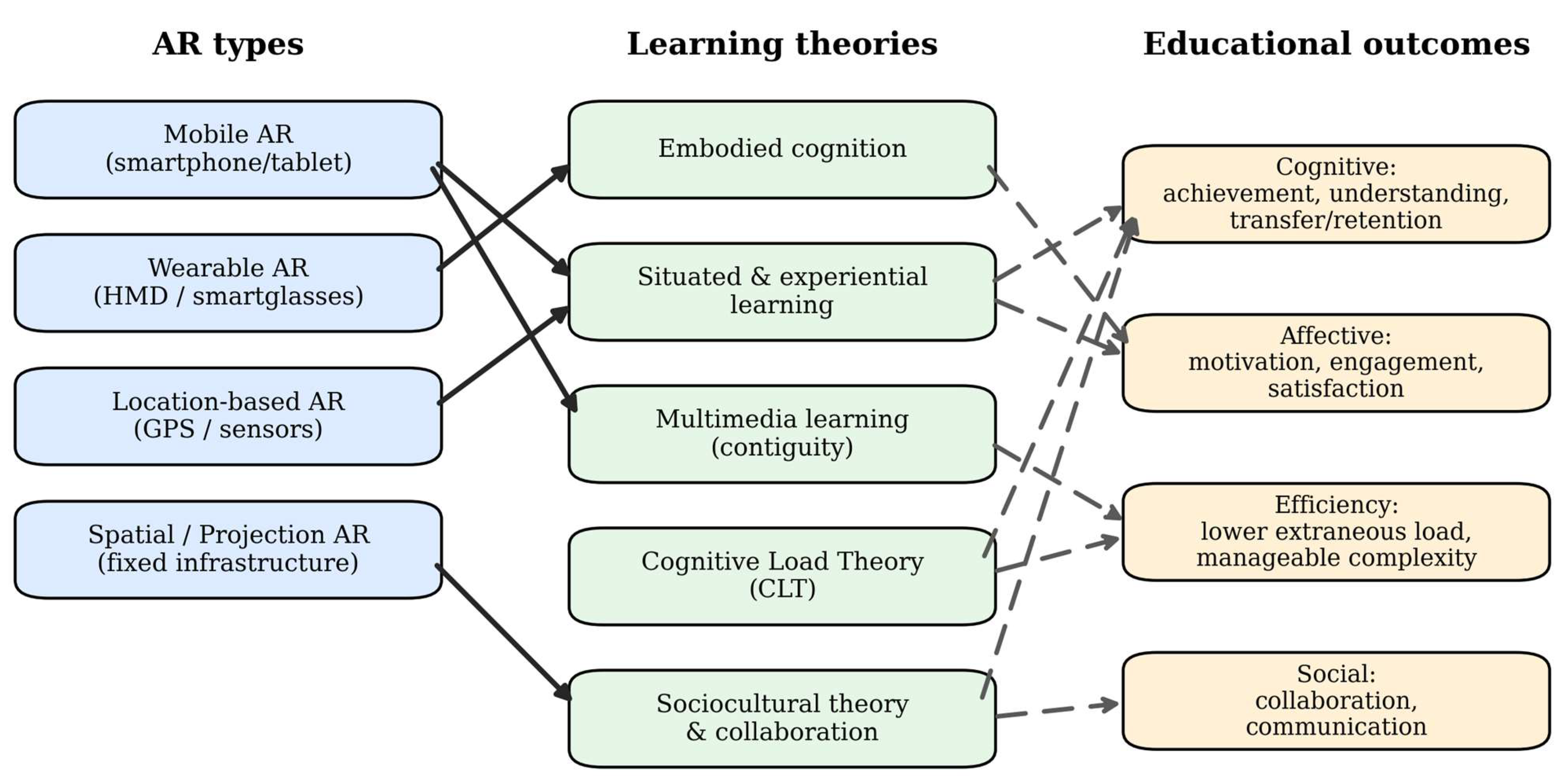

Disclaimer/Publisher’s Note: The statements, opinions and data contained in all publications are solely those of the individual author(s) and contributor(s) and not of MDPI and/or the editor(s). MDPI and/or the editor(s) disclaim responsibility for any injury to people or property resulting from any ideas, methods, instructions or products referred to in the content. |
© 2026 by the authors. Licensee MDPI, Basel, Switzerland. This article is an open access article distributed under the terms and conditions of the Creative Commons Attribution (CC BY) license.