


Abstract
South Africa’s shift to renewable energy has been characterised by significant structural changes, primarily through the Renewable Energy Independent Power Producer Procurement Programme (REIPPPP), which achieved considerable capacity by 2016. Although this green transition aligns with environmental and economic goals, gender inequities persist in labour market outcomes, particularly in technical and leadership positions. This study examines the short- and long-term impacts of renewable energy investments and important socioeconomic elements on female labour force participation (FLFP) in South Africa. Applying a bounds testing approach based on a semi-annual autoregressive distributed lag (ARDL) model, this analysis utilises data from 2003 to 2022. It includes factors such as renewable energy investments, the share of green jobs, GDP per capita, and access to modern energy services. The results indicate a statistically significant long-term equilibrium relationship. Increased renewable energy investments align with increases in FLFP, and the growth of green jobs further boosts women’s workforce participation. GDP per capita additionally has a positive impact, highlighting the macroeconomic advantages of inclusive growth. On the contrary, access to existing energy services shows a statistically insignificant negative relationship with FLFP, suggesting that merely expanding infrastructure may not effectively tackle gendered labour disparities. This study adds to the field of energy economics by providing a gender-segregated empirical evaluation and by suggesting policy actions to foster a more inclusive and fair energy transition in South Africa.
1. Introduction
Over the past ten years, South Africa’s renewable energy industry has experienced significant change, mainly due to the Renewable Energy Independent Power Producer Procurement Programme (REIPPPP). Established in 2011, the REIPPPP aimed to attract private-sector investment through a transparent, competitive bidding process focused on providing affordable, sustainable energy. As of 2016, the programme had acquired around 6300 MW of renewable energy capacity from wind, solar photovoltaic (PV), concentrated solar power (CSP), biomass, and small hydroelectric projects. This represented a significant shift away from the nation’s coal-centric energy structure, indicating a move toward a more diverse, lower-carbon energy mix.
Besides increasing the availability of clean energy, the REIPPPP has been praised as one of Africa’s most successful procurement programmes, attracting more than US$20 billion in private investment (Eberhard & Naude, 2016). The demands of socio-economic development compel Independent Power Producers (IPPs) to provide local advantages by fostering job creation, transferring skills, and establishing community trust funds. These measures have generated thousands of temporary and permanent employment opportunities, especially in rural regions where numerous projects are situated. However, despite these successes, the allocation of socio-economic benefits has not been equitable between genders. Women remain underrepresented in higher-skilled, better-compensated positions, prompting investigations into the effectiveness of renewable energy growth in promoting inclusive employment outcomes.
Globally, women account for approximately 32% of the renewable energy workforce; however, in Sub-Saharan Africa they hold fewer than 13% of technical roles within the sector.
In theory, investing in renewable energy can boost female labour force participation (FLFP) through three channels:
- Employment generation in clean energy sectors, like new job projections that emerge in construction, operations, maintenance, and supply chains, potentially provides opportunities for women if hiring practices are inclusive.
- Alleviation of poverty through access to modern energy, like the Availability of electricity, decreases the time devoted to unpaid household chores and fuel gathering, allowing women to engage in income-producing activities. Dinkelman (2011) discovered that rural electrification in South Africa boosted FLFP by 9.5 percentage points, primarily through informal work and self-employment.
- Opportunities for skills development, like renewable initiatives, can offer training in both technical and management skills, allowing women to take on non-traditional, higher-value positions.
Nonetheless, these possible advantages are not consistently achieved. The lack of energy remains a significant gender-related issue, especially in rural areas such as Limpopo and Mpumalanga, where reliance on biomass for cooking and heating negatively impacts women’s health and restricts their economic participation (Clancy et al., 2012). Across the nation, women’s labour force participation is 47%. In comparison, men’s is 67% (Mosomi & Cunningham, 2024), highlighting persistent structural obstacles such as inadequate vocational training, job segregation, and biassed hiring practices.
Although some research indicates a link between renewable energy consumption and lower national unemployment rates, there is scarce analysis that differentiates by gender to determine whether these advantages also apply to women. The lack of evidence creates a significant empirical gap: for example, considerable investment in renewable energy might enhance overall employment but not guarantee the closure of gender disparities in the job market.
This study fills that gap by analysing the short- and long-term effects of renewable energy usage, Gross Domestic Product (GDP) per capita, women’s educational attainment, and access to modern energy on FLFP in South Africa, employing the Autoregressive Distributed Lag (ARDL) model. It aims to:
- Assess if a consistent long-term relationship is present between renewable energy use and FLFP and examine short-run dynamics of the labour market.
- Assess the influence of GDP per capita in moderating this link and evaluate the impact of women’s education and energy access on workforce engagement.
In line with the empirical specification taken in the current study, the following hypotheses are used to provide the analysis, which clearly show the variables that will be included in the ARDL model:
- H1: Renewable energy investment exerts a positive and statistically significant long-run effect on female labour force participation in South Africa.
- H2: The expansion of green jobs significantly enhances female labour force participation, reflecting the employment-creation channel of the green economy.
- H3: Economic growth, proxied by GDP per capita, positively moderates female labour force participation, while access to modern energy services alone does not necessarily translate into higher female labour market engagement without complementary institutional and labour-market conditions.
This reformulation ensures conceptual consistency between the theoretical framework, the hypotheses presented, and the variables used in the empirical model. Incorporating gender analysis into the analysis of South Africa’s energy transition enhances empirical evidence and policy discussions on inclusive growth. It broadens macroeconomic study by directly addressing women’s employment results in the green economy, providing data to guide gender-sensitive labour and energy policies in line with the nation’s Just Energy Transition framework.
The rest of this document is organised as follows. Section 2 examines the theoretical framework and current literature on renewable energy, gender, and labour market dynamics, emphasising global, regional, and South African perspectives. Section 3 describes the data sources, variable definitions, and the ARDL modelling technique used. Section 4 presents the empirical findings, comprising estimates for both the short- and long-term. Section 5 examines the results of existing literature and highlights their policy significance for an energy transition that includes gender considerations. and the article proposes for future researchers.
2. Literature Review
2.1. Theoretical Perspectives on Gendered Labour in Energy Transitions
Understanding women’s participation in South Africa’s renewable energy sector requires an integrated theoretical framework that draws on labour economics, development studies, and energy access scholarship. Traditional neoclassical labour supply models interpret workforce participation as a rational choice, where individuals enter employment when expected earnings exceed the value placed on leisure or household production. However, these models often overlook the structural and normative constraints that limit women’s access to paid work. Entrenched gender roles, occupational segregation, and the burden of unpaid care shape labour market outcomes beyond wage incentives. Socio-institutional perspectives extend the analysis by showing how outcomes are shaped by formal institutions—such as recruitment systems, training access, and credit availability—as well as intersecting social identities, including rural location, ethnicity, and educational background. In South Africa, rural women face compounded barriers to technical roles in renewable energy due to limited certification pathways, gender-biased hiring practices, and inadequate transport infrastructure.
From a developmental viewpoint, access to contemporary energy services can change gendered work dynamics. Electrification and clean energy innovations lighten household tasks, allowing women to participate in paid jobs, seek education, or establish small businesses (Clancy et al., 2012; Grogan & Sadanand, 2013). However, the advantages of energy access are influenced by cultural norms and household bargaining dynamics, indicating that greater electricity availability does not necessarily lead to increased female labour force participation (FLFP). Intersectional perspectives indicate that results vary significantly: a well-educated urban woman might see different job-market benefits from renewable energy investments than a rural woman with minimal education, underscoring ongoing disparities that broad statistics frequently obscure.
Figure 1 presents a conceptual framework for the hypothesised relationships between renewable energy investment, green job creation, economic growth, access to modern energy services, and female labour force participation. The diagram presents the enduring effects of renewable energy development on direct employment, with the intermediate role of green jobs and the moderating effect of macroeconomic growth and considers that energy access is unlikely to directly translate into labour-market inclusion in the absence of other enabling institutional factors.
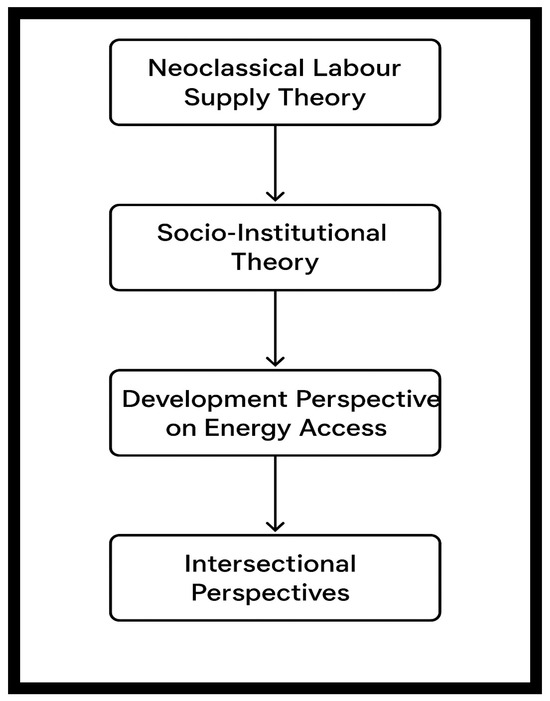
Figure 1.
Conceptual Framework Linking Renewable Energy Investment, Green Jobs, and Female Labour Force Participation.
2.2. Empirical Perspectives on Gendered Labour in Energy Transitions
The relationship between female labour force participation (FLFP) and economic growth in emerging economies, such as South Africa, is complicated and diverse. A well-known trend is the U-shaped relationship between FLFP and economic growth, indicating that women’s participation often decreases during the initial phases of industrialisation, primarily because of increasing household incomes and societal norms that prompt women to leave the workforce before rising again as economies transition to service-oriented and formal employment sectors (Koengkan et al., 2024). Nonetheless, fertility and education have significant, at times conflicting, effects on this pathway. A longitudinal study shows that higher fertility rates, especially among women with three or more children, reduce FLFP by increasing domestic duties and time scarcity (Chhavi et al., 2022).
Conversely, women’s educational attainment serves as a structural stabiliser: even in contexts of rising income and fertility, education strengthens skills, agency, and economic mobility, enabling women not only to sustain but to expand their labour-market participation.
At the macroeconomic scale, analyses specific to countries in Africa have revealed an inverted U-shaped relationship between GDP per capita and FLFP, indicating that FLFP first increases with economic growth due to higher labour demand, then levels off or declines in more developed economies (Faloye & Owoeye, 2021). However, in specific Sub-Saharan African settings, FLFP has been unexpectedly associated with slower economic growth, highlighting structural obstacles such as informal labour markets, poor job quality, and disparities between women’s skills and market needs (Thaddeus et al., 2022).
Access to clean, modern energy sources significantly influences women’s involvement in the economy. Dinkelman (2011) found that rural electrification in South Africa increased female employment by about 9.5% within 5 years, primarily by alleviating domestic labour and enabling participation in microenterprises. Comparable trends have been noted in various African nations, where access to clean energy boosts FLFP by alleviating time constraints and increasing productivity, although the degree of these advantages is significantly influenced by the socio-political and institutional landscape (Koengkan & Fuinhas, 2022; Koengkan et al., 2024; Li et al., 2024). Nonetheless, while South Africa progresses with its renewable energy transition, gender-specific trends of occupational segregation continue to exist. Women continue to be found mainly in administrative and clerical positions in the renewable energy sector and are markedly underrepresented in more lucrative technical, engineering, and leadership roles, mirroring wider inequalities in access to skills and opportunities.
Even though these dynamics are important, empirical analyses employing time-series techniques such as the ARDL model have largely overlooked gender-segregated labour-market outcomes. For instance, Khobai et al. (2020) found that renewable energy use has a statistically significant, long-term negative correlation with unemployment, suggesting that green energy supports job creation. However, their research did not examine gender-specific effects. Likewise, other studies in South Africa using ARDL methods (Bekun & Alola, 2022) have examined the links between energy consumption, GDP growth, and environmental sustainability, yet none have specifically addressed how these elements relate to female labour force participation or trends in gendered employment. This gap highlights the need for research that not only breaks down employment impacts by gender but also places them within wider conversations about inclusive green growth and structural change.
2.3. Gaps in the Literature Related to Gendered Impacts of Renewable Energy
Despite significant advancements in comprehending the relationship between female labour force participation (FLFP), economic growth, and energy access, numerous important empirical gaps persist, hindering a comprehensive analysis, especially in the South African context. To date, gender-disaggregated ARDL modelling remains largely absent from the literature. Current time-series research investigating the link between renewable energy use and employment (such as Khobai et al., 2020; Bekun & Alola, 2022) does not distinguish employment outcomes by gender, thereby masking the specific impacts of these changes on women in the workforce. Secondly, although the effects of fertility and education on FLFP are well documented (Chhavi et al., 2022), existing studies fail to adequately incorporate these factors into models evaluating renewable energy’s impact on the job market. This signifies a missed opportunity to understand how advancements in social infrastructure, such as access to education and family planning, connect with energy shifts to influence women’s economic participation.
Additionally, the quality of labour and the division of sectors remain insufficiently explored. Many current analyses concentrate on overall employment growth without evaluating if the jobs resulting from renewable energy investments are high-quality, gender-inclusive, or sustainable. There is scarce evidence on whether women are obtaining technical, managerial, or permanent positions in the expanding green economy, even though studies show that women frequently hold disproportionate numbers of administrative roles while being underrepresented in skilled jobs. Moreover, the lack of unified gender-energy-growth frameworks hinders policy consistency. Limited studies investigate renewable energy investment, macroeconomic factors (e.g., GDP), educational attainment, and energy access alongside FLFP, particularly using econometric techniques such as the ARDL model that can capture both short- and long-term dynamics.
In summary, while current research in labour economics and energy access has offered valuable insights into the factors influencing FLFP, a significant gap persists in understanding how the growth of renewable energy interacts with broader socioeconomic factors to shape gendered employment outcomes. This study seeks to address this gap by using a gender-disaggregated ARDL model that is methodologically sound, rich in variables, and specifically focused on assessing both the quantity and quality of job opportunities created for women during South Africa’s renewable energy transition.
3. Methodology
This study examines the short- and long-term links between renewable energy usage, socioeconomic variables, and female labour force participation (FLFP) in South Africa through the ARDL method. The ARDL bounds testing approach (Pesaran et al., 2001) is ideal for this study as it supports small sample sizes, permits regressors with various integration orders (I (0) and I (1)), and allows for the concurrent estimation of short- and long-term elasticities, which is vital for policy-relevant energy–labour market investigations in developing nations (Nkoro & Uko, 2016; Bekun & Alola, 2022; Khobai et al., 2020).
3.1. Model Specification
The general form of the ARDL model for this study is:
where
denotes Female Labour Force Participation Rate;
represents independent variables;
is a white-noise error term;
alpha is the drift component.
Upon confirming long-run co-integration, an Error Correction Model (ECM) is estimated to assess short-run dynamics and adjustment speeds to equilibrium (Nkoro & Uko, 2016; Pesaran et al., 2001).
3.2. Variables and Measurements
Table 1 summarises the variables employed in the empirical analysis, along with their measurement, expected theoretical signs, and data sources. Female labour force participation serves as the dependent variable, capturing women’s engagement in the labour market. Renewable energy consumption and the share of green jobs proxy the scale and employment intensity of the green transition. In contrast, access to modern energy services reflects the extent of household electrification. GDP per capita controls for overall macroeconomic conditions, and the female unemployment rate captures prevailing labour-market slack. All variables are defined to ensure consistency with the theoretical framework and the ARDL model specification.

Table 1.
Variables and Measurements.
3.3. Data Sources and Period of Study
Data were obtained from the World Bank and Macrotrends databases for FLFP, REI, AMES, GDP, UEM, and EL, while GJS data were sourced from Mosomi and Cunningham (2024). Most macroeconomic variables in the present study are reported annually, but semi-annual (2003S1-2022S2) data were generated to increase degrees of freedom and improve ARDL estimation. When data were unavailable, the annual statistics in the World Bank and Macrotrends databases were linearly interpolated, as is standard practice in time-series energy-economics studies. The method does not alter long-run patterns and allows the short-run analysis to make more sophisticated dynamic adjustments. The ARDL bounds testing framework is well suited to such data structures and is robust to interpolated frequencies.
3.4. Estimation Techniques
3.4.1. Unit Root Tests
To verify the appropriateness of the ARDL bounds testing framework, it is crucial to determine the integration order of the model’s variables. Thus, the Augmented Dickey–Fuller (ADF) test, developed by Dickey and Fuller (1979), will be used to assess whether each time series is stationary at level [I (0)] or requires first differencing [I (1)]. This initial diagnosis is essential since the ARDL approach is only applicable when none of the variables are integrated of order two [I (2)] or above. Establishing that all variables are either I (0) or I (1) guarantee the econometric soundness of the following bounds testing method and avoids the generation of misleading results (Nkoro & Uko, 2016; Pesaran et al., 2001).
3.4.2. Bounds Test for Co-Integration
The bounds testing framework developed by Pesaran et al. (2001) assesses whether a long-term relationship exists between FLFP and its independent variables. The calculated F-statistic will be evaluated against critical boundary values to assess the hypothesis:
H0: Φ1 = Φ2J = 0 (No long-run relationship).
3.4.3. Error Correction Model (ECM)
After verifying cointegration, an Error Correction Term (ECT) is calculated. A significant and negative ECT coefficient indicates that short-term imbalances are adjusted towards long-term equilibrium. The size of the ECT coefficient reflects the rate of adjustment.
3.4.4. Diagnostic Tests Performed/Purpose
Table 2 shows the ensured econometric robustness and the validity of statistical inference; a comprehensive set of post-estimation diagnostic tests was conducted. Serial correlation in the residuals was examined using the Breusch–Godfrey Lagrange Multiplier (LM) test, while heteroskedasticity was assessed through the Breusch–Pagan–Godfrey test. The Jarque–Bera test was employed to evaluate the normality of the residual distribution. In addition, parameter stability over the sample period was examined using the cumulative sum (CUSUM) and cumulative sum of squares (CUSUMSQ) tests. Collectively, these diagnostic procedures are essential for validating the underlying assumptions of the ARDL framework and ensuring that the estimated coefficients yield reliable, policy-relevant inferences (Nkoro & Uko, 2016; Bekun & Alola, 2022).
To ensure econometric robustness, the following tests will be implemented:
Table 2.
Diagnostic Tests.
Table 2.
Diagnostic Tests.
| Test | Purpose |
|---|---|
| Breusch–Godfrey LM test | Tests for serial correlation |
| Breusch–Pagan–Godfrey test | Detects heteroskedasticity in residuals |
| Jarque–Bera test | Assesses residual normality |
| CUSUM/CUSUMSQ tests | Evaluates model stability over the estimation period |
Source: Author’s own computation.
3.5. Model Justification
The ARDL method is suitable, particularly appropriate for this study’s goals and the nature of the dataset. It handles variables with mixed integration orders [I (0) and I (1)], provides short- and long-run estimates in a single framework, and operates effectively with smaller sample sizes, which is a significant benefit given the semi-annual data from 2003S1 to 2022S2. Moreover, by integrating lagged dependent and independent variables, ARDL effectively captures the dynamic interaction among renewable energy investments, the creation of green jobs, and female labour force participation, thus minimising the risk of omitted-variable bias and strengthening the reliability of the estimated relationships. Although non-linear or instrumental-variable methods can be helpful in different situations, this analysis emphasises a simple model that provides apparent overall effects without excessive complexity or overfitting. Therefore, the ARDL model stands out as the most methodologically suitable and effective option for addressing the study’s research questions.
4. Findings and Discussion
This section presents the empirical results of the study, starting with initial tests and moving on to cointegration analysis. Since the variables show integration of mixed order [I (0) and I (1)], the ARDL bounds testing method is suitable for investigating the long-term relationship between them.
4.1. Augmented Dickey–Fuller (ADF) Unit Root Test
To evaluate the stationarity of the time series variables, the Augmented Dickey–Fuller (ADF) test was conducted under the null hypothesis of a unit root and the alternative hypothesis of stationarity. The outcomes in Table 3 indicate the integration order for each variable.
Table 3.
Augmented Dickey–Fuller Unit Root Tests.
Interpretation
The test outcomes indicate a combination of integration orders, suggesting that certain variables, especially Renewable Energy Investment (REI) and Green Job Share (LGJS), are stationary at levels (I (0)). In contrast, variables like the Female Labour Force Participation Rate (LFLPR), the Electricity access variable (EL), and the Access to Modern Energy Services (AMES) are integrated of order one [I (1)].
4.2. ARDL Cointegration Bounds Test
The mixed order of integration among the variables (I (0) and I (1)), the ARDL bounds testing method was employed to determine the existence of a long-run equilibrium relationship. The results are shown in Table 4 [Bounds Test].
Table 4.
ARDL Cointegration Bounds Test.
Interpretation
The F-statistic of 14.3275 is greater than the upper bound critical value at the 1%, 5%, and 10% significance levels, thus rejecting the null hypothesis of no cointegration. This validates the existence of a statistically significant long-term relationship between gendered labour force involvement and the explanatory factors linked to South Africa’s energy.
4.3. ARDL Long-Run and Short-Run Estimates
The ARDL model was utilised to analyse both the long-term and short-term relationships between female labour force participation and the independent variables, including renewable energy investments, green job proportions, GDP, and access to modern energy services.
Table 5 presents both the long-run equilibrium coefficients and the short-run error-correction dynamics, allowing a direct comparison of the persistent and transitory effects of renewable energy investment, green job creation, and macroeconomic conditions on female labour force participation.
Table 5.
Estimated Long-Run and Short-Run Coefficients.
4.3.1. Long-Run Estimates and Economic Interpretation
In the long run, the following relationships were observed:
- LREI (Log of Renewable Energy Investment): The coefficient of 0.0856 (p = 0.0381) shows a statistically significant and positive relationship between investment in renewable energy and the participation of women in the labour force. This indicates that a 1% rise in renewable energy investment is associated with an estimated 0.086 percentage-point rise in female labour participation, all else equal. This emphasises the inclusive growth potential of South Africa’s energy transition, where investments from both public and private sectors in renewable infrastructure generate complementary job opportunities for women, especially in installation, maintenance, and decentralised energy services.
- LGJS (Log of Green Job Share): Green job strength shows a highly significant and positive effect on female labour force participation, with a coefficient of 0.2018 (p = 0.0049). A 1% rise in the proportion of green jobs results in a 0.20 percentage point rise in LFLPR. This finding highlights the employment-absorbing potential of the green economy, suggesting that gender-focused green job initiatives can significantly reduce gender disparities in labour markets, particularly in renewable energy, sustainable agriculture, and waste management.
- GDP (Level): The notable GDP coefficient (0.0065, p = 0.0003) suggests that economic growth significantly affects the increase in women’s involvement in the workforce. This reinforces endogenous growth theory and the labour supply impacts of macroeconomic expansion, as increased aggregate output boosts demand for diverse labour, including women. Significantly, the size of the GDP impact in both the short and long term indicates robust macro-labour connections, with potential spillover effects from productivity improvements and the growth of service industries.
- AMES (Access to Modern Energy Services): Despite the coefficient being negative (−0.0038) and not statistically significant (p = 0.1701), the anticipated sign contradicts initial expectations. Although not statistically conclusive, the negative indicator might represent measurement or structural limitations, such as energy access in regions with scarce formal job opportunities or a rise in household energy consumption that strengthens domestic duties. Future improvements in variable disaggregation could more accurately reflect the gendered aspects of energy access.
4.3.2. Short-Run Dynamics and Adjustment
In the short run, the Error Correction Model (ECM) estimation reveals the following:
- D (LREI): The short-term coefficient of 0.1592 (p = 0.0005) shows an immediate positive impact of renewable energy investment on the participation of women in the labour force. This indicates that green investments lead to quick responses in the labour market, possibly because of short-term jobs in construction and installation stages, or because of the growth of informal energy services that benefit women.
- D(GDP): The short-term GDP coefficient (0.0041, p = 0.0003) reflects its long-term impact, confirming that economic growth affects women’s labour supply right away, likely via enhanced household income stability and job opportunities in consumption-oriented industries.
- Error Correction Term (CointEQ (−1)): The negative and statistically significant coefficient of −0.3577 (p = 0.0000) suggests that a stable long-run relationship is present. The coefficient indicates that approximately 35.8% of any deviation from the long-term balance is corrected each period, reflecting a moderate rate of adjustment towards stability.
4.3.3. Model Performance and Diagnostic Evaluation
The ECM exhibits strong goodness-of-fit:
- R-squared of 0.8648 and Adjusted R-squared of 0.8489 indicate that around 85% of the fluctuation in the dependent variable (ΔLFLPR) is explained by the independent variables along with their lagged effects.
- Standard Error of Regression (S.E.) of 0.0016 reflects low residual variance, affirming the model’s effectiveness.
- Information Criteria (AIC, SC, HQ): The values for all criteria (e.g., AIC = −9.8414) are pretty low, indicating a well-specified model.
- Durbin–Watson Statistic: With a value of 2.65, this indicates there is no positive serial correlation in the residuals, supporting the dependability of parameter estimates.
4.4. Diagnostic Tests Results
The diagnostic tests applied to validate the robustness and reliability of the ARDL model indicate a generally well-specified and statistically sound estimation, with some caveats warranting further consideration. The results are shown below in Table 6.
Table 6.
Results of Diagnostic Tests.
Firstly, the Jarque–Bera test for normality yields a p-value of 0.8285, which is well above the 5% significance level. This finding supports our failure to reject the null hypothesis, indicating that the model residuals follow a normal distribution. The normality of residuals is an essential condition for valid hypothesis testing and inference in time-series econometrics, especially when creating confidence intervals and conducting significance tests. A standard distribution of errors improves the reliability of the estimated coefficients and guarantees that the outcomes can be interpreted with assurance. Normality also means that the model is not influenced by outliers or non-linear patterns in residuals, thereby meeting one of the Gauss–Markov assumptions required for the Best Linear Unbiased Estimator (BLUE) conditions.
Secondly, the Breusch–Pagan–Godfrey test for heteroskedasticity gives a p-value of 0.6056, which surpasses the traditional 5% significance level. This results in failing to reject the null hypothesis of homoscedasticity, meaning constant variance of residuals across all levels of the independent variables. Homoscedasticity is essential in regression analysis, as heteroskedastic errors can lead to biassed and inefficient standard errors, ultimately distorting statistical conclusions. The validation of homoscedasticity confirms the dependability of standard errors, statistical tests, and confidence intervals applied in the model. It further strengthens confidence in the model’s predictive precision across various socioeconomic factors, particularly when examining policy-related dynamics such as female labour force participation and investments in renewable energy.
Thirdly, the Breusch–Godfrey test for serial correlation yields a p-value of 0.1066, which is marginally higher than the 10% significance level. This suggests that there is no statistically significant autocorrelation in the residuals at the 5% level, though the outcome is close to the threshold. Although the null hypothesis of no serial correlation is not rejected, the comparatively low p-value indicates that careful interpretation is warranted, especially if the significance threshold is loosened to 10%. Serial correlation, if present, can lead to underestimated standard errors, inflated t-values, and erroneous interpretations of variable significance. Consequently, future model improvements might explore incorporating higher-order lags or alternative specifications further to examine possible autocorrelation under more lenient significance levels.
Fourthly, the analysis of the Variance Inflation Factor (VIF) indicates that all independent variables have VIF values well below the typical threshold of 5, suggesting no substantial multicollinearity among the explanatory variables. Multicollinearity can skew the size and direction of coefficient estimates, reduce the reliability of statistical tests, and complicate the interpretation of variable effects. The low VIF scores indicate that the variables included are adequately independent, enabling the model to identify their distinct impacts on alterations in female labour force participation. This statistical transparency enhances the empirical basis of the policy suggestions derived from the model’s findings.
Since the coefficient for access to modern energy services (AMES) is unexpected and insignificant, further diagnostics were performed to assess multicollinearity with GDP per capita or green job share, which may be obscuring its actual impact. The analysis of pairwise correlations and variance inflation factors (VIFs) showed that AMES has weak correlations with GDP and the green job indicators, and all VIFs are significantly lower than the standard values. These findings suggest that the estimated AMES coefficient is not a collinearity effect but rather reflects other structural and institutional constraints that limit the conversion of energy access into the employment outcome for females.
Lastly, to achieve the model’s aesthetic shape and exoskeleton integrity, we conducted a rigorous stability analysis using the model proposed by Pesaran et al. (2001). The cumulative sum (CUM) and cumulative sum of squares (CUSUMSQ) tests were used to assess the model’s stability. The outcomes show that the approximate coefficients are strictly within the 5 per cent critical limits across the entire sample period, demonstrating the stability of the parameters and justifying the ARDL linear specification. The consistency of CUSUM statistics, in this regard, is a strong indicator that the linear functional form has been appropriately specified, and that further non-linear specification tests, including the Ramsey RESET or addition of squared terms, are unnecessary.
Although non-linear dynamics are often considered in labour market modelling, CUSUM-based structural stability diagnostics provide clear empirical justification for adopting a linear specification. This choice is consistent with established findings in the South African energy–economy nexus literature.
This will not only be parsimonious but will also eliminate the possibility of multicollinearity that is often associated with the use of polynomials. Moreover, the model meets all the basic diagnostic criteria, including normality, homoscedasticity, and the absence of serial correlation. All these diagnostic results indicate that the linear specification is the most statistically valid model to use in this study.
4.5. Discussion
The ARDL findings offer solid insights into the relationship between female labour force participation (FLFP) and key factors, including renewable energy investment (LREI), green job share (LGJS), GDP, and access to modern energy services (AMES). These results highlight the connections among economic growth, energy transitions, and gender-specific labour market trends, adding to a growing body of work exploring how environmental funding can encourage inclusive workforce engagement.
4.5.1. Long-Run Dynamics
The long-term relationship between FLFP and investments in renewable energy is both positive and statistically significant: a 1% increase in LREI is associated with a 0.086% increase in women’s involvement. This provides evidence that renewable energy initiatives create long-term employment opportunities for women, especially in labour-heavy areas such as installation, maintenance, and operations (Koengkan & Fuinhas, 2022; Koengkan et al., 2024).
An increase in GDP positively affects FLFP: a 1% boost in GDP per capita leads to a long-term rise in participation of 0.0065%. This aligns with broader macroeconomic studies indicating that economic growth increases labour demand, thereby enhancing women’s workforce participation (Gaddis & Klasen, 2014).
In contrast, the negative, statistically insignificant coefficient for access to modern energy services (AMES) warrants special interpretation. Despite conventional development theory, which argues that women should be able to join the labour market through electrification, which lowers time costs and supports greater productivity, recent empirical findings show that energy access cannot yield significant employment benefits for women in South Africa. A possible reason is the measurement restriction, since the electricity access indicator reflects connection rates rather than the reliability, affordability, or quality of energy services, which are also essential for productive economic activities. Moreover, there are structural and institutional factors, such as adherence to enduring gender norms, labour segregation, inadequate access to childcare services, and spatial disconnections between electrified areas and labour-demand areas, that could impede women from converting energy access into formal labour opportunities. It can also be non-linear, in that the employment benefits of energy access will not materialise until complementary thresholds (e.g., skills development, transport infrastructure, and favourable labour-market institutions) are met. The results, therefore, indicate that access to modern energy services is a necessary but not a sufficient factor to increasing the level of female labour force participation, and corroborate the existence of integrated energy, labour and social policies.
4.5.2. Short-Run Dynamics
Short-term coefficients reflect long-term trends. Investment in renewable energy (0.1592) and GDP growth (0.0041) both yield immediate positive effects on FLFP, indicating that funding in sustainable infrastructure and economic growth leads to quick job creation. The error correction term (−0.3577) signifies a moderate pace of adjustment towards equilibrium, demonstrating the labour market’s sensitivity to shifts in renewable energy investments and macroeconomic factors (Pesaran et al., 2001).
4.5.3. Model Performance
The ARDL model shows significant explanatory power (R2 = 0.8648, adjusted R2 = 0.8489) and reliable diagnostics, with a low standard error (0.0016) and no serial correlation (Durbin–Watson = 2.65). These findings confirm the accuracy of the estimates and their appropriateness for guiding policy suggestions.
5. Policy Implications and Conclusions
5.1. Policy Recommendations
The findings suggest actionable policy directions:
- Improvement of Gender-Inclusive Renewable Energy Investments: Expand initiatives with clear gender objectives, incorporating technical and leadership development for women, especially in marginalised areas (Koengkan & Fuinhas, 2022).
- Encourage Gender-Inclusive Green Industrialisation: Create industrial policies and incentives that effectively decrease occupational segregation and guarantee fair employment throughout developing green sectors (Mosomi & Cunningham, 2024).
- Align inclusive growth strategies with women’s labour force participation by prioritizing investment in labour-intensive, women-friendly sectors, supported by sound macroeconomic stability policies.
- Re-evaluate Energy Access Policies: Perform micro-level, gender-specific studies to comprehend how sociocultural norms, caregiving responsibilities, and market access influence the connection between energy access and women’s employment (Grogan & Sadanand, 2013).
5.2. Limitations of the Study
Although the present research provides strong empirical support for the link between renewable energy investment and women’s labour force participation in South Africa, several limitations must be noted. To begin with, the potential endogeneity problem cannot be eliminated. Even though simultaneous issues are reduced in the ARDL framework due to its dynamic structure, there might be reverse causality: higher female labour force participation creates demand for energy services and green jobs. Second, it is based on aggregated, nationwide data, which can mask relevant regional, sectoral, and occupational heterogeneity, especially given South Africa’s substantial spatial and labour-market inequalities. Third, the data constraints do not permit the inclusion of other institutional and social factors, such as cultural norms, maternity protection policies, childcare, and transport infrastructure, which have been shown to affect female labour market outcomes. Lastly, the semi-annual data will yield a relatively small sample size, which, although appropriate for ARDL estimation, can limit the power of specific statistical tests. Being aware of such constraints would make the study more transparent and provide a clear basis for future research.
5.3. Directions for Future Research
Future research ought to:
- Broaden the analysis to include additional SADC nations for comparative cross-national insights.
- Investigate spatial differences and variations in the labour market structure.
- Include NARDL or interaction terms (energy × education, energy × fertility) to represent non-linear and context-sensitive dynamics more effectively.
5.4. Conclusions
This study investigates the relationships among renewable energy investment, the creation of green jobs, macroeconomic conditions, and female labour force participation (FLFP) in South Africa using a gender-disaggregated ARDL framework. The findings provide strong evidence that the estimated coefficients and diagnostic results support the study’s conclusions.
Renewable energy investment has a positive, statistically significant long-term impact on female labour force participation, confirming Hypothesis 1 and indicating that renewable energy growth in South Africa promotes women’s labour market inclusion. Moreover, the share of green jobs has a substantial, significantly positive impact on FLFP, providing robust support for Hypothesis 2 and emphasising the role of the employment structure in fostering gender-inclusive growth.
Economic growth, proxied by GDP per capita, significantly and positively influences female workforce participation in the short and long term, partly supporting Hypothesis 3. On the contrary, access to modern energy services has no statistically significant impact on FLFP, suggesting that electrification alone is insufficient to achieve significant improvements in women’s employment outcomes without additional institutional and labour-market reforms.
The results suggest that renewable energy investments and the creation of green jobs can simultaneously promote both climate goals and gender-inclusive economic development. However, the results caution against the assumption that energy access alone ensures fair labour-market results. Policies targeting South Africa’s Just Energy Transition should therefore combine energy investments with specific labour, skills, and gender equality measures to ensure that women fully benefit from the green transition.
Funding
This research received no external funding. The APC was funded by University of Mpumalanga, South Africa.
Institutional Review Board Statement
Not applicable.
Informed Consent Statement
Not applicable.
Data Availability Statement
The raw data supporting the conclusions of this article will be made available by the authors on request.
Conflicts of Interest
The author declares no conflict of interest.
References
- Bekun, F. V., & Alola, A. A. (2022). Determinants of renewable energy consumption in agrarian Sub-Sahara African economies. Energy, Ecology and Environment, 7, 227–235. [Google Scholar] [CrossRef]
- Chhavi, T., Srinivas, G., & Anu, R. (2022). Reproductive Burden and Its Impact on Female Labor Market Outcomes in India: Evidence from Longitudinal Analyses. Population Research and Policy Review, 41, 2493–2529. [Google Scholar] [CrossRef]
- Clancy, J., Daskalova, V., Feenstra, M., Franceschelli, N., & Sanz, M. (2012). Gender in the transition to sustainable energy for all: From evidence to inclusive policies. ENERGIA/European Union. [Google Scholar]
- Dickey, D. A., & Fuller, W. A. (1979). Distribution of the estimators for autoregressive time series with a unit root. Journal of the American Statistical Association, 74(366), 427–431. [Google Scholar] [CrossRef] [PubMed]
- Dinkelman, T. (2011). The effects of rural electrification on employment: New evidence from South Africa. American Economic Review, 101(7), 3078–3108. [Google Scholar] [CrossRef]
- Eberhard, A., & Naude, R. (2016). The South African renewable energy independent power producer procurement programme: A review and lessons learned. Journal of Energy in Southern Africa, 27(4), 1–14. [Google Scholar] [CrossRef]
- Faloye, O. D., & Owoeye, I. (2021). Business model innovation and micro and small enterprises’ performance in Nigeria: Does entrepreneurial orientation mediate? European Journal of Economics and Business Studies, 7(1), 21–48. [Google Scholar] [CrossRef]
- Gaddis, I., & Klasen, S. (2014). Economic development, structural change, and women’s labour force participation. Journal of Population Economics, 27, 639–681. [Google Scholar] [CrossRef]
- Grogan, L., & Sadanand, A. (2013). Rural electrification and employment in poor countries: Evidence from Nicaragua. World Development, 43, 252–265. [Google Scholar] [CrossRef]
- Khobai, H., Kolisi, N., Moyo, C., Anyikwa, I., & Dingela, S. (2020). Renewable energy consumption and unemployment in South Africa. International Journal of Energy Economics and Policy, 10(2), 170–178. [Google Scholar] [CrossRef]
- Koengkan, M., & Fuinhas, J. A. (2022). Does financial openness expand the renewable energy investment in Latin American countries? In Globalisation and energy transition in Latin America and the Caribbean: Economic growth and policy implications (pp. 27–61). Springer International Publishing. [Google Scholar]
- Koengkan, M., Fuinhas, J. A., Auza, A., Castilho, D., & Kaymaz, V. (2024). Environmental governance and gender inclusivity: Analysing the interplay of PM2.5 and women’s representation in political leadership in the European Union. Sustainability, 16(6), 2492. [Google Scholar] [CrossRef]
- Li, X., An, L., Zhang, D., Lee, C. C., & Yu, C. H. (2024). Energy access and female labor force participation in developing countries. Renewable and Sustainable Energy Reviews, 199, 114468. [Google Scholar] [CrossRef]
- Mosomi, J., & Cunningham, W. (2024). Profiling green jobs and workers in South Africa: An occupational tasks approach. Policy Research Working Paper 10779. World Bank Group. [Google Scholar]
- Nkoro, E., & Uko, A. K. (2016). Autoregressive Distributed Lag (ARDL) Cointegration Technique: Application and Interpretation. Journal of Statistical and Econometric Methods, 5(4), 1–3. [Google Scholar]
- Pesaran, M. H., Shin, Y., & Smith, R. J. (2001). Bounds testing approaches to the analysis of level relationships. Journal of Applied Econometrics, 16(3), 289–326. [Google Scholar] [CrossRef]
- Thaddeus, K. J., Bih, D., Nebong, N. M., Ngong, C. A., Mongo, E. A., Akume, A. D., & Onwumere, J. U. J. (2022). Female labour force participation rate and economic growth in sub-Saharan Africa: “A liability or an asset”. Journal of Business and Socio-economic Development, 2(1), 34–48. [Google Scholar] [CrossRef]
Disclaimer/Publisher’s Note: The statements, opinions and data contained in all publications are solely those of the individual author(s) and contributor(s) and not of MDPI and/or the editor(s). MDPI and/or the editor(s) disclaim responsibility for any injury to people or property resulting from any ideas, methods, instructions or products referred to in the content. |
© 2026 by the author. Licensee MDPI, Basel, Switzerland. This article is an open access article distributed under the terms and conditions of the Creative Commons Attribution (CC BY) license.