


Abstract
The increasing complexity of water distribution systems (WDSs) and the growing demand for sustainable infrastructure management have spurred interest in Building Information Modelling (BIM) and Digital Twin (DT) technologies. This study presents a comprehensive bibliometric and thematic literature review aiming to identify key trends, research clusters, and knowledge gaps at the intersection of BIM, DT, and WDSs. Using the Scopus database, 95 relevant publications from 2004 to 2024 were systematically analyzed. VOSviewer was applied to create, visualize, and analyze maps of countries, journals, documents, and keywords based on citation, co-citation, collaboration, and co-occurrence data. The results indicate a sharp rise in scholarly attention after 2020, with dominant contributions from European institutions. Co-authorship networks show limited global interconnectedness, suggesting that developing countries should especially prioritize integrated DT and BIM for more inclusive and diverse research partnerships. This study characterizes the state of the art and future requirements for research on the use of DT and BIM technologies in WDSs and makes a noteworthy contribution to the body of knowledge. Future research should focus on integrating DT and BIM technologies with ML, which represents scalability challenges of real-time anomaly detection integration models, advancing decision-making and operational resilience in WDNs.
1. Introduction
The growing demand for potable water has driven the adoption of advanced technologies, not only during the conception and design of water infrastructure projects but also throughout their maintenance and operation [1]. Urban water supply governance is increasingly challenged by a complex array of issues, including rapid population growth, climate change, urbanization, fluctuations in global economic systems, and rising energy costs [2]. BIM facilitates better collaboration and decision-making among stakeholders [3], which is one of the primary barriers to achieving sustainable construction in the absence of timely access to accurate information. DT integrates both static and dynamic models to accurately simulate the behavior and interactions of a real-world entity, thereby supporting insight generation and improved decision-making [4]. At the heart of urban water infrastructure are WDSs, which are essential for delivering clean water to ensure public health and support socioeconomic development [5]. Modern monitoring of WDSs now relies on advanced real-time control technologies to improve operational efficiency [6].
The digitalization of water infrastructure, alongside advancements in communication technologies, has further enhanced coordination, system performance, and service quality [7]. In developed regions such as Europe, North America, and East Asia, the implementation of BIM and DT is now mature and often mandated for public projects, demonstrating gains in collaboration, cost predictability, and sustainability [8,9,10]. The integration of technology and innovation in WDSs enables the implementation of diverse management strategies, which can be further refined through optimization techniques.
These improvements not only contribute to the financial sustainability of water utilities but also support environmental protection [11]. Countries with robust monitoring systems have reported positive outcomes, highlighting the importance of increasing water-use efficiency to mitigate water stress [12]. Digital Twin (DT) and Building Information Modelling (BIM) have emerged as transformative technologies for enhancing the management and operation of water networks. Initially adopted in sectors like construction and manufacturing, DT and BIM technologies are now being applied to water infrastructure due to their capacity to provide real-time data, support informed decision-making, and optimize system performance [13,14]. The use of DT and BIM technologies enables data-driven decisions through integrated analytics, scenario simulation, and real-time sensor data [15]. Furthermore, leveraging BIM for facility management contributes significantly to achieving the Sustainable Development Goals, particularly SDG 11, which focuses on building sustainable cities and communities [16].
However, a critical disconnect exists between the promising capabilities of these technologies and the focused scope of existing research. While the body of literature on DT and BIM technologies is substantial, it is predominantly concentrated within the construction industry [17,18,19,20,21]. This has created a significant knowledge gap regarding its synergistic application, specifically to the operational challenges of WDSs. This gap is particularly acute in developing regions, such as Africa, where adoption remains nascent despite the urgent need for advanced water management solutions [22,23].
Consequently, the research landscape is fragmented, lacking a comprehensive analysis that maps the intellectual structure, defines a unified conceptual framework, and charts a clear strategic direction for BIM and DT integration in water networks. This underscores a critical research imperative to investigate the synergistic relationship between BIM and DT technologies in addressing the distinct challenges posed by aging and complex water supply infrastructure. While previous reviews have examined these technologies in broader contexts, such as general construction and infrastructure management [24,25,26], smart cities [27,28] and the built environment [26,29], none have provided a dedicated analysis focused specifically on water distribution networks (WDNs). This study directly addresses this gap by employing an extensive bibliometric and systematic review approach to provide a quantified and visualized synthesis of the evolution, core research clusters, and key frontiers of BIM-DT integration within the WDS domain.
The goal is to identify research gaps, assess implementation challenges, and uncover the requirements for successful deployment of these technologies in infrastructure management. This study investigates the critical pathway and technological integration required to evolve a BIM-based model into a fully functional operational Digital Twin. In doing so, the study provides actionable insights to guide integrated technological adoption and highlights current trends and international contributions to the field. The following research questions are addressed in order to achieve these objectives (RQ):
RQ1: What are the main patterns of growth in research regarding the application of DT and BIM technologies in WDS?
RQ2: What is the conceptual framework of the knowledge base about BIM and DT in WDS?
RQ3: What future developments can be anticipated for WDS in the fields of BIM and Digital Twin technologies?
By analyzing research patterns, subject areas, sources, and citations, this study not only consolidates existing knowledge but also presents innovative directions for future research in the integration of BIM and DT technologies in water infrastructure systems.
2. Materials and Methods
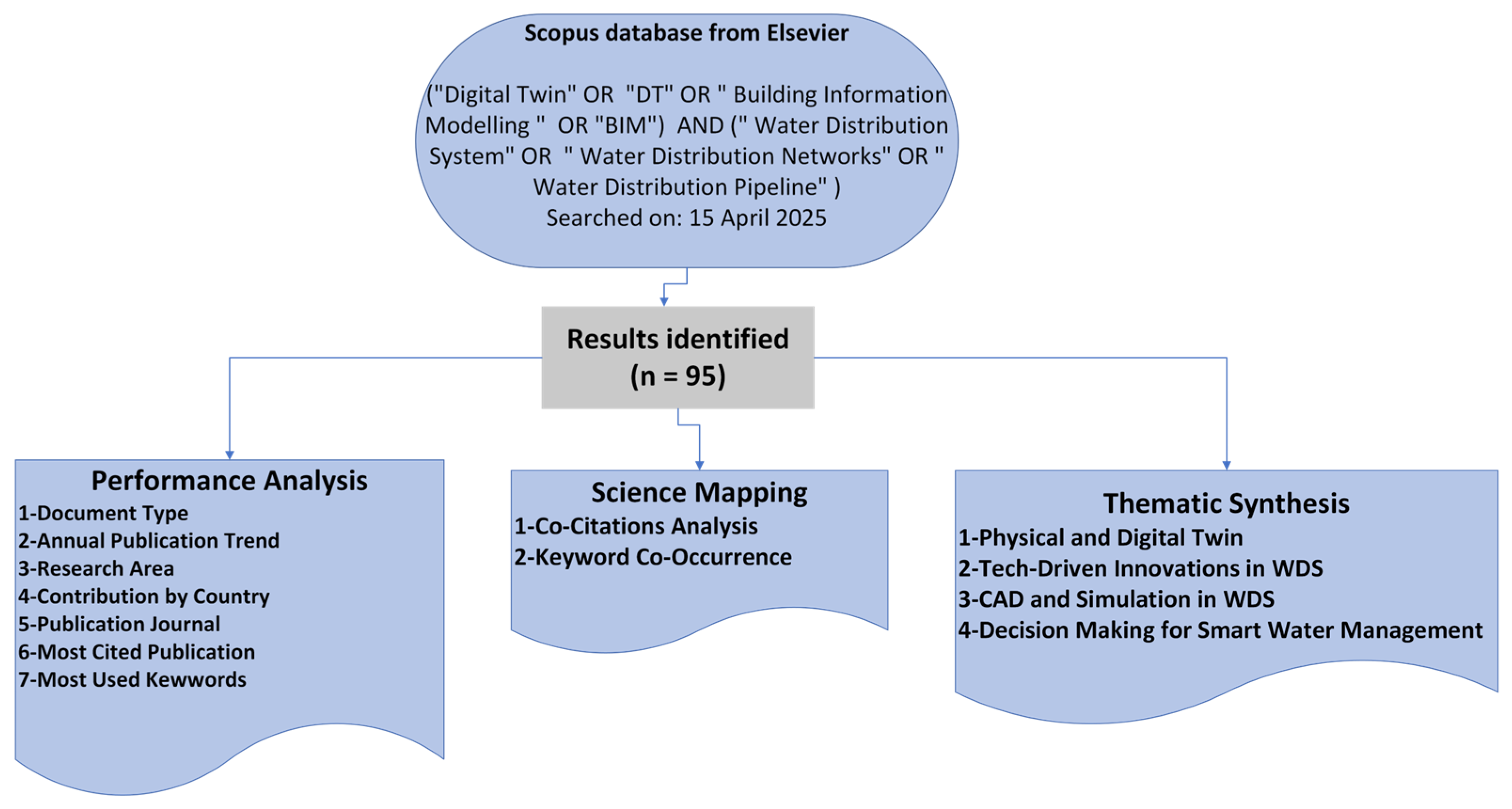
A bibliometric and network analysis was carried out using the Scopus database, provided by Elsevier. Scopus is recognized for its extensive multidisciplinary coverage, robust search functionalities, and inclusion of high-quality peer-reviewed literature, making it a valuable tool for assessing scientific impact and retrieving data for bibliometric research [30,31]. It allows access to technical journal articles and enables the identification of influential research through citation networks [15]. The initial comprehensive literature search was conducted in 2024 and was subsequently updated in April 2025 to capture the most recent publications. The search was not limited by a start date, ensuring the inclusion of all relevant publications from the entire available timeline in the database, ensuring a comprehensive review. The following search string was used to retrieve relevant records: TITLE-ABS-KEY (“Digital Twin”) OR (“DT”) OR (“Building Information Modelling”) OR (“BIM”) AND (“Water Distribution Networks”) OR (“Water Distribution System”) OR (“Water Distribution Pipeline”). The search returned 95 publications that met the criteria for bibliometric and review analysis, which is a quantity that falls within the acceptable range recommended for delivering meaningful insights in emerging research fields [32,33]. Figure 1 presents a flowchart outlining the methodology employed in the bibliometric and literature review of BIM and DT applications in WDSs.
Figure 1.
Flowchart of the bibliometric and review analysis of DT and BIM technologies in water distribution systems.
For the bibliometric analysis, the open-source statistical software R 4.4 was employed using the Bibliometrix R 5.2 package, along with its web-based interface Biblioshiny [34]. This tool is among the most widely used for bibliometric research, offering a user-friendly platform for visualizing and interpreting key components of scholarly literature. The analysis included a range of bibliometric indicators and descriptive statistics, such as source and citation analysis, author productivity, keyword co-occurrence (Keywords Plus), country-level output, and annual publication trends [35]. This allowed for both performance analysis and science mapping to provide a holistic overview of the research landscape [36].
To enhance scientific mapping and network visualization, the exported data file was also analyzed using VOSviewer 1.6 software [37]. This enabled the generation of interpretable bibliometric maps, both overlay- and network-based, to identify key contributions and conceptual linkages in the application of DT and BIM technologies in WDSs. In addition to the quantitative bibliometric approach, a literature review (LR) was conducted to provide contextual depth. The LR helped to define the research background, highlight existing challenges, validate theoretical frameworks, and identify future research directions by distinguishing between completed studies and knowledge gaps [38,39]. This hybrid methodology, combining bibliometric analysis with a qualitative literature review, enabled a richer examination of academic trends and thematic clusters. Data were extracted on 15 April 2025. Among the 95 documents included in the final dataset, 60.0% were journal articles; 27.3% were conference papers, reflecting the field’s emerging nature and the tendency to disseminate preliminary findings rapidly; 7.4% were conference review articles; 2.1% were review papers, signalling a growing interest in synthesizing and expanding the knowledge base; and 1.1% were book chapters. These distribution statistics are summarized in Table 1, offering insights into the nature and maturity of the research on BIM and DT in WDSs.
Table 1.
Document types.
3. Results
3.1. Analysis of Publication Patterns
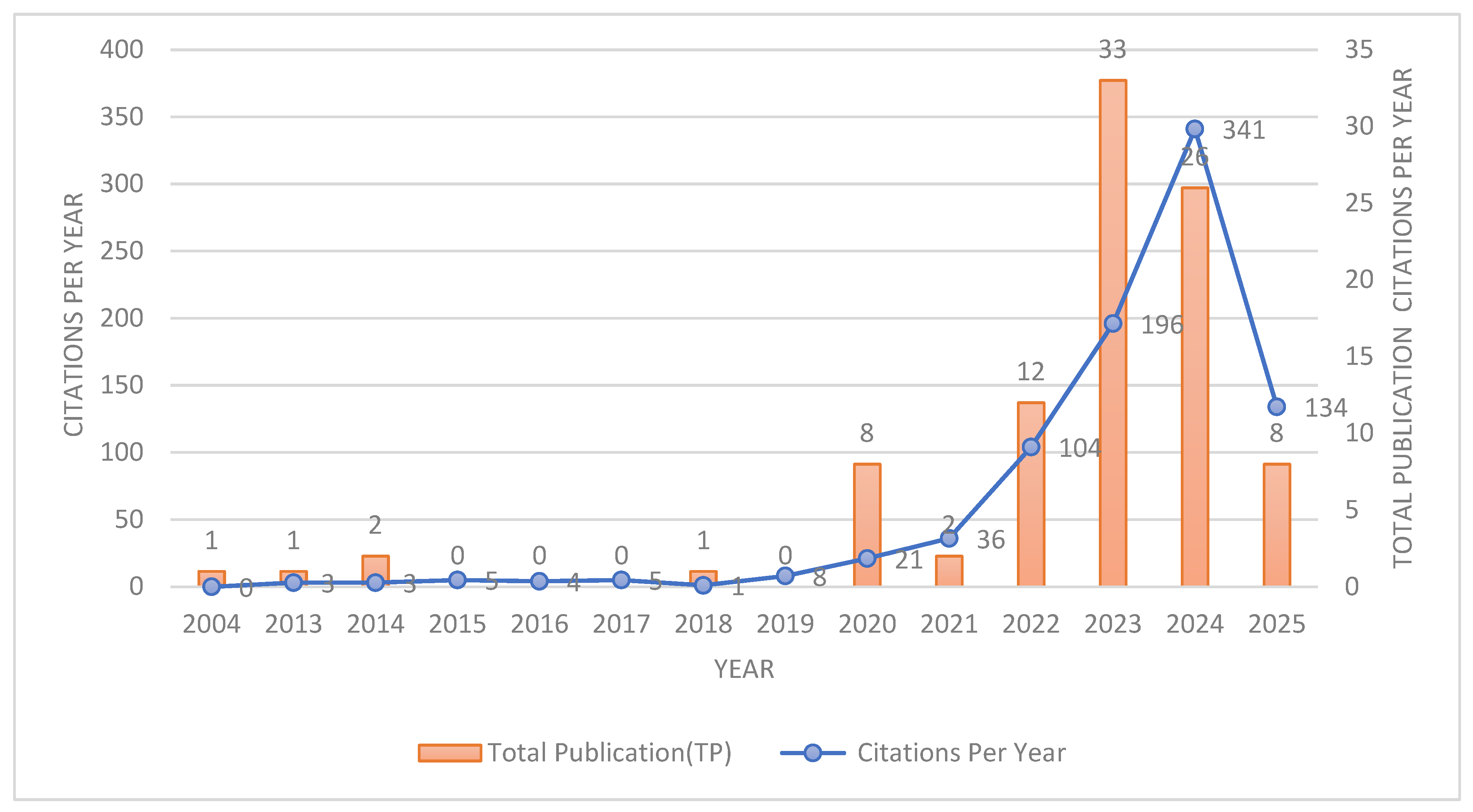
The evolution and growth of research on DT and BIM technologies in WDSs can be traced through publication counts and citation metrics. Between 2004 and 2025, a total of 1543 citations were recorded across 56 publications, yielding an average of 9.09 citations per article. The average age of the documents, defined as the amount of time it takes for a publication to begin receiving citations, is approximately 2.05 years, indicating increasing recent relevance and citation activity.
As illustrated in Figure 2, the earliest publication related to BIM and DT in WDSs dates to 2004. However, growth in this research area remained minimal for nearly a decade, with the next relevant publication appearing only in 2013. Substantial expansion began only in recent years. Notably, since 2020, there has been a sharp rise in research output, with eight articles (8.5%) published during this six-year period. The field experienced its highest level of productivity in 2023, with 33 publications, accounting for 35.6% of the total output. This surge indicates a growing academic and practical interest in the integration of BIM and DT technologies for water infrastructure management. The continued upward trajectory since 2022 suggests that this research domain is rapidly gaining momentum and visibility within the broader water and infrastructure research communities.
Figure 2.
Publication and citation patterns.
3.2. Research Area
Multiple research domains on DT and BIM technologies in WDSs were identified. The top five research domains were engineering (54), Environmental Science (36), Computer Science (25), Social Sciences (21), and Agricultural and Biological Sciences (10), as shown in Table 2.
Table 2.
Research areas.
3.3. Social Structure of Knowledge
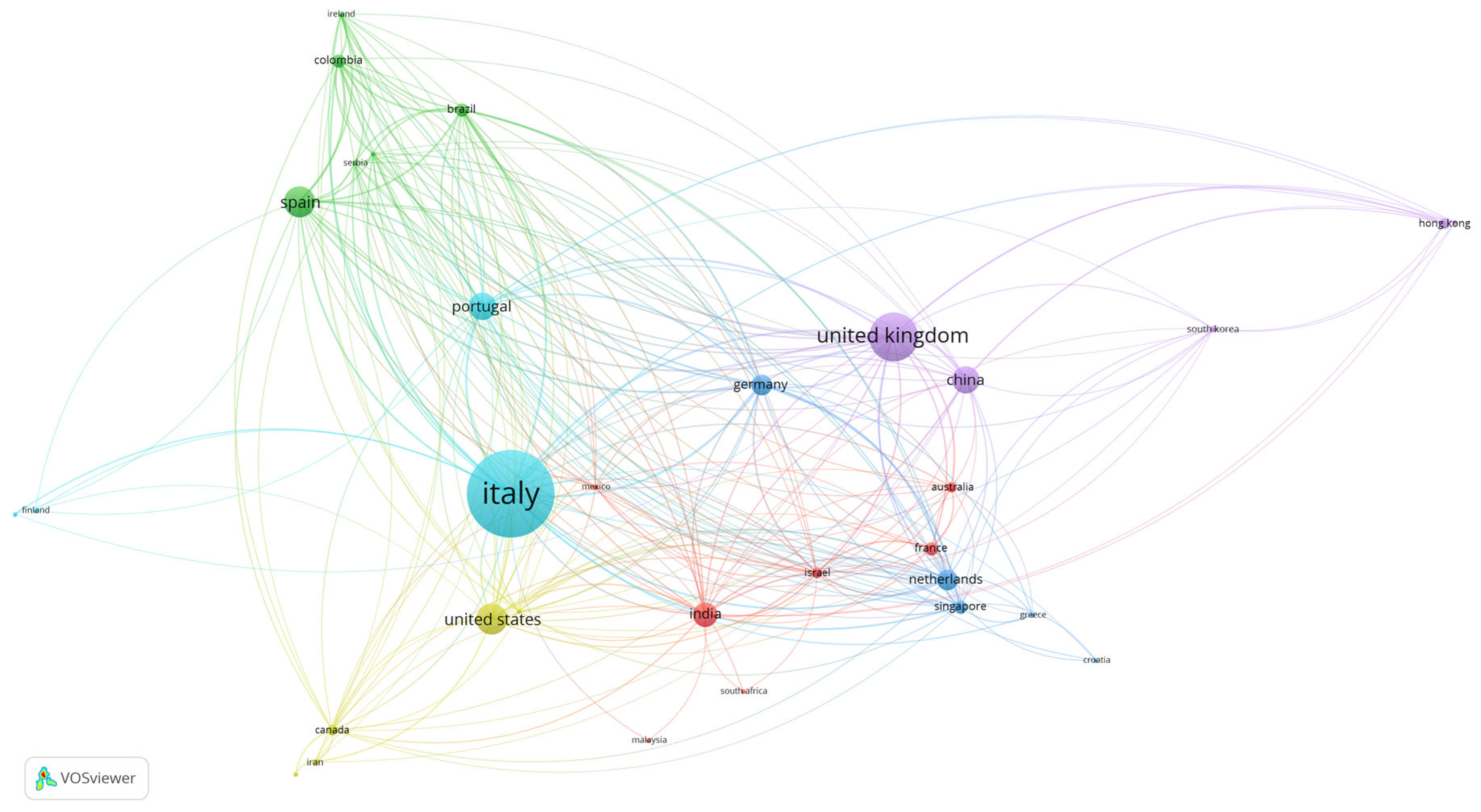
An analysis of the social structure through collaborative networks provides insight into the interconnections among countries, researchers, and institutions, highlighting the most influential contributors and collaborative efforts in the field [40]. Among the contributing nations, Italy emerged as the most productive, in terms of publications, with 25 papers on DT and BIM technologies, accumulating 220 citations, as illustrated in the collaboration network, as shown in Figure 3. Spain, though contributing fewer papers (nine documents), recorded a higher citation impact with 256 citations, averaging 24.44 citations per publication. Overall, the top 10 countries accounted for more than 82.6% of all publications, underscoring their dominant role in advancing research on DT and BIM technologies in WDSs, as indicated in Table 3.
Figure 3.
Network visualization of international collaboration between countries.
Table 3.
Top 10 countries contributing to Digital Twin and Building Information Modelling research.
Table 4 lists the top 10 highest-performing institutions contributing to research on DT and BIM technologies during the study period, with the literature showing a strong focus on engineering. Notably, 40% of these institutions are based in Italy, reflecting the country’s leading role in this field. The Italian institutions include the University of Bologna, Sapienza University of Rome, Technical University of Bari, and the University of Palermo. Other prominent institutions featured are the Universitat Politècnica de València (Spain), Hong Kong Polytechnic University (Hong Kong), Indian Institute of Science (India), University of Exeter (United Kingdom), Tongji University (China), and Delft University of Technology (Netherlands).
Table 4.
Top 10 affiliations.
3.4. Sources
Table 5 presents the top 10 journals and conference proceedings publishing research on DT and BIM technologies. The journal Water (Switzerland) ranks first with 9 publications and a CiteScore of 5.8, followed by the Journal of Water Resources Planning and Management with 5 publications and a CiteScore of 6.3, and Engineering Proceedings with 4 publications and a CiteScore of 0.7. In terms of citation impact, Water (Switzerland) also leads with 138 total citations, while Sustainable Cities and Society is the second most cited journal in this domain, receiving 84 citations.
Table 5.
Publication journals.
3.5. Intellectual Structure of Knowledge
Table 6 highlights the top 10 most-cited publications on the application of DT and BIM technologies in WDSs. The most frequently cited article is “Building and exploiting a Digital Twin for the management of drinking water distribution networks” [41], which has received 128 citations. This study outlines the development and implementation of a DT framework to address diverse operational challenges in water distribution networks. Notably, it demonstrates how DT can replicate past conditions and simulate real-time scenarios, aiding in short-term forecasting and strategic decision-making.
Table 6.
Most cited publications.
The second most cited work is “LicA: A BIM-based automated code-checking application for water distribution systems” [42], with 78 citations. The paper introduces an innovative tool that automates code compliance verification in building water system designs using the Industry Foundation Class (IFC) data model, enabling effective information exchange in BIM environments.
Ranked third is the paper “Using a digital twin to explore water infrastructure impacts during the COVID-19 pandemic” [13], cited 72 times. This work explores how DT can be used to assess and visualize changing water consumption patterns during crises such as the COVID-19 pandemic. It also underscores the potential of DT for enhancing utility management and infrastructure planning under dynamic conditions.
Following closely is “New Challenges towards Smart Systems’ Efficiency by Digital Twin in Water Distribution Networks” [43], with 56 citations. This study proposes a novel DT approach for efficient system management, emphasizing real-time leak detection and control through the integration of smart sensors, SCADA, and GIS. The paper demonstrates how DT contributes to significant water savings and operational cost reductions by enabling rapid fault detection and resolution.
These highly cited publications represent foundational contributions to the evolving knowledge base of DT and BIM technologies in WDSs. Their frequent citation in the 95 Scopus-indexed documents analyzed for this study highlights their substantial influence and relevance in the field.
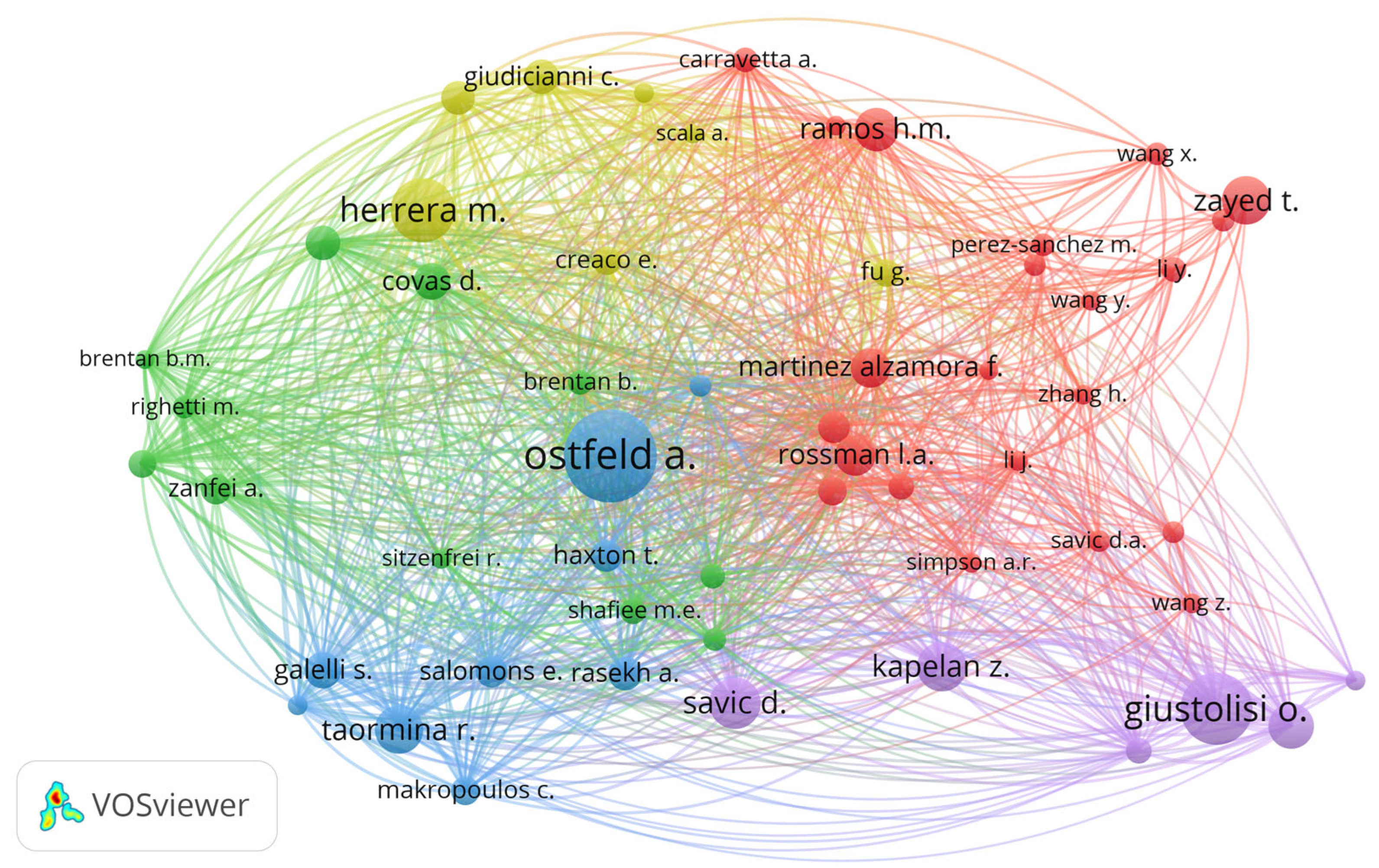
Co-citation analysis is a commonly used bibliometric method to trace shifts in paradigmatic thinking, understand the intellectual foundation of the field, and evaluate the influence of individual authors [48]. A co-citation occurs when two publications are cited together in a third document, thereby establishing a conceptual or thematic link between them. This technique helps uncover the underlying structure of knowledge and identifies core research areas within a field [15].
Figure 4 illustrates the author co-citation network generated from the analyzed documents, revealing key relationships among authors based on shared citations. These interconnections highlight the central figures and collaborative patterns shaping the scholarly landscape of BIM and DT applications in WDSs.
Figure 4.
Co-citation network of authors for documents.
The top five most co-cited authors are presented in Table 7. Notably, Berardi, T., and Giustolisi, O., emerge as influential figures, frequently cited together and recognized for their foundational contributions to the field. Their co-authored works, such as “From Digital Twin Paradigm to Digital Water Services” [49], “Digital Water Services using Digital Twin paradigm” [50], and “Digital Transformation Paradigm for Asset Management in Water Distribution Networks” [51], have played a pivotal role in shaping the discourse around the integration of DT in WDSs.
Table 7.
Top 5 co-cited authors.
3.6. Keyword Analysis
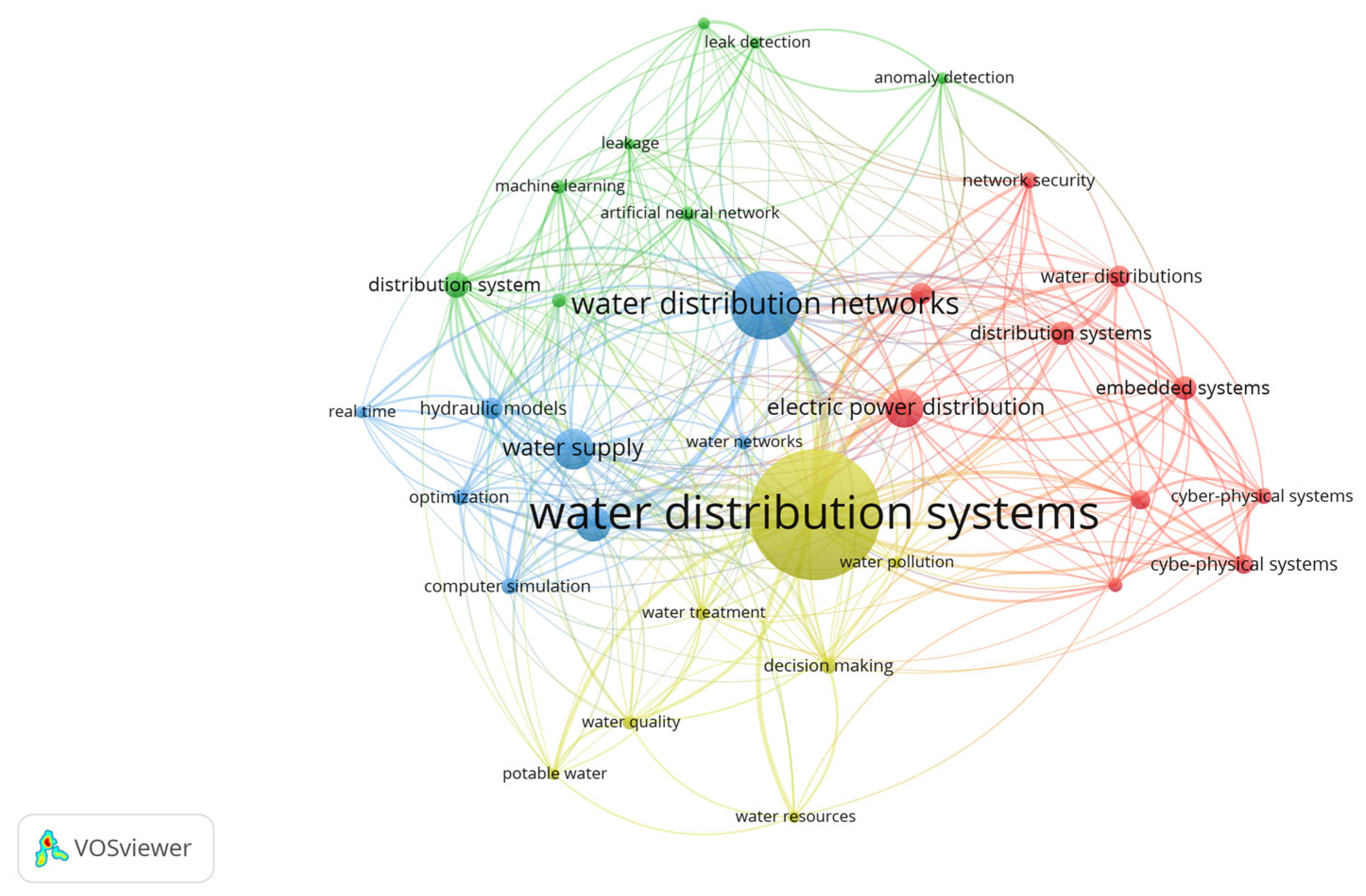
To investigate the relationship between the structure of thought of the study and the primary topics, VOSviewer software was used to provide an understandable representation of the co-occurrence network. Every keyword is represented by a node, the size of which shows its frequency of occurrence in relation to other keywords. Table 8 additionally shows the top 20 most commonly used keywords in terms of occurrences and total link strength. The number of links and total link strength, as well as the proximity of the keywords to one another, show a given keyword’s relatedness to other keywords. The intensity of the link indicates the number of papers in which two keywords appear simultaneously [52,53].
Table 8.
Top 20 keywords.
The term with the most occurrences is “water distribution systems” (64 occurrences), which has the highest total link strength (227), indicating that the majority of studies are focused on this topic. A number of the terms are associated with aspects of operation and maintenance phases, such as “water management” and “water treatment”, as well as “cyber–physical system” and “power production”. Interestingly, “digital twin” has nine occurrences and BIM has none, which could be because the idea of DT is a BIM development that allows for real-time monitoring and intelligent feedback. Machine learning (ML) and artificial neural networks are also commonly occurring terms, which may imply that they are frequently investigated, ensuring the use of these tools for the decision-making phase.
Keyword clustering was performed using VOSviewer, with a bibliometric analysis of co-occurring keywords [37,54]. Specifically, the clustering procedure used a modularity-based approach, which creates keywords in clusters by maximizing the modularity score [55]. This method ensures that the clusters underlie the thematic structure of the dataset [54].
The choice of four clusters, as shown in Table 9, strikes a compromise between interpretability and thematic coherence, providing a useful overview of research patterns.
Table 9.
The four clusters and their keywords.
To show a reproducible visualization of the keywords of research in the dataset, “Index keywords” was employed instead of all keywords [56]. Thus, 878 keywords were extracted from the dataset. With the minimum number of occurrences set to five, 33 keywords met the requirements for inclusion in the network. Figure 5 illustrates the keyword co-occurrence network. The colors represent the various term clusters that correspond to separate study topics.
Figure 5.
Keyword co-occurrence network map.
The first area, Physical and Digital Twin, includes keywords related to cyber systems, attacks, security, networks, and embedded systems in DT. The second area, Tech-Driven Innovation in WDS, includes artificial intelligence in WDSs. The third area, CAD and Simulation in WDS, highlights computers and hydraulic models. The fourth area, Decision-making, includes hydropower, water pollution, water quality, and water treatment.
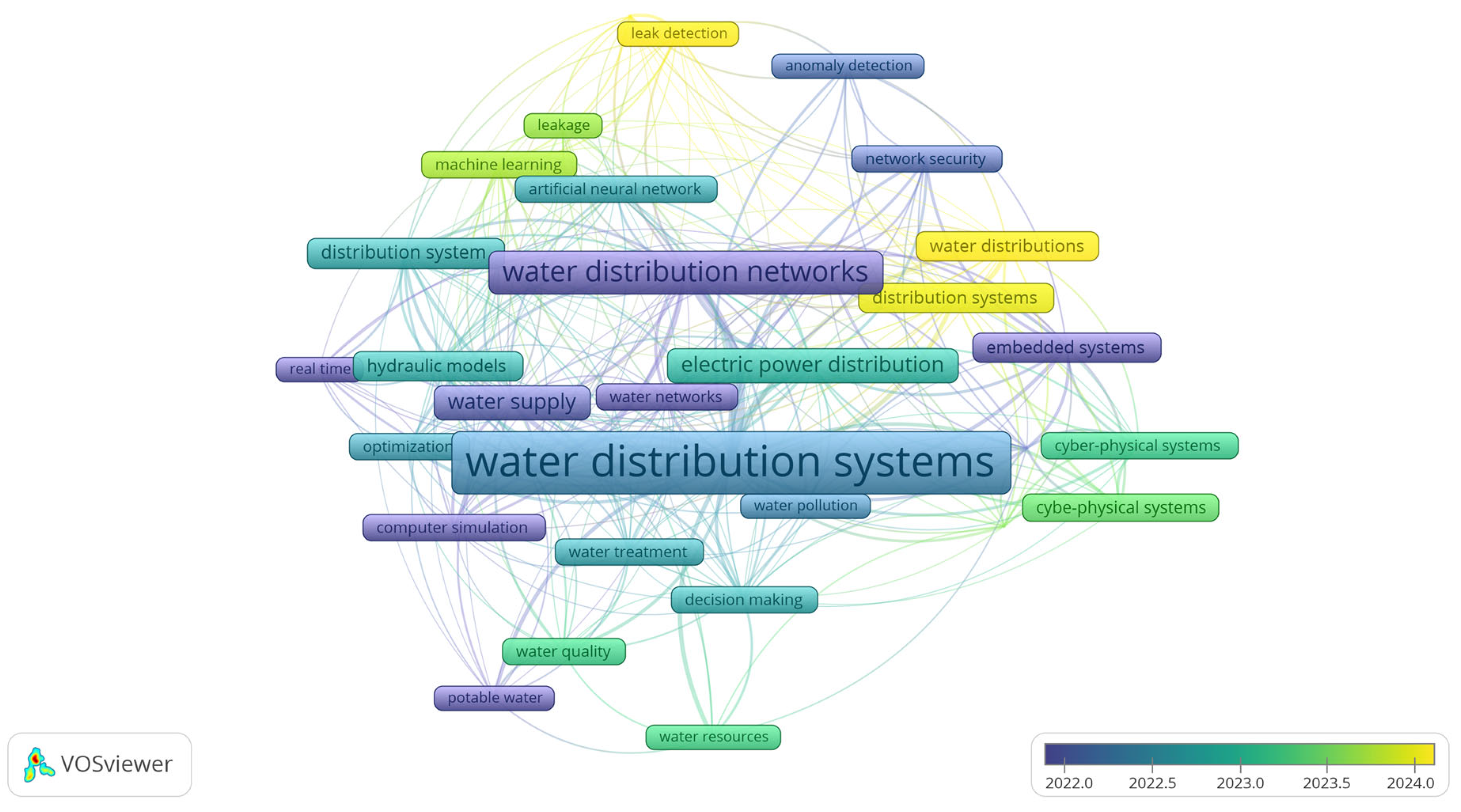
The network analysis of keywords further revealed that machine learning and predictive analytics are becoming central to DT’s application in water infrastructure. Figure 6 shows the patterns and developments of the keywords in recent years. The lighter colors reflect the most recent study areas of researchers in DT and BIM technologies in the WDSs. Researchers are now working on merging DT with other solutions, as shown below.
Figure 6.
Network map of average publications of keywords per year.
The authors of [57] proposed a DT platform capable of real-time monitoring and analysis of pressure data and network state information with valve closure analysis using a greedy search method.
The authors of [58] implemented a DT that improves pumping and distribution system operations and produces information that helps solve significant problems and costs.
The authors of [59] proposed a DT-assisted decision-support system for quality regulation and leak localization in large-scale water distribution networks utilizing a graph neural network (GNN) machine learning technique.
In the growing landscape of Industry 5.0, the integration of novel technologies such as Cognitive DT is crucial for directing industrial processes towards sustainability and inclusion, particularly in developing nations aiming to align with Sustainable Development Goals [53], and is a motivator for accelerating the realization of Industry 5.0 in the future [60].
4. Key Areas in Water Distribution Systems
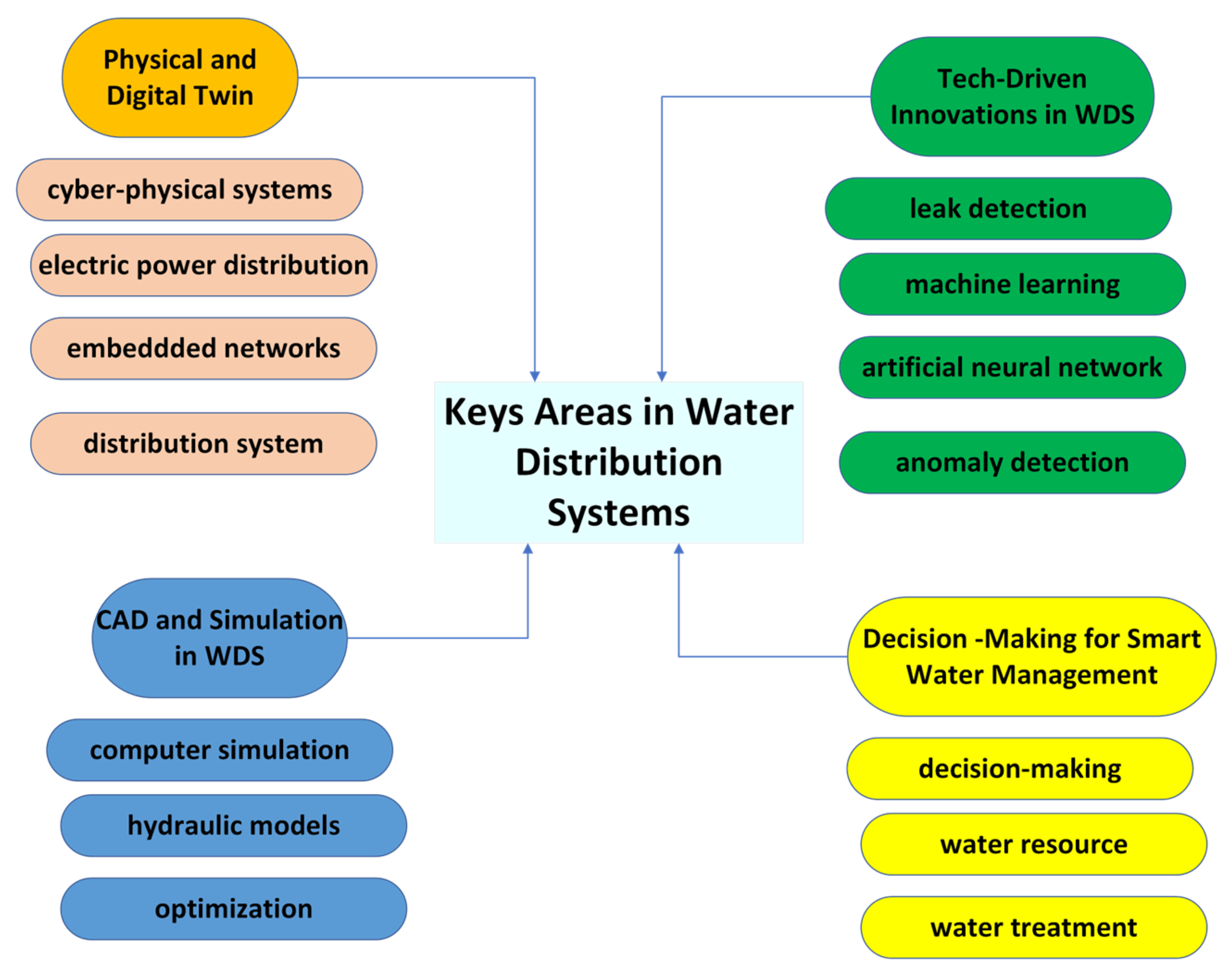
This section discusses the included clusters and lists the most commonly mentioned sources in each cluster. Based on co-occurrence mapping and keyword clustering, four major thematic clusters were identified, as shown in Figure 7.
Figure 7.
Key areas in water distribution systems.
Each theme is elaborated below through the relevant literature and emerging challenges and limitations in the field.
4.1. Physical and Digital Twin
This theme highlights the growing development and implementation of DT systems for infrastructure monitoring, maintenance, and resilience. The bibliometric review revealed a high co-occurrence of terms such as cyber–physical systems, electric power distribution, embedded networks, and distribution systems, reflecting the rapid advancement of smart infrastructure technologies.
The integration of cyber–physical systems (CPSs) and embedded networks into WDSs is increasingly recognized for its capacity to improve efficiency, anomaly detection, and cybersecurity. IoT-enabled devices combined with ML models facilitating real-time monitoring play an essential part in maintaining system integrity and detecting threats [61]. To support synchronization and co-simulation within DT environments under cyberattacks. [62] proposes using both offline and online data, allowing multiple readings per connection request. Moreover, machine learning models like Logistic Regression and Random Forest have demonstrated promise in leak localization and anomaly detection, enhancing WDS reliability [61].
Nonetheless, significant challenges persist. Cybersecurity vulnerabilities pose major risks, especially in large-scale implementations, where data breaches can compromise operational safety. The absence of standardized frameworks for DT development complicates integration with existing infrastructure. Furthermore, machine learning applications are constrained by the lack of excellent historical data, impeding model accuracy and limiting the scope of data processing required for high-fidelity DT simulations [63]. Other challenges include the unavailability of precise, long-term environmental datasets [64]; limited data sharing across regions; and cultural, political, and economic barriers [65]. Continuous calibration of digital models requires accurate real-time data, which is often difficult to acquire, further complicating integration efforts.
4.2. Tech-Driven Innovations for Leak Detection
This theme investigates the importance of artificial intelligence (AI) and ML in the transformation of WDS management. The bibliometric analysis revealed a sharp increase in publications post-2020, with frequent terms such as leak detection, machine learning, artificial neural networks, and anomaly detection.
Artificial neural networks (ANNs) are particularly effective in classifying leak and non-leak events using acoustic signals, offering reliable real-time predictions without extensive preprocessing [45]. Other ML models, including k-Nearest Neighbours (k-NN), Decision Trees (DTs), and Support Vector Machines (SVMs), have been applied to predict leak locations [66]. IoT-enabled sensors support real-time anomaly detection, allowing ML algorithms to simulate various leak scenarios, enhancing detection robustness [61]. Notably, [44] validated a model using data from piezoelectric accelerometers, demonstrating improved accuracy of classifiers such as SVM, DT, and KNN. Their research also underscores the potential of autonomous wireless sensor nodes for continuous monitoring.
Despite these advancements, AI applications in WDSs still face several limitations. Most current models are trained on laboratory data, reducing their effectiveness in real-world environments. Signal noise and frequency variations affect detection accuracy, while poor feature correlation in both metal and non-metal pipes complicates classification [45]. Other challenges include data scarcity, model generalizability across cities, and failure to detect multiple leaks within the same pipeline [44]. Rapid urbanization further complicates hydraulic modelling, and limited computational resources restrict the scalability of simulations [67].
Future studies should center on integrating DT and ML for real-time anomaly detection in WDNs, addressing challenges of data integration and model scalability [61]. Expanding datasets from real WDS networks and deploying single noise loggers for localization may improve detection [66]. Additionally, innovative algorithms and parallel computing for hydraulic calculations, particularly involving pumps and valves, should be explored [67].
Recent research, such as [68], proposes extending DT functionality through the deployment of multiple virtual sensors, thereby enhancing leak detection and data acquisition. Reference [69] emphasizes the need for interpretable and robust models that balance the complexity of ML with practical applicability. Further research should also focus on the challenge of simultaneous event detection and investigate dynamic graph-based anomaly detection in heterogeneous systems [70].
4.3. CAD and Simulation in WDSs
This theme focuses on the integration of Computer-Aided Design (CAD) and hydraulic modelling in the planning and management of WDSs. The bibliometric network highlighted frequent terms such as computer simulation, hydraulic models, optimization, and water management, reflecting the growing reliance on simulation tools.
Computer simulations are essential in pipe replacement planning, reducing maintenance costs while ensuring reliability [71]. Integrated with real-time data, these simulations enhance disaster response capabilities across sectors, including water, energy, and transportation [13]. In WDSs, hydraulic models are often linked with sensor data and consumption profiles for optimized performance [13]. EPANET remains the most commonly used simulation tool for water networks, analyzing head and flow dynamics in extended-period simulations [72,73,74]. When combined with advanced metering infrastructure (AMI), its simulations become more accurate and dynamic [75]. One application used data from 2526 smart meters covering over 1000 nodes and pipes, enabling real-time decision-making.
Optimization of pump scheduling and pressure valve configurations through non-linear programming supports operational efficiency [43]. However, fragmented modelling environments and static design tools hinder integration. Many CAD tools are not synchronized with operational data, resulting in discrepancies between design and actual performance. The high costs and complexity of SCADA systems, combined with workforce and infrastructure limitations, are further barriers [71].
Big data integration presents additional challenges. Centralized data centers often store fragmented data, interrupting simulations and reducing model responsiveness [75]. Synchronization failures can occur if actuator commands are not updated before simulation steps [62].
Future directions should include integrating design-phase tools with operational DT platforms, enabling seamless workflows and real-time analytics [13].
Combining physically based models with AI/ML and digital representations in GIS/BIM platforms will support operational resilience [50]. Propagation of uncertainty in DTs, performance calibration, and efficient decomposition strategies for large networks are essential areas for further study [67,76].
4.4. Decision-Making
This final theme discusses the role of digital technologies in helping decision-making for water quality management, pollution control, and sustainable resource use. Bibliometric analysis showed frequent terms such as decision-making, water resources, and water treatment, indicating strong interdisciplinary connections.
Hydraulic models are crucial in facilitating optimal scheduling and anomaly diagnosis, reducing the response time of real-time systems and improving the integration of big data and smart sensing [67]. District Information Areas (DIAs) allow decentralized control by analyzing sensor data locally, enhancing resilience and autonomy [77]. ML techniques such as Logistic Regression and Random Forest further support real-time leak localization and prediction [61]. Reference [78] proposed a Smart Predictive DT integrated into a multiservice architecture for forecasting water availability and improving infrastructure management.
However, challenges remain, with many decision-support systems lacking real-time data capabilities and facing difficulties in modelling complex hydraulic phenomena. Data collection is often hindered by low sensor density, poor sampling frequency, and infrastructure investment gaps [11,64]. Additional barriers include errors in GIS datasets, data latency, and limited integration between strategic and detailed models [41].
Future research should combine DIAs with existing DMAs for better real-time monitoring and control [77], improve computational efficiency for model calibration, and utilize parallel processing in large-scale networks [67]. Enhanced collaboration is needed to expand access to historical datasets and deploy IoT sensor networks. Technologies such as drones for topographic surveys and cloud computing for real-time model comparison are promising tools for advancing decision-making capabilities [11].
5. Discussion
This research delivers a bibliometric and thematic analysis of research on DT and BIM technologies in WDSs. The findings reveal a research domain in rapid expansion, driven by digital transformation imperatives in infrastructure management and the pressing need for sustainable and resilient water systems. The temporal analysis indicates scholarly attention to DT and BIM technologies in WDS growth since 2020. This aligns with increased global investments in smart infrastructure and digital water utilities.
This growth is not merely quantitative but indicative of a strategic pivot in water systems. This aligns with previous studies in adoption of digital solutions in the construction industry from design to maintenance [17,79,80]. The research community is dominated by European institutions, and co-authorship networks show limited global interconnectedness. This lack of cross-regional collaboration may constrain the adaptability of DT and BIM innovations to diverse infrastructural and socioeconomic contexts. These limited collaborative efforts in DT and BIM technologies in WDSs could be turned into an opportunity for more inclusive and diverse research partnerships, particularly with underrepresented regions such as Africa. This phenomenon is in agreement with the study by [23] on the barriers to BIM adoption in small and medium-sized enterprises, as well as research priorities that are shaped by local agendas and funding structures, as noted by [81].
Thematic clustering further confirms that DT and BIM technologies are increasingly conceptualized not just as tools for visualization and documentation, but as cyber–physical infrastructure frameworks capable of supporting predictive decision-making and autonomous operations. However, the discussion also reveals methodological weaknesses, including over-reliance on lab-scale data, lack of transferability of trained models, and limited field validation. These limitations highlight a critical gap between theoretical promise and practical implementation, consistent with previous studies [82]. Such integration would be instrumental for achieving the performance and sustainability targets articulated under global frameworks like the UN Sustainable Development Goals [83,84].
Future research in developing countries should prioritize the development of integrated DT frameworks. These frameworks would combine simplified BIM models, existing GIS infrastructure maps, periodic manual readings, and sparse networks of low-cost IoT sensors within DMAs. This approach enables simulation, real-time integration, and analysis of data to generate actionable insights for critical operations, including leak detection, pressure management, and prioritized asset maintenance.
Limitations and Future Directions
Although this work makes important progress in the field, its reliance on a limited set of bibliometric analysis data from one database (Scopus) might have excluded niche or gray literature, potentially overlooking valuable insights.
The findings of this study highlight several promising avenues for future research to advance the application of DT and BIM technologies in water infrastructure. Priority should be given to the following areas:
- Interdisciplinary collaboration across engineering, artificial intelligence, social sciences, and local communities is critical for mitigating the current spatial concentration of research and ensuring that resulting solutions are socially equitable and contextually relevant.
- An Integrated DT Framework should be established, with future work focusing on finding out the merits of systematic integration of operational DTs with AI/ML models, GIS/BIM datasets, and real-time IoT sensor networks to address persistent challenges in data interoperability and model scalability.
- Advancing anomaly detection necessitates the development of explainable, adaptive machine learning models capable of identifying multiple concurrent events through the use of virtual sensors and advanced noise-logging technologies.
- Enhancing computational model robustness involves improving simulation efficiency and reliability via high-performance computing, alongside addressing key modelling challenges, including uncertainty propagation and calibration.
A concerted effort across these areas will ultimately enable a paradigm shift from reactive maintenance to predictive and pre-emptive management of global water resources.
6. Conclusions
This bibliometric and literature review provides an overview of documents published from 2004 to 2024, showing the research patterns, growth, and direction of DT and BIM technologies in water distribution systems.
In response to RQ1, which was related to the main patterns of growth regarding the application of DT and BIM technologies in WDSs, this study identifies the growth of the annual number of publications since 2020, with a total of 1543 citations and an average of 9.09 citations per article. Researchers from Italy produced the most publications, studies from Spain received the highest number of citations, and the most prominent journals were Water (Switzerland) and the Journal of Water Resources Planning and Management.
Addressing the conceptual framework of the knowledge base (RQ2), we can see that the research community is dominated by European institutions, and co-authorship networks show limited global interconnectedness. This suggests that countries, especially the developing ones, should prioritize integrated DT and BIM technologies for more inclusive and diverse research partnerships.
Concerning anticipated future developments (RQ3), the trajectory indicates that the primary direction is a move from static models to intelligent, predictive systems. This involves the integration of AI and ML for real-time anomaly detection, the fusion of enabling technologies like IoT sensors and cloud computing to address scalability, and the evolution of these systems into proactive tools that enhance operational resilience and optimize decision-making in WDNs. To realize this potential, the field must prioritize inclusive global partnerships, especially with developing countries. A constraint in the scope of this study is the exclusive reliance on Scopus as the sole bibliographic source. While this limits the scope of the literature retrieved, it was essential for guaranteeing the consistency of the data and the overall reliability of the methodology. This study characterizes the state of the art and provides a clear, actionable roadmap, making a tangible contribution to guiding future research and application in the field of DT and BIM technologies for water distribution systems. Further research could be critical to cultivate transdisciplinary and globally inclusive collaboration to overcome the current geographic concentration and ensure solutions are socially equitable and contextually relevant. Furthermore, establishing ontological and interoperability standards is a paramount research imperative to unlock scalable, lifecycle-wide asset management.
Author Contributions
C.R.C.C.: Writing—Review and Editing, Writing—Original Draft Preparation, Methodology, Investigation, Formal Analysis, Data Curation, Conceptualization. M.C.: Writing—Review and Editing, Visualization, Supervision, Project Administration, Methodology, Investigation, Conceptualization. M.F.: Writing—Review and Editing, Visualization, Supervision, Methodology, Investigation, Conceptualization. M.E.O.: Writing—Review and Editing, Visualization, Supervision, Methodology, Investigation, Conceptualization. All authors have read and agreed to the published version of the manuscript.
Funding
This research was funded by the Southern African Science Service Centre for Climate Change and Adaptive Land Management (SASSCAL), Namibia, sponsored by the German Government through the Federal Ministry of Education and Research (BMBF), Germany, grant number 01LG2091A.
Data Availability Statement
Not applicable.
Acknowledgments
During the preparation of this manuscript, the authors cautiously used OpenAI 4.0 for the purpose of enhancing language and readability. The authors have reviewed and edited the output and take full responsibility for the content of this publication.
Conflicts of Interest
The authors declare no conflicts of interest.
References
- Daniel, I.; Ajami, N.K.; Castelletti, A.; Savic, D.; Stewart, R.A.; Cominola, A. A survey of water utilities’ digital transformation: Drivers, impacts, and enabling technologies. NPJ Clean Water 2023, 6, 51. [Google Scholar] [CrossRef] [Scilit]
- Sivagurunathan, V.; Elsawah, S.; Khan, S.J. Scenarios for urban water management futures: A systematic review. Water Res. 2022, 211, 118079. [Google Scholar] [CrossRef] [Scilit]
- Eastman, C.; Teicholz, P.; Sacks, R.; Liston, K. BIM Handbook: A Guide to Building Information Modeling for Owners, Managers, Designers, Engineers and Contractors, 2nd ed.; John Wiley & Sons, Inc.: Hoboken, NJ, USA, 2011; ISBN 978-0-470-95134-7. [Google Scholar]
- American Water Works Association. Digital Twins. Available online: https://www.awwa.org/Resources-Tools/Resource-Topics/Digital-Twins (accessed on 9 June 2024).
- Gilbert, T.; James, P.; Smith, L.; Barr, S.; Morley, J. Topological integration of BIM and geospatial water utility networks across the building envelope. Comput. Environ. Urban. Syst. 2021, 86, 101570. [Google Scholar] [CrossRef] [Scilit]
- Bonilla, C.; Zanfei, A.; Brentan, B.; Montalvo, I.; Izquierdo, J. A Digital Twin of a Water Distribution System by Using Graph Convolutional Networks for Pump Speed-Based State Estimation. Water 2022, 14, 514. [Google Scholar] [CrossRef] [Scilit]
- Patriarca, R.; Simone, F.; Di Gravio, G. Modelling cyber resilience in a water treatment and distribution system. Reliab. Eng. Syst. Saf. 2022, 226, 108653. [Google Scholar] [CrossRef] [Scilit]
- Hamma-adama, M.; Kouider, T. Comparative Analysis of BIM Adoption Efforts by Developed Countries as Precedent for New Adopter Countries. Curr. J. Appl. Sci. Technol. 2019, 36, 1–15. [Google Scholar] [CrossRef] [Scilit]
- Hwang, K.E.; Kim, I.; Kim, J.I.; Cha, S.H. Client-engaged collaborative pre-design framework for modular housing. Autom. Constr. 2023, 156, 105123. [Google Scholar] [CrossRef] [Scilit]
- Mousavi, Y.; Gharineiat, Z.; Karimi, A.A.; McDougall, K.; Rossi, A.; Barsanti, S.G. Digital Twin Technology in Built Environment: A Review of Applications, Capabilities and Challenges. Smart Cities 2024, 7, 2594–2615. [Google Scholar] [CrossRef] [Scilit]
- Bonilla, C.; Brentan, B.; Montalvo, I.; Ayala-Cabrera, D.; Izquierdo, J. Digitalization of Water Distribution Systems in Small Cities, a Tool for Verification and Hydraulic Analysis: A Case Study of Pamplona, Colombia. Water 2023, 15, 3824. [Google Scholar] [CrossRef] [Scilit]
- The Sustainable Development Goals Report 2025. 2025. Available online: https://unstats.un.org/sdgs/report/2025/The-Sustainable-Development-Goals-Report-2025.pdf (accessed on 10 September 2025).
- Pesantez, J.E.; Alghamdi, F.; Sabu, S.; Mahinthakumar, G.; Berglund, E.Z. Using a digital twin to explore water infrastructure impacts during the COVID-19 pandemic. Sustain. Cities Soc. 2021, 77, 103520. [Google Scholar] [CrossRef] [Scilit] [PubMed]
- Homaei, M.; Di Bartolo, A.J.; Ávila, M.; Gutiérrez, Ó.M.; Caro, A. Digital Transformation in the Water Distribution System based on the Digital Twins Concept. Preprint 2024. [Google Scholar] [CrossRef] [Scilit]
- Chihib, M.; Salmerón-Manzano, E.; Novas, N.; Manzano-Agugliaro, F. Bibliometric maps of BIM and BIM in universities: A comparative analysis. Sustainability 2019, 11, 4398. [Google Scholar] [CrossRef] [Scilit]
- Lovell, L.J.; Davies, R.J.; Hunt, D.V.L. Building Information Modelling Facility Management (BIM-FM). Appl. Sci. 2024, 14, 3977. [Google Scholar] [CrossRef] [Scilit]
- Zahedi, F.; Alavi, H.; Sardroud, J.M.; Dang, H. Digital Twins in the Sustainable Construction Industry. Buildings 2024, 14, 3613. [Google Scholar] [CrossRef] [Scilit]
- BIM Africa, African BIM Report 2024. Authored by the Research and Development Committee, 2024. Available online: www.bimafrica.org/reports (accessed on 20 May 2025).
- Radzi, A.R.; Azmi, N.F.; Kamaruzzaman, S.N.; Rahman, R.A.; Papadonikolaki, E. Relationship between digital twin and building information modeling: A systematic review and future directions. Constr. Innov. 2023, 24, 811–829. [Google Scholar] [CrossRef] [Scilit]
- Revolti, A.; Gualtieri, L.; Pauwels, P.; Dallasega, P. From building information modeling to construction digital twin: A conceptual framework. Prod. Manuf. Res. 2024, 12, 2387679. [Google Scholar] [CrossRef] [Scilit]
- Omrany, H.; Al-Obaidi, K.M.; Husain, A.; Ghaffarianhoseini, A. Digital Twins in the Construction Industry: A Comprehensive Review of Current Implementations, Enabling Technologies, and Future Directions. Sustainability 2023, 15, 10908. [Google Scholar] [CrossRef] [Scilit]
- Hossain, M.I.; Bari, M.N.; Miah, M.S.U. Opportunities and challenges for implementing managed aquifer recharge models in drought-prone Barind tract, Bangladesh. Appl. Water Sci. 2021, 11, 181. [Google Scholar] [CrossRef] [Scilit]
- Bamgbose, O.A.; Ogunbayo, B.F.; Aigbavboa, C.O. Barriers to Building Information Modelling Adoption in Small and Medium Enterprises: Nigerian Construction Industry Perspectives. Buildings 2024, 14, 538. [Google Scholar] [CrossRef] [Scilit]
- Hu, W.; Ou, Y.; Liu, H.; Ni, P.; Chang, C. Integrating digital twin technologies for maintenance 4.0 in the building industry: A review and conceptual framework. Build. Environ. 2025, 288, 113997. [Google Scholar] [CrossRef] [Scilit]
- Ramos, H.M.; Kuriqi, A.; Besharat, M.; Creaco, E.; Tasca, E.; Coronado-Hernández, O.E.; Pienika, R.; Iglesias-Rey, P. Smart Water Grids and Digital Twin for the Management of System Efficiency in Water Distribution Networks. Water 2023, 15, 1129. [Google Scholar] [CrossRef] [Scilit]
- Yan, J.K.; Zheng, Z.; Zhou, Y.C.; Lin, J.R.; Deng, Y.C.; Lu, X.Z. Recent Research Progress in Intelligent Construction: A Comparison between China and Developed Countries. Buildings 2023, 13, 1329. [Google Scholar] [CrossRef] [Scilit]
- Galkin, A.; Samchuk, G.; Kopytkov, D.; Thompson, R.G. Digital twins in logistics: A comprehensive bibliometric analysis for advancing smart cities and sustainable development. Discov. Sustain. 2025, 6, 853. [Google Scholar] [CrossRef] [Scilit]
- Abduljaleel, Y.W.; Usman, F.; Syamsir, A.; Albaker, B.M.; Najeeb, M.I.; Khattab, M.M.; Al-Humairi, S.N.S. A Systematic Review on Utilizing Artificial Intelligence in Lateral Resisting Systems of Buildings. Arch. Comput. Methods Eng. 2025, 32, 4887–4954. [Google Scholar] [CrossRef] [Scilit]
- Ricciardi, G.; Callegari, G.; Leone, M.F. Leveraging digital enabling technologies for integrating climate adaptation and mitigation in urban design. Autom. Constr. 2025, 180, 106504. [Google Scholar] [CrossRef] [Scilit]
- Shamshiri, A.; Ryu, K.R.; Park, J.Y. Text mining and natural language processing in construction. Autom. Constr. 2023, 158, 105200. [Google Scholar] [CrossRef] [Scilit]
- Burnham, J.F. Scopus database: A review. Biomed. Digit. Libr. 2006, 3, 1. [Google Scholar] [CrossRef] [Scilit]
- Rogers, G.; Szomszor, M.; Adams, J. Sample size in bibliometric analysis. Scientometrics 2020, 125, 777–794. [Google Scholar] [CrossRef] [Scilit]
- Kraus, S.; Breier, M.; Dasí-Rodríguez, S. The art of crafting a systematic literature review in entrepreneurship research. Int. Entrep. Manag. J. 2020, 16, 1023–1042. [Google Scholar] [CrossRef] [Scilit]
- Aria, M.; Cuccurullo, C. bibliometrix: An R-tool for comprehensive science mapping analysis. J. Inf. 2017, 11, 959–975. [Google Scholar] [CrossRef] [Scilit]
- Gouda, G.K.; Tiwari, B. Mapping talent agility: A bibliometric analysis and future research agenda. Manag. Decis. 2022, 60, 3165–3187. [Google Scholar] [CrossRef] [Scilit]
- Garcia-Buendia, N.; Moyano-Fuentes, J.; Maqueira-Marín, J.M.; Cobo, M.J. 22 Years of Lean Supply Chain Management: A science mapping-based bibliometric analysis. Int. J. Prod. Res. 2020, 59, 1901–1921. [Google Scholar] [CrossRef] [Scilit]
- van Eck, N.J.; Waltman, L. Citation-based clustering of publications using CitNetExplorer and VOSviewer. Scientometrics 2017, 111, 1053–1070. [Google Scholar] [CrossRef] [Scilit] [PubMed]
- Marinković, M.; Al-Tabbaa, O.; Khan, Z.; Wu, J. Corporate foresight: A systematic literature review and future research trajectories. J. Bus. Res. 2022, 144, 289–311. [Google Scholar] [CrossRef] [Scilit]
- Linnenluecke, M.; Marrone, M.; Singh, A.K. Conducting systematic literature reviews and bibliometric analyses. Aust. J. Manag. 2019, 45, 175–194. [Google Scholar] [CrossRef] [Scilit]
- Zheng, H.; Guo, M.; Wang, Q.; Zhang, Q.; Akita, N. A Bibliometric Analysis of Current Knowledge Structure and Research Progress Related to Urban Community Garden Systems. Land 2023, 12, 143. [Google Scholar] [CrossRef] [Scilit]
- Fuertes, P.C.; Alzamora, F.M.; Carot, M.H.; Campos, J.C.A. Building and exploiting a Digital Twin for the management of drinking water distribution networks. Urban Water J. 2020, 17, 704–713. [Google Scholar] [CrossRef] [Scilit]
- Martins, J.P.; Monteiro, A. LicA: A BIM based automated code-checking application for water distribution systems. Autom. Constr. 2013, 29, 12–23. [Google Scholar] [CrossRef] [Scilit]
- Ramos, H.M.; Morani, M.C.; Carravetta, A.; Fecarrotta, O.; Adeyeye, K.; López-Jiménez, P.A.; Pérez-Sánchez, M. New Challenges towards Smart Systems’ Efficiency by Digital Twin in Water Distribution Networks. Water 2022, 14, 1304. [Google Scholar] [CrossRef] [Scilit]
- Yu, T.; Chen, X.; Yan, W.; Xu, Z.; Ye, M. Leak detection in water distribution systems by classifying vibration signals. Mech. Syst. Signal Process 2023, 185, 109810. [Google Scholar] [CrossRef] [Scilit]
- Tijani, I.A.; Abdelmageed, S.; Fares, A.; Fan, K.H.; Hu, Z.Y.; Zayed, T. Improving the leak detection efficiency in water distribution networks using noise loggers. Sci. Total Environ. 2022, 821, 153530. [Google Scholar] [CrossRef] [Scilit]
- Giudicianni, C.; Herrera, M.; di Nardo, A.; Adeyeye, K.; Ramos, H.M. Overview of Energy Management and Leakage Control Systems for Smart Water Grids and Digital Water. Modelling 2020, 1, 134–155. [Google Scholar] [CrossRef] [Scilit]
- Poddar, N.; Saha, G.; Dhar, S.; Mondal, K.K. On solute dispersion in an oscillatory magneto-hydrodynamics porous medium flow under the effect of heterogeneous and bulk chemical reaction. Phys. Fluids 2022, 34, 093603. [Google Scholar] [CrossRef] [Scilit]
- Chang, C.Y.; Lee, D.C.; Tang, K.Y.; Hwang, G.J. Effect sizes and research directions of peer assessments: From an integrated perspective of meta-analysis and co-citation network. Comput. Educ. 2021, 164, 104123. [Google Scholar] [CrossRef] [Scilit]
- Ciliberti, F.G.; Berardi, L.; Laucelli, D.B.; Ariza, A.D.; Enriquez, L.V.; Giustolisi, O. From digital twin paradigm to digital water services. J. Hydroinformatics 2023, 25, 2444–24459. [Google Scholar] [CrossRef] [Scilit]
- Ciliberti, F.G.; Berardi, L.; Laucelli, D.B.; Giustolisi, O. Digital Water Services using Digital Twin paradigm. In IOP Conference Series: Earth and Environmental Science; IOP Science: Bristol, UK, 2023. [Google Scholar] [CrossRef] [Scilit]
- Ciliberti, F.G.; Berardi, L.; Laucelli, D.B.; Giustolisi, O. Digital Transformation Paradigm for Asset Management in Water Distribution Networks. In Proceedings of the 2021 10th International Conference on Energy and Environment, CIEM 2021, Bucharest, Romania, 14–15 October 2021; Institute of Electrical and Electronics Engineers Inc.: New York, NY, USA, 2021. [Google Scholar] [CrossRef] [Scilit]
- Shishehgarkhaneh, M.B.; Keivani, A.; Moehler, R.C.; Jelodari, N.; Laleh, S.R. Internet of Things (IoT), Building Information Modeling (BIM), and Digital Twin (DT) in Construction Industry: A Review, Bibliometric, and Network Analysis. Buildings 2022, 12, 1503. [Google Scholar] [CrossRef] [Scilit]
- Hakimi, O.; Liu, H.; Abudayyeh, O. Digital twin-enabled smart facility management: A bibliometric review. Front. Eng. Manag. 2023, 11, 32–49. [Google Scholar] [CrossRef] [Scilit]
- Bukar, U.A.; Sayeed, M.S.; Razak, S.F.A.; Yogarayan, S.; Amodu, O.A.; Mahmood, R.A.R. A method for analyzing text using VOSviewer. MethodsX 2023, 11, 102339. [Google Scholar] [CrossRef] [Scilit]
- Oyewola, D.O.; Dada, E.G. Exploring machine learning: A scientometrics approach using bibliometrix and VOSviewer. SN Appl. Sci. 2022, 4, 143. [Google Scholar] [CrossRef] [Scilit]
- Oraee, M.; Hosseini, M.R.; Papadonikolaki, E.; Palliyaguru, R.; Arashpour, M. Collaboration in BIM-based construction networks: A bibliometric-qualitative literature review. Int. J. Proj. Manag. 2017, 35, 1288–1301. [Google Scholar] [CrossRef] [Scilit]
- Rana, S.M.M.; Uber, J.; McCary, J.; Keck, J. A Greedy Search Algorithm for Closed Valve Analysis in Drinking Water Networks for Real-Time Model Development. In Proceedings of the World Environmental and Water Resources Congress 2024: Climate Change Impacts on the World We Live, Milwaukee, Wisconsin, 19–22 May 2024; pp. 1257–1264. [Google Scholar] [CrossRef] [Scilit]
- Bernard, M. Using Digital Twins to Improve Pumping and Distribution System Operations. J. Am. Water Work. Assoc. 2024, 116, 6–15. [Google Scholar] [CrossRef] [Scilit]
- Brahmbhatt, P.; Maheshwari, A.; Gudi, R.D. Digital twin assisted decision support system for quality regulation and leak localization task in large-scale water distribution networks. Digit. Chem. Eng. 2023, 9, 100127. [Google Scholar] [CrossRef] [Scilit]
- Lv, Z. Digital Twins in Industry 5.0. Research 2023, 6, 71. [Google Scholar] [CrossRef] [Scilit] [PubMed]
- Pandey, P.; Mücke, N.T.; Jain, S.; Ramachandran, P.; Bohté, S.M.; Oosterlee, C.W. Machine Learning-Based Digital Twin for Water Distribution Network Anomaly Detection and Localization. Eng. Proc. 2024, 69, 201. [Google Scholar] [CrossRef] [Scilit]
- Murillo, A.; Taormina, R.; Tippenhauer, N.; Galelli, S. Co-Simulating Physical Processes and Network Data for High-Fidelity Cyber-Security Experiments. In Proceedings of the ICSS 2020: Sixth Annual Industrial Control System Security (ICSS) Workshop, New York, NY, USA, 12 April 2021; pp. 13–20. [Google Scholar] [CrossRef] [Scilit]
- Ukwuoma, H.C.; Dusserre, G.; Coatrieux, G.; Vincent, J. Analysis of digital twin and its physical object: Exploring the efficiency and accuracy of datasets for real-world application. Data Sci. Manag. 2024, 7, 361–375. [Google Scholar] [CrossRef] [Scilit]
- Cabri, G.; Rahimi, A.; Ferrando, A. Implementation of the Digital Twin in Water 4.0. In Proceedings of the Workshop on Enabling Technologies: Infrastructure for Collaborative Enterprises, WETICE, Reggio Emilia, Italy, 26–28 June 2024; pp. 38–43. [Google Scholar] [CrossRef] [Scilit]
- Batarseh, F.A.; Kulkarni, A.; Sreng, C.; Lin, J.; Maksud, S. ACWA: An AI-driven cyber-physical testbed for intelligent water systems. Water Pract. Technol. 2023, 18, 3399–3418. [Google Scholar] [CrossRef] [Scilit]
- Yussif, A.-M.; Sadeghi, H.; Zayed, T. Application of Machine Learning for Leak Localization in Water Supply Networks. Buildings 2023, 13, 849. [Google Scholar] [CrossRef] [Scilit]
- Guo, S.; Xin, K.; Tao, T.; Yan, H. A deep-level decomposed model to accelerate hydraulic simulations in large water distribution networks. Water Res. 2024, 266, 122318. [Google Scholar] [CrossRef] [Scilit]
- Lewis, G.; Vamvakeridou-Lyroudia, L.S.; Chen, A.S.; Djordjević, S.; Savić, D.A. The LOTUS International Multifunctional Digital Twin. Eng. Proc. 2024, 69, 26. [Google Scholar] [CrossRef] [Scilit]
- Riyadh, A.; Peleato, N.M. Exploring spatial and temporal importance of input features and the explainability of machine learning-based modelling of water distribution systems. Digit. Chem. Eng. 2025, 14, 100202. [Google Scholar] [CrossRef] [Scilit]
- Moraitis, G.; Makropoulos, C. A hybrid dynamic graph neural network framework for real-time anomaly detection. J. Hydroinformatics 2024, 26, 3172–3191. [Google Scholar] [CrossRef] [Scilit]
- Farouk, A.M.; Rahman, R.A.; Romali, N.S. Economic analysis of rehabilitation approaches for water distribution networks: Comparative study between Egypt and Malaysia. J. Eng. Des. Technol. 2021, 21, 130–149. [Google Scholar] [CrossRef] [Scilit]
- Sweetapple, C.; Salomons, E.; Le Gall, F.; Abid, A.; Vamvakeridou-Lyroudia, L.; Chen, A.S.; Broeke, J.v.D. Integrating Epanet and FIWARE for Development of Water Distribution System Digital Twins. Advances in Hydroinformatics; Springer: Singapore, 2022. [Google Scholar] [CrossRef] [Scilit]
- Martinho, N.; de Almeida, J.-P.; Simões, N.E.; Sá-Marques, A. UrbanWater: Integrating EPANET 2 in a PostgreSQL/PostGIS-based geospatial database management system. ISPRS Int. J. Geoinf. 2020, 9, 613. [Google Scholar] [CrossRef] [Scilit]
- Rossman, L.A.; Woo, H.; Tryby, M.; Shang, F.; Janke, R. EPANET 2.2 User Manual; U.S. Environmental Protection Agency: Washington, DC, USA, 2020.
- Shafiee, M.E.; Rasekh, A.; Sela, L.; Preis, A. Streaming Smart Meter Data Integration to Enable Dynamic Demand Assignment for Real-Time Hydraulic Simulation. J. Water Resour. Plan. Manag. 2020, 146, 06020008. [Google Scholar] [CrossRef] [Scilit]
- Djemel, C.; Piller, O.; Horsin, T.; Mimeau, C.; Mortazavi, I. Review of Reduced-Order Models for Online Protection of Water Distribution Networks. Eng. Proc. 2024, 69, 159. [Google Scholar] [CrossRef] [Scilit]
- Herrera, M.; Giudicianni, C.; Creaco, E. District Information Areas: A Distributed Decision-Making Approach for Urban Water Systems. Eng. Proc. 2024, 69, 64. [Google Scholar] [CrossRef] [Scilit]
- Pereira, T.C.; Arbos, R.V.; Andrade-Campos, A. Multiservice System for Water Supply Systems: A Smart Predictive Digital Twin Proposal. In Proceedings of the IEEE International Conference on Emerging Technologies and Factory Automation, ETFA, Padova, Italy, 10–13 September 2024. [Google Scholar] [CrossRef] [Scilit]
- Ametepey, S.O.; Aigbavboa, C.; Addy, H.; Thwala, W.D. A Bibliometric Review of the Trends of Construction Digitalization Research in the Past Ten Years. Buildings 2024, 14, 2729. [Google Scholar] [CrossRef] [Scilit]
- Lu, Y.; Liu, C.; Wang, K.I.K.; Huang, H.; Xu, X. Digital Twin-driven smart manufacturing: Connotation, reference model, applications and research issues. Robot. Comput.-Integr. Manuf. 2019, 61, 101837. [Google Scholar] [CrossRef] [Scilit]
- Darko, A.; Chan, A.P.C.; Adabre, M.A.; Edwards, D.J.; Hosseini, M.R.; Ameyaw, E.E. Artificial intelligence in the AEC industry: Scientometric analysis and visualization of research activities. Autom. Constr. 2020, 112, 103081. [Google Scholar] [CrossRef] [Scilit]
- Tahmasebinia, F.; Lin, L.; Wu, S.; Kang, Y.; Sepasgozar, S. Exploring the Benefits and Limitations of Digital Twin Technology in Building Energy. Appl. Sci. 2023, 13, 8814. [Google Scholar] [CrossRef] [Scilit]
- Berisha, E.; Caprioli, C.; Cotella, G. Unpacking SDG target 11.a: What is it about and how to measure its progress? City Environ. Interact. 2022, 14, 100080. [Google Scholar] [CrossRef] [Scilit]
- Summary Progress Update 2021: SDG 6—Water and Sanitation for All. 2021. Available online: https://www.unwater.org/new-data-on-global-progress-towards-ensuring-water-and-sanitation-for-all-by-2030/ (accessed on 30 May 2025).








Disclaimer/Publisher’s Note: The statements, opinions and data contained in all publications are solely those of the individual author(s) and contributor(s) and not of MDPI and/or the editor(s). MDPI and/or the editor(s) disclaim responsibility for any injury to people or property resulting from any ideas, methods, instructions or products referred to in the content. |
© 2025 by the authors. Licensee MDPI, Basel, Switzerland. This article is an open access article distributed under the terms and conditions of the Creative Commons Attribution (CC BY) license (https://creativecommons.org/licenses/by/4.0/).