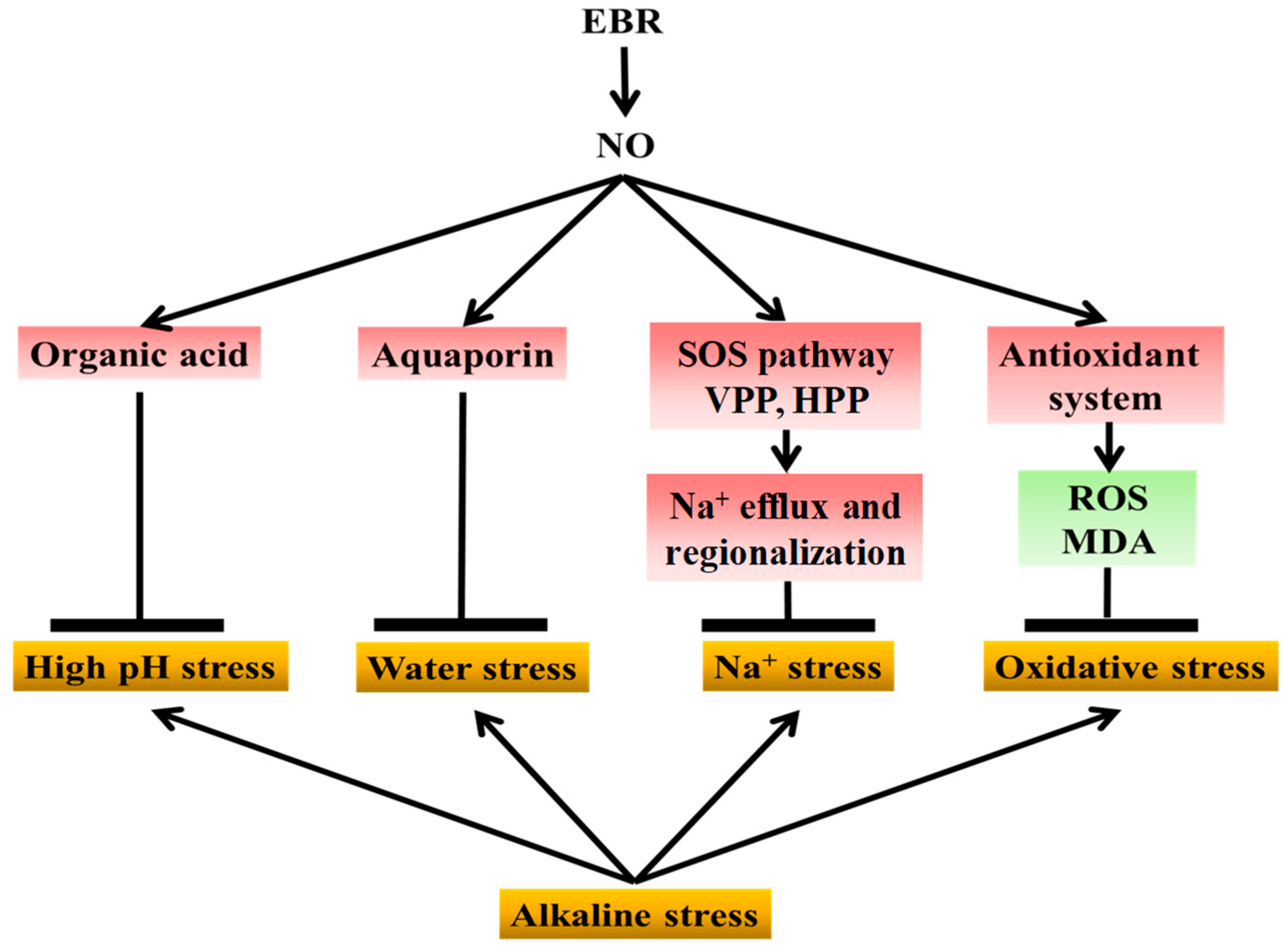
Nitric Oxide Functions as a Key Mediator in Brassinosteroid-Enhanced Alkaline Tolerance in Cucumber
 ,
,
Abstract
1. Introduction
2. Results
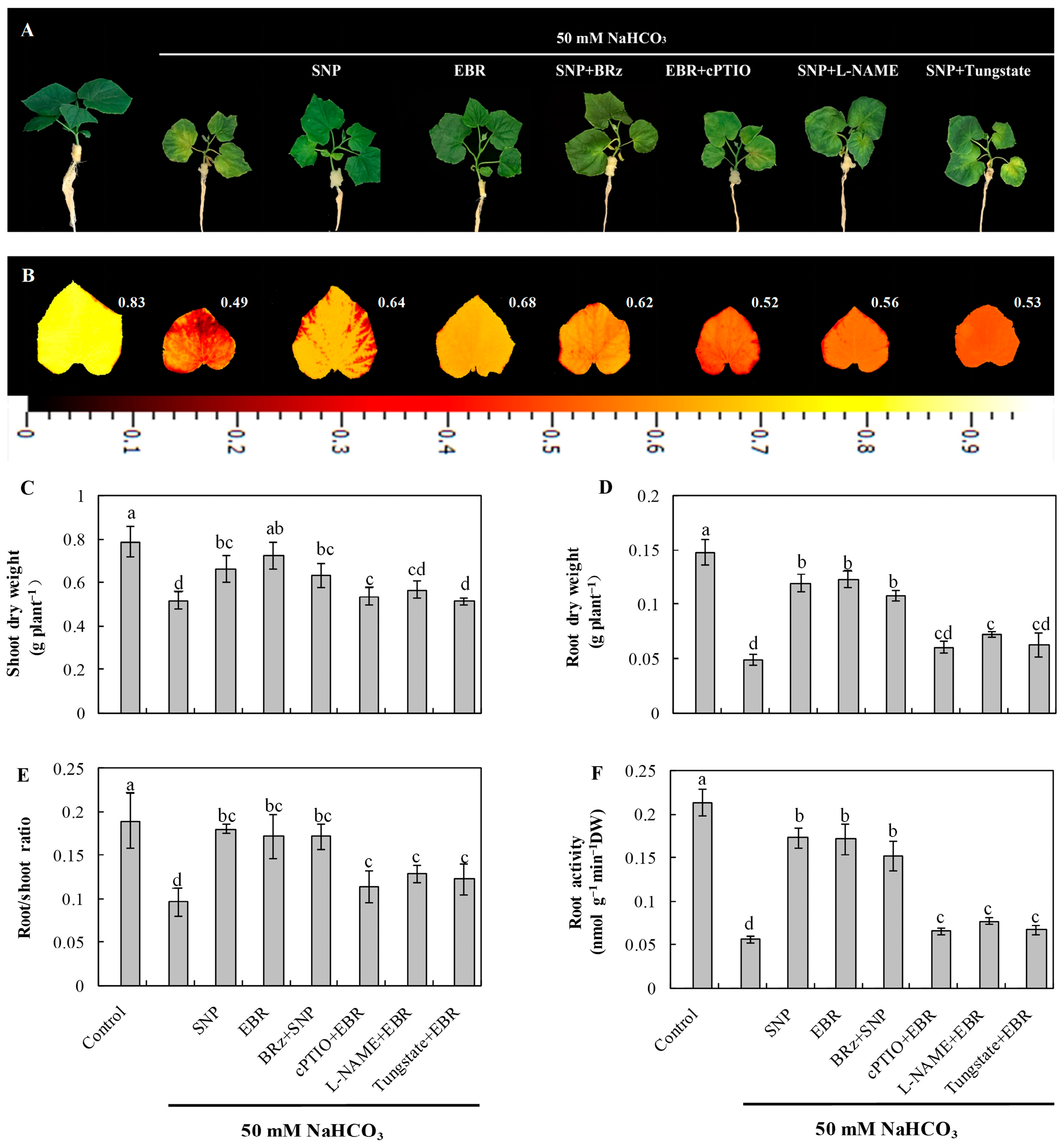
2.1. Exogenous EBR and NO Enhanced Cucumber Tolerance to NaHCO3 Stress
2.2. EBR and NO Maintain Photosynthetic Efficiency Under NaHCO3 Stress
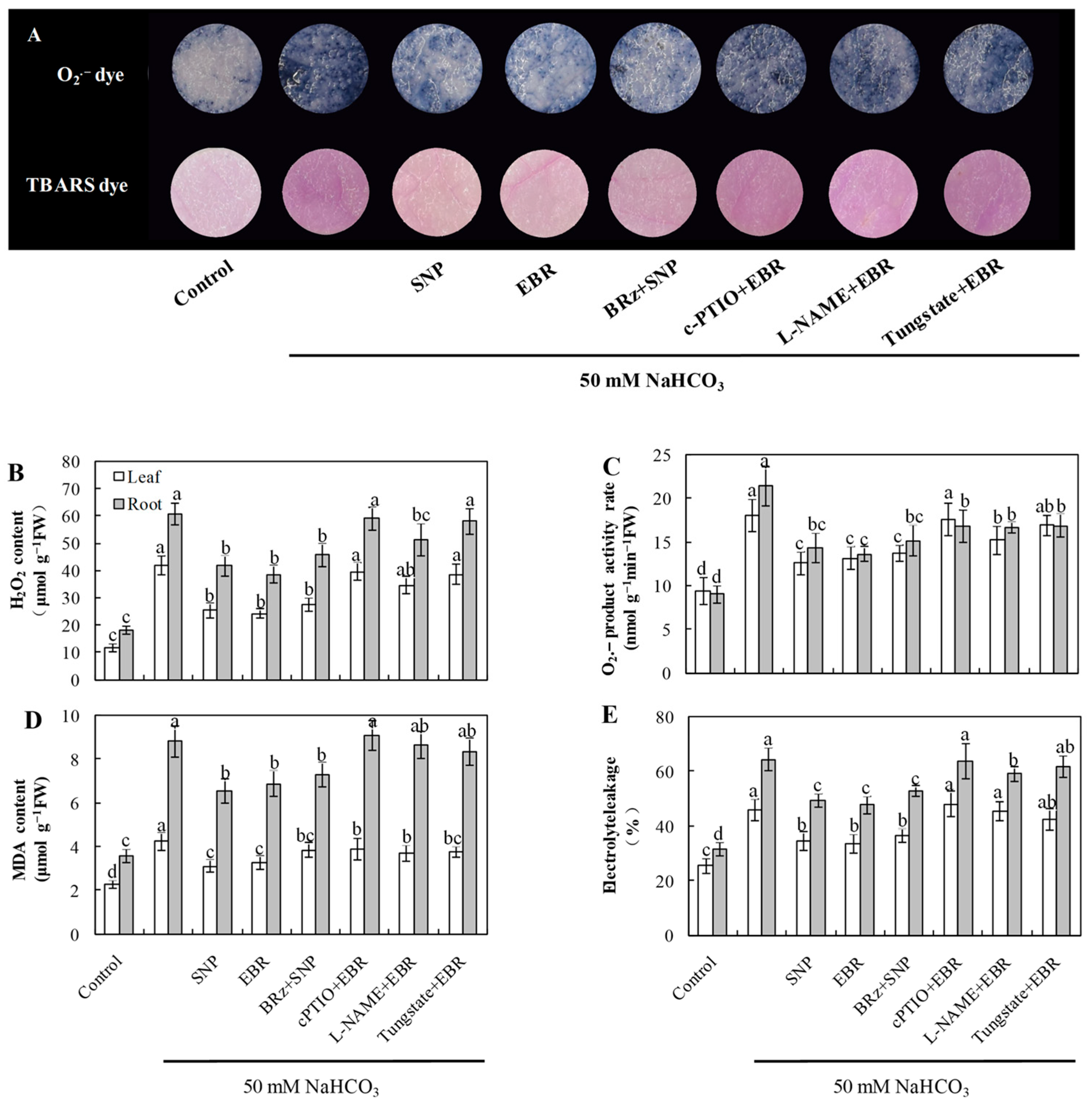
2.3. EBR and NO Reduce ROS Accumulation and Lipid Peroxidation Under NaHCO3 Stress
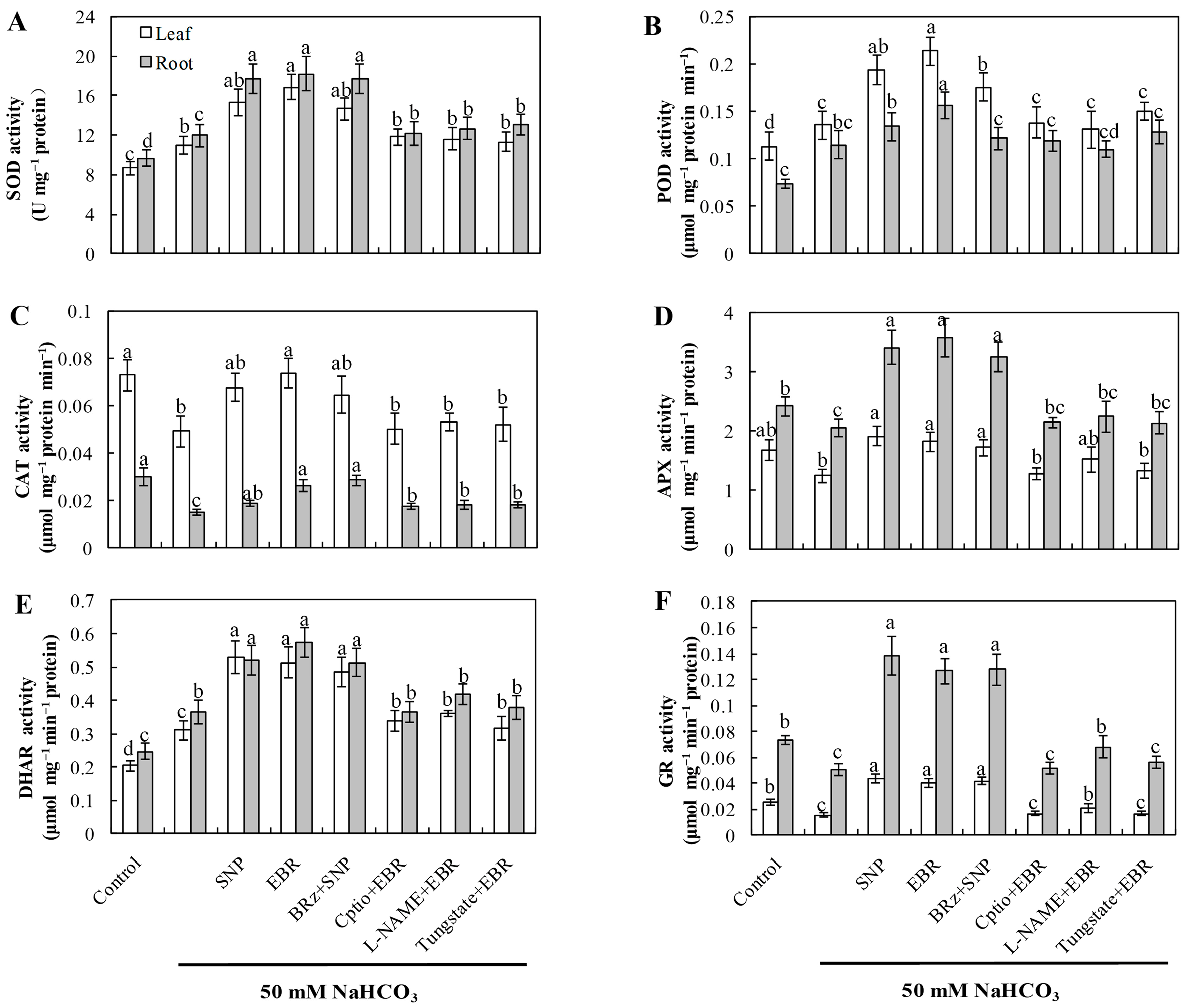
2.4. EBR and NO Increase the Activities of Antioxidant Enzymes Under NaHCO3 Stress
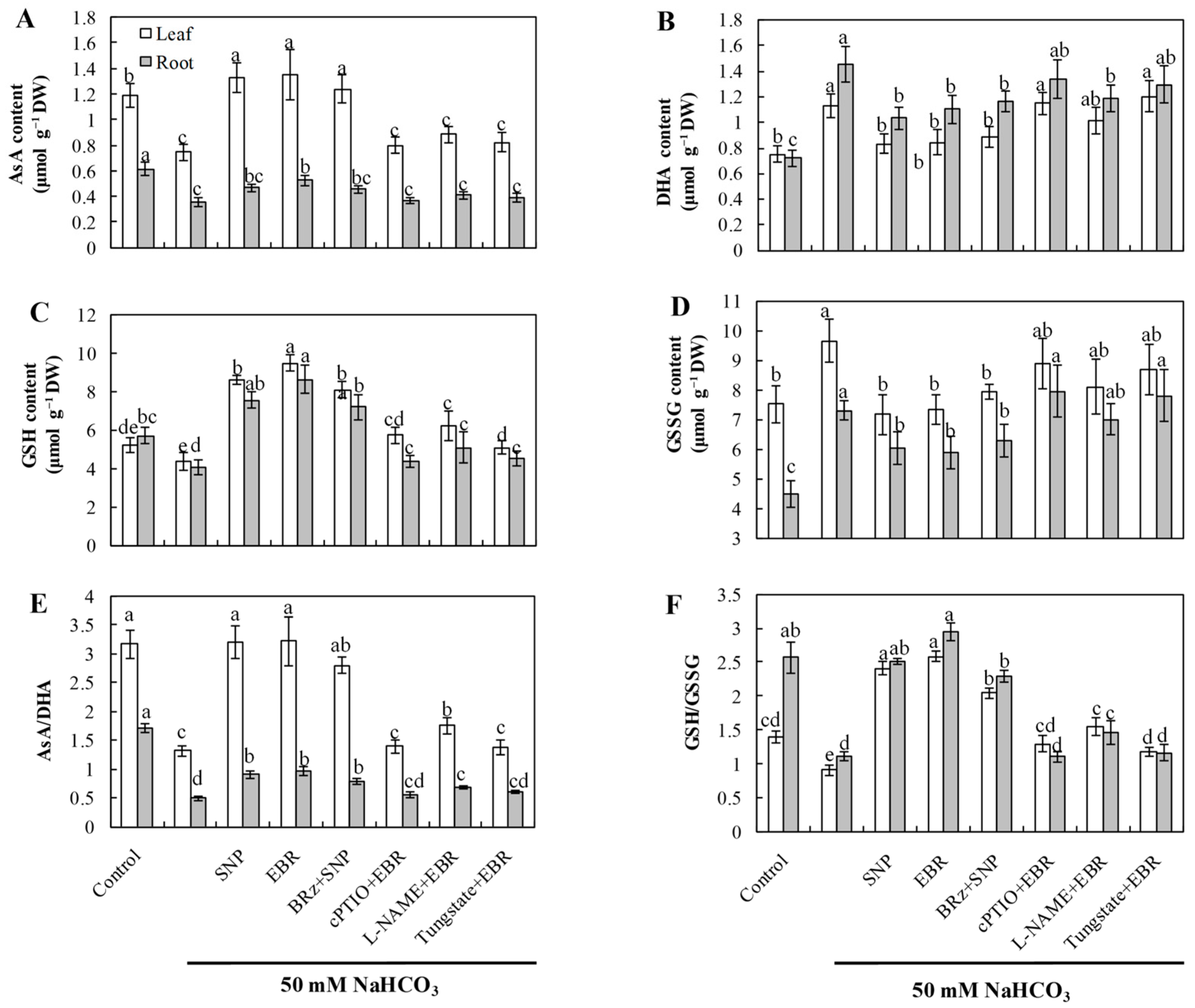
2.5. EBR and NO Improve the AsA–GSH Cycle Under NaHCO3 Stress
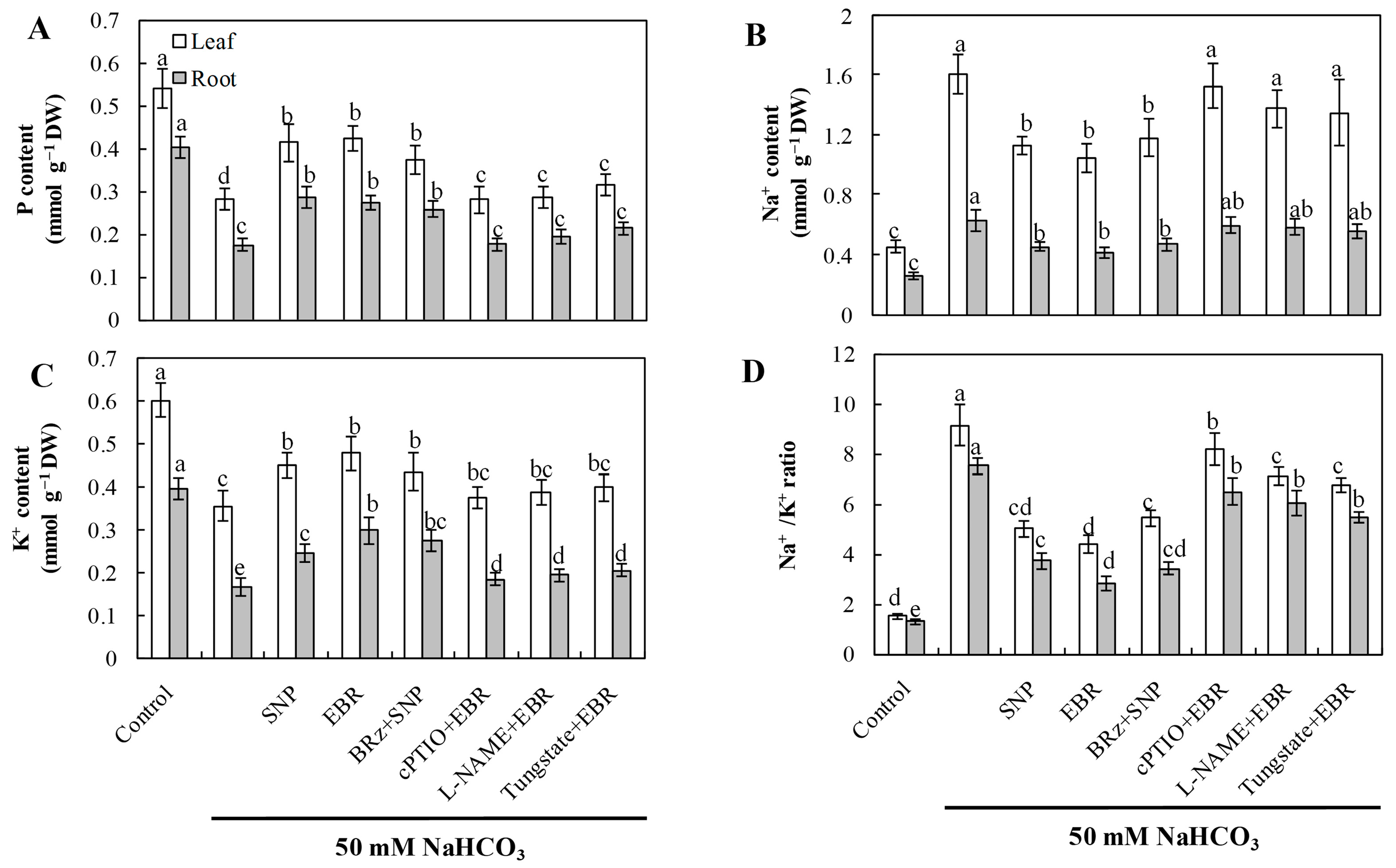
2.6. EBR and NO Improve Ion Homeostasis Under NaHCO3 Stress
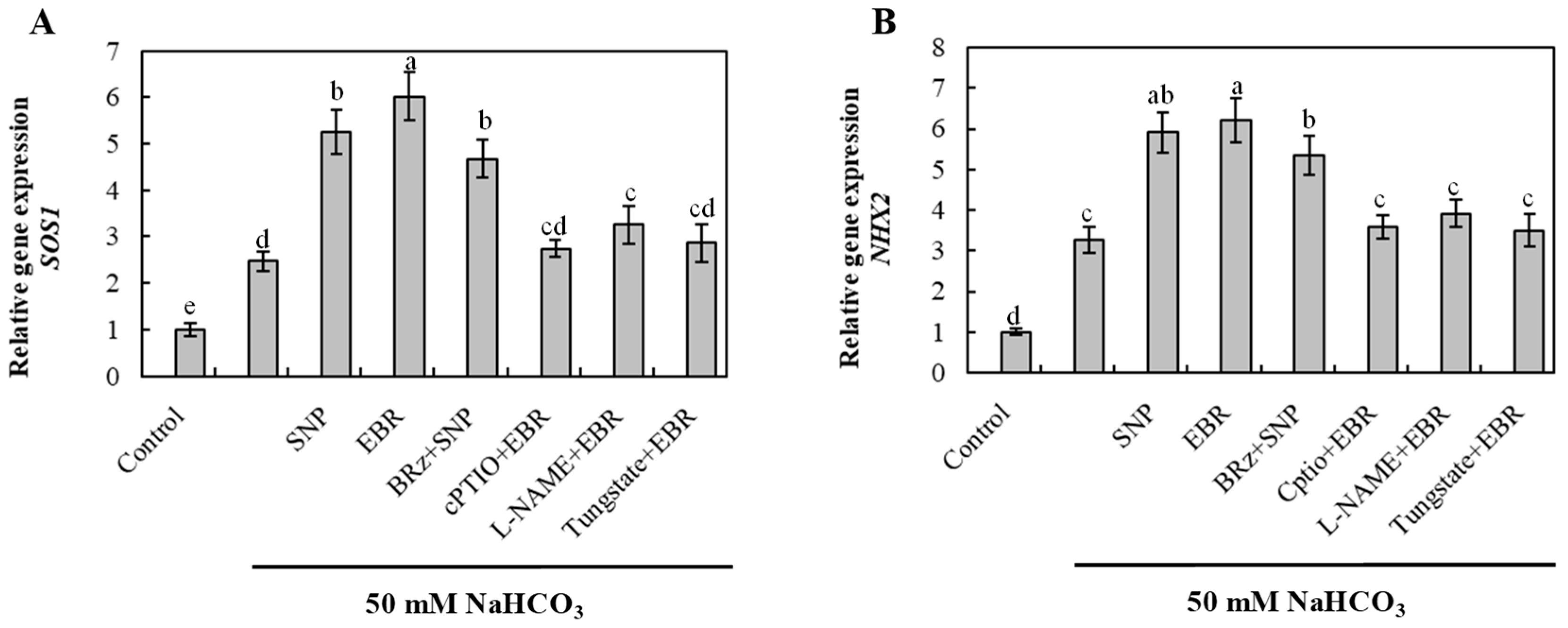
2.7. EBR and NO Upregulate Na+ Detoxification-Related Genes Under NaHCO3 Stress
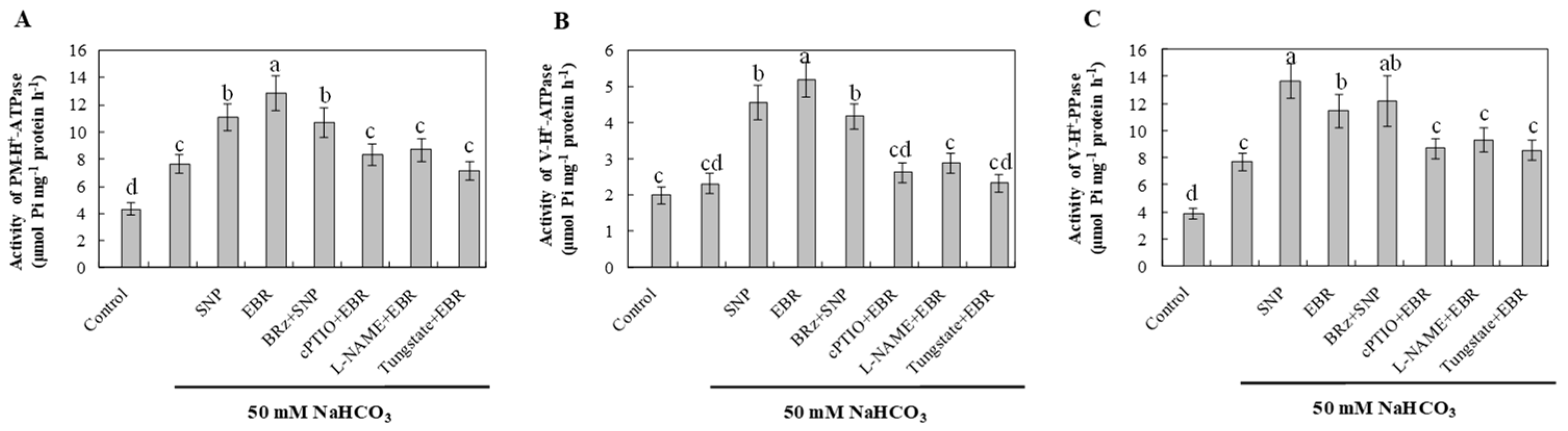
2.8. EBR and NO Enhance H+-Pump Activities Under NaHCO3 Stress
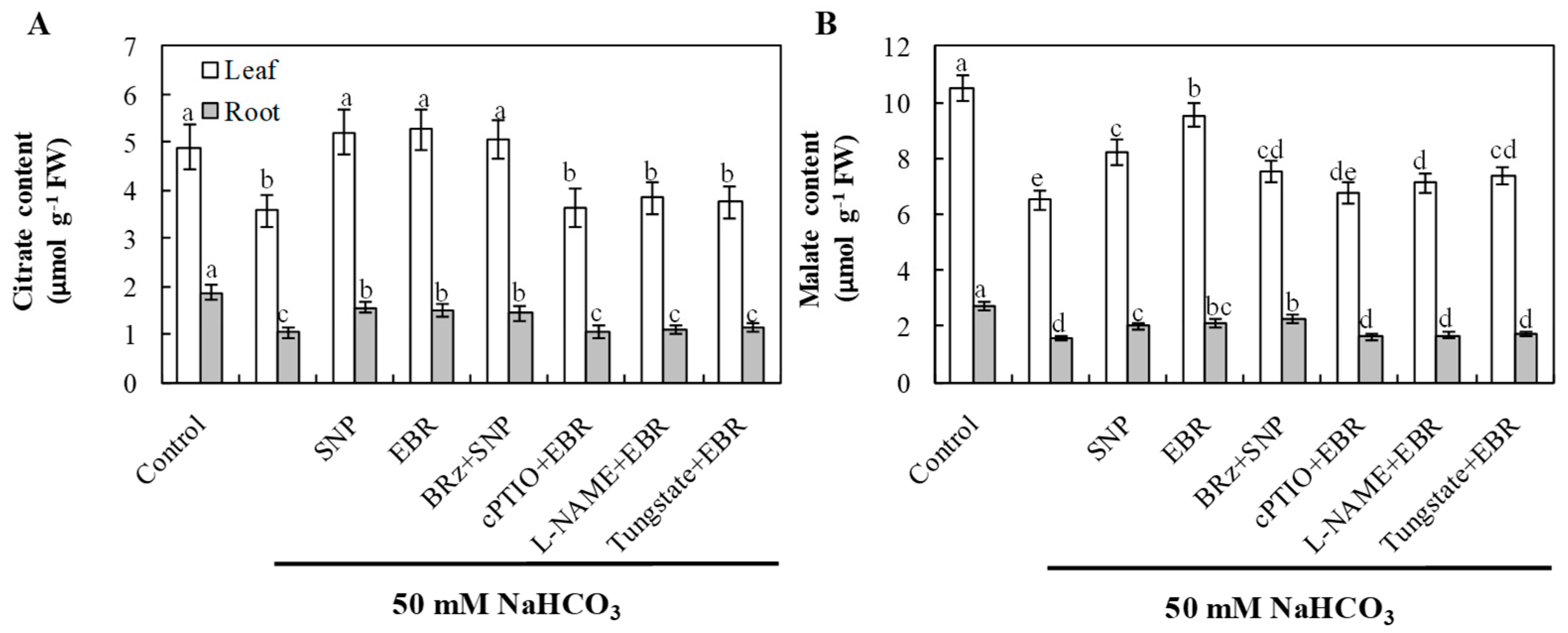
2.9. EBR and NO Promote Organic Acid Accumulation Under NaHCO3 Stress
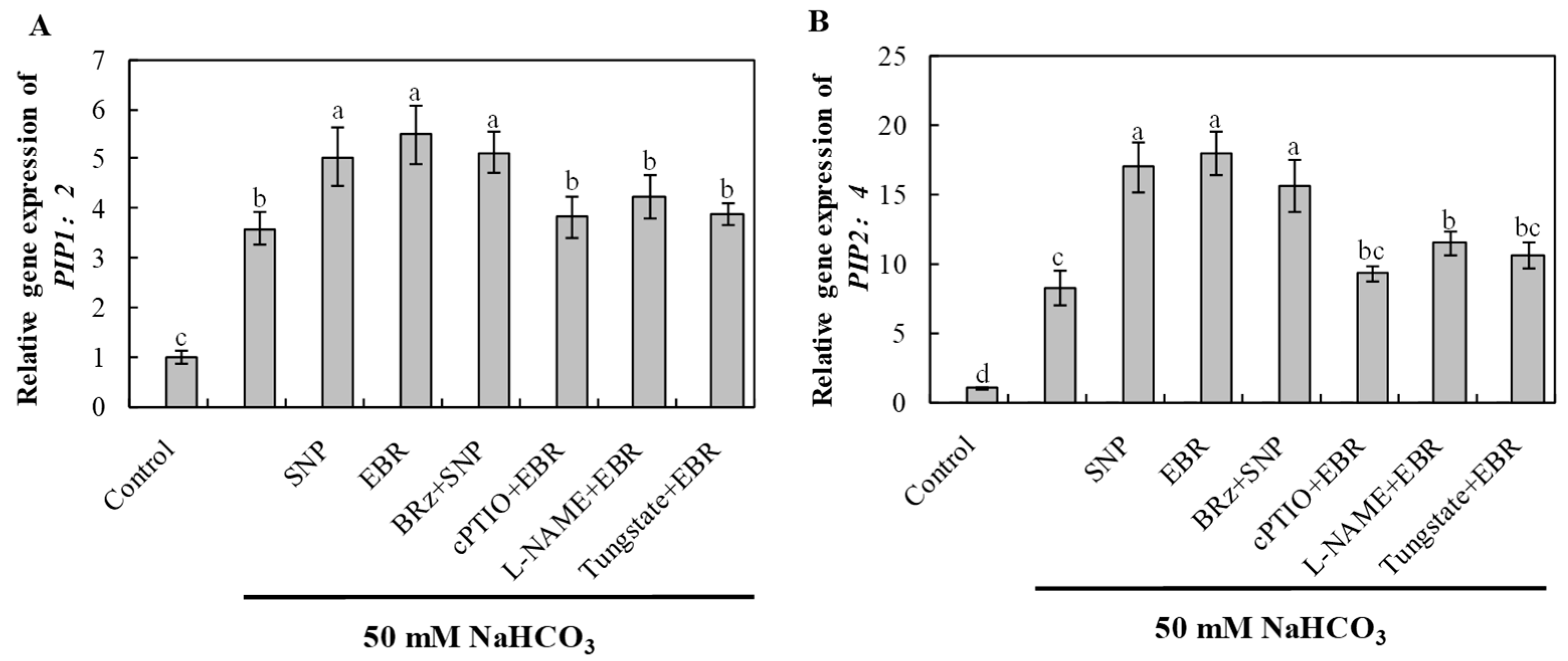
2.10. EBR and NO Enhance Aquaporin Gene Expression Under NaHCO3 Stress
3. Discussion
4. Materials and Methods
4.1. Plant Growth Conditions and Treatment Setup
- Control—Hoagland nutrient solution only.
- NaHCO3—Hoagland solution supplemented with 50 mM NaHCO3.
- NaHCO3 + EBR—50 mM NaHCO3 combined with 0.2 μM 24-epibrassinolide (EBR).
- NaHCO3 + SNP—50 mM NaHCO3 plus 100 μM sodium nitroprusside (SNP, an NO donor).
- NaHCO3 + BRz + SNP—50 mM NaHCO3 with 100 μM SNP and 4 μM brassinazole (BRz, a BR biosynthesis inhibitor).
- NaHCO3 + cPTIO + EBR—50 mM NaHCO3 with 0.2 μM EBR and 150 μM cPTIO (2,4-carboxyphenyl-4,4,5,5-tetramethylimidazoline-1-oxyl-3-oxide, a NO scavenger).
- NaHCO3 + L-NAME + EBR—50 mM NaHCO3 with 0.2 μM EBR and 200 μM L-NAME (N-nitro-L-arginine methyl ester, an inhibitor of NO synthase).
- NaHCO3 + Tungstate + EBR—50 mM NaHCO3 with 0.2 μM EBR and 200 μM tungstate (an inhibitor of nitrate reductase).
4.2. Determination of Biomass and Root Activity
4.3. Determination of Photosynthetic Apparatus
4.4. Determination of Lipid Peroxidation and Reactive Oxygen Species (ROS) Levels
4.5. Histochemical Staining of MDA and O2−
4.6. Determination of Antioxidant Enzyme Activities
4.7. Determination of Ascorbate and Glutathione
4.8. Quantitative RT–PCR Analysis
4.9. Data Analysis
Author Contributions
Funding
Data Availability Statement
Conflicts of Interest
References
- Hu, X.; Zhang, Y.; Shi, Y.; Zhang, Z.; Zou, Z.; Zhang, H.; Zhao, J. Effect of exogenous spermidine on polyamine content and metabolism in tomato exposed to salinity–alkalinity mixed stress. Plant Physiol. Biochem. 2012, 57, 200–209. [Google Scholar] [CrossRef] [PubMed]
- Wang, Z.; You, J.; Xu, X.; Yang, Y.; Wang, J.; Zhang, D.; Mu, L.; Zhuang, X.; Shen, Z.; Guo, C. Physiological and biochemical responses of Melilotus albus to saline and alkaline stresses. Horticulturae 2024, 10, 297. [Google Scholar] [CrossRef]
- Chaves, M.M.; Flexas, J.; Pinheiro, C. Photosynthesis under drought and salt stress: Regulation mechanisms from whole plant to cell. Ann. Bot. 2009, 103, 551–560. [Google Scholar] [CrossRef] [PubMed]
- Gong, B.; Li, X.; Bloszies, S.; Wen, D.; Sun, S.; Wei, M.; Li, Y.; Yang, F.; Shi, Q.; Wang, X. Sodic alkaline stress mitigation by interaction of nitric oxide and polyamines involves antioxidants and physiological strategies in Solanum lycopersicum. Free Radic. Biol. Med. 2014, 71, 36–48. [Google Scholar] [CrossRef]
- Yang, S.; Xu, Y.; Tang, Z.; Jin, S.; Yang, S. The impact of alkaline stress on plant growth and its alkaline resistance mechanisms. Int. J. Mol. Sci. 2024, 25, 13719. [Google Scholar] [CrossRef]
- Liu, N.; Jin, Z.; Wang, S.; Gong, B.; Wen, D.; Wang, X.; Wei, M.; Shi, Q. Sodic alkaline stress mitigation with exogenous melatonin involves reactive oxygen metabolism and ion homeostasis in tomato. Sci. Hortic. 2015, 181, 18–25. [Google Scholar] [CrossRef]
- Guo, R.; Zhou, Z.; Cai, R.; Liu, L.; Wang, R.; Sun, Y.; Wang, D.; Yan, Z.; Guo, C. Metabolomic and physiological analysis of alfalfa (Medicago sativa L.) in response to saline and alkaline stress. Plant Physiol. Biochem. 2024, 207, 108338. [Google Scholar] [CrossRef]
- Xu, W.; Jia, L.; Baluška, F.; Ding, G.; Shi, W.; Ye, N.; Zhang, J. PIN2 is required for the adaptation of Arabidopsis roots to alkaline stress by modulating proton secretion. J. Exp. Bot. 2012, 63, 6105–6114. [Google Scholar] [CrossRef]
- Sharma, M.; Tisarum, R.; Kohli, R.K.; Batish, D.R.; Cha-um, S.; Singh, H.P. Inroads into saline-alkaline stress response in plants: Unravelling morphological, physiological, biochemical, and molecular mechanisms. Planta 2024, 259, 130. [Google Scholar] [CrossRef]
- Kumari, R.; Kapoor, P.; Mir, B.A.; Singh, M.; Parrey, Z.A.; Rakhra, G.; Parihar, P.; Khan, M.N.; Rakhra, G. Unlocking the versatility of nitric oxide in plants and insights into its molecular interplays under biotic and abiotic stress. Nitric Oxide 2024, 150, 1–17. [Google Scholar] [CrossRef]
- Gupta, K.J.; Kaladhar, V.C.; Fitzpatrick, T.B.; Fernie, A.R.; Møller, I.M.; Loake, G.J. Nitric oxide regulation of plant metabolism. Mol. Plant 2022, 15, 228–242. [Google Scholar] [CrossRef]
- Khan, M.; Ali, S.; Al Azzawi, T.N.I.; Yun, B.-W. Nitric oxide acts as a key signaling molecule in plant development under stressful conditions. Int. J. Mol. Sci. 2023, 24, 4782. [Google Scholar] [CrossRef] [PubMed]
- Bajguz, A.; Hayat, S. Effects of brassinosteroids on the plant responses to environmental stresses. Plant Physiol. Biochem. 2009, 47, 1–8. [Google Scholar] [CrossRef] [PubMed]
- Kagale, S.; Divi, U.K.; Krochko, J.E.; Keller, W.A.; Krishna, P. Brassinosteroid confers tolerance in Arabidopsis thaliana and Brassica napus to a range of abiotic stresses. Planta 2006, 225, 353–364. [Google Scholar] [CrossRef] [PubMed]
- Xia, X.J.; Huang, L.F.; Zhou, Y.H.; Mao, W.H.; Shi, K.; Wu, J.X.; Asami, T.; Chen, Z.X.; Yu, J.Q. Brassinosteroids promote photosynthesis and growth by enhancing activation of Rubisco and expression of photosynthetic genes in Cucumis sativus. Planta 2009, 230, 1185–1196. [Google Scholar] [CrossRef]
- Divi, U.K.; Krishna, P. Brassinosteroid: A biotechnological target for enhancing crop yield and stress tolerance. New Biotechnol. 2009, 26, 131–136. [Google Scholar] [CrossRef]
- Vert, G.; Nemhauser, J.L.; Geldner, N.; Hong, F.; Chory, J. Molecular mechanisms of steroid hormone signaling in plants. Annu. Rev. Cell Dev. Biol. 2005, 21, 177–201. [Google Scholar] [CrossRef] [PubMed]
- Kim, T.W.; Guan, S.; Sun, Y.; Deng, Z.; Tang, W.; Shang, J.X.; Sun, Y.; Burlingame, A.L.; Wang, Z.Y. Brassinosteroid signal transduction from cell-surface receptor kinases to nuclear transcription factors. Nat. Cell Biol. 2009, 11, 1254–1260. [Google Scholar] [CrossRef]
- Cui, J.X.; Zhou, Y.H.; Ding, J.G.; Xia, X.J.; Shi, K.; Chen, S.C.; Asami, T.; Chen, Z.; Yu, J.Q. Role of nitric oxide in hydrogen peroxide-dependent induction of abiotic stress tolerance by brassinosteroids in cucumber. Plant Cell Environ. 2011, 34, 347–358. [Google Scholar] [CrossRef]
- Nie, W.; Gong, B.; Geng, B.; Wen, D.; Qiao, P.; Guo, H.; Shi, Q. The effects of exogenous 2,4-epibrassinolide on the germination of cucumber seeds under NaHCO3 stress. Plants 2024, 13, 394. [Google Scholar] [CrossRef]
- Mousavi, S.A.A.; Roosta, H.R.; Esmaeilizadeh, M.; Eshghi, S. Silicon and selenium supplementations modulate antioxidant systems and mineral nutrition to mitigate salinity-alkalinity stresses in cucumber (Cucumis sativus L.) plants under hydroponic conditions. J. Plant Process Funct. 2022, 10, 41–49. [Google Scholar]
- Nie, W.; He, Q.; Ma, J.; Guo, H.; Shi, Q. Exogenous 2,4-epibrassinolide alleviates alkaline stress in cucumber by modulating photosynthetic performance. Plants 2024, 14, 54. [Google Scholar] [CrossRef]
- Gong, B.; Miao, L.; Kong, W.; Bai, J.-G.; Wang, X.; Wei, M.; Shi, Q. Nitric oxide, as a downstream signal, plays vital role in auxin-induced cucumber tolerance to sodic alkaline stress. Plant Physiol. Biochem. 2014, 83, 258–266. [Google Scholar] [CrossRef]
- Shang, J.-X.; Li, X.; Li, C.; Zhao, L. The role of nitric oxide in plant responses to salt stress. Int. J. Mol. Sci. 2022, 23, 6167. [Google Scholar] [CrossRef]
- Nie, W.; Gong, B.; Chen, Y.; Wang, J.; Wei, M.; Shi, Q. Photosynthetic capacity, ion homeostasis and reactive oxygen metabolism were involved in exogenous salicylic acid increasing cucumber seedlings tolerance to alkaline stress. Sci. Hortic. 2018, 235, 413–423. [Google Scholar] [CrossRef]
- Ahanger, M.A.; Tomar, N.S.; Tittal, M.; Argal, S.; Agarwal, R.M. Plant growth under water/salt stress: ROS production; antioxidants and significance of added potassium under such conditions. Physiol. Mol. Biol. Plants 2017, 23, 731–744. [Google Scholar] [CrossRef] [PubMed]
- Rahman, A.; Nahar, K.; Hasanuzzaman, M.; Fujita, M. Calcium supplementation improves Na+/K+ ratio, antioxidant defense and glyoxalase systems in salt-stressed rice seedlings. Front. Plant Sci. 2016, 7, 609. [Google Scholar] [CrossRef] [PubMed]
- Meng, K.; Wu, Y. Footprints of divergent evolution in two Na+/H+ type antiporter gene families (NHX and SOS1) in the genus Populus. Tree Physiol. 2018, 38, 813–824. [Google Scholar] [CrossRef]
- Nehrke, K.; Melvin, J.E. The NHX family of Na+/H+ exchangers in Caenorhabditis elegans. J. Biol. Chem. 2002, 277, 29036–29044. [Google Scholar] [CrossRef]
- Gu, W.-T.; Zhou, L.-B.; Liu, R.-Y.; Jin, W.-J.; Qu, Y.; Dong, X.-C.; Li, W.-J. Synergistic responses of NHX, AKT1, and SOS1 in the control of Na+ homeostasis in sweet sorghum mutants induced by 12C6+-ion irradiation. Nucl. Sci. Tech. 2017, 29, 10. [Google Scholar] [CrossRef]
- Zhao, X.; Wei, P.; Liu, Z.; Yu, B.; Shi, H. Soybean Na+/H+ antiporter GmsSOS1 enhances antioxidant enzyme activity and reduces Na+ accumulation in Arabidopsis and yeast cells under salt stress. Acta Physiol. Plant. 2016, 39, 19. [Google Scholar] [CrossRef]
- Cui, J.-Q.; Hua, Y.-P.; Zhou, T.; Liu, Y.; Huang, J.-Y.; Yue, C.-P. Global landscapes of the Na+/H+ antiporter (NHX) family members uncover their potential roles in regulating the rapeseed resistance to salt stress. Int. J. Mol. Sci. 2020, 21, 3429. [Google Scholar] [CrossRef]
- Blumwald, E.; Aharon, G.S.; Apse, M.P. Sodium transport in plant cells. Biochim. Biophys. Acta Biomembr. 2000, 1465, 140–151. [Google Scholar] [CrossRef]
- Liu, N.; Gong, B.; Jin, Z.; Wang, X.; Wei, M.; Yang, F.; Li, Y.; Shi, Q. Sodic alkaline stress mitigation by exogenous melatonin in tomato needs nitric oxide as a downstream signal. J. Plant Physiol. 2015, 186–187, 68–77. [Google Scholar] [CrossRef] [PubMed]
- Bassil, E.; Tajima, H.; Liang, Y.-C.; Ohto, M.-A.; Ushijima, K.; Nakano, R.; Esumi, T.; Coku, A.; Belmonte, M.; Blumwald, E. The Arabidopsis Na+/H+ antiporters NHX1 and NHX2 control vacuolar pH and K+ homeostasis to regulate growth, flower development, and reproduction. Plant Cell 2011, 23, 3482–3497. [Google Scholar] [CrossRef] [PubMed]
- Yokoi, S.; Quintero, F.J.; Cubero, B.; Ruiz, M.T.; Bressan, R.A.; Hasegawa, P.M.; Pardo, J.M. Differential expression and function of Arabidopsis thaliana NHX Na+/H+ antiporters in the salt stress response. Plant J. 2002, 30, 529–539. [Google Scholar] [CrossRef] [PubMed]
- Roy, P.; Niyogi, K.; SenGupta, D.N.; Ghosh, B. Spermidine treatment to rice seedlings recovers salinity stress-induced damage of plasma membrane and PM-bound H+-ATPase in salt-tolerant and salt-sensitive rice cultivars. Plant Sci. 2005, 168, 583–591. [Google Scholar] [CrossRef]
- Yousefi, K.; Jamei, R.; Darvishzadeh, R. Exogenous 24-epibrassinolide alleviates salt stress in okra (Abelmoschus esculentus L.) by increasing the expression of SOS pathway genes (SOS1–3) and NHX1,4. Physiol. Mol. Biol. Plants 2024, 30, 2051–2063. [Google Scholar] [CrossRef]
- Su, Q.; Zheng, X.; Tian, Y.; Wang, C. Exogenous brassinolide alleviates salt stress in Malus hupehensis Rehd. by regulating the transcription of NHX-type Na+(K+)/H+ antiporters. Front. Plant Sci. 2020, 11, 38. [Google Scholar] [CrossRef]
- Choudhary, S.; Wani, K.I.; Naeem, M.; Khan, M.M.A.; Aftab, T. Cellular responses, osmotic adjustments, and role of osmolytes in providing salt stress resilience in higher plants: Polyamines and nitric oxide crosstalk. J. Plant Growth Regul. 2023, 42, 539–553. [Google Scholar] [CrossRef]
- Zhang, Y.; Hu, S.; Wang, X.; Yue, J.; Chen, D.; Han, M.; Qiao, W.; Wang, Y.; Wang, H. Response of anatomical structure and active component accumulation in Apocynum venetum L. (Apocynaceae) under saline stress and alkali stress. Plants 2025, 14, 2223. [Google Scholar] [CrossRef]
- Cavender-Bares, J.; Bazzaz, F.A. From leaves to ecosystems: Using chlorophyll fluorescence to assess photosynthesis and plant function in ecological studies. In Chlorophyll a Fluorescence: A Signature of Photosynthesis; Papageorgiou, G.C., Govindjee, Eds.; Springer: Dordrecht, The Netherlands, 2004; pp. 737–755. [Google Scholar] [CrossRef]
- Kalaji, H.M.; Jajoo, A.; Oukarroum, A.; Brestic, M.; Zivcak, M.; Samborska, I.A.; Cetner, M.D.; Łukasik, I.; Goltsev, V.; Ladle, R.J. Chlorophyll a fluorescence as a tool to monitor physiological status of plants under abiotic stress conditions. Acta Physiol. Plant. 2016, 38, 102. [Google Scholar] [CrossRef]
- Mehta, P.; Jajoo, A.; Mathur, S.; Bharti, S. Chlorophyll a fluorescence study revealing effects of high salt stress on photosystem II in wheat leaves. Plant Physiol. Biochem. 2010, 48, 16–20. [Google Scholar] [CrossRef]
- Chen, P.; Yang, W.; Wen, M.; Jin, S.; Liu, Y. Hydrogen sulfide alleviates salinity stress in Cyclocarya paliurus by maintaining chlorophyll fluorescence and regulating nitric oxide level and antioxidant capacity. Plant Physiol. Biochem. 2021, 167, 738–747. [Google Scholar] [CrossRef]
- Seleiman, M.F.; Ahmad, A.; Tola, E.; Alhammad, B.A.; Almutairi, K.F.; Madugundu, R.; Al-Gaadi, K.A. Exogenous application of 24-epibrassinolide confers saline stress and improves photosynthetic capacity, antioxidant defense, mineral uptake, and yield in maize. Plants 2023, 12, 3559. [Google Scholar] [CrossRef]
- Azaizeh, H.; Steudle, E. Effects of salinity on water transport of excised maize (Zea mays L.) roots. Plant Physiol. 1991, 97, 1136–1145. [Google Scholar] [CrossRef] [PubMed]
- Martínez-Ballesta, M.C.; Martínez, V.; Carvajal, M. Aquaporin functionality in relation to H+-ATPase activity in root cells of Capsicum annuum grown under salinity. Physiol. Plant. 2003, 117, 413–420. [Google Scholar] [CrossRef] [PubMed]
- Vandeleur, R.K.; Mayo, G.; Shelden, M.C.; Gilliham, M.; Kaiser, B.N.; Tyerman, S.D. The role of plasma membrane intrinsic protein aquaporins in water transport through roots: Diurnal and drought stress responses reveal different strategies between isohydric and anisohydric cultivars of grapevine. Plant Physiol. 2009, 149, 445–460. [Google Scholar] [CrossRef]
- Hasanuzzaman, M.; Raihan, M.R.H.; Masud, A.A.C.; Rahman, K.; Nowroz, F.; Rahman, M.; Nahar, K.; Fujita, M. Regulation of reactive oxygen species and antioxidant defense in plants under salinity. Int. J. Mol. Sci. 2021, 22, 9326. [Google Scholar] [CrossRef]
- You, J.; Chan, Z. ROS regulation during abiotic stress responses in crop plants. Front. Plant Sci. 2015, 6, 1092. [Google Scholar] [CrossRef]
- Fang, S.; Hou, X.; Liang, X. Response mechanisms of plants under saline–alkali stress. Front. Plant Sci. 2021, 12, 667458. [Google Scholar] [CrossRef] [PubMed]
- Alam, P.; Albalawi, T.H.; Altalayan, F.H.; Bakht, M.A.; Ahanger, M.A.; Raja, V.; Ashraf, M.; Ahmad, P. 24-Epibrassinolide (EBR) Confers Tolerance against NaCl Stress in Soybean Plants by Up-Regulating Antioxidant System, Ascorbate-Glutathione Cycle, and Glyoxalase System. Biomolecules 2019, 9, 640. [Google Scholar] [CrossRef] [PubMed]
- Zhao, G.; Xu, H.; Zhang, P.; Su, X.; Zhao, H. Effects of 2,4-epibrassinolide on photosynthesis and Rubisco activase gene expression in Triticum aestivum L. seedlings under a combination of drought and heat stress. Plant Growth Regul. 2017, 81, 377–384. [Google Scholar] [CrossRef]
- Sharma, P.; Bhardwaj, R. Effects of 24-epibrassinolide on growth and metal uptake in Brassica juncea L. under copper metal stress. Acta Physiol. Plant. 2007, 29, 259–263. [Google Scholar] [CrossRef]
- Wei, X.; Xu, L.; Dong, S.; He, N.; Xi, Q.; Yao, D.; Wang, Q.; Zuo, Y.; Ling, C.; Qi, M.; et al. SaTDT enhanced plant tolerance to NaCl stress by modulating the levels of malic acid and citric acid in cells. Plant Mol. Biol. 2024, 115, 4. [Google Scholar] [CrossRef]
- Sheng, M.; Tang, M.; Zhang, F.; Huang, Y. Influence of arbuscular mycorrhiza on organic solutes in maize leaves under salt stress. Mycorrhiza 2011, 21, 423–430. [Google Scholar] [CrossRef]
- Tahjib-Ul-Arif, M.; Zahan, M.I.; Karim, M.M.; Imran, S.; Hunter, C.T.; Islam, M.S.; Mia, M.; Hannan, M.A.; Rhaman, M.S.; Hossain, M.A.; et al. Citric acid-mediated abiotic stress tolerance in plants. Int. J. Mol. Sci. 2021, 22, 7235. [Google Scholar] [CrossRef]
- Wang, L.; Cui, D.; Zhao, X.; He, M. The important role of the citric acid cycle in plants. Genom. Appl. Biol. 2017, 8, 25–29. [Google Scholar] [CrossRef]
- Musazade, E.; Zhao, Z.; Shang, Y.; He, J.; Wang, Z.; Wu, M.; Xu, M.; Guo, L.; Feng, X. Differential responses of rice seedlings to salt and alkaline stresses: Focus on antioxidant defense, organic acid accumulation, and hormonal regulation. J. Soil Sci. Plant Nutr. 2025, 25, 4323–4340. [Google Scholar] [CrossRef]
- Guo, J.; Lu, X.; Tao, Y.; Guo, H.; Min, W. Comparative ionomics and metabolic responses and adaptive strategies of cotton to salt and alkali stress. Front. Plant Sci. 2022, 13, 871387. [Google Scholar] [CrossRef]
- Arnon, D.I. Copper enzymes in isolated chloroplasts. Polyphenoloxidase in Beta vulgaris. Plant Physiol. 1949, 24, 1–15. [Google Scholar] [CrossRef] [PubMed]
- Schmedes, A.; Hølmer, G. A new thiobarbituric acid (TBA) method for determining free malondialdehyde (MDA) and hydroperoxides selectively as a measure of lipid peroxidation. J. Am. Oil Chem. Soc. 1989, 66, 813–817. [Google Scholar] [CrossRef]
- Elstner, E.F.; Heupel, A. Inhibition of nitrite formation from hydroxylammoniumchloride: A simple assay for superoxide dismutase. Anal. Biochem. 1976, 70, 616–620. [Google Scholar] [CrossRef]
- Patterson, B.D.; Macrae, E.A.; Ferguson, I.B. Estimation of hydrogen peroxide in plant extracts using titanium(IV). Anal. Biochem. 1984, 139, 487–492. [Google Scholar] [CrossRef]
- Jambunathan, N. Determination and detection of reactive oxygen species (ROS), lipid peroxidation, and electrolyte leakage in plants. In Plant Stress Tolerance: Methods and Protocols; Sunkar, R., Ed.; Humana Press: Totowa, NJ, USA, 2010; pp. 291–297. [Google Scholar] [CrossRef]
- Fryer, M.J.; Oxborough, K.; Mullineaux, P.M.; Baker, N.R. Imaging of photo-oxidative stress responses in leaves. J. Exp. Bot. 2002, 53, 1249–1254. [Google Scholar] [CrossRef] [PubMed]
- Kochba, J.; Lavee, S.; Spiegel-Roy, P. Differences in peroxidase activity and isoenzymes in embryogenic ane non-embryogenic ‘Shamouti’ orange ovular callus lines. Plant Cell Physiol. 1977, 18, 463–467. [Google Scholar] [CrossRef]
- Shi, Q.; Ding, F.; Wang, X.; Wei, M. Exogenous nitric oxide protect cucumber roots against oxidative stress induced by salt stress. Plant Physiol. Biochem. 2007, 45, 542–550. [Google Scholar] [CrossRef]
- Patra, H.; Kar, M.; Mishra, D. Catalase activity in leaves and cotyledons during plant development and senescence. Biochem. Physiol. Pflanz. 1978, 172, 385–390. [Google Scholar] [CrossRef]
- Nakano, Y.; Asada, K. Hydrogen peroxide is scavenged by ascorbate-specific peroxidase in spinach chloroplasts. Plant Cell Physiol. 1981, 22, 867–880. [Google Scholar] [CrossRef]
- Foyer, C.H.; Halliwell, B. The presence of glutathione and glutathione reductase in chloroplasts: A proposed role in ascorbic acid metabolism. Planta 1976, 133, 21–25. [Google Scholar] [CrossRef] [PubMed]
- Hodges, D.M.; Andrews, C.J.; Johnson, D.A.; Hamilton, R.I. Antioxidant compound responses to chilling stress in differentially sensitive inbred maize lines. Physiol. Plant. 1996, 98, 685–692. [Google Scholar] [CrossRef]
- Griffith, O.W. Determination of glutathione and glutathione disulfide using glutathione reductase and 2-vinylpyridine. Anal. Biochem. 1980, 106, 207–212. [Google Scholar] [CrossRef] [PubMed]
- Ellman, G.L. Tissue sulfhydryl groups. Arch. Biochem. Biophys. 1959, 82, 70–77. [Google Scholar] [CrossRef] [PubMed]



| Treatments | Pn (μmol CO2 m−2 s−1) | Chl a (mg g−1 DW) | Chl b (mg g−1 DW) | Chl a+b (mg g−1 DW) | Car (mg g−1 DW) |
|---|---|---|---|---|---|
| Control | 21.43 ± 1.22 a | 20.8 ± 1.57 a | 6.65 ± 0.47 a | 27.45 ± 0.39 a | 4.26 ± 0.33 a |
| NaHCO3 | 11.77 ± 1.32 c | 10.76 ± 1.19 c | 2.78 ± 0.18 c | 13.54 ± 0.19 d | 2.6 ± 0.19 c |
| NaHCO3 + SNP | 16.73 ± 1.46 b | 16.05 ± 1.71 b | 4.56 ± 0.34 b | 20.62 ± 0.27 b | 3.39 ± 0.22 b |
| NaHCO3 + EBR | 17.17 ± 1.39 b | 16.5 ± 1.44 b | 4.69 ± 0.36 b | 21.19 ± 0.2 b | 3.65 ± 0.31 b |
| NaHCO3 + BRz + SNP | 16.13 ± 1.35 b | 16.08 ± 0.76 b | 4.53 ± 0.37 b | 20.63 ± 0.23 b | 3.28 ± 0.2 b |
| NaHCO3 + c-PTIO + EBR | 13.13 ± 1.25 c | 11.16 ± 1.15 c | 3.03 ± 0.22 c | 14.19 ± 0.15 c | 2.67 ± 0.18 c |
| NaHCO3 + L-NAME + EBR | 14.33 ± 1.25 bc | 11.78 ± 1.53 c | 3.07 ± 0.29 c | 14.85 ± 0.12 c | 2.73 ± 0.21 c |
| NaHCO3 + Tungstate + EBR | 13.63 ± 1.40 c | 11.32 ± 0.90 c | 2.95 ± 0.32 c | 14.27 ± 0.17 c | 2.71 ± 0.21 c |
| Gene Name | Primer Sequences |
|---|---|
| Actin | F:CCCCGATGGGCAGGTAATA R:AAGAGCAGGACGAACAGCAGA |
| SOS1 | F: ATCCAACGGAGTGGTAAA R: AACAACGGAATCTGTAATC |
| NHX2 | F: AGGGTGTAGTGAATGACG R: GAGAATGCCACTCAAATC |
| PIP1:2 | F: CATTATTTACAACCACGACGAAGCA R: GGATTGAAGAAGCATCATGGATTTAGA |
| PIP2:4 | F: GCTGCTCTGCTCTCATCTTGCC R: GAAAAATACATGAATAACAGGAGCCCC |
Disclaimer/Publisher’s Note: The statements, opinions and data contained in all publications are solely those of the individual author(s) and contributor(s) and not of MDPI and/or the editor(s). MDPI and/or the editor(s) disclaim responsibility for any injury to people or property resulting from any ideas, methods, instructions or products referred to in the content. |
© 2025 by the authors. Licensee MDPI, Basel, Switzerland. This article is an open access article distributed under the terms and conditions of the Creative Commons Attribution (CC BY) license (https://creativecommons.org/licenses/by/4.0/).
Share and Cite
Nie, W.; Qiao, P.; Gu, Y.; Huang, Q.; Wang, J.; Ge, H.; Zhang, C.; Shi, Q. Nitric Oxide Functions as a Key Mediator in Brassinosteroid-Enhanced Alkaline Tolerance in Cucumber. Plants 2025, 14, 3367. https://doi.org/10.3390/plants14213367
Nie W, Qiao P, Gu Y, Huang Q, Wang J, Ge H, Zhang C, Shi Q. Nitric Oxide Functions as a Key Mediator in Brassinosteroid-Enhanced Alkaline Tolerance in Cucumber. Plants. 2025; 14(21):3367. https://doi.org/10.3390/plants14213367
Chicago/Turabian StyleNie, Wenjing, Peng Qiao, Yinyu Gu, Qitong Huang, Jie Wang, Haiman Ge, Chi Zhang, and Qinghua Shi. 2025. "Nitric Oxide Functions as a Key Mediator in Brassinosteroid-Enhanced Alkaline Tolerance in Cucumber" Plants 14, no. 21: 3367. https://doi.org/10.3390/plants14213367
APA StyleNie, W., Qiao, P., Gu, Y., Huang, Q., Wang, J., Ge, H., Zhang, C., & Shi, Q. (2025). Nitric Oxide Functions as a Key Mediator in Brassinosteroid-Enhanced Alkaline Tolerance in Cucumber. Plants, 14(21), 3367. https://doi.org/10.3390/plants14213367