




Melatonin and Grain Legume Crops: Opportunities for Abiotic Stress Tolerance Enhancement and Food Sustainability


Abstract
1. Introduction
2. Literature Search Methodology
3. Abiotic Stress Alleviation in Grain Legumes Through MT Applications
3.1. Drought Stress
3.2. Salinity Stress
3.3. Metal and Metalloid Stress
3.4. Heat Stress
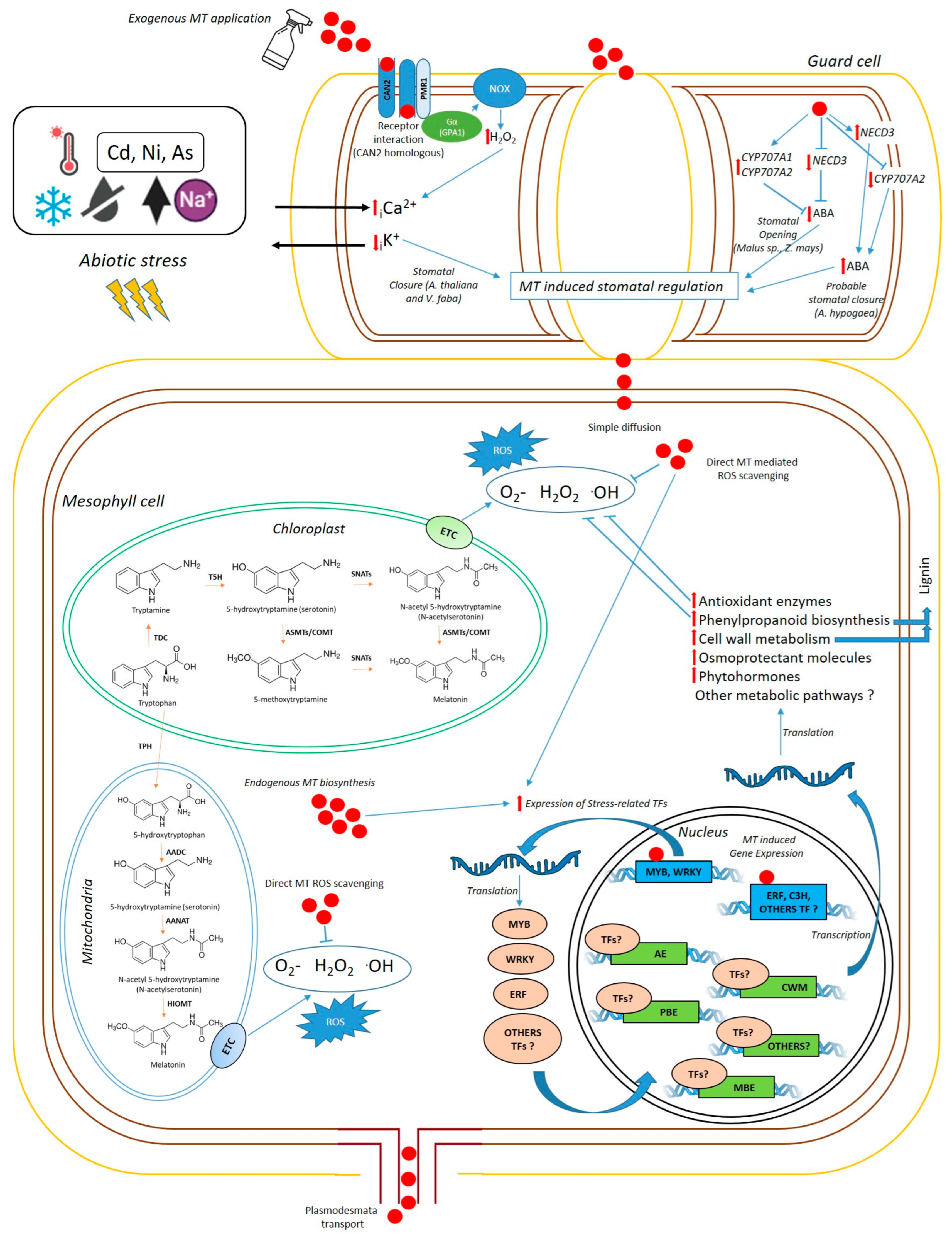
4. Integrating Molecular and Biochemical Insights into MT Functioning in Grain Legumes
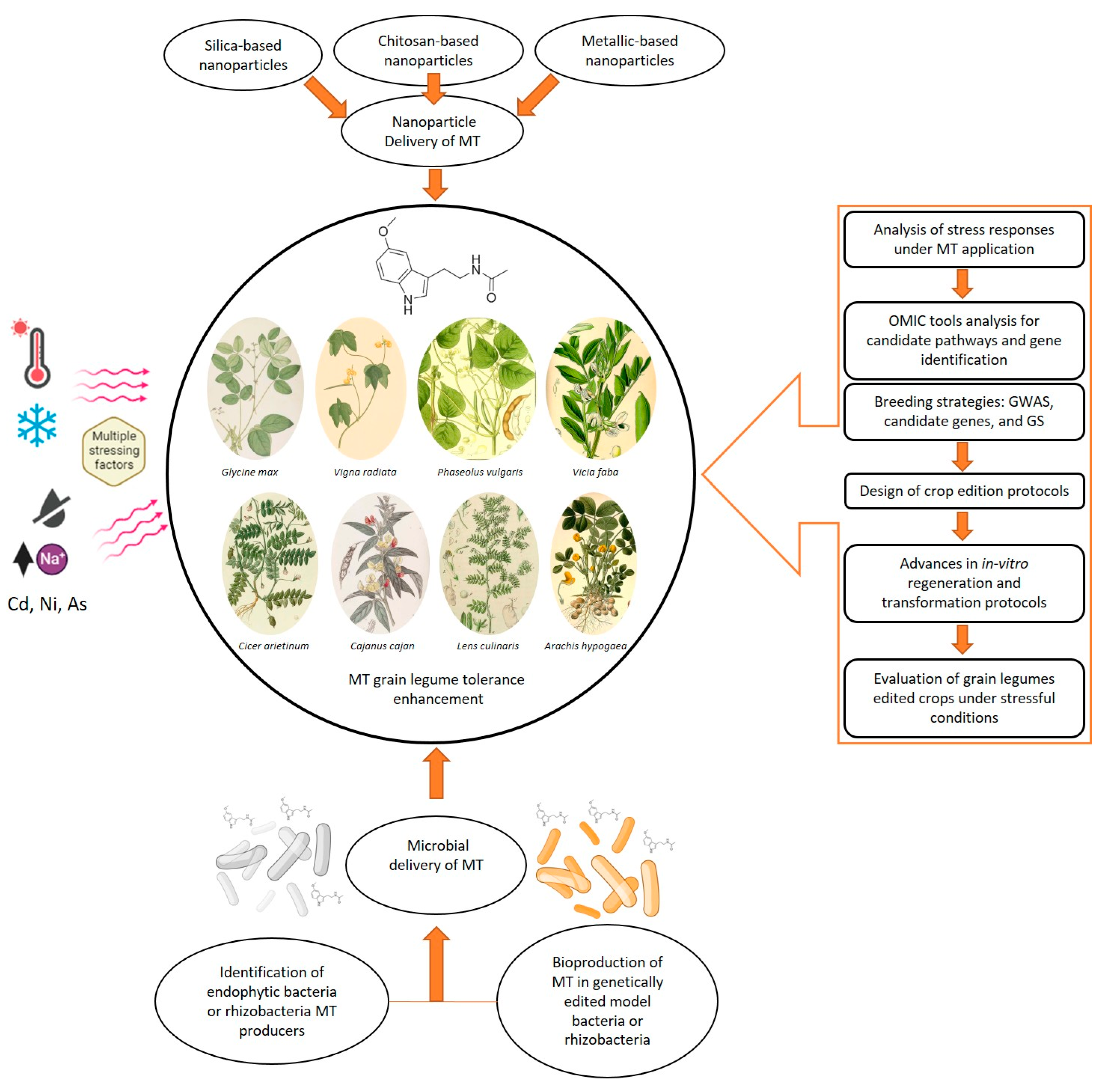
5. Biotechnological Prospects for MT Research in Grain Legumes
6. Conclusions
Author Contributions
Funding
Data Availability Statement
Acknowledgments
Conflicts of Interest
Abbreviations
References
- FAO FAOSTAT, Statistical Database. 2022. Available online: https://www.fao.org/faostat/en/#home. (accessed on 1 July 2025).
- Hickey, L.T.; Hafeez, A.N.; Robinson, H.; Jackson, S.A.; Leal-Bertioli, S.C.M.; Tester, M.; Gao, C.; Godwin, I.D.; Hayes, B.J.; Wulff, B.B.H. Breeding Crops to Feed 10 Billion. Nat. Biotechnol. 2019, 37, 744–754. [Google Scholar] [CrossRef]
- Márquez, K.; Arriagada, O.; Pérez-Díaz, R.; Cabeza, R.A.; Plaza, A.; Arévalo, B.; Meisel, L.A.; Ojeda, D.; Silva, H.; Schwember, A.R.; et al. Nutritional Characterization of Chilean Landraces of Common Bean. Plants 2024, 13, 817. [Google Scholar] [CrossRef]
- Didinger, C.; Thompson, H.J. The Role of Pulses in Improving Human Health: A Review. Legume Sci. 2022, 4, e147. [Google Scholar] [CrossRef]
- Zandalinas, S.I.; Mittler, R. Plant Responses to Multifactorial Stress Combination. New Phytol. 2022, 234, 1161–1167. [Google Scholar] [CrossRef]
- Rubiales, D.; Annicchiarico, P.; Vaz Patto, M.C.; Julier, B. Legume Breeding for the Agroecological Transition of Global Agri-Food Systems: A European Perspective. Front. Plant Sci. 2021, 12, 782574. [Google Scholar] [CrossRef]
- Détain, A.; Bhowmik, P.; Leborgne-Castel, N.; Ochatt, S. Latest Biotechnology Tools and Targets for Improving Abiotic Stress Tolerance in Protein Legumes. Environ. Exp. Bot. 2022, 197, 104824. [Google Scholar] [CrossRef]
- Parihar, P.; Singh, P.; Patidar, J.K. Chapter 13—Biostimulants for Improving Nutritional Quality in Legumes. In New and Future Developments in Microbial Biotechnology and Bioengineering; Singh, H.B., Vaishnav, A., Eds.; Elsevier: Amsterdam, The Netherlands, 2022; pp. 261–275. ISBN 978-0-323-85579-2. [Google Scholar]
- Blessing, C.H.; Mariette, A.; Kaloki, P.; Bramley, H. Profligate and Conservative: Water Use Strategies in Grain Legumes. J. Exp. Bot. 2018, 69, 349–369. [Google Scholar] [CrossRef]
- Li, J.; Liu, K.; Zhang, J.; Huang, L.; Coulter, J.A.; Woodburn, T.; Li, L.; Gan, Y. Soil–Plant Indices Help Explain Legume Response to Crop Rotation in a Semiarid Environment. Front. Plant Sci. 2018, 9, 1488. [Google Scholar] [CrossRef]
- du Jardin, P. Plant Biostimulants: Definition, Concept, Main Categories and Regulation. Sci. Hortic. 2015, 196, 3–14. [Google Scholar] [CrossRef]
- Petropoulos, S.A.; Fernandes, Â.; Plexida, S.; Chrysargyris, A.; Tzortzakis, N.; Barreira, J.C.M.; Barros, L.; Ferreira, I.C.F.R. Biostimulants Application Alleviates Water Stress Effects on Yield and Chemical Composition of Greenhouse Green Bean (Phaseolus vulgaris L.). Agronomy 2020, 10, 181. [Google Scholar] [CrossRef]
- Mandal, S.; Anand, U.; López-Bucio, J.; Radha; Kumar, M.; Lal, M.K.; Tiwari, R.K.; Dey, A. Biostimulants and Environmental Stress Mitigation in Crops: A Novel and Emerging Approach for Agricultural Sustainability under Climate Change. Environ. Res. 2023, 233, 116357. [Google Scholar] [CrossRef]
- EL Sabagh, A.; Islam, M.S.; Hossain, A.; Iqbal, M.A.; Mubeen, M.; Waleed, M.; Reginato, M.; Battaglia, M.; Ahmed, S.; Rehman, A.; et al. Phytohormones as Growth Regulators During Abiotic Stress Tolerance in Plants. Front. Agron. 2022, 4, 765068. [Google Scholar] [CrossRef]
- Liu, Y.; Li, Z.; Zhong, C.; Zhang, Y.; Wang-Pruski, G.; Zhang, Z.; Wu, J. Alleviating Effect of Melatonin on Melon Seed Germination Under Autotoxicity and Saline-Alkali Combined Stress. J. Plant Growth Regul. 2023, 42, 2474–2485. [Google Scholar] [CrossRef]
- Wang, Y.; Li, Y.; Yang, L.; Chan, Z. Melatonin Antagonizes Cytokinin Responses to Stimulate Root Growth in Arabidopsis. J. Plant Growth Regul. 2022, 42, 1833–1845. [Google Scholar] [CrossRef]
- Jensen, N.B.; Ottosen, C.-O.; Zhou, R. Exogenous Melatonin Alters Stomatal Regulation in Tomato Seedlings Subjected to Combined Heat and Drought Stress through Mechanisms Distinct from ABA Signaling. Plants 2023, 12, 1156. [Google Scholar] [CrossRef]
- Tijero, V.; Muñoz, P.; Munné-Bosch, S. Melatonin as an Inhibitor of Sweet Cherries Ripening in Orchard Trees. Plant. Physiol. Biochem. 2019, 140, 88–95. [Google Scholar] [CrossRef] [PubMed]
- Arnao, M.B.; Hernández-Ruiz, J. Functions of Melatonin in Plants: A Review. J. Pineal Res. 2015, 59, 133–150. [Google Scholar] [CrossRef] [PubMed]
- Wang, Y.; Reiter, R.J.; Chan, Z. Phytomelatonin: A Universal Abiotic Stress Regulator. J. Exp. Bot. 2018, 69, 963–974. [Google Scholar] [CrossRef]
- Arnao, M.B.; Hernández-Ruiz, J. Melatonin: A New Plant Hormone and/or a Plant Master Regulator? Trends Plant Sci. 2019, 24, 38–48. [Google Scholar] [CrossRef]
- Chen, L.; Liu, L.; Lu, B.; Ma, T.; Jiang, D.; Li, J.; Zhang, K.; Sun, H.; Zhang, Y.; Bai, Z.; et al. Exogenous Melatonin Promotes Seed Germination and Osmotic Regulation under Salt Stress in Cotton (Gossypium hirsutum L.). PLoS ONE 2020, 15, e0228241. [Google Scholar] [CrossRef]
- Wei, J.; Li, D.; Zhang, J.; Shan, C.; Rengel, Z.; Song, Z.; Chen, Q. Phytomelatonin Receptor PMTR 1-mediated Signaling Regulates Stomatal Closure in Arabidopsis Thaliana. J. Pineal Res. 2018, 65, e12500. [Google Scholar] [CrossRef]
- Li, C.; Tan, D.-X.; Liang, D.; Chang, C.; Jia, D.; Ma, F. Melatonin Mediates the Regulation of ABA Metabolism, Free-Radical Scavenging, and Stomatal Behaviour in Two Malus Species under Drought Stress. J. Exp. Bot. 2015, 66, 669–680. [Google Scholar] [CrossRef] [PubMed]
- Li, Z.; Su, X.; Chen, Y.; Fan, X.; He, L.; Guo, J.; Wang, Y.; Yang, Q. Melatonin Improves Drought Resistance in Maize Seedlings by Enhancing the Antioxidant System and Regulating Abscisic Acid Metabolism to Maintain Stomatal Opening Under PEG-Induced Drought. J. Plant Biol. 2021, 64, 299–312. [Google Scholar] [CrossRef]
- Waseem, M.; Hasan, M.M.; Hazzazi, Y.; Alharbi, B.M.; Ghani, M.U.; Ahmad, P.; Carriquí, M. Potential Mechanisms for the Rapid Post-Drought Reversal of ABA-Induced Stomatal Closure by Melatonin, 5-Aminolevulinic Acid, and Brassinosteroids. Photosynthetica 2025, 63, 104–115. [Google Scholar] [CrossRef] [PubMed]
- Shreya, S.; Supriya, L.; Padmaja, G. Melatonin Induces Drought Tolerance by Modulating Lipoxygenase Expression, Redox Homeostasis and Photosynthetic Efficiency in Arachis hypogaea L. Front. Plant Sci. 2022, 13, 1069143. [Google Scholar] [CrossRef]
- Liu, X.; Chen, A.; Wei, Q.; Wang, C.; Zhao, Q.; Wang, Q.; Zheng, X.; He, T.; Qi, J.; Yin, H.; et al. Exogenous Melatonin Inhibits the Expression of GmABI5 and Enhances Drought Resistance in Fodder Soybean Through an ABA-Independent Pathway. Plant Cell Environ. 2025; Early View. [Google Scholar] [CrossRef]
- Back, K. Melatonin Metabolism, Signaling and Possible Roles in Plants. Plant J. 2021, 105, 376–391. [Google Scholar] [CrossRef]
- Farooq, M.; Wahid, A.; Kobayashi, N.; Fujita, D.; Basra, S.M.A. Plant Drought Stress: Effects, Mechanisms and Management. Agron. Sustain. Dev. 2009, 29, 185–212. [Google Scholar] [CrossRef]
- Orimoloye, I.R. Agricultural Drought and Its Potential Impacts: Enabling Decision-Support for Food Security in Vulnerable Regions. Front. Sustain. Food Syst. 2022, 6, 838824. [Google Scholar] [CrossRef]
- Satoh, Y.; Yoshimura, K.; Pokhrel, Y.; Kim, H.; Shiogama, H.; Yokohata, T.; Hanasaki, N.; Wada, Y.; Burek, P.; Byers, E.; et al. The Timing of Unprecedented Hydrological Drought under Climate Change. Nat. Commun. 2022, 13, 3287. [Google Scholar] [CrossRef]
- Daryanto, S.; Wang, L.; Jacinthe, P.-A. Global Synthesis of Drought Effects on Food Legume Production. PLoS ONE 2015, 10, e0127401. [Google Scholar] [CrossRef]
- Nunes, C.; de Sousa Araújo, S.; da Silva, J.M.; Fevereiro, M.P.S.; da Silva, A.B. Physiological Responses of the Legume Model Medicago truncatula cv. Jemalong to Water Deficit. Environ. Exp. Bot. 2008, 63, 289–296. [Google Scholar] [CrossRef]
- Amede, T.; Schubert, S.; Stahr, K. Mechanisms of Drought Resistance in Grain Legumes I: Osmotic Adjustment. SEJS 2004, 26, 37–46. [Google Scholar] [CrossRef]
- Gajardo, H.A.; Morales, M.; Larama, G.; Luengo-Escobar, A.; López, D.; Machado, M.; Nunes-Nesi, A.; Reyes-Díaz, M.; Planchais, S.; Savouré, A.; et al. Physiological, Transcriptomic and Metabolomic Insights of Three Extremophyte Woody Species Living in the Multi-Stress Environment of the Atacama Desert. Planta 2024, 260, 55. [Google Scholar] [CrossRef]
- Kumar, J.; Sen Gupta, D.; Djalovic, I.; Kumar, S.; Siddique, K.H.M. Root-Omics for Drought Tolerance in Cool-Season Grain Legumes. Physiol. Plant. 2021, 172, 629–644. [Google Scholar] [CrossRef]
- Lahuta, L.B.; Szablińska-Piernik, J.; Horbowicz, M. Changes in Metabolic Profiles of Pea (Pisum sativum L.) as a Result of Repeated Short-Term Soil Drought and Subsequent Re-Watering. Int. J. Mol. Sci. 2022, 23, 1704. [Google Scholar] [CrossRef]
- Morin, A.; Maurousset, L.; Vriet, C.; Lemoine, R.; Doidy, J.; Pourtau, N. Carbon Fluxes and Environmental Interactions during Legume Development, with a Specific Focus on Pisum sativum. Physiol. Plant 2022, 174, e13729. [Google Scholar] [CrossRef] [PubMed]
- Rosales, M.A.; Ocampo, E.; Rodríguez-Valentín, R.; Olvera-Carrillo, Y.; Acosta-Gallegos, J.; Covarrubias, A.A. Physiological Analysis of Common Bean (Phaseolus vulgaris L.) Cultivars Uncovers Characteristics Related to Terminal Drought Resistance. Plant. Physiol. Biochem. 2012, 56, 24–34. [Google Scholar] [CrossRef]
- García-García, A.L.; García-Machado, F.J.; Borges, A.A.; Morales-Sierra, S.; Boto, A.; Jiménez-Arias, D. Pure Organic Active Compounds Against Abiotic Stress: A Biostimulant Overview. Front. Plant Sci. 2020, 11, 575829. [Google Scholar] [CrossRef] [PubMed]
- Mora, R.; Soto-Cerda, B.; Tighe-Neira, R.; Reyes-Díaz, M.; Alvarez, J.; Nunes-Nesi, A.; Ibáñez, C.; Inostroza-Blancheteau, C. Plant Resilience to Abiotic Stresses: Reveling the Role of Silicon in Drought and Metal(loid) Tolerance. J. Exp. Bot. 2025. [Google Scholar] [CrossRef]
- Sandoval, Y.; Tighe-Neira, R.; Inostroza-Blancheteau, C.; Soto-Cerda, B.; González-Villagra, J. Melatonin Improves Plant Water Status, Photosynthetic Performance, and Antioxidant Defense System in Highbush Blueberry (Vaccinium corymbosum L.) Plants Subjected to Drought Stress. Sci. Hortic. 2024, 323, 112528. [Google Scholar] [CrossRef]
- Wei, W.; Li, Q.-T.; Chu, Y.-N.; Reiter, R.J.; Yu, X.-M.; Zhu, D.-H.; Zhang, W.-K.; Ma, B.; Lin, Q.; Zhang, J.-S.; et al. Melatonin Enhances Plant Growth and Abiotic Stress Tolerance in Soybean Plants. J. Exp. Bot. 2015, 66, 695–707. [Google Scholar] [CrossRef]
- Zhang, M.; He, S.; Zhan, Y.; Qin, B.; Jin, X.; Wang, M.; Zhang, Y.; Hu, G.; Teng, Z.; Wu, Y. Exogenous Melatonin Reduces the Inhibitory Effect of Osmotic Stress on Photosynthesis in Soybean. PLoS ONE 2019, 14, e0226542. [Google Scholar] [CrossRef]
- Zou, J.; Yu, H.; Yu, Q.; Jin, X.; Cao, L.; Wang, M.; Wang, M.; Ren, C.; Zhang, Y. Physiological and UPLC-MS/MS Widely Targeted Metabolites Mechanisms of Alleviation of Drought Stress-Induced Soybean Growth Inhibition by Melatonin. Ind. Crops Prod. 2021, 163, 113323. [Google Scholar] [CrossRef]
- Imran, M.; Latif Khan, A.; Shahzad, R.; Aaqil Khan, M.; Bilal, S.; Khan, A.; Kang, S.-M.; Lee, I.-J. Exogenous Melatonin Induces Drought Stress Tolerance by Promoting Plant Growth and Antioxidant Defence System of Soybean Plants. AoB PLANTS 2021, 13, plab026. [Google Scholar] [CrossRef] [PubMed]
- Cao, L.; Qin, B.; Gong, Z.; Zhang, Y. Melatonin Improves Nitrogen Metabolism during Grain Filling under Drought Stress. Physiol. Mol. Biol. Plants 2022, 28, 1477–1488. [Google Scholar] [CrossRef]
- Oliveira-Spolaor, B.; Chiari-Bertoli, S.; Silva-Sukert, D.; Sala, H.R.; Picoli de Oliveira, B.F.; de Freitas, Í.R.; Lima-Moro, A. Exogenous Melatonin Induces Tolerance to Drought Stress Damage in Seedlings and Soybean Plants. Chil. J. Agric. Res. 2022, 82, 515–526. [Google Scholar] [CrossRef]
- Zhao, Q.; Zheng, X.; Wang, C.; Wang, Q.; Wei, Q.; Liu, X.; Liu, Y.; Chen, A.; Jiang, J.; Zhao, X.; et al. Exogenous Melatonin Improves Drought Tolerance by Regulating the Antioxidant Defense System and Photosynthetic Efficiency in Fodder Soybean Seedings. Plants 2025, 14, 460. [Google Scholar] [CrossRef]
- Kuppusamy, A.; Alagarswamy, S.; Karuppusami, K.M.; Maduraimuthu, D.; Natesan, S.; Ramalingam, K.; Muniyappan, U.; Subramanian, M.; Kanagarajan, S. Melatonin Enhances the Photosynthesis and Antioxidant Enzyme Activities of Mung Bean under Drought and High-Temperature Stress Conditions. Plants 2023, 12, 2535. [Google Scholar] [CrossRef]
- Yasmeen, S.; Wahab, A.; Saleem, M.H.; Ali, B.; Qureshi, K.A.; Jaremko, M. Melatonin as a Foliar Application and Adaptation in Lentil (Lens culinaris Medik.) Crops Under Drought Stress. Sustainability 2022, 14, 16345. [Google Scholar] [CrossRef]
- Abdoli, M.; Amerian, M.R.; Heidari, M.; Ebrahimi, A. Synergistic Effects of Melatonin and 24-Epibrassinolide on Chickpea Water Deficit Tolerance. BMC Plant Biol. 2024, 24, 671. [Google Scholar] [CrossRef]
- Kasapoğlu, A.G.; Muslu, S.; Aygören, A.S.; Öner, B.M.; Güneş, E.; İlhan, E.; Yiğider, E.; Aydin, M. Genome-Wide Characterization of the GPAT Gene Family in Bean (Phaseolus vulgaris L.) and Expression Analysis under Abiotic Stress and Melatonin. Genet. Resour. Crop Evol. 2024, 71, 4549–4569. [Google Scholar] [CrossRef]
- Aydınyurt, R.; Yağcı, S.; Yaprak, E.; Kasapoğlu, A.G.; Muslu, S.; Uçar, S.; Aygören, A.S.; Öner, B.M.; Yiğider, E.; İlhan, E.; et al. Epigenetic Evaluation of Melatonin Application in Bean (Phaseolus vulgaris L.) Genotypes Under Drought and Salt Stress Conditions. Plant Mol. Biol. Rep. 2025, 43, 1144–1162. [Google Scholar] [CrossRef]
- Li, J.; Pu, L.; Han, M.; Zhu, M.; Zhang, R.; Xiang, Y. Soil Salinization Research in China: Advances and Prospects. J. Geogr. Sci. 2014, 24, 943–960. [Google Scholar] [CrossRef]
- Casanova, M.; Salazar, O.; Oyarzún, I.; Tapia, Y.; Fajardo, M. Field Monitoring of 2010-Tsunami Impact on Agricultural Soils and Irrigation Waters: Central Chile. Water Air Soil Pollut 2016, 227, 411. [Google Scholar] [CrossRef]
- Chen, J.; Mueller, V. Coastal Climate Change, Soil Salinity and Human Migration in Bangladesh. Nat. Clim. Change 2018, 8, 981–985. [Google Scholar] [CrossRef]
- Nadeem, M.; Li, J.; Yahya, M.; Wang, M.; Ali, A.; Cheng, A.; Wang, X.; Ma, C. Grain Legumes and Fear of Salt Stress: Focus on Mechanisms and Management Strategies. Int. J. Mol. Sci. 2019, 20, 799. [Google Scholar] [CrossRef] [PubMed]
- Farooq, M.; Gogoi, N.; Hussain, M.; Barthakur, S.; Paul, S.; Bharadwaj, N.; Migdadi, H.M.; Alghamdi, S.S.; Siddique, K.H.M. Effects, Tolerance Mechanisms and Management of Salt Stress in Grain Legumes. Plant Physiol. Biochem. 2017, 118, 199–217. [Google Scholar] [CrossRef]
- Munns, R.; Tester, M. Mechanisms of Salinity Tolerance. Annu. Rev. Plant Biol. 2008, 59, 651–681. [Google Scholar] [CrossRef]
- Zhao, D.; Gao, S.; Zhang, X.; Zhang, Z.; Zheng, H.; Rong, K.; Zhao, W.; Khan, S.A. Impact of Saline Stress on the Uptake of Various Macro and Micronutrients and Their Associations with Plant Biomass and Root Traits in Wheat. Plant Soil Environ. 2021, 67, 61–70. [Google Scholar] [CrossRef]
- Arif, Y.; Singh, P.; Siddiqui, H.; Bajguz, A.; Hayat, S. Salinity Induced Physiological and Biochemical Changes in Plants: An Omic Approach towards Salt Stress Tolerance. Plant Physiol. Biochem. 2020, 156, 64–77. [Google Scholar] [CrossRef]
- Manchanda, G.; Garg, N. Salinity and its effects on the functional biology of legumes. Acta Physiol. Plant. 2008, 30, 595–618. [Google Scholar] [CrossRef]
- Bouzroud, S.; Henkrar, F.; Fahr, M.; Smouni, A. Salt Stress Responses and Alleviation Strategies in Legumes: A Review of the Current Knowledge. 3 Biotech 2023, 13, 287. [Google Scholar] [CrossRef]
- Naz, S.; Bilal, A.; Saddiq, B.; Ejaz, S.; Ali, S.; Ain Haider, S.T.; Sardar, H.; Nasir, B.; Ahmad, I.; Tiwari, R.K.; et al. Foliar Application of Salicylic Acid Improved Growth, Yield, Quality and Photosynthesis of Pea (Pisum sativum L.) by Improving Antioxidant Defense Mechanism under Saline Conditions. Sustainability 2022, 14, 14180. [Google Scholar] [CrossRef]
- Ahmad, P.; Alyemeni, M.N.; Ahanger, M.A.; Egamberdieva, D.; Wijaya, L.; Alam, P. Salicylic Acid (SA) Induced Alterations in Growth, Biochemical Attributes and Antioxidant Enzyme Activity in Faba Bean (Vicia faba L.) Seedlings under NaCl Toxicity. Russ. J. Plant Physiol. 2018, 65, 104–114. [Google Scholar] [CrossRef]
- Zhang, Q.; Li, A.; Xu, B.; Wang, H.; Yu, J.; Liu, J.; Jian, L.; Quan, C.; Du, J. Exogenous Melatonin Enhances Salt Tolerance by Regulating the Phenylpropanoid Biosynthesis Pathway in Common Bean at Sprout Stage. Plant Stress. 2024, 14, 100589. [Google Scholar] [CrossRef]
- Adhikari, A.; Sapkota, M.; Savidya, R.N.; Tosin, A.T.; Adam, M.; Alam, M.N.; Kwon, E.-H.; Kang, S.-M.; Shaffique, S.; Lee, I.-J. Calcium Enhances the Effectiveness of Melatonin in Improving Nutritional Properties of Soybean Sprouts and Germination Under Salt and Cadmium Stress. Int. J. Mol. Sci. 2025, 26, 878. [Google Scholar] [CrossRef] [PubMed]
- Alinia, M.; Kazemeini, S.A.; Sepehri, M.; Dadkhodaie, A. Simultaneous Application of Rhizobium Strain and Melatonin Improves the Photosynthetic Capacity and Induces Antioxidant Defense System in Common Bean (Phaseolus vulgaris L.) Under Salinity Stress. J. Plant Growth Regul. 2022, 41, 1367–1381. [Google Scholar] [CrossRef]
- ElSayed, A.I.; Rafudeen, M.S.; Gomaa, A.M.; Hasanuzzaman, M. Exogenous Melatonin Enhances the Reactive Oxygen Species Metabolism, Antioxidant Defense-Related Gene Expression, and Photosynthetic Capacity of Phaseolus vulgaris L. to Confer Salt Stress Tolerance. Physiol. Plant. 2021, 173, 1369–1381. [Google Scholar] [CrossRef]
- Yang, X.; Liu, D.; Liu, C.; Li, M.; Yan, Z.; Zhang, Y.; Feng, G. Possible Melatonin-Induced Salt Stress Tolerance Pathway in Phaseolus vulgaris L. Using Transcriptomic and Metabolomic Analyses. BMC Plant Biol. 2024, 24, 72. [Google Scholar] [CrossRef]
- Zhang, Q.; Qin, B.; Wang, G.; Zhang, W.; Li, M.; Yin, Z.; Yuan, X.; Sun, H.; Du, J.; Du, Y.; et al. Exogenous Melatonin Enhances Cell Wall Response to Salt Stress in Common Bean (Phaseolus vulgaris) and the Development of the Associated Predictive Molecular Markers. Front. Plant Sci. 2022, 13, 1012186. [Google Scholar] [CrossRef]
- Askari, M.; Hamid, N.; Abideen, Z.; Zulfiqar, F.; Moosa, A.; Nafees, M.; El-Keblawy, A. Exogenous Melatonin Application Stimulates Growth, Photosynthetic Pigments and Antioxidant Potential of White Beans under Salinity Stress. S. Afr. J. Bot. 2023, 160, 219–228. [Google Scholar] [CrossRef]
- Dadasoglu, E.; Turan, M.; Ekinci, M.; Argin, S.; Yildirim, E. Alleviation Mechanism of Melatonin in Chickpea (Cicer arietinum L.) Under the Salt Stress Conditions. Horticulturae 2022, 8, 1066. [Google Scholar] [CrossRef]
- Song, Z.; Yang, Q.; Dong, B.; Li, N.; Wang, M.; Du, T.; Liu, N.; Niu, L.; Jin, H.; Meng, D.; et al. Melatonin Enhances Stress Tolerance in Pigeon Pea by Promoting Flavonoid Enrichment, Particularly Luteolin in Response to Salt Stress. J. Exp. Bot. 2022, 73, 5992–6008. [Google Scholar] [CrossRef] [PubMed]
- Elnaggar, H.; Abu-shahba, M.; Ali, G.; Mousa, M.; Sofy, M. Treatment with Melatonin and Titanium Oxide Nanoparticles Improves Limiting Sodium Uptake in Broad Beans Under Salt Stress. J. Soil Sci. Plant Nutr. 2025, 25, 4159–4182. [Google Scholar] [CrossRef]
- Dawood, M.G.; El-Awadi, M.E. Alleviation of salinity stress on Vicia faba L. plants via seed priming with melatonin. Acta Biológica Colomb. 2015, 20, 223–235. [Google Scholar] [CrossRef]
- Li, C.; Zhou, K.; Qin, W.; Tian, C.; Qi, M.; Yan, X.; Han, W. A Review on Heavy Metals Contamination in Soil: Effects, Sources, and Remediation Techniques. Soil. Sediment. Contam. An. Int. J. 2019, 28, 380–394. [Google Scholar] [CrossRef]
- DalCorso, G.; Manara, A.; Furini, A. An Overview of Heavy Metal Challenge in Plants: From Roots to Shoots. Metallomics 2013, 5, 1117. [Google Scholar] [CrossRef] [PubMed]
- Guo, G.; Zhang, D.; Wang, Y. Probabilistic Human Health Risk Assessment of Heavy Metal Intake via Vegetable Consumption around Pb/Zn Smelters in Southwest China. Int. J. Environ. Res. Public Health 2019, 16, 3267. [Google Scholar] [CrossRef]
- Chukwu, E.C.; Gulser, C. Morphological, Physiological, and Anatomical Effects of Heavy Metals on Soil and Plant Health and Possible Remediation Technologies. Soil. Secur. 2025, 18, 100178. [Google Scholar] [CrossRef]
- Clemens, S. Toxic Metal Accumulation, Responses to Exposure and Mechanisms of Tolerance in Plants. Biochimie 2006, 88, 1707–1719. [Google Scholar] [CrossRef]
- Song, J.; Sun, Z.; Saud, S.; Fahad, S.; Nawaz, T. Exploring the Deleterious Effects of Heavy Metal Cadmium on Antioxidant Defense and Photosynthetic Pathways in Higher Plants. Plant Stress 2025, 15, 100716. [Google Scholar] [CrossRef]
- Benhabiles, K.; Bellout, Y.; Amghar, F. Effect of Cadmium Stress on the Polyphenol Content, Morphological, Physiological, and Anatomical Parameters of Common Bean (Phaseolus vulgaris L.). Appl. Ecol. Environ. Res. 2020, 18, 3757–3774. [Google Scholar] [CrossRef]
- Zornoza, P.; Vázquez, S.; Esteban, E.; Fernández-Pascual, M.; Carpena, R. Cadmium-Stress in Nodulated White Lupin: Strategies to Avoid Toxicity. Plant Physiol. Biochem. 2002, 40, 1003–1009. [Google Scholar] [CrossRef]
- Shi, G.; Sun, L.; Wang, X.; Liu, C. Leaf Responses to Iron Nutrition and Low Cadmium in Peanut: Anatomical Properties in Relation to Gas Exchange. Plant Soil. 2014, 375, 99–111. [Google Scholar] [CrossRef]
- Armendariz, A.L.; Talano, M.A.; Travaglia, C.; Reinoso, H.; Wevar Oller, A.L.; Agostini, E. Arsenic Toxicity in Soybean Seedlings and Their Attenuation Mechanisms. Plant Physiol. Biochem. 2016, 98, 119–127. [Google Scholar] [CrossRef] [PubMed]
- Pita-Barbosa, A.; Gonçalves, E.C.; Azevedo, A.A. Morpho-Anatomical and Growth Alterations Induced by Arsenic in Cajanus cajan (L.) DC (Fabaceae). Environ. Sci. Pollut Res. 2015, 22, 11265–11274. [Google Scholar] [CrossRef]
- Verbruggen, N.; Hermans, C.; Schat, H. Molecular Mechanisms of Metal Hyperaccumulation in Plants. New Phytol. 2009, 181, 759–776. [Google Scholar] [CrossRef]
- Luo, J.-S.; Huang, J.; Zeng, D.-L.; Peng, J.-S.; Zhang, G.-B.; Ma, H.-L.; Guan, Y.; Yi, H.-Y.; Fu, Y.-L.; Han, B.; et al. A Defensin-like Protein Drives Cadmium Efflux and Allocation in Rice. Nat. Commun. 2018, 9, 645. [Google Scholar] [CrossRef]
- Boutahiri, S.; Benrkia, R.; Tembeni, B.; Idowu, O.E.; Olatunji, O.J. Effect of Biostimulants on the Chemical Profile of Food Crops under Normal and Abiotic Stress Conditions. Curr. Plant Biol. 2024, 40, 100410. [Google Scholar] [CrossRef]
- Hasan, M.K.; Ahammed, G.J.; Sun, S.; Li, M.; Yin, H.; Zhou, J. Melatonin Inhibits Cadmium Translocation and Enhances Plant Tolerance by Regulating Sulfur Uptake and Assimilation in Solanum lycopersicum L. J. Agric. Food Chem. 2019, 67, 10563–10576. [Google Scholar] [CrossRef]
- Kaya, C.; Okant, M.; Ugurlar, F.; Alyemeni, M.N.; Ashraf, M.; Ahmad, P. Melatonin-Mediated Nitric Oxide Improves Tolerance to Cadmium Toxicity by Reducing Oxidative Stress in Wheat Plants. Chemosphere 2019, 225, 627–638. [Google Scholar] [CrossRef]
- Ren, R.; Cao, Z.; Ma, X.; Li, Z.; Zhao, K.; Cao, D.; Ma, Q.; Hou, M.; Zhao, K.; Zhang, L.; et al. Multi-Omics Analysis Reveals That AhNHL Contributes to Melatonin-Mediated Cadmium Tolerance in Peanut Plants. J. Pineal Res. 2025, 77, e70035. [Google Scholar] [CrossRef] [PubMed]
- Khan, K.; Khan, R.; Liu, Z.; Ali, S.; Naseer, M.A.; Shah, M.A.; Ahmad, H.; Zhou, X.B. Melatonin Mitigates Nickel Oxide Nanoparticles Induced Phytotoxicity in Soybean by Reducing Metal Accumulation, Enhancing Antioxidant Defense and Promoting Nitrogen Assimilation. J. Hazard. Mater. 2025, 485, 136861. [Google Scholar] [CrossRef]
- Bhat, J.A.; Faizan, M.; Bhat, M.A.; Huang, F.; Yu, D.; Ahmad, A.; Bajguz, A.; Ahmad, P. Defense Interplay of the Zinc-Oxide Nanoparticles and Melatonin in Alleviating the Arsenic Stress in Soybean (Glycine max L.). Chemosphere 2022, 288, 132471. [Google Scholar] [CrossRef]
- Siddiqui, M.H.; Alamri, S.; Nasir Khan, M.; Corpas, F.J.; Al-Amri, A.A.; Alsubaie, Q.D.; Ali, H.M.; Kalaji, H.M.; Ahmad, P. Melatonin and Calcium Function Synergistically to Promote the Resilience through ROS Metabolism under Arsenic-Induced Stress. J. Hazard. Mater. 2020, 398, 122882. [Google Scholar] [CrossRef]
- Khan, M.N.; Islam, S.; Siddiqui, M.H. Regulation of Anaplerotic Enzymes by Melatonin Enhances Resilience to Cadmium Toxicity in Vigna radiata (L.) R. Wilczek. Plant Physiol. Biochem. 2025, 220, 109522. [Google Scholar] [CrossRef]
- Hasanuzzaman, M.; Nahar, K.; Alam, M.M.; Roychowdhury, R.; Fujita, M. Physiological, Biochemical, and Molecular Mechanisms of Heat Stress Tolerance in Plants. Int. J. Mol. Sci. 2013, 14, 9643–9684. [Google Scholar] [CrossRef] [PubMed]
- Asseng, S.; Martre, P.; Maiorano, A.; Rötter, R.P.; O’Leary, G.J.; Fitzgerald, G.J.; Girousse, C.; Motzo, R.; Giunta, F.; Babar, M.A.; et al. Climate Change Impact and Adaptation for Wheat Protein. Glob. Chang. Biol. 2019, 25, 155–173. [Google Scholar] [CrossRef] [PubMed]
- Wang, J.; Gan, Y.T.; Clarke, F.; McDonald, C.L. Response of Chickpea Yield to High Temperature Stress during Reproductive Development. Crop Sci. 2006, 46, 2171–2178. [Google Scholar] [CrossRef]
- Kumar, S.; Gupta, D.; Nayyar, H. Comparative Response of Maize and Rice Genotypes to Heat Stress: Status of Oxidative Stress and Antioxidants. Acta Physiol. Plant 2012, 34, 75–86. [Google Scholar] [CrossRef]
- Siebert, S.; Ewert, F.; Eyshi Rezaei, E.; Kage, H.; Graß, R. Impact of Heat Stress on Crop Yield—On the Importance of Considering Canopy Temperature. Environ. Res. Lett. 2014, 9, 044012. [Google Scholar] [CrossRef]
- González-Villagra, J.; Ávila, K.; Gajardo, H.A.; Bravo, L.A.; Ribera-Fonseca, A.; Jorquera-Fontena, E.; Curaqueo, G.; Roldán, C.; Falquetto-Gomes, P.; Nunes-Nesi, A.; et al. Diurnal High Temperatures Affect the Physiological Performance and Fruit Quality of Highbush Blueberry (Vaccinium corymbosum L.) cv. Legacy. Plants 2024, 13, 1846. [Google Scholar] [CrossRef]
- Jiang, Y.; Lahlali, R.; Karunakaran, C.; Kumar, S.; Davis, A.R.; Bueckert, R.A. Seed Set, Pollen Morphology and Pollen Surface Composition Response to Heat Stress in Field Pea. Plant Cell Environ. 2015, 38, 2387–2397. [Google Scholar] [CrossRef] [PubMed]
- Naveed, M.; Aslam, M.; Ahmed, S.R.; Tan, D.K.Y.; De Mastro, F.; Tariq, M.S.; Sakhawat, A.; Asad, M.A.; Liu, Y. An Overview of Heat Stress in Chickpea (Cicer arietinum L.): Effects, Mechanisms and Diverse Molecular Breeding Approaches for Enhancing Resilience and Productivity. Mol. Breed. 2025, 45, 18. [Google Scholar] [CrossRef]
- Sita, K.; Sehgal, A.; Kumar, J.; Kumar, S.; Singh, S.; Siddique, K.H.M.; Nayyar, H. Identification of High-Temperature Tolerant Lentil (Lens culinaris Medik.) Genotypes Through Leaf Pollen Traits. Front. Plant Sci. 2017, 8, 744. [Google Scholar] [CrossRef] [PubMed]
- Barros, J.R.A.; dos Santos, T.C.; Silva, E.G.F.; da Silva, W.O.; Guimarães, M.J.M.; Angelotti, F. Pollen Viability, and the Photosynthetic and Enzymatic Responses of Cowpea (Vigna unguiculata (L.) Walp., Fabaceae) in the Face of Rising Air Temperature: A Problem for Food Safety. Agronomy 2024, 14, 463. [Google Scholar] [CrossRef]
- Liu, Y.; Li, J.; Zhu, Y.; Jones, A.; Rose, R.J.; Song, Y. Heat Stress in Legume Seed Setting: Effects, Causes, and Future Prospects. Front. Plant Sci. 2019, 10, 938. [Google Scholar] [CrossRef]
- Sher, A.; Noor, M.A.; Li, H.X.; Nasir, B.; Manzoor, M.A.; Hussain, S.; Zhang, J.; Riaz, M.W.; Hussain, S. Heat Stress Effects on Legumes: Challenges, Management Strategies and Future Insights. Plant Stress 2024, 13, 100537. [Google Scholar] [CrossRef]
- Priya, M.; Farooq, M.; Siddique, K.H.M. Enhancing Tolerance to Combined Heat and Drought Stress in Cool-Season Grain Legumes: Mechanisms, Genetic Insights, and Future Directions. Plant Cell Environ. 2025. Early View. [Google Scholar] [CrossRef]
- Kaushal, N.; Gupta, K.; Bhandhari, K.; Kumar, S.; Thakur, P.; Nayyar, H. Proline Induces Heat Tolerance in Chickpea (Cicer arietinum L.) Plants by Protecting Vital Enzymes of Carbon and Antioxidative Metabolism. Physiol. Mol. Biol. Plants 2011, 17, 203–213. [Google Scholar] [CrossRef]
- Pollastri, S.; Tsonev, T.; Loreto, F. Isoprene Improves Photochemical Efficiency and Enhances Heat Dissipation in Plants at Physiological Temperatures. J. Exp. Bot. 2014, 65, 1565–1570. [Google Scholar] [CrossRef] [PubMed]
- Kumar, P.; Yadav, S.; Singh, M.P. Bioregulators Application Improved Heat Tolerance and Yield in Chickpea (Cicer arietinum L.) by Modulating Zeaxanthin Cycle. Plant Physiol. Rep. 2020, 25, 677–688. [Google Scholar] [CrossRef]
- Jianing, G.; Yuhong, G.; Yijun, G.; Rasheed, A.; Qian, Z.; Zhiming, X.; Mahmood, A.; Shuheng, Z.; Zhuo, Z.; Zhuo, Z.; et al. Improvement of Heat Stress Tolerance in Soybean (Glycine max L.), by Using Conventional and Molecular Tools. Front. Plant Sci. 2022, 13, 993189. [Google Scholar] [CrossRef] [PubMed]
- Brengi, S.H.; Abouelsaad, I.A.; Khadr, A.A.; Abdelghany, M. Enhancing the Growth and Yield of the Common Bean Cultivar ’Nebraska’ under High Temperature Conditions by Combining Different Magnesium Levels with Arginine, Glycine, and Melatonin. BMC Plant Biol. 2025, 25, 1156. [Google Scholar] [CrossRef]
- Imran, M.; Aaqil Khan, M.; Shahzad, R.; Bilal, S.; Khan, M.; Yun, B.-W.; Khan, A.L.; Lee, I.-J. Melatonin Ameliorates Thermotolerance in Soybean Seedling through Balancing Redox Homeostasis and Modulating Antioxidant Defense, Phytohormones and Polyamines Biosynthesis. Molecules 2021, 26, 5116. [Google Scholar] [CrossRef]
- Kumar, G.; Saad, K.R.; Arya, M.; Puthusseri, B.; Mahadevappa, P.; Shetty, N.P.; Giridhar, P. The Synergistic Role of Serotonin and Melatonin during Temperature Stress in Promoting Cell Division, Ethylene and Isoflavones Biosynthesis in Glycine max. Curr. Plant Biol. 2021, 26, 100206. [Google Scholar] [CrossRef]
- Anitha, K.; Senthil, A.; Kalarani, M.K.; Senthil, N.; Marimuthu, S.; Umapathi, M. Melatonin Mediated High-Temperature Tolerance at Seedling Stage in Green Gram (Vigna radiata L.). J. Appl. Nat. Sci. 2023, 15, 85–93. [Google Scholar] [CrossRef]
- Li, J.; Li, Y.; Du, M.; Zang, D.; Men, Q.; Su, P.; Guo, S. Exogenous Melatonin Improves Drought Stress Tolerance via Regulating Tryptophan Metabolism and Flavonoid Biosynthesis Pathways in Wheat. Physiol. Plant. 2024, 176, e70006. [Google Scholar] [CrossRef]
- Muhammad, I.; Khan, A.; Mustafa, A.E.-Z.M.A.; Elshikh, M.S.; Shen, W. Elucidating the Modulatory Effect of Melatonin on Enzyme Activity and Oxidative Stress in Wheat: A Global Meta-Analysis. Physiol. Plant. 2024, 176, e14294. [Google Scholar] [CrossRef] [PubMed]
- Reiter, R.J.; Mayo, J.C.; Tan, D.-X.; Sainz, R.M.; Alatorre-Jimenez, M.; Qin, L. Melatonin as an Antioxidant: Under Promises but over Delivers. J. Pineal Res. 2016, 61, 253–278. [Google Scholar] [CrossRef]
- Costa, E.J.; Lopes, R.H.; Lamy-Freund, M.T. Permeability of Pure Lipid Bilayers to Melatonin. J. Pineal Res. 1995, 19, 123–126. [Google Scholar] [CrossRef]
- Demidchik, V. Mechanisms of Oxidative Stress in Plants: From Classical Chemistry to Cell Biology. Environ. Exp. Bot. 2015, 109, 212–228. [Google Scholar] [CrossRef]
- Apel, K.; Hirt, H. Reactive oxygen species: Metabolism, Oxidative Stress, and Signal Transduction. Annu. Rev. Plant Biol. 2004, 55, 373–399. [Google Scholar] [CrossRef]
- Foyer, C.H.; Noctor, G. Redox Regulation in Photosynthetic Organisms: Signaling, Acclimation, and Practical Implications. Antioxid. Redox Signal. 2009, 11, 861–905. [Google Scholar] [CrossRef]
- Ampofo, J.O.; Ngadi, M. Stimulation of the Phenylpropanoid Pathway and Antioxidant Capacities by Biotic and Abiotic Elicitation Strategies in Common Bean (Phaseolus vulgaris) Sprouts. Process Biochem. 2021, 100, 98–106. [Google Scholar] [CrossRef]
- Liu, G.; Hu, Q.; Zhang, X.; Jiang, J.; Zhang, Y.; Zhang, Z. Melatonin Biosynthesis and Signal Transduction in Plants in Response to Environmental Conditions. J. Exp. Bot. 2022, 73, 5818–5827. [Google Scholar] [CrossRef]
- Yang, X.; Ren, J.; Li, J.; Lin, X.; Xia, X.; Yan, W.; Zhang, Y.; Deng, X.; Ke, Q. Meta-Analysis of the Effect of Melatonin Application on Abiotic Stress Tolerance in Plants. Plant Biotechnol. Rep. 2023, 17, 39–52. [Google Scholar] [CrossRef]
- Li, S.; Wang, Y.; Gao, X.; Lan, J.; Fu, B. Comparative Physiological and Transcriptome Analysis Reveal the Molecular Mechanism of Melatonin in Regulating Salt Tolerance in Alfalfa (Medicago sativa L.). Front. Plant Sci. 2022, 13, 919177. [Google Scholar] [CrossRef] [PubMed]
- Zhao, H.; Gao, Y.; Du, Y.; Du, J.; Han, Y. Genome-Wide Analysis of the CML Gene Family and Its Response to Melatonin in Common Bean (Phaseolus vulgaris L.). Sci. Rep. 2023, 13, 1196. [Google Scholar] [CrossRef] [PubMed]
- Vafadar, F.; Amooaghaie, R.; Ehsanzadeh, P.; Ghanati, F.; Allakhverdiev, S. Melatonin Improves the Photosynthesis in Dracocephalum kotschyi under Salinity Stress in a Ca2+/CaM-Dependent Manner. Funct. Plant Biol. 2021, 49, 89–101. [Google Scholar] [CrossRef]
- Chang, J.; Guo, Y.; Li, J.; Liu, L.; Liu, J.; Yuan, L.; Wei, C.; Ma, J.; Zhang, Y.; Ahammed, G.J.; et al. Cyclic Nucleotide-Gated Ion Channel 20 Regulates Melatonin-Induced Calcium Signaling and Cold Tolerance in Watermelon. Plant Physiol. 2025, 197, kiae630. [Google Scholar] [CrossRef]
- Arora, D.; Singh, N.; Bhatla, S.C. Calmodulin and Calcium-Mediated Melatonin Signaling Mechanisms in Plants. Theor. Exp. Plant Physiol. 2024, 36, 635–645. [Google Scholar] [CrossRef]
- Ikram, M.; Mehran, M.; Rehman, H.U.; Ullah, S.; Bakhsh, M.Z.M.; Tahira, M.; Maqsood, M.F.K.; Rauf, A.; Ghafar, S.; Haider, K.; et al. Mechanistic Review of Melatonin Metabolism and Signaling Pathways in Plants: Biosynthesis, Regulation, and Roles under Abiotic Stress. Plant Stress 2024, 14, 100685. [Google Scholar] [CrossRef]
- Altaf, M.A.; Shu, H.; Hao, Y.; Mumtaz, M.A.; Lu, X.; Wang, Z. Melatonin Affects the Photosynthetic Performance of Pepper (Capsicum annuum L.) Seedl. Under Cold Stress. Antioxidants 2022, 11, 2414. [Google Scholar] [CrossRef] [PubMed]
- Wei, Y.; Bai, Y.; Cheng, X.; Reiter, R.J.; Yin, X.; Shi, H. Lighting the Way: Advances in Transcriptional Regulation and Integrative Crosstalk of Melatonin Biosynthetic Enzymes in Cassava. J. Exp. Bot. 2021, 72, 161–166. [Google Scholar] [CrossRef]
- Back, K.; Tan, D.-X.; Reiter, R.J. Melatonin Biosynthesis in Plants: Multiple Pathways Catalyze Tryptophan to Melatonin in the Cytoplasm or Chloroplasts. J. Pineal Res. 2016, 61, 426–437. [Google Scholar] [CrossRef]
- Wang, L.; Feng, C.; Zheng, X.; Guo, Y.; Zhou, F.; Shan, D.; Liu, X.; Kong, J. Plant Mitochondria Synthesize Melatonin and Enhance the Tolerance of Plants to Drought Stress. J. Pineal Res. 2017, 63, e12429. [Google Scholar] [CrossRef]
- Gajardo, H.A.; Gómez-Espinoza, O.; Boscariol Ferreira, P.; Carrer, H.; Bravo, L.A. The Potential of CRISPR/Cas Technology to Enhance Crop Performance on Adverse Soil Conditions. Plants 2023, 12, 1892. [Google Scholar] [CrossRef]
- Nivya, V.M.; Shah, J.M. Recalcitrance to Transformation, a Hindrance for Genome Editing of Legumes. Front. Genome Ed. 2023, 5, 1247815. [Google Scholar] [CrossRef]
- Yang, C.; Huang, Y.; Lv, W.; Zhang, Y.; Bhat, J.A.; Kong, J.; Xing, H.; Zhao, J.; Zhao, T. GmNAC8 Acts as a Positive Regulator in Soybean Drought Stress. Plant Sci. 2020, 293, 110442. [Google Scholar] [CrossRef]
- Yang, C.; Huang, Y.; Lv, P.; Antwi-Boasiako, A.; Begum, N.; Zhao, T.; Zhao, J. NAC Transcription Factor GmNAC12 Improved Drought Stress Tolerance in Soybean. Int. J. Mol. Sci. 2022, 23, 12029. [Google Scholar] [CrossRef]
- Zhong, X.; Hong, W.; Shu, Y.; Li, J.; Liu, L.; Chen, X.; Islam, F.; Zhou, W.; Tang, G. CRISPR/Cas9 Mediated Gene-Editing of GmHdz4 Transcription Factor Enhances Drought Tolerance in Soybean (Glycine max [L.] Merr.). Front. Plant Sci. 2022, 13, 988505. [Google Scholar] [CrossRef]
- Wang, T.; Xun, H.; Wang, W.; Ding, X.; Tian, H.; Hussain, S.; Dong, Q.; Li, Y.; Cheng, Y.; Wang, C.; et al. Mutation of GmAITR Genes by CRISPR/Cas9 Genome Editing Results in Enhanced Salinity Stress Tolerance in Soybean. Front. Plant Sci. 2021, 12, 779598. [Google Scholar] [CrossRef]
- Dong, L.; Hou, Z.; Li, H.; Li, Z.; Fang, C.; Kong, L.; Li, Y.; Du, H.; Li, T.; Wang, L.; et al. Agronomical Selection on Loss-of-Function of GIGANTEA Simultaneously Facilitates Soybean Salt Tolerance and Early Maturity. J. Integr. Plant Biol. 2022, 64, 1866–1882. [Google Scholar] [CrossRef] [PubMed]
- Badhan, S.; Ball, A.S.; Mantri, N. First Report of CRISPR/Cas9 Mediated DNA-Free Editing of 4CL and RVE7 Genes in Chickpea Protoplasts. Int. J. Mol. Sci. 2021, 22, 396. [Google Scholar] [CrossRef] [PubMed]
- de Koning, R.; Daryanavard, H.; Garmyn, J.; Kiekens, R.; Toili, M.E.M.; Angenon, G. Fine-Tuning CRISPR/Cas9 Gene Editing in Common Bean (Phaseolus vulgaris L.) Using a Hairy Root Transformation System and in Silico Prediction Models. Front. Plant Sci. 2023, 14, 1233418. [Google Scholar] [CrossRef] [PubMed]
- Augustine, S.M.; Cherian, A.V.; Paridhi, P.; Ugwuanyi, S.; Knoblauch, B.; Tzigos, S.; Pullamsetti, S.S.; Snowdon, R. Electrical Current-Mediated Transformation for Efficient Plant Genome Editing: A Case Study in Faba Bean. Legume Sci. 2025, 7, e70031. [Google Scholar] [CrossRef]
- Bhowmik, P.; Konkin, D.; Polowick, P.; Hodgins, C.L.; Subedi, M.; Xiang, D.; Yu, B.; Patterson, N.; Rajagopalan, N.; Babic, V.; et al. CRISPR/Cas9 Gene Editing in Legume Crops: Opportunities and Challenges. Legume Sci. 2021, 3, e96. [Google Scholar] [CrossRef]
- Zhang, Z.; Zhang, X.; Chen, Y.; Jiang, W.; Zhang, J.; Wang, J.; Wu, Y.; Wang, S.; Yang, X.; Liu, M.; et al. Understanding the Mechanism of Red Light-Induced Melatonin Biosynthesis Facilitates the Engineering of Melatonin-Enriched Tomatoes. Nat. Commun. 2023, 14, 5525. [Google Scholar] [CrossRef]
- Park, H.; Kim, J. Activation of Melatonin Receptor 1 by CRISPR-Cas9 Activator Ameliorates Cognitive Deficits in an Alzheimer’s Disease Mouse Model. J. Pineal Res. 2022, 72, e12787. [Google Scholar] [CrossRef] [PubMed]
- Shi, Y.; Han, Z.; Zhang, W.; He, L.; Shi, Z.; Ma, X.; Zhou, J.; Si, Z.; Hu, Y.; Zhang, T. Enhancing Melatonin Biosynthesis in Crops through Synthetic Genetic Circuits: A Strategy for Nutritional Fortification in Soybean and Stress Resistance in Cotton. Plant Biotechnol. J. 2025, 23, 4428–4439. [Google Scholar] [CrossRef]
- Priti; Kapoor, P.; Mali, S.; Verma, V.; Katoch, M.; Zinta, G.; Bhargava, B. Genome-Wide Characterization of Melatonin Biosynthetic Pathway Genes in Carnation (Dianthus caryophyllus L.) and Their Expression Analysis in Response to Exogenous Melatonin. Sci. Hortic. 2024, 338, 113776. [Google Scholar] [CrossRef]
- Fang, S.; Li, W.; Wang, B.; Zhu, X.; Tian, H.; Zhu, T.; Sun, D.; Yang, A.; Duan, Y.; Yan, Y.; et al. Natural Variation and Association Analysis of Melatonin Synthesis Genes with Root-Related Traits in the Maize Seedling Stage. Agronomy 2024, 14, 2031. [Google Scholar] [CrossRef]
- Wang, X.; You, J.; Liu, A.; Qi, X.; Li, D.; Zhao, Y.; Zhang, Y.; Zhang, L.; Zhang, X.; Li, P. Variation in Melatonin Contents and Genetic Dissection of Melatonin Biosynthesis in Sesame. Plants 2022, 11, 2005. [Google Scholar] [CrossRef]
- Bai, Y.; Wei, Y.; Yin, H.; Hu, W.; Cheng, X.; Guo, J.; Dong, Y.; Zheng, L.; Xie, H.; Zeng, H.; et al. PP2C1 Fine-Tunes Melatonin Biosynthesis and Phytomelatonin Receptor PMTR1 Binding to Melatonin in Cassava. J. Pineal Res. 2022, 73, e12804. [Google Scholar] [CrossRef]
- Pranil, T.; Moongngarm, A.; Loypimai, P. Influence of pH, Temperature, and Light on the Stability of Melatonin in Aqueous Solutions and Fruit Juices. Heliyon 2020, 6, e03648. [Google Scholar] [CrossRef] [PubMed]
- Mirza-Aghazadeh-Attari, M.; Mihanfar, A.; Yousefi, B.; Majidinia, M. Nanotechnology-Based Advances in the Efficient Delivery of Melatonin. Cancer Cell Int. 2022, 22, 43. [Google Scholar] [CrossRef]
- Chen, J.; Qin, H.; Zhang, B.; Mao, W.; Lou, L.; Shen, C.; Mao, J.; Lin, Q. Development of Melatonin Nano-Delivery Systems to Reduce Cadmium Accumulation in Rice (Oryza sativa L.) Seedlings: Insights from Photosynthetic Efficiency, Antioxidative Response and Gene Expression. Environ. Exp. Bot. 2022, 196, 104822. [Google Scholar] [CrossRef]
- Mukherjee, S.; Roy, S.; Arnao, M.B. Nanovehicles for Melatonin: A New Journey for Agriculture. Trends Plant Sci. 2024, 29, 232–248. [Google Scholar] [CrossRef]
- Jiao, J.; Ma, Y.; Chen, S.; Liu, C.; Song, Y.; Qin, Y.; Yuan, C.; Liu, Y. Melatonin-Producing Endophytic Bacteria from Grapevine Roots Promote the Abiotic Stress-Induced Production of Endogenous Melatonin in Their Hosts. Front. Plant Sci. 2016, 7, 1387. [Google Scholar] [CrossRef]
- Jofre, M.F.; Mammana, S.B.; Appiolaza, M.L.; Silva, M.F.; Gomez, F.J.V.; Cohen, A.C. Melatonin Production by Rhizobacteria Native Strains: Towards Sustainable Plant Growth Promotion Strategies. Physiol. Plant. 2023, 175, e13852. [Google Scholar] [CrossRef] [PubMed]

| Species | Stress Treatment | MT Application/ Concentration | Biochemical and Molecular Effects | Physiological Effects | Ref. |
|---|---|---|---|---|---|
| Glycine max L. | Watering was withheld for 12 days until 20% field capacity, and plants were maintained for 10 days. | Seed coating/50 and 100 µM. | Not assessed | No significant reduction in biomass under drought. | [44] |
| Glycine max L. | Added 15% w/v of PEG6000 to the irrigation solution to reach a water potential of −0.3 MPa. | Foliar spray and root inoculation/100 µM. | Increased activity of antioxidant enzymes SOD, POD, and CAT; reduced content of MDA. | Improved PSII efficiency, leaf area index, and yield. | [45] |
| Glycine max L. | Irrigation was reduced to 50% of field capacity, and plants were maintained under stress for 10, 17, and 24 days. | Foliar spray/100 µM. | Improvement of the antioxidant response, photosynthetic capacity, and content of amino acids | Promoted an overall increase in nitrogen accumulation and photosynthetic capacity. | [46] |
| Glycine max L. | Plants were subjected to water withholding until the soil moisture content reached 30–35% field capacity for 7 days. | Foliar spray or root irrigated for 5 days (5 mL of 50 or 100 µM MT, twice a day), before exposure to drought stress. | Increased activity of antioxidant enzymes and reduction of H2O2, MDA, and electrolyte leakage. Increase in JA, SA, and decrease in ABA, soluble sugar, and proline content. | Improved shoot length, root length, fresh weight, and dry weight. | [47] |
| Glycine max L. | Watering was withheld for 10 days until 50% of field capacity was reached, and plants were maintained under stress for 28 days. Samples were collected on days 18, 23, and 28. | Foliar spray/100 µM. | Increased expression of genes involved in nitrogen metabolism and enzyme activity, such as GOGAT, NR, GS, and GDH. | Promoted overall nitrogen accumulation in plants and increased photosynthetic capacity. | [48] |
| Glycine max L. | Watering was withheld until the leaf water potential reached −1.0 MPa. | Seed coating at 10, 30, 60, and 90 µM, and foliar spray at 30 and 50 µM. | Increased activity of antioxidant enzymes. | Increased germination speed index, root protrusion, and dry mass. Increased CO2 assimilation and net photosynthetic rate. Increased number of seeds, pods, and total seed mass. | [49] |
| Glycine max L. | Seedlings in V3 stage of fodder soybean. Drought conditions were achieved when the relative water content of soil reached 30%. | Foliar spray/50, 100, and 150 μM. | Reduced contents of H2O2, O2− and MDA. Increased antioxidant capacity, and the content of osmoprotectants. Regulation of expression levels of genes associated with photosynthesis and the antioxidant defense. | Enhanced height, biomass and altered root morphology of fodder soybean seedlings. | [50] |
| Glycine max L. | Seedling in V3 stage of fodder soybean. Seven days of natural drought stress, induced using a weighing method until 30% relative water content of soil. | Foliar spray/100 μM. | Increased antioxidant capacity. Reduction in the endogenous ABA levels. Decreased expression of GmABI5 transcription factor. | Increased drought resistance through ABA-independent pathways. Improved photosynthetic system. Changes in stomatal morphology. | [28] |
| Vigna radiata L. | Watering was withheld for 10 days at the flowering stage. | Seed treatment, foliar spray, and a combination of both/100 µM. | Enhanced activity of antioxidant enzymes such as SOD, CAT, and APX. Increase in metabolites involved in osmotic and ion homeostasis. | Improved physiological and yield-related traits. | [51] |
| Lens culinaris Medik. | Plants were maintained at 80% and 60% field capacity for 30 days. | Foliar spray/3 mM. | Increased the activity of antioxidant enzymes, soluble sugars, and antioxidant molecules. | Increased plant growth and biomass, photosynthetic pigments, and gas exchange parameters. | [52] |
| Cicer arietinum L. | Watering was withheld before the onset of flowering under field conditions. | Foliar spray/0, 100, and 200 µM in combination with 0, 3, and 6 µM of 24-epibrassinolide. | Improved enzymatic and non-enzymatic antioxidant activities such as CAT, SOD, PPO, APX, GPX, flavonoids, and carotenoids. Promotes the accumulation of proline, total soluble protein, and sugars. | Increased yield and its components, higher pigment content, enhanced oil and protein yield. | [53] |
| Phaseolus vulgaris L. | Seedlings were grown in Hoagland solution supplemented with 20% PEG6000 for 24 h. | Foliar spray/200 µM. | Increased expression of sn-Glycerol-3-phosphate-1-O-acyltransferase (GPAT) genes. | Not assessed. | [54] |
| Phaseolus vulgaris L. | Seedlings were grown in Hoagland solution supplemented with 20% PEG6000 for 24 h. | Foliar spray/200 µM. | Decreased levels of H2O2 and MDA, and increased activity of antioxidant enzymes. Changes observed in DNA methylation. | Not assessed | [55] |
| Arachis hypogaea L. | Drought was induced in 20-day-old seedlings using 10% PEG6000 for 4 days. Two varieties were assessed, a drought-sensitive and a drought-tolerant variety. | Seeds were imbibed with solutions of MT (5 µM, 10 µM, 25 µM, 50 µM and 100 µM). | Drought-sensitive variety showed an increase of endogenous MT content, antioxidant response, reduced expression and activity of the chlorophyll degrading enzymes and increase in chlorophyll content. Higher expression and activity of lipoxygenase (LOX) as genes involved in the synthesis of JA, including its content. Upregulation of NCED3 and downregulation of CYP707A2, increasing ABA levels. No additional effects on drought stress responses of tolerant variety were observed. | Increased photosynthetic attributes. | [27] |
| Species | Stress Treatment | MT Application/Concentration | Biochemical and Molecular Effects | Physiological Effects | Ref. |
|---|---|---|---|---|---|
| Glycine max L. | Plant seedlings were grown in soil saturated with 1% (w/v) NaCl for one to three weeks. | Seed coating/50 and 100 µM. | Upregulated expression of genes involved in cell division, photosynthesis, carbohydrate metabolism, fatty acid biosynthesis, and ascorbate metabolism. | Improved soybean growth. | [44] |
| Glycine max L. | Seeds were transplanted into soil contaminated with Cd+ and NaCl (50 mM). | Seeds treated with a combination of 1 mM calcium and 20 µM melatonin. | Improved germination, mineral content (Ca, P, K), and antioxidant properties, including DPPH activity, polyphenols, flavonoids, and SOD activity. Reduced MDA levels and enhanced proline content. | Improved germination and nutritional quality of soybean sprouts. | [69] |
| Phaseolus vulgaris L. | Ten days after sowing, salinity treatments of 4, 8, 10, and 16 dS m−1 NaCl were imposed in nutrient solution. | Seed coating/100 µM. | Increased activity of antioxidant enzymes such as SOD, POD, and APX. Facilitation of soluble protein synthesis. Improvement of K+/Na+ ratio. | Increased the shoot dry weight and seed yield. | [70] |
| Phaseolus vulgaris L. | Seedlings were exposed to 200 mM NaCl. | Incorporated by irrigation in Hoagland nutrient solution/150 µM. | Increased expression of genes CuZnSOD, CAT1, APX, GR, PrxQ, and 2-Cys-Prx. | Increased photosynthetic capacity and enzymatic antioxidant response. | [71] |
| Phaseolus vulgaris L. | Seedlings grown in Hoagland nutrient solution plus 150 mM NaCl. | Incorporated by irrigation in Hoagland nutrient solution/100 µM. | Regulation of gene Phvul 009G210332 and metabolites related to tryptophan decomposition. | Not assessed | [72] |
| Phaseolus vulgaris L. | Seeds germinated in a paper filter moistened with a 70 mM NaCl solution. | Seeds germinated in a paper filter moistened/100 µM. | Increased activities of antioxidant enzymes (SOD, POD, CAT, APX). Enrichment of the phenylpropanoid biosynthesis pathway, with 4-coumarate-CoA ligase (4CL) and peroxidase (POD) as critical enzymes. | Improved sprout length, surface area, volume, and average diameter. | [68] |
| Phaseolus vulgaris L. | Seeds germinated in a paper filter moistened with a 70 mM NaCl solution. | Seeds germinated in a paper filter moistened/100 µM. | Upregulation of cell wall pathway genes by at least 46%. | Increased the length, surface area, volume, and diameter of common bean sprouts. | [73] |
| Phaseolus vulgaris L. | Seedlings grown in Hoagland solution supplemented with 150 mM NaCl. | Foliar spray/200 µM. | Increased expression of sn-Glycerol-3-phosphate-1-O-acyltransferase (GPAT) genes. | Not assessed. | [54] |
| Phaseolus vulgaris L. | Seedlings were grown for 7 days in Hoagland solution supplemented with 150 mM NaCl. | Foliar spray/200 µM. | Decreased levels of H2O2 and MDA, and increased activity of antioxidant enzymes. Changes observed in DNA methylation. | Not assessed | [55] |
| Phaseolus vulgaris L. | Age of seedling not indicated. Fifteen days of salinity application (150 mM NaCl) | Type of application not indicated/25, 50, 100 µM. | Increased accumulation of polyphenol, proline, and ascorbic acid. Increased activity of SOD, POX, CAT, and APX. Reduced Na+ influxes, and increased K+ levels and K+/Na+ ratio. | Enhanced leaf canopy, total seedling length, and total seedling weight. | [74] |
| Cicer arietinum L. | Irrigation with 75 mM (to reach 4.68 dS m−1) and 100 mM (to reach 7.92 dS m−1) of NaCl | Foliar spray/50 and 100 µM. | Increased chlorophylls and carotenoid content. Decrease in oxidative markers (H2O2 and MDA) and increased CAT, SOD, and POD enzyme activities. Increased K+/Na+ and Ca2+/Na+ ratios in leaves. | Increased plant fresh weight, plant dry weight, root fresh weight, root dry weight, plant height, stem diameter, and leaf RWC. | [75] |
| Cajanus cajan | Watering with 200 mM NaCl. | Incorporated by irrigation in buffer solution/50 µM. | Promoted accumulation of luteoline by increasing expression of F3’H-5 through the transcription factor PCL1. | Decreased MDA content and electrolyte permeability, retained chlorophyll content. | [76] |
| Vicia faba L. | Watering with 75 and 150 mM NaCl | Foliar application of 50 and 100 µM at 35 to 40 days after sowing. | Decrease the Na accumulation in plant tissues. Increased expression of genes encoding antioxidant enzymes (CAT, GR, Fe SOD, Cu-Zn SOD) and their antioxidant enzymatic activity. Higher content of AsA and GSH. Increased synthesis of glycine betaine, phenol, and proline. | Production of photosynthetic pigments was retained. Improved photosynthetic parameters. | [77] |
| Vicia faba L. | Fifteen days after sowing, seedlings were watered with diluted seawater at low and high concentrations (3.85 dS/m and 7.69 dS/m, respectively) | Seed soaked with 100 and 500 µM of MT. | Improved photosynthetic pigments, total carbohydrate, total phenolic content, indole acetic acid, K+, Ca+2, and reduced levels of compatible solutes, Na+ and Cl− contents in leaf tissues of plants irrigated with diluted seawater. | Improved growth parameters and RWC. Treatment with 500 µM had a more pronounced effect. | [78] |
| Species | Stress Treatment | MT Application/Concentration | Biochemical and Molecular Effects | Physiological Effects | Ref. |
|---|---|---|---|---|---|
| Arachis hypogaea L. | Three-week-old peanut seedlings watered with 1/2 Hoagland solution containing 100 μM CdCl2 for 21 days. | Watering with 1/2 Hoagland solution containing 50 μM. | Enhanced metabolism of linolenic acid, glutathione (GSH), and phenylpropanoid (lignin). Upregulation of AhNHL gene, promoting phenylpropanoid biosynthesis and GSH metabolism. | Enhanced development of the Casparian strip in the root cell wall. Decreased Cd accumulation in roots, shoots, and seeds by 40–60%, promoting antioxidant capacity. | [95] |
| Glycine max L. | NiO nanoparticles were applied to the soil at 100 mg kg−1 | Foliar spray/50, 75, and 100 μM. | Enhanced levels of phytohormones (ABA, JA, SA, and GA4) and secondary metabolite production. Enhanced SOD, POD, CAT, and APX activities. Upregulated POD, CAT, and APX gene expression. Enhanced antioxidant and oxidative enzymes. Improved N2-assimilation enzymes (UE, NR, GS, GOGAT, GDH). | Protection of the photosynthetic pigments and Ni uptake reduction. Decreased Ni content in root and shoot. Improved soybean seedlings’ resilience by restoring growth, balancing ion accumulation, and reducing ROS production. Improved nodule formation and N2 content. | [96] |
| Glycine max L. | At 21 DAS, soybean seedlings were exposed to 50 μM of arsenic (NaAsO2) through the soil. | Around 30 DAS, the foliar portion of soybean seedlings was treated with MT and ZnO-nanoparticles in the morning and evening, respectively, for 5 days (30–35 DAS)/100μM. | Decreased oxidative damage by enhancing the activity of the enzymatic antioxidant system and proline content. Detoxification of the H2O2, MDA, and ROS levels in As-stressed plants | Increased photosynthesis efficiency and growth of the soybean plants. | [97] |
| Vicia faba L. | Plants were irrigated with a nutrient solution supplemented with 5 µM of Na3AsO4. The treatment was applied to 7-day-old plants every three days up to 34 days. | Irrigated with a nutrient solution supplemented with 50 µM. MT was applied to 7-day-old plants every three days up to 34 days. | Increased expression of ATP synthase, Ca2+-ATPase, Ca2+-DPKase exchangers, Hsp17.6, and Hsp40. Increased total soluble carbohydrates, cysteine, and proline accumulation with increased P5CS and decreased Pro-degrading enzyme. | Applied synergistically with Ca2+ suppressed cellular programmed death features. Enhanced gas exchange parameters and photosynthetic enzymes. | [98] |
| Vigna radiata L. | Seedlings (two-leaf stage) were treated with 200 μM CdCl2 for 48 h. | Seedlings (two-leaf stage) treated with 30 μM MT for 48 h. | Improved activity of anaplerotic enzymes (involved in the TCA cycle). Enhanced activity of nitrate reductase, nitrite reductase, and glutamine synthetase. | Enhanced Cd tolerance. Higher levels of ammonium and their subsequent assimilation into amino acids and proteins. | [99] |
| Species | Stress Treatment | MT Application/Concentration | Biochemical and Molecular Effects | Physiological Effects | Ref. |
|---|---|---|---|---|---|
| Phaseolus vulgaris L. | Study conducted in field conditions under high temperatures during the reproductive stage (over 40 °C) | Foliar spray at 15, 30, and 45 days after seed sowing/50 and 100 μM. This was combined with Mg applications in soil. | Protein content was increased from 22.54% in the control to 23.98%. Mg content in seeds was up to 0.84% under this treatment against 0.52% in the control. | Melatonin 100 µM under Mg (28.57 kg ha−1) increased plant height to 65.46 cm, chlorophyll content to 43.41 SPAD units, and seed yield per plant to 26.4 g from 18.1 g in the control. | [117] |
| Cajanus Cajan | One-month-old plants were grown in pots with soil. After MT pretreatment, T° was raised from 23 °C to 42 °C. | Plants were watered with 50 μM MT in buffer solution (0.1% ethanol in water) every other day for four times. | Increased expression of CcF3’H-5, a gene involved in luteolin biosynthesis. | Decreased MDA content and electrolyte permeability, and restored chlorophyll content. | [76] |
| Glycine max L. | At the V2 stage (when second trifoliate leaves start developing), plants were exposed to heat stress from 24 °C to 42 °C for 3 and 7 days. | Five days after transplanting, plants were pretreated with 30 mL of 100 μM MT, twice daily, for 6 days in the root zone. | Increased phenolic, flavonoids, proline, endogenous MT, and polyamines. Reduced ABA content, downregulation of gmNCED3, and upregulation of catabolic genes (CYP707A1 and CYP707A2). Increased SA and upregulated expression of the PAL2 gene. Induced expression of gmHsp90 and the heat shock transcription factor (gmHsfA2). | Increased plant growth, photosynthetic pigments (Chl a and Chl b), and reduced oxidative stress. | [118] |
| Glycine max L. | Soybean cell cultures were grown at 16, 24, and 32 °C. | After day 12 of culture, different combinations of melatonin/serotonin solutions were applied, with a maximum of 100 μM each. | Serotonin and melatonin improved isoflavone content. An overexpression of isoflavones, melatonin, cell division, ethylene biosynthesis genes, and transcription factors was observed. | Serotonin and melatonin increased biomass production during temperature stress. | [119] |
| Vigna radiata L. | Seedlings (five days old) were exposed to two heat stress treatments: (1) 40 °C and (2) 42 °C for 3 h. | Seeds were treated with different MT concentrations from 20 µM to 100 µM for 6 h. | 80 and 100 µM MT doses showed higher superoxide dismutase and catalase activities with reduced oxidative stress. | High survival percentage of plants; high shoot and root growth. | [120] |
| Vigna radiata L. | The stress was imposed for 10 days at the flowering stage. T° was increased from 32 °C to 34 °C and 36 °C in an open-top chamber using an infrared heater. | Seed treatment, foliar spray, and a combination of both/100 µM. | Enhanced activity of antioxidant enzymes such as SOD, CAT, and APX. Increased metabolites involved in osmotic and ion homeostasis. | Improved physiological and yield-related traits. | [51] |
Disclaimer/Publisher’s Note: The statements, opinions and data contained in all publications are solely those of the individual author(s) and contributor(s) and not of MDPI and/or the editor(s). MDPI and/or the editor(s) disclaim responsibility for any injury to people or property resulting from any ideas, methods, instructions or products referred to in the content. |
© 2025 by the authors. Licensee MDPI, Basel, Switzerland. This article is an open access article distributed under the terms and conditions of the Creative Commons Attribution (CC BY) license (https://creativecommons.org/licenses/by/4.0/).
Share and Cite
Gajardo, H.A.; González-Villagra, J.; Arce-Johnson, P. Melatonin and Grain Legume Crops: Opportunities for Abiotic Stress Tolerance Enhancement and Food Sustainability. Plants 2025, 14, 3324. https://doi.org/10.3390/plants14213324
Gajardo HA, González-Villagra J, Arce-Johnson P. Melatonin and Grain Legume Crops: Opportunities for Abiotic Stress Tolerance Enhancement and Food Sustainability. Plants. 2025; 14(21):3324. https://doi.org/10.3390/plants14213324
Chicago/Turabian StyleGajardo, Humberto A., Jorge González-Villagra, and Patricio Arce-Johnson. 2025. "Melatonin and Grain Legume Crops: Opportunities for Abiotic Stress Tolerance Enhancement and Food Sustainability" Plants 14, no. 21: 3324. https://doi.org/10.3390/plants14213324
APA StyleGajardo, H. A., González-Villagra, J., & Arce-Johnson, P. (2025). Melatonin and Grain Legume Crops: Opportunities for Abiotic Stress Tolerance Enhancement and Food Sustainability. Plants, 14(21), 3324. https://doi.org/10.3390/plants14213324