
Abstract
China has entered a period of urban renewal, with the focus shifting from large-scale incremental construction to both upgrading existing building quality and adjusting incremental structures. There are three main types of urban renewal: demolition and reconstruction, comprehensive improvement, and organic renewal. The latter systematically optimizes and enhances urban functions, spaces, and culture through gradual renovation methods and is, therefore, suitable for use in ancient cities. To promote organic renewal, the problem of limited space resources must first be addressed, which can be resolved to a certain extent by the moderate development of underground spaces; preliminary evaluations of the development potential are also required. In consideration of the demands of organic renewal, we constructed a novel indicator system for evaluating underground space development potential (USDP) in ancient cities that assesses two dimensions: development demand and development suitability. A multi-factor comprehensive evaluation method was adopted to quantify the indicators of USDP, taking Shaoxing Ancient City (SAC) as the case study. According to the USDP evaluation, SAC can be divided into four kinds of areas: high-potential, general-potential, low-potential, and prohibited development areas. High-potential areas accounted for 16.38% of the total evaluation area and were primarily concentrated in or near key locations: train transit stations (Shaoxing Railway Station), public service facilities, evacuated land, and cultural and tourism facilities around historic districts (Shusheng Guli Historical and Cultural Street). The proposed development strategies for these areas included the interconnection of metro stations, redevelopment of relocation-related and vacated land, construction of underground cultural corridors, and supplementation of parking facilities. For developed underground spaces with low utilization efficiency, functional renewal and management improvement measures were put forward. Our method of evaluating the USDP of ancient cities and the strategies proposed to optimize the utilization of underground space can provide reference examples for SAC and other similar ancient cities.
1. Introduction
Urban renewal is a strategic process used to improve specific areas of a city that are poorly developed or underdeveloped. Many attempts at urban renewal were made by developed nations during the late 19th century, and a particularly intense phase of renewal occurred in the late 1940s under the rubric of reconstruction [1,2]. There are three main types of urban renewal: “demolition and reconstruction”, “comprehensive improvement”, and “organic renewal”. “Demolition and reconstruction” is based on the demolition of large-scale, old buildings and the construction of new ones. “Comprehensive improvement” focuses on upgrading the existing structures and public spaces without full-scale demolition, including repairs to aging components, the modernization of facilities, and environmental enhancements to improve livability [3]. “Organic renewal” is a renovation approach based on the principle of respecting historical heritage, featuring a “gradual, patch-like” method [4].
In China, the central government has vigorously advocated for the implementation of urban renewal, and all levels of government have responded accordingly since 2022. It must be stressed that the renewal of ancient cities, as important components of urban civilization, is a key aspect of both urban renewal promotion and the optimization of urban stock space, allowing both the development and traditional memory of a city to be recorded [5]. Compared with newer urban areas, ancient cities may present problems such as narrow roads, poor traffic flow, unsatisfactory living conditions, and relatively insufficient public service facilities. Therefore, in order to improve their citizens’ quality of life, the organic renewal of ancient cities is a frequent topic of debate in China [6]. In the late 1970s, Wu [4] proposed the concept of “organic renewal” to address the contradictions between urban construction and historical preservation in China. Unlike the traditional approach of large-scale demolition, which destroys the historical and cultural heritage of ancient cities, organic renewal is carried out with the core aims of respecting history, protecting cultural heritage, inheriting urban memory, focusing on sustainable urban development, and satisfying residents’ needs [7,8]. This concept can effectively balance the protection of ancient culture with the expansion of spatial functions, providing a theoretical foundation for evaluating the underground space available in ancient cities. This approach also seeks to overcome the limitations encountered during the development of ancient cities, and to achieve the goal of expanding their functions and reshaping their space.
However, the organic renewal of ancient cities is constrained by the limited development space available on the ground in China [9,10]. Therefore, developing new methods to unlock the urban land use potential of ancient cities is crucial in order to optimize their urban functions, enhance their vitality, and surmount the limitation of insufficient ground space. Underground space, as an important component of strategic national land resources [11], has been utilized in the efficient and sustainable development of urban land resources worldwide [12]. International metropolises such as New York, London, Paris, and Chicago have developed and utilized their underground space to build rail transit systems, thereby alleviating traffic pressure in central urban areas and improving residents’ quality of life [13,14,15]. In ancient cities, underground spaces have become the preferred area of development for uses such as rail transit, commercial streets, infrastructure, logistics, and museums in order to alleviate operational pressure as they do not occupy ground-level space [16,17]. In the process of renewing ancient cities, the orderly and prudent development of underground spaces can promote the further upgrading of their functions, improve the comprehensive utilization efficiency of urban land, effectively avoid damaging the street layout and style of historic urban areas while making up for their lack of public infrastructure [18,19], bring vitality to the city, and effectively promote its revitalization.
In metropolitan areas of China, the abovementioned underground development projects have been implemented as a result of these areas’ limited overground space resources. However, in ancient cities, extreme caution should be exercised when implementing those projects by prioritizing the protection of historical heritage. Furthermore, compared to other regions, the probability of historical relics residing beneath ancient cities is higher. Therefore, conducting a scientific assessment of their underground space development potential has become a prerequisite for organic renewal [20], so as to better develop and utilize the space and provide reasonable planning support for developers. At present, most studies on the development of underground space resources, both at home and abroad, primarily focus on engineering-related factors such as engineering geology, hydrogeology, site stability, geological disasters, topography, and geomorphology [21,22]. However, factors related to organic renewal, such as ecological sensitivity, historical and cultural protection, the current status of underground spaces, overground construction conditions, and land use, have been neglected. These factors should be considered together to evaluate underground space development potential (USDP), especially in ancient cities. By doing so, the negative impacts of underground space development (USD) will mostly be eliminated, and the feasibility of the corresponding projects will be improved [23].
In consideration of the practical needs of organic renewal in ancient city areas, we constructed a novel indicator system for evaluating USDP in two dimensions: development demand and development suitability for underground space. Using a multi-factor comprehensive evaluation method, a fuzzy comprehensive evaluation method, and a GIS spatial analysis method, we evaluated the USDP of Shaoxing Ancient City (SAC) by classifying, analyzing, and visualizing its spatial distribution characteristics. Later in this article, we will propose principles and strategies for optimizing the utilization of underground space in SAC, which can act as a reference for underground spaces in other ancient cities or historic districts.
2. Literature Review
The evaluation of USDP, an important component of underground space resources, refers to a comprehensive assessment of potential supply capacity and development value. It reflects the supply–demand matching relationship for underground space resources and includes two dimensions: suitability evaluation (from the supply side of USD) and development value (from the demand side) [24]. The suitability evaluation is an overall judgment on the engineering difficulties of USD and utilization, which must be carried out after fully exploring the area’s geology, hydrology, and terrain and determining the current status of the underground space’s development and utilization [21]. The development value of underground space refers to the comprehensive manifestation of economic benefits, social utilities, environmental benefits, and strategic significance that can be generated through the development and utilization of urban underground space resources. Many scholars in China have already conducted evaluations of underground space potential, but most studies have focused on engineering conditions. For instance, in his research on the comprehensive potential evaluation model for underground space development in coastal cities, Li [25] only focused on factors such as the geological environment, while in a study on models and strategies for the development of underground space in ancient cities, Hong [26] emphasized that while organic renewal has become the core framework for ancient city protection in China, its integration with underground space evaluation remains relatively weak and necessitates in-depth exploration.
In terms of evaluation indicators, scholars have conducted extensive research in the field of urban USDP evaluation. For example, Sterling et al. [27] summarized their research on Minneapolis–Saint Paul in the United States, described the distribution range and specific forms of resources that can be developed and utilized in the area, and provided a distribution map of subsurface space resources that can be effectively utilized. Youssef et al. [28] conducted a suitability study for the development and utilization of underground space, considering the impact of potential geological engineering conditions and hazards on underground projects. Doyle [29] studied the city of San Antonio, Texas, by evaluating the undeveloped underground resources in the area and obtaining a corresponding resource potential map. Most of these studies discussed either the potential value or the suitability of USD, with only a few studies involving a comprehensive evaluation of the difficulty of development and the demand for space from residents. Regarding the specific content of indicators, most scholars have focused on the geological engineering perspective, covering aspects such as topography, geomorphology, hydrogeological engineering conditions, unfavorable geology, and disasters [30]. In recent years, some authors have further considered existing construction restriction factors, including the presence of existing structures, control and protection areas as designated in urban planning, population density, traffic conditions, urban land prices, and socio-economic factors. Overall, there is still limited systematic consideration of overground environment demand factors for underground space.
The evaluation methods for underground space mainly include weighting methods and mathematical evaluation models. Most studies use the Delphi method (the expert scoring method), the analytic hierarchy process (AHP) method, or a combination to assign weights to indicators in order to evaluate urban USDP. Based on the AHP method, some scholars have used entropy weight [31] and principal component analysis [32] in the process of assigning weights. In terms of mathematical evaluation models, scholars have widely applied methods such as comprehensive indexes, fuzzy comprehensive evaluation [33], multi-objective linear weighting function [34], grey evaluation [35], and extension evaluation [36] to evaluate USDP. At present, expert scoring, the AHP, and fuzzy comprehensive evaluation are the most mainstream methods [37], which have been used to explore index systems, methods, and other related aspects of USDP evaluation. However, on the whole, the evaluation of urban USDP is still at an exploratory stage, especially in special areas such as ancient cities, historical and cultural blocks, and ecological protection areas.
At present, in terms of the index systems used and the technical level of USDP evaluation in ancient cities, most studies have focused on historical and cultural blocks and their surrounding areas. Zhang [33] established a system for evaluating the quality of underground space resources by taking the historical blocks in the old urban area of Yangzhou City in China as the study area, highlighting elements such as cultural relic protection. Wang [38] constructed an index system based on four aspects, including protection restrictions and the external environment, and carried out an empirical evaluation of the historical and cultural blocks in Tianjin City, China. Zhu [39] analyzed multiple influencing factors and clarified the grading standards and methods for USD. However, few relevant studies have focused on an entire ancient or historic city. Furthermore, the construction of evaluation systems for ancient cities still neglects the USD demands regarding organic renewal.
To summarize, while existing studies on urban USDP have laid a certain foundation in terms of evaluation methods and engineering indicators, research related to organic renewal has also confirmed its significance for ancient city protection by emphasizing incremental, heritage-respecting renewal models. However, three key gaps remain in the current literature: first, most USDP evaluations prioritize engineering feasibility but overlook demand factors derived from organic renewal; second, studies mostly focus on small-scale areas such as historical and cultural blocks, lacking systematic evaluations on the scale of an entire ancient city; and third, the integration of organic renewal concepts into USDP evaluation frameworks is insufficient. Against this backdrop, this study takes SAC—a national-level historic and cultural city with limited aboveground development space and an urgent need for organic renewal—as its research object. Focusing on an entire ancient city and using the demands of urban organic renewal as a guide, this study integrates multi-factor comprehensive and fuzzy evaluation methods to construct a new evaluation framework for USDP. We conduct corresponding empirical research using GIS spatial analysis technology, ultimately providing scientific references for the development and utilization of underground space in the study area and in other similar ancient cities.
3. Study Area and Data Source
3.1. Study Area
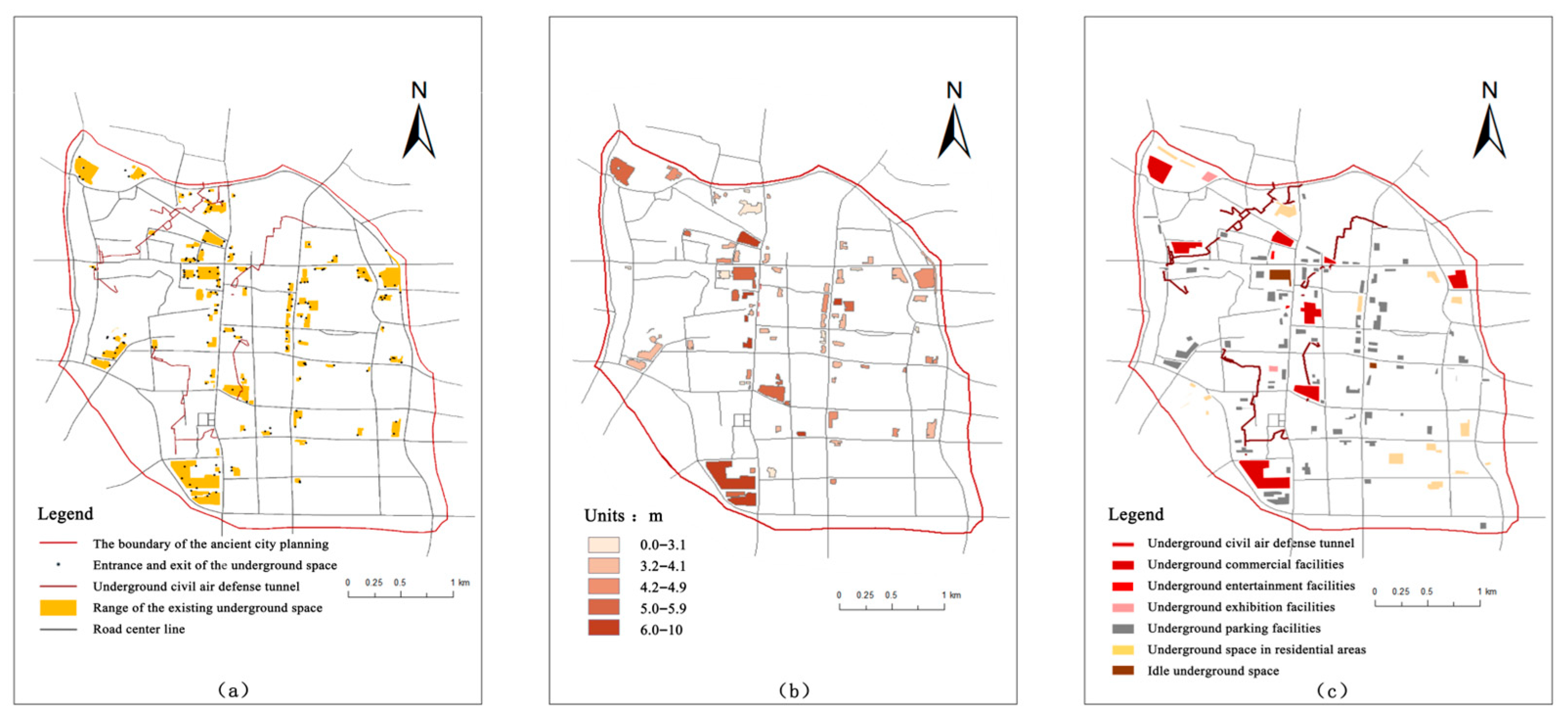
Situated in the Yuecheng District of Shaoxing City in China, the study area is the central urban area of Shaoxing City, also known as SAC, a national-level historic city approved by the State Council of China. The study area is defined by the outer banks of the ring moat in the Yuecheng District of the city, covering an area of approximately 9 km2. This ancient city’s USD began in the early 1970s, primarily driven by civil defense initiatives. Currently, SAC has an extensive network of underground spaces, totaling approximately 993,700 square meters, distributed across 110 sites. Although some progress has been made in construction over the last four decades, the underground spaces in SAC are mainly used as parking facilities. In addition, there is a lack of organic linkage between the aboveground and underground spaces in SAC. Consequently, there is substantial potential for optimizing the use of these developed underground resources (refer to Figure 1).
Figure 1.
(a) Scope of the developed underground space in SAC; (b) the depth of underground space developed in SAC; (c) functional distribution of underground space in SAC.
3.2. Data Sources
The data used in this study include information on land use, hydrological and geological engineering, current underground spaces, building boundaries, and road networks, all of which were obtained from the Natural Resources and Planning Bureau of Shaoxing City. The specific information used is shown in Table 1. The Shaoxing Historic and Cultural City Protection Office provided historical and cultural heritage inventories and the corresponding conservation plans. Population data from the Seventh National Census, provided by local street offices, was also utilized. Additionally, data on residents’ demands were collected through on-site visits and interviews.
Table 1.
Summary of the USDP data evaluation.
Given the complexity of the evaluation indicators and the inconsistency in scales, the evaluation was carried out using the ArcGIS 10.8 platform since it is capable of utilizing spatial relationships to assign values to land characteristics, facilitating spatial-scale and data-type transformation and employing spatial analysis functions to evaluate USDP.
4. Methodology
4.1. Scope and Objectives of the Evaluation
Due to the constraints of ancient city protections and the currently limited accuracy and construction levels of geological surveys, when developing underground spaces deeper than −30 m, it is not only difficult to avoid damaging the historical architectural style and spatial pattern of an ancient city, but also hard to ensure both safety in construction and cost-effectiveness. Thus, this research focused on evaluating USDP at depths ranging from 0 to −30 m in SAC. Underground space in this depth range is commonly utilized for developing urban infrastructure such as subway systems, underground parking facilities, utility tunnels, and civil air defense projects [40]. Through this evaluation, we systematically classified and graded USDP in SAC, thereby providing a scientific basis and reference for future USD [41].
4.2. Evaluation Model
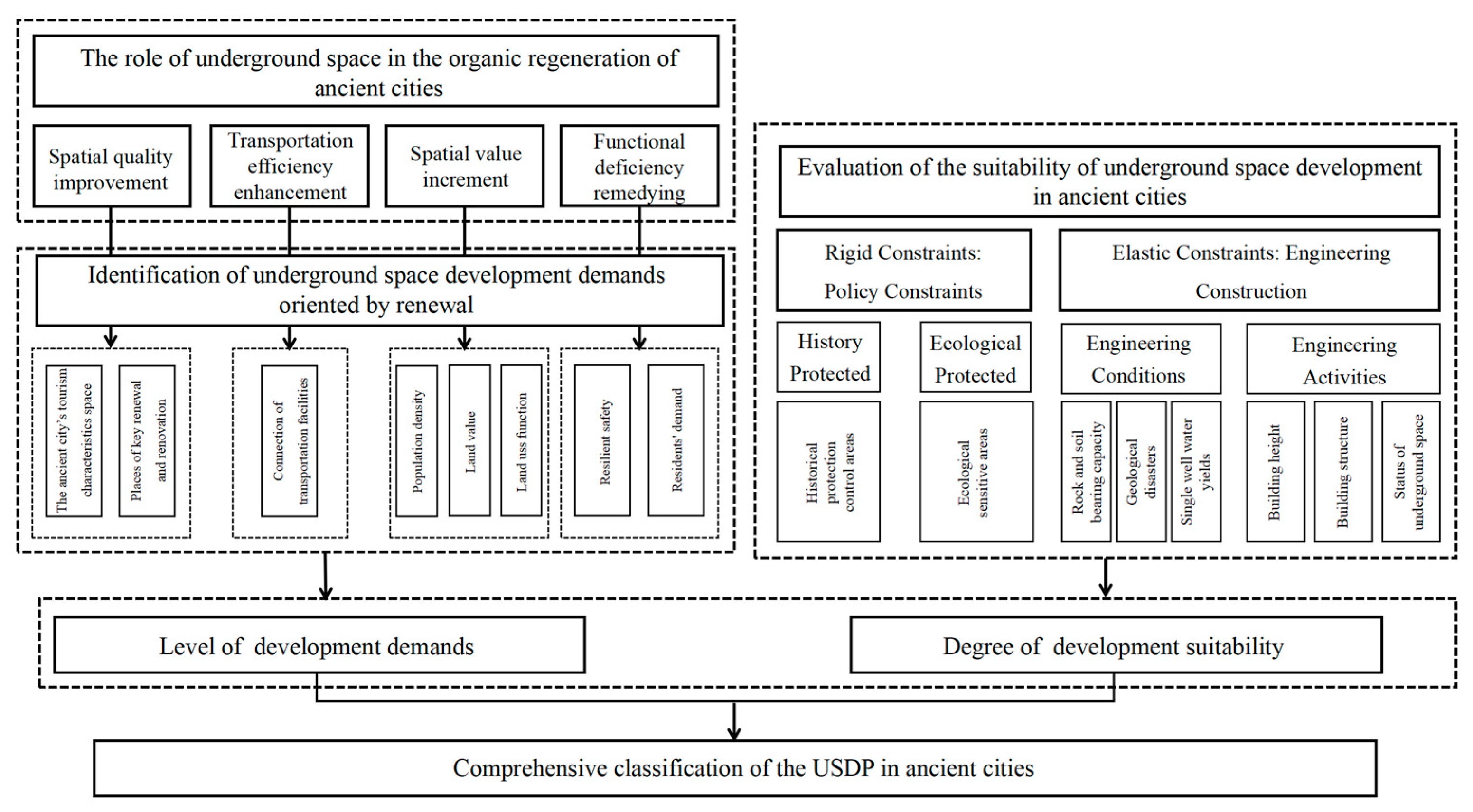
In consideration of the demands of urban organic renewal, we established an indicator system for evaluating USDP in two dimensions: development suitability and development demand. When assessing development suitability, the primary focus must be on policy considerations such as protecting cultural relics, historical districts, and underground archaeological sites so as to minimize impacts on the authenticity of urban heritage. Additionally, the scale of USD is constrained by ecological protection areas, including green spaces and water bodies. Zhao [42] emphasized the importance of the ecological environment and the historical and cultural dimension when assessing underground space resources. Wu [43] incorporated environmental factors and humanistic factors into a suitability assessment of underground space resource engineering. From the perspective of engineering conditions, the geotechnical conditions that may impact the development and utilization of underground spaces include unstable geological conditions, geological hazards, and groundwater conditions. From the perspective of engineering activities, the impacts that the subsurface foundations of existing buildings and developed underground spaces can have on underground space resources should not be underestimated.
In addition to respecting history, protecting cultural heritage, and inheriting urban memory, the organic renewal of cities also aims to improve urban quality by using a person-centered approach [8]. The four aspects of “spatial quality improvement, transportation efficiency enhancement, spatial value increment, and functional deficiency remedying”, respectively, correspond to optimizing living environments, resolving resource misallocation, activating spatial potential, and meeting people’s livelihood needs. Together, these four aspects form a concrete system for organic renewal in the field of underground space, with clear targets. Scholars such as Chen [44], You [45], and Wu [46] have researched the core dimensions of this approach, including traffic efficiency, spatial value, and functional gap-filling, when evaluating the development value of urban underground space (the demand-side evaluation of urban USD). Therefore, under the dimension of people’s needs, we evaluated the demand for USDP in terms of four aspects: spatial quality improvement, transportation efficiency enhancement, spatial value increment, and functional deficiency remedying. Based on the suitability and demand for development, our evaluation system framework for USDP was constructed as illustrated in Figure 2.
Figure 2.
Framework of indicators for evaluating the potential of USD in ancient cities.
4.3. Evaluation Indicators of Development Demand Levels
Spatial Quality Improvement Needs: Areas with cultural and tourism characteristics and spaces of urban renewal can promote the integrated use of aboveground and underground spaces. On the one hand, underground spaces offer good protection and environmental stability, which are highly beneficial for the display and preservation of historical artifacts. On the other hand, from an urban renewal perspective, redevelopment or minor renovations in land use correspond to underground spaces with significant development potential. An analysis of these quality enhancement factors is presented in Table 2.
Table 2.
Factors influencing demand for quality improvement.
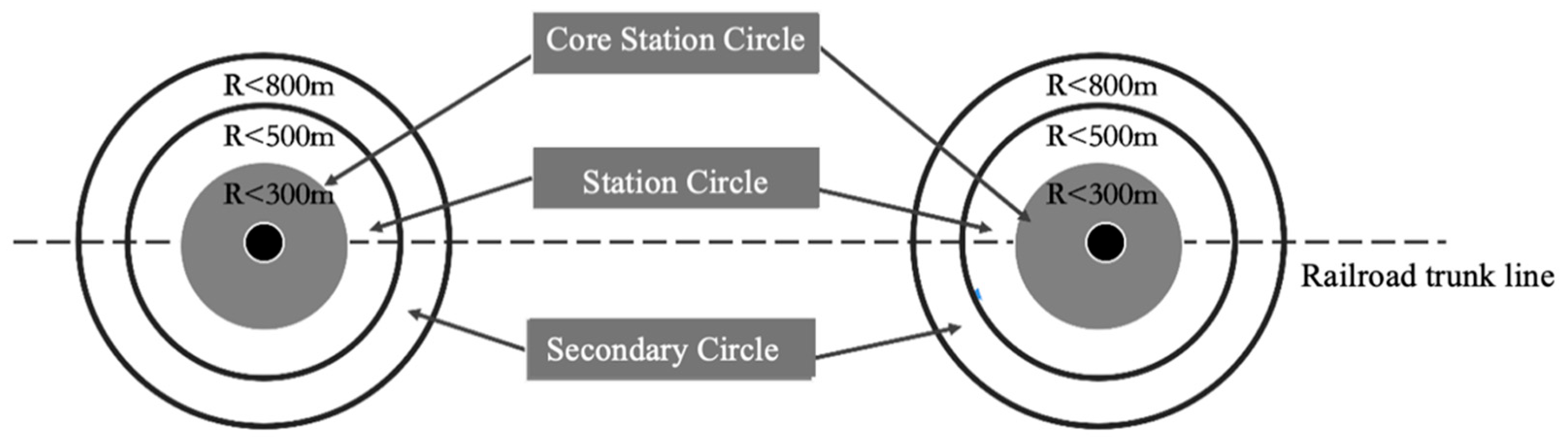
Transportation Efficiency Enhancement Needs: An efficient underground railway network and convenient transportation connectivity contribute to rapid urban development. In terms of transportation facilities, our analysis of the impact range of rail transit stations indicates that the core station catchment area is within 300 m (see Figure 3). During the protection and development of historic cities, constructing a convenient subway system helps preserve the ground environment and historical characteristics of the districts [47].
Figure 3.
Core station circle.
Spatial Value Increment Needs: Value addition needs reflect the shift in demand from aboveground to underground space, primarily considering socio-economic benefits. This encompasses three factors: population density, land value, and land use functions. Population density, defined as the ratio of the number of people to the land area within a given region, indicates the intensity and concentration of demand for spatial resources and municipal facilities per unit area of land.
Benchmark land value is a crucial factor in assessing the value of underground space from the perspective of land resources. Underground space can be valuable for its extension and the expansion of urban land resources, offering capacity enhancement and agglomeration effects [48].
Urban land use types determine the comprehensive benefits of spatial resources and influence the types and values of underground spaces. The impact of various land uses on the demand and development value of underground space is detailed in Table 3.
Table 3.
Analysis of land use functions.
Functional Deficiency-Remedying Needs: Historic cities, often characterized by lower elevations and long-term static protection, frequently suffer from outdated infrastructure and are prone to disasters such as urban flooding. Where conditions permit, constructing underground sponge complexes can enhance stormwater management and increase the resilience of historic cities to flooding and water-related disasters. In addition, conducting on-site visits and interviews can improve scientific understanding of the area’s actual shortcomings in the demand for support facilities in various streets and communities. Therefore, the rational development and utilization of underground space will help ameliorate issues such as the inadequacy of facilities in the ancient city.
4.4. Evaluation Indicators of Suitability Levels
Historical Protection Conditions: Historical and cultural resources within historic cities are categorized into two spatial forms: points and areas. Point resources include national, provincial, and municipal cultural heritage sites, as well as ancient bridges, notable trees, and buried archaeological remains. Area resources encompass the core protection areas of historical and cultural districts, construction control areas, and scenic coordination areas, along with buffer zones around the Grand Canal National Heritage Protection Area. The scope and protection levels of these various spatial elements differ, as outlined in Table 4. It is particularly important to note that core protection areas for historical artifacts and buildings, as well as underground archaeological sites, were designated as prohibited areas for development during the evaluation.
Table 4.
Underground space historic preservation element analysis.
Ecological Protection Conditions: Green spaces and water bodies are crucial components of urban ecological systems. The development and construction of underground spaces can impact the ecological environments of surface water bodies and interrupt their relationship with groundwater replenishment; therefore, a certain buffer zone should generally be maintained around water bodies [49]. Additionally, the scale and depth of USD in green areas are influenced by ecological protection levels, primarily those affecting the normal growth of plant root systems.
Engineering Conditions: Soil and rock masses serve as the foundation for urban underground spaces. Geotechnical conditions directly affect the construction difficulty, cost, and subsequent maintenance of USD. Geological hazards can increase the risks associated with underground space construction, with significant hazards including fault zones and subsidence areas [50]. The type, depth, and corrosiveness of groundwater also have a substantial impact on the development and utilization of underground spaces.
Engineering Activities: Unlike engineering conditions, engineering activities focus on the impact of the built environment—both aboveground and underground—on the quality of underground spaces. This includes factors such as the number of building floors, the structural design, and the current state of existing underground space excavation. The number of floors in buildings can restrict USD, and existing underground spaces can affect the safety of building foundations and site conditions. The greater the number of aboveground building floors, the larger the impact on the underground space [51].
4.5. Evaluation Method and Weights
The evaluation of USDP is a multi-dimensional and multi-attribute problem focused on complex environments. Thus, a multi-factor comprehensive assessment method was employed, combined with a dominant factor evaluation approach. In terms of evaluation methodology, the expert scoring method was used to establish the allocation of weights, and the fuzzy comprehensive evaluation method was applied for unifying the dimensions and standardizing the indicators. Additionally, various techniques and methods used in natural resource surveys and assessments, such as element analysis and exclusion methods, multi-factor comprehensive assessments, and parcel unit overlay methods, were integrated into the evaluation process [52].
4.5.1. Evaluation Indicator Weights
Based on the framework for evaluating the USDP in historic cities, specific representation factors were selected for each evaluation criterion. Six experts from the fields of urban and rural planning, historical heritage protection, and underground space engineering were invited to participate. These experts, having a thorough understanding of the concept of USDP in historic cities, provided professional evaluations with significant reference value. After calculating the weights and conducting consistency checks, those weights that passed the examination were averaged arithmetically to obtain the final composite scores and establish the total ranking of each evaluation criterion. The specific evaluation elements and their relative weights are detailed in Table 5.
Table 5.
Aspects and weights of elements for evaluating the potential for USD.
4.5.2. Quantification of the Evaluating Indicators
Based on the assigned weights, the evaluation units and standard quantification methods are defined as follows.
Evaluation Units: The basic evaluation unit selected was parcels of land. This approach allows for the integration of various data types and eliminates those differences in land types and heterogeneity that occur in grid-based evaluations, thereby enhancing the dimensionality of the evaluation unit attributes.
Quantification and Standardization: All indicators were subjected to quantification, standardization, and normalization processes. For measurable indicators, normalization was performed. Scoring values were established for different value ranges, based on the relevant regulations, standards, and engineering practices. A linear interpolation method was employed within the [0, 10] range to determine the scores (Equation (1)).
For qualitative evaluation indicators that could not be directly quantified, the fuzzy comprehensive evaluation method and expert assessment methods were used to determine the levels. The fuzzy comprehensive evaluation method, based on the membership function of fuzzy mathematics, converts qualitative assessments into quantitative evaluations by categorizing the variation range of the assessed objects into different levels, thereby integrating both qualitative and quantitative approaches.
In the assessment of underground space resources in historic cities, calculations involve indicators from various dimensions, including qualitative evaluations of historical and cultural elements and quantitative data related to engineering and hydrological geology. The fuzzy comprehensive evaluation method effectively addresses the challenge of unifying qualitative and quantitative indicators. The quantified score boundaries for each level were set at 10, 8, 6, 4, and 2. Detailed quantification standards for the relevant evaluation indicators are provided in Table 6.
Table 6.
Quantitative standards for USD indicators in the ancient city of Shaoxing.
4.5.3. Evaluation of Demand Levels
The expression for evaluating the demand level (X) of underground space resources in SAC (Equation (2)) is as follows:
where represents the evaluation value of the potential resource value, denotes the score of the i-th factor, is the weight of the i-th factor, and is the depth impact coefficient. Since only shallow underground space resources are evaluated without dividing by depth, and .
4.5.4. Evaluation of Suitability Levels
For evaluating the suitability of underground space resources, we employed a multi-factor weighted indicator function method, with the weights for each factor determined through expert scoring. The expression for the underground space resource suitability evaluation model (Y) (Equation (3)) is as follows:
where denotes the evaluation value of resource suitability, and a higher value indicates a higher control level and weaker suitability for development, denotes the score of the i-th factor, and is the weight of the i-th factor.
4.5.5. Evaluation of Development Potential
The suitability of USD reflects the supply capacity of underground spaces, while the demand level for USD represents the demand side. The level of matching between these two factors indicates the USDP. When there is a high level of matching between supply and demand, the development potential is high. Conversely, when there is a low level of matching, the development potential is low. When there is a mismatch between supply and demand, the development potential is moderate (see Table 7).
Table 7.
Evaluation of the potential for USD, based on matching the level of development needs and the degree of suitability.
5. Results and Analysis
5.1. Single-Factor Evaluation
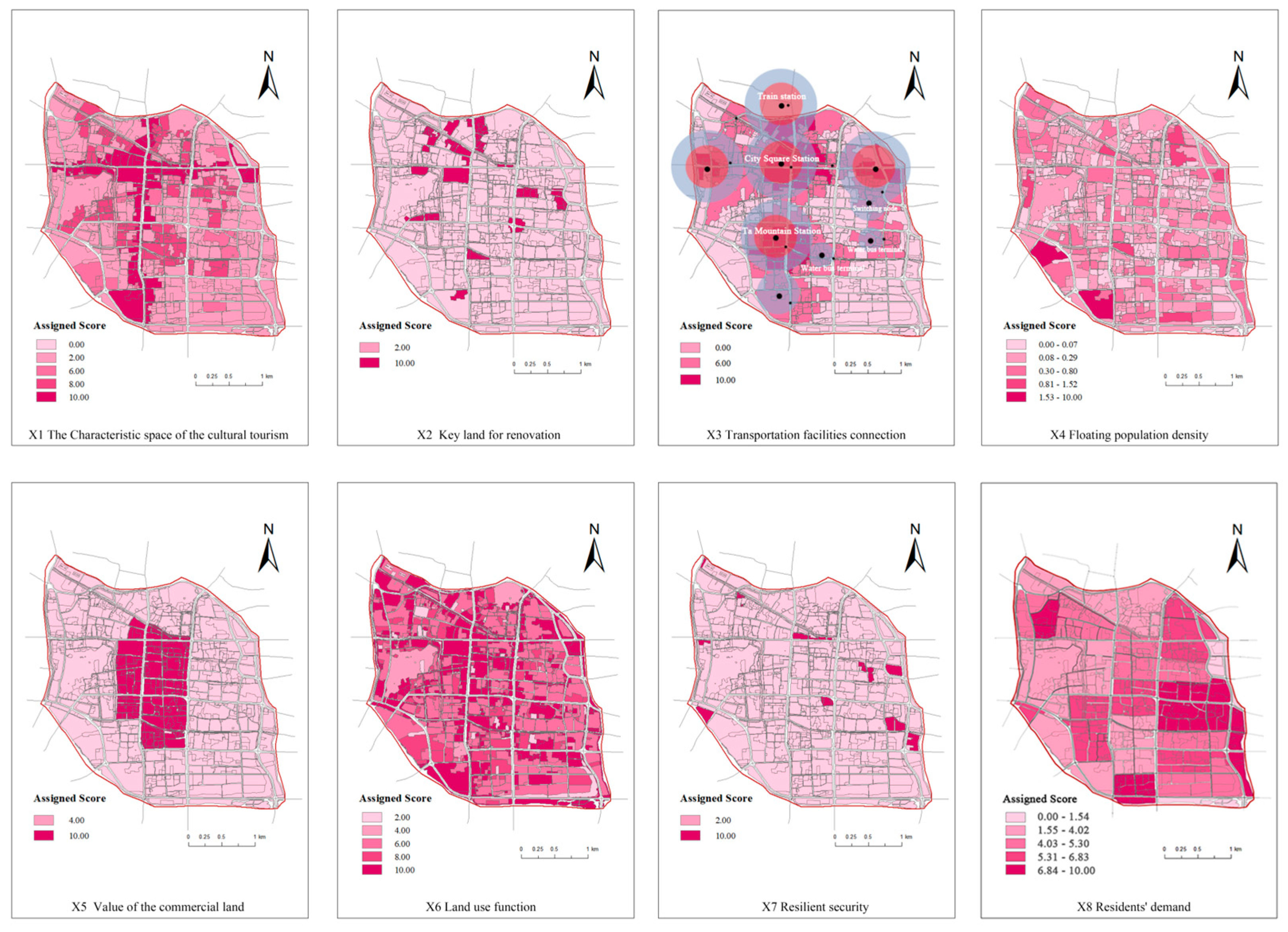
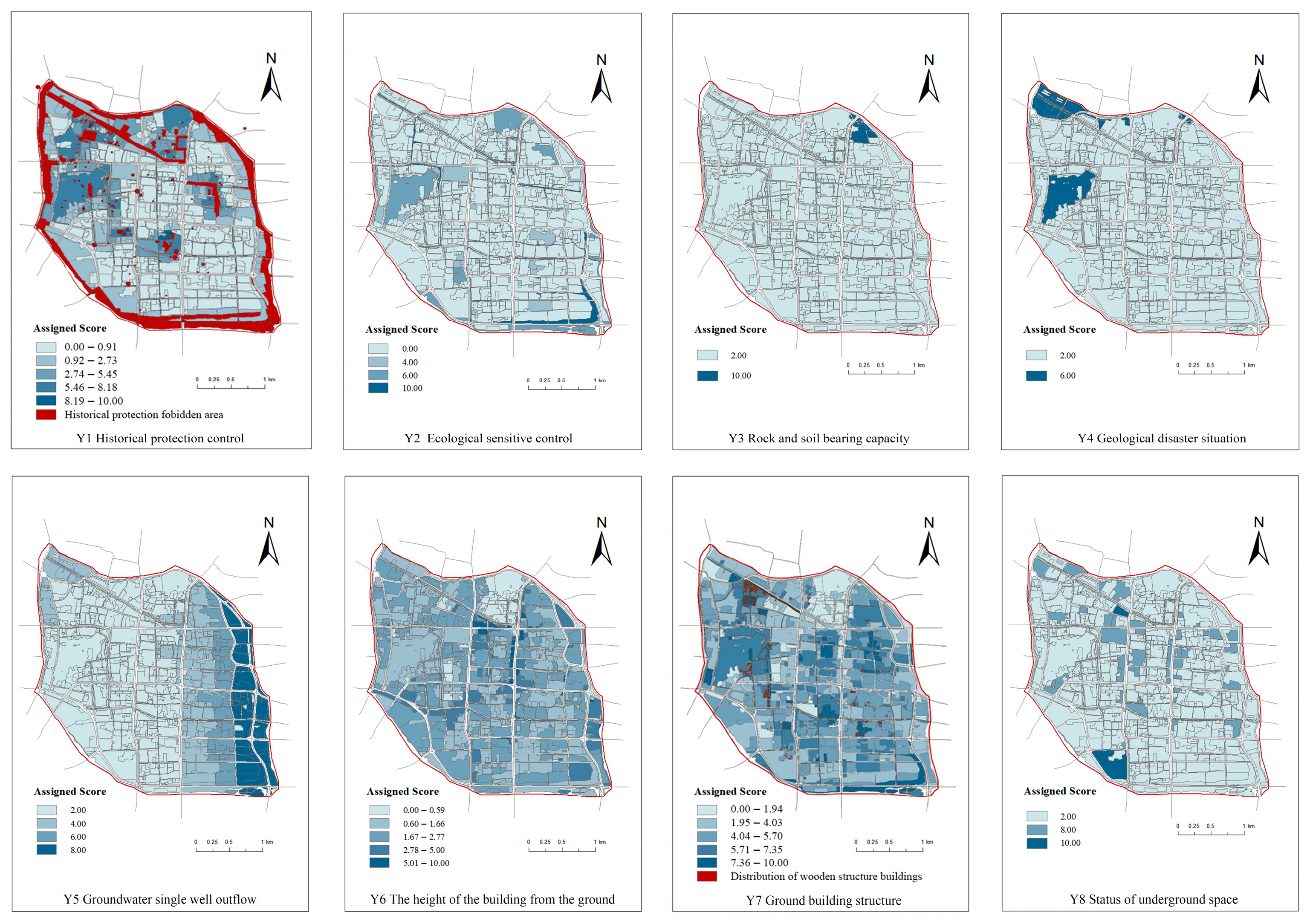
The ArcGIS platform was used to quantify the 16 factors of USDP, with parcels acting as the evaluation units. The results of the single-factor evaluation are illustrated in Figure 4 and Figure 5.
Figure 4.
Single-factor evaluation of demand levels.
Figure 5.
Single-factor evaluation of suitability levels.
5.2. The Evaluation of USD Demand Levels and Suitability
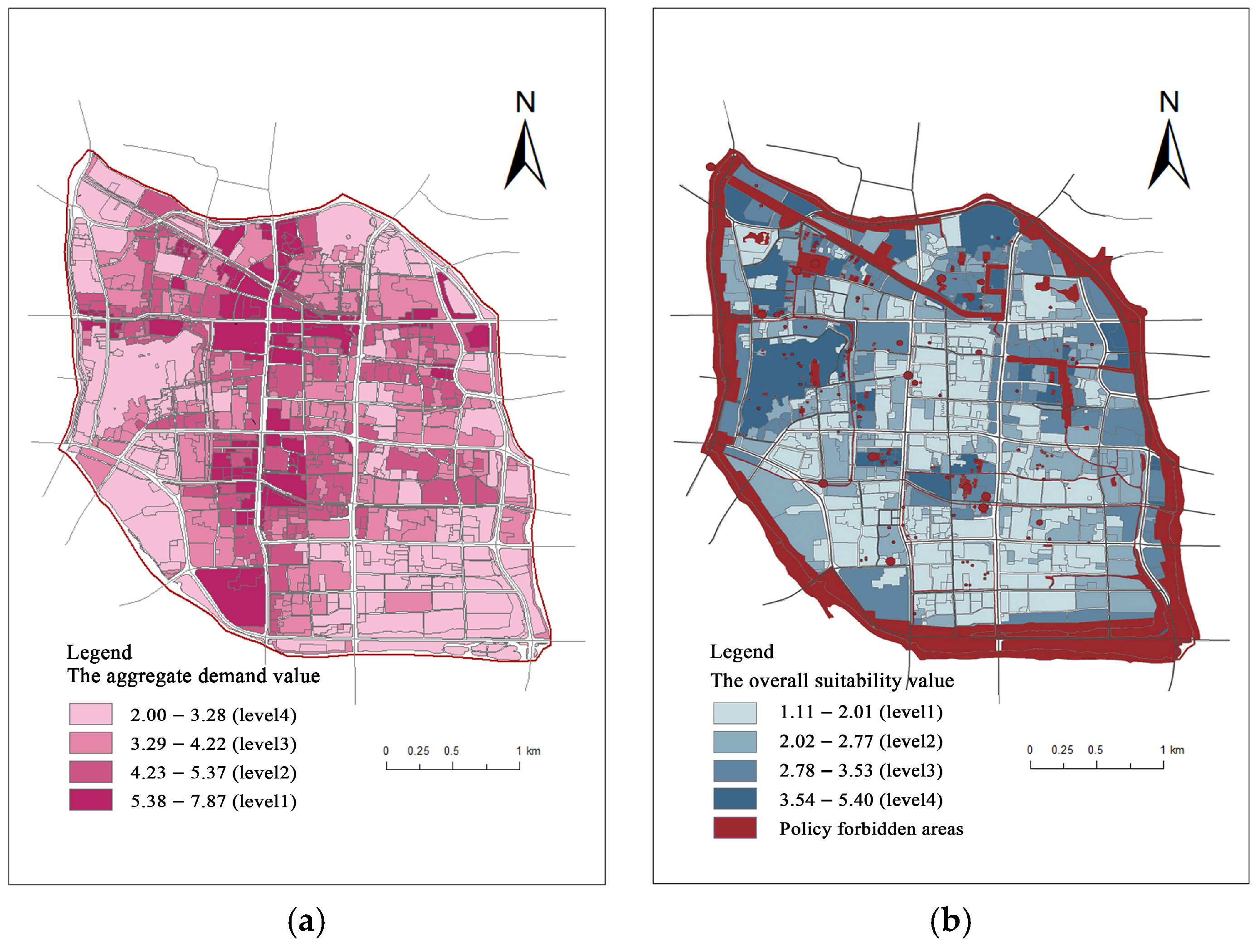
The evaluation results of USD demand and suitability, synthesized from the single-factor evaluation results, are illustrated in Figure 6. The assessment of USD demand reveals a spatial layout of “two axes and one ring” in areas with high development demand in the ancient city, influenced by cultural tourism connections, policy factors, and spatial positioning. The “two axes” include the urban development axes along Jiefang Road and Shengli Road, while the “one ring” refers to the inner ring of the core cultural exhibition area of the ancient city. These areas connect most of the historic districts and distinctive spaces, indicating a demand for additional tourism service functions underground.
Figure 6.
(a) Evaluation of the demand for the development of underground spaces in the ancient city; (b) evaluation of the suitability for development of the underground spaces in the ancient city.
High-demand areas for USD include inefficient areas (such as the old East Bus Station), areas undergoing policy-driven renovation (such as the relocation site of Beihai Primary School), open spaces left after the evacuation of high-rise buildings, and the gateway areas of the ancient city and the spaces at the entrances of scenic spots. High-demand areas for underground spaces in transportation hubs are located near metro stations and water bus stops. Those areas with high social and economic benefits from USD are concentrated at the intersection of Jiefang Road and Shengli Road, where population density is high, facilities are highly concentrated, and land values are elevated.
The results of our USD suitability evaluation in the ancient city reveal that the suitability of USD is divided into four levels. (1) Fourth-Level Areas: Regions such as the ancient city walls, canal control areas, core areas of historical and cultural protection, and areas prone to disasters. Underground construction is generally prohibited in these areas. (2) Third-Level Areas: These are mainly located on the eastern side of Jishan Mountain, in the eastern part of the ancient city close to the Pingshui River’s ancient riverbed and along Zhongxing Road. These areas are affected by factors such as geological load-bearing capacity, geological disasters, groundwater emergence, existing construction, and historical preservation controls. If development is pursued in these areas, thorough investigations into geological and historical preservation must be conducted, and the corresponding measures must be implemented to ensure the safety of USD. Development in these areas should generally be limited to shallow depths. (3) First- and Second-Level Areas: These areas are considered suitable for USD. They feature favorable geological engineering conditions, minimal impact from surface construction, and fewer restrictions related to historical and cultural resources.
5.3. Identification of Areas with USDP
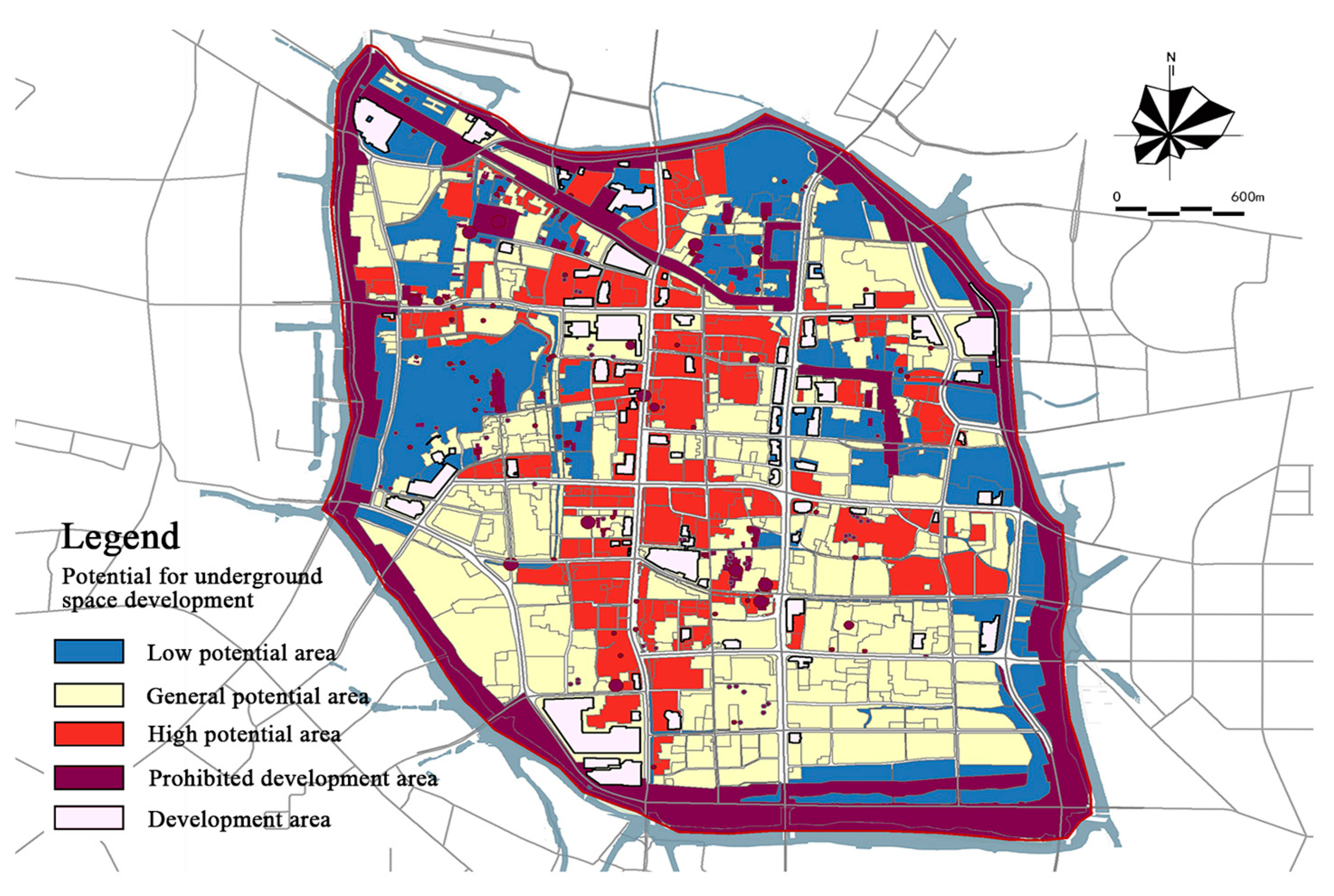
The identification of areas with USDP was carried out by matching the demand levels with the suitability levels. The evaluation results for the USDP of the ancient city of Shaoxing are shown in Figure 7. Based on the evaluation results, the USDP can be categorized into four areas: high-potential, general-potential, low-potential, and prohibited development areas, as illustrated in Table 8. The proportions of these areas are as follows: high-potential areas occupy 16.38%, general-potential areas cover 38.19%, low-potential areas account for 24.37%, and prohibited development areas make up 21.06% of the total area.
Figure 7.
Evaluation of the USDP zoning of SAC.
Table 8.
Evaluation results of the USDP of SAC.
The identification and classification of USDP in the ancient city of Shaoxing can be divided into four distinct categories:
High-Potential Areas: These areas are characterized by a strong need for urban renewal that aligns well with the suitability of USD, particularly in terms of engineering feasibility and historical preservation. High-potential areas are mainly concentrated around the functional corridors of the old city, metro stations, key facilities, and historical and cultural protection areas. The spatial pattern is typically composed of clustered nodes, axes, and rings. Within these areas, moderate development of underground spaces is recommended, while ensuring their integration with existing underground infrastructure, such as pipelines and transportation systems. This development can be aligned with ongoing urban renewal plans.
General-Potential Areas: This category includes two types of combinations. In areas with high demand but low suitability, these spaces are often adjacent to high-potential areas and cover relatively small areas of the ancient city. Development here requires a careful balance between environmental adaptability, existing construction limitations, and socio-economic benefits. Conversely, those areas with low demand but high suitability are the largest in terms of coverage and are mainly distributed in residential districts to the southeast of the old city, near the Shaoxing University of Arts and Sciences to the southwest and the White Horse New Village community in the northeast. These areas are functionally independent and exhibit concentrated and contiguous distribution. They could be considered as reserved resources for future protection and management, with potential value to be explored in long-term adaptive redevelopment projects.
Low-Potential Areas: These areas exhibit both low demand and low suitability for USD and are typically unsuitable for large-scale development. This category includes ecologically fragile regions, cultural heritage and landscape preservation areas, areas designated for special purposes, and regions prone to geological or hydrological disasters. In principle, large-scale development in these areas is discouraged. However, there may still be certain needs for infrastructure, such as fire safety or civil defense facilities, which could be accommodated through the careful planning of municipal pipelines according to both wartime and peacetime requirements.
Prohibited Development Areas: These areas are defined based on the core protection areas of heritage sites, ecological red lines, and the core protection areas of the Grand Canal Heritage Corridor. The prohibited development areas include cultural relics and monuments and ecological bottom-line areas, where development activities are generally not permitted. These areas are aligned and coordinated with the various control boundaries delineated in the related planning documents for the ancient city.
By comparing the results of the USDP assessment with the relevant planning documents, it is evident that the high-potential areas show a clustered distribution, which corresponds closely with the “One Axis, Two Rings” framework proposed in the “14th Five-Year Plan for the Protection and Utilization of the Historic City.” This congruence validates the scientific rigor of the evaluation system. Additionally, there is a noticeable discrepancy between the currently developed underground spaces in Shaoxing and the areas identified as having high development potential. This discrepancy is primarily because much of the modern development in the ancient city began in the 1980s and 1990s, during which time USD was not given adequate consideration. Consequently, the existing underground spaces are concentrated in localized areas and are somewhat scattered in distribution. Moreover, past USD was often market-driven, lacking clear regulatory guidance and a detailed control plan, which mainly resulted in the relatively simple function of supplementing ground-level commercial and residential facilities.
6. Optimization Strategies
6.1. Optimization Strategies for Utilizing Developed Underground Spaces
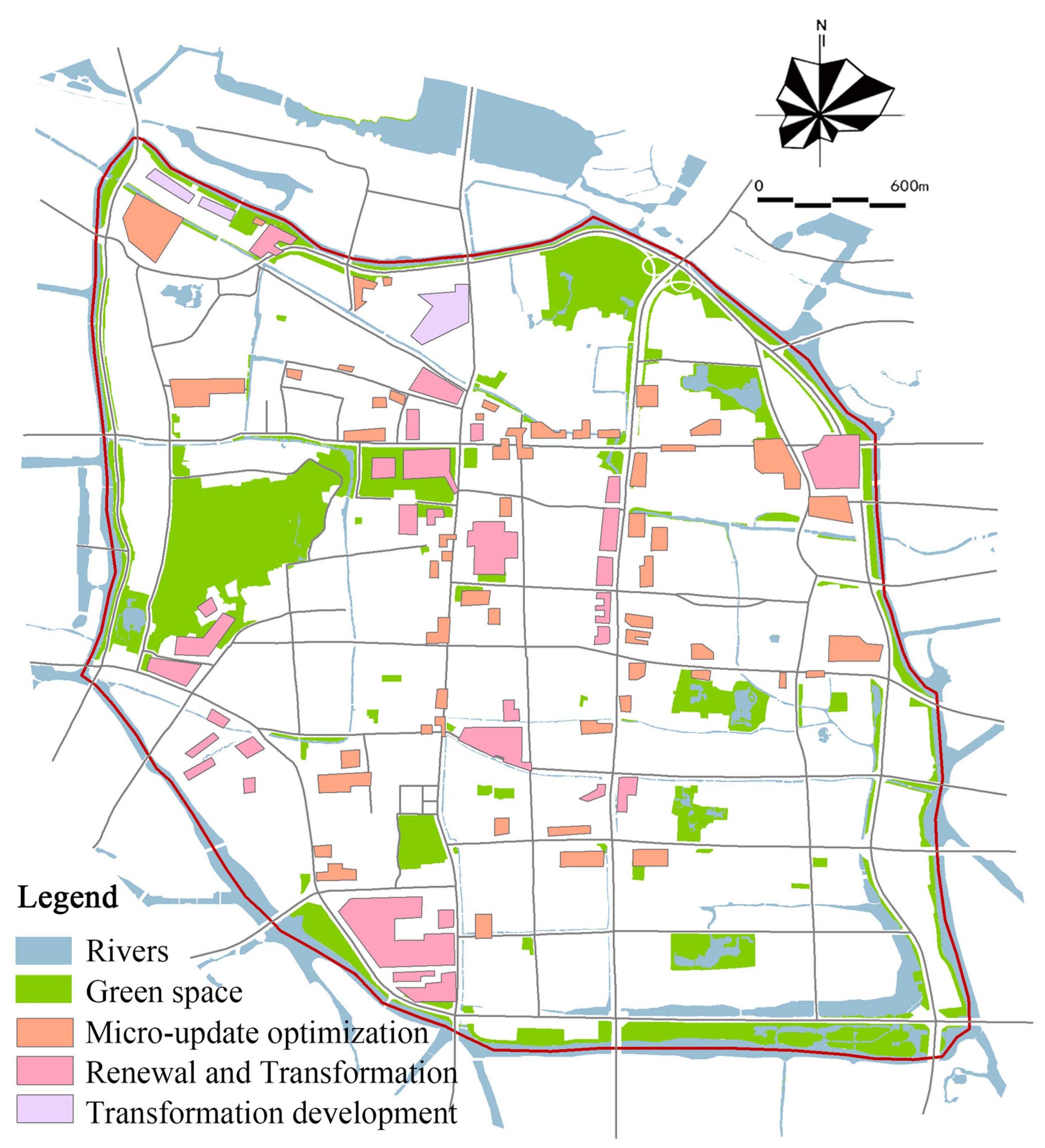
Under the guidance of balancing organic renewal and the protection of the ancient city, and based on the evaluation of USDP, it is essential to implement differentiated classification and management strategies for both developed and potential underground spaces that are aligned with various levels of statutory planning, such as historical cultural city planning and detailed regulatory planning. To conduct a coupling study, an exclusive matrix was employed, integrating the current utilization of underground spaces with the evaluation of development potential. The coupling matrix allows for the classification of renewal and implementation measures for underground spaces that have already been developed. According to the multiplicative principle, a 3 × 3 matrix generates nine different types, as shown in Table 9. Utilizing principles from management science and the similarities between categories, these nine types are consolidated into three distinct types of renewal strategies. Developed underground spaces requiring renewal and transformation are mainly concentrated on both sides of the development axis of the ancient city, with relatively large plot areas; those spaces undergoing micro-update optimization are relatively scattered throughout the ancient city; finally, underground spaces requiring transformation are relatively scarce, with only three plots located in the northern part of the ancient city. The specific spatial distribution of the three categories is shown in Figure 8, and, based on the spatial layout, specific management strategies are proposed for each type of developed underground space.
Table 9.
Coupling matrix for evaluation of underground space utilization status and development potential.
Figure 8.
Developed underground space control patterns in SAC.
Renewal and Transformation. The renewal and transformation of underground spaces can be achieved through various approaches, including the expansion and continuation of existing functions, the integration of old and new functions, and a shift toward entirely new functions [53]. For areas with high development potential but suboptimal current utilization, it is crucial to clarify ownership before proceeding with functional updates. Enhancing connectivity with surrounding plots is also vital. For instance, underground spaces in areas like the Fengyue Tourism Complex north of Yintai City and the urban square should be considered for functional upgrades that align with broader urban objectives.
Micro-update Optimization. Micro-update optimization is most applicable in areas where both the development potential and the current utilization levels are high, or where the existing usage is satisfactory but still falls short in terms of certain “resilience gaps” identified through the potential assessment. This approach is particularly relevant in scattered underground spaces within residential areas or office buildings. For example, where there is a lack of facilities for the elderly, underground or semi-underground spaces can be adapted to meet these needs by adding storage spaces or converting existing spaces into activity centers, community hubs, or even underground libraries, thereby enhancing community interaction.
Transformative Development. Transformative development is suitable for regions where the assessment indicates low development potential and where current utilization is also poor. These areas are often characterized by low suitability for engineering purposes and higher disaster risks. In such cases, underground spaces can be repurposed for municipal infrastructure. For example, the unused underground spaces northwest of the Old Town International Mall, which face significant disaster risks and have low engineering suitability, could be transformed to serve primarily as municipal facilities, addressing essential public service needs rather than pursuing traditional commercial or residential uses.
The ancient city’s underground spaces should be managed through a balanced approach that recognizes the diverse potential and constraints across different regions. A phased and context-sensitive strategy is recommended, one that aligns with the broader urban goals of preservation, sustainable development, and resilience. This comprehensive approach will ensure that the underground spaces contribute positively to the city’s long-term growth while safeguarding its rich cultural heritage. Table 10 serves as a consolidated reference for these strategies, guiding planners and decision-makers in the effective management of Shaoxing’s underground resources.
Table 10.
Optimized utilization strategy of underground space in SAC, based on the development potential evaluation.
6.2. Optimization Strategies for High-Potential Underground Spaces
Integrated Construction for Underground Space Connectivity at Metro Stations. The Shaoxing Railway Station currently lacks sufficient underground connectivity with its surrounding environment, relying heavily on aboveground connections. This has hindered the development of an integrated aboveground and underground transportation interchange system and has limited the station’s capacity to manage crowd dispersal effectively, leading to congestion issues. As the station undergoes renovation, there is a unique opportunity to link this project with the organic renewal and protection of the ancient city. The goal should be to create a comprehensive underground transportation and building complex that integrates multiple functions and spaces. This could include a combination of metro stations, shopping malls, bookstores, restaurants, underground parking, personnel shelters, and emergency supply depots. Additionally, adding multiple new entrances and exits to the metro station could extend its reach into surrounding areas, thereby reducing the surface traffic pressure. Underground pedestrian passages linked to the Shaoxing Metro Station could connect the underground parking lots at Margaret Commercial Center and Shuimu Qinghua to the railway station’s underground space, creating a cohesive underground transportation interchange system.
Development of Underground Spaces in Relocation Areas and Vacated Areas in the Ancient City. Some historic districts in the ancient city of Shaoxing lack adequate spaces for crowd gatherings and direction, leading to congested and disconnected spatial layouts. For example, the south entrance of the Shusheng Guli Historical and Cultural Street, which has been identified as having high development potential, currently suffers from spatial congestion due to the high-rise buildings, which exert significant pressure on the adjacent canal and traditional riverside residences. The urban leisure space in this area is not fully integrated. Following the enactment of the “Shaoxing Ancient City Protection and Utilization Regulations” in 2019, the demolition and relocation of these high-rise structures began. Considering the constraints on building height and the overall control of historical style, the vacated south entrance area should be redeveloped to focus on providing cultural displays, research, and tourism services related to Shusheng culture, so as to balance the renewal and protection of the ancient city. The existing underground spaces could be utilized for regular parking and electric vehicle charging stations, while also enhancing the service functions of the Shusheng Guli Historical and Cultural Street.
Cultural Service Facilities: Underground Space Display and Utilization. Lu Xun’s Hometown faces several challenges, including an influx of tourists far exceeding the site’s aboveground capacity, leading to traffic congestion, disordered cultural elements, low business appeal, incomplete IP (intellectual property) displays related to Lu Xun, and inadequate experiential consumption opportunities. The renovation efforts should focus on optimizing the use of the air-raid shelters near Lu Xun’s Hometown, integrating them with the Tashan Civil Defense Complex and Tashan Metro Station’s underground spaces. This would facilitate the continuity of cultural elements between aboveground and underground areas, better balancing the renewal and protection of the ancient city and creating a more cohesive cultural experience.
Traffic Dispersal, Transfer, and Parking Facility Enhancement. Taking the former East Bus Station area at the entrance to the Bazhi Bridge Historical District as an example, the original bus station has been abandoned. According to the overall urban design plan, this area is now designated as a “cultural and creative park centered on residential life.” In terms of underground space connectivity, elements such as sunken plazas could be used to establish an underground sightseeing route project for the Bazhi Bridge area. Combined with the nearby canal cruise terminal on the northeast side, a unique transportation interchange system could be developed. In open residential districts, underground spaces could be innovatively repurposed for inventory parking and community services. By using sunken plazas to create urban public activity venues, the underground spaces could link the three functional areas, enhancing connectivity and utility.
7. Conclusions
For this study, which was guided by the principles of organic renewal and the synergistic utilization of underground spaces in ancient cities, we constructed an evaluation indicator system for assessing USDP for this specific application and established the corresponding evaluation methods. An empirical evaluation conducted on the ancient city of Shaoxing demonstrates that the development potential of Shaoxing’s underground spaces can be classified into four categories. The priority areas for underground space utilization are concentrated around transit stations, public service facilities, and cultural tourism facilities within a certain range of proximity to historical districts. Notably, this spatial pattern corresponds closely with the “One Axis, Two Rings” framework proposed in the “14th Five-Year Plan for the Protection and Utilization of the Historic City.” This indicates that integrating “organic renewal” into underground space evaluation can effectively guide the coordinated development of the conservation of ancient cities and the expansion of space. Based on these evaluation results, we propose updated implementation measures for developed underground spaces, establishing principles for the optimized use of ancient city underground spaces. All these measures are based on the principle of “organic renewal”, avoid large-scale demolition, and accomplish the sustainable utilization of underground space.
In terms of innovation, the authors systematically constructed an evaluation indicator system tailored to the USDP of ancient cities. Guided by the principles of organic renewal and the synergistic use of their underground spaces, this system was developed based on two dimensions: the demands of organic renewal on underground spaces and the suitability of underground spaces for development and utilization. The selected factors comprehensively address the demands of historical and cultural preservation and the characteristics of cultural tourism in ancient cities. This indicator system can serve as a reference for the USD of ancient areas in large- and medium-sized cities with similar grades and scales, and can provide the relevant criteria for the construction of indicator systems for USD in other grades of cities.
This study focuses on evaluating the development potential of and optimization strategies for underground spaces in SAC within the depth range of 0 to −30 m, with the goal of organic renewal; however, some limitations persist. On the one hand, constrained by the requirements of protecting the ancient city and the limitations of current geological survey accuracy and construction technology, this study only focuses on a depth range of 0 to −30 m (deeper underground spaces are not covered). In the future, it will be necessary to explore adaptive vertical stratification methods that are suitable for ancient city scenarios so as to evaluate the development potential of deeper underground spaces while ensuring cultural heritage protection. On the other hand, due to limitations such as insufficient basic data and methods for determining indicator weights, the current indicator system cannot fully capture the mutual influences between different plots, and some specialized indicators (like key land indicators for renewal or ecological protection targets) are difficult to quantify accurately. In the future, indicator systems should be improved by integrating multi-source data (such as high-resolution geological surveys and cultural heritage monitoring datasets) and determining weight methods more scientifically, thereby enhancing the methodological rigor and practical value of USDP assessments.
Author Contributions
Conceptualization, Qiuxiao Chen; methodology, Qiuxiao Chen, Hongbo Li, and Guanjie Xu; software, Guanjie Xu; validation, Xiuxiu Chen and Hongbo Li; formal analysis, Xiaoyi Zhang and Guanjie Xu; investigation, Guanjie Xu; resources, Hongbo Li and Yiduo Qi; data curation, Xiuxiu Chen and Yiduo Qi; writing—original draft preparation, Hongbo Li; writing—review and editing, Qiuxiao Chen and Hongbo Li; visualization, Hongbo Li; supervision, Qiuxiao Chen and Xiaoyi Zhang; project administration, Qiuxiao Chen; funding acquisition, Qiuxiao Chen and Xiaoyi Zhang. All authors have read and agreed to the published version of the manuscript.
Funding
This research was supported by the Key R&D Program of Zhejiang under Grant No. 2024C03234, and by the Joint Funds of the Zhejiang Provincial Natural Science Foundation of China under Grant No. LHZY24A010001.
Data Availability Statement
The data are not publicly available due to privacy and are available on request from the corresponding author.
Acknowledgments
The authors sincerely thank the Shaoxing City Bureau of Planning and Natural Resources, Shaoxing Historic and Cultural City Protection Office, and local street offices for providing critical data support. Additionally, the authors would like to thank the reviewers in advance for the time they will devote to this article and the suggestions they might make to improve it.
Conflicts of Interest
Author Guanjie Xu was employed by the company Homedale Urban Planning & Architects Co., Ltd. of BMICPD. The remaining authors declare that the research was conducted in the absence of any commercial or financial relationships that could be construed as a potential conflict of interest.
Abbreviations
The following abbreviations are used in this manuscript:
| USDP | Underground Space Development Potential |
| USD | Underground Space Development |
| SCA | Shaoxing Ancient City |
References
- Zheng, H.W.; Shen, G.Q.; Wang, H. A review of recent studies on sustainable urban renewal. Habitat Int. 2014, 41, 272–279. [Google Scholar] [CrossRef]
- Yi, Z.Y.; Liu, G.W.; Lang, W.; Shrestha, A.; Martek, I. Strategic Approaches to Sustainable Urban Renewal in Developing Countries: A Case Study of Shenzhen, Chinal. Sustainability 2017, 9, 1460. [Google Scholar] [CrossRef]
- Huang, R. Improvement of the Vitality of Public Space under the Background of Urban Renewal. J. Landsc. Res. 2024, 5, 38–40. [Google Scholar]
- Wu, L.Y. The Old City of Beijing and Juer Hutong Neighbourhood; China Architecture & Building Press: Beijing, China, 1994. [Google Scholar]
- Wang, X.Y. Inheriting the Context and Revitalizing the Environment: An Exploration of the Organic Combination of Cultural Context Inheritance and Urban Renewal—Taking the Historical and Cultural Block of Nanshijie and Ciguling in the Ancient City of Ganzhou as an Example; Urban Planning Society of China: Wuhan, China, 2023. [Google Scholar]
- Zhou, M.W. Research on the Organic Renewal Strategy of Suzhou Ancient City from the Perspective of Park City; Urban Planning Society of China: Wuhan, China, 2023. [Google Scholar]
- Xue, H.W. Research on Renewal and Reconstruction of Taizhou Ancient District Under the Concept of “Organic Renewal”. Master’s Thesis, Yunnan Agricultural University, Kunming, China, 2023. [Google Scholar]
- Gu, S.M.; Li, J.Q.; Wang, M.H.; Ma, H. Post-Renewal Evaluation of an Urbanized Village with Cultural Resources Based on Multi Public Satisfaction: A Case Study of Nantou Ancient City in Shenzhen. Land 2023, 12, 211. [Google Scholar] [CrossRef]
- Wang, J.Q.; Shu, D.Y. The Current Situation, Protection and Renewal Strategy about Old Jingzhou: The Update of Dongdi Street in the Old South Gate for Example. South Archit. 2013, 1, 36–40. [Google Scholar]
- Klingmann, A. Re-scripting Riyadh’s Historical Downtown as a Global Destination: A Sustainable Model? J. Place Manag. Dev. 2022, 15, 93–111. [Google Scholar] [CrossRef]
- Cheng, G.H.; Su, J.W.; Li, C.; Yang, Y.; Zhao, M.H.; Wang, R. Strategic Thinking of Urban Underground Space Exploration and Safe Utilization. East China Geol. 2019, 3, 1–8. [Google Scholar]
- Chen, Z.L.; Chen, J.Y.; Liu, C.H.; Zhang, Z.F. Present Status and Development Trends of Underground Space in Chinese Cities: Evaluation and Analysis. Tunn. Undergr. Space Technol. 2018, 71, 253–270. [Google Scholar] [CrossRef]
- Chicago AreaTransportation Study. The Chicago Area Rail System-1976 to 2006. Available online: https://www.catsmpo.com/ (accessed on 5 September 2024).
- Tricoire, J. Le Metro de Paris:1899–1911: Images de la Construction; Paris-Musées-RATP: Paris, France, 1999. [Google Scholar]
- Valdenebro, J.; Gimena, F.N. Urban Utility Tunnels as a Long-term Solution for the Sustainable Revitalization of Historic Centres: The Case Study of Pamplona-Spain. Tunn. Undergr. Space Technol. 2018, 81, 228–236. [Google Scholar] [CrossRef]
- Yu, W.F. Research on the Protection of the Historical and Cultural City of Suzhou. Ind. Sci. Trib. 2021, 20, 200–203. [Google Scholar]
- Zeng, R.S.; Shen, Z.W.; Luo, J. Post-occupancy Evaluation of User Satisfaction: Case Studies of 10 Urban Underground Complexes in China. Tunn. Undergr. Space Technol. 2024, 143, 105500. [Google Scholar] [CrossRef]
- Zhang, L.; Shu, Y.; Lu, S. Planning Theory and Key Technology for the Development of Underground Spaces in Urban Historic Conservation Area. Urban Dev. Stud. 2014, 21, 79–83. [Google Scholar]
- Tong, L.X.; Zhu, W.J. The Evaluation and Develop Planning of Urban Underground Space Resources; Architecture & Building Press: Beijing, China, 2009; pp. 8–9. [Google Scholar]
- Jia, S.P.; Li, W.P. Review of Assessment of Urban Underground Space Resources. Chin. J. Undergr. Space Eng. 2008, 3, 397–401. [Google Scholar]
- Liu, K.; Peng, J.; Peng, F.L. Evaluation Model for the Suitability of Underground Space Resources Exploitation and Utilization. Chin. J. Undergr. Space Eng. 2011, 7, 219–231. [Google Scholar]
- Long, R.; Zhang, F.W.; Luan, S.; Li, W.X. Evaluation of Urban Underground Space of Guangzhou City: Its Development and Utilization. Northwest. Geol. 2020, 53, 194–206. [Google Scholar]
- Li, K.Y.; Shao, J.H.; Lin, R.Z.; Liu, G.; Zhang, Y.; Yang, M.G. The Research on the Evaluation Framework and Application of Urban Three-dimensional (Aboveground and Underground) Regeneration Sensitivity—Taking Kunshan Old City in China as an example. Tunn. Undergr. Space Technol. 2025, 159, 106428. [Google Scholar] [CrossRef]
- Lin, M.N. Evaluation of Urban Underground Space Development Potential in Kunming City. Master’s Thesis, Kunming University of Science and Technology, Kunming, China, 2019. [Google Scholar]
- Li, K.; Chen, J.W.; Xu, F.F.; He, Y.; Li, J. Evaluation Model of Comprehensive Potential of Underground Space Development in Coastal Cities. Chin. J. Undergr. Space Eng. 2023, 19, 1412–1421. [Google Scholar]
- Hong, X.C.; Zhang, J.X.; Chen, L.; Liu, C.J.; Cai, H. Research on the Development Model and Strategy of Underground Space in Ancient Cities Based on Organic Renewal Theory. China Anc. City 2024, 38, 48–56. [Google Scholar]
- Sterling, R.L.; Nelson, S.H. Planning the Development of Underground Space. Undergr. Space 1982, 7, 86–103. [Google Scholar]
- Youssef, A.M.; Pradhan, B.; Tarabees, E. Integrated Evaluation of Urban Development Suitability Based on Remote Sensing and GIS Techniques: Contribution from the Analytic Hierarchy Process. Arab. J. Geosci. 2011, 4, 463–473. [Google Scholar] [CrossRef]
- Doyle, M.R. From Hydro/geology to the Streetscape: Evaluating Urban Underground Resource Potential. Tunn. Undergr. Space Technol. Inc. Trenchless Technol. Res. 2015, 55, 83–95. [Google Scholar] [CrossRef]
- Tan, F.; Wang, J.; Jiao, Y.Y.; Ma, B.C. Current Situation and Development of Urban Underground Space Suitability Evaluation. Earth Sci. 2021, 46, 1896–1908. [Google Scholar]
- Man, Z. Research on Demand Evaluation and Development Strategy of Guangzhou Underground Space Based on Points of Interest. Master’s Thesis, Jinan University, Jinan, China, 2020. [Google Scholar]
- Zheng, Q. A Study on City Underground Space Development Potential—Taking Tianfu New Area as an Example. Master’s Thesis, Sichuan Agricultural University, Chengdu, China, 2013. [Google Scholar]
- Zhang, P.; Xiao, Y. Suitability Evaluation Method for Historic Relic Underground Space Resource Development. J. Army Eng. Univ. PLA 2014, 15, 203–208. [Google Scholar]
- Pang, J.; Liu, K.; Zheng, F.T.; Li, X.J.; Peng, F.L. Evaluation for the Suitability of Underground Space Exploitation and Utilization Based on AHP. Chin. J. Undergr. Space Eng. 2010, 6, 688–694. [Google Scholar]
- Wang, X.; Huang, X.J.; Zhen, F.; Zhong, T. Evaluation on Development Potential of Urban Underground Space Resource: Multi-level Grey Approach. J. Tongji Univ. 2009, 37, 1122–1127. [Google Scholar]
- Zhang, W.; Qu, W.W. Research on the Development Potential of Urban Underground Space. Constr. Econ. 2010, 6, 116–118. [Google Scholar]
- Hao, M.; Ren, W.Y.; Xia, W.Q.; Fu, J.; Zhu, H.; Sun, P.; Wang, K.; Xu, M. Suitability Evaluation of Urban Underground Space Development: A Case Study of Qingdao City. Appl. Sci. 2024, 14, 6617. [Google Scholar] [CrossRef]
- Wang, Z.L. Study on Implementability Evaluation of Underground Space in Historical and Cultural Blocks Based on GIS: A Case Study of Tianjin Downtown Area. Master’s Thesis, Tianjin University, Tianjin, China, 2019. [Google Scholar]
- Zhu, Y.G.; Zhao, J.W.; Huang, Z.Y. Evaluation of Underground Space Development in Historical District Based on AHP. Chin. J. Undergr. Space Eng. 2018, 14, 1437–1444, 1465. [Google Scholar]
- Li, X.Z.; Zhao, X.B.; Wu, W.B.; Cao, L.; Li, H.Q. Evaluation of Geo-environmental Suitability for the Development of Underground Space in Suzhou. In Proceedings of the 13th World Conference of Associated-Research-Centers-for-the-Urban-Underground-Space (ACUUS), Singapore, 7–9 November 2012. [Google Scholar]
- Xie, Z.Q.; Hou, Z.Q. Evaluation of Carrying Capacity for Urban Underground Space Planning and Development; Science Press: Beijing, China, 2022; pp. 65–69. [Google Scholar]
- Zhao, Y.T.; Wu, K.J.; Shi, X.D.; Lin, L.Q. Evaluation and Planning of Underground Space Resources in Highly-Built Areas From Perspective of Multi-`Dimensional Value: A Case Study of Core Area in Beijing, China. Tunn. Constr. 2025, 45, 1180–1191. [Google Scholar]
- Wu, X.Z. Study on Assessment of Urban Underground Space Resources in Wuhu City. Chin. J. Undergr. Space Eng. 2021, 17, 9–18+40. [Google Scholar]
- Chen, S.; Li, Q.H.; Zhang, Y.P.; Song, G.Q. Value Differentiation Characteristics and Evaluation Methods of Urban Underground Space Development Considering Geological Factors—Taking Jiangdong New District of Haikou City as an Example. Saf. Environ. Eng. 2022, 29, 232–243. [Google Scholar]
- You, Y.C.; Jiang, Y.X. Value Characteristics and Evaluation Methods of Urban Underground Space Development with Geological Factors as the Core. Value Eng. 2025, 44, 63–65. [Google Scholar]
- Wu, W.B. Research on The Evaluation for Underground Space Resource in Suzhou Urban Planning Area. Master’s Thesis, Nanjing University, Nanjing, China, 2012. [Google Scholar]
- Zhang, P.; Chen, Z.L.; Huang, O.L.; Wang, H. Historical District Preservation and Underground Space Development. Planners 2011, 10, 99. [Google Scholar]
- Qi, X.X.; Li, J.C. Evaluation on Demand Degree of Urban Underground Space based on the POI Data: A Case Study in Jinan City. China Land Sci. 2018, 32, 36–44. [Google Scholar]
- Liu, J.N.; Liu, Y.F.; Wang, X.; Zhang, Y.; An, R. Evaluation of Development and Utilization Potential of Underground Space. Sci. Surv. Mapp. 2021, 45, 202–211. [Google Scholar]
- Zou, L. Guide to Methods for Evaluating Underground Space Resources and Forecasting Demand; Architecture & Building Press: Beijing, China, 2017; pp. 9–17. [Google Scholar]
- Wan, H.B. The Strategy Research on Urban Underground Space in High-Density Area. Master’s Thesis, Tianjin University, Tianjin, China, 2013. [Google Scholar]
- Li, H.C.; Cha, P.S.; Kang, B. Evaluation Index System of Urban Underground Space: A Case Study of Nantong City. J. Hefei Univ. Technol. 2020, 34, 113–120. [Google Scholar]
- Qiao, Y.K.; Peng, F.L.; Wang, Y. Monetary valuation of urban underground space: A critical issue for the decision—making of urban underground space development. Land Use Policy 2017, 69, 12–24. [Google Scholar]
Disclaimer/Publisher’s Note: The statements, opinions and data contained in all publications are solely those of the individual author(s) and contributor(s) and not of MDPI and/or the editor(s). MDPI and/or the editor(s) disclaim responsibility for any injury to people or property resulting from any ideas, methods, instructions or products referred to in the content. |
© 2025 by the authors. Published by MDPI on behalf of the International Society for Photogrammetry and Remote Sensing. Licensee MDPI, Basel, Switzerland. This article is an open access article distributed under the terms and conditions of the Creative Commons Attribution (CC BY) license (https://creativecommons.org/licenses/by/4.0/).