
Article

Novel Design of a Soft–Rigid Hybrid Pneumatic Actuator Incorporating a Spine-like Internal Structure

1
Graduate School of Creative Science and Engineering, Waseda University, Tokyo 169-0072, Japan
2
Faculty of Science and Engineering, Waseda University, Tokyo 169-0072, Japan
*
Author to whom correspondence should be addressed.
Robotics 2026, 15(3), 64; https://doi.org/10.3390/robotics15030064
Submission received: 14 February 2026 / Revised: 9 March 2026 / Accepted: 16 March 2026 / Published: 20 March 2026
(This article belongs to the Special Issue Soft Robotic Actuation and Locomotion: The State of the Art)

Abstract

Soft pneumatic actuators (SPAs) are widely used in robotic systems due to their inherent compliance and safety during human–robot interaction. However, their intrinsic softness often leads to insufficient stiffness and a low load-bearing capacity, which limit their applicability. In this work, a novel soft–rigid hybrid pneumatic actuator incorporating a spine-like internal structure is proposed to enhance the effective stiffness while preserving bending flexibility. Inspired by the biomechanical structure of the human spine, the embedded spine-like structure consists of interconnected rigid vertebrae integrated along the central axis of a soft pneumatic actuator. Static bending experiments under different base orientations and external loads are conducted to evaluate the actuator’s performance. The experimental results demonstrate that the proposed actuator exhibits improved posture retention, enhanced load-bearing capacity, and higher robustness against gravitational loading compared to a soft pneumatic actuator without a spine-like structure. These results confirm that the spine-like internal structure effectively increases the actuator’s effective stiffness, enabling stable bending behavior under various working conditions.

1. Introduction

Soft robotics has shown tremendous potential for industrial manufacturing, biomedical applications and other fields in recent years. Due to soft robotics’ compliance, adaptability, flexibility and portability, soft actuators have attracted much attention [1,2]. Various types of soft actuators have been developed to achieve different objectives, like working in unstructured environments, carrying soft and fragile objects without damage, and safely interacting with human beings [3,4,5]. Unfortunately, in comparison with rigid robots, the typical design of soft actuators trades strength and precision to achieve flexibility and compliance. Therefore, traditional rigid designs can handle heavy loads and move with better precision, while soft designs cannot achieve the same performance [6]. In order to obtain the advantages of both soft and rigid designs, soft materials can be combined with structural reinforcement and rigid components to achieve an ideal design. This strategy has demonstrated potential in enhancing actuation accuracy, mechanical robustness, and the load-bearing capability [7].
Among the many actuation strategies of soft actuators, soft pneumatic actuators (SPAs) have become one of the most widely used solutions because of their simple structure, lightweight nature, and capability in generating large deformations under low-pressure input [5,8]. Suzumori et al. proposed a flexible microactuator (FMA) that is pneumatically driven and capable of three-axis bending [9]. Polygerinos et al. designed and modeled a soft fiber-reinforced bending actuator capable of single-axis bending up to 360° [10]. These studies indicate that SPAs can be rapidly fabricated at a low cost and are easily customizable in terms of geometry, allowing them to perform diverse tasks such as bending, twisting, or elongation [11,12]. More importantly, pneumatic actuation provides a safe and compliant interface for human–robot interaction, which is critical in medical devices, wearable robotics, and delicate industrial operations [11,13]. However, the softness of SPAs also makes them prone to deformation instability, self-weight effects, and insufficient load-bearing capacities [14,15,16,17]. These challenges have motivated researchers to integrate SPAs with rigid elements or reinforcement structures to improve performance.
In fact, combinations of soft and rigid materials are common in biological systems to simultaneously achieve robustness, strength, flexibility, and adaptability [14]. The human spine is a good example. In the structure of the human spine, rigid vertebrae are interconnected by soft intervertebral disks and surrounding ligaments. This kind of combination allows the spine to achieve both mechanical stability and multi-directional flexibility [18]. Inspired by biological systems, robotics researchers have increasingly developed soft–rigid hybrid designs, which are used to describe designs combining rigid material with soft material [19,20]. In this work, a soft–rigid hybrid design inspired by the spine structure is proposed.
Soft–rigid hybrid designs benefit manipulators and actuators by combining the features of both soft materials and rigid structures. Soft materials provide high structural compliance and a high degree of freedom [21]. Meanwhile, rigid structures provide high precision and force exertion through rigid-body dynamics and inverse kinematics. There are various principles of soft–rigid hybrid designs like articulated link structures, soft actuation driven links, differential stiffness actuators and soft actuator-guided joints [19]. Among these principles of design, the soft differential stiffness actuator is extensively utilized for its unique properties. Differential stiffness allows the actuator to exploit the advantages of rigid and soft materials due to their different stiffness. Low-stiffness regions of soft materials enable a large flexibility, and high-stiffness structures provide stability and load-bearing capacity.
Recently, several studies have explored strategies for stiffness modulation in soft actuators. For example, modular stiffness modulation has been proposed for adjusting actuator stiffness through a reconfigurable modular component. Liang et al. developed a 3D-printed origami actuator with shape-memory polymer hinges that enable variable stiffness and programmable deformation [22]. In addition, on-demand strain-limiting layers can be used to tune the stiffness of zig-zag soft actuators. Gunawardane et al. proposed a modular strain-limiting layer approach for zig-zag soft actuators to generate multiple tip trajectories [23]. Furthermore, Gunawardane et al. developed a strategy that uses thermoelastic strain-limiting layers to actively regulate actuator stiffness [24].
Soft–rigid hybrid design is also a stiffness modulation strategy. Liu et al. proposed a tunable-stiffness soft continuum robot design that incorporates tubular stiffening segments with vertebrae, enabling a temporary increase in stiffness [15]. Compared with modular stiffness modulation strategies that rely on additional stiffness-tuning mechanisms, soft–rigid hybrid design maintains the compliance and adaptability of soft materials with simpler structural integration. Meanwhile, in contrast to the zig-zag soft actuator using strain-limiting layers and the SPA using thermoelastic strain-limiting layers, the soft–rigid hybrid design can achieve enhanced structural stability and load-bearing capability through a simplified fabrication process. Additionally, soft–rigid hybrid design avoids the external thermal activation required in thermoelastic strain-limiting layer strategies. As a result, our design of SPA also utilizes soft–rigid hybrid design, which incorporates a spine-like internal structure to achieve a high stability and load-bearing capacity without sacrificing flexibility.
In this work, a novel soft–rigid hybrid pneumatic actuator design with a spine-like structure is proposed to address the self-weight effects and insufficient load-bearing capacity commonly observed in SPAs. To overcome these challenges in SPAs, we incorporate a 3D-printed rigid spine at the center of a soft pneumatic chamber. The embedded spine-like internal structure introduces a differential stiffness between the rigid and soft regions. Meanwhile, the hybrid structure allows the actuator to sustain higher external loads than conventional SPAs, especially at maximum bending angles. This hybrid configuration preserves the inherent advantages of soft actuation while enhancing robustness against gravitational loading, posture retention, and load-bearing capacity through the integration of rigid structural elements.
In this paper, Section 2 presents the principle and mechanical design of the soft–rigid hybrid pneumatic actuator with a spine-like internal structure. Section 3 presents the performance evaluation experiments and their results. The corresponding discussions are presented in Section 4. Finally, Section 5 summarizes the conclusion of this work.

2. Principle and Mechanical Design

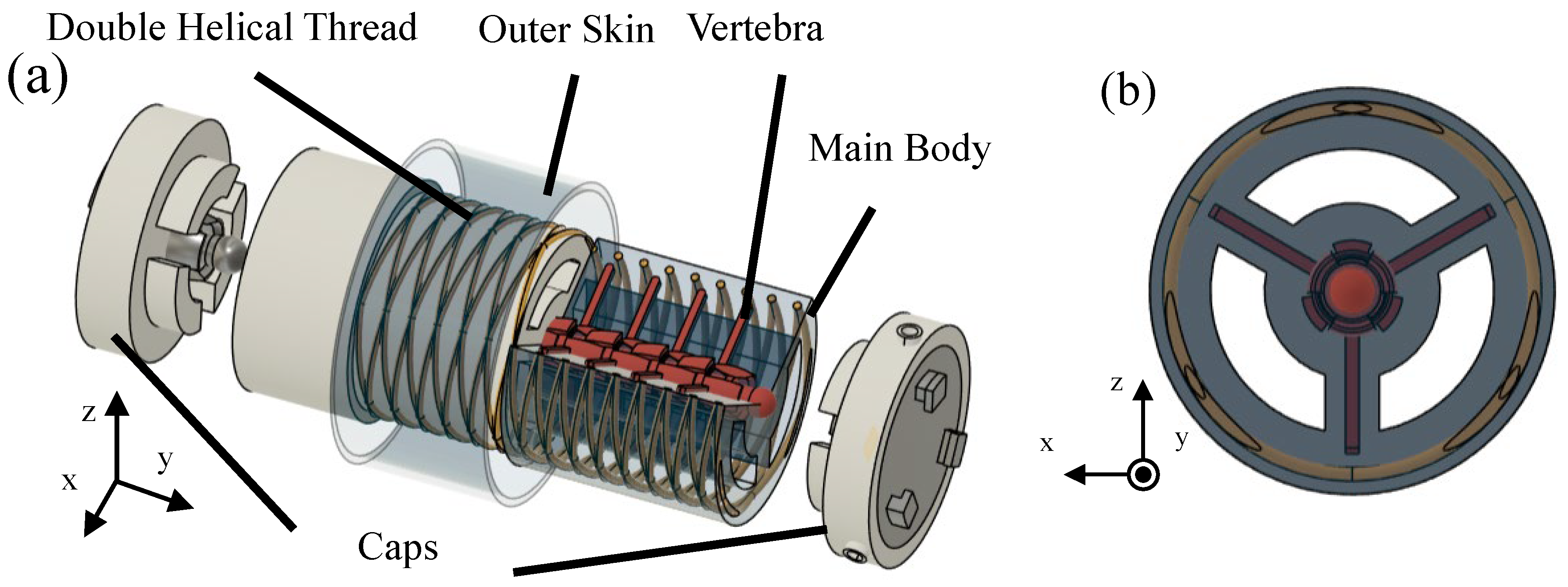
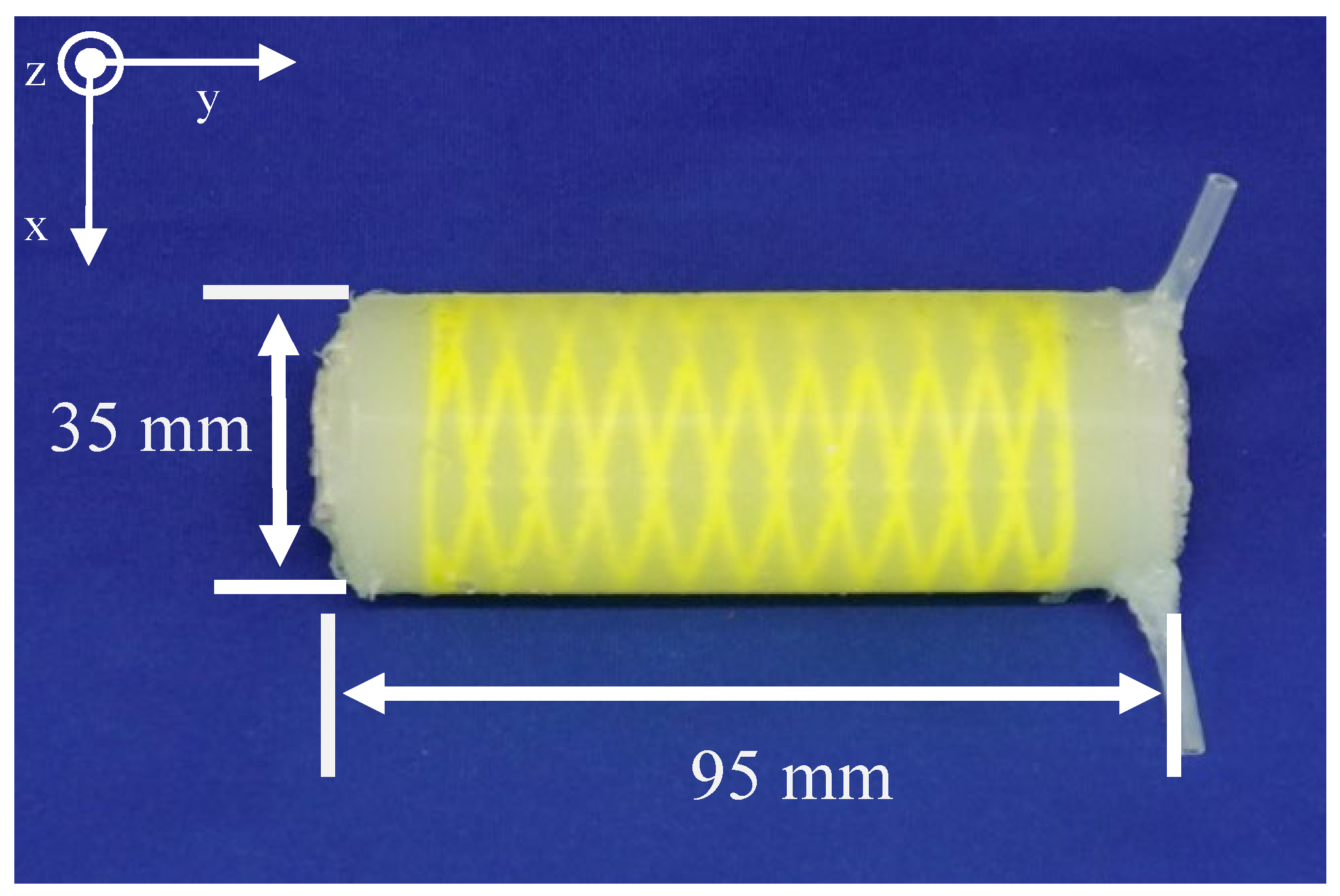
The soft–rigid hybrid pneumatic actuator consists of a soft pneumatic actuator and an embedded rigid spine-like structure. An overview of the proposed actuator and its main dimensions is shown in Figure 1.

2.1. Principle of Soft Pneumatic Actuator

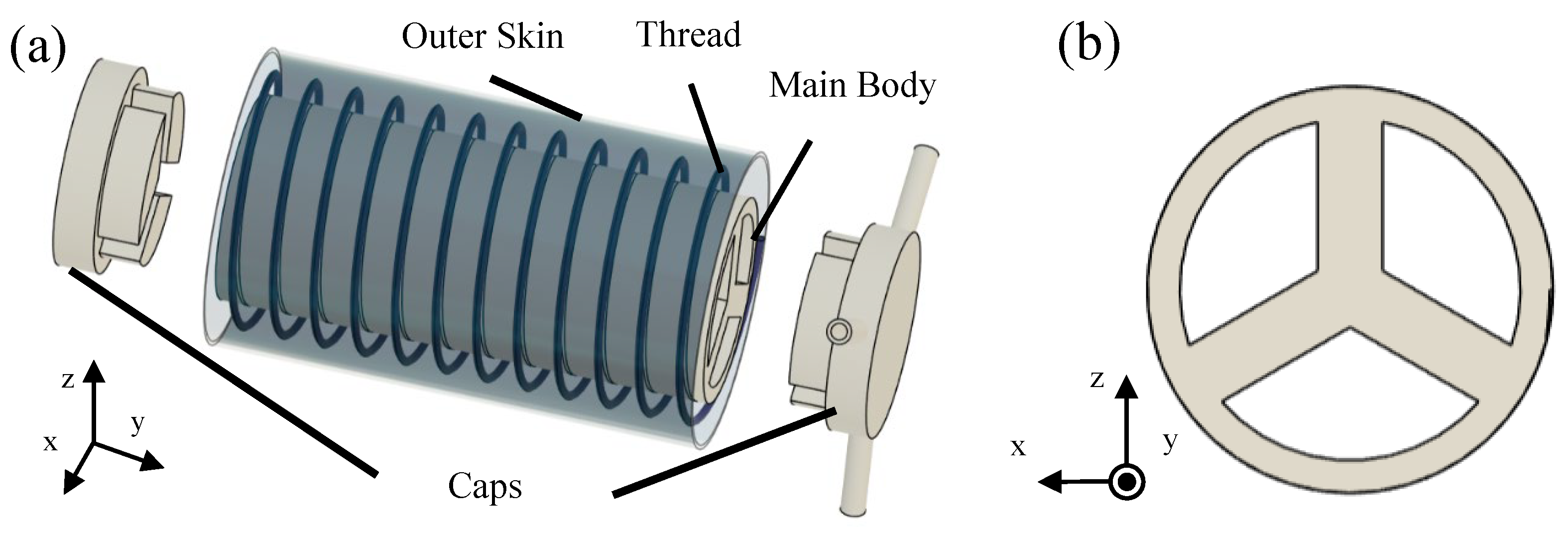
In this work, the design of the proposed soft pneumatic actuator is inspired by the FMA proposed by Suzumori et al. [9,25]. In conventional fiber-reinforced bending SPA designs, the bending motion is achieved using a double helical thread wrapped on a semi-circular cross-section actuator. The bottom of the actuator’s bending axis has an additional strain-limiting layer to ensure the bending motion [26,27]. However, in the case of Suzumori et al., due to its special triple-chamber design, the inner wall and the inactive chamber play the role of a strain-limiting layer to achieve the bending motion [9]. With the constraints of the outer thread and the inner wall, the actuator can bend in a particular direction when air is pumped into the corresponding chamber. In our previous work, we investigated a scaled-up version of this design and demonstrated that its functionality could be successfully preserved at this increased scale [28]. Figure 2 presents the exploded view of the actuator proposed in our prior study. To enhance the bending capability of the actuator, the outer thread used in the design by Suzumori et al. was replaced in the proposed design with a double helical thread wrapping, which provides better constraints against radial expansion. This modification enables more effective bending deformation under pneumatic actuation [10].

2.2. Spine-like Structure to Increase Effective Stiffness

Based on the equilibrium condition of bending moments on the cross-section of the soft pneumatic actuator, Suzumori et al. derived Equation (1), which presents the control algorithm of the structure shown in Figure 2 [25]:
x z y = 0 3 2 K 1 3 2 K 1 K 1 1 2 K 1 1 2 K 1 K 2 K 2 K 2 P 1 P 2 P 3
where x, y, and z denote the movements of the actuator tip end, K1 and K2 are specific parameters that depend on the soft pneumatic actuator’s size and stiffness, and P1, P2, and P3 are the inner pressures of each chamber of the soft pneumatic actuator. It can be inferred that K1 and K2 characterize the mechanical response of the soft pneumatic actuator under internal pressure. Specifically, K2 represents the axial stiffness along the y-axis, which corresponds to the axial elongation of the chamber. From Equation (1), the axial displacement is given by Equation (2):
y   =   K 2 P 1 +   P 2 +   P 3
We assume that the actuator supports an external load Wy. The axial force equilibrium, Wy, along the y-axis can be approximated as
W y = k y K 2 P 1 + P 2 + P 3
where ky denotes the effective axial stiffness. Therefore, from Equation (3), if we want the actuator to support a higher external load at the same inner pressure without changing the chamber structure of the actuator, increasing the effective axial stiffness is a good approach. In this work, the embedded spine-like structure is introduced to increase the effective axial stiffness along the y-axis, thereby mitigating the influence of self-weight under arbitrary postural orientations and enhancing the load-bearing capacity of the soft pneumatic actuator tip.

2.3. Design of Spine-like Internal Structure

In order to increase the stiffness of the inner wall and prevent undesired buckling, a spine-like internal structure is designed. Inspired by the human spine, this structure is composed of several 3D-printed rigid vertebrae and functions as a soft-continuum support structure, as shown in Figure 3.
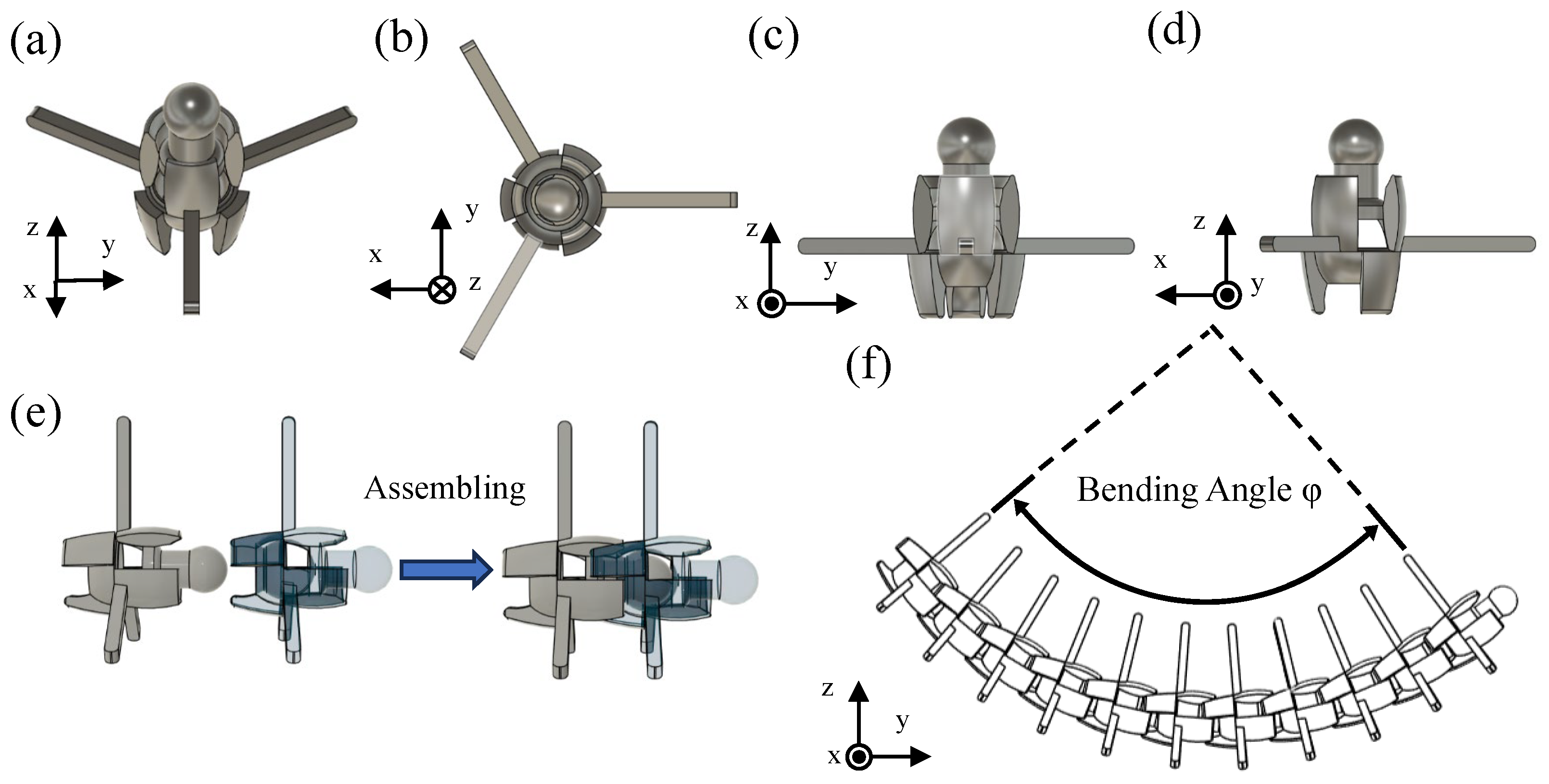
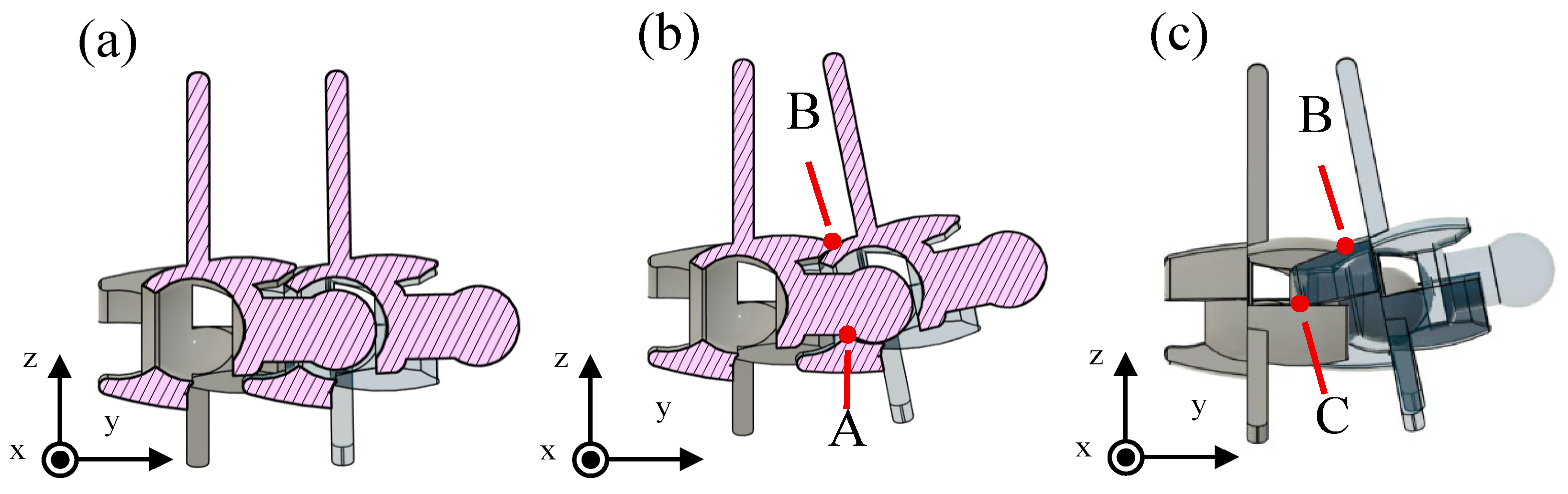
In Figure 4, the structure of a single vertebra element is presented. With the development of finite element (FE) analysis methods, researchers are able to construct an FE model of the human spine to treat back pain and degenerative diseases [29]. Based on this model, the spine can be represented by a vector of intervertebral rigid transformations [30]. Although this vector was originally developed to improve the effectiveness of orthopedic treatment, it is helpful in our design of the basic vertebra element. By mimicking the working space of human vertebrae, the proposed design enables a bending motion similar to that of the human spine. As shown in Figure 4a, a cavity is located at the bottom of each vertebra to accommodate the spherical head of an adjacent vertebra. The entrance diameter of the cavity is smaller than the maximum diameter of the spherical head. During assembly, the spherical head of one vertebra can be forcibly inserted into the cavity of the other vertebra, while removal is prevented due to the diameter difference. After assembly, when one vertebra is fixed, the adjacent vertebra is constrained by the protrusion and can only rotate in three directions. The internal spine is connected to the caps at both ends with the same structure. The contact points between two vertebrae during bending are shown in Figure 5. When air is pumped into the working chamber, elongation occurs in the inner wall, increasing the intervals between adjacent vertebrae. Due to the articulated structure, axial elongation is limited, and contact occurs at point A. Meanwhile, as bending occurs, the protrusion on one vertebra mechanically interlocks with the adjacent vertebrae, resulting in contact occurring at points B and C. This interlocking mechanism constrains the maximum bending angle between adjacent vertebrae and maintains the inner wall in a stable configuration at the maximum bending state. Consistent with the design objective of the actuator in our previous study [28], the target maximum bending angle of the actuator was set to 90°, which was adopted as the design requirement for the spine-like structure. To achieve this bending capability while avoiding excessive rotation between adjacent vertebrae, the allowable rotation between two neighboring vertebrae was limited to 7.5°. This value helps prevent mechanical interference during large deformation. Based on this constraint, the total number of bending intervals required to reach the target bending angle can be estimated. Considering that the two end connections between the vertebrae and the two caps also participate in the deformation, the spine structure was designed to contain 11 vertebrae, forming 12 bending intervals in total. The spacing between adjacent vertebrae is defined as the axial center-to-center distance between two vertebrae. In this design, the spacing was set to 6 mm to provide sufficient space for maintaining distributed structural support along the actuator body. These constraints limit the relative displacement and contribute to the higher effective stiffness of the inner wall.

2.4. Fabrication

The soft–rigid hybrid pneumatic actuator is composed of a spine-like structure and a soft pneumatic actuator, as shown in Figure 3. Each basic vertebra element shown in Figure 4 is 3D-printed from PLA. The assembled spine-like structure is placed into a 3D-printed mold and cast in silicone rubber (Eco-flex 00-30, Smooth-On, Inc., Macungie, PA, USA) to serve as the inner wall in the first casting step. During this casting step, the silicone is allowed to fill the gaps between adjacent vertebrae, forming compliant elastomeric joints that maintain structural continuity while still allowing relative rotation during bending. The silicone rubber has a Shore hardness of 00-30. This hardness provides a high compliance, allowing large bending deformation under pneumatic actuation while enabling the embedded spine-like structure to provide effective structural support and stiffness modulation. In the second casting step, the cured inner wall is placed at the center of the second mold and cast with silicone rubber again to form three chambers. After curing, the main body of the actuator is assembled with the caps and the thread. The thread on the outer wall is 3D-printed from TPU. The caps at both ends are also cast with silicone rubber. The fully assembled actuator is subjected to the third silicone rubber casting to form an additional soft outer layer, which helps prevent potential air leakage and enhance its touch-friendliness during interaction.

3. Experiment and Results

3.1. Static State of Bending Motion

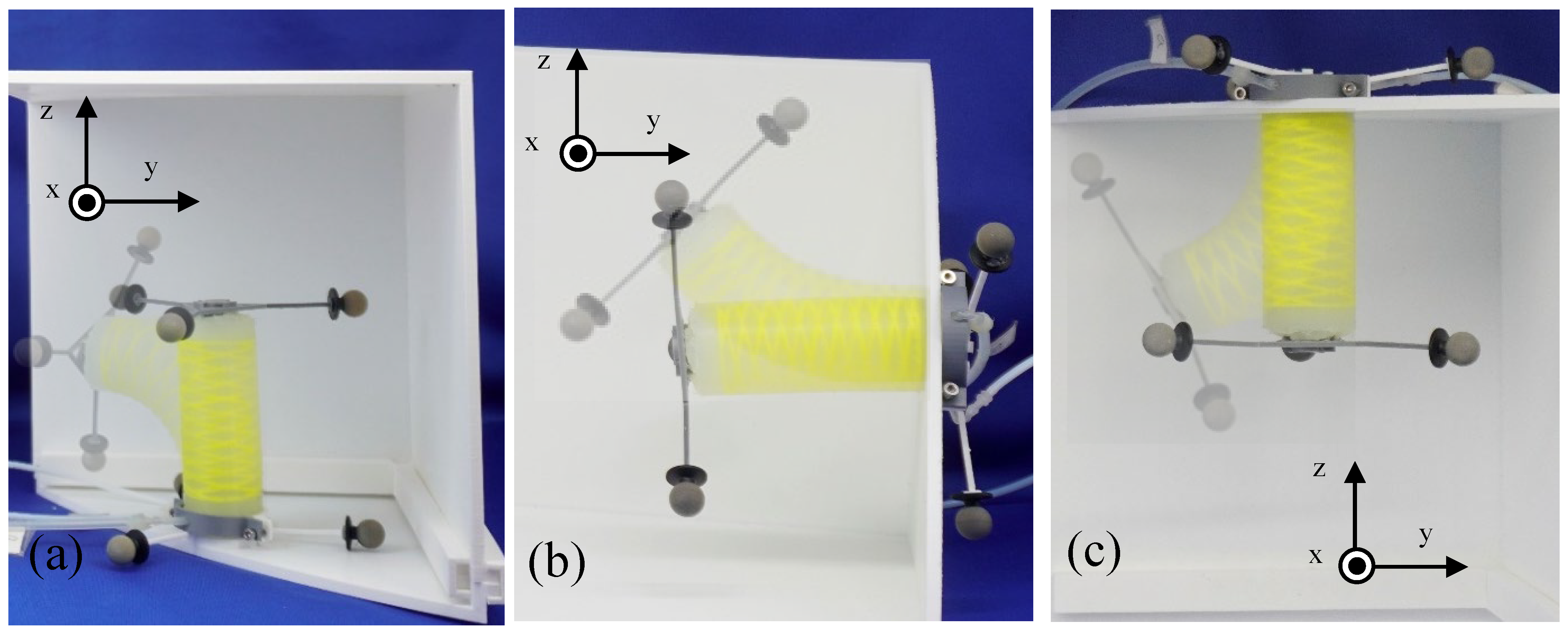
The performance of the proposed soft–rigid hybrid pneumatic actuator was compared with the SPA without an internal spine. The SPA used for comparison has the same overall geometry and double-helical thread as the proposed design, except that it does not have the internal spine-like structure. For clarity, this SPA is referred to as the conventional design. The bending motion of two pneumatic actuators was experimentally evaluated using the relationship between the inner pressure P and the bending angle φ. Initially, one end of the actuator was anchored to a fixed base, and the body was free to bend. Reflective markers were attached to the base and tip of the actuator so that the motion of the actuator could be recorded by the OptiTrack motion capture system, which provides a sub-millimeter tracking accuracy. There were three initial orientations of the fixed base, as shown in Figure 6: vertical upper base, vertical down base, and horizontal base. For each chamber test, only the tested chamber was pressurized to induce bending along the corresponding axis, while the other chambers were maintained at atmospheric pressure. The inner pressure was increased in steps of 10, 20, 30, 40, and 50 kPa. At each pressure step, a waiting period of 100 s was allowed to collect sufficient data to confirm the steady state. Although the actuator reached the target bending angle shortly after pressurization, this additional waiting time was introduced to ensure that the deformation is fully stabilized and that the recorded data correspond to a steady-state configuration. The positions of the reflective markers were recorded to calculate the bending angles at different inner pressures. For each chamber at each pressure step, the experiment was conducted six times under identical conditions using the same sample, and the results were averaged. The relationship between the inner pressure and the bending angle under different conditions was measured to illustrate the actuator’s static responses under different conditions.
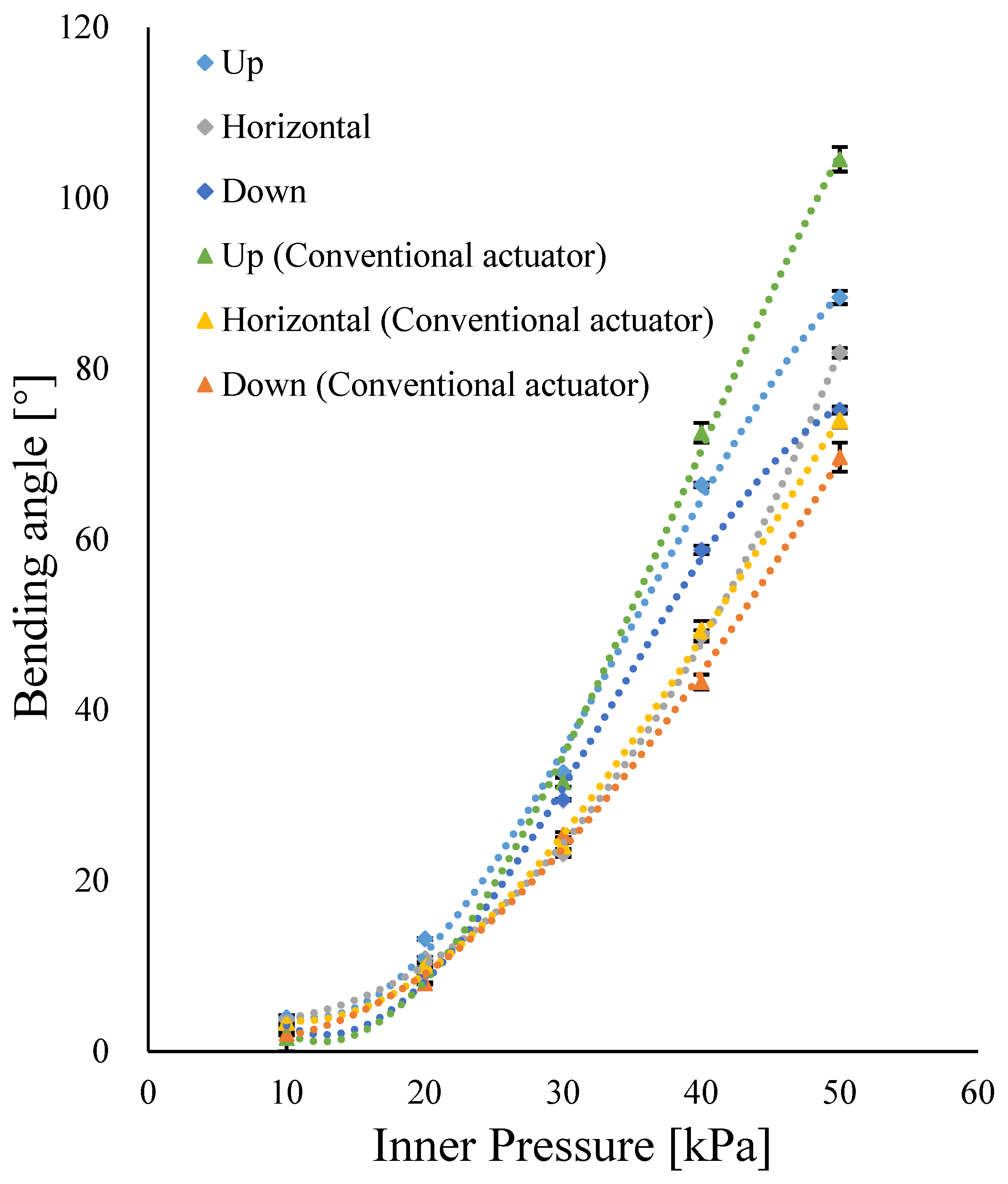
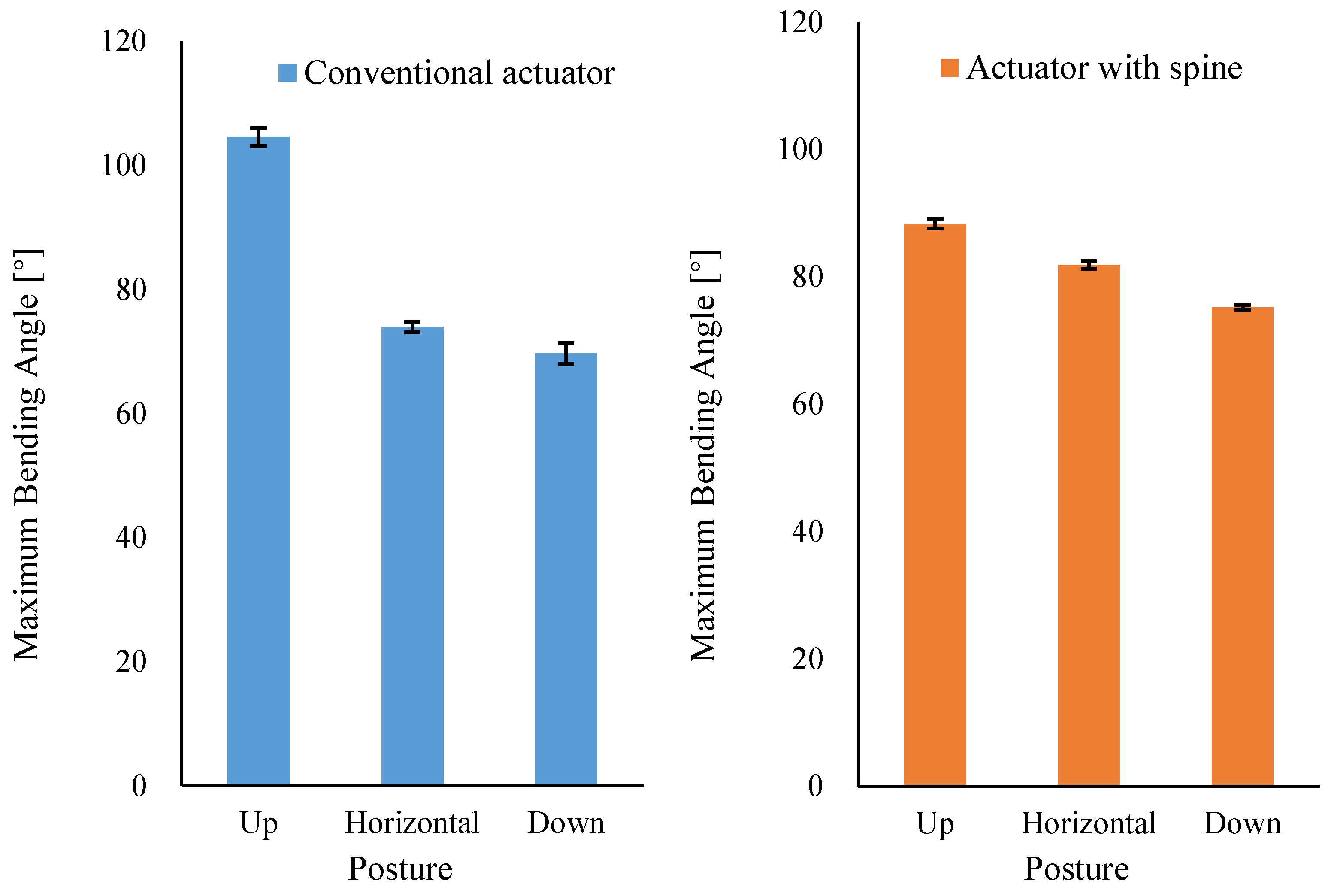
As shown in Figure 7, the actuator with the spine-like internal structure exhibits an improved posture stability under gravitational loading. This performance is reflected in the relatively small variation in the bending angle among the three base orientations. At the maximum inner pressure, the variation is only 13.1°, which is significantly smaller than the 34.9° observed in the conventional actuator. When gravity does not affect the actuators in the vertical upper posture, the conventional actuator’s maximum bending angle is higher than the new design’s maximum bending angle. However, when the postures change to the horizontal and vertical down postures, the maximum bending angles of the conventional actuator are significantly reduced and are lower than the angle in the vertical up posture. In contrast, although the bending angles are also affected, the maximum bending angle reductions in the new actuator are less than those of the conventional design, as shown in Figure 8. These variations indicate that the spine-like internal structure helps the actuator maintain a more stable bending posture under different base orientations compared with the conventional SPA.

3.2. Spine-like Internal Structure Evaluation

3.2.1. Load-Bearing Capacity

A load-bearing test was conducted in the vertical down posture with a specified load applied at the tip. In this experiment, the applied load served as a constant downward force acting on the tip. The load-bearing experiments were conducted under the vertical down posture because this configuration represents the most challenging condition in which gravity and the applied tip load act in the same direction. Therefore, evaluating the actuator under this posture provides a conservative assessment of its load-bearing capability. Through this approach, the stiffness of the actuator under different inner pressures was evaluated by observing variations in bending angles. Initially, the soft–rigid hybrid pneumatic actuator was set at the free position, and a certain weight was attached to the tip. Subsequently, the inner pressure was increased to 10, 20, 30, 40, and 50 kPa, respectively, and a waiting period of 100 s was allowed to ensure that the actuator reached a steady state. All the bending angles were recorded by the motion tracking system. During the free-end load test, loads of 20, 40, 60, and 80 g were applied to the tips. For the free-end load tests, the experiments were also conducted six times under identical conditions. All repeated experiments were conducted using the same actuator sample.
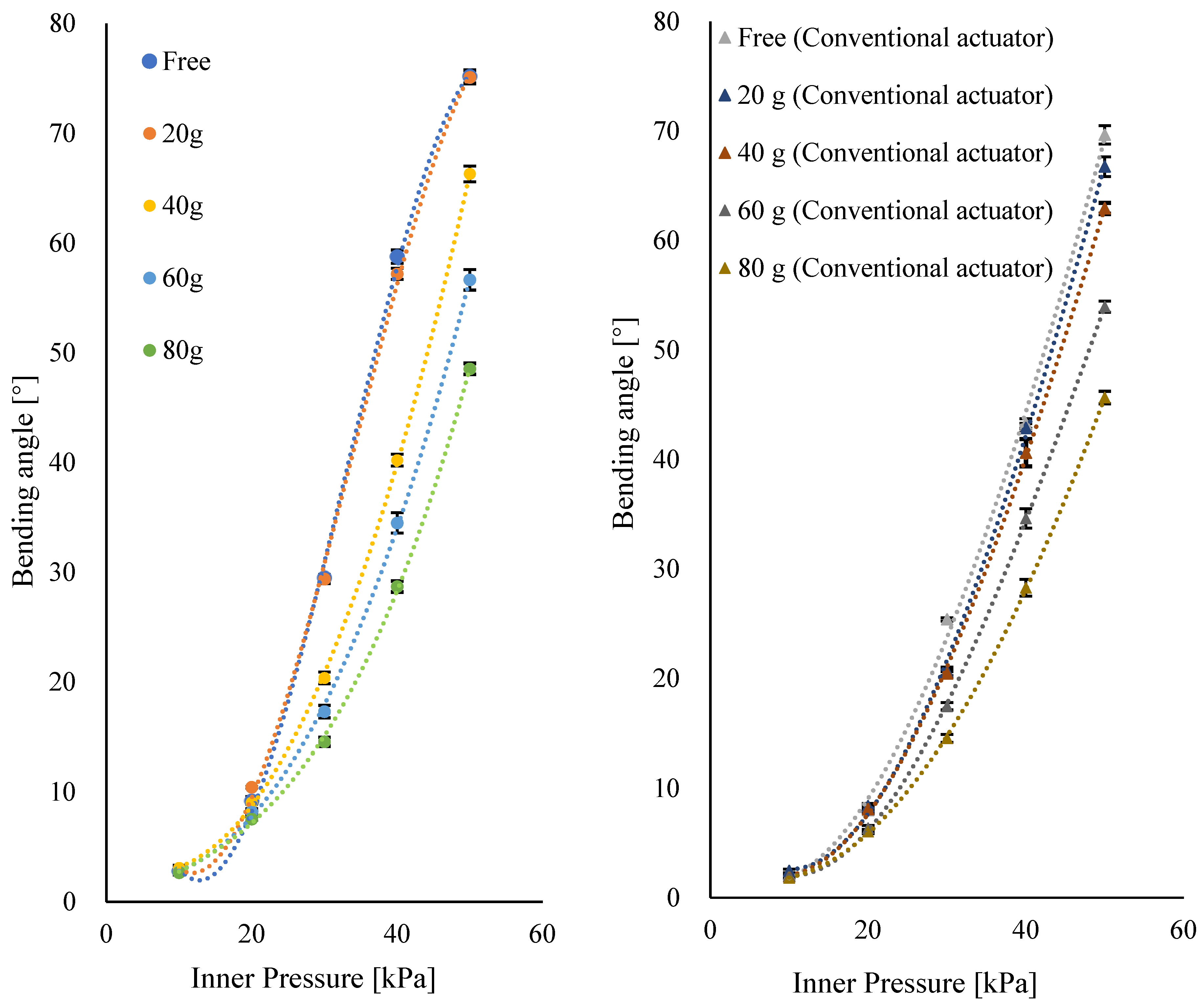
As shown in Figure 9, under this posture, the actuator with a spine-like internal structure can withstand a 20 g load at its tip completely. With this 20 g load applied to the tip, the bending angle exhibits a variation trend that is essentially the same as that of the free-tip condition. When the applied load exceeds 40 g, a significant reduction in bending angles is observed under the inner pressure of 30 kPa or higher. These results on the load-bearing capacity reflect the stiffness of the actuator under working conditions.

3.2.2. Load-Bearing Capacity Comparison

To demonstrate that the higher stiffness of the soft–rigid hybrid pneumatic actuator is attributed to the spine-like internal structure, comparative experiments were repeated on a conventional actuator without this internal structure. All the experimental conditions were kept the same as those used in the load-bearing test for the soft–rigid hybrid pneumatic actuator.
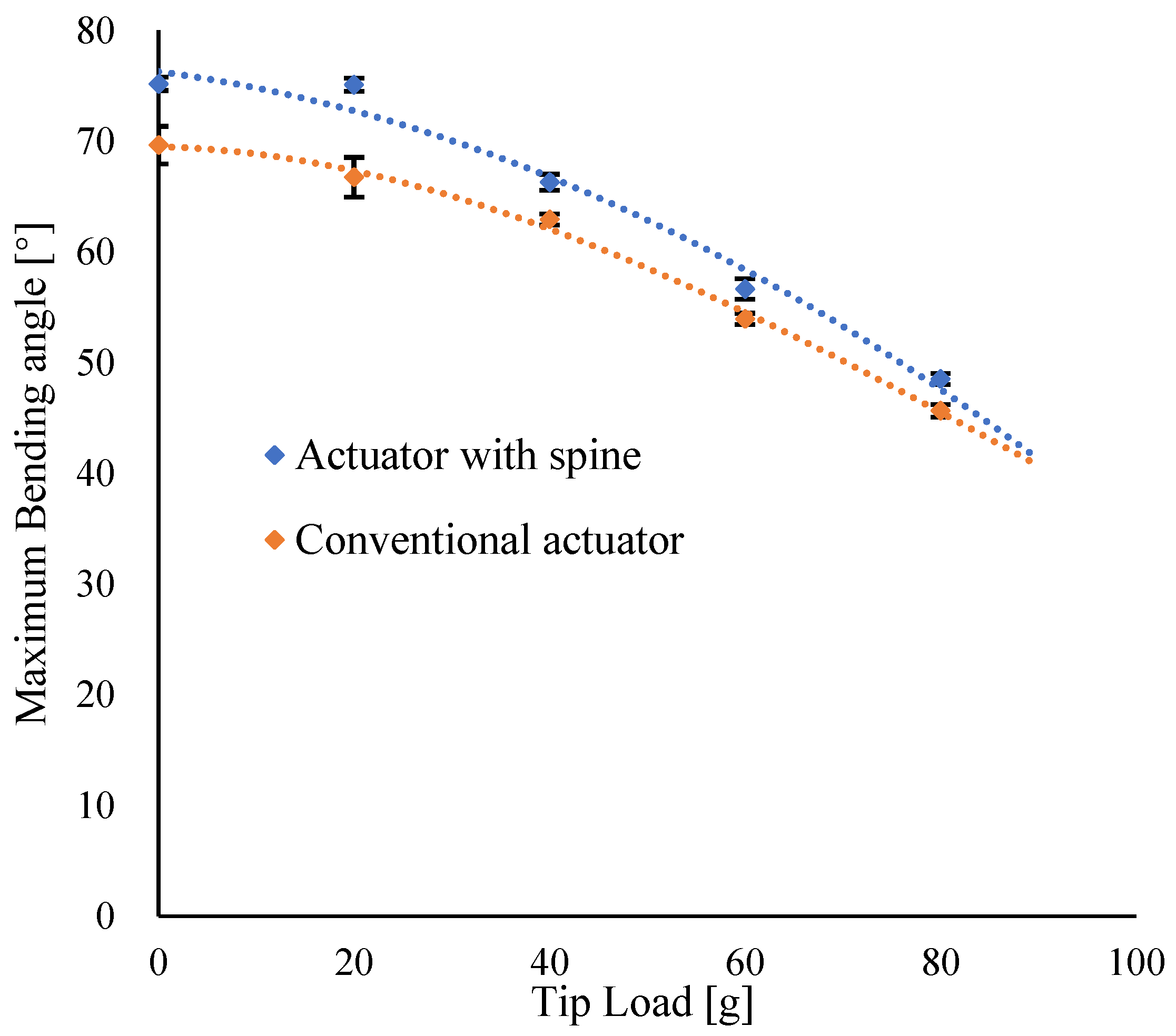
Figure 9 shows the relationship between the inner pressure and the bending angle of actuators with and without the spine-like internal structure. It can be seen that the maximum bending angle of the conventional actuator decreases as the load weight at the tip increases. The conventional actuator is unable to maintain its posture when a load is applied at the tip. When the tip load increases to 40 g and beyond, the rate of change in the bending angle becomes similar for both actuators. Figure 10 illustrates the variation trends of the maximum bending angles of the actuator with and without a spine-like internal structure. In terms of the maximum bending angle, the actuator with a spine-like internal structure exhibits larger bending angles than the one without a spine-like internal structure. In addition, as the tip load increases, the variation trends of the maximum bending angles of the two actuators gradually become similar. To further quantify the load-bearing performance, the relative reduction in the bending angle was calculated with respect to the free condition at the maximum inner pressure. As the tip load increased from 20 g to 80 g, the conventional actuator exhibited relative reductions of 4.2%, 9.6%, 22.5%, and 34.4%, respectively. In comparison, the actuator with a spine-like internal structure showed relative reductions of 0.1%, 11.8%, 24.7%, and 35.5%, respectively. A two-sample t-test was also conducted to evaluate the statistical significance of the difference between the actuator with a spine-like internal structure and the conventional actuator. The difference in the maximum bending angle between the two actuators was statistically significant (p < 0.05).

3.2.3. Stiffness Evaluation

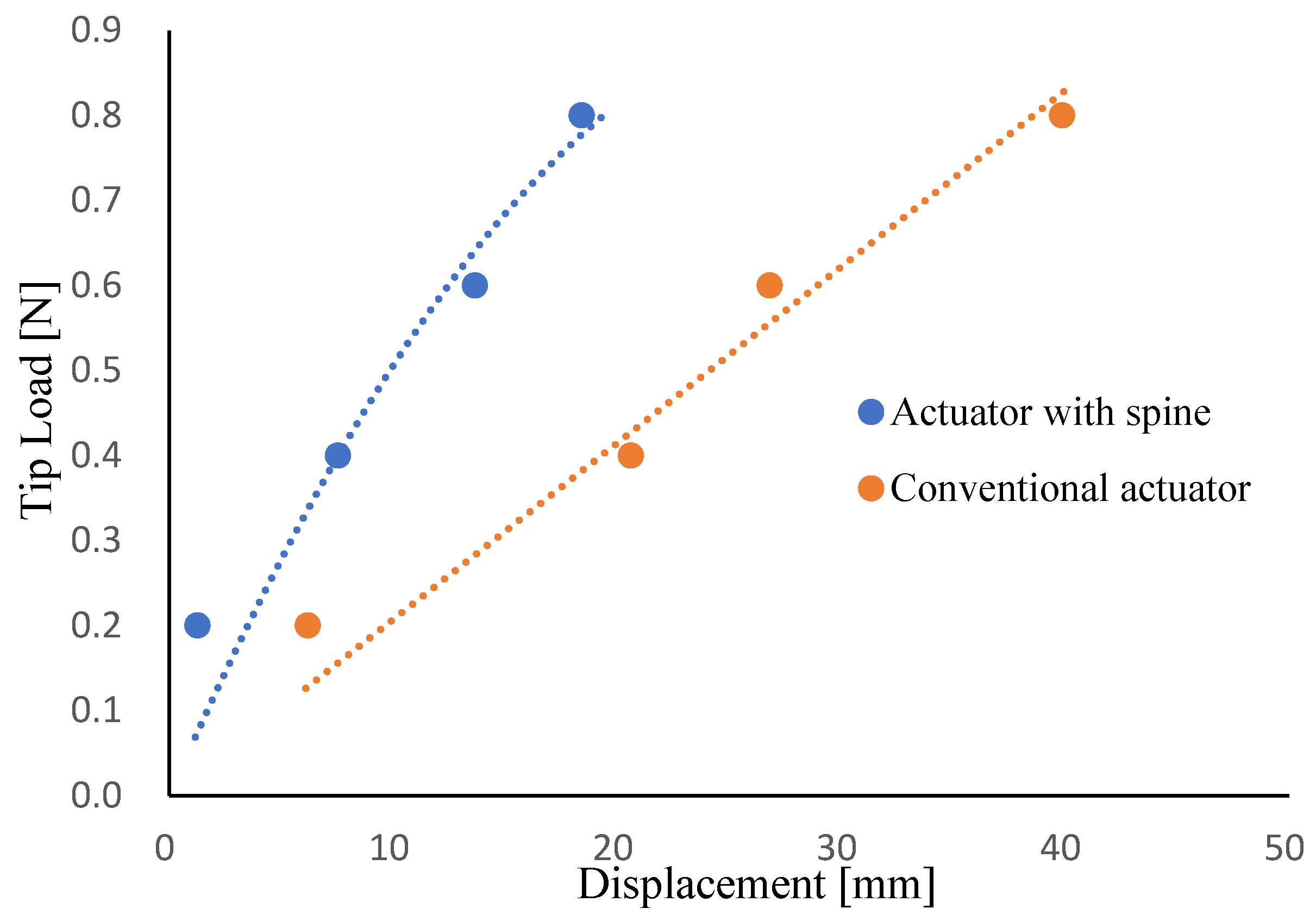
To directly evaluate the stiffness of the actuators during the bending motion, force–deflection tests were conducted. In the experiment, the actuator was fixed at the vertical down base and pressurized to 50 kPa. External forces of 0.2, 0.4, 0.6, and 0.8 N were then applied vertically down at the free end of the actuator. The vertical displacement of the tip was recorded under each condition. The experiments were repeated six times under identical conditions for both the actuator with a spine-like internal structure and the conventional actuator. The results are shown in Figure 11.
As shown in Figure 11, the conventional actuator exhibits an approximately linear relationship between the applied force and the tip displacement. Under the same external force, the displacement is larger than that of the actuator with a spine-like internal structure. This result indicates that the conventional actuator has a relatively constant effective stiffness, and its stiffness is lower than that of the actuator with a spine-like internal structure. Additionally, as the applied force increases, the slope of the force–deflection curve for the actuator with a spine-like internal structure gradually approaches that of the conventional actuator. These results demonstrate that the spine-like internal structure effectively enhances the stiffness of the actuator, particularly under small external loads.

4. Discussion

4.1. Effect of Gravity on Static Bending Performance

The static bending experiments under different base orientations reveal the notable robustness of the soft–rigid hybrid pneumatic actuator in resisting gravitational loading. In the vertical upper posture, gravity does not inhibit the bending motion. As the bending angle increases, the gravitational component normal to the bending axis becomes dominant, such that gravity does not hinder the bending motion but instead contributes to a further increase in the bending angle. Meanwhile, as the chamber inflates, the walls of the actuator undergo tensile deformation to achieve bending [9]. When axial elongation of the central wall occurs, the rigid vertebrae of the spine-like internal structure interlock with each other, limiting the maximum axial elongation of the central wall and thereby constraining the maximum bending angle to approximately 90°. This constraint also prevents the gravitational component normal to the bending axis from affecting the maximum bending angle. However, without the spine-like internal structure, the axial elongation of the conventional design along the bending axis is larger than that of the actuator with a spine-like internal structure. With the cooperative contribution of the gravitational component, the maximum bending angle of the conventional design is larger than that of the new design in the vertical upper posture, as shown in Figure 7. Once the gravitational component normal to the bending axis opposes the bending direction, the bending performance of the conventional design deteriorates markedly. For the conventional design, the maximum bending angle in the vertical down posture is reduced by 34.9° compared to that in the vertical upper posture. In contrast, the actuator with a spine-like structure exhibits a much smaller reduction of only 13.1°, as shown in Figure 8. These results indicate that the conventional design has a limited ability to resist self-weight-induced deformation. The actuator incorporating a spine-like internal structure, however, demonstrates an improved resistance to gravitational loading and is able to maintain its posture more effectively. In Figure 7, the small standard errors indicate the high repeatability of both actuators and demonstrate that the variation in the maximum bending angles of the new design is attributed to the ability of the spine-like internal structure to better maintain posture, rather than to experimental errors. These results suggest that the spine-like structure provides additional axial support, thereby mitigating gravitational effects and enhancing postural robustness under different static conditions. This characteristic can be beneficial in practical applications, such as soft robotic grippers or manipulators, where actuators often operate in cantilevered configurations and are required to support their self-weight while maintaining stable bending.

4.2. Discussion of Stiffness Characteristics

The load-bearing test further demonstrates the load-bearing capability and stiffness of the actuator with a spine-like internal structure under gravity-dominated conditions. The ability to fully support a 20 g load indicates that the actuator can effectively compensate for external loads. However, the pronounced reduction in the bending angle beyond 20 g indicates a practical limit to its load-bearing capacity, which can be attributed to the increased gravitational torque at the tip. These results in Figure 9 suggest that the spine-like internal structure improves the actuator’s resistance to self-weight and helps maintain larger bending angles under relatively small tip loads (0–20 g). As the tip load increases beyond 20 g, the achievable bending angle gradually decreases, and the bending performance of the two designs becomes comparable.
Comparative experiments between actuators with and without the spine-like internal structure provide direct insight into the role of the spine-like structure in load-bearing performance. The results indicate that the actuator with a spine-like internal structure has a higher stiffness than the one without such a spine-like structure under working conditions. During chamber inflation, the interlocking of the rigid vertebrae in the spine-like structure not only limits the elongation of the central wall but also increases the internal constraint forces within it. As a result, the deformation of the central wall under chamber inflation is reduced, thereby increasing its effective stiffness, particularly at large bending angles. This higher effective stiffness enables the actuator with a spine-like internal structure to withstand tip loads while maintaining the maximum bending angle under small tip loads ranging from 0 to 20 g. In contrast, due to the increased gravitational torque at the tip, the lower central stiffness of the conventional actuator is unable to withstand the gravitational component perpendicular to the bending axis. Therefore, the conventional actuator exhibits a reduction in the maximum bending angle even under a 20 g tip load. Although the relative reduction in the bending angle is calculated, because the actuator with a spine-like internal structure has a larger initial bending angle under the free condition, the relative reduction ratio alone does not fully reflect its load-bearing performance. Therefore, the absolute bending angle under the same external load should also be considered, as shown in Figure 9. When the tip load increases to 40 g, it can be observed from Figure 9 that, under inner pressures ranging from 10 to 40 kPa, the bending angle exhibits nearly identical variation trends for both actuators. Only at the maximum operating pressure of 50 kPa does the actuator with the spine-like structure consistently achieve larger maximum bending angles. This observation indicates that, when the tip load increases to 40 g, the spine-like internal structure begins to lose its effectiveness, leading to similar bending angle variation trends for both actuators. In Figure 10, the decreasing trends of the maximum bending angle for both actuators likewise reflect that the spine-like internal structure begins to lose its effectiveness, causing these variation trends to gradually converge. In Figure 9 and Figure 10, the low standard errors indicate that both actuators maintain a high repeatability, even as the tip load gradually increases, and demonstrate that the decreasing trend in the maximum bending angle is not caused by reduced stability due to the increased tip load, but rather by the factors discussed above.
To further understand the mechanical behavior of the actuators under external loads, the effective bending stiffness was analyzed. As shown in Figure 11, the effective stiffness during bending is represented by the ratio of the applied tip load to the displacement. The ratio for the conventional actuator is 0.02 N/mm, indicating a relatively low and nearly constant stiffness. In contrast, the actuator with the spine-like internal structure exhibits a much higher initial stiffness under small loads. The load–displacement ratio reaches 0.16 N/mm at 0.2 N and gradually decreases to 0.04 N/mm as the load increases to 0.8 N. This performance suggests that the internal spine-like structure significantly enhances the effective stiffness of the actuator. However, as the external load increases, the internal structure gradually loses its structural support, resulting in a reduction in the effective stiffness.
On the other hand, by observing the variation trends in bending angles in Figure 9, it is possible that further increasing the inner pressure beyond 50 kPa could enhance the effective stiffness of the actuator with a spine-like internal structure. If the inner pressure is further increased beyond 50 kPa, the increased internal constraint forces of the central structure may enhance its effective stiffness, thereby enabling a higher load-bearing capacity. However, the spine-like internal structure fabricated using PLA is prone to fracture when subjected to inner pressures exceeding 50 kPa. During the experiments, a structural fracture was observed when the inner pressure was increased from 50 kPa to 60 kPa. The failure mainly occurred in the spine-like internal structure due to stress concentration at the connections between adjacent vertebrae under high internal pressure. Therefore, 50 kPa can be regarded as a practical upper limit for the soft–rigid hybrid pneumatic actuator with a spine-like internal structure. In future designs, to further enhance the achievable central effective stiffness, tougher materials for the vertebrae, such as PETG, ABS, or Nylon (PA), will be considered. In addition, the geometry of the spine-like structure will be optimized to improve its mechanical strength further.
Consequently, the spine-like structure functions as an internal support that effectively enhances the effective stiffness and load-bearing capacity without compromising the inherent bending characteristics of the pneumatic chambers.

4.3. Comparison with Existing Reinforcement Strategies

To further evaluate the effectiveness of the proposed spine-like internal structure, a comparison was conducted with different reinforcement strategies, including fiber reinforcement [10] and segment reinforcement [15].
Table 1 compares the bending efficiency, payload, and weight of the actuator. The bending efficiency of our actuator was calculated based on the maximum bending angle measured in the vertical upper posture. As shown in Table 1, the actuator with a spine-like internal structure exhibits a higher bending efficiency than the other actuators. Although its payload-to-weight ratio is lower than that of the stiffness-tunable segment actuator, the actuator with a spine-like internal structure is significantly lighter, making it better suited for lightweight applications.

5. Conclusions

In this work, a soft–rigid hybrid pneumatic actuator with a spine-like internal structure was developed and evaluated. The results show that the proposed design can maintain actuation flexibility while improving resistance to gravitational loading, posture retention, and load-bearing capacity under three base orientations. This actuator integrates rigid vertebrae within a soft pneumatic structure, forming a spine-like mechanism that effectively improves structural support without significantly compromising the actuator’s compliance. The comparative experimental results demonstrate that the spine-like internal structure plays a significant role in enhancing the effective stiffness and load-bearing capacity.
Future work will focus on developing FE models to better understand the underlying mechanism and optimize the spine-like structure for improved effective stiffness and broader applications. In addition, the dynamic behavior of the actuator, including its response time, hysteresis during inflation and deflation, creep behavior, and cyclic durability, will be systematically investigated in future work.

Author Contributions

Conceptualization, Y.L. and H.I.; methodology, Y.L.; software, Y.L.; validation, Y.L. and H.I.; formal analysis, Y.L.; investigation, H.I.; resources, H.I.; data curation, Y.L.; writing—original draft preparation, Y.L.; writing—review and editing, H.I.; visualization, Y.L.; supervision, H.I.; project administration, H.I.; funding acquisition, H.I. All authors have read and agreed to the published version of the manuscript.

Funding

This research was funded by the China Scholarship Council (CSC), grant number 202408050078, the Japan Society for the Promotion of Science (JSPS), grant numbers JP23H03443, JP21H05055, JP19H01130, and Waseda University Grant for Special Research Projects (Project number: 2021C-177).

Data Availability Statement

The original contributions presented in this study are included in the article. Further inquiries can be directed to the corresponding author(s).

Conflicts of Interest

The authors declare no conflicts of interest.

Abbreviations

The following abbreviations are used in this manuscript:
SPASoft pneumatic actuator
FMAFlexible microactuator
FEFinite element

References

  1. Trivedi, D.; Rahn, C.D.; Kier, W.M.; Walker, I.D. Soft robotics: Biological inspiration, state of the art, and future research. Appl. Bionics Biomech. 2008, 5, 99–117. [Google Scholar] [CrossRef]
  2. Xavier, M.S.; Tawk, C.D.; Fleming, A.; Zolfagharian, A.; Pinskier, J.; Howard, D.; Young, T.; Lai, J.; Harrison, S.M.; Yong, Y.K.; et al. Soft pneumatic actuators: A review of design, fabrication, modeling, sensing, control and applications. IEEE Access 2022, 10, 59442–59485. [Google Scholar] [CrossRef]
  3. Wehner, M.; Truby, R.L.; Fitzgerald, D.J.; Mosadegh, B.; Whitesides, G.M.; Lewis, J.A.; Wood, R.J. An integrated design and fabrication strategy for entirely soft, autonomous robots. Nature 2016, 536, 451–455. [Google Scholar] [CrossRef] [PubMed]
  4. Rothemund, P.; Kim, Y.; Heisser, R.H.; Zhao, X.; Shepherd, R.F.; Keplinger, C. Shaping the future of robotics through materials innovation. Nat. Mater. 2021, 20, 1582–1587. [Google Scholar] [CrossRef]
  5. Tawk, C.; Alici, G. A Review of 3D-Printable Soft Pneumatic Actuators and Sensors: Research Challenges and Opportunities. Adv. Intell. Syst. 2021, 3, 2000223. [Google Scholar] [CrossRef]
  6. Hannan, M.W.; Walker, I.D. Kinematics and the implementation of an elephant’s trunk manipulator and other continuum style robots. J. Robot. Syst. 2003, 20, 45–63. [Google Scholar] [CrossRef]
  7. Walker, I.D. Continuous backbone “continuum” robot manipulators. Int. Sch. Res. Not. 2013, 2013, 726506. [Google Scholar] [CrossRef]
  8. Dou, W.; Zhong, G.; Cao, J.; Shi, Z.; Peng, B.; Jiang, L. Soft robotic manipulators: Designs, actuation, stiffness tuning, and sensing. Adv. Mater. Technol. 2021, 6, 2100018. [Google Scholar] [CrossRef]
  9. Suzumori, K.; Maeda, T.; Watanabe, H.; Hisada, T. Fiberless flexible microactuator designed by finite-element method. IEEE/ASME Trans. Mechatron. 1997, 2, 281–286. [Google Scholar] [CrossRef]
  10. Polygerinos, P.; Wang, Z.; Overvelde, J.T.B.; Galloway, K.C.; Wood, R.J.; Bertoldi, K.; Walsh, C.J. Modeling of soft fiber-reinforced bending actuators. IEEE Trans. Robot. 2015, 31, 778–789. [Google Scholar] [CrossRef]
  11. El-Atab, N.; Mishra, R.B.; Al-Modaf, F.; Joharji, L.; Alsharif, A.A.; Alamoudi, H.; Diaz, M.; Qaiser, N.; Hussain, M.M. Soft actuators for soft robotic applications: A review. Adv. Intell. Syst. 2020, 2, 2000128. [Google Scholar] [CrossRef]
  12. Gorissen, B.; Reynaerts, D.; Konishi, S.; Yoshida, K.; Kim, J.-W.; De Volder, M. Elastic inflatable actuators for soft robotic applications. Adv. Mater. 2017, 29, 1604977. [Google Scholar] [CrossRef] [PubMed]
  13. De Greef, A.; Lambert, P.; Delchambre, A. Towards flexible medical instruments: Review of flexible fluidic actuators. Precis. Eng. 2009, 33, 311–321. [Google Scholar] [CrossRef]
  14. Kim, S.; Laschi, C.; Trimmer, B. Soft robotics: A bioinspired evolution in robotics. Trends Biotechnol. 2013, 31, 287–294. [Google Scholar] [CrossRef] [PubMed]
  15. Liu, Z.; Xu, L.; Liang, X.; Liu, J. Stiffness-tuneable segment for continuum soft robots with vertebrae. Machines 2022, 10, 581. [Google Scholar] [CrossRef]
  16. Treratanakulchai, S.; Garriga-Casanovas, A.; Borvorntanajanya, K.; Franco, E.; Baena, F.R.Y. A novel soft robotic manipulator design with zig-zag chamber geometry. In Proceedings of the 10th International Conference on Automation, Robotics and Applications (ICARA), Athens, Greece, 22–24 February 2024; pp. 1–6. [Google Scholar]
  17. Antonelli, M.G.; Beomonte Zobel, P.; Mattei, E.; Stampone, N. Mechanical design, manufacturing, and testing of a soft pneumatic actuator with a reconfigurable modular reinforcement. Robotics 2024, 13, 165. [Google Scholar] [CrossRef]
  18. Galbusera, F.; Bassani, T. The spine: A strong, stable, and flexible structure with biomimetics potential. Biomimetics 2019, 4, 60. [Google Scholar] [CrossRef]
  19. Culha, U.; Hughes, J.; Rosendo, A.; Giardina, F.; Iida, F. Design principles for soft-rigid hybrid manipulators. In Soft Robotics: Trends, Applications and Challenges; Laschi, C., Rossiter, J., Iida, F., Cianchetti, M., Margheri, L., Eds.; Springer International Publishing: Cham, Switzerland, 2017; pp. 87–94. [Google Scholar]
  20. Robinson, G.; Davies, J.B.C. Continuum robots—A state of the art. In Proceedings of the 1999 IEEE International Conference on Robotics and Automation (Cat. No.99CH36288C), Detroit, MI, USA, 10–15 May 1999; pp. 2849–2854. [Google Scholar]
  21. Majidi, C. Soft-matter engineering for soft robotics. Adv. Mater. Technol. 2019, 4, 1800477. [Google Scholar] [CrossRef]
  22. Liang, C.; Liu, J.; Lin, S.; Gao, Y.; Zou, X.; Wang, W.; Chen, F.; Hu, N.; Li, Y.; Zhang, Y.-F. 3D-Printed Shape-Memory Polymer-Based Variable-Stiffness Origami Actuator for Multimodal Soft Continuum Robots. ACS Appl. Mater. Interfaces 2025, 17, 42233–42244. [Google Scholar] [CrossRef]
  23. Gunawardane, P.D.S.H.; Lee, D.; Cheung, P.; Zhou, H.; Alici, G.; Chiao, M. Adaptive Tip Trajectory Generation for Zig-Zag Soft Actuators Using Modular Strain-Limiting Layer Design. In Proceedings of the 2025 IEEE 8th International Conference on Soft Robotics (RoboSoft), Lausanne, Switzerland, 22–26 April 2025; pp. 1–7. [Google Scholar]
  24. Gunawardane, P.D.S.H.; Budiardjo, N.; Alici, G.; de Silva, C.W.; Chiao, M. Thermoelastic Strain-Limiting Layers to Actively Control Soft Actuator Trajectories. In Proceedings of the IEEE 5th International Conference on Soft Robotics (RoboSoft), Edinburgh, UK, 4–8 April 2022; pp. 48–53. [Google Scholar]
  25. Suzumori, K.; Iikura, S.; Tanaka, H. Development of flexible microactuator and its applications to robotic mechanisms. In Proceedings of the IEEE International Conference on Robotics and Automation (ICRA), Sacramento, CA, USA, 9–11 April 1991; pp. 1622–1627. [Google Scholar]
  26. Galloway, K.C.; Polygerinos, P.; Walsh, C.J.; Wood, R.J. Mechanically programmable bend radius for fiber-reinforced soft actuators. In Proceedings of the 16th International Conference on Advanced Robotics (ICAR), Montevideo, Uruguay, 25–29 November 2013; pp. 1–6. [Google Scholar]
  27. Wang, Z.; Polygerinos, P.; Overvelde, J.T.B.; Galloway, K.C.; Bertoldi, K.; Walsh, C.J. Interaction forces of soft fiber reinforced bending actuators. IEEE/ASME Trans. Mechatron. 2017, 22, 717–727. [Google Scholar] [CrossRef]
  28. Li, Y.; Takanishi, A.; Ishii, H. Design of a soft rat robot based on pneumatic actuator. In Proceedings of the IEEE/ASME International Conference on Advanced Intelligent Mechatronics (AIM), Sapporo, Japan, 11–15 July 2022; pp. 926–931. [Google Scholar]
  29. Guo, L.X.; Zhang, Y.M.; Zhang, M. Finite element modeling and modal analysis of the human spine vibration configuration. IEEE Trans. Biomed. Eng. 2011, 58, 2987–2990. [Google Scholar] [CrossRef]
  30. Boisvert, J.; Cheriet, F.; Pennec, X.; Labelle, H.; Ayache, N. Geometric variability of the scoliotic spine using statistics on articulated shape models. IEEE Trans. Med. Imaging 2008, 27, 557–568. [Google Scholar] [CrossRef]
Figure 1. Overview of the proposed actuator. The soft–rigid hybrid pneumatic actuator has a cylindrical shape with a diameter of 35 mm and a length of 95 mm.
Robotics 15 00064 g001
Figure 2. Structure of the previous actuator. (a) Exploded view of the previous actuator; (b) side view of the previous actuator cross-section.
Robotics 15 00064 g002
Figure 3. Structure of the proposed actuator. (a) Cross-sectional view of the proposed actuator; (b) side view of the proposed actuator cross-section. Eleven red vertebrae are interconnected and embedded along the central axis of the main body, with both ends connected to the caps. A double helical thread is tightly wrapped around the outer surface of the main body and further covered by the outer skin.
Robotics 15 00064 g003
Figure 4. Structure and assembly of the vertebrae. (a) Top view of the vertebra; (b) bottom view of the vertebra; (c) rear view of the vertebra; (d) side view of the vertebra; (e) schematic illustration of the assembly of two vertebrae. The left side shows two unassembled vertebrae, while the right side shows the assembled vertebrae. One vertebra is rendered transparent to clearly illustrate the connection relationship. (f) Spine composed of multiple assembled vertebrae. When bending occurs, the bending angle considered in this work is illustrated in the figure.
Robotics 15 00064 g004
Figure 5. Schematic of the contact points between two vertebrae during bending. (a) Cross-sectional side view of two vertebrae before bending; (b) cross-sectional side view of two vertebrae after bending; (c) side view of two vertebrae after bending. Contact point B shown in (b,c) denotes the same point.
Robotics 15 00064 g005
Figure 6. Experimental setup under three different postural orientations. (a) Vertical up posture; (b) horizontal posture; (c) vertical down posture. The fixed end of the actuator was mounted to the supporting frame using screws, and an equilateral triangular structure with motion capture markers was attached to determine the position of the fixed end. An identical triangular structure was installed at the free end to capture and record the tip position during bending.
Robotics 15 00064 g006
Figure 7. Bending angle with respect to inner pressure.
Robotics 15 00064 g007
Figure 8. Maximum bending angle with respect to different postures.
Robotics 15 00064 g008
Figure 9. Bending angle with respect to inner pressure under different tip loads in vertical down posture.
Robotics 15 00064 g009
Figure 10. Maximum bending angle with respect to tip load.
Robotics 15 00064 g010
Figure 11. Tip load with respect to displacement.
Robotics 15 00064 g011
Table 1. Comparison of different actuators.
NameBending Efficiency [°/kPa]Payload [N]Weight [g]
Fiber-reinforced actuator [10]1.210No data
Stiffness-tunable segment actuator [15]1.6331.45440
Actuator with spine-like internal structure1.80.19685
Disclaimer/Publisher’s Note: The statements, opinions and data contained in all publications are solely those of the individual author(s) and contributor(s) and not of MDPI and/or the editor(s). MDPI and/or the editor(s) disclaim responsibility for any injury to people or property resulting from any ideas, methods, instructions or products referred to in the content.