

Impact of Acupuncture on Human Metabolomic Profiles: A Systematic Review


 ,
,  ,
,  , ,
, ,
Abstract
1. Introduction
2. Methods
2.1. Design
2.2. Search and Retrieval Strategies
2.3. Inclusion and Exclusion Criteria
2.4. Selection of Studies
2.5. Data Extraction and Analysis
2.6. Pathway Analysis
2.7. Quality Assessment
3. Results
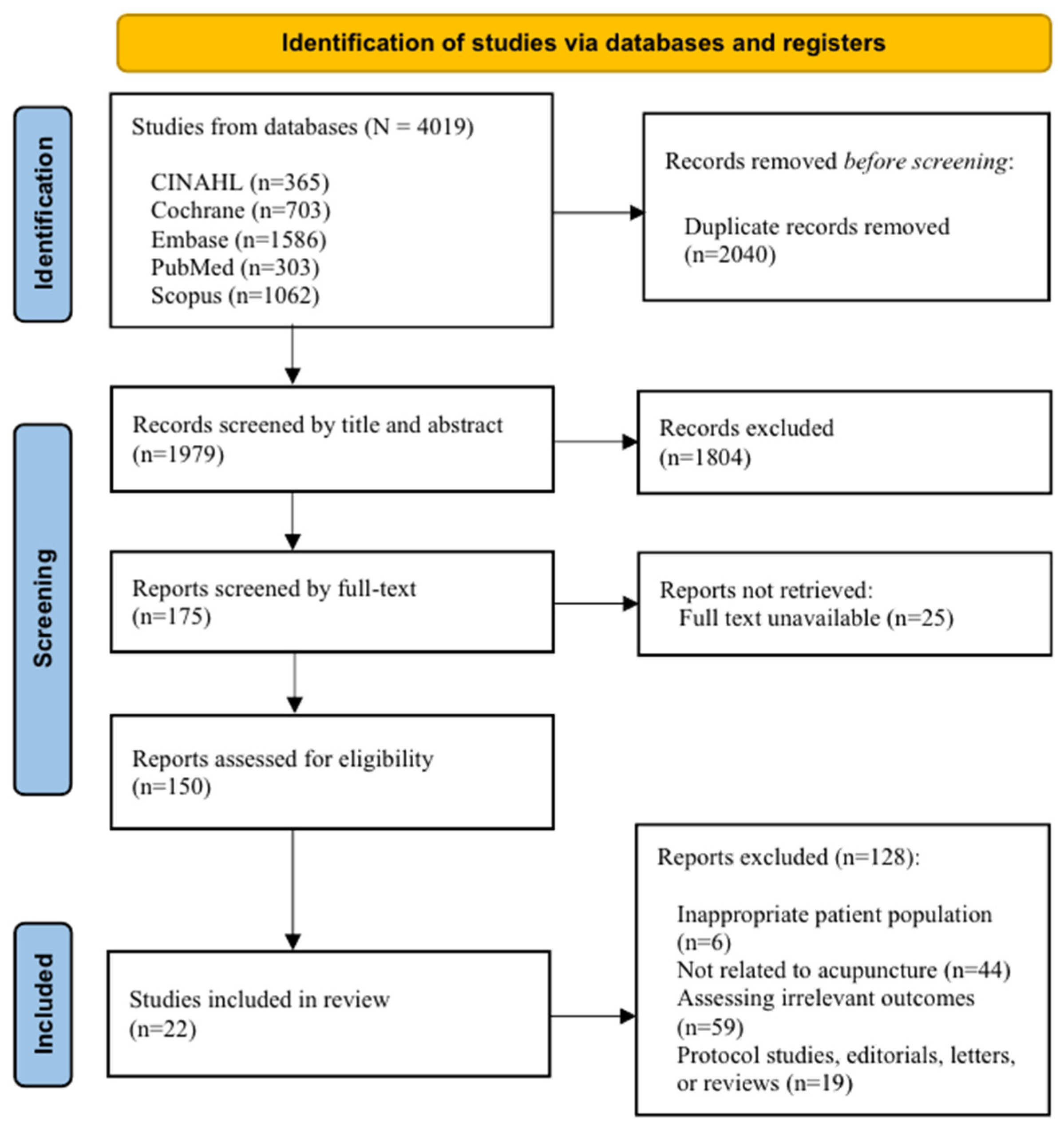
3.1. Study Identification
3.2. Study Characteristics
3.3. Risk of Bias Assessment
3.4. Metabolomic Approaches, Sample Type and Timing
3.5. Metabolites with Significant Changes after Acupuncture
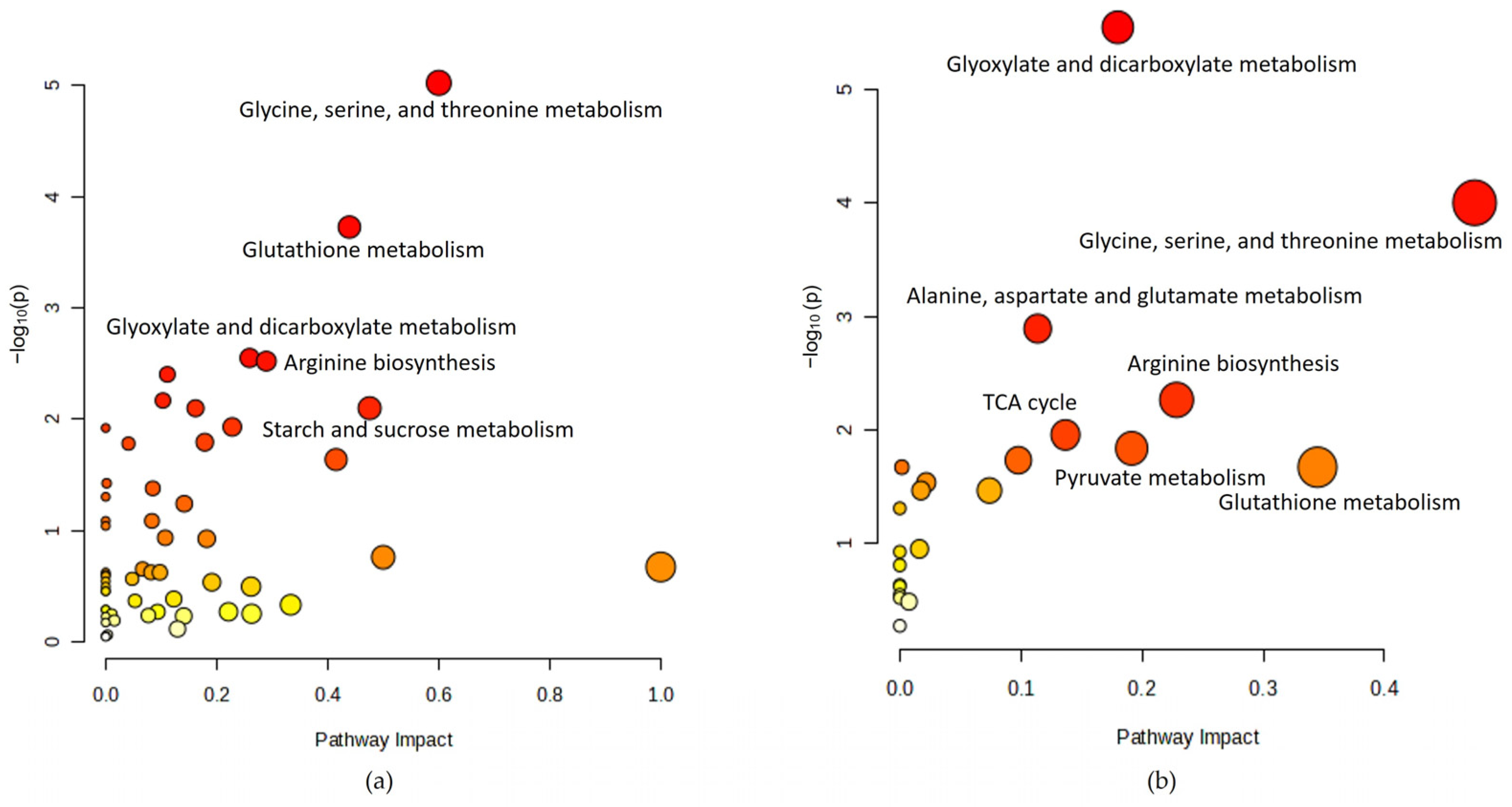
3.6. Metabolomic Pathways Related to Acupuncture
4. Discussion
4.1. Glycine, Serine, and Threonine Metabolism
4.2. Glyoxylate and Dicarboxylate Metabolism
4.3. Glutathione Metabolism
4.4. Arginine Biosynthesis
4.5. Acupuncture’s Therapeutic Effects: Link Metabolomics Changes to Clinical Outcomes
4.6. Issues and Challenges in Acupuncture Metabolomics Research
4.6.1. Biological and External Factors
4.6.2. Study-Related Factors
4.7. Limitations and Strength
5. Conclusions
Supplementary Materials
Author Contributions
Funding
Institutional Review Board Statement
Informed Consent Statement
Data Availability Statement
Conflicts of Interest
References
- World Health Organization. WHO Global Report on Traditional and Complementary Medicine 2019; World Health Organization: Geneva Switzerland, 2019.
- Nahin, R.L.; Rhee, A.; Stussman, B. Use of Complementary Health Approaches Overall and for Pain Management by US Adults. JAMA 2024, 331, 613–615. [Google Scholar] [CrossRef] [PubMed]
- Kaptchuk, T.J. Chinese Medicine: The Web That Has No Weaver; McGraw Hill: New York, NY, USA, 2000; p. 528. [Google Scholar]
- Zhou, W.; Benharash, P. Effects and mechanisms of acupuncture based on the principle of meridians. J. Acupunct. Meridian Stud. 2014, 7, 190–193. [Google Scholar] [CrossRef] [PubMed]
- Qiu, J. Traditional medicine: A culture in the balance. Nature 2007, 448, 126–128. [Google Scholar] [CrossRef] [PubMed]
- Kaptchuk, T.J. Acupuncture: Theory, efficacy, and practice. Ann. Intern. Med. 2002, 136, 374–383. [Google Scholar] [CrossRef] [PubMed]
- Vickers, A.J.; Vertosick, E.A.; Lewith, G.; MacPherson, H.; Foster, N.E.; Sherman, K.J.; Irnich, D.; Witt, C.M.; Linde, K. Acupuncture for Chronic Pain: Update of an Individual Patient Data Meta-Analysis. J. Pain 2018, 19, 455–474. [Google Scholar] [CrossRef]
- DeVon, H.A.; Uwizeye, G.; Cai, H.Y.; Shroff, A.R.; Briller, J.E.; Ardati, A.; Hoppensteadt, D.; Rountree, L.; Schlaeger, J.M. Feasibility and preliminary efficacy of acupuncture for angina in an underserved diverse population. Acupunct. Med. 2022, 40, 152–159. [Google Scholar] [CrossRef]
- Zhang, A.; Song, Z.; Di, A.; Zhou, Z.; Zheng, L.; Zhuang, L. Acupuncture for the Treatment of Neuropsychiatric Symptoms in Parkinson’s Disease: A Systematic Review and Meta-Analysis. Complement. Ther. Med. 2024, 80, 103020. [Google Scholar] [CrossRef]
- Cui, J.; Song, W.; Jin, Y.; Xu, H.; Fan, K.; Lin, D.; Hao, Z.; Lin, J. Research progress on the mechanism of the acupuncture regulating neuro-endocrine-immune network system. Vet. Sci. 2021, 8, 149. [Google Scholar] [CrossRef]
- Wang, M.; Liu, W.; Ge, J.; Liu, S. The immunomodulatory mechanisms for acupuncture practice. Front. Immunol. 2023, 14, 1147718. [Google Scholar] [CrossRef]
- Napadow, V.; Harris, R.E.; Helmer, K.G. Birth of the Topological Atlas and Repository for Acupoint Research. J. Integr. Complement. Med. 2023, 29, 769–773. [Google Scholar] [CrossRef]
- Langevin, H.M. Moving the Complementary and Integrative Health Research Field Toward Whole Person Health. J. Altern. Complement. Med. 2021, 27, 623–626. [Google Scholar] [CrossRef] [PubMed]
- Ezzamouri, B.; Shoaie, S.; Ledesma-Amaro, R. Synergies of Systems Biology and Synthetic Biology in Human Microbiome Studies. Front. Microbiol. 2021, 12, 681982. [Google Scholar] [CrossRef]
- Somvanshi, P.R.; Venkatesh, K.V. A conceptual review on systems biology in health and diseases: From biological networks to modern therapeutics. Syst. Synth. Biol. 2014, 8, 99–116. [Google Scholar] [CrossRef]
- Zhang, Y.; Zhang, A.; Yan, G.; Cheng, W.; Sun, H.; Meng, X.; Liu, L.; Xie, N.; Wang, X. High-throughput metabolomic approach revealed the acupuncture exerting intervention effects by perturbed signatures and pathways. Mol. Biosyst. 2014, 10, 65–73. [Google Scholar] [CrossRef] [PubMed]
- Zhang, A.; Sun, H.; Wang, Z.; Sun, W.; Wang, P.; Wang, X. Metabolomics: Towards understanding traditional Chinese medicine. Planta Med. 2010, 76, 2026–2035. [Google Scholar] [CrossRef] [PubMed]
- Lv, Z.; Liu, R.; Su, K.; Gu, Y.; Fang, L.; Fan, Y.; Gao, J.; Ruan, X.; Feng, X. Acupuncture ameliorates breast cancer-related fatigue by regulating the gut microbiota-gut-brain axis. Front. Endocrinol. 2022, 13, 921119. [Google Scholar] [CrossRef] [PubMed]
- Li, W.; Sun, M.; Yin, X.; Lao, L.; Kuang, Z.; Xu, S. The effect of acupuncture on depression and its correlation with metabolic alterations: A randomized controlled trial. Medicine 2020, 99, e22752. [Google Scholar] [CrossRef]
- Jia, J.; Yu, Y.; Deng, J.-H.; Robinson, N.; Bovey, M.; Cui, Y.-H.; Liu, H.-R.; Ding, W.; Wu, H.-G.; Wang, X.-M. A review of Omics research in acupuncture: The relevance and future prospects for understanding the nature of meridians and acupoints. J. Ethnopharmacol. 2012, 140, 594–603. [Google Scholar] [CrossRef][Green Version]
- Page, M.J.; McKenzie, J.E.; Bossuyt, P.M.; Boutron, I.; Hoffmann, T.C.; Mulrow, C.D.; Shamseer, L.; Tetzlaff, J.M.; Akl, E.A.; Brennan, S.E. The PRISMA 2020 statement: An updated guideline for reporting systematic reviews. BMJ 2021, 372, n71. [Google Scholar] [CrossRef]
- Cochrane. Cochrane Handbook for Systematic Reviews of Interventions; Cochrane: London, UK, 2023. [Google Scholar]
- Covidence. Covidence Systematic Review Software; Veritas Health Innovation: Melbourne, Australia, 2024. [Google Scholar]
- Benjamini, Y.; Hochberg, Y. Controlling the false discovery rate: A practical and powerful approach to multiple testing. J. R. Stat. Soc. Ser. B (Methodol.) 1995, 57, 289–300. [Google Scholar] [CrossRef]
- Sterne, J.A.C.; Savović, J.; Page, M.J.; Elbers, R.G.; Blencowe, N.S.; Boutron, I.; Cates, C.J.; Cheng, H.Y.; Corbett, M.S.; Eldridge, S.M.; et al. RoB 2: A revised tool for assessing risk of bias in randomised trials. bmj 2019, 366, l4898. [Google Scholar] [CrossRef]
- Wells, G.A.; Wells, G.; Shea, B.; Shea, B.; O’Connell, D.; Peterson, J.; Welch; Losos, M.; Tugwell, P.; Ga, S.W.; et al. The Newcastle-Ottawa Scale (NOS) for Assessing the Quality of Nonrandomised Studies in Meta-Analyses. 2014. Available online: https://api.semanticscholar.org/CorpusID:79550924 (accessed on 20 February 2024).
- Gao, Z.; Yan, X.-Z.; Wang-Sattler, R.; Covic, M.; Yu, G.; Ge, F.; Lin, J.; Chen, Q.; Liu, J.; Sharma, S. Metabolomics reveals reasons for the efficacy of acupuncture in migraine patients: The role of anaerobic glycolysis and mitochondrial citrate in migraine relief. medRxiv 2023. [Google Scholar] [CrossRef]
- Gu, T.; Lin, L.; Jiang, Y.; Chen, J.; D’Arcy, R.C.N.; Chen, M.; Song, X. Acupuncture therapy in treating migraine: Results of a magnetic resonance spectroscopy imaging study. J. Pain Res. 2018, 11, 889–900. [Google Scholar] [CrossRef] [PubMed]
- Li, C.; Li, X.; He, K.; Wu, Y.; Xie, X.; Yang, J.; Zhang, F.; Yue, Y.; Hao, H.; Zhao, S.; et al. Discovery of the mechanisms of acupuncture in the treatment of migraine based on functional magnetic resonance imaging and omics. Front. Med. 2023, 17, 993–1005. [Google Scholar] [CrossRef] [PubMed]
- Liu, L.; Li, W.; Wang, L.; Gong, P.; Lyu, T.; Liu, D.; Zhang, Y.; Guo, Y.; Liu, X.; Tang, M.; et al. Proteomic and metabolomic profiling of acupuncture for migraine reveals a correlative link via energy metabolism. Front. Neurosci. 2022, 16, 1013328. [Google Scholar] [CrossRef]
- Li, H.; Schlaeger, J.M.; Patil, C.L.; Danciu, O.C.; Xia, Y.; Sun, J.; Doorenbos, A.Z. Feasibility of Acupuncture and Exploration of Metabolomic Alterations for Psychoneurological Symptoms among Breast Cancer Survivors. Biol. Res. Nurs. 2023, 25, 326–335. [Google Scholar] [CrossRef]
- Yang, M.X.; Yu, Z.; Deng, S.F.; Chen, X.M.; Chen, L.; Guo, Z.Y.; Zheng, H.; Chen, L.; Cai, D.J.; Wen, B.; et al. A Targeted Metabolomics MRM-MS Study on Identifying Potential Hypertension Biomarkers in Human Plasma and Evaluating Acupuncture Effects. Sci. Rep. 2016, 6, 25871. [Google Scholar] [CrossRef]
- Yang, M.; Yu, Z.; Chen, X.; Guo, Z.; Deng, S.; Chen, L.; Wu, Q.; Liang, F. Active Acupoints Differ from Inactive Acupoints in Modulating Key Plasmatic Metabolites of Hypertension: A Targeted Metabolomics Study. Sci. Rep. 2018, 8, 17824. [Google Scholar] [CrossRef]
- Yang, N.; Ma, K.; Liu, W.; Zhang, N.; Shi, Z.; Ren, J.; Xu, W.; Li, Y.; Su, R.; Liang, Y. Serum metabolomics probes the molecular mechanism of action of acupuncture on metabolic pathways related to glucose metabolism in patients with polycystic ovary syndrome–related obesity. Biomed. Chromatogr. 2023, 37, e5710. [Google Scholar] [CrossRef]
- Jedel, E.; Labrie, F.; Odén, A.; Holm, G.; Nilsson, L.; Janson, P.O.; Lind, A.K.; Ohlsson, C.; Stener-Victorin, E. Impact of electro-acupuncture and physical exercise on hyperandrogenism and oligo/amenorrhea in women with polycystic ovary syndrome: A randomized controlled trial. Am. J. Physiol. Endocrinol. Metab. 2011, 300, E37–E45. [Google Scholar] [CrossRef]
- Ju, L.; Wen, Y.; Yin, J.; Deng, S.; Zheng, J.; Wang, L.; Deng, H.; Hou, Z.; Zhao, X.; He, S.; et al. Metabonomic study of the effects of different acupuncture directions on therapeutic efficacy. J. Chromatogr. B Anal. Technol. Biomed. Life Sci. 2016, 1009–1010, 87–95. [Google Scholar] [CrossRef] [PubMed]
- Kim, K.W.; Shin, W.C.; Choi, M.S.; Cho, J.H.; Park, H.J.; Yoo, H.H.; Song, M.Y. Effects of acupuncture on anthropometric and serum metabolic parameters in premenopausal overweight and obese women: A randomized, patient- and assessor-blind, sham-controlled clinical trial. Acupunct. Med. 2021, 39, 30–40. [Google Scholar] [CrossRef] [PubMed]
- Ma, H.; Liu, X.; Wu, Y.; Zhang, N. The Intervention Effects of Acupuncture on Fatigue Induced by Exhaustive Physical Exercises: A Metabolomics Investigation. Evid.-Based Complement. Alternat. Med. 2015, 2015, 508302. [Google Scholar] [CrossRef] [PubMed]
- Rao, J.; Liu, S.C.; Zhang, L.F.; Zheng, Z.; Yu, Y.; Lou, S.; Xiong, A.H.; Wu, L.H. Metabolomics analysis revealed acupuncture treatment target the upstream for dry eye disease. Int. Eye Sci. 2021, 21, 389–397. [Google Scholar] [CrossRef]
- Wu, Q.; Zhang, Q.; Sun, B.; Yan, X.; Tang, Y.; Qiao, X.; Chen, Q.; Yu, S.; Liang, F. 1H NMR-based metabonomic study on the metabolic changes in the plasma of patients with functional dyspepsia and the effect of acupuncture. J. Pharm. Biomed. Anal. 2010, 51, 698–704. [Google Scholar] [CrossRef]
- Wu, X.; Zhou, Y.; Chen, G.; Zheng, C.; Dong, H.; Xiong, F.; Zhang, M.; Huang, G.; Xu, X. Effect of Electroacupuncture with Different Current Intensities on the Serum Metabolomics of Functional Constipation. Evid.-Based Complement. Altern. Med. 2023, 2023, 9693390. [Google Scholar] [CrossRef]
- Xia, Q.; Yu, L.; Song, J.; Sun, Z. The role of acupuncture in women with advanced reproductive age undergoing in vitro fertilization-embryo transfer: A randomized controlled trial and follicular fluid metabolomics study. Medicine 2023, 102, e34768. [Google Scholar] [CrossRef]
- Yang, H.; Yang, K.; Zhang, L.; Yang, N.; Mei, Y.X.; Zheng, Y.L.; He, Y.; Gong, Y.J.; Ding, W.J. Acupuncture ameliorates Mobile Phone Addiction with sleep disorders and restores salivary metabolites rhythm. Front. Psychiatry 2023, 14, 1106100. [Google Scholar] [CrossRef]
- Zhang, Z.; Yang, M.; Yin, A.; Chen, M.; Tan, N.; Wang, M.; Zhang, Y.; Ye, H.; Zhang, X.; Zhou, W. Serum metabolomics reveals the effect of electroacupuncture on urinary leakage in women with stress urinary incontinence. J. Pharm. Biomed. Anal. 2020, 190, 113513. [Google Scholar] [CrossRef]
- Yan, G.; Zhang, A.; Sun, H.; Cheng, W.; Meng, X.; Liu, L.; Zhang, Y.; Xie, N.; Wang, X. Dissection of Biological Property of Chinese Acupuncture Point Zusanli Based on Long-Term Treatment via Modulating Multiple Metabolic Pathways. Evid.-Based Complement. Alternat. Med. 2013, 2013, 429703. [Google Scholar] [CrossRef]
- Zhang, A.; Yan, G.; Sun, H.; Cheng, W.; Meng, X.; Liu, L.; Xie, N.; Wang, X. Deciphering the biological effects of acupuncture treatment modulating multiple metabolism pathways. Sci. Rep. 2016, 6, 19942. [Google Scholar] [CrossRef] [PubMed]
- Alves, A.; Bassot, A.; Bulteau, A.-L.; Pirola, L.; Morio, B. Glycine metabolism and its alterations in obesity and metabolic diseases. Nutrients 2019, 11, 1356. [Google Scholar] [CrossRef] [PubMed]
- Herzig, S.; Shaw, R.J. AMPK: Guardian of metabolism and mitochondrial homeostasis. Nat. Rev. Mol. Cell Biol. 2018, 19, 121–135. [Google Scholar] [CrossRef] [PubMed]
- Amelio, I.; Cutruzzolá, F.; Antonov, A.; Agostini, M.; Melino, G. Serine and glycine metabolism in cancer. Trends Biochem. Sci. 2014, 39, 191–198. [Google Scholar] [CrossRef] [PubMed]
- Beeching, J. High sequence conservation between isocitrate lyase from Escherichia coli and Ricinus communis. Protein Seq. Data Anal. 1989, 2, 463–466. [Google Scholar]
- Choi, I.; Son, H.; Baek, J.-H. Tricarboxylic acid (TCA) cycle intermediates: Regulators of immune responses. Life 2021, 11, 69. [Google Scholar] [CrossRef]
- Watanabe, D.; Wada, M. Glutathione depression alters cellular mechanisms of skeletal muscle fatigue in early stage of recovery and prolongs force depression in late stage of recovery. Am. J. Physiol.-Regul. Integr. Comp. Physiol. 2023, 325, R120–R132. [Google Scholar] [CrossRef]
- Godlewska, B.R.; Williams, S.; Emir, U.E.; Chen, C.; Sharpley, A.L.; Goncalves, A.J.; Andersson, M.I.; Clarke, W.; Angus, B.; Cowen, P.J. Neurochemical abnormalities in chronic fatigue syndrome: A pilot magnetic resonance spectroscopy study at 7 Tesla. Psychopharmacology 2022, 239, 163–171. [Google Scholar] [CrossRef]
- Hoepner, C.T.; McIntyre, R.S.; Papakostas, G.I. Impact of supplementation and nutritional interventions on pathogenic processes of mood disorders: A review of the evidence. Nutrients 2021, 13, 767. [Google Scholar] [CrossRef]
- Yu, Y.-P.; Ju, W.-P.; Li, Z.-G.; Wang, D.-Z.; Wang, Y.-C.; Xie, A.-M. Acupuncture inhibits oxidative stress and rotational behavior in 6-hydroxydopamine lesioned rat. Brain Res. 2010, 1336, 58–65. [Google Scholar] [CrossRef]
- Liu, C.-C.; Chen, J.-L.; Chang, X.-R.; He, Q.-D.; Shen, J.-C.; Lian, L.-Y.; Wang, Y.-D.; Zhang, Y.; Ma, F.-Q.; Huang, H.-Y. Comparative metabolomics study on therapeutic mechanism of electro-acupuncture and moxibustion on rats with chronic atrophic gastritis (CAG). Sci. Rep. 2017, 7, 14362. [Google Scholar] [CrossRef] [PubMed]
- Ghaemi, F.; Azizi, H.; Sahebkar, M.S.; Mehraban Moghadam, S.; Jarahi, L.; Safarian, M.; Bahrami Taghanaki, H.R.; Zahedi Avval, F. Effects of acupuncture on the glutathione system in overweight and obese individuals. J. Nutr. Fasting Health 2021, 9, 196–201. [Google Scholar]
- Li, Z.; Wang, L.; Ren, Y.; Huang, Y.; Liu, W.; Lv, Z.; Qian, L.; Yu, Y.; Xiong, Y. Arginase: Shedding light on the mechanisms and opportunities in cardiovascular diseases. Cell Death Discov. 2022, 8, 413. [Google Scholar] [CrossRef] [PubMed]
- Zhou, Y.; Danbolt, N.C. Glutamate as a neurotransmitter in the healthy brain. J. Neural Transm. 2014, 121, 799–817. [Google Scholar] [CrossRef]
- Hoffmann, J.; Charles, A. Glutamate and its receptors as therapeutic targets for migraine. Neurotherapeutics 2018, 15, 361–370. [Google Scholar] [CrossRef]
- Moriguchi, S.; Takamiya, A.; Noda, Y.; Horita, N.; Wada, M.; Tsugawa, S.; Plitman, E.; Sano, Y.; Tarumi, R.; ElSalhy, M. Glutamatergic neurometabolite levels in major depressive disorder: A systematic review and meta-analysis of proton magnetic resonance spectroscopy studies. Mol. Psychiatry 2019, 24, 952–964. [Google Scholar] [CrossRef]
- Tu, C.-H.; MacDonald, I.; Chen, Y.-H. The effects of acupuncture on glutamatergic neurotransmission in depression, anxiety, schizophrenia, and Alzheimer’s disease: A review of the literature. Front. Psychiatry 2019, 10, 14. [Google Scholar] [CrossRef]
- Srivastava, S. Emerging insights into the metabolic alterations in aging using metabolomics. Metabolites 2019, 9, 301. [Google Scholar] [CrossRef]
- Tarnopolsky, M.A. Gender differences in metabolism; nutrition and supplements. J. Sci. Med. Sport 2000, 3, 287–298. [Google Scholar] [CrossRef]
- Wang, Y.; Wu, R. The effect of fasting on human metabolism and psychological health. Dis. Markers 2022, 2022, 5653739. [Google Scholar] [CrossRef]
- Zhang, P.; Ang, I.L.; Lam, M.M.; Wei, R.; Lei, K.M.; Zhou, X.; Lam, H.H.; He, Q.Y.; Poon, T.C. Susceptibility to false discovery in biomarker research using liquid chromatography–high resolution mass spectrometry based untargeted metabolomics profiling. Clin. Transl. Med. 2021, 11, e469. [Google Scholar] [CrossRef] [PubMed]
- Sumner, L.W.; Amberg, A.; Barrett, D.; Beale, M.H.; Beger, R.; Daykin, C.A.; Fan, T.W.M.; Fiehn, O.; Goodacre, R.; Griffin, J.L.; et al. Proposed minimum reporting standards for chemical analysis. Metabolomics 2007, 3, 211–221. [Google Scholar] [CrossRef] [PubMed]

| Author/ Year/ Country | Participants (Sample Size; Female % [Male/Female]) | Experimental Group | Control Group | Research Design | Analytical Platform | Approach/ Sample Type | Fasting Condition | Sample Collection Timepoints * | Acupuncture Protocol |
|---|---|---|---|---|---|---|---|---|---|
| Gao 2023 China [27] | Women aged 20–45 with or without migraine (N = 50; 100% [0/50]) | EA (n = 22, patients with migraine) |
| RCT | 1H-NMR | Targeted/ plasma | Yes (7:30–9:30 AM) | Pre- and post-acupuncture (not in detail) | 20 sessions over 4 weeks, 5 times per week, 30 min/session |
| Gu 2018 China [28] | Patients aged 18–60 years, diagnosed with migraine or cervicogenic headache, and healthy controls (N = 44; 68.2% [14/30]) | Acupuncture (n = 15, patients with migraine) |
| Quasi-experimental | MRSI | Targeted/ MRI | NA | Pre- and post-acupuncture (not in detail) | 5 sessions for a week, one session per day |
| Jedel 2011 Sweden [35] | Women aged 18–37 years with PCOS (N = 74; 100% [0/74]) | Low-frequency EA (n = 29, patients with PCOS) |
| RCT | GC/LC-MS | Targeted/ serum | Yes (7:30–8:30 AM) | Late: baseline, week 16, week 32 (within 1 wk) | 14 sessions for 16 weeks, 1–2 times per week, 30 min/session |
| Ju 2016 China [36] | Patients diagnosed with or without PCI (N = 90; 64.4% [32/58]) | Acupuncture with needle tip toward the contralateral paropia (n = 30, patients with PCI) |
| RCT | LC-MS | Untargeted/ urine | NA | Intermediate: pre- and post-acupuncture (at the second day after the final treatment) | 14 sessions, 3–4 sessions per week |
| Kim 2021 South Korea [37] | Premenopausal overweight and obese adult women (N = 120; 100% [0/120]) | Acupuncture with EA (n = 60, premenopausal overweight and obese women) | Sham MA with sham EA (n = 60, premenopausal overweight and obese women) | RCT | LC-MS | Targeted/ serum | Yes | Intermediate: pre- and post-acupuncture (within 3 days) | 12 sessions for 6 weeks, twice per week, 30 min/session |
| Li 2020 China [19] | Patients aged 18–70 years with moderate depression (N = 60; 63.3% [22/38]) | EA (n = 30, patients with depression) | Usual care (n = 30, patients with depression) | RCT | GC-MS | Untargeted/ urine | NA | Pre- and post-acupuncture (not in detail) | 8 weeks, 3 times a week, 30 min/session |
| Li 2023 China [29] | Patients aged 18–55 years with or without migraine (N = 48; 60.4% [19/29]) | Acupuncture (n = 12, patients with migraine) |
| RCT | LC-MS | Targeted/ plasma | NA | Pre- and post-acupuncture (not in detail) | 6 sessions for 2 weeks, three times per week, 30 min/session |
| Li 2023 U.S. [31] | Breast Cancer Survivors with psychoneurological symptoms (N = 8; 100% [0/8]) | Acupuncture (n = 8, patients with breast cancer) | NA | Cohort (prospective) | LC-MS | Untargeted/ serum | Yes (8:00–11:00 AM) | Pre- and post-acupuncture (not in detail) | 10 sessions for 5 weeks, 30 min/session |
| Liu 2022 China [30] | Women with migraine without aura and healthy controls (N = 30; 100% [0/30]) | Acupuncture (n = 20, patients with migraine) | Healthy controls (n = 10) | Quasi -experimental | LC-MS | Untargeted/ plasma | Yes (7:30–8:30 AM) | Early: pre- and post-24 h after acupuncture | 12 sessions, 4 weeks, three times per week, 30 min/session |
| Ma 2015 China [38] | Young male athletes with fatigue induced by physical exercise (N = 14; 0% [14/0]) | Acupuncture (n = 7, young male athletes) | Healthy controls (n = 7, young male athletes) | RCT | 1H-NMR | Untargeted/ urine | NA | Early: before exercises, and 35 min after exercise (before acupuncture), and post-acupuncture | Single session, 30 min/session |
| Rao 2021 China [39] | Patients with dry eye disease (N = 18; 50.0% [9/9]) | Acupuncture (n = 9, patients with dry eye disease) | Drug treatment (n = 9, patients with dry eye disease) | Quasi -experimental | LC-MS | Untargeted/ tear | NA | Pre- and post-acupuncture (not in detail) | 10 sessions for 3 weeks, 30 min/session |
| Wu 2010 China [40] | Women with or without functional dyspepsia (N = 12; 100% [0/12]) | Acupuncture (n = 6, women with functional dyspepsia) | Healthy controls (n = 6) | Quasi -experimental | 1H-NMR | Untargeted/ plasma | Yes (8:00 AM) | Intermediate: pre- and post-acupuncture (second day) | 6 sessions, 6 days |
| Wu 2023 China [41] | Patients with functional constipation (N = 19; 89.5% [2/17]) | EA with low current intensity (n = 7, patients with functional constipation) EA with high current intensity (n = 6, patients with functional constipation) | Mosapride citrate tablet (n = 6, patients with functional constipation) | RCT | GC-MS | Untargeted/ serum | Yes | Pre- and post-acupuncture (not in detail) | 16 sessions for 4 weeks, 3–5 times per week, 30 min/session |
| Xia 2023 China [42] | Women aged 35–42 years with kidney qi deficiency who underwent IVF-assisted pregnancy (N = 60; 100% [0/60]) | Acupuncture (n = 30, women with kidney qi deficiency) | Sham acupuncture (n = 30, women with kidney qi deficiency) | RCT | MRM-MS | Targeted/ follicular fluids | NA | Intermediate: pre- and post-acupuncture (after 36 h) | 3 times a week until the day of hCG injection |
| Yan 2013 China [45] | Healthy volunteers (N = 20; not reported) | Acupuncture (n = 20, healthy subjects) | NA | Cohort (prospective) | LC-MS | Untargeted/ urine | NA | Baseline, at day 7, 14 (not in detail) | 14 sessions for 2 weeks, once a day. |
| Yang 2016 China [32] | Patients with essential hypertension (N = 128; 70.3% [38/90]) | Acupuncture (n = 113, patients with essential hypertension) | Healthy controls (n = 15) | Quasi -experimental | MRM-MS | Targeted/ plasma | Yes (8:00–9:00 AM) | Pre- and post-acupuncture (not in detail) | 6 weeks, 3 times a week, 30 min/session |
| Yang 2018 China [33] | Patients with essential hypertension, aged 45–75 (N = 13; 38.5% [8/5]) | Acupuncture with active acupoint treatment (n = 5, patients with essential hypertension) | Sham acupuncture with inactive acupoint treatment (n = 8, patients with essential hypertension) | RCT | LC-MS | Targeted/ plasma | Yes (8:00–9:00 AM) | Pre- and post-acupuncture (not in detail) | 6 weeks, 3 times a week, 30 min/session |
| Yang 2023 China [34] | Patients with PCOS related obesity (N = 60; 100% [0/60]) | Acupuncture (n = 20, patients with PCOS related obesity) |
| RCT | LC-MS | Targeted/ serum | Yes | Pre- and post-acupuncture (not in detail) | 6 weeks, 3 times a week |
| Yang 2023 China [43] | Patients with mobile phone addiction and sleep disorder and health controls (N = 12; not reported) | Acupuncture (n = 6, patients with mobile phone addiction and sleep disorder) | Healthy controls (n = 6) | Quasi -experimental | LC-MS | Untargeted/ saliva | NA | Pre- and post-acupuncture (not in detail) | 7 sessions for a week (one day per session). |
| Zhang 2014 China [16] | Healthy male volunteers (N = 20; 0% [20/0]) | Acupuncture (n = 20, healthy males) | NA | Cohort (prospective) | LC-MS | Untargeted/ saliva | NA | Pre- and post-acupuncture (not in detail) | 14 sessions for 2 weeks, once a day, 30 min/session |
| Zhang 2016 China [46] | Healthy male volunteers (N = 20; 0% [20/0]) | Acupuncture (n = 20, healthy males) | NA | Cohort (prospective) | LC-MS | Untargeted/ serum | Yes (5:00–7:00 AM) | Early: pre- and post-acupuncture (on the treatment completion day) | 14 sessions for 2 weeks, once a day. |
| Zhang 2020 China [44] | Women with stress urinary incontinence (N = 50; 100% [0/50]) | EA (n = 25, women with stress urinary incontinence) | Sham EA (n = 25, healthy controls) | Quasi -experimental | GC-MS | Untargeted/ serum | NA | Pre- and post-acupuncture (not in detail) | 18 sessions for 6 weeks, 3 times per week |
| (a) | |||||||
| Author/Year/ Country | Study Design | Assignment to Intervention | Adhering to Intervention | Missing Outcome Data | Measurement of the Outcome | Selection of the Reported Result | Overall Risk of Bias |
| Gao 2023 China [27] | RCT | Some concerns | Low | Low | Low | Low | Some concerns |
| Jedel 2011 Sweden [35] | RCT | Low | Low | Low | Low | Low | Low |
| Ju 2016 China [36] | RCT | Some concerns | Some concerns | Low | Low | Low | Some concerns |
| Kim 2021 South Korea [37] | RCT | Low | Low | Low | Low | Low | Low |
| Li 2020 China [19] | RCT | Low | Some concerns | High | Low | Low | High |
| Li 2023 China [29] | RCT | Some concerns | Some concerns | Low | Low | Low | Some concerns |
| Ma 2015 China [38] | RCT | Some concerns | Some concerns | Low | Low | Low | Some concerns |
| Wu 2023 China [41] | RCT | Some concerns | Some concerns | Low | Low | Low | Some concerns |
| Xia 2023 China [42] | RCT | Low | Some concerns | Low | Low | Low | Some concerns |
| Yang 2018 China [33] | RCT | Some concerns | High | High | Low | Low | High |
| Yang 2023 China [34] | RCT | Some concerns | Some concerns | Low | Low | Low | Some concerns |
| (b) | |||||||
| Author/Year/ Country | Study Design | Selection (0–4) | Comparability (0–2) | Outcome (0–3) | Overall Risk of Bias | ||
| Gu 2018 China [28] | quasi-experimental | 3 | 2 | 3 | Good | ||
| Li 2023 U.S. [31] | cohort (prospective) | 3 | 1 | 3 | Good | ||
| Liu 2022 China [30] | quasi-experimental | 2 | 2 | 2 | Fair | ||
| Rao 2021 China [39] | quasi-experimental | 3 | 2 | 3 | Good | ||
| Wu 2010 China [40] | quasi-experimental | 2 | 2 | 2 | Fair | ||
| Yan 2013 China [40] | cohort (prospective) | 2 | 0 | 3 | Fair | ||
| Yang 2016 China [32] | quasi-experimental | 3 | 2 | 2 | Good | ||
| Yang 2023 China [43] | quasi-experimental | 3 | 2 | 3 | Good | ||
| Zhang 2014 China [16] | cohort (prospective) | 3 | 0 | 2 | Fair | ||
| Zhang 2016 China [46] | cohort (prospective) | 3 | 0 | 2 | Fair | ||
| Zhang 2020 China [44] | quasi-experimental | 3 | 1 | 2 | Fair | ||
| Author/Year/ Country | Identified Metabolomic Pathways | Differential Metabolites | Statistical Analysis | ||
|---|---|---|---|---|---|
| Pre vs. Post Acupuncture | Post-Acupuncture vs. Post-Sham/Alternative Intervention | Pre- vs. Post-Acupuncture | Post-Acupuncture vs. Post-Sham/Alternative Intervention | ||
| Gao 2023 China [27] |
|
|
| - decreased glutamine | OPLS-DA, PCA |
| Gu 2018 China [28] | NA | NA |
| NA | ANOVA, t-test, linear regression |
| Jedel 2011 Sweden [35] | NA | NA | (week 16)
| (week 16)
| Kruskal-Wallis test, Mann-Whitney U-test, chi-square test, Wilcoxon rank sum test |
| Ju 2016 China [36] |
| NA |
| NA | OPLS-DA |
| Kim 2021 South Korea [37] | NA | NA |
|
| ANCOVA, t-test |
| Li 2020 China [19] |
| NA |
| NA | OPLS-DA, PCA |
| Li 2023 China [29] |
|
|
| NA | PCA, t-test |
| Li 2023 U.S. [31] |
| NA |
| NA | OPLS-DA, pathway analysis |
| Liu 2022 China [30] |
| NA |
| NA | OPLS-DA |
| Ma 2015 China [38] |
| NA |
| NA | PCA, PLS-DA, OPLSDA, ANOVA |
| Rao 2021 China [39] | aminoacyl-tRNA biosynthesis | NA |
| NA | PCA, PLS-DA |
| Wu 2010 China [40] | NA | NA |
| NA | PCA, PLS-DA |
| Wu 2023 China [41] |
| NA |
| NA | OPLS-DA, t-test |
| Xia 2023 China [42] | NA |
|
| NA | PCA, PLS-DA |
| Yan 2013 China [45] |
| NA |
| NA | OPLS-DA, PCA |
| Yang 2016 China [32] | NA | NA |
| NA | PLS-DA |
| Yang 2018 China [33] | NA | NA |
|
| PCA, PLS-DA |
| Yang 2023 China [34] |
| NA |
|
| PCA, PLS-DA |
| Yang 2023 China [43] |
| NA |
| NA | OPLS-DA |
| Zhang 2014 China [16] |
| NA |
| NA | PCA, PLS-DA |
| Zhang 2016 China [46] |
|
|
| NA | PCA, PLS-DA |
| Zhang 2020 China [44] |
| NA |
| NA | OPLS-DA |
Disclaimer/Publisher’s Note: The statements, opinions and data contained in all publications are solely those of the individual author(s) and contributor(s) and not of MDPI and/or the editor(s). MDPI and/or the editor(s) disclaim responsibility for any injury to people or property resulting from any ideas, methods, instructions or products referred to in the content. |
© 2024 by the authors. Licensee MDPI, Basel, Switzerland. This article is an open access article distributed under the terms and conditions of the Creative Commons Attribution (CC BY) license (https://creativecommons.org/licenses/by/4.0/).
Share and Cite
Li, H.; Choi, H.; Houser, M.C.; Li, C.; Liu, T.; Gao, S.; Sullivan, K.; Schlaeger, J.M. Impact of Acupuncture on Human Metabolomic Profiles: A Systematic Review. Metabolites 2024, 14, 542. https://doi.org/10.3390/metabo14100542
Li H, Choi H, Houser MC, Li C, Liu T, Gao S, Sullivan K, Schlaeger JM. Impact of Acupuncture on Human Metabolomic Profiles: A Systematic Review. Metabolites. 2024; 14(10):542. https://doi.org/10.3390/metabo14100542
Chicago/Turabian StyleLi, Hongjin, Hannah Choi, Madelyn C. Houser, Changwei Li, Tingting Liu, Shuang Gao, Katy Sullivan, and Judith M. Schlaeger. 2024. "Impact of Acupuncture on Human Metabolomic Profiles: A Systematic Review" Metabolites 14, no. 10: 542. https://doi.org/10.3390/metabo14100542
APA StyleLi, H., Choi, H., Houser, M. C., Li, C., Liu, T., Gao, S., Sullivan, K., & Schlaeger, J. M. (2024). Impact of Acupuncture on Human Metabolomic Profiles: A Systematic Review. Metabolites, 14(10), 542. https://doi.org/10.3390/metabo14100542

