


Abstract
This study offers a comprehensive in situ measurement and assessment of electromagnetic field (EMF) exposure in the central urban districts of Samsun, Türkiye, focusing on low-frequency magnetic flux density (BLF) and radiofrequency electric field strength (ERF). Drive-test measurements were performed across Atakum, İlkadım, and Canik districts to capture spatial variability and identify primary exposure sources. Band-selective analysis revealed that downlink (DL) transmissions are the main contributors to total ERF exposure, indicating that base station emissions dominate the exposed ERF levels in the environment. Six-minute averaged BLF and ERF values account for temporal fluctuations and confirm that exposure remains well below recommended limits. A one-way ANOVA test indicated that the differences in exposure levels among the three districts were not statistically significant. These findings provide a detailed spatial evaluation of EMF exposure in a large metropolitan region, demonstrating the value of integrated BLF and ERF measurements for environmental monitoring.
1. Introduction
Radiation caused by electromagnetic waves originates from natural and human-made sources, contributing to electromagnetic pollution in the environment. Electromagnetic fields comprise both electric and magnetic components, each exhibiting distinct physical behaviors depending on the frequency range. At extremely low frequencies (ELFs), power-grid-related infrastructures—such as overhead transmission lines, distribution transformers, electric motors, chargers, and household appliances—primarily generate magnetic fields. In the radiofrequency (RF) range, major contributors include mobile communication base stations, FM/TV broadcast transmitters, wireless access points, medical devices, and various household electronic devices. The widespread adoption of wireless technologies has further increased RF exposure levels, as modern communication systems now extend from mobile phones and computers to smart home networks and everyday appliances.
With the rapid advancement of technology, the number of base stations—the core components of cellular systems—has increased significantly. People are now almost constantly exposed to the electromagnetic fields (EMFs) emitted by these stations. Urbanization, along with the growing communication needs in rural areas, has driven a steady rise in cellular network users, expanding the coverage areas of base stations accordingly. Due to limited base station capacity, new installations are continually added to meet increasing wireless demand, resulting in a continuous growth in exposed EMF levels.
Research has shown that the impact of cellular systems on EMF is concentrated mainly in densely populated areas such as city centers [1] and shopping malls [2], where the number of base stations is naturally higher. To evaluate public exposure, many studies have measured and analyzed radiofrequency EMF (RF-EMF) levels in various environments, ranging from microenvironments (homes, schools, public transport, hospitals) to larger urban and rural areas. Different measurement techniques, including drive tests, stationary monitoring, and personal exposure assessments, have been used—sometimes in combination—to achieve more reliable results.
In [3], the uplink (UL), EMF exposure in 4G and 5G networks across various microenvironments and public transport routes was assessed using multiple unsynchronized devices, revealing spatial differences in exposure levels. Reference [4] compared several personal exposure meters across five European countries and found that body-worn devices generally recorded higher values due to body shielding effects. In [5], EMF levels were measured in 102 schools in Amsterdam, and an average exposure of 0.16 V/m was reported, with significant variation within classrooms and dominant contributions from mobile phone downlink (DL) and digital enhanced cordless telecommunications (DECT) signals. Drive and walk-through tests were performed in several countries in [6], where higher exposure levels were mainly linked to UL transmissions and public transport environments. Reference [7] investigated 14 microenvironments in Spain and found DECT and UL bands to be the main contributors to exposure. Reference [8] analyzed 48 h home measurements and reported that DL signals accounted for roughly two-thirds of total exposure. In [9], EMF data from several European monitoring networks were analyzed, and exposure levels were found to correlate with population density. Reference [10] observed slightly higher exposure levels in rural areas compared to urban centers. A large-scale drive test covering 13,800 km in Japan was conducted in [11], showing higher field strengths in Tokyo and consistent results across repeated measurements. Reference [12] performed drive tests across seven European countries and reported maximum exposure near base stations and densely populated areas. A neural network model was trained on drive test data to predict EMF exposure with high accuracy in [13]. Study [14] compared drive test and sensor network data in France and demonstrated strong spatial consistency between both measurement methods.
Comprehensive reviews presented in [15,16,17] summarized a large number of indoor and general RF-EMF exposure studies. The review in [15] provided an overview of the last ten years of research on indoor RF-EMF exposure, highlighting that maximum mean levels were highest in offices (1.14 V/m) and public transport (0.97 V/m). The review in [16], covering data from 2015 to 2018, reported comparable mean exposure levels (0.04–1.27 V/m) and concluded that, despite the rapid expansion of wireless technologies, no noticeable increase in everyday RF-EMF exposure has been observed since 2012. Reference [17] summarized studies from 1998 to 2021, which used two RF-EMF exposure measurement methods. Across the reviewed studies, exposure levels were generally low, with mean values well below the International Commission on Non-Ionizing Radiation Protection (ICNIRP) reference limits. According to [18], 5G network exposure levels in Seoul remained well below ICNIRP limits. Reference [19] demonstrated that an increasing number of 5G base stations does not necessarily lead to higher EMF exposure. Reference [20] measured EMF exposure in Greek urban and suburban areas during early 5G deployment. Results showed 4G networks dominated total exposure, 5G contribution was limited, and EMF levels in the 3.5 GHz band decreased with distance from 5G base stations. Study [21] assessed personal RF-EMF exposure in five Belgian cities using on-body calibrated exposimeters, finding the highest total exposure in Brussels, notable DL variations across cities. In [22], a novel activity-based microenvironmental survey protocol was developed and applied in Switzerland to assess environmental, DL, and UL RF-EMF exposure across different urbanization levels. Reference [23] measured RF-EMF and magnetic flux density values in Samsun, Türkiye, and confirmed that all results were within ICNIRP safety limits.
A summary of selected reviewed studies, including their methods, environments, frequency ranges, is presented in Table 1 for comparative evaluation.
Table 1.
Overview of selected EMF exposure studies.
Personal exposure meters, stationary sensors, and drive tests have been widely used in RF-EMF assessments. However, most studies have measured either electric field strength (E) or magnetic flux density (B) separately, with limited spatial and temporal coverage, and have given little consideration to dynamic factors such as population density or traffic conditions. Simultaneous B measurements alongside E campaigns are generally lacking (with the exception of [23]), and no prior study has covered such a large portion of an urban city center, highlighting the novelty of this work.
To address these gaps, this study conducted comprehensive E and B measurements in Samsun, Türkiye. We hypothesize that EMF exposure levels will correlate significantly with the urban density metrics of the selected districts, with the most densely populated district, İlkadım, exhibiting the highest statistically significant exposure levels. Extensive drive test measurements were performed across three central districts—Atakum, İlkadım, and Canik—to capture spatial and temporal variations, providing a comprehensive and dynamic assessment of urban RF-EMF and B exposure. The strengths of the study are summarized below.
Strengths:
- Simultaneous radiofrequency (80 MHz–6 GHz) electric field strength (ERF) and low-frequency (1 Hz–400 kHz) magnetic flux density (BLF) measurements were performed, combining two complementary assessments within a single study.
- Measurements were conducted along main streets and major routes across a large region serving hundreds of thousands of residents, providing valuable large-scale data for future research.
- Using the drive-test method enabled measurements to be completed within a short, consistent time window, which minimized temporal variability.
- The study reveals differences and similarities among districts and offers insight into possible causes.
- The study identifies which frequency bands contribute most to average RF-EMF exposure and discusses likely reasons for these contributions.
- The results can serve as a reference for assessing regional impacts as studies on health effects of RF-EMF and B exposure expand.
2. Materials and Methods
In many countries, regulations and standards have been established to govern human exposure to EMFs. The ICNIRP guidelines provide scientifically based exposure limits to protect human health from EMFs across a wide frequency range. EMF exposure metrics differ across frequency ranges due to their underlying physical interaction mechanisms. At extremely low frequencies, external electric fields are strongly attenuated at the skin surface, while magnetic fields penetrate biological tissues and determine the induced internal electric fields; therefore, magnetic flux density is the primary quantity used in assessing ELF exposure. In contrast, in the RF range, energy absorption in tissues is governed by the electric field strength, which directly relates to the specific absorption rate; hence, RF exposure limits are expressed in terms of the electric field. The ICNIRP 2010 guidelines [24] cover low-frequency electric and magnetic fields (1 Hz to 100 kHz), defining basic restrictions in terms of induced electric fields in the human body and reference levels for external fields, expressed in terms of magnetic field (H) and B. For RF-EMFs, the ICNIRP 2020 guidelines specify reference levels for frequencies ranging from 100 kHz to 300 GHz [25]. These reference levels are derived to ensure compliance with basic restrictions under worst-case exposure scenarios and provide a practical framework for evaluating human exposure. In Türkiye, the national exposure limits are regulated by the Information and Communication Technologies Authority (ICT), which adopts limits set at 75% of the ICNIRP 1998 reference levels [26]. Table 2 summarizes the ICNIRP reference levels and the ICT-adopted national limits for general public exposure in the low-frequency and RF ranges, respectively.
Table 2.
ICNIRP and national reference levels for general public exposure to time-varying electric and magnetic fields 1.
2.1. Measurement Devices
ERF measurements were performed using the EME SPY Evolution (MVG, Villebon-sur-Yvette, France) device, a lightweight, compact instrument capable of measuring in the 80 MHz–6 GHz range via a triaxial electric field probe. It can analyze up to 84 frequency bands, with continuous measurement of up to 20 bands. The device has a sensitivity of 0.02 V/m for 700–3000 MHz and 0.05 V/m for other frequencies. Recording intervals can be set between 2 and 255 s, and data can be stored for over 23 h when measuring 20 bands at 6 s intervals. The typical isotropic uncertainty for this class of wideband probe is specified as ±1.5 dB for frequencies below 4 GHz and ± 2.5 dB for frequencies above 4 GHz [27]. This frequency-dependent consideration ensures methodological rigor, particularly as the device operates up to 6 GHz [27].
BLF measurements were conducted using the SMP2 (Wavecontrol, Barcelona, Spain) device with the WP400 isotropic probe, capable of measuring magnetic fields in the 1 Hz–400 kHz range. The SMP2 supports broadband measurements (DC–90 kHz), spectrum analysis (DC–400 kHz), and static field measurements, with real-time visualization and integrated GPS. The WP400 probe provides high-resolution measurements, low noise (<50 nT), and displays RMS, axis values, average, maximum, minimum, peak levels, and RMS–time plots. Additionally, it has an integrated GPS module, allowing geolocated measurements. The overall measurement uncertainty, which accounts for isotropy, temperature deviation, resolution, frequency response, linearity, and repeatability, is 7.2% (0.60 dB) for H across the full frequency range [28,29].
2.2. Measurements and Data Processing
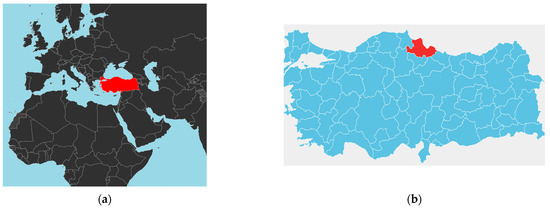
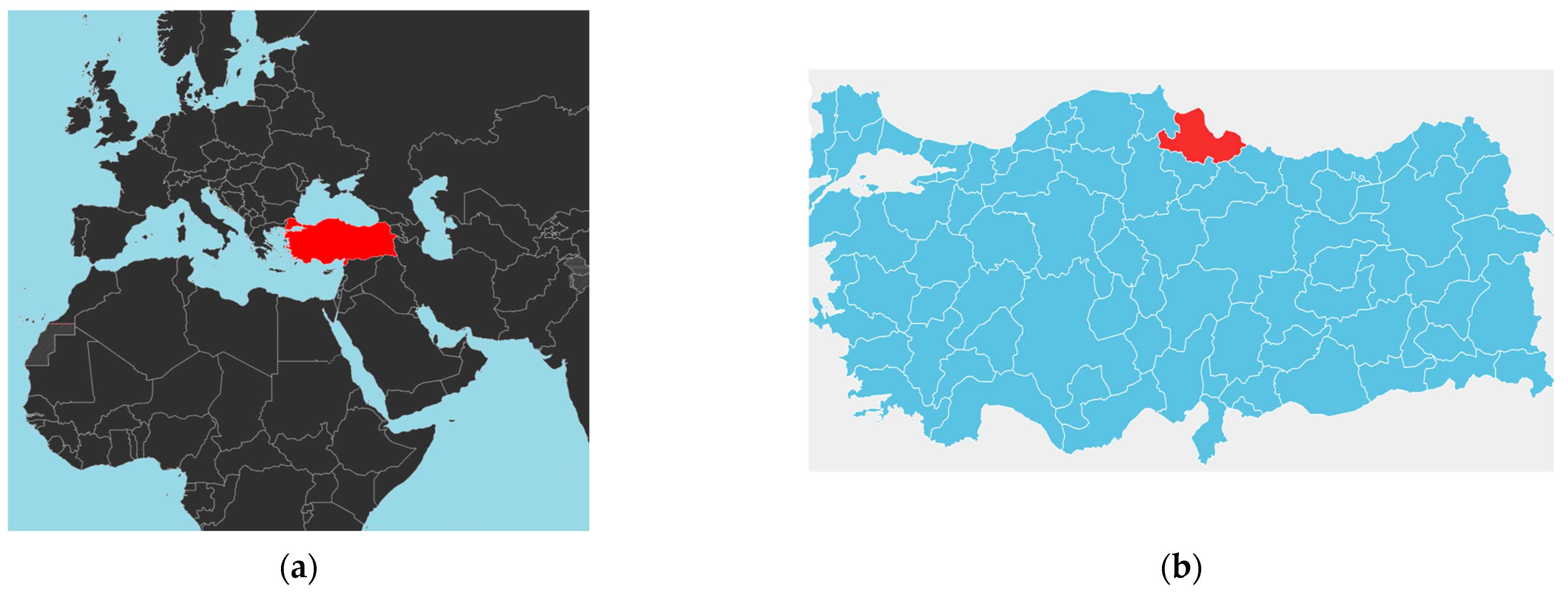
The measurements were carried out in the central part of Samsun Province, located in the northern region of Türkiye, within the Central Black Sea area (Figure 1). In figures the areas highlighted in red indicate the geographical location of Türkiye (a) and Samsun Province (b); the white lines represent national and provincial boundaries.
Figure 1.
(a) The geographical location of Türkiye in the world [30]; (b) The location of Samsun Province within Türkiye [31]. The areas highlighted in red indicate the regions of interest, while the white lines represent national and provincial boundaries.
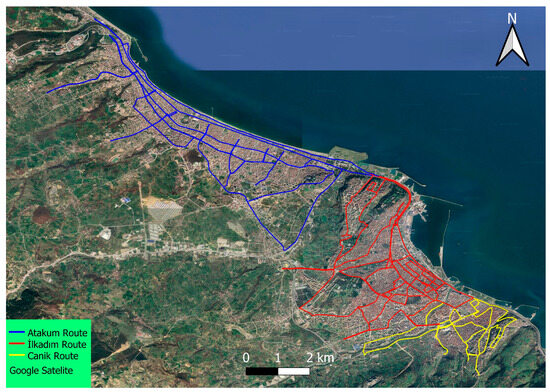
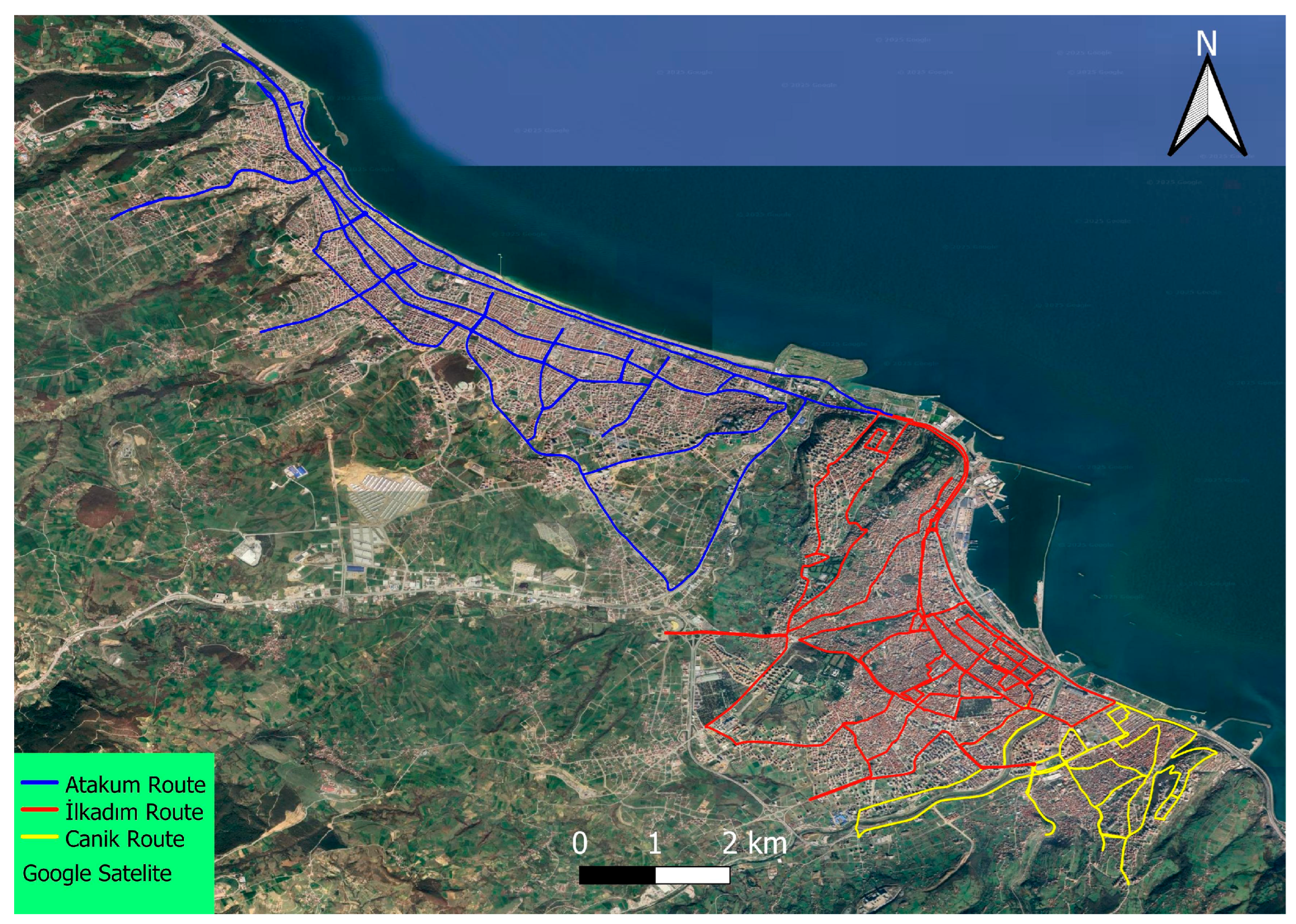
The central part of Samsun consists of three districts: Atakum, located in the west with a population of approximately 253,400 and an area of 397.2 km2; İlkadım, the central and most densely populated district with about 325,800 residents over 152.3 km2; and Canik, situated in the east with a population of around 100,600 and an area of 249.7 km2. This selection was strategically made to represent distinct levels of urban intensity within a single metropolitan area. Based on the data, the calculated population densities are approximately: İlkadım 2140 residents/km2, Atakum 638 residents/km2, and Canik 403 residents/km2. These results confirm that İlkadım exhibits the highest urban density, while Canik shows the lowest, providing a robust basis for comparison for the study’s central hypothesis regarding the correlation between population density and EMF exposure. The measurement routes for all districts are presented in Figure 2, with blue lines representing Atakum, red lines for İlkadım, yellow lines for Canik, and the arrow indicates the north direction.
Figure 2.
Measurement routes.
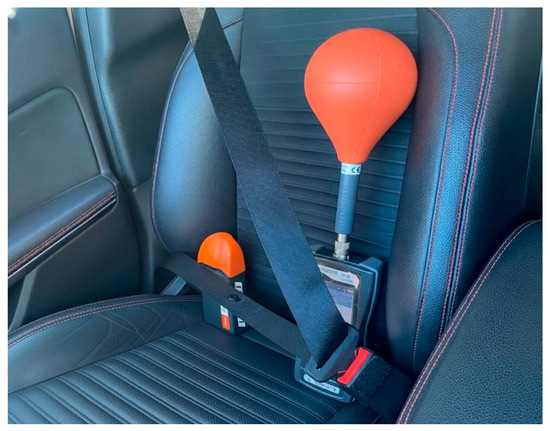
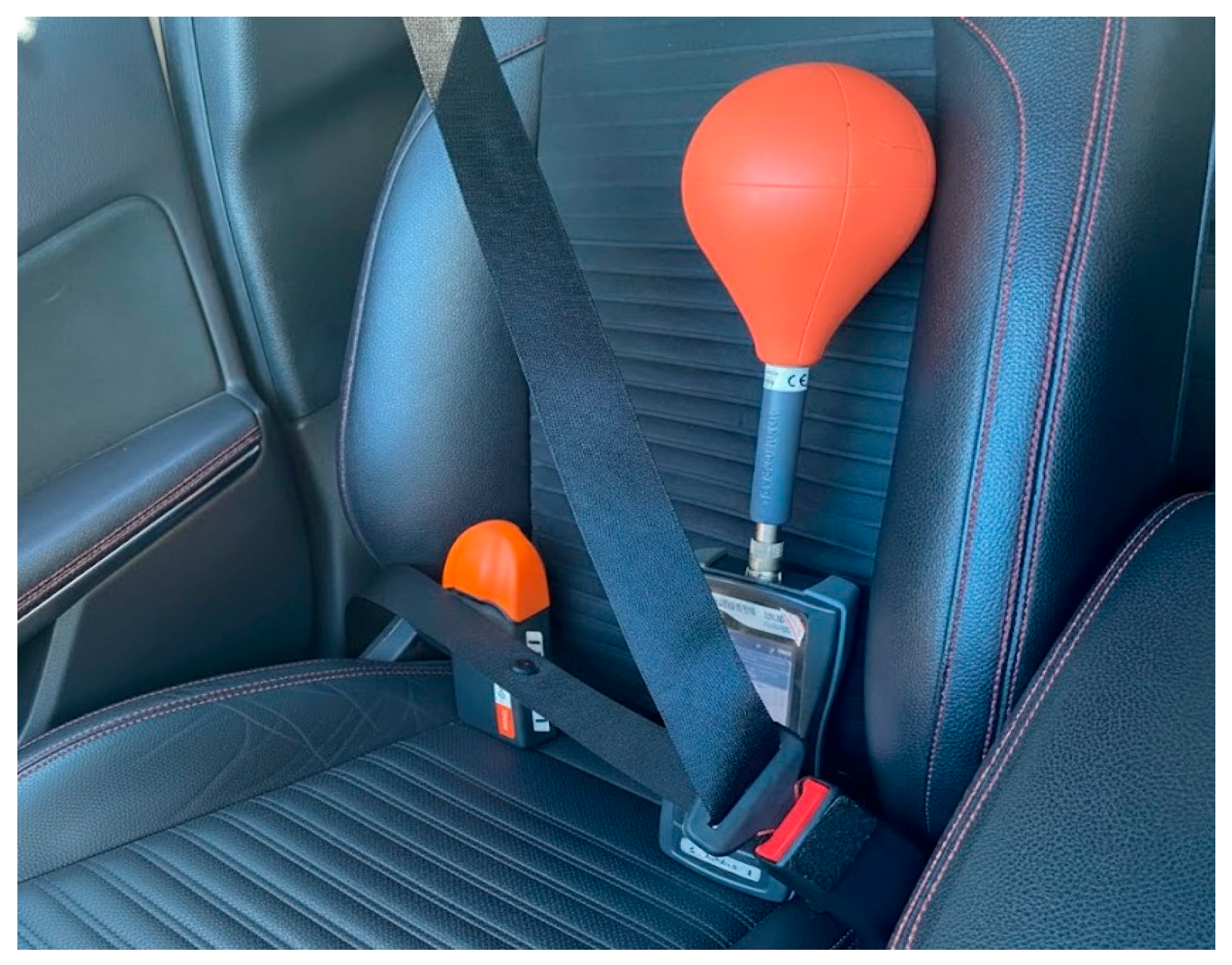
Measurements were conducted on different dates in each district, with an average driving speed of approximately 30 km/h, allowing for variations due to traffic rules, signals, and congestion. The measurement devices were securely mounted on the front seat of the vehicle to minimize the effects of vibrations, as shown in Figure 3. The vehicle used for the drive test was diesel-powered, and consistent with the established methodology, all mobile devices within the vehicle were kept switched off during the entire measurement campaign. Measurement intervals were set to 6 s for ERF measurements to capture temporal variations effectively, while BLF measurements were recorded every 1 s, including both RMS and peak values. ERF and BLF measurements were started and stopped simultaneously; however, due to differences in route lengths, the measurement durations varied between districts.
Figure 3.
A picture of the drive-test measurement setup.
Following the completion of measurements, all recorded data were transferred to a computer for further analysis and processing. Three independent measurement datasets were obtained, each corresponding to one of the three districts, and each dataset included both ERF and BLF measurement data, resulting in a total of six datasets. All data analyses were performed on a computer equipped with an Intel Core i7 (2.20 GHz) processor using MATLAB (The MathWorks Inc., Natick, MA, USA) R2024b.
From the recorded data, both total ERF and band–selective ERF values were extracted for further analysis as described in [23]. The frequency bands and corresponding services measured by the EME SPY Evolution are summarized in Table 3. Based on these values, the temporal variation of ERF levels and the percentage contribution of each frequency band to the total ERF were examined. Similar analyses were carried out for the BLF values. The recorded GPS, ERF, and BLF values were used for spatial mapping and visualization in QGIS version 3.40.3.
Table 3.
Measured frequency bands and corresponding services.
3. Results
This section presents the RMS ERF and BLF values measured in the Atakum, İlkadım, and Canik districts. It includes both spatial and temporal analyses as well as statistical evaluations to provide a comprehensive assessment of exposure levels across the three districts.
3.1. Results for Atakum
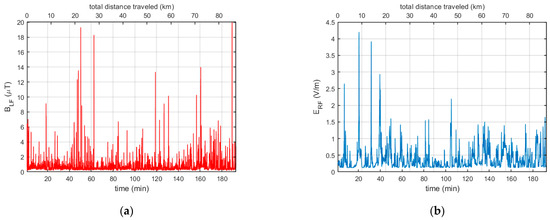
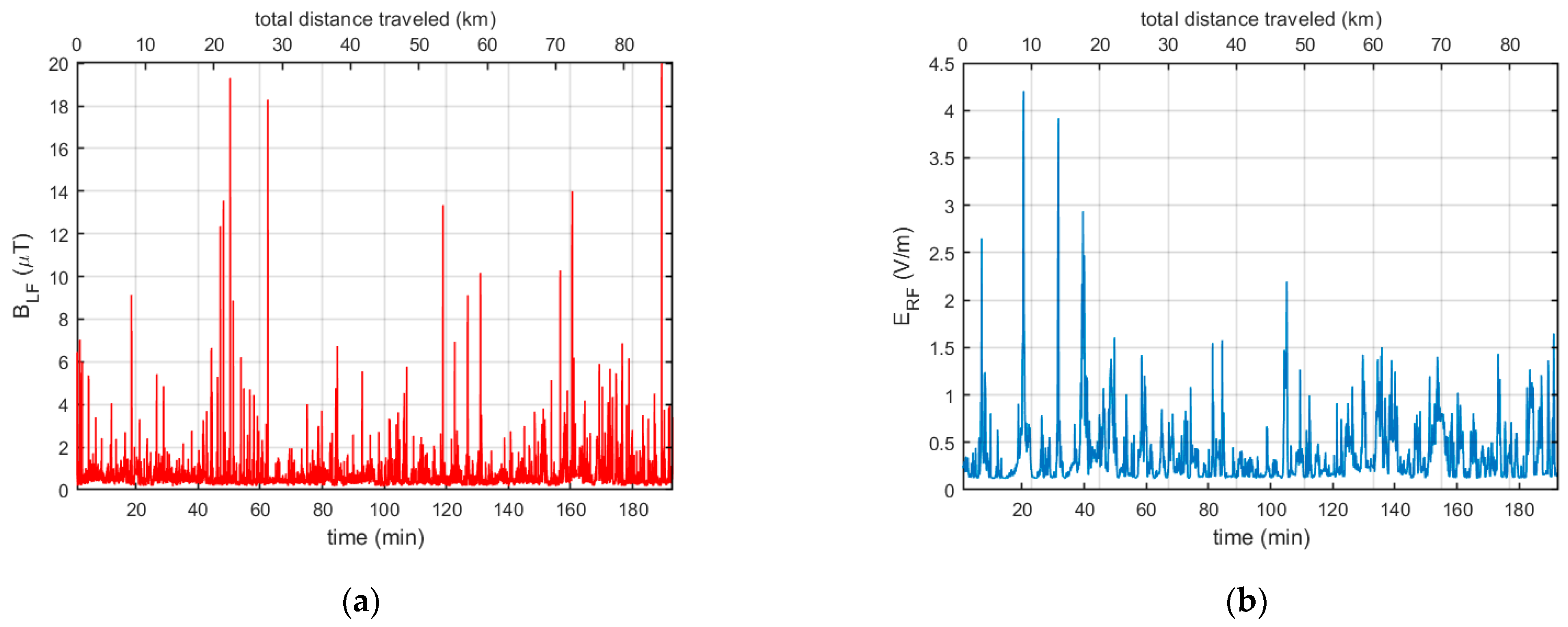
Measurement results of the BLF and ERF for the Atakum district are shown in Figure 4a and Figure 4b, respectively.
Figure 4.
Instantaneous (a) BLF; (b) ERF values for the Atakum district.
As seen in the figure, both recorded BLF and ERF values exhibit rapid fluctuations, even within short time intervals, indicating that the measurement location can significantly influence exposure levels. The instantaneous BLF values ranged from 0.15 µT to 20 µT, with a mean of 0.65 µT, a median of 0.45 µT, and a standard deviation of 0.81 µT. Approximately 3.33% of the measurement locations exceeded the threshold of 2 µT. The corresponding instantaneous ERF values varied between 0.12 V/m and 4.20 V/m, with a mean of 0.37 V/m, a median of 0.24 V/m, and a standard deviation of 0.35 V/m. Locations exceeding 1 V/m constituted 4.93% of the total.
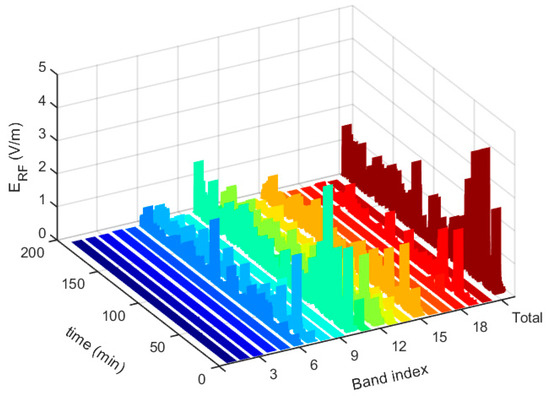
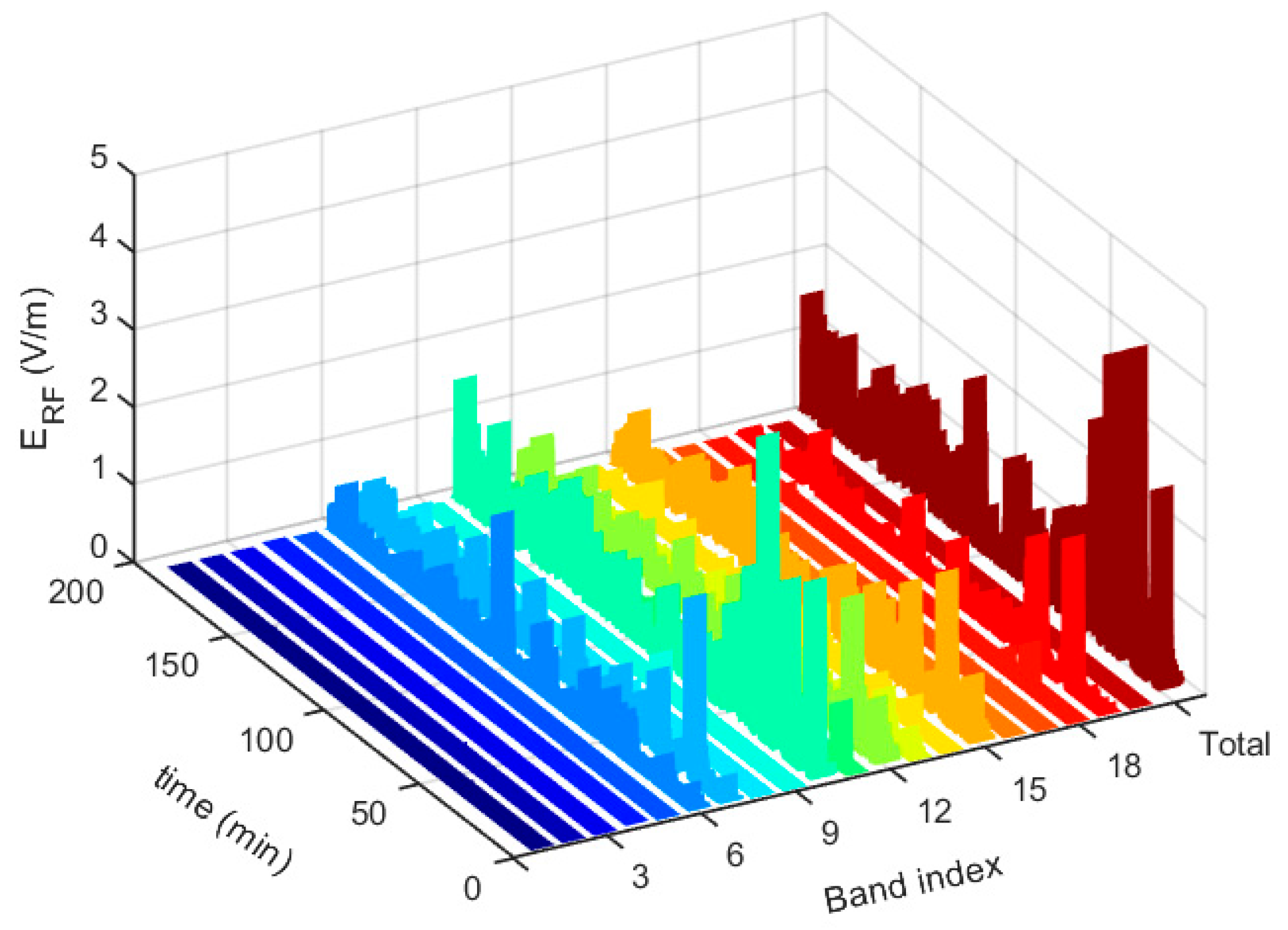
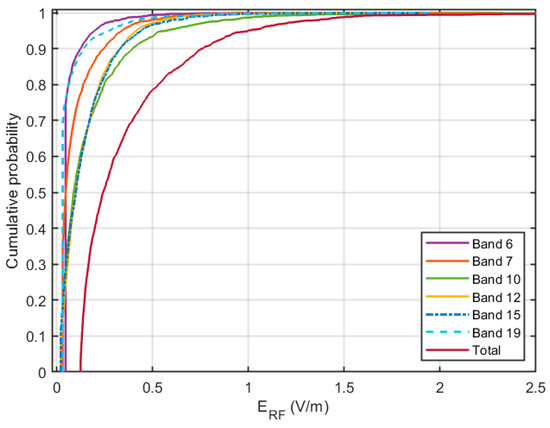
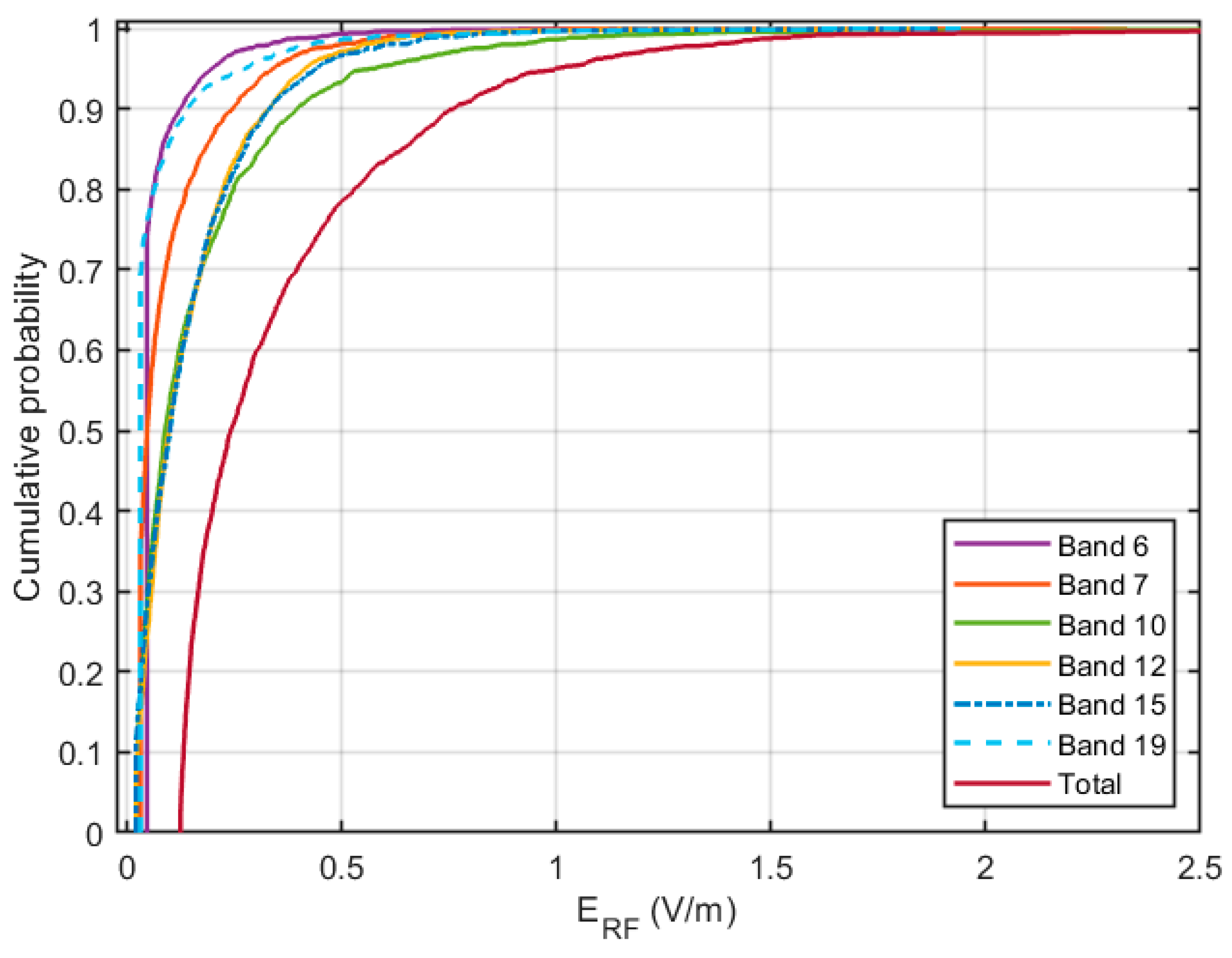
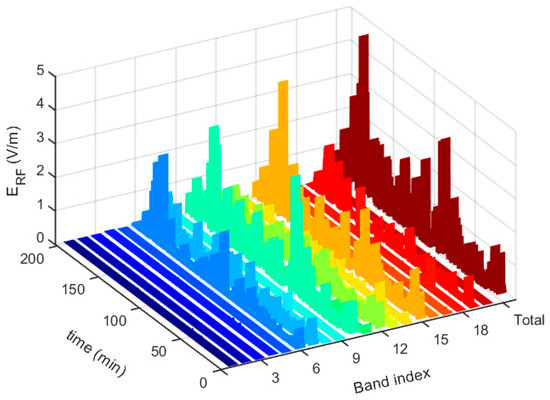
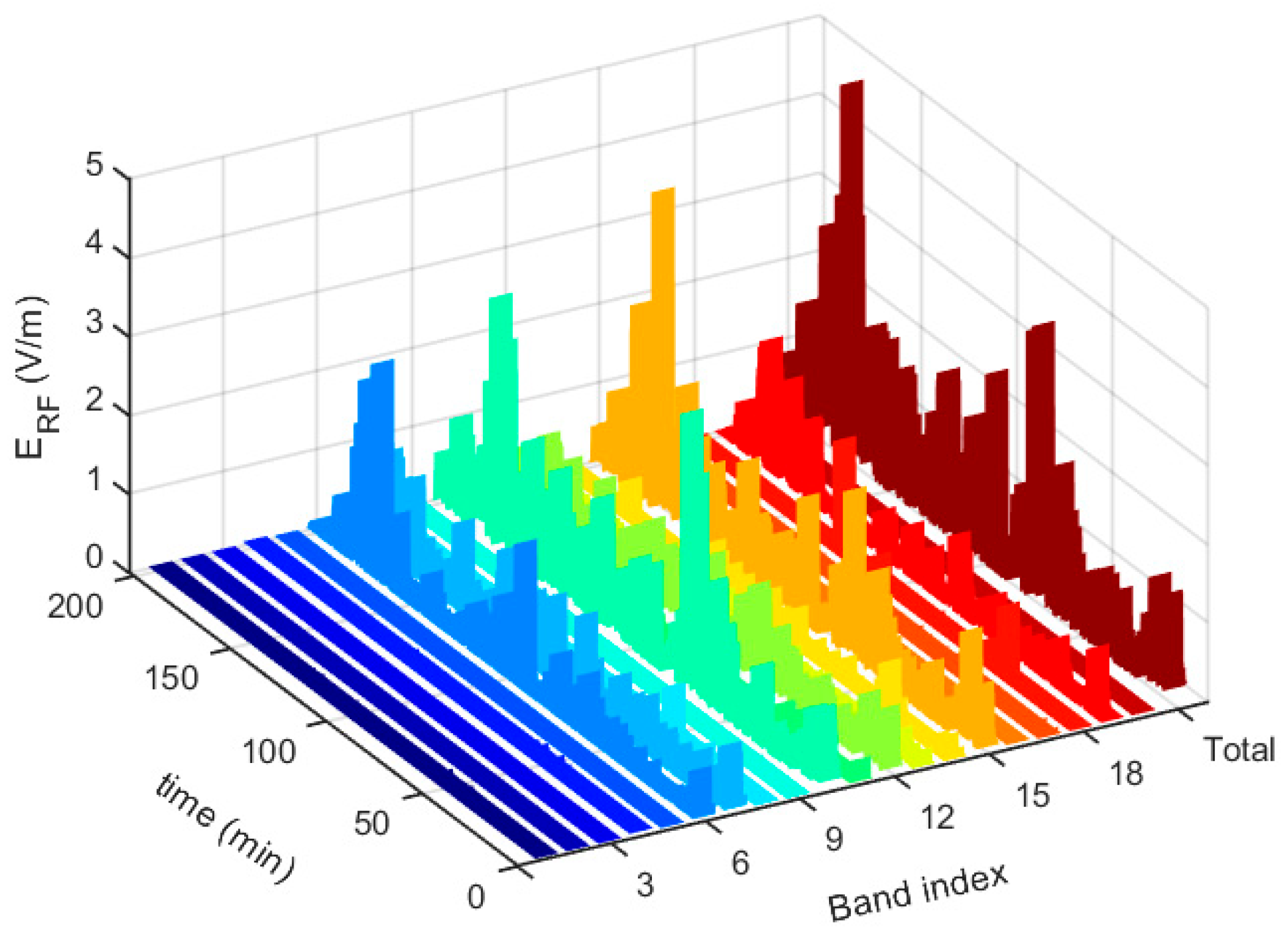
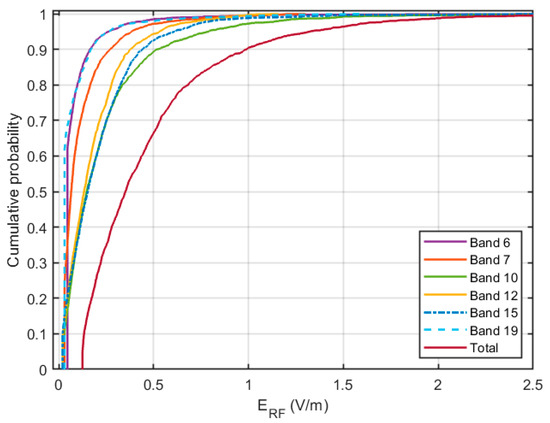
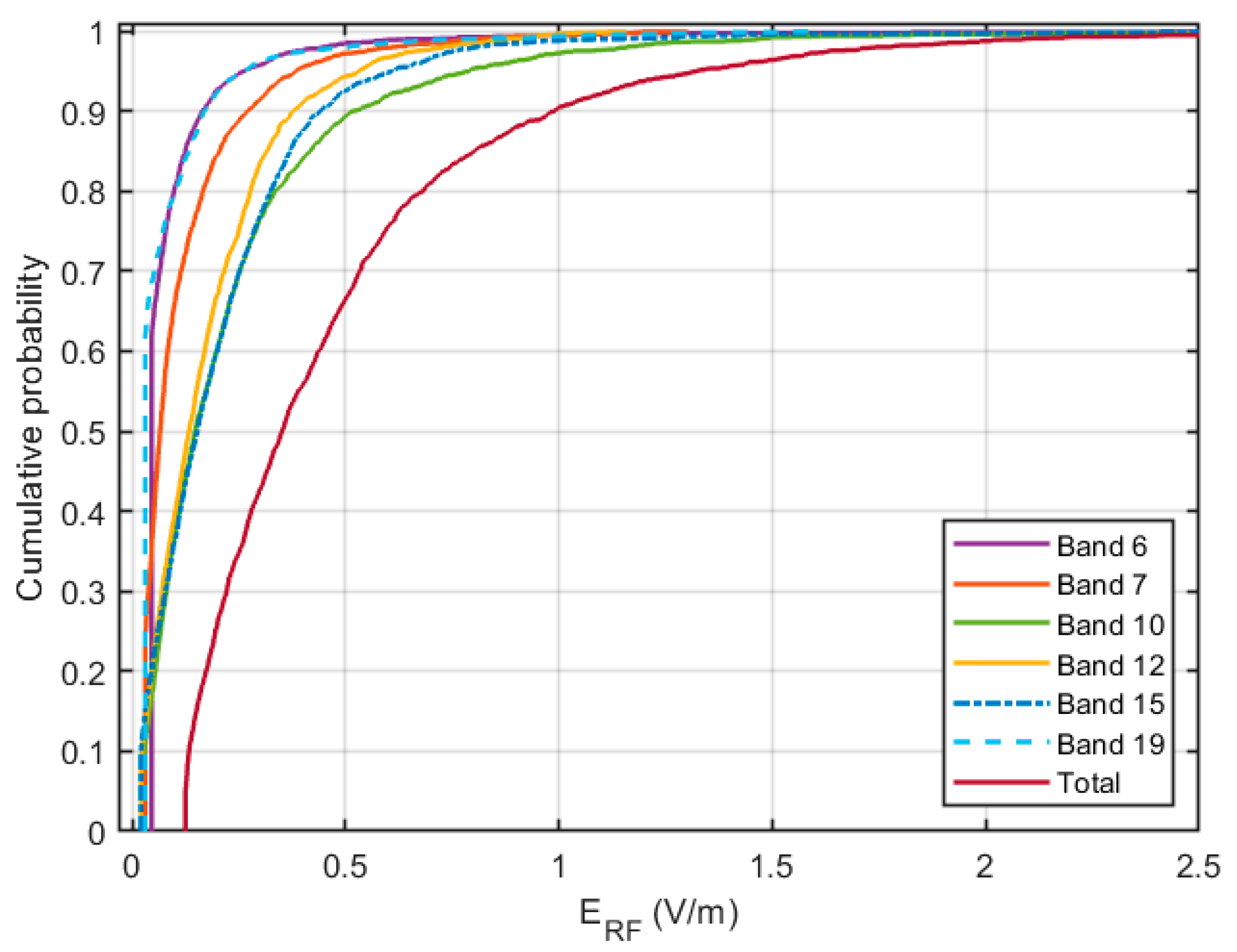
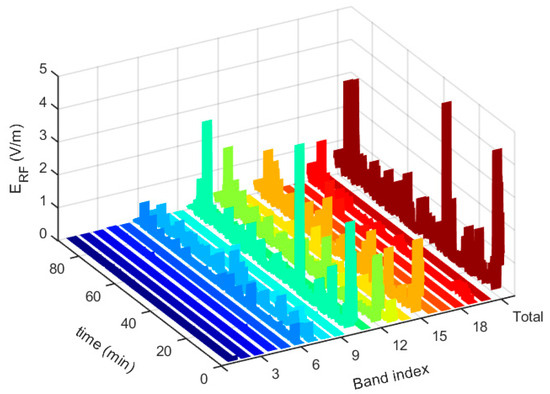
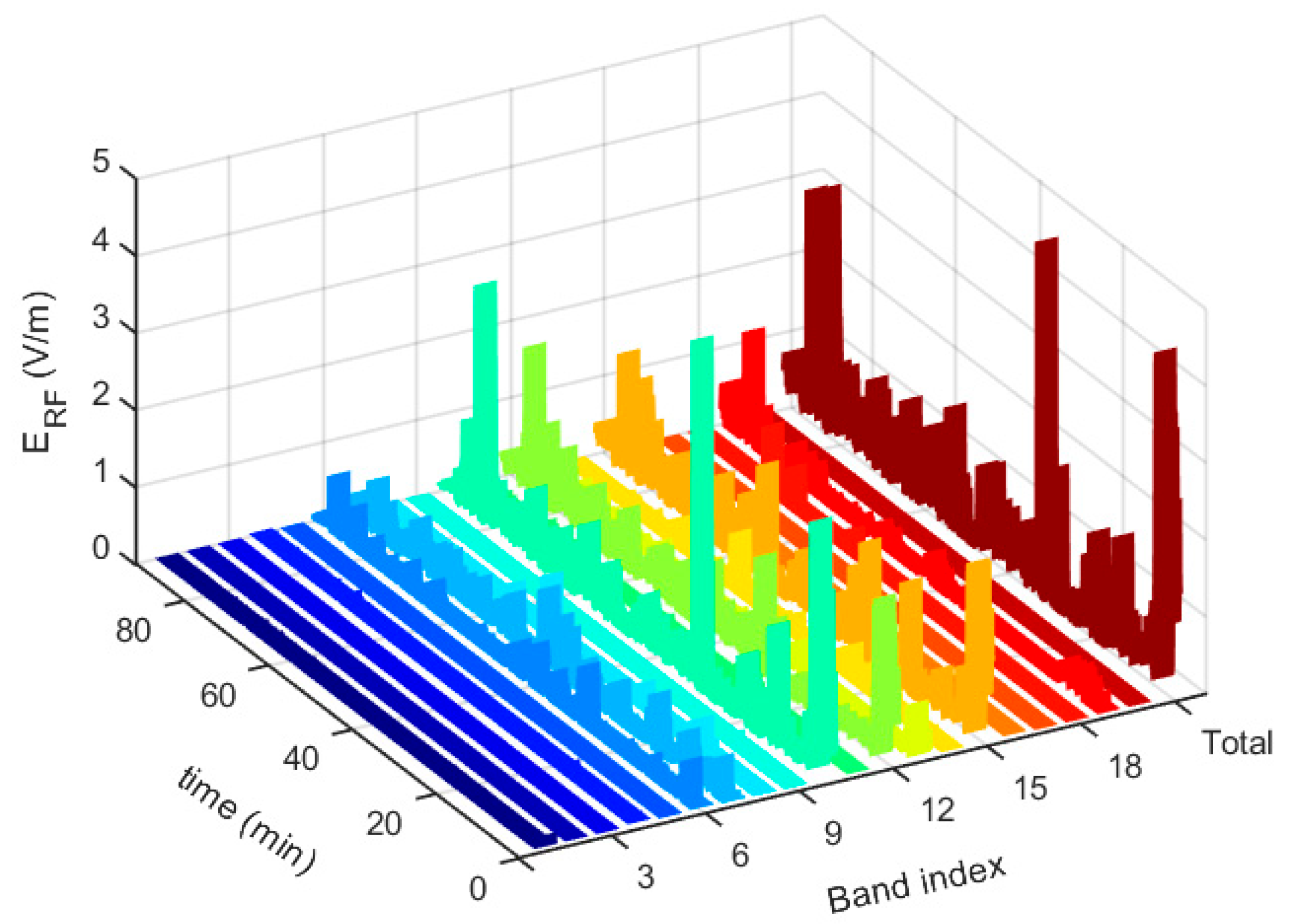
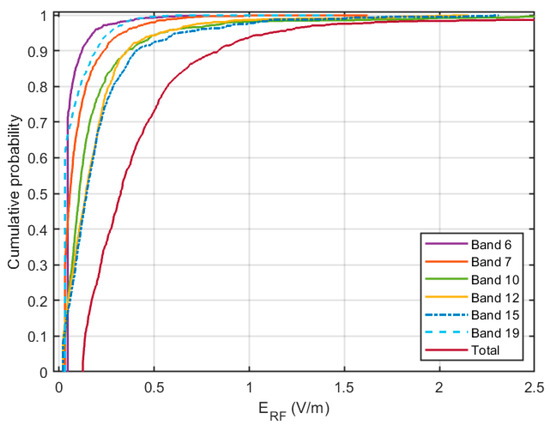
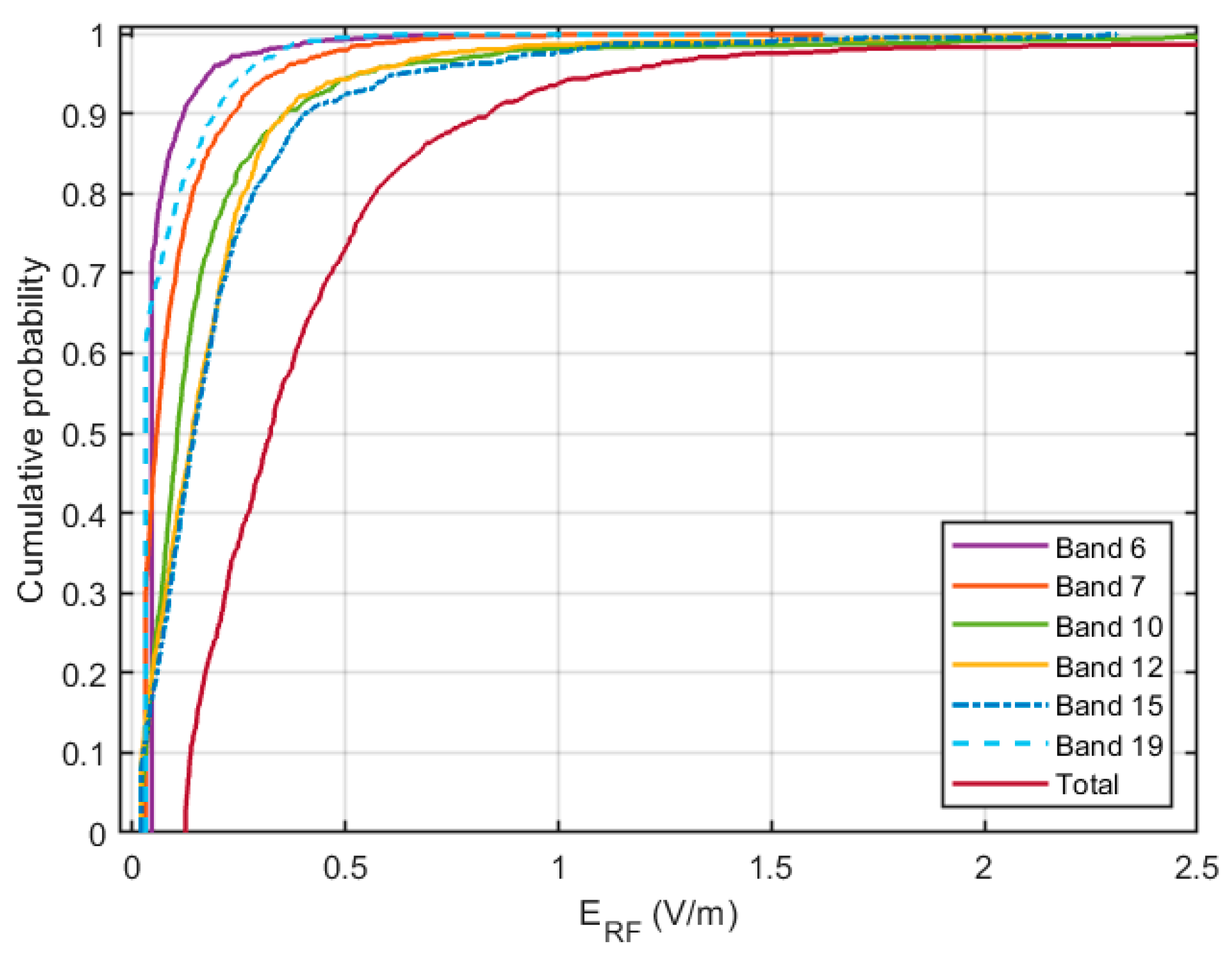
Figure 5 presents the band-selective ERF measurement results for the Atakum district, illustrating the variation in field strength across different frequency bands. In figure each color in the figure represents a specific frequency band or service as defined in Table 3. As observed in Figure 5, bands 6, 7, 10, 12, 15, and 19 exhibit the highest contributions to the total ERF (ET) value. Subsequently, the cumulative distribution functions (CDFs) of these dominant bands are presented in Figure 6. As seen in the figure, the ERF level for band 6 remains below 0.12 V/m for 90% of the measurement locations. Similarly, the values are 0.25, 0.40, 0.33, 0.34, and 0.14 V/m for bands 7, 10, 12, 15, and 19, respectively, and 0.76 V/m for the total ERF value.
Figure 5.
Band-selective ERF levels in the Atakum district. Each color represents a different frequency band/service, as defined in Table 3.
Figure 6.
CDFs of the bands with the highest contributions to the total ERF in the Atakum district.
The band-selective analysis revealed that the largest contributions to the total ERF originate from cellular transmissions, accounting for 96.77% of the total ERF. Of these, 94.3% come from DL and 2.47% from UL, while all other bands together contribute only 3.23% to the total ERF. Further analysis highlighted that, within the DL bands, Band 10—which corresponds to the GSM and UMTS 900 services—provides the largest contribution with a percentage of 35.73% among the DL bands.
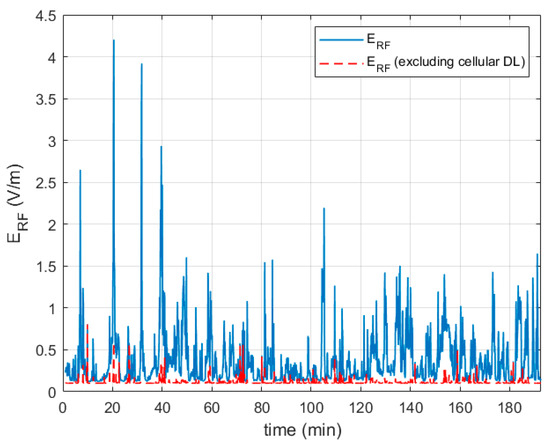
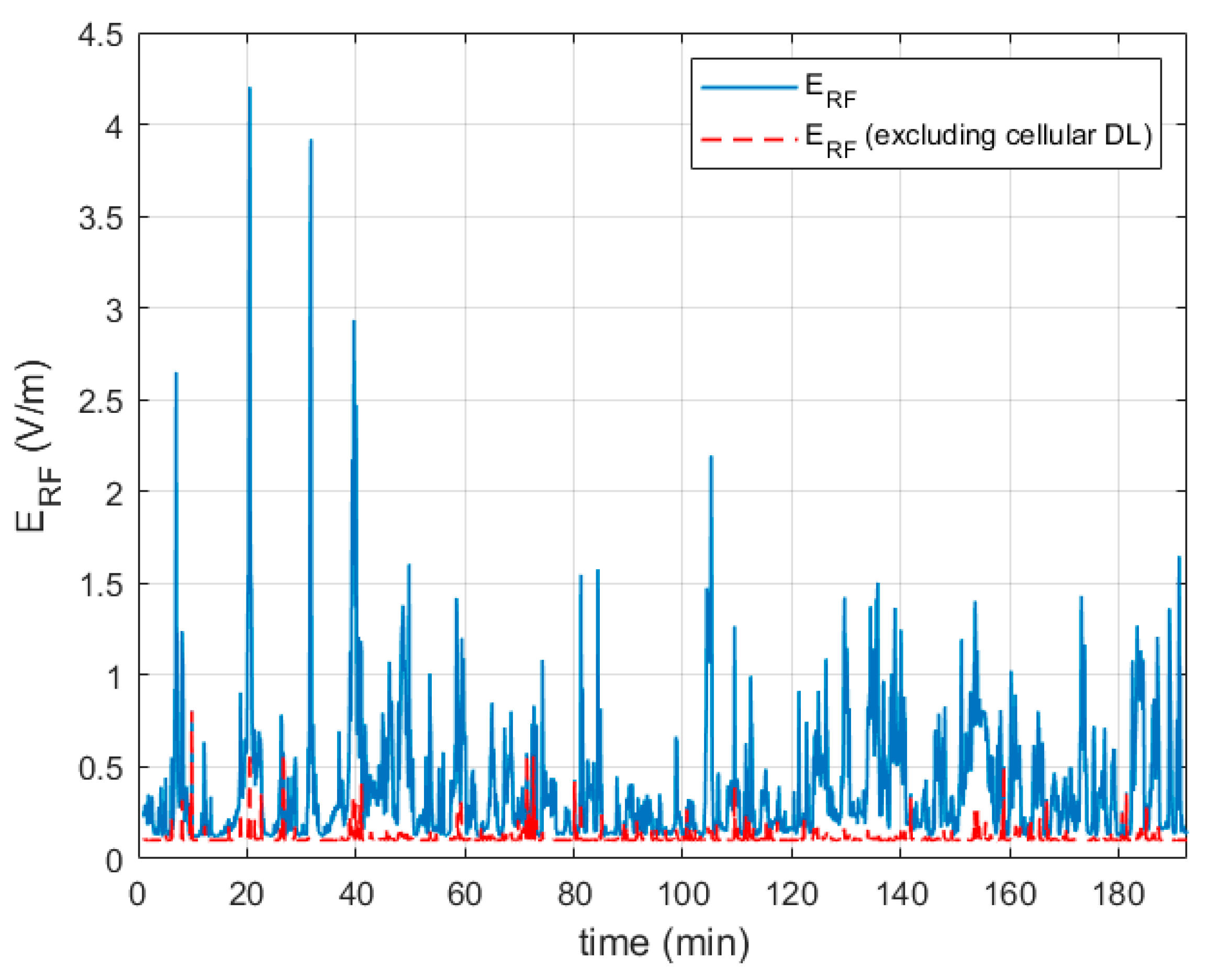
To further illustrate the dominance of base station emissions, Figure 7 compares the total measured ERF with the residual field levels after excluding the cellular DL contributions. As shown in Figure 7, once the DL bands are removed, the exposure levels drop significantly to near-baseline values. This visual evidence confirms that environmental RF-EMF exposure in the Atakum district is almost entirely driven by cellular infrastructure rather than user equipment or other sources.
Figure 7.
Comparison of total ERF and residual ERF excluding cellular DL contributions for the Atakum district.
3.2. Results for İlkadım
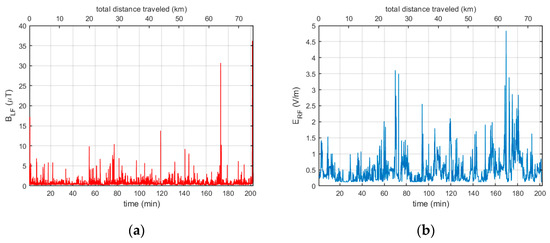
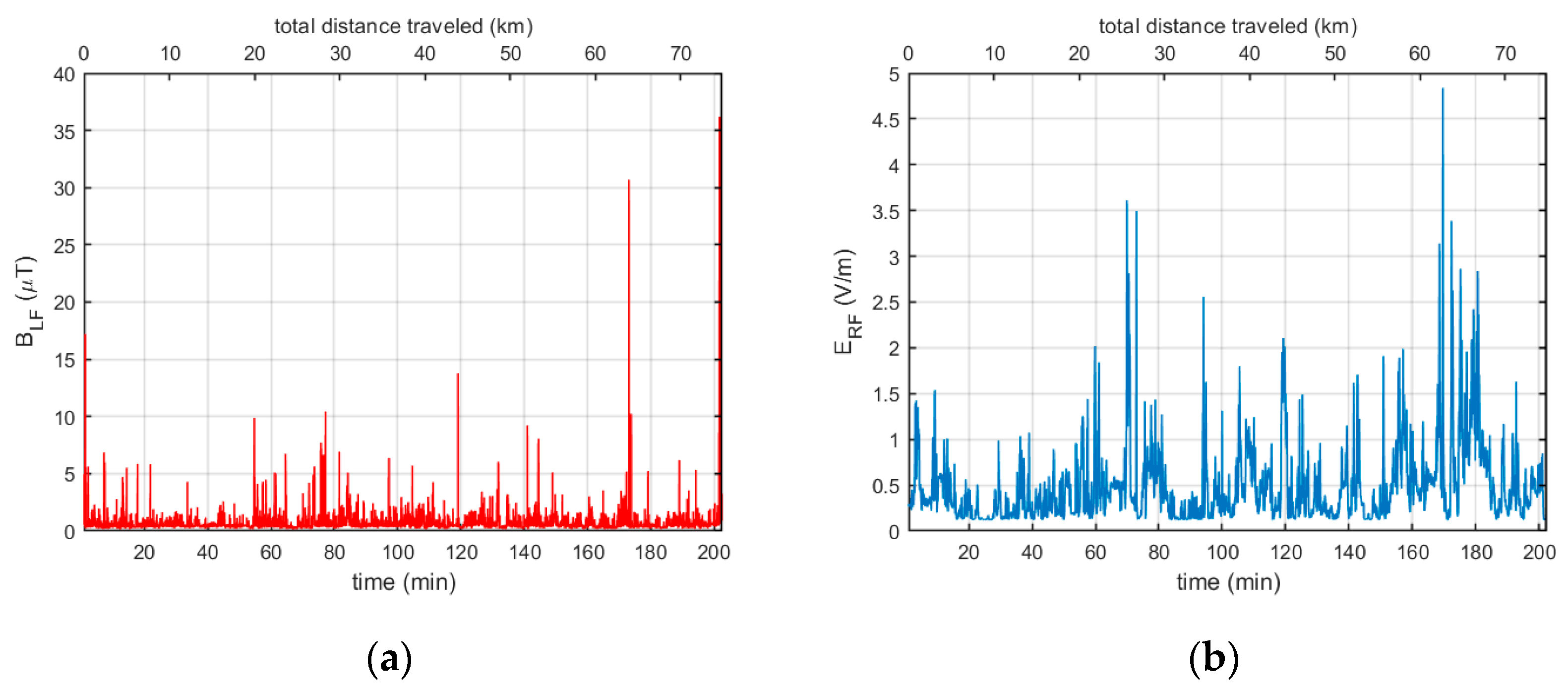
Measurement results of the BLF and ERF for the İlkadım district are shown in Figure 8a and Figure 8b, respectively.
Figure 8.
Instantaneous (a) BLF; (b) ERF values for the İlkadım district.
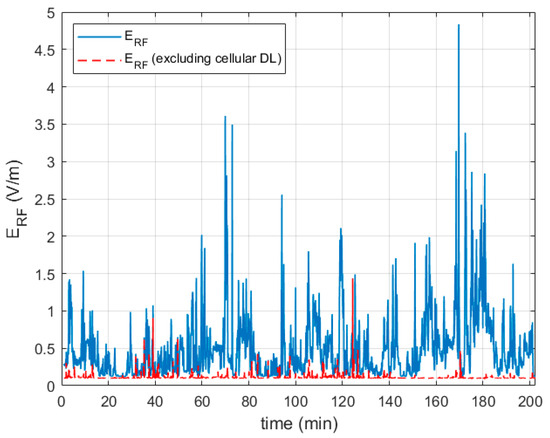
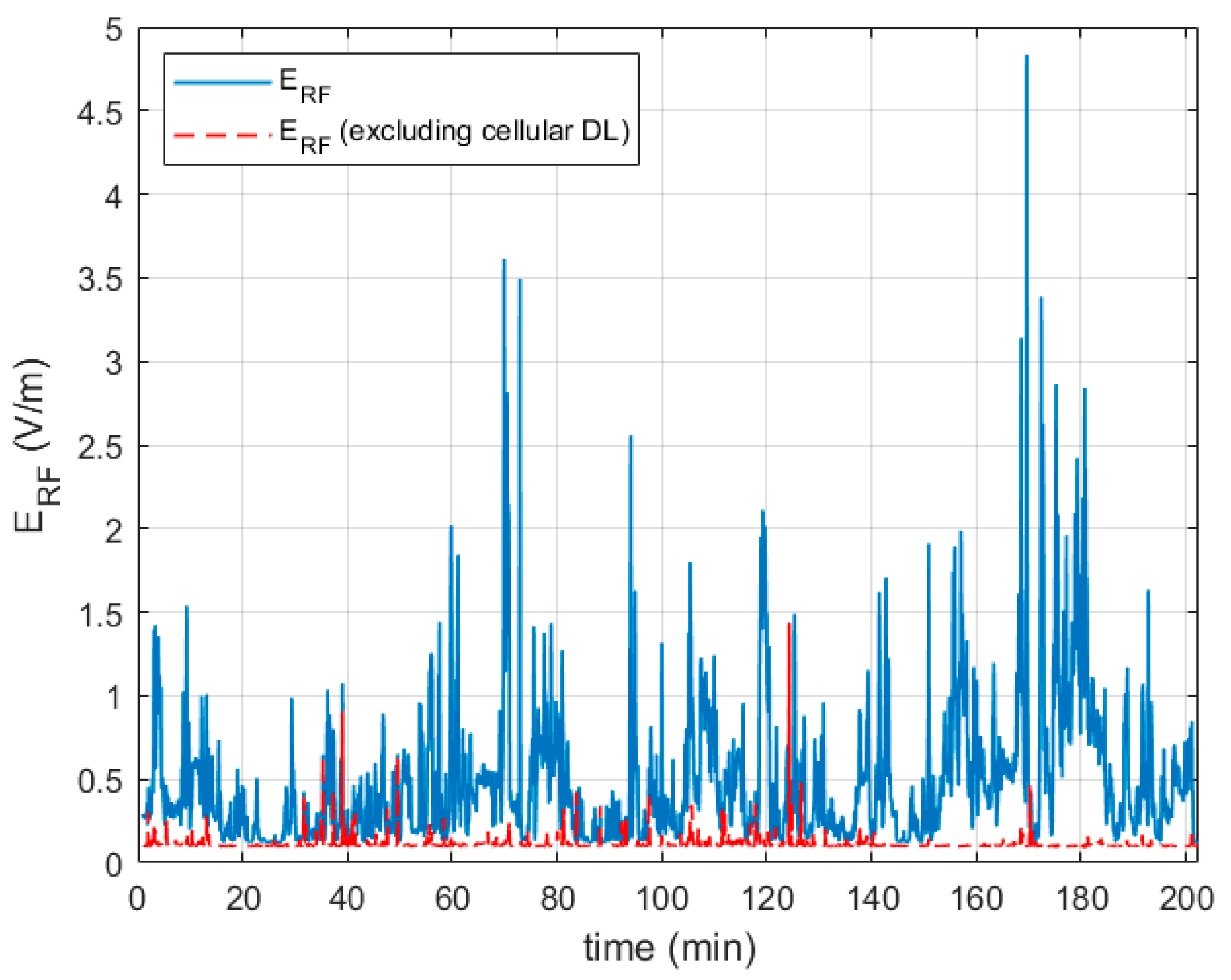
In the İlkadım district, both BLF and ERF values also exhibit noticeable fluctuations, reflecting the influence of rapidly changing urban environments on instantaneous exposure levels. The measured BLF values ranged from 0.16 µT to 36.19 µT, with a mean of 0.66 µT, a median of 0.45 µT, and a standard deviation of 0.93 µT. Approximately 3.11% of the measurement locations exceeded the 2 µT threshold. The corresponding ERF values varied between 0.12 V/m and 4.84 V/m, with a mean of 0.48 V/m, a median of 0.35 V/m, and a standard deviation of 0.43 V/m. Locations where ERF exceeded 1 V/m accounted for 9.47% of the total.
Figure 9 presents the band-selective ERF measurement results for the İlkadım district, demonstrating how the field strength varies across different frequency bands. In figure each color in the figure represents a specific frequency band or service as defined in Table 3. As can be observed from the figure, bands 6, 7, 10, 12, 15, and 19 stand out as the main contributors to the total ERF level. The CDFs of these prominent bands are shown in Figure 10. As seen in the figure, the ERF value for band 6 remains below 0.17 V/m for 90% of the measurement locations. Correspondingly, the values for bands 7, 10, 12, 15, and 19 are 0.27, 0.52, 0.38, 0.44, and 0.17 V/m, respectively, while the total ERF value remains below 0.99 V/m for the same percentile.
Figure 9.
Band-selective ERF levels in the İlkadım district. Each color represents a different frequency band/service, as defined in Table 3.
Figure 10.
CDFs of the bands with the highest contributions to the total ERF in the İlkadim district.
Similarly to the Atakum district, the majority of the total ERF originates from base station emissions. Among these, 96.32% of the total ERF is due to DL transmissions and 1.75% to UL, whereas the combined contribution of all other bands accounts for only 1.93%. Band 10—corresponding to GSM and UMTS 900 services—again provides the dominant contribution with 34.99% among the DL bands, consistent with the results observed for the Atakum district.
To visually demonstrate the impact of these base station emissions on the overall exposure profile, Figure 11 compares the total measured ERF with the residual field levels after the cellular DL contributions are removed. As illustrated in the figure, the exclusion of DL bands results in a drastic reduction in ERF levels, with the residual field remaining near baseline values throughout the entire measurement route. This significant drop, corresponding to the 96.32% DL contribution calculated for this district, confirms that base station infrastructure emissions almost exclusively characterize the environmental RF-EMF exposure in İlkadım.
Figure 11.
Comparison of total ERF and residual ERF excluding cellular DL contributions for the İlkadım district.
3.3. Results for Canik
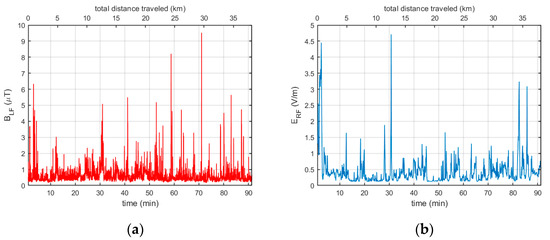
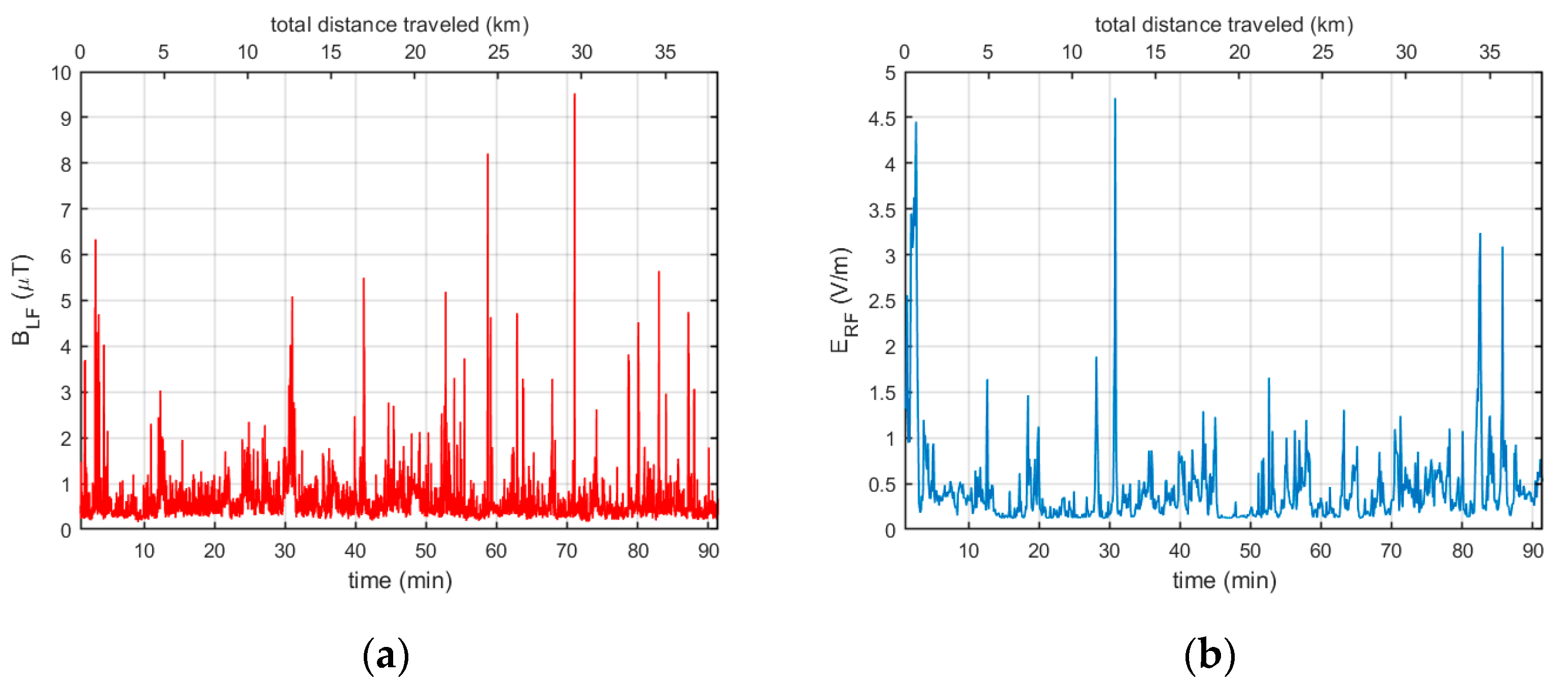
The measured BLF and ERF values for the Canik district are displayed in Figure 12a and Figure 12b, respectively.
Figure 12.
Instantaneous (a) BLF; (b) ERF values for the Canik district.
In the Canik district, both BLF and ERF values also show fluctuations, though with generally lower amplitudes compared to the other districts. The measured BLF values ranged from 0.16 µT to 9.53 µT, with a mean of 0.61 µT, a median of 0.46 µT, and a standard deviation of 0.55 µT. Approximately 2.57% of the measurement locations exceeded the 2 µT threshold. The corresponding ERF values varied between 0.12 V/m and 4.71 V/m, with a mean of 0.44 V/m, a median of 0.32 V/m, and a standard deviation of 0.46 V/m. Locations where ERF exceeded 1 V/m accounted for 6.09% of the total.
Figure 13 presents the band-selective ERF measurement results for the Canik district. In figure each color in the figure represents a specific frequency band or service as defined in Table 3. As observed in the figure, bands 6, 7, 10, 12, 15, and 19 are the main contributors to the total ERF level. The CDFs of these bands are shown in Figure 14. As seen in the figure, the ERF value for band 6 remains below 0.12 V/m for 90% of the measurement locations. Corresponding values for bands 7, 10, 12, 15, and 19 are 0.24, 0.36, 0.36, 0.40, and 0.20 V/m, respectively, while the total ERF value stays below 0.84 V/m for the same percentile.
Figure 13.
Band-selective ERF levels in the Canik district. Each color represents a different frequency band/service, as defined in Table 3.
Figure 14.
CDFs of the bands with the highest contributions to the total ERF in the Canik district.
As in the Atakum and İlkadım districts, base station emissions constitute the largest portion of the total ERF. Specifically, 95.54% of the total ERF comes from DL transmissions and 1.89% from UL, with all other bands together contributing only 2.57%. Band 10, associated with the GSM and UMTS 900 services, remains the most significant contributor among DL bands with 34.04%, similar to the patterns observed in both Atakum and İlkadım.
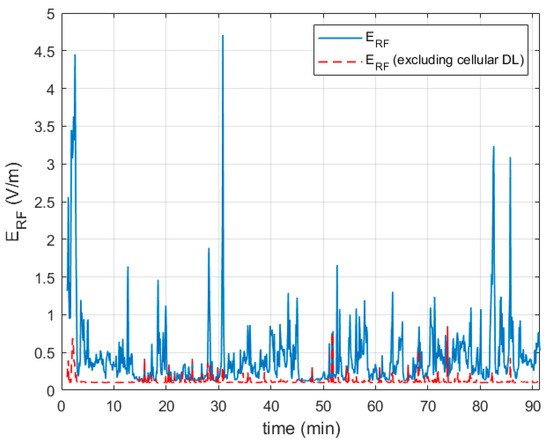
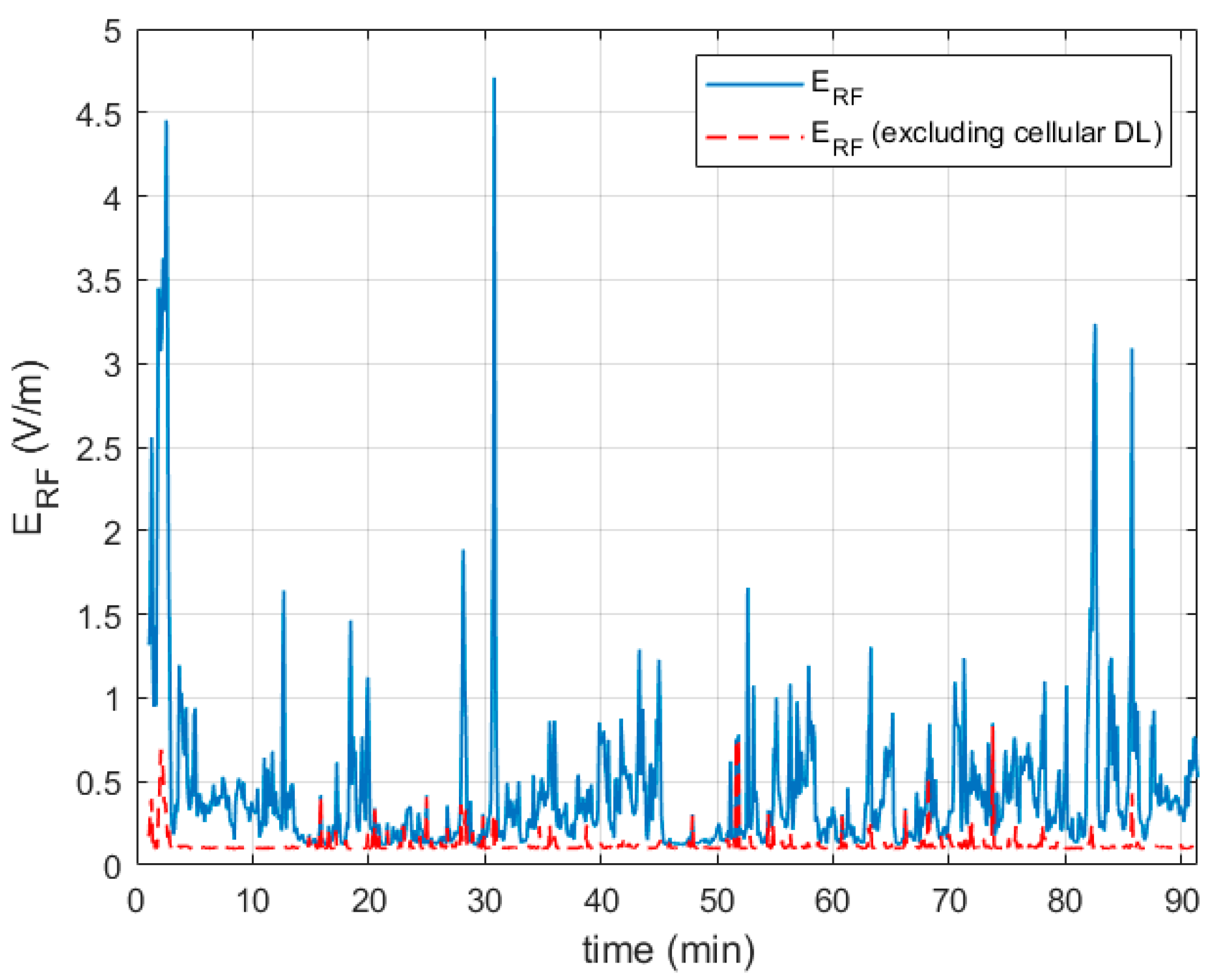
The dominance of infrastructure-based emissions in Canik is further visualized in Figure 15, which presents a comparison between the total measured ERF and the residual field after excluding all cellular DL bands. Similarly to the trends observed in the other districts, excluding DL contributions results in a substantial reduction in the measured ERF levels to near-baseline values. This consistent drop across all districts confirms that cellular DL transmissions are the primary determinant of the overall environmental RF-EMF exposure in the city’s urban landscape.
Figure 15.
Comparison of total ERF and residual ERF excluding cellular DL contributions for the Canik district.
3.4. Overall Evaluation and Inter-District Comparison
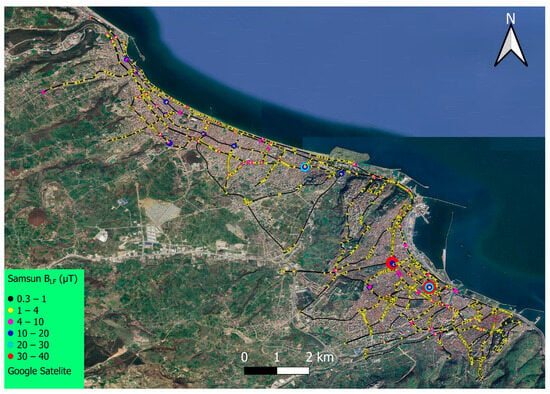
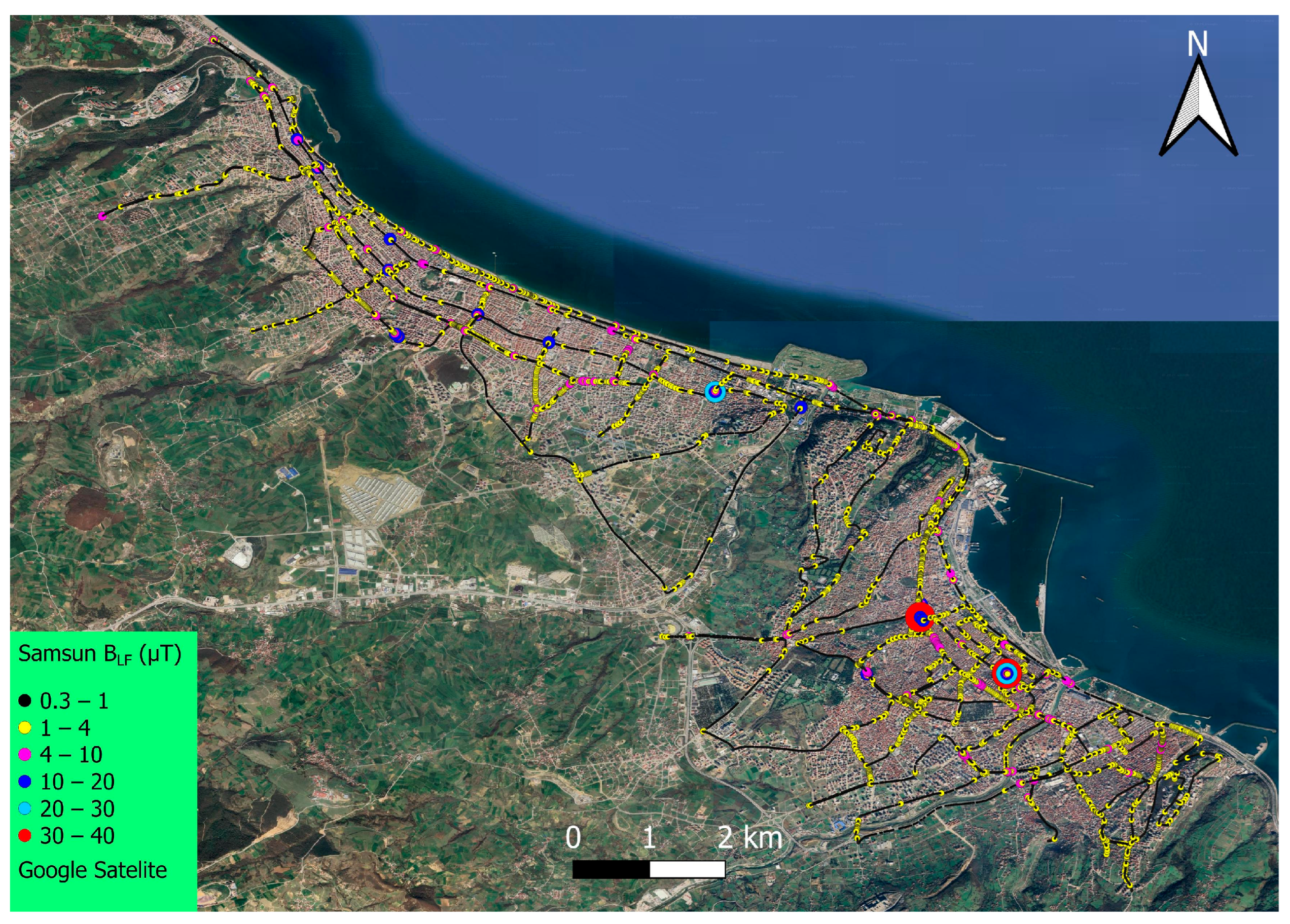
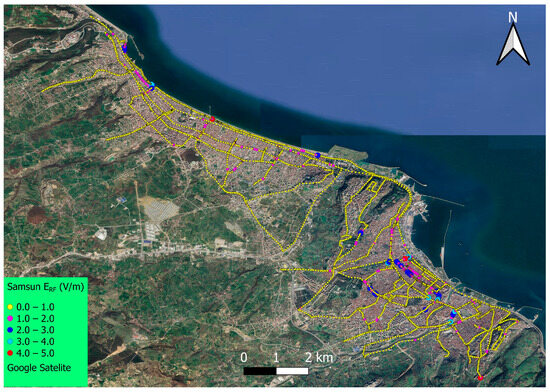
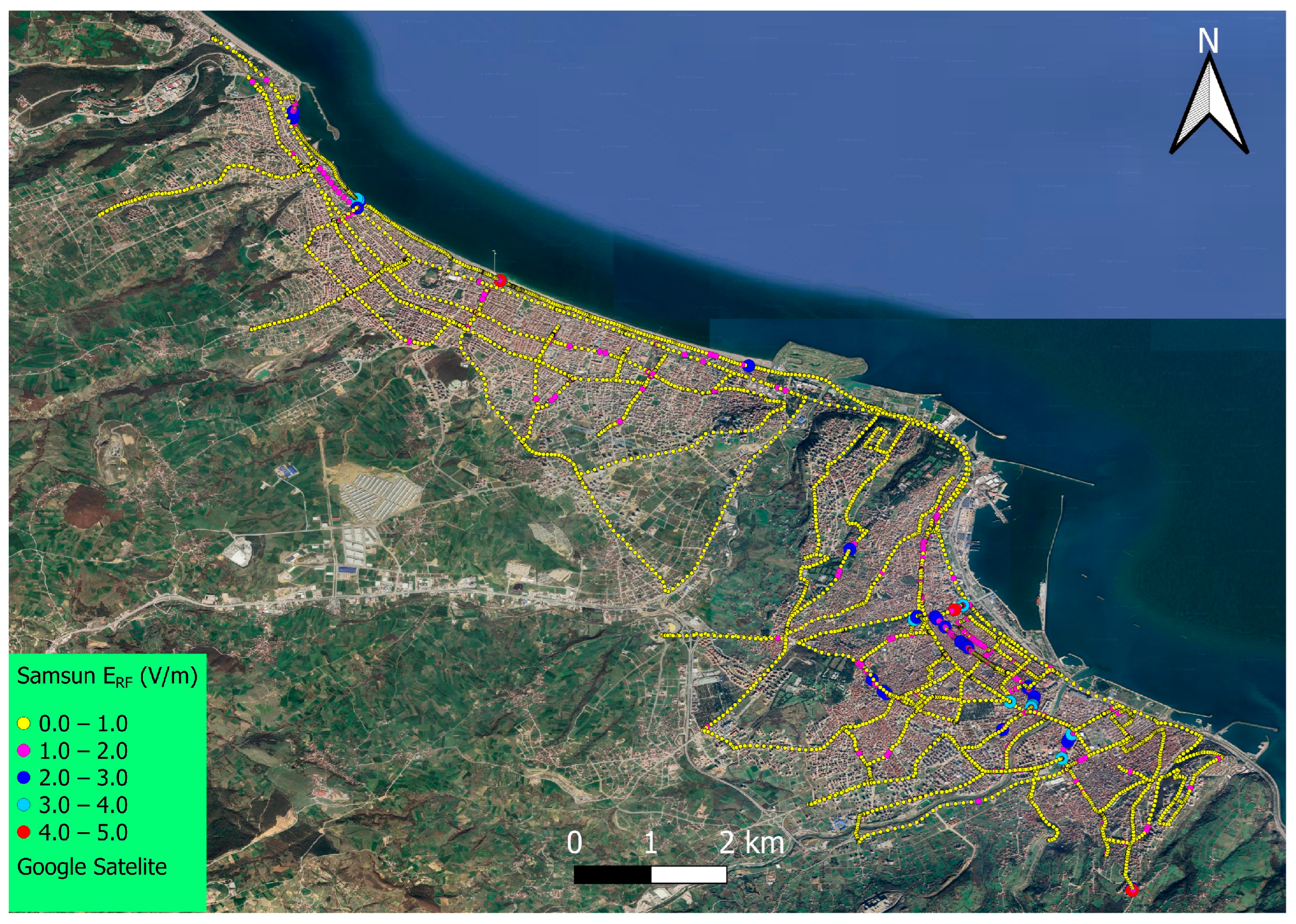
This section presents an overall evaluation of the measurement results obtained for Atakum, İlkadım, and Canik districts. To facilitate direct inter-district comparison, the instantaneous spatial distributions previously presented individually for each region have been consolidated into a single map. The spatial distributions of the instantaneous BLF and ERF levels across Samsun are illustrated in Figure 16 and Figure 17, respectively. Figure 16 presents the BLF distribution for the three districts side-by-side using a consistent color scale, and Figure 17 presents the same comparative view for the ERF distribution. This two-figure visualization enables a clear and comprehensive side-by-side comparison of how exposure intensity is geographically distributed across the distinct urban densities of Atakum, İlkadım, and Canik. These consolidated figures provide the visual context necessary for the statistical and quantitative evaluations presented in the remainder of this section.
Figure 16.
Spatial distribution of BLF in Samsun.
Figure 17.
Spatial distribution of ERF in Samsun.
In addition to the averaged exposure levels, Table 4 summarizes the percentage contribution of the dominant frequency bands and cellular transmissions across the three districts calculated using instantaneous band selective and the total ERF measurements. This data provides quantitative insight into the underlying exposure sources, allowing for a direct comparison of network activity characteristics among Atakum, İlkadım, and Canik.
Table 4.
Percentage contribution of dominant frequency bands and cellular transmissions to the total exposure across the three districts.
The evaluation of exposure levels is primarily based on six-minute averaged BLF (BLFavg) and ERF (ERFavg) values. Averaging over six-minute intervals provides a more stable and representative indication of exposure levels, consistent with ICNIRP guidelines for reference period assessment. The results are compared across districts to identify spatial differences in exposure intensity and to evaluate compliance with national exposure limits.
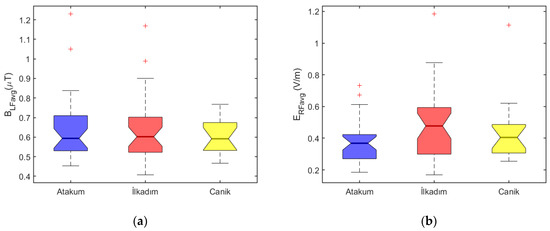
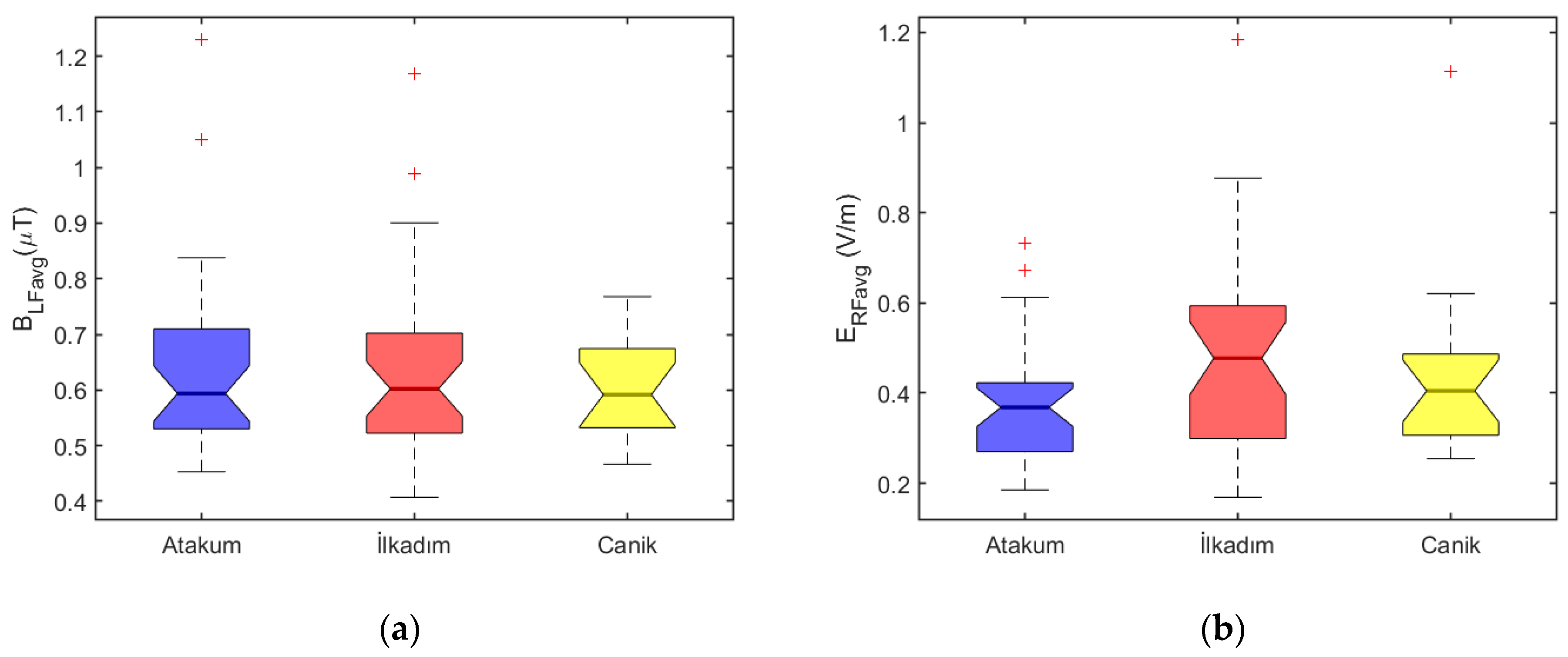
Figure 18a,b present the boxplot distributions of the BLFavg and ERFavg values derived for each district. In the figures, the black central line represents the median value, the lower and upper edges of the box correspond to the 25th and 75th percentiles, and the red ‘+’ markers indicate the outliers. In Atakum, the mean, median, and standard deviation of the BLFavg were 0.67, 0.59, and 0.17 µT, respectively. For İlkadım and Canik, these values were 0.64, 0.60, 0.17 µT and 0.61, 0.59, 0.09 µT, respectively. To determine whether the differences in the BLFavg levels among the districts were statistically significant, a one-way ANOVA test was performed. The result (F = 0.18, p = 0.8371) indicates that the BLFavg values across the three districts do not differ significantly.
Figure 18.
Boxplot distributions of (a) BLFavg; (b) ERFavg values for the three districts. The black central line represents the median value, the lower and upper edges of the box correspond to the 25th and 75th percentiles, and the red ‘+’ markers indicate the outliers.
Similarly, for the ERFavg, the mean, median, and standard deviation were 0.37, 0.37, and 0.14 V/m for Atakum; 0.48, 0.48, and 0.23 V/m for İlkadım; and 0.44, 0.41, and 0.21 V/m for Canik. The ANOVA test results (F = 2.87, p = 0.0625) show that the differences in the ERFavg values across Atakum, İlkadım, and Canik were not statistically significant at the 0.05 level.
4. Discussion
The study investigated environmental EMF exposure levels in three districts—Atakum, İlkadım, and Canik—representing different urban densities within the city. Instantaneous measurements of BLF and ERF were performed to capture EMF levels across various areas. The results reveal that the highest BLF (36.19 µT) and ERF (4.84 V/m) values were observed in İlkadım. Furthermore, evaluation of the ERF measurements at the 90th percentile showed that İlkadım exhibited the highest exposure level (0.99 V/m) among the three districts followed by Canik (0.84 V/m) and Atakum (0.76 V/m). These findings are consistent with İlkadım’s high population density, dense base station deployment, and more intensive mobile network activity, which are typical of central urban areas. As summarized in Table 5, our results are in good agreement with various studies conducted in similar environments. For instance, the exposure levels recorded in İlkadım are comparable to those reported for high-density areas such as Brussels and fall within the median range (0.67–1.51 V/m) observed across various European monitoring networks. These international observations reinforce our findings, indicating that higher exposure levels are characteristic of dense urban settings such as İlkadım.
Table 5.
Comparison of RF-EMF exposure levels with international studies.
In the band-selective analysis, it was observed that the majority of the total ERF originated from DL transmissions (accounting for 94.30%, 96.32%, and 95.54% in the Atakum, İlkadım, and Canik districts, respectively), while UL and other sources contributed slightly. The dominant DL bands were found to be Band 10 (GSM/UMTS 900) and Band 15 (UMTS 2100), which together accounted for the largest share of the total ERF. The dominance of the lower frequency bands, specifically Band 10 and Band 15, is consistent with network planning strategies in Türkiye, where lower frequency bands are utilized for wider coverage and deeper indoor penetration, thus contributing significantly to the average public exposure across large outdoor areas. This pattern was consistent across all three districts, suggesting that cellular base stations, rather than user equipment, constitute the main source of EMF levels in the medium. As reported in [6], the most relevant contributor to exposure in most microenvironments was the DL signal originating from mobile phone base stations. Specifically, in the urban microenvironment of Switzerland, 94.81% of the total measured E exposure originated from the DL signal. The remaining exposure was distributed between the uplink signal (1.55%) and other frequency bands (3.64%). Overall, the highest contribution to total E originated from the DL signal in all microenvironments, except for some Australian and Ethiopian locations. Study [8] concluded that DL exposure contributed 64% to total RF-EMF exposure. Additional findings reported in [16,22,23] reinforce our conclusion that the total E in various environments is predominantly attributable to DL signals. It should be noted that the cellular UL exposure levels reported in this study reflect ambient RF exposure conditions. Because no active mobile phones were operated in close proximity to the measurement instruments during the drive-test campaign, the contribution of user equipment transmissions was limited. In real-life scenarios, the highest individual RF exposure often originates from a person’s own mobile phone or from nearby users, which is not captured by the present measurement setup. Therefore, while this study accurately characterizes environmental background exposure from infrastructure, it does not reflect the peak exposure levels associated with personal mobile phone usage.
One limitation of the study is that measurements were conducted inside the vehicle, which introduces shielding effects due to the car’s metallic body. To estimate this impact, a pre-measurement experiment was conducted by comparing roof-mounted readings with those from the in-vehicle configuration. The results showed an average attenuation of approximately 2.85 dB for ERF and 0.36 dB for BLF. These findings are consistent with the literature, which suggests that vehicle-induced shielding can reduce internal field strengths. While these estimates provide a baseline for the shielding effect, they were not used as direct correction factors due to the highly dynamic nature of signal attenuation, which depends on the angle of arrival and polarization over the approximately 200 km measurement route.
To ensure compliance with ICNIRP’s guideline and minimize the effect of instantaneous fluctuations, 6 min averaged BLFavg and ERFavg values were computed from the recorded data. The results confirmed that all averaged values remained substantially below the ICNIRP reference levels. This finding is consistent with those reported in [12,17], where, for example, the median total ERF exposure varied between 0.23 V/m and 0.31 V/m [12]. The comparison of mean values revealed slightly higher ERFavg values in İlkadım compared to Atakum and Canik; however, one-way ANOVA tests indicated that these differences were not statistically significant (p > 0.05). This finding suggests that, unlike the statistically significant urban/suburban E-field variation reported in [20], the urbanicity levels of the three districts of Samsun did not result in substantial variation in exposure. This lack of significant variation among Samsun’s urban districts may be attributed to the fact that all three regions still belong to the highly urbanized core, where the dense cellular network infrastructure minimizes the variance in average exposure levels, preventing the statistical separation of the districts’ mean values.
While the device-induced uncertainty is relatively low (e.g., ±1.5 to ±2.5 dB for the ERF and 7.2% (0.6 dB) for the BLF), the overall reliability of the reported results must be assessed within the context of the total measurement uncertainty. In environmental drive test campaigns, the total measurement uncertainty is primarily dominated by spatial and temporal variability in the highly dynamic urban environment, rather than inherent device error. Since the measurements are instantaneous and location-dependent, the mean and 90th percentile values were consistently employed for both ERF and BLF results to provide a statistically robust indicator of exposure, mitigating the influence of extreme temporal peaks.
Despite these environmental and methodological factors, the reported results remain highly reliable for comparative analysis (i.e., comparing the mean and 90th percentile exposure levels across İlkadım, Atakum, and Canik). The systematic uncertainties, including device error, are consistent across all three districts for both measurement types, allowing for scientifically valid conclusions regarding the differences in urban density-related exposure levels.
This study presents a drive-test measurement based assessment of EMF exposure, providing a practical and representative overview of the spatial distribution of both BLF and ERF fields across districts with different levels of urbanicity. The measurement-based approach enables realistic characterization of EMF exposure, providing valuable insights for verifying compliance with national and international exposure limits, identifying dominant frequency bands, and determining the prevailing exposure sources in real environments.
The study has the following limitations:
- The measurements were conducted only along main roads and predefined routes; therefore, they may not fully represent the entire area of each district.
- Measurements were performed at single points in time for each location, which limits the ability to capture temporal variations that may occur at different times of the day or on different days.
- Because both the device and probe were placed inside the vehicle, the results were influenced by shielding effects from the vehicle’s metallic structure and partial attenuation caused by human presence.
Future research should include long-term monitoring campaigns, incorporate multi-period measurements, and employ integrated modeling approaches to investigate the spatial and temporal dynamics of EMF exposure in urban environments. To address the future impact of network evolution and temporal variability, a subsequent comparative measurement campaign will be conducted—utilizing the exact methodology established in this study—immediately following the commercial deployment of 5G in the region. Furthermore, the development of a custom fixture for roof-mounted measurement and a subsequent comparative full-route measurement campaign will be prioritized to fully assess and mitigate the systematic vehicle attenuation effect. In addition, machine learning can be used to better understand and predict the EMF exposure over different time horizon in different scenarios [32].
5. Conclusions
This study presents the first simultaneous BLF and ERF measurement campaign covering the central urban districts of Samsun, utilizing the drive–test method. The results show that both BLF and ERF exhibit spatial variability associated with urbanicity level and network activity, with the highest instantaneous values observed in the central district of İlkadım. Band-selective analysis revealed that DL transmissions, particularly from GSM/UMTS 900 and UMTS 2100, dominate the total ERF exposure across all districts, indicating that base stations are the main contributors of the ERF in the environment. Six-minute averaged values of BLF and ERF confirm that exposure remains well below the ICNIRP reference limits. Statistical comparisons indicate no significant differences among the three districts, suggesting that exposure levels were comparable across all measurement areas. The combined assessment and spatial mapping provide a comprehensive evaluation for EMF exposure in the central urban districts of Samsun. The integrated methodology used in this study enables efficient, large–scale exposure assessment and can serve as a practical reference for future EMF mapping and regulatory monitoring.
Author Contributions
Conceptualization, C.A.A., B.K.E., C.K., T.K. and A.A.C.; methodology, C.A.A., B.K.E., C.K., T.K. and A.A.C.; software, C.A.A., B.K.E. and C.K.; validation, B.K.E., C.K. and A.A.C.; formal analysis, C.A.A., B.K.E. and C.K.; investigation, B.K.E. and C.K.; resources, C.K., T.K. and A.A.C.; data curation, C.A.A., B.K.E. and C.K.; writing—original draft preparation, C.A.A. and B.K.E.; writing—review and editing, C.A.A., B.K.E., C.K., T.K. and A.A.C.; visualization, B.K.E. and C.K.; supervision, B.K.E., C.K., T.K. and A.A.C. All authors have read and agreed to the published version of the manuscript.
Funding
This research received no external funding.
Data Availability Statement
The data that support the findings of this study are available from the corresponding author upon reasonable request.
Conflicts of Interest
The authors declare no conflicts of interest.
Abbreviations
The following abbreviations are used in this manuscript:
| B | Magnetic Flux Density |
| BLF | Low-frequency Magnetic Flux Density (measured between 1 Hz and 400 kHz using SMP2) |
| CDF | Cumulative Distribution Function |
| DECT | Digital Enhanced Cordless Telecommunications |
| DL | Downlink |
| E | Electric Field Strength |
| ERF | Radiofrequency Electric Field Strength (measured between 100 kHz and 6 GHz using EME Spy Evolution) |
| EMF | Electromagnetic Field |
| ICNIRP | International Commission on Non-Ionizing Radiation Protection |
| ICT | Information and Communication Technologies Authority |
| RF-EMF | Radiofrequency Electromagnetic Field |
| UL | Uplink |
References
- Kurnaz, C.; Mutlu, M. Comprehensive radiofrequency electromagnetic field measurements and assessments: A city center example. Environ. Monit. Assess. 2020, 192, 334. [Google Scholar] [CrossRef] [Scilit] [PubMed]
- Korunur Engiz, B.; Kurnaz, C. Long-term electromagnetic field measurement and assessment for a shopping mall. Radiat. Prot. Dosim. 2017, 175, 321–329. [Google Scholar] [CrossRef] [Scilit]
- Stroobandt, B.; Van Bladel, H.; Goegebeur, S.; Aerts, S.; Deprez, K.; Velghe, M.; Verloock, L.; Fernandes Veludo, A.; Röösli, M.; Guxens, M.; et al. Assessment of 4G and 5G uplink exposure measured with three devices in different microenvironments in the city of Ghent. In Proceedings of the 2nd Annual Conference of BioEM 2023, Oxford, UK, 18–23 June 2023. [Google Scholar]
- Huss, A.; Dongus, S.; Aminzadeh, R.; Thielens, A.; van den Bossche, M.; Van Torre, P.; de Seze, R.; Cardis, E.; Eeftens, M.; Joseph, W.; et al. Exposure to radiofrequency electromagnetic fields: Comparison of exposimeters with a novel body–worn distributed meter. Environ. Int. 2021, 156, 106711. [Google Scholar] [CrossRef] [Scilit] [PubMed]
- Van Wel, L.; Vermeulen, R.; van Eijsden, M.; Vrijkotte, T.; Kromhout, H.; Huss, A. Radiofrequency exposure levels in Amsterdam schools. Bioelectromagnetics 2017, 38, 397–400. [Google Scholar] [CrossRef] [Scilit]
- Sagar, S.; Adem, S.M.; Struchen, B.; Loughran, S.P.; Brunjes, M.E.; Arangua, L.; Dalvie, M.A.; Croft, R.J.; Jerrett, M.; Moskowitz, J.M.; et al. Comparison of radiofrequency electromagnetic field exposure levels in different everyday microenvironments in an international context. Environ. Int. 2018, 114, 297–306. [Google Scholar] [CrossRef] [Scilit]
- Ramirez-Vazquez, R.; Gonzalez-Rubio, J.; Arribas, E.; Nájera, A. Characterisation of personal exposure to environmental radiofrequency electromagnetic fields in Albacete (Spain) and assessment of risk perception. Environ. Res. 2019, 172, 109–116. [Google Scholar] [CrossRef] [Scilit] [PubMed]
- Martens, A.L.; Slottje, P.; Meima, M.Y.; Beekhuizen, J.; Timmermans, D.; Kromhout, H.; Smid, T.; Vermeulen, R.C.H. Residential exposure to RF–EMF from mobile phone base stations: Model predictions versus personal and home measurements. Sci. Total Environ. 2016, 550, 987–993. [Google Scholar] [CrossRef] [Scilit]
- Iakovidis, S.; Apostolidis, C.; Manassas, A.; Samaras, T. Electromagnetic fields exposure assessment in Europe utilizing publicly available data. Sensors 2022, 22, 8481. [Google Scholar] [CrossRef] [Scilit]
- Toren, M.; Ulutaşdemir, N. Evaluation of the exposure of 4.5G mobile phone base stations in different band radio frequencies in urban center and rural areas in Turkey. Gumushane Univ. J. Health Sci. 2024, 13, 66–73. [Google Scholar] [CrossRef] [Scilit]
- Onishi, T.; Esaki, K.; Tobita, K.; Ikuyo, M.; Taki, M.; Watanabe, S. Large–area monitoring of radiofrequency electromagnetic field exposure levels from mobile phone base stations and broadcast transmission towers by car–mounted measurements around Tokyo. Electronics 2023, 12, 1835. [Google Scholar] [CrossRef] [Scilit]
- Atanasova, G.L.; Atanasov, B.N.; Atanasov, N.T. Assessment of electromagnetic field exposure on European roads: A comprehensive in situ measurement campaign. Sensors 2023, 23, 6050. [Google Scholar] [CrossRef] [Scilit]
- Wang, S.; Mazloum, T.; Wiart, J. Prediction of RF–EMF exposure by outdoor drive test measurements. Telecom 2022, 3, 396–406. [Google Scholar] [CrossRef] [Scilit]
- Wang, S.; Mazloum, T.; Wiart, J. RF electromagnetic fields exposure monitoring using drive test and sensors in a French city. In Proceedings of the XXXVth General Assembly and Scientific Symposium of the International Union of Radio Science (URSI GASS 2023), Sapporo, Japan, 19–26 August 2023. [Google Scholar]
- Chiaramello, E.; Bonato, M.; Fiocchi, S.; Tognola, G.; Parazzini, M.; Ravazzani, P.; Wiart, J. Radio frequency electromagnetic fields exposure assessment in indoor environments: A review. Int. J. Environ. Res. Public Health 2019, 16, 955. [Google Scholar] [CrossRef] [Scilit]
- Jalilian, H.; Eeftens, M.; Ziaei, M.; Röösli, M. Public exposure to radiofrequency electromagnetic fields in everyday microenvironments: An updated systematic review for Europe. Environ. Res. 2019, 176, 108517. [Google Scholar] [CrossRef] [Scilit]
- Ramírez-Vázquez, R.; Escobar, I.; Vandenbosch, G.A.E.; Vargas, F.; Cáceres-Monllor, D.A.; Arribas, E. Measurement studies of personal exposure to radiofrequency electromagnetic fields: A systematic review. Environ. Res. 2023, 218, 114979. [Google Scholar] [CrossRef] [Scilit] [PubMed]
- Lee, A.-K.; Jeon, S.-B.; Choi, H.-D. EMF levels in 5G new radio environment in Seoul, Korea. IEEE Access 2021, 9, 19716–19722. [Google Scholar] [CrossRef] [Scilit]
- Chiaraviglio, L.; Turco, S.; Bianchi, G.; Blefari-Melazzi, N. Do dense 5G networks increase exposure to electromagnetic fields? Proc. IEEE 2021, 109, 1880–1887. [Google Scholar] [CrossRef] [Scilit]
- Manassas, A.; Christopoulou, M.; Papanikolaou, N.; Delidimitriou, S.; Karabetsos, E.; Samaras, T. Assessing EMF Exposure in Greek Urban and Suburban Areas During 5G Deployment: A Focus on 5G EMF Levels and Distance Correlation. Electronics 2025, 14, 1554. [Google Scholar] [CrossRef] [Scilit]
- Velghe, M.; Joseph, W.; Debouvere, S.; Aminzadeh, R.; Martens, L.; Thielens, A. Characterisation of spatial and temporal variability of RF-EMF exposure levels in urban environments in Flanders, Belgium. Environ. Res. 2019, 175, 351–366. [Google Scholar] [CrossRef] [Scilit] [PubMed]
- Veludo, A.F.; Stroobandt, B.; Van Bladel, H.; Sandoval-Diez, N.; Guxens, M.; Joseph, W.; Röösli, M. Exploring RF-EMF levels in Swiss microenvironments: An evaluation of environmental and auto-induced downlink and uplink exposure in the era of 5G. Environ. Res. 2025, 266, 120550. [Google Scholar] [CrossRef] [Scilit] [PubMed]
- Albayrak, Z.E.; Kurnaz, C.; Karadağ, T.; Cheema, A.A. Comprehensive analysis of magnetic flux density and RF–EMF exposure in electric buses: A case study from Samsun, Turkey. Sensors 2024, 24, 5634. [Google Scholar] [CrossRef] [Scilit]
- International Commission on Non-Ionizing Radiation Protection (ICNIRP). Guidelines for Limiting Exposure to Time–Varying Electric and Magnetic Fields (1 Hz to 100 kHz). Health Phys. 2010, 99, 818–836. [Google Scholar] [CrossRef] [Scilit]
- International Commission on Non-Ionizing Radiation Protection (ICNIRP). Guidelines for limiting exposure to electromagnetic fields (100 kHz to 300 GHz). Health Phys. 2020, 118, 483–524. [Google Scholar] [CrossRef] [Scilit]
- Information and Communication Technologies Authority (ICT). Regulation on the amendment to the regulation on determination, control, and inspection of exposure limit values for electromagnetic field strength originating from electronic communication devices according to international standards. Off. Gaz. Repub. Türkiye 2015, 29497. Available online: https://www.resmigazete.gov.tr/eskiler/2015/10/20151009-2.htm (accessed on 1 December 2025).
- Korkmaz, E.; Aerts, S.; Coesoij, R.; Bhatt, C.R.; Velghe, M.; Colussi, L.; Land, D.; Petroulaki, N.; Spirito, M.; Bolte, J. A comprehensive review of 5G NR RF-EMF exposure assessment technologies: Fundamentals, advancements, challenges, niches, and implications. Environ. Res. 2024, 260, 119524. [Google Scholar] [CrossRef] [Scilit] [PubMed]
- Wavecontrol. SMP2 Field Strength Meter 2025. Available online: https://wavecontrol.cn/en/products/smp2/ (accessed on 24 September 2025).
- WPT400 Field Probe. Available online: https://users.wavecontrol.com/rfsafety/images/data-sheets/en/WP400_Datasheet_EN.pdf (accessed on 29 November 2025).
- Harita Genel Müdürlüğü. Ülke Başkentleri. Available online: https://www.harita.gov.tr/ulke-baskentleri (accessed on 29 November 2025).
- Harita Genel Müdürlüğü. İl ve İlçe Yüz Ölçümleri. Available online: https://www.harita.gov.tr/il-ve-ilce-yuzolcumleri (accessed on 29 November 2025).
- Nguyen, C.; Cheema, A.A.; Kurnaz, C.; Rahimian, A.; Brennan, C.; Duong, T.Q. Deep learning models for time-series forecasting of RF-EMF in wireless networks. IEEE Open J. Commun. Soc. 2024, 5, 1399–1414. [Google Scholar] [CrossRef] [Scilit]

Disclaimer/Publisher’s Note: The statements, opinions and data contained in all publications are solely those of the individual author(s) and contributor(s) and not of MDPI and/or the editor(s). MDPI and/or the editor(s) disclaim responsibility for any injury to people or property resulting from any ideas, methods, instructions or products referred to in the content. |
© 2025 by the authors. Licensee MDPI, Basel, Switzerland. This article is an open access article distributed under the terms and conditions of the Creative Commons Attribution (CC BY) license.