This is an early access version, the complete PDF, HTML, and XML versions will be available soon.
Article

Transient Damping-Type VSG Control Strategy Based on Flexibly Adjustable Cutoff Frequency

1
State Grid Handan Electric Power Supply Company, Handan 056036, China
2
State Key Laboratory of Alternate Electrical Power System with Renewable Energy Sources, North China Electric Power University, Baoding 071003, China
*
Author to whom correspondence should be addressed.
Electronics 2026, 15(1), 69; https://doi.org/10.3390/electronics15010069 (registering DOI)

Submission received: 24 November 2025 / Revised: 16 December 2025 / Accepted: 21 December 2025 / Published: 23 December 2025

Abstract

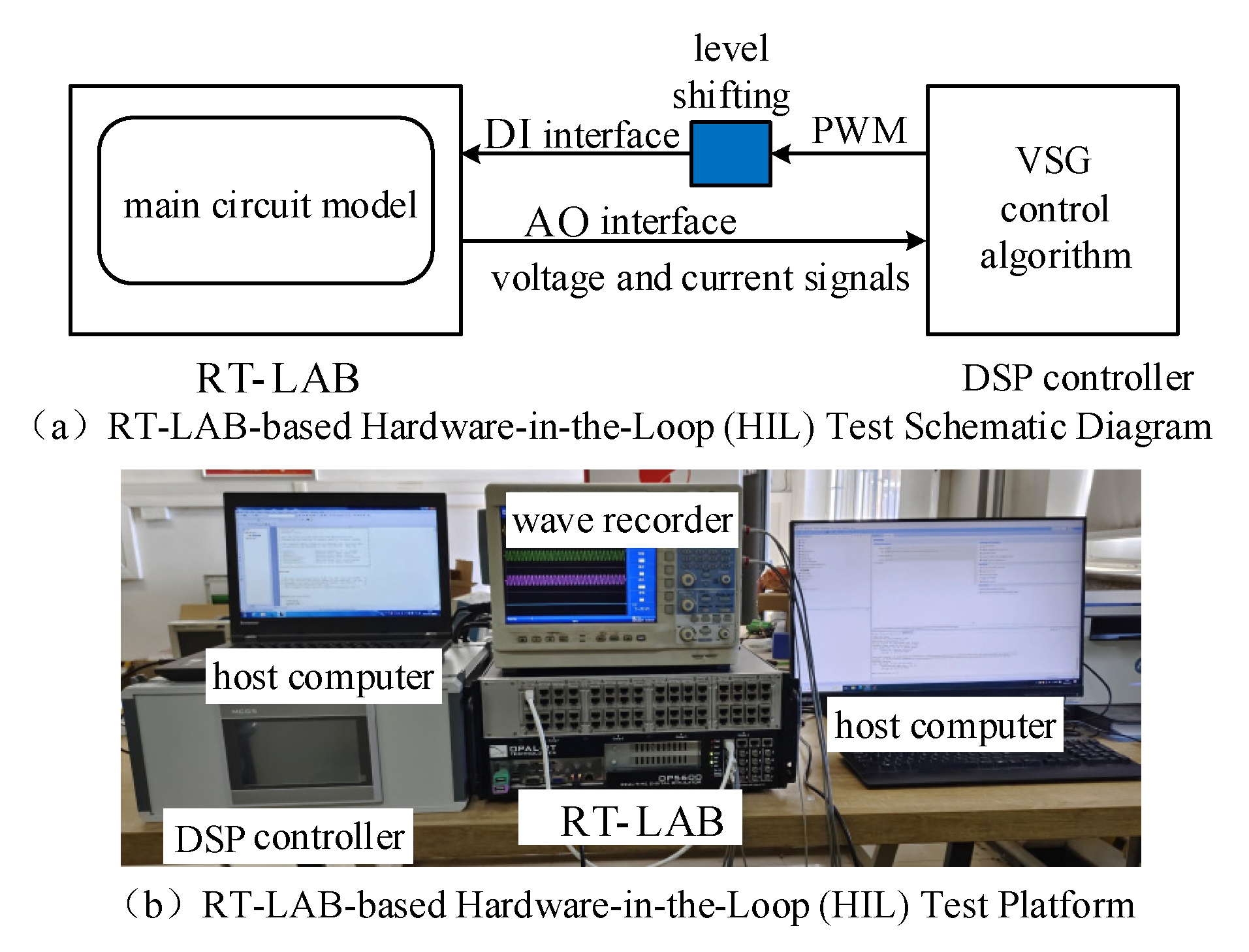
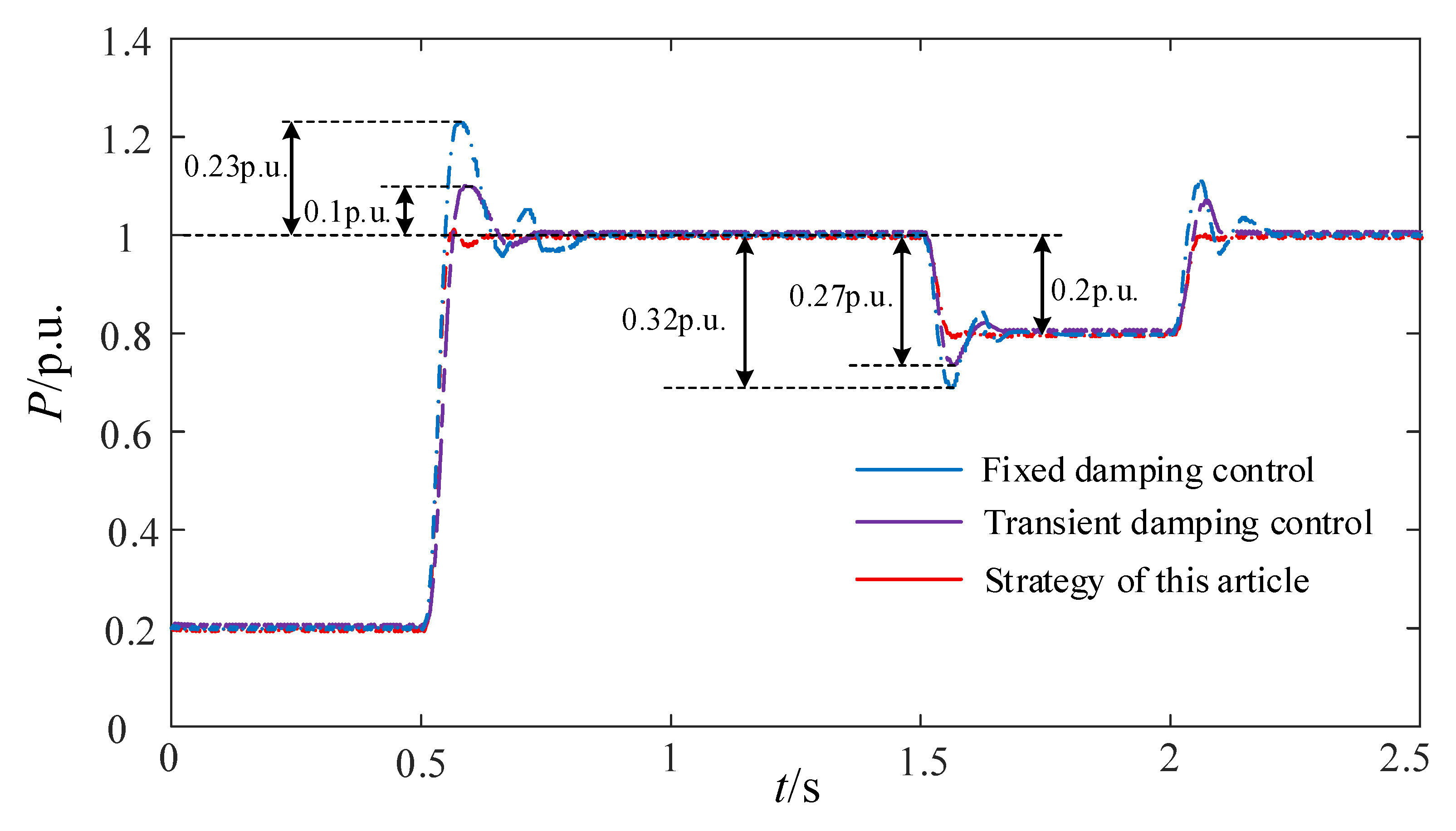
To address the insufficient adaptability of virtual synchronous generators (VSGs) under traditional fixed-value damping control in multiple application scenarios and the lack of regulatory flexibility in transient damping control with a fixed cutoff frequency, a transient damping-type VSG control strategy with flexibly adjustable cutoff frequency is proposed. The aim is to break through the regulatory limitations of the fixed cutoff frequency, quantify the inverse coordination relationship between the cutoff frequency and the equivalent damping coefficient, establish a dynamic adjustment mechanism of the cutoff frequency based on the system natural oscillation frequency, damping ratio, and power grid parameters, and clarify the value range from 0 to ωcmax as well as the real-time adaptation algorithm. First, the influence of damping on active power and frequency is analyzed through the VSG model. Second, combined with the characteristic analysis of different damping types, the advantages of transient damping in transient response capability under various operating conditions are derived. Furthermore, the role of the cutoff frequency in transient damping on output characteristics is specifically analyzed, a transient damping design method with flexibly adjustable cutoff frequency is proposed, and the value range of the cutoff frequency is calibrated. Finally, a hardware-in-the-loop experimental platform is established for experimental testing. The strategy effectively eliminates the output power deviation when the system frequency deviates, enhances the transient response capability of the VSG under different operating conditions, and exhibits superior output characteristics.
Keywords: transient damping-type control strategy; flexibly adjustable cutoff frequency; high-penetration new energy power system; frequency response; power deviation suppression transient damping-type control strategy; flexibly adjustable cutoff frequency; high-penetration new energy power system; frequency response; power deviation suppression