SEMRAchain: A Secure Electronic Medical Record Based on Blockchain Technology

 , , ,
, , ,
Abstract
1. Introduction
- ❖
- Proposing a blockchain-based platform for handling electronic patient records.
- ❖
- Exploiting access control techniques namely ABAC and RBAC to access our system and avoid any external intrusion.
- ❖
- Merging smart contracts and access control to guarantee the security and confidentiality of managed data.
2. Basic Concept of Blockchain Technology and EMR
2.1. Blockchain Technology
- ❖
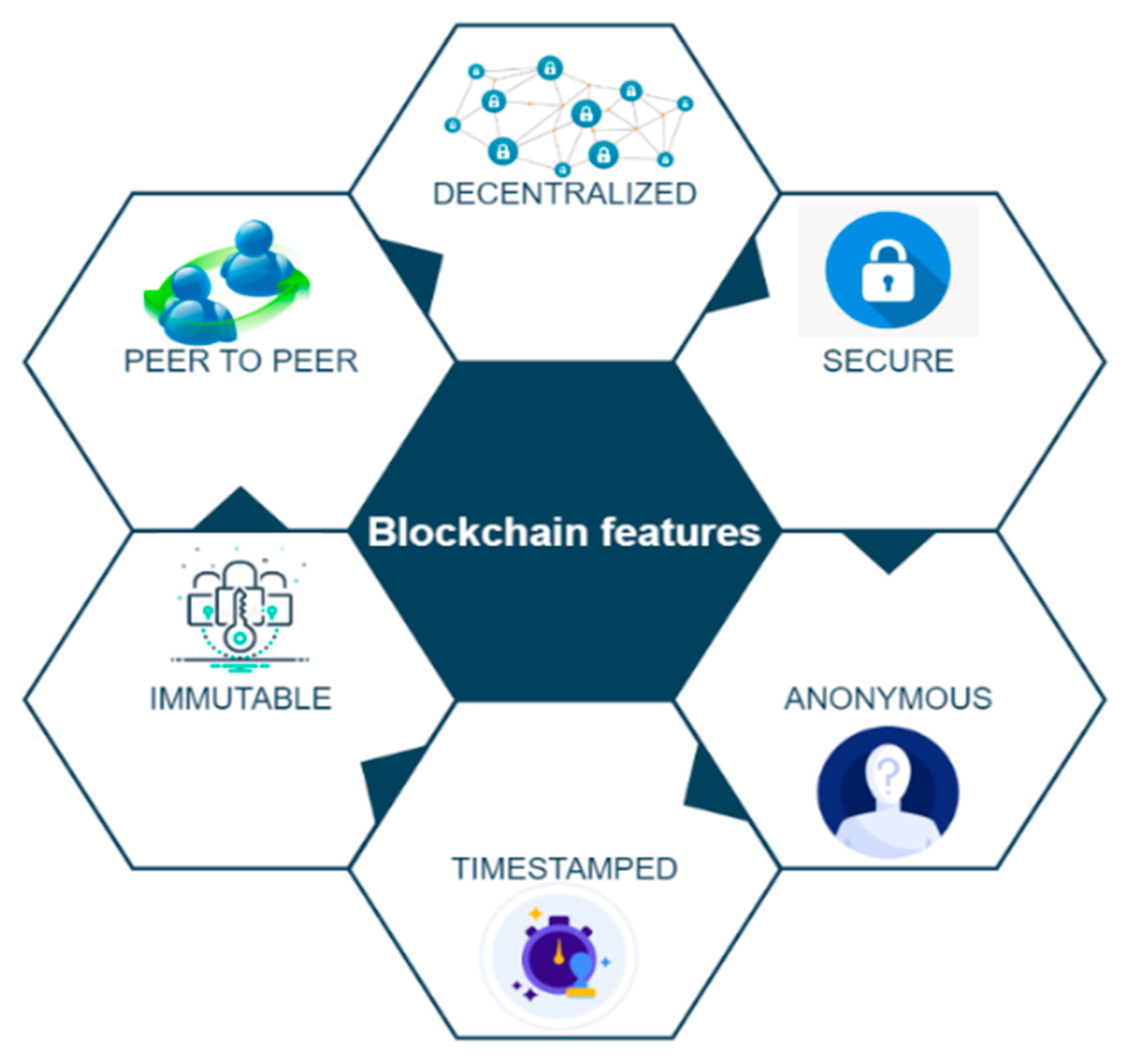
- Blockchain features: Blockchain technology is characterized by many important features as illustrated in Figure 1. It is a decentralized P2P network in which data are stored in all nodes of the network. Thanks to a well-defined protocol, all nodes can manipulate, access and update transactions at the same time and without the need for an intermediary. These data are not all stored on the server of a central intermediary but are instead “distributed”. This property eliminates the problems associated with a centralized system. It also promotes anonymity, i.e., the identity of users is not broadcast to other users, except to the one participating in the transaction. All transactions in the blockchain are time-stamped, meaning that all transactions have a start time, an end time, and the length of time they have been active. Once recorded in the blockchain, it is impossible to delete or modify a transaction since there are multiple copies in different nodes of the network. Therefore, blocks can be extended and not changed. This gives the blockchain a high level of security and makes it more difficult to attack blocks of information.
- ❖
- Smart contracts: Nick Szabo, a computer scientist and cryptographer, pioneered the concept of smart contracts in the 1990s. The concept has recently been identified as being more useful in association with the progress of blockchain and DLTs. Smart contracts are digital forms of contracts that consist of a set of terms that must be met to carry out specific tasks, such as transferring assets or making a deposit. Because smart contracts are scripted and fully automated, they do not require any counterparties. The concept is supposed to follow a simple logic and to be verified by cryptographic methods.
- ❖
- Consensus mechanism: Blockchain consensus protocols create a system of irrefutable agreement between different parties within a distributed network while preventing malicious exploitation of the system. They allow the blockchain to be updated while ensuring that every block on the chain is valid. They also prevent a single entity from controlling the entire network, thus guaranteeing its decentralization. There are several mechanisms for validating a block. For example, proof of work (PoW), proof of stake (PoS), practical byzantine fault tolerance (PBFT), proof of authority (PoA) and proof of elapsed time (PoET).
2.2. Multi-Agents’ System
2.3. Access Control
- ❖
- Discretionary Access Control: In DAC, the owner of a resource decides how it can be shared. He can choose to give read or write access to other users.
- ❖
- Attribute Based Access Control: ABAC is a logical access control paradigm that regulates object access by assessing some stated control rule or policy against subject, object, action, and environment properties. The primary idea behind ABAC is to enable all authorization based on the subject’s characteristics rather than assigning permissions directly between subjects and objects.
- ❖
- Role Based Access Control: RBAC is called also non-discretionary access control. In this type, users are assigned a role and the role dictates access to a resource. It is, in fact, a set of rules that determines how subjects and objects interact.
- ❖
- Mandatory Access Control: Access rights are governed by a vital force that is subject to varying levels of security. The needed authorization control includes distributing representations to structural resources as well as the privacy feature or operating framework. Access to assured assets is restricted to clients or devices that have the basic data exceptional status.
2.4. EMR Systems
3. Related Work
4. Proposed System
4.1. Proposed System Model
- ❖
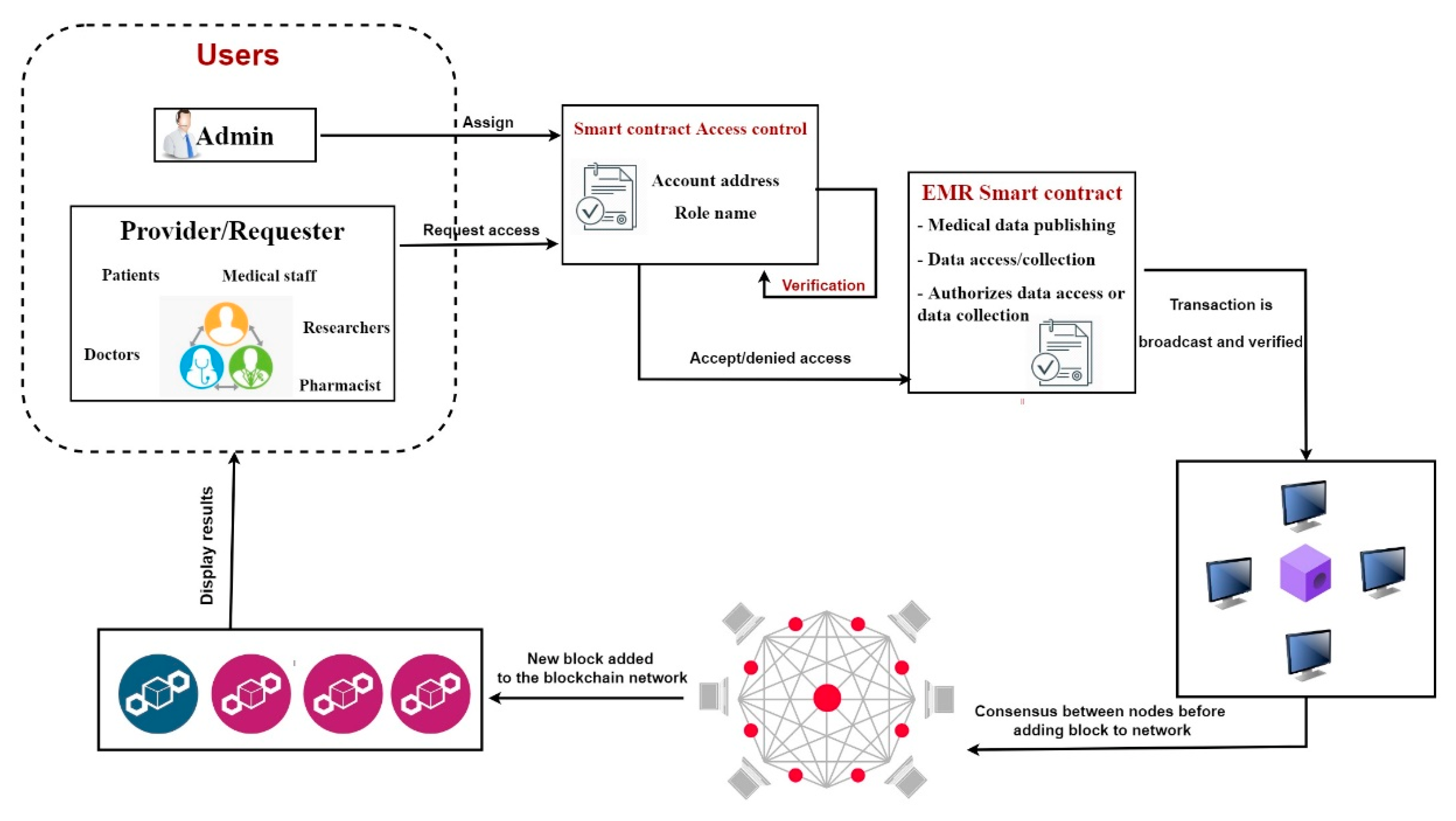
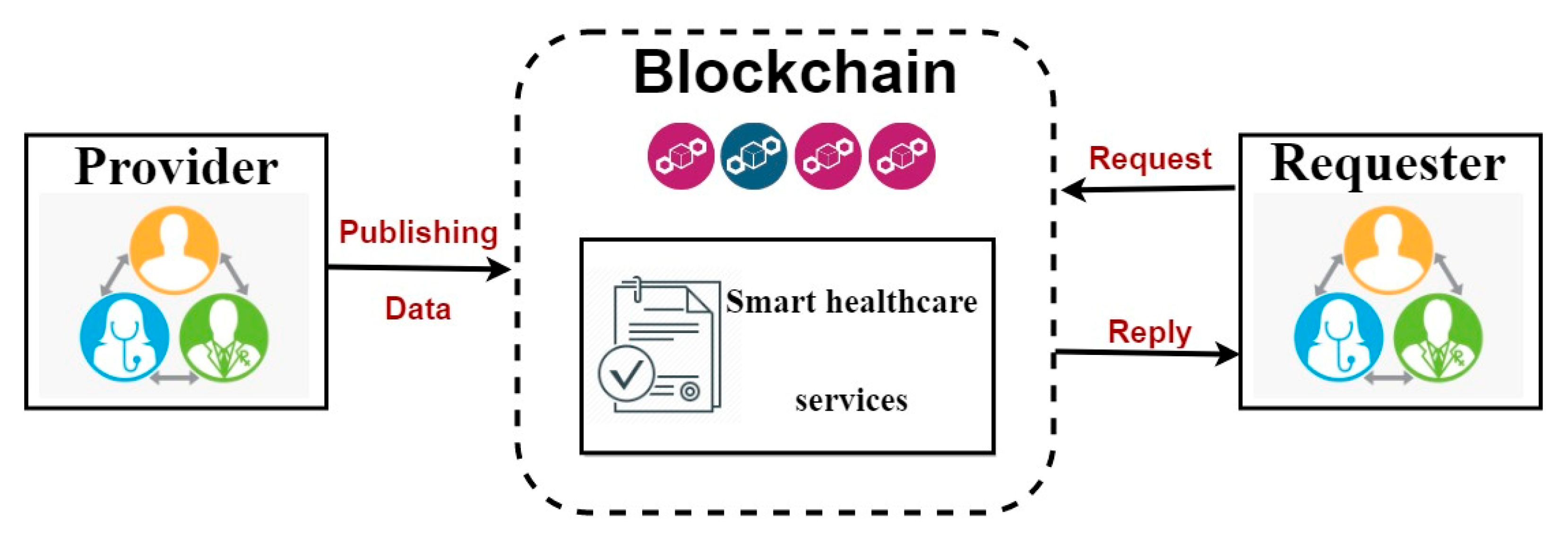
- Smart contract: Smart contracts are the most important component of any blockchain framework as they fulfill basic functions. For the design of our framework, the first step is the deployment of different smart contracts either for system stakeholder enrollment or for authentication to manipulate and check EMR.
- ❖
- Authentication: Access to the system requires user authentication through Ethereum addresses for each agent. After authentication, the patient and healthcare specialist agent can consult and communicate with each other.
- ❖
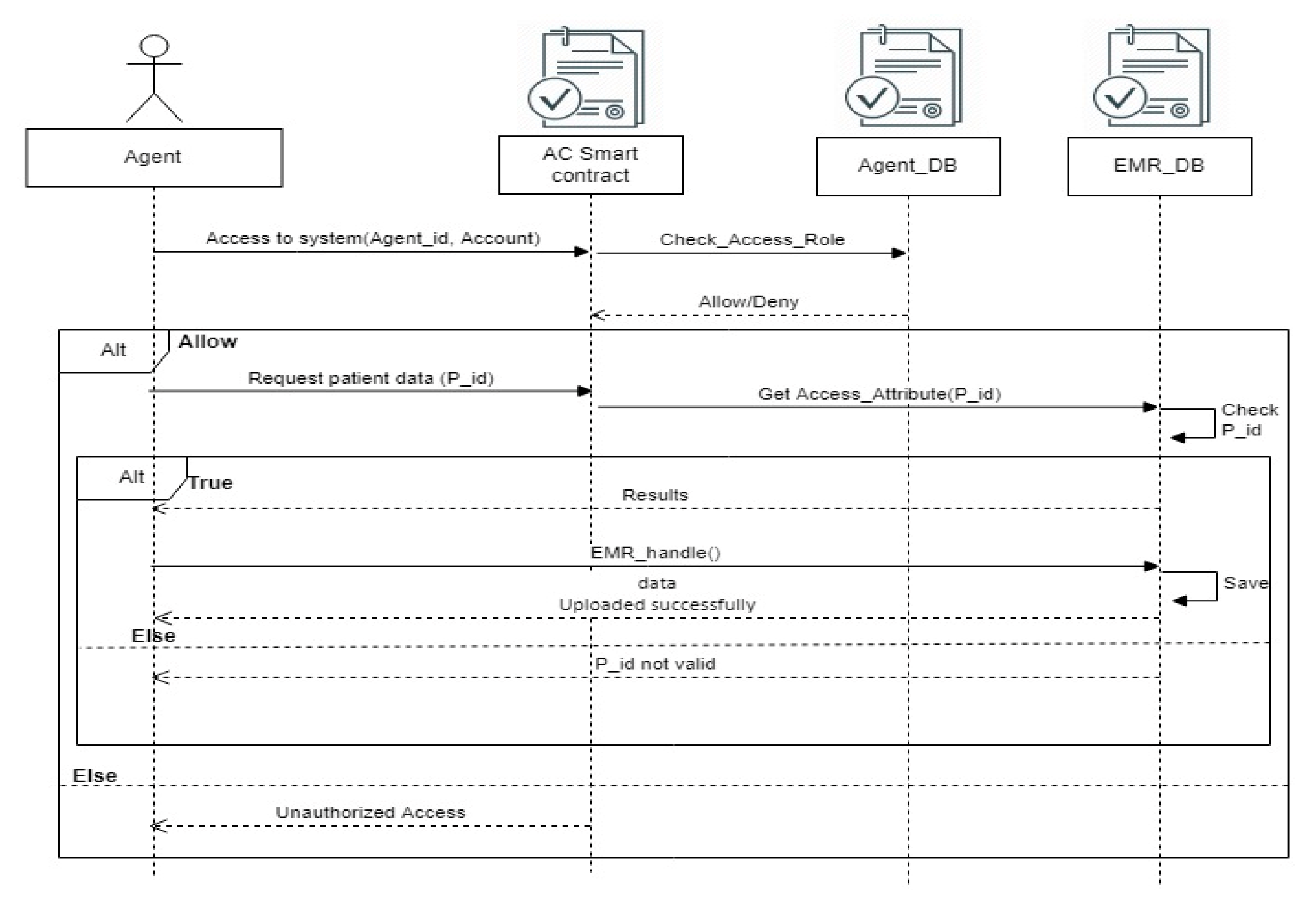
- Access control: Access control is a process that allows only authorized entities to manage information and control this information. In our case, to access and update the patient’s medical data, the healthcare professional agent sends an access request via the smart contract that verifies the identity and rights of the requester and then authorizes him to send a request to the appropriate service.
4.2. System Model Process
- ❖
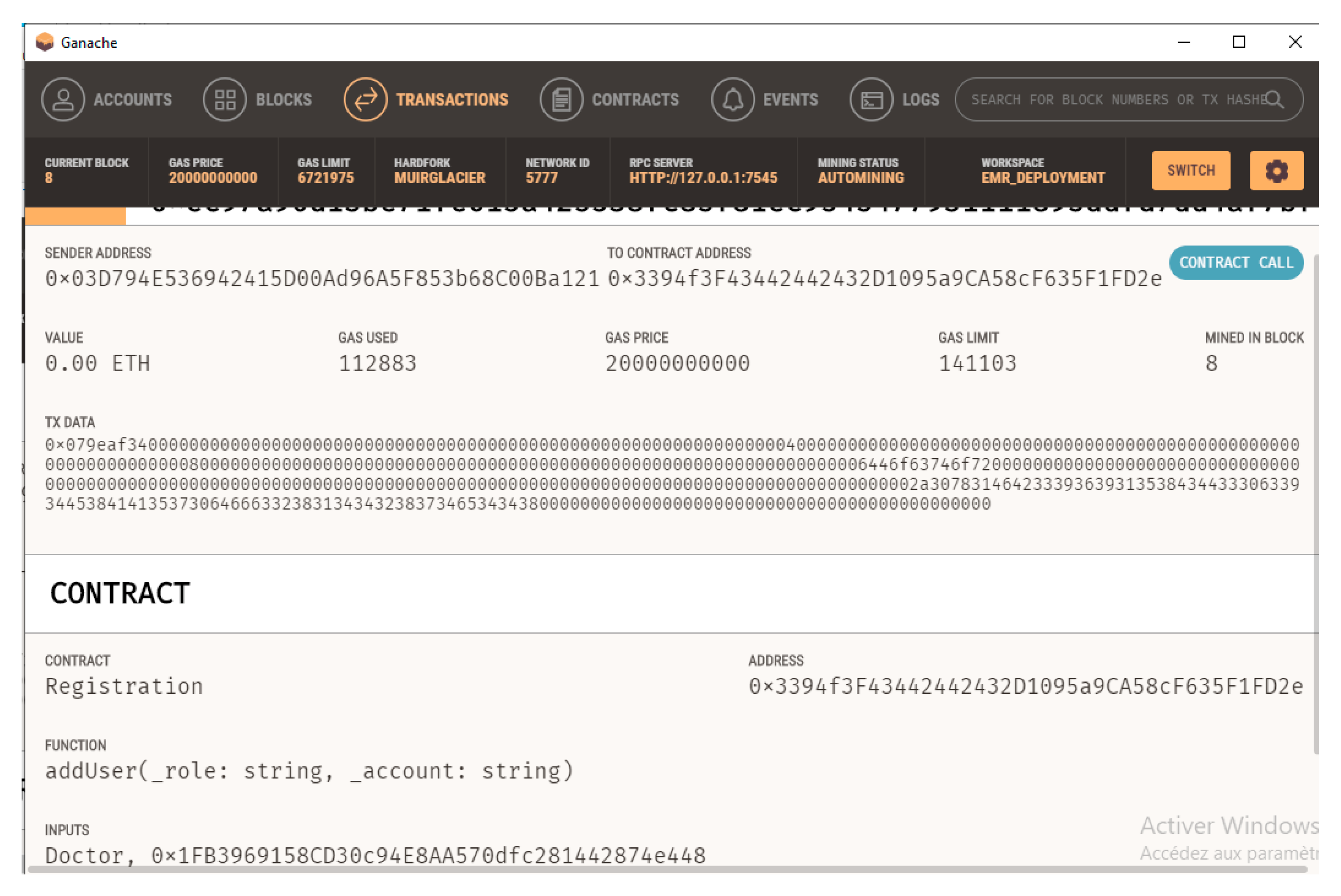
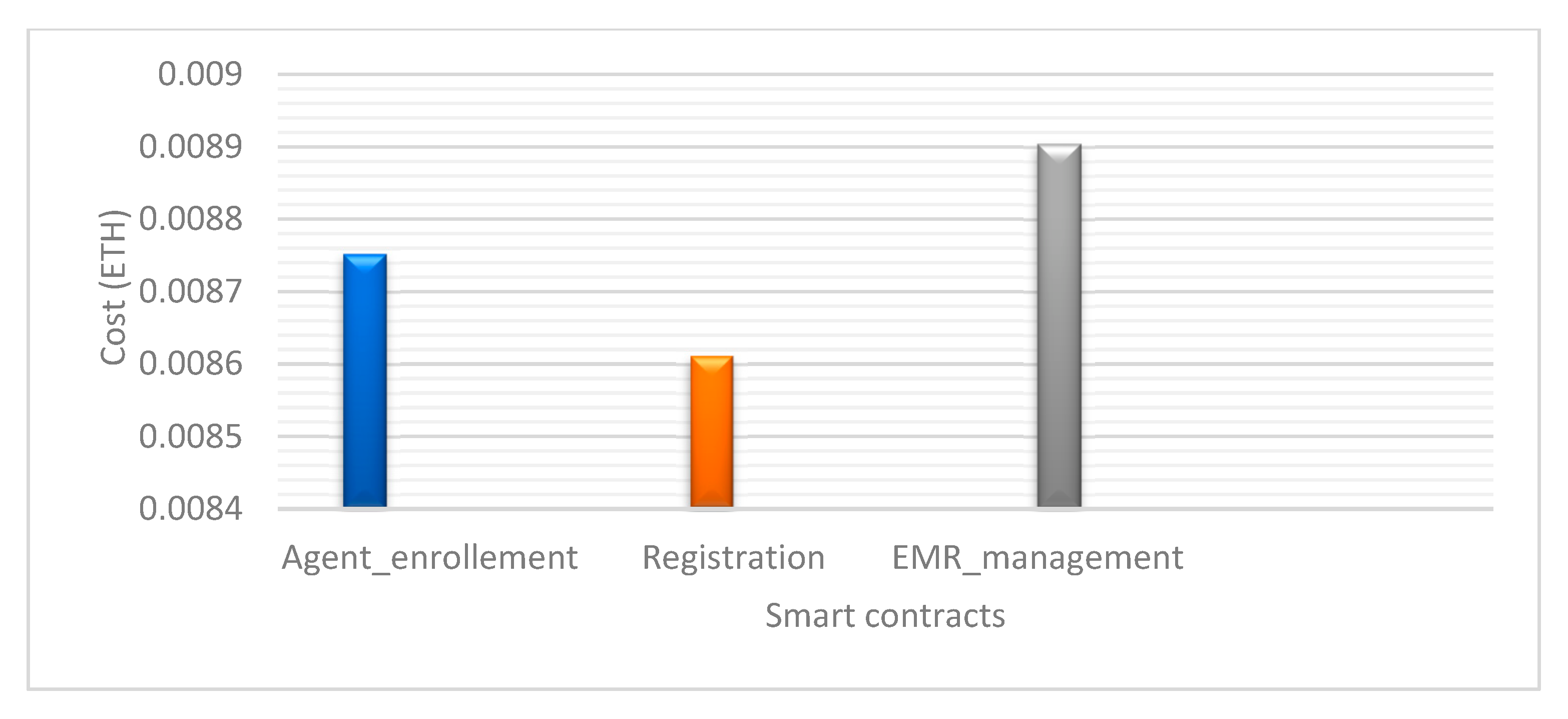
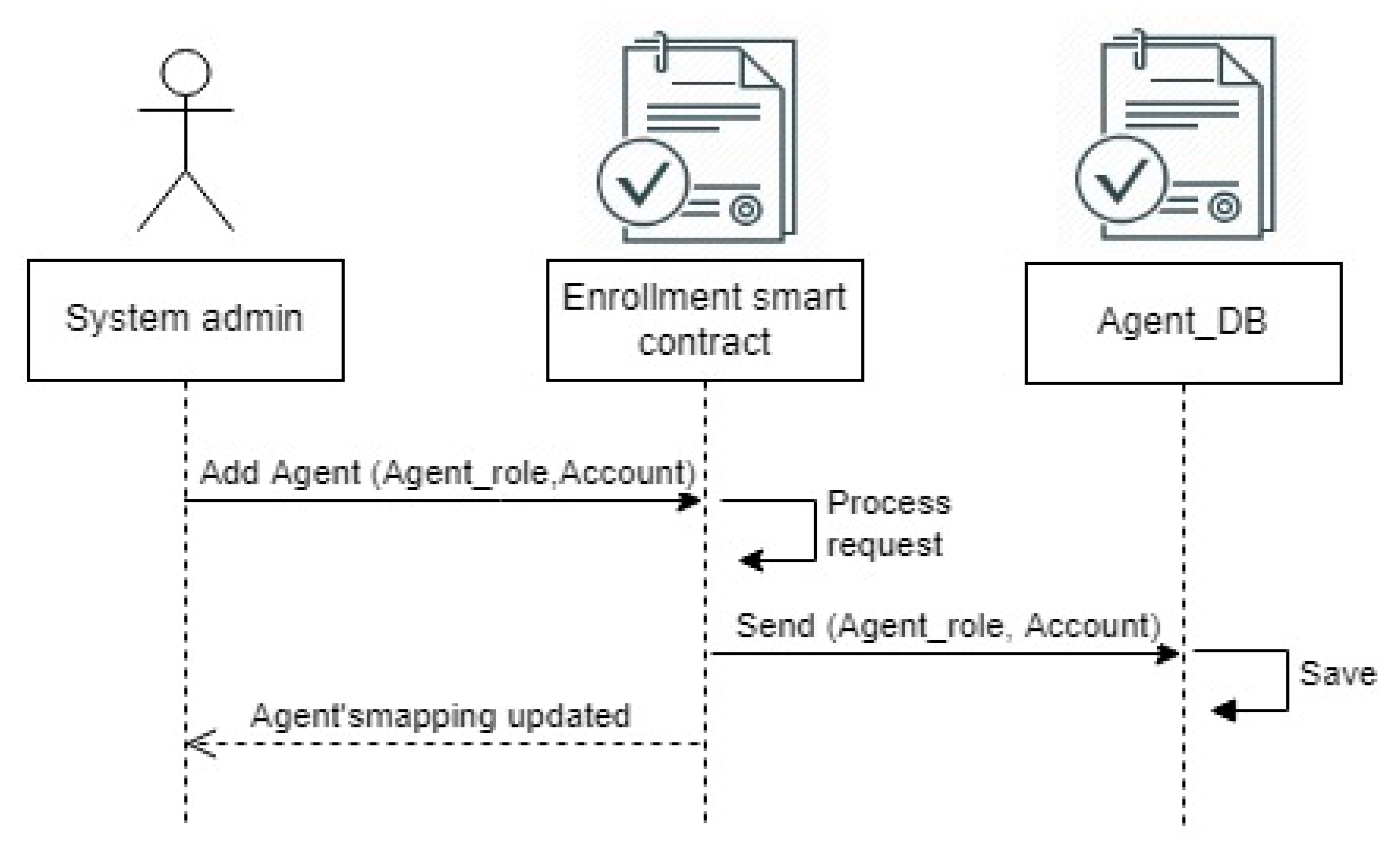
- Agent registration: In this step, the system administrator assigns each agent an account and a role. This designation is recorded in a hash table via a smart contract. The added role is then used when adding an agent or in the handling of transactions in the communication process. However, the deployment of different smart contracts required by our system was the object of this step.
- ❖
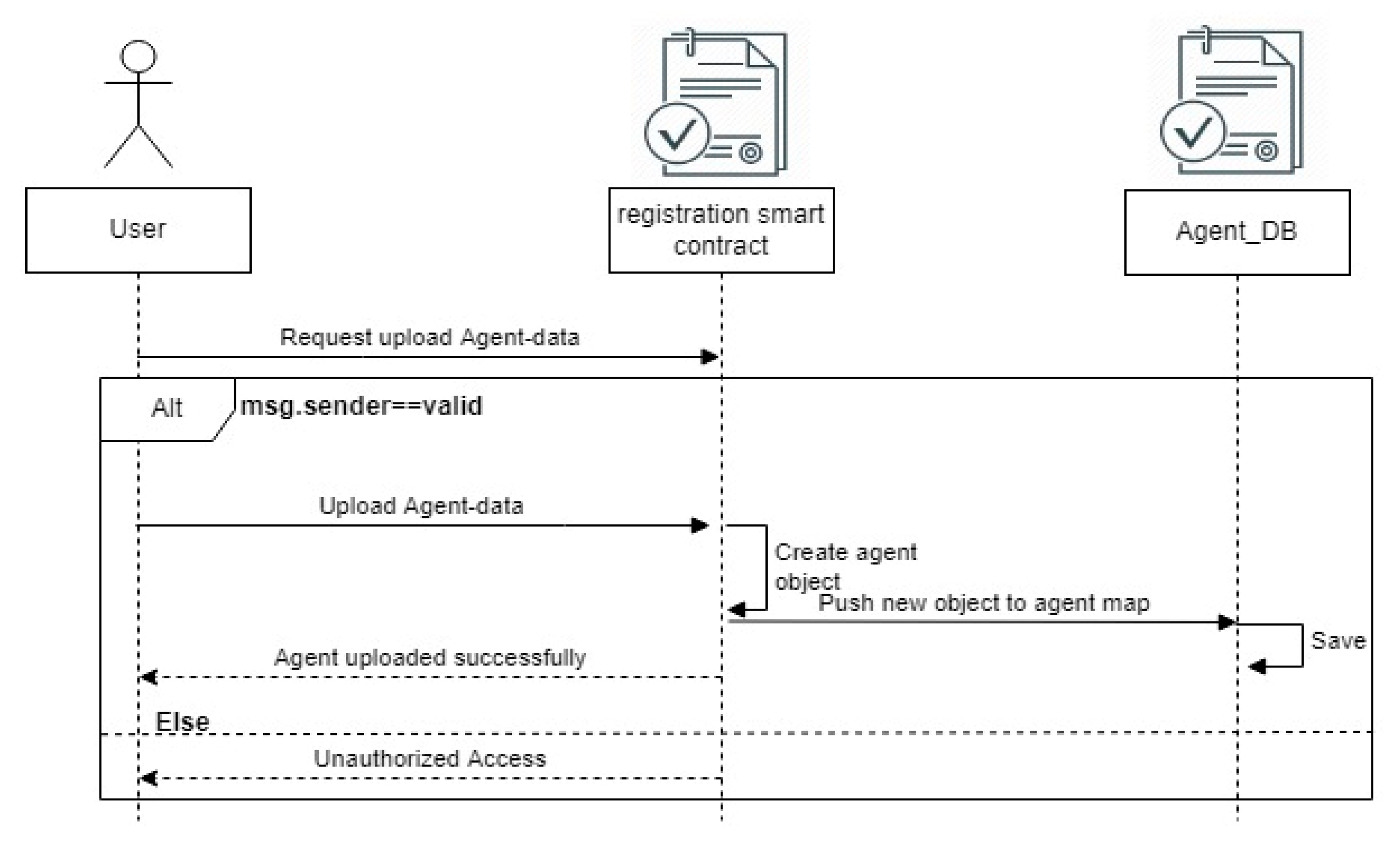
- Agent enrollment: The registration step consists of adding the agents to the system. After verifying the account address, the agent information can be added to the Agent_DB through a smart contract. In this phase, the smart contract saves the characteristics or attributes of each agent, especially the identifier and account. Upon successful registration, agents are allowed to join the blockchain.
- ❖
- Agent authentication: To use our system, registered agents authenticate themselves. Two types of access control are used: Role-Based Access Control and Attribute-Based Access Control. The use of the “msg. sender” variable of the OpenZeppelin library allows for identifying and validating the agent’s address. On the other hand, during EMR management, it is necessary to control access to patient data.
- ❖
- EMR management: to access and update the patient’s medical data, the healthcare professional agent sends an access request via the smart contract that verifies the identity and rights of the requester and then authorizes them to send a request to the appropriate service.
5. Simulation and Results
5.1. Simulations Setting
5.2. EMR Smart Contract Deployment
5.3. Cost Consumption
5.4. Smart Contracts Cost
5.5. Functions Cost
6. Comparison of Proposed System with Related Work
- ❖
- Security: The use of the RBAC and ABAC mechanisms ensures the security of our proposed framework. So, no third party is allowed to access the system. Let us not forget also that blockchain is protected with mechanisms and protocols. Therefore, agent data can be handled reliably and confidentially. Only trustworthy persons have access to these data. The system denies access to any untrusted third party attempting to access the system.
- ❖
- Confidentiality: EMR contains patient information such as electronic prescribing/delivery, laboratory results, medical imaging and related reports, and hospital discharge reports. To ensure the confidentiality of these data, unauthorized manipulation by third parties must be avoided. The use of smart contracts, by rejecting access to the system by any untrusted third party, ensures patient privacy, trust, and accuracy. The information saved in the system is immutable and cannot be modified by third parties thanks to the use of blockchain technology. This guarantees the confidentiality of the data handled.
- ❖
- Trustfulness: Trust is maintained with access control via user registration as well as restricting access to the data of our system stakeholders. Furthermore, the information saved in the system is immutable and cannot be modified by third parties thanks to the use of blockchain technology. This guarantees the confidentiality of the data handled.
7. Conclusions
Author Contributions
Funding
Institutional Review Board Statement
Informed Consent Statement
Data Availability Statement
Acknowledgments
Conflicts of Interest
References
- Goyal, S.; Sharma, N.; Bhushan, B.; Shankar, A.; Sagayam, M. IoT Enabled Technology in Secured Healthcare: Applications, Challenges and Future Directions. In Cognitive Internet of Medical Things for Smart Healthcare. Studies in Systems, Decision and Control; Hassanien, A.E., Khamparia, A., Gupta, D., Shankar, K., Slowik, A., Eds.; Springer: Cham, Switzerland, 2021; Volume 311. [Google Scholar] [CrossRef]
- Mhamdi, H.; Soufiene, B.O.; Zouinkhi, A.; Ali, O.; Sakli, H. Trust-Based Smart Contract for Automated Agent to Agent Communication. Comput. Intell. Neurosci. 2022, 2022, 5136865. [Google Scholar] [CrossRef] [PubMed]
- Ben Othman, S.; Almalki, F.A.; Chakraborty, C.; Sakli, H. Privacy-preserving aware data aggregation for IoT-based healthcare with green computing technologies. Comput. Electr. Eng. 2022, 101, 108025. [Google Scholar] [CrossRef]
- Bharadwaj, H.K.; Agarwal, A.; Chamola, V.; Lakkaniga, N.R.; Hassija, V.; Guizani, M.; Sikdar, B. A Review on the Role of Machine Learning in Enabling IoT Based Healthcare Applications. IEEE Access 2021, 9, 38859–38890. [Google Scholar] [CrossRef]
- Gope, P.; Millwood, O.; Sikdar, B. A Scalable Protocol Level Approach to Prevent Machine Learning Attacks on PUF-based Authentication Mechanisms for Internet-of-Medical-Things. IEEE Trans. Ind. Inform. 2021, 18, 1971–1980. [Google Scholar] [CrossRef]
- Ahmed, I.; Jeon, G.; Piccialli, F. A Deep-Learning-Based Smart Healthcare System for Patient’s Discomfort Detection at the Edge of Internet of Things. IEEE Internet Things J. 2021, 8, 10318–10326. [Google Scholar] [CrossRef]
- Almalki, F.A.; Soufiene, B.O. EPPDA: An Efficient and Privacy-Preserving Data Aggregation Scheme with Authentication and Authorization for IoT-Based Healthcare Applications. Wirel. Commun. Mob. Comput. 2021, 2021, 5594159. [Google Scholar] [CrossRef]
- Almalki, F.A.; Ben Othman, S.; Almalki, F.A.; Sakli, H. EERP-DPM: Energy Efficient Routing Protocol Using Dual Prediction Model for Healthcare Using IoT. J. Health Eng. 2021, 2021, 9988038. [Google Scholar] [CrossRef]
- Soufiene, B.O.; Bahattab, A.A.; Trad, A.; Youssef, H. PEERP: An Priority-Based Energy-Efficient Routing Protocol for Reliable Data Transmission in Healthcare using the IoT. Procedia Comput. Sci. 2020, 175, 373–378. [Google Scholar] [CrossRef]
- Raoof, S.S.; Durai, M.A.S. A Comprehensive Review on Smart Health Care: Applications, Paradigms, and Challenges with Case Studies. Contrast Media Mol. Imaging 2022, 2022, 4822235. [Google Scholar] [CrossRef]
- Wang, Y.; Nazir, S.; Shafiq, M. An Overview on Analyzing Deep Learning and Transfer Learning Approaches for Health Monitoring. Comput. Math. Methods Med. 2021, 2021, 5552743. [Google Scholar] [CrossRef]
- FKraemer, F.A.; Braten, A.E.; Tamkittikhun, N.; Palma, D. Fog Computing in Healthcare–A Review and Discussion. IEEE Access 2017, 5, 9206–9222. [Google Scholar] [CrossRef]
- Awaisi, K.S.; Hussain, S.; Ahmed, M.; Khan, A.A.; Ahmed, G. Leveraging IoT and Fog Computing in Healthcare Systems. IEEE Internet Things Mag. 2020, 3, 52–56. [Google Scholar] [CrossRef]
- Ijaz, M.; Li, G.; Lin, L.; Cheikhrouhou, O.; Hamam, H.; Noor, A. Integration and Applications of Fog Computing and Cloud Computing Based on the Internet of Things for Provision of Healthcare Services at Home. Electronics 2021, 10, 1077. [Google Scholar] [CrossRef]
- Nakamoto, S. Bitcoin: A Peer-to-Peer Electronic Cash System. 2008. Available online: https://bitcoin.org/bitcoin.pdf (accessed on 25 August 2022).
- Tasca, P.; Tessone, C.J. A Taxonomy of Blockchain Technologies: Principles of Identification and Classification. Ledger 2019, 4, 1–39. [Google Scholar] [CrossRef]
- Kaur, M.; Khan, M.Z.; Gupta, S.; Noorwali, A.; Chakraborty, C.; Pani, S.K. MBCP: Performance Analysis of Large Scale Mainstream Blockchain Consensus Protocols. IEEE Access 2021, 9, 80931–80944. [Google Scholar] [CrossRef]
- Mhamdi, H.; Zouinkhi, A.; Sakli, H. Multi-agents’ system of vehicle services based on Blockchain. In Proceedings of the 2020 20th International Conference on Sciences and Techniques of Automatic Control and Computer Engineering (STA), Monastir, Tunisia, 20–22 December 2020; pp. 291–296. [Google Scholar] [CrossRef]
- Mhamdi, H.; Zouinkhi, A.; Sakli, H. Smart contracts for decentralized vehicle services. In Proceedings of the 2021 International Wireless Communications and Mobile Computing (IWCMC), Harbin, China, 28 June–2 July 2021; pp. 1846–1851. [Google Scholar] [CrossRef]
- Bhattacharjya, A.; Wisniewski, R.; Nidumolu, V. A holistic research on major Blockchain’s Consensus Protocols’ working mechanisms with security aspects of CPS. Electronics 2022, 11, 2760. [Google Scholar] [CrossRef]
- Bhattacharjya, A. A holistic study on use of Blockchain technology in CPS and IoT architectures with focus on maintaining CIA triad of data communication. Int. J. Appl. Math. Comput. Sci. 2022, 32, 403–413. [Google Scholar]
- Cho, C.; Seong, Y.; Won, Y. Mandatory Access Control Method for Windows Embedded OS Security. Electronics 2021, 10, 2478. [Google Scholar] [CrossRef]
- Recommendation on a European Electronic Health Record Exchange Format. Available online: https://digital-strategy.ec.europa.eu/fr/node/2138 (accessed on 31 July 2022).
- Nishi, F.K.; Shams-E-Mofiz, M.; Khan, M.M.; Alsufyani, A.; Bourouis, S.; Gupta, P.; Saini, D.K. Electronic Healthcare Data Record Security Using Blockchain and Smart Contract. J. Sensors 2022, 2022, 7299185. [Google Scholar] [CrossRef]
- Mhamdi, H.; Othman, S.B.; Zouinkhi, A.; Sakli, H. Blockchain Technology in Healthcare: Use Cases Study. In Intelligent Healthcare; Chakraborty, C., Khosravi, M.R., Eds.; Springer: Singapore, 2022. [Google Scholar] [CrossRef]
- Mhamdi, H.; Othman, S.B.; Zouinkhi, A.; Almalki, F.A.; Sakli, H. Blockchain Technology in Healthcare: A Systematic Review. In Blockchain Technology in Healthcare Applications: Social, Economic, and Technological Implications, 1st ed.; Bhushan, B., Rakesh, N., Farhaoui, Y., Astya, P.N., Unhelkar, B., Eds.; CRC Press: Boca Raton, FL, USA, 2022. [Google Scholar] [CrossRef]
- Kazmi HS, Z.; Nazeer, F.; Mubarak, S.; Hameed, S.; Basharat, A.; Javaid, N. Trusted Remote Patient Monitoring Using Blockchain-Based Smart Contracts; BWCCA 2019, LNNS 97; Springer Nature Switzerland AG 2020L: Berlin/Heidelberg, Germany, 2020; pp. 765–776. [Google Scholar]
- Shen, B.; Guo, J.; Yang, Y. MedChain: Efficient Healthcare Data Sharing via Blockchain. Appl. Sci. 2019, 9, 1207. [Google Scholar] [CrossRef]
- Casado-Vara, R.; Briones, A.G.; Prieto, J.; Rodríguez, J.C. Smart Contract for Monitoring and Control of Logistics Activities: Pharmaceutical Utilities Case Study. In Chapter in Advances in Intelligent Systems and Computing; Springer: Cham, Switzerland, 2019. [Google Scholar]
- Saini, A.; Zhu, Q.; Singh, N.; Xiang, Y.; Gao, L.; Zhang, Y. A Smart-Contract-Based Access Control Framework for Cloud Smart Healthcare System. IEEE Internet Things J. 2020, 8, 5914–5925. [Google Scholar] [CrossRef]
- Jabbar, R.; Fetais, N.; Krichen, M.; Barkaoui, K. Blockchain technology for healthcare: Enhancing shared electronic health record interoperability and integrity. In Proceedings of the 2020 IEEE International Conference on Informatics, IoT, and Enabling Technologies (ICIoT), Doha, Qatar, 2–5 February 2020; pp. 310–317. [Google Scholar] [CrossRef]
- Raj, R.; Rai, N.; Agarwal, S. Anticounterfeiting in pharmaceutical supply chainby establishing proof of ownership. In Proceedings of the TENCON 2019–2019 IEEE Region 10 Conference (TENCON), Kochi, India, 17–20 October 2019; pp. 1572–1577. [Google Scholar]
- Jamil, F.; Ahmad, S.; Iqbal, N.; Kim, D. Towards a remote monitoring of patient vital signs based on iot-based blockchain integrity management platforms in smart hospitals. Sensors 2020, 20, 2195. [Google Scholar] [CrossRef] [PubMed]
- Ahmad, R.S.; Salah, K.; Jayaraman, R.; Yaqoob, I.; Ellahham, S.; Omar, M. The role of blockchain technology in telehealth and telemedicine. Int. J. Med. Inform. 2021, 148, 104399. [Google Scholar] [CrossRef] [PubMed]
- Srivastava, G.; Parizi, R.M.; Dehghantanha, A.; Choo, K.K.R. Data Sharing and Privacy for Patient IoT Devices Using Blockchain. In Smart City and Informatization. iSCI 2019. Communications in Computer and Information Science; Wang, G., El Saddik, A., Lai, X., Martinez Perez, G., Choo, K.K., Eds.; Springer: Singapore, 2019; Volume 1122. [Google Scholar] [CrossRef]
- Wang, J.; Han, K.; Alexandridis, A.; Chen, Z.; Zilic, Z.; Pang, Y.; Jeon, G.; Piccialli, F. A blockchain-based eHealthcare system interoperating with WBANs. Futur. Gener. Comput. Syst. 2019, 110, 675–685. [Google Scholar] [CrossRef]
- Zhuang, Y.; Sheets, L.R.; Shae, Z.; Chen, Y.W.; Tsai, J.J.P.; Shyu, C.R. Applying Blockchain Technology to Enhance Clinical Trial Recruitment. AMIA Annu Symp Proc. 2020, 2019, 1276–1285. [Google Scholar]
- Zhuang, Y.; Sheets, L.; Shae, Z.; Tsai, J.J.P.; Shyu, C.-R. Applying Blockchain Technology for Health Information Exchange and Persistent Monitoring for Clinical Trials. AMIA Annu. Symp. Proc. AMIA Symp. 2018, 2018, 1167–1175. [Google Scholar]
- Bhattacharjya, A.; Kozdrój, K.; Bazydło, G.; Wisniewski, R. Trusted and Secure Blockchain-Based Architecture for Internet-of-Medical-Things. Electronics 2022, 11, 2560. [Google Scholar] [CrossRef]




| Refs. | Contribution | Blockchain | Performance | |||||
|---|---|---|---|---|---|---|---|---|
| 1 | 2 | 3 | 4 | 5 | 6 | 7 | ||
| [27] | Design a system for remote patient monitoring and alerting health specialists in case of emergency. | * | * | * | * | |||
| [28] | Offer a MedChain platform to share data by storing it immutably in the blockchain. | * | * | * | ||||
| [29] | Use smart contracts and multi-agents’ system to control and monitor logistics pharmaceutical activities. | * | * | * | ||||
| [30] | Design a model for sharing medical data between patients, hospitals and any other entity involved in this process. | * | * | |||||
| [31] | To propose a platform named BiiMed. This solution aims to share the patient’s electronic health record between different stakeholders. | * | * | |||||
| [32] | Design a private blockchain platform to fight drug counterfeiting and maintain security, traceability, and visibility in the pharmaceutical supply chain. | * | * | * | ||||
| [33] | Develop a system that allows the monitoring of the patient’s vital signs. | * | * | * | ||||
| [34] | Design a system to remotely monitor patients and alert healthcare specialists in the event of an emergency. | * | * | |||||
| [35] | To develop a protocol named GHOSTDAG allowing the follow-up of patients. | * | * | * | ||||
| [36] | Propose an electronic health system for medical records. Security, performance, and low hardware usage are the main contributions. | * | * | * | ||||
| [37,38] | Develop a platform for exchanging clinical data between various users. | * | * | * | ||||
| [39] | Propose BIoMT architecture based on the ECDSA algorithm and Proof of Work consensus protocol to secure medical data. | * | * | * | * | |||
| Function | Transaction Cost | Price ($) |
|---|---|---|
| addUser | 0.00022 | 0.74 |
| uploadAgentData | 0.00038 | 1.28 |
| addEMRdata | 0.00033 | 1.11 |
| Reference | [34] | [35] | [36] | [38] | Our System | |
|---|---|---|---|---|---|---|
| Criterium ID | ||||||
| Cr 1 | √ | √ | √ | √ | √ | |
| Cr 2 | √ | X | X | X | √ | |
| Cr 3 | √ | X | X | √ | √ | |
| Cr 4 | X | √ | √ | √ | √ | |
| Cr 5 | X | X | X | X | √ | |
Publisher’s Note: MDPI stays neutral with regard to jurisdictional claims in published maps and institutional affiliations. |
© 2022 by the authors. Licensee MDPI, Basel, Switzerland. This article is an open access article distributed under the terms and conditions of the Creative Commons Attribution (CC BY) license (https://creativecommons.org/licenses/by/4.0/).
Share and Cite
Mhamdi, H.; Ayadi, M.; Ksibi, A.; Al-Rasheed, A.; Soufiene, B.O.; Hedi, S. SEMRAchain: A Secure Electronic Medical Record Based on Blockchain Technology. Electronics 2022, 11, 3617. https://doi.org/10.3390/electronics11213617
Mhamdi H, Ayadi M, Ksibi A, Al-Rasheed A, Soufiene BO, Hedi S. SEMRAchain: A Secure Electronic Medical Record Based on Blockchain Technology. Electronics. 2022; 11(21):3617. https://doi.org/10.3390/electronics11213617
Chicago/Turabian StyleMhamdi, Halima, Manel Ayadi, Amel Ksibi, Amal Al-Rasheed, Ben Othman Soufiene, and Sakli Hedi. 2022. "SEMRAchain: A Secure Electronic Medical Record Based on Blockchain Technology" Electronics 11, no. 21: 3617. https://doi.org/10.3390/electronics11213617
APA StyleMhamdi, H., Ayadi, M., Ksibi, A., Al-Rasheed, A., Soufiene, B. O., & Hedi, S. (2022). SEMRAchain: A Secure Electronic Medical Record Based on Blockchain Technology. Electronics, 11(21), 3617. https://doi.org/10.3390/electronics11213617