


Abstract
The European Green Deal is the new strategy for economic growth adopted by the European Commission (EC) in late 2019. One of the most important tasks in the realisation of this strategy is the mobilisation of the industry for a clean and circular economy (CE). Currently, the European Union (EU) is in the process of transformation towards a CE model, which was announced in 2014. The CE assumes a transition from a linear model based on take–make–dispose to a circular model, in which waste, if it arises, becomes a valuable resource. At the same time, it is recommended to use raw materials (RMs) more efficiently and to recycle them. The EC underlines that both changes in the management of mineral resources in individual member states and their effects should be monitored. Therefore, in 2018, the EC pointed out issues related to RM management as important elements of the monitoring framework in transformation process towards CE. The paper presents strategic directions aimed at sustainable and circular RM management in the EU, with a strong emphasis on the key elements of sustainable development—environmental, economic and social. Moreover, the importance of mineral resources management in the EC in the context of transformation towards the European Green Deal and CE is presented, and the results of selected CE indicators related to the RMs, and indicators that present sustainable RMs management are discussed. The core of the paper is presentation of a set of recommended actions which should be taken in coming years with strong emphasis on the implementation of the sustainable development (SD) principles. RM management faces a number of challenges, primarily in achieving increased levels of critical raw materials (CRMs) recycling, as well as the greater involvement of stakeholders themselves and awareness raising in the field of SD and CE among enterprises operating in the RMs sector. Currently, all member states are working together to accelerate the transformation process in the area of CE and the European Green Deal, e.g., by implementing national CE programs. A great opportunity to accelerate the transformation process is the new financial perspective for projects under the balanced and circular management of RMs—Horizon Europe, which plans to finance the new projects on RMs management and recycling.
1. Introduction
In December 2019, the European Commission (EC) presented the assumptions of the new growth strategy which is a European Green Deal for the European Union (EU) and its citizens. The main objective of the European Green Deal is to transform the EU into a fair and prosperous society, with a modern, resource-efficient and competitive economy. The EC aims towards a complete reduction in net emissions of greenhouse gases in 2050 in the whole Union. The special attention is paid to the mineral resources management due to the European Green Deal refers to the economic growth, which is decoupled from resource usage [1].
One of the most important tasks in the realisation of this new European strategy is the mobilisation of industry for a clean and circular economy (CE) [2]. The EC underlines that it will take the next 25 years to transform an industrial sector and all the value chains. Therefore, important decisions and actions are going to be taken in the next five years. In March 2020, the EC has published a new CE Action Plan focused on a cleaner and more competitive Europe [3]. Currently, the EU, in the process of transformation towards CE, which was announced in 2014 in the first EC communication on the CE [4]. In the following years, the EC systematically published subsequent CE announcements, as in 2015—the CE Action Plan [5], in 2018—the CE monitoring framework [6] and in 2019 report on the implementation of the first CE Action Plan [7]. The CE assumes a transition from a linear model based on “take–make–dispose” to a circular model, in which waste, if it arises, becomes a valuable resource [8]. At the same time, it is recommended to make use of mineral resources (raw materials (RMs)) in more efficient way and to recycle and recover RMs from any waste streams. The EC underlines that changes in the management of mineral resources in individual member states and their effects should be monitored. Therefore, in 2018, the EC pointed to issues related to the management of RMs as an important element of the monitoring framework of the transformation process towards CE [6].
More sustainable resource management is indicated as a strategic target in the context of implementing the European Green Deal strategy and CE model. The core of these two economic strategies is sustainable development (SD) [9], which is defined as development which integrates economic, environmental and social measures in order to protect current and future generations. There are main actions indicated as a pathway towards the implementation of SD assumptions in both the Green Deal strategy and the CE model, however, no systematic scope of key directions with reference to environmental, economic and social areas has been provided. Therefore, in this work, a strategic direction aimed at sustainable and circular RM management in the EU, with strong emphasis on the key elements of the SD (environmental, economic and social), are provided and discussed. Moreover, the paper presents the importance of mineral resource management in the EU in transformation towards CE and the implementation of the Green Deal strategy, and discusses the results of selected indicators indicated in the CE monitoring framework related to the RMs’ management and indicators presenting sustainable resource management.
2. Materials and Methods
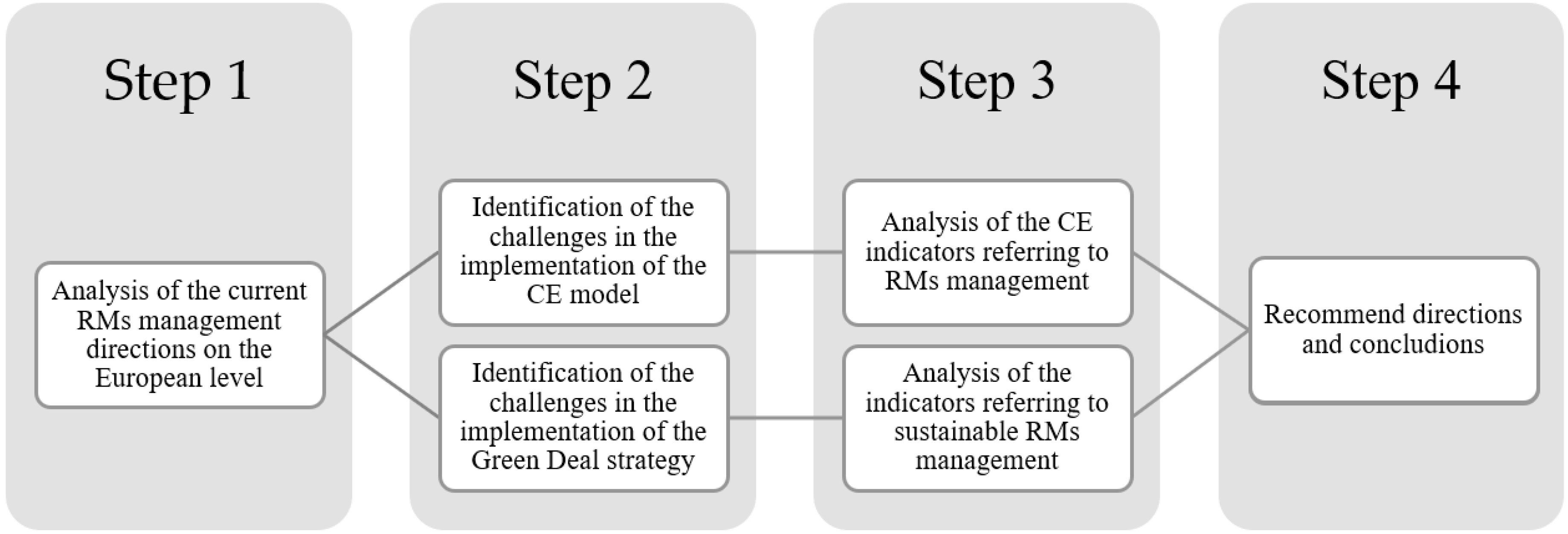
The research framework includes four steps of the analysis, based on a concept presented in Figure 1. In individual steps, various methods and materials were used, which are summarized below:
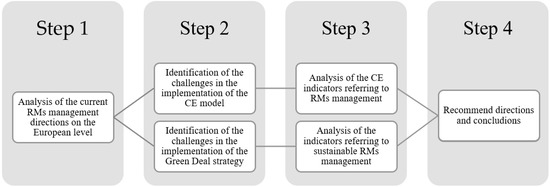
Figure 1.
Scheme of the research framework.
Steps 1 and 2: State of the art analysis with the use of a desk research method was conducted. This included the comprehensive analysis of the European documents related to mineral resources management, which have been published online on a multilingual and free database gathering the EU legal acts, enabling direct access to EU law: EUR-Lex (eur-lex.europa.eu). These steps also included an overview of the European and national documents presenting CE and the Green Deal approaches. The strategic documents that are directly related to the implementation of CE and sustainability assumptions in mineral resource management on the European level have been selected for analysis. The state-of-the-art analysis also included a revision of the available reviewed papers published on scientific platforms such as Elsevier Science Direct, Elsevier Scopus, Google Scholar and MDPI database. The selection of the literature has been made based on a few keywords, as “sustainable development”, “SD”, “circular economy”, “CE”, “indicators”, “raw materials”, “resources”, “management”. It should be emphasized that the initial analysis indicated several hundred literature positions, due to the fact that the concept of sustainable development has been described in many publications around the world, and since 2015 there is a clear increase in the number of CE-related items. Therefore, the research in the latest publications that is directly related to the adopted research topic (sustainable and circular RMs management) has been selected.
Step 3: An analysis of selected indicators referring to circular and sustainable RM management has been conducted with the use of statistical data published by the European Statistical Office - Eurostat (ec.europa.eu/Eurostat). The selection of indicators consistent with assumed areas of resource management has been done based on the review of already existing indicators which have been indicated in the CE monitoring framework [6]. The EC also states that the CE Package is instrumental in reaching sustainable development goals (SDG), therefore the Directorate General for Environment which is the EC department responsible for EU policy on the environment [10] published a list of indicators related to the sustainable management of RMs, which can also support the CE implementation. They have been also chosen and analyzed in the current research. The final list of analyzed indicators included five CE indicators provided in the CE monitoring framework and three indicators focused on the sustainable resource management. The characteristics of these indicators are provided in Table 1.

Table 1.
Characteristic of the selected indcators related to raw material (RM) management in the European Union (EU) [11,12].
Step 4: This step included an interpretation of results presenting selected indicators on circular and sustainable RMs management and the EC directions. The method of synthesis (combining distinguished aspects), induction (deriving conclusions from the premises that are their individual cases) and round table discussion (consultation in the group of internal and external experts) were used in this part of the research.
3. Inventory of Mineral Resources Management on the European Level
This section provides a description of mineral resource management, taking into account the sustainable and circular principles.
3.1. Importance of Mineral Resources Management at the European Level
The management of mineral resources is an important issue in a contemporary development policy, both at a national [13] and an international level [14]. It is a consequence of the fact that even the strongest economies in the world need constant and safe access to RMs in order to maintain continuous growth and further development [15]. However, at present, the economy of each country is more or less dependent on a supply of mineral resources from external sources, and this dependence usually increases with the technological advancement of the economy [16]. Ensuring the security of RMs is particularly important for European countries, which, due to the lack of deposits of several minerals, are forced to supplement their supply of raw materials with imports from countries of various stability, both political and economic [17]. In order to emphasize the importance of rational mineral resource management for the EU economy and the need to ensure secure supplies, in 2008 the EC adopted the Raw Materials Initiative (RMI), which sets out a strategy to solve the problem of access to raw materials in member states [18]. In the first lines of the document, the EC provides the statement that “raw materials are essential for the sustainable functioning of modern societies”. The RMs are necessary for the sustainable existence of current and future generations, in accordance with the principle of sustainable development, and concentrates research on innovative mining technologies, material substitution, resource efficiency and the supply of secondary RMs through recycling [19]. In 2011, the EC published the Roadmap to a Resource Efficient Europe, showing a specific framework for the actions which have to be taken in the following years [20].
The importance of mineral resources for economic development and promoting innovation is also highlighted in the European vision “raw materials are a major European strength”, which includes three strategic goals: securing the supply of RMs, designing innovative solutions and closing material cycles. In order to support the implementation of presented goals, the EC established in 2014 a new body of the EU—the European Institute of Innovation and Technology on the Raw Materials (EIT Raw Materials). Currently, it is the largest consortium in the RM sector worldwide, which connects more than 120 core and associate partners and more than 180 so-called project partners representing all sides of the knowledge triangle (industry, universities and research units) from more than 20 European and non-European countries. The mission of EIT Raw Materials is to enable the sustainable competitiveness of the European minerals, metals and materials sector along the value chain through driving innovation, entrepreneurship and education [21].
The indicated development directions of the RMs sector are consistent with the CE model, which assumes a more sustainable use of primary RMs and increases the importance of secondary RMs in a market [22]. Currently, secondary raw materials face a number of barriers in competing with primary resources which, in many cases, are considered as more safe, but also more efficient, more available and cheaper. In particular, it is very important to introduce requirements for the content of secondary raw materials in products, which will contribute to preventing the mismatching of the supply and demand of secondary raw materials and ensure a smooth expansion of the recycling sector in the EU. Therefore, the newest CE Action Plan includes the recommendation to create a market observatory for key secondary materials [23].
The transformation towards the CE is a key element in the implementation of the resource efficiency initiative envisaged under the Europe 2020 strategy for smart, sustainable and inclusive growth [23]. It was estimated that improving resource efficiency throughout the entire value chain can reduce the demand for material expenditure in the EU by 2030 by up to 24%. In addition, better use of resources could provide European industry with savings of up to 630 billion EUR per year. The RMs sector faces many challenges in the aspect of implementation of the CE [4], especially in terms of increasing levels of material recycling, but it is undoubtedly one of the most important sectors affecting the competitiveness of the European economy, innovation development and transition to the CE.
3.1.1. Management of Mineral Resources in the Circular Economy Model
The circular economy is one of the priorities of the EU’s economic policy. CE systems assume the transition from a linear model scheme to a circular model in which waste, if it is produced, becomes a valuable raw material. To date, the EC has published four main documents which indicate the key CE directions for the all EU:
- Communication No. 398, 2014. Towards a circular economy: A zero waste programme for Europe [4];
- Communication No. 614, 2015. Closing the loop—An EU action plan for the Circular Economy [5];
- Communication No. 29, 2018. Monitoring framework for the circular economy [6];
- Communication No. 98, 2020. A new Circular Economy Action Plan For a cleaner and more competitive Europe [3].
In all strategic CE documents, the EC clearly emphasizes the importance of sustainable RM management in the transformation process towards CE in Europe. Moreover, the indicated CE definitions also refer directly to issue of the mineral resources, as, in 2014, the CE was defined as “system which keeps the added value in products for as long as possible and eliminates waste” [4]; in 2015 the CE was indicated as “economy where the value of products, materials and resources is maintained in the economy for as long as possible, and the generation of waste minimized” [5]; and in 2020 as “a regenerative growth model that gives back to the planet more than it takes, advance towards keeping its resource consumption within planetary boundaries, and therefore strive to reduce its consumption footprint and double its circular material use rate in the coming decade” [3].
In order to transform to the CE in resource management, it is expected to contribute to greater balance and harmony between the economy, environment and society [24] while increasing resource efficiency and ensuring more efficient management of municipal [25] and industrial waste [26]. One of the EC’s objectives is to promote, in the context of the EU’s wider industrial policy, the competitiveness of industries related to mineral resources, such as the metal industry, non-metallic raw materials industry, mining, non-energy industry, food industry, and others. The intensification of activities in the field of more sustainable resource management will contribute to increasing Europe’s competitiveness, and modernizing its economy and industry in the coming years, which, in turn, will lead to the creation of new jobs, environmental protection and sustainable economic growth [4,5].
3.1.2. Management of Mineral Resources According to the European Green Deal
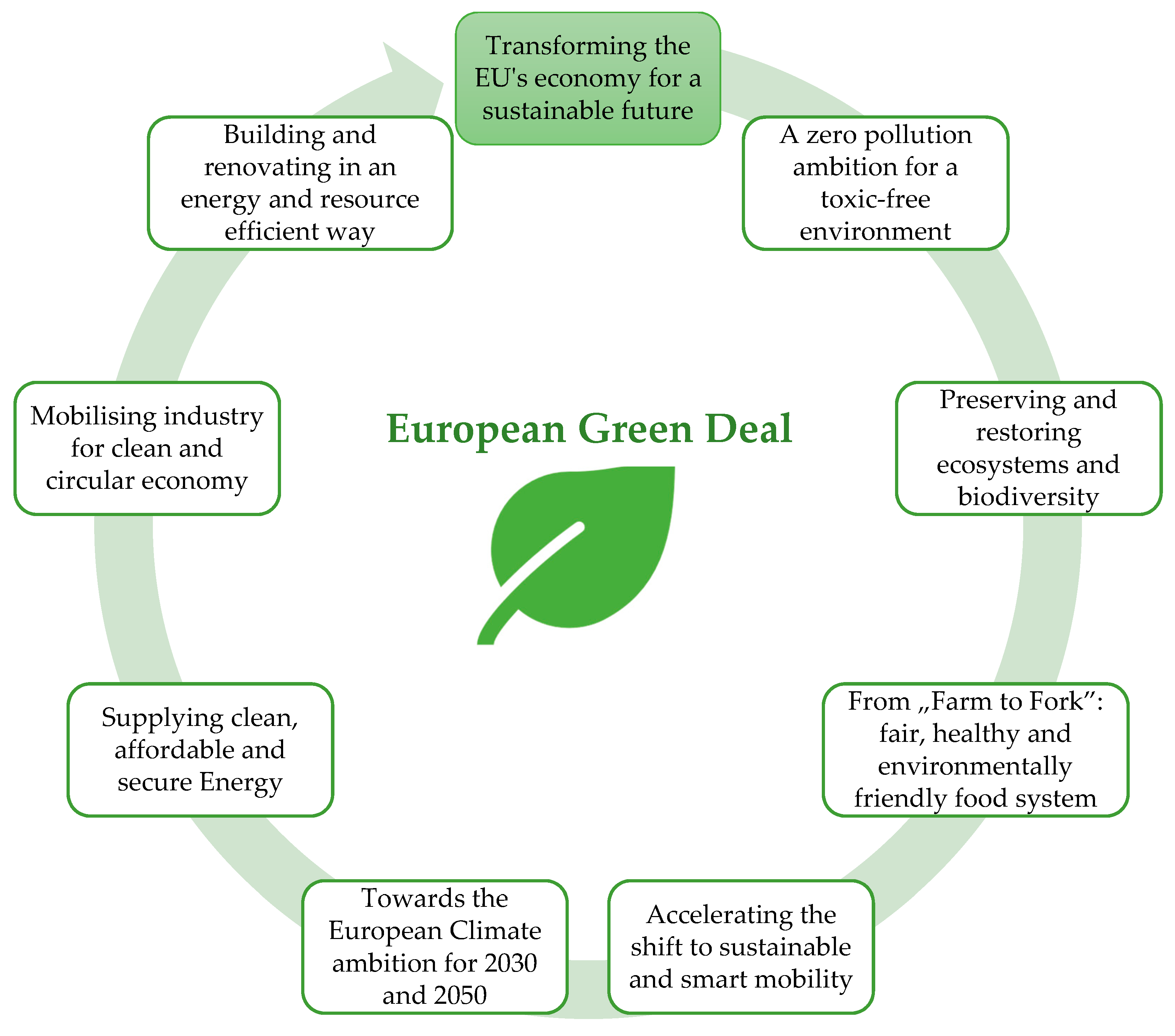
The European Green Deal is the newest EU strategy which is also an integral part of actions related to the implementation of the United Nation’s 2030 Agenda and sustainable development goals [27]. The Agenda indicated 17 SDG to prevent climate change through better natural resource management. The European Green Deal assumes that sustainability and the well-being of citizens are the centre of economic policy, while SD goals are at the heart of the EU’s policy making and action [1]. The main elements of the new European strategy are presented in Figure 2.
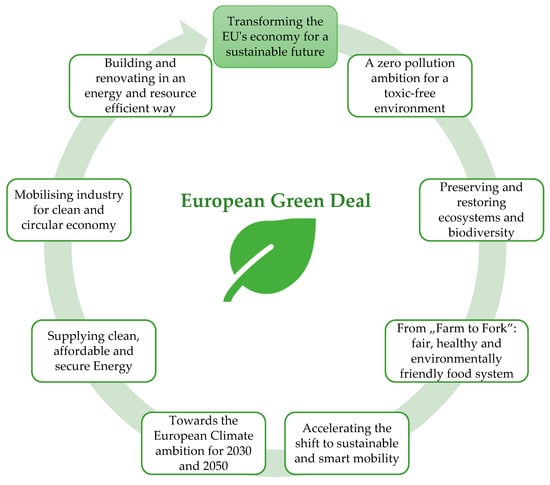
Figure 2.
The ambitions of the European Green Deal (own, based on [1]).
In Communication [1], the EC presents the roadmap of the key policies and measures which have to be taken in order to achieve the European Green Deal. The strategic actions which have to be implemented in the area of mineral resources management include the development of a set of deeply transformative policies, taking into account sustainability in all European policies. The management of RMs has to include the three aspects of the SD—economic, environmental and social. It is strongly underlined that the sustainable use of resources and improving human health have to be increased in order to deliver the European Green Deal. Another important element is the mobilisation of industry for a clean and circular economy as, in the last 50 years, the annual global extraction of materials increased three times and it continues to grow, creating a major global risk. Currently, approximately half of the total greenhouse gas (GHG) emissions and >90% of biodiversity loss and water stress come from RM extraction and the processing of materials, fuels and food. Moreover, only 12% of the materials which are used in the European economy come from recycling. Therefore, the continuation of actions focused on increasing recovery and recycling rates are a priority. This is especially important in the aspect of the management of the critical raw materials (CRMs) which both are of high economic importance for the EU and have a high risk of supply disruption [28]. The EC carries out a criticality assessment at the EU level on a wide range of RMs every three years, starting in 2011 [16]. In the last CRMs list, 27 RMS are indicated, including, for example, phosphorus and phosphate rock, rare earth elements, cobalt or niobium [29]. Access to all necessary RMs is also a strategic security target for the European ambition to deliver the Green Deal [1]. An uninterrupted supply of sustainable RMs (with strong emphasis on the CRMs) is necessary for clean technologies, space digital, and defence applications. However, it can be only realised by the diversification of the supply of both primary and secondary RMs.
The EC is searching for the European “climate and resource frontrunners” in the industry to propose the first commercial applications of breakthrough technologies in strategic industrial sectors by 2030. Key areas include pure hydrogen, fuel cells and other alternative fuels, energy storage as well as carbon capture, storage and utilization. Moreover, digital technologies are indicated as a critical enabler for attaining the SD goals in many different sectors as they create several opportunities for the monitoring and optimisation of natural resource usage and material flows. The materials, such as sand, cement or gravel, which are used in the construction sector, need to be managed in a more resource-efficient way. In the context of global population growth, providing healthier and organic food is a very important challenge, while a reduction in food waste has been observed in recent years. Therefore, one of the strategic objectives of the Green Deal is to build a fair, healthy and environmentally friendly food system. At present, the food sector consumes huge amounts of natural resources while wasting a large amount of the food produced. There are several new opportunities for all actors in the food value chain. The EU citizens can benefit from innovative technologies and scientific achievements, combined with increasing public awareness and a demand for sustainable food. The EC is preparing the ‘Farm to Fork’ Strategy that is going to be presented in spring 2020 and launch a broad stakeholder debate covering all the stages of the food chain, and paving the way to formulating a more sustainable food policy [1].
The Green Deal focuses also on the improvement the RMs management in the area of preserving and restoring ecosystems and biodiversity. The worldwide erosion of biodiversity is a result of, among others, the structure of direct exploitation of natural resources. Therefore, the central role in the reduction in the multiple demands on European land resources and tackling climate change should form a sustainable ‘blue economy’. This can contribute the better usage of marine and aquatic resources and promote the production and use of new sources of protein that could relieve pressure on the agricultural land.
Trade policy can support the transformation toward the Green Deal. The European trade policy should focus on the permanent and fair trade and investment in RMs that the EU economy requires for the green transition. It should reduce harmful actions such as unlawful logging. Moreover, it can enhance regulatory collaboration, promoting EU standards and the elimination of non-tariff barriers in the renewable energy sector. All raw materials available on the European market have to comply with relevant EU standards or regulations.
All mentioned activities focused on the European Green Deal implementation are ensured by more sustainable and circular resource management. It is important to underline that the environmental ambition of the European Green Deal can be achieved only by the integration of efforts taken by not only all member states, but also other world regions and countries. The EC announced its support, mobilising EU neighbours and partners to follow a sustainable path. In this approach, the EC is acting as a global leader [1].
It should be emphasized that the implementation of new economic strategies cannot be associated only with the presentation of slogans and the introduction of the legal restrictions. Real actions must be taken. However, these actions need to be controlled and monitored by appropriate units. Therefore, the EC proposed groups of indicators relating both to the sustainable and circular management of RMs. Thanks to this, it is possible to assess the effectiveness of implemented activities, and, if necessary, to propose corrective actions. The next chapter presents an analysis of the selected indicators relating to the sustainable and circular management of RMs in the European countries.
4. Analysis of Indicators Referring to Circular and Sustainable Mineral Resources Management
The section provides a detailed analysis of the indicators related to the circular and sustainable management of mineral RMs. Detailed characteristics of the evaluated indicators which correspond to circular and sustainable resource management are presented in Table 1.
4.1. CE Indicators Presenting Mineral Resources Management
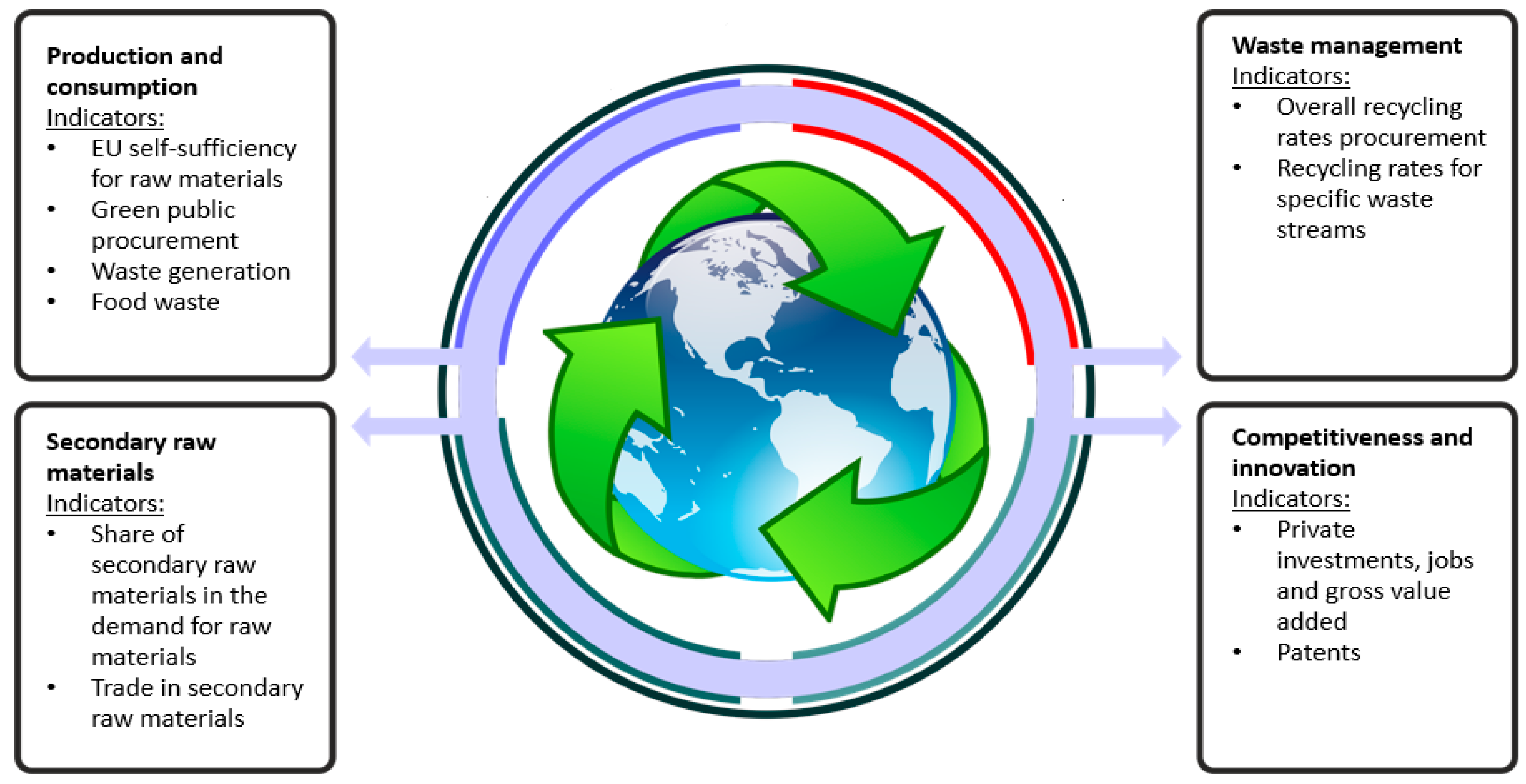
According to the CE monitoring framework, the observation of key trends and benchmarks is crucial to understanding how individual elements of the CE model develop over time, to identify success factors in individual member states, and to assess whether sufficient action has been taken. The EC pointed out that it is not possible to indicate one universally recognized closed-loop indicator due to the complexity and numerous dimensions of the transition to CE model. Therefore, for the purposes of monitoring, a set of selected indicators has been proposed, grouped into four main areas of the circular economy, i.e.: (1) production and consumption, (2) waste management, (3) secondary raw materials and (4) competitiveness and innovation. In 2018, the EC presented 10 key CE indicators covering each stage of the product life cycle and competitiveness aspects [6]; they are presented in Figure 3.
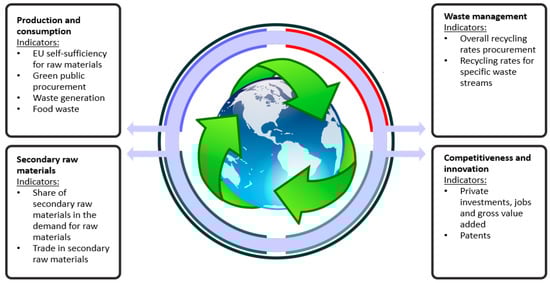
Figure 3.
Circular economy (CE)-Monitoring Framework (own, based on [6,30]).
The results for individual indicators are updated and made available on the website of the Eurostat. Currently, the EC is working on expanding the list of indicators in individual areas of CE, especially those regarding waste from the agri-food sector and green public procurement (GPP). To monitor the progress in the transformation towards a CE in matters related to RM management, the EC proposed the selected indicators (out of 10 indicated in the CE monitoring framework) which are directly related to RMs. They have been chosen for further analysis in the current research:
- In the area of production and consumption:
- EU self-sufficiency in raw materials;
- In the area of secondary raw materials:
- Share of secondary raw materials in the demand for raw materials;
- Trade in secondary raw materials;
- In the area of competitiveness and innovation:
- Patents related to recycling and secondary raw materials.
Moreover, the indicator “circular material use rate” was also included in the analysis. The characteristics of CE indicators, which are further discussed, are provided in Table 1. Indirectly, all proposed CE indicators are associated with the RM sector. The developed framework for CE monitoring uses and complements the existing scoreboard on resource efficiency and the scoreboard on RMs, which, in recent years, has been developed by the EC and is published in studies as the Raw Materials Scoreboard [31]. In the new CE Action Plan, the EC indicates that new indicators will be proposed, with the focus areas in this action plan, of the interlinkages between circularity, climate neutrality and the zero pollution ambition. In 2021, it is planned to update the monitoring framework to reflect new policy priorities and develop further indicators on resource use, including consumption and material footprints. Moreover, some projects realised that, under Horizon Europe and Copernicus, data will improve circularity metrics at different levels not yet reflected in the official statistics. In the area of RM management, the indicators on resource use, such as consumption and material footprints, will be developed and linked to monitoring and assessing the progress towards decoupling economic growth from resource usage and its impacts in the EU and beyond [3].
4.1.1. EU Self-Sufficiency for Raw Materials
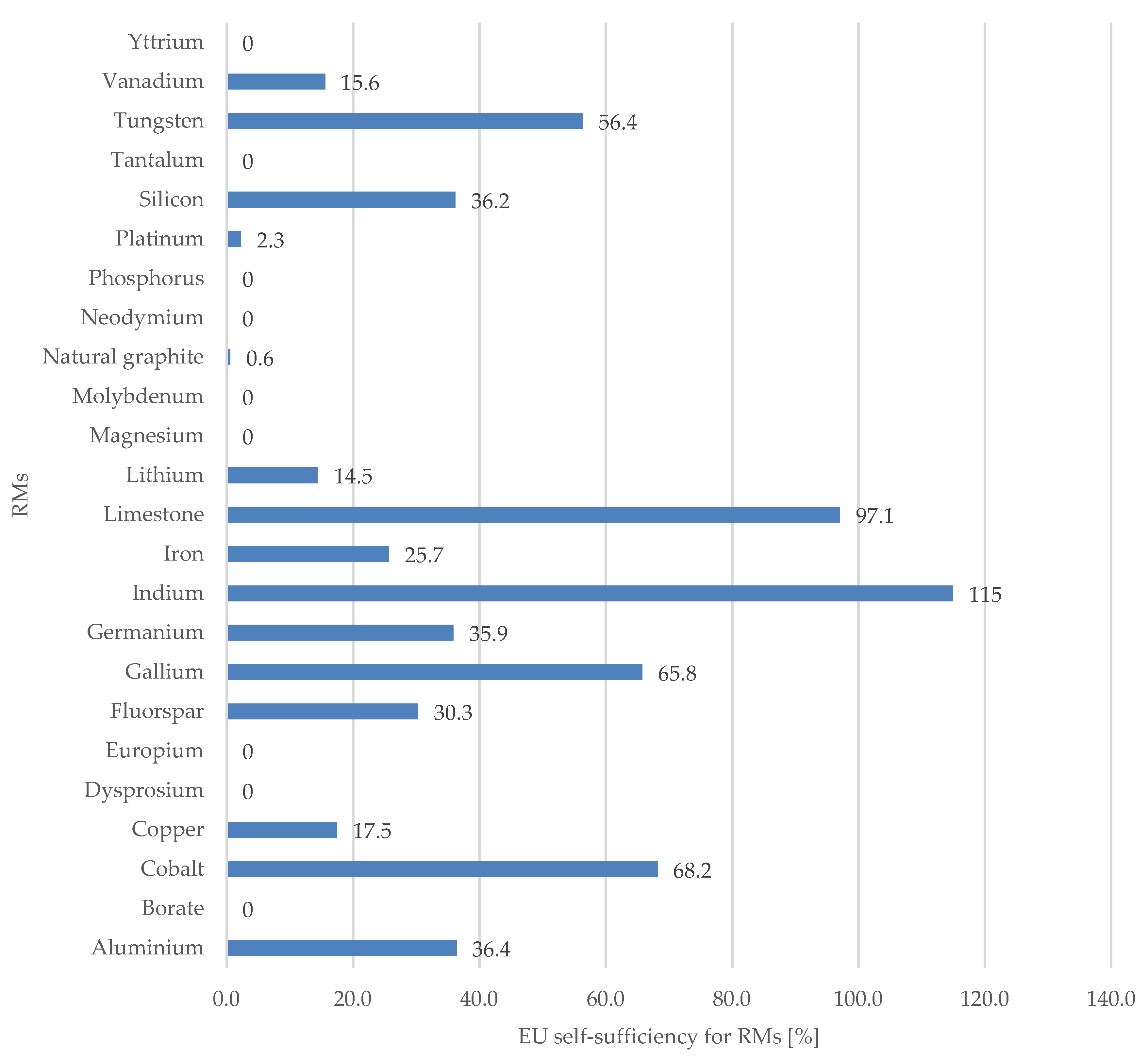
The indicator defines the degree of EU independence from the rest of the world in relation to selected raw materials, including CRMs. In 2017, the EC presented an updated list of 27 EU CRMs. This list is regularly updated, at least every three years, to take account of changes in production, market development and technology, and increases in the number of RMs are evaluated with each update [29]. The results achieved for the EU self-sufficiency in the supply of selected RMs (presented in percentage, %), ranked from the highest to the lowest value, are presented in Figure 4. The available data come from 2016, and apply to the entire EU. The EU is largely self-sufficient for most non-metallic RMs, such as building materials and industrial minerals. However, for EU CRMs, the EU is heavily dependent on imports, indicating the need for secure access and a diversification of supply. The implementation of CE models should help to solve the problem of risk associated with the supply of RMs, especially CRMs. In some cases, their extraction also has significant environmental impacts, and therefore their critical economic significance may also have significant environmental policy implications. Promoting CE in the management of CRMs is also extremely important due to the fact that global production is concentrated in several countries (e.g., China, Russia), and many of these RMs are characterized by low substitution and low recycling rates.
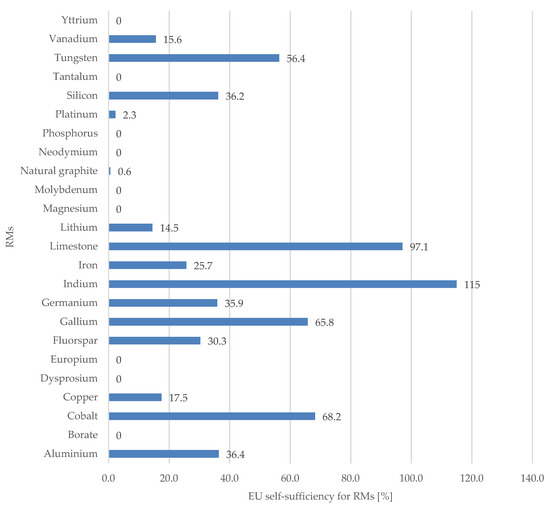
Figure 4.
EU self-sufficiency in selected RMs in the EU (28) in 2016 (own insights, based on [11]).
4.1.2. Share of Secondary RMs in the Demand for Mineral Resources
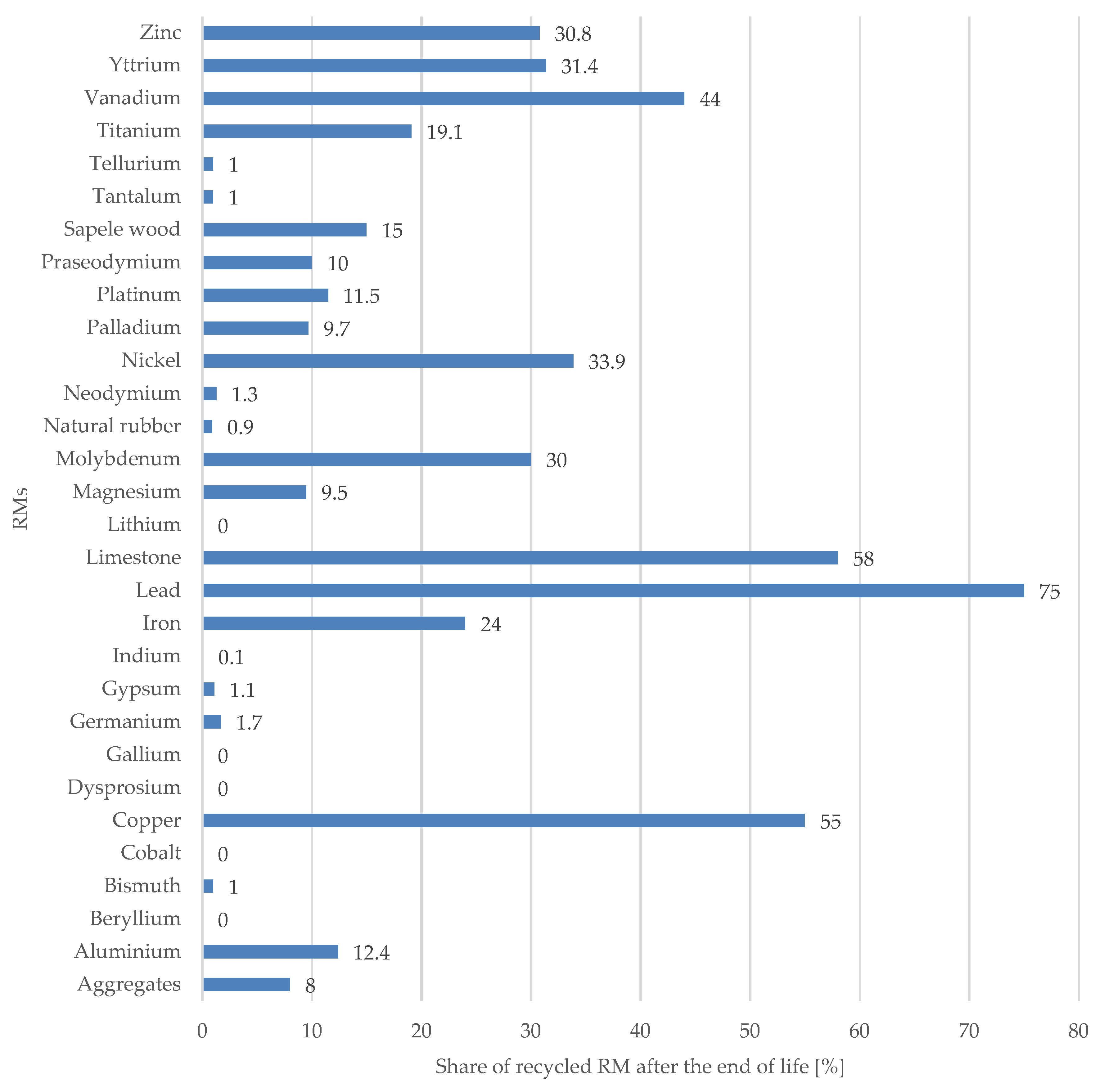
The indicator, also referred to as end-of-life recycling input rates (EOL-RIR), is indicated in the area of secondary RMs in the CE monitoring framework. The RMs are defined as “a part of the waste generated in production processes or products that have lost their utility value as a result of exploitation, and may be a source of primary RMs in other processes or for other users, or part of matter or energy which has not reached its intended parameters, has not become a main or by-product, or is an accompanying product but which can be technically processed into main or by-products” [32]. The ratio of recycled RMs after decommissioning measures the ratio of waste recycling to demand in the EU for a given RMs, equal to the supply of primary and secondary RMs to the EU. The achieved values of this indicator in the EU in 2016 are shown in Figure 5. As can be seen from Figure 5, the share of recycled RMs after decommissioning in the EU in 2016 was different for individual resources. The highest values were obtained for lead (75%), limestone (58%), vanadium (44%) and copper (55%). It is very disturbing that, for many raw materials, these indicators are at zero level (cobalt, lithium, gallium).
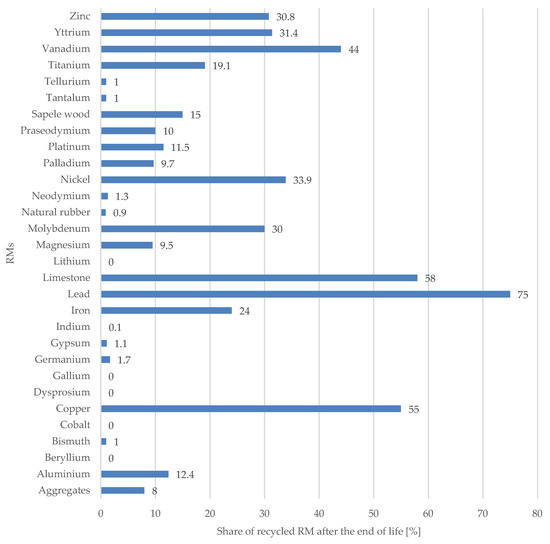
Figure 5.
Share of recycled RMs after the end of life in the EU (28) in 2016 (own insights, based on [11]). Aggregates include crushed rock, other sands (not silica), pebbles, gravel, bitumen additives.
4.1.3. Circular Material Use Rate
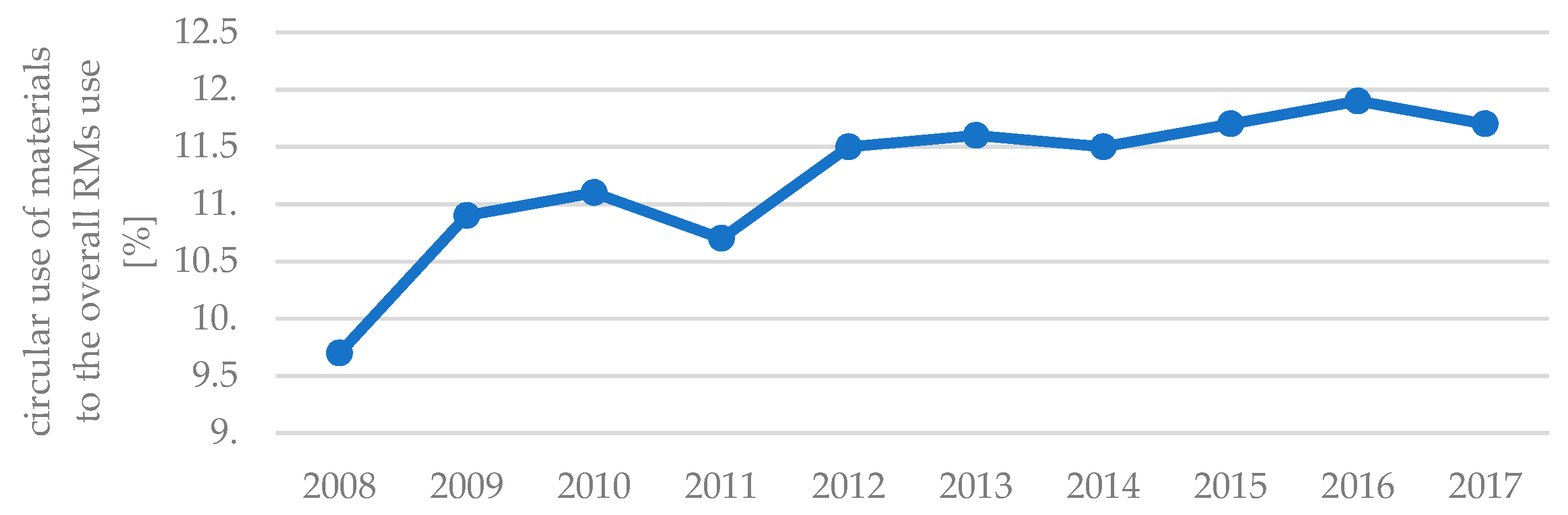
The circular use of RMs refers to the amount of waste recycled in domestic recovery plants minus imported waste destined for recovery plus exported waste destined for recovery abroad. In detail, it presents the share of RMs which have been recovered and fed back into the economy. It creates a saving extraction of primary RMs in overall material usage. The indicator is also known as circularity rate, which is defined as the ratio of the circular use of materials to the overall material use. The results, presenting the circular use of RMs in the EU in the years 2008–2017, are shown in Figure 6. A positive trend can be clearly seen, the use of secondary raw materials has increased since 2008, from 9.7%, to 11.7% in 2017. As a result of EC recommendations regarding the implementation of CE Package, further increases in the amount of secondary RMs used in the European economy can be expected.
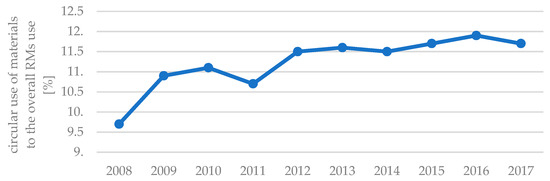
Figure 6.
Circular material use rate in the EU (28) in 2008-2017 (own based on [11]).
4.1.4. Trade in Secondary Raw Materials
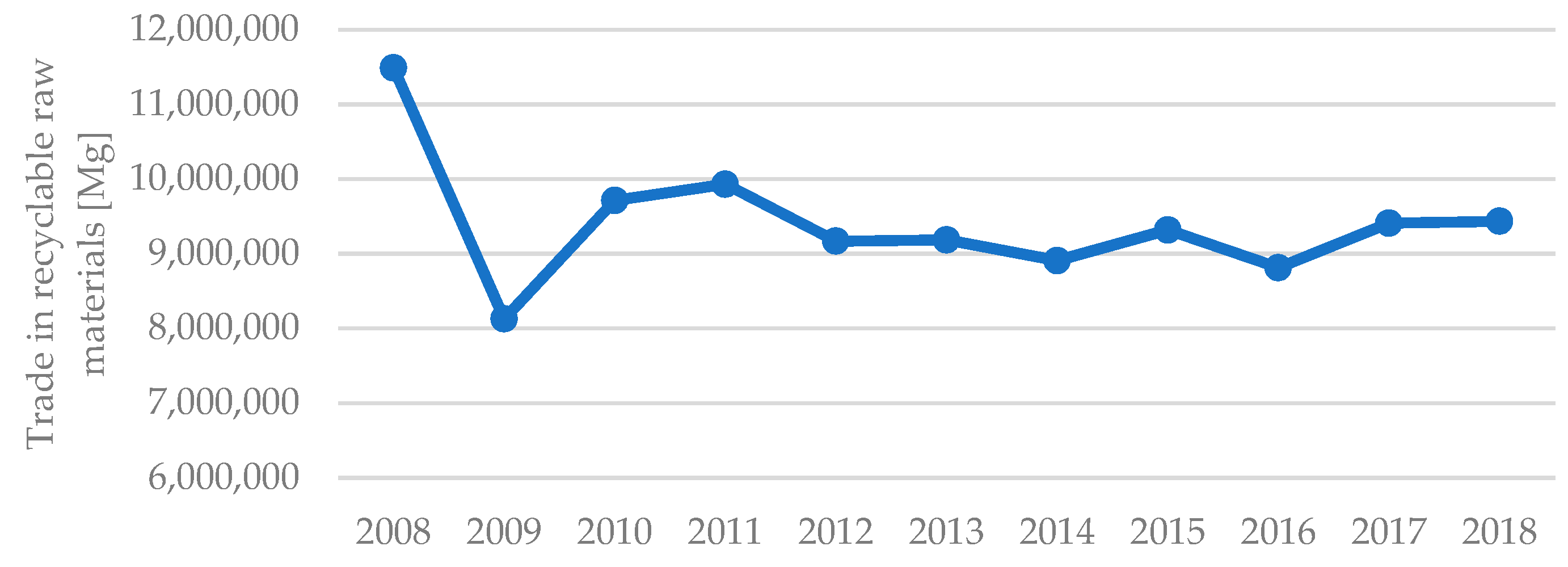
This indicator presents the quantities of selected waste categories and by-products that are shipped between the EU countries and outside the EU. The following five classes of wastes are taken into account: paper and carboard; plastic; precious metal; iron and steel; aluminium, copper and nickel. The trade in the secondary RM indicator includes intra-EU trade of recyclable RMs (imports from EU countries) and extra EU trade of recyclable RMs (imports from non-EU countries). The obtained values of indicators in 2008–2018 are presented in Figure 7. In recent years, an increase in the trade of secondary RMs is observed. More and more residual materials are recycled and re-injected into the economy as new raw materials. Further increases are recommended in the CE model.
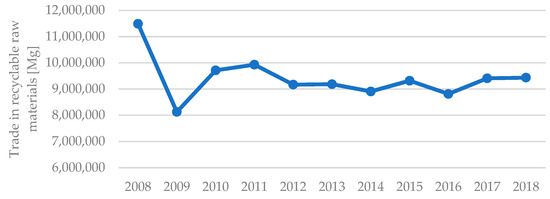
Figure 7.
Trade in secondary RMs in the EU (28) in 2008-2017 (own based on [11]).
4.1.5. Patents Related to Recycling and Secondary Raw Materials
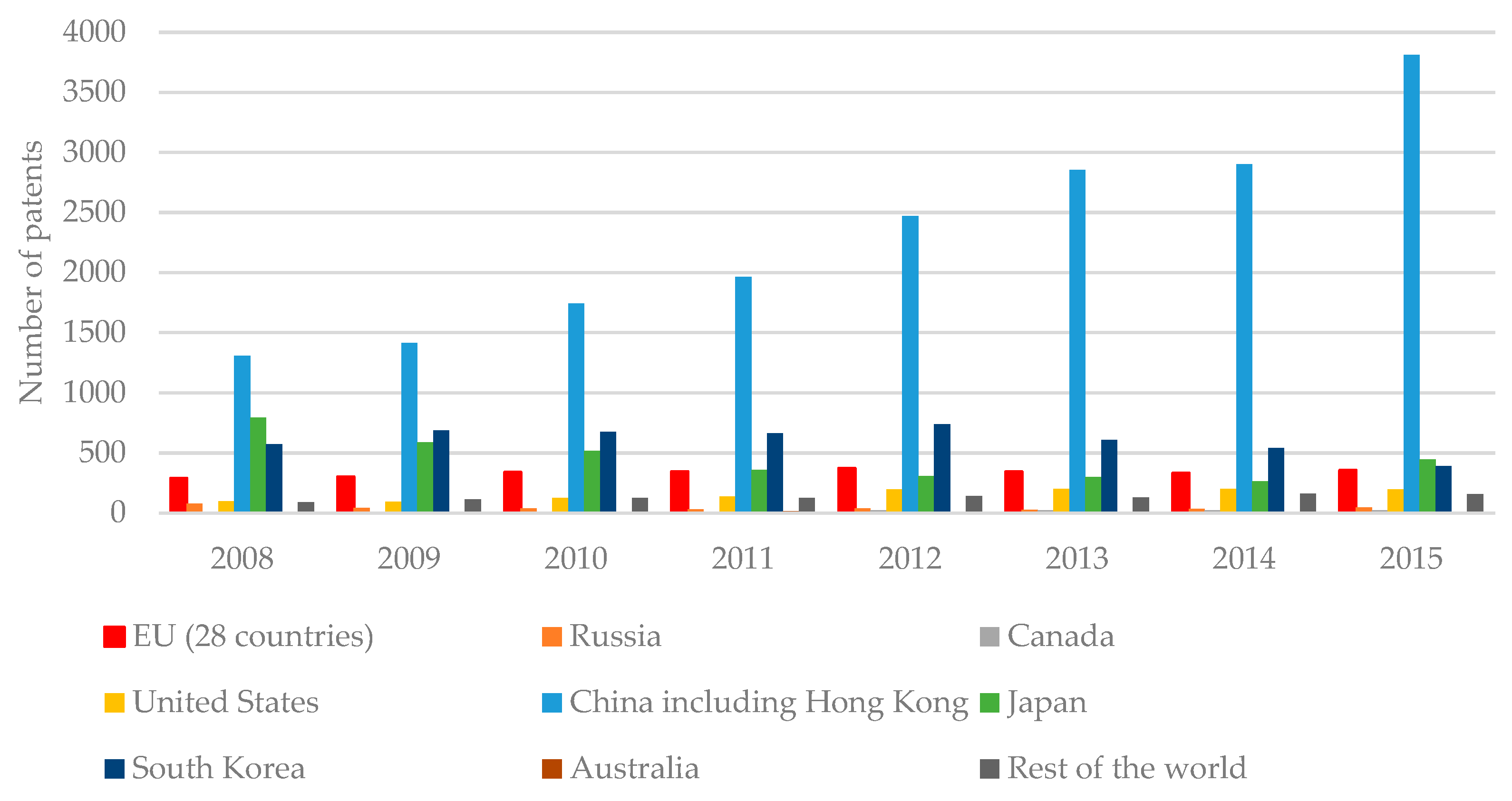
An important element of economy growth is the development and implementation of the innovative solution on the market. One of the indicators which can present this aspect of economic growth is the number of patents related to recycling and secondary RMs. In order to measure the number of patents, the attribution to recycling and secondary RMs was done using the relevant codes in the Cooperative Patent Classification (CPC). The changes in the number of patents related to recycling and secondary RMs in 2008-2015 are presented in Figure 8. The newest information came from 2015, therefore it cannot be assumed that the CE implementation has significant impact on the number of the mentioned patents. In previous years, the leader was China (including Hong Kong) in which the number of patents reached 3811 in 2015. The EU countries (28), unfortunately, are far behind the leader, and in 2015 published 356 patents, which, compared to 2008, when 288 patents were published, is an important increase.
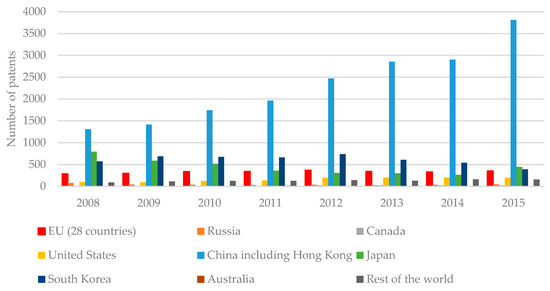
Figure 8.
Number of patents related to recycling and secondary RMs in the world in 2008–2015 (own based on [11]).
4.2. Indicators Presenting Sustainable Mineral Resources Management
The Green Deal strategy emphasizes that the SD principles should be implemented in the first place, therefore the monitoring of indicators that present sustainable RMs management is an important part of implementing this strategy. There is a set of indicators presenting sustainable mineral resource management. In the area of sustainable resource management, three specific indicators related to the performance of the EU countries in transforming their economies toward circularity were proposed by the Directorate-General for Environment. The indicators focus on several aspects of RMs management that lower resource demands, increase resource security and lower pressures on the environment on the national and international levels. The following indicators are presented [12]:
- Domestic material consumption (DMC);
- Raw material consumption (RMC);
- Resource productivity.
All of these three indicators are studied in the sections below. A description of these indicators, which are further discussed, is provided in Table 1.
4.2.1. Domestic Material Consumption
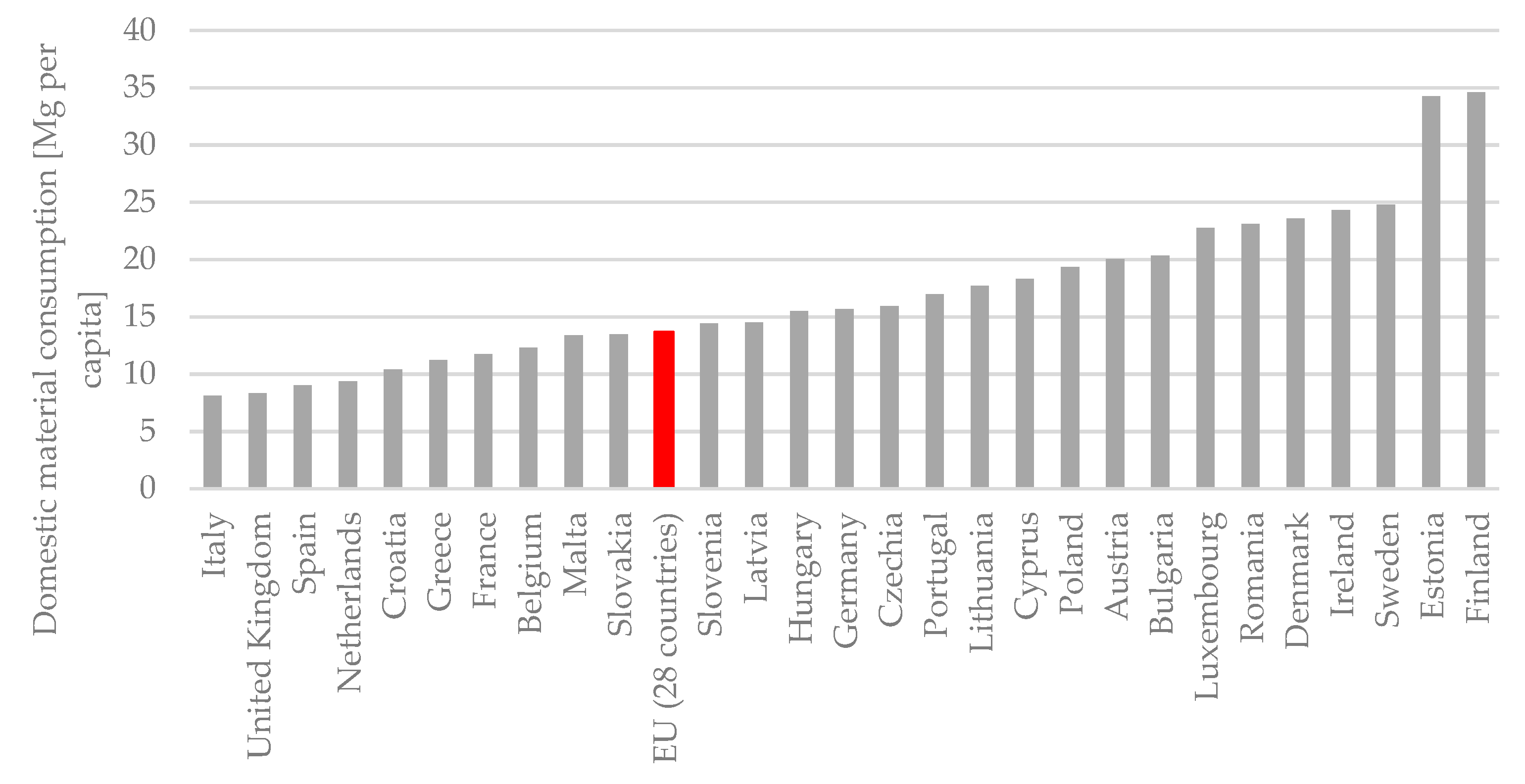
The indicator shows the total amount of RMs directly used in an economy and equals direct material input (DMI) minus exports. The indicators are presented ‘per capita’, showing the average population. The calculation of the DMC is based on the Economy-Wide Material Flow Accounts (EW-MFA), which takes into account the overall RM inputs into the national economy, changes in material stock within the economy and the RM outputs to other economies or to the environment. The calculated values of the DMC per capita in the European countries are presented in Figure 9. The average value for all 28 EU countries in 2018 was equal to 13.6 Mg per capita, while the highest value was detected in Estonia and Finland (34.3 and 34.6 Mg per capita, respectively).
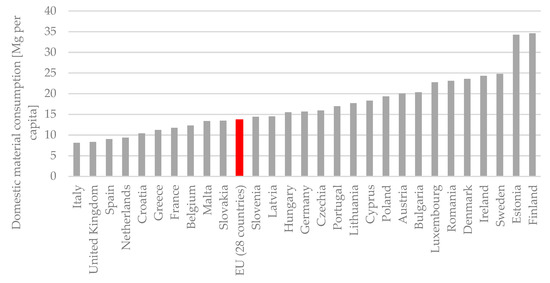
Figure 9.
Domestic Material Consumption per capita in the EU (28) in 2018 (own, based on [12]).
4.2.2. Raw Material Consumption
The RMC is indicated as an indicator that shows the material footprint of the EU as a whole. The RMC presents the total amount of extracted RMs that are necessary in the production of goods and services consumed by residents of all EU countries. In 2014, the RMC in the EU was equal to 13.9 Mg per capita compared to the average EU DMC of 13.3 Mg per capita. In 2017, the RMS reached 14.0 Mg per capita [12].
4.2.3. Resource Productivity
The indicator resource productivity measures the total amount of RMs directly used by an economy, or the DMC, in relation to gross domestic product (GDP). Resource productivity (GDP/DMC) offers insights into decoupling between the use of RMs and economic growth and is used as a European SD indicator for policy evaluation. Resource productivity is the lead indicator of the Resource Efficiency Scoreboard. The resource productivity has increased in recent years in the EU as whole, from 1.6 Euro per kg in 2008 to 2.1 Euro per kg in 2018 [12].
5. Recommended Directions
The SD and the CE are now irreversible global visions on a large scale. To deepen the implementation of the SD goals, the EC proposed a new strategy in late 2019, the European Green Deal, which also includes CE elements. The EC clearly indicates that efforts need to be intensified at national, EU and global levels to fully close the loop and take advantage of the competitive advantage that the CE provides for EU businesses [6]. It should be emphasized that the Green Deal strategy and the concept of CE refer to the more sustainable management of materials and resources, as well as more rational practices in waste management and recycling. Therefore, it should be highlighted that the RM sector plays a key role in the transformation towards the European Green Deal [1]. Mineral resources are important for the European economy because they are at the beginning of production value chains. Their availability may vary due to changes in trade flows or changes in trade policy, which confirms the general need to diversify supplies and increase the level of recycling of all RMs, with particular regard to CRMs [6]. The previous European strategy “Europe 2020” referred also to rational resource management with three interrelated priorities: 1) smart growth, which is based on knowledge and innovation, 2) sustainable growth, focused on improvements in the resource efficiency next to the implementation of a greener and more competitive economy and 3) inclusive growth, which focuses on supporting a high-employment economy with a strong emphasis on social and territorial cohesion [23].
Ensuring the security of RMs is particularly important for the European countries, which, due to the lack of deposits of several minerals, are forced to supplement their supply of RMs with imports from countries of various stability, both political and economic [13]. Permanent and stable access to a sufficient amount of RMs of specified quality is an indispensable factor, ensuring both the continuity of economic processes and sustainable development, ensuring the survival of present and future generations [33]. Restricting access to mineral resources, in turn, poses a threat in the context of security as well as quality of life and development prospects for sectors based on these resources. Work ensuring RMs’ safety is undertaken by the EC, which, in 2008, announced the RMs’ initiative, which indicates that access to mineral resources and their affordability are key to the proper functioning of the EU economy. Emerging restrictions on access to RMs may, however, be an impulse to search for new solutions, both organizational and technological, aimed at reducing the demand for RMs, as well as their more efficient use and increasing the level of recovery of RMs from waste [34]. In some of the developed countries, specific actions focused on secure access to one of the most important CRMs—phosphorus (P)—have been already introduced. Typically, phosphorus can be found in phosphate-containing minerals that are mined; however, they are a limited and non-renewable resource. Moreover, natural reserves of phosphate rock are available in a limited number of countries such as Morocco, Russia, China, and the United States. European countries are dependent on imports, 88% for phosphate rock and 100% for white phosphorus [29]. In order to reduce dependence on external importers, Switzerland, as the first European country, introduced the obligatory recovery of phosphorus from waste generated in the water and sewage sector [35]. The second country which implemented obligatory P recovery was Germany [36]. It should be noticed that more and more European countries have announced that they will follow the given examples of these frontrunners with some flexibility. Both countries are examples of the implementation of sustainable and circular management of a significant resource, which is phosphorus. This can be an acceleration for the further development and implementation of P recovery technologies, thereby increasing the EU self-sufficiency indicator for phosphorus, which is currently equal to 36% (as was indicated in Figure 4).
In order to support stakeholders in the transformation towards CE, the EC in 2018 indicated the CE monitoring framework, giving 10 key indicators, most of which are directly or indirectly related to the RM sector [37]. For example, in the area of production and consumption, the EC will monitor the EU’s self-sufficiency index in terms of RMs. The first published data in this regard from 2016 suggest that the EU is largely self-sufficient for most non-metallic RMs, but, for the CRMs, the EU is still dependent on imports, which threatens the security of EU RMs. In addition, the share of recycled RMs after decommissioning is still not sufficient and it exceeds 50% for only three selected RMs analyzed (lead yttrium and vanadium). An important indicator which shows the economic importance of RMs in the CE is the trade in secondary RMs, which presents the quantities of selected waste categories and by-products that are shipped between the EU countries and outside the EU. There is a valuable increase in the trade of secondary RMs in the EU which is a good phenomenon in the context of implementing the CE. There is high interest in the recycling and recovery of RMs from waste, which are re-injected into the economy as new RMs. The further increase is strongly recommended by the EC in the coming years, especially in the new CE Action Plan. An important aspect of CE implementation is boosting an innovation. This can be shown in the publication of patents related to recycling and secondary RMs. In recent years an increase in patents has been observed, from 288 in 2008 to 356 patents in 2015. It is worth noting that the leader in the world is China (including Hong Kong), where 3811 were published in 2015. In recent years, many of the European projects have been co-financed by the highest programme supporting the innovation development–Horizon 2020. These projects are currently under realization and many of them should be completed with innovation implementations and patents, therefore a further increase in the number of patents is expected in coming years in Europe. The new opportunity is the next EU supporting initiative—Horizon Europe—which is an ambitious 100 billion EUR research and innovation programme to succeed Horizon 2020.
In sum, RM management in the EU faces a number of challenges in the implementation of CE and realization of the Green Deal strategy, primarily in achieving increased levels of CRMs recycling, as well as the greater involvement of the stakeholder itself and ecological awareness raising among enterprises operating in the RMs sector. It is very important to underline that there are specific differences between sustainable development and CE, as SD focuses on minimizing the impact of human activities on nature, while the CE transforms business models and technologies to maximize economic profits in line with SD principles. However, there are many common activities that lead to the achievement of assumed targets in both sustainable and circular management of raw materials.
The results of the previous steps of the study allowed the identification of a holistic approach to the circular and sustainable management of raw materials, divided into three main areas of implementation of sustainable development—environmental, economic and social. They have been summarized in Table 2. The Green Deal strategy and circular economy model assume the preservation of resources within the economy when the product life cycle ends, allowing them to be reused in a productive way and thus creating another value. The transition to the Green Deal and CE requires changes at every link in the value chain, from the product design phase to new business and market models, from new ways of turning waste into resources and new consumer behavior [38]. This involves a complete system change and innovation, not only in technologies, but also in financial models, environmental assessment [39], society and politics. Even in an economy that is heavily based on a closed loop, some element of linearity will remain, as there is a need for resources that have not yet been exploited, and residual waste is removed. This may have several benefits, both reducing waste and increasing the security of the RM supply. An accurate picture of the European raw materials sector must include the movements of resources originating from waste, i.e., secondary raw materials, crossing European boundaries both as imports and exports, as well as intra-EU trade. Work on more sustainable and circular mineral resource management has been widely included in EU policy initiatives to promote development and competitiveness. Member States have implemented various policies and practical instruments aimed at better resource management. EU waste management policy aims to reduce the environmental and health impact of waste as well as to improve resource efficiency [23]. The long-term goal of the EU is to transform Europe into a so-called recycling society [5] which, on the one hand, avoids the production of waste, and when it arises, uses it as a resource.
Table 2.
Targets and recommended actions for the sustainable and circular RM management in the EU (own based on [1,3,4,5,6,7]).
6. Conclusions
Summarizing all the above information, it should be strongly underlined that the RM management in the EU faces a number of challenges regarding the implementation of the principles indicated in the Green Deal strategy and CE model, primarily in achieving increased levels of critical raw materials recycling, as well as the greater involvement of the stakeholder themselves and awareness raising in the field of SD and CE among enterprises operating in the RM sector. However, currently all Member States are working together to accelerate the transformation process in the area of the circular economy and the Green Deal, e.g., by implementing national CE programs. A great opportunity to accelerate the transformation process is the new financial perspective for projects under the balanced and circular management of RM—Horizon 2020 and other support instruments.
Author Contributions
All authors contributed to the development of the current paper. The concept and methodology were prepared by M.S., while the detailed literature review, discussion and recommendations have been done by M.S. and P.M. The revision (review and editing) of the proposed literature review, discussion and recommendations have been done by M.S., J.D. and D.S. All authors have read and agreed to the published version of the manuscript.
Funding
This work was funded by the Polish National Agency for Academic Exchange (NAWA) as the part of the project “Monitoring of water and sewage management in the context of the implementation of the circular economy assumptions” (MonGOS) which is conducted in the Division of Biogenic Raw Materials in the MEERI PAS (2020–2021), project no. PPI/APM/2019/1/00015/U/00001/ZU/00002.
Conflicts of Interest
The authors declare no conflict of interest.
References
- European Commission. Communication No. 640, 2019. The European Green Deal; (COM no. 640, 2019); Commission of European Communities: Brussels, Belgium, 2019. [Google Scholar]
- Tóth, G. Circular Economy and its Comparison with 14 Other Business Sustainability Movements. Resources 2019, 8, 159. [Google Scholar] [CrossRef]
- European Commission. Communication No. 98, 2020. A New Circular Economy Action Plan for a Cleaner and More Competitive Europe; (COM no. 98, 2020); Commission of European Communities: Brussels, Belgium, 2020. [Google Scholar]
- European Commission. Communication No. 398, 2014. Towards a Circular Economy: A Zero Waste Programme for Europe; (COM no. 398, 2014); Commission of European Communities: Brussels, Belgium, 2014. [Google Scholar]
- European Commission. Communication No. 614, 2015. Closing the Loop—An EU Action Plan for the Circular Economy; (COM no. 614, 2015); Commission of European Communities: Brussels, Belgium, 2015. [Google Scholar]
- European Commission. Communication No. 29, 2018. Monitoring Framework for the Circular Economy; (COM no. 29, 2018); Commission of European Communities: Brussels, Belgium, 2018. [Google Scholar]
- European Commission. Report from the Commission to the European Parliament, the Council, the European Economic and Social Committee and the Committee of the Regions on the Implementation of the Circular Economy Action Plan; (COM No. 190, 2019); Commission of European Communities: Brussels, Belgium, 2019. [Google Scholar]
- Smol, M.; Kulczycka, J.; Henclik, A.; Gorazda, K.; Wzorek, Z. The possible use of sewage sludge ash (SSA) in the construction industry as a way towards a circular economy. J. Clean. Prod. 2015, 95, 45–54. [Google Scholar] [CrossRef]
- United Nations. Sustainable Development. In Proceedings of the United Nations Conference on Environment & DevelopmentRio, Agenda 21, de Janerio, Brazil, 3–14 June 1992. [Google Scholar]
- Directorate-General for Environment, EC. Sustainable Resources Management. 2020. Available online: ec.europa.eu/environment/ecoap/indicators/sustainable-resource-management_en (accessed on 3 May 2020).
- European Commission. Monitoring framework Eurostat. 2020. Available online: ec.europa.eu/eurostat/web/circular-economy/indicators/monitoring-framework (accessed on 3 May 2020).
- European Commission. Sustainable Resources Management. 2020. Available online: ec.europa.eu/environment/ecoap/indicators/sustainable-resource-management_en (accessed on 3 May 2020).
- Nieć, M.; Galos, K.; Szamałek, K. Main challenges of mineral resources policy of Poland. Resour. Policy 2014, 42, 93–103. [Google Scholar]
- Szamałek, K.; Galos, K. Metals in Spent Mobile Phones (SMP)—A new challenge for mineral resources management. Gospod. Surowcami Miner. 2016, 32, 45–58. [Google Scholar] [CrossRef]
- Smakowski, T.; Szamałek, K. Prawno-ekonomiczne uwarunkowania gospodarki złożami i surowcami mineralnymi. Zesz. Nauk. Inst. Gospod. Surowcami Miner. Energią PAN 2016, 96, 265–277. [Google Scholar]
- European Commission. Communication from the Commission to the European Parliament, the Council, the European Economic and Social Committee and the Committee of the Regions. Communiccation No. 25, 2011. Tackling the Challenges in Commodity Markets and on Raw Materials; (COM no. 25, 2011); Commission of European Communities: Brussels, Belgium, 2011. [Google Scholar]
- Galos, K.; Nieć, M.; Saługa, P.W.; Uberman, R. The basic problems of mineral resources valuation methodologies within the framework of System of Integrated Environmental and Economic Accounts. Gospod. Surowcami Miner. 2015, 31, 5–20. [Google Scholar] [CrossRef]
- European Commission. Communication from the Commission to the European Parliament and the Council. Communication No. 699, 2008. The Raw Materials Initiative: Meeting our Critical Needs for Growth and Jobs in Europe; (COM no. 25, 2011); Commission of European Communities: Brussels, Belgium, 2008. [Google Scholar]
- European Commission. European Innovation Partnership on Raw Materials: Annual Monitoring Report 2017; EUR 29443 EN; Publications Office of the European Union: Luxembourg, 2018. [Google Scholar]
- European Commission. Communication from the Commission to the European Parliament, the Council, the European Economic and Social Committee and the Committee of the Regions. Communication No. 571, 2011. Roadmap to a Resource Efficient Europe; (COM no. 571, 2011); Commission of European Communities: Brussels, Belgium, 2011. [Google Scholar]
- EIT Raw Materials. 2014. Available online: eitrawmaterials.eu (accessed on 3 May 2020).
- Smol, M.; Kulczycka, J. Towards innovations development in the European raw material sector by evolution of the knowledge triangle. Resour. Policy 2019, 62, 453–462. [Google Scholar] [CrossRef]
- European Commission. Communication No. 2020, 2010. Europe 2020—A Strategy for Smart, Sustainable and Inclusive Growth; (COM no. 2020, 2010); Commission of European Communities: Brussels, Belgium, 2010. [Google Scholar]
- Buda, G.; Pethes, B.; Lehota, J. Dominant Consumer Attitudes in the Sharing Economy—A Representative Study in Hungary. Resources 2020, 9, 1. [Google Scholar] [CrossRef]
- Słyś, D.; Pochwat, K.; Czarniecki, D. An Analysis of Waste Heat Recovery from Wastewater on Livestock and Agriculture Farms. Resources 2020, 9, 3. [Google Scholar]
- Ghisellini, P.; Cialani, C.; Ulgiati, S. A review on circular economy: The expected transition to a balanced interplay of environmental and economic systems. J. Clean. Prod. 2016, 114, 11–32. [Google Scholar] [CrossRef]
- United Nations. Transforming Our World: The 2030 Agenda for Sustainable Development; A/RES/70/1; United Nations: New York, NY, USA, 2015. [Google Scholar]
- Smol, M.; Kulczycka, J.; Kowalski, Z. Sewage sludge ash (SSA) from large and small incineration plants as a potential source of phosphorus–Polish case study. J. Environ. Manag. 2016, 184, 617–628. [Google Scholar] [CrossRef] [PubMed]
- European Commission. Communication No. 490, 2017. The 2017 list of Critical Raw Materials for the EU; (COM no. 490, 2017); Commission of European Communities: Brussels, Belgium, 2017. [Google Scholar]
- Smol, M.; Włóka, D. Importance of management and monitoring of mineral resources in the process of transformation towards a circular economy (CE). In Problems in the Field of Environmental Sciences—Review and Research; Janiszewska, M., Ed.; Scientific Publisher TYGIEL: Lublin, Poland, 2019; pp. 259–268. [Google Scholar]
- European Commission. Raw Materials Scoreboard; Publications Office of the European Union: Luxembourg, 2018. [Google Scholar]
- Pietrzyk-Sokulska, E. Lexicon of Environmental Protection, Cracow: Publisher of the Institute of Mineral Raw Materials and Energy Management; Polish Academy of Sciences: Cracow, Poland, 2012. [Google Scholar]
- Ministry of the Environment. Raw Material Policy of the State; Publishing House Polish Geological Institute National Research Institute: Warsaw, Poland, 2018. [Google Scholar]
- Ministry of Development. Strategy for Responsible Development until 2020—Project for Public Consultation; Ministry of Development Publisher: Warsaw, Poland, 2016. [Google Scholar]
- Kabbe, C.; Rinck-Pfieffer, S. Global Compendium on Phosphorus Recovery from Sewage/Sludge/Ash; Global Water Research Coalition Publisher: Berlin, Germany, 2019. [Google Scholar]
- Smol, M.; Adam, C.; Kruger, O. Use of nutrients from wastewater for the fertilizer industry—Approaches towards the implementation of the circular economy (CE). Desalin. Water Treat. 2020. [Google Scholar]
- Moraga, G.; Huysveld, S.; Mathieux, F.; Blengini, G.A.; Alaerts, L.; Van Acker, K.; Meester, S.; Dewulf, J. Circular economy indicators: What do they measure? Resour. Conserv. Recycl. 2019, 146, 452–461. [Google Scholar] [CrossRef] [PubMed]
- Kiss, K.; Ruszkai, C.; Takács-György, K. Examination of Short Supply Chains Based on Circular Economy and Sustainability Aspects. Resources 2019, 8, 161. [Google Scholar] [CrossRef]
- Makara, A.; Generowicz, A.; Kowalski, Z. Assessment and comparison of technological variants of the sodium tripolyphosphate production with the use of multi-criteria analysis. Int. J. Environ. Sci. Technol. 2019, 16, 2069–2082. [Google Scholar] [CrossRef]
© 2020 by the authors. Licensee MDPI, Basel, Switzerland. This article is an open access article distributed under the terms and conditions of the Creative Commons Attribution (CC BY) license (http://creativecommons.org/licenses/by/4.0/).