
You are currently on the new version of our website. Access the old version .
SystemsSystems
  • Article
  • Open Access

8 January 2026

From Digitalization to Knowledge Innovation: Integrated Model of AI Knowledge Agility and Organizational Learning Culture

and
Department of Management and Information Systems, University of Ha’il, Hail 81422, Saudi Arabia
*
Author to whom correspondence should be addressed.
This article belongs to the Section Systems Practice in Social Science

Abstract

The purpose of this study was to develop and validate an integrated model explaining how AI-enabled knowledge integration and digital ecosystem connectivity influence knowledge innovation capability through the mediating role of knowledge agility and the moderating roles of digital trust and organizational learning culture. Grounded in the Knowledge-Based View (KBV) and Dynamic Capability Theory (DCT), this research seeks to understand how technological and cultural enablers jointly drive exploratory, exploitative, and adaptive innovation. A quantitative cross-sectional research design was employed, and data were collected from 243 professionals working in knowledge-intensive organizations. Measurement scales were adapted from previous studies, and data analysis was conducted through structural equation modeling, using SmartPLS 4. Reliability, validity, and path analyses were performed to test the hypothesized relationships among constructs. The results indicated that AI-enabled knowledge integration and digital ecosystem connectivity significantly enhance knowledge agility, which in turn positively affects knowledge innovation capability. The mediation tests confirmed the role of knowledge agility, while digital trust and organizational learning culture were confirmed to strengthen the relationship between knowledge agility and innovation capability. This study contributes to theory by integrating technological, organizational, and cultural perspectives into a unified model of digital innovation. Practically, it guides organizations in leveraging AI systems, digital connectivity, and learning culture to foster sustainable innovation.

1. Introduction

The rapid digitalization of the global business environment has altered how organizations acquire, process, and utilize knowledge to generate a competitive advantage. As artificial intelligence (AI), big data analytics, and cloud technologies evolve continuously, businesses are starting to apply them to improve their innovativeness and adaptability to volatile environments [1]. Digital technologies have introduced new paradigms of knowledge management, such as AI-enabled knowledge integration and digital ecosystem connectivity, through which firms identify opportunities, interpret data, and generate insights for innovation [2]. Modern knowledge economies are no longer the product of research and development departments alone; rather, they result from knowledge systems implemented throughout organizations [3]. The capacity to use digital knowledge to develop imaginative solutions—referred to as knowledge innovation capability —has become a pillar of sustainable competitiveness. Companies that efficiently deploy AI and digital ecosystems are in a better position to explore and utilize new opportunities, develop new capabilities, and react to environmental changes, making them agile and resilient when faced with technological disturbances [4].
Recent years have seen the publication of many empirical studies that provide significant evidence of the relationship between digital transformation, knowledge management, and innovation outcomes [1,5,6]. For example, a number of works revealed that the introduction of AI helps firms increase their innovation potential by supporting data-driven decision-making and facilitating the recombination of knowledge across organizational borders [7]. In the same way, digital ecosystem connectivity has been empirically linked to knowledge co-creation, collaborative learning, and cross-industry innovation [8]. Research has also shown better performance in terms of innovation in organizations with high levels of knowledge agility, which is defined as the speed of and capacity for knowledge acquisition, recombination, and sharing [9,10,11]. Research from the knowledge-based and dynamic capability perspectives indicates that agile knowledge systems are key mediators that convert technological resources into strategic innovation deliverables [3]. This mechanism remains insufficiently studied, despite the fact that AI-enabled knowledge integration, digital connectivity, and organizational learning culture interact to produce knowledge innovation capability, which is especially important in digitalized settings where knowledge flows are intricate and multifaceted [12].
Although the literature acknowledges the potential of digital and AI technologies for promoting innovation, a considerable gap in learning remains. To start, the majority of existing research focused on discussing the direct impacts of digital transformation on innovation without accounting for the mediating effect of organizational capabilities, such as knowledge agility [13]. This omission restricts the comprehension of translating AI-based knowledge into innovations with practical outcomes [14]. Second, existing empirical research on the topic of digital ecosystem connectivity and its contribution to innovation via dynamic knowledge processes is limited, especially in the context of developing economies with a wide range of digital maturity and technological infrastructure [15]. Third, contextual variables, including digital trust and organizational learning culture, are rarely considered but are very important in reinforcing or undermining the correlation between knowledge agility and innovation capability [16,17]. The lack of these moderating variables limits the applicability of existing results and demands a more integrative model to reflect interactions between the technological, organizational and cultural aspects of knowledge innovation [18]. Moreover, the existing empirical models do not address the multidimensionality of knowledge innovation capability, which comprises exploratory, exploitative, and adaptive capability [19]. Thus, this research aims to fill these important gaps by creating and empirically testing a combined framework that links AI-enabled knowledge integration, digital ecosystem connectivity, and knowledge agility with innovation outcomes under different trust and learning culture conditions.
This research is informed by the KBV and the DCT, which collectively describe the manner in which organizations leverage technological and organizational strengths to realize sustained innovation. The KBV states that knowledge is one of the strategic resources on which competitive advantage is based and a company that successfully adapts and uses knowledge performs better in a dynamic setting than its competitors [20,21]. The integration of AI-encompassing knowledge and connectedness of the digital ecosystem with these perspectives are associated with improvements in the acquisition, creation, and use of knowledge within and outside organizations [22]. The DCT also posits that companies should constantly seek, obtain, and re-arrange resources as they attempt to keep abreast of rapidly evolving markets [23]. In this context, knowledge agility, such as sensing speed, recombination ability and diffusion velocity, is a dynamic capability mediating the relationship between technological integration and innovation outcomes [5]. With this theoretical background, this study attempts to fulfill four primary objectives: (1) test the impact of AI-enabled knowledge integration on knowledge innovation capability, (2) determine the impact of digital ecosystem connectivity on knowledge innovation capability, (3) test the mediating role of knowledge agility in these relationships, and (4) test the mediating role of digital trust in these relationships and organizational learning culture. By combining these constructs in one model, this study contributes a holistic understanding of how digital transformation and organizational culture together facilitate knowledge-based innovation in an era of intelligent technology.

2. Literature Review

2.1. AI-Enabled Knowledge Integration and Knowledge Innovation Capability

AI-enabled knowledge integration is the systematic use of artificial intelligence technologies to source, examine, and convert knowledge into a range of structured and unstructured data sources to support innovation and decision-making [1]. Algorithms such as machine learning, deep learning, and natural language processing can help organizations identify trends, make predictions, and transform data into valuable information [5]. This increases a firm’s ability to create new knowledge and refine existing knowledge, promoting innovation. The firm’s knowledge innovation capability, in turn, consists of exploratory innovation (creating new ideas) and exploitative innovation (perfecting and simplifying existing knowledge) or adaptive innovation (adapting to environmental changes) [1]. Previous empirical studies concluded that companies that deploy AI in their knowledge management systems demonstrate superior creativity, problem solving, and knowledge recombination [7]. For example, AI applications have been proven to support exploratory innovation by identifying hidden relationships in information, to aid in the exploitative innovation process by automating analyses, and to promote adaptive innovation by helping companies respond to environmental changes quickly [3,24]. AI-driven systems therefore improve the efficiency and flexibility of knowledge processes and position organizations to continue innovating [14]. Empirical data demonstrate that AI systems support cross-functional teamwork and knowledge dispersion, which trigger exploratory innovation [25]. Equally, the accuracy and predictability of AI contribute to exploitative innovation, through which existing practices can be optimized, and adaptive innovation enable organizations to learn and adapt in response to real-time feedback [26]. As systems with AI capabilities are adjusted to the learning processes within an organization, they foster a learning culture in which creativity, responsiveness, and constant improvement are prioritized [27]. Therefore, the use of AI as a strategic tool for knowledge integration significantly enhances an organization’s ability to innovate across exploratory, exploitative, and adaptive dimensions.
H1. 
AI-enabled knowledge integration positively influences knowledge agility.

2.2. Digital Ecosystem Connectivity and Knowledge Innovation Capability

Digital ecosystem connectivity refers to the extent to which an organization is digitally linked with external partners, technologies, and platforms to enable seamless knowledge exchange, co-creation, and collaboration [4]. It embodies a networked environment in which data, expertise, and innovation flow freely across organizational boundaries [8]. The digital ecosystem includes suppliers, customers, competitors, academic institutions, and technology providers who collectively contribute to shared innovation outcomes [28]. Prior research demonstrates that such connectivity enhances a firm’s absorptive capacity, allowing it to acquire, assimilate, and utilize external knowledge effectively. Studies in digital transformation and innovation management indicate that connected organizations experience greater knowledge diversity, rapid feedback cycles, and improved innovation performance [12]. Empirical studies confirm that inter-organizational networks enhance innovation outcomes by promoting trust, collaboration, and shared learning [29,30]. When organizations are digitally connected, they gain access to real-time insights, emerging market trends, and technological advancements that stimulate exploratory innovation [15]. Moreover, such connectivity streamlines coordination and joint problem-solving with partners, fostering exploitative innovation by improving operational efficiency [7]. Adaptive innovation, meanwhile, benefits from continuous feedback and learning loops established through digital linkages that enable rapid response to environmental volatility.
H2. 
Digital ecosystem connectivity positively influences knowledge agility.

2.3. Mediating Role of Knowledge Agility

Knowledge agility is the capacity of an organization to recognize, recombine, and diffuse knowledge quickly to act positively in response to environmental shifts and the need for innovation [15]. It is a set of three interconnected dimensions: knowledge sensing speed, the speed with which an organization recognizes valuable knowledge; knowledge recombination ability, the ability to combine different elements of knowledge to create new insights; and knowledge diffusion velocity, how quickly knowledge is shared among organizational units [31,32]. The existing empirical research indicates that knowledge agility is essential to converting technological capability into innovation performance [33]. Companies that use AI-based systems tend to accumulate large volumes of data and information, yet the actual worth of this knowledge is the ability to sense, integrate, and share it quickly and efficiently [11]. As previously demonstrated, AI can help automate knowledge discovery, increase the efficiency of recombining knowledge using smart algorithms, and speed up knowledge sharing using digital collaborative platforms [9]. As a result, organizations that combine AI-facilitated knowledge integration with effective knowledge agility processes outcompete others in terms of innovation outcomes, especially regarding the exploratory, exploitative, and adaptive aspects of knowledge innovation [34,35]. The mediating impact of knowledge agility is empirically supported in the connection between knowledge integration using AI and knowledge innovation capacity. Research indicates that although AI offers the technical capability to create and process information, it is the responsiveness with which the organization handles the flow of knowledge that determines whether such information can be converted into innovation [6,10,24]. Knowledge sensing enables companies to identify new opportunities based on AI insights, knowledge recombination converts these insights into innovative solutions, and knowledge diffusion guarantees the implementation of these solutions across the organization [13]. This mediating process augments exploratory innovation to allow for the identification of areas of new knowledge, reinforces exploitative innovation to perfect current practices, and augments adaptive innovation by providing flexibility and facilitating response to change.
H3. 
Knowledge agility mediates the relationship between AI-enabled knowledge integration and knowledge innovation capability.
Empirical evidence shows that companies that are entrenched in a robust digital network are open to a flood of data, ideas, and other collaborative contributions, but only those with agile knowledge processes can successfully transform these resources into innovation [36]. Knowledge sensing speed determines how quickly organizations gain valuable insights based on interactions with their ecosystem, their knowledge recombination ability dictates how well they combine external inputs with internal strengths, and knowledge diffusion velocity determines how easily this knowledge spreads inside a company and is implemented [17]. Research on innovation management has found that firms with high knowledge agility are better able to benefit from digital connectivity to innovate because knowledge agility increases the efficiency and effectiveness of knowledge utilization [4,8]. Empirical data also confirm that knowledge agility is an important mediating variable in the association between digital ecosystem connectivity and knowledge innovation ability [24,37]. The level of innovation within organizations relies on the rate at which they utilize digital ecosystems to interpret and apply the knowledge gained through their involvement in digital ecosystems [38]. Knowledge sensing enables firms to observe new market trends or technological changes in their ecosystem partners, recombination helps them synthesize these complementary sources of knowledge into innovative solutions, and diffusion ensures that these solutions are integrated into organizational processes [39,40]. Thus, knowledge agility transforms digital connectivity into a dynamic source of innovation capability, illustrating that the effectiveness of ecosystem integration relies not only on external linkages but also on the organization’s internal capacity to mobilize and operationalize knowledge with speed, creativity, and precision [25].
H4. 
Knowledge agility mediates the relationship between digital ecosystem connectivity and knowledge innovation capability.

2.4. Moderating Role of Digital Trust

Digital trust refers to the perceived reliability of digital systems, technologies, and data exchanges and individuals’ and organizations’ confidence in these entities’ ability to function securely and ethically [16]. It encompasses perceptions of safety, transparency, data integrity, and technological competence, all of which are essential in digitalized environments where knowledge is continuously shared and utilized [17]. Knowledge agility, defined as an organization’s ability to sense, recombine, and diffuse knowledge swiftly, plays a central role in driving innovation [41]. However, its effectiveness in fostering knowledge innovation capability depends heavily on the level of trust embedded in digital interactions [42]. Existing empirical studies have demonstrated that digital trust enhances collaboration, knowledge sharing, and openness among employees and digital partners [30,43,44]. When individuals believe that digital systems are secure and reliable, they are more willing to share knowledge, adopt AI-driven tools, and experiment with new ideas [7,45]. This trust reduces the perceived risks and psychological barriers associated with digital collaboration, thereby strengthening the relationship between knowledge agility and innovation [22]. Organizations with high digital trust benefit from smoother knowledge flows, fewer disruptions in data exchange, and greater employee engagement in innovation-driven processes.
Building on empirical evidence, digital trust is expected to moderate the relationship between knowledge agility and knowledge innovation capability such that the relationship becomes stronger under conditions of high digital trust [39]. In contexts in which digital trust is strong, employees engage in knowledge sensing, recombination, and diffusion more confidently, leveraging digital tools without fear of data misuse or technological failure [30]. This psychological assurance promotes greater creativity, experimentation, and knowledge utilization, enhancing exploratory innovation through the discovery of new insights, exploitative innovation through the refinement of existing processes, and adaptive innovation through rapid organizational responsiveness [8]. Conversely, when digital trust is low, employees and partners may withhold knowledge, limit collaboration, or resist using digital platforms, thereby weakening the impact of knowledge agility on innovation outcomes [42]. Therefore, high levels of digital trust amplify the effectiveness of knowledge agility by ensuring that digital collaboration, information exchange, and innovative thinking occur in a secure and supportive environment conducive to continuous learning and experimentation.
H5. 
Digital Trust moderates the relationship between Knowledge Agility and Knowledge Innovation Capability, such that the relationship is stronger when digital trust is high.

2.5. Moderating Role of Organizational Learning Culture

Organizational learning culture refers to the set of shared values, beliefs, and practices that encourage continuous learning, knowledge sharing, and the application of new insights across all organizational levels [46]. It fosters an environment in which employees are motivated to seek new knowledge, reflect on experiences, and experiment with novel solutions [47]. Knowledge agility, characterized by rapid knowledge sensing, recombination, and diffusion, is high in organizations that value learning and adaptability [48]. Prior empirical studies have emphasized that organizations with a strong learning culture exhibit higher levels of creativity, resilience, and innovation [40,49,50,51]. This type of culture promotes open communication, encouraging feedback and inter-departmental teamwork, facilitating the flow and transformation of knowledge into innovative practices [52]. Moreover, embedding learning as an organizational value make employees more receptive to change and better prepared to transform agile knowledge processes into measurable innovation outputs.
Empirical evidence indicates that organizational learning culture mediates the relationship between knowledge agility and knowledge innovation capability by enhancing the positive impacts of agile knowledge processes on innovation performance [53]. Employees of organizations that value learning are encouraged to exchange knowledge that they have acquired through sensing activities, combine different knowledge resources, and disseminate innovative practices rapidly within the organization [46]. This learning environment increases exploratory innovation by stimulating curiosity and experimentation, increases exploitative innovation by facilitating the refinement of current knowledge, and contributes to adaptive innovation by enabling flexibility in adaptation to environmental changes [18]. In contrast, high knowledge agility in organizations with a weak learning culture cannot lead to meaningful innovation outcomes because the organization does not support the process of continuous learning and collaboration [52]. Thus, a strong organizational learning culture increases the ability of knowledge agility to support innovation by ensuring that the acquisition and sharing of are not just fast but also integrated into organizational learning and long-lasting organizational transformation.
H6. 
Organizational Learning Culture moderates the relationship between Knowledge Agility and Knowledge Innovation Capability such that the relationship is stronger in organizations with a strong learning culture.

2.6. Theoretical Framework Supporting the Research

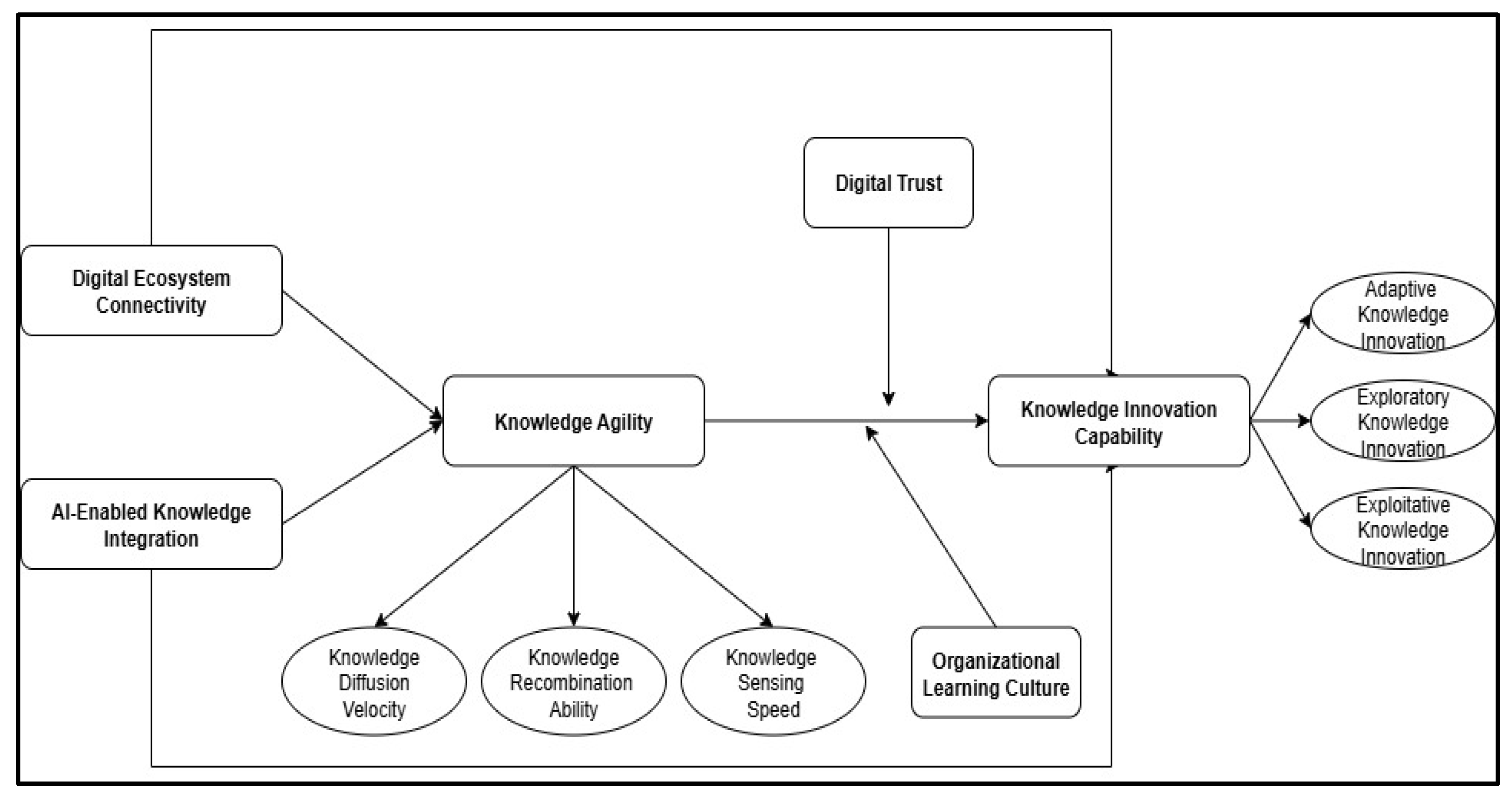
The theoretical foundation of the study is based in the KBV (KBV) and the DCT (DCT), which can be combined in a complex description of how organizations can leverage artificial intelligence, digital connectivity, and a learning-supportive environment to improve the innovation process via agile knowledge processes. The KBV holds that knowledge is an organization’s most useful and critical asset and that long-term competitive advantage is determined by how well the firm can obtain, assimilate, and apply knowledge [20]. In that regard, AI-driven knowledge integration and digital ecosystem connectivity can be viewed as key tools enabling organizations to capture, interpret, and integrate various sources of knowledge to support creativity and innovation. These systems improve the organization’s ability to convert information into knowledge that boosts all facets of its innovation, such as exploratory, exploitative, and adaptive innovation [21]. The DCT reinforces this view by emphasizing how an organization is able to sense opportunities, seize them, and re-align its resources in response to changes in its environment [23]. Knowledge agility (recognizing knowledge quickly and being able to recombine and diffuse it) is a dynamic strength that enables organizations to transform digital and AI-driven knowledge into innovative solutions [5]. Theoretical understanding is furthered with the inclusion of digital trust and organizational learning culture as moderating variables that underscore the contextual and cultural factors that influence knowledge behavior and the effectiveness of innovation. A culture of learning leads to reflection, flexibility, and continuous improvement [46], while a culture of collaboration, transparency, and trust in technology-driven processes is enhanced by digital trust [38]. In combination, these views create a foundation upon which it is possible to comprehend the dynamics of the interaction between the technological, organizational, and cultural enablers that drive knowledge innovation in the digital era. This study’s conceptual framework (Figure 1) takes the presumed links between AI-enabled knowledge integration and digital ecosystem connectivity and knowledge agility as mediating variables in knowledge innovation ability (including exploratory, exploitative, and adaptive dimensions) and moderates the relationship between knowledge agility and knowledge innovation ability with digital trust and organizational learning culture.
Figure 1. Conceptual framework.

3. Methodology

This quantitative and cross-sectional study investigated the relationships among AI-enabled knowledge integration, digital ecosystem connectivity, knowledge agility, digital trust, organizational learning culture, and knowledge innovation capability. A survey was administered to respondents selected from professional and organizational contacts via an electronic platform that facilitated the use of a standardized survey tool. A pilot test was conducted to maximize the clarity of the survey items, and only complete and consistent responses were considered. Scientific rigor was achieved through anonymity, clear instructions, and the use of validated measurement scales to reduce response and measurement errors. A survey-based method was preferred because this research presupposed the testing of theoretically based relationships between latent constructs in an organizational setting with the help of structural equation modeling (SEM). The study design enabled the simultaneous estimation of several relationships dependent on one another and is appropriate for digitally enabled knowledge environments.
Purposive sampling approach was used to ensure that the respondents had firsthand and long-term experience with AI-enabled knowledge work. The respondents were recruited because they held knowledge-intensive positions in which information integration, coordination, decision-making, and innovation tasks are performed regularly with the help of artificial intelligence, digital platforms, and data-driven systems. This methodology was necessary since the primary constructs of the study, including AI-enabled knowledge integration, knowledge agility, and digital trust, cannot be measured if the subjects lack experiential exposure to AI-based work processes. Although purposive sampling can restrain statistical generalizability, it was applied to increase theoretical pertinence and theoretical construct validity, since this study’s research aims are closely connected to the respondents’ organizational reality. To minimize possible selection bias, data were gathered from professionals working at a variety of organizations in digitally transforming sectors in Saudi Arabia.
All measurement items were borrowed from other previously validated scales that are available in the literature. The items were edited for linguistic clarity and applicability to AI-based knowledge working conditions and to make them appropriate for the Saudi organizational context. The items’ conceptual meaning and theoretical structure of the constructs did undergo substantive changes. Semantic changes were made in minor cases, including the substitution of generic mentions of digital systems with references to AI-driven systems and the alignment of illustrations of the application of technology with AI-powered platforms commonly used in Saudi organizations. These modifications were intended to enhance the respondents’ understanding of the questions while maintaining the originality of the measurement tools. Early screening by subject matter experts also ensured that the items were clear, culturally relevant, and conceptually aligned with their constructs.
The measurement tools were based on previously validated scales and altered to make them reliable and relevant to the context. AI-enabled knowledge integration was measured using five items derived from [54] to determine organizational effectiveness in utilizing AI technologies to acquire, interpret, and integrate knowledge across departments. Digital ecosystem connectivity was assessed using five items derived from [55] that reflect the ability of the organization to work digitally with external partners, suppliers, and customers. The concept of knowledge agility was developed into a high-order construct with three sub-dimensions: knowledge sensing speed, knowledge recombination ability, and knowledge diffusion velocity. Three items based on [56] were used to measure each of these sub-dimensions, which indicate the capability of a firm to sense, reconfigure, and distribute knowledge quickly in a dynamic environment. Knowledge innovation capability, comprising exploratory, exploitative, and adaptive innovation, measured using nine items borrowed from [57]. These items assessed the firm’s ability to develop new ideas, improve existing processes, and respond to market changes. Digital trust was measured using seven items that were modified from [58] to include trust in digital systems, data transparency, and perceived security in the application of technology. Organizational learning culture was assessed using six questions based on [59], which addressed a culture of shared learning, unrestricted communication, and constant improvement. Prior to data collection, the questionnaire was checked by academic professionals and practitioners in Saudi Arabia to ensure that it was culturally appropriate, and a pilot test was conducted with 30 respondents to identify where the wording and format could be improved.
Data analysis was conducted using SmartPLS 4, a powerful tool for variance-based Structural Equation Modeling (SEM). This software was chosen for its ability to handle complex models with multiple mediating and moderating effects and its robustness in dealing with non-normal data distributions. The analysis was carried out in two main stages: assessment of the measurement model and evaluation of the structural model. The measurement model analysis involved testing for reliability, convergent validity, and discriminant validity through outer loadings, composite reliability (CR), the average variance extracted (AVE), and the HTMT criterion. Once the measurement model demonstrated acceptable psychometric properties, the structural model was tested to examine the hypothesized relationships among constructs. Path coefficients, t-values, and p-values were computed using bootstrapping with 5000 resamples to determine the statistical significance of each hypothesized relationship. The coefficient of determination (R2) and predictive relevance (Q2) were also examined to assess the model’s explanatory and predictive power. Additionally, effect size (f2) was calculated to evaluate the practical significance of each path.

4. Results

Table 1 presents the demographic characteristics of the 243 respondents, providing an overview of their background and professional experience. The results show that the majority of participants were male (66.7%), with females constituting 33.3% of the sample, reflecting a gender composition typical of technology-oriented and knowledge-intensive sectors. Most respondents were between 26 and 30 years of age (35.8%), followed by 31–35 years (23.9%), indicating that the sample primarily consisted of early-to-mid-career professionals actively involved in digital and innovation processes. In terms of education, a large proportion held a master’s degree (47.3%), while 31.3% possessed a bachelor’s degree and 21.4% had a doctoral degree, demonstrating a highly educated sample suited for examining knowledge integration and innovation capability. In total, 58.4% of the participants were employed in the private sector and 41.6% were employed in the public sector, ensuring diverse organizational representation. Most respondents had 2–10 years of work experience (63.8%), suggesting that they were experienced enough to understand organizational learning, digital ecosystems, and AI-enabled practices, making their perspectives valuable for understanding the relationships investigated in this research.
Table 1. Demographic characteristics of respondents.
Table 2 shows the descriptive statistics of the key variables in this study. The mean scores for AI-enabled knowledge integration (4.12), digital ecosystem connectivity (4.05), knowledge agility (4.00), digital trust (4.08), and knowledge innovation capability (4.03) indicate that most respondents perceive these constructs to be at moderate levels in their organizations. The standard deviations (0.56 to 0.60) imply average variability in responses among participants. These findings provide preliminary insight into digital capability, trust, and knowledge-related processes in the sampled organizations.
Table 2. Descriptive statistics.
Table 3 provides the Pearson correlation coefficients of the study variables, and all the correlations are positive and significant at the 0.01 level. AK-based knowledge integration is positively related to knowledge agility (r = 0.55) and knowledge innovation capability (r = 0.50), and digital ecosystem connectivity is strongly linked to knowledge agility (r = 0.50) and knowledge innovation capability (r = 0.48). Knowledge innovation capability is also strongly correlated with knowledge agility (r = 0.65), and digital trust is positively correlated with knowledge agility (r = 0.61) and knowledge innovation capability (r = 0.58). These findings show, as expected, that all constructs are interconnected, which is initial empirical evidence supporting the hypotheses. Further analysis was conducted with SEM.
Table 3. Correlation analysis.
Table 4 presents the results of the reliability and validity analyses for all constructs included in this study. Construct reliability was assessed using Cronbach’s alpha and composite reliability (rho_a and rho_c), while convergent validity was evaluated through the average variance extracted (AVE). All constructs demonstrated satisfactory reliability, with values exceeding the commonly accepted threshold of 0.70, indicating strong internal consistency among items. The Cronbach’s alpha values ranged from 0.796 for knowledge recombination ability to 0.927 for AI-enabled knowledge integration, suggesting that the items within each construct consistently measure the same underlying dimension. Similarly, the composite reliability values (rho_a and rho_c) were well above the benchmark of 0.70, indicating that the constructs possess high levels of reliability and stability. The AVE values, all above 0.60, confirm that each construct explains more than 50 percent of the variance of its indicators, thus establishing convergent validity. Specifically, AI-enabled knowledge integration (AVE = 0.773) and knowledge sensing speed (AVE = 0.780) showed particularly high convergent validity, reflecting the robustness of measurement in these dimensions. Overall, the results in Table 1 confirm that the measurement model is reliable and valid, providing a solid foundation for further structural analysis.
Table 4. Reliability and validity of variables.
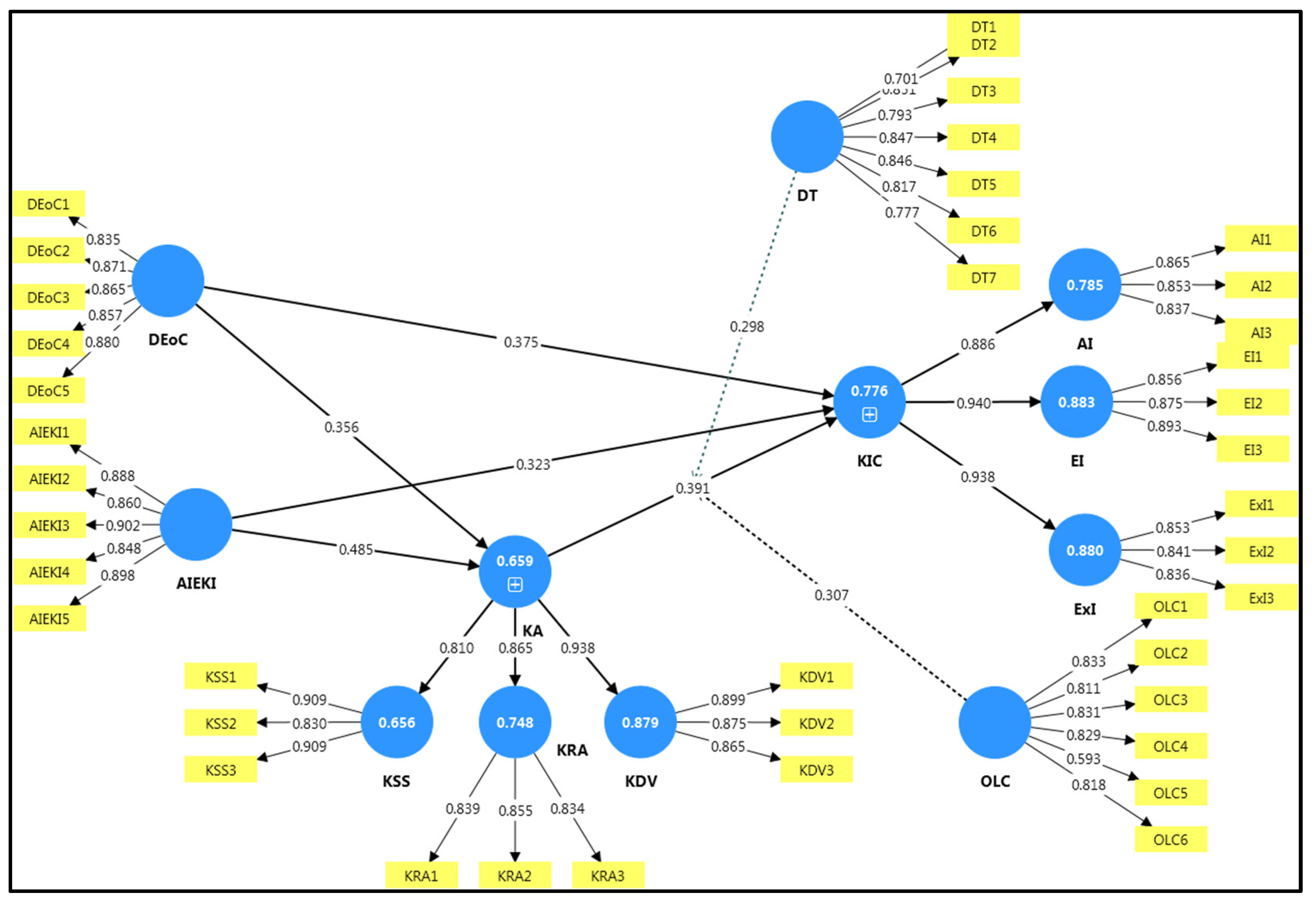
Table 5 and Figure 2 present the results of the confirmatory factor analysis (CFA) conducted to examine the strength and validity of the impact of individual indicator loadings on their respective constructs. All outer loadings exceeded the acceptable threshold of 0.70, confirming that each indicator contributes meaningfully to the measurement of its latent construct. For adaptive innovation, all three indicators (AI1–AI3) had strong loadings above 0.83, such as Exploitative Innovation with 0.85 and Exploratory Innovation with 0.83, confirming their high internal consistency. AI-enabled knowledge integration showed particularly robust loadings ranging from 0.848 to 0.902, signifying that the indicators represent the construct’s conceptual domain well. Similarly, digital ecosystem connectivity and digital trust exhibited acceptable loading values across all indicators, with digital trust’s lowest loading (0.701) remaining within the acceptable range. Constructs measuring knowledge agility, including knowledge sensing speed, recombination ability, and diffusion velocity, all demonstrated loadings above 0.83, supporting the reliability of the multidimensional conceptualization of agility. Organizational learning culture also achieved acceptable loadings, though one indicator (OLC5 = 0.593) was slightly below the threshold, which may reflect minor measurement variation but does not compromise overall construct reliability. Overall, the CFA results confirm that the measurement model possesses strong construct validity and that each observed indicator accurately captures the theoretical construct it was designed to measure.
Table 5. Confirmatory factor analysis.
Figure 2. Estimated model.
Table 6 reports the results of the discriminant validity analysis using the Hetero-trait–-Monotrait ratio (HTMT). The purpose of this analysis is was to ensure that each construct in the model is empirically distinct from the others. The HTMT values be-tween constructs were generally below the conservative threshold of 0.85, with a few relationships approaching but not exceeding the liberal cut-off of 0.90. This confirms that the constructs are conceptually and statistically distinguishable from one another. The relatively moderate correlations between constructs such as AI-enabled knowledge integration and digital ecosystem connectivity (0.592) or knowledge agility dimensions (ranging between 0.681 and 0.876) indicate that while although these constructs are re-lated, they capture unique aspects of the modelconcept. Notably, digital trust and or-ganizational learning culture demonstrated moderate correlations with the dimensions of knowledge agility dimensions, supporting the theoretical assumption that these moderators influence but are not redundant with agility and innovation variables. Overall, the discriminant validity results confirm that the constructs exhibit sufficient distinctiveness, supporting the model’s integrity and ensuring that multicollinearity is not a concern in the structural analysis.
Table 6. Discriminant validity (HTMT).
Table 7 presents the results of the analysis of the model’s explanatory power and predictive relevance. The coefficient of determination (R2) values for knowledge agility (0.659) and knowledge innovation capability (0.776) indicate that the model explains a substantial proportion of variance in these endogenous variables. The adjusted R2 values are only slightly lower, demonstrating the model’s stability and robustness even after accounting for the number of predictors. The Q2 predict values of 0.642 for knowledge agility and 0.697 for knowledge innovation capability exceed the threshold of zero, confirming the model’s predictive relevance. Furthermore, the root mean square error (RMSE) and mean absolute error (MAE) values were reasonably low, indicating good model fit and prediction accuracy. These results suggest that the proposed model, which integrates AI-enabled knowledge integration, digital ecosystem connectivity, knowledge agility, digital trust, and organizational learning culture, effectively explains and predicts variations in knowledge innovation capability. Overall, the strong R2 and Q2 values validate the theoretical model and support its empirical robustness in explaining innovation outcomes in digitalized organizational contexts. The effect sizes (f2) provide further insight on the substantive significance of the studied relationships. The impact of AI-enabled knowledge integration and knowledge agility on knowledge innovation capability is medium to large in nature which suggests that these two variables are central factors of innovation instead of marginal drivers. Conversely, the smaller f2 values of some of the control paths imply that they may be statistically significant, but their real contribution to innovation outcomes may be insignificant. This distinction highlights the fact that not every important relationship is of equal strategic value.
Table 7. R-square statistics; model goodness-of-fit statistics.
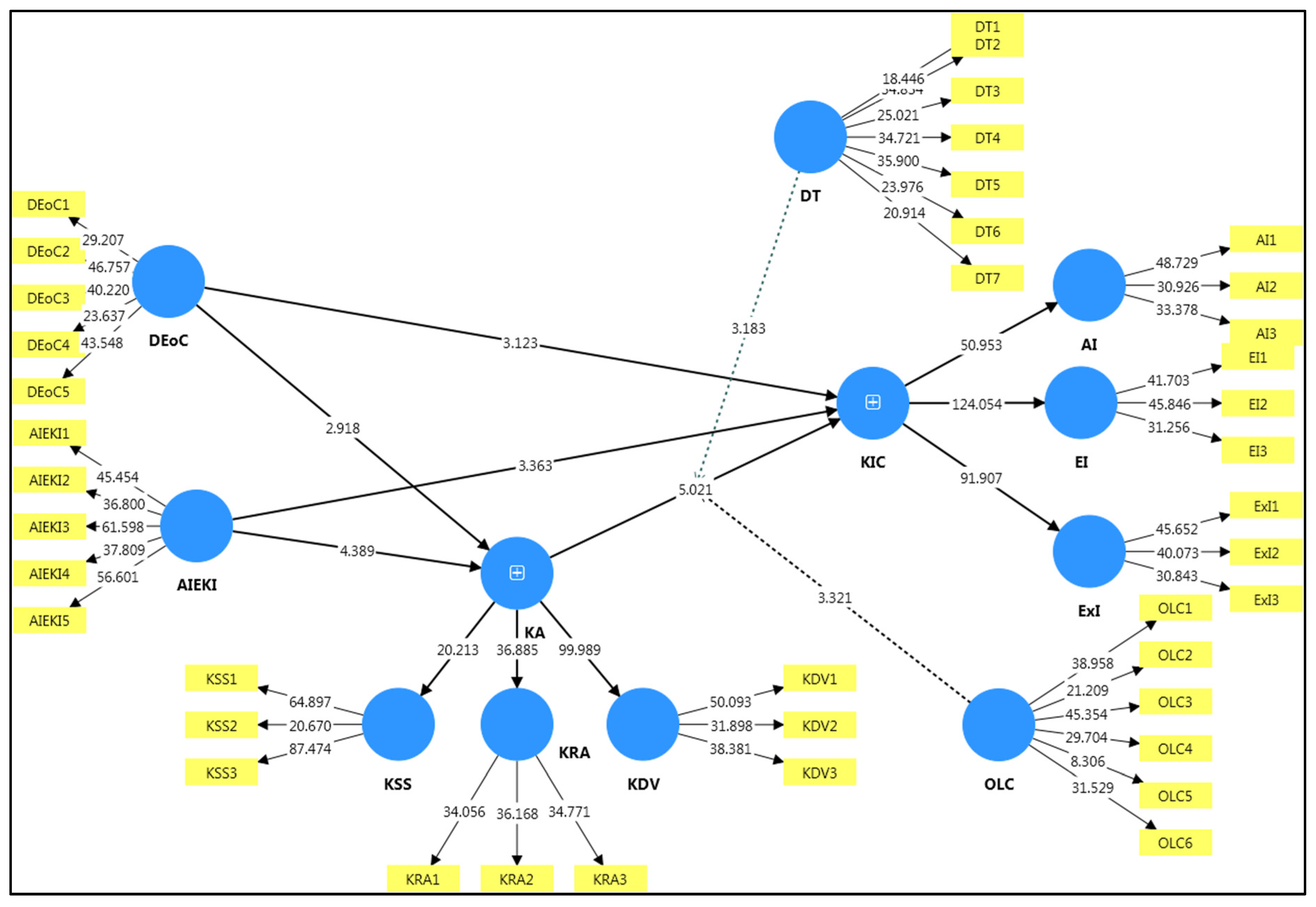
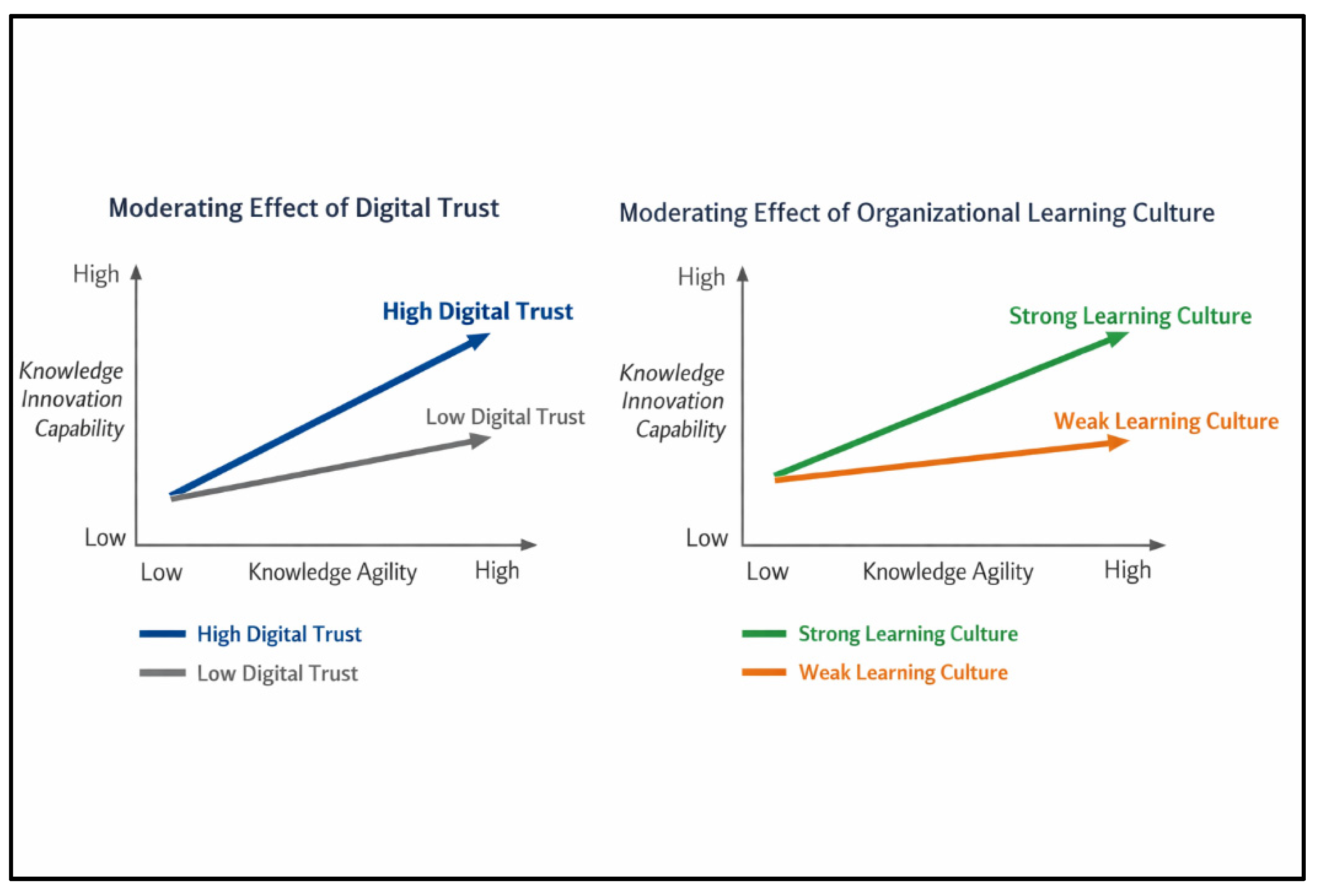
Table 8 and Figure 3 provide the results of the structural model’s path analysis, which tested the hypothesized relationships among the study variables. All six hypotheses were supported with significant path coefficients, demonstrating strong empirical support for the proposed conceptual framework. The first hypothesis (H1) revealed a significant positive relationship between AI-enabled knowledge integration and knowledge innovation capability (β = 0.323, p < 0.001), indicating that AI integration significantly enhances an organization’s ability to explore, exploit, and adapt knowledge for innovation. Similarly, digital ecosystem connectivity (H2) had a significant positive impact on knowledge innovation capability (β = 0.375, p < 0.001), emphasizing the value of interconnected digital systems for innovation performance. The statistically significant and strong effect of AI-enabled knowledge integration on the capacity for knowledge innovation is statistically significant, meaning that organizations with sophisticated AI-based integration systems are significantly more efficient in converting scattered information into creative solutions. This observation highlights the role of smart integration systems in enhancing the use of organizational knowledge as opposed to increasing data accessibility. The mediating role of knowledge agility was confirmed in both H3 (β = 0.124, p = 0.049) and H4 (β = 0.138, p = 0.021), suggesting that agile knowledge processes are critical mechanisms through which AI-enabled integration and digital connectivity influence innovation. The mediation analysis proves that knowledge agility is an indirect carrier of the impacts of AI-enabled knowledge integration and digital ecosystem connectivity on knowledge innovation capability. It can be seen that digital technologies do not have a direct effect but increase the recognition rate, flexibility, and recombination of organizational knowledge. The moderating effects of digital trust (H5) and organizational learning culture (H6) were also significant (β = 0.298, p = 0.001; β = 0.307, p < 0.001, respectively), confirming that higher levels of trust and a strong learning environment amplify the positive effects of knowledge agility on innovation. These findings collectively validate the integrated model and provide empirical support for the theoretical assumption that digital and cultural factors jointly shape the paths from knowledge processes to innovation outcomes. Figure 4 shows the moderating effect of digital trust, indicating that agile knowledge processes are highly contingent on the level of trust employees have in digital systems and the reliability of data. When trust is high, organizations are in a better position to exploit fast recognition and sharing of knowledge, while a low-trust environment hampers the creative capacity of other fast-flowing knowledge systems.
Table 8. Path analysis.
Figure 3. Structural Model for Path Analysis.
Figure 4. Moderating Effect of Digital Trust and Organizational Learning Culture.

5. Discussion

This study contributes to the knowledge-based innovation field by showing that although digital technologies are not the driving force behind innovation, innovation can result from leveraging technological infrastructure to enhance dynamic knowledge capability in a conducive organizational setting. The results provide a theoretically based account of how organizations can transform digitalization into long-term knowledge innovation capacity by applying AI-enabled knowledge integration, digital ecosystem connectivity, knowledge agility, digital trust, and organizational learning culture in a single model.
The results indicate that applying AI to knowledge integration and digital ecosystem connectivity result in a substantial improvement in knowledge innovation capability; however, this effects is not natural or predetermined [12]. Theoretically, this challenges technologically deterministic conceptions of the digital transformation and reinforces the Knowledge-Based View that technologies only generate value when they are integrated into effective knowledge processes [48]. Artificial intelligence and web ecosystems open doors to data, knowledge, and external wisdom, but none of this information can be used until organizations have the internal capacity to read, synthesize, and mobilize it to promote innovation. This repositions AI and digital connectivity as facilitating infrastructures, not drivers of innovation, in contrast to the current view that digitalization is a socio-technical phenomenon rather than a technological phenomenon.
The greatest theoretical contribution of this study is that it defines knowledge agility as the main process through which digital technologies are transformed into innovation. The mediating nature of knowledge agility proves that sensing speed, recombination ability, and diffusion velocity, comprising dynamic capability, operationalizes the Knowledge-Based View and Dynamic Capability Theory in the digital environment [1]. Instead of considering agility an organizational skill, these findings contextualize knowledge agility as a systematic, procedural, and process-focused skill that allows companies to elicit value from AI-supported insights and ecosystem streams of knowledge. This is the reason why, in most cases, organizations that share technological investments tend to realize diversified innovation results, thus resolving the discrepancies cited in previous studies of digital transformation.
Even the nimblest knowledge processes do not produce the best innovation results in unfavorable social and cultural environments, as demonstrated by the moderating effects of digital trust and organizational learning culture. Digital trust enhances the knowledge agility–innovation relationship by lowering psychological risk, stimulating knowledge sharing, and justifying dependence on AI-driven systems [60]. Likewise, a strong culture of organizational learning enhances the efficiency of agile knowledge processes by embedding experimentation, reflection, and continuous improvement into everyday activities. These results are an extension of current theory as they demonstrate that technical and cognitive capacities not only create digital innovation opportunities but also promote an institutional context that regulates the manner in which knowledge is exchanged, construed, and implemented.
Taken collectively, these results also contribute to theory by applying the Knowledge-Based View and the Dynamic Capability Theory to a digitally intensive setting. This study proves that in the digital era, competitive advantage is the result of the alignment of technological enablers, agile knowledge processes, and supportive cultural conditions [10]. Through an empirical test of this composite model, this study extends beyond linear models of digital innovation and presents a more refined account of how organizations can simultaneously leverage exploratory, exploitive, and adaptive innovation. This theoretical contribution emphasizes that sustainable innovation is not the result of a firm’s capacity to adopt technology but rather its organizational capability to constantly restructure knowledge in an environment of trust and learning.

6. Implications

6.1. Theoretical Implications

The findings of this research provide a meaningful theoretical contribution by deepening our understanding of how digital transformation, organizational capability, and cultural factors collectively shape knowledge innovation capability. The results extend the KBV by showing that AI-enabled knowledge integration and digital ecosystem connectivity function as vital knowledge resources that not only enhance information utilization but also promote the continuous creation and renewal of organizational knowledge. This redefines knowledge as a dynamic, technology-empowered capability rather than a static asset. This study also reinforces the DCT by establishing knowledge agility, encompassing sensing speed, recombination ability, and diffusion velocity, as a key mechanism that converts digital and AI-driven insights into innovation outcomes. This mediation effect provides empirical evidence that organizational adaptability and learning are central to sustaining innovation in digital contexts. Additionally, the integration of digital trust and organizational learning culture as moderating variables expands existing theoretical frameworks by highlighting that technological progress alone cannot guarantee innovation; it must be supported by social and cultural enablers that enhance collaboration, openness, and continuous learning. Together, these findings contribute to a holistic theoretical model that integrates technological, behavioral, and cultural dimensions of knowledge management, explaining how organizations transform digital knowledge processes into exploratory, exploitative, and adaptive innovation capacity.

6.2. Practical Implications

The practical implications of this study are highly relevant for organizational leaders, decision-makers, and practitioners seeking to enhance innovation performance in the digital era. The results suggest that managers should prioritize the adoption of AI-based systems that facilitate knowledge integration, real-time data interpretation, and automated decision-making, as these tools enhance responsiveness and creativity in innovation processes. It is also essential to establish and sustain intimate digital ecosystem connectivity because it enables organizations to access more external knowledge, engage in collaborative innovation, and generate value with partners, such as suppliers, customers, and academic organizations. To ensure employees can recognize, recombine, and share helpful knowledge quickly, focus should be placed on knowledge agility by implementing training, inter-disciplinary teamwork, and upskilling. The results also indicate that it is advisable to build digital trust with a policy of transparency regarding the governing processes, cybersecurity, and ethical implementation of AI systems, which will encourage trust and transparency in digital collaboration. This will also strengthen organizational learning culture and increase the readiness of staff to share knowledge, experiment, and enact further changes. This type of learning culture fosters a shift in knowledge agility to value innovation. For policymakers, these findings indicate is a need to support digital infrastructure and invest in AI literacy to boost national and sectoral innovation capacity. Overall, this research offers an operational roadmap for organizations striving to achieve continuous innovation by adopting digital technology, enhancing knowledge agility, and fostering trust and a learning-oriented environment.

6.3. Limitations and Future Research Directions

Although this study provides insightful information on how AI-enabled knowledge integration, the interconnectedness of digital ecosystems, knowledge agility, digital trust, and organizational learning culture increase knowledge innovation capability, it is not without limitations. One of its greatest weaknesses is the cross-sectional research design, which precludes establishing a long-term cause-and-effect relationship among the constructs under investigation. Future studies should consider adopting longitudinal or experimental models in which the dynamism of the processes of digital transformation and knowledge innovation vary over time. Another limitation is grounded in the sample used. Because sampling was confined to specific industries and geographical areas, it may not be possible to generalize the outcomes. Future research should be conducted on the existence of such associations in several industries and cultural contexts to determine the applicability of the model in different organizational settings. Moreover, this study focused on quantitative methodology and structural examination, which was more than could be achieved. Future mixed-methods research might provide more qualitative data on how workers and managers perceive and practice knowledge agility and innovation practices. In addition, although this study considered the moderating variables of digital trust and organizational learning culture, other situational variables, such as leadership style, digital ethics, and organizational resilience, may have a critical impact on innovation. It is recommended to expand the model to include such variables, in addition to examining the mediating effect of digital competencies or organizational intelligence. Finally, AI and digital ecosystems are in their infancy, so new studies should be conducted on new technologies, such as generative AI, blockchain, and the metaverse, to understand how they will change the nature of knowledge management and innovation in the future.

7. Conclusions

This study offers an integrative and holistic understanding of the ways in which organizations with a favorable learning environment can extend beyond digitalization to knowledge innovation through the successful application of artificial intelligence, the ability to connect with digital ecosystems, and knowledge agility. The results indicate that AI-based knowledge integration and digital ecosystem connectivity are strategic enablers and not technological tools, enabling companies to integrate internal and external knowledge resources; foster collaboration; and increase their ability to create, share, and utilize knowledge across functions and networks. It was demonstrated that these abilities can have a considerable and positive impact on knowledge innovation, which incorporates exploratory innovation, exploitative innovation, and adaptive dimensions, meaning that when organizations use AI to process and integrate complex flows of knowledge while remaining connected to digital ecosystems, they will be better placed to identify new opportunities, improve current processes, and adapt to environmental changes more quickly. The mediating factor of knowledge agility, which is defined in terms of knowledge sensing speed, the ability to recombine knowledge, and knowledge diffusion velocity, further supports the relevance of dynamic knowledge processes that mediate technological capacity and innovative performance. By validating these mechanisms, this study provides good empirical support for both Knowledge-Based View and Dynamic Capability Theory. It is important to note that to be a successful innovator in the digital era, resources and technologies alone are not sufficient; organizations must be able to constantly transform and renew their knowledge base. In addition, the moderating influences of digital trust and organizational learning culture offer insight into contextual and human aspects that enhance the relationship between knowledge agility and innovation outputs. Digital trust leads to open communication, information distribution, and risk-taking that are critical to successful AI collaboration, and effective knowledge-based innovation requires a robust learning culture that encourages experimentation, reflection, and flexibility. Collectively, these results show that digital transformation is a socio-technical phenomenon, with technology and culture acting as co-evolutionary factors that help organizations innovate rapidly. The theoretical contributions of the study are an integrated model that links digital capability, human agility, and learning culture as dependent factors of knowledge innovation, expanding our current understanding of digital transformation and organizational learning. In practice, the findings can be used by managers and policymakers to provide actionable advice on investing in AI and digital connectivity, as well as to ensure that such investments are accompanied by strategies to build trust and support continuous learning and flexibility in the organizational context. This equilibrium transforms digital initiatives into long-term innovation and resilience. On the whole, this study offers a holistic perspective on how businesses can promote innovation by matching technological integration with knowledge agility and cultural enablers to not only achieve theoretical progress but also obtain practical insights for surviving in a constantly changing knowledge-driven and technology-enabled business environment.

Author Contributions

Authors have contributed equally to this research. All authors reviewed the manuscript. All authors have read and agreed to the published version of the manuscript.

Funding

The authors received no financial support for the research, authorship, and/or publication of this article.

Institutional Review Board Statement

All procedures performed in studies involving human participants were in accordance with the ethical standards of the institutional and national research committee and with the 1964 Helsinki Declaration and its later amendments or comparable ethical standards. This study was approved by the Research Ethics Committee (REC) of the University of Ha’il (No. H-2025-964).

Data Availability Statement

The data that supports the findings of this study are available from the corresponding author on request. The data is not publicly available because they contain information that could compromise the privacy of the research participants.

Conflicts of Interest

The authors declare no competing interests.

References

  1. Zhang, W.; Zhang, W.; Daim, T.; Yalçın, H. AI challenges conventional knowledge management: Light the way for reframing SECI model and Ba theory. J. Knowl. Manag. 2025, 29, 1618–1654. [Google Scholar] [CrossRef]
  2. Kulkarni, V.; Reddy, S.; Clark, T.; Proper, H. The AI-Enabled Enterprise. In The AI-Enabled Enterprise; Springer: Berlin/Heidelberg, Germany, 2023; pp. 1–12. [Google Scholar]
  3. Fischer, L.H.; Nicolajsen, H.W.; Marttila, S.-M.; Sandbukt, S. Crafting Meaningful Generative AI-Enabled Knowledge Work. In Proceedings of the European Conference on Information Systems (ECIS), Paphos, Cyprus, 13–19 June 2024. [Google Scholar]
  4. Šilenskytė, A.; Butkevičienė, J.; Bartminas, A. Blockchain-based connectivity within digital platforms and ecosystems in international business. J. Int. Manag. 2024, 30, 101109. [Google Scholar] [CrossRef]
  5. Miller, T.; Durlik, I.; Łobodzińska, A.; Dorobczyński, L.; Jasionowski, R. AI in context: Harnessing domain knowledge for smarter machine learning. Appl. Sci. 2024, 14, 11612. [Google Scholar] [CrossRef]
  6. Sima, X.; Coudert, T.; Geneste, L.; de Valroger, A. Agility-based knowledge management method for small and medium-sized enterprises. Knowl. Manag. Res. Pract. 2024, 22, 234–246. [Google Scholar] [CrossRef]
  7. Olan, F.; Nyuur, R.B.; Arakpogun, E.O. AI: A knowledge sharing tool for improving employees’ performance. J. Decis. Syst. 2024, 33, 700–720. [Google Scholar] [CrossRef]
  8. Yellanki, S.K. Co-Creation and Connectivity: The Role of Consumers in Digital Ecosystem Evolution. J. Artif. Intell. Big Data Discip. 2024, 1, 1. [Google Scholar] [CrossRef]
  9. Alamsjah, F.; Asrol, M. The impacts of middle managers’ ambidexterity, continuous improvement, and organizational agility on business performance: A knowledge-based view. J. Ind. Eng. Manag. 2023, 16, 27–53. [Google Scholar] [CrossRef]
  10. Mata, M.N.; Martins, J.M.; Inácio, P.L. Collaborative innovation, strategic agility, & absorptive capacity adoption in SMEs: The moderating effects of customer knowledge management capability. J. Knowl. Manag. 2024, 28, 1116–1140. [Google Scholar] [CrossRef]
  11. Pitafi, A.H.; Rasheed, M.I.; Islam, N.; Dhir, A. Investigating visibility affordance, knowledge transfer and employee agility performance. A study of enterprise social media. Technovation 2023, 128, 102874. [Google Scholar] [CrossRef]
  12. Martín-Peña, M.-L.; Lorenzo, P.C.; Meyer, N. Digital platforms and business ecosystems: A multidisciplinary approach for new and sustainable business models. Rev. Manag. Sci. 2024, 18, 2465–2482. [Google Scholar] [CrossRef]
  13. Ramadan, M.; Zakhem, N.B.; Baydoun, H.; Daouk, A.; Youssef, A.; Elia, J.; Ashaal, A. Toward digital transformation and business model innovation: The nexus between leadership, organizational agility, and knowledge transfer. Adm. Sci. 2023, 13, 185. [Google Scholar] [CrossRef]
  14. Hao, X.; Demir, E.; Eyers, D. Critical success and failure factors in the AI lifecycle: A knowledge graph-based ontological study. J. Model. Manag. 2025; ahead-of-print. [Google Scholar]
  15. Waseel, A.H.; Zhang, J.; Shehzad, M.U.; Sarki, I.H.; Kamran, M.W. Navigating the innovation frontier: Ambidextrous strategies, knowledge creation, and organizational agility in the pursuit of competitive excellence. Bus. Process Manag. J. 2024, 30, 2127–2160. [Google Scholar] [CrossRef]
  16. Das, S.; Mitra, A. Advancing lightweight digital trust architectures in the internet of medical things: A multi-dimensional analysis. In Lightweight Digital Trust Architectures in the Internet of Medical Things (IoMT); IGI Global Scientific Publishing: Hershey, PA, USA, 2024; pp. 1–14. [Google Scholar]
  17. Olaniyi, O.O. Ballots and padlocks: Building digital trust and security in democracy through information governance strategies and blockchain technologies. Asian J. Res. Comput. Sci. 2024, 17, 172–189. [Google Scholar] [CrossRef]
  18. Buhagiar, K.; Anand, A. Synergistic triad of crisis management: Leadership, knowledge management and organizational learning. Int. J. Organ. Anal. 2023, 31, 412–429. [Google Scholar]
  19. Blaique, L.; Ismail, H.N.; Aldabbas, H. Organizational learning, resilience and psychological empowerment as antecedents of work engagement during COVID-19. Int. J. Product. Perform. Manag. 2023, 72, 1584–1607. [Google Scholar]
  20. Grant, R.M. Toward a knowledge—Based theory of the firm. Strateg. Manag. J. 1996, 17, 109–122. [Google Scholar]
  21. Nonaka, L.; Takeuchi, H.; Umemoto, K. A theory of organizational knowledge creation. Int. J. Technol. Manag. 1996, 11, 833–845. [Google Scholar]
  22. Li, F.; Xu, J. Revolutionizing AI-enabled Information Systems Using Integrated Big Data Analytics and Multi-modal Data Fusion. IEEE Access 2025, 13, 212316–212340. [Google Scholar]
  23. Teece, D.J.; Pisano, G.; Shuen, A. Dynamic capabilities and strategic management. Strateg. Manag. J. 1997, 18, 509–533. [Google Scholar]
  24. Altarawneh, S.J.; Al-Adaileh, R. Can knowledge management processes support business transformation? The mediating role of business agility. Glob. Knowl. Mem. Commun. 2023, 72, 864–881. [Google Scholar]
  25. Tsoi, J.C.-H.; Strgnen, F. Integration of conversational AI capabilities in knowledge management processes for higher education. In Proceedings of the European Conference on Knowledge Management, Veszprém, Hungary, 5–6 September 2024. [Google Scholar]
  26. Mukherjee, S.; Mukherjee, S.; Ferraris, A.; Stehlikova, B. Enhancing health-care service delivery through AI-integrated knowledge management systems. J. Knowl. Manag. 2025, 29, 3379–3409. [Google Scholar] [CrossRef]
  27. Gelashvili-Luik, T.; Vihma, P.; Pappel, I. Navigating the AI Revolution: Challenges and Opportunities for Integrating Emerging Technologies into Knowledge Management Systems. Systematic Literature Review. Front. Artif. Intell. 2025, 8, 1595930. [Google Scholar]
  28. Krivý, M. Digital ecosystem: The journey of a metaphor. Digit. Geogr. Soc. 2023, 5, 100057. [Google Scholar] [CrossRef]
  29. Begeç, S.; Akyuz, G.A. Requirements of collaborative and transformational leadership in digital ecosystems: Techno-orchestrating leaders in a VUCA world. Rev. De Adm. De Empresas 2023, 63, e2022-0155. [Google Scholar] [CrossRef]
  30. Oluoha, O.M.; Odeshina, A.; Reis, O.; Okpeke, F.; Attipoe, V.; Orieno, O. A privacy-first framework for data protection and compliance assurance in digital ecosystems. Iconic Res. Eng. J. 2023, 7, 620–646. [Google Scholar]
  31. Arokodare, M.A.; Falana, R.B.; Olubiyi, T.O. Strategic agility, knowledge management and organisational performance in a post-pandemic era: A mediation analysis. J. Fam. Bus. Manag. Stud. 2023, 27, 83–108. [Google Scholar]
  32. Rehman, S.U.; Bresciani, S.; Giordino, D.; Abdulmuhsin, A.A. Exploring the role of knowledge management and organizational agility in an emerging market. J. Innov. Knowl. 2025, 10, 100761. [Google Scholar] [CrossRef]
  33. Stei, G.; Rossmann, A.; Szász, L. Leveraging organizational knowledge to develop agility and improve performance: The role of ambidexterity. Int. J. Oper. Prod. Manag. 2024, 44, 1446–1466. [Google Scholar] [CrossRef]
  34. Khasmafkan-Nezam, M.H. Harnessing information system capabilities to enhance organizational agility: The interplay of green absorptive capacity, collaborative knowledge creation, and strategic flexibility. J. Enterp. Inf. Manag. 2025, 1–35. [Google Scholar] [CrossRef]
  35. Sarwar, Z.; Song, Z.-H.; Ali, S.T.; Khan, M.A.; Ali, F. Unveiling the path to innovation: Exploring the roles of big data analytics management capabilities, strategic agility, and strategic alignment. J. Innov. Knowl. 2025, 10, 100643. [Google Scholar] [CrossRef]
  36. Gregori, P.; Holzmann, P.; Audretsch, D.B. Sustainable entrepreneurship on digital platforms and the enactment of digital connectivity through business models. Bus. Strategy Environ. 2024, 33, 1173–1190. [Google Scholar]
  37. Zhang, J.; Zhang, S.; Tan, X.; Zhao, H. The impact of digitalization on organizational agility: Evidence from the enterprise survey for innovation and entrepreneurship in China. Humanit. Soc. Sci. Commun. 2025, 12, 917. [Google Scholar] [CrossRef]
  38. Jäger, J.; Karg, J.; Asprion, P.; Misyura, I. The Digital Trust Radar—A structured collection and analysis of global AI guidelines. In Human Interaction and Emerging Technologies (IHIET-AI 2025): Artificial Intelligence and Future Applications; AHFE Open Access: New York, NY, USA, 2025. [Google Scholar]
  39. Kumari, A.; Gupta, D.; Uppal, M. Enhancing Digital Trust in Finance: Proactive Measures against Riskware and SMS Malware. In Proceedings of the 2024 3rd International Conference for Advancement in Technology (ICONAT), Goa, India, 13–15 September 2024. [Google Scholar]
  40. Mollah, M.A.; Choi, J.-H.; Hwang, S.-J.; Shin, J.-K. Exploring a pathway to sustainable organizational performance of South Korea in the digital age: The effect of digital leadership on IT capabilities and organizational learning. Sustainability 2023, 15, 7875. [Google Scholar] [CrossRef]
  41. Auladi, G.A.; Muwahid, F. Cybersecurity and Moral Responsibility: A Philosophical-Islamic Approach to Digital Trust. TechComp Innov. J. Comput. Sci. Technol. 2025, 2, 53–65. [Google Scholar] [CrossRef]
  42. Otamiri, S.; Ahunna, V.A. Digital trust and operational effectiveness of information managers in tertiary Institutions in Imo State. BW Acad. J. 2023, 10. Available online: https://mail.bwjournal.org/index.php/bsjournal/article/view/1261 (accessed on 3 January 2026).
  43. El-Maksoud, R.M.A. Exploring the role of cybersecurity in enhancing digital trust of Egyptian travel agencies. J. Assoc. Arab. Univ. Tour. Hosp. 2024, 26, 185–204. [Google Scholar] [CrossRef]
  44. Strazzullo, S. Fostering digital trust in manufacturing companies: Exploring the impact of industry 4.0 technologies. J. Innov. Knowl. 2024, 9, 100621. [Google Scholar] [CrossRef]
  45. Graf, B. Sounds good, doesn’t work—An experimental study on the dynamic development of trust in digital systems under inconsistent information about developer reputation and system errors. Comput. Hum. Behav. 2025, 172, 108736. [Google Scholar] [CrossRef]
  46. Jarrahi, M.H.; Kenyon, S.; Brown, A.; Donahue, C.; Wicher, C. Artificial intelligence: A strategy to harness its power through organizational learning. J. Bus. Strategy 2023, 44, 126–135. [Google Scholar] [CrossRef]
  47. Garmaki, M.; Gharib, R.K.; Boughzala, I. Big data analytics capability and contribution to firm performance: The mediating effect of organizational learning on firm performance. J. Enterp. Inf. Manag. 2023, 36, 1161–1184. [Google Scholar] [CrossRef]
  48. Nimran, U.; Al Musadieq, M.; Afrianty, T.W. Empowerment effect on competence and organizational commitments: Organizational learning culture as moderating. Multidiscip. Rev. 2024, 7, 2024038. [Google Scholar]
  49. Ali, A.; Jiang, X.; Ali, A. Enhancing corporate sustainable development: Organizational learning, social ties, and environmental strategies. Bus. Strategy Environ. 2023, 32, 1232–1247. [Google Scholar] [CrossRef]
  50. Inthavong, P.; Rehman, K.U.; Masood, K.; Shaukat, Z.; Hnydiuk-Stefan, A.; Ray, S. Impact of organizational learning on sustainable firm performance: Intervening effect of organizational networking and innovation. Heliyon 2023, 9, e16177. [Google Scholar] [CrossRef]
  51. Meher, J.R.; Nayak, L.; Mishra, R.K.; Patel, G. Impact of organizational learning culture on organizational effectiveness: A serial mediation analysis with knowledge sharing and employee competencies. VINE J. Inf. Knowl. Manag. Syst. 2024, 54, 324–338. [Google Scholar] [CrossRef]
  52. Siswadi, Y.; Jufrizen, J.; Saripuddin, J.; Farisi, S.; Sari, M. Organizational culture and organizational citizenship behavior: The mediating role of learning organizations and organizational commitment. J. Ris. Bisnis Dan Manaj. 2023, 16, 73–82. [Google Scholar] [CrossRef]
  53. Lars, R.; Jan, T.; Wioleta, K.; Anna, W. Adaptive dynamical systems modelling of transformational organizational change with focus on organizational culture and organizational learning. Cogn. Syst. Res. 2023, 79, 85–108. [Google Scholar] [CrossRef]
  54. Huang, L.-S.; Quaddus, M.; Rowe, A.; Lai, C.-P. PLS-Based Multi-Group analysis for knowledge management in the life insurance industry. In Proceedings of the 2017 Portland International Conference on Management of Engineering and Technology (PICMET), Portland, OR, USA, 9–13 July 2017. [Google Scholar]
  55. Tsujimoto, M.; Kajikawa, Y.; Tomita, J.; Matsumoto, Y. A review of the ecosystem concept—Towards coherent ecosystem design. Technol. Forecast. Soc. Change 2018, 136, 49–58. [Google Scholar] [CrossRef]
  56. Roberts, N.; Grover, V. Leveraging information technology infrastructure to facilitate a firm’s customer agility and competitive activity: An empirical investigation. J. Manag. Inf. Syst. 2012, 28, 231–270. [Google Scholar] [CrossRef]
  57. Li, Y.; Zhao, Y.; Liu, Y. The relationship between HRM, technology innovation and performance in China. Int. J. Manpow. 2006, 27, 679–697. [Google Scholar] [CrossRef]
  58. McKnight, D.H.; Choudhury, V.; Kacmar, C. Developing and validating trust measures for e-commerce: An integrative typology. Inf. Syst. Res. 2002, 13, 334–359. [Google Scholar] [CrossRef]
  59. Marsick, V.J.; Watkins, K.E. Demonstrating the value of an organization’s learning culture: The dimensions of the learning organization questionnaire. Adv. Dev. Hum. Resour. 2003, 5, 132–151. [Google Scholar] [CrossRef]
  60. Bhupathi, P.; Prabu, S.; Goh, A.P. Artificial intelligence-enabled knowledge management using a multidimensional analytical framework of visualizations. Int. J. Cogn. Comput. Eng. 2023, 4, 240–247. [Google Scholar] [CrossRef]
Disclaimer/Publisher’s Note: The statements, opinions and data contained in all publications are solely those of the individual author(s) and contributor(s) and not of MDPI and/or the editor(s). MDPI and/or the editor(s) disclaim responsibility for any injury to people or property resulting from any ideas, methods, instructions or products referred to in the content.

Article Metrics

Citations

Article Access Statistics

Multiple requests from the same IP address are counted as one view.