


Abstract
This study analyzes the factors affecting the implementation of Lean methodologies, as well as the resulting benefits, using Bosch Security Systems as a case study. In an uncertain and volatile environment, such as that created by Industry 4.0 technologies, companies must be committed to operations management to ensure their efficiency and competitiveness. In this context, Lean methodologies emerge as a powerful management tool, and this study aims to enhance their benefits by identifying the factors that may affect their implementation. By combining a literature review with a quantitative approach, a questionnaire was applied to collect empirical data, allowing this study to address the gap regarding employees’ perceptions of the factors affecting implementation and its operating benefits at a subsidiary of a European multinational group. Statistical analysis of the data enabled us to identify constraints to the consolidation of Lean methodologies and the creation of the following three integrated groups: (1) technical and operational factors; (2) human and cultural factors; and (3) organizational and management factors. In addition, this study provides evidence of significant gains in terms of efficiency, quality, flexibility, and customer focus. Therefore, this research deepens our understanding of Lean thinking in complex operational environments by highlighting the importance of an integrated, adaptive approach that focuses on employee involvement.
1. Introduction
This study focuses on the efficiency of a company that develops security systems. In fact, operations management plays a key role in the efficiency and competitiveness of organizations, requiring methodologies that optimize production processes and maximize value for customers [1]. In this context, Lean methodologies have emerged as a powerful approach to improving operations management by focusing on eliminating waste, increasing productivity, and encouraging continuous improvement. Ref. [2] emphasizes the importance of resilience and agility in operations, particularly in an uncertain and volatile global scenario resulting from the integration of Industry 4.0 technologies. These technologies, such as artificial intelligence, big data, and the Internet of Things (IoT), can significantly enhance companies’ ability to predict and mitigate risks. These authors argue that Lean methodologies allow for processes to be optimized and enable companies to respond quickly to market changes. The aim of this study is therefore to attain a comprehensive understanding of the factors that influence the implementation of Lean methodologies in operations management. Consistently, ref. [3] finds that applying a mix of tools and methodologies allows for the better performance of production lines. In turn, ref. [4] analyzes Polish manufacturing companies and concludes that the most relevant factors affecting the implementation of Lean methodologies are aversion to change and management inertia.
Regarding the benefits of implementing Lean methodologies, prior literature emphasizes that implementing Lean methodologies in manufacturing companies enhances operational performance and reduces inefficiencies, regardless of region or industry [5,6,7,8].
This research uses a case study approach, providing a practical analysis of the challenges and opportunities associated with implementing Lean methodologies in a strategic sector, namely, a security systems company. The previous literature has used the case study approach to investigate Lean methodologies in manufacturing industries. For example, ref. [9] analyzed the implementation of Lean in the operations management of an express transport company, highlighting improvements to processes and increased employee satisfaction. Meanwhile, ref. [10] evaluated the implementation of Lean in the maintenance sector of a large steel factory.
The contributions of this study are threefold. First, combining the case study approach with a literature review provides a holistic view of the Lean implementation process, making it possible to identify the factors affecting implementation and to create groups of factors according to their characteristics. While these factors act in an integrated manner, this grouping allows us to focus on each particular issue. Second, it enables the assessment of the benefits of applying Lean methodologies in a subsidiary of a multinational industrial group operating in Portugal. Third, it fills a gap in the literature by collecting the perceptions of those who implement Lean methodologies in a subsidiary of a European multinational group.
The remainder of this research is organized as follows: Section 2 presents a brief literature review and a description of the organization; Section 3 presents the research methodology used; Section 4 documents and discusses the empirical results obtained; and Section 5 presents our conclusions, including a brief summary of the study, its contributions, limitations, and suggestions for future research.
2. Literature Review
2.1. Lean Methodologies
Operations management is fundamental to producing security systems, establishing clear priorities in order to achieve process efficiency and value creation. Lean methodologies, which were introduced by [11], derive directly from the principles and practices of the Toyota Production System (TPS) in post-war Japan. However, Lean methodologies are now used in many different industries and sectors thanks to their ability to improve efficiency and reduce waste systematically, thereby increasing the value of products and services delivered to customers. The priority is to eliminate waste—specifically any activity that does not provide value for the customer. This includes overproduction, waiting time, transportation, inadequate processing, unnecessary inventory, unnecessary handling, and manufacturing defects. Using tools such as value stream mapping (VSM) to eliminate these is essential for lean and efficient operations. Another priority is to create a continuous flow by structuring and/or reorganizing production processes to ensure that operations run without interruption and that waiting times and intermediate stock are minimized. Ref. [12] argues that companies adopting a continuous improvement mindset can improve their internal operations and processes, thereby strengthening their competitive position in the market.
Lean thinking relies on five fundamental principles which enable organizations to create sustainable systems. The first of these principles is defining value from the customer’s perspective [5]. This implies a clear understanding of their product and services requirements, allowing companies to focus their efforts on creating real value and eliminating non-value-adding activities. The second principle is mapping the value chain, which involves identifying all the stages involved in creating a product or service. This mapping provides a clear view of where waste occurs and how to eliminate it. The third principle is flow optimization, which aims to ensure that work flows smoothly throughout the processes necessary to deliver the product or service to the customer. Ref. [13] shows that creating a continuous flow involves reorganizing processes and resources so that products can move from one stage to the next without unnecessary stops, thereby minimizing waiting times and intermediate stock. Common techniques for achieving an efficient flow include creating production cells and leveling the workload. The fourth principle is pull production, which aims to align production with real customer demand, avoiding overproduction and excessive stock. The Kanban system is a technique designed to ensure that resources are used more efficiently, thereby reducing costs and improving responsiveness to customer needs [14]. The fifth and final principle is the pursuit of perfection, or Kaizen, which promotes continuous improvement in all aspects of the organization. This concept emphasizes the importance of all employees at all levels and constantly looks for ways to optimize processes and eliminate waste.
In order to apply Lean thinking, it is essential to use Lean tools, which make it possible to operationalize Lean thinking in practical terms. Visual management (VM) plays a central role in communicating information quickly, clearly, and accessibly, using visual elements such as graphs, charts, colors, and signs to organize and convey critical information about the status of processes and products. This promotes efficiency and reduces waste [15]. Recent studies have highlighted the impact of integrating VM into digital technologies, such as electronic dashboards and IoT-based systems, which enable real-time monitoring [16]. Kanban is a visual system tool that helps control stock and production, ensuring a continuous flow of value without creating constraints in the process [17]. This tool is particularly useful in segmented production processes, where each phase must be synchronized to avoid bottlenecks. In addition, ref. [18] shows that combining the use of Kanban with Lean warehousing can significantly increase the quality of service in organizations by reducing cycle times and optimizing stock management. Poka-Yoke is a technique that prevents defects by designing processes that mitigate human error and identify defects in production processes from the outset, thus promoting quality in a proactive way. In addition, Poka-Yoke contributes to cost savings by reducing the waste associated with reworked and defective products [19,20]. The plan–do–check–act (PDCA) cycle is a tool designed to promote continuous improvement and operational sustainability. The 5S system, which was developed in Japan as part of Lean manufacturing, is a methodology geared towards creating an organized, clean, and efficient working environment, thus having a major impact. In addition, ref. [21] states that the combination of the 5S system with broader Lean frameworks has significantly improved organizational efficiency and patient experience in the healthcare sector. Ref. [22] refers to the Ishikawa Diagram, which is widely used as a tool for identifying and organizing the potential root causes of a specific problem in industrial processes. In the same vein, ref. [23] references the Ishikawa Diagram as fundamental to mapping the potential causes of physical, cultural, and political barriers and as useful for creating more inclusive solutions in line with the Sustainable Development Goals (SDGs). Thus, the Ishikawa Diagram has transcended its original purpose of quality control to become a valuable tool for addressing the modern challenges of operations management and sustainability. As stated by ref. [24], these practices can significantly improve operational flexibility. Moreover, just-in-time (JIT) is a Lean tool that aims to create an efficient production system that minimizes waste in the context of scarce resources. In addition, integrating suppliers into a JIT system improves product quality and reduces lead time, thereby strengthening supply chain efficiency [25].
Concerning the benefits of Lean methodologies, a seminal work reported that the implementation of Lean practices can result in a significant reduction in waste, improvements in operational efficiency, and increased product quality [5]. In addition, it has been argued that by focusing on eliminating activities that do not add value, companies can reduce costs, improve delivery times, and consequently increase customer satisfaction [7,8,9]. In addition to the various operational benefits, the implementation of Lean practices is also associated with several strategic implications. Ref. [26] states that managing this type of practice increases internal efficiency and also strengthens a company’s competitive position in the global market. By creating value for the customer and eliminating waste, Lean methodologies enable companies to provide high-quality products at competitive prices. It should be noted that as globalization and the complexity of supply chains continue to increase, Lean operations management becomes increasingly essential to maintaining companies’ competitiveness and sustainability.
However, the reviewed literature does not focus on employees’ perceptions of the factors that may affect the implementation of Lean methodologies, nor the difficulties they encounter during this process This may limit the resulting benefits. Furthermore, despite substantial differences in culture and external environment, this methodology is applied in a European company inspired by a Japanese model, and the empirical works concerning European companies are still scarce. In this context, this study aims to address the following research questions:
- What factors may affect the implementation of Lean methodologies from the perspective of the operational employees of a European subsidiary of a European multinational group?
This leads us to the following hypothesis:
H0.
The number of years of service of each employee does not affect their perception of the factors that determine the implementation of Lean methodologies.
- 2.
- What are the main difficulties identified by those employees who apply Lean methodologies?
From here, we posit an additional null hypothesis:
H0.
The academic background of employees does not affect their perception of the difficulties faced in implementing Lean methodologies.
- 3.
- What benefits do those employees mention as resulting from the implementation of Lean methodologies?
2.2. Bosh Group Case Study
Created by Robert Bosch in 1886 in Germany, the Bosch Group has quickly established a recognized position in the market thanks to the innovation and quality of its products [27]. The Bosch Group is a multinational benchmark for diversified services and technologies, spanning four major business areas: Mobility Solutions; Industrial Technology; Consumer Goods; and Energy and Building Technologies. With a global presence, the Bosch Group employs more than 400,000 people in hundreds of subsidiaries and regional units. A strong commitment to research and development is a strategic pillar of the company, evidenced by their continuous investment in innovation and technology. Bosch operates in Portugal in a consolidated and diversified manner, with different business units reflecting the breadth of its portfolio. The Group’s commercial headquarters are in Lisbon, where sales, marketing, technical assistance, and shared services are concentrated. Bosch Aveiro is dedicated to the thermotechnological division, developing water heaters, boilers, and heat pumps for domestic use. In Braga, Bosch leads research, development, and manufacturing processes for mobility solutions, mainly dedicated to the automotive sector. The focus of this study is on the Bosch Security Systems unit in Ovar. Founded in 1960, it is part of the Energy and Building Technologies division and is dedicated to the production of solutions geared towards security, communication, and fire detection. The products developed include fire alarm and detection devices, amplifiers and microphones for conferences, and highly reliable communication systems (CSI department) and video surveillance systems (VS department). The organizational structure of Bosch Security Systems in Ovar is based on the value streams (VS) model. Each VS consists of an integrated set of teams responsible for key areas of the production process, including internal logistics, quality, process engineering, operations management, project management, industrial engineering, and planning. This approach, aligned with Lean principles, speeds up decision-making and promotes continuous improvement—from the supply of components to the output of the final product. Operations management is based on a set of practices and tools that are designed to optimize the flow of materials and information, while ensuring high standards of quality and responsiveness to the market. Therefore, Bosch Security Systems combines traditional planning principles with Lean methodologies.
3. Empirical Research Design
3.1. Data Collection
To investigate the factors affecting the implementation of Lean methodologies in manufacturing, we conducted a literature review on this topic and applied it to a case study of Bosch Security Systems in Portugal. We also carried out a quantitative analysis to assess these factors using a survey to collect employee perceptions. The use of quantitative instruments makes the analysis more objective as it identifies statistical patterns and correlations between sociodemographic variables [28]. Furthermore, the author argues that when applied in a standardized way, this questionnaire ensures a consistency of responses and enables comparison between groups. This is particularly relevant in case studies that cover several departments or production lines. In addition, ref. [29] note that these questionnaires allow us to capture nuances related to organizational culture and processes of change, which are particularly important when investigating critical factors in the adoption of Lean practices.
The questionnaire is structured into three sections: (1) declaration of consent to participate; (2) assessment of the degree to which Lean methodologies is implemented and used in the company, including its indicators, benefits and possible obstacles to its implementation in the company using a Likert scale; and (3) collection of demographic data, such as the individual’s age, gender, position, experience in the company and academic background. The questionnaire includes multiple-choice questions to assess the factors and difficulties involved in implementing Lean methodologies and a 5-point Likert scale to measure perceptions of employees concerning the benefits. Furthermore, Cronbach’s alpha is used to analyze the reliability of the items in the questionnaire. Given that Cronbach’s alpha for the various questions ranges between [0.806 and 0.971], the degree of reliability of the questionnaire is high. We can therefore conclude that this questionnaire is viable for analyzing the factors that condition the implementation of Lean methodologies in an operations management context, providing a solid basis for the interpretations and conclusions derived from the responses. This ensures comprehensive and diverse data collection while also enabling statistical analysis and comparison with previous studies.
The questionnaire was validated by experts in Lean methodologies and operations management to ensure the relevance and clarity of the questions and was distributed via Google Forms by email.
The confidentiality of the participants’ answers was ensured, and informed consent was obtained before they took part. Participants were informed about the purpose of the study, how the data would be used, and the importance of their contribution. It should be noted that the questions that make up the questionnaire were selected taking the theoretical framework into account.
3.2. Sample Selection
The population of Bosch Security Systems comprises 71 professionals. The sample selection procedures ensured balanced representation of individuals from different departments, hierarchical levels, and functions, all of whom use Lean methodologies to manage operations at Bosch Security Systems. This ensures that the responses provide a comprehensive view of the implementation of Lean methodologies within the company. The sample size was sufficient to guarantee statistical representativeness, enabling robust analysis of the data. The final sample consisted of 56 individuals (78.9% of the population), the majority of whom (55.1%) were male. In terms of age, there was a predominance of individuals aged 25–34, although all age groups were well represented. In terms of academic qualifications, the largest group was individuals with a degree (19 individuals), followed by individuals who had completed their 12th year of schooling (15 individuals), individuals with a master’s degree (15 individuals), and individuals with a postgraduate qualification (7 individuals).
3.3. Methodology of Investigation
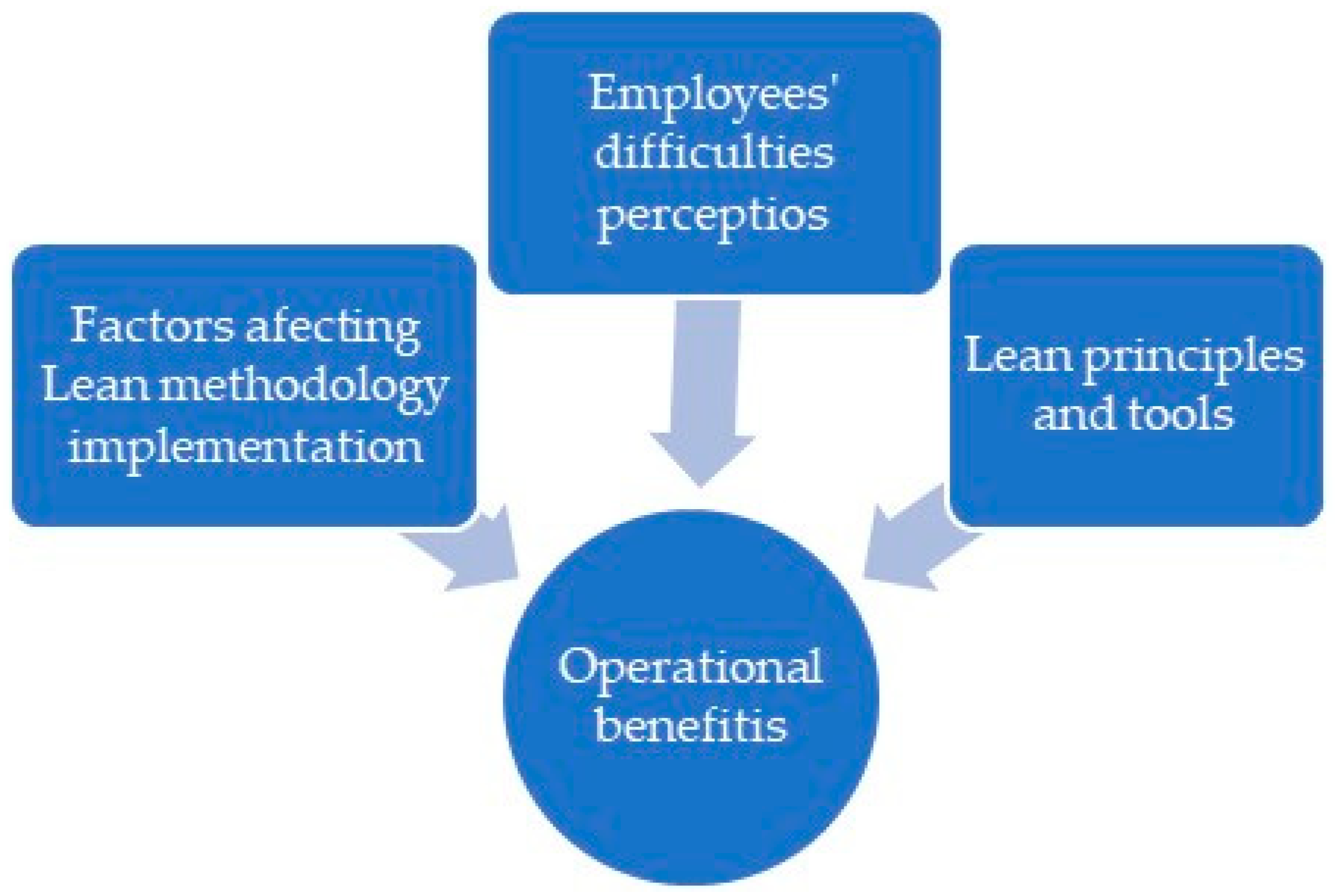
Given the literature reviewed and the data collected from the survey sent to the employees of Bosch Security Systems in Portugal, the factors affecting the implementation of Lean methodologies have been determined, as well as the difficulties experienced by the operational employees. In addition, relying on the principles and tools of Lean methodologies, these procedures also allow us to identify the operational benefits of implementing it in this company based on employee perceptions (see Figure 1). Subsequent analysis of the data obtained was performed using SPSS Version 30 statistical software. Due to the nature of the variables involved, namely, ordinal variables given that can be ranked but do not have a normal distribution, the non-parametric Mann–Whitney hypothesis tests were applied to compare two independent groups, and Kruskal–Wallis was applied to allow for a comparison of more than two groups. This allows us to compare different variables, to assess the significance of the differences observed, and to test our two null hypotheses.
Figure 1.
Methodology of investigation.
4. Results and Discussion
Descriptive Statistics
The analysis of the data presented in Table 1 shows the extent to which the organization under study has implemented Lean practices in its operations.
Table 1.
Degree of implementation of Lean methodologies.
The results show that the “5S” practice has the highest average (2.98), indicating that it is widely implemented within the organization. Its classification is 4, which suggests that most individuals consider this practice to be fully implemented. This result is consistent with the fact that 5S is often one of the first methodologies adopted when implementing Lean methodologies due to its focus on organizing and standardizing the work environment. The “Standard work” practice also has a relatively high average (2.64) and a mode of 4, which suggests that the implementation of this methodology is at an advanced stage. The practices with the lowest average degree of implementation are pull production (1.80) and JIT (1.88). This suggests that the majority of individuals consider these practices to still be in the design phase. The implementation of these methodologies requires high operational maturity and a robust and stable supply chain [30]. The low adoption of these practices may be associated with challenges in synchronizing production with real demand, reflecting structural and organizational difficulties. The implementation of the Kaizen (average 2.36), VSM (average 2.32), and Ishikawa Diagram (average 2.38) practices are at an intermediate level, suggesting that these methodologies have already been implemented but have not yet been fully consolidated. Analyzing the standard deviation, which varies from 1.402 for JIT to 1.572 for Poka-Yoke, reveals a considerable dispersion. This may be due to the inconsistent implementation of Lean practices throughout the organization, possibly due to factors such as resistance to change. Based on these results, it is recommended that a structured action plan is recommended to consolidate the adoption of Lean practices.
Table 2 presents the results of a survey of employees at Bosch Security Systems to analyze the factors affecting the implementation of Lean methodologies.
Table 2.
Relevance of the determinant factors of Lean methodologies implementation.
Analyzing Table 2 provides a comprehensive overview of the factors that motivated the implementation of Lean methodologies. This data is crucial for understanding the organization’s strategic framework, enabling us to identify the objectives of the implementation in question, as well as the vision behind the ongoing operational transformation. The factor most frequently mentioned by respondents was cost reduction, with 44 answers, which represents 27.5% of the total responses, confirming that economic motivation was the main driver for adopting Lean methodologies. This finding aligns with earlier literature indicating cost rationalization as a prevalent motivation for adopting Lean practices [9,30,31]. When well-managed, cost reduction allows companies to improve their competitiveness, increase profit margins, and free up resources for investment and innovation. The second most popular response was business strategy, with 39 responses (24.38%), followed by quality improvement, with 38 responses (23.75%). Together, these two factors show that the implementation of Lean methodologies has been driven not only by economic reasons but also by a strategic and qualitative orientation. According to ref. [32], the effectiveness of implementing Lean is directly related to its integration into an organization’s strategic objectives. Quality improvement, in turn, is one of the founding principles of Lean philosophy and is essential for creating value for customers and ensuring the sustainability of the production system [10]. Customer demands are a factor of intermediate importance, with 22 responses (13.75%). Although it is not one of the predominant factors, its weight shows that there is some concern about customer orientation, although it does not yet seem to be a central driver. This result could indicate an opportunity for development given that Lean is ultimately based on creating value from the perspective of the end customer. Market competition was the least mentioned factor, with only 17 responses (10.63%). This lack of responses focusing on competition may also reflect a limitation on employees’ strategic perception. In short, the company adopted Lean methodologies predominantly based on internal factors, such as cost reduction, strategic alignment, and quality improvement, rather than considering external factors, such as market pressure and customer demands.
To analyze whether these factors vary according to different groups, the Kruskal–Wallis test was conducted on employees with different numbers of years working at the company. Table 3 documents the results obtained.
Table 3.
Factors affecting Lean implementation by groups of individuals with different lengths of service in the company.
For all variables analyzed (market competition, customer demands, business strategy, quality improvement, and cost reduction), the p-values are all greater than 0.05. This indicates that there are no statistically significant differences between the groups, defined by how long individuals have worked for the company, for any of the evaluated variables. Thus, the length of time that employees have worked at the company does not significantly influence their perception of market competition, customer demands, business strategy, quality improvement, or cost reduction as motivating factors for implementing Lean methodologies.
Regarding the main difficulties faced in implementing Lean methodologies, the data collected are presented in Table 4.
Table 4.
Difficulties faced in implementing Lean methodologies (%).
The complexity of the services in terms of the difficulty faced in establishing standardized working methods is perceived as one of the main challenges to implementing Lean methodologies. Of the employees who expressed a valid opinion, 41.2% indicated that this factor generated many difficulties, 23.5% said that it was a challenge, 17.6% said that it was a clear obstacle, and 17.6% did not recognize it as a barrier. Regarding the resistance to change, 32.4% said that this resistance had created many difficulties, 26.5% said that it has been a challenge, and 20.6% considered it to be a direct obstacle. Only 20.6% of employees did not recognize it as a barrier. This resistance is widely documented in the literature as one of the main obstacles to organizational change. Therefore, the organization must invest in continuous training, effective internal communication programs, and the involvement of operators in building solutions, thus creating the commitment needed to sustain change. In addition, 35.3% of employees indicated that the nature of the service makes it difficult to determine the required quality, while 26.5% referred to it as a challenge, and 14.7% referred to it as an obstacle. A total of 23.5% did not consider it relevant. This difficulty is related to the intangible nature of services, where quality criteria are often subjective and dependent on customer expectations. The complexity of monitoring the progress of Lean implementation was also identified as a major obstacle. Of the respondents, 38.2% said that this factor created many difficulties, 26.5% said that it was a challenge, and 14.7% said that it was a direct obstacle. Only 20.6% did not recognize it. This difficulty may be associated with the lack of visible indicators or with ineffective data collection and analysis systems for monitoring the progress of implementation. As to the lack of appropriate technological infrastructure to support Lean implementation, the results consist of 35.3% of respondents saying that it has created many difficulties, 29.4% saying that it had been a challenge, and 14.7% saying that it had been a direct obstacle. Only 20.6% did not recognize this factor as a barrier. Digitalization is currently an indispensable component for sustaining effective Lean systems, making it possible to collect, analyze, and communicate data in real time. Cultural diversity is the least significant obstacle. Although 26.5% of employees said it had been a challenge, and 11.8% said it had created many difficulties, 44.1% said it had not been an obstacle, and only 11.8% considered it a direct obstacle. Overall, these results suggest that, overall, the organization has an inclusive and well-managed culture, which allows it to integrate different cultural backgrounds without compromising internal cohesion.
To evaluate the differences between groups of employees, taking into account their academic background, the Kruskal–Wallis was performed, and the results are presented in Table 5.
Table 5.
Difficulties implementing Lean methodologies by groups of individuals with different academic backgrounds.
For most of the variables analyzed (complexity of services, difficulty in determining the required quality, complexity in monitoring implementation progress, cultural diversity, resistance to change, and lack of technological infrastructure), the p-values are all greater than 0.05. This indicates that there are no statistically significant differences between the groups defined by the academic background of the individuals.
These results demonstrate that there are significant challenges associated with Lean implementation, which could compromise its effectiveness if not properly addressed. Therefore, we propose creating groups of factors because, although they produce integrated effects, this approach allows us to focus on specific issues. The first group relates to technical–operational factors, where the most widely agreed factor concerns the complexity of services. This is particularly relevant in contexts with a high degree of customization, such as security systems services. Another factor in this group is the lack of technological infrastructure, which can hinder the digitization and automation of operational routines. This is a critical factor in the transition to Industry 4.0 technologies.
The second group is associated with human and cultural factors. While resistance to change is not the most relevant issue, it is also indicated by employees as a difficulty.
The third group comprises organizational and management factors. Our findings show that monitoring the progress of implementation is a central factor for success. The absence of visual or digital systems to monitor the progress of Lean initiatives in real time prevents the early detection of deviations and limits the autonomy of teams.
These groups of factors suggest the need to adapt the Lean model to the organization’s specific circumstances by reinforcing participatory practices, providing technological support, implementing effective monitoring systems, and fostering an internal culture of continuous learning.
Regarding the main benefits of implementing Lean methodologies, Table 6 shows the results according to the perceptions of employees. We use the Likert scale to relate the empirical data collected to the theoretical concepts outlined.
Table 6.
Benefits of implementing Lean methodologies.
The results obtained from the analysis of the collected data clearly and consistently demonstrate that the implementation of Lean methodologies in the management of the organization’s operations had a significant positive impact on multiple dimensions of organizational performance. Most of the evaluated indicators—namely, the reduction in logistics costs, the decrease in inventory levels, the improvement in lead time, the customization of services, and the ability to respond to customer demands—show high levels of agreement among employees, highlighting favorable perceptions of the changes resulting from the application of Lean principles. The reduction in delivery service costs, driven by automation, is one of the most widely recognized results, validating the effectiveness of selective automation, as advocated in [5], and consistent with eliminating low-value-added tasks. At the same time, the integration of digital services, as evidenced by the reduction in distribution costs through online channels, reflects the synergy between Lean methodologies and the principles of Industry 4.0, in line with [2], reinforcing the organization’s adaptive and innovative capacity.
Additionally, the significant reduction in inventory levels, in line with the principles of the JIT system [25], indicates that the organization has successfully eliminated waste and optimized material flow. Similarly, the improvement in the ability to meet industrialization deadlines and adapt to demand reinforces the idea that the company has achieved a degree of operational maturity that allows for greater predictability and agility in the relevant processes.
From a customer perspective, the improvement in service quality is corroborated by indicators such as the reduction in the number of complaints, the suitable materials used, and the knowledge demonstrated by employees in responding to specific issues. These results demonstrated a clear customer focus and an understanding of the value chain [5,13].
Overall, the data analyzed show that the adoption of Lean methodologies had a positive impact in line with the organization’s strategic objectives. This enabled significant gains in terms of efficiency, quality, flexibility, and customer focus. However, the results also highlight critical areas that require ongoing attention, such as strengthening training, standardizing practices, and adapting human resources allocation, in order to consolidate the benefits obtained and sustain continuous improvement over time. In this context, promoting an organizational culture based on learning and continuous innovation will be crucial for deepening the Lean transformation and achieving higher levels of operational excellence.
Conversely, some areas still present opportunities for improvement. The perception that processes are carried out without errors is ambiguous, which may indicate shortcomings in the dissemination of tools such as Poka-Yoke or flaws in the standardization of procedures, consistent with [30]. The perception regarding the adequacy of human resources also raises concerns, as it is necessary to ensure that the demand for efficiency does not compromise organizational stability and resilience, in line with [12].
5. Conclusions
This study analyzes the factors affecting the implementation of Lean methodologies in the operational management of Bosch Security Systems. The results show that cost reduction is the main factor in implementing Lean methodologies, followed by quality improvement, with market competition being the least-mentioned factor. In addition, we find that the time that employees have worked at the company does not affect their perception of the factors affecting the implementation of Lean methodologies.
Regarding the difficulties faced in the implementation of Lean methodologies, the inherent complexity of the services provided in the security systems sector makes it difficult to standardize the relevant processes. Another difficulty is that operators’ resistance to change has proved to be a significant obstacle. It is also difficult to define objective quality criteria in a context where services are, by nature, intangible, personalized, and dependent on customer perception. The absence of clear metrics compromises the effective application of Lean tools such as source control, standardized work, and the Poka-Yoke system. This involves collaboratively creating quality indicators, promoting internal alignment, and focusing on customer expectations. Another factor that makes it difficult to implement Lean methodologies is the fragile mechanisms for monitoring and tracking the progress of its implementation, which limits the visibility of performance and reduces team involvement. From a technological point of view, the lack of digital infrastructure is a key factor limiting the maturity of Lean methodologies. The absence of real-time data collection and analysis systems, such as digital decision support tools, hinders the organization’s responsiveness and limits its ability to integrate Industry 4.0 principles. Most employees did not perceive cultural diversity as a significant obstacle, which could indicate the existence of an integrative and resilient organizational culture. Furthermore, we find that there are no significant differences in the perceived difficulties according to employees’ perception when academic background is taken into account. These factors have been grouped into three interdependent categories based on their nature, enabling us to focus on three particular issues that arise from the implementation of Lean methodologies: (1) technical and operational factors, such as the complexity of services and the lack of supporting technology; (2) human and cultural factors, such as resistance to change and the lack of clearly defined quality criteria; and (3) organizational and management factors, such as poor monitoring of results and control models that are incompatible with the Lean philosophy.
Regarding the benefits, the data analyzed shows that the adoption of Lean methodologies had an overall positive impact with respect to the organization’s strategic objectives. This enabled significant gains in terms of efficiency, quality, flexibility, and customer focus. In fact, the implementation of Lean methodologies has reduced logistics costs and inventory levels in line with the pillars of JIT. The ability to customize services and respond to customer demands has increased. One of the main impacts perceived by employees is that automation has reduced delivery service costs. Furthermore, integrating digital services and using online channels has reduced distribution costs, reflecting the synergy between Lean methodologies and Industry 4.0 principles. These results suggest that the organization has been successful in eliminating waste and optimizing material flow. However, the results also highlight critical areas that require ongoing attention, such as strengthening training, standardizing practices, and adapting human resource allocation. This will consolidate the benefits obtained and sustain continuous improvement over time.
Overall, the results of this research contribute to Lean Thinking Theory by providing evidence that it is applicable in the European context, where resistance to change and cultural diversity present the least difficulty. Additionally, this study shows the usefulness of Lean methodologies in uncertain contexts, namely, by minimizing waste using tools such as JIT and understanding consumer demand. In addition, this study brings valuable practical and theoretical insights to help companies successfully implement Lean methodologies, namely, by showing that it depends not only on the use of tools but also on the organization’s ability to motivate its workforce, reform its control systems, and establish a culture of continuous improvement centered on creating value for the customer. Lean maturity is a dynamic process requiring commitment, organizational learning, and strategic leadership.
In further developing the research on the integration of Lean and emerging Industry 4.0 technologies, such as artificial intelligence, the IoT, and big data, these digital resources have been identified as potential accelerators of Lean transformation. Lastly, it is suggested that a longitudinal investigation be developed.
Author Contributions
Conceptualization, C.P. and A.L.; methodology, C.P. and J.H.; software, A.L. and J.H.; validation, A.L., J.H. and C.P.; formal analysis, J.H.; investigation, C.P.; resources, J.H.; data curation, C.P.; writing—original draft preparation, J.H.; writing—review and editing, A.L.; visualization, J.H.; supervision, C.P.; project administration, C.P. All authors have read and agreed to the published version of the manuscript.
Funding
This research was funded by financed by Portuguese national funds through FCT—Fundação para a Ciência e Tecnologia, under the project UID/05422/2025.
Informed Consent Statement
Informed consent for participation was obtained from all subjects involved in the study.
Data Availability Statement
The original contributions presented in this study are included in the article. Further inquiries can be directed to the corresponding author.
Conflicts of Interest
The authors declare no conflicts of interest.
References
- Heizer, J.; Render, B.; Munson, C. Operations Management: Sustainability and Supply Chain Management, 14th ed.; Pearson: London, UK, 2023. [Google Scholar]
- Ivanov, D.; Dolgui, A.; Sokolov, B. Cloud supply chain: Integrating Industry 4.0 and digital platforms in the “Supply Chain-as-a-Service”. Transp. Res. Part E Log. Transp. Rev. 2022, 160, 102676. [Google Scholar] [CrossRef]
- Laroca, A.; Pereira, M.T.; Silva, F.J.G.; Oliveira, M.J.G.P. Optimization of an Air Conditioning Pipes Production Line for the Automotive Industry—A Case Study. Systems 2024, 12, 42. [Google Scholar] [CrossRef]
- Stronczek, A. Barriers of Lean Accounting Implementation in Polish Enterprises: DEMATEL Approach. Sustainability 2023, 15, 12008. [Google Scholar] [CrossRef]
- Womack, J.; Jones, D. Lean Thinking: Banish Waste and Create Wealth in Your Corporation; Simon & Schuster: London, UK, 1996. [Google Scholar]
- Habib, A.; Rizvan, R.; Ahmed, S. Implementing lean manufacturing for improvement of operational performance in a labeling and packaging plant: A case study in Bangladesh. Resul. Eng. 2023, 7, 100818. [Google Scholar] [CrossRef]
- Khisbulloh, W.; Yudoko, G. OEE improvement through reducing start up duration using lean Six Sigma methodology in manufacturing. J. Multidisc. Acad. Pract. Stud. 2024, 2, 277–293. [Google Scholar] [CrossRef]
- Mortada, A.; Soulhi, A. Improvement of Assembly Line Efficiency by Using Lean Manufacturing Tools and Line Balancing Techniques. Adv. Sci. Technology. Res. J. 2023, 17, 89–109. [Google Scholar] [CrossRef] [PubMed]
- Palhares, J. Lean na Gestão de Operações de uma Empresa de Transporte Expresso; Instituto Politecnico do Porto: Porto, Portugal, 2020. [Google Scholar]
- Júnior, R. Avaliação de implementação lean manufacturing: Estudo de caso no setor de manutenção de uma siderúrgica de grande porte. Rev. Prod. Online 2019, 19, 981–1000. [Google Scholar] [CrossRef]
- Womack, J.; Jones, D.; Roos, D. The Machine that Changed the World; Maxwell Macmillan International: New York, NY, USA, 1990. [Google Scholar]
- Netland, T.; Ferdows, K. The S-Curve Effect of Lean Implementation. Prod. Oper. Manag. 2015, 25, 1106–1120. [Google Scholar] [CrossRef]
- Liker, J. The Toyota Way Fieldbook; Mcgraw-Hill Education—Europe: London, UK, 2004. [Google Scholar]
- Alksibri, A. Optimizing Supply Chain Dynamic, A Comparative Analysis of Kanban with Six Sigma in the Food Beverage Industry. 2023. Available online: https://hdl.handle.net/20.500.14131/1370 (accessed on 1 March 2025).
- Rother, M.; Shook, J. Learning to See: Value Stream Mapping to Add Value and Eliminate Muda; Lean Enterprise Institute: Boston, MA, USA, 2009. [Google Scholar]
- Romero, D.; Zanchi, M.; Powell, D.; Gaiardelli, P. Cyber-Physical Visual Management Systems in the Digital Lean Manufacturing World. In IFIP International Conference on Advances in Production Management Systems; Springer: Cham, Switzerland, 2022. [Google Scholar] [CrossRef]
- Adeyemi, O.; Alaka, H.; Cano, M.; Nair, A.; Adeyemi, E.; Olanrele, O. Adapting lean manufacturing principles to the footwear industry: Kaizen, Kanban or a Mix? In MATEC Web of Conferences; EDP Sciences: London, UK, 2024; Volume 401, p. 10004. [Google Scholar] [CrossRef]
- Pedragas-Castro, C.; Perez-Bartra, F.; Collao-Diaz, M. Improvement Model Based on Lean Warehousing, Kanban and BMP to Increase the Level of Service of a Lighting Fixtures Retailer. In Proceedings of the Second Australian International Conference on Industrial Engineering and Operations Management, Melbourne, Australia, 14–16 November 2023. [Google Scholar] [CrossRef]
- Tommelein, I.D. Poka Yoke or Quality by Mistake Proofing Design and Construction Systems. In Proceedings of the 16th Annual Conference of the International Group for Lean Construction, Manchester, UK, 16–18 July 2008. [Google Scholar]
- Widjajanto, S.; Purba, H.H.; Jaqin, S.C. Novel Poka-Yoke approaching toward industry-4.0: A literature review. Oper. Res. Eng. Sci. Theory Appl. 2020, 3, 65–83. [Google Scholar] [CrossRef]
- Sallam, M.; Allam, D.; Kassem, R. Improving Efficiency in Hospital Pharmacy Services: An Integrated Strategy Using the OCTAGON-P Framework and Lean 5S Management Practices. Cureus 2024, 16, e56965. [Google Scholar] [CrossRef] [PubMed]
- Ishikawa, K. Introduction to Quality Control; Chapman and Hall: London, UK, 1991; Volume 7. [Google Scholar] [CrossRef]
- Antonelli, D.; Stadnicka, D.; Litwin, P. Inclusive manufacturing through the application of lean tools to sustainability issues. Procedia CIRP 2024, 122, 593–598. [Google Scholar] [CrossRef]
- Talib, F.; Asjad, M.; Attri, R.; Siddiquee, A.N.; Khan, Z.A. A road map for the implementation of integrated JIT-lean practices in Indian manufacturing industries using the best-worst method approach. J. Ind. Prod. Eng. 2020, 37, 275–291. [Google Scholar] [CrossRef]
- Villa, A.; Taurino, T. From JIT to Seru, for a Production as Lean as Possible. Procedia Eng. 2013, 63, 956–965. [Google Scholar] [CrossRef]
- Bayraktar, E.; Jothishankar, M.C.; Tatoglu, E.; Wu, T. Evolution of operations management: Past, present and future. Manag. Resear. News 2007, 30, 843–871. [Google Scholar] [CrossRef]
- GmbH. RB Crossroads Annual Report 2023 Bosch Annual Report, Issue. Bosch.com. Available online: https://www.bosch.com/company/annual-report/ (accessed on 1 March 2025).
- Bryman, A. Social Research Methods; Oxford University Press: Oxford, UK, 2016. [Google Scholar]
- Flick, U. An Introduction to Qualitative Research; SAGE Publications: London, UK, 2022; Available online: https://digital.casalini.it/9781529783544 (accessed on 1 March 2025).
- Shingo, S. A Study of the TPS from an Industrial Engineering Point of View; Productivity Press: Cambridge, MA, USA, 1989. [Google Scholar]
- Antony, J.; McDermott, O.; Powell, D.; Sony, M. The evolution and future of lean Six Sigma 4.0. TQM J. 2023, 35, 1030–1047. [Google Scholar] [CrossRef]
- Shah, R.; Ward, P.T. Lean manufacturing: Context, practice bundles, and performance. J. Oper. Manag. 2002, 21, 129–149. [Google Scholar] [CrossRef]
Disclaimer/Publisher’s Note: The statements, opinions and data contained in all publications are solely those of the individual author(s) and contributor(s) and not of MDPI and/or the editor(s). MDPI and/or the editor(s) disclaim responsibility for any injury to people or property resulting from any ideas, methods, instructions or products referred to in the content. |
© 2025 by the authors. Licensee MDPI, Basel, Switzerland. This article is an open access article distributed under the terms and conditions of the Creative Commons Attribution (CC BY) license (https://creativecommons.org/licenses/by/4.0/).


