


Abstract
This systematic search with narrative synthesis examines metaverse business models and their shift toward immersive virtual ecosystems. Following the PRISMA flow for identification and screening to structure transparency, we review 91 publications to map the shift from classical and digital models to metaverse models, highlighting new value propositions, revenue mechanisms, and the integration of VR, AR, and blockchain across the value chain. Our contributions are threefold: we articulate the transition patterns from classical and digital to metaverse business models; we propose a structured metaverse business framework with evaluation dimensions; and we compile a candidate metric set to support comparative analysis. Interpreting the evidence through a socio-technical systems lens, the synthesis indicates an emergent shift in how value is created, delivered, and captured. We identify five core dimensions for assessing metaverse business models: scalability, technological adaptability, user engagement and retention, ethical and sustainability practices, and economic viability as critical dimensions for future comparative analysis of metaverse business models. Building on these findings, we propose a metaverse business framework and a set of candidate KPIs to enable comparative evaluation and guide investment, design, and governance. The paper advances digital transformation theory and outlines a research agenda on dynamic capabilities and the long-term sustainability of metaverse business models.
1. Introduction
A business model outlines how a company creates, delivers, and captures value, essentially showing how it operates and makes money. It includes the company’s value proposition, revenue streams, customer segments, channels, and cost structure. Shafer et al. [1] view business models as representing a firm’s core logic and strategic choices for creating and capturing value within a value network. Mitchell and Bruckner Coles [2] use a set of guiding questions to describe a business model, focusing on the who, what, when, where why, to whom, how, and how much of an organization’s operations. According to Olofsson & Farr [3], a business model is an architectural layer between planning and implementation. Furthermore, Osterwalder [4] places a business model at the center of a triangle comprising business strategy, organization, and ICT, within a legal and social environment characterized by customer demand, competitive forces, and technological change, emphasizing the role of both internal and external factors. They propose nine building blocks of a business model: value proposition, target customer, distribution channel, relationship, value configuration, capability, partnership, cost structure, and revenue model. On the other hand, Gassmann et al. [5] propose a simplified approach through a business model ‘magic triangle’, guided by four questions: (1) what do you offer to the customer? (2) how is the value proposition created; (3) who is your target customer; and (4) how is revenue created; or simplified ‘Who-What-How-Value?’, creating a framework that is simple and convenient for both scientific and practical analysis.
The classical business model typically revolves around a linear value chain, where products or services flow from production to the end consumer through a series of well-defined steps: value creation, value proposition, value delivery, and value capture. This model emphasizes physical products, services, and direct interactions in a physical or digital space, but within the confines of traditional platforms and media. On the other hand, a business framework provides a structured approach for analyzing, understanding, and making decisions about a business. It can include theories, methodologies, and tools for assessing business operations, strategy, and growth opportunities.
For illustration, a classic business model example is the retail business model, where a company buys products at wholesale prices and sells them to end consumers at retail prices. Such a model relies on purchasing inventory, marking up prices to cover costs and generate profits, and selling through physical or online stores. The value is created by providing consumers with convenient access to various products, and the company captures value through the margin between the wholesale and retail prices. Transferring a classical retail business model to the Metaverse could involve creating virtual storefronts in a digital world where consumers can interact with products in a 3D space. This model might leverage virtual reality (VR) to enhance customer experience, allowing them to “try” products virtually. The value proposition shifts towards immersive shopping experiences, with value captured through digital transactions. Revenue could come from virtual goods sales, in-world advertising, and premium experiences. To support this model, the business would need to innovate in digital inventory management, VR technology, data processing, and cybersecurity.
The main difference between a classical business model and a metaverse business model lies in the scope and dimensionality of interactions and transactions, including the platform and interaction method. The metaverse business model is positioned at an advanced stage of digital transformation, where digitalization has significantly matured within a company’s operations. The transition from a classical to a digital and then to a metaverse business model can be viewed as a digital maturity continuum. A digital business model integrates digital technology into all aspects of business operations, enhancing efficiency and customer experience and creating new value propositions through digital means [6]. The main difference between digital and metaverse business models lies in their level of immersion and interactivity. Digital business models leverage the internet and digital technologies to sell products or services, prioritizing efficiency and reach. Metaverse business models, however, offer immersive, 3D virtual environments where users can interact with the digital world and one another in more complex and engaging ways. Prior peer-reviewed scholarship has synthesized how pre-blockchain virtual worlds functioned as economies, including user-generated content markets, virtual goods monetization, and governance arrangements that anticipate many metaverse logics [7]. Nowadays, the metaverse business model takes digital transformation further by leveraging immersive virtual environments, refining the potential of Industry 5.0 [8], marketing innovation [9], and disrupting the current notion of business process execution [10]. This means that the metaverse business models can be observed as the latest stage of digital transformation, as a temporary hype, or-if key conditions are realized (e.g., interoperability, robust governance, and widespread adoption)-as an onset of a new paradigm that might surpass the digital transformation as we currently understand it. The rationale is that the Metaverse entails not just a technological shift but a holistic integration of digital and physical realities, offering higher levels of engagement, interaction, and immersion, which translate into potential for innovative products and services, novel transactional forms, and new modes of value creation and capture. This surpasses traditional digital transformation, which has primarily focused on digitizing existing processes rather than creating entirely new socio-technical realities.
Whereas classical models are constrained by physical and digital boundaries of the current internet and economic systems, metaverse models operate in a platform-mediated, increasingly immersive virtual ecosystem that integrates social, financial, and experiential aspects deeply intertwined with digital currencies and non-fungible tokens (NFTs), enabling a new economy based on virtual goods and services. Metaverse models offer specific digital experiences, virtual goods, services, virtual spaces, assets, and experiences that can transcend what is possible in the physical world. The value proposition becomes significantly enhanced, offering users not just products or services but experiences and identities within a virtual world. Value delivery leverages virtual platforms, requiring robust digital infrastructure to support immersive experiences. Finally, value capture can include new forms, such as transactions in virtual currencies, the trade of virtual goods, and the monetization of virtual real estate and experiences. This shift enables innovative and enhanced customer engagement, as well as new revenue streams from virtual experiences, while also requiring adaptations in value delivery, such as the utilization of virtual reality technologies. Consequently, metaverse business models should be analyzed not only as technological innovations but also as complex, adaptive systems integrating technological, economic, social, and ethical dimensions.
However, the current business environment supports various business models operating at different levels of digital transformation. Gil-Cordero et al. [11] examine the factors influencing small and medium-sized enterprises’ (SMEs’) intentions to adopt the Metaverse, focusing on effort expectancy, performance expectancy, and business satisfaction. They found that business satisfaction, which involves obtaining information, reducing uncertainty, and analyzing competition, plays a critical role in SMEs’ approach to the Metaverse. Utilizing the Metaverse in any form, particularly the transition to a metaverse business model, requires a substantial technological infrastructure and investment. Therefore, the companies that existed before the metaverse era could be reluctant to make the leap, especially if they lack information or perceive the environment as uncertain. Recent case-based evidence highlights that successful Metaverse moves hinge on building and integrating digital-asset and organizational capabilities through organizational change and innovation ecosystems. Leadership typically follows a staged roadmap from exploration to experimentation to consolidation [12]. Since the Metaverse is still in its early stages, with many unknowns, further research is necessary to gain a deeper understanding.
Polyviou & Pappas [13] explore the concept of Metaverses as immersive virtual worlds that simulate the physical world, where digital representations of people, places, and things (e.g., avatars) can interact and collaborate. Their paper emphasizes the transformative potential of metaverses for businesses and society. It proposes a methodological framework for future researchers to organize the literature on Metaverses and guide them in identifying new research avenues, particularly regarding how Metaverses can reshape business strategies, operations, policies, and structures, focusing on dimensions such as design, strategy, management, and value measurement. As a promising avenue for future research, Gursoy et al. [14] propose research on economic and business models in the Metaverse.
At this point, we need to add a note on the terminology-we use “Metaverse” (capitalized) when referring to the overarching socio-technical vision and ecosystem, and we use “metaverse” (lowercase) when used adjectivally or to denote specific implementations (e.g., metaverse business models, metaverse platforms).
In the rest of the paper, we examine a business model in the Metaverse, focusing on the unique aspects of metaverse business models, including their core elements, such as innovative revenue streams and value propositions. Further, we examine how metaverse models navigate technological advancements, legal frameworks, cybersecurity, data privacy, and sustainability challenges. Additionally, the role of cutting-edge technologies and analytical tools in shaping these business models, the significance of user engagement, and strategic considerations for businesses entering the Metaverse will be explored, alongside the potential diffusion of metaverse technologies across industries.
The next section describes the methods used and precedes Results and Discussion, which are divided into subsections for easier systematization. Starting from its beginnings, we introduce the early stages of the metaverse adoption, progressing to a discussion of the metaverse business model and issues surrounding its application. The Results and Discussion section concludes with a proposal of the metaverse business framework. The Conclusion summarizes theoretical and managerial implications, along with limitations and proposals for future research.
2. Materials and Methods
The initial analysis and reporting follow the PRISMA guidelines [15,16], with the topic serving as the basis for the inclusion criteria. The PRISMA checklist is available in Appendix A (we use selected PRISMA 2020 reporting items appropriate for a narrative review to structure transparency, as we did not conduct a meta-analysis or a full PRISMA systematic review). The search comprises a business model or business framework in combination with the Metaverse. The search for the documents in the WoSCC and Scopus by keywords, abstract, and title using the respective search engines was conducted on 6 February 2024. The exact search string was TITLE-ABS-KEY (metaverse AND (“business model” OR “business framework”)) for Scopus (Elsevier, Amsterdam, The Netherlands), and TS = (metaverse AND (“business model” OR “business framework”)) for Web of Science Core Collection (Clarivate, Philadelphia, PA, USA). All languages, timespan, and document types were included in the search. This also includes online first and early access indexed publications. Records were exported (BibTeX), merged, and deduplicated in R using bibliometrix package [17].
While the restriction of using only these two archives may have resulted in the omission of some relevant studies not indexed in these databases, the use of WoSCC and Scopus ensures that the included literature is subject to rigorous indexing standards and reflects a verified level of scholarly quality. This choice also enhances transparency and replicability of the review process, as the search strategy can be systematically reproduced using the same databases and criteria. The fixed search date (6 February 2024) likewise restricts our evidence to that point in time, and subsequent publications fall outside scope but can be incorporated in the updates.
Figure 1 details the PRISMA flow (we applied selected PRISMA items to document search and screening): 125 records retrieved (50 WoSCC, 75 Scopus), 16 removed (duplicates, missing authors), 109 screened, 18 excluded for content mismatch and manually discovered duplicates (Appendix B, Table A2 and Table A3), leaving 91 for synthesis.
Figure 1.
PRISMA-style flow diagram. Source: Authors.
The inclusion criteria involved the selection of peer-reviewed and indexed scholarly outputs that explicitly discuss business models/frameworks in relation to the metaverse, and provide conceptual, methodological, or applicative content relevant to value propositions, value chains, or revenue mechanisms. In addition, borderline papers were included if they explicitly link at least one business model element (value proposition, value chain, revenue) to metaverse contexts, or may serve as a relevant example, even when the full canvas was not presented (Appendix B, Table A4). Items lacking a metaverse–business–model link, non-scholarly sources, editorials/notes (unless containing substantive model content), or records with missing essential metadata (e.g., authors) are excluded.
Both authors independently screened all records (titles/abstracts and full text). Disagreements at any stage were resolved through discussion until a consensus was reached; no third reviewer was required.
At the beginning of our analysis, in the screening stage, we employed bibliometric analysis to gain initial insights (Table 1). Bibliometric analysis relies on the statistical exploration of scientific activities, offering a method that enhances transparency and reproducibility compared to other review types, thereby ensuring more objective and reliable outcomes [17]. In this case, it offers valuable quantitative initial insights into topic popularity and academic relevance.
Table 1.
Main information about documents.
The main information about the examined documents reveals a short period, with 109 documents and a 13.88% annual growth rate. The documents comprise 63 journal articles, 10 book chapters, 2 books, 24 conference papers, 9 reviews, and a note. Only 109 publications were published by 95 sources, which indicates that there is no specific outlet for this line of research. In addition, 3028 identified references suggest that researchers in this area draw from other fields.
Regarding topic development, the first paper, a case study, was written in 2008. That shows that science lagged behind the developments in practice and joined in to observe the new patterns. Another paper was published in 2010, followed by a break until one paper was published in 2018. Following this, a surge in research publications on the topic began in 2022, with 20 publications, 78 documents in 2023, and 8 publications in the first month of 2024. This also indicates that the actual annual growth rate is even higher, as excluding the papers prior to and including 2018 (3 papers) yields a 36.75% yearly growth rate. These figures indicate topic popularity rather than evidentiary strength. Our synthesis therefore emphasizes convergent constructs across sources, while acknowledging potential temporal bias.
While bibliometric analysis provides valuable first insights into publication patterns and research trends, it is not appropriate for deriving an in-depth conceptual understanding of business model dynamics in the Metaverse. To achieve this, we complement the bibliometric overview with a narrative synthesis, enabling us to systematize and critically interpret the conceptual and theoretical underpinnings of the field [18].
No meta-analysis was planned or conducted due to heterogeneity, so this is not a full PRISMA systematic review. In addition, quantitative synthesis, GRADE (Grading of Recommendations, Assessment, Development and Evaluation), and RoB (Risk of Bias) tools are not appropriate for a predominantly conceptual or heterogeneous evidence. Because the corpus combines conceptual and empirical work, we applied a minimal design-appropriate appraisal. For the conceptual/theoretical papers, clarity of constructs, coherence of logic, and novelty/utility were considered. For the empirical research and case studies, clarity of design, data adequacy, and analytic transparency were the guidelines for the paper quality. While quality was not an exclusion criterion, it governed the selection of the papers that served as the main arguments in the narrative. Book chapters and proceedings papers were included as they are parts of indexed publications (which requires a peer review), and they were used for additional arguments or observations, not as core evidence for framework construction.
We employed a structured narrative synthesis, comprising five steps: first, initial mapping (scoping the literature); second, cross-case contrasts; third, grouping themes around Gassmann’s Who-What-How-Value framework; fourth, identifying emerging issues; and fifth, construction of the layered framework (without statistical pooling or formal qualitative coding) [19,20].
The 91 identified documents have been reviewed, and their findings are synthesized through a narrative review. This highlights the evolution of thought and evidence on metaverse business models. The sheer volume of publications in such a short period underscores the Metaverse’s transformative potential in reshaping business strategies, value propositions, value chains, and revenue models that require thorough insights.
In the rest of the paper, we strive to systematically address several pivotal questions relevant to understanding and navigating the emerging metaverse landscape from a business model perspective:
- What are the main elements of the Metaverse business models, as well as the potential revenue models and value propositions unique to the Metaverse?
- How does the metaverse business model address technological, legal, cybersecurity, data privacy, and sustainability issues?
- What innovative technological and analytical applications play a role in metaverse business models?
- How do user engagement and experiences shape the metaverse business landscape?
- What are the strategic and operational considerations for businesses entering the Metaverse?
- How can metaverse technologies transform various sectors?
For traceability, our six guiding questions map to specific outputs as follows:
- Q1 (core elements, value propositions, revenue models) → Section 3.2 and Table 2;
- Q2 (technological, legal, cybersecurity, privacy, sustainability) → Section 3.3.1, Section 3.3.2 and Section 3.3.3;
- Q3 (innovative technological and analytical applications) → Section 3.2.2 and Section 3.3.3;
- Q4 (user engagement and experiences) → Section 3.2.1 and Section 3.3.4;
- Q5 (strategic and operational considerations) → Section 3.2 and Section 3.3.6 (framework);
- Q6 (sectoral diffusion) → Section 3.3.5 (applications and examples);
- PRISMA items and screening details → Appendix A; excluded/borderline records → Appendix B.
In this narrative systematization, we explore and elucidate the emergent topics within the selected articles, focusing on how these topics have evolved. Our approach was grounded in a comprehensive reading and interpretative analysis of the content rather than employing numerical analysis, counting, or formal coding strategies commonly found in other types of systematic reviews or meta-analyses. This process enabled us to immerse ourselves in the material, gaining a profound understanding of the thematic outlook and its development throughout the literature.
We explore the metaverse business models through predefined lenses of Gassmann et al.’s [5] elements. Given the raised questions, we further explore intertwined areas by systematically sifting through the content, identifying key themes, patterns, and shifts in discourse without quantifying their occurrence. This method facilitated a nuanced synthesis of the literature, highlighting significant trends, topics, and research gaps. Our analysis was iterative, with continuous refinement of themes as we delved deeper into the articles. This approach enabled us to trace the development of topics over time, understanding their contextual relevance and implications for the field, and maintaining the exploratory and interpretative nature of the analysis.
3. Results and Discussion
3.1. The Beginnings
As the first document to address the intersection of Metaverse and business systems, the book “Interdisciplinary Aspects of Information Systems Studies” by [21] features a chapter by Cagnina & Poian [22] that explores a metaverse business model through a case study of Second Life. The article presents a comprehensive analysis of how new (at the time) web-based technologies, particularly focusing on Second Life, impact e-business practices, proposing a theoretical framework to understand the business possibilities within Web 2.0 platforms.
The form of the metaverse business model, as illustrated using Second Life, combines technological advancements with user engagement to create a unique, immersive experience. The framework identifies technology as the set of structural conditions defining digital interactions and content creation as the manipulation of technology by users to satisfy their needs. This includes the development of three-dimensional structures and items by users, blurring the lines between firms and customers.
Interactivity and immersion are the main analytical dimensions. Interactivity encompasses the processes established between users, hardware, and software, influencing learning and skill acquisition. Immersion refers to the level of involvement and motivation experienced by users, which enhances telepresence and positively impacts brand attitudes. The model underlines the importance of engaging users and fostering a strong sense of community among prosumers (users who both produce and consume). This leads to collective environment enactment, where users contribute to building and improving the virtual world.
There is also an economic aspect; Second Life introduces an economic system with an official currency, the Linden Dollar, that can be exchanged for US dollars, allowing residents to generate real-world income from their creations within the virtual world. Acknowledged legal issues refer to recognizing residents’ intellectual property rights to their creations as a fundamental element. This aspect encourages innovation and creativity by ensuring users retain ownership over their digital creations. Successful virtual business strategies in Second Life include engagement campaigns and leveraging the community of prosumers for creative input, as exemplified by the marketing efforts of “Harry Potter and the Order of the Phoenix” and Coca-Cola’s Virtual Thirst competition. Overall, this model emphasizes the integration of web-based features with distinctive aspects of the Metaverse, leading to the creation of communities of prosumers.
Similarly, the alpha.tribe [23] was an experimental group that functioned as a collective to operate the virtual fashion business in Second Life. This collective approach allowed for a diverse range of creative inputs and explorations. The author’s approach was primarily self-observational, suggesting that the enterprise’s design and operation were closely monitored and reflected upon by the creator(s). This introspective method likely informs adjustments and evolutions in the business strategy and creative direction. However, the enterprise and its creative processes are documented visually, which not only serves as evidence of the work performed but also as a means to engage with audiences and consumers. While Second Life illuminates early prosumer logics, its firm-hosted, non-interoperable architecture limits direct generalization to today’s tokenized and AI-augmented ecosystems.
Uddin et al. [24] pinpoint the origins of the Metaverse to the birth of the Internet, emphasizing the role of technology. They view Metaverse as an inseparable combination of virtual and physical systems that enable immersive user experience, serve as the interface for content creation, and foster further technological development at their intersection.
While these papers suggest the development of a new phenomenon, Ioannidis & Kontis [25] disagree. Through their research, they outline the historical development of the Metaverse, beginning with early 20th-century fiction that introduced concepts of virtual realities, and progressing through technological advancements such as VR headsets and online virtual worlds, to modern interpretations and implementations, including digital twins and blockchain technologies. They highlight key milestones and technologies that have shaped the Metaverse concept over time, suggesting an ongoing evolution towards more integrated, realistic, and interactive virtual environments. The Metaverse’s potential for social interaction, entertainment, work, and education is emphasized alongside the technological and conceptual challenges that remain in realizing its complete vision. However, the realization of its business potential is a more recent subject that requires a deeper insight.
3.2. Theoretical Background of the Metaverse Business Model
We adopt a systems lens consistent with socio-technical systems theory, treating business models as adaptive configurations of technologies, organizations, and institutions. We therefore read existing proposals as co-evolving socio-technical configurations, where technological affordances, organizational routines, market logics, and regulatory constraints adapt jointly. The following studies illustrate various socio-technical pathways through which the metaverse business model is conceptualized, highlighting the multi-layered nature of this evolving ecosystem.
From a business perspective, the Metaverse is still in its infancy, with much of its potential revenue generation and value chain yet to be fully realized [26]. The book paints the Metaverse as a burgeoning digital realm, powered by advancements in virtual and augmented reality, aiming to transition from a 2D to a 3D online experience. This transition is accompanied by the tokenization of a broad range of digital assets, suggesting a future where digital and virtual assets play a central role in the economy. The Metaverse is envisioned as a network of persistent, interoperable virtual worlds. Its development, significantly boosted by the COVID-19 pandemic, suggests a future where digital interactions could closely mimic or even enhance real-world interactions. This has vast implications for commerce, education, healthcare, and other sectors, extending into areas such as property tokenization and the creation of digital twins for real-world assets. This broad perspective sets the stage for more targeted frameworks that emphasize strategic alignment, ethics, or sector-specific transformations.
While primarily dealing with the Mechanics-Dynamics-Aesthetics (MDA) game design approach, Bockle et al. [27] propose a framework that encourages a systematic approach to designing metaverse environments, focusing on why the Metaverse adds value, what design elements are needed, and how to apply strategic design principles effectively. While Bockle et al. [27] argue that metaverse initiatives must align design choices with explicit business objectives across consumer, industrial, and enterprise contexts, Anshari et al. [28] extend this logic to the ethical domain, emphasizing that sustainability and trust are not add-ons but integral components of long-term value creation.
3.2.1. Innovations and User Experience
An innovative e-commerce platform that integrates live commerce with the Metaverse, using digital twin technology, is proposed by Jeong et al. [29]. This type of business model aims to enhance the online shopping experience by allowing consumers to interact with products and brands in a virtual space, overcoming the limitations of traditional live commerce. It emphasizes creating engaging content and virtual brand experiences to attract and retain customers. The business model is detailed through the Business Model Canvas, highlighting its unique value proposition and the essential components required for success.
Gursoy et al. [14] outline a comprehensive framework for delivering enhanced virtual reality experiences within the Metaverse, focusing on multi-view content synthesis and efficient content delivery mechanisms. Particularly, they highlight experience and purchase co-creation through the participation of the focal customer. They emphasize immersive user experiences, resource optimization, and potential monetization strategies through unique digital offerings, aligning with broader Metaverse development and engagement strategies. Both contributions [14,29] show how immersive design and technological infrastructure combine to enhance customer experience, whether through retail interactions or multi-view content ecosystems.
Mancuso, Petruzzelli et al. [30] further develop the idea of mechanisms, exploring individual microfoundations (skills and actions of individuals) and relational microfoundations (relationships among individuals) that underpin value creation and capture. These microfoundations explain macro variables that affect innovation in value creation and value capture within the business model innovation. While this underlines how resilience and innovation capacity depend not only on technological adoption but also on microfoundations—skills, routines, and relationships that sustain transformation —it also touches upon the co-creation aspect, which further raises questions about authorship/ownership, tokenization, and the development of virtual economies and crypto economies.
Lastly, not all strategies will be successful, so it is relevant to explore recovery strategies. While addressing the issue of recovery strategies, Mir et al. [31] also consider Metaverse and synthetic services (AI-/avatar-mediated service interactions). The opportunities and challenges of service recovery in the Metaverse need effective strategies to manage service failures in virtual hospitality experiences. They highlight the integration of virtual and real-world services by firms such as McDonald’s and Starbucks, suggesting novel avenues for compensating for service failures across these realms. The Proteus effect refers to the phenomenon where an individual’s behavior in the virtual world, influenced by their digital avatar’s appearance and capabilities, affects their behavior and attitudes in the real world. These cases illustrate service failure and recovery in avatar-mediated contexts and invite the application of attribution and justice theories to virtual settings (e.g., how avatar appearance shapes blame and fairness), yielding design implications for resilient value propositions.
3.2.2. Performance, Productivity, and Optimization
In the realm of engineering management, the Metaverse has the potential to be transformative, enhancing productivity, fostering new business models, and increasing organizational competitiveness. The discussion is structured around five key areas: supply chain management, logistics management, decision-making, technology management, and knowledge management [32]. In terms of business models, the Metaverse is seen as a fertile ground for innovation. It presents opportunities for creating new revenue streams through the development of virtual products and services. Organizations can leverage the Metaverse to design immersive experiences, facilitating novel ways of interaction, collaboration, and transaction. The Metaverse’s impact is discussed in relation to enhancing supply chain visibility, improving logistics operations, and enabling more efficient and informed decision-making processes.
El Jaouhari et al. [33] highlight the lack of integrated approaches to combining metaverse technologies and manufacturing resilience, especially during disruptions such as COVID-19. They suggest further research into metaverse applications in manufacturing to leverage their full potential. This study offers a conceptual framework but calls for empirical research to validate the proposed benefits and applications of metaverse technologies in manufacturing settings. The potential avenue lies in extending ‘phygital’ transformation [34] to the production process (tightly coupled combinations of physical processes and digital interactions).
Mancuso et al. [34] examine how digital business model innovation within the Metaverse can approach virtual economy opportunities, highlighting new value creation and capture mechanisms emerging from metaverse opportunities. They categorize these opportunities around internal processes and customers, focusing on ‘phygital’ transformations that blend physical and digital realities, as well as virtual transformations that enhance customer engagement through digital identities and communities.
Another venue is a multi-dimensional optimization framework for microservices [35] in the context of cloud-native and metaverse scenarios, focusing on security mechanisms, high concurrency testing, and system reliability. The author proposes a model to enhance service maturity by addressing development, testing, deployment, and operational challenges, demonstrating that the technological and analytical frameworks are inseparable from the business model. It aims to optimize the service lifecycle, from development to online operation, with specific strategies for code quality, stress testing, service deployment, and system protection. Additionally, it introduces automated quality checks to maintain long-term service maturity, with experimental results indicating improvements in system performance and reliability.
3.2.3. Supply Chain
Siahaan et al. [36] examine logistics development in relation to technology trends and enabling factors in the Metaverse, building on the Malcolm Baldrige’s Performance System Model. Positioning logistics as a metaverse value proposition reveals new services (tracking, virtual fulfillment) and cyber-physical transparency across the chain. These services could transform how goods are managed, tracked, and delivered within digital environments, enhancing customer experiences. This could redefine operations and processes, including supply chain management (SCM), by leveraging digital platforms and cyber-physical systems for more efficient and transparent logistics operations. As logistics evolve to meet the needs of the Metaverse, new revenue models may emerge. For instance, companies could generate income through virtual logistics services, facilitating trade within the Metaverse, or managing the supply chain of virtual goods, possibly using cryptocurrencies or other digital payment methods.
Another line of work on metaverse integration in SCM identifies key barriers to its implementation, including technological limitations, lack of governance, integration challenges, and resistance due to traditional organizational culture [37]. Addressing these barriers is a prerequisite for businesses looking to leverage the Metaverse for enhanced SCM efficiency, and authors stress the importance of technological readiness, governance standards, strategic planning for technology integration, and an innovation-oriented culture to adopt metaverse technology in supply chain management practices successfully. These works [32,36,37,38] shift the focus from customer-facing innovation to the back-end of metaverse infrastructures, exploring decentralization, supply chain, and logistics issues. Read through a systems lens, these works foreground feedback loops (e.g., demand-capacity-latency) and endogenize coordination costs and trust formation.
3.2.4. Virtual Economy and Financial Aspects
A creator crypto economy model for blockchain-enabled social media (BSM), focusing on decentralization and user engagement through innovative practices, was introduced by Zhan et al. [38]. They outline a business model based on four pillars: fundamental technologies, governance and operations, incentive mechanism design, and organizational structure and performance, aimed at overcoming the challenges of traditional social media by offering a more participatory and equitable framework. The model emphasizes the importance of blockchain technology in creating a secure, transparent, and user-centric platform.
Zadorozhnyi et al.’s [39] suggestions for improving accounting and auditing methodologies within the Metaverse align directly with enhancing a company’s value proposition by ensuring the reliability and legitimacy of virtual assets. The paper recommends improving the methodology and organization of accounting and auditing within the Metaverse, specifically for non-current intangible assets, IT company goodwill, NFTs, cryptocurrencies, and other virtual objects. They suggest classifying NFTs based on their usefulness into non-current and current assets for appropriate accounting reflections. This contributes to the value chain by enabling the precise classification and accounting of virtual goods and services, which can enhance revenue models through the accurate tracking of sales and investments in virtual environments, while also increasing transparency. The issue of accounting and taxation has also been investigated by Pandey & Gilmour [40], who find that transactions in the Metaverse challenge traditional revenue recognition and deferral concepts due to the introduction of new applications powered by blockchain and emerging technologies, such as NFTs and decentralized finance (DeFi) tools. The authors emphasize the importance of a case-based approach for the accounting industry in the Metaverse, particularly in light of the current lack of standardized regulations. The emphasis on auditing, accounting, and taxation [39,40] illustrates that even fundamental economic functions must be reconfigured to accommodate virtual assets.
3.2.5. Ethical Considerations
Anshari et al. [28] propose a metaverse business model that emphasizes the ethical implications of data collection and utilization for sustainable business practices. Their research highlights the transformative potential of the Metaverse for businesses, including the ability to generate massive amounts of data for innovative value creation, while also pointing out the ethical considerations related to data ownership and privacy. The model suggests the involvement of various stakeholders, including academics, business professionals, and policymakers, in developing a framework of ethical compliance for metaverse applications. This involves understanding and acting to connect society, business, education, and the environment in response to the interests of all stakeholders. Their business model emphasizes the importance of ethical practices in promoting the social sustainability of an organization, based on the notion that ethical conduct can enhance organizational performance, reinforce brand capital, and generate value for shareholders, ultimately leading to long-term financial benefits.
This positions ethical governance as a capability, not a constraint—one that shapes data access, stakeholder trust, and ultimately determines monetization options.
3.2.6. User Adoption
User adoption is another issue. User adoption hinges on perceived opportunities versus social threats [41], reminding designers that behavioral dynamics co-determine value realization. While ‘immersive experience’ is one of the most commonly used terms to describe user engagement in the Metaverse and a proposed added value, Hennig-Thurau et al. [42] empirically examine the habituation effects on user interaction outcomes in virtual-reality Metaverse settings compared to 2D settings. Unlike other studies, they find that while the virtual-reality Metaverse initially enhances social presence and interaction, these benefits decrease over time as users become habituated to it. The paper provides a nuanced view of the Metaverse’s potential and limitations for real-time multisensory social interactions, suggesting that the Metaverse accessed via virtual-reality headsets, despite its immersive advantages, may not sustain its superior value creation without addressing habituation and other negative effects, such as reduced social presence over time due to habituation, and potential limitations in physical mobility and self-presentation due to avatar use. Hence, adoption is path-dependent: initial telepresence gains may decay through habituation, requiring design responses (such as novelty pacing and social affordances) to sustain perceived value.
3.2.7. Systematization of Findings Based on the Value Proposition, Value Chain, and Revenue Stream
Gassmann et al. operationalize the framework by placing the ‘Who’ (the target customer) at the absolute center of the model. The questions form the corners of the triangle-‘What?’ (is offered), ‘How?’ (is it created), and ‘Value?’ (how is revenue captured)-and the answers to these questions become the core components that fill the triangle: the Value Proposition, the Value Chain, and the Revenue Model, all of which are designed to serve the central ‘Who’ ([5]: p1-Figure 1). To enable cross-comparison, we map the reviewed contributions onto three canonical business-model dimensions-value proposition, value chain, and revenue streams-summarized in Table 2. Section 3.3 synthesizes the transitions in metaverse business models, while Section 3.3.1, Section 3.3.2, Section 3.3.3, Section 3.3.4 and Section 3.3.5 examine operational insights, and Section 3.3.6 operationalizes these insights into a metaverse business framework for evaluation and comparison.
Table 2.
Systematization based on Gassmann et al.’s [5] elements.
3.3. Metaverse Business Model Development
The transformation of the business model from classical to digital and then to the Metaverse can be described as a paradigm shift in how value is created, delivered, and captured (Table 2). Synthesizing across the reviewed studies, the following key transitions characterize this paradigm shift:
- From tangible to intangible. The classical business model focuses on tangible products and in-person services. As we move towards the metaverse model, the emphasis shifts to intangible, digital products and services, which are immersive and interactive.
- From linear to networked value chains. The traditional linear value chain of supplier-manufacturer-distributor-retailer-consumer is replaced by a more networked approach in the digital model. The Metaverse further evolves this into a decentralized ecosystem, where users contribute to and extract value from a virtual environment.
- From direct sales to subscription and freemium models. The classical model’s direct sales approach, often based on one-time transactions, transitions to subscription models, advertisements, and in-app purchases in the digital model. The Metaverse extends this with monetization strategies like virtual goods, experiences, and even blockchain-based transactions using cryptocurrencies and NFTs.
- From isolated operations to interconnected platforms. Classical businesses often execute core operations in isolation, whereas digital business models tend to leverage interlinked platforms. The metaverse model regards a fully integrated virtual platform where operations are deeply interconnected, and the boundaries between different service providers and users are blurred.
- From customer segmentation to community engagement. In the classical model, customer segmentation is key. The digital model introduces the concept of networked communities, which is further developed in the metaverse model, where user engagement and community development become central to the business strategy.
- From physical to virtual customer experience. The shift from physical customer experiences in the classical model to virtual experiences in the metaverse model represents a significant transformation. The metaverse model amplifies this by creating completely immersive virtual realities where the experience is not just a representation but a fully functional and interactive digital world.
- From centralized to more distributed control. Classical business models are typically centralized. Digitalization starts to distribute control, and while the Metaverse is still platform-centric, it has the potential to fully decentralize it, with users and creators having significant autonomy and influence over the platform’s evolution.
These transformations shape the business model’s ‘Who-What-How-Value?’ [5]. The ‘What?’ value proposition in the metaverse business model expands to include immersive experiences, virtual goods, and services within a digital universe. These offerings are often enhanced by technology such as virtual reality or augmented reality, which provides deeply engaging and interactive environments. In the Metaverse, the perspective is shaped by various value propositions, each offering unique advantages and solutions. From the fundamental importance of ethical data use to enhance customer experiences through immersion, interactivity, and digital twin technology, stakeholders navigate a realm where personalized guest experiences and transformational B2B markets intertwine. As digital ownership and play-to-earn models redefine user engagement, stakeholders grapple with the challenges and opportunities presented by circular value chains within the energy metaverse framework. The immersive experiences are characterized by illusion and plausibility and can also involve physical products being represented digitally. All of these factors highlight the complexities of service maturity optimization and the development of engaging, game-like experiences across diverse contexts. Additionally, it examines how NFTs redefine traditional value propositions by offering unique, verifiable ownership of digital and physical assets.
The business model is now decentralized and community-driven (‘Who?’), where creators, users, and developers all contribute to the ecosystem. Unlike the linear or even networked models, this approach relies on the active participation and co-creation of value by the community (Value?). Within the Metaverse, stakeholders collaborate to construct an inclusive and transparent value chain. The stakeholders may involve manufacturers, content designers, suppliers, tech partners, service providers, marketers, NFT owners and creators, customers, users, and the community. They establish ethical standards, integrating technology and creative content production to bridge the gap between virtual and physical commerce. Operations are streamlined across supply chains, with a focus on improving transparency through authentication and NFTs. Stakeholders embrace collaborative agility to optimize ecosystems and facilitate B2B interactions through digital platforms. Sustainability principles drive circular value chains, integrating virtual experiences with traditional business operations to create a more sustainable future.
Revenue generation is based on microtransactions for virtual goods, subscription access, and token-based economies leveraging cryptocurrencies (‘How?’). Revenue models strive to align with ethical practices while exploring diverse streams of profitability. The revenue streams manifest diversity, reflecting the multifaceted nature of digital economies. These include traditional avenues such as advertising, brokerage fees from sales, and design fees, as well as emerging models like dynamic pricing, micro-transactions, recurring revenue from subscriptions, outcome-based contracts, innovative rental offerings, sale of virtual items, access to premium digital spaces, or the utilization of blockchain technology for secure and decentralized financial transactions. Stakeholders leverage immersive value-added services and digital marketing techniques, utilizing NFTs to enhance customer loyalty and revenue. Revenue-sharing models within virtual worlds empower creators while recurring revenue streams from digital services drive sustainability. Monetization strategies focus on digital asset ownership and experiences facilitated through NFTs, facilitating direct sales and enabling secondary markets. As stakeholders navigate the evolving landscape, they explore innovative approaches to monetization while striving to ensure sustainable value creation for all ecosystem participants.
Figure 2 illustrates how the digital transformation journey redefines traditional business models, making them more adaptive to the digital age and the virtual economies exemplified by the Metaverse. It signifies a broader trend towards digitization, platformization, and cyber-physical systems, as well as the creation of participatory virtual economies driven by technological innovation. While the graphical representation emphasizes the “Who-What-How-Value” lens, the figure also implies deeper structural changes that are not immediately visible. Specifically, the metaverse stage is characterized by the broadening of the “Who?” dimension to include communities, creators, and decentralized actors, together with stronger feedback loops between value creation and value capture. This underscores the systemic nature of the transformation, where boundaries between firms and users blur, and co-creation becomes central to business model design. Whereas Figure 2 highlights the conceptual shifts in business logic, Figure 3, Figure 4 and Figure 5 emphasize the expanded structural components and ecosystem linkages necessary to operationalize these shifts.
Figure 2.
The transformation from classical to metaverse business model’s ‘Who-What-How-Value?’ Source: Authors.
Figure 3.
An example of the classical business model. Source: Authors.
Figure 4.
An example of the digital business model. Source: Authors.
Figure 5.
An example of the metaverse business model. Source: Authors.
Figure 3, Figure 4 and Figure 5 demonstrate examples of transforming a value chain from the classical business model to a metaverse business model. Beyond the visual transition, the figures imply new functional requirements, such as identity and ownership verification, interoperability, and settlement mechanisms, which enable transactions and trust. Moreover, data analytics in the background functions as a horizontal backbone connecting diverse actors and activities, from content creators to communities. This expanded view clarifies that the metaverse value chain is not only more complex but also more interdependent, with B2B and B2C flows overlapping in a shared virtual infrastructure.
The classical model depicts a traditional, straightforward business setup centered on physical products and linear value chains (Figure 3) (for example, [1,4]). Figure 4 illustrates the shift to digital operations—networked and hive-like—emphasizing enhanced operational efficiency and new revenue streams through e-commerce and subscription services, as well as the parallel flow of information and tangible physical assets or goods and services. The digital model integrates digital platform operations, typically supported by cloud computing, big data analytics, and AI, to enable real-time data processing and personalized marketing (for example, [46]).
The digital business model (Figure 4) also covers cases where 3D/AR/VR features act as an auxiliary channel, while primary value is created and delivered outside a persistent shared spatial environment. The metaverse model (Figure 5) requires that a persistent, synchronous, spatial environment be the primary context of value, with continuity of identity and assets and, in more mature cases, there will be present a native user-generated-content (UGC) economy with monetization (creators co-create offerings and share in revenue), interoperability/composability (at minimum, an intent or roadmap for identity and asset portability across worlds), and community governance (governance embedded in operations and value capture).
Therefore, we classify a model as metaverse only when the primary locus of value creation, delivery, and capture is a persistent, synchronous, multi-user spatial environment (a shared world) that supports the continuity of identity and assets. If 3D/AR/VR is used only as an auxiliary channel while core value and monetization occur outside such an environment, the model remains digital. Such edge cases that use only selected metaverse-like elements (e.g., synchronous 3D without persistence and/or an economy) should be treated as advanced digital models with a proto-metaverse.
The metaverse business model (Figure 5) emphasizes the increased integration of operations, as well as the incorporation of immersive and interactive aspects, leveraging VR/AR technologies, blockchain, and AI-driven avatars to create fully interactive virtual environments. This model enables businesses to scale operations virtually, reducing physical infrastructure costs and creating diverse income opportunities. It offers increased customer engagement and interaction, transforming traditional customers into prosumers (for example, [34,51,54]).
Each stage in this evolution enhances business agility and scalability, enabling rapid market response and operational efficiency. Stakeholders are impacted differently at each stage. Digital models improve supplier relationships through better data sharing, while metaverse models offer new interaction methods for all stakeholders, enhancing their engagement and loyalty. For operational thresholds distinguishing business models across the digital-to-metaverse spectrum, see Section 3.3.5.
As value creation migrates to user-generated and tokenized assets, governance, security, and rights become first-order design variables rather than afterthoughts. Thus, the metaverse business model must remain adaptable in a multifaceted environment, where various questions arise regarding security, privacy, and rights issues, as well as sustainability and ethical concerns. Also, implementation is susceptible to technological availability, development, and comprehensive data analysis requirements, as well as ongoing user engagement issues. We continue to explore these questions in the following section, mapping the metaverse business framework.
3.3.1. Security, Privacy, and Rights
Among the first thresholds that every new system needs to overcome before it fully flourishes is resolving the legal issue. Since the Metaverse represents not only a technological advancement but a new way of doing things, it develops its own set of regularities and patterns. However, left unchecked, the behavior of the actors within this new framework could potentially harm some of the participants.
Additionally, Cobansoy Hizel [55] addresses human rights concerns that arise within the Metaverse. The author identifies the need for updated frameworks in light of technological and economic transformations that existing international instruments may not fully address.
The nuances of intellectual property rights are further examined by Zhou et al. [56], who address ownership issues in the Metaverse, with a particular focus on how these impact the success of user-generated innovations. The study articulates a nuanced understanding of virtual property and revenue generation, areas that have not been extensively studied within the context of the Metaverse. Key findings from the study reveal that the separation of content and platform ownership, along with their inherent interdependencies, creates significant tensions and challenges for entrepreneurs in the virtual world, possibly undermining other competing ownership interests. Such a dynamic poses risks to successful business creation, profitable technology development, and sustained innovation success from users.
However, the issue of intellectual property rights was sidelined by novel security threats and privacy issues that also require legal attention and measures. Digital forensic challenges and opportunities within the Metaverse and VR environments require further exploration, given the increasing risk of cyberattacks due to vulnerabilities and privacy issues. Ali et al. [57] present a metaverse forensic framework for investigating these cyberattacks, highlighting four specific cyberattack scenarios and their implications for virtual world security. The proposed forensic framework fits into a metaverse business model by enhancing the security and trustworthiness of the virtual environment. However, cyberattacks are not the only threat. Simon [51] mentions issues like sexual harassment as challenges within virtual environments, as well as potentially exploitative practices. Seo et al. [58] also developed a forensic framework focusing on potential crimes within the Metaverse, including money laundering, virtual burglaries, virtual theft, and fraud. Their framework consists of data collection, evidence examination and retrieval, analysis, and reporting. By providing methods for investigating and mitigating cyberattacks, businesses operating within the Metaverse can ensure a safer environment for users, which is crucial for maintaining customer confidence, trust, and protecting digital assets. This, in turn, makes the virtual space more appealing for commercial activities and investments.
Li [59] discusses the concept of “information fiduciaries” in the context of technology companies and their use of customer data. It suggests that these companies, such as Facebook (now Meta), should have a fiduciary duty, meaning they should act in the best interests of their customers, prioritizing their interests over their own, with a duty to maintain good faith and trust. This could be particularly relevant as platform companies in the Metaverse gain quasi-institutional power over users’ data and interactions.
Security and privacy are closely interconnected concepts in the digital world, where privacy refers to an individual’s right to control their personal information and keep it confidential. In contrast, security involves the measures and protocols implemented to protect data and assets from unauthorized access, breaches, and theft. Effective security practices are essential for maintaining privacy, as they safeguard sensitive information from potential threats and ensure that individuals’ personal data remains private and secure. Together, privacy and security create a trustworthy environment that enables individuals to share and store information securely. However, efforts to enhance security could intrude on privacy. This typically occurs when security measures require extensive monitoring, data collection, or access to personal information that individuals might consider private. For example, surveillance programs designed to detect criminal activity can also collect data on innocent individuals without their consent, raising privacy concerns. Balancing security needs with privacy rights is a critical challenge in the Metaverse, requiring careful consideration of the implications of security technologies and measures on personal privacy.
As the Metaverse expands, organizations focus on generating metadata, facing new cybersecurity risks due to vulnerabilities in AR, VR, IoT, blockchain, and cryptocurrencies [60]. This necessitates advanced risk assessment for infrastructure and devices involved in metadata management. Emerging threats involve cyber threats, including phishing, malware, ransomware, issues with metadata, Web 3.0, avatar security, deepfakes, and NFT spoofing. This emphasizes the importance of cybersecurity measures for cloud computing, IoT, AR, VR, wearables, and other emerging technologies that could act as a vector for attacks.
Security and privacy issues in the Metaverse are inevitably intertwined with supporting technologies. Blockchain technology plays a crucial role in advancing intelligent manufacturing within the Metaverse. Mourtzis et al. [61] focus on three main contributions: ensuring data validity, facilitating organizational communication, and enhancing process efficiency. They address cybersecurity challenges in the transition towards a highly digitalized “Society 5.0” and the industrial Metaverse, highlighting the need for further development in blockchain technology to overcome limitations in scalability, flexibility, and security. Rajawat et al. [62] also recognize the potential of blockchain and propose a new consensus mechanism combining Proof of Stake (PoS) and Proof of Authority (PoA) for enhanced security and scalability. The system features user-centric, decentralized identity management to safeguard personal information and utilizes smart contracts for secure Metaverse transaction processing, ensuring secure transaction proof, recording, and validation. Additionally, they introduce a reputation system that rewards rule-abiding users and penalizes violators. On the other hand, Habbal et al. [63] see AI as a solution for trust, risk, and security management (TRiSM). AI TRiSM in the Metaverse involves ensuring the development of safe, reliable, and ethically sound virtual spaces, contributing to the overall business model by enabling secure and trusted environments, which can attract more users and potentially open new revenue streams through secure virtual transactions, content creation, and enhanced user engagement in the Metaverse. This aligns with [32], which points out the need to establish interoperability standards, ensure user privacy, and address the ethical implications of virtual interactions.
Based on this overview, we broadly classify risks as (a) identity and ownership (IPR, identity theft), (b) integrity and availability (DoS, ransomware, spoofing), (c) conduct harms (harassment, harmful design), and (d) financial crime (fraud, laundering). Mitigating these risks is not only a compliance issue but a business imperative as trust translates into user retention, revenue stability, and long-term ecosystem viability. Because these risks translate into erosion of trust, exclusion, and increased resource intensity, their mitigation also becomes inseparable from ethical conduct and sustainability governance—issues we address in the following section.
These risks may be observed as the intersections of the technical dimension and conduct dimension with the individual and the ecosystem level. Identity theft and asset spoofing fall under technical at the individual level (for example, account takeover, counterfeit NFTs), denial of service and infrastructure outages fall under technical at the ecosystem level (for example, platform downtime, network failures), harassment and harmful design fall under conduct at the individual level (for example targeted abuse, dark patterns), and fraud and market manipulation fall under conduct at the ecosystem level (for example rug pulls, wash trading). Mitigations align with accountable stakeholders, with platforms responsible for identity controls, logging, safety operations, and resilience; creators responsible for user-experience choices and community norms; and regulators and standards bodies responsible for rights, auditability, and due process. These mappings lead us to further examination of sustainability and ethical issues in the next section, as well as technological issues and data analysis after that. Taken together, they correspond to the legal framework and sustainability layers in Figure in Section 3.3.6, making the feedback loops among compliance, trust, inclusion, and long-run viability explicit.
3.3.2. Sustainability and Ethical Issues
Metaverse was created through business endeavors, and scientists are catching up to observe the regularities and patterns of its systems and applications from various perspectives. As previously discussed, legal issues reveal that it is an emerging concept with the potential to foster various behaviors. Therefore, an understanding of the future requirements for sustainable entrepreneurship in the Metaverse is needed [64].
De Giovanni [65] outlines the implications of metaverse technologies for sustainable business models. The author emphasizes responsible digitalization, focusing on the triple bottom line (encompassing economic, environmental, and social aspects), ESG criteria (Environmental, Social, and Governance), and the SDGs (Sustainable Development Goals). The findings relate to creating a metaverse business model by highlighting the importance of sustainability, ethical considerations, and social impact. The value proposition revolves around responsible innovation, while the value chain integrates sustainability at each stage. The revenue model would derive from digital goods and services that align with sustainable and ethical guidelines. Their integration in the value chain could involve supply chain transparency, carbon reporting, or tokenized impact credits.
From an environmental standpoint, the Metaverse promises to reduce carbon emissions by substituting physical resources with digital assets and virtual interactions. However, there is a part of physical resources that is even more extensively used, from server farms to the user equipment. Further concerns about energy consumption and carbon emissions related to blockchain transactions highlight the need for sustainable energy solutions within this digital realm [66]. Based on their review, the authors conclude that organizations involved in the Metaverse are likely to enhance their sustainability efforts by adhering to robust governance practices outlined in the ESG framework. By acknowledging and addressing the Metaverse’s social, environmental, and governance challenges, stakeholders can better manage sustainability issues.
Another approach is to examine the strategic implications of the Metaverse for organizations through diversity, equity, and inclusion (DEI) [67], as it has the potential to reshape the future of work and address related DEI opportunities and challenges. They emphasize the need for responsible strategizing to harness the benefits of the Metaverse while addressing ethical considerations.
Gunay et al. [68] observe the Metaverse as a cryptocurrency sector and find a relatively weak but consistent relationship with global sustainability. However, Gursoy et al. [14] would argue that the Metaverse is more than just another virtual platform. Taken together, sustainability in the Metaverse extends beyond carbon and energy concerns to encompass social equity, ethical governance, and inclusive design.
3.3.3. Technological Issues and Data Analysis
One of the primary technological challenges is the increasing demand for computing power and responsiveness in Metaverse applications. Hong et al. [69] propose a possible solution: the development of a Computing and Network Convergence (CNC) brain based on artificial intelligence to efficiently manage the growing demand for computing power required by applications such as the Metaverse. This CNC brain aims to optimize resource management across distributed computing nodes, enhancing performance and service quality for various applications. It incorporates four key functionalities: perception, scheduling, adaptation, and governance, and is evaluated for its effectiveness in resource utilization and performance using a deep reinforcement learning-based prototype. On the other hand, Kumar et al. [70] propose a solution in a scalable hierarchical cluster-based architecture that can support a large number of simultaneous users while maintaining flexibility and multiple functionalities. Both approaches address the scalability and responsiveness challenge at the infrastructure level, highlighting that the viability of the Metaverse depends on architectures capable of supporting massive user concurrency with low latency.
Shahzad et al. [71] discuss the importance of creating automated solutions for self-healing in smart grids, emphasizing the potential overload on software developers due to the growth of the Metaverse and gaming industry. The authors focus on a novel AI-based framework to automate software development processes specifically for smart grids. The proposed framework supports both B2B (business-to-business) and B2C (business-to-consumer) models, enabling businesses and direct consumers to develop software solutions that meet their specific needs. The framework is designed to provide free software binaries for consumers to test, such as those used in smart grids. If the solution meets the desired criteria, consumers have the option to purchase the source code to obtain intellectual property rights. Furthermore, consumers can request customizations, showcasing the framework’s flexibility and potential for generating profit through various implementation strategies. The framework targets a wide range of customers, including businesses involved in smart grid operations and direct consumers seeking customized software solutions. In this context, creators are developers and companies that utilize an AI-based framework to automate their software development processes, thereby reducing costs, enhancing efficiency, and creating scalable and modular software solutions. Whereas Shahzad et al. [71] focus on automating software development to ease the burden on creators, Han et al. [72] extend this idea by embedding IoT data into metaverse services, showing how automation and synchronization converge in shaping user-facing applications. Their approach focuses on resource allocation among IoT devices collecting data for virtual service providers in the Metaverse. It employs evolutionary game theory to model the dynamic decision-making of IoT device owners. The framework aims to achieve efficient synchronization between the Metaverse and the physical world, considering the self-interested nature of device owners and the challenge of attaining equilibrium knowledge among them.
Big data also plays a role in the development and operationalization of the Metaverse [73]. The authors outline how big data technologies underpin various aspects of the Metaverse, from digital human reconstruction and interaction to the creation and management of complex, immersive virtual environments. Big data facilitates the processing, analysis, and storage of vast amounts of information generated within these digital spaces, enabling personalized experiences, efficient data handling, and advanced simulations. This symbiotic relationship highlights big data as foundational to realizing the Metaverse’s potential as a rich, interactive, and expansive virtual universe. If big data provides the raw material for immersive services, federated learning ensures that this material can be processed in a privacy-preserving and decentralized way. Together, they illustrate the tension between scale and confidentiality in data-driven metaverse applications.
Federated learning is a machine learning approach that enables models to be trained across multiple decentralized devices or servers, each holding local data samples, without exchanging them. This method ensures that sensitive information remains on the local device without actually sharing the data itself, and only model updates or parameters are shared with a central server for aggregation and processing. Consequently, it significantly reduces the risk of data breaches and unauthorized access to personal data, maintaining user privacy while still benefiting from shared learning and improvements in model accuracy. It can be used in implementing intelligent manufacturing by organizing operations within a virtual environment [48]. Guo et al. [74] propose a federated multi-view synthesizing method for VR content delivery, emphasizing efficient bandwidth use and latency reduction for massive connections. It details a system where VR content is generated and delivered based on user field-of-view (FoV) requirements, employing federated learning to train a generative model for synthesizing consistent multi-view images from single-view inputs. This approach addresses the challenges of high-quality VR content delivery, including bandwidth costs and latency, while reducing communication overhead and leveraging edge computing resources.
With the abundance of data, decision-makers need scalable and more accurate tools for business decisions. An area that requires an enhanced approach is strategic positioning, as [75] demonstrates that conventional methods, such as SWOT analysis, have significant shortcomings in positioning metaverse applications. One of the more common methods applied in technology-intensive sectors, such as energy, manufacturing, and environmental technology, is techno-economic analysis (TEA). TEA is a comprehensive evaluation method used to assess the economic viability and technical performance of a process, product, or technology. It integrates technical data, such as efficiency, capacity, and technological maturity, with economic factors, including cost, revenue, investment requirements, and financial indicators like payback period, net present value (NPV), and internal rate of return (IRR). While this is obviously a methodological/strategic tool rather than a pure technological tool, technological issues are inseparable from data-driven decision frameworks, such as infrastructure, analytics, and organizational sensing co-evolve. Chai et al. [76] explore the integration of data-driven technologies such as AI, blockchain, and the Metaverse into techno-economic analysis (TEA) frameworks. They discuss how these technologies can optimize both process and economic parameters, highlighting the potential for genetic algorithms, machine learning, and artificial neural networks to enhance TEA’s accuracy and efficiency. By analyzing technical parameters alongside economic realities, TEA helps stakeholders identify the most promising technologies and strategies for investment and development, ensuring that innovations are not only technically feasible but also economically sustainable.
While techno-economic analysis provides a structured framework for assessing feasibility, Zabel et al. [77] demonstrate that firms also need dynamic sensing capabilities to act upon such analyses, linking data-driven evaluation to organizational agility. They highlight the varied impact of company size and business model on these capabilities, emphasizing the importance of proactive behavior and innovative practices for navigating complex environments. The study also discusses how firms utilize social screening and knowledge-creating routines to uncover tacit knowledge and link opportunity screening with dynamic seizing capabilities, underscoring the significance of adaptability and collaboration in the rapidly evolving digital business ecosystem landscape.
Another issue that arises within a metaverse framework is the concept of the digital twin. Having a digital twin allows for real-time monitoring and simulation of physical objects or systems in a virtual environment. This enables predictive maintenance, process optimization, and innovation by testing changes virtually before implementing them physically, potentially reducing costs and downtime while improving performance and efficiency. In the Metaverse, this concept extends beyond industrial systems to consumer representation, enabling valuable insights for businesses [78]. Additionally, they would allow companies to simulate sales strategies, consumer engagement efforts, and marketing campaigns using a digital representation of a consumer before actual implementation. This approach can significantly enhance business efficiency and increase profits by enabling precise targeting and optimization of marketing efforts. Han et al. [78] propose a privacy-focused training model based on edge computing for creating consumer digital twins.
Building on these capabilities, digital twins illustrate how advanced analytics feed directly into business practice, enabling simulation and prediction for both technical systems and consumer behavior. This extension from cyber-physical infrastructures to user modeling also underscores that the Metaverse is not only about technology but equally about how users engage, interact, and sustain participation-an issue we turn to in the next section.
3.3.4. Demand and User Engagement Issues
Customer engagement in the Metaverse is formed through the interplay of four key elements: consumer characteristics, content (utilitarian, hedonic, and social), context (physical, situational, and social), and the computing device used for access [79]. Engagement evolves as users interact with contextually relevant virtual content integrated into their real-world experiences via AR technology. It continues and deepens based on the alignment of these elements, influenced by factors like user personality, content type, the physical and social environment, and the technology’s capabilities. This complex interplay shapes user experiences and engagement levels in the Metaverse [79].
Hwang et al. [80] investigate how metaverse technology, particularly in organizational contexts, can enhance employee motivation and continuous usage intention. The article focuses on the role of telepresence in the Metaverse and its impact on informativeness, interactivity, and enjoyment. Additionally, it examines how an organization’s shared goal of digital transformation and an individual’s digital competence can moderate these relationships. Through an online survey with 304 valid responses, the study found that telepresence significantly affects continuous usage intention by affecting the mentioned motivational factors. The findings suggest strategies for organizations to leverage metaverse technology effectively for business improvement and employee engagement. Similarly, Bravo et al. [81] discuss the creation of a metaverse for gamification in human resources management, highlighting its potential to enhance employee skills through playful and immersive virtual environments. They propose using a modern 3D architectural design with gamification techniques to engage workers, suggesting that such a platform could significantly impact job satisfaction and learning. The research concludes that integrating gamification into a virtual world is viable for corporate use, especially in human resources, offering a new tool for employee development and engagement.
Erik et al. [82] evaluate workplace design in different metaverse environments. They use a novel multi-criteria decision-making method to assess alternatives based on user experience, privacy, security, and other relevant criteria. The research identifies key factors for designing metaverse workspaces, pointing to the importance of privacy and security as the highest-weighted criteria. The findings suggest that decision-makers prioritize these aspects, along with functionality, in the selection of a virtual workspace.
Augmented reality (AR) and virtual reality (VR) have the potential to influence consumer behavior in the Metaverse through neuromarketing applications [83]. The authors explore how these technologies can enhance user engagement by measuring emotional responses, enabling personalized marketing experiences, guiding product design, and facilitating effective A/B testing. By understanding users’ unconscious and emotional reactions, businesses can tailor their virtual offerings to better meet consumer preferences, leading to more impactful marketing strategies and improved purchase behaviors in the virtual world.
However, [84] research highlights the necessity of verifying trust in new technologies like the Metaverse for their broader acceptance and utilization. Utilizing a survey and structural equation modeling, the study found that trust in the Metaverse has a significant impact on technology readiness, and through this, it affects the perceived usefulness and ease of use, which in turn influence usage intention. Innovativeness, however, did not significantly affect perceived usefulness, suggesting specific characteristics of the Metaverse influence user perceptions and acceptance.
There are concerns that the metaverse’s adoption will further exacerbate digital inequality. Jin [85] explores the impact of digital inequality and trust on metaverse adoption, focusing on virtual learning, working, and commerce. The author finds that digital equality positively affects trust in the Metaverse, which, in turn, affects adoption intention. Social phobia, neo-Luddism, and blockchain/cryptocurrency transparency are significant moderators.
Multimodal interaction, which includes various forms of user engagement, such as text, images, and other sensory inputs, can be integrated with NFTs to enhance user engagement in the Metaverse [86]. The authors emphasize the potential of NFTs to go beyond static art forms by becoming more interactive and responsive, thereby providing a deeper and more personalized user experience. The framework proposed in the paper looks at leveraging AI to enable this multimodal interaction. This can help NFTs evolve into dynamic assets that reflect users’ behavior and preferences, adding a new dimension to user engagement in the metaverse business models.
However, not all of the actors are benevolent. In user-generated virtual worlds, harmful designs can appear [45]. Harmful design denotes design patterns that can cause harm to players, such as promoting inappropriate content, embedding problematic incentive mechanisms, or supporting controversial ideologies. That, again, calls for the proposition of an adequate legal framework that would suppress such behavior.
3.3.5. Applications and Examples
While outlining the applications and examples in this section, we label a case metaverse (M) where the primary locus of value creation, delivery, and capture is a persistent, synchronous, multi-user spatial environment with continuity of identity and assets. If 3D/AR/VR is used only as an auxiliary channel and core value/monetization occurs outside such an environment, we label it advanced-digital (AD). Edge cases with some metaverse-like features but lacking persistence and/or an in-world economy are marked proto-metaverse (PM).
While initially adopted by the entertainment industry [50], blockchain technology enabled its diffusion into other areas. Different industries actively explore metaverse applications across various sectors, including manufacturing, healthcare, business, education, training, architecture, and entertainment [87]. The list additionally extends to industries such as banking, insurance, and agriculture [88], construction [89], as well as tourism [90], online shopping [91], and the digitalization of cultural heritage in museums [92]. A particular topic, fashion, including digital fashion, stands out in the number of research dedicated to metaverse applications [93,94,95,96].
Oberhauser et al. [97] discuss a concept for enhancing Enterprise Architecture Tools with Knowledge Management Systems and Enterprise Content Management Systems capabilities through VR (AD). This nexus-based VR solution aims to provide stakeholders with an immersive environment for analyzing and managing the digital enterprise landscape. It allows for the visualization and interaction with dynamically generated enterprise diagrams and digital entities within VR, which could support collaborative enterprise modeling and analysis in a metaverse setting. A case study demonstrates its application in enterprise analysis scenarios.
The article by Bansal et al. [98] highlights the vast potential and existing applications of metaverse technologies in healthcare, which could form the basis of innovative business models focused on leveraging virtual and augmented reality for medical advancements (AD). Bian et al. [99] also do not deal with business models directly but propose a framework for enterprise digitization within the Metaverse (PM), clarifying concepts like blockchainization, gamification, tokenization, and virtualization by explaining how these relate to the marketing mix’s four Ps (People, Place, Product, and Process).
In 2022, it was documented how the Metaverse was adopted in education. It refers to Universitas Terbuka’s (UT) initiative to incorporate metaverse technology into its Open and Distance Learning (ODL) system [100]. This initiative, known as UT Verse (PM/M), aims to transform UT’s governance and enhance the learning experience by creating immersive virtual environments. UT Verse is designed to encompass all business processes of the university, offering a framework for transitioning to a cyber university. The paper outlines the architecture of UT Verse and introduces a specific application, the UT Verse Audit Centre (UTVAC), as an example of the initiative’s implementation. Challenges such as representing human emotions, ensuring identity authenticity, developing sufficient IT infrastructure, and managing content ownership are highlighted, along with potential further research directions.
Another example of application in education is the Edu-Metaverse Ecosystem model [101], which integrates instructional design, knowledge, research, technology, talent, and training for educational purposes within the Metaverse (PM/M). It proposes a multi-hub system supported by infrastructure, business, industry, communication, technology access, equity, user rights, data security, and privacy policy. The model aims to address challenges such as sustainability, accessibility, usability, and inclusivity in digital learning, promoting lifelong learning opportunities for all.
The article by Kraus et al. [102] discusses Meta’s (formerly Facebook) strategic shift towards the Metaverse, emphasizing the acquisition of Oculus and other companies to expand into virtual and augmented reality. It outlines the potential for the Metaverse to revolutionize social networking by offering immersive virtual experiences for gaming, work, and social interactions. Meta aims to leverage its existing technological capabilities and partnerships to develop this new platform, indicating a transition from its traditional social media business model to one focused on virtual experiences and hardware. This shift represents an evolutionary change driven by the need to adapt to technological advancements and user demands for more immersive digital experiences (AD/PM). However, the authors note that the change is mainly focused on how they deliver services, with a relatively small change in what they provide, indicating an overall minor change to the business model itself.
Another metaverse application regards the potential in the hospitality industry. Calandra et al. [44] highlight the transformative potential of smart hospitality in creating agile business ecosystems, leveraging smart cities and tourism (M). They emphasize the need for a metaverse business model that integrates technology to enhance the customer experience and operational efficiency. It has been discussed how the Metaverse may revolutionize tourism by introducing new concepts and even creating a distinct tourism literature [103]. There is a potential for application in pre-travel, during-travel, and post-travel stages [104] (M). By 2030, the authors speculate that the Metaverse will allow people to virtually transport themselves to any location instantaneously, without concern for time, money, or physical limitations. This seamless integration of digital and physical worlds will make engaging with travel experiences a routine part of daily life.
Gursoy et al. [105] outline a conceptual framework for organizing events in the Metaverse (AD), specifically within the tourism and hospitality sectors. It highlights the transition from traditional internet-based interactions to immersive experiences offered by metaverse applications, emphasizing the creation of virtual tourism products and experiences. This framework suggests a new ecosystem where conventional and digital tourism stakeholders coexist, offering innovative services and experiences in the Metaverse (PM). The detailed process includes planning, analyzing, designing, developing, implementing, and maintaining a virtual event, such as a concert, within a hotel setting in the Metaverse, providing a step-by-step guide for tourism businesses to adapt to this emerging digital environment.
The Metaverse gained popularity even in the real estate industry [106] (AD). However, system quality, digital information flow, and service quality are relevant for its adoption and the companies’ intention to use metaverse technology.
By leveraging data-driven city models (Digital Twins) in a metaverse framework, [107] suggests a way for policymakers and planners to visualize and interact with city data in new, immersive ways (AD/PM). This approach integrates the Metaverse with Smart City ecosystems to enhance the quality of life through immersive experiences. They show how cities can evolve into virtually inhabitable spaces, fostering innovation, improving city services, and potentially creating new economic opportunities within a metaverse-enhanced urban setting.
Moreover, the Metaverse could enhance energy management (PM). Ma [47] outlines a conceptual framework for an “energy Metaverse” designed to support the green transition of energy systems by enabling stakeholders to design, test, and evaluate new technologies, business models, and value chains in a virtual environment before real-world implementation (PM). It aims to address the challenges of integrating renewable energy technologies and proposes a multidimensional approach to evaluate the environmental, economic, and societal impacts of energy solutions. The energy metaverse comprises five critical components: a versatile data space, a virtual ecosystem lab, a sandbox for energy models and AI algorithms, a toolbox for circular value chain co-design, and lifecycle evaluation software. This framework is envisioned to facilitate evidence-based decision-making and optimize the sustainability and efficiency of energy systems.
More practical examples include Gucci’s virtual worlds for brand engagement and Nike’s NFT collections for digital and physical product integration [34] (M when on Roblox/UGC platforms with asset continuity and secondary markets; AD when brand AR filters or drops alone). As for employee engagement, Microsoft’s significant investment in metaverse technologies and the immersive virtual experiences enabled by advanced sensor devices suggest that the Metaverse will be able to offer new ways for organizations to engage users and employees in a 3D environment [67] (AD). Simon [51] introduces examples of Balenciaga launching virtual fashion in Fortnite and a Gucci digital bag selling for over $4000 on Roblox (M). Furthermore, Disney registered a patent for a “virtual world simulator in a real place,” planning a theme park in the Metaverse (PM). Simon’s paper [51] also covers examples of virtual real estate businesses buying and leasing properties in decentralized worlds like Decentraland and Sandbox (M), showing the diverse opportunities beyond gaming, including fashion, entertainment, and real estate within the Metaverse.
Taken together, the examples indicate wide piloting and experimentation but narrow maturation. VR visualizations, digital twins, and “metaverse-ready” frameworks are common, but the primary locus of value still sits outside the persistent world. Consequently, many initiatives labeled as “metaverse” are actually advanced digital channels (such as VR previews, AR filters, and virtual showrooms) that lack persistence or an in-world economy. Another regularity can be observed-consumer cases that meet the threshold monetize via virtual goods, events, and secondary markets (M), whereas B2B cases mainly target process efficiency and capability-building and therefore remain AD/PM. In practice, full metaverse deployments (M) are currently concentrated in consumer UGC ecosystems (Roblox/Fortnite/Decentraland/Sandbox; fashion drops, virtual real estate, ticketed virtual events), while most enterprise, education, healthcare, city, and energy initiatives remain advanced digital (AD) or proto-metaverse (PM) on a pathway toward M once persistence, identity/asset continuity, and in-metaverse-world economies become primary and governable. Accordingly, the observed pattern of broad experimentation but limited maturation underscores the need for a clear metaverse business framework that operationalizes the AD/PM up to the M threshold (persistence, identity/asset continuity, in-world economy) and provides evaluative dimensions to guide design, governance, and investment (Table 3).
Table 3.
Operational classification for AD/PM/M.
3.3.6. Metaverse Business Framework
After examining the metaverse business models, we explored related issues and wrapped up the applications and examples. These insights allow for further outlining of regularities and patterns in the form of the framework. We conceptualize the framework as an adaptive, complex system with feedback loops that endogenize model performances. The framework couples a business-model core (Who-What-How-Value) with three surrounding layers—cybersecurity/privacy/data, legal/governance, and sustainability—so that risk, compliance, and resource intensity are treated as endogenous design variables rather than afterthoughts. The five evaluation dimensions we use (scalability, technological adaptability, user engagement and retention, ethical/sustainability practices, and economic viability) operationalize this structure for comparison across cases.
The metaverse business framework provides a comprehensive and structured approach to navigating the complexities inherent in virtual business environments (Figure 6). This framework is characterized by its multi-layered composition, which encapsulates the core elements of a business model within the Metaverse context, including value proposition, customer segments, channels, customer relationships, revenue streams, key resources, key activities, key partnerships, and cost structure (Figure 6). Central to this framework is the acknowledgment of the distinct challenges and opportunities presented by the digital and virtual nature of the Metaverse.
Figure 6.
The conceptual metaverse business framework. Source: Authors.
The framework includes several surrounding layers, each addressing critical aspects that are particularly pertinent to business operations within the Metaverse:
- Cybersecurity, data, and privacy layer: This layer surrounds the core, emphasizing the importance of robust security protocols to safeguard the integrity, confidentiality, and availability of data within the Metaverse. Given the vast amounts of sensitive data exchanged and stored, cybersecurity is paramount to protecting user information and preventing breaches. Data and privacy concerns ensure the ethical management of user data, with a focus on adhering to privacy laws and implementing best practices. Together, they minimize the detected risks (discussed in Section 3.3.1). It highlights the critical importance of transparent data collection practices, user consent mechanisms, and secure data management systems in fostering user trust and ensuring regulatory compliance.
- Legal framework layer: This layer surrounds the cybersecurity, data, and privacy layer, addressing the unique legalities associated with the Metaverse, such as intellectual property rights, digital asset ownership, contracts, and compliance with international laws. It underscores the need for evolving legal frameworks to accommodate the novel interactions and transactions within these virtual environments.
- Sustainability layer: The outermost layer encapsulates considerations for environmental, economic, and social sustainability. It addresses the energy consumption required to power the Metaverse, the ecological impact of producing virtual reality hardware, and the digital waste generated, emphasizing the need for sustainable practices for long-term viability.
Interconnections between these layers indicate the interplay and dependencies among legal requirements, cybersecurity measures, data practices, and sustainability efforts. This depiction emphasizes that these aspects are not isolated components but rather integrated into the overall strategy that supports and shapes the business model. This holistic approach underscores the necessity of a comprehensive strategy for successful business operations in the dynamic and complex ecosystem of the Metaverse.
However, the metaverse business framework also requires an evaluation component that incorporates the dimensions for future comparative analysis of business models. Drawing on the details from previous sections, the following dimensions are proposed: scalability, technological adaptability, user engagement and retention, ethical and sustainable practices, and economic viability. These dimensions provide a framework for future examinations of the metaverse business model, both academically and practically, through guidelines for assessment and comparison. We propose the following set of candidate KPIs for piloting.
Scalability. The Metaverse’s inherent scalability, due to its digital nature, allows for exponential growth in user base, virtual space, and economic transactions. Unlike traditional models, where physical constraints limit scalability, metaverse business models thrive on virtual expansion. For instance, creating virtual storefronts enables businesses to offer immersive shopping experiences that are not limited by the physical constraints of traditional retail spaces. This scalability is crucial for supporting a growing user base and facilitating larger volumes of transactions within virtual environments [10,61,62].
- Assessment: Examining the mechanisms through which various metaverse business models support scalability in user base, virtual space, and economic transactions. This can be measured through the server load capacity, concurrent user numbers, transaction volume per unit time, response time under varying loads, scalability index (the ratio of system performance improvement to the increase in resources), and growth rate metrics for the user base and virtual space.
- Comparison: Comparing these models against others that may face scalability challenges to identify strategic limitations that hinder their growth.
Technological adaptability. Metaverse business models are fundamentally built on technological adaptability, leveraging cutting-edge technologies such as VR, AI, and blockchain. These technologies not only enhance user experiences but also ensure that the business model remains flexible and responsive to technological advancements. For example, blockchain technology can be used to secure transactions and establish trust in the virtual economy. At the same time, AI and VR can be employed to create more immersive and personalized user experiences. This adaptability is vital for maintaining competitiveness and fostering innovation in the rapidly evolving digital landscape [14,69,76,77,102].
- Assessment: Identifying how the integrations of blockchain, AI, VR, or AR enhance the user experience and operational efficiency within the Metaverse. This assessment can involve measures like the frequency of technology updates or upgrades, the rate of adoption of new technologies (e.g., the time taken from technology release to implementation), technology stack diversity, system uptime, and reliability metrics, latency measurements for real-time interactions, user feedback on technological features, and interoperability with other platforms or services.
- Comparison: Drawing comparisons based on the adaptability to technological advancements.
User engagement and retention. User engagement and retention are the main proposed values in the Metaverse, with businesses leveraging immersive experiences, community building, and interactive content to attract and retain users. The Metaverse’s ability to offer unique digital experiences and identities within a virtual world significantly enhances value propositions, making them more compelling and engaging for users. Successful strategies include engaging users in the creation process, regularly innovating the content to avoid habituation, offering immersive virtual events, and fostering strong community ties, which lead to higher retention rates [14,29,30,38,42,51,79,83].
- Assessment: Measuring how various business models employ strategies for attracting, engaging, and retaining users through immersive experiences and community building, and the effects of these strategies. This can involve utilizing metrics such as average session duration, bounce rate, daily/monthly active users, rate of return visits, community growth (e.g., forum sign-ups, social media followers), interaction rates on virtual events, completion rates of in-world challenges or quests, and Net Promoter Score. Additionally, analyzing user-generated content volume and diversity, as well as social sharing metrics, could provide insights into how engaged and committed users are to the metaverse environment. To counter habituation, firms should rotate stimulus complexity and cadence, and track retained VR minutes after a few weeks as an early warning key performance indicator (KPI).
- Comparison: Comparing the effectiveness of these strategies across different models based on the retention rates and strong community engagement.
Ethical and sustainability practices. The Metaverse presents new challenges and opportunities in terms of ethical conduct and sustainability. Businesses operating within the Metaverse must carefully navigate issues related to data privacy, intellectual property rights, and the environmental impact of digital technologies. Adopting ethical practices and emphasizing sustainability can enhance brand capital and ensure long-term financial benefits. This involves engaging with stakeholders to build frameworks of ethical compliance and focusing on responsible innovation that considers the social and environmental impacts of business operations [28,45,47,64,65,66,67].
- Assessment: Identifying how different metaverse business models approach ethical issues, data privacy, and environmental sustainability and what are the results of such approaches based on the number of reported misconducts, number of detected security incidents, security breaches, time-to-detect/time-to-respond, privacy incident rate, system uptime, the reduction in vulnerabilities, employee satisfaction, employee training, environmental footprint, reported energy intensity, digital inclusion, SDGs alignment, level of transparency in reporting, etc.
- Comparison: Evaluating the approaches and regulations based on the measurable results achieved.
Economic viability. Economic viability in the Metaverse hinges on innovative revenue generation methods and effective cost structures. Metaverse business models can capitalize on virtual goods, services, and experiences, leveraging digital currencies and NFTs for transactions. These models may include direct sales of virtual items, subscription access, advertising, and monetization of virtual real estate. The transition from traditional sales models to subscription, freemium, and token-based economies represents a significant shift, offering new opportunities for revenue while also necessitating adaptations in value delivery and financial management [10,14,29,39,43,44,45,46,54,75,76]. In this setting, TEA may provide the bridge from technical feasibility to business sustainability metrics (Customer Lifetime Value-LTV to Customer Acquisition Cost-CAC, payback), enabling different business models comparisons across models.
- Assessment: Evaluating the revenue generation methods, cost structures, and overall economic sustainability of various business models within the Metaverse. The measures used can involve the share of leveraged virtual goods, subscription models, or other innovative revenue streams in total revenues or in comparison to invested means. In addition, profit margins, lifetime value of a customer, market demand elasticity, diversification of revenue streams, or cost of customer acquisition vs. customer retention can be used to determine success. Along with already discussed measures in previous papers, we also propose using platform economy measures (Gross Merchandise Value (GMV); Average Revenue per User (ARPU); Average Revenue per Paying User (ARPPU); share of revenue from secondary sales; creator earnings share) and token/liquidity measures (withdrawal time; bid-ask spread; price volatility; holder churn rate).
- Comparison: Contrasting the economic viability of different models.
We suggest applying the framework by first classifying cases using the AD/PM/M thresholds in Table 3. For each dimension—scalability, technological adaptability, user engagement and retention, ethical and sustainability practices, and economic viability—we recommend selecting observable KPIs from the candidate set, specifying who can observe/verify them (platform, complementor, or third party), and fixing a reporting window (e.g., 30/90 days). Policy settings that may affect readings (such as fee structures or moderation/eligibility rules) should be documented alongside the metrics.
The framework is thus read through a visible KPI dashboard, with comparability grounded in aligned windows and trajectories, and, where disclosures allow, accompanied by conditional propositions that let the same indicators carry empirical weight. In this framing, indicators remain disaggregated and comparable on matched horizons, with any disclosed measures supporting conditional propositions that render the KPI set testable rather than merely descriptive.
Operational definitions (numerators/denominators, windows) are platform-specific and beyond this review’s scope. Therefore, we recommend reporting feasibility (who can observe/verify), and caution that platform metrics (e.g., GMV, ARPPU, creator-earnings share) are sensitive to policy shifts (fees, moderation). Where data permit, hypotheses should be stated conditional on disclosed metrics (for example, testing whether higher interoperability readiness predicts faster growth in creator earnings, controlling for user base), so the KPI set can be mobilized empirically. In a practical approach, we suggest using a dashboard rather than a composite index and treating any cross-ecosystem comparisons as provisional unless minimum disclosure standards are met.
3.4. Summary of Results and Discussion
Across 91 peer-reviewed records, we map the progression from classical and digital to metaverse business models (Section 3.2 and Section 3.3) and formalize operational thresholds for AD/PM/M (persistence, synchronous multi-user spatiality, identity/asset continuity, and, for M, an in-world economy: in Section 3.3.5). The transition consolidates into seven recurrent shifts: tangible to intangible, linear to networked chains, direct sales to subscription and freemium, isolated operations to platforms, customer segmentation to community engagement, physical to virtual experience, and centralized to more distributed control; summarized in Table 2 (Section 3.2.7) and visualized in Figure 2, Figure 3, Figure 4 and Figure 5 (Section 3.3). Fully metaverse cases are presently concentrated in consumer UGC ecosystems, while most enterprise, education, healthcare, city, and energy initiatives remain advanced-digital or proto-metaverse (Section 3.3.5). Section 3.3.1, Section 3.3.2 and Section 3.3.3 connect security/rights, sustainability, and technological issues and data analysis to the outer layers of the framework, clarifying feedback between compliance, trust, inclusion, and viability. Building on these convergences, Figure 6 presents a layered metaverse business framework and five evaluation dimensions (scalability, technological adaptability, user engagement and retention, ethical and sustainability practices, economic viability) with candidate KPIs (Section 3.3.6). Taken together, the synthesis indicates a substantive shift in how value is created, delivered, and captured when the metaverse threshold is met, and provides criteria and indicators for comparative assessment going forward.
4. Conclusions
4.1. Theoretical Implications
Metaverse business models represent dynamic socio-technical systems in which technological, economic, and social components co-evolve, necessitating integrated analytical frameworks. Their examination underscores a transformative shift in the foundational principles of value creation, delivery, and capture within digital ecosystems. This shift from tangible to intangible offerings and linear to networked value chains signifies a paradigmatic change in economic and business theory. Traditional models, predicated on direct sales and isolated operations, are giving way to models built on decentralized control, community engagement, and immersive experiences. Theoretical contributions of this study highlight the emergence of the Metaverse as an increasingly immersive virtual ecosystem, challenging existing frameworks and necessitating a reevaluation of core economic concepts like goods, services, and marketplaces. This research contributes to the discourse on digital transformation, highlighting the role of technological advancements—such as virtual reality, augmented reality, and blockchain—in reshaping interactions and transactions in virtual spaces. It calls for a broadened perspective that integrates social, economic, and experiential dimensions, encouraging a multidisciplinary approach to understanding the complexities and potentials of the Metaverse.
Looking forward, our synthesis points to a focused agenda that tests whether meeting the full metaverse threshold encompassing persistence, synchronous multiuser spatiality, continuity of identity and assets, and an economy inside the world causally improves outcomes over advanced digital deployments. It also suggests detailed mapping of the capability bundles that enable reliable progression from advanced digital to proto-metaverse to metaverse and examine how governance choices for user generated content intellectual property revenue sharing, and trust and safety reshape creator surplus and platform monetization. We further suggest assessing how interoperability for identity and asset portability changes network effects and market structure using a small feasible KPI set with clear definitions and reporting windows to support comparison. Comparative work should contrast consumer creator ecosystems with enterprise and industrial contexts where value capture is indirect. In addition, longitudinal studies should track habituation and resilience by linking incident response and appeals processes and safety operations to retention. Together, these research directions may provide comparable evidence across ecosystems, as well as empirically test the proposed framework.
4.2. Managerial Implications
For practitioners and business leaders, the insights gained from exploring metaverse business models offer guidance on navigating the intricate landscape of virtual economies. The need for robust digital infrastructure and a reevaluation of business strategies highlights the importance of embracing technological innovations while maintaining a commitment to ethical conduct, sustainability, security, and privacy. This research underscores the necessity for businesses to adopt innovative approaches to value creation and capture, advocating for a stakeholder-inclusive model that leverages technology to bridge the gap between virtual and physical commerce. It suggests that businesses should explore new revenue streams through virtual goods, services, and experiences, emphasizing the importance of community engagement and immersive customer experiences. Key performance indicators proposed in Section 3.3.6, such as user retention rates, average immersive session length, and token-based revenue share, can provide practical guidance for monitoring success.
Moreover, the findings highlight the strategic considerations necessary for operating within the Metaverse, including legal, regulatory, and ethical challenges. As the Metaverse continues to evolve, businesses, policymakers, and researchers must collaborate to foster an environment that maximizes its benefits while mitigating risks, ensuring the Metaverse contributes positively to societal and economic advancement. This entails ongoing adaptation, exploration, and consideration of ethical implications to harness the transformative potential of the Metaverse for innovative and sustainable business practices.
4.3. Study Limitations
The systematic search with narrative synthesis of the transition from classical to metaverse business models explores the evolution of business strategies in digital environments. However, its limitations include the challenge of keeping pace with the Metaverse’s rapidly evolving technology and its diverse applications across various industries.
A significant limitation lies in the rapid evolution of metaverse technologies, meaning that some of the most recent developments may not yet be reflected in the academic record, leading to potential selection and temporal bias. Despite including all available scientific papers on the topic from WoSCC and Scopus up to the date of the search, selection bias can still occur. Because WoSCC/Scopus by definition do not include gray literature and may also favor better-indexed venues, survivorship bias toward more visible outlets is possible. Bias does not only stem from the selection of sources but also from the inherent focus of existing research. Some areas within the metaverse business model topic might be more extensively researched than others, leading to an overrepresentation of certain views or data. Finally, as many initiatives labeled ‘metaverse’ are advanced digital or proto-metaverse rather than mature metaverse business models, inferences about metaverse business models should be treated as a roadmap rather than a final destination.
As the Metaverse becomes deeply integrated into various sectors, understanding its impact on legislation, ethical standards, and data protection becomes increasingly important. While considered in the review, these areas are rapidly developing, and their comprehensive coverage is essential for formulating responsible and sustainable business models. The dynamic regulatory landscape and emerging ethical dilemmas, therefore, cannot be fully captured in reviews as a snapshot of the situation, but require continuous monitoring to ensure that metaverse ventures remain aligned with societal values and legal requirements.
4.4. Proposals for Future Research
In short, three research gaps stand out as priorities. First, the lack of empirical evidence from industries beyond entertainment and fashion. Second, the methodological gap arises from the predominance of conceptual work and case studies, and the need for longitudinal and quantitative validation. Lastly, there is a theoretical gap in applying systems theory and system dynamics to explain feedback loops, interdependencies, and the long-term implications of metaverse business models.
Future studies should consider employing quantitative methods to validate the qualitative insights gained, particularly regarding the relative importance of dynamic capabilities in innovation performance within the metaverse ecosystem. This approach could also facilitate the exploration of moderating variables, such as resource bases, business models, and the extent of ecosystem relationships. In addition, this could help to standardize a core KPI set and reporting templates (definitions, measurement windows, and thresholds) to enable replication and meta-analysis across industries.
Investigating the Metaverse’s dynamics from both the complementary and platform leaders’ perspectives could offer a more balanced understanding of value creation and capture within this emerging digital ecosystem. This dual perspective is essential for appreciating the interdependencies that drive innovation and growth in the Metaverse. Studies could also delve into the integration of sustainable and legally and morally responsible business models within the Metaverse, examining the impact of emerging technologies on these aspects.
Expanding the research to include other VR markets and clusters, as well as differentiating by industry or country, could reveal additional insights into how diverse market dynamics impact the development and sustainability of digital supply chains within the Metaverse.
Given the rapid evolution of the Metaverse and its underlying technologies, longitudinal studies could provide valuable insights into how business models adapt over time. Comparing current business model paths with those undertaken in the past could reveal trends, shifts, and constants in strategy and execution within the metaverse domain. This can be achieved by employing system dynamics and network analysis to capture feedback loops and interdependencies that characterize the evolution of metaverse ecosystems.
Funding
This research is (partly) supported by SPIN projects “INFOBIP Konverzacijski Order Management (IP.1.1.03.0120)”, “Projektiranje i razvoj nove generacije laboratorijskog informacijskog sustava (iLIS)” (IP.1.1.03.0158), “Istraživanje i razvoj inovativnog sustava preporuka za napredno gostoprimstvo u turizmu (InnovateStay)” (IP.1.1.03.0039) and “European Digital Innovation Hub Adriatic Croatia (EDIH Adria) (project no. 101083838)” under the European Commission’s Digital Europe Programme.
Data Availability Statement
No new data were created or analyzed in this study.
Acknowledgments
During the preparation of this manuscript/study, the authors used Grammarly Premium for the purposes of language, grammar, and style editing. The authors have reviewed and edited the output and take full responsibility for the content of this publication.
Conflicts of Interest
The authors declare no conflicts of interest.
Appendix A
Table A1.
PRISMA checklist.
Appendix B
Table A2.
Excluded reports due to content missmatch.
Table A3.
Manually discovered duplicates.
Table A4.
Examples of borderline cases.
Table A5.
Examples of dissagreements.
References
- Shafer, S.M.; Smith, H.J.; Linder, J.C. The Power of Business Models. Bus. Horiz. 2005, 48, 199–207. [Google Scholar] [CrossRef] [Scilit]
- Mitchell, D.W.; Bruckner Coles, C. Establishing a Continuing Business Model Innovation Process. J. Bus. Strategy 2004, 25, 39–49. [Google Scholar] [CrossRef] [Scilit]
- Olofsson, L.; Farr, R. Business Model Tools and Definition—A Literature Review. Vivace Consort. 2006. Available online: https://www.researchgate.net/publication/272813909_Business_Model_Tools_and_Definition_-_a_Literature_Review (accessed on 20 October 2025).
- Osterwalder, A. The Business Model Ontology a Proposition in a Design Science Approach. Ph.D. Thesis, Université de Lausanne, Vaud, Switzerland, 2004. [Google Scholar]
- Gassmann, O.; Frankenberger, K.; Csik, M. The St. Gallen Business Model Navigator. Int. J. Prod. Dev. 2013, 18, 249–273. [Google Scholar]
- Parviainen, P.; Tihinen, M.; Kääriäinen, J.; Teppola, S. Tackling the Digitalization Challenge: How to Benefit from Digitalization in Practice. Int. J. Inf. Syst. Proj. Manag. 2017, 5, 63–77. [Google Scholar] [CrossRef] [Scilit]
- Lehdonvirta, V.; Castronova, E. Virtual Economies: Design and Analysis; Mit Press: Cambridge, MA, USA, 2014; ISBN 0-262-02725-9. [Google Scholar]
- Agarwal, A.; Alathur, S. Metaverse Revolution and the Digital Transformation: Intersectional Analysis of Industry 5.0. Transform. Gov. People Process Policy 2023, 17, 688–707. [Google Scholar] [CrossRef] [Scilit]
- Alshurideh, M.T.; Akour, I.A.; Kurdi, B.A.; Hamadneh, S.; Alzoubi, H.M. Impact of Metaverse and Marketing Innovation on Digital Transformation. In Proceedings of the 2nd International Conference on Business Analytics for Technology and Security (ICBATS), Dubai, United Arab Emirates, 7–8 March 2023; Volume 2023. [Google Scholar]
- Chishti, M.S.; Banerjee, A. Instantaneous Account Settlement in Roll-Up Based Layer-2 Blockchain Framework for Metaverse Applications. In Proceedings of the 2023 IEEE International Conference on Metaverse Computing, Networking and Applications (MetaCom), Kyoto, Japan, 26–28 June 2023; Volume 2023, pp. 78–85. [Google Scholar]
- Gil-Cordero, E.; Maldonado-Lopez, B.; Ledesma-Chaves, P.; Garcia-Guzman, A. Do Small- and Medium-Sized Companies Intend to Use the Metaverse as Part of Their Strategy? A Behavioral Intention Analysis. Int. J. Entrep. Behav. Res. 2023, 30, 421–449. [Google Scholar] [CrossRef] [Scilit]
- Mancuso, I.; Petruzzelli, A.M.; Urbinati, A.; Matzler, K. Leadership in the Metaverse: Building and Integrating Digital Capabilities. Bus. Horiz. 2024, 67, 331–343. [Google Scholar] [CrossRef] [Scilit]
- Polyviou, A.; Pappas, I.O. Metaverses and Business Transformation. In IFIP Advances in Information and Communication Technology; Springer Nature: New York, NY, USA, 2022; Volume 660, pp. 314–319. [Google Scholar]
- Gursoy, D.; Lu, L.; Nunkoo, R.; Deng, D. Metaverse in Services Marketing: An Overview and Future Research Directions. Serv. Ind. J. 2023, 43, 1140–1172. [Google Scholar] [CrossRef] [Scilit]
- Moher, D. Preferred Reporting Items for Systematic Reviews and Meta-Analyses: The PRISMA Statement. Ann. Intern. Med. 2009, 151, 264. [Google Scholar] [CrossRef] [PubMed]
- Page, M.J.; McKenzie, J.E.; Bossuyt, P.M.; Boutron, I.; Hoffmann, T.C.; Mulrow, C.D.; Shamseer, L.; Tetzlaff, J.M.; Akl, E.A.; Brennan, S.E.; et al. The PRISMA 2020 Statement: An Updated Guideline for Reporting Systematic Reviews. BMJ 2021, 372, n71. [Google Scholar] [CrossRef] [Scilit] [PubMed]
- Aria, M.; Cuccurullo, C. Bibliometrix: An R-Tool for Comprehensive Science Mapping Analysis. J. Informetr. 2017, 11, 959–975. [Google Scholar] [CrossRef] [Scilit]
- Paré, G.; Trudel, M.-C.; Jaana, M.; Kitsiou, S. Synthesizing Information Systems Knowledge: A Typology of Literature Reviews. Inf. Manage. 2015, 52, 183–199. [Google Scholar] [CrossRef] [Scilit]
- Popay, J.; Roberts, H.; Sowden, A.; Petticrew, M.; Arai, L.; Rodgers, M.; Britten, N.; Roen, K.; Duffy, S. Guidance on the Conduct of Narrative Synthesis in Systematic Reviews; A Product from the ESRC Methods Programme Version; Institute for Health Research: London, UK, 2006; Volume 1, p. 92. [Google Scholar]
- Templier, M.; Paré, G. A Framework for Guiding and Evaluating Literature Reviews. Commun. Assoc. Inf. Syst. 2015, 37, 6. [Google Scholar] [CrossRef] [Scilit]
- D’Atri, A.; De Marco, M.; Casalino, N. Interdisciplinary Aspects of Information Systems Studies: The Italian Association for Information Systems; Springer Science & Business Media: Berlin/Heidelberg, Germany, 2008; ISBN 3-7908-2010-5. [Google Scholar]
- Cagnina, M.R.; Poian, M. Second Life: A Turning Point for Web 2.0 and E-Business. In Interdisciplinary Aspects of Information Systems Studies: The Italian Association for Information Systems; Springer: Berlin/Heidelberg, Germany, 2008. [Google Scholar]
- Ayiter, E. Alpha.tribe. J. Conscious. Stud. 2010, 17, 119–138. [Google Scholar]
- Uddin, M.; Manickam, S.; Ullah, H.; Obaidat, M.; Dandoush, A. Unveiling the Metaverse: Exploring Emerging Trends, Multifaceted Perspectives, and Future Challenges. IEEE Access 2023, 11, 87087–87103. [Google Scholar] [CrossRef] [Scilit]
- Ioannidis, S.A.K.; Kontis, A.-P. The 4 Epochs of the Metaverse. J. Metaverse 2023, 3, 152–165. [Google Scholar] [CrossRef] [Scilit]
- Wandhöfer, R.; Nakib, H.D. Redecentralisation: Building the Digital Financial Ecosystem; Springer International Publishing: Cham, Switzerland, 2023; ISBN 978-3-031-21590-2. [Google Scholar]
- Bockle, M.; Booler-Stewart, F.; Woolsey, K. How to Design for the Metaverse: A Strategic Design Perspective. In Proceedings of the 2023 IEEE International Conference on Metaverse Computing, Networking and Applications (MetaCom), Kyoto, Japan, 26–28 June 2023; Volume 2023, pp. 99–103. [Google Scholar]
- Anshari, M.; Syafrudin, M.; Fitriyani, N.L.; Razzaq, A. Ethical Responsibility and Sustainability (ERS) Development in a Metaverse Business Model. Sustainability 2022, 14, 15805. [Google Scholar] [CrossRef] [Scilit]
- Jeong, H.; Yi, Y.; Kim, D. An Innovative E-Commerce Platform Incorporating Metaverse to Live Commerce. Int. J. Innov. Comput. Inf. Control 2022, 18, 221–229. [Google Scholar]
- Mancuso, I.; Petruzzelli, A.M.; Panniello, U.; Nespoli, C. A Microfoundation Perspective on Business Model Innovation: The Cases of Roblox and Meta in Metaverse. IEEE Trans. Eng. Manag. 2023, 71, 12750–12763. [Google Scholar] [CrossRef] [Scilit]
- Mir, M.; Ashraf, R.; Syed, T.A.; Ali, S.; Nawaz, R. Mapping the Service Recovery Research Landscape: A Bibliometric-Based Systematic Review. Psychol. Mark. 2023, 40, 2060–2087. [Google Scholar] [CrossRef] [Scilit]
- Ooi, K.-B.; Wei-Han Tan, G.; Al-Emran, M.; Al-Sharafi, M.A.; Arpaci, I.; Zaidan, A.A.; Lee, V.-H.; Wong, L.-W.; Deveci, M.; Iranmanesh, M. The Metaverse in Engineering Management: Overview, Opportunities, Challenges, and Future Research Agenda. IEEE Trans. Eng. Manag. 2023, 71, 13882–13889. [Google Scholar] [CrossRef] [Scilit]
- El Jaouhari, A.; Arif, J.; Samadhiya, A.; Kumar, A.; Jain, V.; Agrawal, R. Are Metaverse Applications in Quality 4.0 Enablers of Manufacturing Resiliency? An Exploratory Review under Disruption Impressions and Future Research. TQM J. 2023, 36, 1486–1525. [Google Scholar] [CrossRef] [Scilit]
- Mancuso, I.; Messeni Petruzzelli, A.; Panniello, U. Digital Business Model Innovation in Metaverse: How to Approach Virtual Economy Opportunities. Inf. Process. Manag. 2023, 60, 103457. [Google Scholar] [CrossRef] [Scilit]
- Sheng, S. Research on Multi-Dimensional Reconstruction Mechanism of Cloud Native Full Link in the Metaverse Scenario. Sci. Rep. 2023, 13, 22059. [Google Scholar] [CrossRef] [Scilit]
- Siahaan, B.P.; Simatupang, T.M.; Okdinawati, L. Logistics Landscape for Metaverse. In Proceedings of the ICOSNIKOM 2022—2022 IEEE International Conference of Computer Science and Information Technology (ICOSNIKOM), Laguboti, Indonesia, 19–21 October 2022. [Google Scholar]
- Bag, S.; Rahman, M.S.; Srivastava, G.; Shrivastav, S.K. Unveiling Metaverse Potential in Supply Chain Management and Overcoming Implementation Challenges: An Empirical Study. Benchmarking Int. J. 2023, 32, 79–108. [Google Scholar] [CrossRef] [Scilit]
- Zhan, Y.; Xiong, Y.; Xing, X. A Conceptual Model and Case Study of Blockchain-Enabled Social Media Platform. Technovation 2023, 119, 102610. [Google Scholar] [CrossRef] [Scilit]
- Zadorozhnyi, Z.-M.; Muravskyi, V.; Humenna-Derij, M.; Zarudna, N. Innovative Accounting and Audit of the Metaverse Resources. Mark. Manag. Innov. 2022, 13, 10–19. [Google Scholar] [CrossRef] [Scilit]
- Pandey, D.; Gilmour, P. Accounting Meets Metaverse: Navigating the Intersection between the Real and Virtual Worlds. J. Financ. Report. Account. 2023, 22, 211–226. [Google Scholar] [CrossRef] [Scilit]
- Suh, A. How Users Cognitively Appraise and Emotionally Experience the Metaverse: Focusing on Social Virtual Reality. Inf. Technol. People 2023, 7, 1613–1641. [Google Scholar] [CrossRef] [Scilit]
- Hennig-Thurau, T.; Aliman, D.N.; Herting, A.M.; Cziehso, G.P.; Linder, M.; Kübler, R.V. Social Interactions in the Metaverse: Framework, Initial Evidence, and Research Roadmap. J. Acad. Mark. Sci. 2023, 51, 889–913. [Google Scholar] [CrossRef] [Scilit]
- Balaji, A.C.; Padmakumar, K.; Anuradha, S. The Non-Fungible Token (Nft) Marketplace: Technological Innovation and Opportunities for Creators. Indian J. Mark. 2023, 53, 8–24. [Google Scholar] [CrossRef] [Scilit]
- Calandra, D.; Oppioli, M.; Sadraei, R.; Jafari-Sadeghi, V.; Biancone, P.P. Metaverse Meets Digital Entrepreneurship: A Practitioner-Based Qualitative Synthesis. Int. J. Entrep. Behav. Res. 2023, 30, 666–686. [Google Scholar] [CrossRef] [Scilit]
- Kou, Y.; Gui, X. Harmful Design in the Metaverse and How to Mitigate It: A Case Study of User-Generated Virtual Worlds on Roblox. Des. Interact. Syst. Conf. 2023, 2023, 175–188. [Google Scholar] [CrossRef] [Scilit]
- Kowalkowski, C.; Wirtz, J.; Ehret, M. Digital Service Innovation in B2B Markets. J. Serv. Manag. 2023, 35, 280–305. [Google Scholar] [CrossRef] [Scilit]
- Ma, Z. Energy Metaverse: The Conceptual Framework with a Review of the State-of-the-Art Methods and Technologies. Energy Inform. 2023, 6, 42. [Google Scholar] [CrossRef] [Scilit]
- Moudoud, H.; Cherkaoui, S. Federated Learning Meets Blockchain to Secure the Metaverse. In Proceedings of the 2023 International Wireless Communications and Mobile Computing (IWCMC), Marrakesh, Morocco, 19–23 June 2023; pp. 339–344. [Google Scholar]
- Queiroz, M.M.; Fosso Wamba, S.; Farias Pereira, S.C.; Jabbour, C.J.C. The Metaverse as a Breakthrough for Operations and Supply Chain Management: Implications and Call for Action. Int. J. Oper. Prod. Manag. 2023, 43, 1539–1553. [Google Scholar] [CrossRef] [Scilit]
- Ruco, A. The Fourth Illusion: How a New Economy of Consumption Is Being Created in the Metaverse. In Strategies and Opportunities for Technology in the Metaverse World; IGI Global: Hershey, PA, USA, 2023. [Google Scholar]
- Simon, J.-P. The Metaverse: Updating the Internet (Web 3.0) or Just a New Development for Immersive Videogames? Prof. Inf. 2023, 32, e320317. [Google Scholar] [CrossRef] [Scilit]
- Thomas, N.J.; Baral, R.; Crocco, O.S.; Mohanan, S. A Framework for Gamification in the Metaverse Era: How Designers Envision Gameful Experience. Technol. Forecast. Soc. Change 2023, 193, 122544. [Google Scholar] [CrossRef] [Scilit]
- Zhang, Q.; Ye, Q. R2V Platform’s Business Model Reconstruction in the Metaverse Era: Based on Network Effects and Bundling. Inf. Process. Manag. 2023, 60, 103503. [Google Scholar] [CrossRef] [Scilit]
- Davies, J.; Sharifi, H.; Lyons, A.; Forster, R.; Elsayed, O.K.S.M. Non-Fungible Tokens: The Missing Ingredient for Sustainable Supply Chains in the Metaverse Age? Transp. Res. Part E Logist. Transp. Rev. 2024, 182, 103412. [Google Scholar] [CrossRef] [Scilit]
- Cobansoy Hizel, G. Metaverse and Human Rights: Do We Need Metaversal Declaration of Human Rights? Stud. Big Data 2023, 133, 219–229. [Google Scholar]
- Zhou, M.; Leenders, M.A.A.M.; Cong, L.M. Ownership in the Virtual World and the Implications for Long-Term User Innovation Success. Technovation 2018, 78, 56–65. [Google Scholar] [CrossRef] [Scilit]
- Ali, T.A.; Alfulaiti, S.; Abuzour, M.; Almaqahami, S.; Ikuesan, R. Digital Forensic in a Virtual World: A Case of Metaverse and Vr. In Proceedings of the European Conference on Cyber Warfare and Security ECCWS 2023, Athens, Greece, 12–21 June 2023. [Google Scholar]
- Seo, S.; Seok, B.; Lee, C. Digital Forensic Investigation Framework for the Metaverse. J. Supercomput. 2023, 79, 9467–9485. [Google Scholar] [CrossRef] [Scilit]
- LI, Z. Layered Fiduciaries in the Information Age. Indiana Law J. 2023, 98, 625–666. [Google Scholar] [CrossRef] [Scilit]
- Saracoglu, D. Metaverse and New Cybersecurity Threats. Stud. Big Data 2023, 133, 99–121. [Google Scholar]
- Mourtzis, D.; Angelopoulos, J.; Panopoulos, N. Blockchain Integration in the Era of Industrial Metaverse. Appl. Sci. 2023, 13, 1353. [Google Scholar] [CrossRef] [Scilit]
- Rajawat, A.S.; Goyal, S.B.; Solanki, R.; Raboaca, M.S.; Mihaltan, T.C.; Illes, Z.; Verma, C. Blockchain-Based Security Framework for Metaverse: A Decentralized Approach. In Proceedings of the 15th International Conference on Electronics, Computers and Artificial Intelligence (ECAI), Bucharest, Romania, 29–30 June 2023. [Google Scholar]
- Habbal, A.; Ali, M.K.; Abuzaraida, M.A. Artificial Intelligence Trust, Risk and Security Management (AI TRiSM): Frameworks, Applications, Challenges and Future Research Directions. Expert Syst. Appl. 2024, 240, 122442. [Google Scholar] [CrossRef] [Scilit]
- Gupta, B.B.; Gaurav, A.; Albeshri, A.A.; Alsalman, D. New Paradigms of Sustainable Entrepreneurship in Metaverse: A Micro-Level Perspective. Int. Entrep. Manag. J. 2023, 19, 1449–1465. [Google Scholar] [CrossRef] [Scilit]
- De Giovanni, P. Sustainability of the Metaverse: A Transition to Industry 5.0. Sustainability 2023, 15, 6079. [Google Scholar] [CrossRef] [Scilit]
- Hernandez, M.S.; Sentosa, I.; Gaudreault, F.; Davison, I.; Sharin, F.H. The Emergence of the Metaverse in the Digital Blockchain Economy: Applying the Esg Framework for A Sustainable Future. In Proceedings of the 2023 3rd International Conference on Advance Computing and Innovative Technologies in Engineering (ICACITE), Greater Noida, India, 12–13 May 2023; Volume 2023, pp. 1324–1329. [Google Scholar]
- Marabelli, M.; Newell, S. Responsibly Strategizing with the Metaverse: Business Implications and DEI Opportunities and Challenges. J. Strateg. Inf. Syst. 2023, 32, 101774. [Google Scholar] [CrossRef] [Scilit]
- Gunay, S.; Sraieb, M.M.; Kaskaloglu, K.; Yildiz, M.E. Cryptocurrencies and Global Sustainability: Do Blockchained Sectors Have Distinctive Effects? J. Clean. Prod. 2023, 425, 138943. [Google Scholar] [CrossRef] [Scilit]
- Hong, Z.; Qiu, X.; Lin, J.; Chen, W.; Yu, Y.; Wang, H.; Guo, S.; Gao, W. Intelligence-Endogenous Management Platform for Computing and Network Convergence. IEEE Netw. 2023, 38, 166–173. [Google Scholar] [CrossRef] [Scilit]
- Kumar, S.M.; Prabhakar, M.; Sanyal, G. Hierarchical Clustering Architecture for Metaverse Applications. In Proceedings of the 2023 IEEE/ACM 23rd International Symposium on Cluster, Cloud and Internet Computing Workshops (CCGridW), Bangalore, India, 1–4 May 2023; pp. 272–274. [Google Scholar]
- Shahzad, K.; Iqbal, S.; Fraz, M.M. Automated Solution Development for Smart Grids: Tapping the Power of Large Language Models. In Proceedings of the 2023 17th International Conference on Engineering of Modern Electric Systems (EMES), Oradea, Romania, 9–10 June 2023; Volume 2023. [Google Scholar]
- Han, Y.; Niyato, D.; Leung, C.; Miao, C.; Kim, D.I. A Dynamic Resource Allocation Framework for Synchronizing Metaverse with IoT Service and Data. In Proceedings of the ICC 2022 - IEEE International Conference on Communications, Seoul, Republic of Korea, 16–20 May 2022. [Google Scholar] [CrossRef] [Scilit]
- Zhang, H.; Lee, S.; Lu, Y.; Yu, X.; Lu, H. A Survey on Big Data Technologies and Their Applications to the Metaverse: Past, Current and Future. Mathematics 2023, 11, 96. [Google Scholar] [CrossRef] [Scilit]
- Guo, Y.; Qin, Z.; Tao, X.; Li, G.Y. Federated Multi-View Synthesizing for Metaverse. IEEE J. Sel. Areas Commun. 2023, 42, 867–879. [Google Scholar] [CrossRef] [Scilit]
- Lee, J.; Im, E.; Yeo, I.; Gim, G. A Study on the Strategy of SWOT Extraction in the Metavers Platform Review Data: Using NLP Techniques. Stud. Comput. Intell. 2022, 1074, 173–188. [Google Scholar]
- Chai, S.Y.W.; Phang, F.J.F.; Yeo, L.S.; Ngu, L.H.; How, B.S. Future Era of Techno-Economic Analysis: Insights from Review. Front. Sustain. 2022, 3, 924047. [Google Scholar] [CrossRef] [Scilit]
- Zabel, C.; O’Brien, D.; Natzel, J. Sensing the Metaverse: The Microfoundations of Complementor Firms’ Dynamic Sensing Capabilities in Emerging-Technology Ecosystems. Technol. Forecast. Soc. Change 2023, 192, 122562. [Google Scholar] [CrossRef] [Scilit]
- Han, Y.; Lim, W.Y.B.; Niyato, D.; Leung, C.; Miao, C. Edge-Enabled Consumer Digital Twins in Industrial Metaverse. In Proceedings of the 2023 IEEE International Conference on Metaverse Computing, Networking and Applications (MetaCom), Kyoto, Japan, 26–28 June 2023; Volume 2023, pp. 601–606. [Google Scholar]
- Rauschnabel, P.A.; Felix, R.; Heller, J.; Hinsch, C. The 4C Framework: Towards a Holistic Understanding of Consumer Engagement with Augmented Reality. Comput. Hum. Behav. 2024, 154, 108105. [Google Scholar] [CrossRef] [Scilit]
- Hwang, I.; Shim, H.; Lee, W.J. Do an Organization’s Digital Transformation and Employees’ Digital Competence Catalyze the Use of Telepresence? Sustainability 2022, 14, 8604. [Google Scholar] [CrossRef] [Scilit]
- Bravo, P.R.; Aguilar, D.C.; Barrera, F.G. A metaverse to carry out gamification activities in the area of people management. Ingeniare 2023, 31, 14. [Google Scholar] [CrossRef] [Scilit]
- Erik, A.; Kuvvetli, B.I.; Kuvvetli, Y.; Hamidy, S.M. The Type-2 Q-Rung Orthopair CoCoSo Method for Workplace Design Problems on the Metaverse. Manag. Mark. 2023, 18, 340–354. [Google Scholar] [CrossRef] [Scilit]
- Gagan, D.; Verma, J. Impact of Augmented Reality and Virtual Reality on Customer Purchase Behavior in the Virtual World. In Applications of Neuromarketing in the Metaverse; IGI Global: Hershey, PA, USA, 2023. [Google Scholar]
- Jeong, S.-H.; Kim, H.-K. Effect of Trust in Metaverse on Usage Intention through Technology Readiness and Technology Acceptance Model. Teh. Vjesn.-Tech. Gaz. 2023, 30, 837–845. [Google Scholar]
- Jin, S.V. “In the Metaverse We (Mis)Trust?” Third-Level Digital (In)Equality, Social Phobia, Neo-Luddism, and Blockchain/Cryptocurrency Transparency in the Artificial Intelligence-Powered Metaverse. Cyberpsychol. Behav. Soc. Netw. 2024, 27, 64–75. [Google Scholar] [CrossRef] [Scilit] [PubMed]
- Wang, A.; Gao, Z.; Lee, L.H.; Braud, T.; Hui, P. Decentralized, Not Dehumanized in the Metaverse: Bringing Utility to NFTs through Multimodal Interaction. In Proceedings of the 2022 International Conference on Multimodal Interaction, Bangalore, India, 7–11 November 2022; pp. 662–667. [Google Scholar]
- Heruatmadja, C.H.; Ramadhan, A. Drivers and Barriers of Intention to Work within Metaverse Environment. Multimed. Tools Appl. 2023, 83, 50955–50979. [Google Scholar] [CrossRef] [Scilit]
- Jha, R.S.; Sahoo, P.R.; Rout, K. Adoption of Emerging Technologies in the Service Industries. In Proceedings of the 2023 10th International Conference on Computing for Sustainable Global Development (INDIACom), New Delhi, India, 15–17 March 2023; Volume 2023, pp. 879–884. [Google Scholar]
- Waqar, A.; Othman, I.; Aiman, M.S.; Khan, M.B.; Islam, M.M.; Almujibah, H.; Karim, M.A. Analyzing the Success of Adopting Metaverse in Construction Industry: Structural Equation Modelling. J. Eng. 2023, 2023, 8824795. [Google Scholar] [CrossRef] [Scilit]
- Koo, C.; Kwon, J.; Chung, N.; Kim, J. Metaverse Tourism: Conceptual Framework and Research Propositions. Curr. Issues Tour. 2023, 26, 3268–3274. [Google Scholar] [CrossRef] [Scilit]
- Soni, S.; Sharma, B.K. Mitigating the Risk Induced by Online Shopping by Using Metaverse. In Proceedings of the 2023 International Seminar on Application for Technology of Information and Communication (iSemantic), Semarang, Indonesia, 16–17 September 2023; Volume 2023, pp. 129–134. [Google Scholar]
- Sappa, C. Actions and Reactions in Commodifying Cultural Heritage Hosted in Museums. J. Intellect. Prop. Inf. Technol. E-Commer. Law 2023, 14, 161–179. [Google Scholar]
- Schauman, S.; Greene, S.; Korkman, O. Sufficiency and the Dematerialization of Fashion: How Digital Substitutes Are Creating New Market Opportunities. Bus. Horiz. 2023, 66, 741–751. [Google Scholar] [CrossRef] [Scilit]
- Donvito, R.; Acuti, D.; Song, S. Fashion and the Metaverse: Implications for Consumers and Firms. J. Glob. Fash. Mark. 2024, 15, 1–5. [Google Scholar] [CrossRef] [Scilit]
- Mogaji, E.; Dwivedi, Y.K.; Raman, R. Fashion Marketing in the Metaverse. J. Glob. Fash. Mark. 2024, 15, 115–130. [Google Scholar] [CrossRef] [Scilit]
- Venturini, A.; Columbano, M. ‘Fashioning’ the Metaverse: A Qualitative Study on Consumers’ Value and Perceptions of Digital Fashion in Virtual Worlds. J. Glob. Fash. Mark. 2024, 15, 6–22. [Google Scholar] [CrossRef] [Scilit]
- Oberhauser, R.; Baehre, M.; Sousa, P. VR-EA plus TCK: Visualizing Enterprise Architecture, Content, and Knowledge in Virtual Reality. In International Symposium on Business Modeling and Software Design; Springer International Publishing: Cham, Switzerland, 2022; Volume 453, pp. 122–140. [Google Scholar]
- Bansal, G.; Rajgopal, K.; Chamola, V.; Xiong, Z.; Niyato, D. Healthcare in Metaverse: A Survey on Current Metaverse Applications in Healthcare. IEEE Access 2022, 10, 119914–119946. [Google Scholar] [CrossRef] [Scilit]
- Bian, Y.; Leng, J.; Zhao, J.L. Demystifying Metaverse as a New Paradigm of Enterprise Digitization. In International Conference on Big Data; Lecture Notes in Computer Science; Springer: Cham, Switzerland, 2022; Volume 12988, pp. 109–119. [Google Scholar]
- Firman, A.; Muktiyanto, A.; Inan, D.I.; Juita, R.; Beydoun, G. UT Metaverse: Beyond Universitas Terbuka Governance Transformation and Open Challenges. In Proceedings of the 2022 Seventh International Conference on Informatics and Computing (ICIC), Bali, Indonesia, 8–9 December 2022; Volume 2022. [Google Scholar]
- Wang, M.; Yu, H.; Bell, Z.; Chu, X. Constructing an Edu-Metaverse Ecosystem: A New and Innovative Framework. IEEE Trans. Learn. Technol. 2022, 15, 685–696. [Google Scholar] [CrossRef] [Scilit]
- Kraus, S.; Kanbach, D.K.; Krysta, P.M.; Steinhoff, M.M.; Tomini, N. Facebook and the Creation of the Metaverse: Radical Business Model Innovation or Incremental Transformation? Int. J. Entrep. Behav. Res. 2022, 28, 52–77. [Google Scholar] [CrossRef] [Scilit]
- Özdemir Uçgun, G.; Şahin, S.Z. How Does Metaverse Affect the Tourism Industry? Current Practices and Future Forecasts. Curr. Issues Tour. 2023, 27, 2742–2756. [Google Scholar] [CrossRef] [Scilit]
- Prodinger, B.; Neuhofer, B. Never-Ending Tourism: Tourism Experience Scenarios for 2030. In Information and Communication Technologies in Tourism 2023; Springer: Cham, Switzerland, 2023; Volume 2023, pp. 288–299. [Google Scholar]
- Gursoy, I.T.; Aktas, E.; Tecim, V.; Kurgun, O.A. Beta Tourist World: A Conceptual Framework for Organizing an Event in the Metaverse. Inf. Technol. Tour. 2023, 25, 529–548. [Google Scholar] [CrossRef] [Scilit]
- Jeljeli, R.; Farhi, F.; Zahra, A. Examining the Metaverse Technology Acceptance Among the Real-Estate Industry in the United Arab Emirates: A Case Study. In Proceedings of the 2023 Tenth International Conference on Social Networks Analysis, Management and Security (SNAMS), Abu Dhabi, United Arab Emirates, 21–24 November 2023; Volume 2023. [Google Scholar]
- Kuru, K. MetaOmniCity: Toward Immersive Urban Metaverse Cyberspaces Using Smart City Digital Twins. IEEE Access 2023, 11, 43844–43868. [Google Scholar] [CrossRef] [Scilit]
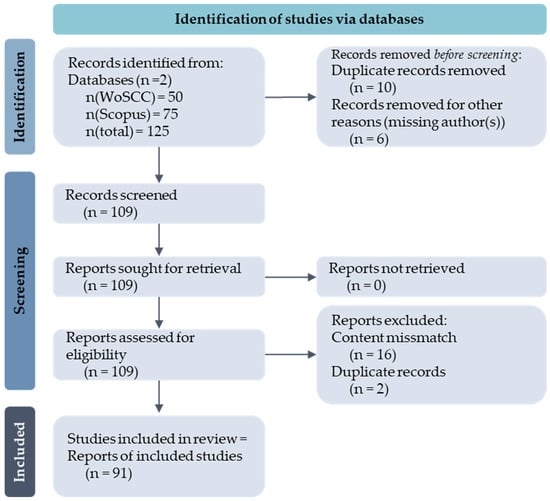
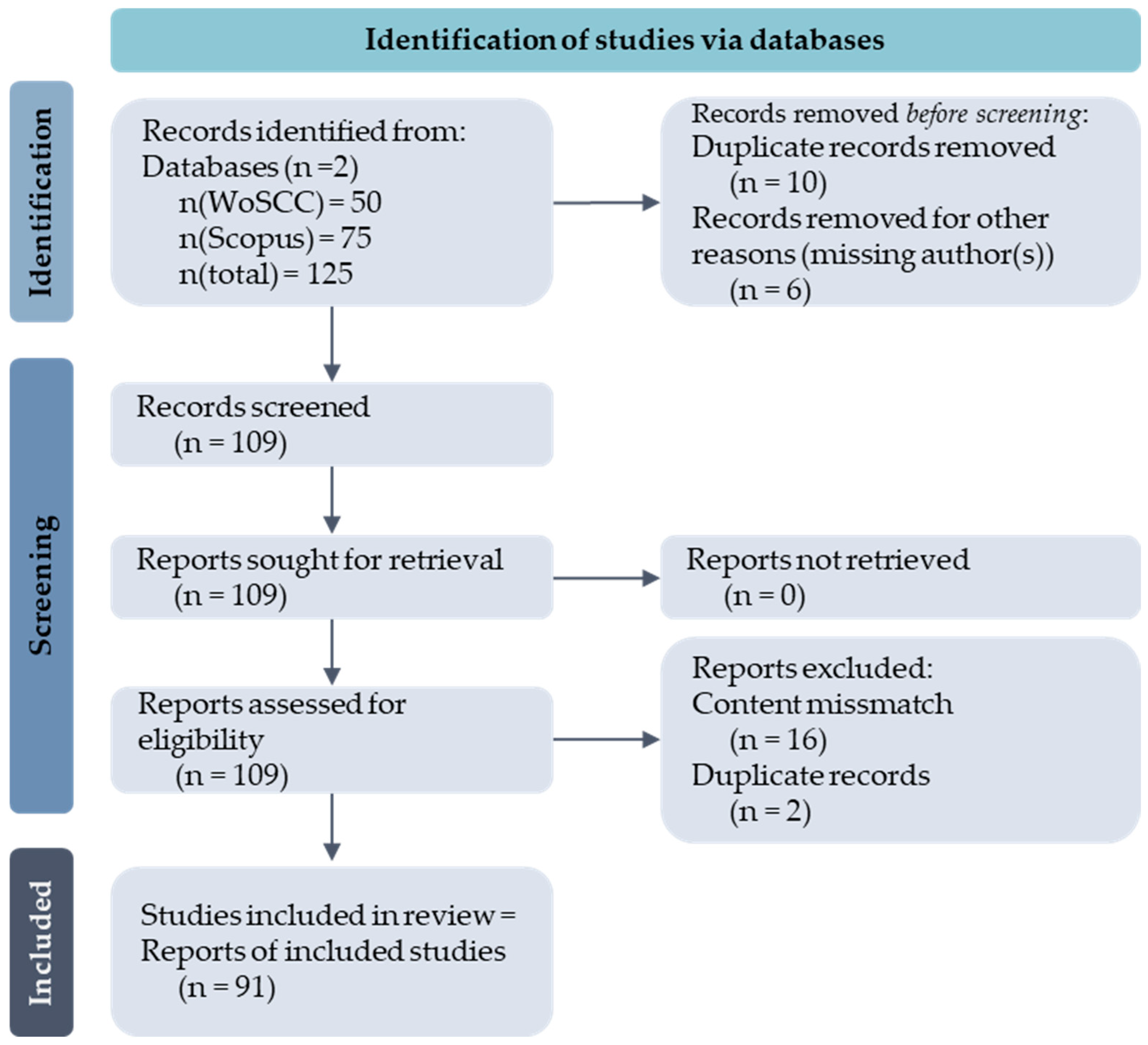
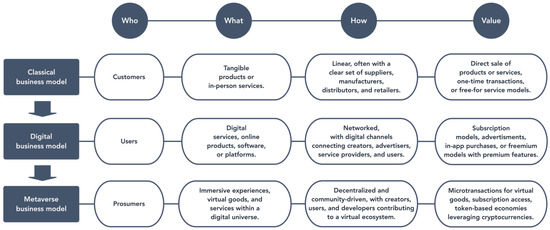
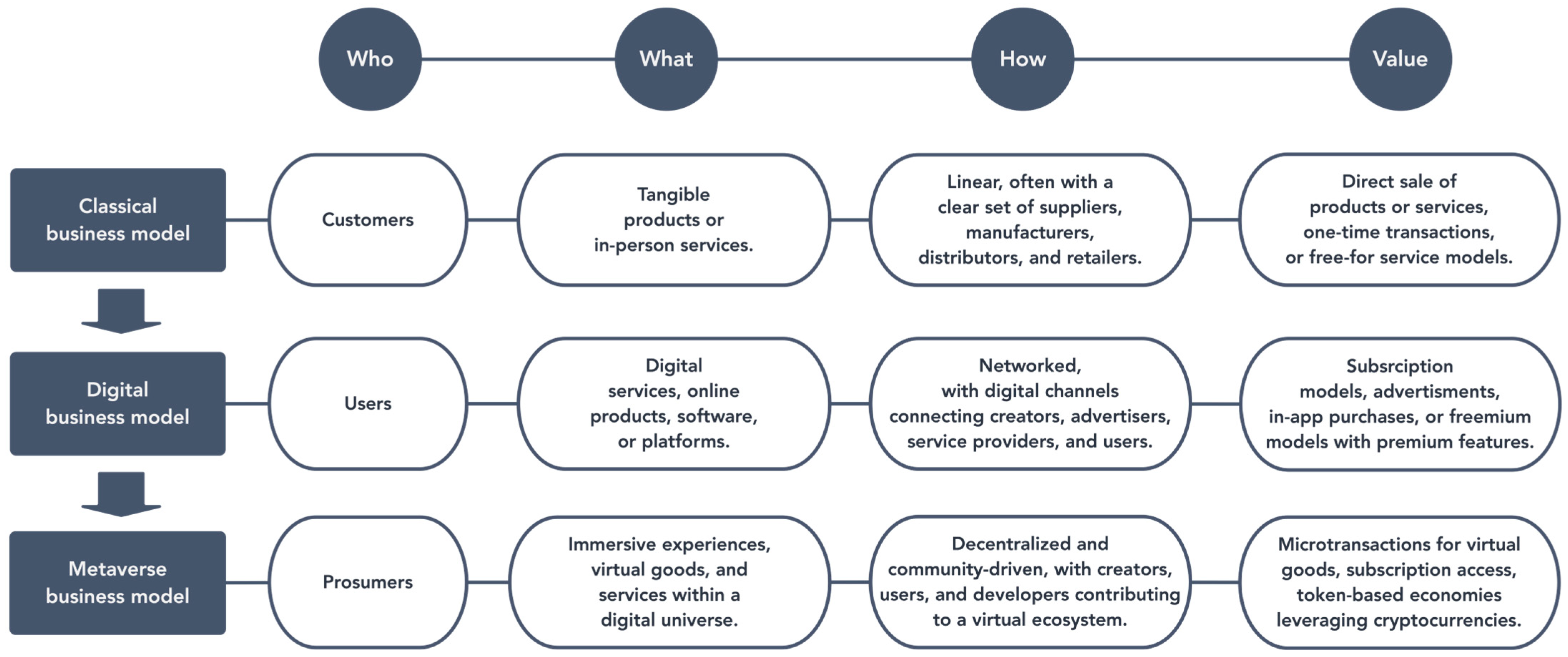
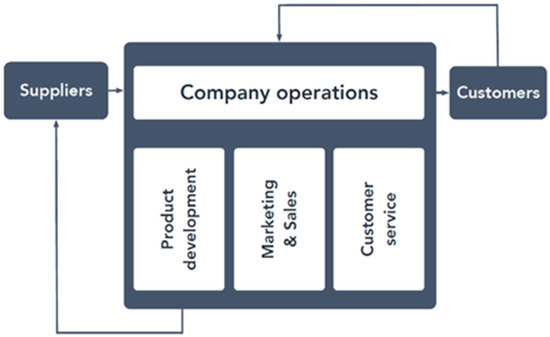
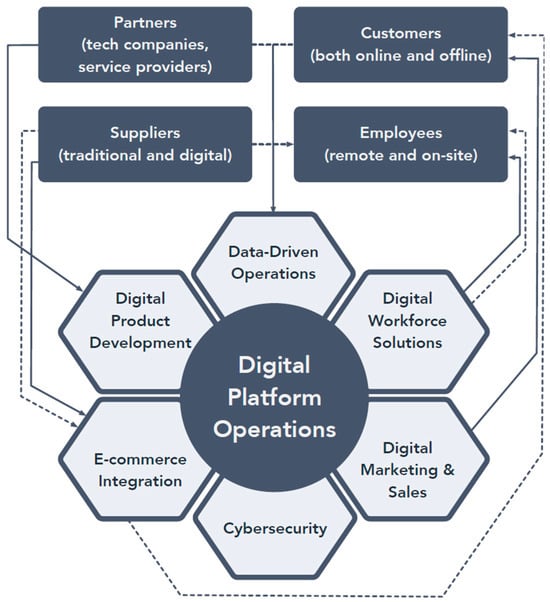
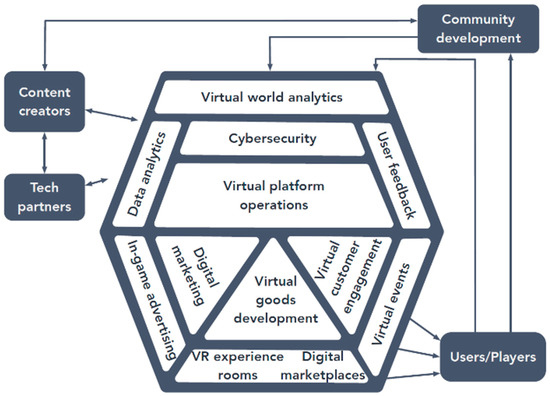
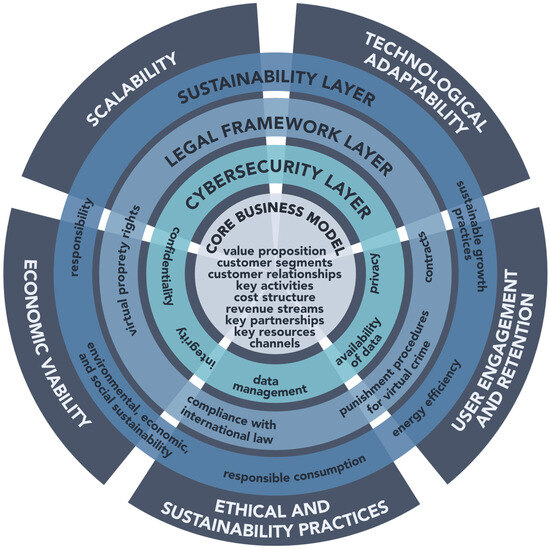

Disclaimer/Publisher’s Note: The statements, opinions and data contained in all publications are solely those of the individual author(s) and contributor(s) and not of MDPI and/or the editor(s). MDPI and/or the editor(s) disclaim responsibility for any injury to people or property resulting from any ideas, methods, instructions or products referred to in the content. |
© 2025 by the authors. Licensee MDPI, Basel, Switzerland. This article is an open access article distributed under the terms and conditions of the Creative Commons Attribution (CC BY) license (https://creativecommons.org/licenses/by/4.0/).