Plant Functional Traits and Soil Properties Shape Soil Microbial Communities in Larix principis-rupprechtii Mixed Plantations

 , ,
, ,
Simple Summary
Abstract
1. Introduction
2. Materials and Methods
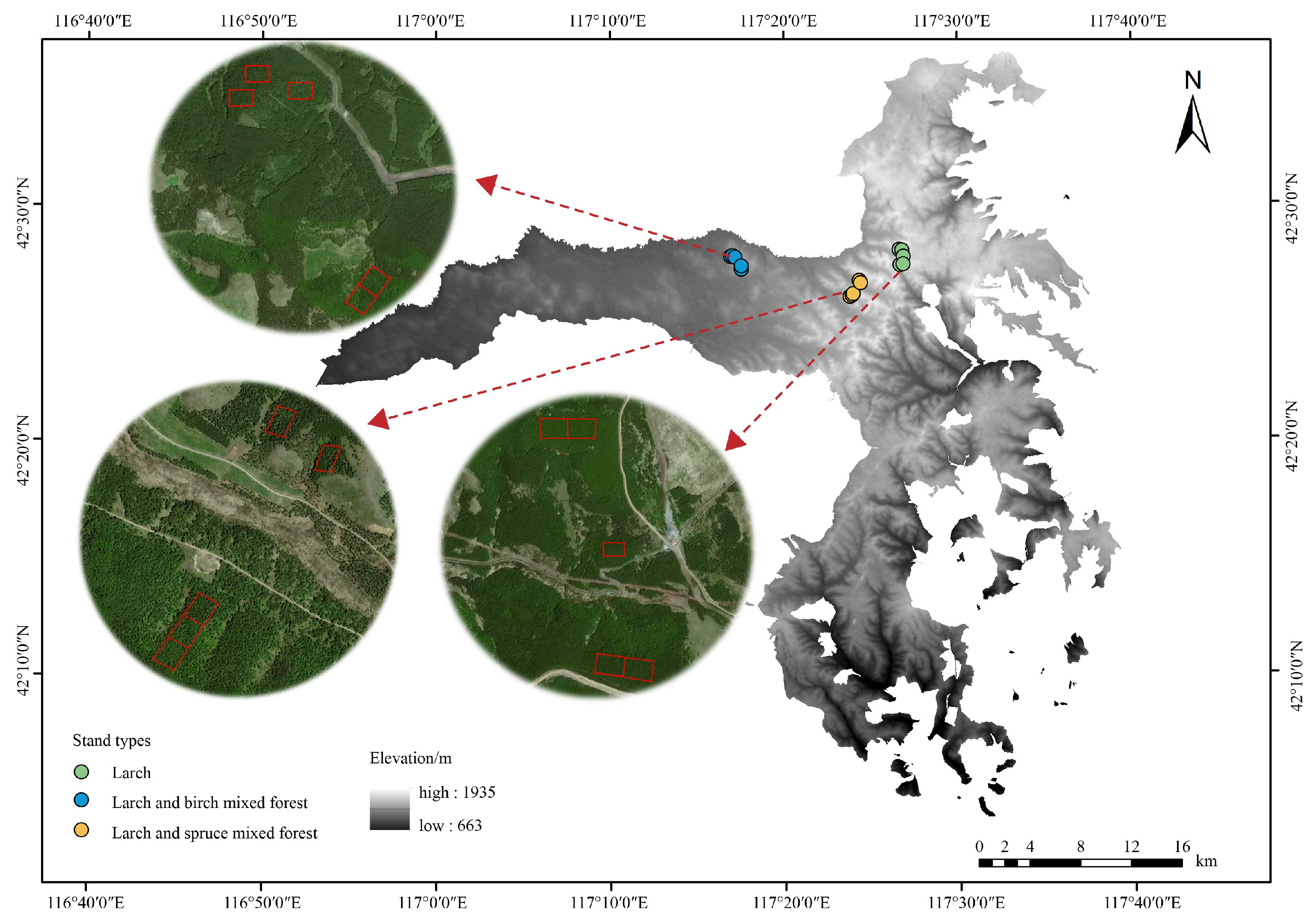
2.1. Study Site and Experimental Design
2.2. Leaf Sampling and Trait Determination
2.3. Soil Sampling and DNA Sequencing
2.4. Data Analysis
3. Results
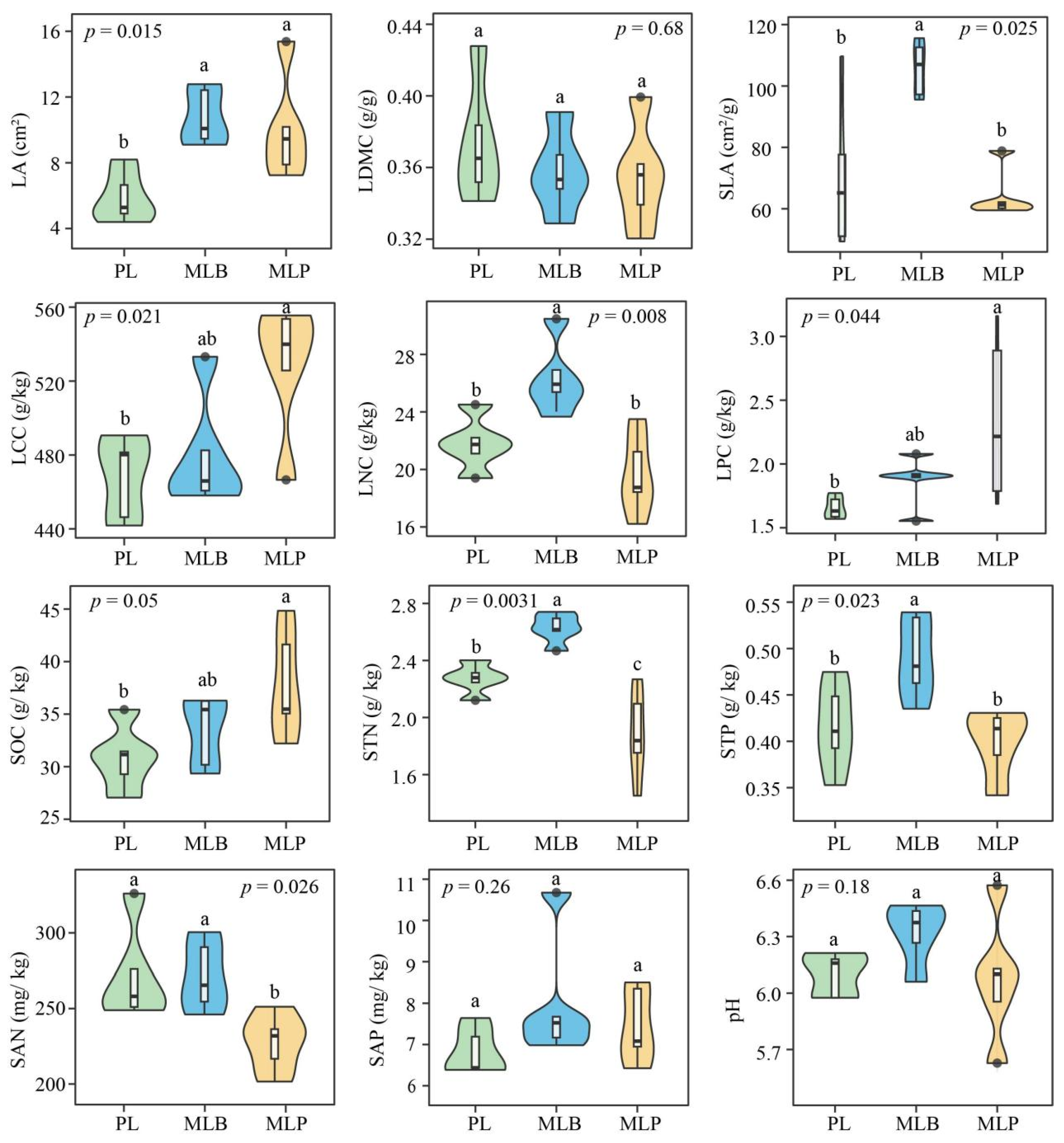
3.1. Leaf Functional Traits and Soil Properties Across Different Stand Types
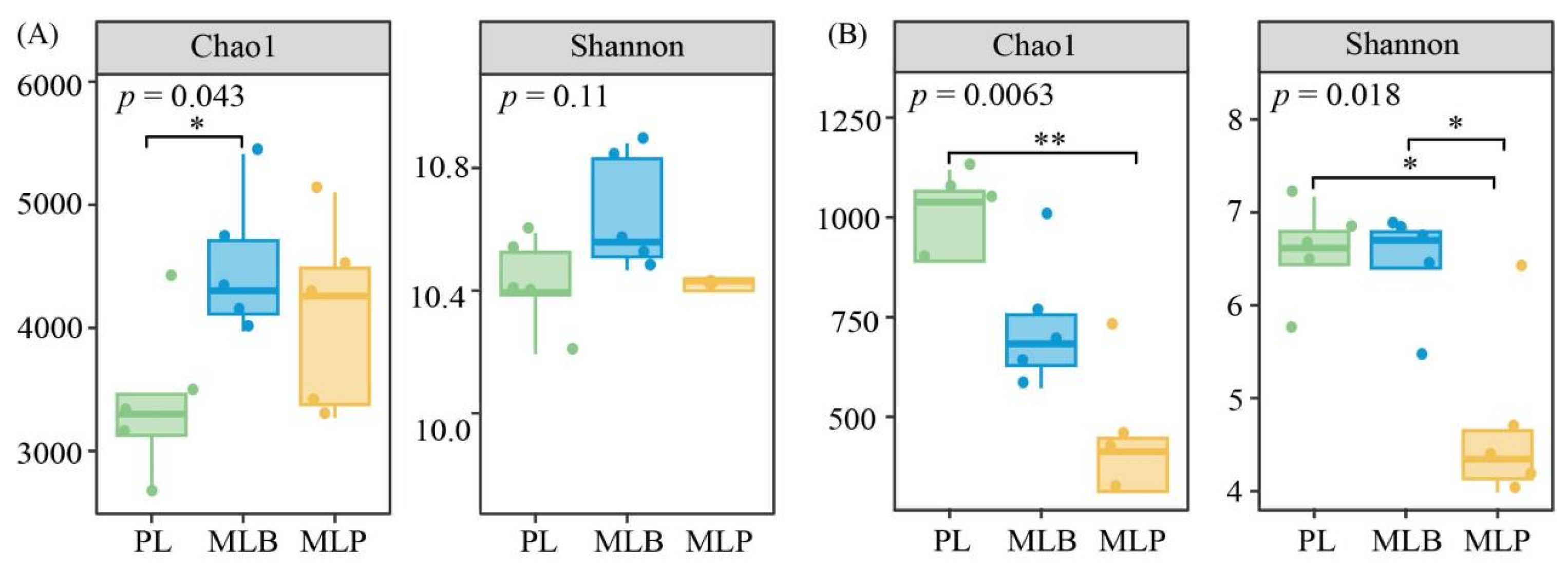
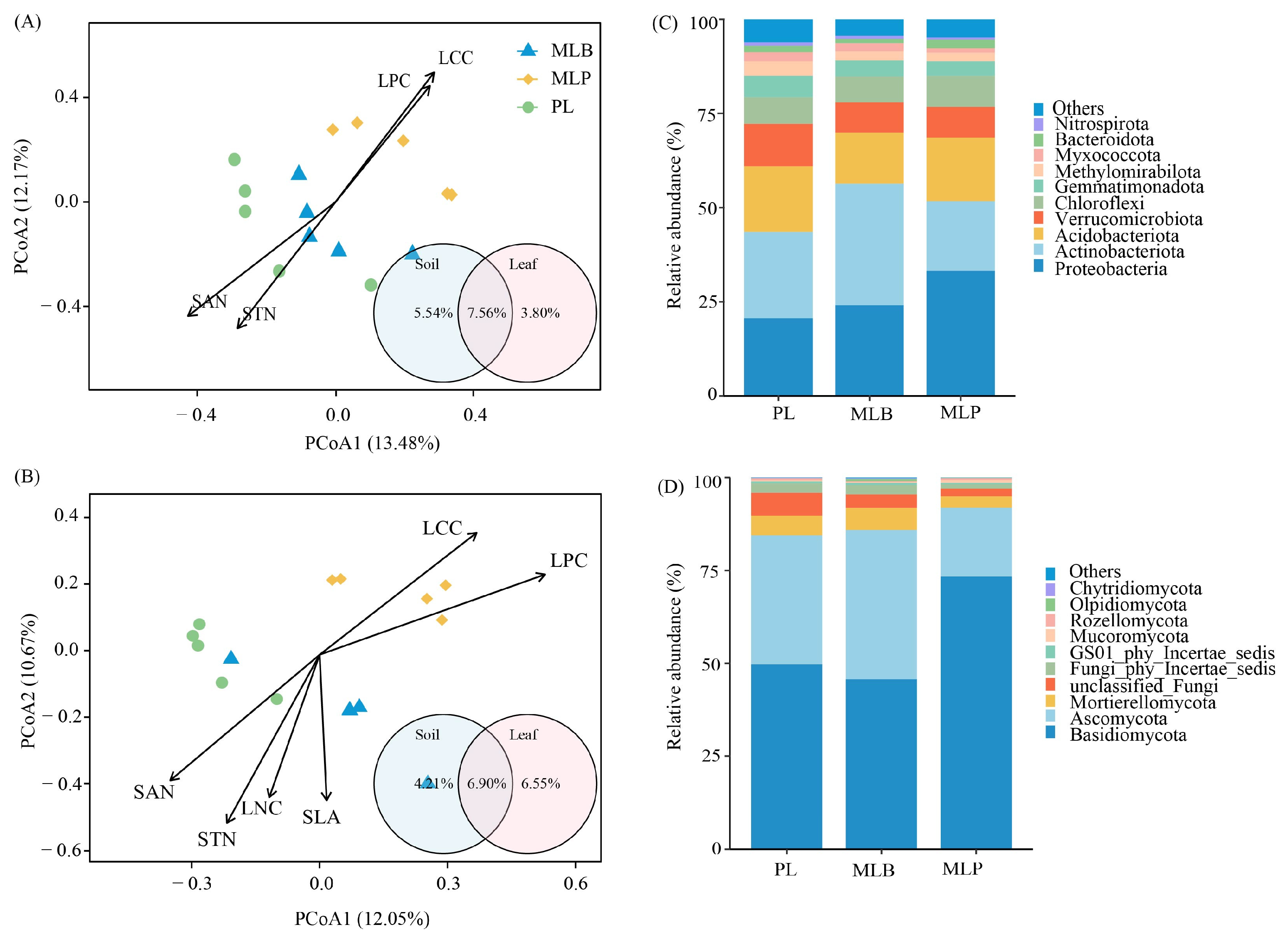
3.2. Response of Soil Microbial Community Diversity and Composition
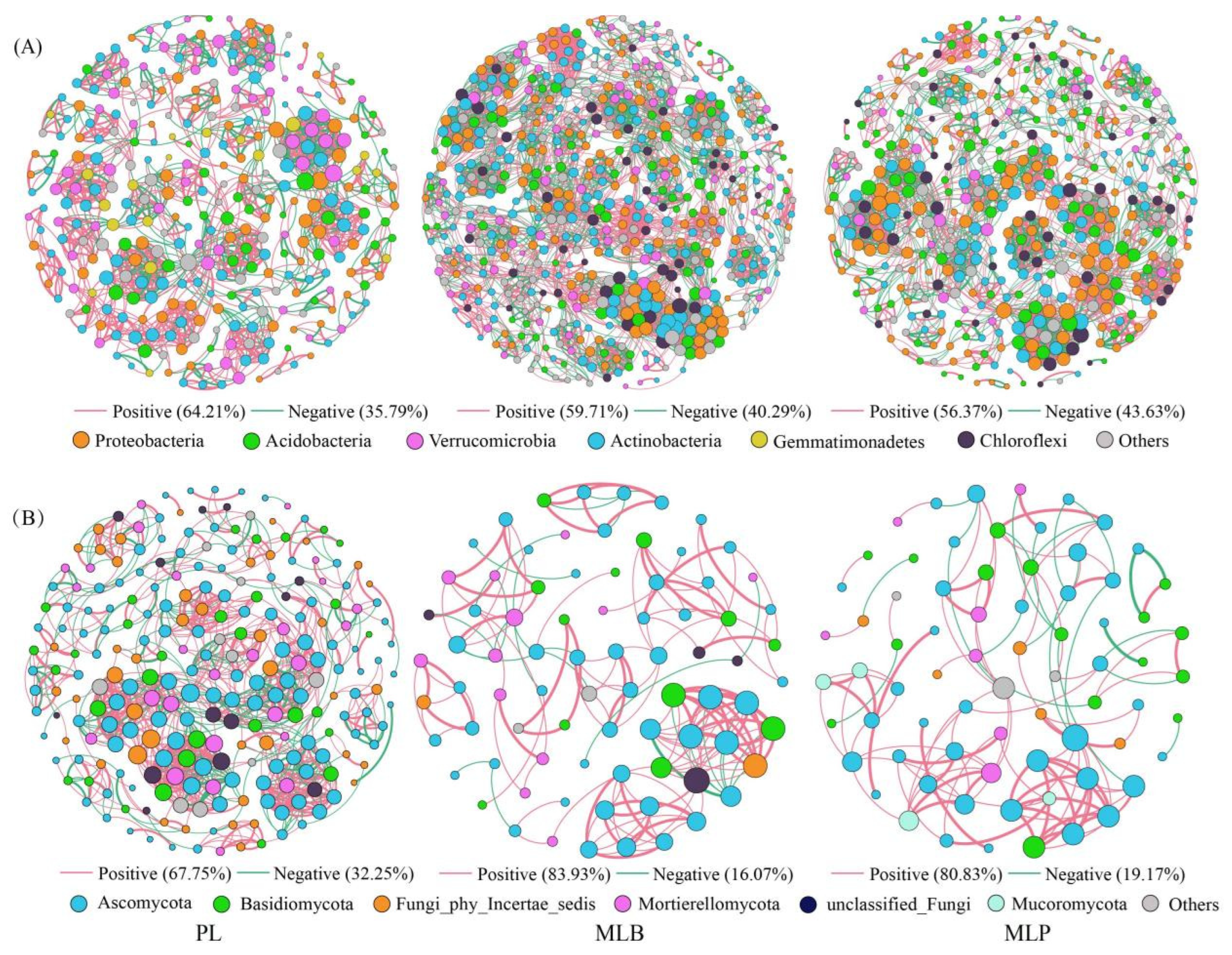
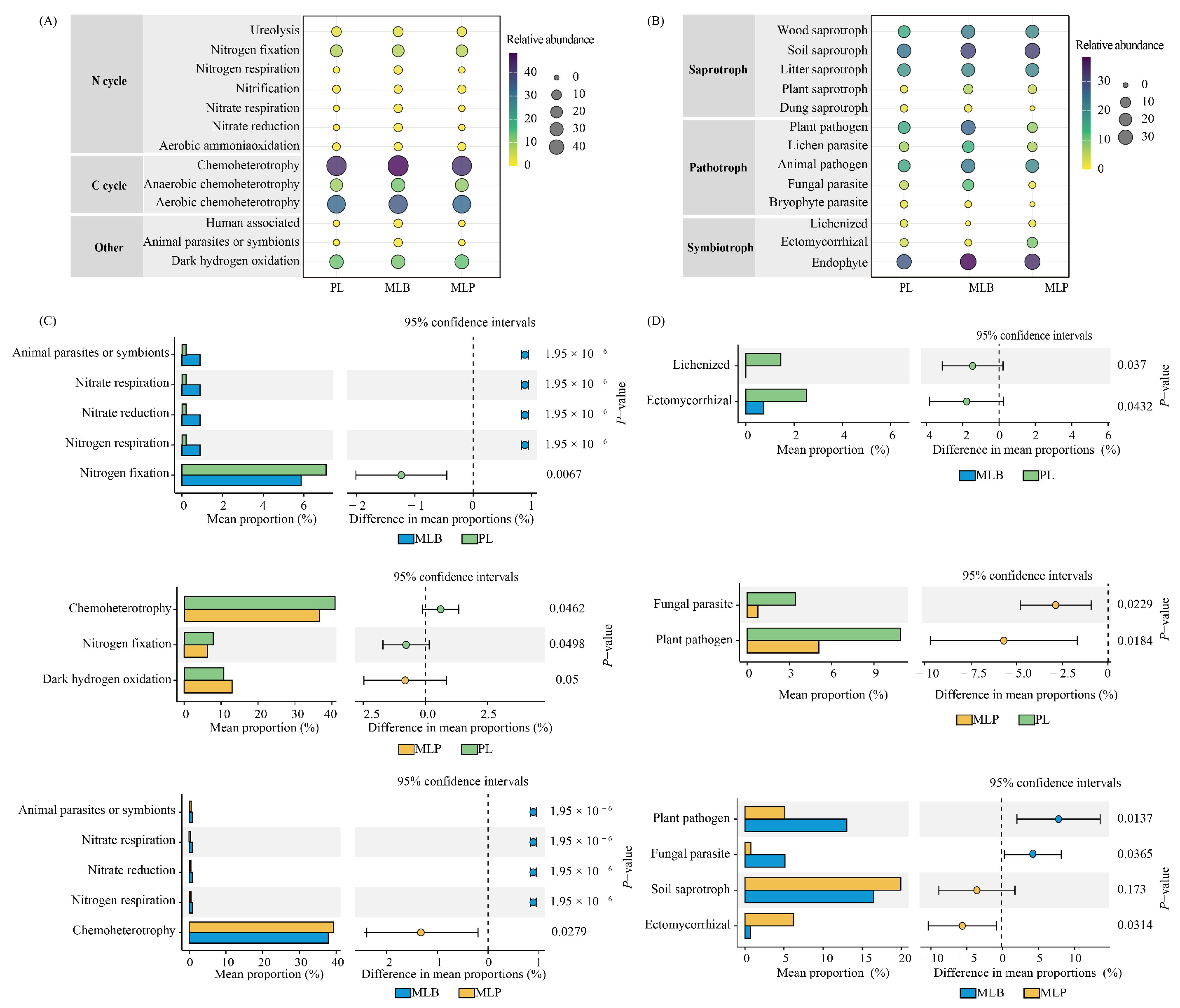
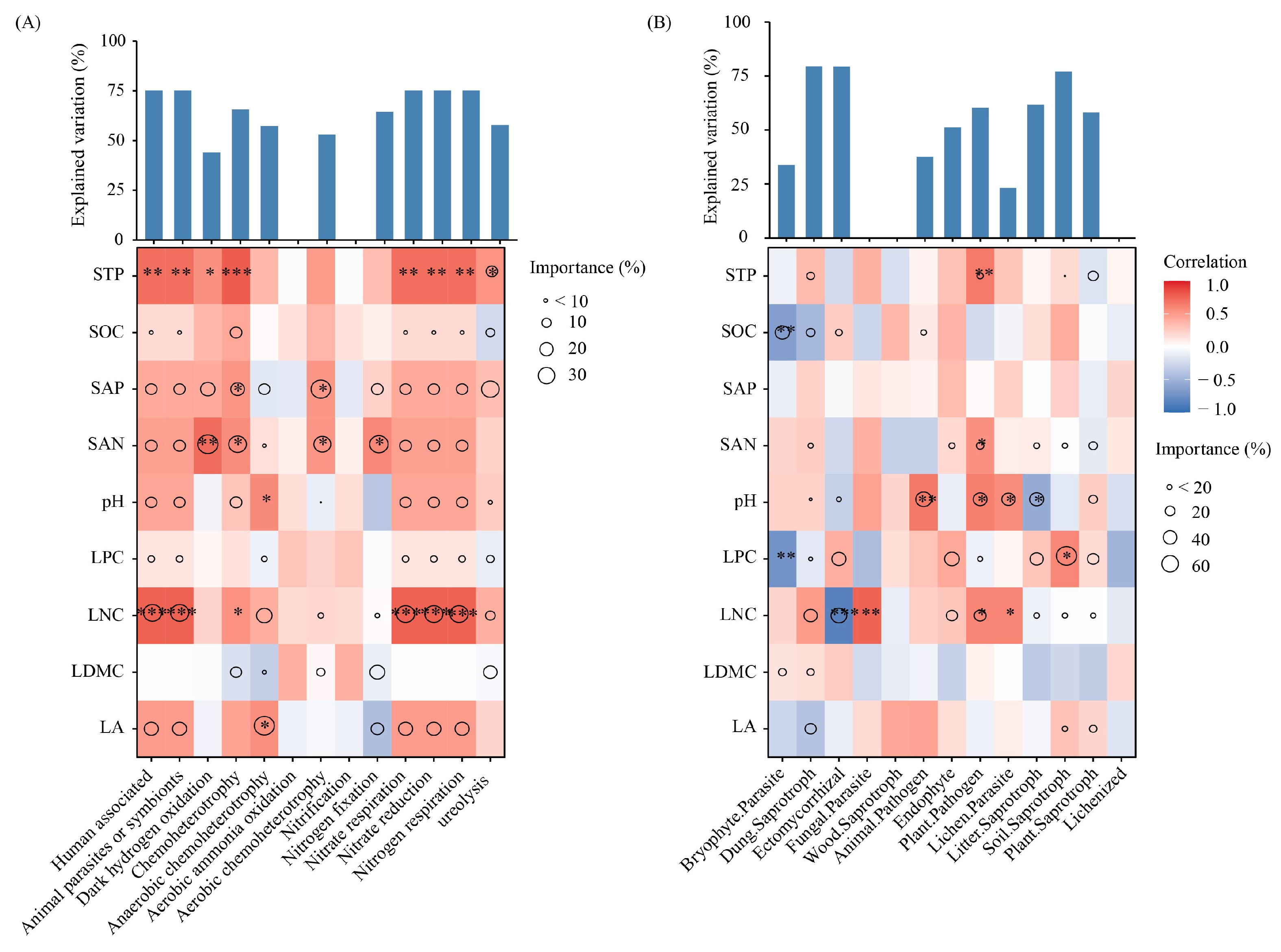
3.3. Soil Microbial Co-Occurring Network and Functional Prediction
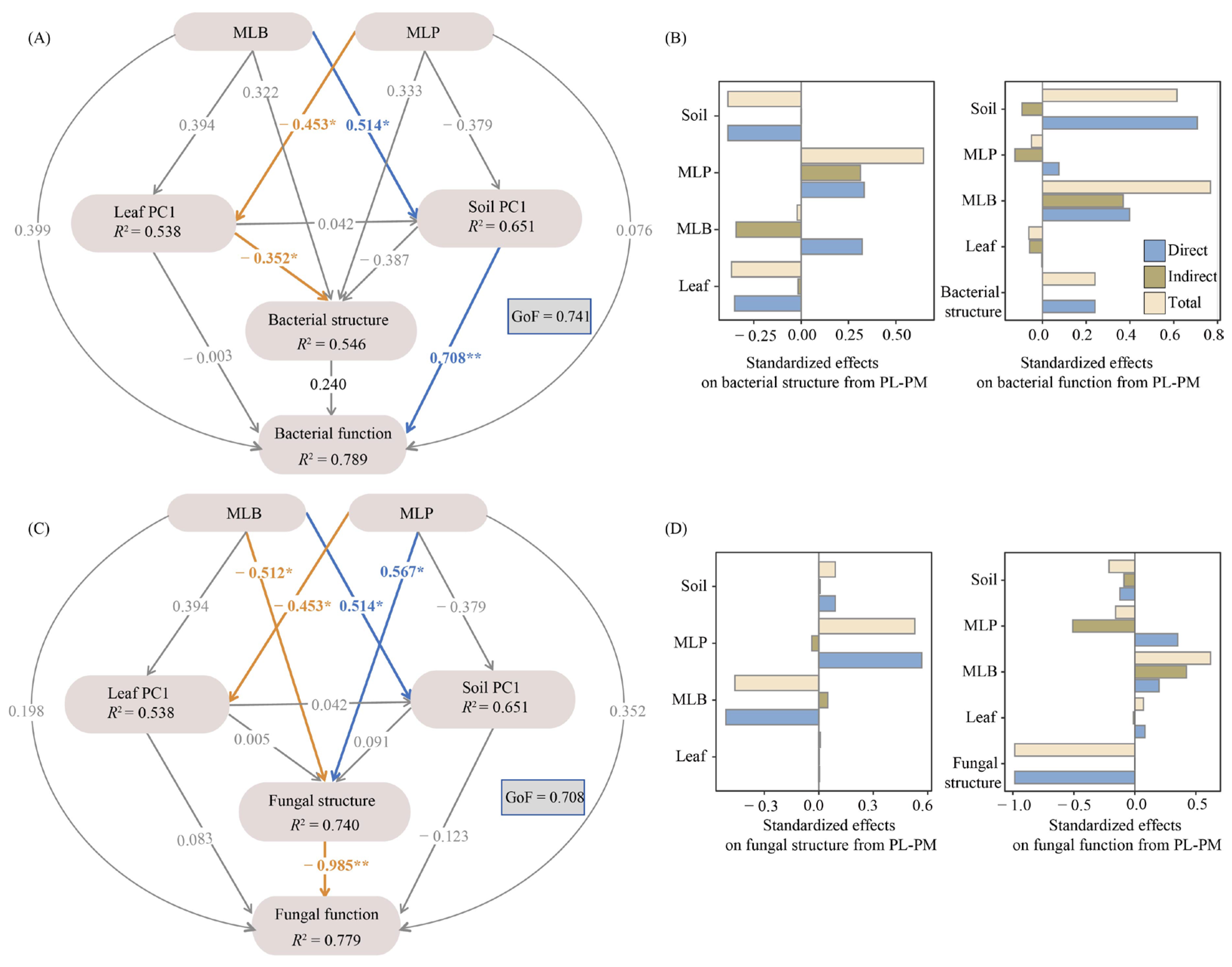
3.4. The Direct and Indirect Impacts on Bacterial and Fungal Structure and Function
4. Discussion
4.1. Effects of Tree Species Mixing on Leaf Functional Traits and Soil Physicochemical Properties
4.2. Effects of Tree Species Mixing on Soil Microbial Community Structure
4.3. Effects of Tree Species Mixing on the Function of Keystone Soil Microbial Taxa
5. Conclusions
Supplementary Materials
Author Contributions
Funding
Institutional Review Board Statement
Informed Consent Statement
Data Availability Statement
Acknowledgments
Conflicts of Interest
References
- Berthrong, S.T.; Jobbágy, E.G.; Jackson, R.B. A global meta-analysis of soil exchangeable cations, pH, carbon, and nitrogen with afforestation. Ecol. Appl. 2009, 19, 2228–2241. [Google Scholar] [CrossRef]
- Zhang, X.Q.; Kirschbaum, M.U.F.; Hou, Z.H.; Guo, Z.H. Carbon stock changes in successive rotations of Chinese fir (Cunninghamia lanceolata (lamb) hook) plantations. For. Ecol. Manag. 2004, 202, 131–147. [Google Scholar] [CrossRef]
- Payn, T.; Carnus, J.M.; Freer-Smith, P.; Kimberley, M.; Kollert, W.; Liu, S.R.; Orazio, C.; Rodriguez, L.; Silva, L.N.; Wingfield, M.J. Changes in planted forests and future global implications. For. Ecol. Manag. 2015, 352, 57–67. [Google Scholar] [CrossRef]
- Feng, Y.; Schmid, B.; Loreau, M.; Forrester, D.I.; Fei, S.; Zhu, J.; Tang, Z.; Zhu, J.; Hong, P.; Ji, C.; et al. Multispecies forest plantations outyield monocultures across a broad range of conditions. Science 2022, 376, 865–868. [Google Scholar] [CrossRef] [PubMed]
- Wang, H.X.; Wu, C.Y.; Chen, D.S.; Liu, H.Y.; Sun, X.M.; Zhang, S.G. Changes in soil carbon and nutrients and related extracellular enzymes in successive rotations of Japanese larch plantations. Catena 2021, 204, 105386. [Google Scholar] [CrossRef]
- Cremer, M.; Kern, N.V.; Prietzel, J. Soil organic carbon and nitrogen stocks under pure and mixed stands of European beech, Douglas fir and Norway spruce. For. Ecol. Manag. 2016, 367, 30–40. [Google Scholar] [CrossRef]
- Chen, J.M.; Ju, W.M.; Ciais, P.; Viovy, N.; Liu, R.G.; Liu, Y.; Lu, X.H. Vegetation structural change since 1981 significantly enhanced the terrestrial carbon sink. Nat. Commun. 2019, 10, 4259. [Google Scholar] [CrossRef]
- LaRue, E.A.; Knott, J.A.; Domke, G.M.; Chen, H.Y.H.; Guo, Q.F.; Hisano, M.; Oswalt, C.; Oswalt, S.; Kong, N.; Potter, K.M.; et al. Structural diversity as a reliable and novel predictor for ecosystem productivity. Front. Ecol. Environ. 2023, 21, 33–39. [Google Scholar] [CrossRef]
- Hawkins, H.J.; Cargill, R.I.M.; Van Nuland, M.E.; Hagen, S.C.; Field, K.J.; Sheldrake, M.; Soudzilovskaia, N.A.; Kiers, E.T. Mycorrhizal mycelium as a global carbon pool. Curr. Biol. 2023, 33, R560–R573. [Google Scholar] [CrossRef]
- Ribbons, R.R.; Levy-Booth, D.J.; Masse, J.; Grayston, S.J.; McDonald, M.A.; Vesterdal, L.; Prescott, C.E. Linking microbial communities, functional genes and nitrogen-cycling processes in forest floors under four tree species. Soil Biol. Biochem. 2016, 103, 181–191. [Google Scholar] [CrossRef]
- Fierer, N. Embracing the unknown: Disentangling the complexities of the soil microbiome. Nat. Rev. Microbiol. 2017, 15, 579–590. [Google Scholar] [CrossRef]
- Bai, Y.X.; Wei, H.; Ming, A.A.; Shu, W.W.; Shen, W.J. Tree species mixing begets admixture of soil microbial communities: Variations along bulk soil, rhizosphere soil and root tissue. Geoderma 2023, 438, 116638. [Google Scholar] [CrossRef]
- Kooch, Y.; Piri, A.S.; Tilaki, G.A.D. Tree cover mediate indices related to the content of organic matter and the size of microbial population in semi-arid ecosystems. J. Environ. Manag. 2021, 285, 112144. [Google Scholar] [CrossRef] [PubMed]
- Wang, G.Z.; Zhao, J.G.; Liu, Y.G.; Pang, D.B.; Zhou, Z.Y.; Wang, L.N.; Dong, L.; Zhou, J.X. Soil properties and plant functional traits drive soil bacterial and fungal colonization in tropical karst and non-karst natural forests along the elevation gradient. Appl. Soil Ecol. 2025, 211, 106111. [Google Scholar] [CrossRef]
- Scheibe, A.; Steffens, C.; Seven, J.; Jacob, A.; Hertel, D.; Leuschner, C.; Gleixner, G. Effects of tree identity dominate over tree diversity on the soil microbial community structure. Soil Biol. Biochem. 2015, 81, 219–227. [Google Scholar] [CrossRef]
- Pei, Z.Q.; Eichenberg, D.; Bruelheide, H.; Kröber, W.; Kühn, P.; Li, Y.; von Oheimb, G.; Purschke, O.; Scholten, T.; Buscot, F.; et al. Soil and tree species traits both shape soil microbial communities during early growth of Chinese subtropical forests. Soil Biol. Biochem. 2016, 96, 180–190. [Google Scholar] [CrossRef]
- Thoms, C.; Gattinger, A.; Jacob, M.; Thomas, F.M.; Gleixner, G. Direct and indirect effects of tree diversity drive soil microbial diversity in temperate deciduous forest. Soil Biol. Biochem. 2010, 42, 1558–1565. [Google Scholar] [CrossRef]
- Gould, I.J.; Quinton, J.N.; Weigelt, A.; De Deyn, G.B.; Bardgett, R.D. Plant diversity and root traits benefit physical properties key to soil function in grasslands. Ecol. Lett. 2016, 19, 1140–1149. [Google Scholar] [CrossRef]
- Rousk, J.; Bååth, E.; Brookes, P.C.; Lauber, C.L.; Lozupone, C.; Caporaso, J.G.; Knight, R.; Fierer, N. Soil bacterial and fungal communities across a pH gradient in an arable soil. ISME J. 2010, 4, 1340–1351. [Google Scholar] [CrossRef]
- Li, W.Q.; Huang, Y.X.; Chen, F.S.; Liu, Y.Q.; Lin, X.F.; Zong, Y.Y.; Wu, G.Y.; Yu, Z.R.; Fang, X.M. Mixing with broad-leaved trees shapes the rhizosphere soil fungal communities of coniferous tree species in subtropical forests. For. Ecol. Manag. 2021, 480, 118664. [Google Scholar] [CrossRef]
- Liu, L.; Duan, Z.H.; Xu, M.K.; Hu, J.C.; Wang, S.L.; Hu, Z.G.; Zhang, Q.R.; Wang, S.J. Effect of monospecific and mixed Cunninghamia lanceolata plantations on microbial community and two functional genes involved in nitrogen cycling. Plant Soil 2010, 327, 413–428. [Google Scholar] [CrossRef]
- Ding, K.; Lu, M.; Zhang, Y.T.; Liu, Q.Y.; Zhang, Y.M.; Li, Y.R.; Yang, Q.; Shen, Z.M.; Tong, Z.K.; Zhang, J.H. Depth-dependent effects of forest diversification on soil functionality and microbial community characteristics in subtropical forests. Microbiol. Res. 2024, 289, 127931. [Google Scholar] [CrossRef] [PubMed]
- Cline, L.C.; Zak, D.R. Soil microbial communities are shaped by plant-driven changes in resource availability during secondary succession. Ecology 2015, 96, 3374–3385. [Google Scholar] [CrossRef] [PubMed]
- Poorter, L.; Bongers, F. Leaf traits are good predictors of plant performance across 53 rain forest species. Ecology 2006, 87, 1733–1743. [Google Scholar] [CrossRef] [PubMed]
- Nizamani, M.M.; Hughes, A.C.; Qureshi, S.; Zhang, Q.; Tarafder, E.; Das, D.; Acharya, K.; Wang, Y.; Zhang, Z.G. Microbial biodiversity and plant functional trait interactions in multifunctional ecosystems. Appl. Soil Ecol. 2024, 201, 105515. [Google Scholar] [CrossRef]
- Wright, I.J.; Reich, P.B.; Westoby, M.; Ackerly, D.D.; Baruch, Z.; Bongers, F.; Cavender-Bares, J.; Chapin, T.; Cornelissen, J.H.C.; Diemer, M.; et al. The worldwide leaf economics spectrum. Nature 2004, 428, 821–827. [Google Scholar] [CrossRef]
- Garnier, E.; Cortez, J.; Billès, G.; Navas, M.L.; Roumet, C.; Debussche, M.; Laurent, G.; Blanchard, A.; Aubry, D.; Bellmann, A.; et al. Plant functional markers capture ecosystem properties during secondary succession. Ecology 2004, 85, 2630–2637. [Google Scholar] [CrossRef]
- Song, Z.B.; Zuo, X.A.; Hu, Y.; Wang, H.H.; Zhang, X.X.; Wang, Z.J.Y.; Qiao, J.J.; Liu, L.X.; Medina-Roldán, E. Plant functional traits predict soil multifunctionality under increased precipitation and nitrogen addition in a desert steppe. Catena 2024, 247, 108486. [Google Scholar] [CrossRef]
- Becher, D.; Bernhardt, J.; Fuchs, S.; Riedel, K. Metaproteomics to unravel major microbial players in leaf litter and soil environments: Challenges and perspectives. Proteomics 2013, 13, 2895–2909. [Google Scholar] [CrossRef]
- Lladó, S.; López-Mondéjar, R.; Baldrian, P. Drivers of microbial community structure in forest soils. Appl. Microbiol. Biotechnol. 2018, 102, 4331–4338. [Google Scholar] [CrossRef]
- Prada-Salcedo, L.D.; Prada-Salcedo, J.P.; Heintz-Buschart, A.; Buscot, F.; Goldmann, K. Effects of tree composition and soil depth on structure and functionality of belowground microbial communities in Temperate European Forests. Front. Microbiol. 2022, 13, 920618. [Google Scholar] [CrossRef] [PubMed]
- Freschet, G.T.; Aerts, R.; Cornelissen, J.H.C. A plant economics spectrum of litter decomposability. Funct. Ecol. 2012, 26, 56–65. [Google Scholar] [CrossRef]
- Delgado-Baquerizo, M.; Fry, E.L.; Eldridge, D.J.; de Vries, F.T.; Manning, P.; Hamonts, K.; Kattge, J.; Boenisch, G.; Singh, B.K.; Bardgett, R.D. Plant attributes explain the distribution of soil microbial communities in two contrasting regions of the globe. New Phytol. 2018, 219, 574–587. [Google Scholar] [CrossRef] [PubMed]
- Jousset, A.; Bienhold, C.; Chatzinotas, A.; Gallien, L.; Gobet, A.; Kurm, V.; Küsel, K.; Rillig, M.C.; Rivett, D.W.; Salles, J.F.; et al. Where less may be more: How the rare biosphere pulls ecosystems strings. ISME J. 2017, 11, 853–862. [Google Scholar] [CrossRef]
- Xun, W.B.; Liu, Y.P.; Li, W.; Ren, Y.; Xiong, W.; Xu, Z.H.; Zhang, N.; Miao, Y.Z.; Shen, Q.R.; Zhang, R.F. Specialized metabolic functions of keystone taxa sustain soil microbiome stability. Microbiome 2021, 9, 35. [Google Scholar] [CrossRef]
- Zhang, J.; Li, M.; Cheng, R.M.; Ge, Z.X.; Liu, C.; Zhang, Z.D. Stand structure and functional traits determine productivity of Larix principis-rupprechtii forests. Forests 2024, 15, 924. [Google Scholar] [CrossRef]
- Ge, Z.X.; Wang, D.Z.; Liu, Q.; Wang, J.; Zhang, J.; Cheng, R.M.; Zhang, Z.D. Effects of two-year nitrogen and phosphorus additions on nutrient release and enzyme activity during leaf litter decomposition in Larix principis-rupprechtii plantation. Plant Soil 2023, 487, 521–532. [Google Scholar] [CrossRef]
- Zhang, J.; Liu, Q.; Wang, D.Z.; Zhang, Z.D. Soil microbial community, soil quality, and productivity along a chronosequence of Larix principis-rupprechtii forests. Plants 2023, 12, 2913. [Google Scholar] [CrossRef]
- Muhammad, B.; Ilahi, T.; Ullah, S.; Wu, X.; Siddique, M.A.; Khan, M.A.; Badshah, M.T.; Jia, Z. Litter decomposition and soil nutrients prince rupprecht’s (Larix principis-rupprechtii) plantations area in Saihanba, Northern China. Appl. Ecol. Environ. Res. 2020, 18, 4417–4434. [Google Scholar] [CrossRef]
- Zhang, J.; Zhao, J.M.; Cheng, R.M.; Ge, Z.X.; Zhang, Z.D. Effects of neighborhood competition and stand structure on the productivity of pure and mixed Larix principis-rupprechtii forests. Forests 2022, 13, 1318. [Google Scholar] [CrossRef]
- Artemkina, N.A. Relationships between Phenolic Compounds, Tannins, Lignin, Nitrogen, and Carbon in the Plants of Dwarf Shrub-Green Moss Spruce Forests of the Kola Peninsula, Russia. Russ. J. Ecol. 2023, 54, 557–563. [Google Scholar] [CrossRef]
- Zhu, M.; Fanin, N.; Wang, Q.; Xu, Z.; Liang, S.; Ye, J.; Lin, F.; Yuan, Z.; Mao, Z.; Wang, X.; et al. High functional breadth of microbial communities decreases home-field advantage of litter decomposition. Soil Biol. Biochem. 2024, 188, 109232. [Google Scholar] [CrossRef]
- Conti, G.; Diaz, S. Plant functional diversity and carbon storage—An empirical test in semi-arid forest ecosystems. J. Ecol. 2013, 101, 18–28. [Google Scholar] [CrossRef]
- Bao, S. Soil and Agrochemical Chemistry Analysis, 3rd ed.; China Agriculture Press: Beijing, China, 2000. [Google Scholar]
- Faust, K. Open challenges for microbial network construction and analysis. ISME J. 2021, 15, 3111–3118. [Google Scholar] [CrossRef] [PubMed]
- Zhang, Z.; Jatana, B.S.; Nawaz, M.S.; Suseela, V.; Campbell, B.; Tharayil, N. Cross-inoculation of Andropogon virginicus rhizobiome enhances fungal diversity and network complexity in maize (Zea mays) rhizosphere under drought. Clim. Smart Agric. 2025, 2, 100056. [Google Scholar] [CrossRef]
- Harrell, F., Jr.; Dupont, C. Hmisc: Harrell Miscellaneous, R Package Version 4.2.0; R: Vienna, Austria, 2019. Available online: https://CRAN.R-project.org/package=Hmisc (accessed on 28 January 2026).
- Benjamini, Y.; Krieger, A.M.; Yekutieli, D. Adaptive linear step-up procedures that control the false discovery rate. Biometrika 2006, 93, 491–507. [Google Scholar] [CrossRef]
- Csárdi, G.; Nepusz, T. The Igraph Software Package for Complex Network Research. Complex Syst. 2006, 1695, 1–9. [Google Scholar]
- R Core Team. R: A Language and Environment for Statistical Computing; R Foundation for Statistical Computing: Vienna, Austria, 2025; Available online: https://www.R-project.org/ (accessed on 28 January 2026).
- Oksanen, J.; Simpson, G.; Blanchet, F.G.; Kindt, R.; Legendre, P.; Minchin, P.R.; O’HAra, R.; Solymos, P.; Stevens, H.; Szöcs, E.; et al. Vegan Community Ecology Package, R package version 2.6.2; R: Vienna, Austria, 2022. Available online: https://CRAN.R-project.org/package=vegan (accessed on 28 January 2026).
- Parks, D.H.; Tyson, G.W.; Hugenholtz, P.; Beiko, R.G. STAMP: Statistical analysis of taxonomic and functional profiles. Bioinformatics 2014, 30, 3123–3124. [Google Scholar] [CrossRef]
- Cochrane, A.; Hoyle, G.L.; Yates, C.J.; Neeman, T.; Nicotra, A.B. Variation in plant functional traits across and within four species of Western Australian Banksia (Proteaceae) along a natural climate gradient. Austral Ecol. 2016, 41, 886–896. [Google Scholar] [CrossRef]
- Duan, X.G.; Jia, Z.Y.; Li, J.Q.; Wu, S.H. The influencing factors of leaf functional traits variation of Pinus densiflora Sieb. et Zucc. Glob. Ecol. Conserv. 2022, 38, e02177. [Google Scholar] [CrossRef]
- Ivanova, L.A.; Zolotareva, N.V.; Ronzhina, D.A.; Podgaevskaya, E.N.; Migalina, S.V.; Ivanov, L.A. Leaf functional traits of abundant species predict productivity in three temperate herbaceous communities along an environmental gradient. Flora 2018, 239, 11–19. [Google Scholar] [CrossRef]
- Qin, J.; Shangguan, Z.P. Effects of forest types on leaf functional traits and their interrelationships of Pinus massoniana coniferous and broad-leaved mixed forests in the subtropical mountain, Southeastern China. Ecol. Evol. 2019, 9, 6922–6932. [Google Scholar] [CrossRef] [PubMed]
- Qin, J.; Xi, W.M.; Rahmlow, A.; Kong, H.Y.; Zhang, Z.; Shangguan, Z.P. Effects of forest plantation types on leaf traits of Ulmus pumila and Robinia pseudoacacia on the Loess Plateau, China. Ecol. Eng. 2016, 97, 416–425. [Google Scholar] [CrossRef]
- Cornwell, W.K.; Cornelissen, J.H.C.; Amatangelo, K.; Dorrepaal, E.; Eviner, V.T.; Godoy, O.; Hobbie, S.E.; Hoorens, B.; Kurokawa, H.; Pérez-Harguindeguy, N.; et al. Plant species traits are the predominant control on litter decomposition rates within biomes worldwide. Ecol. Lett. 2008, 11, 1065–1071. [Google Scholar] [CrossRef]
- Ge, Z.X.; Zhang, X.Y.; Liu, C.; Li, M.H.; Wang, R.H.; Zhang, Y.; Zhang, Z.D. Microbial determinants of soil quality in mixed larch and birch forests: Network structure and keystone taxa abundances. Front. Plant Sci. 2025, 16, 1491038. [Google Scholar] [CrossRef]
- Liao, C.; Long, C.Y.; Zhang, Q.; Cheng, X.L. Stronger effect of litter quality than micro-organisms on leaf and root litter C and N loss at different decomposition stages following a subtropical land use change. Funct. Ecol. 2022, 36, 896–907. [Google Scholar] [CrossRef]
- Li, X.; Wang, H.; Luan, J.W.; Chang, S.X.; Gao, B.; Wang, Y.; Liu, S.R. Functional diversity dominates positive species mixture effects on ecosystem multifunctionality in subtropical plantations. For. Ecosyst. 2022, 9, 100039. [Google Scholar] [CrossRef]
- Hedenec, P.; Zheng, H.F.; Siqueira, D.P.; Lin, Q.; Peng, Y.; Schmidt, I.K.; Froslow, T.G.; Kjoller, R.; Rousk, J.; Vesterdal, L. Tree species traits and mycorrhizal association shape soil microbial communities via litter quality and species mediated soil properties. For. Ecol. Manag. 2023, 527, 120608. [Google Scholar] [CrossRef]
- Wardle, D.A. The influence of biotic interactions on soil biodiversity. Ecol. Lett. 2006, 9, 870–886. [Google Scholar] [CrossRef]
- Wang, L.X.; Pang, X.Y.; Li, N.; Qi, K.B.; Huang, J.S.; Yin, C.Y. Effects of vegetation type, fine and coarse roots on soil microbial communities and enzyme activities in eastern Tibetan plateau. Catena 2020, 194, 104694. [Google Scholar] [CrossRef]
- Prescott, C.E. Decomposition and Mineralization of Nutrients from Litter and Humus. In Nutrient Acquisition by Plants: An Ecological Perspective; BassiriRad, H., Ed.; Springer: Berlin/Heidelberg, Germany, 2005; pp. 15–41. [Google Scholar]
- Thomas, P.; Packham, J. Ecology of Woodlands and Forests: Description, Dynamics and Diversity; Cambridge University Press: Cambridge, UK, 2007. [Google Scholar]
- Dang, P.; Yu, X.; Le, H.; Liu, J.L.; Shen, Z.; Zhao, Z. Effects of stand age and soil properties on soil bacterial and fungal community composition in Chinese pine plantations on the Loess Plateau. PLoS ONE 2017, 12, e0186501. [Google Scholar] [CrossRef]
- Wilkie, I.; Orellana, L.H. Elusive marine Verrucomicrobiota: Seasonally abundant members of the novel genera Seribacter and Chordibacter specialize in degrading sulfated glycans. Syst. Appl. Microbiol. 2025, 48, 126562. [Google Scholar] [CrossRef] [PubMed]
- Orellana, L.H.; Ben Francis, T.; Ferraro, M.; Hehemann, J.H.; Fuchs, B.M.; Amann, R. Verrucomicrobiota are specialist consumers of sulfated methyl pentoses during diatom blooms. ISME J. 2022, 16, 630–641. [Google Scholar] [CrossRef] [PubMed]
- Grime, J.P. Trait convergence and trait divergence in herbaceous plant communities: Mechanisms and consequences. J. Veg. Sci. 2006, 17, 255–260. [Google Scholar] [CrossRef]
- Xu, Z.Y.; Hu, Z.H.; Jiao, S.; Bell, S.M.; Xu, Q.; Ma, L.L.; Chen, J. Depth-dependent effects of tree species identity on soil microbial community characteristics and multifunctionality. Sci. Total Environ. 2023, 878, 162972. [Google Scholar] [CrossRef]
- Davison, J.; de León, D.G.; Zobel, M.; Moora, M.; Bueno, C.G.; Barceló, M.; Gerz, M.; León, D.; Meng, Y.M.; Pillar, V.D.; et al. Plant functional groups associate with distinct arbuscular mycorrhizal fungal communities. New Phytol. 2020, 226, 1117–1128. [Google Scholar] [CrossRef]
- Francioli, D.; van Rijssel, S.Q.; van Ruijven, J.; Termorshuizen, A.J.; Cotton, T.E.A.; Dumbrell, A.J.; Raaijmakers, J.M.; Weigelt, A.; Mommer, L. Plant functional group drives the community structure of saprophytic fungi in a grassland biodiversity experiment. Plant Soil 2021, 461, 91–105. [Google Scholar] [CrossRef]
- Yuan, Z.L.; Wu, Q.; Xu, L.X.; Druzhinina, I.S.; Stukenbrock, E.H.; Nieuwenhuis, B.P.S.; Zhong, Z.H.; Liu, Z.J.; Wang, X.Y.; Cai, F.; et al. Genomic landscape of a relict fir-associated fungus reveals rapid convergent adaptation towards endophytism. ISME J. 2022, 16, 1294–1305. [Google Scholar] [CrossRef]
- de Vries, F.T.; Manning, P.; Tallowin, J.R.B.; Mortimer, S.R.; Pilgrim, E.S.; Harrison, K.A.; Hobbs, P.J.; Quirk, H.; Shipley, B.; Cornelissen, J.H.C.; et al. Abiotic drivers and plant traits explain landscape-scale patterns in soil microbial communities. Ecol. Lett. 2012, 15, 1230–1239. [Google Scholar] [CrossRef]
- Li, W.T.; Liu, Q.H.; Xie, L.L.; Yin, C.Y. Interspecific plant-plant interactions increase the soil microbial network stability, shift keystone microbial taxa, and enhance their functions in mixed stands. For. Ecol. Manag. 2023, 533, 120851. [Google Scholar] [CrossRef]
- Gu, S.S.; Hu, Q.L.; Cheng, Y.Q.; Bai, L.Y.; Liu, Z.H.; Xiao, W.J.; Gong, Z.H.; Wu, Y.N.; Feng, K.; Deng, Y.; et al. Application of organic fertilizer improves microbial community diversity and alters microbial network structure in tea (Camellia sinensis) plantation soils. Soil Tillage Res. 2019, 195, 104356. [Google Scholar] [CrossRef]
- Spieck, E.; Wegen, S.; Keuter, S. Relevance of Candidatus Nitrotoga for nitrite oxidation in technical nitrogen removal systems. Appl. Microbiol. Biotechnol. 2021, 105, 7123–7139. [Google Scholar] [CrossRef]
- Banerjee, S.; Schlaeppi, K.; van der Heijden, M.G.A. Keystone taxa as drivers of microbiome structure and functioning. Nat. Rev. Microbiol. 2018, 16, 567–576. [Google Scholar] [CrossRef] [PubMed]
- Lu, Y.K.; Chen, L.J.; Peñuelas, J.; Wang, H.L.; Cao, J.Z.; Ren, S.Q.; Wu, L.C. Keystone taxa play a critical role in regulating soil multifunctionality in Eucalyptus plantations. Agric. Ecosyst. Environ. 2026, 396, 109988. [Google Scholar] [CrossRef]
- Walsh, C.M.; Gebert, M.J.; Delgado-Baquerizo, M.; Maestre, F.T.; Fierer, N. A global survey of mycobacterial diversity in soil. Appl. Environ. Microbiol. 2019, 85, e01180-19. [Google Scholar] [CrossRef] [PubMed]
- Chen, L.; Li, K.K.; Shang, J.Y.; Wu, Y.; Chen, T.; Wanyan, Y.Q.; Wang, E.T.; Tian, C.F.; Chen, W.F.; Chen, W.X.; et al. Plant growth-promoting bacteria improve maize growth through reshaping the rhizobacterial community in low-nitrogen and low-phosphorus soil. Biol. Fertil. Soils 2021, 57, 1075–1088. [Google Scholar] [CrossRef]
- Yang, W.; Jing, X.Y.; Guan, Y.P.; Zhai, C.; Wang, T.; Shi, D.Y.; Sun, W.P.; Gu, S.Y. Response of fungal communities and co-occurrence network patterns to compost amendment in black soil of Northeast China. Front. Microbiol. 2019, 10, 1562. [Google Scholar] [CrossRef]
- Iqbal, A.; Rehman, M.M.U.; Usman, M.; Sajjad, W.; Niu, J.H.; Degen, A.A.; Rafiq, M.; Shang, Z.H. Unraveling the relationship between plant species and physicochemical properties on rhizosphere and rhizoplane fungal communities in alpine wet meadows. Environ. Sci. Eur. 2023, 35, 115. [Google Scholar] [CrossRef]
- DeKrey, D.H.; Klodd, A.E.; Clark, M.D.; Blanchette, R.A. Grapevine trunk diseases of cold-hardy varieties grown in Northern Midwest vineyards coincide with canker fungi and winter injury. PLoS ONE 2022, 17, e0269555. [Google Scholar] [CrossRef]
- Wei, X.S.; Guo, M.S.; Gao, G.L.; Ren, Y.; Ding, G.D.; Zhang, Y. Community structure and functional groups of fungi in the roots associated with Pinus sylvestri var. mongolica in the Hulunbuir Sandy Land. Acta Sci. Nat. Univ. Pekin. 2020, 56, 710–720. [Google Scholar] [CrossRef]



| Taxonomy | Dissimilarity Group | PERMANOVA | ||
|---|---|---|---|---|
| F | R2 | p | ||
| Bacteria | Stand type | 1.549 | 0.205 | 0.001 *** |
| MLB vs. PL | 1.312 | 0.141 | 0.047 * | |
| MLP vs. PL | 1.774 | 0.182 | 0.005 ** | |
| MLP vs. MLB | 1.551 | 0.162 | 0.012 * | |
| Fungi | Stand type | 1.545 | 0.205 | 0.001 *** |
| MLB vs. PL | 1.445 | 0.153 | 0.025 * | |
| MLP vs. PL | 1.780 | 0.182 | 0.009 ** | |
| MLP vs. MLB | 1.431 | 0.152 | 0.014 * | |
| Bacteria | Fungi | |||
|---|---|---|---|---|
| R2 | p-Value | R2 | p-Value | |
| LA | 0.27 | 0.154 | 0.05 | 0.751 |
| SLA | 0.18 | 0.290 | 0.46 | 0.020 |
| LDMC | 0.08 | 0.596 | 0.08 | 0.610 |
| LCC | 0.51 | 0.025 | 0.48 | 0.019 |
| LNC | 0.29 | 0.134 | 0.60 | 0.004 |
| LPC | 0.43 | 0.027 | 0.74 | 0.005 |
| SOC | 0.22 | 0.198 | 0.14 | 0.423 |
| STN | 0.49 | 0.012 | 0.74 | 0.002 |
| STP | 0.27 | 0.159 | 0.30 | 0.111 |
| SAN | 0.58 | 0.008 | 0.48 | 0.018 |
| SAP | 0.03 | 0.854 | 0.04 | 0.774 |
| pH | 0.06 | 0.671 | 0.23 | 0.202 |
Disclaimer/Publisher’s Note: The statements, opinions and data contained in all publications are solely those of the individual author(s) and contributor(s) and not of MDPI and/or the editor(s). MDPI and/or the editor(s) disclaim responsibility for any injury to people or property resulting from any ideas, methods, instructions or products referred to in the content. |
© 2026 by the authors. Licensee MDPI, Basel, Switzerland. This article is an open access article distributed under the terms and conditions of the Creative Commons Attribution (CC BY) license.
Share and Cite
Ge, Z.; Peng, B.; Chen, X.; Zhang, J.; Wang, Z.; Pang, Y.; Zhang, Z. Plant Functional Traits and Soil Properties Shape Soil Microbial Communities in Larix principis-rupprechtii Mixed Plantations. Biology 2026, 15, 259. https://doi.org/10.3390/biology15030259
Ge Z, Peng B, Chen X, Zhang J, Wang Z, Pang Y, Zhang Z. Plant Functional Traits and Soil Properties Shape Soil Microbial Communities in Larix principis-rupprechtii Mixed Plantations. Biology. 2026; 15(3):259. https://doi.org/10.3390/biology15030259
Chicago/Turabian StyleGe, Zhaoxuan, Bo Peng, Xiaotong Chen, Junfei Zhang, Ziyi Wang, Yue Pang, and Zhidong Zhang. 2026. "Plant Functional Traits and Soil Properties Shape Soil Microbial Communities in Larix principis-rupprechtii Mixed Plantations" Biology 15, no. 3: 259. https://doi.org/10.3390/biology15030259
APA StyleGe, Z., Peng, B., Chen, X., Zhang, J., Wang, Z., Pang, Y., & Zhang, Z. (2026). Plant Functional Traits and Soil Properties Shape Soil Microbial Communities in Larix principis-rupprechtii Mixed Plantations. Biology, 15(3), 259. https://doi.org/10.3390/biology15030259