Anti-Leukemic Properties of Curcumin on Acute Lymphoblastic Leukemia: A Systematic Review

 , , , , and
Simple Summary
Abstract
1. Introduction
2. Methodology
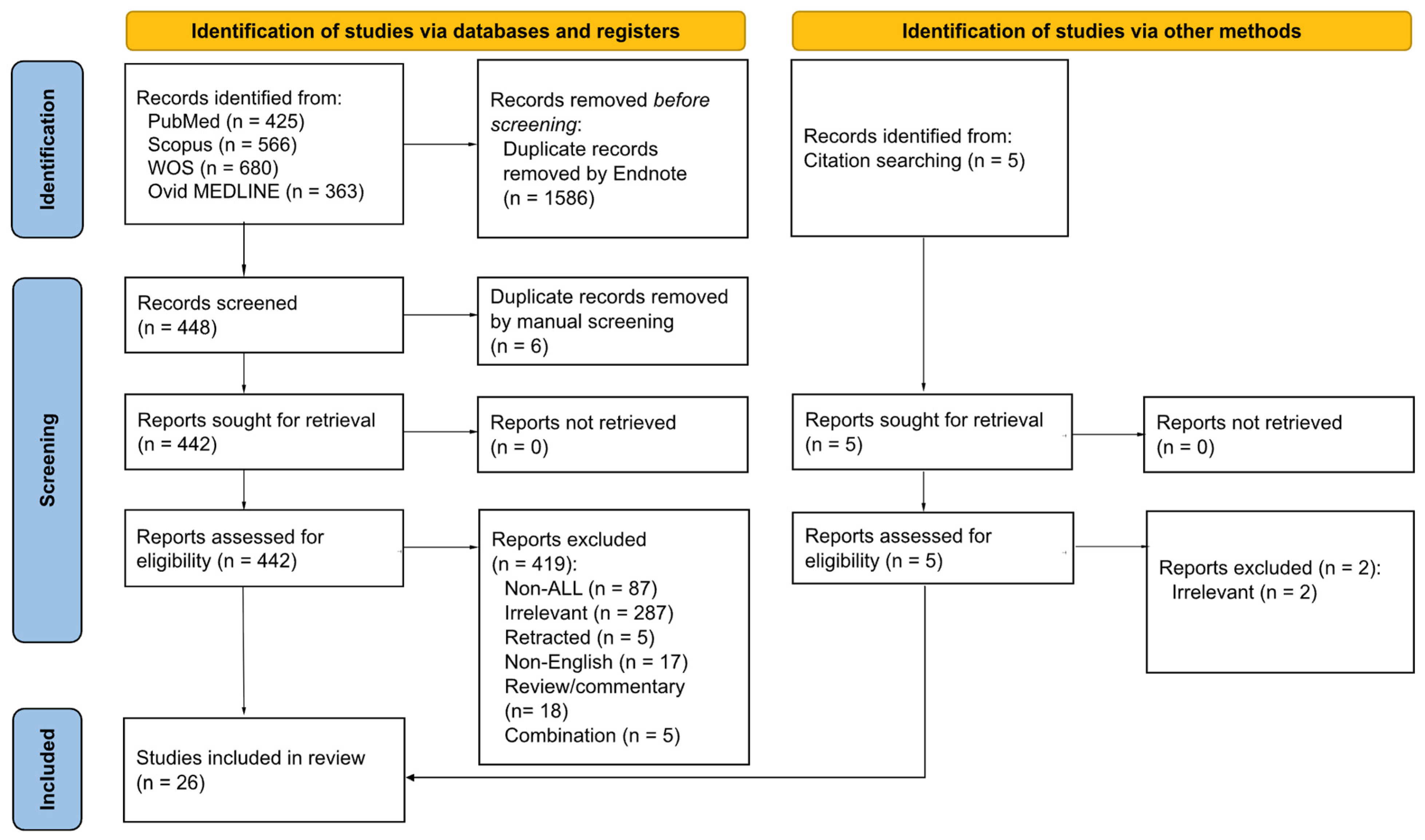
2.1. Literature Search
2.2. Critical Appraisal
3. Results
3.1. Characteristics of Included Articles
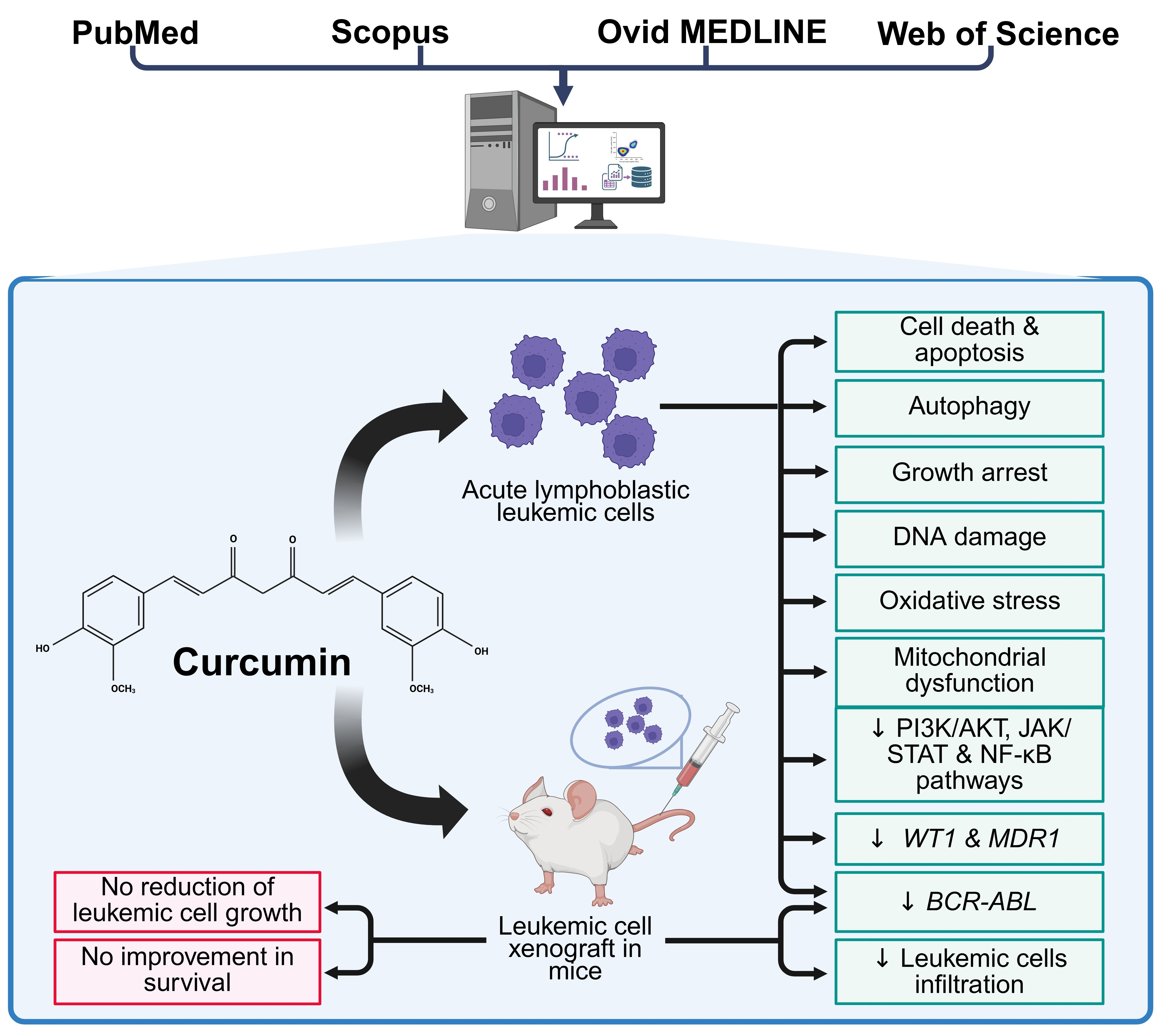
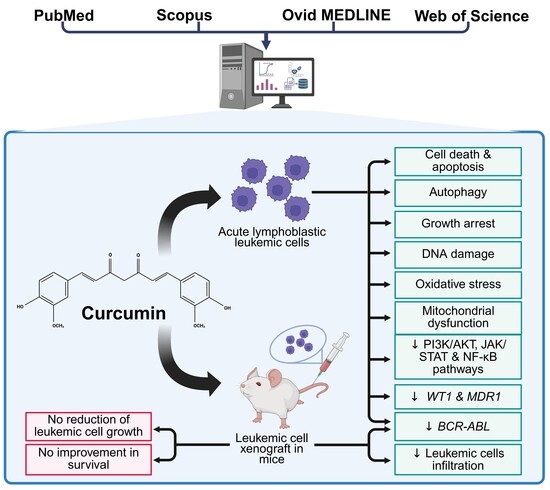
3.2. Curcumin Induces Cytotoxicity, Apoptosis, Autophagy, and Growth Arrest in ALL Cells While Sparing Non-Cancerous Cells
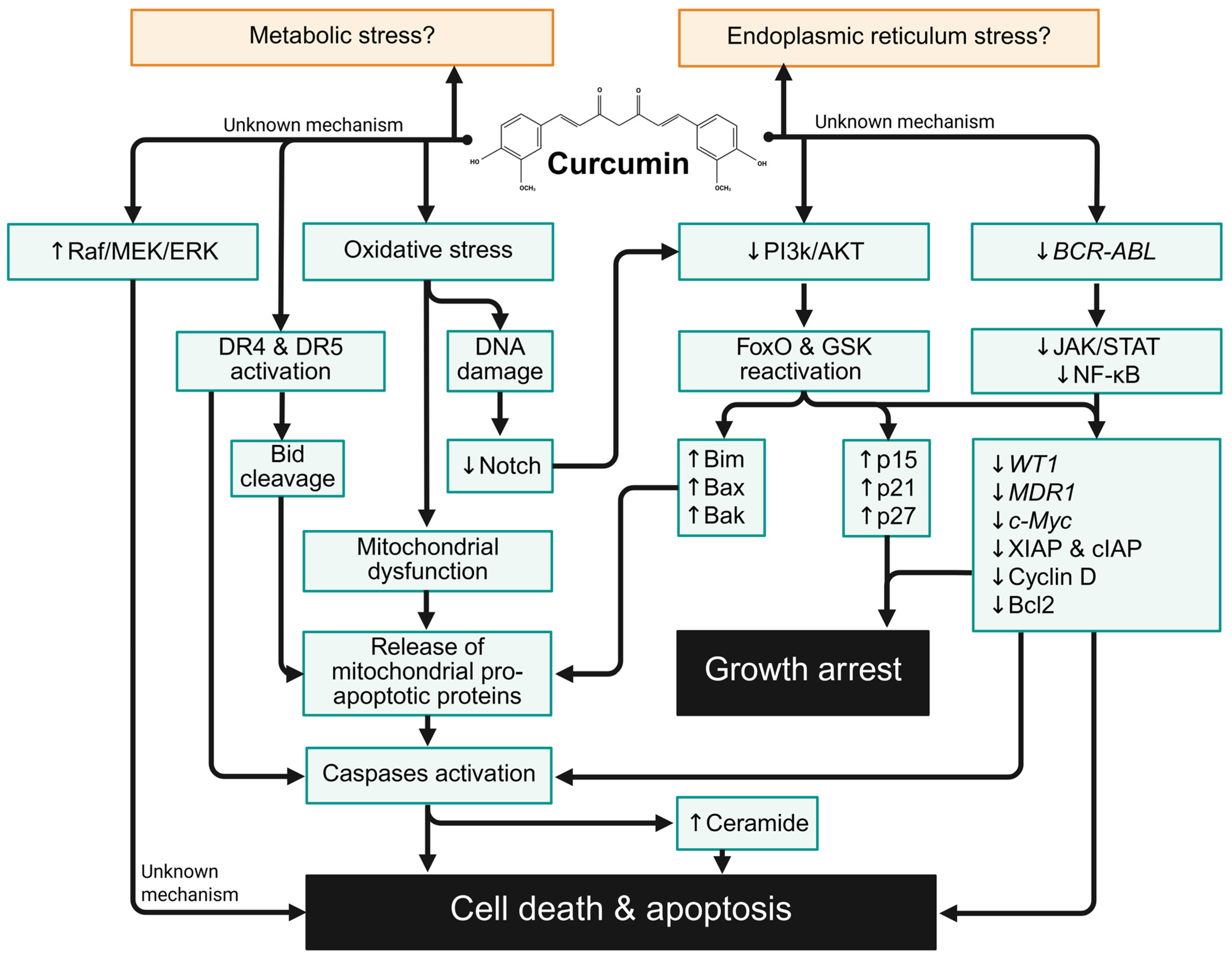
3.3. Curcumin Activates Both Intrinsic and Extrinsic Apoptosis Pathways and Inhibits Oncogenic Signalling in ALL Cells
3.4. Curcumin Induces Oxidative Stress, DNA Damage, and Ceramide Accumulation as Upstream Apoptotic Signals
3.5. Curcumin Downregulates WT1 and MDR1 and Upregulates CDK2NB Gene Expression
3.6. Curcumin Exhibits Limited Efficacy in ALL Xenograft Models
4. Discussion
5. Conclusions
Supplementary Materials
Author Contributions
Funding
Institutional Review Board Statement
Informed Consent Statement
Data Availability Statement
Acknowledgments
Conflicts of Interest
Abbreviations
| Abl | Abelson |
| AKT | Protein kinase A |
| ALL | Acute lymphoblastic leukemia |
| ATM | Ataxia-telangiectasia mutated protein |
| Bax | B cell lymphoma-2-associated X |
| Bcl2 | B cell lymphoma-2 |
| Bcr | breakpoint cluster region |
| Bid | BH3-interacting domain death agonist |
| BSO | Buthionine sulphoximine |
| cIAP | Cellular inhibitor of apoptosis protein |
| c-MET | Hepatocyte growth factor receptor |
| DNMT1 | DNA methyltransferase 1 |
| DR4 | Death receptor 4 |
| DR5 | Death receptor 5 |
| ERK | Extracellular signal-regulated kinase |
| FoxO | Forkhead box O |
| GSH | Glutathione |
| GSK3β | Glycogen synthase kinase 3β |
| HTLV | Human T-lymphotropic virus |
| IL2 | Interleukin 2 |
| JAK | Janus kinase |
| MDR1 | Multidrug resistance 1 |
| MEK | Mitogen-activated protein kinase |
| mTOR | Mechanistic target of rapamycin |
| NAC | N-acetyl cysteine |
| NF-κB | Nuclear factor κB |
| OHAT | Office of Health Assessment and Translation |
| PARP | Poly(ADP-ribose) polymerase |
| PDK1 | 3-phosphoinositide-dependent protein kinase 1 |
| P-gp | P-glycoprotein |
| PI3K | Phosphoinositol-3 kinase |
| PRISMA | Preferred Reporting Items for Systematic Review and Meta-analyses |
| pTEN | Phosphatase and Tensin Homolog |
| ROS | Reactive oxygen species |
| SMS | Sphingomyelin synthase |
| STAT | Signal transducer and activator of transcription |
| TET | Ten Eleven Translocation |
| TNF | Tumour necrosis factor |
| TRAIL | Tumour necrosis factor-related apoptosis-inducing ligand |
| TYK2 | Non-receptor tyrosine kinase 2 |
| WT1 | Wilms tumor1 |
| XIAP | X-linked inhibitor of apoptosis protein |
References
- Puckett, Y.; Chan, O. Acute Lymphocytic Leukemia. In StatPearls; StatPearls Publishing: Treasure Island, FL, USA, 2023. [Google Scholar]
- National Comprehensive Cancer Network. NCCN Guidelines for Patients: Acute Lymphoblastic Leukemia; National Comprehensive Cancer Network (NCCN) and NCCN Foundation: Plymouth Meeting, PA, USA, 2025. [Google Scholar]
- National Cancer Institute. Cancer Stat Facts: Leukemia—Acute Lymphocytic Leukemia (ALL). Available online: https://seer.cancer.gov/statfacts/html/alyl.html (accessed on 9 November 2025).
- Ekpa, Q.L.; Akahara, P.C.; Anderson, A.M.; Adekoya, O.O.; Ajayi, O.O.; Alabi, P.O.; Okobi, O.E.; Jaiyeola, O.; Ekanem, M.S. A Review of Acute Lymphocytic Leukemia (ALL) in the Pediatric Population: Evaluating Current Trends and Changes in Guidelines in the Past Decade. Cureus 2023, 15, e49930. [Google Scholar] [CrossRef] [PubMed]
- Institute for Health Metrics and Evaluation (IHME). Global Burden of Disease 2023 Results. Available online: https://vizhub.healthdata.org/gbd-results/ (accessed on 17 January 2026).
- Inaba, H.; Mullighan, C.G. Pediatric acute lymphoblastic leukemia. Haematologica 2020, 105, 2524–2539. [Google Scholar] [CrossRef]
- Sasaki, K.; Jabbour, E.; Short, N.J.; Jain, N.; Ravandi, F.; Pui, C.H.; Kantarjian, H. Acute lymphoblastic leukemia: A population-based study of outcome in the United States based on the surveillance, epidemiology, and end results (SEER) database, 1980–2017. Am. J. Hematol. 2021, 96, 650–658. [Google Scholar] [CrossRef]
- American Cancer Society. Typical Treatment of Acute Lymphocytic Leukemia (ALL). Available online: https://www.cancer.org/cancer/types/acute-lymphocytic-leukemia/treating/typical-treatment.html (accessed on 9 November 2025).
- Adeyinka, A.; Kaur, A.; Bashir, K. Tumor Lysis Syndrome. Available online: https://www.ncbi.nlm.nih.gov/books/NBK518985/ (accessed on 20 January 2026).
- Horton, T.M.; McNeer, J.L. Treatment of Acute Lymphoblastic Leukemia/Lymphoma in Children and Adolescents. Available online: https://www.uptodate.com/contents/treatment-of-acute-lymphoblastic-leukemia-lymphoma-in-children-and-adolescents?search=acute%20lymphoblastic%20leukemia%20treatment&source=search_result&selectedTitle=1%7E150&usage_type=default&display_rank=1#H2244759109 (accessed on 9 November 2025).
- Sawalha, Y.; Advani, A.S. Management of Older Adults with Acute Lymphoblastic Leukemia: Challenges & Current Approaches. Int. J. Hematol. Oncol. 2018, 7, IJH02. [Google Scholar] [CrossRef] [PubMed]
- Sidhu, J.; Gogoi, M.P.; Krishnan, S.; Saha, V. Relapsed Acute Lymphoblastic Leukemia. Indian J. Pediatr. 2024, 91, 158–167. [Google Scholar] [CrossRef] [PubMed]
- Urošević, M.; Nikolić, L.; Gajić, I.; Nikolić, V.; Dinić, A.; Miljković, V. Curcumin: Biological Activities and Modern Pharmaceutical Forms. Antibiotics 2022, 11, 135. [Google Scholar] [CrossRef]
- Haghighian, H.K.; Ketabchi, N.; Kavianpour, M. The Role of the Curcumin for Inducing Apoptosis in Acute Lymphoblastic Leukemia Cells: A Systematic Review. Nutr. Cancer 2021, 73, 1081–1091. [Google Scholar] [CrossRef]
- Logesh, R.; Alam, W.; Alsharif, K.F.; Filosa, R.; Theyab, A.; Xu, B.; Orhan, I.E.; Khan, H. Mechanistic Insights into the Therapeutic Role of Curcumin in Leukemia: Molecular Targets and Clinical Implications. Curr. Pharm. Biotechnol. 2025; in press. [Google Scholar] [CrossRef]
- Sun, Z.G.; Yao, C.J.; Ullah, I.; Zhu, H.L. Recent Advances in Natural Products with Anti-Leukemia and Anti- Lymphoma Activities. Mini Rev. Med. Chem. 2024, 24, 664–671. [Google Scholar] [CrossRef]
- Badagliacca, R.; Fazio, M.; Stagno, F.; Mirabile, G.; Gerace, D.; Allegra, A. Curcumin and Acute Myeloid Leukemia: Synergistic Effects with Targeted Therapy. Int. J. Mol. Sci. 2025, 26, 9700. [Google Scholar] [CrossRef]
- Page, M.J.; McKenzie, J.E.; Bossuyt, P.M.; Boutron, I.; Hoffmann, T.C.; Mulrow, C.D.; Shamseer, L.; Tetzlaff, J.M.; Akl, E.A.; Brennan, S.E.; et al. The PRISMA 2020 statement: An updated guideline for reporting systematic reviews. BMJ 2021, 372, n71. [Google Scholar] [CrossRef]
- Piwocka, K.; Zabłocki, K.; Wieckowski, M.R.; Skierski, J.; Feiga, I.; Szopa, J.; Drela, N.; Wojtczak, L.; Sikora, E. A novel apoptosis-like pathway, independent of mitochondria and caspases, induced by curcumin in human lymphoblastoid T (Jurkat) cells. Exp. Cell Res. 1999, 249, 299–307. [Google Scholar] [CrossRef] [PubMed]
- Khar, A.; Ali, A.M.; Pardhasaradhi, B.V.; Varalakshmi, C.H.; Anjum, R.; Kumari, A.L. Induction of stress response renders human tumor cell lines resistant to curcumin-mediated apoptosis: Role of reactive oxygen intermediates. Cell Stress Chaperones 2001, 6, 368–376. [Google Scholar] [CrossRef]
- Duvoix, A.; Morceau, F.; Schnekenburger, M.; Delhalle, S.; Galteau, M.M.; Dicato, M.; Diederich, M. Curcumin-induced cell death in two leukemia cell lines: K562 and Jurkat. Ann. N. Y. Acad. Sci. 2003, 1010, 389–392. [Google Scholar] [CrossRef] [PubMed]
- Anuchapreeda, S.; Thanarattanakorn, P.; Sittipreechacharn, S.; Chanarat, P.; Limtrakul, P. Curcumin inhibits WT1 gene expression in human leukemic K562 cells. Acta Pharmacol. Sin. 2006, 27, 360–366. [Google Scholar] [CrossRef] [PubMed]
- Anuchapreeda, S.; Thanarattanakorn, P.; Sittipreechacharn, S.; Tima, S.; Chanarat, P.; Limtrakul, P. Inhibitory effect of curcumin on MDR1 gene expression in patient leukemic cells. Arch. Pharm. Res. 2006, 29, 866–873. [Google Scholar] [CrossRef]
- Hussain, A.R.; Al-Rasheed, M.; Manogaran, P.S.; Al-Hussein, K.A.; Platanias, L.C.; Al Kuraya, K.; Uddin, S. Curcumin induces apoptosis via inhibition of PI3’-kinase/AKT pathway in acute T cell leukemias. Apoptosis 2006, 11, 245–254. [Google Scholar] [CrossRef]
- Rajasingh, J.; Raikwar, H.P.; Muthian, G.; Johnson, C.; Bright, J.J. Curcumin induces growth-arrest and apoptosis in association with the inhibition of constitutively active JAK-STAT pathway in T cell leukemia. Biochem. Biophys. Res. Commun. 2006, 340, 359–368. [Google Scholar] [CrossRef]
- Alaikov, T.; Konstantinov, S.M.; Tzanova, T.; Dinev, K.; Topashka-Ancheva, M.; Berger, M.R. Antineoplastic and anticlastogenic properties of curcumin. Ann. N. Y. Acad. Sci. 2007, 1095, 355–370. [Google Scholar] [CrossRef]
- Anuchapreeda, S.; Tima, S.; Duangrat, C.; Limtrakul, P. Effect of pure curcumin, demethoxycurcumin, and bisdemethoxycurcumin on WT1 gene expression in leukemic cell lines. Cancer Chemother. Pharmacol. 2008, 62, 585–594. [Google Scholar] [CrossRef]
- Limtrakul, P.; Anuchapreeda, S.; Buddhasukh, D. Modulation of human multidrug-resistance MDR-1 gene by natural curcuminoids. BMC Cancer 2004, 4, 13. [Google Scholar] [CrossRef] [PubMed]
- Kong, Y.; Ma, W.; Liu, X.; Zu, Y.; Fu, Y.; Wu, N.; Liang, L.; Yao, L.; Efferth, T. Cytotoxic activity of curcumin towards CCRF-CEM leukemia cells and its effect on DNA damage. Molecules 2009, 14, 5328–5338. [Google Scholar] [CrossRef]
- Kizhakkayil, J.; Thayyullathil, F.; Chathoth, S.; Hago, A.; Patel, M.; Galadari, S. Glutathione regulates caspase-dependent ceramide production and curcumin-induced apoptosis in human leukemic cells. Free Radic. Biol. Med. 2012, 52, 1854–1864. [Google Scholar] [CrossRef] [PubMed]
- Korwek, Z.; Bielak-Zmijewska, A.; Mosieniak, G.; Alster, O.; Moreno-Villanueva, M.; Burkle, A.; Sikora, E. DNA damage-independent apoptosis induced by curcumin in normal resting human T cells and leukaemic Jurkat cells. Mutagenesis 2013, 28, 411–416. [Google Scholar] [CrossRef] [PubMed]
- Gopal, P.K.; Paul, M.; Paul, S. Curcumin induces caspase mediated apoptosis in JURKAT cells by disrupting the redox balance. Asian Pac. J. Cancer Prev. 2014, 15, 93–100. [Google Scholar] [CrossRef]
- Sharma, V.; Jha, A.K.; Kumar, A.; Bhatnagar, A.; Narayan, G.; Kaur, J. Curcumin-Mediated Reversal of p15 Gene Promoter Methylation: Implication in Anti-Neoplastic Action against Acute Lymphoid Leukaemia Cell Line. Folia Biol. 2015, 61, 81–89. [Google Scholar] [CrossRef]
- Hassan, H.E.; Carlson, S.; Abdallah, I.; Buttolph, T.; Glass, K.C.; Fandy, T.E. Curcumin and dimethoxycurcumin induced epigenetic changes in leukemia cells. Pharm. Res. 2015, 32, 863–875. [Google Scholar] [CrossRef]
- Mishra, D.; Singh, S.; Narayan, G. Curcumin Induces Apoptosis in Pre-B Acute Lymphoblastic Leukemia Cell Lines Via PARP-1 Cleavage. Asian Pac. J. Cancer Prev. 2016, 17, 3865–3869. [Google Scholar]
- Pimentel-Gutiérrez, H.J.; Bobadilla-Morales, L.; Barba-Barba, C.C.; Ortega-De-La-Torre, C.; Sánchez-Zubieta, F.A.; Corona-Rivera, J.R.; González-Quezada, B.A.; Armendáriz-Borunda, J.S.; Silva-Cruz, R.; Corona-Rivera, A. Curcumin potentiates the effect of chemotherapy against acute lymphoblastic leukemia cells via downregulation of NF-κB. Oncol. Lett. 2016, 12, 4117–4124. [Google Scholar] [CrossRef]
- Guo, Y.; Shan, Q.Q.; Gong, P.Y.; Wang, S.C. The autophagy induced by curcumin via MEK/ERK pathway plays an early anti-leukemia role in human Philadelphia chromosome-positive acute lymphoblastic leukemia SUP-B15 cells. J. Cancer Res. Ther. 2018, 14, S125–S131. [Google Scholar] [CrossRef]
- Li, H.; Krstin, S.; Wink, M. Modulation of multidrug resistant in cancer cells by EGCG, tannic acid and curcumin. Phytomedicine 2018, 50, 213–222. [Google Scholar] [CrossRef]
- Kuttikrishnan, S.; Siveen, K.S.; Prabhu, K.S.; Khan, A.Q.; Ahmed, E.I.; Akhtar, S.; Ali, T.A.; Merhi, M.; Dermime, S.; Steinhoff, M.; et al. Curcumin Induces Apoptotic Cell Death via Inhibition of PI3-Kinase/AKT Pathway in B-Precursor Acute Lymphoblastic Leukemia. Front. Oncol. 2019, 9, 484. [Google Scholar] [CrossRef] [PubMed]
- Olivas-Aguirre, M.; Torres-López, L.; Pottosin, I.; Dobrovinskaya, O. Phenolic Compounds Cannabidiol, Curcumin and Quercetin Cause Mitochondrial Dysfunction and Suppress Acute Lymphoblastic Leukemia Cells. Int. J. Mol. Sci. 2020, 22, 204. [Google Scholar] [CrossRef]
- Surapally, S.; Jayaprakasam, M.; Verma, R.S. Curcumin augments therapeutic efficacy of TRAIL-based immunotoxins in leukemia. Pharmacol. Rep. 2020, 72, 1032–1046. [Google Scholar] [CrossRef] [PubMed]
- Zhdanovskaya, N.; Lazzari, S.; Caprioglio, D.; Firrincieli, M.; Maioli, C.; Pace, E.; Imperio, D.; Talora, C.; Bellavia, D.; Checquolo, S.; et al. Identification of a Novel Curcumin Derivative Influencing Notch Pathway and DNA Damage as a Potential Therapeutic Agent in T-ALL. Cancers 2022, 14, 5772. [Google Scholar] [CrossRef]
- Minassi, A.; Sánchez-Duffhues, G.; Collado, J.A.; Muñoz, E.; Appendino, G. Dissecting the Pharmacophore of Curcumin. Which Structural Element Is Critical for Which Action? J. Nat. Prod. 2013, 76, 1105–1112. [Google Scholar] [CrossRef]
- Koszałka, P.; Stasiłojć, G.; Miękus-Purwin, N.; Niedźwiecki, M.; Purwin, M.; Grabowski, S.; Bączek, T. The Cooperative Anti-Neoplastic Activity of Polyphenolic Phytochemicals on Human T-Cell Acute Lymphoblastic Leukemia Cell Line MOLT-4 In Vitro. Int. J. Mol. Sci. 2022, 23, 4753. [Google Scholar] [CrossRef]
- Guo, Y.; Li, Y.; Shan, Q.; He, G.; Lin, J.; Gong, Y. Curcumin potentiates the anti-leukemia effects of imatinib by downregulation of the AKT/mTOR pathway and BCR/ABL gene expression in Ph+ acute lymphoblastic leukemia. Int. J. Biochem. Cell Biol. 2015, 65, 1–11. [Google Scholar] [CrossRef]
- Zunino, S.J.; Storms, D.H.; Newman, J.W.; Pedersen, T.L.; Keen, C.L.; Ducore, J.M. Oral or parenteral administration of curcumin does not prevent the growth of high-risk t(4;11) acute lymphoblastic leukemia cells engrafted into a NOD/SCID mouse model. Int. J. Oncol. 2013, 42, 741–748. [Google Scholar] [CrossRef]
- National Toxicology Program. Risk of Bias Tool. Available online: https://ntp.niehs.nih.gov/research/assessments/noncancer/riskbias (accessed on 20 September 2025).
- Pang, K.-L.; Mai, C.-W.; Chin, K.-Y. Molecular Mechanism of Tocotrienol-Mediated Anticancer Properties: A Systematic Review of the Involvement of Endoplasmic Reticulum Stress and Unfolded Protein Response. Nutrients 2023, 15, 1854. [Google Scholar] [CrossRef] [PubMed]
- Hameete, B.C.; Plösch, T.; Hogenkamp, A.; Groenink, L. A systematic review and risk of bias analysis of in vitro studies on trophoblast response to immunological triggers. Placenta 2025, 166, 164–175. [Google Scholar] [CrossRef]
- Romeo, S.; Zeni, O.; Sannino, A.; Lagorio, S.; Biffoni, M.; Scarfì, M.R. Genotoxicity of radiofrequency electromagnetic fields: Protocol for a systematic review of in vitro studies. Environ. Int. 2021, 148, 106386. [Google Scholar] [CrossRef]
- Leukemia Research Foundation. B-cell Acute Lymphoblastic Leukemia. Available online: https://leukemiarf.org/leukemia/acute-lymphoblastic-leukemia/b-cell-lymphoblastic-leukemia/#:~:text=B%2DALL%20is%20the%20most,acute%20lymphoblastic%20leukemia%20 (accessed on 5 November 2025).
- Sanchez, V.E.; Nichols, C.; Kim, H.N.; Gang, E.J.; Kim, Y.M. Targeting PI3K Signaling in Acute Lymphoblastic Leukemia. Int. J. Mol. Sci. 2019, 20, 412. [Google Scholar] [CrossRef]
- Azizidoost, S.; Nasrolahi, A.; Sheykhi-Sabzehpoush, M.; Anbiyaiee, A.; Khoshnam, S.E.; Farzaneh, M.; Uddin, S. Signaling pathways governing the behaviors of leukemia stem cells. Genes. Dis. 2024, 11, 830–846. [Google Scholar] [CrossRef]
- Chen, H.; Wu, S. Hypermethylation of the p15(INK4B) gene in acute leukemia and myelodysplastic syndromes. Chin. Med. J. 2002, 115, 987–990. [Google Scholar]
- Tsellou, E.; Troungos, C.; Moschovi, M.; Athanasiadou-Piperopoulou, F.; Polychronopoulou, S.; Kosmidis, H.; Kalmanti, M.; Hatzakis, A.; Dessypris, N.; Kalofoutis, A.; et al. Hypermethylation of CpG islands in the promoter region of the p15INK4B gene in childhood acute leukaemia. Eur. J. Cancer 2005, 41, 584–589. [Google Scholar] [CrossRef]
- Hendzel, M.J.; Nishioka, W.K.; Raymond, Y.; Allis, C.D.; Bazett-Jones, D.P.; Th’ng, J.P.H. Chromatin Condensation Is Not Associated with Apoptosis. J. Biol. Chem. 1998, 273, 24470–24478. [Google Scholar] [CrossRef] [PubMed]
- Colón Ortiz, C.K.; Potenski, A.M.; Johnson, K.V.; Chen, C.W.; Snipas, S.J.; Jean, Y.Y.; Avrutsky, M.I.; Troy, C.M. Quantification of Immunostained Caspase-9 in Retinal Tissue. J. Vis. Exp. 2022, 185, e64237. [Google Scholar] [PubMed]
- McStay, G.P.; Green, D.R. Detection of caspase activity using antibody-based techniques. Cold Spring Harb. Protoc. 2014, 2014, 783–788. [Google Scholar] [CrossRef] [PubMed]
- Sato, K.; Kondo, M.; Sakuta, K.; Hosoi, A.; Noji, S.; Sugiura, M.; Yoshida, Y.; Kakimi, K. Impact of culture medium on the expansion of T cells for immunotherapy. Cytotherapy 2009, 11, 936–946. [Google Scholar] [CrossRef]
- Liu, Z.; Wu, H.; Zhang, Y.; Wang, J. Revisiting cell culture media for immune cells: Has d-glucose been necessary? Scand. J. Immunol. 2023, 97, e13244. [Google Scholar] [CrossRef]
- MacPherson, S.; Keyes, S.; Kilgour, M.K.; Smazynski, J.; Chan, V.; Sudderth, J.; Turcotte, T.; Devlieger, A.; Yu, J.; Huggler, K.S.; et al. Clinically relevant T cell expansion media activate distinct metabolic programs uncoupled from cellular function. Mol. Ther. Methods Clin. Dev. 2022, 24, 380–393. [Google Scholar] [CrossRef] [PubMed]
- Liu, S.; Yang, W.; Li, Y.; Sun, C. Fetal bovine serum, an important factor affecting the reproducibility of cell experiments. Sci. Rep. 2023, 13, 1942. [Google Scholar] [CrossRef]
- Lim, Y.; Dorstyn, L.; Kumar, S. The p53-caspase-2 axis in the cell cycle and DNA damage response. Exp. Mol. Med. 2021, 53, 517–527. [Google Scholar] [CrossRef]
- Dho, S.H.; Cho, M.; Woo, W.; Jeong, S.; Kim, L.K. Caspases as master regulators of programmed cell death: Apoptosis, pyroptosis and beyond. Exp. Mol. Med. 2025, 57, 1121–1132. [Google Scholar] [CrossRef] [PubMed]
- Ghorbani-Nejad, B.; Baghani, M.; Amiri, S.; Delche, N.; Darijani, M.; Soltani, M.; Nezami, A.; Rahimzadegan, M. Curcumin: Multifaceted biological actions and therapeutic implications—A narrative review. Inflammopharmacology 2025, 33, 6309–6327. [Google Scholar] [CrossRef] [PubMed]
- Singh, D.V.; Misra, K. Curcuminoids as inhibitors of thioredoxin reductase: A receptor based pharmacophore study with distance mapping of the active site. Bioinformation 2009, 4, 187–192. [Google Scholar] [CrossRef][Green Version]
- Fang, J.; Lu, J.; Holmgren, A. Thioredoxin Reductase Is Irreversibly Modified by Curcumin: A Novel Molecular Mechanism for Its Anticancer Activity. J. Biol. Chem. 2005, 280, 25284–25290. [Google Scholar] [CrossRef]
- Jayakumar, S.; Patwardhan, R.S.; Pal, D.; Sharma, D.; Sandur, S.K. Dimethoxycurcumin, a metabolically stable analogue of curcumin enhances the radiosensitivity of cancer cells: Possible involvement of ROS and thioredoxin reductase. Biochem. Biophys. Res. Commun. 2016, 478, 446–454. [Google Scholar] [CrossRef]
- Awasthi, S.; Pandya, U.; Singhal, S.S.; Lin, J.T.; Thiviyanathan, V.; Seifert, W.E.; Awasthi, Y.C.; Ansari, G.A.S. Curcumin–glutathione interactions and the role of human glutathione S-transferase P1-1. Chem.-Biol. Interact. 2000, 128, 19–38. [Google Scholar] [CrossRef]
- Usta, M.; Wortelboer, H.M.; Vervoort, J.; Boersma, M.G.; Rietjens, I.M.; van Bladeren, P.J.; Cnubben, N.H. Human glutathione S-transferase-mediated glutathione conjugation of curcumin and efflux of these conjugates in Caco-2 cells. Chem. Res. Toxicol. 2007, 20, 1895–1902. [Google Scholar] [CrossRef]
- Grinberg, L.; Fibach, E.; Amer, J.; Atlas, D. N-acetylcysteine amide, a novel cell-permeating thiol, restores cellular glutathione and protects human red blood cells from oxidative stress. Free Radic. Biol. Med. 2005, 38, 136–145. [Google Scholar] [CrossRef]
- Hristov, B. The Role of Glutathione Metabolism in Chronic Illness Development and Its Potential Use as a Novel Therapeutic Target. Cureus 2022, 14, e29696. [Google Scholar] [CrossRef]
- Garcia, A.; Eljack, N.D.; Sani, M.-A.; Separovic, F.; Rasmussen, H.H.; Kopec, W.; Khandelia, H.; Cornelius, F.; Clarke, R.J. Membrane accessibility of glutathione. Biochim. Biophys. Acta (BBA)-Biomembr. 2015, 1848, 2430–2436. [Google Scholar] [CrossRef]
- Jiao, D.; Wang, J.; Lu, W.; Tang, X.; Chen, J.; Mou, H.; Chen, Q.Y. Curcumin inhibited HGF-induced EMT and angiogenesis through regulating c-Met dependent PI3K/Akt/mTOR signaling pathways in lung cancer. Mol. Ther. Oncolytics 2016, 3, 16018. [Google Scholar] [CrossRef]
- Hu, H.J.; Lin, X.L.; Liu, M.H.; Fan, X.J.; Zou, W.W. Curcumin mediates reversion of HGF-induced epithelial-mesenchymal transition via inhibition of c-Met expression in DU145 cells. Oncol. Lett. 2016, 11, 1499–1505. [Google Scholar] [CrossRef]
- Saxena, A.R.; Ilic, Z.; Sripada, V.; Crawford, D.R. Lower concentrations of curcumin inhibit Her2-Akt pathway components in human breast cancer cells, and other dietary botanicals potentiate this and lapatinib inhibition. Nutr. Res. 2020, 78, 93–104. [Google Scholar] [CrossRef] [PubMed]
- Kao, C.C.; Cheng, Y.C.; Yang, M.-H.; Cha, T.L.; Sun, G.-H.; Ho, C.-T.; Lin, Y.C.; Wang, H.-k.; Wu, S.-T.; Way, T.-D. Demethoxycurcumin induces apoptosis in HER2 overexpressing bladder cancer cells through degradation of HER2 and inhibiting the PI3K/Akt pathway. Environ. Toxicol. 2021, 36, 2186–2195. [Google Scholar] [CrossRef] [PubMed]
- Zhang, K.Z.; Xu, J.H.; Huang, X.W.; Wu, L.X.; Su, Y.; Chen, Y.Z. Curcumin synergistically augments bcr/abl phosphorothioate antisense oligonucleotides to inhibit growth of chronic myelogenous leukemia cells. Acta Pharmacol. Sin. 2007, 28, 105–110. [Google Scholar] [CrossRef][Green Version]
- Taverna, S.; Giallombardo, M.; Pucci, M.; Flugy, A.; Manno, M.; Raccosta, S.; Rolfo, C.; De Leo, G.; Alessandro, R. Curcumin inhibits in vitro and in vivo chronic myelogenous leukemia cells growth: A possible role for exosomal disposal of miR-21. Oncotarget 2015, 6, 21918–21933. [Google Scholar] [CrossRef] [PubMed]
- Shammas, T.; Peiris, M.N.; Meyer, A.N.; Donoghue, D.J. BCR-ABL: The molecular mastermind behind chronic myeloid leukemia. Cytokine Growth Factor Rev. 2025, 83, 45–58. [Google Scholar] [CrossRef]
- Ofran, Y.; Izraeli, S. BCR-ABL (Ph)-like acute leukemia—Pathogenesis, diagnosis and therapeutic options. Blood Rev. 2017, 31, 11–16. [Google Scholar] [CrossRef] [PubMed]
- Coppo, P.; Flamant, S.; De Mas, V.; Jarrier, P.; Guillier, M.; Bonnet, M.L.; Lacout, C.; Guilhot, F.; Vainchenker, W.; Turhan, A.G. BCR-ABL activates STAT3 via JAK and MEK pathways in human cells. Br. J. Haematol. 2006, 134, 171–179. [Google Scholar] [CrossRef]
- Reckel, S.; Hamelin, R.; Georgeon, S.; Armand, F.; Jolliet, Q.; Chiappe, D.; Moniatte, M.; Hantschel, O. Differential signaling networks of Bcr-Abl p210 and p190 kinases in leukemia cells defined by functional proteomics. Leukemia 2017, 31, 1502–1512. [Google Scholar] [CrossRef]
- Cutler, J.A.; Tahir, R.; Sreenivasamurthy, S.K.; Mitchell, C.; Renuse, S.; Nirujogi, R.S.; Patil, A.H.; Heydarian, M.; Wong, X.; Wu, X.; et al. Differential signaling through p190 and p210 BCR-ABL fusion proteins revealed by interactome and phosphoproteome analysis. Leukemia 2017, 31, 1513–1524. [Google Scholar] [CrossRef]
- Li, S.; Ilaria, R.L., Jr.; Million, R.P.; Daley, G.Q.; Van Etten, R.A. The P190, P210, and P230 forms of the BCR/ABL oncogene induce a similar chronic myeloid leukemia-like syndrome in mice but have different lymphoid leukemogenic activity. J. Exp. Med. 1999, 189, 1399–1412. [Google Scholar] [CrossRef]
- Anuchapreeda, S.; Rungrojsakul, M.; Tima, S.; Chiampanichayakul, S.; Krig, S.R. Co-activation of WT1 and AP-1 proteins on WT1 gene promoter to induce WT1 gene expression in K562 cells. Cell. Signal. 2019, 53, 339–347. [Google Scholar] [CrossRef]
- Anuchapreeda, S.; Limtrakul, P.; Thanarattanakorn, P.; Sittipreechacharn, S.; Chanarat, P. Inhibitory effect of curcumin on WT1 gene expression in patient leukemic cells. Arch. Pharm. Res. 2006, 29, 80–87. [Google Scholar] [CrossRef]
- Liu, J.M.; Li, M.; Luo, W.; Sun, H.B. Curcumin attenuates Adriamycin-resistance of acute myeloid leukemia by inhibiting the lncRNA HOTAIR/miR-20a-5p/WT1 axis. Lab. Investig. 2021, 101, 1308–1317. [Google Scholar] [CrossRef] [PubMed]
- Semsri, S.; Krig, S.R.; Kotelawala, L.; Sweeney, C.A.; Anuchapreeda, S. Inhibitory mechanism of pure curcumin on Wilms’ tumor 1 (WT1) gene expression through the PKCα signaling pathway in leukemic K562 cells. FEBS Lett. 2011, 585, 2235–2242. [Google Scholar] [CrossRef] [PubMed]
- Panyajai, P.; Tima, S.; Chiampanichayakul, S.; Anuchapreeda, S. Dietary Turmeric Bisdemethoxycurcumin Suppresses Wilms’ Tumor 1 and CD34 Protein Expressions in KG-1a Leukemic Stem Cells. Nutr. Cancer 2019, 71, 1189–1200. [Google Scholar] [CrossRef]
- Gao, S.M.; Yang, J.J.; Chen, C.Q.; Chen, J.J.; Ye, L.P.; Wang, L.Y.; Wu, J.B.; Xing, C.Y.; Yu, K. Pure curcumin decreases the expression of WT1 by upregulation of miR-15a and miR-16-1 in leukemic cells. J. Exp. Clin. Cancer Res. 2012, 31, 27. [Google Scholar] [CrossRef]
- Choi, B.H.; Kim, C.G.; Lim, Y.; Shin, S.Y.; Lee, Y.H. Curcumin down-regulates the multidrug-resistance mdr1b gene by inhibiting the PI3K/Akt/NF kappa B pathway. Cancer Lett. 2008, 259, 111–118. [Google Scholar] [CrossRef]
- Shah, K.; Mirza, S.; Desai, U.; Jain, N.; Rawal, R. Synergism of Curcumin and Cytarabine in the Down Regulation of Multi-Drug Resistance Genes in Acute Myeloid Leukemia. Anti-Cancer Agents Med. Chem. 2016, 16, 128–135. [Google Scholar] [CrossRef]
- Lopes-Rodrigues, V.; Oliveira, A.; Correia-da-Silva, M.; Pinto, M.; Lima, R.T.; Sousa, E.; Vasconcelos, M.H. A novel curcumin derivative which inhibits P-glycoprotein, arrests cell cycle and induces apoptosis in multidrug resistance cells. Bioorg. Med. Chem. 2017, 25, 581–596. [Google Scholar] [CrossRef]
- Yang, L.; Li, D.; Tang, P.; Zuo, Y. Curcumin increases the sensitivity of K562/DOX cells to doxorubicin by targeting S100 calcium-binding protein A8 and P-glycoprotein. Oncol. Lett. 2020, 19, 83–92. [Google Scholar] [CrossRef]
- Poma, P.; Notarbartolo, M.; Labbozzetta, M.; Maurici, A.; Carina, V.; Alaimo, A.; Rizzi, M.; Simoni, D.; D’Alessandro, N. The antitumor activities of curcumin and of its isoxazole analogue are not affected by multiple gene expression changes in an MDR model of the MCF-7 breast cancer cell line: Analysis of the possible molecular basis. Int. J. Mol. Med. 2007, 20, 329–335. [Google Scholar] [CrossRef]
- Mapoung, S.; Pitchakarn, P.; Yodkeeree, S.; Ovatlarnporn, C.; Sakorn, N.; Limtrakul, P. Chemosensitizing effects of synthetic curcumin analogs on human multi-drug resistance leukemic cells. Chem. Biol. Interact. 2016, 244, 140–148. [Google Scholar] [CrossRef]
- Ooko, E.; Alsalim, T.; Saeed, B.; Saeed, M.E.M.; Kadioglu, O.; Abbo, H.S.; Titinchi, S.J.J.; Efferth, T. Modulation of P-glycoprotein activity by novel synthetic curcumin derivatives in sensitive and multidrug-resistant T-cell acute lymphoblastic leukemia cell lines. Toxicol. Appl. Pharmacol. 2016, 305, 216–233. [Google Scholar] [CrossRef]
- Sagnou, M.; Novikov, F.N.; Ivanova, E.S.; Alexiou, P.; Stroylov, V.S.; Titov, I.Y.; Tatarskiy, V.V.; Vagida, M.S.; Pelecanou, M.; Shtil, A.A.; et al. Novel curcumin derivatives as P-glycoprotein inhibitors: Molecular modeling, synthesis and sensitization of multidrug resistant cells to doxorubicin. Eur. J. Med. Chem. 2020, 198, 112331. [Google Scholar] [CrossRef]
- Bertoncini-Silva, C.; Vlad, A.; Ricciarelli, R.; Giacomo Fassini, P.; Suen, V.M.M.; Zingg, J.-M. Enhancing the Bioavailability and Bioactivity of Curcumin for Disease Prevention and Treatment. Antioxidants 2024, 13, 331. [Google Scholar] [CrossRef]
- Anand, P.; Kunnumakkara, A.B.; Newman, R.A.; Aggarwal, B.B. Bioavailability of Curcumin: Problems and Promises. Mol. Pharm. 2007, 4, 807–818. [Google Scholar] [CrossRef]
- Shen, L.; Liu, C.-C.; An, C.-Y.; Ji, H.-F. How does curcumin work with poor bioavailability? Clues from experimental and theoretical studies. Sci. Rep. 2016, 6, 20872. [Google Scholar] [CrossRef] [PubMed]
- Lopresti, A.L. The Problem of Curcumin and Its Bioavailability: Could Its Gastrointestinal Influence Contribute to Its Overall Health-Enhancing Effects? Adv. Nutr. 2018, 9, 41–50. [Google Scholar] [CrossRef]
- Wang, Y.-J.; Pan, M.-H.; Cheng, A.-L.; Lin, L.-I.; Ho, Y.-S.; Hsieh, C.-Y.; Lin, J.-K. Stability of curcumin in buffer solutions and characterization of its degradation products. J. Pharm. Biomed. Anal. 1997, 15, 1867–1876. [Google Scholar] [CrossRef]
- Priyadarsini, K.I. The Chemistry of Curcumin: From Extraction to Therapeutic Agent. Molecules 2014, 19, 20091–20112. [Google Scholar] [CrossRef]
- Priyadarsini, K.I. Photophysics, photochemistry and photobiology of curcumin: Studies from organic solutions, bio-mimetics and living cells. J. Photochem. Photobiol. C Photochem. Rev. 2009, 10, 81–95. [Google Scholar] [CrossRef]
- Hu, Y.; Cheng, L.; Du, S.; Wang, K.; Liu, S. Antioxidant curcumin induces oxidative stress to kill tumor cells (Review). Oncol. Lett. 2024, 27, 67. [Google Scholar] [CrossRef]
- Putra, G.S.; Hasan, M.A.; Sulistyowaty, M.I.; Anwari, F.; Kesuma, D. Chemical and Physical Properties, Pharmacokinetics, and Pharmacodynamics of Curcumin Derivatives. In Health Benefits of Curcumin; Kar, S.K., Ed.; IntechOpen: London, UK, 2025. [Google Scholar]
- Sohail, M.; Guo, W.; Yang, X.; Li, Z.; Li, Y.; Xu, H.; Zhao, F. A Promising Anticancer Agent Dimethoxycurcumin: Aspects of Pharmacokinetics, Efficacy, Mechanism, and Nanoformulation for Drug Delivery. Front. Pharmacol. 2021, 12, 665387. [Google Scholar] [CrossRef] [PubMed]
- Kesen Boztas, E.; Demiroz, S.M.; Onen, H.I. The mechanistic role of curcumin and its analogs in NSCLC: An evaluation of cell death in preclinical studies. Malig. Spectr. 2024, 1, 263–274. [Google Scholar] [CrossRef]
- Naksuriya, O.; Okonogi, S.; Schiffelers, R.M.; Hennink, W.E. Curcumin nanoformulations: A review of pharmaceutical properties and preclinical studies and clinical data related to cancer treatment. Biomaterials 2014, 35, 3365–3383. [Google Scholar] [CrossRef] [PubMed]
- Soleimani Samarkhazan, H.; Noormohamadi, H.; Shafiei, F.S.; Pilehvari, N.; Aghaei, A.H.; Mohammadi, M.H.; Shanaki, M. Curcumin and acute myeloid leukemia: A golden hope, updated insights. Mol. Biol. Rep. 2025, 52, 583. [Google Scholar] [CrossRef]
- Sun, D.; Zhou, J.-K.; Zhao, L.; Zheng, Z.-Y.; Li, J.; Pu, W.; Liu, S.; Liu, X.-S.; Liu, S.-J.; Zheng, Y. Novel curcumin liposome modified with hyaluronan targeting CD44 plays an anti-leukemic role in acute myeloid leukemia in vitro and in vivo. ACS Appl. Mater. Interfaces 2017, 9, 16857–16868. [Google Scholar] [CrossRef]
- Nirachonkul, W.; Ogonoki, S.; Thumvijit, T.; Chiampanichayakul, S.; Panyajai, P.; Anuchapreeda, S.; Tima, S.; Chiampanichayakul, S. CD123-targeted nano-curcumin molecule enhances cytotoxic efficacy in leukemic stem cells. Nanomaterials 2021, 11, 2974. [Google Scholar] [CrossRef]
- Kuzminska, J.; Szyk, P.; Mlynarczyk, D.T.; Bakun, P.; Muszalska-Kolos, I.; Dettlaff, K.; Sobczak, A.; Goslinski, T.; Jelinska, A. Curcumin Derivatives in Medicinal Chemistry: Potential Applications in Cancer Treatment. Molecules 2024, 29, 5321. [Google Scholar] [CrossRef]
- Girst, G.; Ötvös, S.B.; Fülöp, F.; Balogh, G.T.; Hunyadi, A. Pharmacokinetics-Driven Evaluation of the Antioxidant Activity of Curcuminoids and Their Major Reduced Metabolites-A Medicinal Chemistry Approach. Molecules 2021, 26, 3542. [Google Scholar] [CrossRef]
- Sandur, S.K.; Pandey, M.K.; Sung, B.; Ahn, K.S.; Murakami, A.; Sethi, G.; Limtrakul, P.; Badmaev, V.; Aggarwal, B.B. Curcumin, demethoxycurcumin, bisdemethoxycurcumin, tetrahydrocurcumin and turmerones differentially regulate anti-inflammatory and anti-proliferative responses through a ROS-independent mechanism. Carcinogenesis 2007, 28, 1765–1773. [Google Scholar] [CrossRef]
- Luo, S.M.; Wu, Y.P.; Huang, L.C.; Huang, S.M.; Hueng, D.Y. The Anti-Cancer Effect of Four Curcumin Analogues on Human Glioma Cells. Onco Targets Ther. 2021, 14, 4345–4359. [Google Scholar] [CrossRef]
- Yoon, M.J.; Kang, Y.J.; Lee, J.A.; Kim, I.Y.; Kim, M.A.; Lee, Y.S.; Park, J.H.; Lee, B.Y.; Kim, I.A.; Kim, H.S.; et al. Stronger proteasomal inhibition and higher CHOP induction are responsible for more effective induction of paraptosis by dimethoxycurcumin than curcumin. Cell Death Dis. 2014, 5, e1112. [Google Scholar] [CrossRef] [PubMed]
- Tamvakopoulos, C.; Dimas, K.; Sofianos, Z.D.; Hatziantoniou, S.; Han, Z.; Liu, Z.L.; Wyche, J.H.; Pantazis, P. Metabolism and anticancer activity of the curcumin analogue, dimethoxycurcumin. Clin. Cancer Res. 2007, 13, 1269–1277. [Google Scholar] [CrossRef] [PubMed]
- Markowska, A.; Markowska, J.; Stanisławiak-Rudowicz, J.; Kozak, K.; Roubinek, O.K.; Jasińska, M. The Role of Ferulic Acid in Selected Malignant Neoplasms. Molecules 2025, 30, 1018. [Google Scholar] [CrossRef]
- Singh Tuli, H.; Kumar, A.; Ramniwas, S.; Coudhary, R.; Aggarwal, D.; Kumar, M.; Sharma, U.; Chaturvedi Parashar, N.; Haque, S.; Sak, K. Ferulic Acid: A Natural Phenol That Inhibits Neoplastic Events through Modulation of Oncogenic Signaling. Molecules 2022, 27, 7653. [Google Scholar] [CrossRef]
- Zhang, X.; Lin, D.; Jiang, R.; Li, H.; Wan, J.; Li, H. Ferulic acid exerts antitumor activity and inhibits metastasis in breast cancer cells by regulating epithelial to mesenchymal transition. Oncol. Rep. 2016, 36, 271–278. [Google Scholar] [CrossRef]
- Yang, C.; Chen, W.; Ye, B.; Nie, K. An overview of 6-shogaol: New insights into its pharmacological properties and potential therapeutic activities. Food Funct. 2024, 15, 7252–7270. [Google Scholar] [CrossRef]
- Zhang, F.; Zhang, J.-G.; Qu, J.; Zhang, Q.; Prasad, C.; Wei, Z.-J. Assessment of anti-cancerous potential of 6-gingerol (Tongling White Ginger) and its synergy with drugs on human cervical adenocarcinoma cells. Food Chem. Toxicol. 2017, 109, 910–922. [Google Scholar] [CrossRef] [PubMed]
- Choi, N.R.; Choi, W.G.; Kwon, M.J.; Woo, J.H.; Kim, B.J. [6]-Gingerol induces Caspase-Dependent Apoptosis in Bladder Cancer cells via MAPK and ROS Signaling. Int. J. Med. Sci. 2022, 19, 1093–1102. [Google Scholar] [CrossRef]
- Mansingh, D.P.; Sunada, O.J.; Sali, V.K.; Vasanthi, H.R. [6]-Gingerol-induced cell cycle arrest, reactive oxygen species generation, and disruption of mitochondrial membrane potential are associated with apoptosis in human gastric cancer (AGS) cells. J. Biochem. Mol. Toxicol. 2018, 32, e22206. [Google Scholar] [CrossRef] [PubMed]
- Jia, Y.; Li, X.; Meng, X.; Lei, J.; Xia, Y.; Yu, L. Anticancer perspective of 6-shogaol: Anticancer properties, mechanism of action, synergism and delivery system. Chin. Med. 2023, 18, 138. [Google Scholar] [CrossRef]
- Figueroa-González, G.; Quintas-Granados, L.I.; Reyes-Hernández, O.D.; Caballero-Florán, I.H.; Peña-Corona, S.I.; Cortés, H.; Leyva-Gómez, G.; Habtemariam, S.; Sharifi-Rad, J. Review of the anticancer properties of 6-shogaol: Mechanisms of action in cancer cells and future research opportunities. Food Sci. Nutr. 2024, 12, 4513–4533. [Google Scholar] [CrossRef] [PubMed]
- Liu, C.-M.; Kao, C.-L.; Tseng, Y.-T.; Lo, Y.-C.; Chen, C.-Y. Ginger Phytochemicals Inhibit Cell Growth and Modulate Drug Resistance Factors in Docetaxel Resistant Prostate Cancer Cell. Molecules 2017, 22, 1477. [Google Scholar] [CrossRef]
- ClinicalTrials.gov. Safety and Efficacy of Curcumin in Children with Acute Lymphoblastic Leukemia (CurcumPedALL). Available online: https://clinicaltrials.gov/study/NCT05045443?cond=leukemia&term=curcumin&rank=1 (accessed on 19 November 2025).
- ClinicalTrials.gov. Curcumin and Cholecalciferol in Treating Patients with Previously Untreated Stage 0-II Chronic Lymphocytic Leukemia or Small Lymphocytic Lymphoma. Available online: https://clinicaltrials.gov/study/NCT02100423?cond=leukemia&term=curcumin&rank=2 (accessed on 20 November 2025).
- Gupta, S.C.; Patchva, S.; Aggarwal, B.B. Therapeutic roles of curcumin: Lessons learned from clinical trials. AAPS J. 2013, 15, 195–218. [Google Scholar] [CrossRef] [PubMed]
- Salehi, B.; Stojanovic-Radic, Z.; Matejic, J.; Sharifi-Rad, M.; Anil Kumar, N.V.; Martins, N.; Sharifi-Rad, J. The therapeutic potential of curcumin: A review of clinical trials. Eur. J. Med. Chem. 2019, 163, 527–545. [Google Scholar] [CrossRef] [PubMed]
- Ramsewak, R.S.; DeWitt, D.L.; Nair, M.G. Cytotoxicity, antioxidant and anti-inflammatory activities of curcumins I-III from Curcuma longa. Phytomedicine 2000, 7, 303–308. [Google Scholar] [CrossRef] [PubMed]



| Authors and Years | ALL Models | Curcumin | Treatment Condition | Findings | OHAT Tier |
|---|---|---|---|---|---|
| Piwocka et al. 1999 [19] | ALL cells: Human T-ALL Jurkat cells | Merck (Darmstadt, Germany), unknown catalogue number, unknown purity | 50 μM for 1 h, followed by 2–5 h recovery without curcumin | Curcumin induced apoptosis in Jurkat cells with typical apoptotic features of chromatin condensation No involvement of DNA fragmentation, intracellular calcium changes, mitochondrial membrane potential changes, and caspase-3 activation Mitochondrial permeability transition pore opening was decreased rather than increased | 1 |
| Khar et al. 2001 [20] | ALL cells: Human T-ALL CCRF-CEM cells and Jurkat cells Non-cancerous cells: Rat skin fibroblasts, Chinese Hamster Ovarian CHO cells, mouse fibroblast L-929 cells, rat embryo fibroblast F111 cells, human corneal epithelial cells, primary lymphocytes and hepatocytes (unknown origin) | Sigma (St Louis, MO, USA), unknown catalogue number, unknown purity | 10–75 μM for 24 h | Curcumin at 50 μM induced apoptosis (72 ± 3.4% for CCRF-CEM cells and 57 ± 4.8% for Jurkat cells) with DNA fragmentation Curcumin was non-cytotoxic to all tested non-cancerous cells | 1 |
| Duvoix et al. 2003 [21] | ALL cells: Jurkat cells | Sigma (Bornem, Belgium), unknown catalogue number, unknown purity | 0–50 μM for 24 h | Curcumin was cytotoxic to Jurkat cells at ≥10 μM and caused caspase-8 and -9 activation, and subsequent Bid cleavage at 20 μM treatment for 24 h | 1 |
| Anuchapreeda et al. 2006 [22] | ALL cells: Primary ALL cells isolated from the bone marrow of patients with ALL at Maharaj Makon Chiang Mai Hospital, Chiang Mai, Thailand (n = 58; unknown basic demographic information) | Sigma (St Louis, MO, USA), unknown catalogue number, unknown purity | Ex vivo ALL cells were treated with 10 µM curcumin for 48 h | Curcumin reduced WT1 gene expression, especially those cells with high to medium expression of WT1 | 1 |
| Anuchapreeda et al. 2006 [23] | ALL cells: Primary ALL cells isolated from the bone marrow of patients with ALL at Maharaj Makon Chiang Mai Hospital, Chiang Mai, Thailand (n = 61; unknown basic demographic information) | Invitrogen™ Life Technology (Carlsbad, CA, USA), unknown catalogue number, 77% curcumin | Cells were treated with 10 µM curcumin for 48 h | Curcumin significantly reduced MDR1 mRNA levels, especially those cells with high and moderate expression Curcumin-induced MDR1 downregulation was affecting bone marrow cells from patients with relapsed ALL (60% of them), followed by newly diagnosed ALL (56%), drug maintenance (50%), and completed treatment (43%) | 1 |
| Hussain et al. 2006 [24] | ALL cells: Human T-ALL CCRF-CEM cells, Jurkat T cells, HSB2 cells, MOLT-4 cells | Sigma (St Louis, MO, USA), unknown catalogue number, unknown purity | 10–80 µM for 24 h | Curcumin induced a concentration-dependent antiproliferation and apoptosis induction with PARP cleavage, caspases-8, -9, and -3 activation, downregulation of cIAP1, XIAP, and survivin, Bid cleavage, cytochrome c release, and mitochondrial membrane potential loss Curcumin induced dephosphorylation of AKT, FoxO transcription factor, and GSK3 in a concentration-dependent manner | 1 |
| Rajasingh et al. 2006 [25] | ALL cells: Human T-cell lymphotropic virus type-1 transformed T cell leukemic MT-2, HuT-102 and SLB-1 cells | Calbiochem (La Jolla, CA, USA), unknown catalogue number, unknown purity | 1–25 μg/mL (2.7–67.5 μM) up to 48 h | Curcumin induced concentration-dependent growth arrest and apoptosis with chromatin condensation, membrane blebbing, and DNA fragmentation Curcumin inhibited phosphorylation of STAT3, STAT5, JAK3, and TYK2 in a concentration-dependent manner | 1 |
| Alaikov et al. 2007 [26] | ALL cells: CCRF-CEM cells | Unknown manufacturer, unknown catalogue number, unknown purity | Treatment time was unclear (48 h or 72 h) | Curcumin induced cytotoxicity (IC50 of 9.84 μM) in CCRF-CEM cells | 1 |
| Anuchapreeda et al. 2008 [27] | ALL cells: MOLT-4 cells | HPLC-extracted pure curcumin (95–99% purity based on their previous study [28]); Sigma (St Louis, MO, USA), unknown catalogue number, 77% purity | 5–15 μM up to 3 days | Pure curcumin (0–15 μM) was cytotoxic to MOLT-4 cells. Pure curcumin, but not mixture or commercial grade curcumin (in mixture), reduced the WT1 mRNA and its protein level in MOLT-4 cells | 1 |
| Kong et al. 2009 [29] | ALL cells: CCRF-CEM cells Non-cancerous cells: African green monkey kidney epithelial Vero cells | Sigma (St Louis, MO, USA), unknown catalogue number, 98% purity | Up to 20 μM for 48 h | Curcumin was more selectively cytotoxic to CCRF-CEM cells (IC50 of 8.68 μM) but not Vero cells (IC50 > 15 μM) Curcumin induced G2/M arrest in CCRF-CEM cells Curcumin was non-genotoxic up to 200 µM, with no DNA damage in cell-free pBR322 DNA plasmids Cytotoxicity and DNA-damaging properties of curcumin were enhanced in the presence of copper (II) ions, suggesting the role of reactive oxygen species | 1 |
| Kizhakkayil et al. 2012 [30] | ALL cells: Jurkat cells and MOLT-4 cells | Sigma (St Louis, MO, USA), unknown catalogue number, unknown purity | 0–100 μM up to 24 h | Curcumin caused concentration- and time-dependent apoptosis induction with PARP cleavage, downregulation of XIAP, cIAP1, cIAP2, c-Myc, cyclin D1, and phosphorylated AKT levels, and GSH depletion in both Jurkat and MOLT-4 cells Curcumin induced a concentration-dependent accumulation of ceramide with a significant decrease in the activity of sphingomyelin synthase (SMS) but not ceramidase, sphingomyelinase, or glucosylceramide synthase Exogenous GSH prevented curcumin-induced ceramide generation and apoptosis Pretreatment with buthionine sulphoximine further enhanced curcumin’s activity in upregulating ceramide and apoptosis induction Pan-caspase inhibition (by z-VAD-FMK) prevented curcumin-induced ceramide generation and apoptosis induction but not GSH depletion Both exogenous GSH and z-VAD-FMK prevented curcumin-inhibited SMS activity SMS inhibition (by D-609) sensitised the Jurkat cells to further enhance curcumin-induced ceramide production and apoptosis | 1 |
| Korwek et al. 2013 [31] | ALL cells: Jurkat cells Non-cancerous cells: Human T cells from healthy donors (n = 9) | Cayman Chemical (Ann Arbor, MI, USA), unknown catalogue number, unknown purity | 0–50 μM for 24 h | Curcumin did not selectively induce apoptosis in Jurkat or normal T cells in a concentration-dependent manner Curcumin activated caspase-8 and -3 but not caspase-2 and -9 Curcumin did not induce DNA damage, with no subsequent pathway activation | 1 |
| Gopal et al. 2014 [32] | ALL cell lines: Human B-ALL REH cells, Jurkat and MOLT-4 cells Non-cancerous cells: PBMCs from healthy donors | Sigma (St Louis, MO, USA), unknown catalogue number, unknown purity | 2.5–50 μM for 24 h and 48 h | Curcumin induced concentration- and time-dependent cytotoxicity, antiproliferation, and apoptosis on REH (24 h IC50 of 21.81 μM; 48 h IC50 of 18.62 μM), Jurkat (24 h IC50 of 4.22 μM; 48 h IC50 of 2.89 μM), MOLT-4 cells (24 h IC50 of 37.27 μM; 48 h IC50 of 23.72 μM), with upregulation of ROS, intracellular GSH depletion, mitochondrial dysfunction, and caspase-9/-3 activation Curcumin had no apoptotic-inducing effect on PBMCs | 1 |
| Sharma et al. 2015 [33] | ALL cells: Human EBV-related Burkitt lymphoma lymphoblast-like Raji cells | Acros Organics (Fair Lawn, NJ, USA), unknown catalogue number, unknown purity | 0–35 µM up to 6 days | Curcumin induced cytotoxicity (IC50 of 20 ± 2 µM), G1 arrest, and apoptosis with nuclear changes, apoptotic body formation, and DNA fragmentation Curcumin increased ROS production and caused chromosomal breaks Curcumin upregulated CDKN2B mRNA (p15INK4b) by reversing promoter methylation of p15INK4b and downregulated DNMT1 mRNA | 1 |
| Hassan et al. 2015 [34] | ALL cells: CCRF-CEM cells | Sigma (Milwaukee, WI, USA), unknown catalogue number, unknown purity | 1–10 μM for 72–168 h | Non-toxic concentration of curcumin (1 and 2 μM) induced G2/M arrest in CCRF-CEM cells Curcumin upregulated Ten Eleven Translocation (TET1/2/3) but not DNMT1/3a/3b mRNA At similar concentrations, curcumin did not induce apoptosis, upregulation of promoter-methylated genes, DNA hypomethylation, or reversal of global DNA methylation | 1 |
| Mishra et al. 2016 [35] | ALL cell lines: Human B-ALL RS4;11 and REH cells | Sigma (St. Louis, MO, USA), unknown catalogue number, unknown purity | 10–100 μM for 24 h | Curcumin induced cytotoxicity, G2/M arrest, and apoptosis on RS4;11 and REH cells with PARP-1 cleavage | 1 |
| Pimentel-Gutiérrez et al. 2016 [36] | ALL cells: REH cells | Sigma (St Louis, MO, USA), unknown catalogue number, unknown purity | 10–50 μM with unknown treatment duration | Curcumin induced concentration-dependent cytotoxicity and caspase-3 activation, with the reduction of NF-κB activation | 1 |
| Guo et al. 2018 [37] | ALL cells: SUP-B15 cells | Sigma, unknown catalogue number, unknown purity | 30 μM for 4, 8, 24 and 72 h | Curcumin induced cytotoxicity (IC50 of 27.59 ± 7.06 µM), apoptosis, and autophagy in SUP-B15 cells, with upregulation of the RAF/MEK/ERK pathway but inhibition of Abl/STAT5 and AKT/mTOR pathways MEK inhibition (by U0126) protected the cells from curcumin-induced cytotoxicity and autophagy | 1 |
| Li et al. 2018 [38] | ALL cells: CCRF-CEM and doxorubicin-resistant CCRF-CEM (CEM/ADR 5000) | Fluka AG (Buchs, Switzerland), unknown catalogue number, unknown purity | Treatment up to 48 h, but unknown tested concentration range | Curcumin was cytotoxic to both wild-type and resistant CCRF-CEM cells with IC50 values of 6.49 ± 1.90 µM and 21.04 ± 2.24 µM, respectively Curcumin inhibited P-gp activity in CEM/ADR 5000 cells | 1 |
| Kuttikrishnan et al. 2019 [39] | ALL cells: B-ALL 697 cells, REH, SUP-B15, and RS4;11 cells | Sigma (St. Louis, MO, USA), unknown catalogue number, unknown purity | 0–80 µM for 24 h | Curcumin induced cytotoxicity in all ALL cells. Curcumin induced apoptosis and suppressed colony-forming formation in SUP-B15 and RS4;11 cells, with DNA damage and H2Ax phosphorylation, ROS production, higher Bax/Bcl2 ratio, cytochrome c release, mitochondrial dysfunction, caspase-9/-3 activation, Akt suppression (GSK3/FoxO1 functional activation), lower cIAP and higher Bax/Bcl2 ratio NAC protected SUP-B15 cells from curcumin-induced ROS generation, DNA damage, caspase-3 activation, and apoptosis | 1 |
| Olivas-Aguirre et al. 2020 [40] | ALL cells: Jurkat cells | Sigma (St Louis, MO, USA), with the catalogue number C7727, ≥80% purity | 0–200 µM for 24 h | Curcumin was cytotoxic to Jurkat cells (IC50 of 36.5 µM) and induced mitochondrial dysfunction, characterised by ROS production, loss of mitochondrial membrane potential, and mitochondrial uncoupling, without requiring mitochondrial calcium ion overload | 1 |
| Surapally et al. 2020 [41] | ALL cells: MOLT-4 cells Non-cancerous cells: PBMCs isolated from peripheral blood samples of patients with B-ALL (n = 20) and T-ALL (n = 2) from Apollo Cancer Specialty hospitals, Chennai, India | The source of curcumin was not disclosed | 5 and 25 µM for 24 h | Curcumin (at 25 µM) increased the expression of Death Receptor DR4 and DR5 in MOLT-4 cells and T-ALL PBMCs Pretreatment of curcumin (at 5 µM) enhanced TRAIL-, IL2-TRAIL-, and IL2-TRAIL-peptide-induced cytotoxicity and apoptosis induction in MOLT-4 cells and PBMCs from patients with B- and T-ALL | 1 |
| Zhdanovskaya et al. 2022 [42] | ALL cells: Human T-ALL KOPT-K1, DND-41, and TALL-1 cells | Synthetic curcumin was prepared according to a previous study [43] | 10 and 15 µM, up to 48 h | Curcumin was cytotoxic to KOPT-K1 (IC50 of 8.22 ± 0.817 µM), DND-41 (IC50 of 13.255 ± 2.269 µM), and TALL-1 cells (IC50 of 6.33 ± 0.884 µM) Curcumin induced DNA damage, ATM-mediated DNA repair, and apoptosis with PARP cleavage, caspase-3/7 activation, p27 upregulation, and decrease in NOTCH1/3 mRNA and proteins in KOPT-K1, DND-41, and TALL1 cells Curcumin suppressed DNA repair enzymes (BAP1, FEN1, RAD51, RNF8, and PCNA) mRNA expression | 1 |
| Koszałka et al. 2022 [44] | ALL cells: MOLT-4 cells | Sigma (St Louis, MO, USA), catalogue number: C1386, ≥65% purity | 6.1 and 12.2 µM, up to 72 h | Curcumin was cytotoxic to MOLT-4 cells | 1 |
| Guo et al. 2015 [45] | ALL cells: Human B-ALL SUP-B15 cells and CCRF-CEM cells, and primary ALL cells from bone marrow of patients with Philadelphia chromosome-positive ALL (n = 5), from West China Hospital of Sichuan University, China Non-cancerous cells: PBMCs from healthy donors | Sigma, unknown catalogue number, unknown purity | 10–40 µM up to 5 days | Curcumin was cytotoxic and induced apoptosis on SUP-B15 (IC50 of 30.59 ± 7.06 µM) and CCRF-CEM cells (IC50 of 32.78 ± 5.32 µM) but not normal PBMCs (IC50 > 30 µM) Curcumin inhibited ABL/STAT5 and AKT/mTOR (GSK3β functional activation) but not Lyn, pTEN, and PDK1 with lower Bax/Bcl2 ratio in SUP-B15 cells and patient-derived primary ALL cells Curcumin downregulated Bcr/ABL mRNA expression in SUP-B15 cells | 1 |
| Animal model: Immunosuppressed female BALB/c null mice with intravenous injection of SUP-B15 cells | Intraperitoneal injection of curcumin (50 mg/kg/day) 5 days per week for 14 days | Curcumin downregulated BCR-ABL gene expression in the bone marrow of mice Curcumin reduced the leukemic infiltration in the spleen | 1 | ||
| Zunino et al. 2013 [46] | Animal model: Non-obese diabetic/severe combined immunodeficient (NOD/SCID) mice with intravenous injection of human B-ALL SEM cells | Cayman Chemical Co. (Ann Arbor, MI, USA) with >90% purity (for oral) and from Axxora LLC (San Diego, CA, USA) with >98% purity (for injection) | Oral supplementation of curcumin (0.5% in diet) for 3 weeks Intraperitoneal injection of curcumin (5 mg/kg body weight/day) every other day for 4 weeks | Neither oral nor parenteral curcumin reduced the growth of SEM leukemia cells nor improved the survival of mice Curcumin and its metabolites were detected in the serum of mice | 1 |
Disclaimer/Publisher’s Note: The statements, opinions and data contained in all publications are solely those of the individual author(s) and contributor(s) and not of MDPI and/or the editor(s). MDPI and/or the editor(s) disclaim responsibility for any injury to people or property resulting from any ideas, methods, instructions or products referred to in the content. |
© 2026 by the authors. Licensee MDPI, Basel, Switzerland. This article is an open access article distributed under the terms and conditions of the Creative Commons Attribution (CC BY) license.
Share and Cite
Soh, T.C.; Tan, Y.H.; Heng, P.H.; Isyraqiah, F.; Naidu, R.; Pang, K.-L. Anti-Leukemic Properties of Curcumin on Acute Lymphoblastic Leukemia: A Systematic Review. Biology 2026, 15, 258. https://doi.org/10.3390/biology15030258
Soh TC, Tan YH, Heng PH, Isyraqiah F, Naidu R, Pang K-L. Anti-Leukemic Properties of Curcumin on Acute Lymphoblastic Leukemia: A Systematic Review. Biology. 2026; 15(3):258. https://doi.org/10.3390/biology15030258
Chicago/Turabian StyleSoh, Teck Chee, Ying Hui Tan, Pen Han Heng, Faizatul Isyraqiah, Rakesh Naidu, and Kok-Lun Pang. 2026. "Anti-Leukemic Properties of Curcumin on Acute Lymphoblastic Leukemia: A Systematic Review" Biology 15, no. 3: 258. https://doi.org/10.3390/biology15030258
APA StyleSoh, T. C., Tan, Y. H., Heng, P. H., Isyraqiah, F., Naidu, R., & Pang, K.-L. (2026). Anti-Leukemic Properties of Curcumin on Acute Lymphoblastic Leukemia: A Systematic Review. Biology, 15(3), 258. https://doi.org/10.3390/biology15030258