Basis Cranii Interna in Metopism: A Comparative Geometric Morphometric Study



Simple Summary
Abstract
1. Introduction
2. Material and Methods
2.1. Material
2.2. Methods
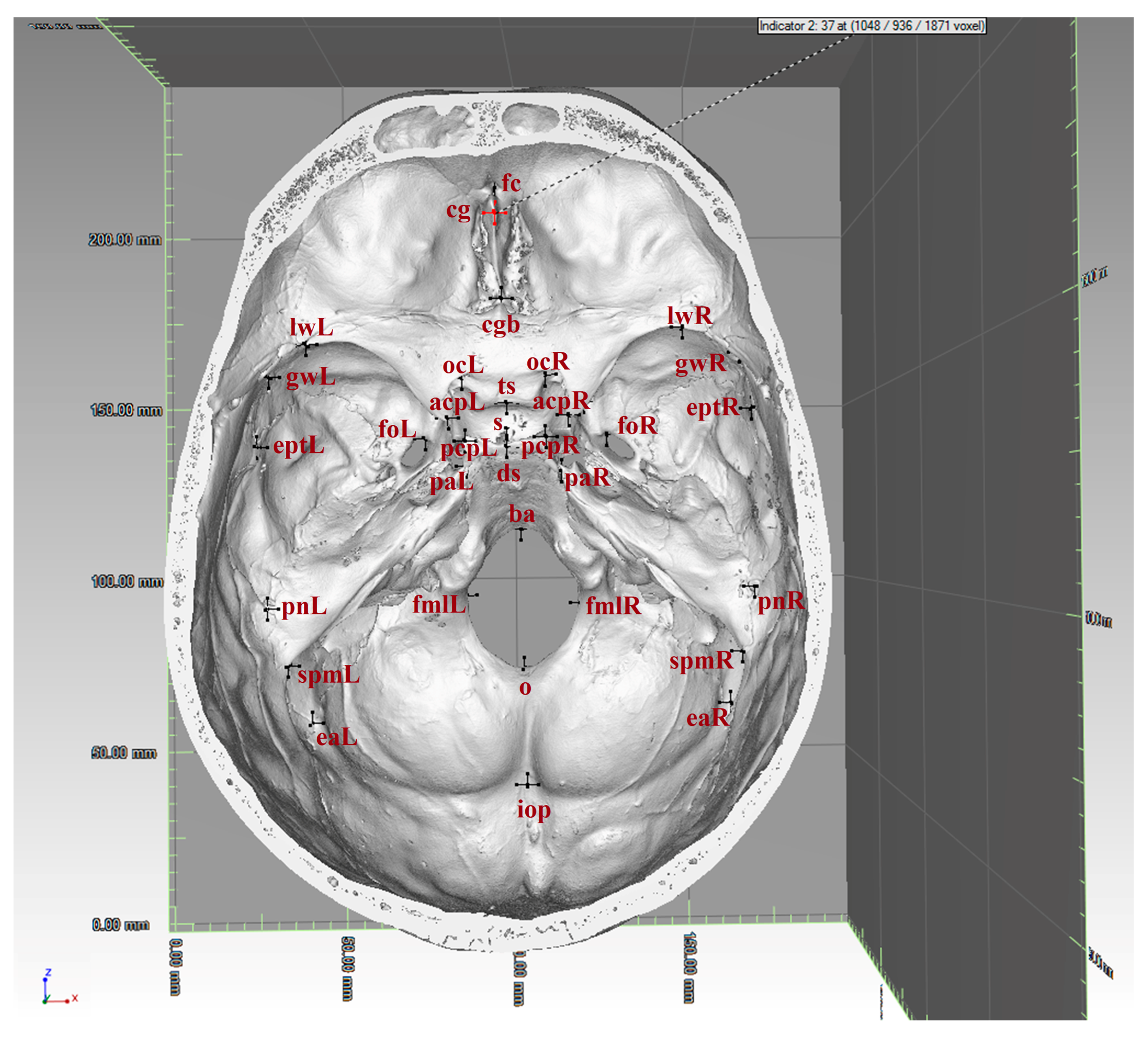
2.2.1. Data Collection
2.2.2. Data Analyses
- Intraobserver measurement error
- Geometric Morphometrics
3. Results
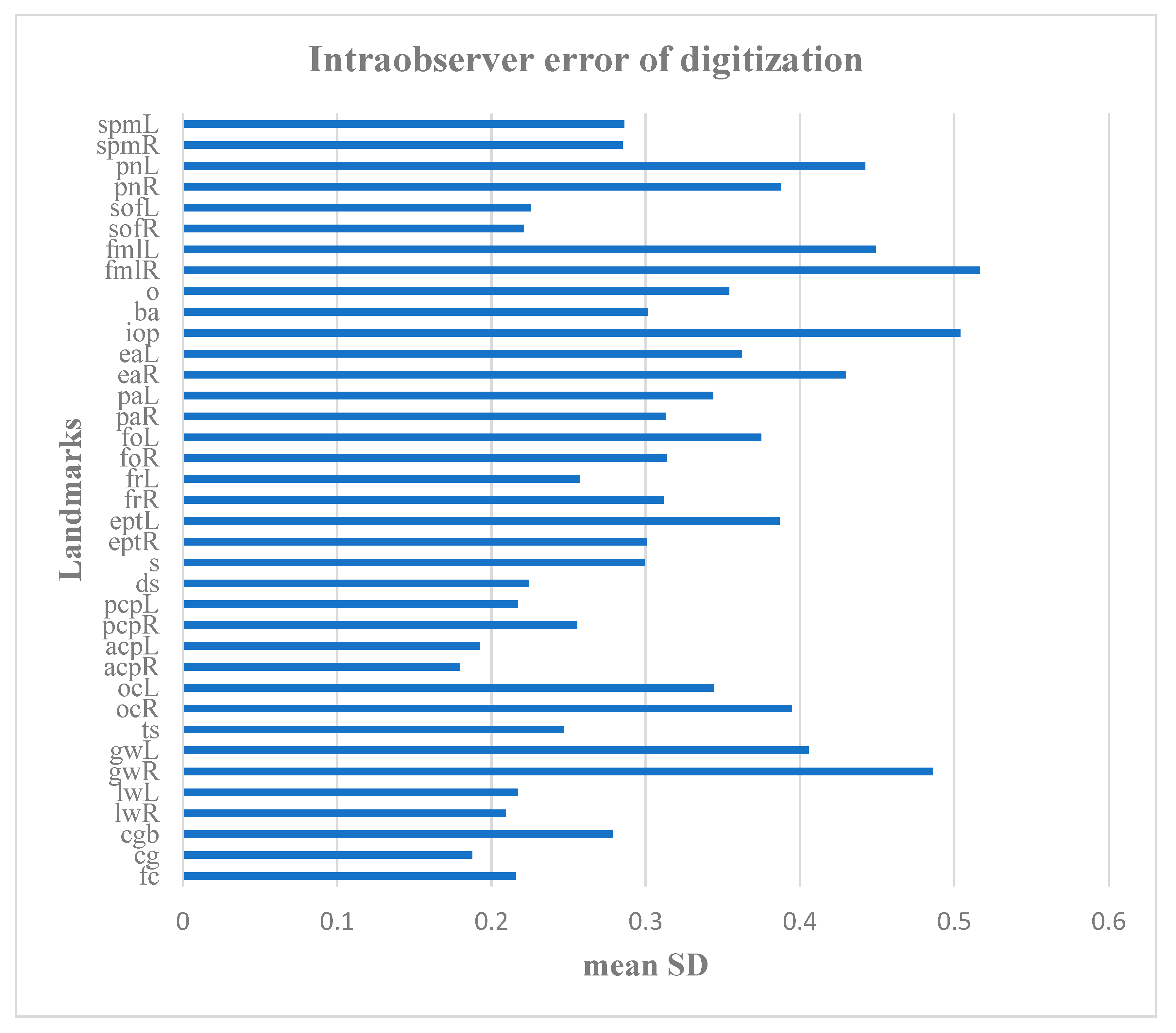
3.1. Intraobserver Error of Landmark Digitization
3.2. Size
3.3. Allometry
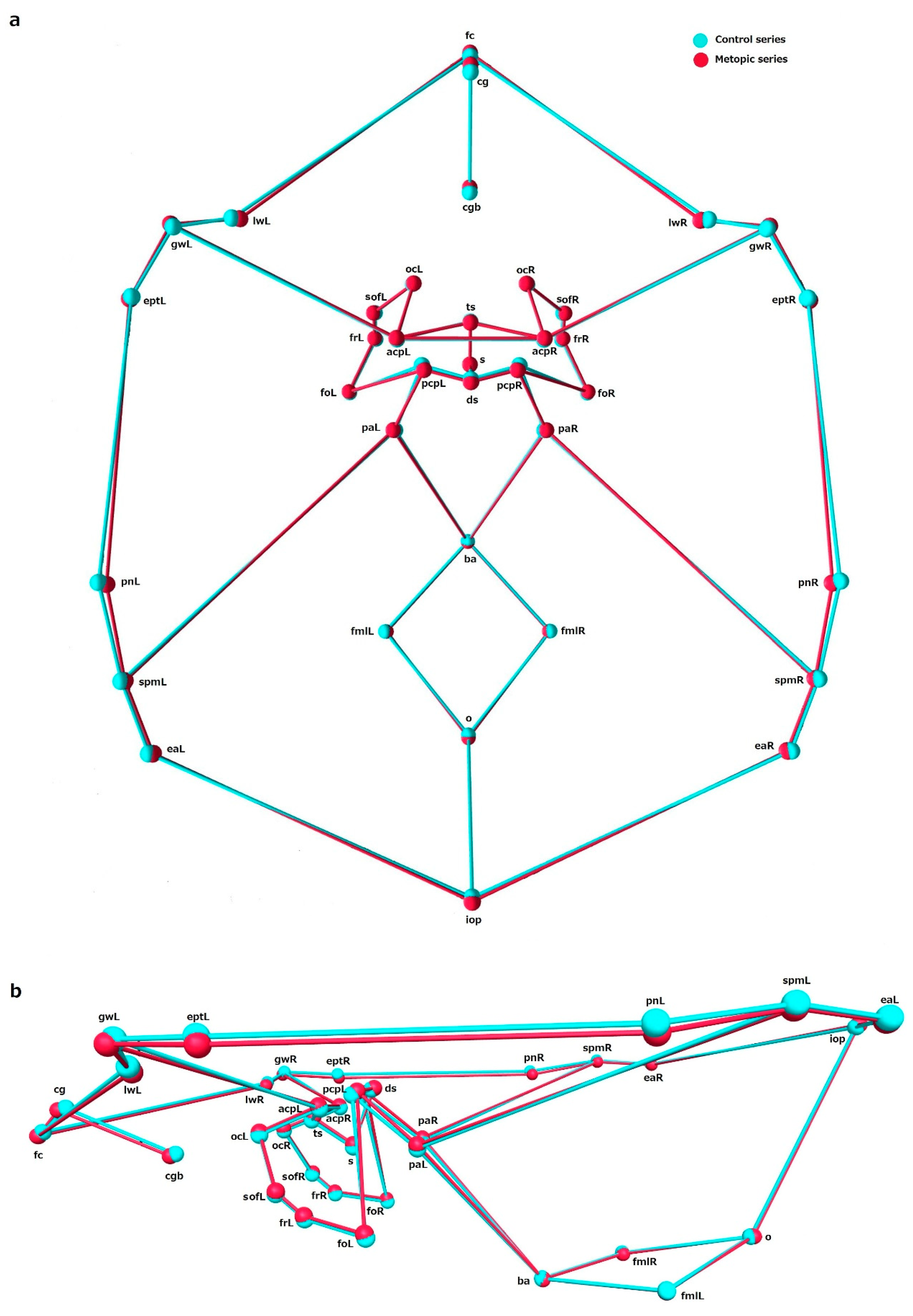
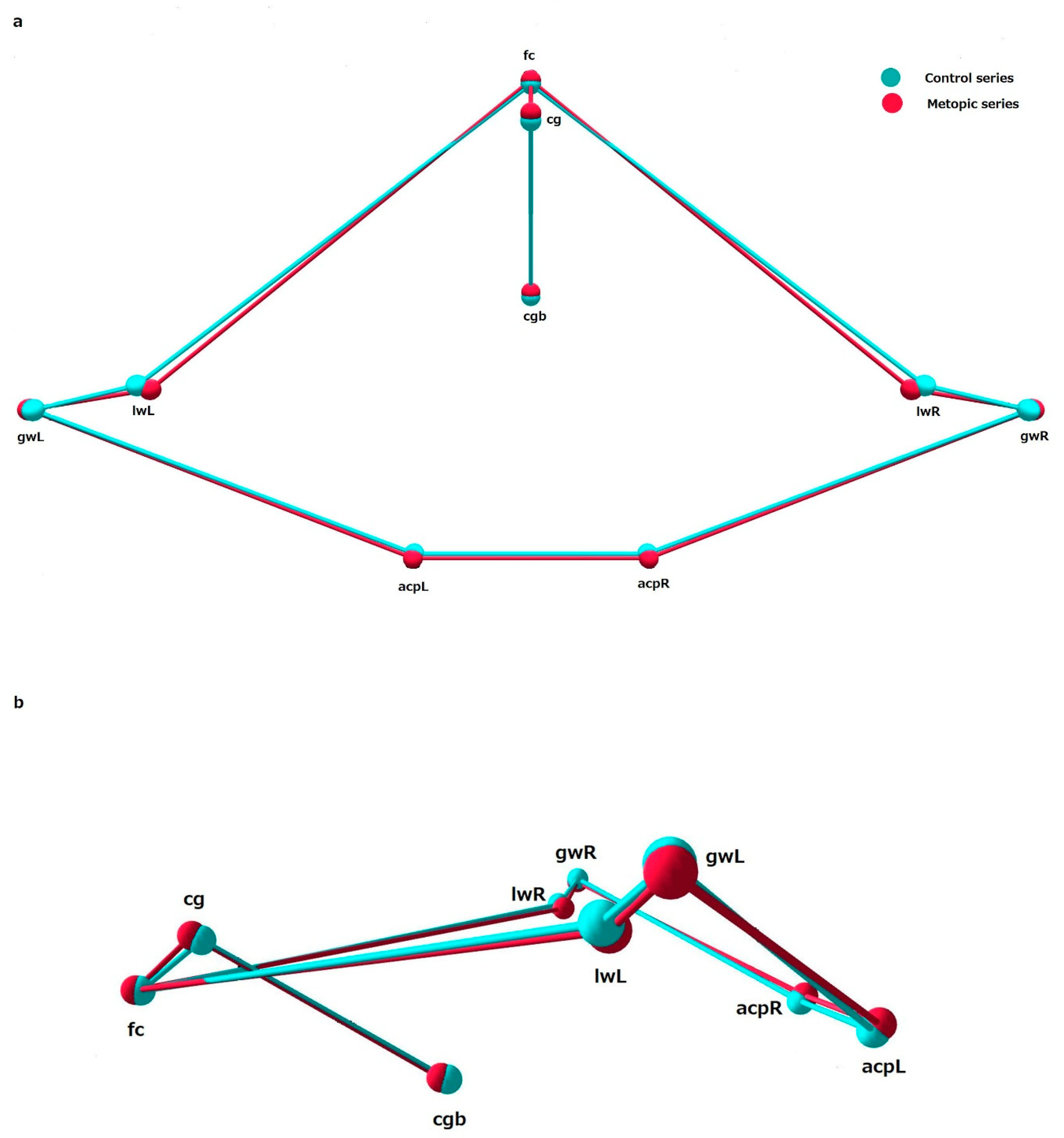
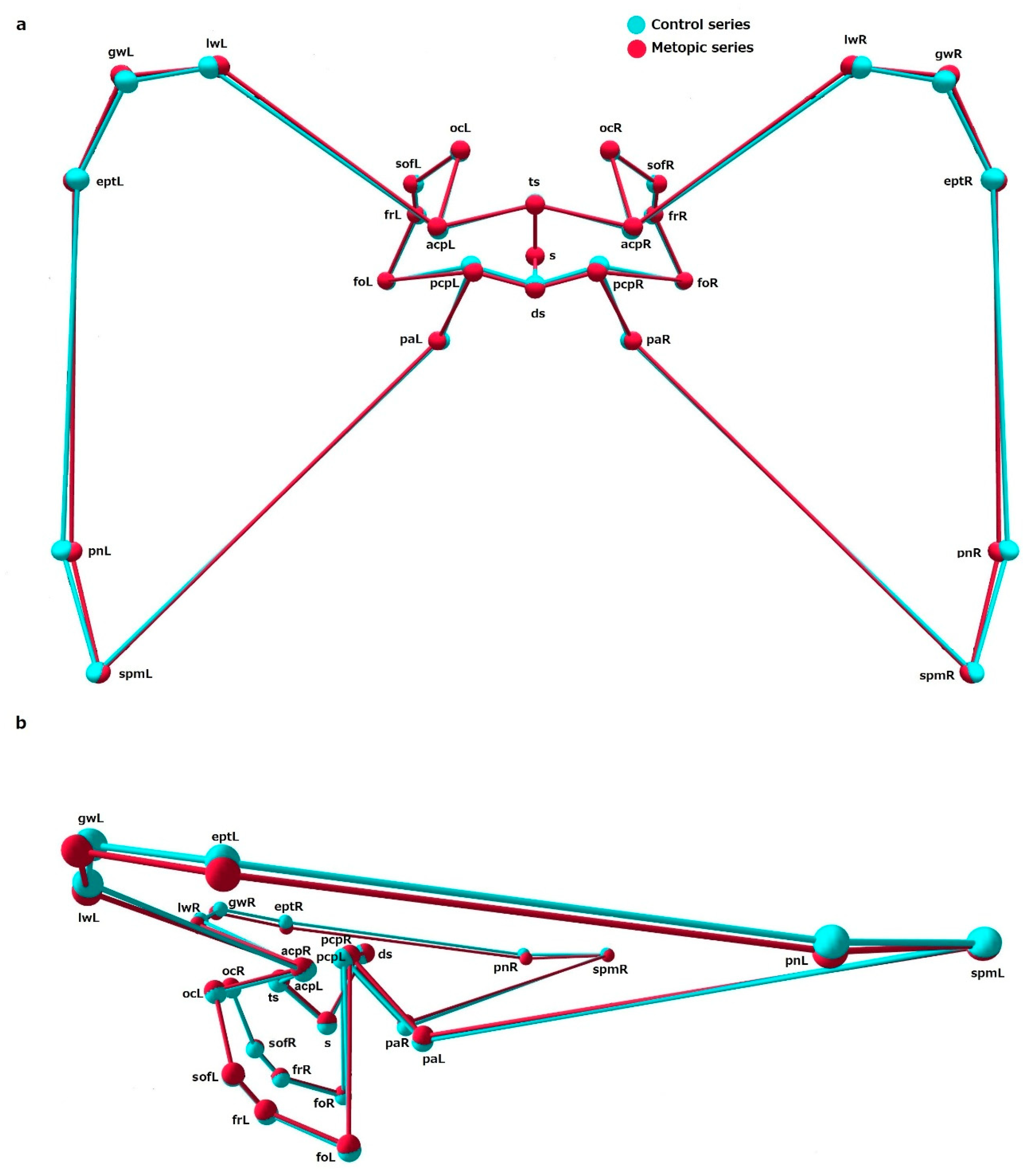
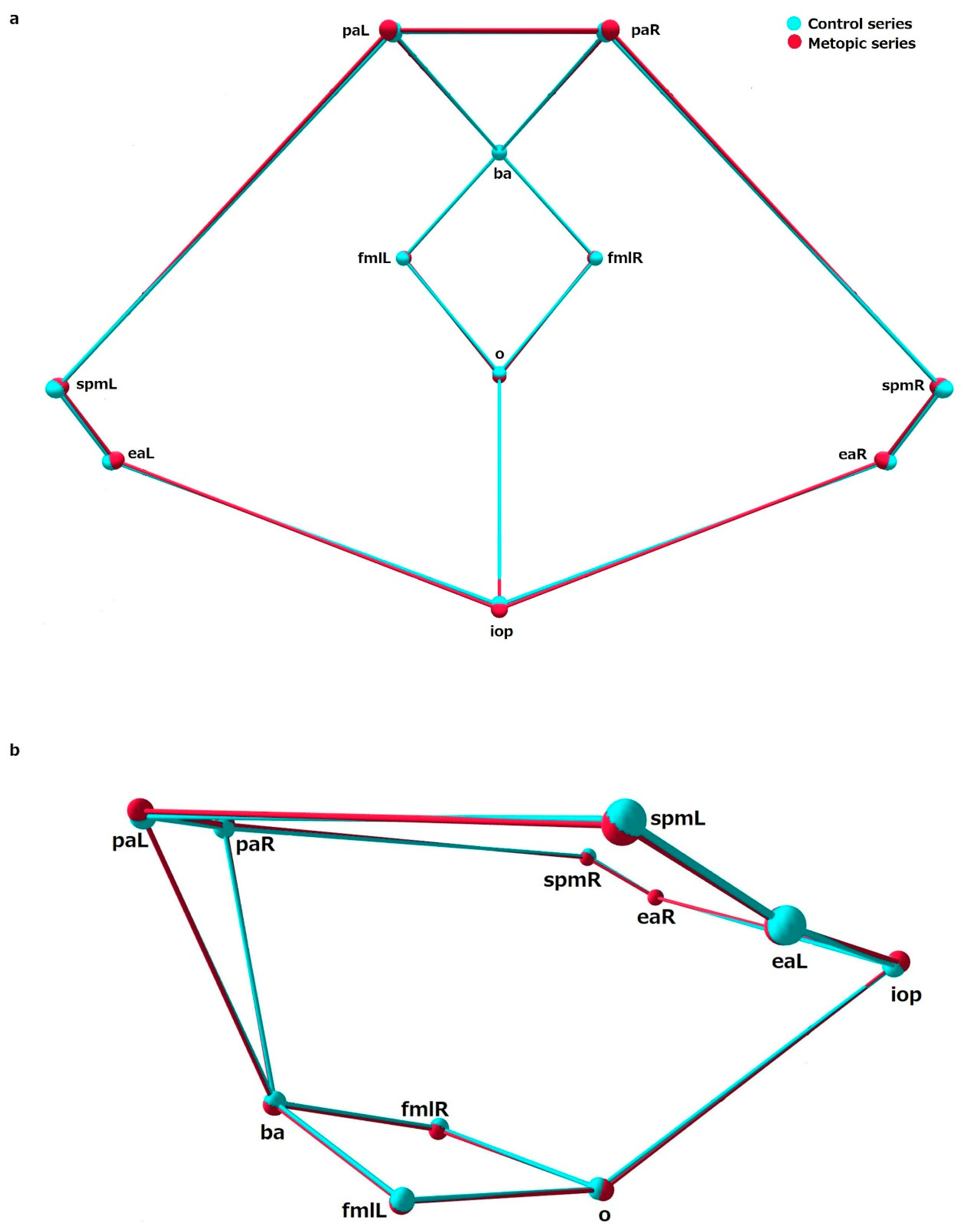
3.4. Shape
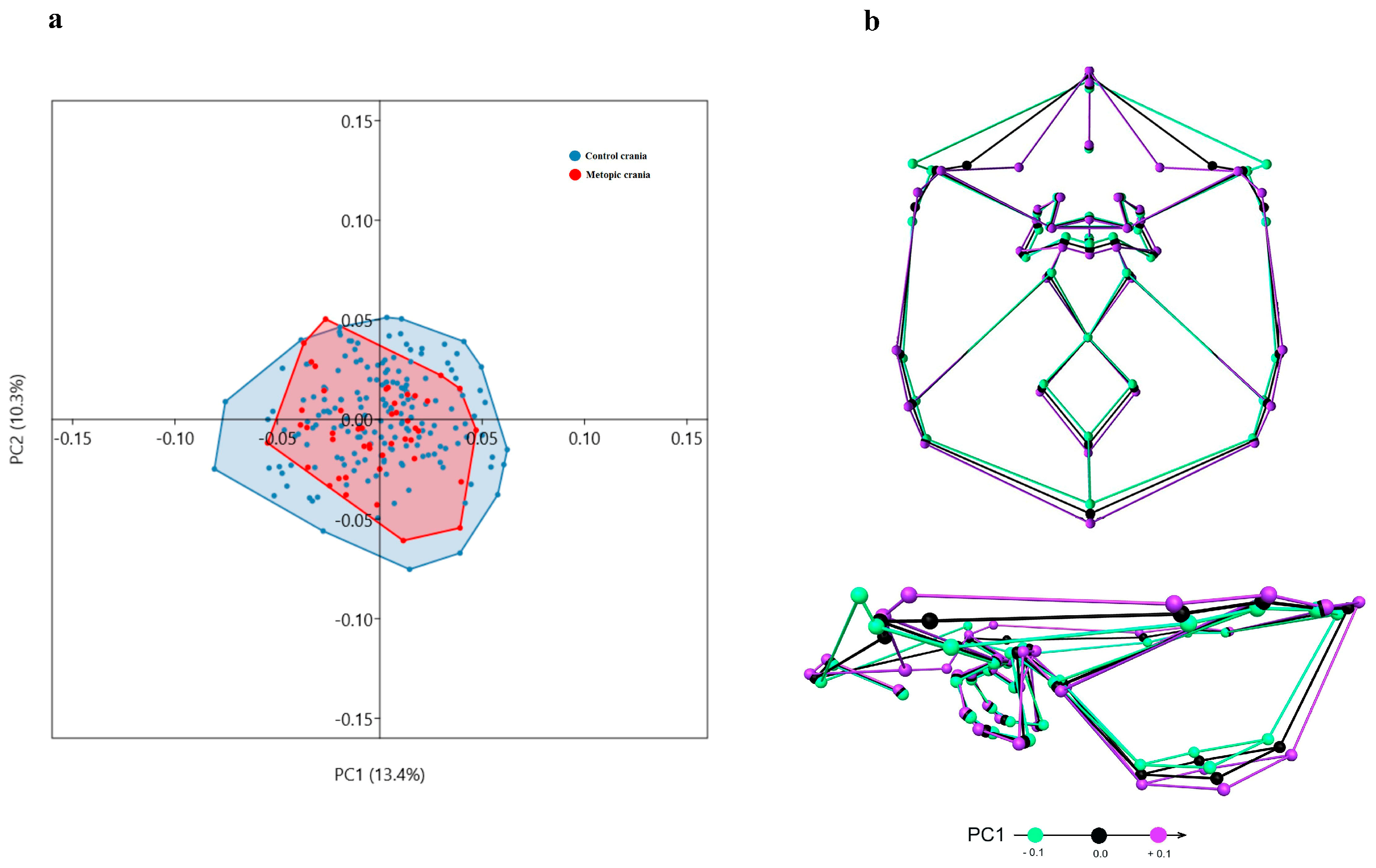
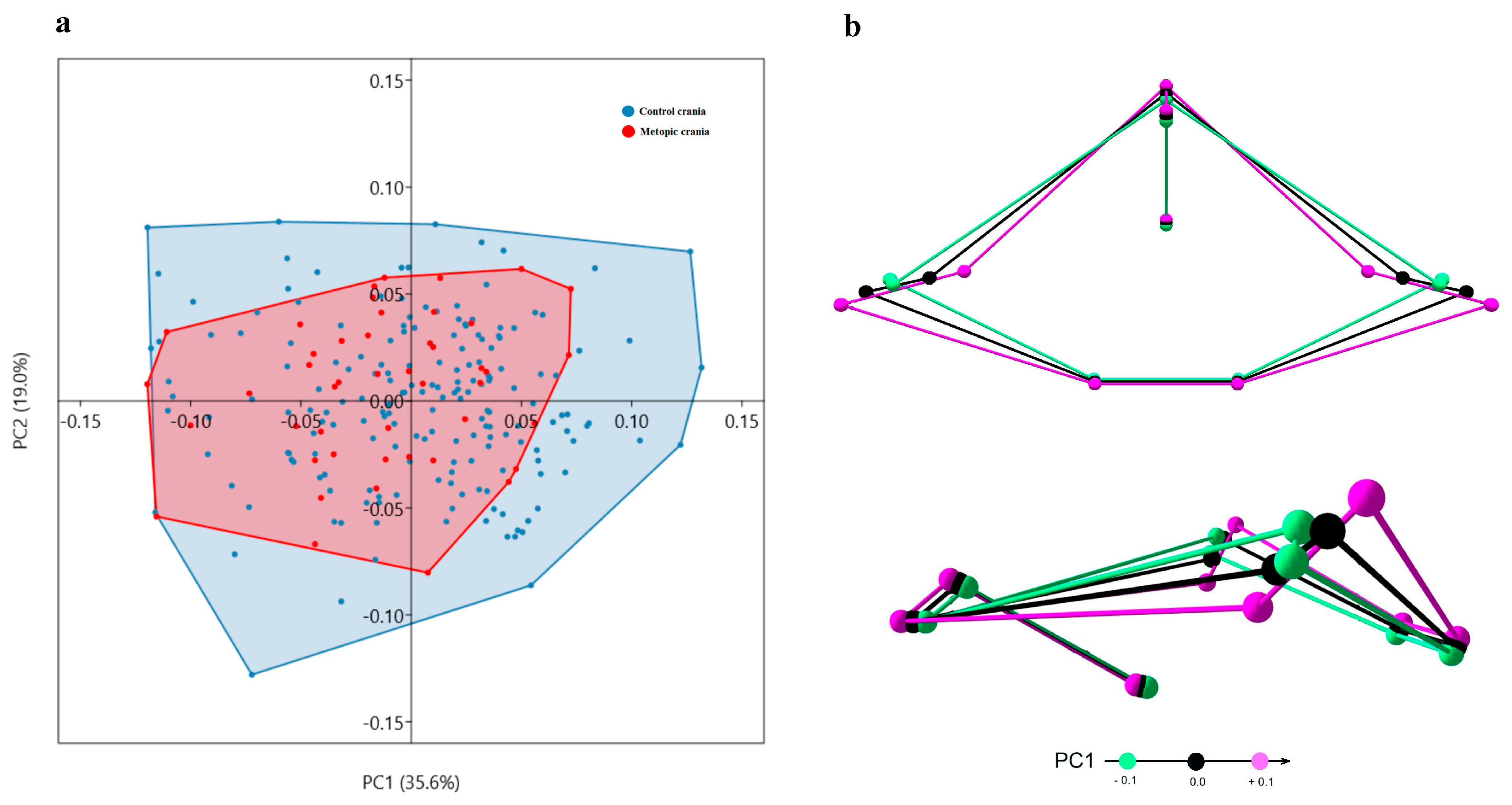
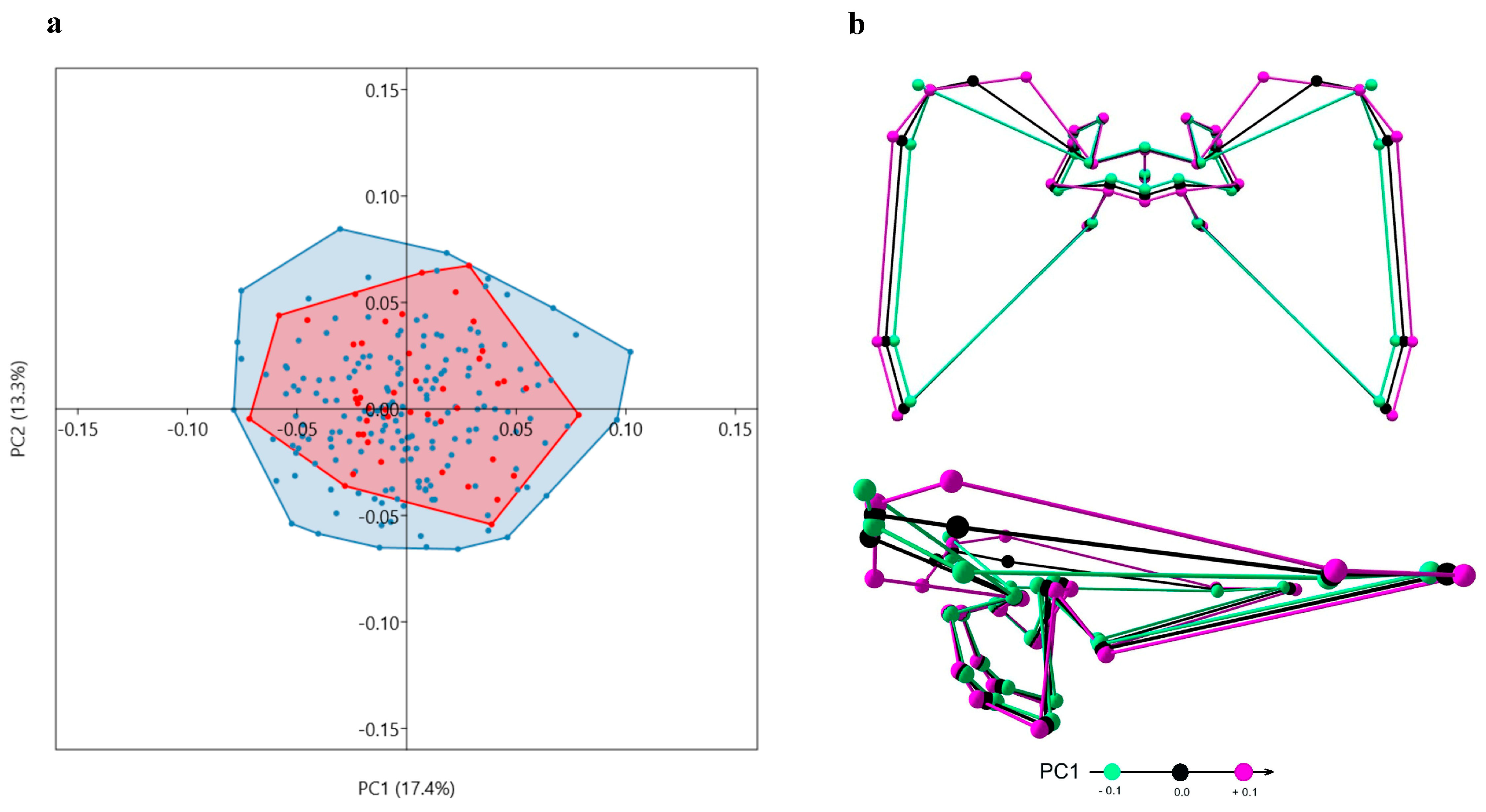
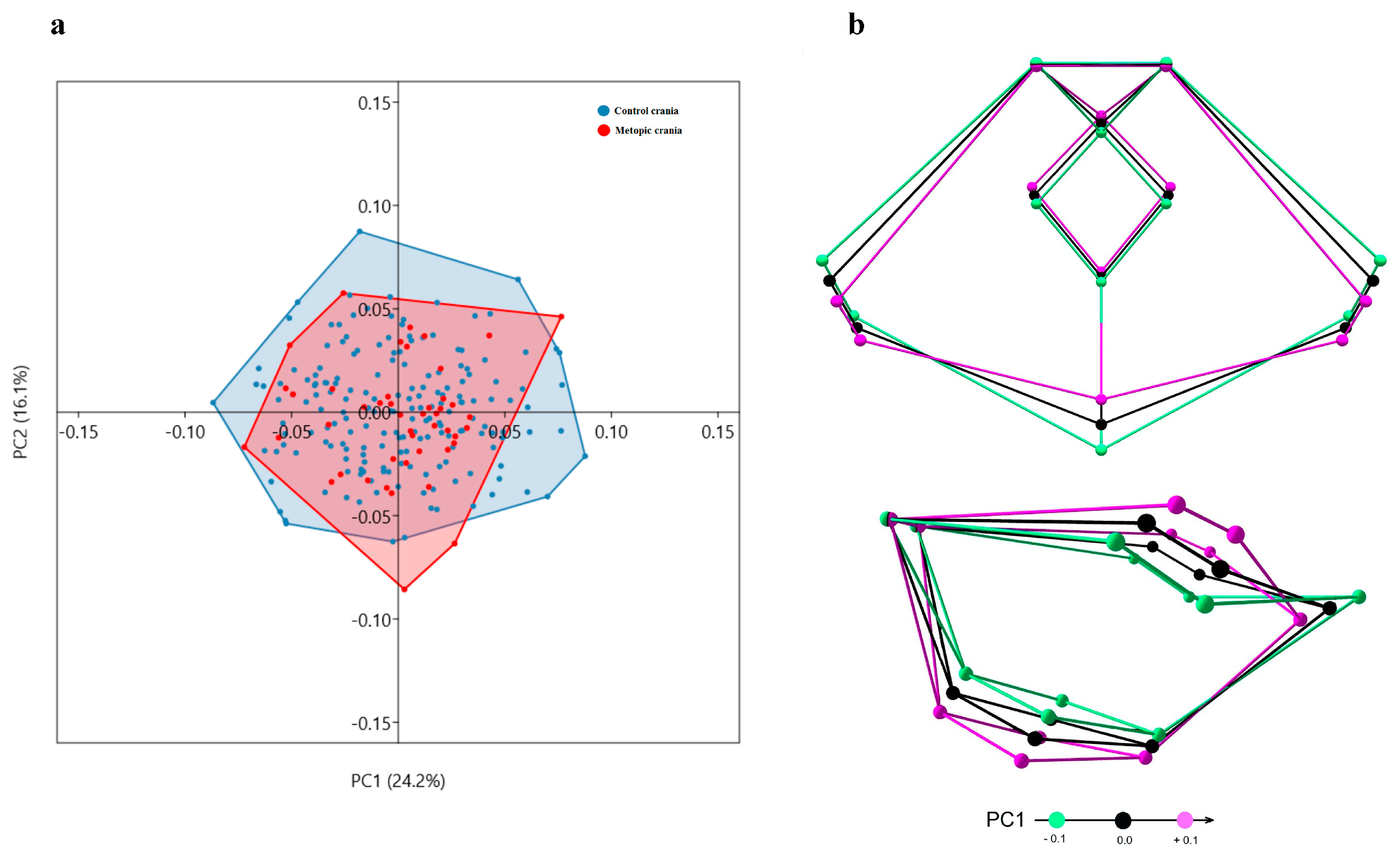
3.5. Principal Component Analysis
4. Discussion
5. Conclusions
Author Contributions
Funding
Institutional Review Board Statement
Informed Consent Statement
Data Availability Statement
Conflicts of Interest
References
- Flaherty, K.; Singh, N.; Richtsmeier, J.T. Understanding craniosynostosis as a growth disorder. Wiley Interdiscip. Rev. Dev. Biol. 2016, 5, 429–459. [Google Scholar] [CrossRef] [Scilit]
- Lieberman, D.E.; Pearson, O.M.; Mowbray, K.M. Basicranial influence on overall cranial shape. J. Hum. Evol. 2000, 38, 291–315. [Google Scholar] [CrossRef] [Scilit]
- Lieberman, D.E.; Hallgrímsson, B.; Liu, W.; Parsons, T.E.; Jamniczky, H.A. Spatial packing, cranial base angulation, and craniofacial shape variation in the mammalian skull: Testing a new model using mice. J. Anat. 2008, 212, 720–735. [Google Scholar] [CrossRef] [Scilit] [PubMed]
- Richtsmeier, J.T.; Flaherty, K. Hand in glove: Brain and skull in development and dysmorphogenesis. Acta Neuropathol. 2013, 125, 469–489. [Google Scholar] [CrossRef] [Scilit]
- Weinzweig, J.; Kirschner, R.E.; Farley, A.; Reiss, P.; Hunter, J.; Whitaker, L.A.; Bartlett, S.P. Metopic synostosis: Defining the temporal sequence of normal suture fusion and differentiating it from synostosis on the basis of computed tomography images. Plast. Reconst. Surg. 2003, 112, 1211–1218. [Google Scholar] [CrossRef] [Scilit] [PubMed]
- Zdilla, M.J.; Russell, M.L.; Koons, A.W.; Bliss, K.N.; Mangus, K.R. Metopism: A study of the persistent metopic suture. J. Craniofacial Surg. 2018, 29, 204–208. [Google Scholar] [CrossRef] [Scilit]
- Ashley-Montagu, M.F. The Medio-Frontal Suture and the Problem of Metopism in the Primates. J. R. Anthropol. Inst. Gt. Br. Irel. 1937, 67, 157–201. [Google Scholar] [CrossRef] [Scilit]
- Woo, J.-K. Racial and sexual differences in the frontal curvature and its relation to metopism. Am. J. Phys. Anthropol. 1949, 7, 215–226. [Google Scholar] [CrossRef] [Scilit]
- Nikolova, S.; Toneva, D.; Tasheva-Terzieva, E.; Lazarov, N. Cranial morphology in metopism: A comparative geometric morphometric study. Ann. Anat. 2022, 243, 151951. [Google Scholar] [CrossRef] [Scilit] [PubMed]
- Nikolova, S.; Toneva, D.; Agre, G.; Lazarov, N. Influence of persistent metopic suture on sagittal suture closure. Ann. Anat. 2022, 239, 151811. [Google Scholar] [CrossRef] [Scilit]
- Nikolova, S.; Toneva, D.; Lazarov, N. Neurocranium morphology in the presence of anatomic variations in the frontal and occipital bone. Anthropol. Sci. 2023, 131, 79–88. [Google Scholar] [CrossRef] [Scilit]
- Nikolova, S.; Toneva, D.; Georgiev, I. Cranial Base angulation in metopic and non-metopic cranial series. Acta Morphol. Anthropol. 2017, 24, 45–49. [Google Scholar]
- Nikolova, S.; Toneva, D.; Agre, G. Endocranial Morphology in Metopism. Biology 2025, 14, 835. [Google Scholar] [CrossRef] [Scilit]
- Bookstein, F.L. Morphometric Tools for Landmark Data: Geometry and Biology; Cambridge University Press: New York, NY, USA, 1991. [Google Scholar]
- Mitteroecker, P.; Gunz, P.; Windhager, S.; Schaefer, K. A brief review of shape, form, and allometry in geometric morphometrics, with applications to human facial morphology. Hystrix 2013, 24, 59–66. [Google Scholar] [CrossRef] [Scilit]
- Pickering, S.P. Correlation of brain and head measurements, and relation of brain shape and size to shape and size of the head. Am. J. Phys. Anthropol. 1930, 15, 1–52. [Google Scholar] [CrossRef] [Scilit]
- Nikolova, S.; Toneva, D.; Georgiev, I.; Lazarov, N. Sagittal suture maturation: Morphological reorganization, relation to aging, and reliability as an age-at-death indicator. Am. J. Phys. Anthropol. 2019, 169, 78–92. [Google Scholar] [CrossRef] [Scilit]
- von Cramon-Taubadel, N.; Frazier, B.C.; Lahr, M.M. The problem of assessing landmark error in geometric morphometrics: Theory, methods, and modifications. Am. J. Phys. Anthropol. 2007, 134, 24–35. [Google Scholar] [CrossRef] [Scilit]
- Lagravère, M.O.; Low, C.; Flores-Mir, C.; Chung, R.; Carey, J.P.; Heo, G.; Major, P.V. Intraexaminer and interexaminer reliabilities of landmark identification on digitized lateral cephalograms and formatted 3-dimensional cone-beam computerized tomography images. Am. J. Orthod. Dentofac. Orthop. 2010, 137, 598–604. [Google Scholar] [CrossRef] [Scilit]
- Mardia, K.V. Measures of multivariate skewness and kurtosis with applications. Biometrika 1970, 57, 519–530. [Google Scholar] [CrossRef]
- Doornik, J.A.; Hansen, H. An Omnibus Test for Univariate and Multivariate Normality (No. W4&91); University of Oxford, Nuffield College, Economics Group: Oxford, UK, 1994. [Google Scholar]
- Klingenberg, C.P. MorphoJ: An integrated software package for geometric morphometrics. Mol. Ecol. Resour. 2011, 11, 353–357. [Google Scholar] [CrossRef] [Scilit]
- Hammer, Ø.; Harper, D.A.T.; Ryan, P.D. PAST: Paleontological statistics software package for education and data analysis. Palaeontol. Electron. 2001, 4, 9–18. [Google Scholar]
- Moss, M.L.; Young, R.W. A functional approach to craniology. Am. J. Phys. Anthropol. 1960, 18, 281–292. [Google Scholar] [CrossRef] [Scilit]
- Opperman, L.A. Cranial sutures as intramembranous bone growth sites. Dev. Dyn. 2000, 219, 472–485. [Google Scholar] [CrossRef] [PubMed]
- Ornitz, D.M.; Marie, P.J. FGF signaling in skeletal development and disease. Genes Dev. 2015, 29, 1463–1486. [Google Scholar] [CrossRef] [Scilit]
- Kronenberg, H.M. Developmental regulation of the growth plate. Nature 2003, 423, 332–336. [Google Scholar] [CrossRef] [Scilit] [PubMed]
- Long, F.; Ornitz, D.M. Development of the endochondral skeleton. Cold Spring Harb. Perspect. Biol. 2013, 5, a008334. [Google Scholar] [CrossRef] [Scilit]
- van der Eerden, B.C.; Karperien, M.; Wit, J.M. Systemic and local regulation of the growth plate. Endocr. Rev. 2003, 24, 782–801. [Google Scholar] [CrossRef] [Scilit] [PubMed]
- Hallgrímsson, B.; Lieberman, D.E.; Liu, W.; Ford-Hutchinson, A.F.; Jirik, F.R. Epigenetic interactions and the structure of phenotypic variation in the cranium. Evol. Dev. 2007, 9, 76–91. [Google Scholar] [CrossRef] [Scilit]
- Adasooriya, D.; Kyeong, M.; Cho, S.W. Sphenoid Bone Determines the Curvature of the Cranial Vault in Postnatal Skull Development in C57BL/6 Mice. J. Bone Metab. 2023, 30, 93–101. [Google Scholar] [CrossRef] [Scilit]
- Vora, S.R.; Camci, E.D.; Cox, T.C. Postnatal Ontogeny of the Cranial Base and Craniofacial Skeleton in Male C57BL/6J Mice: A Reference Standard for Quantitative Analysis. Front. Physiol. 2016, 6, 417. [Google Scholar] [CrossRef] [Scilit]
- Lieberman, D.E.; McBratney, B.M.; Krovitz, G. The evolution and development of cranial form in Homosapiens. Proc. Natl. Acad. Sci. USA 2002, 99, 1134–1139. [Google Scholar] [CrossRef] [Scilit] [PubMed]
- Rengasamy Venugopalan, S.; Van Otterloo, E. The Skull’s Girder: A Brief Review of the Cranial Base. J. Dev. Biol. 2021, 9, 3. [Google Scholar] [CrossRef] [Scilit] [PubMed]
- Bastir, M.; Rosas, A.; Stringer, C.; Cuétara, J.M.; Kruszynski, R.; Weber, G.W.; Ross, C.F.; Ravosa, M.J. Effects of brain and facial size on basicranial form in human and primate evolution. J. Hum. Evol. 2010, 58, 424–431. [Google Scholar] [CrossRef] [Scilit] [PubMed]



| Landmark | Description |
|---|---|
| Midsagittal | |
| Basion (ba) | A point on the anterior margin of foramen magnum in the midsagittal plane |
| Crista galli (cg) | The most prominent point on crista galli |
| Dorsum sellae (ds) | A point at dorsum sellae in the midsagittal plane |
| Crista galli base (cgb) | A point placed at the posterior ridge of crista galli in its base |
| Foramen cecum (fc) | A point on the posterior margin of foramen cecum in the midsagittal plane |
| Internal occipital protuberance (iop) | A point on the internal occipital protuberance |
| Opisthion (o) | A point on the posterior margin of foramen magnum in the midsagittal plane |
| Sella (s) | A point at the center of sella turcica in the midsagittal plane |
| Tuberculum sellae (ts) | A point on the tuberculum sellae in the midsagittal plane |
| Bilateral | |
| Anterior clinoid process (acp) | The most prominent point on the anterior clinoid process |
| Endoasterion (ea) | The point of intersection of the lambdoid, occipitomastoid and parietomastoid sutures on the endocranial surface |
| Endopterion (ept) | The meeting point between the greater wing of the sphenoid, the parietal bone and the temporal squama on the endocranial surface |
| Foramen magnum laterale (fml) | The most lateral point on the margin of foramen magnum |
| Foramen ovale (fo) | The most medial point on foramen ovale on the endocranial surface |
| Foramen rotundum (fr) | A point on the medial ridge of foramen rotundum |
| Greater wing of the sphenoid (gw) | The meeting point between the greater wing of the sphenoid, the parietal bone and the frontal bone on the endocranial surface |
| Superior orbital fissure (sof) | The most inferior point on the superior orbital fissure on the endocranial surface |
| Lesser wing of the sphenoid (lw) | The sharpest point at the site of the articulation with the frontal bone |
| Optic canal (oc) | A point on the medial ridge of the optic canal |
| Posterior clinoid process (pcp) | The most prominent point on the posterior clinoid process |
| Parietal notch (pn) | The point of intersection of the squamous suture and the parietomastoid suture on the endocranial surface |
| Petrous apex (pa) | A point at the apex of the petrous part of the temporal bone |
| Superior petrous margin (spm) | A point at the intersection of the superior margin of the petrous part of the temporal bone, formed between the anterior and posterior surfaces, with the parietomastoid suture, on the endocranial surface |
| Landmark Configuration | Landmarks | ||||
|---|---|---|---|---|---|
| T | M | B | Abbreviations | ||
| 1 | Internal cranial base | 37 | 9 | 14 | All investigated landmarks |
| 2 | Anterior cranial fossa | 9 | 3 | 3 | fc, cg, cgb, lwR, gwR, acpR, acpL, gwL, lwL |
| 3 | Middle cranial fossa | 27 | 3 | 12 | ts, s, ds, acpR, ocR, iofR, frR, foR, pcpR, paR, spmR, pnR, erpR, gwR, lwR, acpL, ocL, iofL, frL, foL, pcpL, paL, spmL, pnL, erpL, gwL, lwL, |
| 4 | Posterior cranial fossa | 11 | 3 | 4 | ba, o, iop, eaR, fmlR, spmR, paR, paL, spmL, eaL, fmlL |
| Landmark Configuration | Control | MS | Differences | |||
|---|---|---|---|---|---|---|
| Mean | SD | Mean | SD | t-Test | p-Value | |
| Cranial base | 292.83 | 8.23 | 293.24 | 8.75 | t = 0.304 | 0.761 |
| Anterior fossa | 105.45 | 6.16 | 105.64 | 6.48 | t = 0.186 | 0.853 |
| Middle fossa | 213.84 | 7.86 | 213.38 | 8.85 | t = 0.341 | 0.733 |
| Posterior fossa | 147.34 | 4.24 | 146.93 | 4.56 | t = 0.576 | 0.566 |
| Landmark Configuration | Total | Control | MS | |||
|---|---|---|---|---|---|---|
| % * | p-Value | % | p-Value | % | p-Value | |
| Cranial base | 2.39% | <0.0001 | 1.84% | 0.0002 | 7.49% | <0.0001 |
| Anterior fossa | 17.50% | <0.0001 | 17.53% | <0.0001 | 19.71% | <0.0001 |
| Middle fossa | 3.06% | <0.0001 | 2.56% | 0.0001 | 6.76% | 0.0002 |
| Posterior fossa | 1.79% | <0.0001 | 1.12% | 0.0467 | 8.28% | 0.0001 |
| Landmark Configuration | Total Sum of Squares | Within-Group Sum of Squares | F | p-Values |
|---|---|---|---|---|
| Cranial base (PC1–PC34) | 1.176 | 1.166 | 1.966 | 0.014 |
| Anterior fossa (PC1–PC9) | 1.554 | 1.534 | 2.835 | 0.019 |
| Middle fossa (PC1–PC23) | 1.466 | 1.453 | 2.055 | 0.021 |
| Posterior fossa (PC1–PC11) | 1.010 | 1.006 | 0.723 | 0.651 |
Disclaimer/Publisher’s Note: The statements, opinions and data contained in all publications are solely those of the individual author(s) and contributor(s) and not of MDPI and/or the editor(s). MDPI and/or the editor(s) disclaim responsibility for any injury to people or property resulting from any ideas, methods, instructions or products referred to in the content. |
© 2025 by the authors. Licensee MDPI, Basel, Switzerland. This article is an open access article distributed under the terms and conditions of the Creative Commons Attribution (CC BY) license.
Share and Cite
Nikolova, S.; Toneva, D. Basis Cranii Interna in Metopism: A Comparative Geometric Morphometric Study. Biology 2026, 15, 36. https://doi.org/10.3390/biology15010036
Nikolova S, Toneva D. Basis Cranii Interna in Metopism: A Comparative Geometric Morphometric Study. Biology. 2026; 15(1):36. https://doi.org/10.3390/biology15010036
Chicago/Turabian StyleNikolova, Silviya, and Diana Toneva. 2026. "Basis Cranii Interna in Metopism: A Comparative Geometric Morphometric Study" Biology 15, no. 1: 36. https://doi.org/10.3390/biology15010036
APA StyleNikolova, S., & Toneva, D. (2026). Basis Cranii Interna in Metopism: A Comparative Geometric Morphometric Study. Biology, 15(1), 36. https://doi.org/10.3390/biology15010036