


Abstract
A top hydrophobic layer can increase the durability of exterior coatings applied on wood. Two hydrophobic topcoats - synthetics and waterborne acrylate resin with wax additives, were tested as top layers on twenty-four different coating systems applied on oak wood in this experiment. Artificial accelerated weathering lasted for six weeks. Changes of color, gloss, surface wetting were evaluated, and microscopic analyses of coated surfaces were done during weathering. The results have shown that a top hydrophobic layer increases the durability of tested coating systems in most cases. However, the effectiveness of the two tested hydrophobic topcoats turned out to be different depending on the specific coating systems used.
1. Introduction
Wood in outdoor applications is subjected to degradation caused by abiotic and biotic factors [1]. Even without ground contact (class 3 by EN 350 [2]), the rapid degradation of surface layers caused by the interaction of water and solar radiation takes place [3]. Wood with lower natural durability is more susceptible to biological attack—mainly by wood-destroying fungi and insects [1]. A frequently used option of wood protection against the above-mentioned damage is the application of coating systems [4,5].
Another possibility is the use of hydrophobic coatings or wood hydrophobization itself [6,7,8]. The hydrophobic compounds generally decrease the amount of absorbed water, which leads to reduction of wood swelling and shrinkage [6,9]. This limitation of dimensional changes leads to a slower degradation process outdoors [10]. Additionally, hydrophobic coatings prevent wet conditions, which create a very favorable environment for the growth of various wood degrading biological organisms (e.g., diverse fungi, bacteria, and insects) [9]. Common surface hydrophobization methods include, but are not limited to, treatments based on silicone [11,12,13] and surface impregnation with various waxes, oils, or acrylate coatings [9,14,15,16,17]. In other studies, wood surfaces were also treated by heat [18] or plasma [19] to improve water resistance. Through the introduction of nanotechnology, the different hydrophobic treatments are developing at a rapid pace [6,20]. Nanoparticles based on titanium dioxide [21], silica nanoparticles [22] or zinc oxide were applied as hydrophobic treatments to wood. Nevertheless, many of these approaches have a negative environmental impact and cause damage to the ecosystem because of the possibility for hazardous chemicals to leak from the surface [6]. When using nanoparticles in industrial applications, the possible negative consequences must be considered [23].
Hydrophobic coatings themselves are not usually able to ensure sufficient protection of wood surfaces against weathering - they do not protect the underlying wood against solar radiation causing decomposition of lignin and extractives, while their leaching is connected with visual color changes [7,8,24]. Another use of hydrophobic coatings is their application as a topcoat to prevent the synergistic action of solar radiation and water [25,26]. In previous studies [27,28,29], the efficiency of a top hydrophobic coating to prolong the overall service life of a coating system applied on Norway spruce and Black locust wood was proved.
It would be preferable to use oak wood (Quercus petraea L.) in the outdoor applications as an available wood with higher durability against biotic damage (EN 350 [2]). Without surface protection, however, it rapidly changes its exterior color [30] and the leaching of extractives occurs, which can aesthetically damage other parts of the construction (balcony, façade, terrace, etc.). The efficiency of several coating systems is reduced on oak wood [31] due to its complex morphological structure of with opened vessels and specific tannins content [32]. A hydrophobic layer applied as a separate coating was characterized by lower efficiency than a multilayered oil-based coating system [8]. From these reasons, it is necessary to find a long-lasting coating system on this wood species in outdoor applications.
The objective of this study is to evaluate the efficiency of transparent and semi-transparent coating systems applied on oak wood and possible enhancement of their durability by application of top hydrophobic layers. The performance of different coating systems is evaluated via measurements of color, gloss and surface wettability changes during artificial weathering and via confocal laser scanning microscopy.
2. Materials and Methods
2.1. Wood Material
The experiment was conducted using oak wood (Quercus petraea L.) with mean density of ρ0 = 705 kg/m3 harvested in the Czech Republic. The samples in dimensions of 40 mm × 20 mm × 150 mm (T × R × L) were sanded with a grain size of 120 in a longitudinal direction and visually sorted. Prepared samples were conditioned in laboratory conditions (20 ± 2 °C and 65% RH) to achieve an equilibrium moisture content of 12% before application of coatings and subsequently before each measurement.
2.2. Coating Application
The oak wood samples were treated with oil-based (OL), acrylate-based waterborne (AC), alkyd-based resins (AL) and other synthetic coatings dissolved in organic compounds (SL) according to producer recommendations. Their specification obtained from commercial providers is listed in Table 1. The coated samples were subsequently treated with two different transparent top hydrophobic coatings (b,c), which were applied by brush according to a recommendation from a producer, the remaining samples were left without hydrophobic treatment for a comparison (a)—see Table 2. The cross ends of samples were sealed using silicon to prevent additional water uptake. The initial properties of prepared coating systems are given in Table 3.

Table 1.
Specification of applied transparent and semi-transparent coatings.
Table 2.
Specification of applied hydrophobic topcoats.
Table 3.
Mean values of initial color (L*, a*, b* - see Section 2.4.), gloss (see Section 2.5.) and surface wettability (see Section 2.6.) of applied coating systems on oak wood.
2.3. Artificial Weathering (AW)
Artificial weathering was performed in UV-chamber QUV (Q-Lab, Cleveland, OH, USA) on the basis of modified EN 927-6 [33] with the test parameters given in Table 4. During the week cycle of irradiation and spraying, the samples were transferred to a conditioning chamber Discovery My DM340 (ACS, Massa Martana, Italy) and exposed to three cycles lasting 2 h of temperature changes from −25 to +80 °C (with 25% RH). The total weathering time consisted of 6 cycles - 1008 h of weathering in UV chamber and 36 h of temperature cycling. The alternation of UV radiation, spray, and low temperature cycles, which leads to more accurate simulation of exterior conditions in Europe, was also used in a study by Van den Bulcke [34] and Pánek [8].
Table 4.
One cycle of artificial weathering.
2.4. Color Analysis
The color parameters [35] (CIE 1986) of the test specimens were measured after 1, 3 and 6 weeks of AW using Spectrophotometer CM-600d (Konica Minolta, Osaka, Japan). The device was set to an observation angle of 10°, d/8 geometry and D65 light source, and the SCI method (specular component included) was used. Six measurements per sample were carried out for each weathering time. Color changes evaluations were done in CIE L*a*b* color space on the basis of L*, a*, and b* color coordinates, where:
- L* is lightness from 0 (black) to 100 (white);
- a* is chromaticity coordinate + (red) or − (green);
- b* is chromaticity coordinate + (yellow) or − (blue).
The relative changes in color (ΔL*, Δa*, and Δb*) between the weathered and the initial state were determined. According to the Euclidean distance, the total color difference ΔE* (CIE 1986 [8]) was subsequently calculated using Equation (1):
2.5. Gloss Analysis
Gloss measurements were performed on the basis of EN ISO 2813 [36] using glossmeter MG268-F2 (KSJ, Quanzhou, China). Six measurements at a 60° angle per sample after 1, 3, and 6 weeks of AW were done to evaluate gloss changes.
2.6. Surface Wettability Analysis
The performance of different hydrophobic layers on oak wood surface wettability was investigated. The water contact angle on oak wood tangential surfaces was measured using a goniometer Krüss DSA 30E (Krüss, Hamburg, Germany). The sessile drop method was used to compare the wettability of different surface treatments during artificial weathering. Ten measurements per sample were performed after 1, 3, and 6 weeks of weathering with distilled water drops with a dosing volume of 5 μL. The value of contact angle was recorded in 5 sec after drop deposition on the surface as in other studies [37,38,39]. The phenomena of spreading and absorption of water drops on the oak wood surface was investigated via variations of the weathering time, coating system and applied hydrophobic layer.
2.7. Macroscopic and Microscopic Analysis
Surfaces were regularly scanned using Canon 2520 MFP scanner with 300 DPI resolution (Canon, Tokyo, Japan) to evaluate degradation of tested coating systems. Microscopic structural changes of coatings and wood surfaces were studied using confocal laser scanning microscope Lext Ols 4100 (Olympus, Tokyo, Japan) with 108-fold magnification.
2.8. Statistical Evaluation
Statistical analyses were performed in MS Excel (Microsoft, Redmond, WA, USA) and Statistica (StatSoft, Palo Alto, CA, USA) using mean values, scatter plots with mean values and ANOVA (analysis of variance) with significance level α = 0.05.
3. Results and Discussion
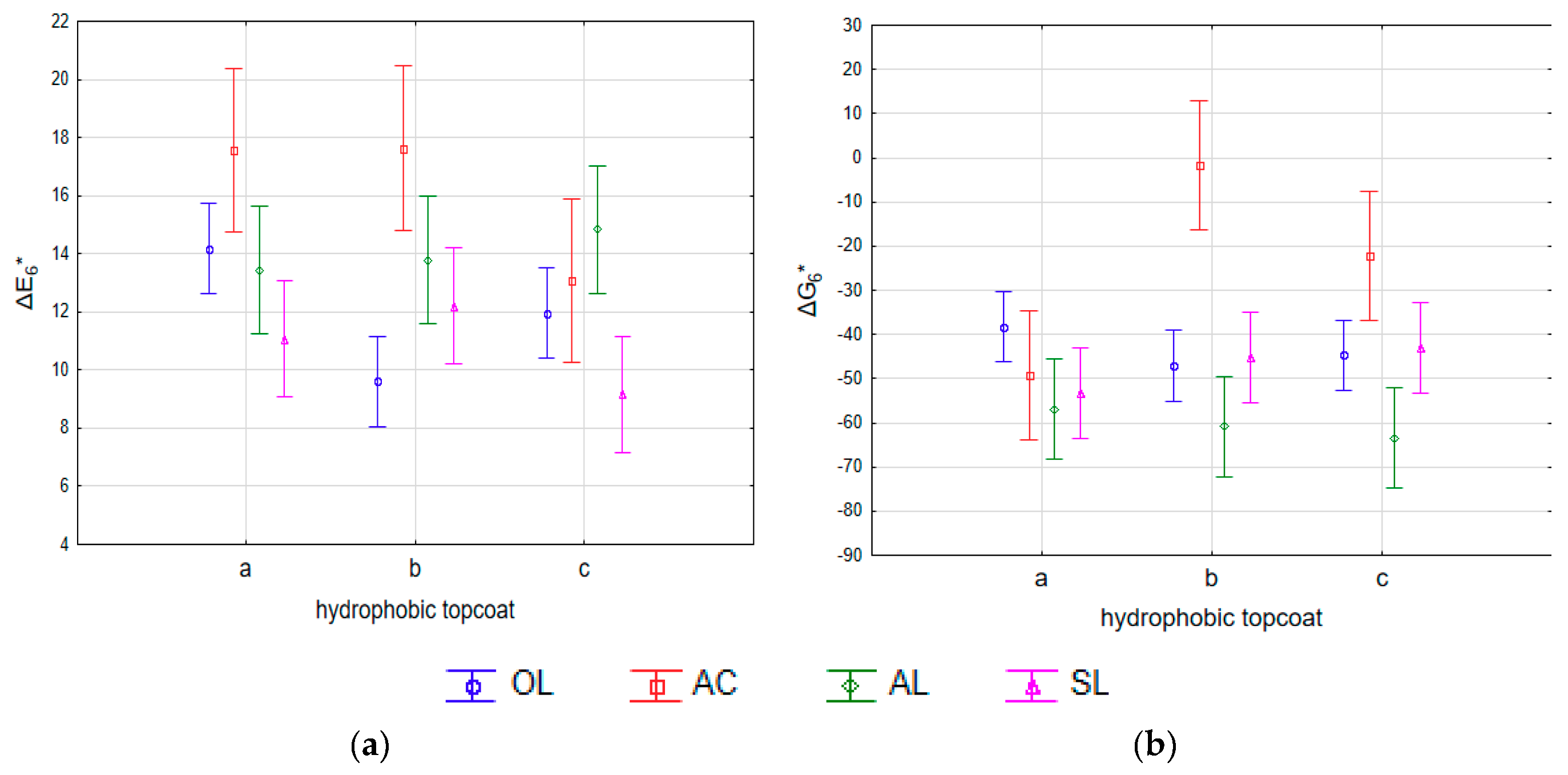
The changes of surface properties of tested coating systems during AW exposure were evaluated with respect to the type of polymer base (oil, acrylate, alkyd, other synthetic—Table 1) and hydrophobic topcoat (acrylate waterborne and synthetic—Table 2)—see Figure 1.
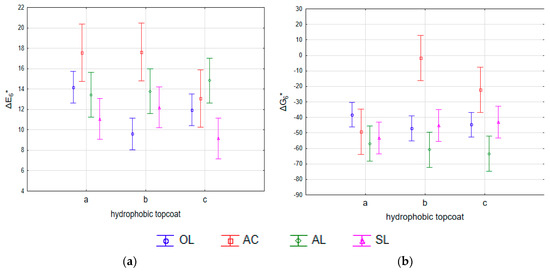
Figure 1.
Efficiency of hydrophobic layer on the color (a) and gloss change (b) after 6 weeks of AW.
3.1. Color and Gloss Evaluation
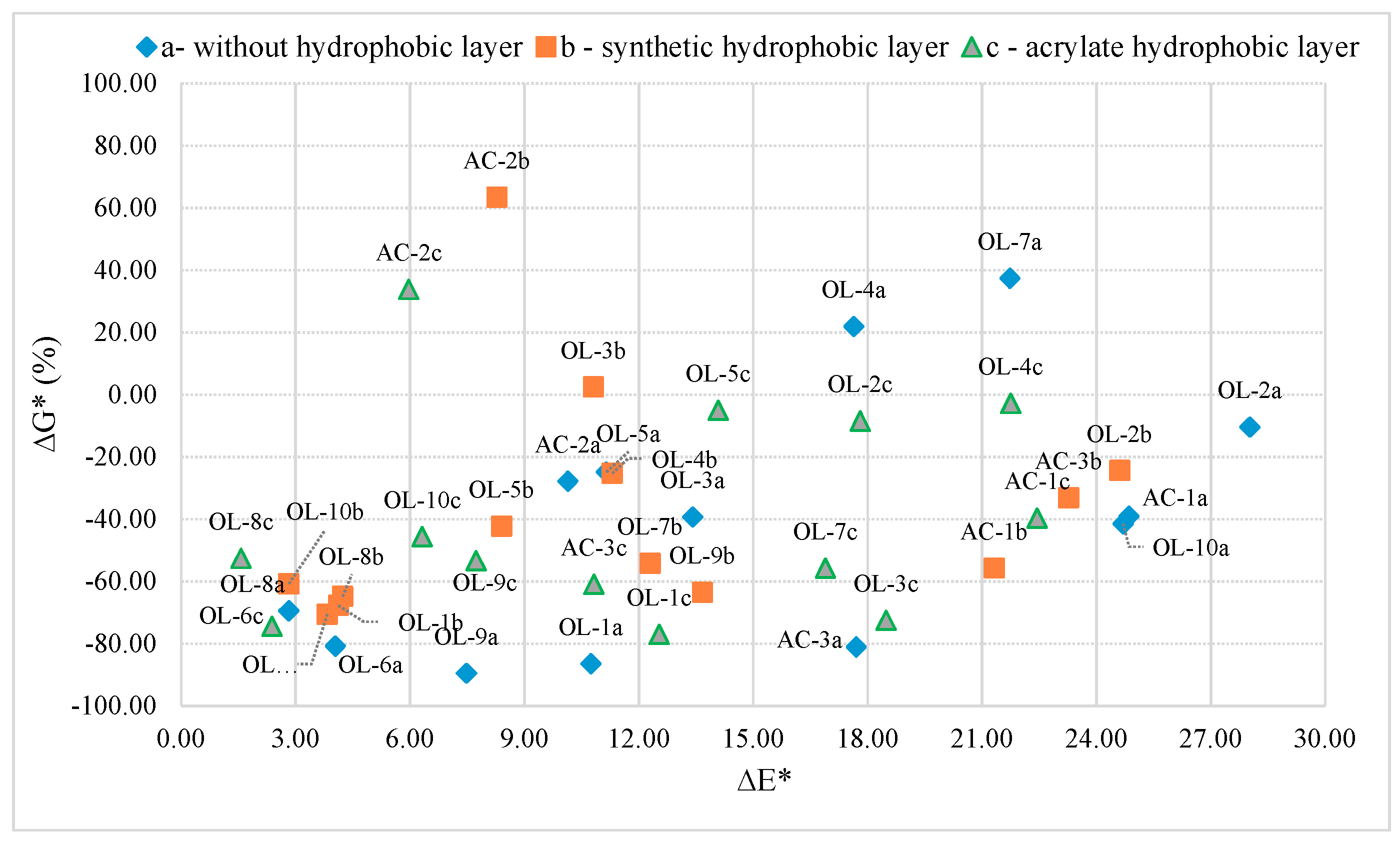
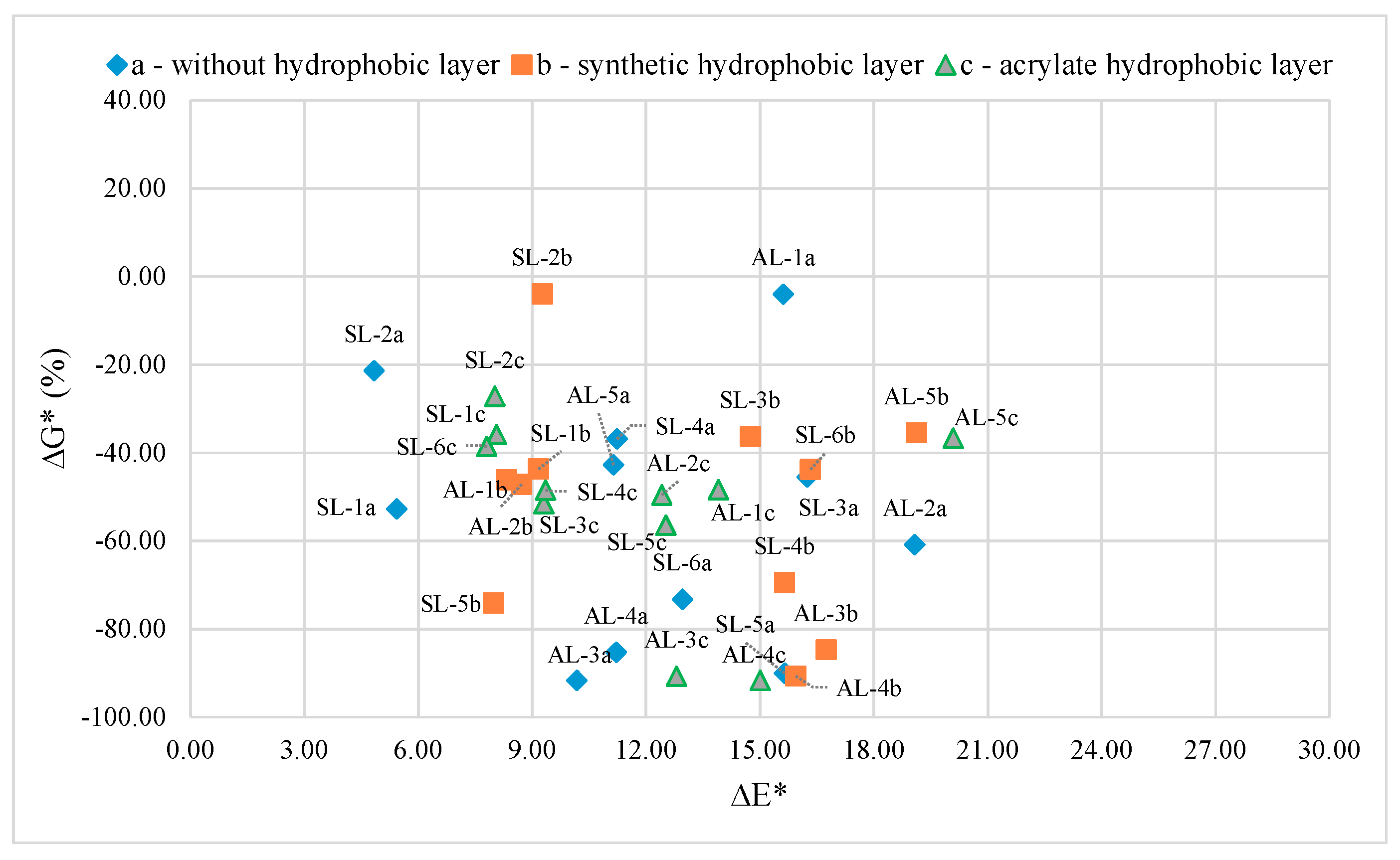
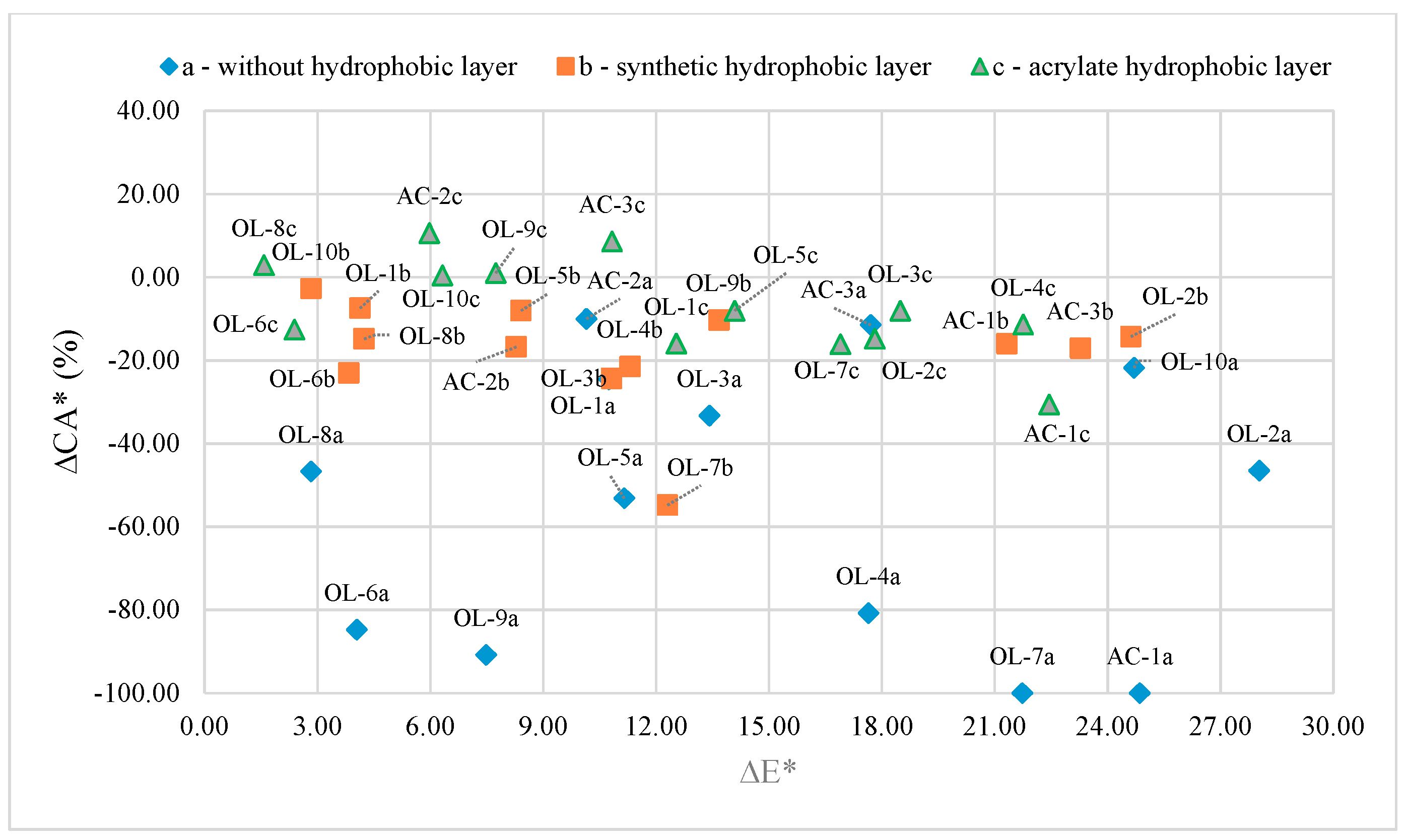
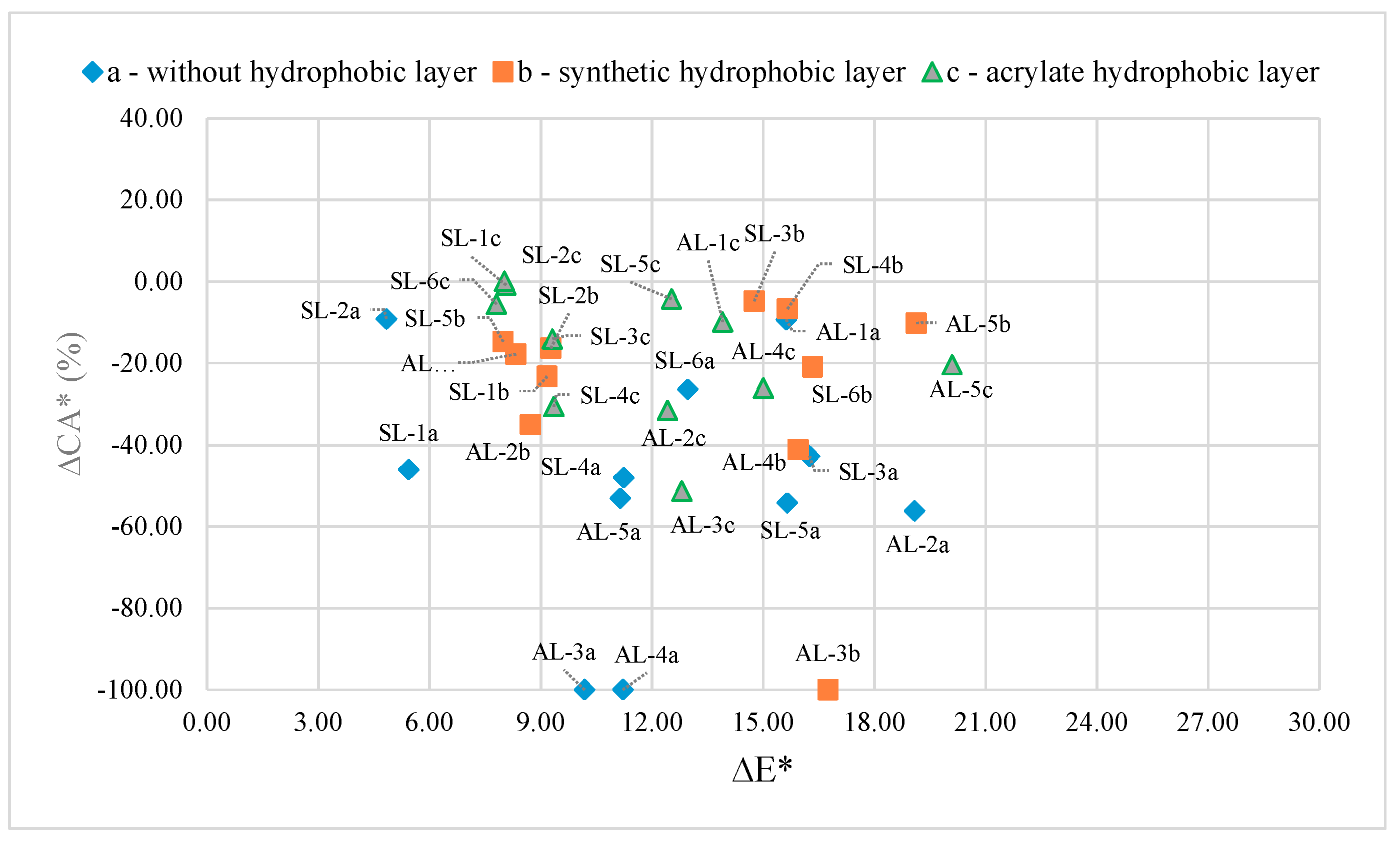
In statistical analysis the effect of the polymer base type on color and gloss parameters was evaluated as statistically significant (p = 0.00). In contrast, the effect of hydrophobic topcoat type on color changes was evaluated as statistically insignificant (p = 0.07) and significant for gloss changes (p = 0.03). The following graphs show the values of gloss and color changes of individual coating systems with an oil and acrylate polymer base (Figure 2) and an alkyd and synthetic base (Figure 3). Based on the results, the lowest color and gloss changes were generally recorded for oil-based coatings (OL) and other synthetic stains (SL) (Figure 1). The color change ∆E* < 3, which cannot be recognized by the human eye [40], was only observed after an AW test in the case of oil-based coating systems—OL-8c, Ol-6c, OL-8a and OL-10b. The decrease of gloss during AW exposure occurred almost in all tested variants of coating systems, except for OL-3b, OL-4a, OL-7a, AC-2b and AC-2c.
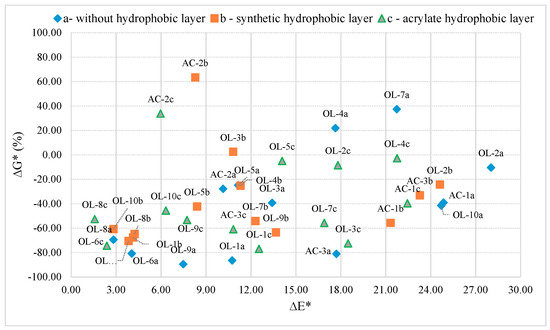
Figure 2.
Gloss and color changes of oil-based (OL) and acrylate-based (AC) systems after 6 weeks of AW.
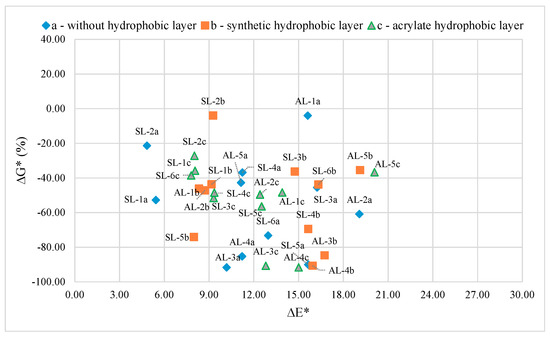
Figure 3.
Gloss and color changes of alkyd-based (AL) and other synthetic (SL) coating systems after 6 weeks of AW.
3.2. Surface Wettability Evaluation
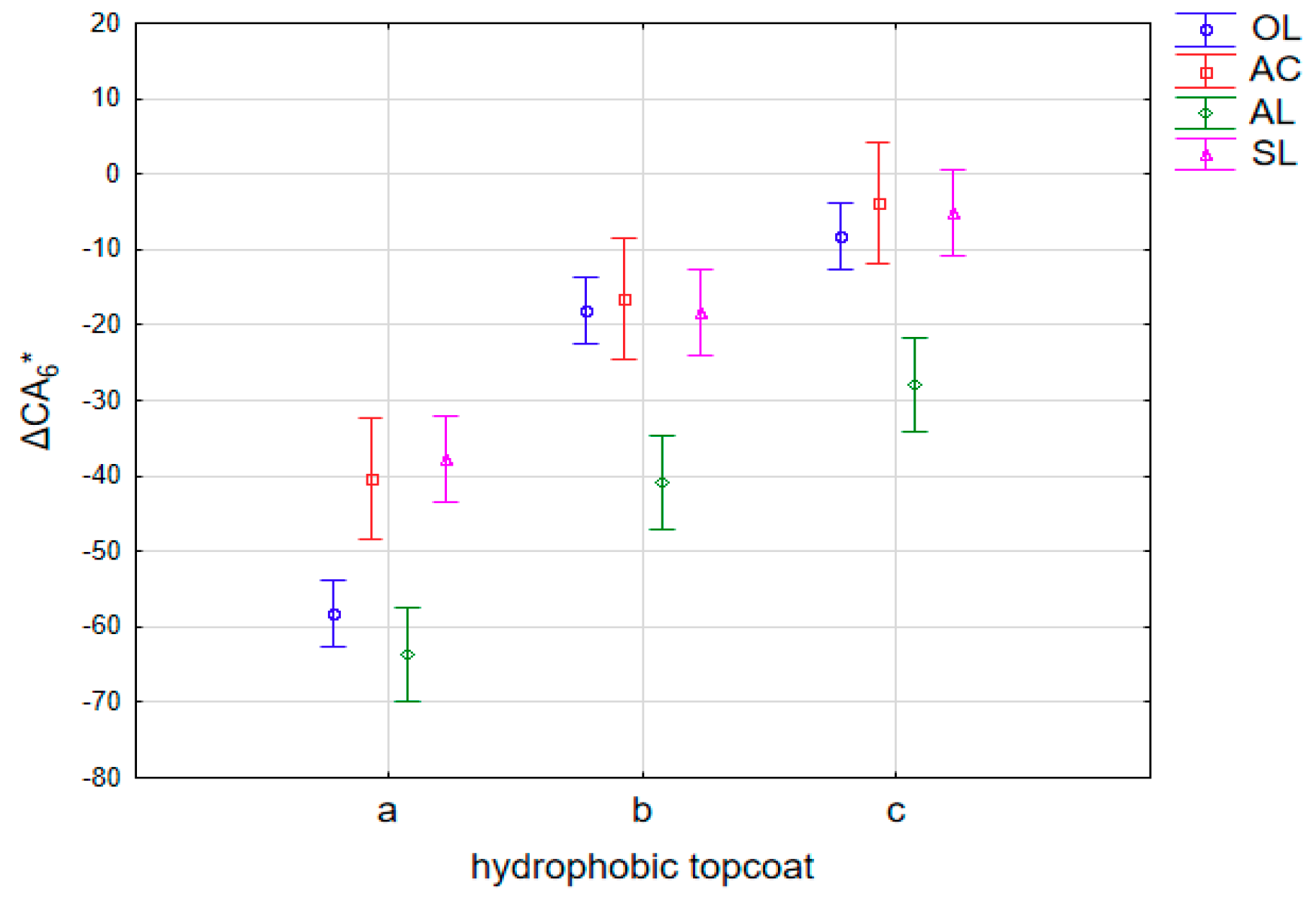
The contact angle measurements provide an overview of the functionality of hydrophobic layers during weathering (Figure 4, Figure 5 and Figure 6). The change of contact angle of tested coating systems during AW exposure was statistically evaluated with respect to the type of polymer base (oil, acrylate, alkyd, other synthetic) and the use of the hydrophobic layer (without hydrophobic treatment, acrylate waterborne and synthetic stain treatment)—see Figure 4. Based on the results, there is a significant loss of contact angle due to AW, mainly when hydrophobic layer was not applied (Figure 4). In the case of coating systems without a hydrophobic layer (a), the AC and SL coatings systems have the lowest contact angle values. The efficiency of hydrophobic topcoats on the surface wettability was observed for both types, but a more pronounced positive effect was observed for the hydrophobic acrylate waterborne topcoat (c) in comparison with a synthetic one (b).
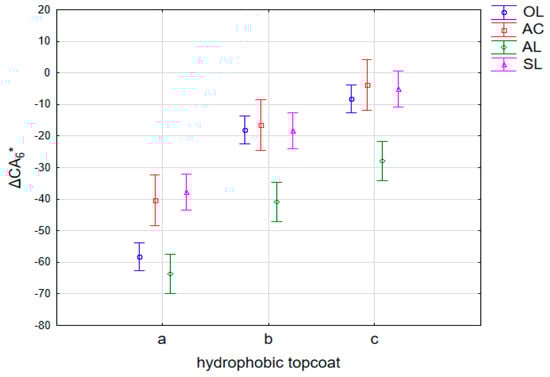
Figure 4.
Efficiency of hydrophobic layer on the contact angle change after 6 weeks of AW.
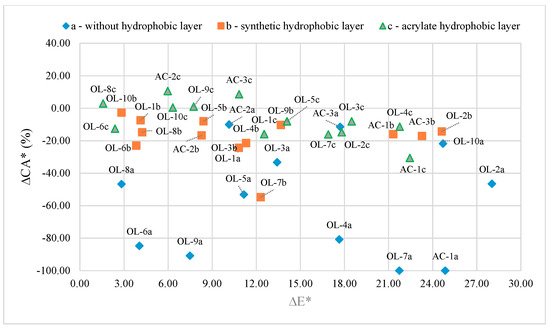
Figure 5.
Contact angle change of oil-based (OL) and acrylate-based (AC) coating systems after 6 weeks of AW.
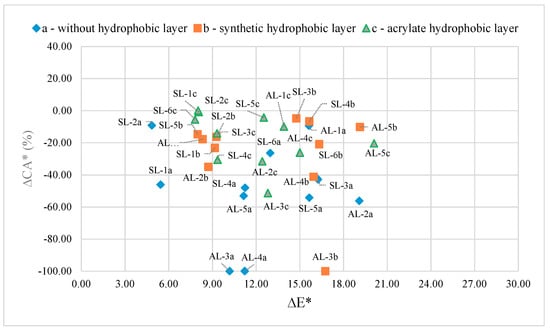
Figure 6.
Contact angle change of alkyd-based (AL) and other synthetic (SL) coating systems after 6 weeks of AW.
In statistical analysis the effects of polymer base type and hydrophobic topcoat on contact angle values were evaluated as being statistically significant (p = 0.00). The following graphs show the values of contact angle changes of oil-based (OL) and acrylate coating systems (AC) (Figure 5) and alkyd-based (AL) and other synthetic (SL) coating systems (Figure 6). At the same time, the factor of total color change is also observed.
The only coating systems that were not noted for a decrease of the contact angle but instead for a slight increase after 6 weeks of AW were coating systems AC-2c, AD-3c, OL-8c, OL-9c, OL-10c, SL-1c a SL-2c. That outcome confirmed the results stated in Figure 4—that an acrylate waterborne hydrophobic topcoat had the most positive effect on the wettability of tested surfaces. The rest of the tested coating systems were noted for having a slight or more pronounced decrease of contact angle values after 6 weeks of AW. Full surface wettability (100% decrease of initial value) was determined for some coating systems without a hydrophobic topcoat and alkyd-based (AL) coating system with synthetic hydrophobic layer AL-3b.
3.3. Visual and Microscopic Evaluation
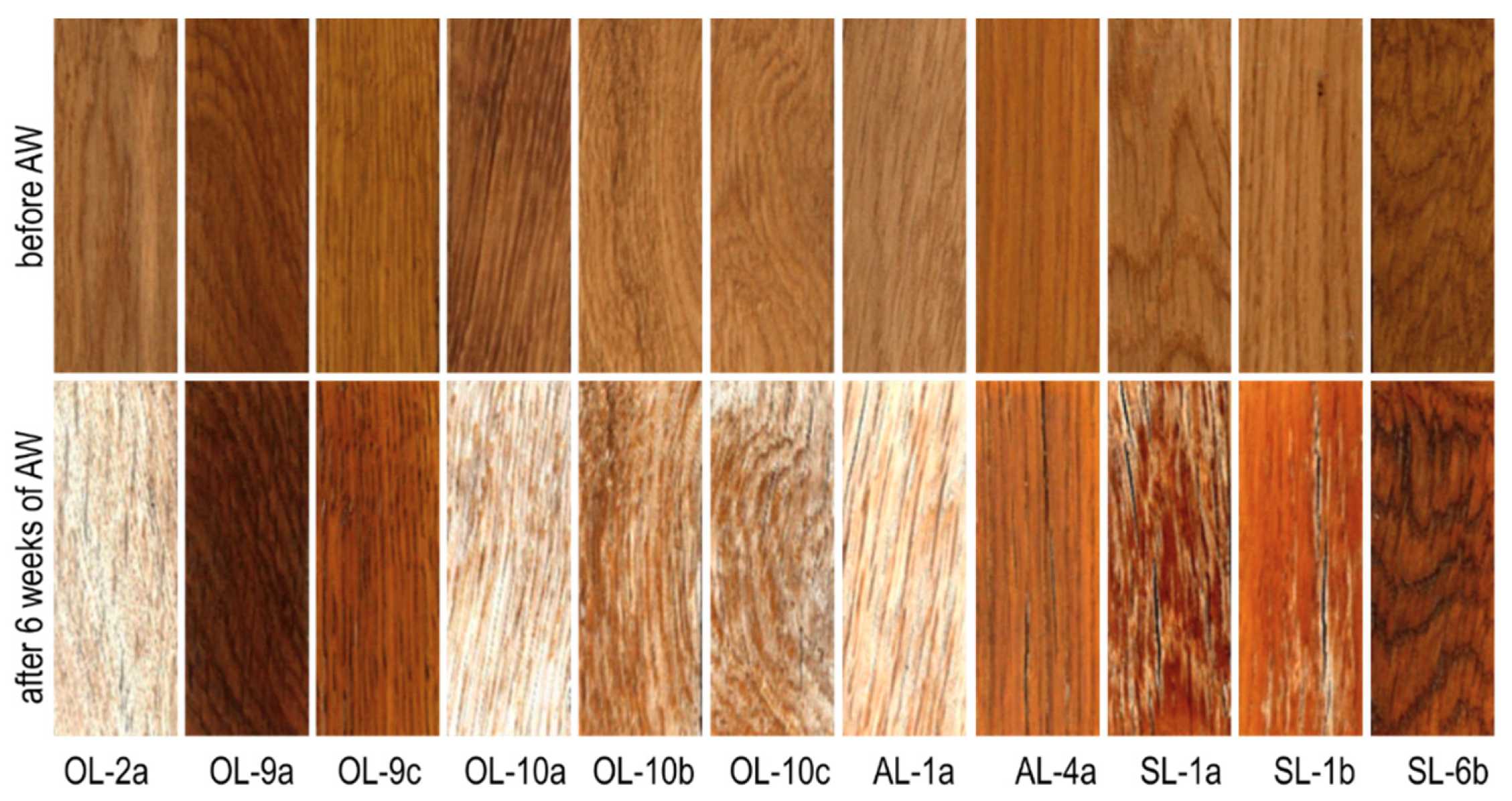
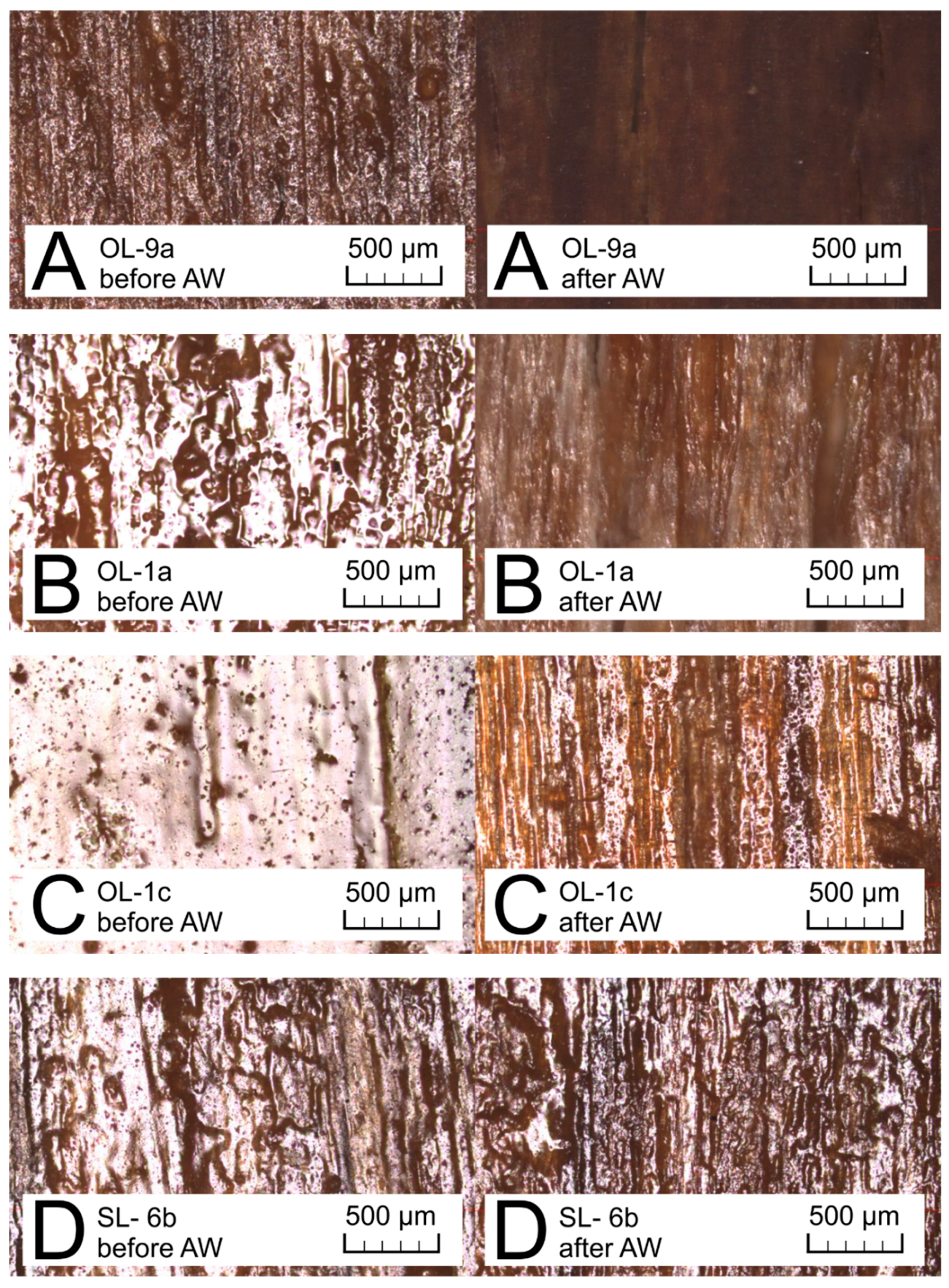
Based on the results presented in Table 5 and Figure 7, it can be seen that the results of color and gloss changes (Figure 2 and Figure 3) or changes in the contact angle (Figure 5 and Figure 6) did not always correspond to visually observed degradation of coating systems. For example, coating systems OL-10b and OL-10c were characterized by a relatively low color change (Figure 2) and minimal decrease of contact angle (Figure 5), but their overall visual degradation was quite pronounced (Table 5 and Figure 7). If the top layer of coating is degraded, but the penetrated layer remains, the significant visual changes occur, but the contact angle can be unaffected [8,41]. At the same time, it can be stated that coatings with better results of visual evaluation according to Table 5 (e.g. OL-8, OL-9, SL-3, SL-6b) were characterized by a lower decrease of contact angle values ΔCA* and total color change ΔE* (except AL-3). For comparison purposes, some selected coating systems were analyzed by confocal laser scanning microscopy before and after an AW test (Figure 8).
Table 5.
Degradation of coating systems (based on methodology done by De Windt [42]).
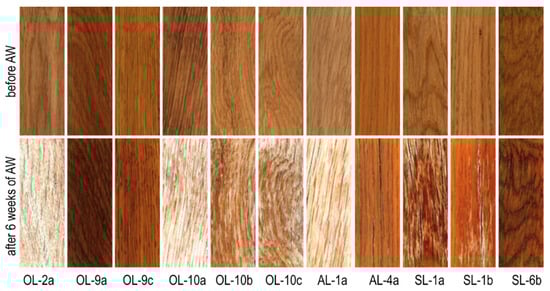
Figure 7.
Visual changes of selected tested coating systems on oak wood. (OL-2a) the same degradation was observed using hydrophobic treatments b and c; (OL-9) positive effect of hydrophobic treatment (c) on color stability of AW samples; (OL-10) partly positive effect of hydrophobic topcoat application b and c; (AL-1) very similar degradation was observed using hydrophobic treatments b and c; (AL-4) positive effect of pigment content increasing durability of alkyd coating (in comparison with transparent (AL-1a); (SL-1) positive effect of application of topcoat b; (SL-6b) positive effect of application of topcoat b.
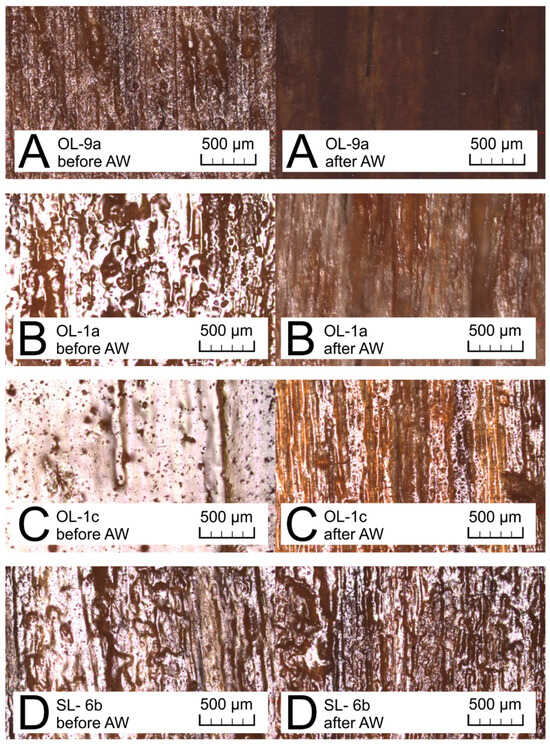
Figure 8.
Microscopic changes (using Confocal Laser Scanning Microscopy) of coating surfaces. OL-9a (A), OL-1a (B), OL-1c (C) and SL-6b (D) before (left) and after 6 weeks of AW (right). It is possible to see a loss of gloss and color changes of OL-9a, but the coating layer is not degraded (A); Positive effect of hydrophobic top coat (c) application on OL-1 is visible (B and C); Good durability of SL-6b after AW—only darkening is visible, the surface is relatively unchanged.
3.4. Final Discussion of Results
The results of the experiment in this work confirmed that application of the top hydrophobic layer can extend the overall durability of coating systems on oak wood as well as on other wood species [25,27,29]. However, it is necessary to apply a suitable hydrophobic layer to a specific coating system because the resulting effect differs (Figure 5 and Figure 6). The effect of a specific coating system (polymer base and additive content) on its overall service life was confirmed [42,43,44]. The choice of a suitable oak wood exterior coating system is crucial (Table 4). The application of the top hydrophobic layer did not significantly improve the properties of less suitable coating systems during exposure (Figure 2, Figure 3, Figure 4, Figure 5, Figure 6, Figure 7 and Figure 8, Table 5). In the case of oil thin layer systems, the positive effect of pigments on the overall service life and color stability (OL-8 and OL-9 - see Figure 2 and Figure 5) was confirmed, which is consistent with other studies [28,41,42]. However, in the case of penetrating pigmented oil without the top hydrophobic layer OL-10, rapid leaching of coating and loss of functionality occurred. A top hydrophobic layer on alkyd-based coating systems basically had no significant positive effect on the color stability and only a low effect on the increase of the hydrophobicity of tested variants (AL-1 and AL-5). The performance of other tested synthetic coatings (SL) depended on a specific combination of layers. Only coating system SL-5 with acrylate top hydrophobic layer (c) was characterized by improved functionality, in particular by preserving hydrophobicity after AW (Figure 6). Overall, the topcoat with hydrophobic additives in the acrylate water base (c) appeared to be more appropriate for application on oak wood in comparison with synthetic topcoat (b). From all the tested coating systems, OL-8 and OL-9 oil-based coatings with the use of top hydrophobic layer were shown to be suitable for protection of oak wood in terms of color stability and hydrophobic effect as well as overall durability. However, it is necessary to expect a more pronounced reduction of the gloss parameter [8] and, in the case of OL-9, also a color change (Figure 2). The performance of SL-3, SL-5 with hydrophobic topcoat (c) and SL-6 with hydrophobic topcoat (b) can be positively evaluated from the other tested coatings. In contrast, transparent coating systems have generally not been effective, as their higher vulnerability to degradation in comparison with pigmented ones has been fully manifested [5]. In some cases, their overall service life can be increased by application of a top hydrophobic layer (coatings OL-1, OL-5 and 6, SL-1), which is in line with previous studies on spruce and black locust [27,29]. For the objective determination of coating systems quality after weathering, it is helpful to use the evaluation based on the combination of properties: the overall color and gloss change (Figure 2 and Figure 3) and surface wettability (Figure 5 and Figure 6) followed by a visual evaluation (Table 5, Figure 7).
4. Conclusions
Coated oak wood is relatively quickly subjected to degradation in exterior applications, causing changes in color and gloss and reduced resistance to rainwater. The results of the experiments in this work confirmed that a particular selection of the coating system can both positively and negatively affect the overall service life of oak wood in its exterior. The semi-transparent oil-based coatings were generally more stable in color and retained hydrophobicity in comparison with other variants. However, they were more prone to a decrease of gloss. Subsequent application of the top hydrophobic layer can in the most cases increase the overall durability of the coating system. The topcoat with hydrophobic additives in the acrylate waterborne base appeared to be more appropriate for application on oak wood in comparison with synthetic hydrophobic topcoat. Based on the variants tested, it can be generally recommended to apply the top hydrophobic layer on oil-based and partially acrylate coatings. For alkyd-based systems, the positive effect of an additional hydrophobic layer was minimal. In the case of other tested synthetic stains, the hydrophobic layer only rarely improved the evaluated properties. Although the experiment provided some positive results, oak wood exterior coating systems require further research with the aim of increasing their overall durability, especially for transparent and less pigmented semi-transparent variants, while preserving the natural color and texture of oak wood.
Author Contributions
Conceptualization, M.P.; methodology, M.P.; validation, E.O.; investigation, O.D., E.O. and K.Š.; resources, O.D.; data curation, K.Š. and A.Z.; writing—original draft preparation, E.O. and M.P.; writing—review and editing, M.P. and E.O.; visualization, E.O.
Funding
This work was supported by the grant “Improving of coatings durability on selected kinds of wood in the exterior applications,” No. TH02020873, financed by TA ČR.
Conflicts of Interest
The authors declare no conflict of interest.
References
- Reinprecht, L. Wood Deterioration, Protection and Maintenance, 1st ed.; Wiley-Blackwell: Hoboken, NJ, USA, 2016; p. 376. [Google Scholar]
- European Committee for Standardization (EN) 350. Durability of Wood and Wood-Based Products—Testing and Classification of the Durability to Biological Agents of Wood and Wood-Based Materials; European Committee for Standardization: Brussels, Belgium, 2016. [Google Scholar]
- Owen, J.A.; Owen, N.L.; Feist, W.C. Scanning electron microscope and infrared studies of weathering in Southern pine. J. Mol. Struct. 1993, 300, 105–114. [Google Scholar] [CrossRef]
- Cogulet, A.; Blanchet, P.; Landry, V. The multifactorial aspect of wood weathering: A review based on a holistic approach of wood degradation protected by clear coating. BioResources 2018, 13, 2116–2138. [Google Scholar] [CrossRef]
- Evans, P.D.; Haase, J.G.; Shakri, A.; Seman, B.M.; Kiguchi, M. The search for durable exterior clear coatings for wood. Coatings 2015, 5, 830–864. [Google Scholar] [CrossRef]
- Samyn, P.; Stanssens, D.; Paredes, A.; Becker, G. Performance of organic nanoparticle coatings for hydrophobization of hardwood surfaces. J. Coat. Technol. Res. 2014, 11, 461–471. [Google Scholar] [CrossRef]
- Ghosch, S.C.; Militz, H.; Mai, C. Natural weathering of scots pine (Pinus sylvestris L.) boards modified with functionalised commercial silicone emulsions. BioResources 2009, 4, 659–673. [Google Scholar]
- Pánek, M.; Oberhofnerová, E.; Zeidler, A.; Šedivka, P. Efficacy of Hydrophobic Coatings in Protecting Oak Wood Surfaces during Accelerated Weathering. Coatings 2017, 7, 172. [Google Scholar] [CrossRef]
- Lozhechnikova, A.; Vahtikari, K.; Hughes, M.; Österberg, M. Toward energy efficiency through an optimized use of wood: The development of natural hydrophobic coatings that retain moisture-buffering ability. Energy Build. 2015, 105, 37–42. [Google Scholar] [CrossRef]
- Shupe, T.; Lebow, S.; Ring, D. Causes and Control of Wood Decay, Degradation & Stain; Louisiana State University Agricultural Center: Baton Rouge, LA, USA, 2008. [Google Scholar]
- Wang, C.; Zhang, M.; Xu, Y.; Wang, S.; Liu, F.; Ma, M.; Gao, Z. One-step synthesis of unique silica particles for the fabrication of bionic and stably superhydrophobic coatings on wood surface. Adv. Powder Technol. 2014, 25, 530–535. [Google Scholar] [CrossRef]
- Liu, C.; Wang, S.; Shi, J.; Wang, C. Fabrication of superhydrophobic wood surfaces via a solution-immersion process. Appl. Surf. Sci. 2011, 258, 761–765. [Google Scholar] [CrossRef]
- Sébe, G.; Brook, M.A. Hydrophobization of wood surfaces: Covalent grafting of silicone polymers. Wood Sci. Technol. 2001, 35, 269–282. [Google Scholar] [CrossRef]
- Fredriksson, M.; Wadsö, L.; Ulvcrona, T. Moisture sorption and swelling of Norway spruce [Picea abies (L.) Karst.] impregnated with linseed oil. Wood Mater. Scie. Eng. 2010, 5, 135–142. [Google Scholar] [CrossRef]
- Lesar, B.; Straže, A.; Humar, M. Sorption properties of wood impregnated with aqueous solution of boric acid and montan wax emulsion. J. Appl. Polym. Sci. 2011, 120, 1337–1345. [Google Scholar] [CrossRef]
- Humar, M.; Lesar, B. Efficacy of linseed-and tung-oil-treated wood against wood-decay fungi and water uptake. Int. Biodeter. Biodegr. 2013, 85, 223–227. [Google Scholar] [CrossRef]
- Capobianco, G.; Calienno, L.; Pelosi, C.; Scacchi, M.; Bonifazi, G.; Agresti, G.; Monaco, A.L. Protective behaviour monitoring on wood photo-degradation by spectroscopic techniques coupled with chemometrics. Spectrochim. Acta A Mol. Biomol. Spectrosc. 2017, 172, 34–42. [Google Scholar] [CrossRef] [PubMed]
- Gérardin, P.; Petric, M.; Petrissans, M.; Lambert, J.; Ehrhardt, J. Evolution of Wood Surface Free Energy After Heat Treatment. Polym. Degrad. Stab. 2007, 92, 653–657. [Google Scholar] [CrossRef]
- Avramidis, G.; Hauswald, E.; Lyapin, A.; Militz, H.; Viol, W.; Wolkenhauer, A. Plasma Treatment of Wood and Wood-Based Materials to Generate Hydrophilic or Hydrophobic Surface Characteristics. Wood Mater. Sci. Eng. 2009, 4, 52–60. [Google Scholar] [CrossRef]
- Vlad-Cristea, M.; Riedl, B.; Blanchet, P.; Jimenez-Pique, E. Nano characterization techniques for investigating the durability of wood coatings. Eur. Polym. J. 2012, 48, 441–453. [Google Scholar] [CrossRef]
- Sun, Q.; Yu, H.; Liu, Y.; Li, J.; Lu, Y.; Hunt, J.F. Improvement of water resistance and dimensional stability of wood through titanium dioxide coating. Holzforschung 2010, 64, 757–761. [Google Scholar] [CrossRef]
- Wang, X.; Chai, Y.; Liu, J. Formation of Highly Hydrophobic Wood Surfaces Using Silica Nanoparticles Modified with Long-Chain Alkylsilane. Holzforschung 2013, 394, 97–112. [Google Scholar] [CrossRef]
- Bondarenko, O.; Juganson, K.; Ivask, A.; Kasemets, K.; Mortimer, M.; Kahru, A. Toxicity of Ag, CuO and ZnO nanoparticles to selected environmentally relevant test organisms and mammalian cells in vitro: A critical review. Arch. Toxicol. 2013, 87, 1181–1200. [Google Scholar] [CrossRef]
- Schaller, C.; Rogez, D. New approaches in wood coating stabilization. J. Coat. Technol. Res. 2007, 4, 401–409. [Google Scholar] [CrossRef]
- Turkulin, H.; Arnold, M.; Richter, K.; Strub, E.; Rajkovic, J.; Mihulja, G. Hydrophobic treatment for improvement of wood surface durability. In Proceedings of the 5th International Woodcoatings Congress ’Enhancing Service Life, Prague, Czech Republic, 17–18 October 2006; p. 20. [Google Scholar]
- Grüll, G.; Tscherne, F.; Spitaler, I.; Forsthuber, B. Comparison of wood coating durability in natural weathering and artificial weathering using fluorescent UV-lamps and water. Eur. J. Wood Prod. 2014, 72, 367–376. [Google Scholar] [CrossRef]
- Pánek, M.; Reinprecht, L. Color stability and surface defects of naturally aged wood treated with transparent paints for exterior constructions. Wood Res. 2014, 59, 421–430. [Google Scholar]
- Reinprecht, L.; Pánek, M. Effects of wood roughness, light pigments, and water repellent on the color stability of painted spruce subjected to natural and accelerated weathering. BioResources 2015, 10, 7203–7219. [Google Scholar] [CrossRef]
- Pánek, M.; Reinprecht, L. Effect of the Number of UV-Protective Coats on the Color Stability and Surface Defects of Painted Black Locust and Norway Spruce Woods Subjected to Natural Weathering. BioResources 2016, 11, 4663–4676. [Google Scholar] [CrossRef]
- Oberhofnerová, E.; Pánek, M.; García-Cimarras, A. The effect of natural weathering on untreated wood surface. Maderas. Cienc. Tecnol. 2017, 19, 173–184. [Google Scholar] [CrossRef]
- Aloui, F.; Ahajji, A.; Irmouli, Y.; George, B.; Charrier, B.; Merlin, A. Inorganic UV absorbers for the photostabilisation of wood-clear coating systems: Comparison with organic UV absorbers. Appl. Surf. Sci. 2007, 253, 3737–3745. [Google Scholar] [CrossRef]
- Wagenführ, R. Dřevo—Obrazový Lexikon; GRADA Publishing: Praha, Czech Republic, 2002; p. 348. ISBN 80-247-0346-7. [Google Scholar]
- EN 927-6:2006 Paints and Varnishes. Part 6: Exposure of Wood Coatings to Artificial Weathering Using Fluorescent UV Lamps and Water. In Coating Materials and Coating Systems for Exterior Wood; European Committee for Standardization: Brussels, Belgium, 2006. [Google Scholar]
- Van den Bulcke, J.; van Acker, J.; Stevens, M. Experimental and theorethical behavior of exterior wood coatings subjected to artificial weathering. J. Coat. Technol. Res. 2008, 5, 221–231. [Google Scholar] [CrossRef]
- Stearns, E.I. Colorimetry, 2nd ed.; Commission Internationale de l’Eclairage: Vienna, Austria, 1986; p. 74. [Google Scholar]
- EN ISO 2813:2014. Paints and Varnishes—Determination of Gloss Value at 20 Degrees, 60 Degrees and 85 Degrees; European Committee for Standardization: Brussels, Belgium, 2014. [Google Scholar]
- Wålinder, M.; Johansson, I. Measurement of Wood Wettability by the Wilhelmy Method. Part 1. Contamination of Probe Liquids by Extractives. Holzforschung 2001, 55, 21–32. [Google Scholar] [CrossRef]
- Bastani, A.; Adamopoulos, S.; Militz, H. Water uptake and wetting behaviour of furfurylated, N-methylol melamine modified and heat-treated wood. Eur. J. Wood Wood Prod. 2015, 73, 627–634. [Google Scholar] [CrossRef]
- Gonzalez de Cademartori, P.H.; Missio, A.L.; Dufau Mattos, B.; Gatto, D.A. Natural weathering performance of three fast-growing Eucalypt woods. Maderas Cienc. Tecnol. 2015, 17, 799–808. [Google Scholar] [CrossRef]
- Sehlstedt-Persson, M. Color responses to heat-treatment of extractives and sap from pine and spruce. In Proceedings of the 8th IUFRO International Wood Drying Conference: Improvement and Innovation in Wood Drying: A Major Issue for a Renewable Material, Brasov, Romania, 24–29 August 2003; Transilvania University of Brasov: Brasov, Romania, 2003; pp. 459–464. [Google Scholar]
- Šimůnková, K.; Oberhofnerová, E.; Reinprecht, L.; Pánek, M.; Podlena, M.; Štěrbová, I. Durability of selected transparent coatings applied on Siberian and European larch during artificial weathering test. Coatings 2019, 9, 39. [Google Scholar] [CrossRef]
- De Windt, I.; Van den Bulcke, J.; Wuijtens, I.; Coppens, H.; Van Acker, J. Outdoor weathering performance parameters of exterior wood coating systems on tropical hardwood substrates. Eur. J. Wood Prod. 2014, 72, 261–272. [Google Scholar] [CrossRef]
- De Meier, M. Review on the durability of exterior wood coatings with reduced VOC-content. Prog. Organ. Coat. 2001, 43, 217–225. [Google Scholar] [CrossRef]
- Syvrikaya, H.; Hafizoglu, H.; Yasav, A.; Aydemir, D. Natural weathering of oak (Quercus petrae) and chestnut (Castanea sativa) coated with various finishes. Color Res. Appl. 2011, 36, 72–78. [Google Scholar] [CrossRef]
© 2019 by the authors. Licensee MDPI, Basel, Switzerland. This article is an open access article distributed under the terms and conditions of the Creative Commons Attribution (CC BY) license (http://creativecommons.org/licenses/by/4.0/).