Skip to Content
CoatingsCoatings
  • Review
  • Open Access

24 March 2026

Functionally Graded Nickel-Based Coatings: A Comprehensive Review

1
Institute of Fundamental Technological Research, Polish Academy of Sciences, Pawińskiego 5B, 02-106 Warsaw, Poland
2
Institute for Innovation in Sustainable Engineering, College of Science and Engineering, University of Derby, Derby DE22 1GB, UK

Abstract

Functionally graded nickel-based coatings represent an advanced surface engineering approach designed to enhance the performance of components operating in high-temperature and harsh environments. Unlike conventional coatings with uniform composition, functionally graded coatings exhibit gradual variations in composition and microstructure across their thickness, enabling improved adhesion, reduced residual stresses, and enhanced multifunctional performance. This review provides a comprehensive overview of recent developments in nickel-based functionally graded coatings, focusing on substrate materials, coating compositions, and manufacturing technologies. Particular attention is given to coatings designed for high-temperature applications and harsh service conditions, including carbide-reinforced composite coatings and MCrAlY-type systems used for oxidation and corrosion protection. Various fabrication methods, including laser cladding, additive manufacturing, electrodeposition, and thermal spraying, are critically discussed in terms of their advantages and limitations. The current state of the art is analyzed with emphasis on coating performance in high-temperature and aggressive environments. Finally, key challenges and future research directions are identified, highlighting the need for improved long-term performance evaluation, advanced manufacturing approaches, and the development of multifunctional gradient coating architectures.

1. Introduction

Gradient coatings, also known as functionally graded coatings, are engineered surface layers in which composition, microstructure, or properties change gradually through the thickness of the coating rather than abruptly as in conventional single-layer or multilayer coatings [1]. This gradual transition allows gradient coatings to combine multiple functionalities—such as high surface hardness, corrosion or oxidation resistance, and strong adhesion to the substrate—within a single, integrated system. They are applied in a wide range of fields including aerospace, energy systems, biomedical implants, tooling, and automotive components, where surfaces must withstand complex combinations of mechanical loads, thermal cycling, wear, and aggressive environments [2]. Gradient coatings are particularly attractive because they reduce sharp property mismatches at the coating–substrate interface, which are a major cause of delamination, cracking, and premature failure in traditional coatings [3]. By tailoring stress distribution, thermal expansion behavior, and chemical compatibility across the coating thickness, gradient coatings can significantly improve in durability, reliability, and service life [4]. As performance demands increase and components are pushed into harsher operating conditions, gradient coatings are increasingly viewed as a promising alternative—and in some cases a replacement—for conventional homogeneous or sharply layered coatings [5,6]. Despite the well-documented improvements in mechanical performance, the long-term durability of functionally graded nickel-based coatings remains insufficiently understood. Most available studies emphasize short-term laboratory evaluations, while relatively few address degradation under realistic industrial service conditions involving thermal cycling, oxidation, corrosion, and mechanical loading [7,8,9]. Thermal fatigue is one of the primary degradation mechanisms, arising from cyclic stresses caused by thermal expansion mismatch between the coating and substrate [8]. Although graded architectures are designed to alleviate such stresses, long-term exposure can still lead to crack initiation and propagation due to microstructural evolution and residual stress redistribution. At elevated temperatures, oxidation-induced degradation further compromises coating integrity [9]. While protective oxide scales (e.g., Al2O3) can form, prolonged exposure may result in scale thickening, spallation, or oxygen ingress, particularly in coatings with inherent defects such as porosity or interfacial discontinuities. In aggressive environments, corrosion and hot corrosion introduce additional complexity, often leading to localized degradation through pitting, intergranular attack, or coupled oxidation–corrosion processes [9]. Over extended service periods, microstructural instability—such as carbide dissolution, particle coarsening, and phase transformations—can further degrade hardness and wear resistance, highlighting the limitations of relying solely on initial performance metrics. While functionally graded coatings offer clear advantages in terms of stress mitigation and adhesion, their ability to meet such requirements remains uncertain due to the limited availability of long-term performance data. Therefore, a more comprehensive understanding of degradation mechanisms and their interactions over extended operational cycles is essential for bridging the gap between laboratory-scale performance and real-world reliability.
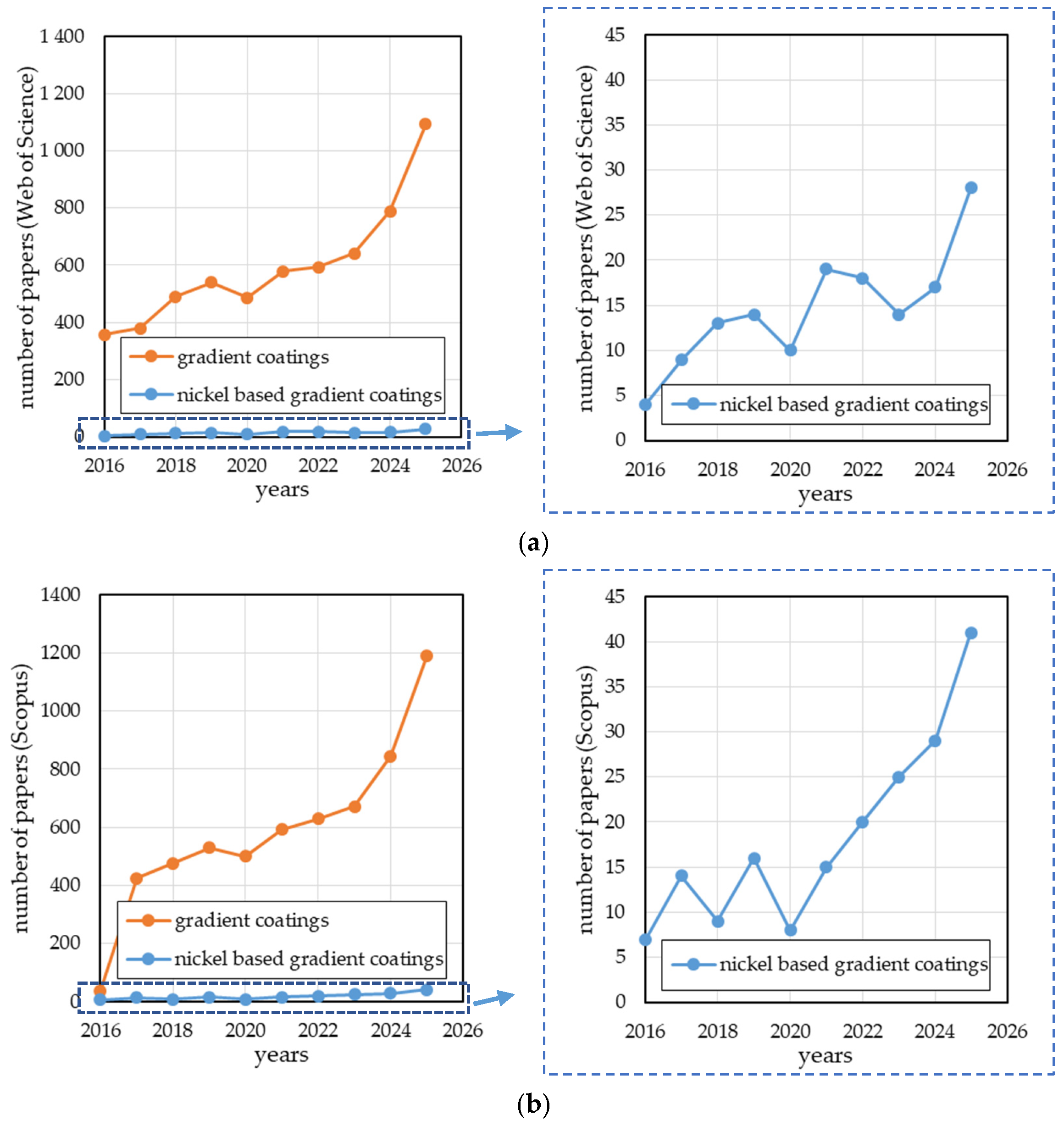
Functionally graded nickel-based coatings are an emerging class of advanced surface engineering materials designed to overcome the limitations of conventional monolithic coatings. By gradually varying composition and microstructure across the coating thickness, these systems effectively reduce interfacial stresses, improve adhesion, and enable simultaneous optimization of surface functionality and substrate compatibility [6]. This unique architecture allows graded nickel-based coatings to deliver superior performance in wear, corrosion, oxidation, and high-temperature environments compared with traditional uniform or multilayer coatings [7]. In parallel with the growing technological relevance of gradient coatings, a bibliometric survey of the scientific literature reveals a sustained increase in research activity over the past decade (Figure 1). An analysis of publications indexed in Scopus and Web of Science shows a steady year-by-year rise in papers addressing gradient or functionally graded coatings, reflecting their broad applicability and strong academic interest. However, when the search is narrowed to nickel-based gradient coatings, the number of publications drops markedly and represents only a small fraction of the overall gradient coating literature. This discrepancy indicates that, despite the well-established industrial importance of nickel-based alloys and coatings, their implementation in graded architectures remains comparatively underexplored. Several factors contribute to this underestimation: nickel-based coatings are often associated with higher processing complexity, increased fabrication costs, and challenges in precisely controlling composition and microstructure across the coating thickness [8,9]. In addition, their mechanical behaviors—particularly residual stress evolution, interfacial integrity, and long-term interaction with diverse substrate materials—require more sophisticated characterization than conventional monolithic coatings. Given the increasing demand for coatings capable of operating under extreme thermal, mechanical, and chemical conditions, this imbalance highlights a clear knowledge gap. A comprehensive review dedicated specifically to nickel-based gradient coatings is therefore timely and necessary to consolidate dispersed findings, clarify structure–property–process relationships, and provide guidance for future research and industrial translation. This review summarizes recent progress in functionally graded nickel-based coatings, focusing on coating architectures, substrate considerations, and key manufacturing technologies, including thermal spraying, laser-based processing, electrodeposition, and additive manufacturing-assisted approaches. The advantages and limitations of these techniques are discussed alongside the challenges associated with industrial-scale implementation, such as process complexity, reproducibility, and cost. Finally, future research directions are outlined to support the translation of functionally graded nickel-based coatings from laboratory studies to practical engineering applications.
Figure 1. Comparison of papers published in two data bases: Web of Science (a) and Scopus (b).

2. Methodology

This review presents a systematic examination of recent research on nickel-based gradient coatings, with particular focus on deposition techniques and mechanical performance. A comprehensive literature search was carried out using the Web of Science, Scopus, and ScienceDirect databases. Peer-reviewed journal articles and conference proceedings published within the last decade (2016–2026) were considered. The search strategy primarily employed the keywords “nickel-based coatings” and “gradient coatings”, along with their relevant variations. An initial set of 230 publications were retrieved from the electronic databases. These records were screened for relevance through analysis of titles, abstracts, and, where necessary, summaries, following predefined inclusion and exclusion criteria. The review mainly focuses on the mechanical performance of nickel-based gradient coatings and their potential application in industry; therefore, microstructural-based papers were excluded. As a result of this screening process, 81 studies were identified as directly relevant and were selected for detailed analysis and discussion in this review.

3. Nickel-Based Gradient Coatings

3.1. Introduction to Nickel-Based Gradient Coatings

Nickel-based coatings have been widely used in surface engineering due to their excellent combination of mechanical strength, corrosion resistance, and thermal stability. They are mainly applied to protect structural components operating in aggressive environments such as aerospace, energy, marine, and chemical processing industries [9]. However, conventional monolithic coatings—characterized by uniform composition and properties throughout their thickness—often suffer from inherent limitations, including sharp property mismatches at the coating–substrate interface, high residual stresses, and premature failure by delamination or cracking [9]. These challenges have motivated increasing interest in functionally graded nickel-based coatings (FG-Ni-based coatings), in which composition, microstructure, and consequently properties are intentionally varied across the coating thickness to achieve superior performance [6].
Functionally graded nickel-based coatings are typically designed with a gradual transition from a substrate-compatible region to a surface layer optimized for specific service requirements. From a structural perspective, these coatings may exhibit continuous or stepwise gradients in chemical composition (e.g., Ni–Cr, Ni–Al, Ni–Co, Ni-based metal–ceramic systems), phase constitution, grain size, porosity, or reinforcement content. Such gradients enable tailored distributions of hardness, elastic modulus, thermal expansion coefficient, and corrosion or oxidation resistance. In contrast to conventional single-layer or multilayer coatings with abrupt interfaces, functionally graded architectures significantly reduce interfacial stress concentrations and enhance coating adhesion, damage tolerance, and service lifetime.

3.2. Manufacturing Technologies

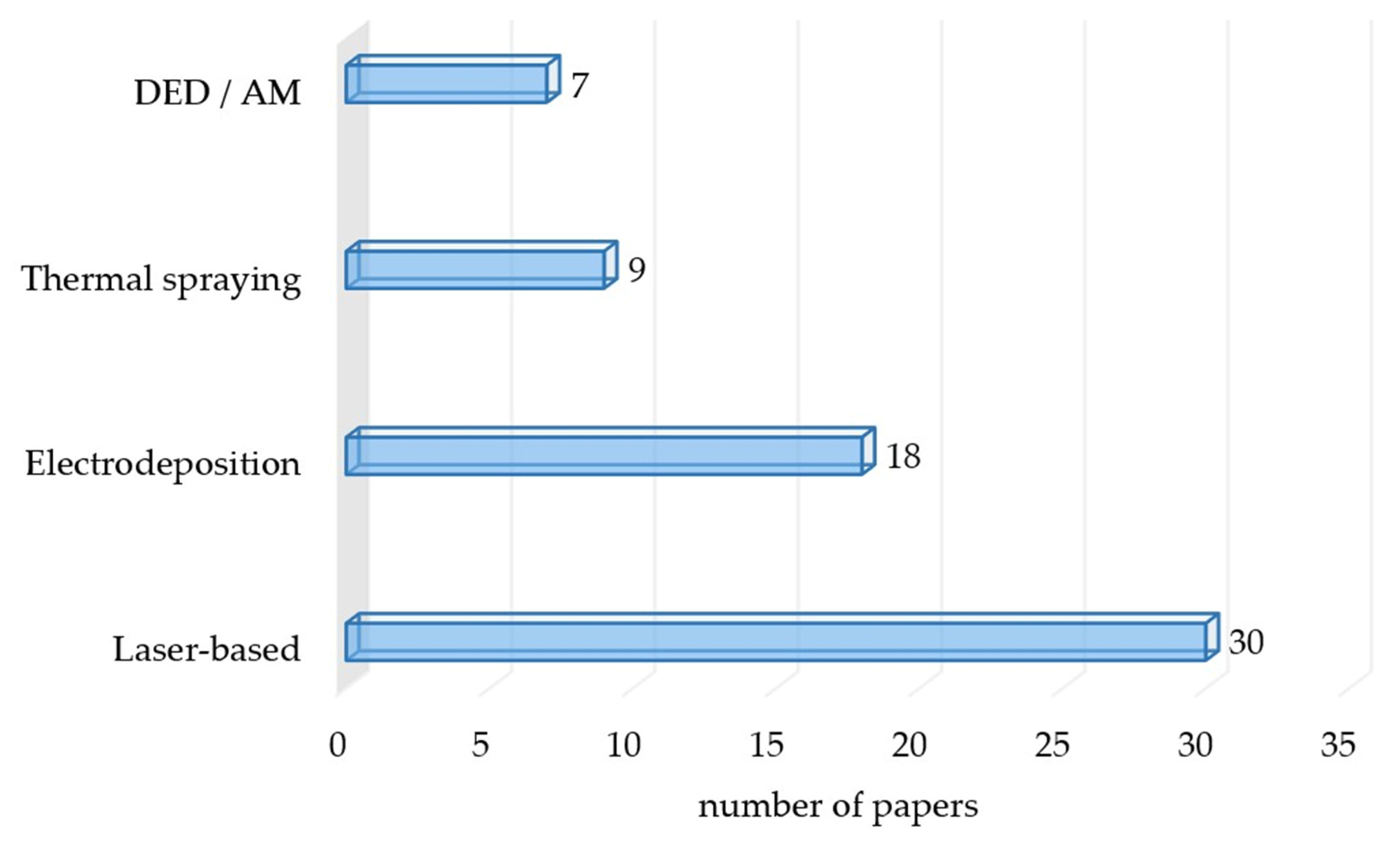
The literature review performed on the reported works [6,7,8,9,10,11,12,13,14,15,16,17,18,19,20,21,22,23,24,25,26,27,28,29,30,31,32,33,34,35,36,37,38,39,40,41,42,43,44,45,46,47,48,49,50,51,52,53,54,55,56,57,58,59,60,61,62,63,64,65,66,67,68,69,70,71,72,73,74,75] revealed that laser cladding is one of the most widely used methods for producing graded nickel-based coatings [6,12,14,21,25,26,27,29,30,31,33,37,39,41,46,48,50,57,58,59,61,63,65,67,69,73,75] (Figure 2). It is a laser-based surface modification process in which a high-energy laser beam melts a thin layer of the substrate while simultaneously injecting metallic or composite powder into the melt pool. As the material solidifies, a dense coating is formed with strong metallurgical bonding to the substrate. The key advantage of laser cladding for functionally graded coatings lies in the ability to continuously vary the powder feed composition during processing, enabling smooth compositional transitions across the coating thickness. This method produces coatings with low porosity, refined microstructures, and excellent mechanical properties, making it particularly suitable for wear-resistant and high-temperature applications.
Figure 2. Manufacturing technologies used for nickel-based gradient coating deposition.
Closely related to laser cladding are direct energy deposition (DED) and other laser-assisted additive manufacturing approaches [42,46,56,62]. In DED, focused thermal energy (typically a laser or electron beam) is used to fuse materials as they are deposited layer by layer, allowing for the fabrication of coatings or even full 3D components. The process enables precise control of material composition in each layer, which is essential for creating complex gradient architectures. Compared with conventional coating methods, DED offers greater flexibility in designing multi-material systems and tailoring local properties. However, it requires careful control of process parameters to manage residual stresses, dilution, and microstructural heterogeneity.
Another important technology is electrodeposition, also referred to as electrochemical deposition [7,13,16,17,18,19,20,22,34,38,44,53,66,68,70,71,72,74]. This process involves the reduction of metal ions from an electrolyte solution onto a conductive substrate under the influence of an applied electric current. Gradient structures are achieved by varying parameters such as electrolyte composition, current density, or pulse conditions during deposition. Electrodeposition is particularly attractive because it operates at relatively low temperatures, allowing coatings to be applied without significant thermal effects on the substrate. It also enables precise control over coating thickness and microstructure, including the incorporation of fine ceramic particles. However, the method is generally limited to thinner coatings and may require longer processing times for thicker layers.
More broadly, additive manufacturing approaches, including techniques such as laser powder bed fusion (LPBF) and hybrid electrochemical additive manufacturing, extend the concept of layer-by-layer fabrication to gradient coatings [23,42,46,55,56,62,66]. These methods enable highly controlled spatial variation in composition and microstructure, allowing the integration of multiple materials within a single structure. They are particularly promising for producing complex geometries and multifunctional coatings, although their industrial application is still under development due to high costs and process complexity.
In addition, thermal spraying techniques—such as atmospheric plasma spraying (APS), high-velocity oxy-fuel (HVOF) spraying, and detonation spraying—are widely used for depositing nickel-based gradient coatings, especially on large components [11,28,36,40,43,47,52,54,64]. In these processes, powder particles are heated (partially or fully melted) and accelerated toward the substrate, where they flatten and solidify to form a coating. Gradients are typically achieved by progressively changing the feedstock composition during spraying, resulting in layered or quasi-continuous transitions. Thermal spraying offers high deposition rates and scalability, but the coatings may contain some porosity and rely primarily on mechanical interlocking rather than full metallurgical bonding.

3.3. Recent Advances in Nickel-Based Gradient Coating
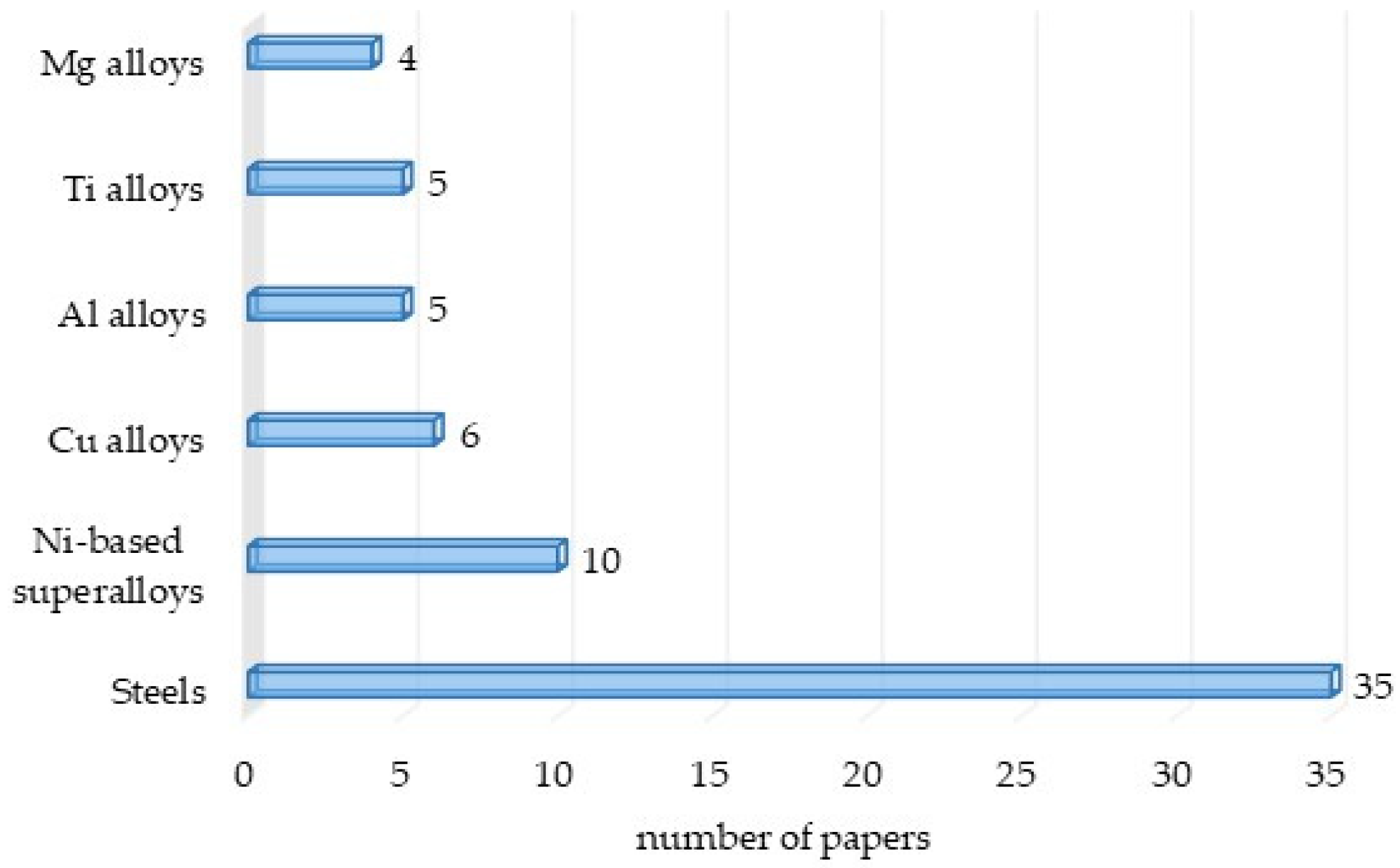
A summary of the recent advances in nickel-based gradient coatings is presented in Table 1. It can be observed that steel represents the most commonly used substrate material for functionally graded nickel-based coatings (Figure 3). Examples include A283-C steel [7], Q345R steel [12], AISI 1045 mild steel [18,22], 42CrMo steel [25], and various stainless steels such as SUS201 or 316L [19,23]. The high share of steels is mainly related to their extensive use in industrial sectors such as energy production, transportation, mechanical engineering, and chemical processing. Although steels possess good structural strength and relatively low cost, their surface properties, particularly wear resistance, corrosion resistance, and oxidation resistance, are often insufficient for demanding operating conditions. Functionally graded nickel-based coatings are therefore frequently applied to enhance these surface properties while maintaining good adhesion to the substrate. The graded structure enables a gradual transition between the steel substrate and the coating, reducing thermal expansion mismatch and residual stresses. For example, Ni–WC gradient coatings produced by laser cladding on Q345R steel significantly improved hardness and wear resistance due to the formation of carbide-reinforced microstructures [12]. Similarly, Ni–W coatings electrodeposited on AISI 1045 steel have exhibited lower residual stresses and improved scratch hardness compared with homogeneous coatings [18,22]. Gradient Ni/ZrO2 coatings deposited on stainless steel substrates demonstrated improved corrosion resistance and microhardness due to the dispersion of ceramic particles within the nickel matrix [19,34]. Other examples include Fe/Ni/WC gradient coatings produced on 65 Mn steel using plasma cladding, which resulted in significantly enhanced hardness and wear resistance [31], and NiCrAlY/YSZ coatings deposited on X6CrNiTi18-10 stainless steel by detonation spraying, which improved thermal shock resistance and mechanical properties [64].
Table 1. Summary of recent advances in nickel-based gradient coatings [6,7,8,9,10,11,12,13,14,15,16,17,18,19,20,21,22,23,24,25,26,27,28,29,30,31,32,33,34,35,36,37,38,39,40,41,42,43,44,45,46,47,48,49,50,51,52,53,54,55,56,57,58,59,60,61,62,63,64,65,66,67,68,69,70,71,72,73,74,75].
Another frequently used group of substrates consists of nickel-based superalloys, which are commonly employed in high-temperature applications such as turbine blades, aerospace components, and power generation systems [8]. Among these materials, IC21 single-crystal superalloy, Inconel-738, Inconel 718, and other Ni-based superalloys were reported as based materials (Table 1). Although these materials already exhibit excellent mechanical strength and thermal stability, their performance can still be further improved through the application of gradient coatings designed to enhance oxidation resistance, creep resistance, and hot corrosion performance. For instance, NiCrAlYSi coatings deposited on IC21 single-crystal superalloy by arc ion plating have shown potential improvements in creep resistance at elevated temperatures [10]. Similarly, NiCrAlY/YSZ coatings applied to Inconel-738 substrates improve hot corrosion resistance and thermal stability in aggressive environments [43]. Other examples include CoNiCrAlYSi coatings deposited on Inconel-738 using HVOF and diffusion processes, which significantly enhanced oxidation and hot corrosion resistance [40], and TiC/Inconel 718 gradient coatings fabricated by direct energy deposition that improved high-temperature tensile strength and oxidation resistance [42]. It could be observed that the frequent use of superalloys substrates demonstrates the importance of graded coatings in applications where components must withstand extreme temperatures and mechanical stresses while maintaining long-term structural stability.
Figure 3. Various substrate materials used for nickel-based gradient coatings.
Coatings 16 00397 g003
Lightweight metallic substrates such as aluminum alloys, copper alloys, titanium alloys, and magnesium alloys are also presented in Table 1, although less frequently than steels or superalloys. These materials are widely used in aerospace, electronics, and automotive applications due to their high strength-to-weight ratio and good thermal conductivity. However, they often exhibit relatively poor wear resistance or limited corrosion resistance, making surface modification necessary. Functionally graded nickel-based coatings provide an effective solution by gradually transitioning from the substrate composition to a harder or more chemically resistant surface layer. For example, Ni–P gradient coatings deposited on aluminum alloys significantly improved hardness and corrosion resistance even in aggressive environments [16]. Ni–Cu coatings applied on nickel–aluminum–bronze substrates enhanced corrosion resistance through the formation of a compatible solid solution interface [24]. Similarly, gradient Ti6Al4V/Inconel625 coatings fabricated by laser melting deposition improved hardness and high-temperature resistance on titanium substrates [15,73]. In the case of magnesium alloys such as AZ91D or AZ91HP, gradient coatings produced by laser cladding significantly improved corrosion resistance and wear performance, extending the applicability of these lightweight materials in engineering environments [41,61,63]. One can find that graded nickel-based coatings are particularly useful for improving the surface durability of lightweight structural materials without compromising their weight advantages.
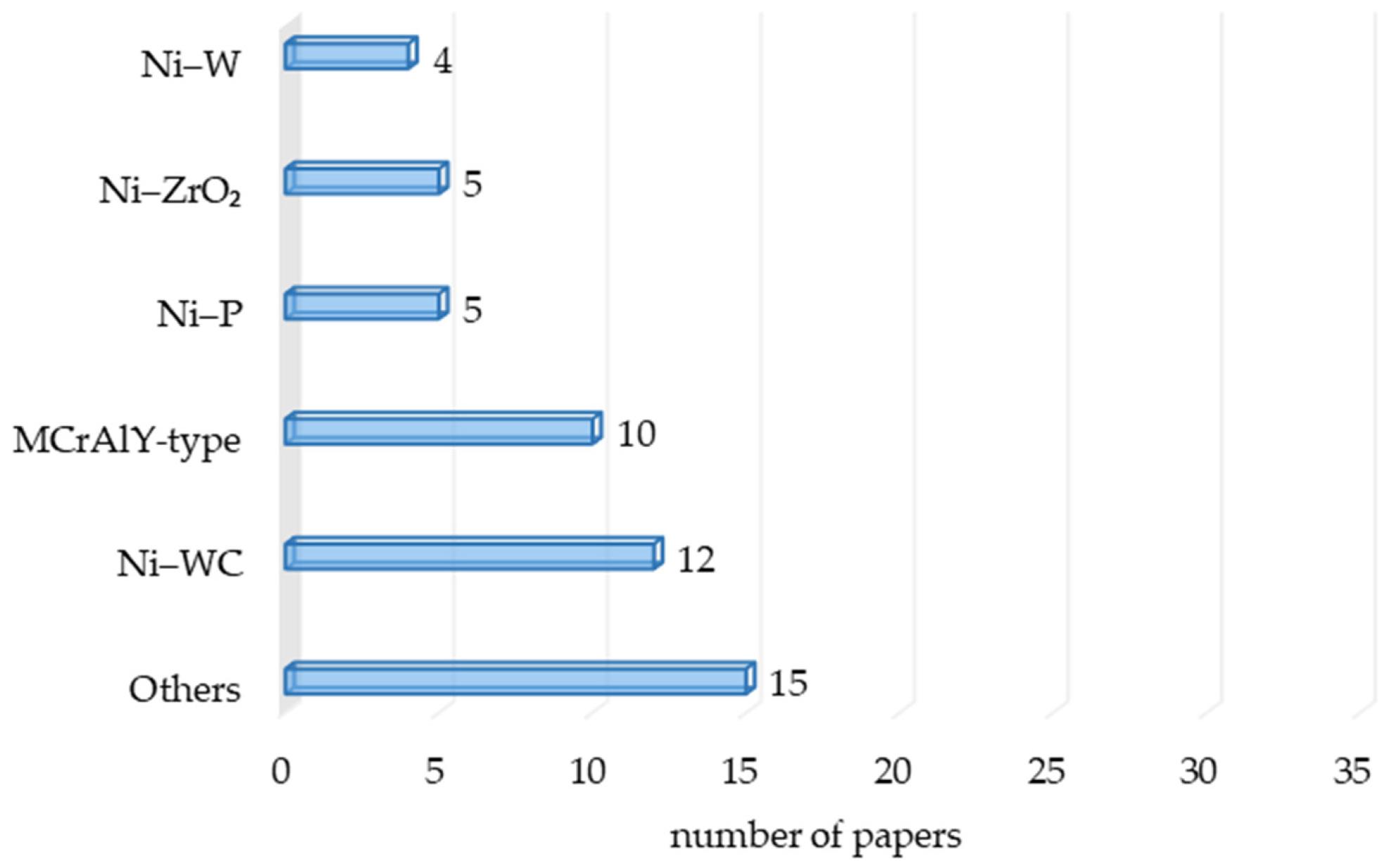
When analyzing the coating compositions, one should stress that nickel-based matrices reinforced with hard ceramic phases are among the most frequently studied systems (Figure 4). In particular, Ni–WC composite coatings appear very often in the literature [12,18,22,26,27,50,57,58,67]. Tungsten carbide is widely used as a reinforcement phase because of its extremely high hardness, excellent wear resistance, and good thermal stability. When embedded in a nickel matrix, WC particles significantly enhance the tribological performance of the coating while the metallic matrix maintains good toughness and adhesion to the substrate. Several studies have demonstrated the effectiveness of such coatings. For example, Ni–WC gradient coatings fabricated by laser cladding on steel substrates showed remarkable improvements in hardness and wear resistance compared with the uncoated material [12]. Similar behavior was reported for Inconel718/WC coatings, where the incorporation of carbide particles significantly increased wear resistance under abrasive conditions [25]. Ni60/WC coatings produced by laser cladding also showed improved hardness and durability due to the formation of a dense composite microstructure [50]. Additional examples include Ni/WC coatings with pore-free structures and high hardness deposited on mild steel [27], and WC-reinforced Inconel 625 gradient coatings demonstrating enhanced mechanical properties and corrosion resistance [26]. It should be therefore highlighted that WC-reinforced coatings prove to be effective in applications involving severe wear, erosion, and high mechanical loads. It should be mentioned, however, that In Ni–WC systems, the benefits of high-energy processing must be balanced against carbide dissolution effects. During laser cladding or secondary remelting, partial WC dissolution promotes the formation of secondary carbides and microstructural refinement, contributing to increased hardness [76]. However, excessive dissolution reduces the effective fraction of reinforcing carbides and alters local composition, potentially compromising wear resistance. Furthermore, secondary remelting, while improving densification and homogeneity, introduces steep thermal gradients and residual stresses that can promote surface cracking, particularly in regions with stress concentration or brittle phase formation [77]. Consequently, careful control of processing parameters is required to balance carbide retention, microstructural refinement, and crack susceptibility. Conversely, a post-processing treatment may be used, for example, stress-relief annealing for reducing crack rates or recrystallization annealing for grain refinement and wear resistance.
Figure 4. Various compositions of nickel-based gradient coatings.
Another important group of coatings includes MCrAlY-type alloys such as NiCrAlY, NiCrAlYSi, and NiCoCrAlYTa. These coatings are widely used in high-temperature environments because they form stable protective oxide layers that protect the underlying material from oxidation and corrosion. Aluminum promotes the formation of a protective Al2O3 layer, chromium enhances oxidation resistance, and elements such as yttrium improve oxide scale adhesion and stability. In gradient coatings, these materials are often combined with ceramic top layers to form advanced thermal barrier systems. For example, NiCrAlY/YSZ coatings produced by plasma spraying demonstrate excellent thermal shock resistance and improved hot corrosion behavior [43]. NiCoCrAlYTa coatings combined with Al2O3 layers have also shown superior oxidation and abrasion resistance due to the formation of stable oxide scales during high-temperature exposure [45]. NiCrAlYSi coatings deposited on single-crystal superalloys significantly improve oxidation resistance at temperatures up to 1200 °C [60]. These coatings are particularly important in turbine components and aerospace applications, where resistance to oxidation, hot corrosion, and thermal fatigue is essential for long-term performance.
A third group of coatings involves nickel matrices reinforced with ceramic oxides or solid lubricating phases. Ceramic particles such as ZrO2 and Al2O3 are frequently incorporated into nickel coatings to improve hardness, corrosion resistance, and thermal stability. For instance, Ni/ZrO2 gradient coatings produced by electrodeposition exhibit improved corrosion resistance and microhardness due to the uniform dispersion of ceramic particles within the metallic matrix [19,34,53]. Similarly, Ni–Al2O3 coatings deposited on steel substrates show enhanced wear resistance and corrosion protection compared with uncoated materials [74]. Other studies focus on coatings containing lubricating phases such as PTFE or graphite, which are designed to reduce friction and improve tribological performance. Ni-P-PTFE gradient coatings deposited on stainless steel demonstrate improved adhesion and reduced friction coefficients due to the presence of polymer particles acting as solid lubricants [20]. Likewise, Ni/graphite coatings electrodeposited on copper substrates significantly reduce the coefficient of friction and wear rate under sliding conditions [70].
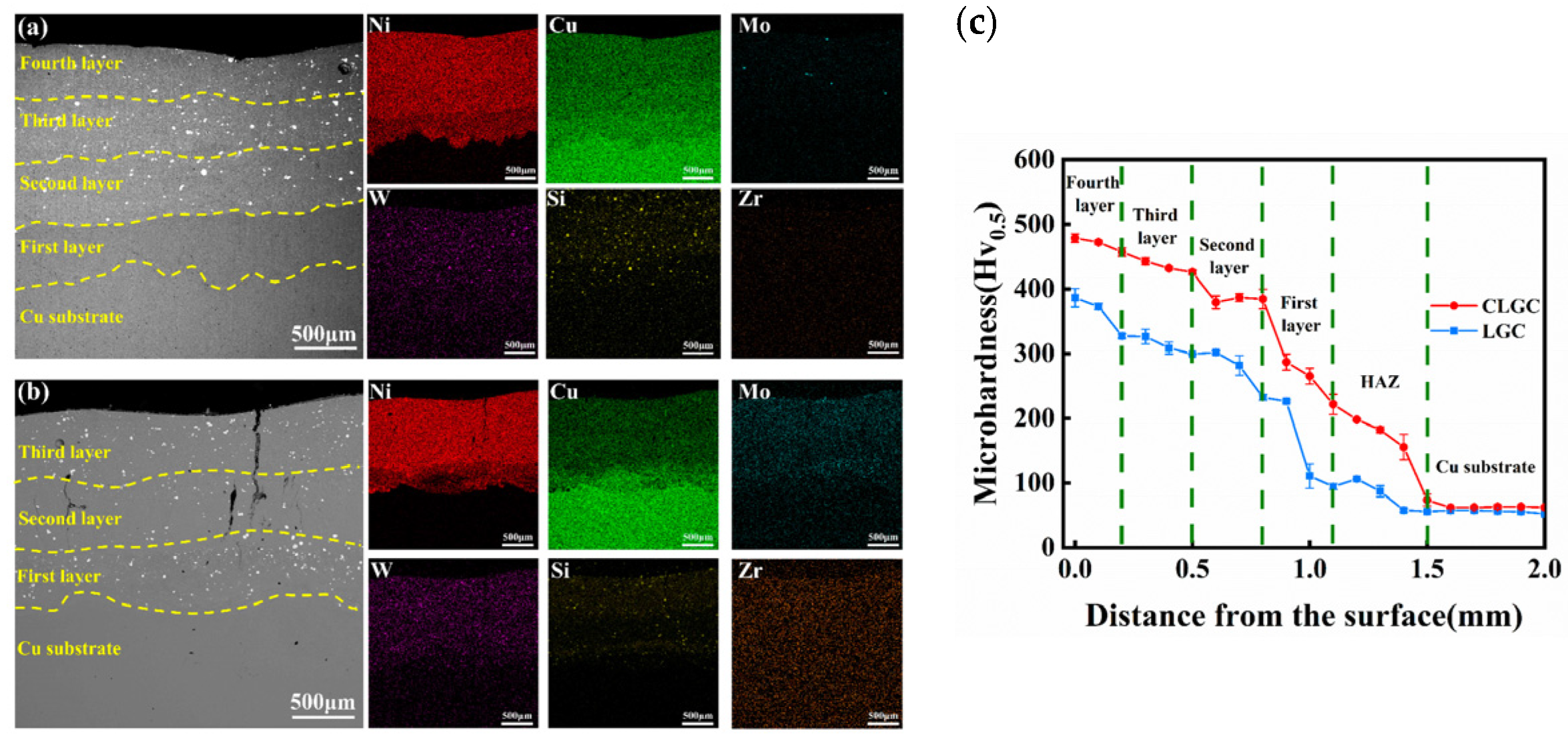
Moreover, the manufacturing technologies summarized in Table 1 reveal that laser-based processing methods are the most commonly used techniques for producing functionally graded nickel-based coatings. Laser cladding, laser melting deposition, and other laser-assisted additive manufacturing approaches appear in a large proportion of the listed studies. The popularity of these techniques arises from their ability to provide high energy density, precise heat input control, and strong metallurgical bonding between the coating and substrate. Laser cladding is particularly suitable for producing gradient structures because the powder feed composition can be gradually varied during deposition. This enables the formation of coatings with continuous compositional transitions across their thickness. For example, Ni–WC gradient coatings produced by laser cladding exhibit dense microstructures and significantly improved hardness and wear resistance [12,67]. TiC/Ni coatings fabricated by powder-fed laser cladding show improved wear resistance and strong metallurgical bonding due to in situ carbide formation [14]. Other examples include Inconel718/WC gradient coatings produced by laser cladding that demonstrate excellent wear resistance and mechanical strength [25], as well as Ti6Al4V/Inconel625 gradient coatings fabricated by laser melting deposition with improved high-temperature hardness [15]. Laser cladding could be effectively used even for copper. Liu et al. [6] proposed a combined cold spraying/laser cladding method to produce Ni–Cu coatings on a copper substrate. The CLGC shows a dense structure without holes or cracks and a clear Ni–Cu gradient with minimal Ni diffusion into the substrate, indicating low dilution and limited thermal impact (Figure 5a), whereas the LGC coating contains pores and interfacial cracks and exhibits strong Cu diffusion, leading to higher dilution and reduced performance (Figure 5b). CLGC also demonstrates higher microhardness, reaching 478.8 HV0.5 in the fourth layer (about eight times that of Cu) due to hard intermetallics (Ni11Si12, Mo5Si3) and Ni–Cu solid solution strengthening, while the hardness gradient further improves wear resistance and interlayer bonding (Figure 5c).
Figure 5. SEM morphologies and the corresponding EDS elemental mapping (wt.%) of Ni, Cu, Mo, W, Si, and Zr of (a) cold spray–laser cladding composite gradient coating (CLGC) and (b) laser cladding gradient coating (LGC). Scale bar: 500 μm. (c) Microhardness of cold spray–laser cladding composite gradient coating (CLGC) and laser cladding gradient coating (LGC) [6].
One should stress that laser-based methods are particularly effective for producing dense coatings with strong substrate adhesion and well-controlled compositional gradients.
Electrodeposition and electrochemical deposition techniques represent another set of widely used manufacturing approaches for gradient nickel-based coatings. These methods are attractive because they operate at relatively low temperatures and allow precise control over coating composition through adjustments in electrolyte chemistry, current density, or pulse parameters. Gradient electrodeposition enables gradual variation in alloy composition or particle concentration during deposition, making it possible to tailor coating properties across the thickness. For example, Ni–W gradient coatings produced by electrodeposition exhibit reduced residual stresses and enhanced wear resistance compared with homogeneous coatings [18,22]. Ni/ZrO2 coatings fabricated by double-pulse electrodeposition demonstrate improved high-temperature corrosion resistance and increased microhardness due to the controlled distribution of ceramic particles [19]. Other examples include Ni–P gradient coatings on aluminum alloys with improved corrosion resistance [16], Fe–Ni gradient coatings fabricated by laser-assisted electrodeposition with enhanced mechanical properties [17], and Ni–Co coatings produced by pulse electrodeposition showing improved wear and corrosion resistance [71]. These techniques are particularly advantageous for coating complex geometries and achieving fine microstructural control, making them attractive for industrial applications.
Thermal spraying techniques constitute another important group of manufacturing methods used for producing functionally graded coatings. These include processes such as atmospheric plasma spraying (APS), high-velocity oxy-fuel (HVOF) spraying, and detonation spraying. Thermal spraying is particularly suitable for coating large components due to its high deposition rate and scalability. In gradient thermal spraying, the feedstock composition can be gradually modified during deposition to create layered or continuous gradients. For example, NiCrAlY/YSZ gradient coatings deposited by plasma spraying demonstrate improved thermal shock resistance and corrosion protection, making them suitable for thermal barrier coating systems [43]. NiCrAlY/Al2O3 coatings fabricated by plasma spraying and slurry spraying exhibit improved heat resistance due to the formation of stable ceramic layers [52]. Similarly, gradient coatings deposited using HVOF processes demonstrate improved adhesion strength and corrosion resistance [47], while Ni–Cr–Al coatings produced by detonation spraying show enhanced oxidation resistance at high temperatures [11]. These techniques are widely used in industrial applications due to their ability to coat large surfaces efficiently while maintaining good mechanical performance. Buitkenov et al. [28] deposited NiCrAlY/YSZ using detonation spraying to further improve the hardness, wear resistance, and Young’s modulus of the steel substrate.
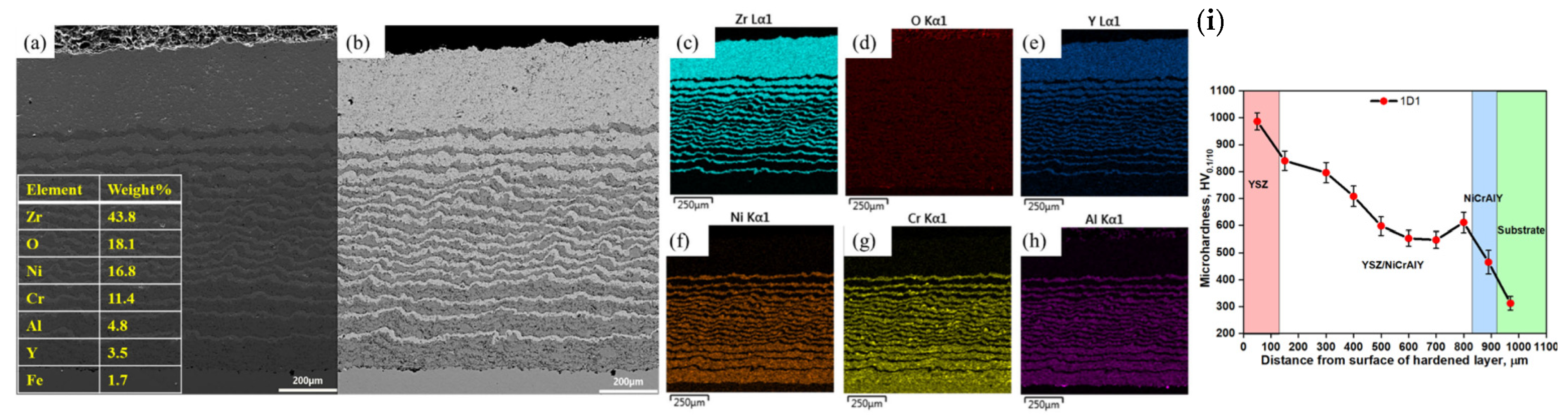
The SEM secondary electron image of the cross-section (Figure 6) reveals a typical layered structure of the detonation-sprayed NiCrAlY/YSZ coating, consisting of a NiCrAlY bond coat, a YSZ top coat, and intermediate gradient layers with mixed composition. The layers exhibit dense morphology and good adhesion to each other and to the substrate, with no visible cracks, although small voids near the interface may result from sandblasting. The gradient architecture of the coating contributes to a gradual increase in microhardness from the substrate toward the ceramic surface (Figure 6i). This hardness gradient improves stress distribution between the metallic and ceramic layers, enhancing coating durability and resistance to mechanical and thermal loading.
Figure 6. SEM images showing cross-sectional morphology of 1D1 sample: (a) SE image; (b) BSE image; (ch) elemental maps of Zr, O, Y, Ni, Cr, and Al, respectively; (i) change in microhardness from the substrates to the surfaces of multilayer gradient coatings [28].
The mechanical performance of functionally graded nickel-based coatings shows clear dependence on the fabrication method, particularly in terms of hardness and wear resistance (Table 2). Through laser-based techniques, such as laser cladding, one can achieve the highest hardness values (typically ~400–1100 HV or higher) and superior wear resistance due to rapid solidification, dense microstructures, and the incorporation of hard reinforcements (e.g., carbides), which enhance load-bearing capacity and reduce material loss. Direct energy deposition and additive manufacturing approaches exhibit slightly lower but still high hardness (~600–900 HV), combined with excellent wear resistance, especially under elevated temperatures, owing to controlled gradient architectures and improved phase stability. Electrodeposited coatings generally show moderate hardness (~300–600 HV), but can achieve significant improvements in wear behavior through grain refinement and uniform dispersion of strengthening phases, often accompanied by reduced friction coefficients. In contrast, thermal spraying techniques typically produce coatings with moderate hardness and wear resistance, limited by their lamellar microstructure and inherent porosity, although their performance remains sufficient for large-scale protective applications.
Table 2. Summary of mechanical performance trends for different methods.
The superior mechanical performance of functionally graded nickel-based coatings could be achieved under proper processing conditions that would further enable one to obtain desirable microstructure. Each fabrication technique introduces distinct physical phenomena that directly influence hardness, wear resistance, and overall durability. Laser-based processes enhance coating performance primarily through rapid melting and solidification, which leads to refined microstructures and strong metallurgical bonding with the substrate [78]. The high cooling rates promote the formation of fine dendritic or cellular structures, often accompanied by supersaturated solid solutions and metastable phases. Additionally, the incorporation of hard ceramic reinforcements (e.g., WC, TiC) results in dispersion strengthening and load transfer mechanisms, where hard phases bear a significant portion of the applied load, reducing matrix deformation. Another critical factor is the formation of a graded interface with reduced dilution gradients, which minimizes stress concentration and improves adhesion. The combination of metallurgical bonding and gradient composition significantly enhances resistance to delamination under mechanical or thermal loading. Furthermore, laser-induced in situ reactions (e.g., carbide formation) contribute to secondary phase strengthening, increasing hardness and wear resistance.
DED-based methods share similar thermal characteristics with laser cladding but extend the concept through layer-by-layer material buildup with precise compositional control. The key strengthening mechanisms arise from tailored gradient architectures, which enable gradual transitions in thermal expansion and mechanical properties, thereby reducing residual stresses; microstructural heterogeneity control, where different layers can be engineered to provide specific functions (e.g., toughness near the substrate, hardness at the surface); enhanced high-temperature stability, due to controlled phase distribution and reduced segregation.
Moreover, electrodeposition improves coating performance through atomic-scale control of microstructure formation under relatively low-temperature conditions. The main strengthening mechanisms include grain refinement strengthening, as high nucleation rates lead to ultrafine or nanocrystalline structures, solid solution and precipitation strengthening, (especially in systems such as Ni–P or Ni–W), and particle dispersion strengthening, where embedded nanoparticles (e.g., ZrO2, SiC) hinder dislocation motion.
A key advantage is the ability to produce coatings with low friction coefficients, resulting from smooth surfaces and uniform microstructures. Additionally, the absence of thermal distortion preserves substrate integrity. However, weaker interfacial bonding (compared to metallurgical bonding) can limit performance under high-load conditions.
Thermal spraying enhances coating performance through high-velocity impact and rapid solidification of molten or semi-molten particles. The resulting microstructure consists of flattened splats forming a lamellar structure, which contributes to mechanical interlocking with the substrate and barrier protection against wear, oxidation, and corrosion. The incorporation of ceramic phases (e.g., YSZ in MCrAlY systems) introduces thermal insulation and oxidation resistance, making these coatings particularly suitable for high-temperature environments. However, the presence of porosity and inter-splat boundaries can act as crack initiation sites, limiting mechanical strength compared to laser-based coatings.

4. Summary

The current state of the art in functionally graded nickel-based coatings demonstrates significant progress in improving the performance of engineering components operating in high-temperature and harsh environments. Nickel-based systems are widely investigated because of their excellent high-temperature strength, oxidation resistance, and metallurgical compatibility with common engineering substrates such as steels and nickel-based superalloys. The introduction of compositional gradients has been shown to effectively reduce residual stresses and improve adhesion between coating and substrate by minimizing abrupt transitions in mechanical and thermal properties. Several studies have reported that graded architectures significantly improve coating durability compared with conventional monolithic coatings. For instance, laser-cladded Ni–WC gradient coatings deposited on steel substrates demonstrated enhanced hardness and wear resistance while maintaining strong metallurgical bonding due to the gradual distribution of carbide particles [12,67]. Similarly, Fe/Ni/WC gradient coatings produced by plasma cladding on 65 Mn steel improved both hardness and wear resistance through controlled compositional variation across the coating thickness [31]. Therefore, the effectiveness of graded designs in reducing crack formation and improving structural integrity under mechanical and thermal loading has been proven and could be potentially applied for the industry.
For high-temperature applications, especially in aerospace and energy systems, coatings must provide resistance to oxidation, hot corrosion, and thermal fatigue while maintaining mechanical stability. Nickel-based MCrAlY-type coatings (such as NiCrAlY, NiCrAlYSi, and NiCoCrAlYTa) have become widely used because they form stable protective oxide layers during high-temperature exposure. The formation of dense Al2O3 scales significantly reduces oxygen diffusion and protects the substrate from oxidation degradation. Several works summarized in the table demonstrate the effectiveness of such coatings in harsh environments. For example, NiCrAlYSi coatings deposited on IC21 single-crystal superalloys using arc ion plating have been shown to improve creep resistance and oxidation performance at elevated temperatures [10]. Similarly, NiCrAlY/YSZ gradient coatings produced by plasma spraying exhibit improved thermal shock resistance and corrosion resistance in turbine-like environments due to the combination of metallic bonding layers and ceramic thermal barrier layers [43]. In addition, CoNiCrAlYSi coatings applied to Inconel-738 substrates have demonstrated enhanced oxidation and hot corrosion resistance during high-temperature exposure [40]. Thus, it was confirmed that functionally graded MCrAlY-type systems are particularly effective for components exposed to temperatures exceeding 1000 °C.
Another important research direction involves nickel-based composite coatings reinforced with carbides or ceramic particles, which are designed for environments combining high temperatures with severe wear or erosion. For example, Ni–WC and Inconel718/WC coatings have shown significantly improved wear resistance and mechanical strength due to the presence of hard carbide phases dispersed within the nickel matrix [12,25]. Ni60/WC coatings produced by laser cladding have also demonstrated improved hardness and wear resistance under abrasive conditions because the graded distribution of WC particles reduces stress concentration and crack propagation [50]. Similarly, TiC/Inconel 718 gradient coatings fabricated by direct energy deposition have been shown to improve high-temperature tensile strength and oxidation resistance through the formation of stable carbide-reinforced microstructures [42]. Other ceramic-reinforced coatings such as Ni/ZrO2 produced by electrodeposition provide improved corrosion resistance and microhardness due to the dispersion strengthening effect of oxide particles [19,34]. While these studies clearly demonstrate the advantages of ceramic-reinforced graded coatings, challenges remain regarding the long-term stability of such systems. Carbide dissolution, particle agglomeration, and microstructural coarsening during prolonged exposure to elevated temperatures can reduce mechanical performance over time [78,79,80].
Manufacturing technologies play a critical role in determining the performance and reliability of graded coatings in harsh environments. Laser-based techniques, including laser cladding and laser melting deposition, currently represent the most widely used methods due to their ability to produce dense coatings with strong metallurgical bonding and controlled compositional gradients. Several studies have shown that laser cladding enables the production of dense Ni-based composite coatings with minimal dilution and improved mechanical properties [12,25,50]. Directed energy deposition has also been successfully applied to fabricate gradient structures such as TiC/Inconel 718 coatings with improved high-temperature performance [42]. Electrochemical deposition methods provide another important approach for producing gradient coatings, particularly for corrosion-resistant systems. For example, Ni–W coatings fabricated by electrodeposition exhibit reduced residual stresses and improved wear resistance [18,22], while Ni/ZrO2 coatings produced by pulse electrodeposition demonstrate enhanced corrosion resistance and hardness due to controlled particle incorporation [19,53]. Thermal spraying technologies such as plasma spraying, HVOF, and detonation spraying are also widely used for large-scale applications. For instance, plasma-sprayed NiCrAlY/YSZ coatings have demonstrated excellent thermal barrier performance and improved thermal shock resistance [43], while detonation-sprayed Ni–Cr–Al coatings show enhanced oxidation resistance at high temperatures [11]. Despite these advances, challenges remain in controlling porosity, residual stresses, and interfacial bonding in thermally sprayed coatings, which may limit their long-term reliability in extreme environments.

5. Challenges and Future Perspectives

Although the current trends clearly demonstrates the advantages of functionally graded nickel-based coatings, several limitations still exist in the current state of the art. Many studies primarily focus on microstructural characterization and short-term laboratory testing, while relatively few investigate long-term degradation mechanisms such as thermal fatigue, oxidation-induced cracking, or corrosion under realistic service conditions. In addition, most experimental studies are conducted under simplified conditions that do not fully represent the complex environments encountered in industrial applications, where components are often exposed simultaneously to high temperatures, mechanical stresses, corrosive atmospheres, and particle erosion. Therefore, although the scientific understanding of graded coatings has advanced considerably, further research is required to fully validate their reliability and durability in real industrial environments.
One should highlight that the high processing complexity and fabrication costs remain significant barriers to industrial implementation. In particular, the cost-to-performance ratio of advanced coating technologies such as laser cladding and directed energy deposition must be critically evaluated in the context of large-scale manufacturing. Although these processes offer superior metallurgical bonding, low dilution, and precise compositional control, they are cost- and energy-effective and have relatively low deposition rates compared to conventional techniques such as thermal spraying. From a cost perspective, the use of high-power laser systems, controlled atmospheres, and high-quality feedstock powders significantly increases production expenses. In addition, process optimization—often requiring precise control of parameters such as laser power, scanning speed, and powder feed rate—adds to operational complexity and limits throughput. These factors become particularly critical when scaling from laboratory-scale demonstrations to industrial production. Scaling challenges are further compounded by issues related to residual stress accumulation, distortion, and the need for post-processing treatments such as heat treatment or machining. Moreover, the deposition of large-area or complex geometries requires advanced path planning and process monitoring systems, which further increase system complexity and cost. As a result, while laser-based coating technologies demonstrate excellent performance at the laboratory scale, their widespread adoption in industry is often restricted to high-value or critical components where performance gains justify the added cost. This limitation is further exacerbated by the poor machinability of nickel-based alloys, where high cutting-zone temperatures and strong work-hardening tendencies impose additional constraints on manufacturing, increasing tool wear and complicating post-processing operations.
The strategic importance of nickel in advanced materials is underscored by recent market volatility, which has highlighted the need for “nickel conservation” in FGM design. In 2025, nickel prices surged toward US $17,000–18,000 per tonne due in part to significant production quota cuts in Indonesia, the world’s largest nickel supplier [81]. Such supply constraints and policy-driven production adjustments demonstrate how dominant producers can influence global availability and cost. Consequently, minimizing nickel content through optimized gradient designs or partial substitution with lower-cost alloying elements is not only a performance-driven choice but also a strategic approach to mitigate supply risks and reduce dependence on a volatile global market.
Future research on functionally graded nickel-based coatings will likely focus on improving their reliability and performance in extreme environments while enhancing manufacturing efficiency and scalability. One of the most promising directions involves the integration of advanced additive manufacturing technologies with gradient coating design. Laser-based additive manufacturing processes such as directed energy deposition offer precise control of composition during deposition and allow the fabrication of complex gradient architectures directly on engineering components. These approaches have already demonstrated promising results in systems such as TiC/Inconel 718 and Ti6Al4V/Inconel625 gradient coatings, which show improved mechanical performance and thermal stability [42,73].
Another important research direction is the development of multifunctional coatings capable of simultaneously addressing several degradation mechanisms. Future graded coatings may combine carbide reinforcements for wear resistance, MCrAlY-type matrices for oxidation resistance, and ceramic layers for thermal insulation. For example, hybrid structures combining NiCrAlY bond coats with ceramic layers such as YSZ or Al2O3 may provide improved thermal barrier performance and longer service life in turbine components [43,52]. The incorporation of nanostructured reinforcements, high-entropy alloy phases, or self-lubricating particles may further enhance coating durability and functionality [82].
In addition, computational modeling and simulation are expected to play an increasingly important role in the design of graded coatings [83,84]. Numerical models can be used to predict thermal stresses, optimize gradient compositions, and simulate long-term degradation mechanisms such as oxidation and thermal fatigue [85]. Combining experimental studies with predictive modeling could significantly accelerate the development of next-generation coatings while reducing development costs. One should mention that AI-driven Digital Twins may offer a transformative approach for the formulation of nickel-based gradient coatings. By creating virtual replicas of the coating system, scientists could simulate microstructural evolution, mechanical performance, and wear behavior across different compositions and processing conditions. This enables rapid evaluation of potential chemistries and gradient profiles, allowing researchers to identify optimal designs before physical experiments. As a result, Digital Twin technology may shorten development timelines and lower costs while improving the precision of nickel-based coating formulations.
Finally, future studies should place greater emphasis on long-term performance evaluation under realistic service conditions. This includes extended high-temperature exposure, thermal cycling tests, and corrosion studies in aggressive environments. Such investigations are essential for understanding degradation mechanisms and ensuring the reliable implementation of functionally graded coatings in industrial applications.

6. Conclusions

Functionally graded nickel-based coatings have emerged as a promising strategy for improving the durability and performance of engineering components exposed to extreme environments. By gradually varying composition and microstructure across the coating thickness, these systems effectively reduce interfacial stresses, improve adhesion, and combine multiple functional properties within a single coating architecture.
Current research demonstrates that carbide-reinforced nickel matrices such as Ni–WC and TiC-containing coatings provide excellent wear resistance and mechanical strength, while MCrAlY-type coatings offer superior oxidation and hot corrosion resistance at elevated temperatures. Manufacturing technologies such as laser cladding, additive manufacturing, electrodeposition, and thermal spraying have enabled the fabrication of complex graded structures with tailored microstructures and enhanced performance.
Despite these advances, several challenges remain, including limited long-term performance data, difficulties in scaling laboratory processes to industrial production, and incomplete understanding of degradation mechanisms under combined thermal, mechanical, and chemical loading. Future developments are expected to focus on advanced additive manufacturing techniques, multifunctional coating systems, and integrated experimental–computational approaches for coating design.

Funding

This research received no external funding.

Institutional Review Board Statement

Not applicable.

Data Availability Statement

All data presented in this study are available on request from the corresponding author.

Conflicts of Interest

The author declares no conflicts of interest.

References

  1. Sathish, M.; Radhika, N.; Saleh, B. A critical review on functionally graded coatings: Methods, properties, and challenges. Compos. Part B Eng. 2021, 225, 109278. [Google Scholar] [CrossRef]
  2. Fathi, R.; Wei, H.; Saleh, B.; Radhika, N.; Jiang, J.; Ma, A.; Ahmed, M.H.; Li, Q.; Ostrikov, K.K. Past and present of functionally graded coatings: Advancements and future challenges. Appl. Mater. Today 2022, 26, 101373. [Google Scholar] [CrossRef]
  3. Yan, P.; Chen, K.; Wang, Y.; Zhou, H.; Peng, Z.; Jiao, L.; Wang, X. Design and Performance of Property Gradient Ternary Nitride Coating Based on Process Control. Materials 2018, 11, 758. [Google Scholar] [CrossRef]
  4. Pakseresht, A.; Sharifianjazi, F.; Esmaeilkhanian, A.; Bazli, L.; Nafchi, M.R.; Bazli, M.; Kirubaharan, K. Failure mechanisms and structure tailoring of YSZ and new candidates for thermal barrier coatings: A systematic review. Mater. Des. 2022, 222, 111044. [Google Scholar] [CrossRef]
  5. Łatka, L.; Pawłowski, L.; Winnicki, M.; Sokołowski, P.; Małachowska, A.; Kozerski, S. Review of Functionally Graded Thermal Sprayed Coatings. Appl. Sci. 2020, 10, 5153. [Google Scholar] [CrossRef]
  6. Liu, S.; Sun, Y.; Zhai, P.; Fan, P.; Zhang, Y.; Li, M.; Fang, J.; Wu, R.; Cai, Z. Microstructure and Properties of Nickel-Based Gradient Coatings Prepared Using Cold Spraying Combined with Laser Cladding Methods. Materials 2023, 16, 1627. [Google Scholar] [CrossRef]
  7. Xiao, X.; Xue, W.; Wang, S.; Chen, X.; Zheng, S.; Feng, K. Effect of Zinc–Nickel Alloy Gradient Coating Microstructure on the Corrosion Resistance of Steel. J. Mater. Eng. Perform. 2025, 34, 10460–10469. [Google Scholar] [CrossRef]
  8. Kopec, M. Recent Advances in the Deposition of Aluminide Coatings on Nickel-Based Superalloys: A Synthetic Review (2019–2023). Coatings 2024, 14, 630. [Google Scholar] [CrossRef]
  9. Barwinska, I.; Kopec, M.; Kukla, D.; Senderowski, C.; Kowalewski, Z.L. Thermal Barrier Coatings for High-Temperature Performance of Nickel-Based Superalloys: A Synthetic Review. Coatings 2023, 13, 769. [Google Scholar] [CrossRef]
  10. Kang, J.; Liu, Y.; Zhou, J.; Zhuo, W.; Zhang, J.; Zeng, J.; Zhang, H.; Pei, Y.; Li, S.; Gong, S. Temperature-dependent evolution mechanism of interface microstructure between gradient MCrAlY coatings and nickel-based superalloy. Mater. Des. 2024, 237, 112585. [Google Scholar] [CrossRef]
  11. Rakhadilov, B.; Sulyubayeva, L.; Maulet, M.; Sagdoldina, Z.; Buitkenov, D.; Issova, A. Investigation of High-Temperature Oxidation of Homogeneous and Gradient Ni-Cr-Al Coatings Obtained by Detonation Spraying. Coatings 2024, 14, 11. [Google Scholar] [CrossRef]
  12. Wang, Q.; Li, Q.; Zhang, L.; Chen, D.X.; Jin, H.; Li, J.D.; Zhang, J.W.; Ban, C.Y. Microstructure and properties of Ni-WC gradient composite coating prepared by laser cladding. Ceram. Int. 2022, 48, 7905–7917. [Google Scholar] [CrossRef]
  13. Lin, Y.; Duan, F.; Pan, J.; Zhang, C.; Chen, Q.; Lu, J.; Liu, L. On the adhesion performance of gradient-structured Ni–P metallic coatings. Mater. Sci. Eng. A 2022, 844, 143170. [Google Scholar] [CrossRef]
  14. Chen, L.; Chen, Y.; Chen, X.; Yu, T.; Wang, Z. Microstructure and properties of in situ TiC/Ni functionally gradient coatings by powder-fed laser cladding. Ceram. Int. 2022, 48, 36789–36801. [Google Scholar] [CrossRef]
  15. Sun, Z.; Ji, X.; Zhang, W.; Chang, L.; Xie, G.; Chang, H.; Zhou, L. Microstructure evolution and high temperature resistance of Ti6Al4V/Inconel625 gradient coating fabricated by laser melting deposition. Mater. Des. 2020, 191, 108644. [Google Scholar] [CrossRef]
  16. Wang, B.; Li, J.; Xie, Z.; Wang, G.; Yu, G. High corrosion and wear resistant electroless Ni-P gradient coatings on aviation aluminum alloy parts. Int. J. Miner. Metall. Mater. 2024, 31, 155–164. [Google Scholar] [CrossRef]
  17. Wu, Y.; Zhang, Z.; Xu, K.; Zhu, H.; Liu, Y.; Lei, W.; Yang, S.; Shen, W. A novel strategy for designing Fe-Ni gradient multilayer coatings using laser-assisted electrodeposition and regulation mechanism. Surf. Coat. Technol. 2023, 452, 129088. [Google Scholar] [CrossRef]
  18. Bathini, L.; Prasad, M.; Wasekar, N.P. Development of continuous compositional gradient Ni-W coatings utilizing electrodeposition for superior wear resistance under sliding contact. Surf. Coat. Technol. 2022, 445, 128728. [Google Scholar] [CrossRef]
  19. Ge, W.; He, T.; Wang, M.; Li, J. Nano-Grain Ni/ZrO2 Functional Gradient Coating Fabricated by Double Pulses Electrodeposition with Enhanced High Temperature Corrosion Performance. Coatings 2020, 10, 332. [Google Scholar] [CrossRef]
  20. Ma, X.; Wang, L.; Jin, H.; Chen, W.; Liu, P.; Wang, J.; Li, W. Properties of gradient Ni-P-PTFE coatings on stainless steel with different polytetrafluoroethylene concentrations. Thin Solid Films 2024, 799, 140397. [Google Scholar] [CrossRef]
  21. Sun, Q.; Bi, W.; Yao, S.; Zhu, W.; Ma, W.; Hu, B.; Bao, C.; Zhang, Y.; Niu, F. Effect of Gradient Transition Layer on the Cracking Behavior of Ni60B (NiCrBSi) Coatings by Laser Cladding. Materials 2025, 18, 419. [Google Scholar] [CrossRef]
  22. Lavakumar, B.; Prasad, M.; Phani, P.S.; Wasekar, N.P. Influence of compositional and microstructural gradient on the wear performance of nanocrystalline Ni–W coatings. Wear 2023, 530–531, 205039. [Google Scholar] [CrossRef]
  23. Qian, S.; Zhang, Y.; Dai, Y.; Guo, Y. Microstructure and Mechanical Properties of Nickel-Based Coatings Fabricated through Laser Additive Manufacturing. Metals 2021, 11, 53. [Google Scholar] [CrossRef]
  24. Luo, Q.; Wu, Z.; Qin, Z.; Liu, L.; Hu, W. Surface modification of nickel-aluminum bronze alloy with gradient Ni-Cu solid solution coating via thermal diffusion. Surf. Coat. Technol. 2017, 309, 106–113. [Google Scholar] [CrossRef]
  25. Qin, J.; Shu, L.; Wang, J.; Li, P.; Li, A.; Huang, T.; Shi, J.; Qiu, Y.; Dong, H. Study on the preparation and wear properties of laser cladded Incoel718/WC gradient composite coatings. Mater. Today Commun. 2024, 41, 111080. [Google Scholar] [CrossRef]
  26. Zhang, K.; Liu, C.; Wang, W.; Ju, H.; Liu, W.; Wang, H.; Bian, H. Microstructure, performance, strengthening and toughening mechanisms of WC-reinforced Inconel 625 gradient composite coating by laser cladding on nonmagnetic steel. Surf. Coat. Technol. 2025, 496, 131657. [Google Scholar] [CrossRef]
  27. Shu, D.; Li, Z.; Zhang, K.; Yao, C.; Li, D.; Dai, Z. In situ synthesized high volume fraction WC reinforced Ni-based coating by laser cladding. Mater. Lett. 2017, 195, 178–181. [Google Scholar] [CrossRef]
  28. Buitkenov, D.; Nabioldina, A.; Raisov, N. Development of Method for Applying Multilayer Gradient Thermal Protective Coatings Using Detonation Spraying. Coatings 2024, 14, 899. [Google Scholar] [CrossRef]
  29. Cheng, P.; Li, G.; Xie, W.; Huang, P.; Pang, Z.; Li, R.; Liu, P.; Zhang, Y.; Zou, X.; Lu, X. Novel blue diode laser cladding for high-performance nickel-based coatings on copper substrates. J. Mater. Res. Technol. 2023, 27, 780–788. [Google Scholar] [CrossRef]
  30. Zhang, F.; Lu, S.; Zhang, J.; Cui, B.; Liu, S.; Zhang, Q.; Lu, P.; Wang, B.; Li, Y. Effect of TiBN Content on Microstructure and Properties of Cu-Ni Gradient Coatings Prepared by Laser Cladding. Coatings 2025, 15, 1455. [Google Scholar] [CrossRef]
  31. Tong, H.; Zhang, F.; Zhai, Y.; Zhang, C.; Li, P.; Bai, X. Microstructure and Properties of Plasma Cladding Fe/Ni-WC Gradient Composite Coating on 65Mn Steel. J. Therm. Spray Technol. 2025, 34, 2550–2563. [Google Scholar] [CrossRef]
  32. Marchenko, E.S.; Baigonakova, G.A.; Dubovikov, K.M.; Yasenchuk, Y.F.; Gunther, S.V. Reaction synthesis of gradient coatings by annealing of three-layer Ti–Ni–Ti nanolaminate magnetron sputtered on the TiNi substrate. Surf. Interfaces 2021, 24, 101111. [Google Scholar] [CrossRef]
  33. Huang, X.; Zhang, J.; Cheng, Y.; Chen, C.; Lian, G.; Jiang, J.; Feng, M.; Zhou, M. Effect of h-BN addition on the microstructure characteristics, residual stress and tribological behavior of WC-reinforced Ni-based composite coatings. Surf. Coat. Technol. 2021, 405, 126534. [Google Scholar] [CrossRef]
  34. Bostani, B.; Ahmadi, N.P.; Yazdani, S.; Arghavanian, R. Synthesis and Characterization of Functionally Gradient Ni-ZrO2 Composite Coating. Prot. Met. Phys. Chem. Surf. 2018, 54, 222–229. [Google Scholar] [CrossRef]
  35. Baigonakova, G.A.; Marchenko, E.S.; Yasenchuk, Y.F.; Kokorev, O.V.; Vorozhtsov, A.B.; Kulbakin, D.E. Microstructural characterization, wettability and cytocompatibility of gradient coatings synthesized by gas nitriding of three-layer Ti/Ni/Ti nanolaminates magnetron sputtered on the TiNi substrate. Surf. Coat. Technol. 2022, 436, 128291. [Google Scholar] [CrossRef]
  36. Li, M.; Wei, K.X.; Wei, W.; Du, Q.B.; Zhao, X.B.; Hu, J. Thermal shock behaviours of atmospheric plasma sprayed NiCrAlY/Al2O3–20%TiO2 gradient coating on Cu–Be alloy. Surf. Eng. 2020, 36, 1113–1120. [Google Scholar] [CrossRef]
  37. Yan, G.; Zheng, M.; Ye, Z.; Gu, J.; Li, C.; Wu, C.; Wang, B. In-situ Ti(C, N) reinforced AlCoCrFeNiSi-based high entropy alloy coating with functional gradient double-layer structure fabricated by laser cladding. J. Alloys Compd. 2021, 886, 161252. [Google Scholar] [CrossRef]
  38. Bostani, B.; Ahmadi, N.P.; Yazdani, S.; Arghavanian, R. Co-electrodeposition of Functionally Graded Ni-NCZ (Nickel Coated ZrO2) Composite Coating. J. Mater. Eng. Perform. 2017, 26, 495–503. [Google Scholar] [CrossRef]
  39. Wu, W.; Ye, S.; Wang, R.; Zhang, C.; Zhang, Y.; Lu, X. Microstructure and wear behavior of plasma cladded Ni-based alloy coating on copper under different preheating temperature. J. Mater. Res. Technol. 2023, 23, 1609–1617. [Google Scholar] [CrossRef]
  40. Mohammadi, M.; Javadpour, S.; Jahromi, S.; Kobayashi, A. Cyclic Oxidation and Hot Corrosion Behaviors of Gradient CoNiCrAlYSi Coatings Produced by HVOF and Diffusional Processes. Oxid. Met. 2016, 86, 221–238. [Google Scholar] [CrossRef]
  41. Bao, D.; Hong, B.; Yuan, C.; Jiang, L.; Deng, Z.; Zhang, X.; Li, Q.; Li, X. Numerical simulation and characterization of a novel medium entropy alloy gradient coating on AZ91D magnesium alloy by laser cladding. Surf. Coat. Technol. 2025, 513, 132541. [Google Scholar] [CrossRef]
  42. Liu, W.; Zou, B.; Wang, X.; Liu, J.; Ding, S.; Li, L. Enhanced high temperature mechanical and oxidation behavior of direct energy deposited TiC/Inconel 718 gradient coatings. Appl. Surf. Sci. 2025, 680, 161361. [Google Scholar] [CrossRef]
  43. Soltani, N.; Mobasherpour, I.; Salahi, E.; Zadeh, A.S.A.H. Comparison of Hot Corrosion Behavior of YSZ, YSZ/Mullite and YSZ/Mullite Gradient Coatings on Nickel Base Superalloy Prepared by Plasma Spray Method. High Temp. Corros. Mater. 2023, 99, 163–181. [Google Scholar] [CrossRef]
  44. Texier, D.; Monceau, D.; Hervier, Z.; Andrieu, E. Effect of interdiffusion on mechanical and thermal expansion properties at high temperature of a MCrAlY coated Ni-based superalloy. Surf. Coat. Technol. 2016, 307, 81–90. [Google Scholar] [CrossRef]
  45. Wang, D.; Wang, J.; Wang, G.; Wang, W.; Liu, H.; Xiao, X.; Li, H.; Fan, Z. Thermal stability and abrasion resistance of NiCoCrAlYTa/Al2O3 gradient abrasive coating for blade tips by vacuum infiltration sintering. Surf. Coat. Technol. 2025, 511, 132312. [Google Scholar] [CrossRef]
  46. Chen, L.; Zhao, Y.; Meng, F.; Yu, T.; Ma, Z.; Qu, S.; Sun, Z. Effect of TiC content on the microstructure and wear performance of in situ synthesized Ni-based composite coatings by laser direct energy deposition. Surf. Coat. Technol. 2022, 444, 128678. [Google Scholar] [CrossRef]
  47. Wang, L.; Zhang, L.; Huang, Q.; Zhang, C. Characterization and Corrosion Behavior to Molten Zinc of TiAl-Nb/NiCrAl Gradient Coatings. J. Therm. Spray Technol. 2023, 32, 2491–2506. [Google Scholar] [CrossRef]
  48. Feng, X.; Wang, H.; Liu, X.; Wang, C.; Cui, H.; Song, Q.; Huang, K.; Li, N.; Jiang, X. Effect of Al content on wear and corrosion resistance of Ni-based alloy coatings by laser cladding. Surf. Coat. Technol. 2021, 412, 126976. [Google Scholar] [CrossRef]
  49. Wang, R.; Qi, W.; Wei, D.; Ren, X.; Lu, J.; Huang, Y. Scanning electron beam alloying of composite gradient coatings. Mater. Lett. 2021, 304, 130723. [Google Scholar] [CrossRef]
  50. Zhang, C.; Zhang, X.; Wang, H.; Cheng, Z. Comparison of Microstructure and Properties between Co-based and Ni-based Gradient Wear-resistant Coating Obtained by Laser Cladding. IOP Conf. Ser. Mater. Sci. Eng. 2018, 382, 022002. [Google Scholar] [CrossRef]
  51. Kang, J.; Liu, Y.; Wang, H.; Jiang, R.; Zhang, H.; Ru, Y.; Li, S.; Pei, Y.; Wang, Y.; Gong, S. Oxidation-creep degradation mechanism of coating/superalloy with different Al and Cr content in coatings and the optimization strategy. Mater. Sci. Eng. A 2026, 954, 149851. [Google Scholar] [CrossRef]
  52. Liu, Z.; Yang, H.; Jia, Y.; Shu, X. Heat protective properties of NiCrAlY/Al2O3 gradient ceramic coating fabricated by plasma spraying and slurry spraying. Surf. Coat. Technol. 2017, 327, 1–8. [Google Scholar] [CrossRef]
  53. Bostani, B.; Arghavanian, R.; Parvini Ahmadi, N.; Yazdani, S. Fabrication and properties evaluation of functionally graded Ni-NCZ composite coating. Surf. Coat. Technol. 2017, 328, 276–282. [Google Scholar] [CrossRef]
  54. Chen, R.; Wan, F.; He, X.; Huang, T.; Song, P. Structural characteristics and evolution in the crack propagation process of NiCrAlY/YSZ gradient coatings through thermal shock at 900 °C. Mater. Sci. Technol. 2024, 41, 810–823. [Google Scholar] [CrossRef]
  55. Liu, Y.; Yang, Y.; Huang, L.; Chen, C. Thermal stability of gradient microstructure and property of NiTi based laser cladding layer on Ti6Al4V alloy fabricated via laser powder bed fusion. Surf. Coat. Technol. 2026, 520, 133036. [Google Scholar] [CrossRef]
  56. Yu, H.Y.; Yu, J.; Kim, T.-H.; Lee, J.-S.; Ahn, S.Y.; Kim, H.S.; Lee, T.; Kim, S.-Y.; Kim, J.G. Inconel 625/Al2O3 functionally graded materials manufactured by directed energy deposition. J. Mater. Res. Technol. 2026, 40, 3509–3520. [Google Scholar] [CrossRef]
  57. Wei, Y.; Feng, A.; Chen, C.; Pan, X. Microstructure, Wear Resistance, and Impact Fracture Behavior of In625-Ni/WC Gradient Coating Fabricated by Laser Cladding. JOM 2026, 78, 2421–2436. [Google Scholar] [CrossRef]
  58. Zhang, M.; Li, M.; Chi, J.; Wang, S.; Yang, S.; Yang, J.; Wei, Y. Effect of Ti on microstructure characteristics, carbide precipitation mechanism and tribological behavior of different WC types reinforced Ni-based gradient coating. Surf. Coat. Technol. 2019, 374, 645–655. [Google Scholar] [CrossRef]
  59. Liang, J.; Yin, X.; Lin, Z.; Chen, S.; Liu, C.; Wang, C. Microstructure and wear behaviors of laser cladding in-situ synthetic (TiBx+TiC)/(Ti2Ni+TiNi) gradient composite coatings. Vacuum 2020, 176, 109305. [Google Scholar] [CrossRef]
  60. Kang, J.; Liu, Y.; Geng, L.; Zhang, H.; Ru, Y.; Zhao, W.; Pei, Y.; Li, S.; Gong, S. Microstructure and performance properties of 1200 °C-servicing gradiently aluminized NiCrAlYSi coating for single-crystal nickel-based superalloy. J. Alloys Compd. 2022, 924, 166619. [Google Scholar] [CrossRef]
  61. Gao, Y.; Jiang, S.; Lu, P.; Bai, S.; Zhang, D.; Jie, M. Effect of Si on Wear and Corrosion Resistance of Al0.5MnFeNiCu0.5Six/Al-Ni Gradient Coating by Laser Cladding. J. Therm. Spray Technol. 2024, 33, 2380–2394. [Google Scholar] [CrossRef]
  62. Li, J.; Liu, Z. Optimization design and interface characteristics research of high damping NiTi - Nickel-Aluminum Bronze functional gradient composite coating additively manufactured by high-speed laser-directed energy deposition. Surf. Coat. Technol. 2024, 493, 131280. [Google Scholar] [CrossRef]
  63. Gao, Y.L.; Lu, P.Y.; Bai, S.C.; Jiang, S.; Jie, M. Solidified characteristic and enhanced properties of Al0.5MnFeNiCu0.5/Al–Ni functionally gradient coating fabricated by laser cladding on AZ91HP. J. Mater. Res. Technol. 2024, 33, 2944–2957. [Google Scholar] [CrossRef]
  64. Buitkenov, D.; Rakhadilov, B.; Nabioldina, A.; Mukazhanov, Y.; Adilkanova, M.; Raisov, N. Investigation of Structural Phase, Mechanical, and Tribological Characteristics of Layer Gradient Heat-Protective Coatings Obtained by the Detonation Spraying Method. Materials 2024, 17, 5253. [Google Scholar] [CrossRef]
  65. Qiu, Y.; Wang, Y.; Shu, L.; Huang, T.; Shi, J.; Li, P. Microstructure and properties of Ni-ZrB2 gradient composite coating on the 27SiMn steel surface by laser cladding. Mater. Today Commun. 2025, 43, 111657. [Google Scholar] [CrossRef]
  66. Liu, H.; He, M.; Li, J.; Zhang, H. Synergistic enhancement of mechanical and tribological properties of Ni-Co-MoS2 composite coating fabricated by gradient ultrasonic-assisted electrochemical additive manufacturing. Ceram. Int. 2025, 51, 43084–43098. [Google Scholar] [CrossRef]
  67. Li, X.; Zhang, S.; Liu, W.; Pang, X.; Tong, Y.; Zhang, M.; Zhang, J.; Wang, K. Effect of WC Content on the Wear and Corrosion Properties of Oscillating Laser-Cladding-Produced Nickel-Based Coating. Coatings 2023, 13, 1614. [Google Scholar] [CrossRef]
  68. Fan, M.; Shen, L.; Qiu, M.; Wang, Z.; Tian, Z. Properties of Gradient Multilayer Nickel Coatings Prepared by Interlaced Jet Electrodeposition. Int. J. Electrochem. Sci. 2018, 13, 7532–7544. [Google Scholar] [CrossRef]
  69. Zhao, J.; Liu, G.; Ma, B.; Zheng, Z.Y.; Jia, L.; Cui, L. Nickel-based Gradient Coating on Copper Prepared by the Combination of Laser Alloying and Laser Cladding Technologies. Lasers Eng. (Old City Publ.) 2019, 42, 363. Available online: https://www.webofscience.com/wos/woscc/full-record/WOS:000461168000010 (accessed on 6 March 2026).
  70. Li, J.Z.; Shi, Y.T.; Lin, Y.; Zhang, C.; Pan, J.; Liu, L. Improving tribological performance of metallic coatings: A synergy of gradient structure and solid lubricant modification. Surf. Coat. Technol. 2024, 477, 130366. [Google Scholar] [CrossRef]
  71. Karimzadeh, A.; Aliofkhazraei, M.; Rouhaghdam, A.S. Study on wear and corrosion properties of functionally graded nickel–cobalt—Coatings produced by pulse electrodeposition. Bull. Mater. Sci. 2019, 42, 53. [Google Scholar] [CrossRef]
  72. Zhang, S.; Yu, J.; Liu, Z.; Yin, Y.; Qiao, C. Numerical and Experimental Investigation of the Effect of Current Density on the Anomalous Codeposition of Ternary Fe-Co-Ni Alloy Coatings. Materials 2022, 15, 6141. [Google Scholar] [CrossRef]
  73. Ji, X.; Sun, Z.; Chang, L.; Chang, H.; Xing, F. Microstructure Evolution Behavior in Laser Melting Deposition of Ti6Al4V/Inconel625 Gradient High-Temperature Resistant Coating. Chin. J. Lasers 2019, 46, 1102008. [Google Scholar] [CrossRef]
  74. Noroozi, Z.; Rajabi, M.; Bostani, B. Characterization of Co-Electrodeposited Functionally Gradient Ni-Al2O3 Composite Coating. J. Surf. Investig. 2019, 13, 771–776. [Google Scholar] [CrossRef]
  75. Liu, F.; Mao, Y.; Lin, X.; Zhou, B.; Qian, T. Microstructure and high temperature oxidation resistance of Ti-Ni gradient coating on TA2 titanium alloy fabricated by laser cladding. Opt. Laser Technol. 2016, 83, 140–147. [Google Scholar] [CrossRef]
  76. Fazliana, F.; Aqida, S.N.; Ismail, I. Effect of tungsten carbide partial dissolution on the microstructure evolution of a laser clad surface. Opt. Laser Technol. 2020, 121, 105789. [Google Scholar] [CrossRef]
  77. Hong, X.; Liu, T.; Zhang, J.; Ding, D.; Yuan, L. A review of strategies to control process-induced cracks in metal additive manufacturing and remanufacturing. Mater. Today Commun. 2025, 43, 111801. [Google Scholar] [CrossRef]
  78. Liu, J.; Liu, C.; Zhang, X.; Yin, X.; Meng, F.; Liu, C. The Microstructure and Wear Resistance of Laser Cladding Ni60/60%WC Composite Coatings. Metals 2025, 15, 166. [Google Scholar] [CrossRef]
  79. Gültekin, D. Optimizing TiN Content in Electrodeposited Ni-B-W Composite Coatings: Microstructure, Microhardness, and Dry-Sliding Tribology. J. Mater. Eng. Perform. 2026. [Google Scholar] [CrossRef]
  80. Zhang, J.; Lu, F.; Li, L. An Overview of Thermal Exposure on Microstructural Degradation and Mechanical Properties in Ni-Based Single Crystal Superalloys. Materials 2023, 16, 1787. [Google Scholar] [CrossRef]
  81. Available online: https://www.cruxinvestor.com/posts/indonesia-and-philippines-reshape-nickel-market-through-coordinated-supply-discipline (accessed on 6 March 2026).
  82. Wang, J.; Jia, D.; Gao, Q.; Fu, Y.; Wu, X. High-entropy alloy coatings: A systematic review on composition design, microstructural mechanisms, and multifunctional application. Mater. Des. 2025, 258, 114715. [Google Scholar] [CrossRef]
  83. Li, Y.; Feng, Z.; Hao, L.; Huang, L.; Xin, C.; Wang, Y.; Bilotti, E.; Essa, K.; Zhang, H.; Li, Z.; et al. A Review on Functionally Graded Materials and Structures via Additive Manufacturing: From Multi-Scale Design to Versatile Functional Properties. Adv. Mater. Technol. 2020, 5, 1900981. [Google Scholar] [CrossRef]
  84. Cross, S.R.; Woollam, R.; Shademan, S.; Schuh, C.A. Computational design and optimization of multilayered and functionally graded corrosion coatings. Corros. Sci. 2013, 77, 297–307. [Google Scholar] [CrossRef]
  85. Abdoussalam, M.; Nait-Ali, A.; Batiot, B.; Calvat, M.; Halm, D. Simulation of thermal degradation in a composite material using phase field method. Compos. Sci. Technol. 2025, 261, 111015. [Google Scholar] [CrossRef]
Disclaimer/Publisher’s Note: The statements, opinions and data contained in all publications are solely those of the individual author(s) and contributor(s) and not of MDPI and/or the editor(s). MDPI and/or the editor(s) disclaim responsibility for any injury to people or property resulting from any ideas, methods, instructions or products referred to in the content.

Article Metrics

Citations

Article Access Statistics

Article metric data becomes available approximately 24 hours after publication online.