1. Introduction
Diabetes mellitus (DM) is a series of metabolic disorder syndromes caused by genetic factors, immune dysfunction, or other pathogenic factors acting on the human body, leading to the decline or even loss of islet function. Clinically, it is mainly characterized by hyperglycemia (normal blood glucose range: 70 mg/dL–180 mg/dL) [
1]. According to the ability to effectively utilize insulin, diabetes can be divided into type 1 diabetes mellitus (T1DM) and type 2 diabetes mellitus (T2DM). According to the estimates of the International Diabetes Federation (IDF) Atlas, there were 537 million adults with diabetes worldwide in 2021. It is estimated that by 2045, the number of diabetes patients may reach 784 million, making it one of the fastest-growing health problems in the world in the 21st century [
2]. Due to different pathogenesis, the treatment methods for the two types of diabetes patients are also different. Patients with type 2 diabetes (T2D) are mainly treated with oral hypoglycemic drugs, while for patients with type 1 diabetes (T1D) who have absolute insulin deficiency due to autoimmunity, blood glucose is mainly controlled by insulin injection [
3], and this is also the patient group to be studied in this paper. The insulin infusion volume is crucial for the treatment of T1D patients. Insufficient insulin infusion will lead to an increase in the patient’s blood glucose. Prolonged hyperglycemia can cause complications such as vascular damage, retinopathy, renal failure, and neuropathy. In severe cases, it can also lead to ketoacidosis, causing vomiting, coma, and even threatening the patient’s life. On the other hand, excessive insulin infusion will cause the patient’s blood glucose level to be lower than the normal range. Prolonged hypoglycemia can damage brain cells, increase the risk of dementia, and increase the patient’s cardiac burden, leading to arrhythmia and myocardial ischemia. Severe hypoglycemia can be fatal within 6 h [
4,
5]. Therefore, real-time monitoring of blood glucose levels and accurate insulin infusion are crucial for T1D patients.
Currently, blood glucose monitoring methods have evolved from the traditional fingertip prick method, which can only provide single blood glucose measurement values, to continuous glucose monitoring (CGM) devices. These devices can provide continuous, comprehensive, and accurate blood glucose concentration information, helping patients better understand their blood glucose changes and significantly reducing the pain and the risk of needle-stick wound infection for patients [
6,
7,
8].
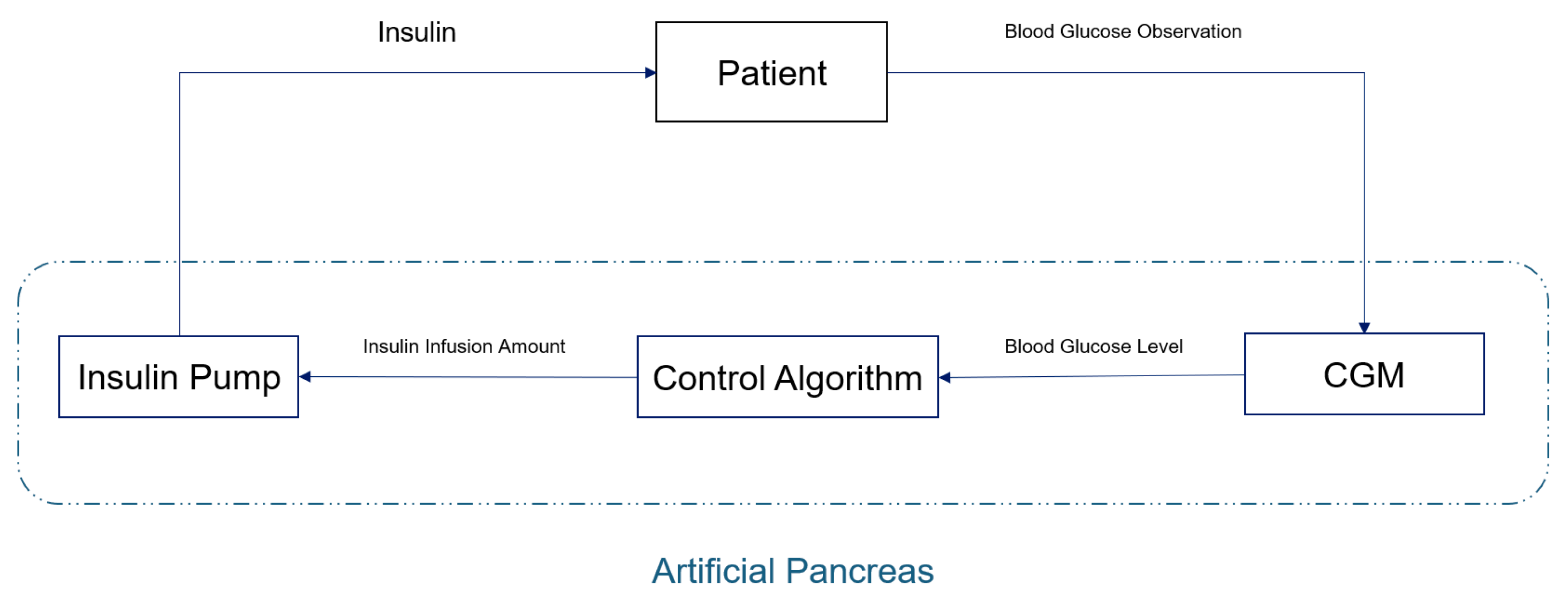
With the development of CGM technology, blood glucose control methods have also evolved from the original manual calculation of insulin volume injection to the use of an artificial pancreas (AP) system to achieve continuous and automatic control of patients’ blood glucose. A schematic diagram of the artificial pancreas system is shown in
Figure 1. It mainly consists of three parts: (1) a continuous glucose monitoring device (CGM) that can provide the patient’s current and historical blood glucose values; (2) a control algorithm that calculates the insulin infusion volume based on the patient’s blood glucose level; and (3) an insulin pump that injects insulin into the patient according to the algorithm. Among them, the control algorithm is the core of the AP system, as its quality directly determines the system’s performance [
3,
9,
10].
Traditional control algorithms include PID control [
11], model predictive control (MPC) [
12], fuzzy logic control [
13], etc. Among them, PID control and MPC have been approved by the U.S. Food and Drug Administration (FDA) and are applied in commercially available AP systems [
14]. However, although PID control is easy to implement, it tends to overestimate postprandial insulin doses and struggles to integrate other blood glucose-influencing factors, such as patient exercise data and insulin activity [
15,
16]. While MPC is more adaptable, its performance depends on the established blood glucose dynamic model. If a linear or other simplified model of glucose kinetics is used, it may fail to capture all the dynamic characteristics of blood glucose changes. If a more complex physiological model is to be established, extremely professional biomedical knowledge is required, making it more difficult to implement [
17,
18]. The blood glucose regulation system is a complex non-linear dynamic system, which has high inter-individual and intra-individual variability, as well as uncertainties and disturbances related to diet, exercise and daily events [
19]. In addition, subcutaneous drug administration causes a delay in insulin action, and changes in the patient’s insulin sensitivity and sensor lag delay the effect of insulin, resulting in large fluctuations in post-meal blood glucose and increasing the complexity of blood glucose control. All the above control strategies are affected by these characteristics [
20,
21,
22]. More importantly, these systems require patients to manually estimate carbohydrates before meals. This not only increases patient cognitive burden but may also inadvertently lead to erroneous algorithmic decisions caused by inaccurate carbohydrate intake estimation, which may compromise patient health [
23,
24].
Reinforcement learning (RL) has achieved success in many complex control tasks, such as playing games and robot control [
25,
26]. In RL algorithms, an agent interacts with its environment to achieve specified goals. When the agent takes an action, it causes a state transition in the environment. Meanwhile, the predefined reward function evaluates the feedback signal (reward) related to the pursued goal in this state and returns it to the agent. The agent uses its experience (states, actions, rewards) to learn a control strategy to maximize the cumulative reward. With the development of deep learning (DL), deep reinforcement learning (DRL), which applies DL networks and modules to the RL framework, provides more flexibility in implementing policy networks and value networks [
27]. DRL does not require prior physiological knowledge to build a complex blood glucose dynamics model. Instead, it learns strategies through exploration and trial-and-error, and has great potential in achieving fully automated closed-loop control of artificial pancreas [
20,
28].
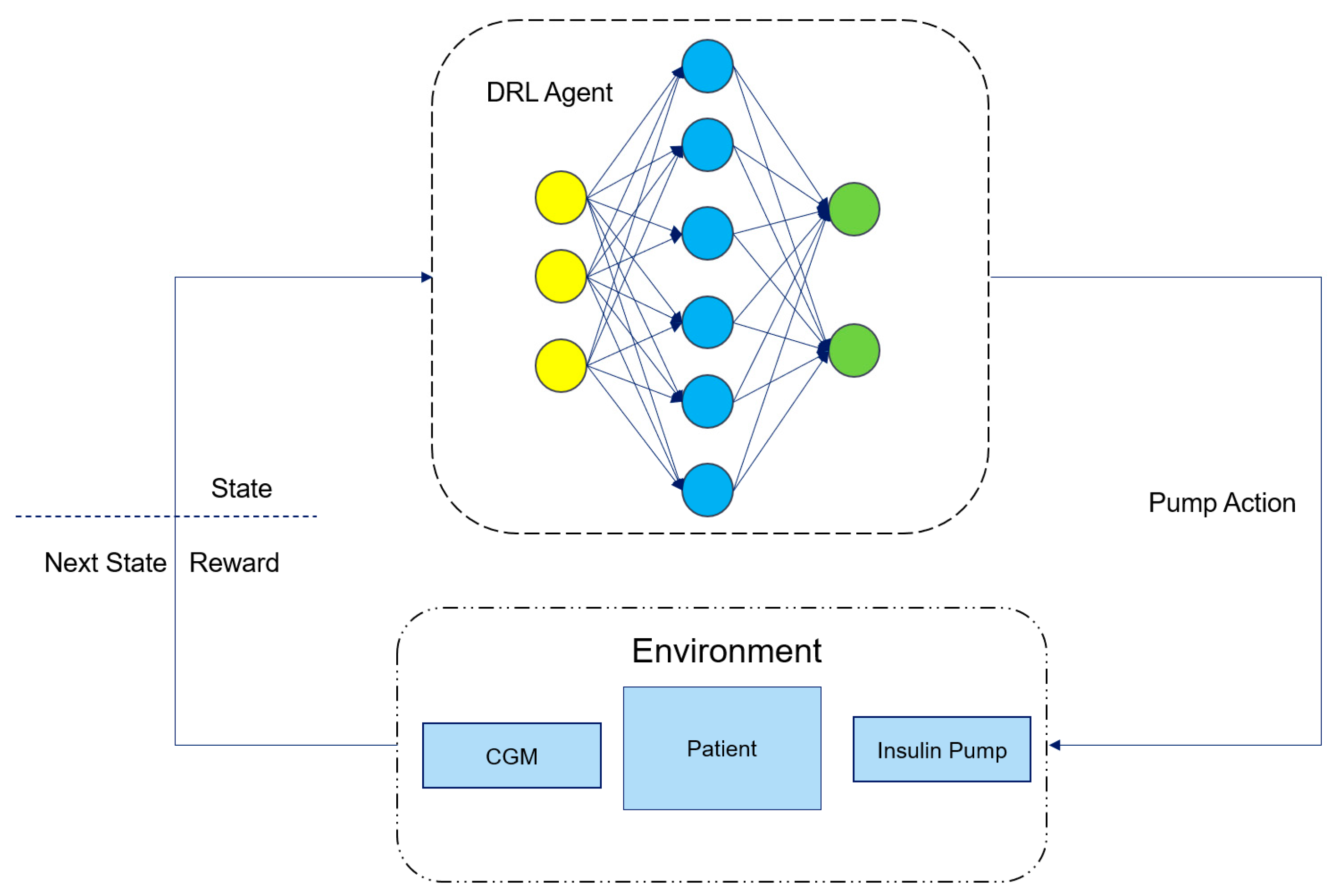
Figure 2 is a schematic diagram of the working principle of an artificial pancreas system based on deep reinforcement learning. Here, the DRL Agent is an RL algorithm implemented using DL network modules. It calculates the insulin dose required by the patient based on the current state provided by the environment, i.e., the patient and the connected insulin pump and CGM sensor, and interacts with the patient through the insulin pump to inject insulin into the patient’s body. After the DRL Agent takes an action, the environment monitors and returns the patient’s next state through the CGM and calculates the reward for the DRL Agent’s current action based on the next state. The DRL Agent then adjusts its strategy according to the returned next state and reward to keep the patient’s blood glucose level within a healthy range.
The application of RL in controlling the blood glucose levels of T1D patients can be traced back to 2012. Daskalaki et al. [
29] studied the use of the actor–critic method in blood glucose control. However, due to the limitations of the available simulators at that time, this task was limited to daily updates of the control strategy. With the release of the FDA-approved UVA/Padova T1D simulator Simglucose [
30], the application of RL in the control of artificial pancreas has attracted more and more attention from researchers. But many early studies were based on the Q-learning method. Although it alleviated the impacts of insulin action delay, changes in patients’ insulin sensitivity, and sensor lag delay in the blood glucose control task, it required patients to manually estimate carbohydrate intake and provide meal announcements, which imposed a cognitive burden on patients [
31,
32,
33].
In recent years, many advanced DRL algorithms have been proposed for blood glucose control tasks and to eliminate the influence of carbohydrate overload and control estimation. Fox [
34] et al. compared the performance of DRL and non-RL methods through a series of experiments. The DRL method was implemented using Soft Actor–Critic. In more than 2.1 million hours of data from 30 simulated patients, the SAC-based DRL method successfully reduced the median blood glucose risk by nearly 50% and the total hypoglycemia time by 99.8%. Moreover, it did not require patients to manually estimate carbohydrate intake, allowing patients to manage their blood glucose levels without professional knowledge. Lee [
35] et al. developed a bio-inspired RL design method for automatic insulin infusion based on PPO. This method has a reward function that implies a time-steady-state goal and a discount factor that reflects individual-specific pharmacological characteristics. Experiments showed that the AP algorithm based on the bio-inspired RL method can achieve fully automatic blood glucose control without announced meal intake. Federico [
36] et al. developed a new type of DRL controller for the autonomous blood glucose regulation of patients with T1D. This controller is based on the DDPG algorithm and overcomes the limitations of standard clinical practice and classical model-based control techniques in terms of control workload and computational efficiency for real-time applications. However, these algorithms still lack safety-oriented design considerations and are not yet ready for clinical translation.
While deep reinforcement learning (DRL) offers distinct advantages over traditional control methods like PID control and model predictive control (MPC), its clinical translation faces critical challenges. As an exploration-driven, trial-and-error learning paradigm, DRL inherently requires iterative refinement to develop optimal policies, leading to suboptimal performance during early training phases [
37]. In non-clinical domains (e.g., gaming, robotics), such transient errors are tolerable due to minimal associated costs. However, in clinical settings, even minor decision-making errors may pose significant risks to patient safety, making unconstrained trial-and-error learning infeasible. Additionally, DRL’s data-intensive nature presents a practical barrier. Previous studies have shown that DRL models often require training on simulated patient data spanning years or even decades to achieve robust control performance [
34,
38]. Translating this to clinical practice would necessitate prolonged deployment of unvalidated controllers, which is ethically and practically unacceptable. Thus, key challenges for DRL in clinical applications include ensuring safety during learning, enhancing training efficiency, and reducing data requirements.
Many researchers have also dedicated themselves to the safety research of DRL in blood glucose management, and most of them are based on a hybrid control strategy that combines model-free and model-based approaches. Reference [
39] proposed a new hybrid control strategy for the AP system called HyCPAP to leverage the advantages of MPC and DRL strategies and compensate for their respective shortcomings. By combining the MPC strategy with the overall DRL strategy, HyCPAP provides personalization and adaptability while ensuring safety and stability. However, the insulin–glucose dynamic model used in its MPC is a discrete-time linear time-invariant model, which cannot effectively capture all the dynamic characteristics of blood glucose changes. Reference [
40] combined PID control with the DRL strategy. It adopted PID control in the early stage of DRL strategy training and gradually reduced the weight of PID control as the training progressed, gradually transitioning to DRL control. The results were comparable to those using PID control, and it successfully captured glucose dynamics with little prior knowledge. However, the input of its model still included carbohydrate intake, so it was not a fully closed-loop control. Chirath [
41] et al. proposed a modular DRL method, introducing an auxiliary learning stage and a planning stage to optimize the DRL strategy in the short term, effectively reducing the patient’s hypoglycemia time. However, in the planning stage, it only selected the action with the maximum cumulative reward value during the simulation process and did not use the prediction model to limit potentially dangerous actions. Reference [
42] adopted ten techniques to enhance the PPO algorithm and introduced a dual safety mechanism of “active guidance + reactive correction” to reduce the risks of hyperglycemia and hypoglycemia and prevent emergencies. However, its correction controller performs reactive correction based on the blood glucose monitored by the current CGM and cannot play a preventive role. Harry [
43] et al. evaluated offline RL without potentially dangerous patient interactions during training. The training data for offline RL were collected through PID control. This work shows that when training with less than one-tenth of the total training samples required for online RL to achieve stable performance, offline RL can significantly increase the time within the healthy blood glucose range, from 61.6 ± 0.3% to 65.3 ± 0.5%.
Combining the advantages of previous research results, we proposed a hybrid control strategy based on DRL and MPC, and introduced a safety controller in combination with clinical experience. Compared with the literature [
39], this study has two core technical differences in the design of the MPC controller and the collaboration mechanism. First, at the level of constructing the blood glucose dynamic model, we abandoned the discrete-time linear time-invariant model framework that relies on patients’ physiological parameters. Instead, we used the real-time interaction data between DRL and patients to drive model learning, and introduced the Informer network with outstanding long-time series modeling ability for feature extraction, realizing the adaptive construction of a personalized blood glucose dynamic model without prior knowledge. Second, in the collaboration strategy between MPC and DRL, we generated optimal action samples through multiple rounds of simulation optimization of MPC, which were used as guiding learning signals for the DRL model to accelerate strategy convergence. However, the literature [
39] adopted a multi-DRL output consistency voting mechanism and only introduced the MPC output as a compromise solution when there were strategy disagreements. During the simulation control process of MPC, we predict the blood glucose value after taking candidate actions through the prediction module. When the predicted blood glucose value is lower than 54 mg/dL, the candidate action sequence containing this action is marked as unsafe. Finally, the action with the maximum cumulative reward is selected from the safe actions as the next action of DRL. If all actions are unsafe, the action of the safety controller is taken, so as to adjust the patient’s blood glucose to the healthy range in the short term. We expect that through such double-safety control, a safer fully automatic closed-loop control of the blood glucose level of T1D patients can be appropriately achieved.
2. Materials and Methods
2.1. Problem Definition of Blood Glucose Control in the Reinforcement Learning Task
Since the glucose level data monitored by the CGM sensor is noisy and it is difficult to observe other state information, such as insulin level, diet, exercise information, etc., the blood glucose control problem of the artificial pancreas system is a partially observable Markov decision process (POMDP). A POMDP is usually represented by a tuple (
T,
S,
A,
P,
O,
R). Here,
t ∈
T represents the true state of the current environment,
s ∈
S represents the state observed by the observation function
O, and
a ∈
A represents the action taken. The state transition function
P: (
t,
a) ->
t′ describes the dynamics of the system, which means that when the reinforcement learning agent takes action a in the current environment state t, the environment transitions to the next state
t′. The observation function
O:
t ->
s maps the true state t of the environment to the observed state s. The reward function
R: (
s,
a) ->
r represents the reward
r ∈
R obtained by the agent after performing action a in the state s it observes. In reinforcement learning, the agent’s task is to try different actions in different states to interact with the environment and learn from the rewards obtained to maximize the cumulative rewards. In the blood glucose control task, our goal is to train an agent to control the actions of the insulin pump by learning the strategy
based on the current patient’s blood glucose level and the infused insulin dose information, so as to maximize the average reward:
True state space T: The patient’s true physiological state and environmental factors, such as blood glucose and insulin levels, dietary intake, exercise volume, etc. The state space is complete. However, since the closed-loop system of the artificial pancreas cannot directly observe all of the patient’s states, it is partially observable.
Observation state space S: The patient’s observed state refers to the patient’s blood glucose value g measured by the CGM sensor and the insulin dose
injected by the insulin pump. Usually, we use the observed k historical data as the patient’s current observed state input to the system. Therefore, the patient’s state can be defined as:
Action space A: To provide more flexibility for the control strategy learned by the reinforcement learning agent, we define the space of the action
output by it as a continuous space and limit it within the range of [−1, 1]. Then, we convert the action
output by the RL agent into the insulin infusion rate
(U/min) of the insulin pump through the nonlinear transformation Formula (3) proposed in Reference [
44].
Among them, represents the maximum rate of insulin infusion per minute, which is usually set to 5, while is set to 4.0. ∈ [−1,1] represents the action output by the RL agent at time t.
Reward function R: The reward function is the core driving force of reinforcement learning. It defines the goals and behavioral guidelines of the agent, and directly determines the learning direction, efficiency, and performance of the agent. Reference [
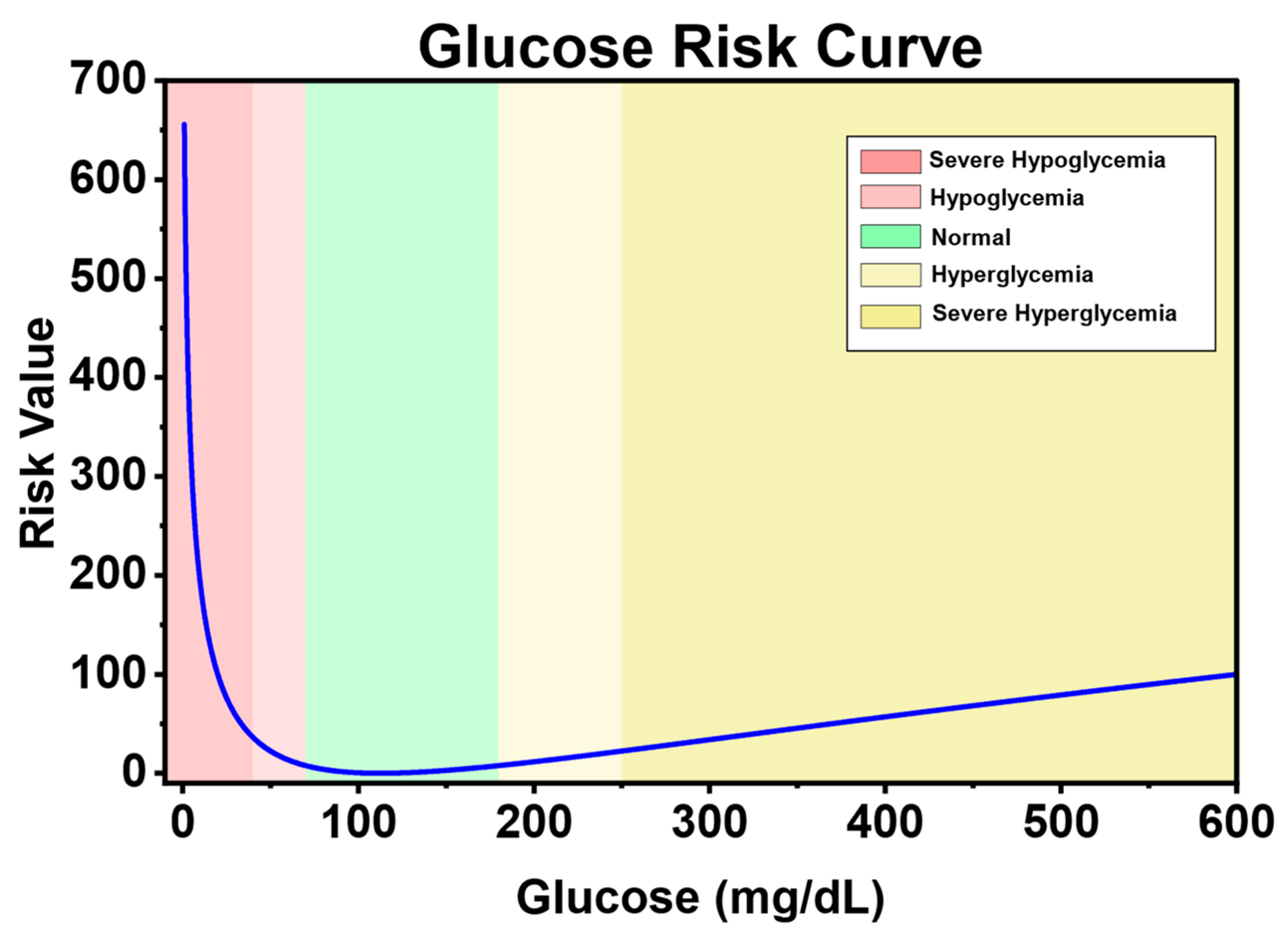
33] defines a blood glucose risk index (Equation (4)) to measure the risk of the patient’s current blood glucose level
based on the clinical low blood glucose risk (LBGI) and high blood glucose risk (HGBI).
Figure 3 shows the change in the risk index with blood glucose level. It can be seen that the blood glucose risk gradually increases as it deviates from the healthy range (70–180 mg/dL). Moreover, hypoglycemia has a higher risk value than hyperglycemia. This is because the harm of hyperglycemia is more of a chronic cumulative nature, while the harm of hypoglycemia is more acutely fatal. Therefore, when blood glucose is in the state of hypoglycemia and severe hypoglycemia, it has a higher risk.
Many researchers have designed reward functions for reinforcement learning in blood glucose control tasks based on the blood glucose risk index. Reference [
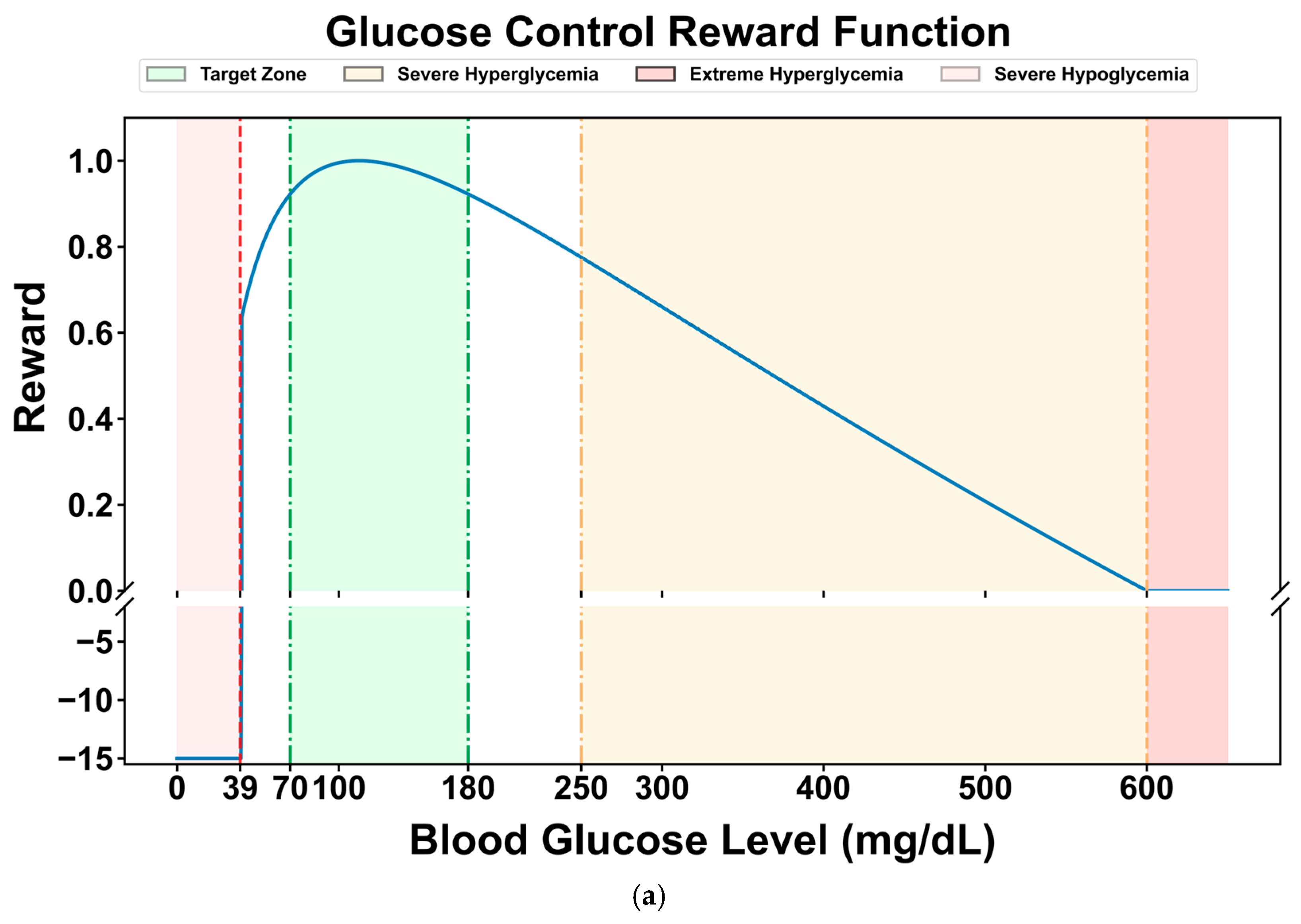
45] proposed a reward function (Equation (5)), which normalizes the blood glucose risk index to the range of [−1, 0] and takes its negative value as the reward for the current blood glucose level. For severe hypoglycemia events when the blood glucose level is less than 40 mg/dL, a penalty term of −15 is set to punish hypoglycemic events that pose a serious threat to the patient’s life and guide the agent to avoid severe hypoglycemia events. Its graph is shown in
Figure 4a.
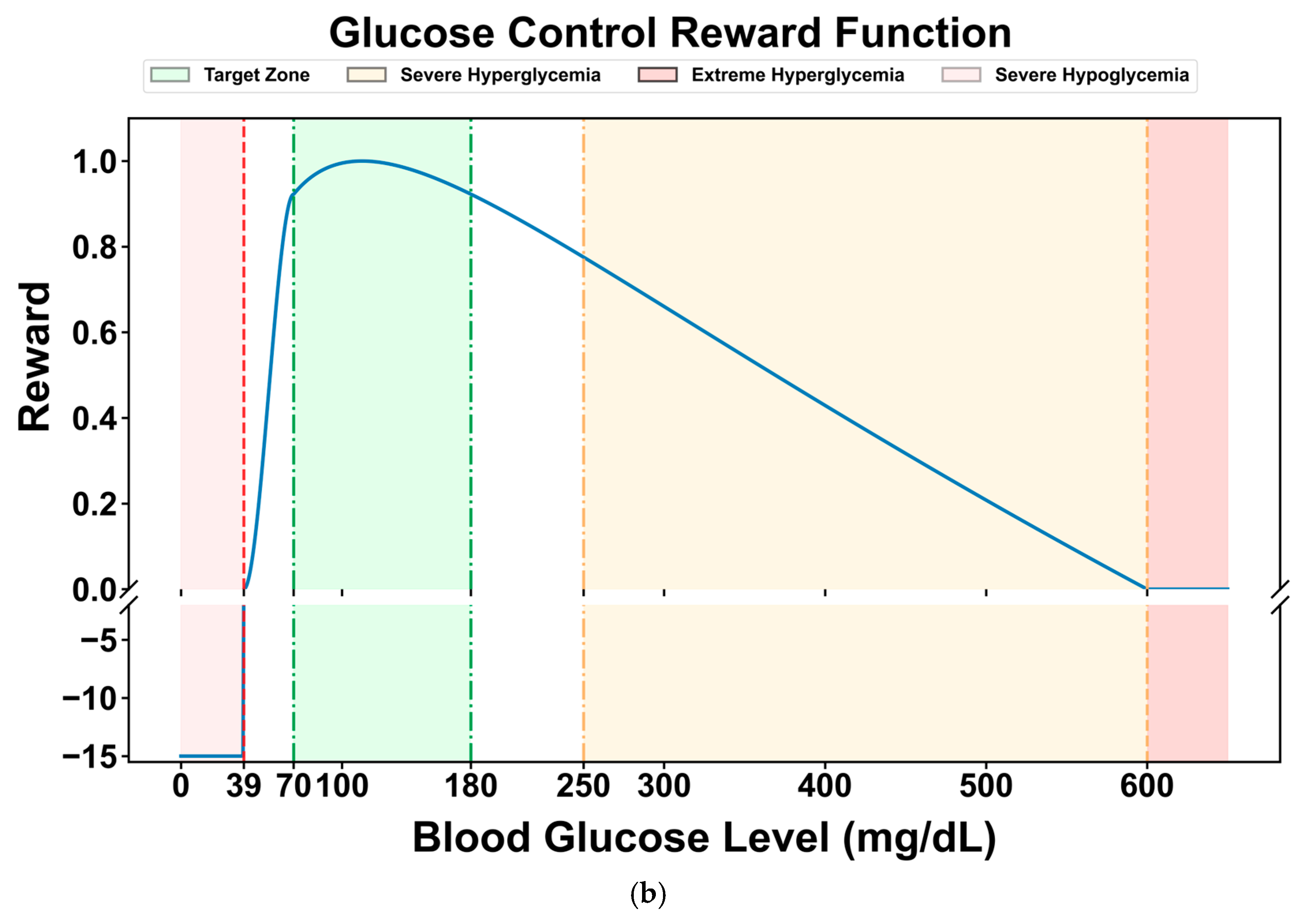
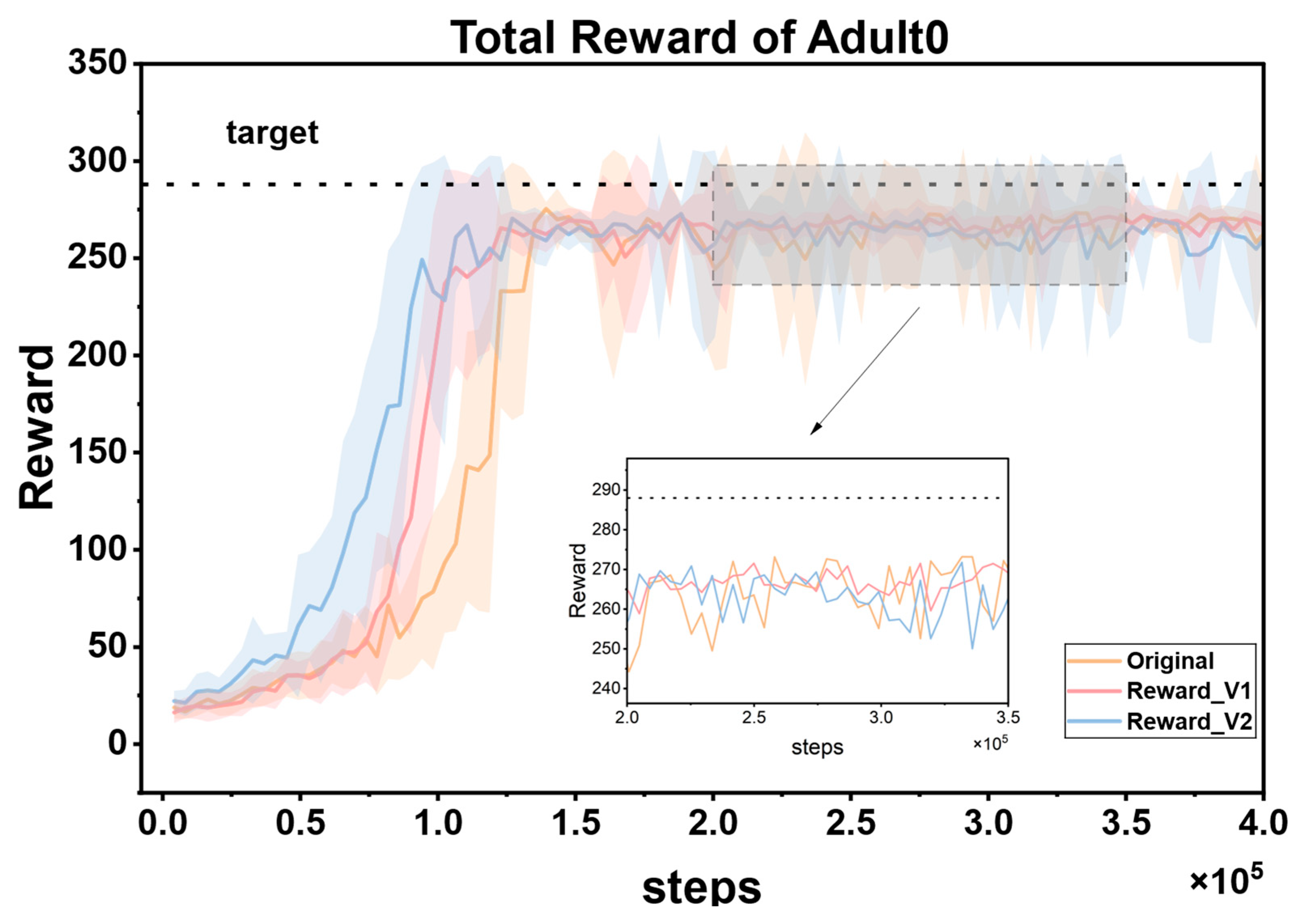
Compared with the limitation of the original reward function, which only sets a single penalty term in the severe hypoglycemia range (<40 mg/dL), this study introduces cubic spline smoothing for the hypoglycemic state (40–70 mg/dL). The original function still has relatively high reward values in this range, which may lead to insufficient sensitivity of the DRL strategy to mild hypoglycemic risks. By using a cubic spline function to perform continuous non-linear smooth attenuation of the reward values in this range (gradually decreasing from the baseline reward value at 70 mg/dL to 0 at 40 mg/dL), a dual optimization of refined risk gradient and improved strategy stability can be achieved. The former constructs a continuous penalty gradient from “mild hypoglycemia → severe hypoglycemia”, enabling the DRL model to more accurately perceive the degree of blood glucose deviation and avoid the “step-like” lag in responding to hypoglycemic risks. The latter reduces the reward jumps during state transitions by smoothing the reward curve, thereby reducing the oscillations in strategy updates and enhancing the stability of the learning dynamics, especially in the critical range with frequent blood glucose fluctuations (e.g., 50–60 mg/dL).
The modified reward function is shown in
Figure 4b. It maintains a high-reward plateau in the normal blood glucose range (70–180 mg/dL), achieves a continuous attenuation of the reward value from the baseline value to 0 through cubic splines in the hypoglycemic range (40–70 mg/dL), and maintains a strong penalty in the severe hypoglycemic range (<40 mg/dL), forming a hierarchical reward mechanism of “protecting normal blood glucose → gradually avoiding hypoglycemia → strictly punishing severe hypoglycemia”.
2.2. Model Design
As a powerful artificial intelligence technology, deep reinforcement learning accumulates experience through interaction with the environment and gradually improves the quality of decision-making. It provides the core advantages of autonomous learning and optimization in complex and uncertain environments. This paper proposes a hybrid control model based on deep reinforcement learning and model predictive control, and introduces a safety controller. The aim is to completely eliminate the patient’s manual estimation of carbohydrates, improve the decision-making safety of the RL model, achieve safe and fully automatic closed-loop control of the artificial pancreas, and promote the application of deep reinforcement learning in diabetes management.
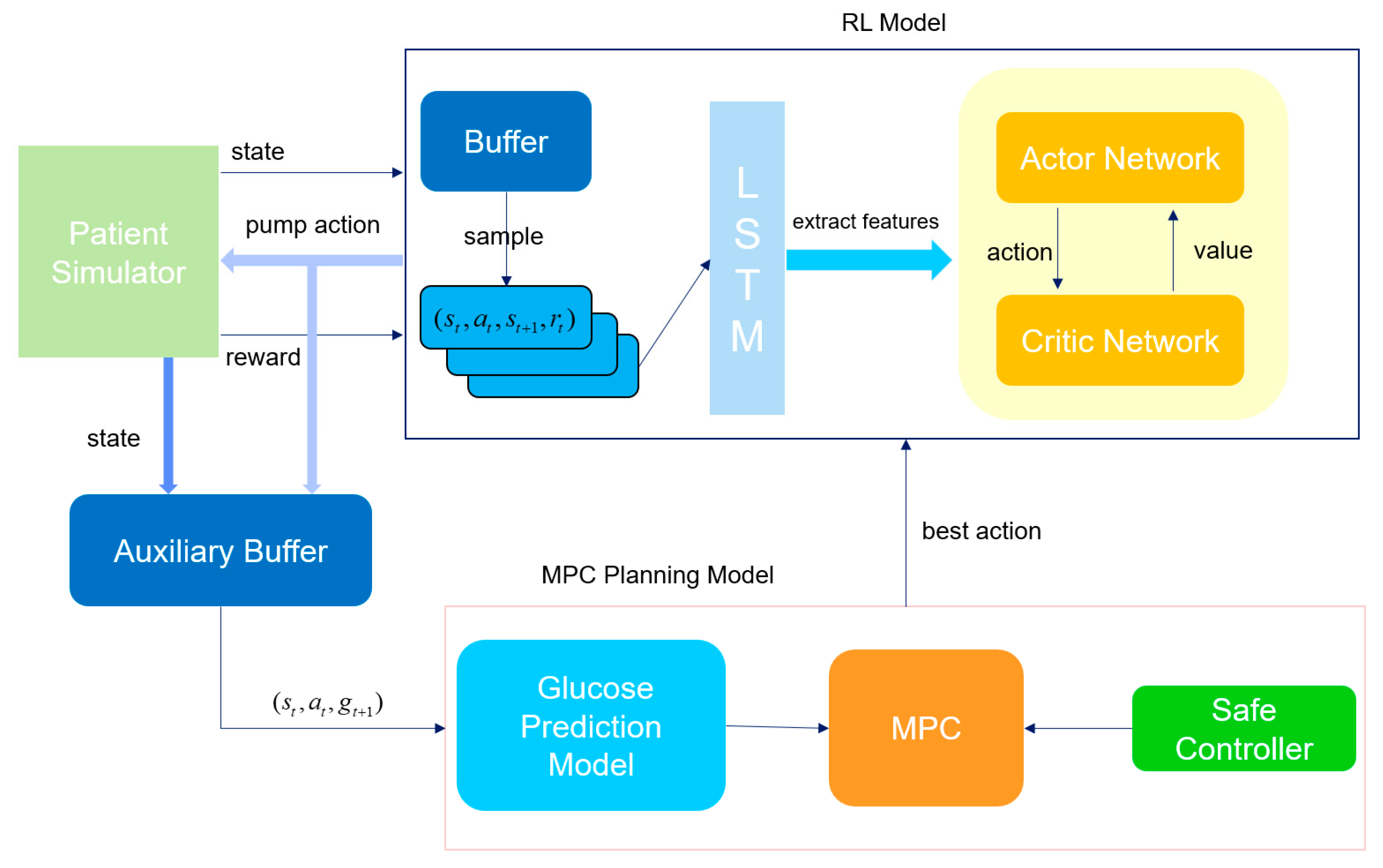
The overall schematic diagram of the model proposed in this paper is shown in
Figure 5. First, the reinforcement learning model (RL agent) interacts with the patient simulator, which simulates the patient’s physiological state (such as historical blood glucose values and historical medication records) and the response to actions. In each round of interaction, the RL agent receives the sequential data of the current state output by the simulator, processes it through the long-short-term memory network (LSTM) of the feature extraction module to capture the time-dependent information in the state (such as the changing trend of blood glucose), and generates a hidden state. This hidden state is input into both the Actor network and the Critic network. As the policy network, the Actor network outputs specific actions based on the hidden state. This action is passed to the simulator, which updates the patient’s state (blood glucose value at the next moment) according to the action and returns the corresponding reward. These interaction data (state, action, reward, next state) are stored in the buffer container (experience replay pool) for subsequent batch learning to break the time correlation of the data and improve the training stability. After a round of interaction ends, batch data are randomly sampled from the buffer to update the Actor and Critic networks. For the Critic network (value network), its task is to estimate the value of the state or state-action, that is, the expected total reward that can be obtained in the future after taking a certain action in the current state. Specifically, the Critic predicts a Q-value (state-action value) based on the hidden state of the current state and the action output by the Actor, and then calculates the prediction error (TD error) using the immediate reward returned by the simulator plus the discounted Q-value of the next state (TD target). The parameters of the Critic are updated by minimizing this error through back-propagation to make its value estimation more accurate. The update of the Actor network depends on the value estimation of the Critic. The goal of the Actor is to maximize the expected reward, so it needs to adjust the policy according to the advantage signal given by the Critic. Through such coordinated updates, the Actor gradually learns to output better actions, and the Critic continuously improves the accuracy of value estimation. The two optimize together to enable the RL agent to better control the patient’s blood glucose state and balance the risks of hypoglycemia and hyperglycemia.
In the iterative interaction between the main RL process and the patient simulator, the auxiliary buffer acts as a “data bridge”, continuously collecting state-action-state transition samples generated during the reinforcement learning update process. Specifically, these include: the patient state currently perceived by the RL agent (time-series data of historical blood glucose values and insulin doses), the insulin pump action output by the Actor network, and the real blood glucose value at the next moment simulated by the simulator based on this action. These data are specifically used to accumulate supervised learning samples for the training of the blood glucose prediction model, with the goal of enabling the prediction model to learn to “accurately predict the blood glucose change at the next moment based on the current state and the upcoming action”. The working logic of the auxiliary buffer follows the “batch collection-trigger training” mode: when the number of samples in the buffer reaches the preset threshold, the system automatically initiates the learning process of the blood glucose prediction model. At this time, the data in the buffer will be taken out in batches and organized according to the supervised learning paradigm of “input-label”. The input layer integrates the time-series features of the current state and the numerical features of the RL action, while the label layer is the real blood glucose value at the next moment returned by the simulator. The prediction model generates the predicted blood glucose value at the next moment through forward propagation, then calculates the error between the predicted value and the real value, and adjusts the model parameters through the error backpropagation algorithm to minimize the prediction error. In essence, this process allows the prediction model to “learn” the law of how the patient state and insulin action jointly affect blood glucose changes.
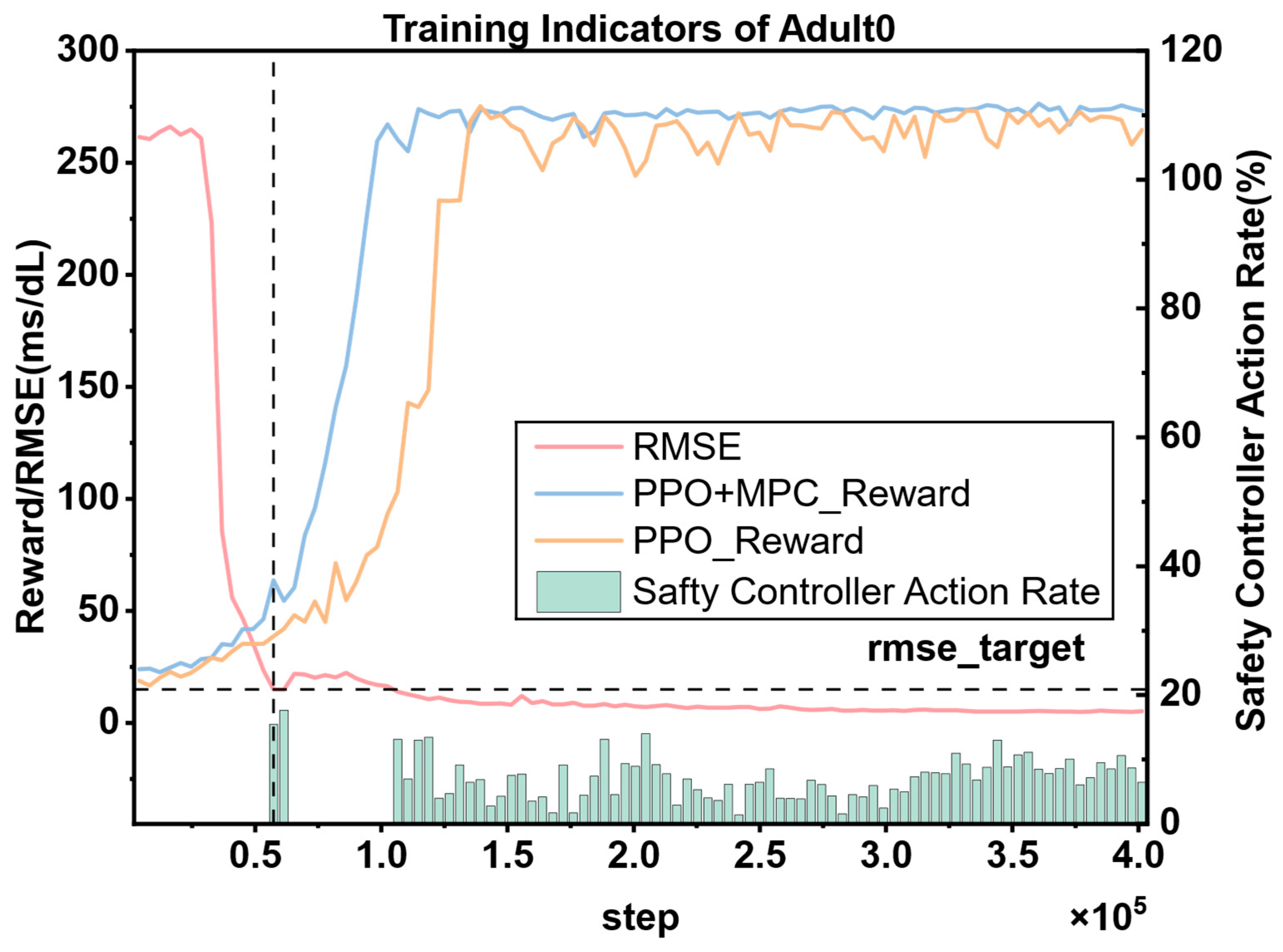
When the prediction accuracy of the blood glucose prediction model reaches the preset threshold (RMSE drops to 15 mg/dL), the system will activate the MPC (Model Predictive Control) module. Through multi-trajectory simulation and safety screening, the action output of the RL (Reinforcement Learning) agent will be optimized. The specific process is as follows: First, based on the patient’s current physiological state, the MPC generates multi-step simulations of multiple future blood glucose change trajectories (each trajectory corresponds to a different insulin pump action sequence). For each action at each step of each trajectory, the blood glucose prediction module is called to calculate the corresponding predicted blood glucose value at the next moment. If the predicted blood glucose at a certain step is lower than 70 mg/dL (hypoglycemia threshold) or higher than 250 mg/dL (severe hyperglycemia threshold), the entire trajectory is marked as “unsafe”. After the simulation is completed, the system only retains the safe trajectories (the predicted blood glucose level at all steps is within the safe range) and calculates the cumulative reward value for each safe trajectory. Finally, the safe trajectory with the maximum cumulative reward value is selected, and its first-step action is taken as the optimal action that the RL agent should execute in the current state. If all trajectories are marked as unsafe (i.e., any action sequence may lead to hypoglycemia or severe hyperglycemia), the safety controller will immediately intervene: it calculates an insulin dosage adjustment coefficient based on the patient’s current blood glucose value and recent change trend, and corrects the action output by the RL to limit it to a more conservative safe range. The core goal of this mechanism is to quickly resolve short-term blood glucose risks (such as impending hypoglycemia) and avoid ignoring emergencies due to the “long-term optimization” of the RL strategy. We hope that through such a dual-safety control mechanism, we can effectively avoid the unsafe actions that the RL may generate during the learning process and affect the patient’s health.
The closed-loop control model proposed in this paper integrates the model-free reinforcement learning method and the model-based MPC method. It combines the advantages of deep learning in automatically extracting features and reinforcement learning in continuous decision-making to construct an end-to-end closed-loop blood glucose control system. The entire process from input to output is completed by the control model without human intervention or complex intermediate steps. This end-to-end deep reinforcement learning method further improves the blood glucose control effect for diabetic patients, making the control strategy more intelligent and personalized.
2.2.1. Reinforcement Learning Model
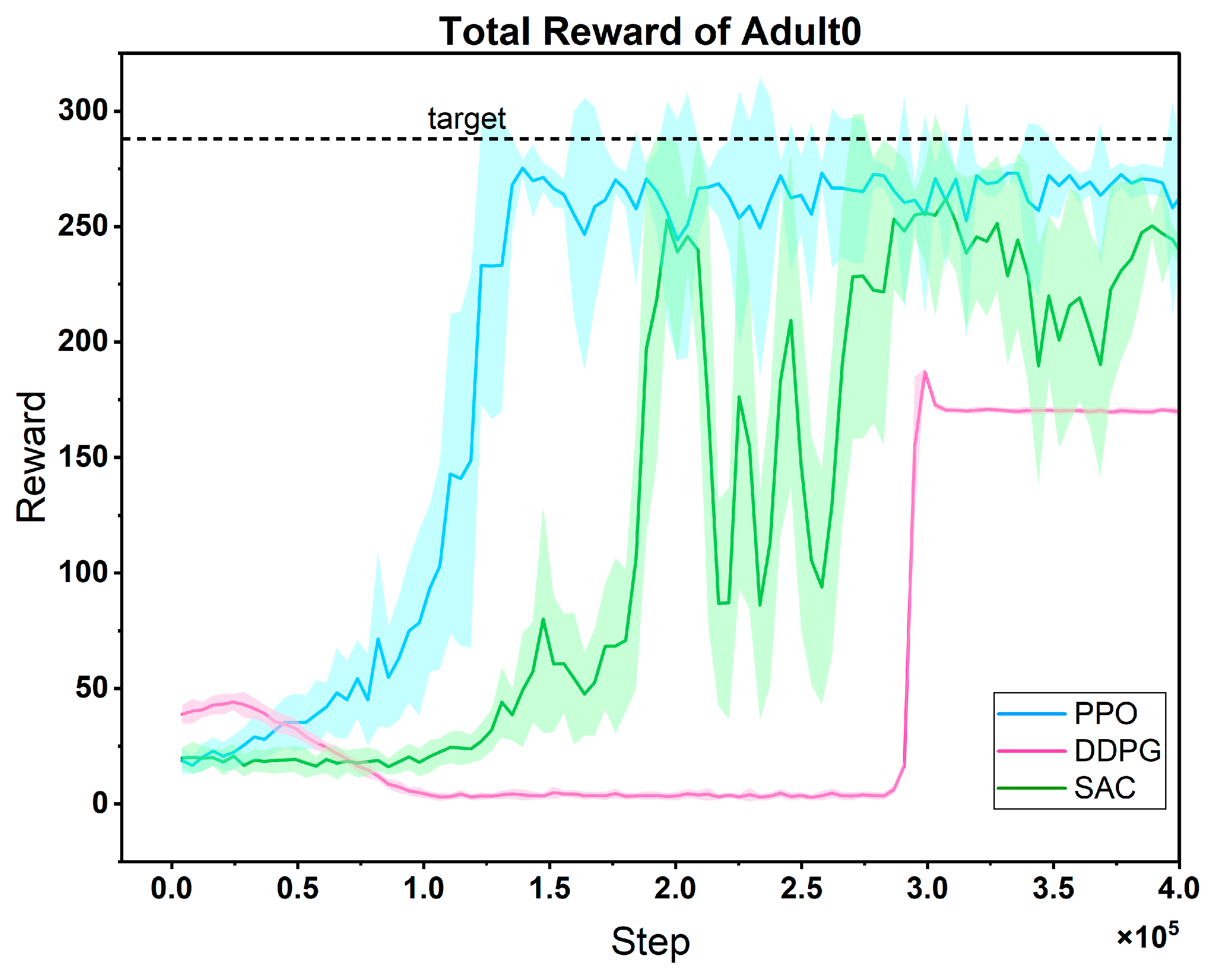
In RL algorithms, we considered three current advanced RL algorithms: SAC, DDPG, and PPO. All three algorithms adopt the Actor–Critic architecture, but there are slight differences in specific network implementation and update methods.
Specifically, as a representative of the deterministic policy gradient algorithm, the Actor network of DDPG uses a deterministic structure, directly outputting specific action values in the continuous action space. This design simplifies the action generation process, but due to the lack of randomness, it may lead to insufficient exploration. The corresponding Critic network is a single Q-network, which takes the state and action as inputs and outputs the state-action value
to evaluate the value of the current action and provide signals for the gradient update of the Actor. To stabilize the training, DDPG introduces dual target networks (target Actor and target Critic), generating target actions and target Q-values through soft updates to avoid the interference of current network fluctuations on the training. During the update, the update target of the Actor network is to maximize the Q-value evaluation of the current action by the Critic network. That is, the policy is adjusted through the feedback of the Critic to make the generated actions better. The update formula for its network parameters θ is as follows:
Among them,
is the deterministic action output by the Actor network, and
is the state-action value output by the Critic. α is the learning rate of the Actor network. In the update of the Critic network, all three use the TD error to calculate the network loss. The TD error is the deviation between the current state value estimate and the “immediate reward + future state value estimate”. Its formula is:
For DDPG, its Critic network estimates the state-action value function
, and its update target is the TD target generated by the target network:
The loss function of the Critic network is as follows:
PPO focuses on stochastic policy optimization. Its Actor network outputs the parameters of the action distribution, and actions are obtained by sampling the distribution. The randomness enhances the exploration ability. The Critic network is a single V network that only takes the state as input and outputs the state value V(s), which is used to estimate the baseline value of the state. It calculates the target for policy update in combination with the Generalized Advantage Estimation (GAE). Different from DDPG, PPO does not require a target network. Instead, it limits the policy update amplitude through the “clipped advantage function”, which not only ensures the training stability but also simplifies the network structure. It is suitable for a wide range of tasks in both discrete and continuous action spaces. The Actor network of PPO outputs a stochastic policy
, and the goal of its update is to maximize the policy performance under the premise of constraining the policy change amplitude, avoiding training instability caused by sudden policy changes. The specific update formula is as follows:
Among them,
is the policy of the current Actor network, which outputs the parameters of the action distribution, namely the mean and variance of the Gaussian distribution; while
is the old policy before the update, used to calculate the ratio of policy change;
is the advantage function, usually estimated by GAE, which measures the superiority or inferiority of action a relative to the average action; ϵ is the truncation parameter, which limits the amplitude of policy change. The loss function of the Critic network in PPO is as follows:
Among them,
is the state value output by the Critic network, and Gt is the weighted sum of the TD errors, which is calculated as follows:
As a typical algorithm of maximum entropy reinforcement learning, the Actor network of SAC also has a stochastic structure, but it uses the reparameterization trick to enable efficient gradient transmission. The Critic network uses a double Q-network (Q1 and Q2), both of which take the state and action as inputs and output two Q-values. During training, the minimum value is taken as the target Q-value, which effectively alleviates the overestimation bias of Q-values and improves the accuracy of value evaluation. In addition, SAC introduces a temperature parameter α. By balancing the expected return and the policy entropy, it encourages more comprehensive exploration, making it show stronger adaptability in continuous control tasks. In terms of the target network, SAC only uses a double target Critic network (target Q1′ and Q2′) and keeps the target value stable through soft updates. The update of the Actor network depends on the output of the current Critic, and there is no need for a target Actor. The Actor network of SAC also outputs a stochastic policy
. Its update goal is to maximize the expected return with entropy regularization; that is, while pursuing high returns, it maintains the randomness (entropy) of the policy to enhance the exploration ability. Therefore, its update formula is:
Among them,
is the state-action value output by taking the minimum value of the double Q-networks of the Critic network, and the minimum value of the double Q-networks is taken to reduce the overestimation bias; is the entropy of the policy, which is used to measure the randomness of actions, and
is the temperature parameter used to balance “reward maximization” and “entropy maximization”. For the Critic network, SAC uses double Q-networks to estimate the state-action value function, and its update target is the TD target with entropy regularization to balance rewards and exploration:
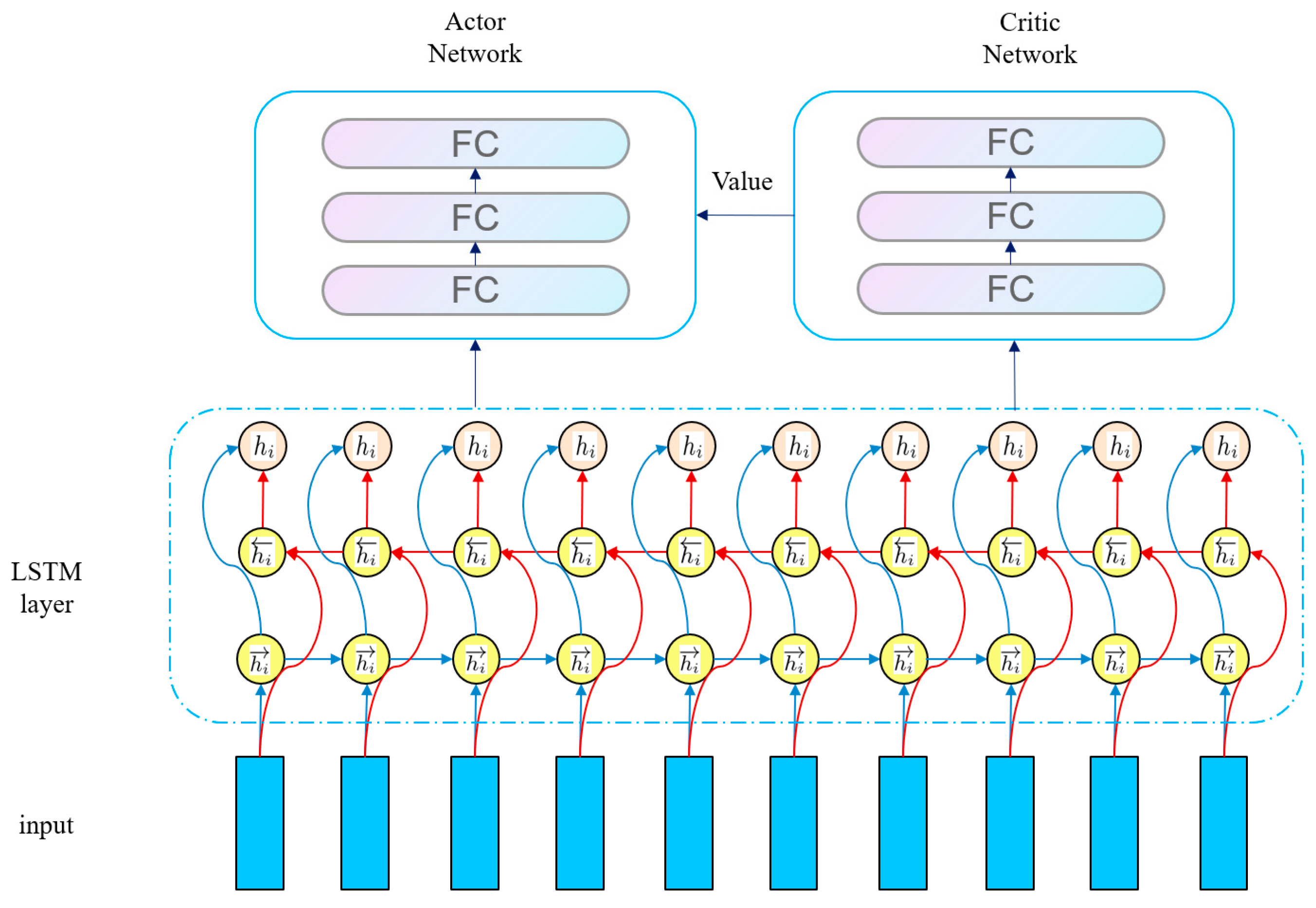
All three RL algorithms are based on the Actor–Critic (AC) architecture and use a shared Long Short-Term Memory network (LSTM) as the feature extraction module. When extracting features from the original state, they share the same set of LSTM parameters. The extracted sequential features are then input into the policy head of the Actor and the value head of the Critic, respectively. LSTM is selected because its gating mechanism can effectively capture the long-term temporal dependencies between states, which is suitable for the requirements of sequential states, partially observable environments (POMDP), and dynamic environments in RL tasks. It is more suitable for processing sequential data than ordinary MLP or CNN. The shared module is based on the high consistency of feature requirements between the Actor and the Critic in the AC architecture. It can not only reduce overfitting and improve generalization ability through parameter sharing but also ensure feature consistency to avoid the mismatch between decision-making and evaluation. Moreover, it can reduce redundant calculations and improve training efficiency. This design precisely adapts to the characteristics of the three algorithms (continuous action control of DDPG, trajectory sampling stability of PPO, and exploration–reward balance of SAC). In essence, it deeply combines the sequence modeling advantages of LSTM with the feature requirements of the AC architecture, laying the foundation for subsequent policy generation and value evaluation. After constructing the RL model, we will evaluate the performance of these three RL algorithms and select the optimal one for subsequent experiments. The overall network structure of the RL algorithms is shown in the following
Figure 6.
2.2.2. Blood Glucose Prediction Model
As classic representatives of model-free deep reinforcement learning (DRL), SAC, DDPG, and PPO all follow the core logic of “learning from interaction”—they do not rely on an explicit mathematical model of the environment. Instead, they completely collect experience data through real-time interaction between the agent and the environment to drive the neural network to optimize the strategy. However, this characteristic also brings the inherent problem of low sample utilization efficiency: in order to learn an effective strategy to handle complex scenarios, the algorithm often needs to conduct thousands or even millions of interaction attempts. In fields such as healthcare, where high requirements for safety and real-time performance are placed, this problem is particularly prominent: a long training time means that patients have to bear more unknown risks, and the low sample efficiency also limits the practical application of DRL in clinical scenarios.
To address this bottleneck, we propose a hybrid framework of “model-free strategy optimization + model-assisted decision-making”: in addition to the main DRL strategy module, an auxiliary learning module is integrated. By introducing an auxiliary task of the target object’s blood glucose dynamic model, efficient utilization of experience data and precise optimization of the strategy are achieved. Specifically: the auxiliary module takes the patient’s historical blood glucose data and insulin infusion as inputs, and uses a time-series prediction model to learn the dynamic law of blood glucose levels changing with the input actions (insulin injection) and the patient’s historical blood glucose; the trained blood glucose dynamic model is embedded in the model predictive control (MPC) framework, and serves as a “virtual environment” to conduct multi-step rolling simulations of the candidate actions output by the DRL strategy. Through this hybrid framework, the exploration ability of model-free DRL (it can adapt to unknown changes without prior knowledge of the environmental model) is combined with the sample efficiency of model assistance (reducing the number of actual interactions through virtual simulations), which avoids the agent from trying these actions in actual interactions and saves a large amount of useless exploration time.
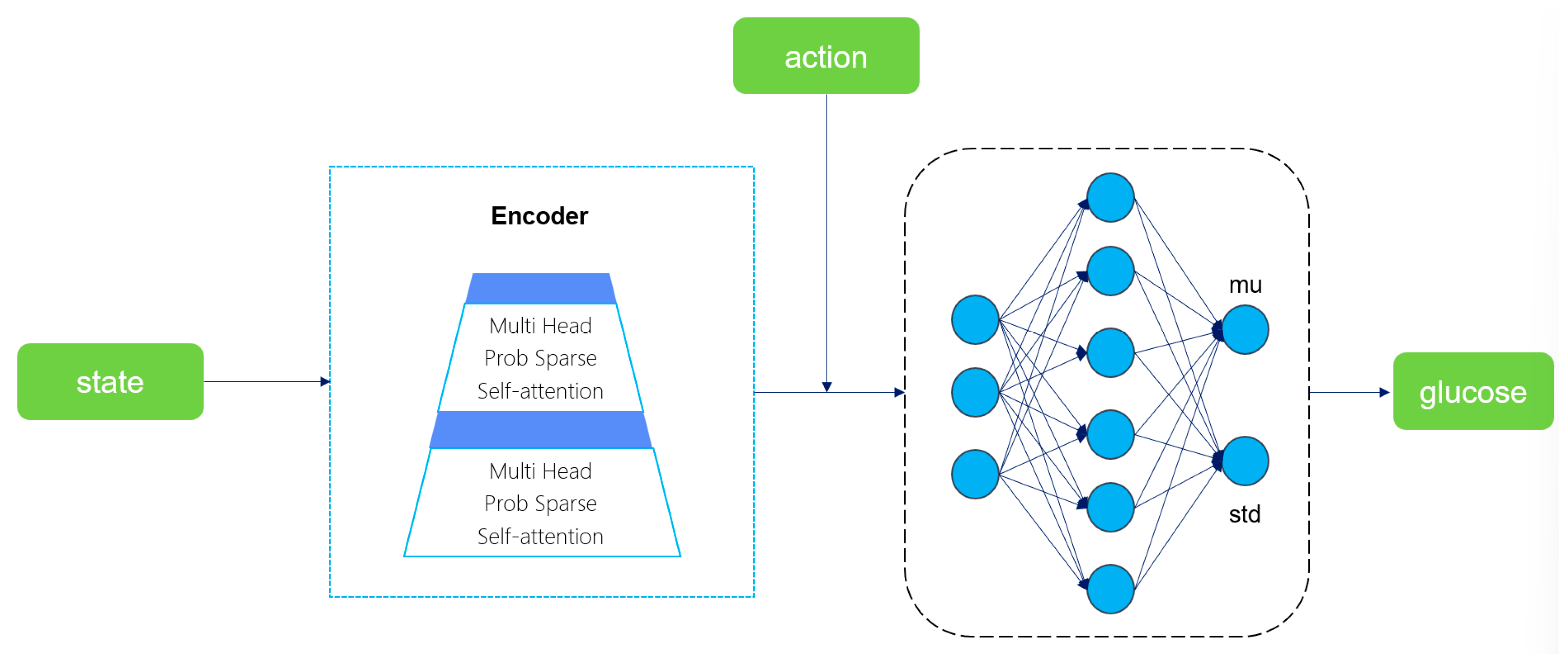
We designed an auxiliary buffer to accumulate the triplet data generated during the DRL process. When the buffer is full, the blood glucose prediction model training is initiated. This model takes the current state and action as inputs, encodes the time-series features through the Encoder module of Informer [
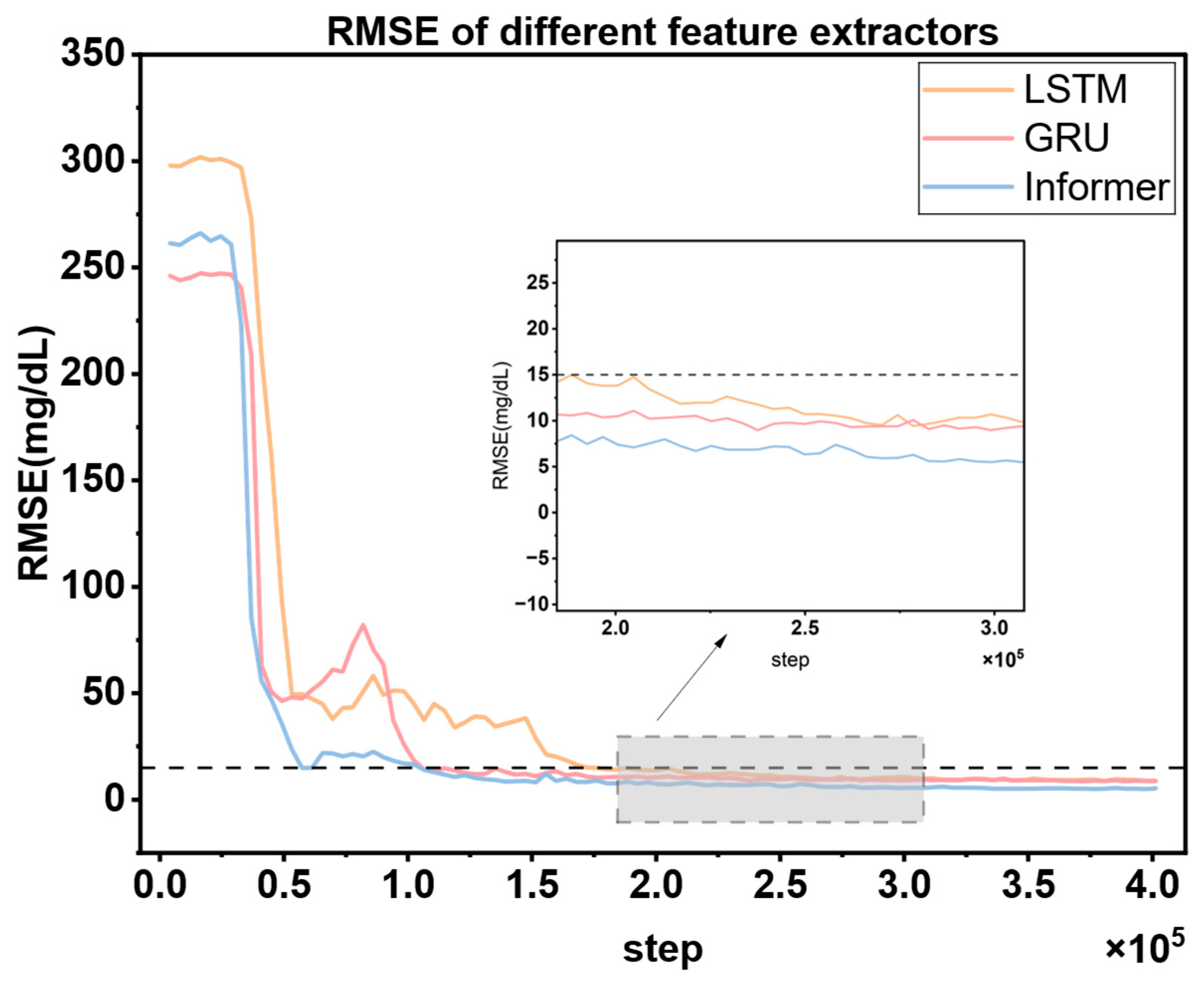
46], and then outputs the mean and variance of blood glucose prediction via the fully connected layer. Finally, the next-step blood glucose prediction value is generated by sampling from the Gaussian distribution. The optimization goal is to minimize the error between the predicted value and the real value. The choice of Informer’s Encoder instead of the complete model or other time-series models is mainly based on three core advantages: First, through the Prob Sparse Self-Attention mechanism, Informer can reduce the computational complexity of long sequence processing while maintaining the ability to capture the key long-term dependencies for blood glucose prediction. Second, the Encoder module focuses on feature extraction, and its lightweight design meets the real-time requirements of DRL, avoiding the redundant computation of the complete model. Third, the output mean and variance support DRL to perceive the prediction uncertainty, facilitating robust decision-making. The overall framework of the blood glucose prediction model is shown in
Figure 7.
2.2.3. MPC Simulation and Safety Controller
When the prediction error of the blood glucose prediction model drops below 15 mg/dL, the system will initiate the MPC simulation process, optimizing the action output of the reinforcement learning agent through multiple multi-step simulations. Specifically, the RL agent first generates a next-step action suggestion based on the patient’s current state. The blood glucose prediction model then predicts the blood glucose level at the next moment after the action is taken. This predicted value is not the end but serves as a new state input, continuously updating the state space and calculating the reward for each step. This cycle continues until the preset number of simulation steps (6 steps, 30 min) is completed, and the action, state, and reward are recorded at each step. After 30 simulations are completed, the system will select the trajectory with the maximum cumulative reward from all trajectories and use the first-step action of this trajectory as the final output of the RL agent in the current state. This approach allows the RL agent to balance short-term rewards and long-term stability through multi-step simulations, avoiding “short-sighted” decisions.
To ensure the safety of RL actions, we designed a “dual-restriction” safety mechanism. The first is “trajectory filtering”: during the simulation process, the predicted blood glucose value is monitored in real time. If the predicted blood glucose of a certain trajectory is lower than 54 mg/dL (the severe hypoglycemia threshold, which may endanger life), it is immediately marked as “unsafe”. When selecting the optimal action in the end, only the action with the maximum cumulative reward is selected from the “safe trajectories”, which is equivalent to setting a “safety threshold” for the RL agent and eliminating the selection of dangerous actions. The second is “extreme situation handling”: if all trajectories are unsafe, the safety controller will take over. Its core is to calculate the insulin adjustment coefficient, taking into account three major factors: time characteristics, blood glucose status, and blood glucose trend. The calculated coefficient will modify the output of the RL agent. This design can quickly avoid the risk of severe hypoglycemia in the short term, providing a “last line of defense” for patients.
Referring to the literature [
42], the calculation formula for the insulin adjustment coefficient of the safety controller is:
Among them,
is a coefficient introduced to alleviate the problem of nocturnal hypoglycemia. Its value refers to the suggestions in the medical guidelines [
47] and is set to 0.8 from 20:00 to 23:00 and 0.6 from 0:00 to 3:00.
and
are the blood glucose values at the current moment and the previous moment, respectively. 112.517 is the blood glucose value corresponding to a blood glucose risk index of 0. Therefore,
represents the degree to which the current blood glucose deviates from the target blood glucose, while
represents the changing trend of blood glucose. When the current blood glucose value is greater than 112.517 and the blood glucose is in an upward state, the insulin dose needs to be increased, and at this time
is greater than 1. When the blood glucose value is less than the target blood glucose value and is in a downward state, the insulin dose needs to be reduced, and at this time
is less than 1, which is in line with expectations. In particular, if
< 54 mg/dL, that is, the patient is in a state of severe hypoglycemia, the coefficient will be directly set to 0 to prevent the patient from being in life-danger.
During the MPC simulation phase, the goal of the RL agent’s learning is to minimize the deviation between the current policy
and the optimal policy
as much as possible. Therefore, its loss function is:
Among them, represents the negative log-likelihood loss of performing the optimal action in state, which is used to measure the difference between the prediction of the policy network in the target state and the actual optimal action.
2.3. Experimental Setup
2.3.1. Candidate RL Algorithms
To comprehensively evaluate the performance of the hybrid closed-loop reinforcement learning algorithm with a safety controller proposed in this paper, we compare it with three advanced reinforcement learning (RL) algorithms widely used in continuous control tasks—Soft Actor–Critic (SAC), Proximal Policy Optimization (PPO), and Deep Deterministic Policy Gradient (DDPG) (their core principles and specific implementation details have been elaborated in
Section 2.2). To ensure the fairness of the experiments, except for the distinctive structures unique to each algorithm (such as the safety controller module of the proposed algorithm, the entropy maximization strategy of SAC, and the clipped objective function of PPO), the rest of the key network structures and training parameters are strictly kept consistent, such as the number of layers and hidden units of the LSTM in the feature extraction layer, and the parameters of the fully connected layers of the Actor and Critic networks. During the training process, to adapt to the individual metabolic heterogeneity of simulated subjects, such as differences in insulin sensitivity and carbohydrate absorption rate, we train a separate model for each subject. All candidate algorithms are trained through 400,000 steps of environment interaction for each of the 3 different random seeds. After each training iteration (10 days), 20 evaluation simulations (each lasting 1 day) are conducted to monitor the convergence trend (fluctuation of the reward value) and early performance (incidence of hypoglycemia) of the algorithm. After the training is completed, 100 independent evaluation simulations are carried out for each subject (each simulation lasts for 1 day, a total of 288 steps, with a decision step every 5 min). The simulation scenarios cover real-life disturbances such as meal time deviation (±15 min) and carbohydrate measurement error (±10%) to comprehensively verify the performance of the algorithm in blood glucose control accuracy and safety robustness.
2.3.2. Clinical Reference Method
In this paper, the ideal basal-bolus insulin treatment regimen (Basal-Bolus Insulin, BBI) is selected as the clinical benchmark algorithm. This regimen is the most commonly used, classic, and large-scale clinically verified insulin treatment strategy in current diabetes management. Due to its high recognition among clinicians, it is listed as the gold standard for evaluating the performance of insulin bolus algorithms in the “American Diabetes Association (ADA) Guidelines” [
48]. Its core logic is the precise calculation of insulin dosage based on the patient’s individual characteristics. It requires patients or caregivers to inform the carbohydrate (CHO) content of future meals 20 min in advance so that the algorithm can dynamically adjust the insulin infusion strategy, which specifically consists of three parts: basal insulin (continuous low-dose infusion to maintain stable blood glucose during fasting and non-eating states), meal-time insulin bolus (rapid infusion before meals to offset the blood-glucose-raising effect of dietary carbohydrates), and corrective insulin (additional infusion to correct blood glucose levels when real-time blood glucose deviates from the target range). To ensure the standardization and fairness of the experiment, all virtual patients are simulated in a predefined typical three-meal-a-day scenario: breakfast is consumed at 7:00 (40 g of carbohydrates), lunch at 12:00 (80 g of carbohydrates), and dinner at 19:00 (60 g of carbohydrates). This dietary setting conforms to the regular dietary recommendations for adult patients with type 2 diabetes. The differences in meal times and carbohydrate contents can effectively simulate the impact of dietary structure fluctuations on blood glucose in real life, providing a unified perturbation scenario for subsequent comparison of the post-meal blood glucose control abilities of different algorithms.
The formula for calculating the insulin dosage delivered to the patient by BBI at time t is shown in Equation (18):
Among them, is the estimated carbohydrate intake, which is manually entered by the patient or medical staff; is the currently monitored blood glucose level, while is the target blood glucose level to be controlled, usually 140 mg/dL; the basal insulin rate BR, the carbohydrate-to-insulin ratio CIR, and the insulin sensitivity factor ISF are calculated based on the total daily insulin (TDI) provided by the simulator for each subject, which are , , and , respectively.
2.3.3. Hyperparameter Setting
To select the optimal hyperparameter combination, a hyperparameter tuning technique called grid search is used. Grid search is an exhaustive search method that combines pre-defined different hyperparameters and then trains and evaluates each combination. Finally, the hyperparameter combination with the best performance is selected as the hyperparameter configuration for the optimal model. The main hyperparameter search ranges used in this experiment and the finally selected hyperparameters are shown in
Table 1.
To optimize the stability and convergence efficiency of model training and prevent gradient explosion caused by an excessively high learning rate in the initial stage or getting stuck in local optima due to an excessively low learning rate in the later stage, this training adopted a combined learning rate strategy of linear warm-up and cosine annealing. The specific settings are as follows: The total number of training steps is 400,000 steps, among which the first 20,000 steps are the warm-up stage: the learning rate linearly increases from an initially extremely small value to a preset target learning rate. The core function of this stage is to allow the model to gradually adapt to the data distribution in the initial training stage, preventing the initial state of parameters from being disrupted by a sudden high learning rate and laying a foundation for subsequent stable convergence. After the warm-up stage ends, it enters the cosine annealing decay stage: the learning rate starts from the target learning rate and decays with a decay coefficient of 0.998 until it reaches the minimum learning rate threshold, which is 0.01 of the target learning rate. The advantage of cosine annealing is that it can allow the model sufficient time to finely adjust parameters through slow and smooth decay in the later training stage, preventing convergence stagnation caused by a sudden drop in the learning rate.
2.3.4. Performance Indicators
This paper will evaluate the performance of the proposed algorithm from two perspectives: reinforcement learning indicators and clinical indicators.
RL indicators: The goal of reinforcement learning is to maximize the cumulative reward. Therefore, the cumulative rewards obtained by the algorithm proposed in this paper in the simulation environment are statistically analyzed. During the simulation process, a penalty of −15 is given and the simulation is terminated for catastrophic hypoglycemic events (bg < 40 mg/dL) that endanger the patient’s life, while the blood glucose values in the remaining range are calculated according to the reward function discussed in
Section 3.1. The reward for each step is between 0 and 1, and the maximum number of simulation steps is 288 (one day). Therefore, the range of the cumulative reward is [−15, 288].
Clinical indicators: The main goal of blood glucose control is to maintain the blood glucose level within the normal range and minimize the time that the blood glucose stays in the risk area. Therefore, the percentage of time within different blood glucose ranges is statistically analyzed, and the blood glucose risk index is calculated. The blood glucose risk index includes the overall blood glucose risk index, the hyperglycemia risk index, and the hypoglycemia risk index. A larger value of the risk index indicates that hypoglycemia or hyperglycemia occurs more frequently or is more severe.
Table 2 summarizes the indicators used to evaluate the clinical performance of the model.
2.4. Simulated Patients
The experiment in this paper was carried out based on a simulated clinical environment, which is a crucial pre-step before human clinical research. The study used Simglucose, an open-source Python implementation of the UVA/Padova type 1 diabetes (T1D) simulator, to accurately simulate the dynamic changes in blood glucose levels of T1D patients. The UVA/Padova T1D simulator is currently the only computer simulation model for diabetes patients approved by the U.S. Food and Drug Administration (FDA). It can replace pre-clinical animal tests for new treatment strategies for type 1 diabetes and has extremely high clinical relevance and reliability. This simulator includes 30 computer-simulated subjects, covering three age groups: adults, adolescents, and children (10 in each group). At the same time, it integrates physical models of commercially available insulin pumps and glucose sensors, can simulate the measurement errors of the selected devices (such as sensor drift and pump infusion delay), and supports customized meal plans to simulate real-life eating scenarios. In this experiment, 10 adult and 10 child simulated patients were selected as the research subjects, and the Insulet insulin pump and GuardianRT glucose sensor models built into the simulator were used to ensure that the experimental conditions were highly consistent with clinical practical applications.
2.5. Experimental Environment
All the experiments in this paper were conducted on the AutoDL cloud server, and the detailed configuration is shown in
Table 3.
4. Conclusions
This paper experimentally compares the performance of three advanced reinforcement learning (RL) algorithms, namely SAC (Soft Actor–Critic), DDPG (Deep Deterministic Policy Gradient), and PPO (Proximal Policy Optimization), in blood glucose management for patients with type 1 diabetes (T1D). Due to the inherent drawbacks of SAC and DDPG (although SAC can ensure the entropy regularization of the policy to enhance exploration ability, its sample efficiency is low, making it difficult to converge quickly in limited patient interactions; DDPG is highly sensitive to hyperparameters, and the training process is prone to divergence, resulting in large fluctuations in blood glucose control and even dangerous hypoglycemic/hyperglycemic events), their performance in terms of cumulative rewards (reflecting long-term blood glucose control effects) and core clinical indicators (TIR: Time in Range; TBR: Time Below Range; TAR: Time Above Range) is significantly lower than that of PPO. PPO limits the policy update amplitude through the clip ratio mechanism, which not only ensures training stability but also maintains high sample efficiency. It is more suitable for handling continuous, high-dimensional control tasks with extremely high safety requirements such as blood glucose management. Therefore, it is selected as the core RL algorithm for the proposed hybrid control strategy.
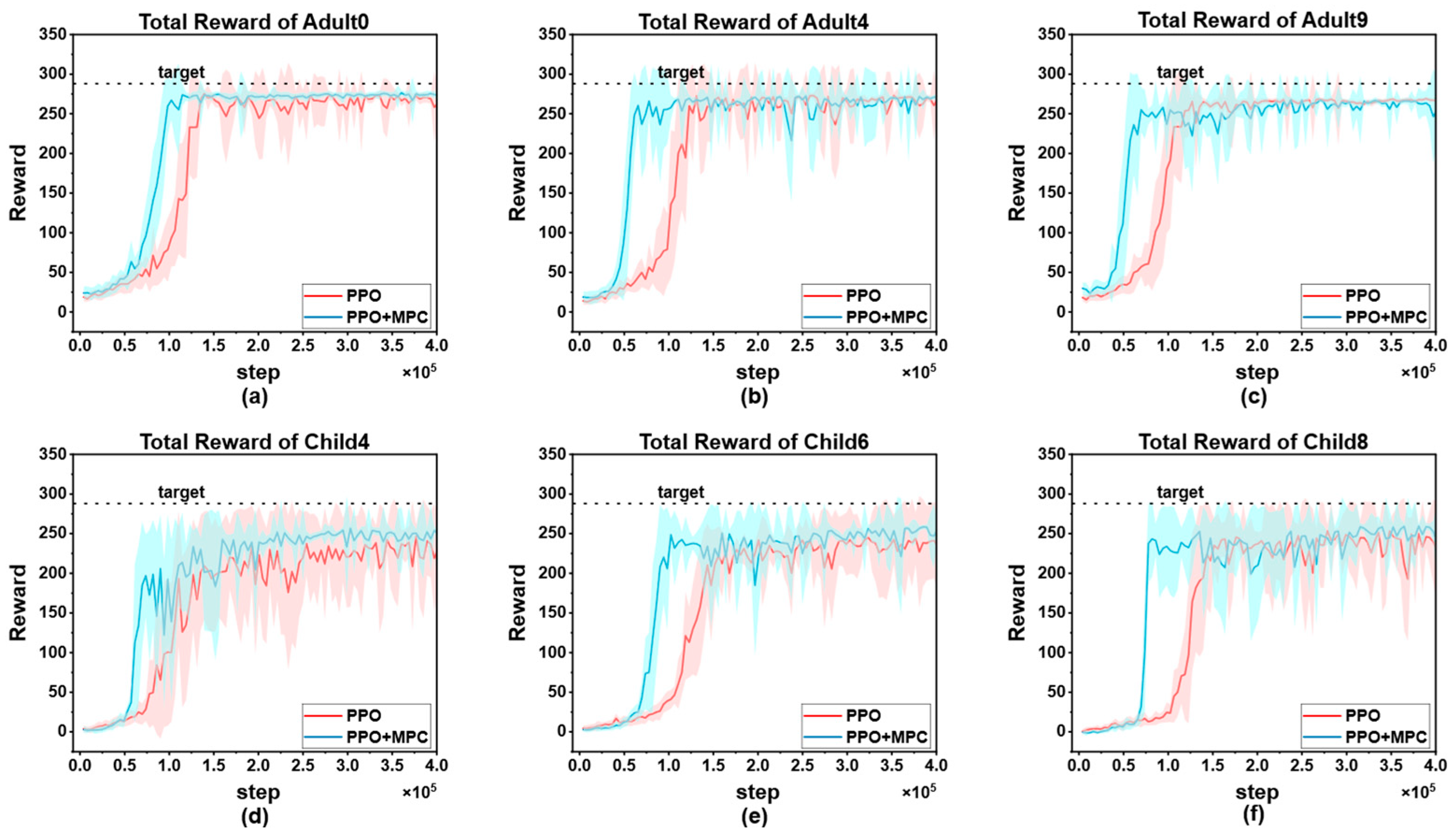
To address the clinical translation bottlenecks of the pure RL model (long-term trial-and-error risks due to slow convergence and potential harm to patients from unsafe actions), we propose a hybrid strategy of PPO + MPC (Model Predictive Control):
Data recycling: Collect the blood glucose-action interaction data generated during the PPO training process to train a blood glucose prediction model (capturing individual patient blood glucose dynamics, such as insulin action delay and diet absorption rate).
MPC prediction and simulation: Use this prediction model as the patient dynamic model for MPC and introduce a “prediction and simulation phase”. For the original actions output by the RL Agent, predict the blood glucose changes in the next 30 min through MPC, filter out dangerous actions that may lead to hypoglycemia or hyperglycemia, and fine-tune the safe actions.
Dual safety guarantee: In addition to the action screening by MPC, add a safety controller based on clinical rules to form a three-layer safety mechanism of “RL strategy learning+MPC short-term prediction + safety controller backup”, effectively reducing short-term blood glucose risks.
The experimental results show that the hybrid strategy significantly improves the convergence speed of PPO, which means a substantial reduction in the number of trial-and-error interactions with patients. At the same time, it increases the TIR from 69.97% of the original PPO to 72.51% (p < 0.05). This performance is not only better than that of pure PPO but also exceeds the 69.85% of the clinical gold-standard BBI, demonstrating better clinical safety. However, in the group of children with T1D, the hybrid strategy fails to form an effective strategy, and all performance indicators are lower than those of BBI. It is speculated that the reason may be that the blood glucose dynamics in children are more complex, and the existing blood glucose prediction models are not optimized for the individual characteristics of children, resulting in a decrease in the prediction accuracy of MPC and the inability to effectively assist the fine-tuning of RL actions. This result suggests that in the future, more accurate blood glucose prediction models and adaptive control strategies need to be designed according to the physiological characteristics of the child population.
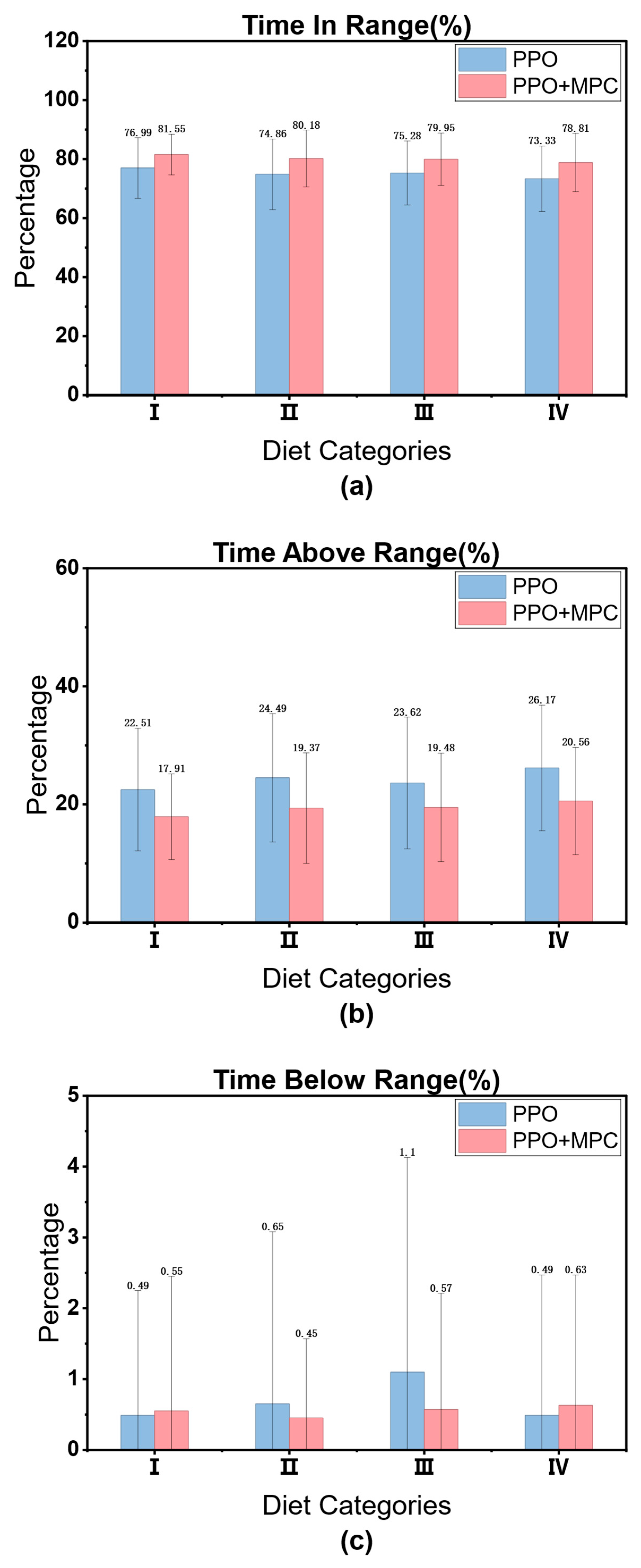
Finally, to simulate dietary disturbances in real life, we introduced different dietary disturbance scenarios in an adult patient. The results showed that the Time in Range (TIR) of the hybrid strategy still remained above the clinical standard of 70%, and there was no significant increase in Time Below Range (TBR) and Time Above Range (TAR). This indicates that the model still has robust blood glucose control ability under complex dietary disturbances, solving the problem of the pure Reinforcement Learning (RL) model being “easily affected by environmental changes” and better meeting the requirements of clinical practical applications.
More importantly, this work provides important empirical support and framework reference for the practical application of Reinforcement Learning (RL) technology in clinical blood glucose management:
Solving the “robustness bottleneck” of RL clinical translation: In the real clinical environment, factors such as patients’ diet, exercise, and emotions are highly uncertain. Although traditional RL models can learn autonomously, they often perform poorly when facing unseen disturbances. Our hybrid strategy combines the “long-term learning advantage” of RL with the “short-term predictive control” of Model Predictive Control (MPC), enabling the model to both “remember” long-term patterns and “cope with” sudden changes, providing a feasible solution for the stable application of RL technology in clinical practice.
Validating the clinical value of RL in blood glucose management: The model can still maintain performance that meets clinical standards under disturbance scenarios, indicating that RL can not only “simulate” blood glucose control in the laboratory environment but also “effectively” control blood glucose in scenarios close to real life. This lays the foundation for the subsequent translation of RL technology into clinical practice. In the future, it is expected to become an intelligent auxiliary tool for clinicians, helping doctors adjust insulin pump parameters more accurately or providing personalized diet and exercise advice for patients.
Providing directions for future research: Our work demonstrates the potential of the integration of “RL + traditional control strategies”. In the future, more complex hybrid models (such as blood glucose prediction modules combined with deep learning) can be further explored, or it can be extended to a wider range of clinical scenarios (such as diabetic patients with complications) to further improve the clinical applicability of RL technology.
In short, our research not only experimentally verifies the effectiveness of the hybrid model but also builds a bridge for RL technology to move from the “laboratory” to “clinical practice”. It is expected to bring more intelligent and reliable solutions for blood glucose level management in diabetic patients, ultimately improving their quality of life.