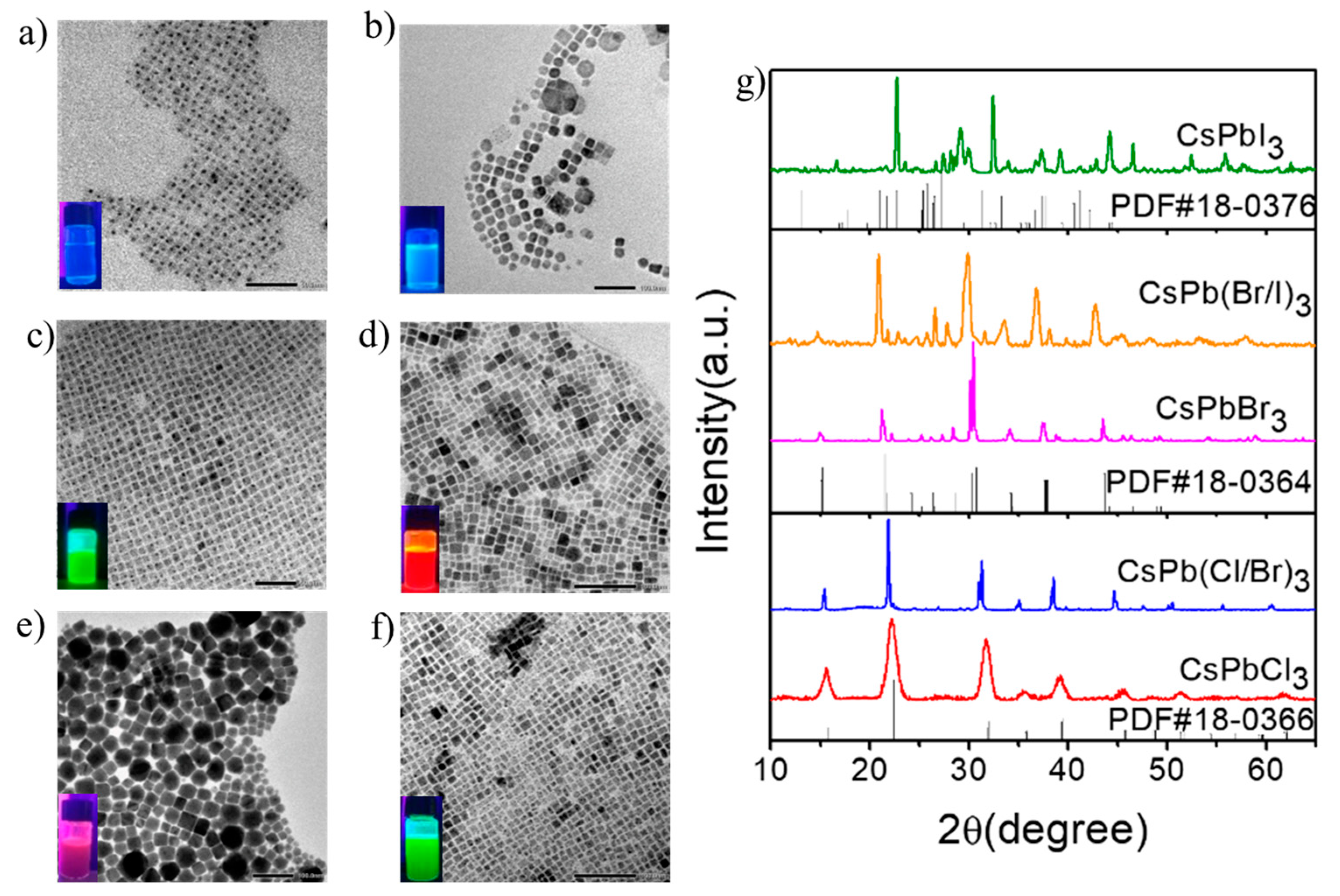
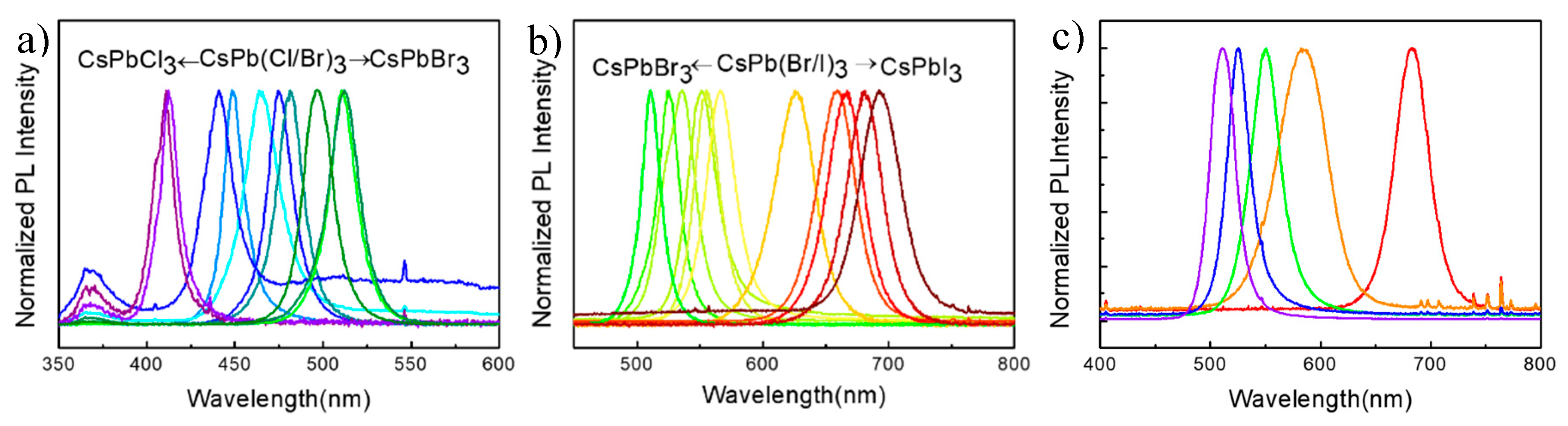
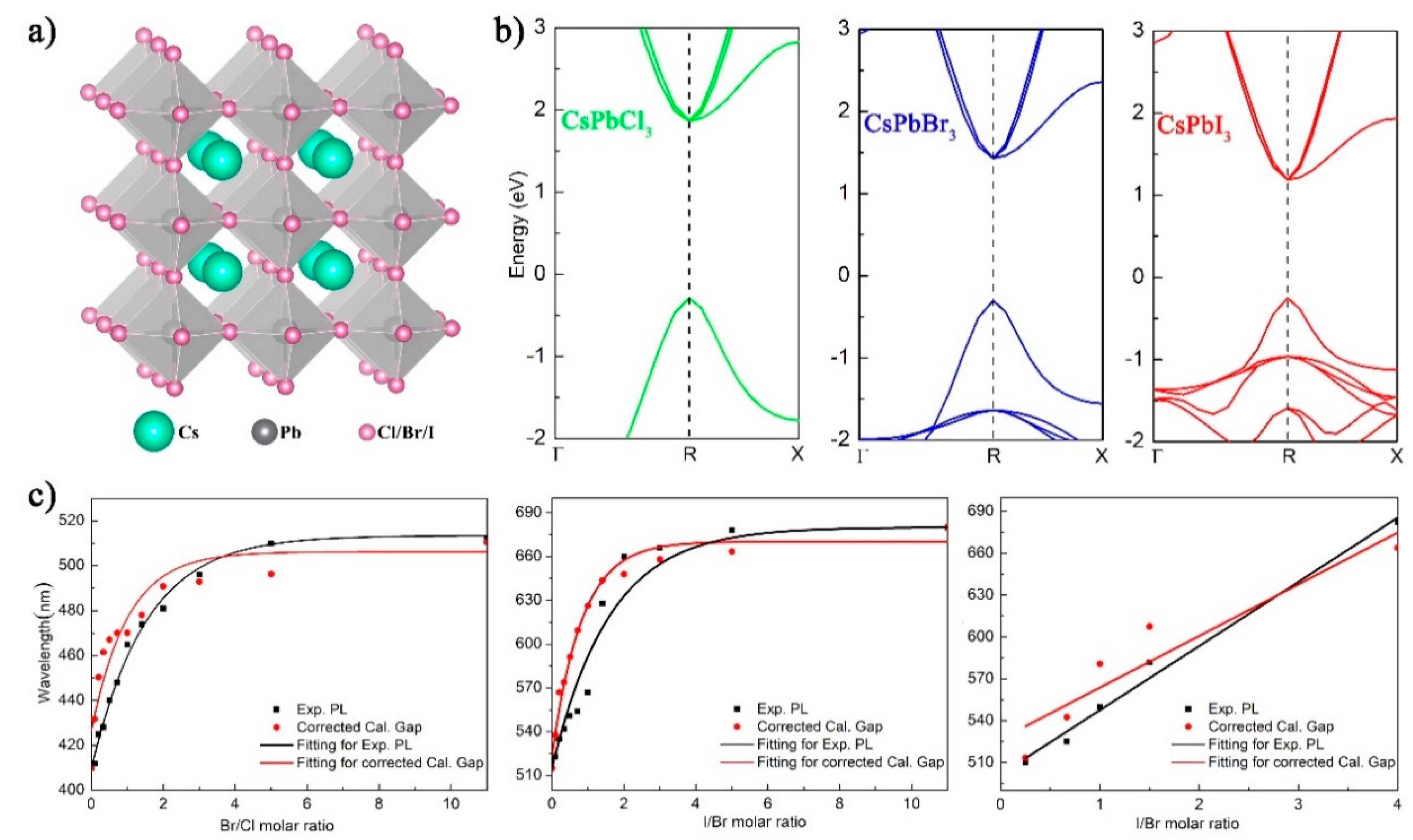
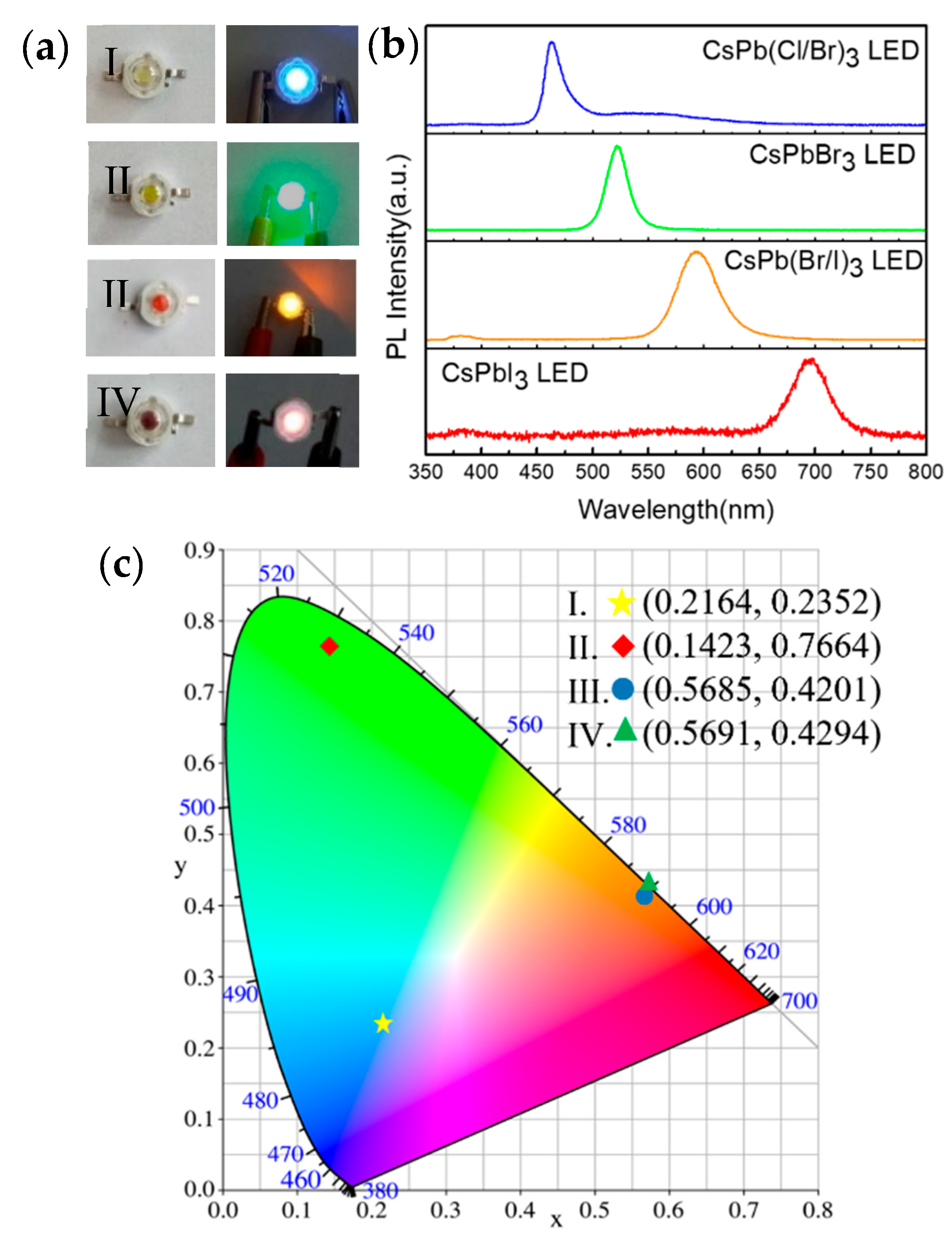
Highly Controllable Synthesis and DFT Calculations of Double/Triple-Halide CsPbX3 (X = Cl, Br, I) Perovskite Quantum Dots: Application to Light-Emitting Diodes



Abstract
Share and Cite
Lao, X.; Li, X.; Ågren, H.; Chen, G. Highly Controllable Synthesis and DFT Calculations of Double/Triple-Halide CsPbX3 (X = Cl, Br, I) Perovskite Quantum Dots: Application to Light-Emitting Diodes. Nanomaterials 2019, 9, 172. https://doi.org/10.3390/nano9020172
Lao X, Li X, Ågren H, Chen G. Highly Controllable Synthesis and DFT Calculations of Double/Triple-Halide CsPbX3 (X = Cl, Br, I) Perovskite Quantum Dots: Application to Light-Emitting Diodes. Nanomaterials. 2019; 9(2):172. https://doi.org/10.3390/nano9020172
Chicago/Turabian StyleLao, Xinyue, Xiyu Li, Hans Ågren, and Guanying Chen. 2019. "Highly Controllable Synthesis and DFT Calculations of Double/Triple-Halide CsPbX3 (X = Cl, Br, I) Perovskite Quantum Dots: Application to Light-Emitting Diodes" Nanomaterials 9, no. 2: 172. https://doi.org/10.3390/nano9020172
APA StyleLao, X., Li, X., Ågren, H., & Chen, G. (2019). Highly Controllable Synthesis and DFT Calculations of Double/Triple-Halide CsPbX3 (X = Cl, Br, I) Perovskite Quantum Dots: Application to Light-Emitting Diodes. Nanomaterials, 9(2), 172. https://doi.org/10.3390/nano9020172