4.1. Effects of Time Step and Time Discretization Order
In this section, the influences of the following numerical parameters on the CFD simulation of an ALS were assessed:
As presented in
Table 4, five time steps (0.02 s, 0.01 s, 0.002 s, 0.001 s, and 0.0005 s) and two time discretization schemes (first and second order) were examined, resulting in 10 cases in total. The SST
turbulence model and the high wall
approach (i.e.,
) were employed for all cases based on the findings from the previous study [
16]. For each case, the air layer formation and drag reduction effects produced by the air lubrication system were evaluated.
First, the influences of parameter variations on air layer formation were assessed.
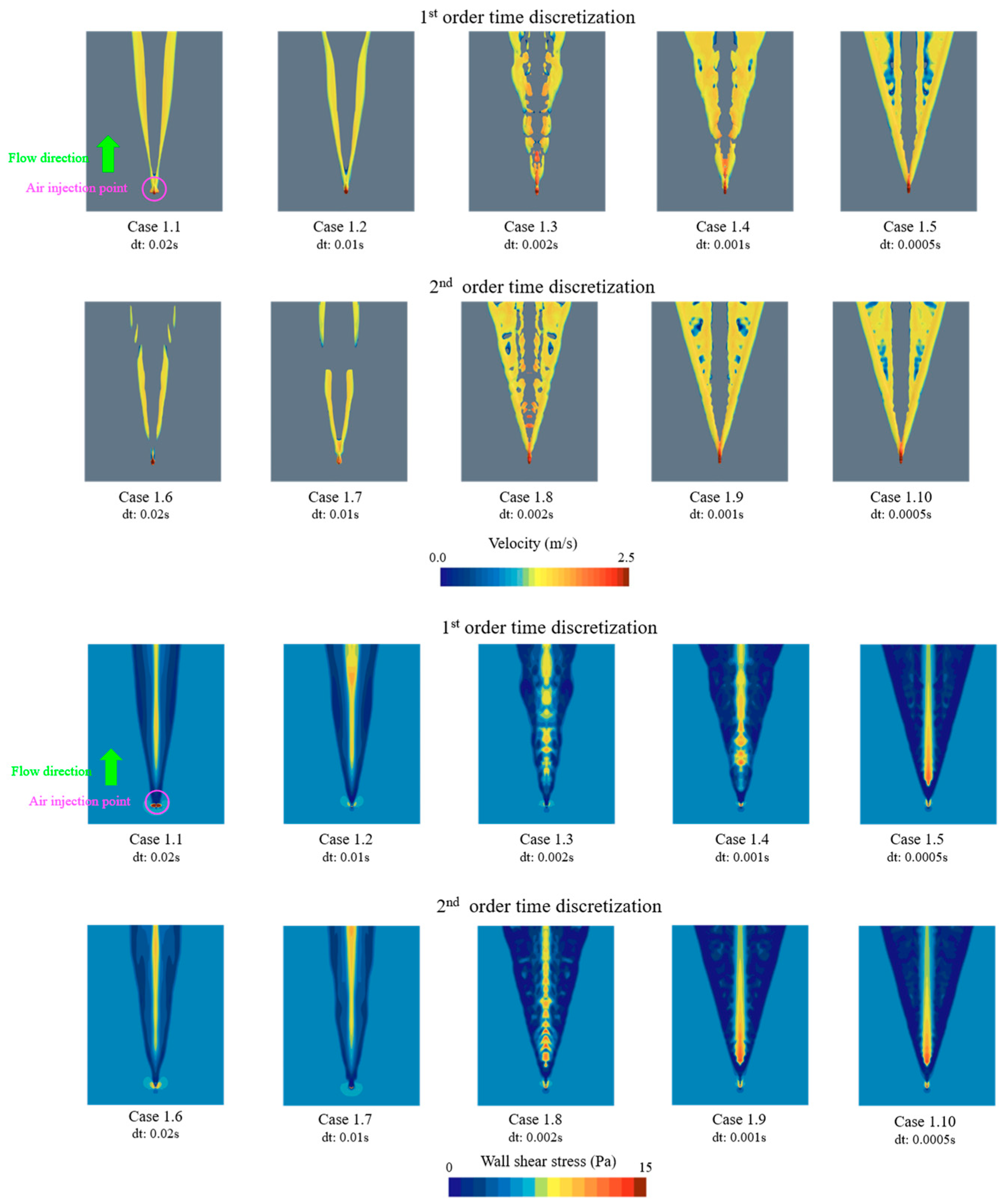
Figure 6 illustrates the air layer generated beneath the plate, visualized through an iso-surface corresponding to a water volume fraction of 0.5. When employing the first-order temporal discretization scheme, enhanced air layer formation was observed with decreasing time step size. Similarly, for the second-order temporal discretization scheme, stable air layer formation was achieved at smaller time steps.
The effects of temporal discretization scheme were most evident in the time step requirement for stable air layer formation. The first-order scheme required the smallest time step of 0.0005 s to achieve stability, while the second-order scheme maintained stability at the relatively larger time steps of 0.001 s or smaller. Additionally, as shown in
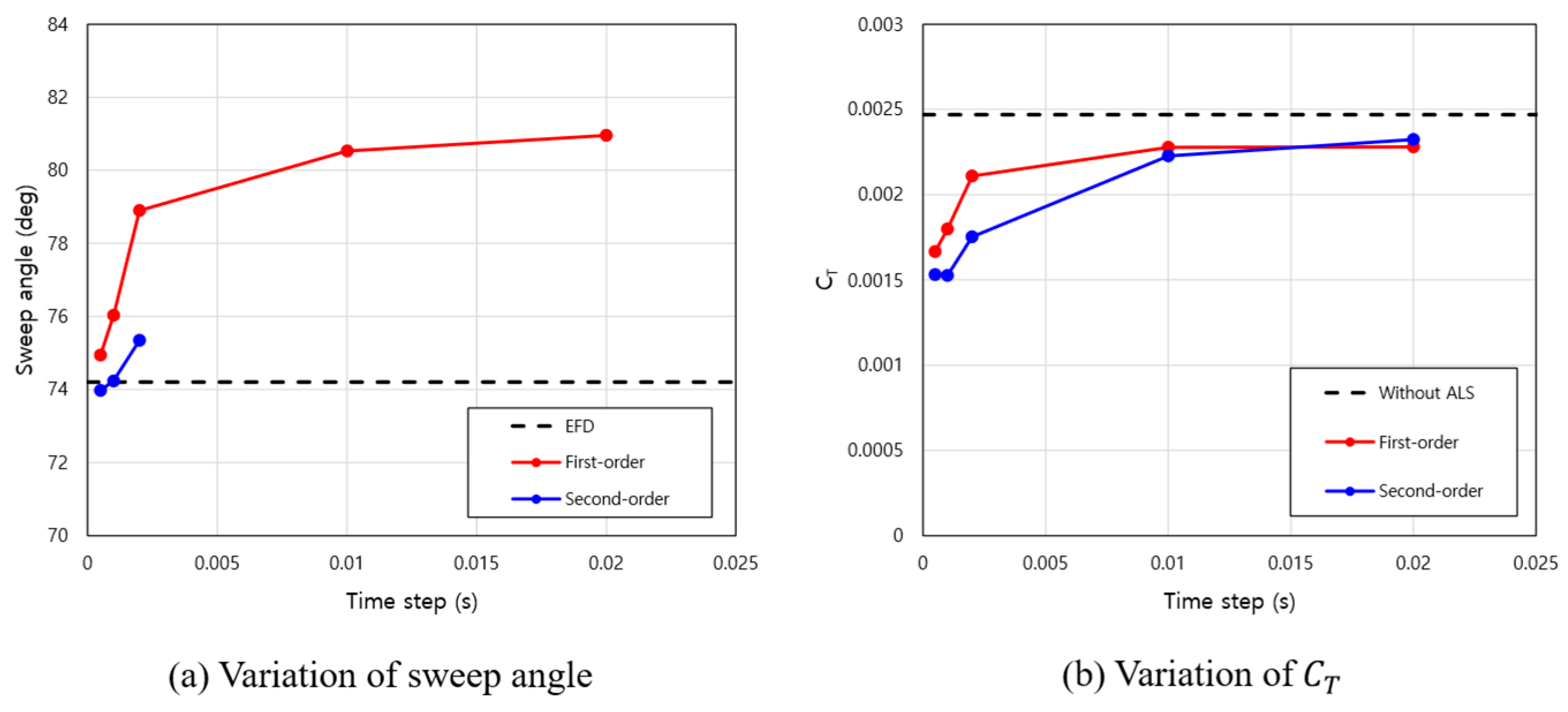
Figure 6, the second-order temporal discretization scheme produced a more uniform air layer compared to the first-order scheme at equivalent time steps. For quantitative evaluation of the air layer formation characteristics, the differences in sweep angle from the experimental results were assessed, as presented in
Table 4 and
Figure 7 [
13]. It should be noted that cases with insufficient air layer formation could not be evaluated.
In most cases with larger time steps, the sweep angle was overestimated relative to the experimental value of 74.2°, indicating a smaller diffusion angle. Furthermore, similar to the air layer formation trends, improved agreement with experimental results was observed with increased computational cost through smaller time steps. As a result, Case 1.9 achieved significantly improved agreement with the experiment, with an error of only 0.051%.
Furthermore, the drag reduction effect for each case was quantitatively evaluated, as presented in
Table 4 and
Figure 7. Although the experiment did not provide the resistance of the flat plate or the corresponding drag reduction rates, these values were additionally calculated in the present study to facilitate a more comprehensive assessment of the effectiveness of the air lubrication system. As a baseline, considering a free stream velocity of 2 m/s and a measurement area of 6.45
on the flat plate, the total resistance coefficient without air injection was determined to be 2.47
. The quantitative evaluation of the drag reduction effect showed a good correlation with air layer formation. Cases with more stable air layer formation exhibited greater drag reduction. Furthermore, the variation in shear stress, as shown in
Figure 6, revealed additional effects that contributed to the changes in drag reduction rate, which could not be captured by comparing the sweep angles of the air layer alone.
Based on these results, it was confirmed that the most stable air layer was formed when the time step was set to 0.0005 s for the first-order scheme (Case 1.5) and 0.001 s for the second-order scheme (Case 1.9 and Case 1.10). Furthermore, considering the similar air layer quality at time steps of 0.001 s and 0.0005 s for the second-order scheme, and comparable results to the first-order scheme at 0.0005 s, a time step of 0.001 s with the second-order scheme was selected to reduce computational cost for the comparison of other numerical parameters. To validate this selection, a time step convergence test was conducted for the case using the second-order temporal discretization scheme, which produced the most similar air layer formation to the experiment, as shown in
Table 5 [
26].
Moreover, the comparison between the two temporal orders showed differences in both the smoothness of air layer formation and the drag reduction rate. This raises the question of why such differences exist between the two temporal discretization schemes. The present study addressed this question by noting that the two temporal discretization orders differ in the accuracy of grid flux computation, which in turn affects the degree of numerical diffusion. Specifically, all simulations in Part 1 of this section were performed without any additional settings to reduce numerical diffusion. However, according to the user guide of STAR-CCM+, the commercial software used in the present study, employing the second-order temporal discretization scheme can effectively reduce numerical diffusion without requiring additional settings [
27]. Based on these results, it was confirmed that numerical diffusion influences air layer formation. Therefore, this effect was further evaluated in
Section 4.2.
4.2. Influence of Time Discretization Order and Numerical Diffusion
Following the analysis conducted in
Section 4.1, the present section investigates how numerical diffusion affects the development of the air layer by adjusting the sharpening factor parameters. Based on the findings from
Section 4.1, the time step was fixed at 0.001 s to ensure accurate air layer formation.
In this subsection, numerical diffusion was controlled through the sharpening factor implemented in the HRIC scheme. Specifically, the sharpening factor, bounded between 0.0 and 1.0, functions to suppress numerical diffusion within the simulation. At the maximum value of 1.0, numerical diffusion is effectively eliminated, resulting in a distinctly sharp interface between the two phases [
27].
When the sharpening factor is zero, the phase mass conservation equation is expressed as Equation (4). In this equation,
,
,
,
.
, and
denote the volume fraction of phase
, mass-averaged velocity, user-defined source term of phase
, density of phase
, diffusion velocity, and Lagrangian derivative of the phase density, respectively. In the present study, water and air are used as the phase, and thus these two phases correspond to the user-defined source term of phase. However, when the sharpening factor assumes a non-zero value, Equation (4) is modified to Equation (5), where
represents the sharpening factor. Additionally, as the sharpening factor increases, it plays a role in suppressing numerical diffusion.
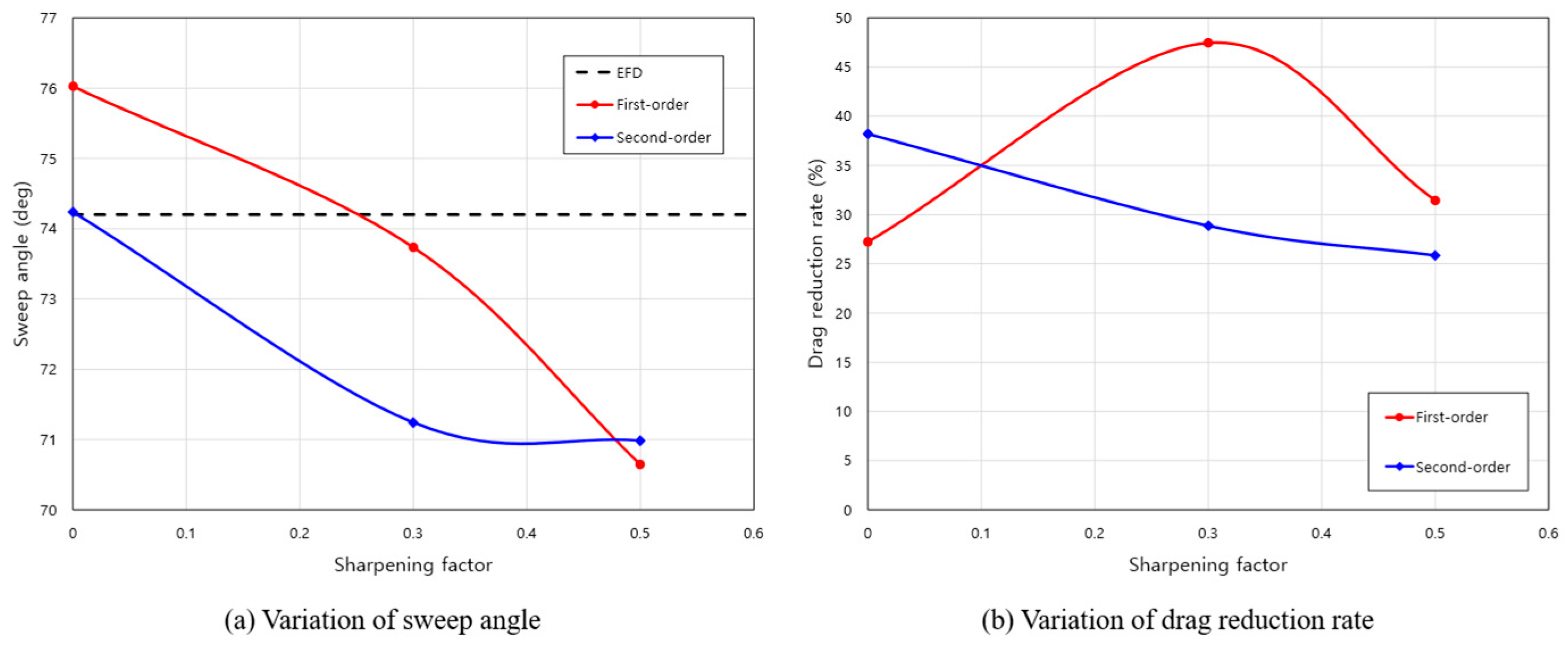
Furthermore, for assessing the effects of numerical diffusion, air layer formation and drag reduction rates were evaluated for six cases with different temporal discretization orders and sharpening factors, as summarized in
Table 6. In these cases, the time step was set to 0.001 s, based on the stable air layer formation conditions determined in
Section 4.1. Additionally, Case 2.1 and Case 2.4, where the sharpening factor is set to zero, are identical to Case 1.4 and Case 1.9 from
Section 4.1, respectively. As in
Section 4.1, all cases were simulated using the SST
turbulence model with wall
values maintained above 30.
As depicted in
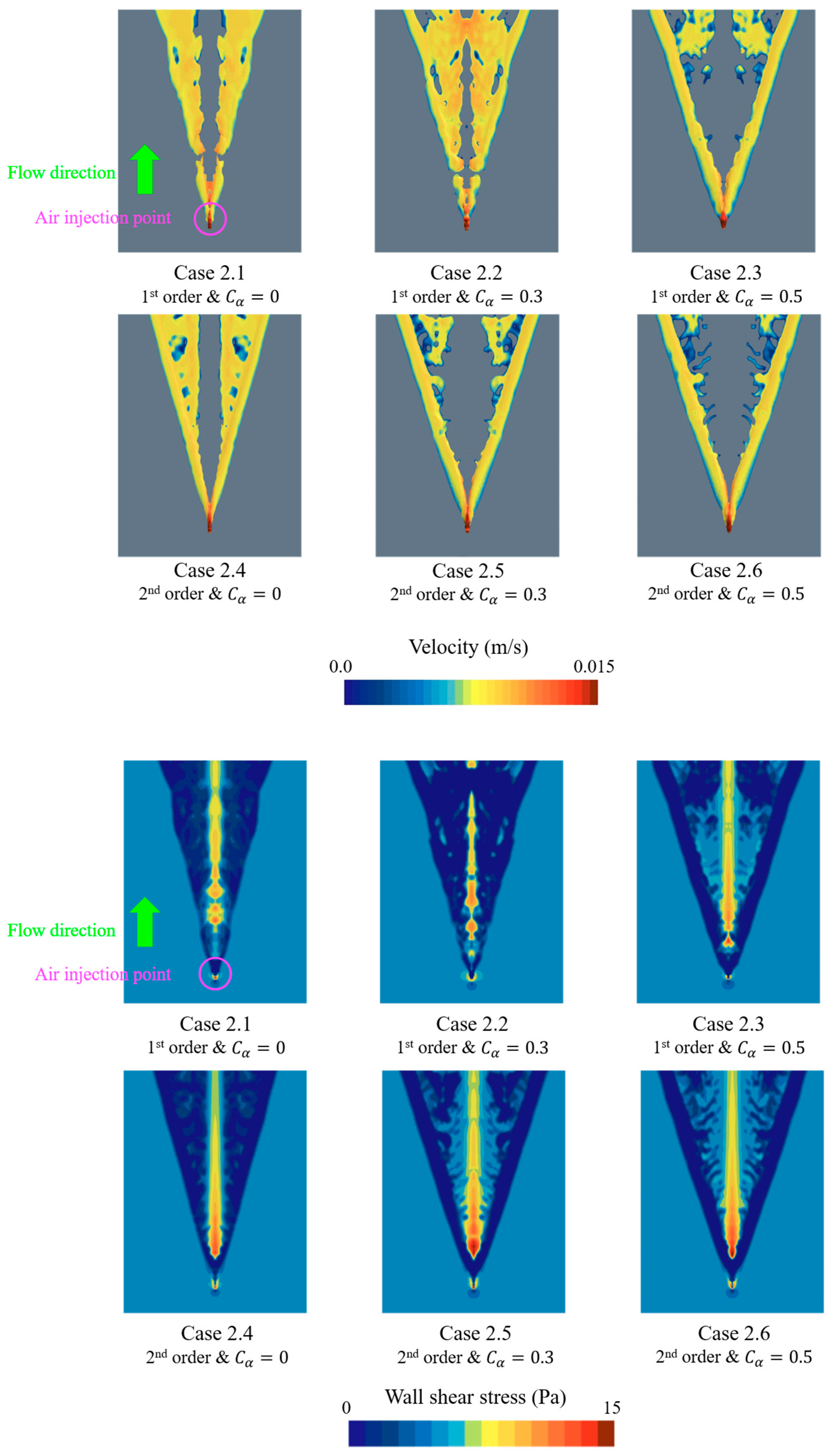
Figure 8, the shape of the air layer varied with different temporal discretization orders and sharpening factors. When second-order temporal discretization was applied, it was observed that as the sharpening factor increased, the air layer formed predominantly along both lateral sides of the sweep angle, with minimal air layer formation in the region behind the injection hole. This trend was also evident in Case 2.3, which employed first-order temporal discretization with the highest sharpening factor. However, for cases utilizing first-order temporal discretization, a consistent trend with respect to the increase in sharpening factor was difficult to identify, as observed in Case 2.2. On the other hand, differences in the temporal discretization order influenced the smoothness of the air layer formation, as confirmed in
Section 4.1. These results were also quantitatively evaluated by comparing the sweep angle with experimental results, as presented in
Table 6 and
Figure 9. An important observation is that increasing the sharpening factor to suppress numerical diffusion resulted in a larger diffusion angle and consequently a smaller sweep angle. This outcome appears to explain why the air layer formed predominantly along the lateral sides only. As illustrated in
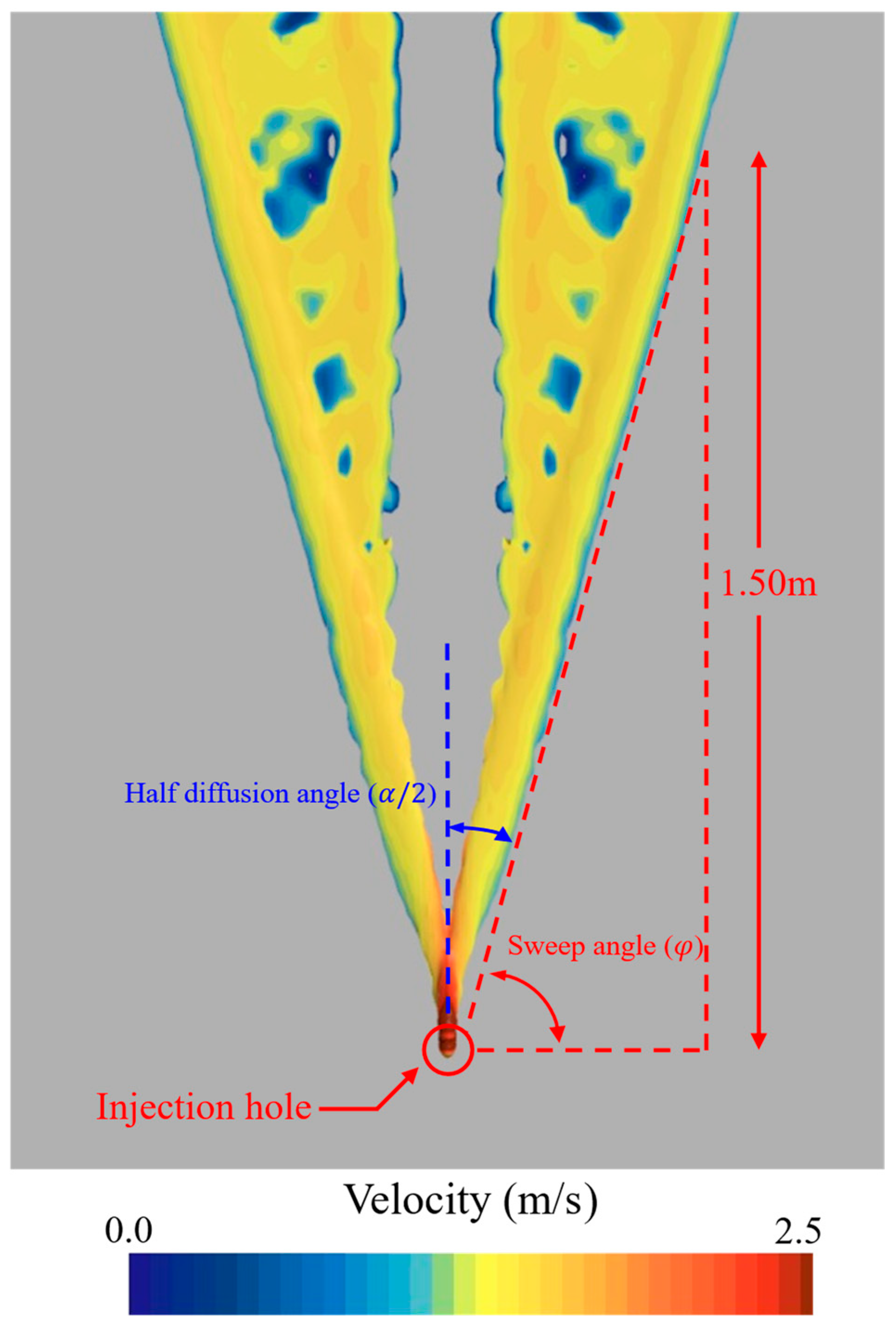
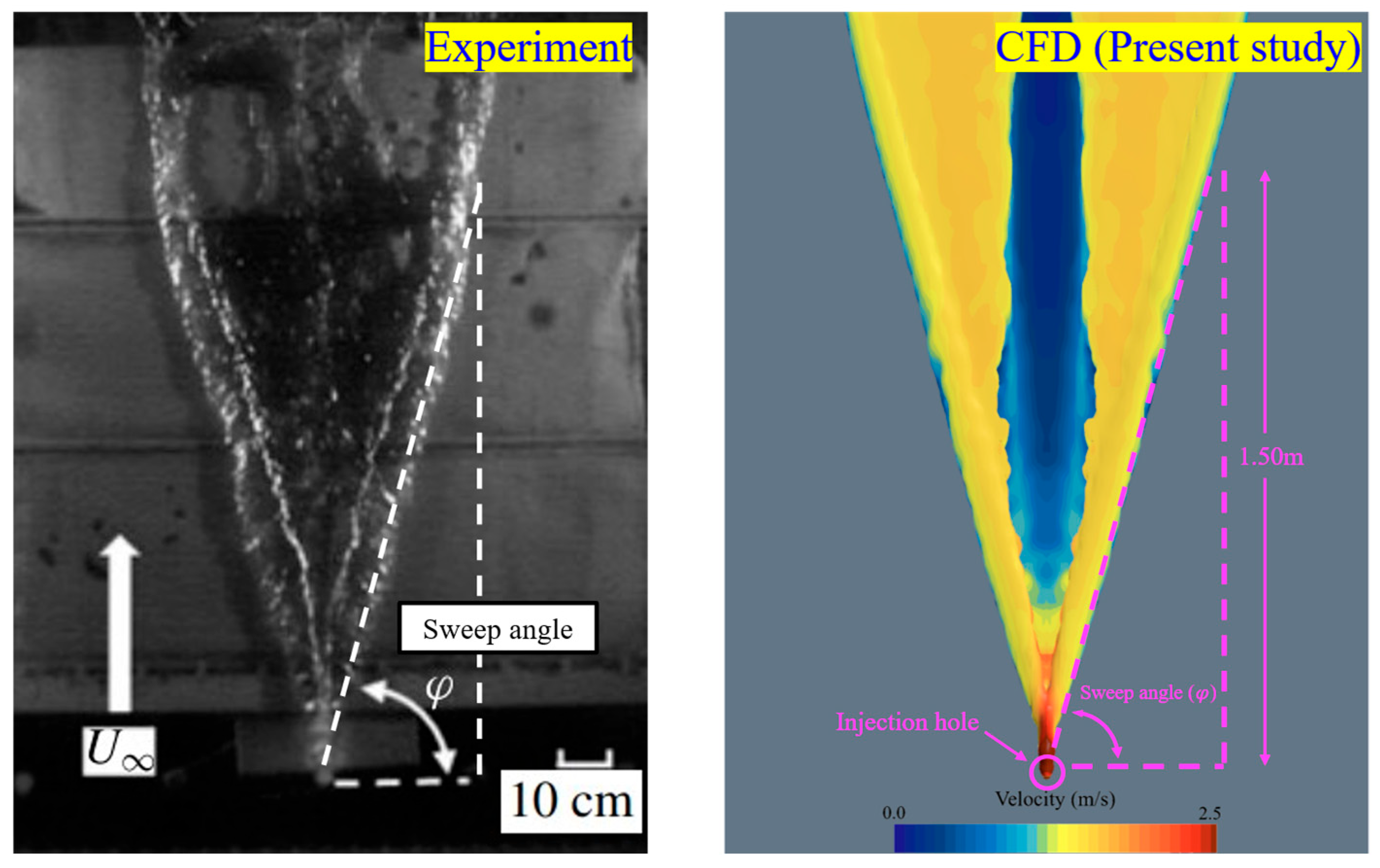
Figure 5, considering that the air layer formed uniformly in the experiment, it appears more appropriate to employ a second-order temporal scheme with a sharpening factor of zero to achieve stable and uniform air layer formation, rather than to increase the sharpening factor.
Furthermore, the drag reduction rates of all cases were quantitatively evaluated. As presented in
Table 6 and
Figure 9, when second-order temporal discretization was employed, the air layer was formed only on the lateral sides as the sharpening factor increased, resulting in a corresponding decrease in the drag reduction rate. However, when first-order temporal discretization was applied, the air layer formation exhibited somewhat irregular patterns with an increasing sharpening factor. As a result, the drag reduction rates also varied according to these irregular air layer formations. Furthermore, the wall shear stress on the flat plate varied across different cases, as depicted in
Figure 8. Specifically, the variation trend of wall shear stress across different cases was consistent with the air layer formation patterns. When second-order temporal discretization was employed, regions of reduced wall shear stress progressively shifted toward the lateral sides as the sharpening factor increased. Conversely, when first-order temporal discretization was applied, no clear trend with respect to the sharpening factor could be identified.
The evaluation of cases with varying temporal discretization order and sharpening factor showed that increasing the sharpening factor caused air layer formation only on the lateral side, deviating from the experimental observations. Consequently, second-order temporal discretization with a sharpening factor of 0.0, combined with a time step of 0.001 s derived from
Section 4.1, proved sufficient to replicate the experimentally observed air layer formation. Using these derived numerical parameters, the additional influence of other variables was analyzed in
Section 4.3.
4.3. Effects of Turbulence Model and Wall
All simulations in
Section 4.1 and
Section 4.2 were conducted using the SST
turbulence model with wall
values maintained above 30. However, it is necessary to investigate the effects of turbulence model selection and the wall
values on air layer formation and drag reduction rate. In previous studies, simulations were performed using the SST
and RST turbulence models with wall
values above 30 [
16,
21]. To provide a more comprehensive analysis, this study evaluated six cases comprising three turbulence models of realizable
, SST
, and RST, each applied under two different wall
conditions, i.e., “
” and “
”. Under these conditions, the cases were systematically subdivided as presented in
Table 7, and their differences were evaluated. Furthermore, based on the results from
Section 4.1 and
Section 4.2, the numerical settings that most closely replicated the experimental air layer formation were employed. These settings included a time step of 0.001 s, second-order temporal discretization, and a sharpening factor of 0.0. For the
conditions, the total thickness of the prism layer was kept constant across all cases, while the near-wall cell thickness and the number of prism layers were adjusted to achieve the target
values. This approach ensured consistent overall mesh refinement while enabling precise control of the near-wall resolution for different
strategies.
As illustrated in
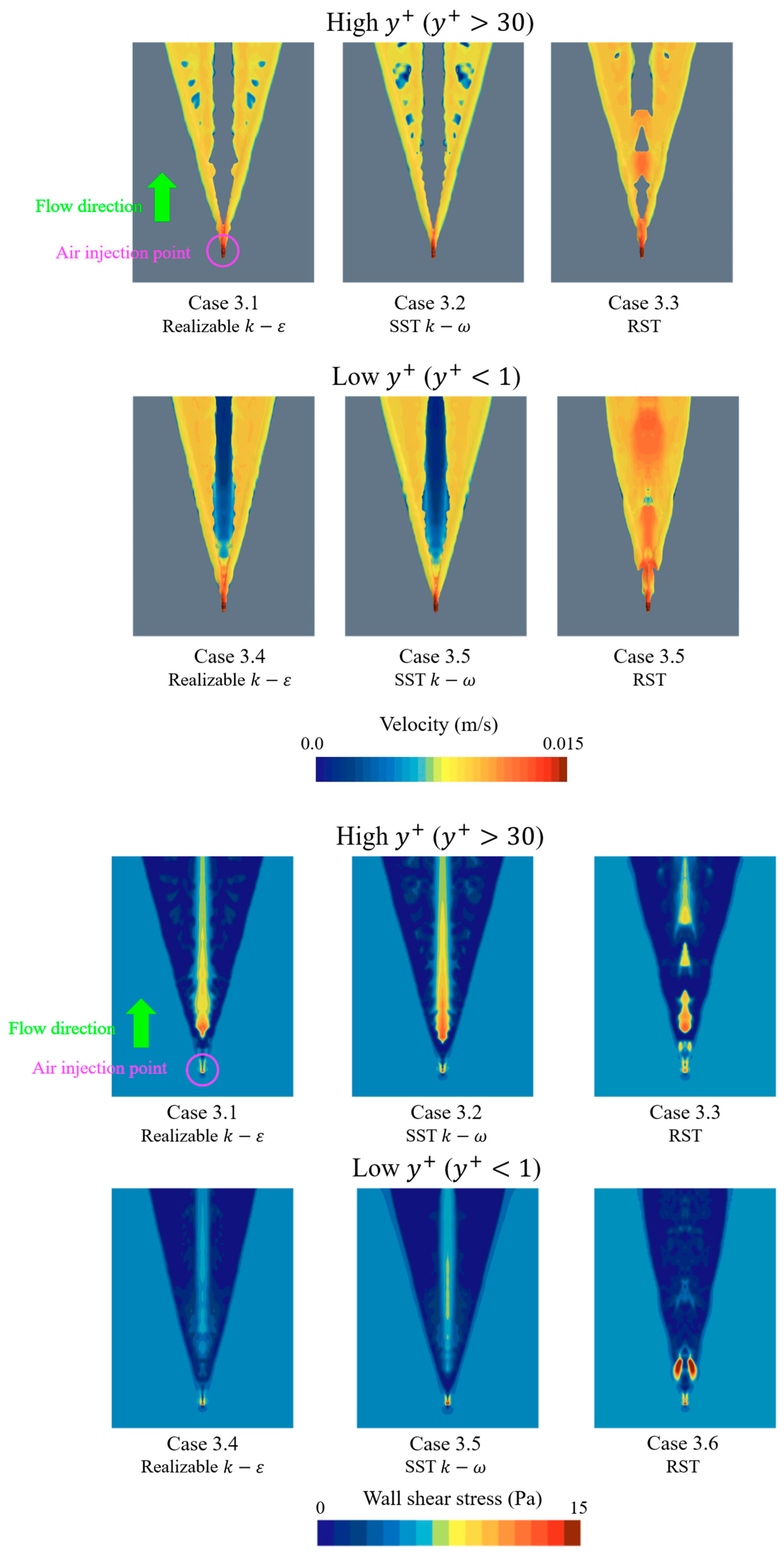
Figure 10, regarding the differences between turbulence models, the cases using the realizable
and SST
models exhibited similar trends in air layer formation, whereas the case using the RST model showed a notable difference from the other two models, with the air layer being partially formed behind the air injection hole. The more interesting point is that there were differences in air layer formation depending on the wall
value. For all three turbulence models, the wall
below 1 condition showed that the air layer extended further behind the injection holes, forming a denser air layer compared to the
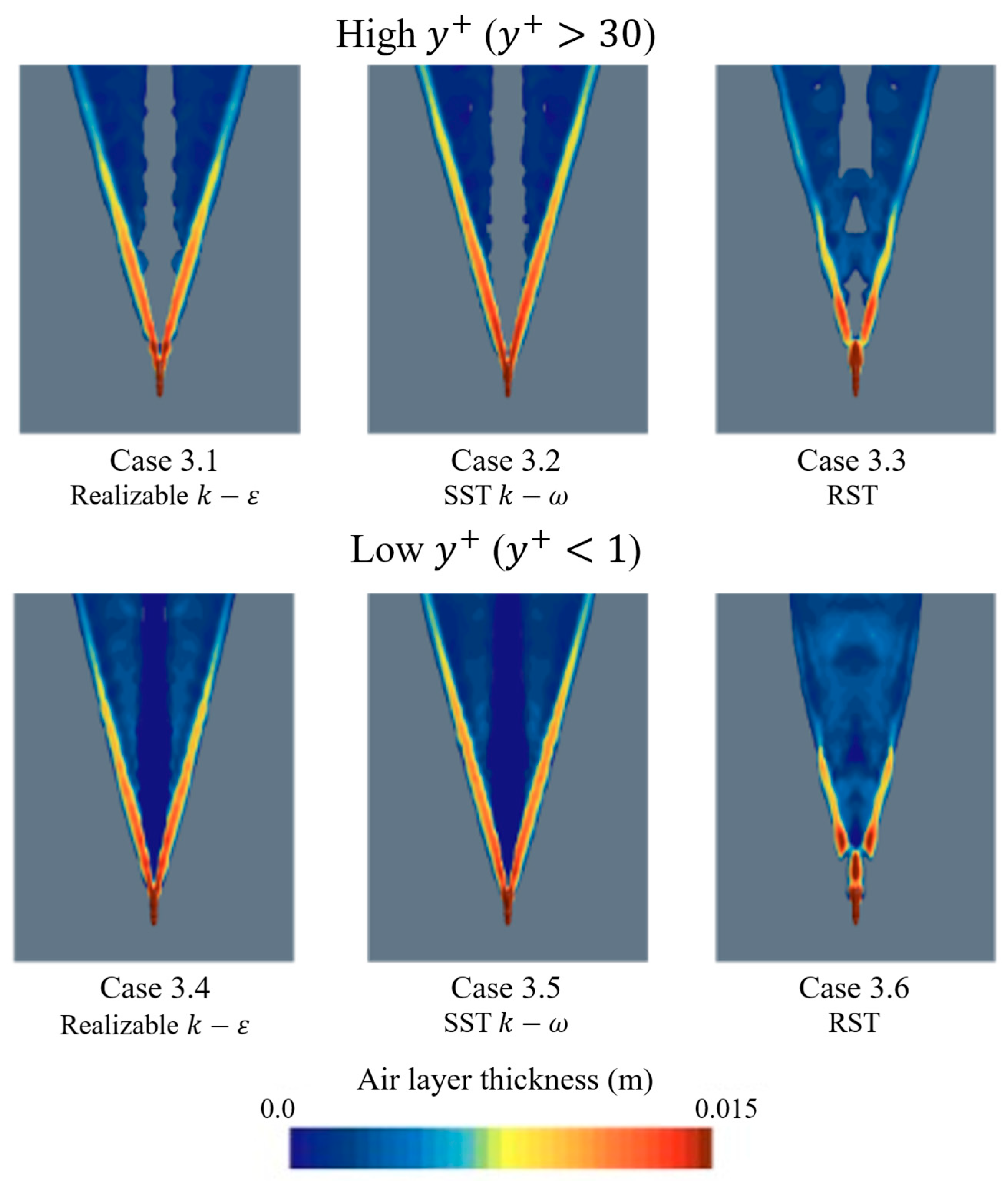
above 30 condition. Such variation becomes even more evident when examining the air layer thickness comparison presented in
Figure 11. This difference can be attributed to the enhanced mesh resolution under the low
condition (
). As the grid becomes finer to properly resolve the boundary layer on the flat plate, it becomes possible to capture air layers that could not be detected under
above 30 conditions. Furthermore, as presented in
Table 7, a quantitative comparison was conducted through sweep angle comparison with the experimental result. The results showed that, unlike the cases using the realizable
and SST
models which exhibited similar air layer formation, the cases using the RST model showed larger errors compared to the other two models. Additionally, when the same turbulence model was applied, the cases with
below 1 commonly showed an increase in sweep angle and slightly larger errors compared to the experimental results than the cases with
above 30.
On the other hand, the variation in drag showed a similar trend to the variation in air layer formation. As presented in
Table 7, regardless of wall
conditions, the cases employing the realizable
and SST
turbulence models exhibited similar trends in drag reduction. However, the case applying the RST turbulence model showed a lower drag reduction rate compared to the other two models. From the perspective of wall
conditions, even when employing the same turbulence model, the drag reduction rate showed an increasing trend under conditions where wall
was below 1. These results can be explained by changes in wall shear stress on the flat plate. As depicted in
Figure 10, under low
condition (
) the denser air layer formation enabled the capture of air layers that were not observed under high
condition (
). Consequently, a reduction in wall shear stress was confirmed.
In this section, the effects of turbulence models and wall
conditions were compared using the numerical parameters derived from
Section 4.1 and
Section 4.2 that provided stable air layer formation similar to the experiment (time step of 0.001 s, second-order temporal discretization, and sharpening factor of 0.0). As a result, Case 3.2 and Case 3.5, both employing the SST
turbulence model, were identified as the two most accurate cases with errors within 1% in the sweep angle evaluation. Although the high
condition yielded slightly smaller errors in the sweep angle comparison, both cases showed small errors overall.
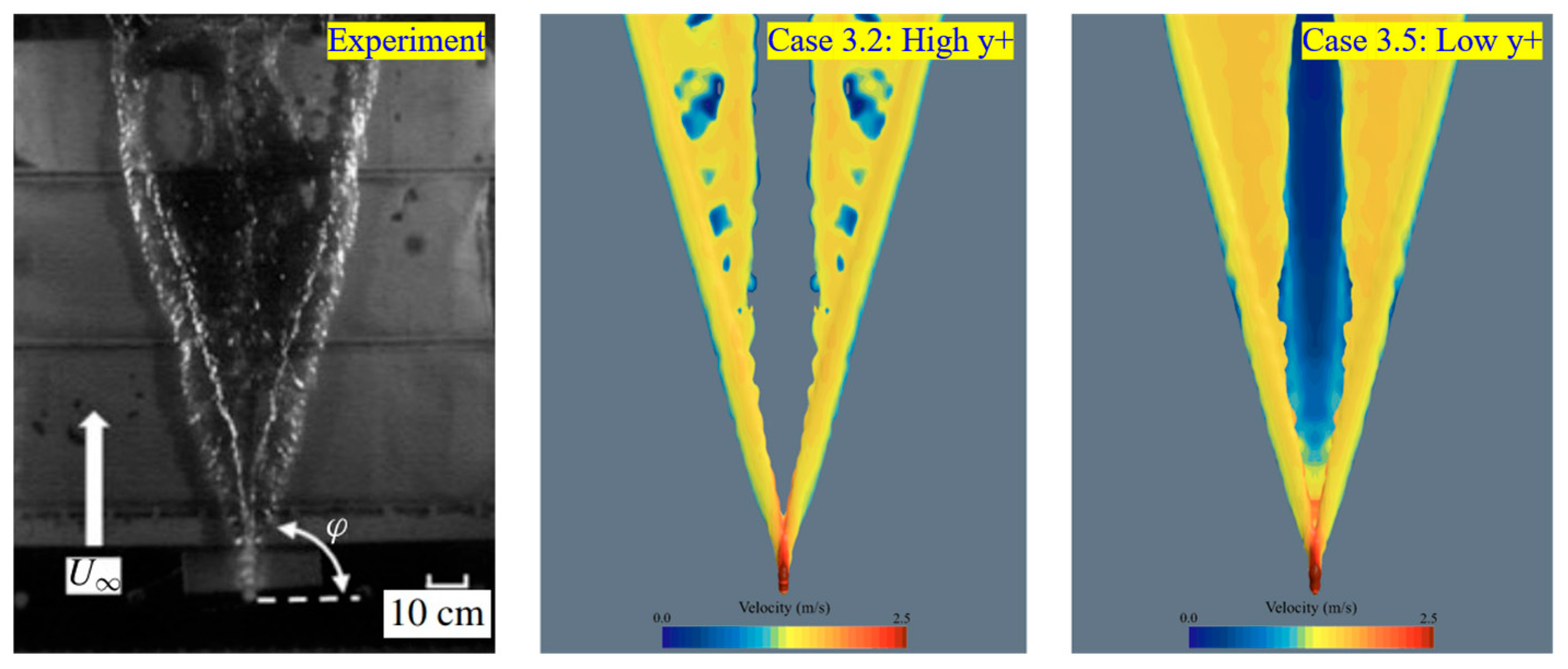
As depicted in
Figure 12, comparison of air layer formation revealed that the low
condition produced air layers more consistent with experimental observations. This indicates that resolving the viscous sublayer directly without wall functions, combined with the finer near-wall mesh resolution inherent to the low
approach, is essential for accurately capturing air layer dynamics. Conversely, the high
condition utilizes wall functions with coarser near-wall mesh, which inadequately resolves the steep gradients and interfacial instabilities critical to air layer formation.




 ,
,