Integrative Analysis of Transcriptome and Metabolome Reveals Molecular Mechanisms Underlying Hepatic Differences Between Zaozhuang Heigai Piglets and Duroc×Landrace×Yorkshire Piglets

 ,
,
Abstract
1. Introduction
2. Materials and Methods
2.1. Experimental Animals
2.2. Phenotypic Determination and Sample Collection
2.3. Liver Transcriptome Sequencing and Analysis
2.4. Metabolome Sequencing and Analysis
2.5. Transcriptome-Metabolome Integration Analysis
3. Results
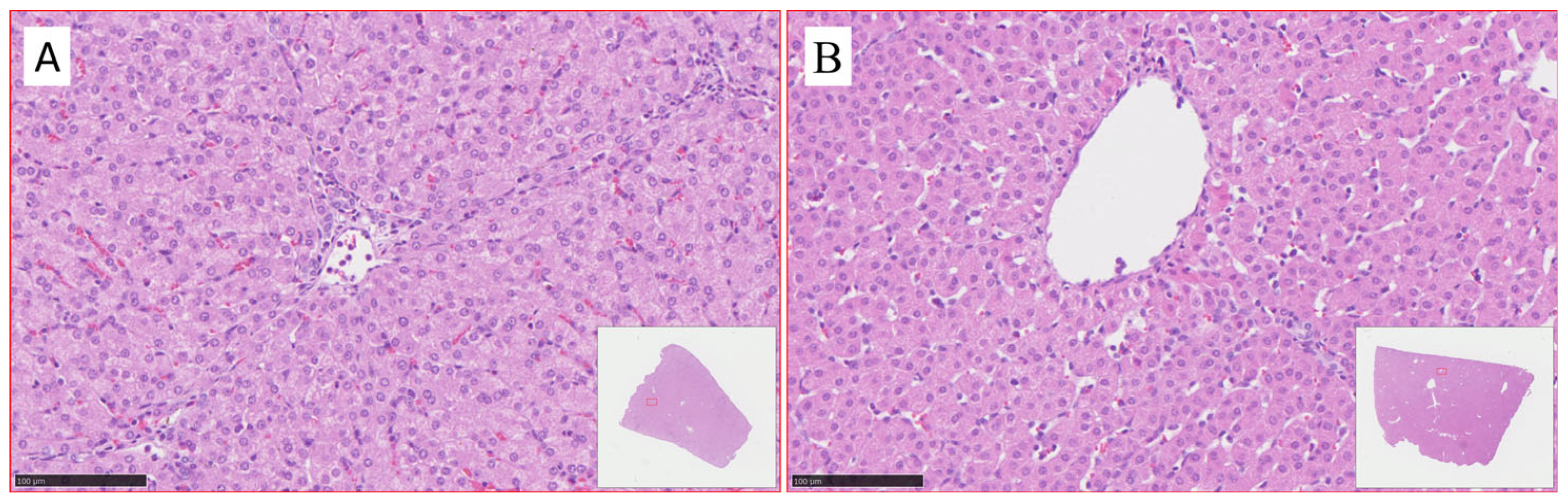
3.1. Comparison of Liver Coefficients and Tissue Sections of Piglets from the Two Breeds
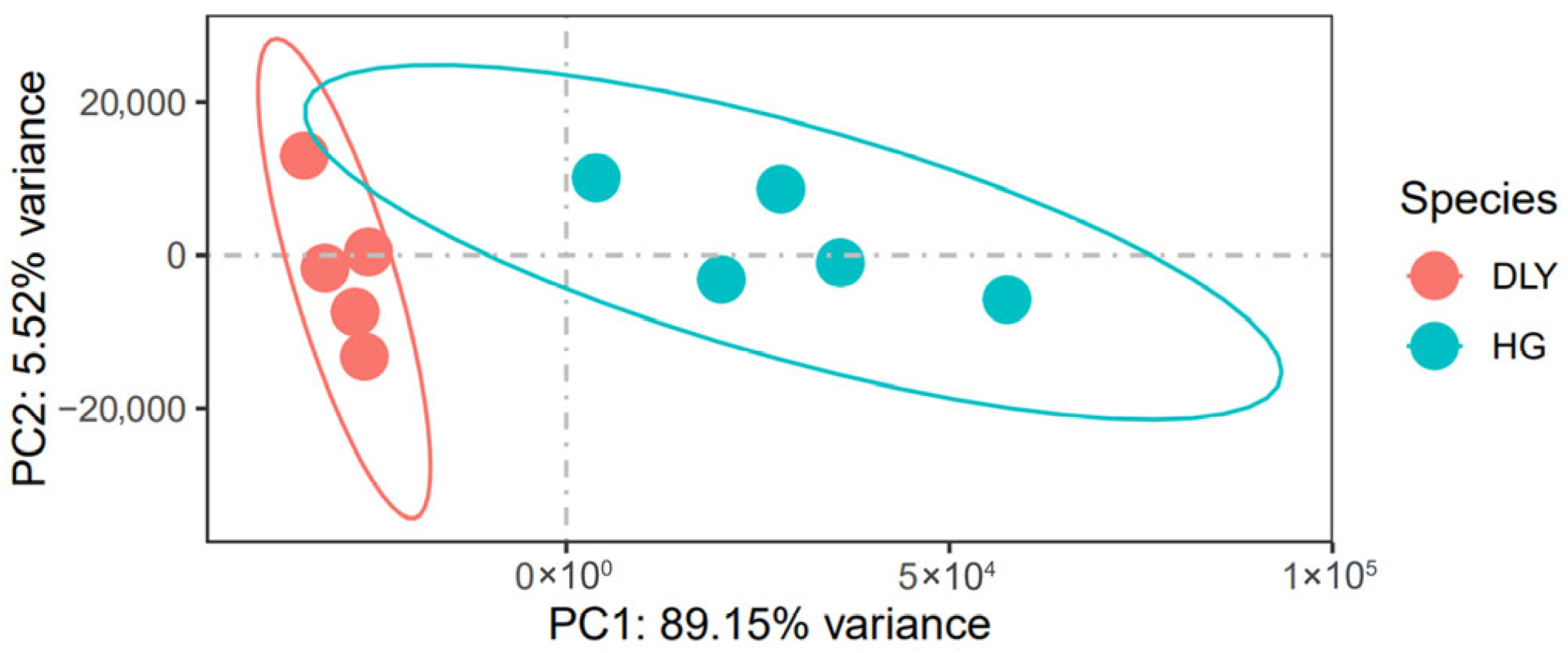
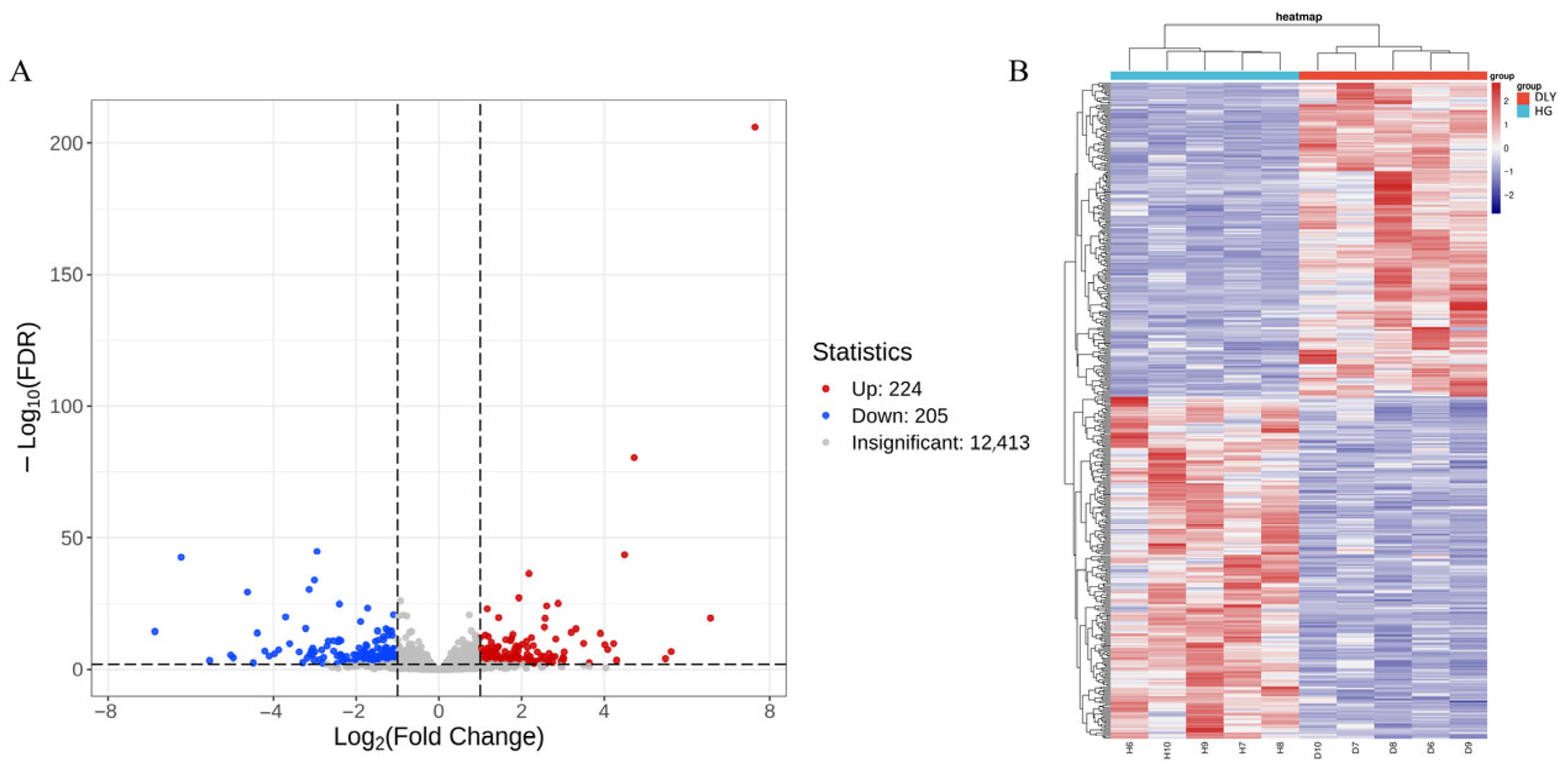
3.2. Comparative Analysis of the Liver Transcriptomes of Piglets from the Two Breeds
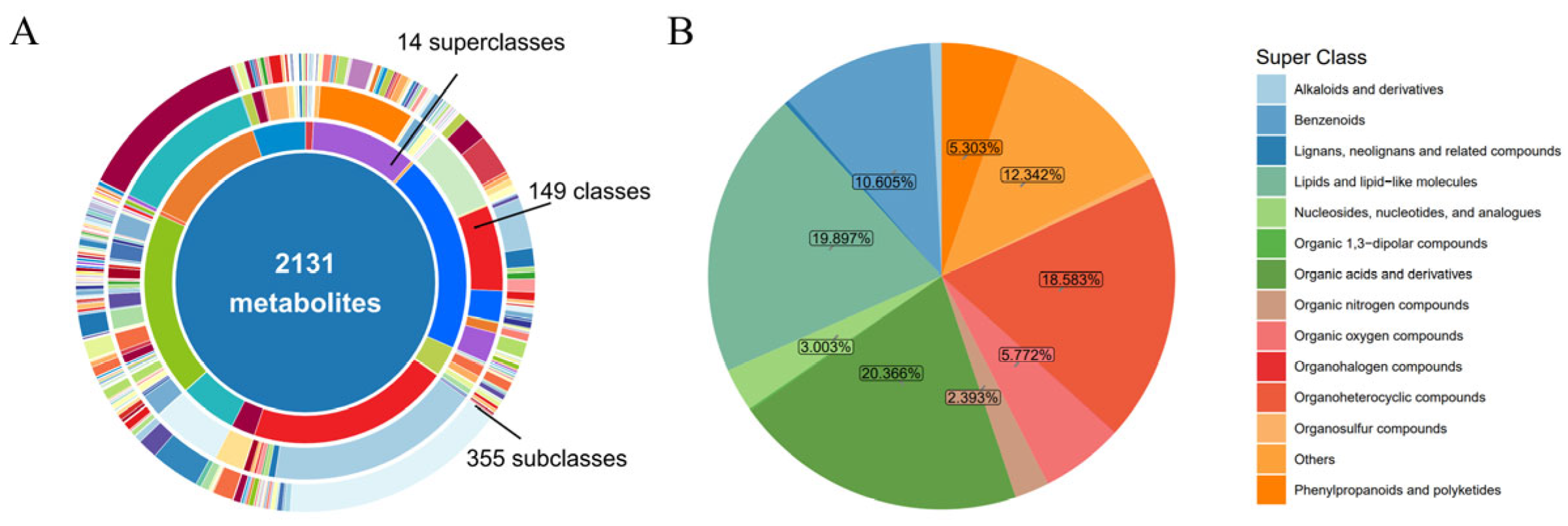
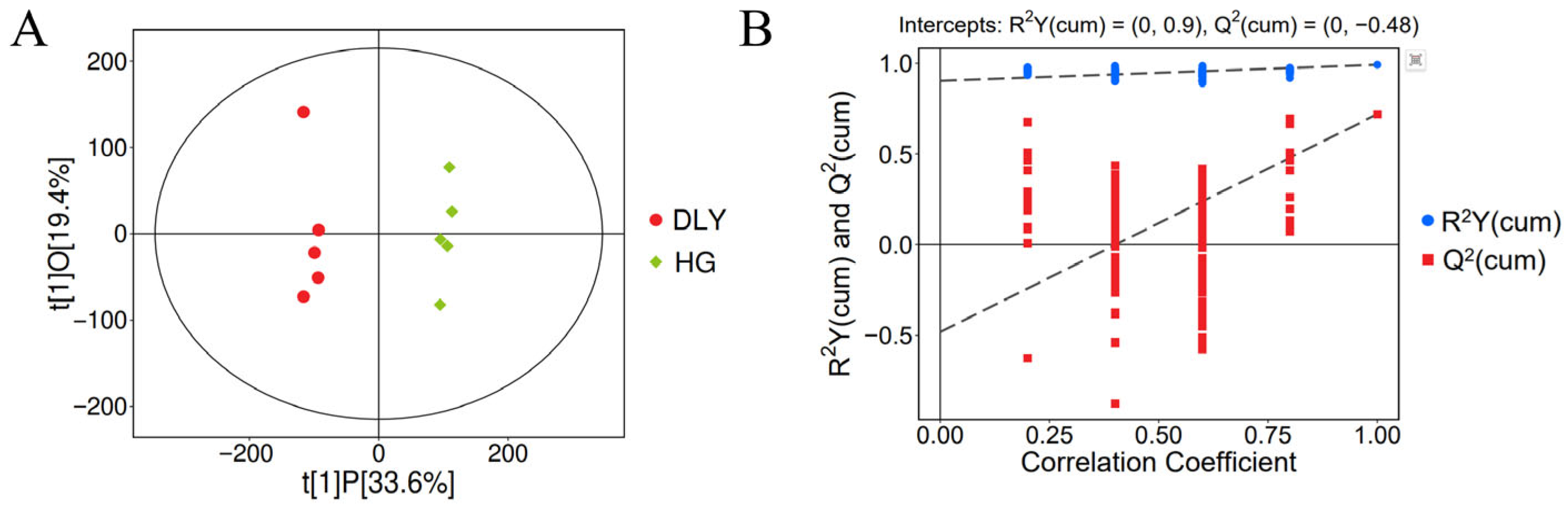
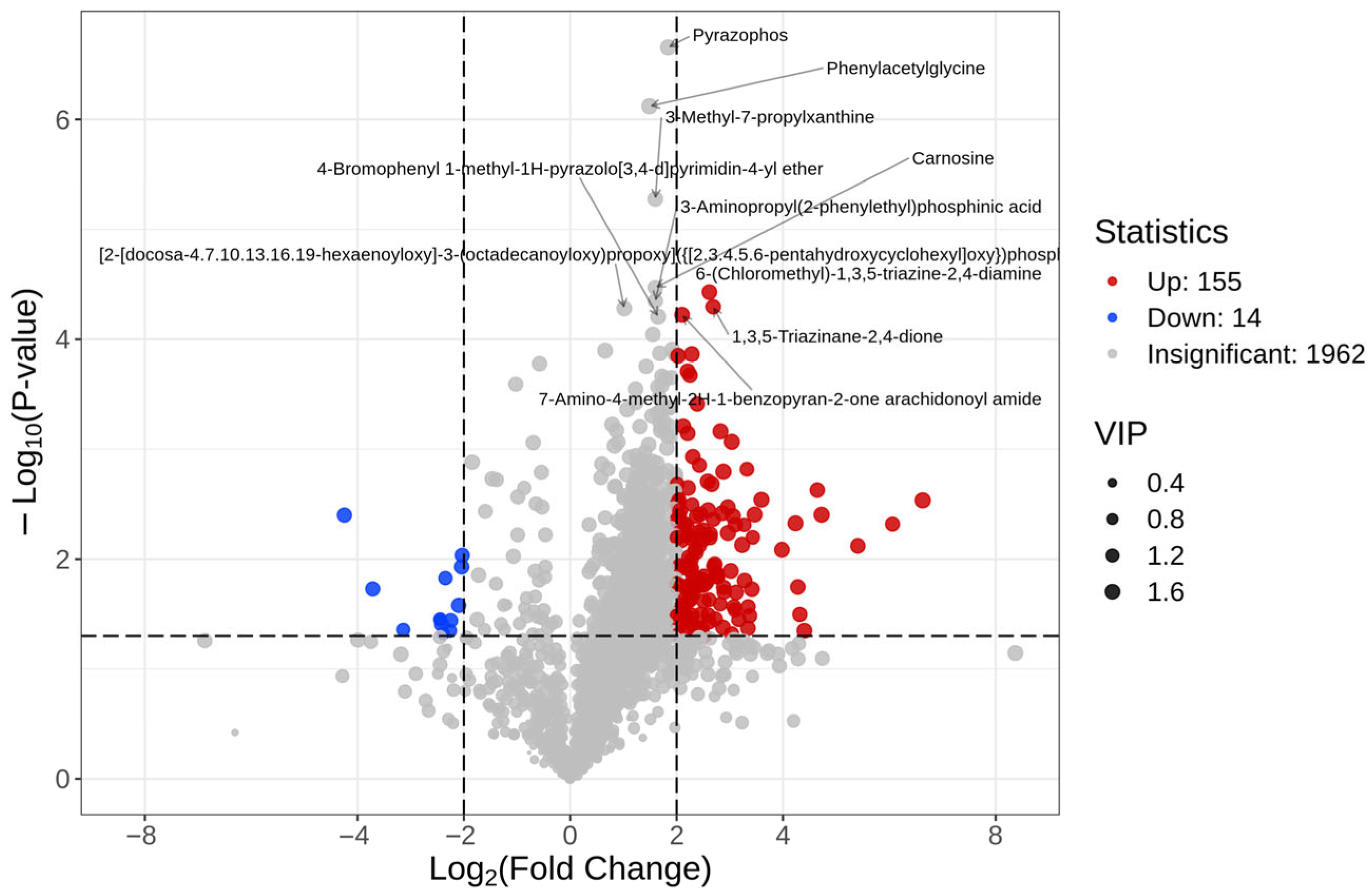
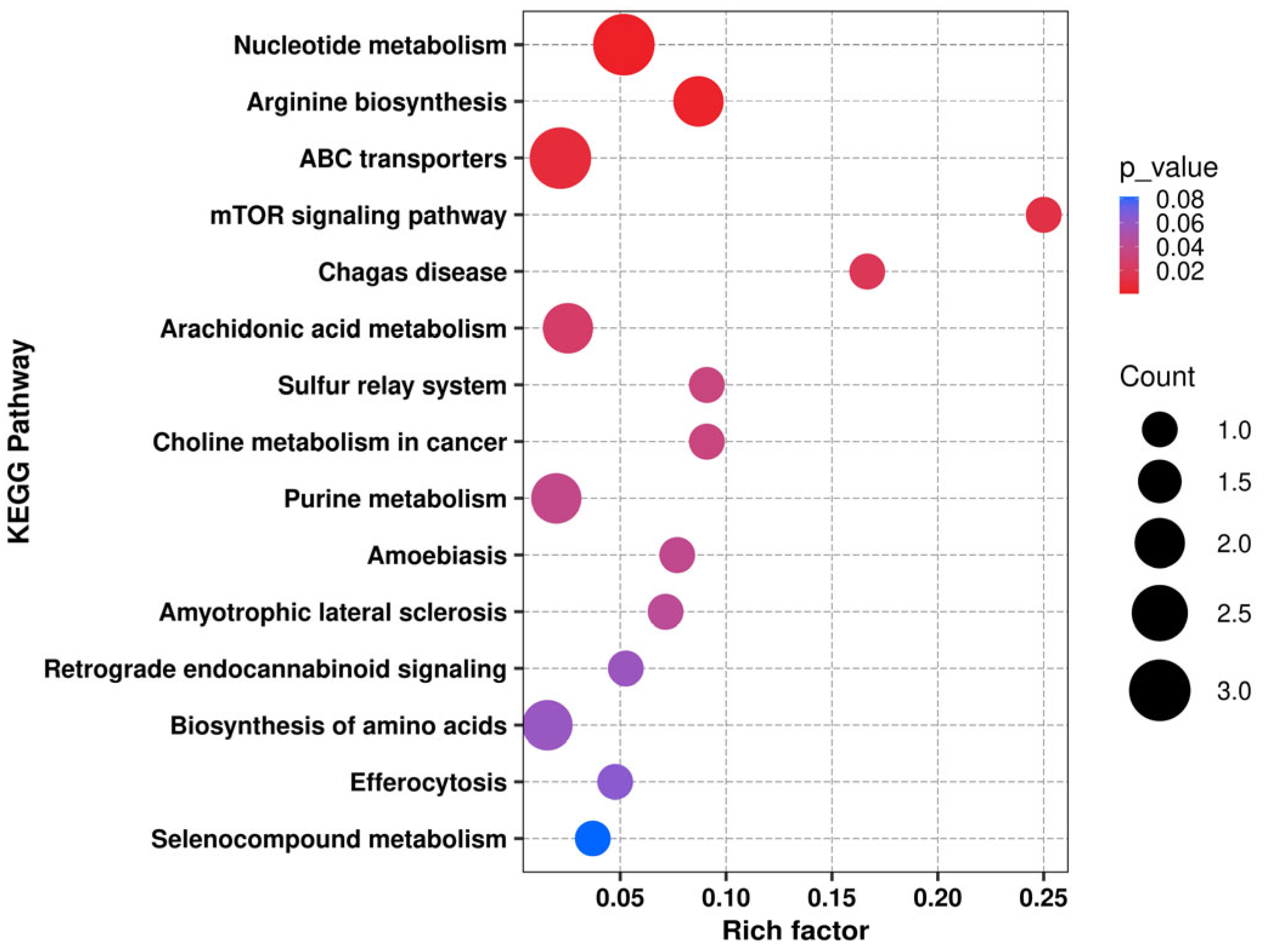
3.3. Comparative Analysis of the Liver Metabolome of Two Piglet Breeds
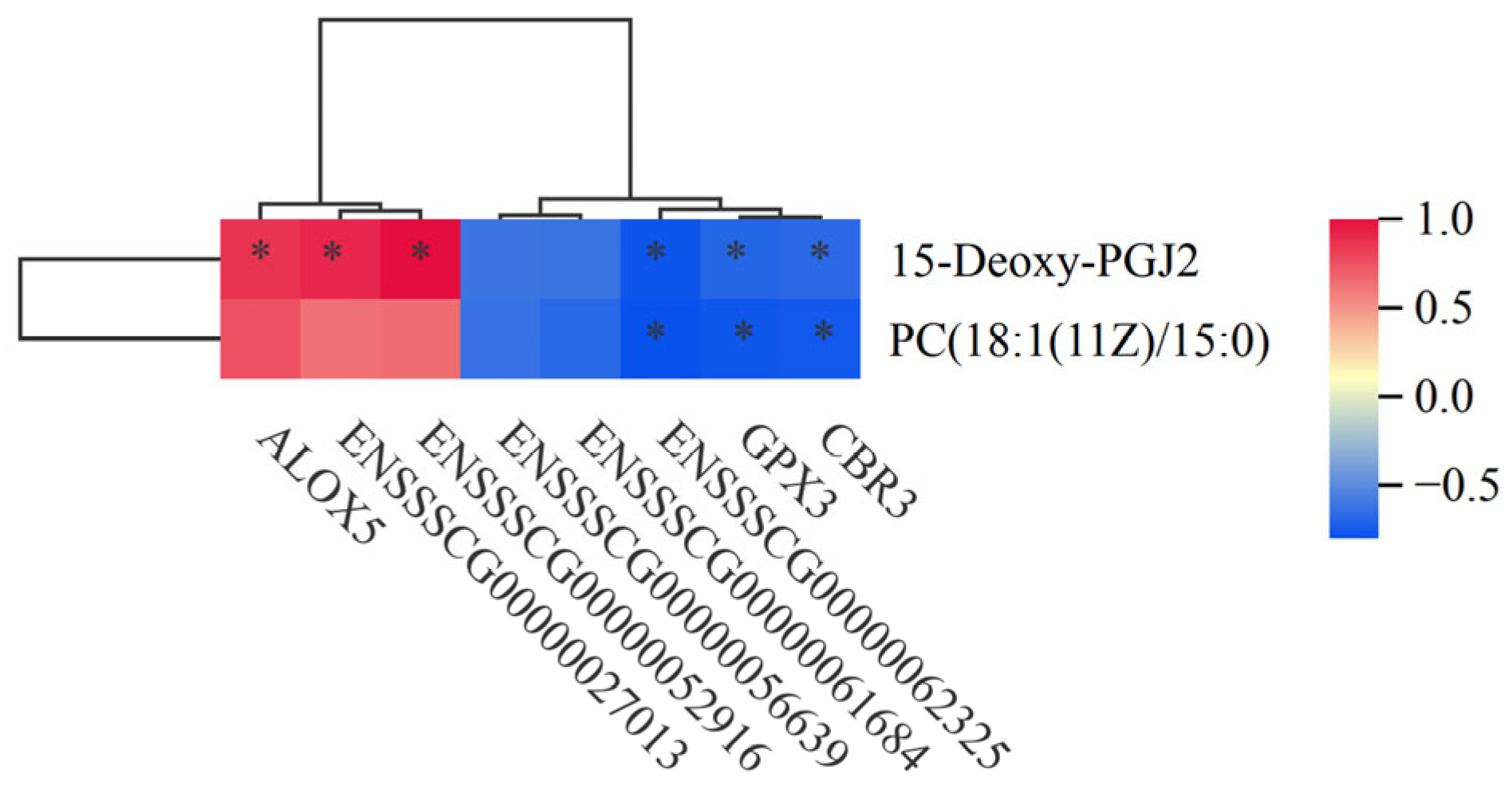
3.4. Integrated Analysis of the Transcriptome and Metabolome
4. Discussion
4.1. Differences in Liver Coefficients and Tissue Sections Between HG and DLY Piglets
4.2. Differences in Liver Transcriptome and Metabolome Between HG and DLY Piglets
4.3. The Gene–Metabolism Regulatory Role of the Arachidonic Acid Metabolism Pathway in HG Piglets
5. Conclusions
Supplementary Materials
Author Contributions
Funding
Institutional Review Board Statement
Data Availability Statement
Conflicts of Interest
References
- Pan, X.Y.; Qiu, Z.Y.; Liu, C.; Wang, C.; Wang, X.; Huang, L.N.; Li, S.F.; Shi, X.W.; Ge, S.G.; Xin, R.H. Effects of Dioscorea oppositifolia L. on growth performance, biochemical indicators, immunity, and intestinal health of weaned piglets. Front. Veter. Sci. 2025, 12, 1529881. [Google Scholar] [CrossRef]
- Lee, J.; Oh, S.; Kim, M. Impact of environmental enrichment on growth, behavior, and welfare of weanling piglets from pre-weaning to 6 weeks of age. J. Anim. Sci. Technol. 2025, 67, 152–163. [Google Scholar] [CrossRef] [PubMed]
- Yu, C.; Luo, Y.; Shen, C.; Luo, Z.; Zhang, H.; Zhang, J.; Xu, W.; Xu, J. Effects of microbe-derived antioxidants on growth performance, hepatic oxidative stress, mitochondrial function and cell apoptosis in weaning piglets. J. Anim. Sci. Biotechnol. 2024, 15, 128. [Google Scholar] [CrossRef] [PubMed]
- Chen, C.; Qi, M.; Xu, Z.; Wen, J.; Tang, W.; Diao, H.; Li, Z.; Chu, Y.; Feng, F.; Tang, Z. Sesamin improved growth and overall health in young animals by enhancing gut-liver axis function. Food Funct. 2025, 16, 4415–4436. [Google Scholar] [CrossRef] [PubMed]
- Chen, J.; Malhi, K.K.; Li, X.; Xu, X.; Kang, J.; Zhao, B.; Xu, Y.; Li, X.; Li, J. Metasilicate-based alkaline mineral water improves the growth performance of weaned piglets by maintaining gut-liver axis homeostasis through microbiota-mediated secondary bile acid pathway. Anim. Nutr. 2025, 20, 95–109. [Google Scholar] [CrossRef]
- Li, G.; Lv, D.; Tian, X.; Ji, P.; Guo, J.; Lu, Y.; Liu, G. Recent Advances in the Application of Omics Technologies for Bovine Mastitis Research. China Agric. Sci. 2019, 52, 350–358. (In Chinese) [Google Scholar]
- Wadood, A.A.; Zhang, X. The Omics Revolution in Understanding Chicken Reproduction: A Comprehensive Review. Curr. Issues Mol. Biol. 2024, 46, 6248–6266. [Google Scholar] [CrossRef]
- Gu, M.; Jiang, H.; Ma, F.; Li, S.; Guo, Y.; Zhu, L.; Shi, C.; Na, R.; Wang, Y.; Zhang, W. Multi-Omics Analysis Revealed the Molecular Mechanisms Affecting Average Daily Gain in Cattle. Int. J. Mol. Sci. 2025, 26, 2343. [Google Scholar] [CrossRef]
- Yang, C.; Wang, S.; Qi, Y.; Jin, Y.; Guan, R.; Huang, Z. Enhancing growth performance in Liangshan black sheep through fermented onion: Insights from transcriptomics and metabolomics. Front. Veter. Sci. 2025, 12, 1533728. [Google Scholar] [CrossRef]
- Juigné, C.; Becker, E.; Gondret, F. Small networks of expressed genes in the whole blood and relationships to profiles in circulating metabolites provide insights in inter-individual variability of feed efficiency in growing pigs. BMC Genom. 2023, 24, 647. [Google Scholar] [CrossRef]
- Wang, X.; Kadarmideen, H.N. Metabolite Genome-Wide Association Study (mGWAS) and Gene-Metabolite Interaction Network Analysis Reveal Potential Biomarkers for Feed Efficiency in Pigs. Metabolites 2020, 10, 201. [Google Scholar] [CrossRef] [PubMed]
- Deng, L.; Li, W.; Liu, W.; Liu, Y.; Xie, B.; Groenen, M.A.M.; Madsen, O.; Yang, X.; Tang, Z. Integrative metabolomic and transcriptomic analysis reveals difference in glucose and lipid metabolism in the longissimus muscle of Luchuan and Duroc pigs. Front. Genet. 2023, 14, 1128033. [Google Scholar] [CrossRef] [PubMed]
- Dan, H.; Liu, C.; Zhang, H.; Gan, M.; Wang, Y.; Chen, L.; Zhao, Y.; Liu, B.; Zhu, K.; Niu, L.; et al. Integrated transcriptomic and metabolomic analyses reveal heterosis for meat quality of Neijiang pigs. Front. Vet. Sci. 2024, 11, 1493284. [Google Scholar] [CrossRef] [PubMed]
- Zhang, Y.; Ding, N.; Cao, J.; Zhang, J.; Liu, J.; Zhang, C.; Jiang, L. Proteomics and Metabolic Characteristics of Boar Seminal Plasma Extracellular Vesicles Reveal Biomarker Candidates Related to Sperm Motility. J. Proteome Res. 2024, 23, 3764–3779. [Google Scholar] [CrossRef]
- Pan, B.; Chai, J.; Fei, K.; Zheng, T.; Jiang, Y. Dynamic changes in the transcriptome and metabolome of pig ovaries across developmental stages and gestation. BMC Genom. 2024, 25, 1193. [Google Scholar] [CrossRef]
- Yang, L.; Liu, X.; Huang, X.; Zhang, L.; Yan, H.; Hou, X.; Wang, L.; Wang, L. Metabolite and Proteomic Profiling of Serum Reveals the Differences in Molecular Immunity between Min and Large White Pig Breeds. Int. J. Mol. Sci. 2023, 24, 5924. [Google Scholar] [CrossRef]
- Wu, Q.; Han, Y.; Wu, X.; Wang, Y.; Su, Q.; Shen, Y.; Guan, K.; Michal, J.J.; Jiang, Z.; Liu, B.; et al. Integrated time-series transcriptomic and metabolomic analyses reveal different inflammatory and adaptive immune responses contributing to host resistance to PRRSV. Front. Immunol. 2022, 13, 960709. [Google Scholar] [CrossRef]
- Chng, C.L.; Goh, G.B.B.; Yen, P.M. Metabolic and Functional Cross Talk Between the Thyroid and Liver. Thyroid 2025, 35, 607–623. [Google Scholar] [CrossRef]
- Cheng, M.L.; Nakib, D.; Perciani, C.T.; Macparland, S.A. The immune niche of the liver. Clin. Sci. 2021, 135, 2445–2466. [Google Scholar] [CrossRef]
- Gao, H.; Chen, X.; Zhao, J.; Xue, Z.; Zhang, L.; Zhao, F.; Wang, B.; Wang, L. Integrative Analysis of Liver Metabolomics and Transcriptomics Reveals Oxidative Stress in Piglets with Intrauterine Growth Restriction. Biology 2022, 11, 1430. [Google Scholar] [CrossRef]
- Yu, M.; Li, Z.; Cui, Y.; Rong, T.; Tian, Z.; Deng, D.; Liu, Z.; Zhang, R.; Ma, X. An Integrated Profiling of Liver Metabolome and Transcriptome of Pigs Fed Diets with Different Starch Sources. Animals 2024, 14, 3192. [Google Scholar] [CrossRef] [PubMed]
- Gu, X. Multi-Omics-Based Investigation of Liver Response Pathways to Different Altitudes in Tibetan and Yorkshire Pigs. Ph.D. Thesis, Tibet University, Lhasa, China, 2024. (In Chinese) [Google Scholar]
- Li, C.; Wang, Y.; Zhao, X.; Li, J.; Wang, H.; Ren, Y.; Sun, H.; Zhu, X.; Song, Q.; Wang, J. Comparative Analysis of Intestinal Inflammation and Microbiota Dysbiosis of LPS-Challenged Piglets between Different Breeds. Animals 2024, 14, 665. [Google Scholar] [CrossRef] [PubMed]
- Liu, J.; Nong, Q.; Wang, J.; Chen, W.; Xu, Z.; You, W.; Xie, J.; Wang, Y.; Shan, T. Breed difference and regulatory role of CRTC3 in porcine intramuscular adipocyte. Anim. Genet. 2020, 51, 521–530. [Google Scholar] [CrossRef] [PubMed]
- Chen, S.; Zhou, Y.; Chen, Y.; Gu, J. fastp: An ultra-fast all-in-one FASTQ preprocessor. Bioinformatics 2018, 34, i884–i890. [Google Scholar] [CrossRef]
- Dobin, A.; Davis, C.A.; Schlesinger, F.; Drenkow, J.; Zaleski, C.; Jha, S.; Batut, P.; Chaisson, M.; Gingeras, T.R. STAR: Ultrafast universal RNA-seq aligner. Bioinformatics 2013, 29, 15–21. [Google Scholar] [CrossRef]
- Li, B.; Dewey, C.N. RSEM: Accurate transcript quantification from RNA-Seq data with or without a reference genome. BMC Bioinform. 2011, 12, 323. [Google Scholar] [CrossRef]
- R Core Team. R: A Language and Environment for Statistical Computing; R Foundation for Statistical Computing: Vienna, Austria, 2020. [Google Scholar]
- Love, M.I.; Huber, W.; Anders, S. Moderated estimation of fold change and dispersion for RNA-seq data with DESeq2. Genome Biol. 2014, 15, 550. [Google Scholar] [CrossRef]
- Yu, G.; Wang, L.G.; Han, Y.; He, Q.Y. clusterProfiler: An R package for comparing biological themes among gene clusters. Omics 2012, 16, 284–287. [Google Scholar] [CrossRef]
- Ashburner, M.; Ball, C.A.; Blake, J.A.; Botstein, D.; Butler, H.; Cherry, J.M.; Davis, A.P.; Dolinski, K.; Dwight, S.S.; Eppig, J.T.; et al. Gene ontology: Tool for the unification of biology. The Gene Ontology Consortium. Nat. Genet. 2000, 25, 25–29. [Google Scholar] [CrossRef]
- Kanehisa, M.; Goto, S.; Kawashima, S.; Okuno, Y.; Hattori, M. The KEGG resource for deciphering the genome. Nucleic Acids Res. 2004, 32, D277–D280. [Google Scholar] [CrossRef]
- Kessner, D.; Chambers, M.; Burke, R.; Agus, D.; Mallick, P. ProteoWizard: Open source software for rapid proteomics tools development. Bioinformatics 2008, 24, 2534–2536. [Google Scholar] [CrossRef]
- Sumner, L.W.; Amberg, A.; Barrett, D.; Beale, M.H.; Beger, R.; Daykin, C.A.; Fan, T.W.; Fiehn, O.; Goodacre, R.; Griffin, J.L.; et al. Proposed minimum reporting standards for chemical analysis Chemical Analysis Working Group (CAWG) Metabolomics Standards Initiative (MSI). Metabolomics 2007, 3, 211–221. [Google Scholar] [CrossRef]
- Wiklund, S.; Johansson, E.; Sjöström, L.; Mellerowicz, E.J.; Edlund, U.; Shockcor, J.P.; Gottfries, J.; Moritz, T.; Trygg, J. Visualization of GC/TOF-MS-based metabolomics data for identification of biochemically interesting compounds using OPLS class models. Anal. Chem. 2008, 80, 115–122. [Google Scholar] [CrossRef]
- Kanehisa, M.; Sato, Y.; Kawashima, M.; Furumichi, M.; Tanabe, M. KEGG as a reference resource for gene and protein annotation. Nucleic Acids Res. 2016, 44, D457–D462. [Google Scholar] [CrossRef]
- Ronca, V.; Gerussi, A.; Collins, P.; Parente, A.; Oo, Y.H.; Invernizzi, P. The liver as a central “hub” of the immune system: Pathophysiological implications. Physiol. Rev. 2025, 105, 493–539. [Google Scholar] [CrossRef] [PubMed]
- Zaefarian, F.; Abdollahi, M.R.; Cowieson, A.; Ravindran, V. Avian Liver: The Forgotten Organ. Animals 2019, 9, 63. [Google Scholar] [CrossRef] [PubMed]
- Younossi, Z.M.; Mangla, K.K.; Berentzen, T.L.; Grau, K.; Kjær, M.S.; Ladelund, S.; Nitze, L.M.; Coolbaugh, C.; Hsu, C.Y.; Hagström, H. Liver histology is associated with long-term clinical outcomes in patients with metabolic dysfunction-associated steatohepatitis. Hepatol. Commun. 2024, 8, e0423. [Google Scholar] [CrossRef] [PubMed]
- Vázquez-Carrera, M.; Wahli, W. PPARs as Key Mediators in the Regulation of Metabolism and Inflammation. Int. J. Mol. Sci. 2022, 23, 5025. [Google Scholar] [CrossRef]
- Zhang, Y.; Liu, Y.; Sun, J.; Zhang, W.; Guo, Z.; Ma, Q. Arachidonic acid metabolism in health and disease. MedComm 2023, 4, e363. [Google Scholar] [CrossRef]
- Viollet, B. The Energy Sensor AMPK: Adaptations to Exercise, Nutritional and Hormonal Signals. In Hormones, Metabolism and the Benefits of Exercise; Spiegelman, B., Ed.; Springer: Cham, Switzerland, 2017; pp. 13–24. [Google Scholar] [CrossRef]
- Kuhn, H.; Banthiya, S.; Van Leyen, K. Mammalian lipoxygenases and their biological relevance. Biochim. Biophys. Acta 2015, 1851, 308–330. [Google Scholar] [CrossRef]
- Poirier, S.J.; Boudreau, L.H.; Flamand, N.; Surette, M.E. LPS induces ALOX5 promoter activation and 5-lipoxygenase expression in human monocytic cells. Prostaglandins Leukot. Essent. Fat. Acids 2020, 154, 102078. [Google Scholar] [CrossRef]
- Endo, S.; Morikawa, Y.; Matsunaga, T.; Hara, A.; Takasu, M. Characterization of a novel porcine carbonyl reductase activated by glutathione: Relationship to carbonyl reductase 1, 3α/β-hydroxysteroid dehydrogenase and prostaglandin 9-ketoreductase. Chem. Biol. Interact. 2023, 381, 110572. [Google Scholar] [CrossRef] [PubMed]
- Malátková, P.; Ebert, B.; Wsól, V.; Maser, E. Expression of human carbonyl reductase 3 (CBR3; SDR21C2) is inducible by pro-inflammatory stimuli. Biochem. Biophys. Res. Commun. 2012, 420, 368–373. [Google Scholar] [CrossRef] [PubMed]
- Chang, Y.C.; Liu, P.H.; Tsai, Y.C.; Chiu, Y.F.; Shih, S.R.; Ho, L.T.; Lee, W.J.; Lu, C.H.; Quertermous, T.; Curb, J.D.; et al. Genetic variation in the carbonyl reductase 3 gene confers risk of type 2 diabetes and insulin resistance: A potential regulator of adipogenesis. J. Mol. Med. 2012, 90, 847–858. [Google Scholar] [CrossRef] [PubMed]
- Kanno, S.I.; Tomizawa, A.; Yomogida, S.; Hara, A. Glutathione peroxidase 3 is a protective factor against acetaminophen induced hepatotoxicity in vivo and in vitro. Int. J. Mol. Med. 2017, 40, 748–754. [Google Scholar] [CrossRef] [PubMed]
- Qi, X.; Ng, K.T.; Lian, Q.; Li, C.X.; Geng, W.; Ling, C.C.; Yeung, W.H.; Ma, Y.Y.; Liu, X.B.; Liu, H.; et al. Glutathione Peroxidase 3 Delivered by hiPSC-MSCs Ameliorated Hepatic IR Injury via Inhibition of Hepatic Senescence. Theranostics 2018, 8, 212–222. [Google Scholar] [CrossRef]
- Posey, E.A.; Davis, T.A. Review: Nutritional regulation of muscle growth in neonatal swine. Animal 2023, 17, 100831. [Google Scholar] [CrossRef]
- Le Bon, M.; Tötemeyer, S.; Emes, R.D.; Mellits, K.H. Gut transcriptome reveals differential gene expression and enriched pathways linked to immune activation in response to weaning in pigs. Front. Genet. 2022, 13, 961474. [Google Scholar] [CrossRef]
- Glunde, K.; Bhujwalla, Z.M.; Ronen, S.M. Choline metabolism in malignant transformation. Nat. Rev. Cancer 2011, 11, 835–848. [Google Scholar] [CrossRef]
- Zheng, S.J.; Qu, F.; Li, J.F.; Zhao, J.; Zhang, J.Y.; Liu, M.; Ren, F.; Chen, Y.; Zhang, J.L.; Duan, Z.P. Serum sphingomyelin has potential to reflect hepatic injury in chronic hepatitis B virus infection. Int. J. Infect. Dis. 2015, 33, 149–155. [Google Scholar] [CrossRef]
- Norris, G.H.; Porter, C.M.; Jiang, C.; Millar, C.L.; Blesso, C.N. Dietary sphingomyelin attenuates hepatic steatosis and adipose tissue inflammation in high-fat-diet-induced obese mice. J. Nutr. Biochem. 2017, 40, 36–43. [Google Scholar] [CrossRef] [PubMed]
- Zhang, J.; Yang, A.; Wu, Y.; Guan, W.; Xiong, B.; Peng, X.; Wei, X.; Chen, C.; Liu, Z. Stachydrine ameliorates carbon tetrachloride-induced hepatic fibrosis by inhibiting inflammation, oxidative stress and regulating MMPs/TIMPs system in rats. Biomed. Pharmacother. 2018, 97, 1586–1594. [Google Scholar] [CrossRef] [PubMed]
- Do, J.-H.; Hong, J.Y.; Jang, J.-H.; Jeong, K.-T.; Kim, S.H.; Lee, H.-J. Stachydrine Showing Metabolic Changes in Mice Exposed to House Dust Mites Ameliorates Allergen-Induced Inflammation. Nutrients 2025, 17, 2015. [Google Scholar] [CrossRef] [PubMed]
- Rieckmann, T.; Gatzemeier, F.; Christiansen, S.; Rothkamm, K.; Münscher, A. The inflammation-reducing compatible solute ectoine does not impair the cytotoxic effect of ionizing radiation on head and neck cancer cells. Sci. Rep. 2019, 9, 6594. [Google Scholar] [CrossRef]
- Cheng, W.; An, Q.; Zhang, J.; Shi, X.; Wang, C.; Li, M.; Zhao, D. Protective Effect of Ectoin on UVA/H2O2-Induced Oxidative Damage in Human Skin Fibroblast Cells. Appl. Sci. 2022, 12, 8531. [Google Scholar] [CrossRef]
- Wang, B.; Wu, L.; Chen, J.; Dong, L.; Chen, C.; Wen, Z.; Hu, J.; Fleming, I.; Wang, D.W. Metabolism pathways of arachidonic acids: Mechanisms and potential therapeutic targets. Signal Transduct. Target. Ther. 2021, 6, 94. [Google Scholar] [CrossRef]
- Hu, Y.; Li, W.; Cheng, X.; Yang, H.; She, Z.G.; Cai, J.; Li, H.; Zhang, X.J. Emerging Roles and Therapeutic Applications of Arachidonic Acid Pathways in Cardiometabolic Diseases. Circ. Res. 2024, 135, 222–260. [Google Scholar] [CrossRef]
- Ma, Y.; Jiang, J.; Zhao, C.; Wei, B.; Gao, J. Arachidonic acid metabolism in metabolic dysfunction-associated steatotic liver disease and liver fibrosis. Hepatol. Commun. 2025, 9, e0802. [Google Scholar] [CrossRef]
- Napimoga, M.H.; Vieira, S.M.; Dal-Secco, D.; Freitas, A.; Souto, F.O.; Mestriner, F.L.; Alves-Filho, J.C.; Grespan, R.; Kawai, T.; Ferreira, S.H.; et al. Peroxisome proliferator-activated receptor-gamma ligand, 15-deoxy-Delta12,14-prostaglandin J2, reduces neutrophil migration via a nitric oxide pathway. J. Immunol. 2008, 180, 609–617. [Google Scholar] [CrossRef]
- Ruiz-Miyazawa, K.W.; Staurengo-Ferrari, L.; Pinho-Ribeiro, F.A.; Fattori, V.; Zaninelli, T.H.; Badaro-Garcia, S.; Borghi, S.M.; Andrade, K.C.; Clemente-Napimoga, J.T.; Alves-Filho, J.C.; et al. 15d-PGJ(2)-loaded nanocapsules ameliorate experimental gout arthritis by reducing pain and inflammation in a PPAR-gamma-sensitive manner in mice. Sci. Rep. 2018, 8, 13979. [Google Scholar] [CrossRef]
- Kim, W.; Jang, J.H.; Zhong, X.; Seo, H.; Surh, Y.J. 15-Deoxy-△(12,14)-Prostaglandin J(2) Promotes Resolution of Experimentally Induced Colitis. Front. Immunol. 2021, 12, 615803. [Google Scholar] [CrossRef]
- Levental, K.R.; Lorent, J.H.; Lin, X.; Skinkle, A.D.; Surma, M.A.; Stockenbojer, E.A.; Gorfe, A.A.; Levental, I. Polyunsaturated Lipids Regulate Membrane Domain Stability by Tuning Membrane Order. Biophys. J. 2016, 110, 1800–1810. [Google Scholar] [CrossRef]
- Irato, P.; Santovito, G. Enzymatic and Non-Enzymatic Molecules with Antioxidant Function. Antioxidants 2021, 10, 579. [Google Scholar] [CrossRef]
- Lee, B.R.; Paing, M.H.; Sharma-Walia, N. Cyclopentenone Prostaglandins: Biologically Active Lipid Mediators Targeting Inflammation. Front. Physiol. 2021, 12, 640374. [Google Scholar] [CrossRef]



| Category | Item | ID | Description | Adjusted p-Value | Enriched Gene Count | Fold Enrichment |
|---|---|---|---|---|---|---|
| GO | MF | GO:0005506 | Iron ion binding | 9.77 × 10⁻⁵ | 15 | 47.95 |
| GO:0016705 | Oxidoreductase activity, acting on paired donors, with incorporation or reduction of molecular oxygen | 9.77 × 10⁻⁵ | 16 | 47.95 | ||
| GO:0004497 | Monooxygenase activity | 1.16 × 10⁻⁴ | 13 | 47.95 | ||
| GO:0020037 | Hheme binding | 3.50 × 10⁻³ | 12 | 47.95 | ||
| GO:0046906 | Tetrapyrrole binding | 4.43 × 10⁻³ | 12 | 47.95 | ||
| KEGG | - | map04212 | Longevity-regulating pathway—worm | 8.89 × 10⁻⁸ | 23 | 4.83 |
| map00830 | Retinol metabolism | 2.32 × 10⁻⁵ | 12 | 6.75 | ||
| map03410 | Base excision repair | 1.79 × 10⁻⁸ | 16 | 4.58 | ||
| map03320 | PPAR signaling pathway | 5.42 × 10⁻⁵ | 12 | 5.88 | ||
| map00900 | Terpenoid backbone biosynthesis | 4.18 × 10⁻⁴ | 6 | 11.88 | ||
| map00500 | Starch and sucrose metabolism | 5.91 × 10⁻⁴ | 7 | 8.62 | ||
| map04210 | Apoptosis | 9.71 × 10⁻⁴ | 18 | 3.05 | ||
| map01100 | Metabolic pathways | 2.63 × 10⁻³ | 59 | 1.61 | ||
| map00590 | Arachidonic acid metabolism | 3.50 × 10⁻³ | 9 | 4.71 | ||
| map05204 | Chemical carcinogenesis via DNA adducts | 7.35 × 10⁻³ | 8 | 4.73 | ||
| map04152 | AMPK signaling pathway | 1.39 × 10⁻² | 10 | 3.50 |
Disclaimer/Publisher’s Note: The statements, opinions and data contained in all publications are solely those of the individual author(s) and contributor(s) and not of MDPI and/or the editor(s). MDPI and/or the editor(s) disclaim responsibility for any injury to people or property resulting from any ideas, methods, instructions or products referred to in the content. |
© 2026 by the authors. Licensee MDPI, Basel, Switzerland. This article is an open access article distributed under the terms and conditions of the Creative Commons Attribution (CC BY) license.
Share and Cite
Wang, C.; Li, J.; Zhao, X.; Wang, Y.; Zhu, X.; Zhao, F.; Zhang, C.; Geng, L.; Wang, J. Integrative Analysis of Transcriptome and Metabolome Reveals Molecular Mechanisms Underlying Hepatic Differences Between Zaozhuang Heigai Piglets and Duroc×Landrace×Yorkshire Piglets. Agriculture 2026, 16, 241. https://doi.org/10.3390/agriculture16020241
Wang C, Li J, Zhao X, Wang Y, Zhu X, Zhao F, Zhang C, Geng L, Wang J. Integrative Analysis of Transcriptome and Metabolome Reveals Molecular Mechanisms Underlying Hepatic Differences Between Zaozhuang Heigai Piglets and Duroc×Landrace×Yorkshire Piglets. Agriculture. 2026; 16(2):241. https://doi.org/10.3390/agriculture16020241
Chicago/Turabian StyleWang, Caitong, Jingxuan Li, Xueyan Zhao, Yanping Wang, Xiaodong Zhu, Fuping Zhao, Chuansheng Zhang, Liying Geng, and Jiying Wang. 2026. "Integrative Analysis of Transcriptome and Metabolome Reveals Molecular Mechanisms Underlying Hepatic Differences Between Zaozhuang Heigai Piglets and Duroc×Landrace×Yorkshire Piglets" Agriculture 16, no. 2: 241. https://doi.org/10.3390/agriculture16020241
APA StyleWang, C., Li, J., Zhao, X., Wang, Y., Zhu, X., Zhao, F., Zhang, C., Geng, L., & Wang, J. (2026). Integrative Analysis of Transcriptome and Metabolome Reveals Molecular Mechanisms Underlying Hepatic Differences Between Zaozhuang Heigai Piglets and Duroc×Landrace×Yorkshire Piglets. Agriculture, 16(2), 241. https://doi.org/10.3390/agriculture16020241