Article

Distinct Pathways of Cadmium Immobilization as Affected by Wheat Straw- and Soybean Meal-Mediated Reductive Soil Disinfestation

1
School of Life Science And Technology, Northwestern Polytechnical University, Xi’an 710129, China
2
Shaanxi Agricultural Development Group Co., Ltd., Xi’an 710075, China
3
Xi’an Botanical Garden of Shaanxi Province (Institute of Botany of Shaanxi Province), Xi’an 710061, China
4
Natural Resource Sciences Department, McGill University, Montreal, QC H9X3V9, Canada
5
Peanut Research Institute, Henan Academy of Agricultural Sciences, Zhengzhou 450002, China
6
College of Natural Resources and Environment, Northwest A&F University, Yangling 712100, China
*
Author to whom correspondence should be addressed.
Agriculture 2026, 16(2), 242; https://doi.org/10.3390/agriculture16020242 (registering DOI)
Submission received: 11 December 2025 / Revised: 9 January 2026 / Accepted: 14 January 2026 / Published: 17 January 2026
(This article belongs to the Section Agricultural Soils)

Abstract

Both organic matter and iron oxide (FeO) dynamics pose key roles in soil cadmium (Cd) bioavailability. However, the microbially driven transformation of soil organic matter and FeO and their linkages to Cd fractions remain unclear under reductive soil disinfestation (RSD) with different organic sources, which limits our mechanistic understanding of Cd immobilization by RSD. To address this gap, we conducted a 45 day microcosm experiment using a paddy soil contaminated with 22.8 mg/kg Cd. Six treatments were established: untreated control (CK), waterlogged (WF), and RSD-amended soils with 0.7% or 2.1% wheat straw (LWD, HWD) or soybean meal (LSD, HSD). We systematically assessed soil Cd fractionation, organic carbon and FeO concentrations, and bacterial community structure, aiming to clarify differences in Cd immobilization efficiency and the underlying mechanisms between wheat straw and soybean meal. For strongly extractable Cd, wheat straw RSD reduced the soil Cd concentrations from 6.02 mg/kg to 4.32 mg/kg (28.2%), whereas soybean meal RSD achieved a maximum reduction to 2.26 mg/kg (62.5%). Additionally, the soil mobility factor of Cd decreased from 44.6% (CK) to 39.2% (HWD) and 32.5% (HSD), while the distribution index increased from 58.5% (CK) to 62.2% (HWD) and 66.8% (HSD). Notably, the HWD treatment increased soil total organic carbon, humus, and humic acid concentrations by 34.8%, 24.6%, and 28.3%, respectively. Regarding amorphous FeO, their concentrations increased by 19.1% and 33.3% relative to CK. RSD treatments significantly altered soil C/N ratios (5.91–12.5). The higher C/N ratios associated with wheat straw stimulated r-strategist bacteria (e.g., Firmicutes, Bacteroidetes), which promoted carbohydrate degradation and fermentation, thereby enhancing the accumulation of humic substances. In contrast, the lower C/N ratios of soybean meal increased dissolved organic carbon and activated iron-reducing bacteria (FeRB; e.g., Anaeromyxobacter, Clostridium), driving iron reduction and amorphous iron oxide formation. PLS-PM analysis confirmed that wheat straw RSD immobilized Cd primarily through humification, whereas soybean meal RSD relied on FeRB-mediated FeO amorphization. These findings suggest that Cd immobilization in soil under RSD may be regulated by microbially mediated organic matter transformation and iron oxide dynamics, which was affected by organic materials of different C/N ratios.

1. Introduction

The escalating issue of heavy metal soil contamination, propelled by global industrialization at an unprecedented pace, has become one of the most critical environmental challenges in the contemporary era [1]. Recent survey data depict a worrying picture of global agricultural land. Approximately 17% of it (nearly 242 million hectares) exhibits severe heavy metal pollution [2], with cadmium (Cd) drawing particular concern in agricultural systems due to its persistence and toxicity [3]. Therefore, implementing effective Cd immobilization strategies is essential for promoting soil health and agricultural sustainability, key objectives aligned with public safety.
In the search for sustainable remediation approaches, reductive soil disinfestation (RSD) has emerged as a particularly promising cleaner production technology [4]. This eco-friendly method involves three key operational steps: (i) adding fresh organic amendments, (ii) flooding to create anaerobiosis, (iii) plastic film sealing for about one month. These conditions induce a profound soil ecological shift, shifting microbial communities from aerobic to anaerobic dominance and fundamentally altering biogeochemical processes [5]. Several studies have documented its multifaceted benefits, including the mitigation of soil acidification and salinization, improved soil fertility, and the suppression of soil-borne pathogens and antibiotic resistance genes [6,7]. Regarding soil Cd contamination, Li et al. [8] reported that RSD with bean meal significantly reduced the exchangeable Cd fraction, thereby enhancing its immobilization and decreasing plant uptake. Li et al. [9] observed that RSD treatments (addition of 2% ethanol (high carbon-to-nitrogen (C/N) ratio) and Hermetia illucens L. feces (low C/N ratio)) converted exchangeable Cd into organic matter-bound and residual fractions, with the Hermetia illucens L. feces exhibiting superior efficacy. Currently, research on RSD for reducing soil Cd content mostly focuses on which organic materials can be applied to reduce soil heavy metal bioavailability, while the efficiency and mechanisms mediated by different types of organic materials remain unclear. This knowledge gap currently hinders the optimization of RSD protocols for targeted heavy metal remediation.
The bioavailability and mobility of heavy metals in soil are governed by their complex interactions with various organic and inorganic constituents [10,11]. Chen et al. [4,7] found that RSD with wheat straw promotes the accumulation of soil organic carbon, primarily in the form of macromolecular and hydrophobic organic compounds. These organic fractions contain abundant anionic functional groups that can form stable complexes with Cd, thereby facilitating its immobilization [12,13]. Concurrently, anaerobic conditions generated by RSD could drive iron oxide’s (FeO) mineralogical transformation and thus affect Cd availability—a process that remains poorly understood. Numerous studies have reported that the dissolution of crystalline FeO increases soil Cd mobility alongside the reduction of iron (Fe) (III) in anoxic conditions [14,15]. Notably, however, a recent study in paddy soils demonstrated that amorphous FeO formed under iron-reducing conditions exhibits a substantially higher capacity for Cd fixation via coprecipitation, ion exchange, and adsorption processes, compared with their initial crystalline counterparts [16]. Furthermore, Si et al. [17] indicated that organic amendment promotes the anaerobic conversion of FeO from crystalline (e.g., hematite, magnetite) to amorphous (e.g., goethite) forms by stimulating microbial Fe(III) reduction. In anoxic conditions, Fe (hydr)oxides may capture organic molecules to form amorphous FeO through adsorption and/or coprecipitation processes, which play a crucial role in the geochemical behaviors of heavy metals [18]. Both wheat straw (high C/N ratio) and soybean meal (low C/N ratio) are readily available and low-cost agricultural wastes. Returning them to fields has become a common practice to enhance soil fertility and support sustainable crop production. However, organic materials with different C/N ratios exert distinct effects on soil properties. Organic materials with a low C/N ratio are more readily utilized by soil microorganisms [19]. In contrast, those with a high C/N ratio contain high levels of complex compounds, which impede microbial decomposition and utilization [20]. Li et al. [21] reported that the C/N ratio is the most important predictor of the chemical diversity of soil organic matter (SOM), and an increase in this ratio facilitates the formation of more complex and recalcitrant SOM. Furthermore, the application of organic materials with varying C/N ratios can modulate the abundance of iron-reducing bacteria (FeRB) in soil. Notably, an elevated dissolved organic carbon (DOC) content promotes Fe(III) reduction, thereby influencing the synthesis of iron oxides [22]. However, it remains unclear how RSD, when amended with materials of different C/N ratios, influences the transformation of organic matter and FeO, and thereby affects Cd immobilization in soil.
Microbial communities represent the engine driving these complex soil processes and mediate essential ecosystem functions, including nutrient cycling, organic matter decomposition, and iron redox transformations [23,24]. During RSD, a consistent pattern emerges where r-strategist taxa (particularly Firmicutes) flourish, while K-strategist taxa (e.g., Actinobacteria and Chloroflexi) decline significantly [4,5,25]. This ecological shift has important functional consequences, as the r–strategists accelerate organic matter turnover and modify the balance between soil labile and recalcitrant organic matter [26]. Microbial communities activated by organic amendments drive the formation of larger aromatic molecules that reduce heavy metal availability via stable humus–metal complexes [27]. Specifically, RSD can enrich numerous anaerobic and facultative r-strategist bacteria such as Bacillus, Lysinibacillus, and Clostridium, all of which are classified as iron-reducing bacteria (FeRB) [28]. These taxa can utilize labile organic fractions to reduce Fe(III) in paddy soils, forming reactive iron minerals (e.g., lepidocrocite, goethite) that immobilize heavy metals via adsorption and coprecipitation [29,30].
A pivotal factor governing the responses of soil microbial community structure and functions to RSD is the nature of organic amendments, particularly their C/N ratio [31,32]. However, there remains a research gap regarding how the addition of organic materials with different C/N ratios under RSD shapes shifts in microbial communities and thereby drives the transformation of soil organic matter and FeO to reduce Cd availability in paddy soils. Therefore, we hypothesized that organic amendments with contrasting C/N ratios drive divergent bacterial-mediated transformations of soil organic matter and FeO, thereby leading to distinct pathways and efficiencies of soil Cd immobilization under RSD. To test this hypothesis, wheat straw (high C/N ratio) and soybean meal (low C/N ratio) were selected as representative organic substrates and applied in RSD treatments at different doses. The objectives of this study were to (i) characterize changes in soil Cd fractions, organic matter composition, and iron oxide transformations; (ii) track shifts in bacterial life strategies, FeRB communities, and their metabolic functions; (iii) connect microbial-driven transformations in organic matter and FeO to Cd immobilization. This work will deepen our mechanistic understanding of Cd stabilization during RSD and offer practical insights for optimizing the remediation of Cd-contaminated soils, thereby supporting soil health, agricultural sustainability, and public safety.

2. Materials and Methods

2.1. Soil and Substance Preparations

Soil samples were collected in October 2024 from paddy fields located 800 m horizontally from a selected mining area in Hanzhong city, Shaanxi Province, China (106°67′52″ E, 33°53′31″ N, 540 altitude). This area has a temperate and humid climate, with an average annual temperature of 14.3 °C and annual precipitation of 853 mm. The soils are classified as paddy soil and Stagnic Anthrosols according to the FAO classification system. The sampling paddy field had been abandoned for more than 4 years due to severe Cd soil contamination (22.8 mg/kg). The soil had a clay loam texture (40.3% clay, 34.2% silt, and 25.5% sand), a pH of 6.89, and contained total organic C at 18.2 g/kg, total N at 1.78 g/kg, total Fe at 33.8 g/kg, and available N, P, and K of 18.5, 20.3, and 78.9 mg/kg, respectively. Before the experiment, the soil samples were homogenized, air-dried, and ground to pass through a 2 mm sieve. Wheat straw and soybean meal—organic materials for RSD collected from a pollution-free field—were air-dried and crushed into approximately 3 mm pieces. The wheat straw contained 455 g/kg C and 9.17 g/kg N, whereas the soybean meal contained 485 g/kg C and 70.3 g/kg N. Following sterilization, these Cd-free amendments were stored for subsequent use.

2.2. Experimental Design and Procedure

Six treatments were employed in this microcosm experiment: (1) CK, untreated soil; (2) WF, water-flooded soil covered with a plastic membrane; (3–4) wheat straw RSD, soil amended with wheat straw at doses of 0.7% (LWD) and 2.1% (HWD), followed by flooding and plastic membrane coverage; (5–6) soybean meal RSD, soil amended with soybean meal at doses of 0.7% (LSD) and 2.1% (HSD), followed by flooding and plastic membrane coverage (Figure S1). These application rates corresponded to 15 and 45 Mg/ha in the field conditions, representing low and high dosage levels, respectively, which are consistent with those reported in other studies [33,34]. Each treatment was set up with three replicates, each containing 500 g Cd-contaminated soil in the opaque square foam boxes (200 × 150 × 150 mm3). During the experiment, soil moisture in the CK treatment was consistently maintained at 60% of field capacity by irrigation every 3 days. In contrast, 3 cm of water was maintained on the soil surface in the other treatments, and the surface was covered with an opaque plastic membrane (thickness: 0.6 mm). All foam boxes were incubated in a greenhouse for 45 days at an air temperature of 20–28 °C. After 45 days of incubation, soil samples were collected from each treatment and divided into three subsets. The first subset was immediately used for ferrous ion and dissolved organic carbon (DOC) analysis. The second subset was stored at −80 °C for genomic analysis. The remaining portion was air-dried, sieved through a 2 mm mesh, and reserved for additional analyses of organic C and FeO fractions.

2.3. Determination of Soil Physical and Chemical Properties

Weakly and strongly exchangeable Cd, operationally defined as the plant-readily available fractions, were extracted using 0.01 mol/L [35] and 1.0 mol/L CaCl2 (Beijing Mairuida Technology Co., Ltd., Beijing, China) solutions, respectively. Concentrations of total Cd (Tot-Cd) and Fe (Tot-Fe) were determined using an atomic absorption spectrophotometer (AAS, Z2000, Hitachi, Japan) after digesting soil with a mixed acid solution of HCl-HNO3-HClO4-HF (Sinopharm Group Chemical Reagents Shaanxi Co., Ltd.) [36]. Soil Cd fractions were separated using Tessier’s sequential extraction procedure, which includes six fractions: exchangeable Cd in ultrapure water (F1, WS–Cd) and salt solution (F2, EX–Cd), and bound to carbonate (F3, CB–Cd), iron oxide (F4, OX–Cd), and organic matter (F5, OM–Cd), as well as residue Cd occluded within the mineral lattice (F6, RS–Cd) [37]. Method and reagent blanks were included throughout the entire Cd analysis and sequential extraction processes to ensure accuracy [38]. Cd concentrations in all blank samples were below the method detection limit (0.001 mg/L). A standard reference solution (GSB-04-1767-2004) [39] was used to establish the Cd calibration curve (R2 > 0.99). The total Cd content and its concentrations in each sequential extraction fraction were determined using AAS (Z2000, Hitachi, Japan). Spike recovery rates for total Cd analysis were all above 90%, confirming the high accuracy of the pretreatment and analytical methods used in this study. All samples were analyzed in triplicate. To evaluate soil Cd transformation, the mobility factor (MF–Cd) and distribution index (DI–Cd) were computed through the following formulas:
MF Cd = F 1   +   F 2   +   F 3 T o t Cd × 100 %
  DI Cd = i = 1 s = 6 i 2   ×   F i s 2   ×   T o t Cd × 100 %
where i is the index number of the extraction step (ranging from 1 for F1 fraction to 6 for F6 fraction). A decrease in MF–Cd and increase in DI–Cd indicate the immobilization of soil Cd from active to stable forms. To further investigate the immobilization effect of soil components on Cd, samples were ground, mounted on sample stubs with conductive adhesive, and then sputter-coated with a 1.5-nanometer gold layer. Subsequently, 2 mm soil particles were analyzed using a scanning electron microscope–energy dispersive spectrometer (SEM-EDS, GeminiSEM 500, Zeiss, Jena, Germany) operated at 20 kilovolts (working distance: 15 mm), aiming to examine the spatial distribution of Cd and its colocalization with key soil elements (e.g., C and Fe) [7].
Soil redox potential (Eh) was measured in situ using an Eh meter (YHBJ-262, INESA Scientific Instrument Co., Ltd., Shanghai, China) [40]. Soil pH was determined with a pH meter (PHS-3E, INESA Scientific Instrument Co., Ltd., Shanghai, China) in a soil–water suspension (v/w 5:1). Total organic carbon (TOC) and total nitrogen (TN) were analyzed using a TOC analyzer (Shimadzu 5050A, Shimadzu Corporation, Kyoto City, Japan) after removing inorganic carbon via HCl treatment [41]. Dissolved organic carbon (DOC) was extracted with ultrapure water (v/w 10:1) and measured using the same TOC analyzer (Shimadzu 5050A, Japan) [42]. Humic substances were extracted with 1 mol/L sodium pyrophosphate solution (pH 13, v/w 10:1), and fractionation into humic acid and humin was performed following the method described by Bakina et al. [43]. Carbon concentrations of humic acid and humin were determined using the TOC analyzer (Shimadzu 5050A, Japan), and their sum was defined as the soil stable organic matter. Free FeO (Fr-FeO) was extracted using the dithionite–citrate–bicarbonate method, while non–free FeO (NFr–FeO) was calculated as the difference between Fr–FeO and Tot–Fe [44]. Amorphous FeO (A–FeO) was extracted with an ammonium oxalate solution (pH 3.0), and crystalline iron oxides (C–FeO) were derived by subtracting A–FeO from Fr–FeO [45]. Ferrous iron (Fe(II)) was extracted with 0.1 mol/L HCl and quantified via the phenanthroline spectrophotometric method, whereas ferric iron (Fe(III)) was calculated as the difference between Tot–Fe and Fe(II) [46]. The contents of various Fe species were all determined using an ultraviolet (UV) spectrophotometer (UVmini-1240, Shimadzu Corporation, Kyoto City, Japan).

2.4. DNA Extraction and Amplicon Sequencing

Soil DNA was extracted using the FastDNA SPIN Kit for soil (Bio 101, Carlsbad, CA, USA). The V4 region of the bacterial 16S rRNA gene was amplified with primers of 515F (5′-GTGCCAGCMGCCGCGGTAA-3′) and 806R (5′-GGACTACHVGGGTWTCTAAT-3′). Phusion High Fidelity Master Mix (New England Biolabs, Hitchin, UK) was used for amplification under conditions from Bresciani et al. [47]. After amplification, the products were purified with Agencourt AMPure XP beads, quantified using a Qubit Spectrophotometer (Thermo Fisher Scientific, Waltham, MA, USA), pooled at equimolar ratios, and sequenced on an Illumina MiSeq benchtop sequencer (Illumina, San Diego, CA, USA) by OE Biotechnologies, Inc. (Shanghai, China). Raw sequence data were processed in QIIME (version 1.9.1), in which adapter and primer sequences were removed, and sequences were reassembled based on barcode. Following the removal of chimeras (UCHIME, version 4.2.40), singletons (<200 bp), and non-bacterial sequences, the filtered sequences were clustered into 97% similarity against the Greengenes database. The obtained operational taxonomic units (OTUs) were annotated with the SILVA database (Release: 138), and sequence alignment was performed with MUSCLE (version 3.8.31) to analyze the bacterial taxonomic profile. Finally, all samples were rarefied to 60,000 sequences per sample for α- and β-diversity analysis. Bacterial Chao1 and Shannon’s diversity were calculated based on the rarefied OTU table. Principal coordinates analysis (PCoA) was conducted using the Bray–Curtis distance matrix, and differences in bacterial communities among treatments were assessed using a permutational multivariate analysis of variance (Adonis).
Following the bacterial life strategy classification system proposed by Xu et al. [25], Acidobacteria, Actinobacteria, Planctomycetes, and Chloroflexi, which are slow-growing microorganisms and more efficient on stable carbon with lower availability, were considered as oligotrophs or K–strategists. Proteobacteria, Firmicutes, Bacteroidetes, and Gemmatimonadetes which exhibit the wide spectrum of active carbon utilization and fast growth across various habitats were identified as copiotrophs or r–strategists. A soil FeRB community was identified based on previous reports [28]. The functional characteristics of bacterial communities were predicted with the Kyoto Encyclopedia of Genes and Genomes (KEGG) database through Phylogenetic Investigation of Communities by Reconstruction of Unobserved States (PICRUSt2; https://github.com/picrust/picrust2, accessed on 10 April 2025) [48]. Key enzymes participating in lignocellulose degradation, humus synthesis, and iron redox transformation were extracted from KEGG pathways (http://www.genome.jp/kegg/, accessed on 1 January 2024).

2.5. Statistical Analysis

The differences in soil parameters among treatments were assessed using one-way analysis of variance (ANOVA) with SPSS (version 20, IBM Co., Armonk, NY, USA). Prior to the analysis of significant differences, all datasets had to undergo tests for normality and homogeneity of variance. A p > 0.05 was required to proceed with subsequent analyses. If the data did not conform to a normal distribution, logarithmic transformation was applied to meet the necessary assumptions. Multiple comparison was conducted with the least significant difference (LSD) method at p < 0.05. To ensure data reliability, the results were corrected using the False Discovery Rate (FDR) method. Differences in each Cd fraction between the CK and other treatments were assessed using an unpaired Student’s t-test. The relationships among soil C/N ratio, organic C and FeO components, and microbial communities were investigated via regression and correlation analyses with SPSS (version 20). The responses of the top 30 bacterial genera and dominant functional traits to soil treatments were visualized in a heatmap, with all features arrayed by average relative abundance. Network analysis was performed based on Spearman’s correlation (|r| > 0.80, p < 0.01), with the network constructed using the “psych (version 2.5.6)” package in R (version 3.5.0) and visualized with Gephi (version 0.9.2). The within-module connectivity (Zi) and among-module connectivity (Pi) of the microbial network were calculated using the “igraph (version 2.2.4)” package in R, enabling the identification of keystone taxa that maintain the stability of the network structure. Additionally, partial least squares path modeling (PLS-PM) was implemented in R (version 3.5.0) via the “plspm (version 0.6.0)” package, incorporating the Mantel test to quantify the contributions of bacterial communities (i.e., r- and K-strategists, FeRB) and soil properties (i.e., organic carbon and iron oxide fractions) to soil Cd fractions. The best-fitting model was evaluated based on the goodness-of-fit index, p value, and R2 using the maximum likelihood estimation method.

3. Results

3.1. Changes in Soil Cd Extractability and Fractions

Soil Tot-Cd concentration exceeded 20 mg/kg, with no significant differences observed across all treatments (Figure 1A). Compared with CK, weakly exchangeable Cd concentration was reduced by 62.0% (WF), 77.1% (LWD), 76.3% (HWD), 86.6% (LSD), and 88.4% (HSD) (Figure 1B). However, the response of strongly exchangeable Cd concentration to soil treatments varied. Compared with CK, the HWD and HSD treatments significantly reduced strongly exchangeable Cd concentration by 28.3% and 62.5%, respectively (Figure 1B). Regarding Cd fractions, WF, HWD, and HSD decreased the proportion of EX-Cd by 23.6%, 25.9%, and 61.6%, respectively, relative to CK (Figure 1C). In contrast, WF and HSD increased the proportion of OX–Cd by 38.6% and 57.9%, respectively, whereas LWD, HWD, and HSD elevated OM-Cd proportion by over one-fold (Figure 1C). No significant differences were detected in other fractions (WS-Cd, CB-Cd, RS-Cd) between CK and other treatments. Correspondingly, soil MF-Cd decreased from 44.6% (CK) to 43.3% (WF), 39.2% (HWD), and 32.5% (HSD) (Figure 1D). Soil DI-Cd values ranged from 56.5% to 66.8% across the treatments, with HSD showing the highest value, followed by HWD, LSD, and LMD (Figure 1E). SEM imaging revealed that soil particles exhibited roughened surfaces and loosened structures following HWD and HSD (Figure 1F). EDS analysis identified the recurrent colocalization of Cd, C, and Fe on particle surfaces across detected groups. Compared with CK, HWD showed enhanced C signals coupled with reduced Fe signals in high-Cd regions, whereas HSD led to diminished C signals but intensified Fe signals within Cd-enriched zones (Figure 1F).

3.2. Changes in Soil Total Organic Carbon and Its Fractions

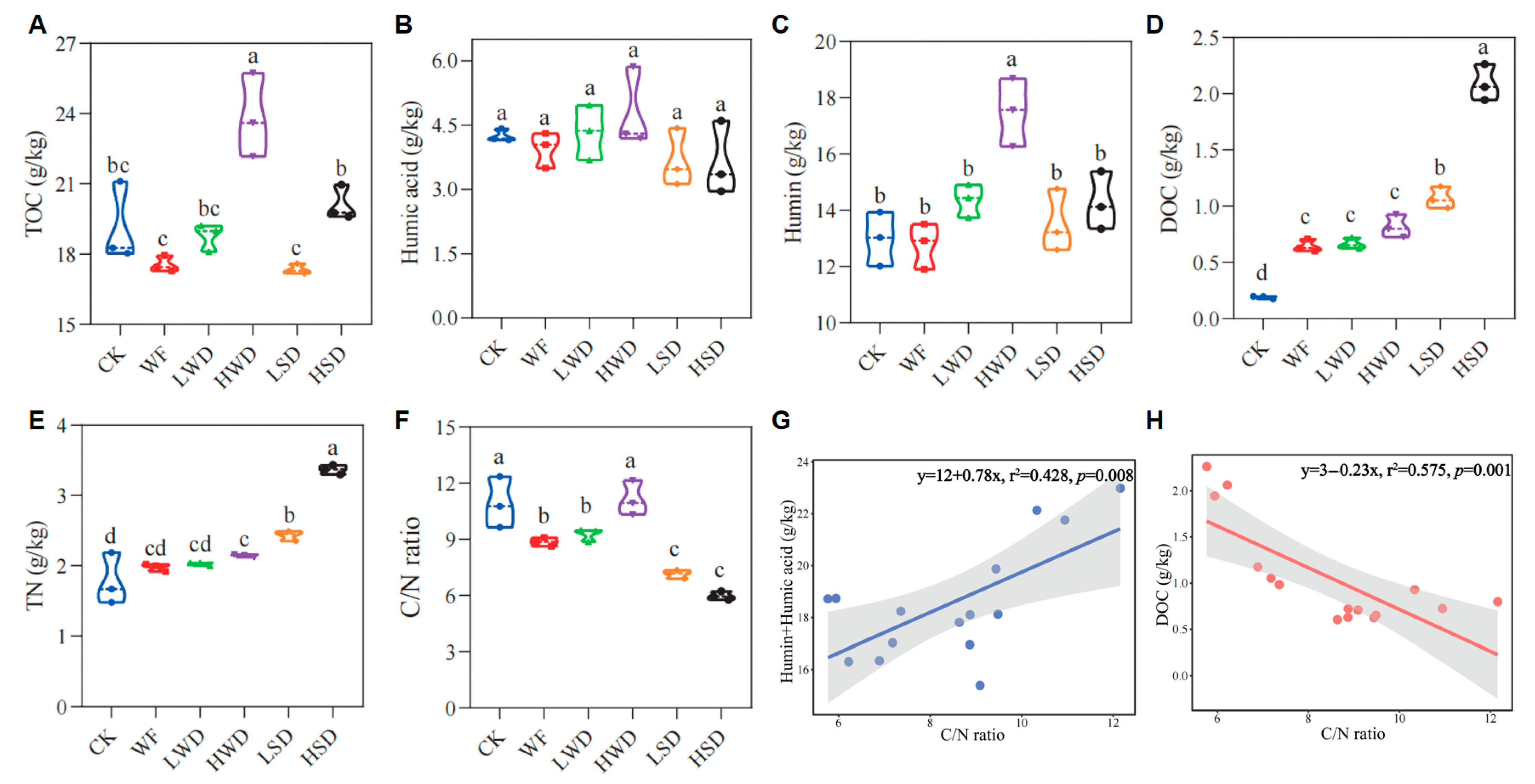
Soil TOC and its fractions showed stronger responses to wheat straw RSD than to soybean meal RSD (Figure 2A–E). Notably, HWD increased soil TOC, humin, and humic acid concentrations by 34.8%, 24.6%, and 28.3%, respectively (Figure 2A–C). Meanwhile, LWD showed an increasing trend, but this increase was not statistically significant compared with CK. Additionally, soybean meal RSD did not significantly affect the concentrations of TOC, humin, and humic acid. Soil DOC concentrations were increased by 238% (WF), 253% (LWD), 316% (HWD), 463% (LSD), and 989% (HSD), whereas soil TN concentration was significantly increased by HWD (11.1%), LSD (35.3%), and HSD (97.1%) relative to CK. The soil C/N ratio ranged from 5.91 and 12.5 across treatments, with the largest reduction observed under HSD (35.5%), followed by LSD (30.6%), WF (16.2%), and LWD (14.2%) (Figure 2F). Across all treatments (except CK), the soil C/N ratio was significantly positively correlated with stable organic carbon fractions (humin and humic acid; p = 0.008, n = 15), but significantly negatively correlated with DOC concentration (p = 0.001, n = 15) (Figure 2G,H).

3.3. Changes in Soil Iron Valence and Iron Oxide Fractions

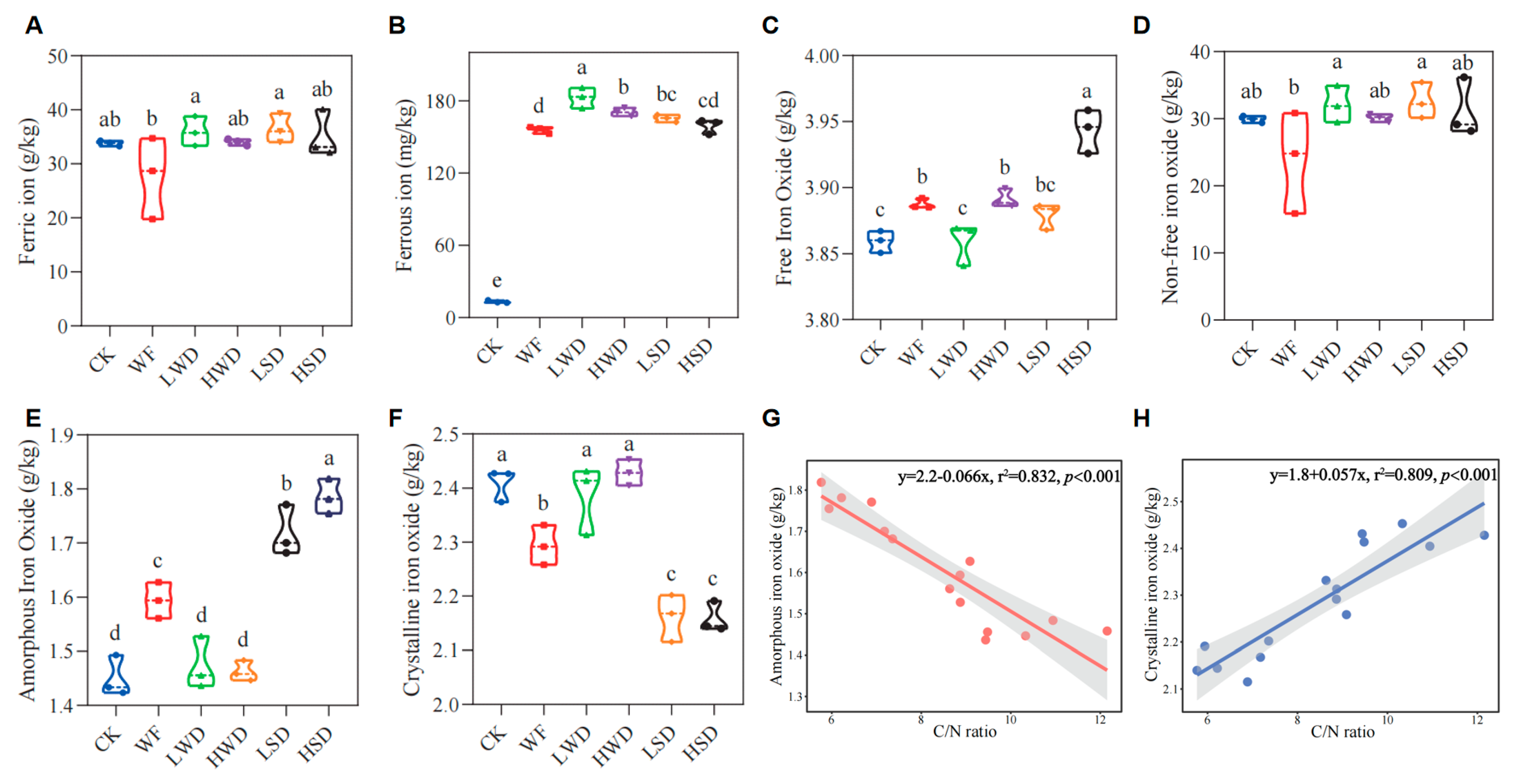
Soil Fe(III) concentrations remained above 29 mg/kg across all treatments, with no significant differences observed between CK and the other treatments (Figure 3A). In contrast, soil Fe(II) concentrations increased by more than 10-fold under the reductive soil conditions induced by the WF, LWD, HWD, LSD, and HSD treatments (Figure 3B). Compared with CK, the Fr–FeO concentrations were significantly increased by 0.734% for WF, 0.831% for HWD, and 2.18% for HSD (Figure 3C). In contrast, NFr-FeO accounted for over 90% of the Tot-Fe pool and showed only slight changes in response to these treatments (Figure 3D). Within the Fr-FeO fractions, A-FeO levels remained unchanged in LWD and HWD but increased by 12.8%(WF), 19.1% (LSD), and 33.3% (HSD) relative to CK (Figure 3E). Conversely, WF, LWD, and HWD resulted in reductions in C-FeO concentrations of 5.66%, 10.4%, and 11.2%, respectively (Figure 3F). Across all treatments (excluding CK), the soil C/N ratio was significantly positively correlated with C-FeO concentrations (p < 0.001, n = 15) and significantly negatively correlated with A-FeO concentrations (p < 0.001, n = 15) (Figure 3G,H).

3.4. Changes in Soil Bacterial Microbial Community and Network Connections

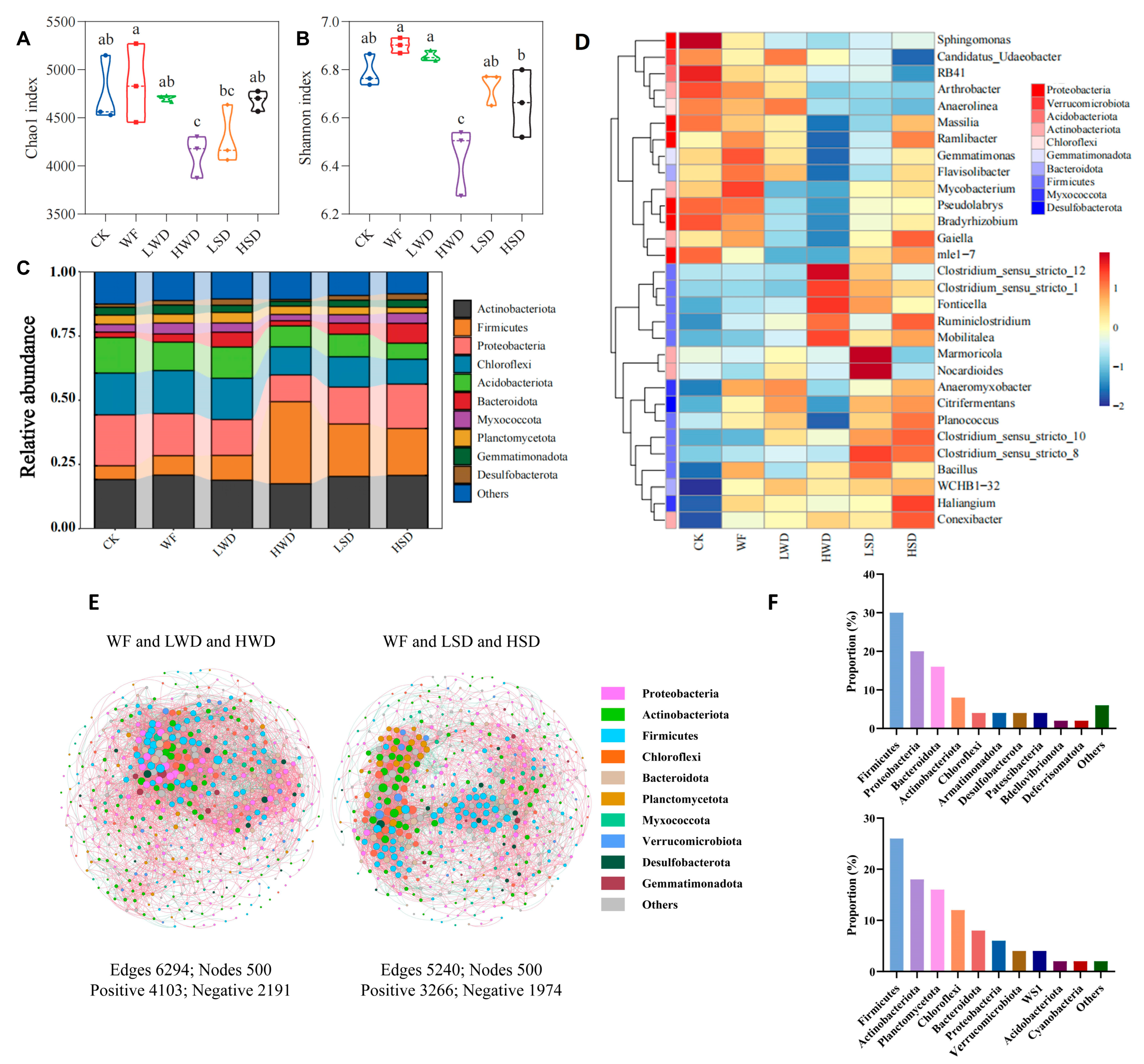
Bacterial richness (Chao1) and diversity (Shannon’s index) declined significantly only under the HWD treatment (Figure 4A,B). PCoA revealed substantial differences among treatments, indicating significant changes in microbial community structure (Figure S3). Upon examining the top 10 phylum-level species accumulation graph, it became evident that there were notable alterations in the predominant phylum-level constituents, with the most pronounced shifts occurring within the phylum Firmicutes (Figure 4C). Six dominant phyla, including Actinobacteria, Proteobacteria, Firmicutes, Chloroflexi, Acidobacteria and Bacteroidetes, accounted for over 75% of the total sequences across soil treatments (Figure 4C). All RSD treatments increased the relative abundance of Firmicutes. Meanwhile, Chloroflexi and Acidobacteria were depleted under HWD, LSD, and HSD, and Bacteroidetes proliferated specifically under HSD. Correspondingly, all RSD treatments decreased the relative abundance of genera belonging to Proteobacteria (e.g., Sphingomonas, Candidatus, Massilia) and Actinobacteriota (e.g., Arthrobacter, Mycobacterium), with the most pronounced reductions observed under HWD (Figure 4D). Conversely, LSD increased the relative abundance of Clostridium sensu stricto_8, Bacillus, Marmoricola, and Nocardioides. Additionally, HWD enriched members of Firmicutes (e.g., Clostridium sensu stricto 12, Clostridium sensu stricto 1, Fonticella, and Mobilitalea), whereas HSD increased the relative abundance of Haliangium, Conexibacter, Gaiella, and Clostridium sensu stricto 10. Across all RSD treatments (regardless of whether wheat straw or soybean meal was added), the dominant phyla in the microbial co-occurrence network were Proteobacteria, Actinobacteriota, and Firmicutes (Figure 4E). Compared with soybean meal RSD, wheat straw RSD exhibited greater complexity in the positive and negative interactions within the bacterial interaction network. Under wheat straw, genera from Firmicutes Proteobacteria and Bacteroidota formed a tightly clustered pattern in the network core. Under soybean meal RSD, the network featured a dense aggregation of genera belonging to Firmicutes, Actinobacteriota, Planctomycetota, and Chloroflexi in the network core (Figure 4F).

3.5. Changes in Soil Bacterial Life Strategies, Iron-Reducing Bacteria, and Function Prediction

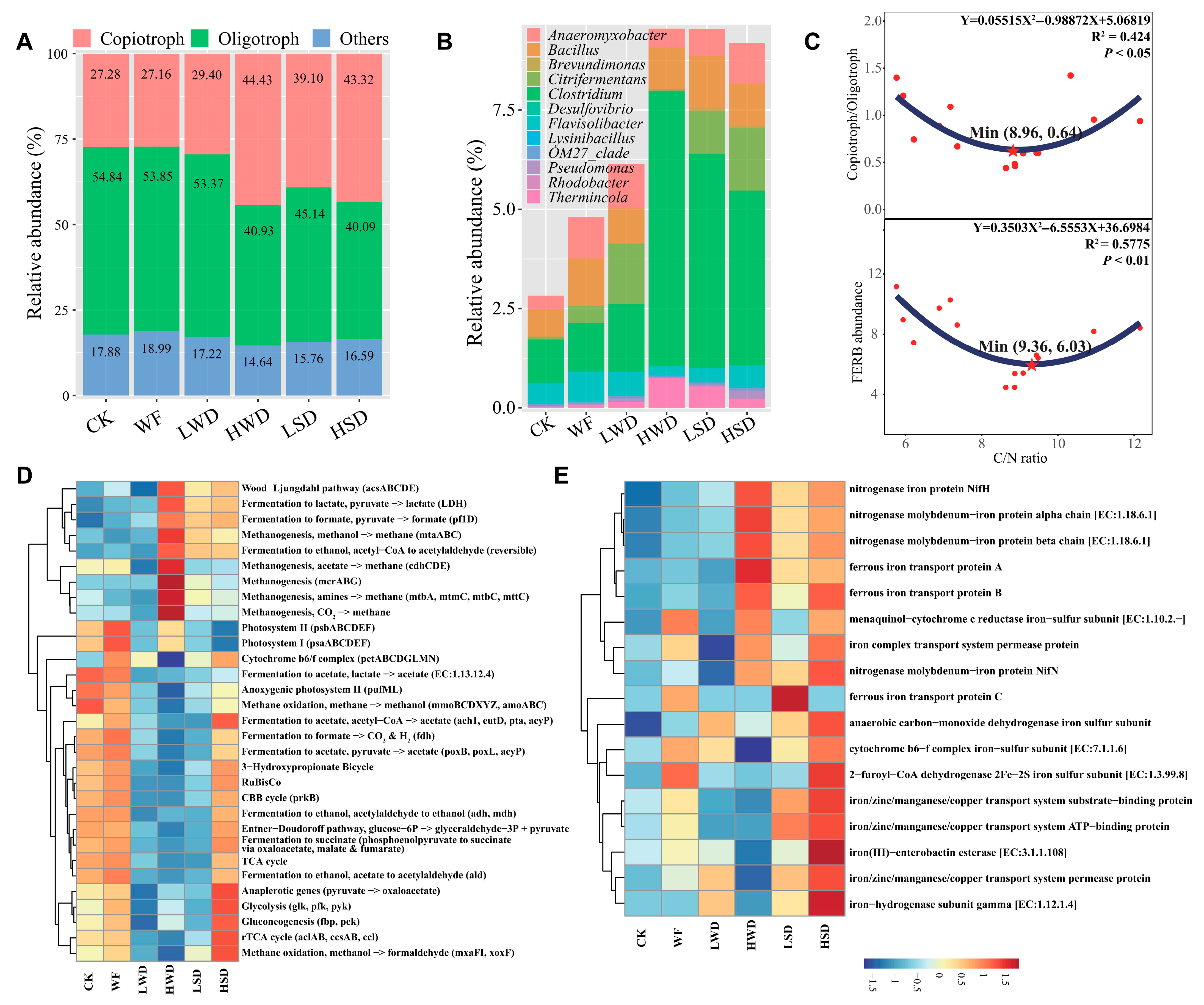
The relative abundances of copiotrophs (r-strategist) and oligotrophs (K-strategist) showed slight fluctuations across CK, WF, and LWD (Figure S4). However, HWD, LSD, and HSD increased the abundance of copiotrophic bacteria while depleting oligotrophic bacteria (Figure 5A). The abundance ratio of r/K strategists ranged from 0.45 to 1.48, showing a parabolic relationship with the soil C/N ratio across all treatments except CK. Twelve genera were identified as FeRB members, and their abundance and composition showed stronger responses to soybean meal RSD than to wheat straw RSD. The total abundance of FeRB was significantly increased by WF, LWD, HWD, LSD, and HSD treatments, with Clostridium and Anaeromyxobacter emerging as dominant genera. Citrifermentans exhibited an increased relative abundance across all soil treatments except LWD, while the relative abundance of Thermincola was specifically enhanced by HWD and LSD. Furthermore, a parabolic correlation was observed between total FeRB abundance and soil C/N ratio across all treatments except CK.
A total of 31 genes involved in organic carbon transformation and 17 genes involved in iron redox reactions were identified, both of which showed responses to RSD treatments (Figure 5D,E). Compared with CK, WF had a weak effect on genes related to organic carbon transformation, while LWD exerted a consistent downregulatory effect on these genes. Notably, HWD triggered the upregulation of multiple genes involved in the Wood–Ljungdahl pathway, organic acid/alcohol fermentation, and methanogenesis processes. HSD demonstrated strong stimulatory effects, enhancing genes coding metabolic pathways including glycolysis, gluconeogenesis, acetate fermentation, pyruvate carboxylation, TCA cycle, and methane oxidation. For iron redox processes, both WF and LWD had negligible impacts on related genes relative to CK, while HWD prominently upregulated several genes encoding nitrogenase iron protein NifH, nitrogenase molybdenum-iron protein α/β chains, and ferrous iron transport proteins A/B. HSD enhanced multiple genes coding 2-furoyl-CoA dehydrogenase, 2Fe-2S iron–sulfur subunit, iron(III)-enterobactin esterase, and various metal transport systems along with the iron-hydrogenase subunit gamma.

3.6. Relationship Among Soil Chemical Properties, Bacterial Microbial Communities, and Cd Fractions

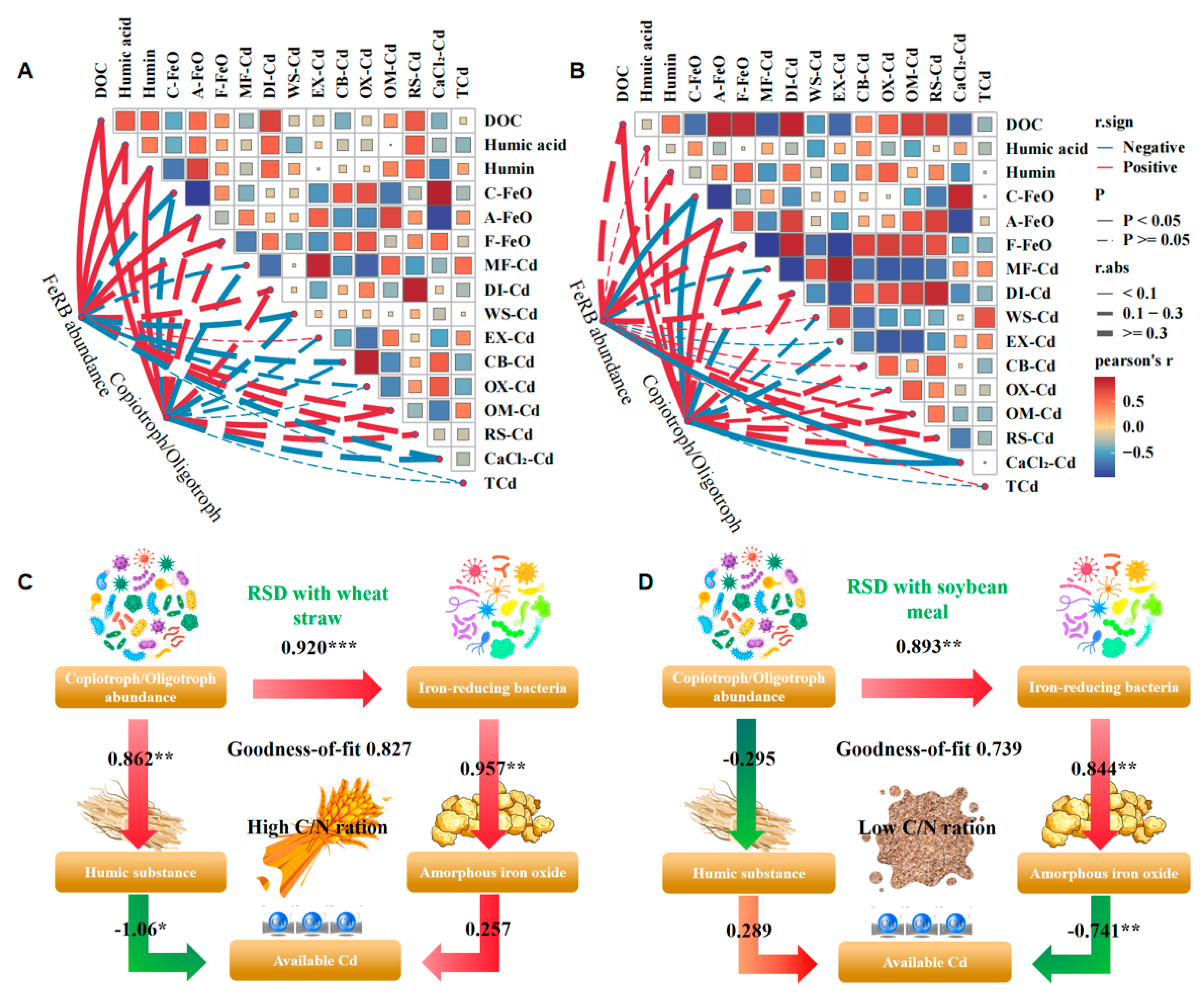
The Mantel test revealed that under wheat straw RSD, FeRB abundance was significantly positively correlated with the concentrations of DOC, humic acid, humin, and C-FeO, but negatively correlated with the concentrations of A-FeO. The copiotroph/oligotroph ratio also showed significant positive correlations with DOC and humin concentrations (Figure 6A). In contrast, under soybean meal RSD, FeRB abundance was negatively correlated with C-FeO concentrations and weakly exchangeable Cd concentrations and positively correlated with A-FeO concentrations. The copiotroph/oligotroph ratio was significantly negatively correlated with C-FeO concentrations and weakly exchangeable Cd and significantly positively correlated with DOC and A-FeO concentrations (Figure 6B). In this study, PLS-PM was employed to elucidate the relationships among microorganisms, different forms of carbon and iron, and cadmium under the addition of organic materials with different C/N ratios in RSD (Figure 6C,D). The PLS-PM analysis showed that under wheat straw RSD, the model explained 82.7% of the variance in soil exchangeable Cd (R2 = 0.827) (Figure 6C). Specifically, the r/K-strategist ratio exerted a direct positive effect on stable organic matter concentration (path coefficient: 0.862; p < 0.01), which in turn indirectly reduced exchangeable Cd (path coefficient: –1.06; p < 0.05). FeRB composition only had a direct positive effect on A-FeO concentration (path coefficient: 0.957; p < 0.01). Under soybean meal RSD, the model accounted for 73.9% of the variance in soil exchange Cd (R2 = 0.739) (Figure 6D). Notably, the r/K-strategist ratio did not significantly affect stable organic matter (path coefficient: −0.295; p > 0.05). In contrast, FeRB directly promoted A-FeO concentration (path coefficient: 0.844; p < 0.01), which subsequently contributed to a reduction in exchangeable Cd (path coefficient: −0.741; p < 0.01). Regardless of amendment types, the r/K-strategist ratio consistently exerted a direct positive effect on FeRB composition under RSD treatments.

4. Discussion

4.1. Soil Cd Bioavailability and Fractions Affected by RSD with Distinct Organic Sources

While Tot-Cd reflects contamination potential, extractable Cd serves as a more reliable indicator of environmental toxicity [49]. Soil with a high Tot-Cd level (>20 mg/kg) indicated severe contamination, but RSD did not alter its concentration (Figure 1A,B). This is because Cd input from amendments was negligible, with RSD instead inducing transformations between different Cd fractions. RSD reduced both weakly and strongly exchangeable Cd concentrations and MF-Cd, while for increased DI-Cd, the immobilization efficiency was dependent on amendment type and dosage. Higher dosages enhanced soil Cd immobilization, and soybean meal outperformed wheat straw, partially due to the stronger reductive conditions induced by soybean meal. Regardless of amendment type, elevated application rates strongly displaced Cd ions adsorbed on soil colloids [50], which serves as the primary driver behind the divergent trends observed between strongly and weakly extractable Cd fractions. Soil Eh dropped from 322 mV (CK) to below −166 mV after RSD treatments (Figure S2A,B), further promoting Cd immobilization. As reported by Sun et al. [51], pH elevation via denitrification during RSD is critical for Cd passivation. In this study, RSD treatments increased soil pH by 0.12–0.96 units (Figure S2A,B), with the most notable elevation observed in soybean meal RSD. This was attributed to abundant available carbon sources in soybean meal, which enhanced denitrification-induced pH increases. Once pH increased, bioavailable Cd was often immobilized through adsorption onto or precipitation with soil minerals (e.g., FeO) and organic matter (e.g., humic substances) [52]. SEM-EDS observations indicated that alongside reductions in extractable Cd fractions, soil Cd was preferentially immobilized via organic matter complexation (OM-Cd) under HWD, whereas under HSD, Cd was predominantly immobilized through FeO mediation (OX-Cd) (Figure 1). This differential behavior clearly supports our hypothesis that the properties of added organic amendments (i.e., C/N ratio, doses) control the efficiency and dominant pathway of Cd immobilization during RSD. Consequently, understanding the dynamics of organic matter and FeO is critical for optimizing Cd remediation via RSD.

4.2. Soil Organic Carbon Transformation and Its Linkage to Cd Bioavailability Affected by RSD with Distinct Organic Sources

Soil organic matter plays a crucial role in determining metal solubility and speciation [53]. Numerous studies have demonstrated that soil TOC dynamics under organic amendments depend largely on both the quantity and quality of added materials [54]. This view is supported by Figure 2A, where LSD and LWD did not affect soil TOC concentrations due to their low C input. However, although HSD provided substantial C input, the resulting increase in soil TOC was relatively modest, likely due to the intrinsic properties of soybean meal. With its characteristically low C/N ratio and loose chemical structure, soybean meal acts as a readily available substrate that stimulates microbial growth and metabolic activity [55]. This stimulation not only facilitates the preferential mineralization of exogenous and native soil organic matter under RSD but also releases more labile organic compounds (e.g., DOC). In contrast, wheat straw, with its higher C/N ratio and highly lignified, compact structure is less accessible to microbes. Consequently, it promotes the accumulation and formation of complex organic substances such as humus and humic acid. This observation aligns with the previous findings, where wheat straw RSD enhanced soil organic carbon storage primarily in the form of lignin-like, hydrophobic, aromatic-rich organic components [4]. Furthermore, by accelerating Fe(III) reduction, organic amendments can enhance the dissolution of organic carbon previously protected by FeO in paddy soils, thereby releasing labile components (i.e., DOC) and promoting the decomposition of freshly added organic materials [56]. High crystallinity iron minerals exhibit a greater capacity to protect organic carbon than low crystallinity ones, reducing organic matter mineralization by limiting microbial access to the iron-associated carbon [57]. Alongside soil Fe(III) reduction, soybean meal RSD induced a pronounced conversion of FeO from crystalline to amorphous forms, indicating diminished organic carbon protection. However, due to low accessibility to microbes (especially FeRB), this phenomenon was not observed under wheat straw RSD, inducing the increase in TOC, especially stable fractions. Stable organic compounds possess a substantial negatively charged surface and sequester metal ions by forming stable complexes, thereby reducing their bioavailability [58,59]. As evidenced, soil EX-Cd preferentially transformed into OM-Cd fractions in HWD, concurrent with increased humic acid and humin concentrations (Figure 1 and Figure 2). Consequently, wheat straw RSD preferentially enhances the OM-Cd fraction through the accumulation of stable organic compounds, effectively passivating Cd in contaminated paddy soils.

4.3. Soil Iron Oxide Transformation and Its Linkage to Cd Bioavailability Affected by RSD with Distinct Organic Sources

FeO constitutes a vital redox-sensitive component in paddy soils [24]. Although RSD treatments (Eh < −166 mV) significantly elevated Fe(II) levels through active Fe(III) reduction, soil Fe(III) concentrations remained statistically stable (Figure 3A,B), due to the substantial background reserves of Fe(III). Under aerobic conditions, soil iron primarily exists as crystalline iron minerals (hematite and magnetite). In contrast, the transition to anaerobic conditions initiates microbially mediated Fe(III) reduction, releasing substantial low-molecular-weight FeO such as goethite [29]. Organic amendments accelerate this process via reductive dissolution, converting crystalline structures into amorphous phases through crystal lattice disruption [60]. Ubiquitous in anaerobic systems, FeRB couple organic matter oxidation to Fe(III) mineral reduction as terminal electron acceptors [61]. Substances with a high C/N ratio suppressed soil FeRB activity due to low microbial accessibility, limiting Fe(III) reduction and oxide dissolution. This is evidenced by reduced Fr-FeO (LWD) and A-FeO (LWD/HWD) relative to WF. Newly generated Fe(II) preferentially undergoes extracellular reorganization rather than cellular assimilation. Under near-neutral pH conditions, this facilitates either mineral transformation or coprecipitation with coexisting species (e.g., heavy metals) to form secondary minerals [62,63]. Both LWD and HWD enhanced crystalline FeO formation via Fe(III) reduction under near-neutral soil pH, reflected in higher C-FeO levels compared with WF, confirming that wheat straw RSD induced FeO crystallization. In contrast, soybean meal RSD (lower C/N ratio) provided labile carbon sources and improved nitrogen availability, which enhanced FeRB activity and promoted Fe(III) reduction. This increased the release of free FeO under LSD and HSD, evidenced by elevated A-FeO with reduced C-FeO, suggesting that soybean meal RSD induced iron oxide amorphization. Numerous studies have demonstrated that free or active FeO in soil can significantly immobilize heavy metals such as Cd via adsorption and precipitation [18,19]. Amorphous FeO phases exhibit a superior Cd affinity due to their higher specific surface area and abundant surface hydroxyl groups, resulting from their disordered structures [18]. Consequently, soybean meal RSD preferentially enhanced the soil OX-Cd fraction by promoting the conversion of FeO from crystalline to amorphous phases, achieving Cd passivation in contaminated paddy soils.

4.4. Driving Role and Conceptual Mechanism of Bacterial Life Strategies and Iron-Reducing Bacteria in Soil Cd Immobilization Under Different Organic Source RSD Treatments

RSD drives the restructuring of soil bacterial communities along fundamentally distinct ecological trajectories, with the chemical composition of organic amendments (especially the C/N ratio) acting as a primary determinant of microbial selection and functioning [64,65]. The inherently high C/N ratio and recalcitrant lignocellulosic structure of wheat straw create an environment favoring slow-growing, oligotrophic specialists (e.g., Chloroflexi and Acidobacteria) due to the lack of labile carbon sources. Under HWD, these r-strategists exhibited a significant metabolic capacity for lignocellulose decomposition, as evidenced by the upregulation of key biochemical pathways such as the Wood–Ljungdahl pathway and organic acid fermentation. Network analysis provided crucial insights, revealing that these copiotrophs formed highly cooperative and interconnected clusters, dominated by r-strategists like Firmicutes members. This cooperation, which was facilitated by mechanisms including metabolic cross-feeding and extracellular enzyme sharing [66,67], enhanced the community’s ability to withstand dual stresses of low substrate availability and high Cd toxicity. Furthermore, the Mantel test revealed a significant positive correlation between the copiotroph/oligotroph ratio and humic substance concentrations under wheat straw RSD (Figure 6A), confirming copiotrophs’ role in stable organic matter formation. Pathway models constructed via PLS-PM were used to quantify the contributions and interrelationships of various factors influencing available Cd in soil. The PLS-PM analysis revealed that in the wheat straw RSD treatment, although microbial shifts significantly influenced the transformations of both humus and iron oxides, only the change in humus showed a significant negative correlation with available soil Cd content. Thus, wheat straw RSD likely immobilizes soil Cd in soil primarily by increasing humic substance content, which complexes with the available Cd.
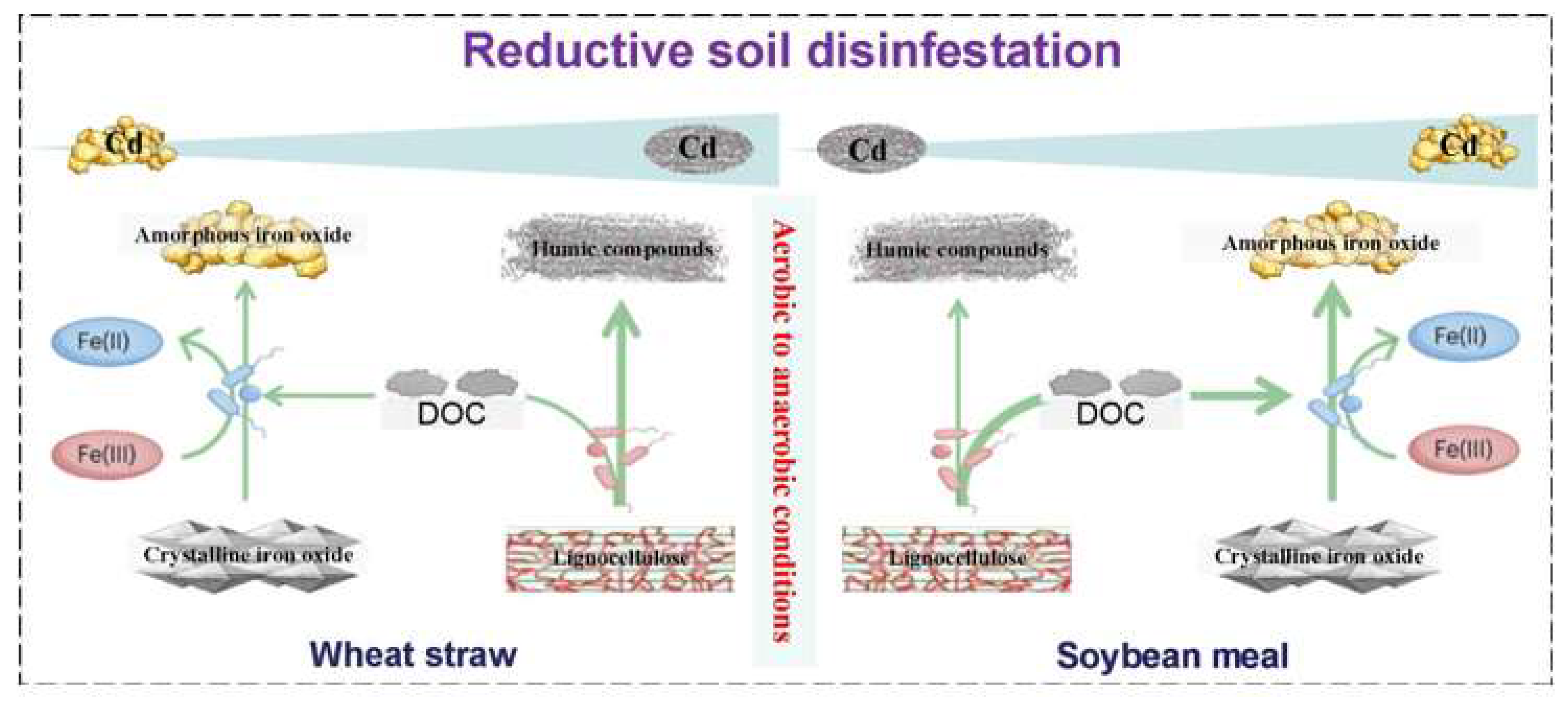
In stark contrast, soybean meal selected a completely different microbial community during RSD, driven by its inherently low C/N ratio and high decomposability, creating a resource-rich environment that triggered an intense burst of metabolic activity [55]. Functional gene prediction showed the upregulated expression of key Fe(III) reduction-related genes under HSD, such as 2-furoyl-CoA dehydrogenase and the iron-hydrogenase gamma subunit (Figure 5). The microbial network structure in soybean meal treatments differed significantly from that in wheat straw treatments, characterized by tightly interconnected modules during RSD in which r-strategists, FeRB, and specific Chloroflexi co-clustered. Moreover, in the soybean meal RSD treatment, the Mantel test revealed that FeRB abundance correlated negatively with C-FeO and exchangeable Cd but positively with DOC and A-FeO, highlighting DOC’s role in driving the crystalline-to-amorphous FeO transformation for Cd immobilization. Therefore, DOC derived from r-strategy metabolism may act as a key electron donor, fueling the reductive dissolution of C-FeO by FeRB and subsequently promoting A-FeO formation. The PLS-PM analysis revealed that in the soybean meal RSD treatments, changes in r/K-strategist bacteria had no significant effect on humus, whereas changes in FeRB significantly influenced the transformation of FeO. Moreover, it showed that changes in FeO were significantly and negatively correlated with the content of available Cd in soil. Generally, amorphous FeO exhibit significantly larger specific surface areas and higher reactivity, providing abundant fresh surfaces for Cd sequestration [52]. Therefore, soybean meal RSD likely immobilizes soil Cd primarily via its adsorption and coprecipitation during FeO transformation. In summary, applying organic materials with different C/N ratios during RSD can alter the functional structure of soil microbial communities, thereby regulating the transformation of organic carbon and iron oxides and ultimately affecting soil Cd bioavailability (Figure 7). These findings provide mechanistic insights into how organic input stoichiometry regulates metal availability through the microbial coupling of carbon and iron cycling. Furthermore, the wheat straw and soybean meal used in this study are readily available and cost-effective agricultural by-products. As commonly used soil amendments, their high application rate (2.1%) is consistent with most existing studies [33,34], confirming their suitability for practical application and large-scale promotion. Given that high-quality amendments enhance restoration efficiency, low C/N materials (e.g., soybean meal) should be prioritized for Cd-contaminated paddy soils.

5. Conclusions

To the best of our knowledge, this study represents the first comprehensive investigation into the mechanisms of RSD in remediating Cd-contaminated soil under different doses and types of organic materials. The results showed that the reduction in extractable Cd concentration was linked to both the amount and the C/N ratio of the added organic materials. During RSD treatment, soybean meal was more effective than wheat straw in reducing soil Cd extractability. Under wheat straw RSD treatment, soil humus content increased significantly, while soybean meal RSD treatment significantly increased A-FeO content. Furthermore, functional changes in the bacterial community under RSD were primarily driven by the C/N ratio of the amended organic matter. Organic matter with a high C/N ratio (wheat straw), may primarily immobilize soil Cd by facilitating humic substance formation, whereas those with a low C/N ratio (soybean meal) may mainly achieve Cd immobilization by promoting amorphous FeO formation. In summary, as an emerging technology for addressing soil degradation, RSD also exhibits a considerable capacity to immobilize soil Cd, particularly when using high-quality substances favorable to microorganisms (e.g., soybean meal). Although this study lacks plant data and field validation, which limits its direct applicability to agricultural production, it elucidates the distinct mechanisms of Cd immobilization by organic materials with varying C/N ratios under RSD. These findings provide critical data to inform future field trials and practical remediation applications.

Supplementary Materials

The following supporting information can be downloaded at: https://www.mdpi.com/article/10.3390/agriculture16020242/s1, Figure S1: Schematic diagram of the micro-universe experiment; Figure S2: Effects of different treatments on soil pH and redox potentials (Eh). (A) Soil pH; (B) soil Eh; Figure S3: Principal Coordinates Analysis (PCoA) of bacterial communities based on Bray—Curtis distance; Figure S4: Species composition of r-/K-strategy bacteria under RSD treatment. (A) Percentage of each phylum of r-strategy bacteria; (B) percentage of each phylum of K-strategy bacteria; Table S1: Outer model of the partial least squares path model based on the RSD of wheat straw; Table S2: Outer model of the partial least squares path model based on the RSD of soybean meal.

Author Contributions

Conceptualization, T.X. and Y.C.; methodology, J.M., K.W., X.W., J.Z., and J.S.; software, J.M.; validation, L.H. and Y.C.; formal analysis, T.X.; investigation, J.M., J.Z., and X.T.; resources, Y.C., data curation, T.X.; writing—original draft preparation, T.X., C.L., and X.T.; writing—review and editing, L.H., K.W., Z.Y., and Y.C.; visualization, R.X.; supervision, Y.C.; project administration, T.X. and Y.C.; funding acquisition, Y.C. All authors have read and agreed to the published version of the manuscript.

Funding

This research was funded by the Technology Innovation Center for Land Engineering and Human Settlements, Shaanxi Land Engineering Construction Group Co., Ltd. and Xi’an Jiaotong University [2024WHZ2045], Natural Science Basic Research Program of Shaanxi Province [2024JC-YBQN-0282], Fundamental Research Funds for the Central Universities [G2022KY05101], and the Key Research and Development Program of Shaanxi Province [2025GH-YBXM-058].

Institutional Review Board Statement

Not applicable.

Data Availability Statement

The raw data supporting the conclusions of this article will be made available by the authors on request.

Conflicts of Interest

The authors declare no conflicts of interest.

Abbreviations

The following abbreviations are used in this manuscript:
RSDReductive soil disinfestation
CdCadmium
MF–CdMobility factor of Cd
DI–CdDistribution index of Cd
WS–CdWater soluble bound Cd fraction
EX–CdExchangeable Cd fraction
CB–CdCarbonate-bound Cd fraction
OX–CdIron oxide-bound Cd fraction
OM–CdOrganic-bound Cd fraction
RS–CdResidual bound Cd fraction
TOCTotal organic carbon
DOCDissolved organic carbon
TFeTotal iron
Fr–FeOFree iron oxide
A–FeOAmorphous iron oxide
C–FeOCrystalline iron oxide
FeRBIron-reducing bacteria

References

  1. Hu, X.; Li, X.; Qiao, L.; Zhang, S.; Su, K.W.; Qiu, Z.L.; Li, X.H.; Zhao, Q.C.; Yu, C.H. Study on the spatial distribution of ureolytic microorganisms in farmland soil around tailings with different heavy metal pollution. Sci. Total Environ. 2021, 775, 144946. [Google Scholar] [CrossRef]
  2. Hou, D.Y.; Jia, X.Y.; Wang, L.W.; McGrath, S.P.; Zhu, Y.G.; Hu, Q.; Zhao, F.J.; Bank, M.S.; O’Connor, D.; Nriagu, J. Global soil pollution by toxic metals threatens agriculture and human health. Science 2025, 388, 316–321. [Google Scholar] [CrossRef] [PubMed]
  3. Zhao, Y.; Yao, J.; Yuan, Z.M.; Wang, T.Q.; Zhang, Y.Y.; Wang, F. Bioremediation of Cd by strain GZ-22 isolated from mine soil based on biosorption and microbially induced carbonate precipitation. Environ. Sci. Pollut. Res. 2017, 24, 372–380. [Google Scholar] [CrossRef]
  4. Chen, Y.L.; Zhang, Y.H.; Li, C.; Xu, R.S.; Pei, Z.R.; Li, F.C.; Wu, Y.H.; Chen, F.; Liang, Y.R.; Li, Z.H.; et al. Linking soil organic carbon dynamics to microbial community and enzyme activities in degraded soil remediation by reductive soil disinfestation. Appl. Soil Ecol. 2023, 189, 104931. [Google Scholar] [CrossRef]
  5. Ueki, A.; Kaku, N.; Ueki, K. Role of anaerobic bacteria in biological soil disinfestation for elimination of soil-borne plant pathogens in agriculture. Appl. Microbiol. Biotechnol. 2018, 102, 6309–6318. [Google Scholar] [CrossRef] [PubMed]
  6. Chen, Y.L.; Yang, K.J.; Ye, Y.; Zhang, Y.H.; Mi, H.Z.; Li, C.; Li, Z.H.; Pei, Z.R.; Chen, F.; Yan, J.T.; et al. Reductive soil disinfestation attenuates antibiotic resistance genes in greenhouse vegetable soils. J. Hazard. Mater. 2021, 420, 126632. [Google Scholar] [CrossRef] [PubMed]
  7. Chen, Y.L.; Zhang, Y.H.; Xu, R.S.; Song, J.X.; Chen, A.L.; Chen, F.; Liang, Y.R.; Guo, D.; Tang, X.; Qin, Z.M.; et al. Short-term responses of soil organic carbon and chemical composition of particle-associated organic carbon to anaerobic soil disinfestation in degraded greenhouse soils. Land Degrad. Dev. 2023, 34, 4428–4440. [Google Scholar] [CrossRef]
  8. Li, X.; Li, X.F.; Li, Y.Y.; Dai, X.Z.; Zhang, Q.Z.; Zhang, M.; Zhang, Z.Q.; Tao, Y.; Chen, W.C.; Zhang, M.X.; et al. Improved immobilization of soil cadmium by regulating soil characteristics and microbial community through reductive soil disinfestation. Sci. Total Environ. 2021, 778, 153862. [Google Scholar] [CrossRef]
  9. Li, X.; Tao, Y.; Chen, F.; Tan, F.J.; Zhou, C.; Chen, J.; Xue, T.; Xie, Y.H. The responses of soil Cd fractions to disinfestation regimes associated with microbial communities. Appl. Soil Ecol. 2023, 193, 105140. [Google Scholar] [CrossRef]
  10. Xu, T.Q.; Xi, J.; Ke, J.H.; Wang, Y.F.; Chen, X.T.; Zhang, Z.Q.; Lin, Y. Deciphering soil amendments and actinomycetes for remediation of cadmium (Cd) contaminated farmland. Ecotoxicol. Environ. Saf. 2023, 249, 114388. [Google Scholar] [CrossRef]
  11. He, Y.; Mi, B.; Luo, C.; Zhao, W.J.; Zhu, Y.L.; Chen, L.; Tu, N.M.; Wu, F.F. Mechanisms insights into Cd passivation in soil by lignin biochar: Transition from flooding to natural air-drying. J. Hazard. Mater. 2024, 472, 134565. [Google Scholar] [CrossRef]
  12. Cozzolino, V.; De Martino, A.; Nebbioso, A.; Di Meo, V.; Salluzzo, A.; Piccolo, A. Plant tolerance to mercury in a contaminated soil is enhanced by the combined effects of humic matter addition and inoculation with arbuscular mycorrhizal fungi. Environ. Sci. Pollut. Res. Int. 2016, 23, 11312–11322. [Google Scholar] [CrossRef]
  13. Song, J.; Pi, B.Y.; Dai, J.T.; Nie, Z.; Yu, G.R.; Du, W.P. Effects of humic acid on the growth and cadmium accumulation of maize (Zea mays L.) seedlings. Int. J. Phytoremediat. 2025, 27, 888–895. [Google Scholar] [CrossRef] [PubMed]
  14. Wang, Y.K.; Wang, K.; Liang, T.; Wang, T.S.; Liu, J.; Chen, X.F.; Xu, C.X.; Cao, W.D.; Fan, H.L. Milk vetch returning combined with lime materials alleviates soil cadmium contamination and improves rice quality in soil-rice system. Sci. Total Environ. 2024, 951, 175770. [Google Scholar] [CrossRef] [PubMed]
  15. Yuan, R.; Si, T.R.; Lu, Q.Q.; Bian, R.J.; Wang, Y.; Liu, X.Y.; Zhang, X.H.; Zheng, J.F.; Cheng, K.; Joseph, S.; et al. Rape straw biochar enhanced Cd immobilization in flooded paddy soil by promoting Fe and sulfur transformation. Chemosphere 2023, 339, 139652. [Google Scholar] [CrossRef] [PubMed]
  16. Xu, P.D.; Wu, J.; Wang, H.; Tang, S.; Cheng, W.L.; Li, M.; Bu, R.Y.; Han, S.; Geng, M.J. Combined application of chemical fertilizer with green manure increased the stabilization of organic carbon in the organo-mineral complexes of paddy soil. Environ. Sci. Pollut. 2023, 30, 2676–2684. [Google Scholar] [CrossRef]
  17. Si, T.R.; Chen, X.; Yuan, R.; Pan, S.Y.; Wang, Y.; Bian, R.J.; Liu, X.Y.; Zhang, X.H.; Joseph, S.; Li, L.Q.; et al. Iron-modified biochars and their aging reduce soil cadmium mobility and inhibit rice cadmium uptake by promoting soil iron redox cycling. J. Environ. Manag. 2024, 370, 122848. [Google Scholar] [CrossRef]
  18. Bao, Y.P.; Bolan, N.S.; Lai, J.H.; Wang, Y.S.; Jin, X.H.; Kirkham, M.B.; Wu, X.L.; Fang, Z.; Zhang, Y.; Wang, H.L. Interactions between organic matter and Fe (hydr)oxides and their influences on immobilization and remobilization of metal(loid)s: A review. Crit. Rev. Environ. Sci. Technol. 2021, 52, 4016–4037. [Google Scholar] [CrossRef]
  19. Desie, E.; Vancampenhout, K.; Nyssen, B.; van den Berg, L.; Weijters, M.; van Duinen, G.J.; den Ouden, J.; Van Meerbeek, K.; Muys, B. Litter quality and the law of the most limiting: Opportunities for restoring nutrient cycles in acidified forest soils. Sci. Total Environ. 2020, 699, 134383. [Google Scholar] [CrossRef]
  20. Bao, Q.L.; Shi, J.H.; Liu, Z.W.; Kan, Y.D.; Bao, W.K. Application of crop straw with different C/N ratio affects CH4 emission and Cd accumulation in rice (Oryza sativa L.) in Cd polluted paddy soils. Clim. Smart Agric. 2004, 2, 100036. [Google Scholar] [CrossRef]
  21. Li, X.M.; Sun, G.X.; Chen, S.C.; Fang, Z.; Yuan, H.Y.; Shi, Q.; Zhu, Y.G. Molecular chemodiversity of dissolved organic matter in paddy soils. Environ. Sci. Technol. 2018, 52, 963–971. [Google Scholar] [CrossRef]
  22. Wang, H.B.; Liu, X.P.; Shu, Y.C.; Li, G.; Sun, C.L.; Jones, D.L.; Zhu, Y.G.; Lin, X.Y. Molecular composition of exogenous dissolved organic matter regulates dissimilatory iron reduction and carbon emissions in paddy soil. Environ. Sci. Technol. 2025, 59, 12679–12691. [Google Scholar] [CrossRef]
  23. Goldford, J.E.; Lu, N.X.; Bajić, D.; Estrela, S.; Tikhonov, M.; Sanchez-Gorostiaga, A.; Segrè, D.; Mehta, P.; Sanchez, A. Emergent simplicity in microbial community assembly. Science 2018, 361, 469–474. [Google Scholar] [CrossRef] [PubMed]
  24. Huang, X.Y.; Liu, S.B.; Liu, X.M.; Tan, X.F.; Guo, S.; Dai, M.Y.; Chen, Q.; Chen, G.B.; Feng, C.Z. Doped carbon dots affect heavy metal speciation in mining soil: Changes of dissimilated iron reduction processes and microbial communities. Environ. Sci.-Nano 2024, 11, 1724–1739. [Google Scholar] [CrossRef]
  25. Xu, R.S.; Zhang, Y.H.; Li, Y.; Song, J.X.; Liang, Y.R.; Chen, F.; Wei, X.M.; Li, C.; Liu, W.B.; Rensing, C.; et al. Linking bacterial life strategies with the distribution pattern of antibiotic resistance genes in soil aggregates after straw addition. J. Hazard. Mater. 2024, 471, 134355. [Google Scholar] [CrossRef]
  26. Song, J.S.; Zhang, H.Y.; Razavi, B.; Chang, F.D.; Yu, R.; Zhang, X.; Wang, J.; Zhou, J.; Li, Y.Y.; Kuzyakov, Y. Bacterial necromass as the main source of organic matter in saline soils. J. Environ. Manag. 2024, 371, 123130. [Google Scholar] [CrossRef]
  27. Smebye, A.; Alling, V.; Vogt, R.D.; Gadmar, T.C.; Mulder, J.; Cornelissen, G.; Hale, S.E. Biochar amendment to soil changes dissolved organic matter content and composition. Chemosphere 2016, 142, 100–105. [Google Scholar] [CrossRef]
  28. He, H.H.; Liu, J.; Shu, Z.P.; Chen, Y.L.; Pan, Z.Z.; Peng, C.; Wang, X.X.; Zhou, F.W.; Zhou, M.; Du, Z.L.; et al. Microbially driven iron cycling facilitates organic carbon accrual in decadal biochar-amended soil. Environ. Sci. Technol. 2024, 58, 12430–12440. [Google Scholar] [CrossRef] [PubMed]
  29. Kappler, A.; Bryce, C.; Mansor, M.; Lueder, U.; Byrne, J.M.; Swanner, E.D. An evolving view on biogeochemical cycling of iron. Nat. Rev. Microbiol. 2021, 19, 360–374. [Google Scholar] [CrossRef]
  30. Lyu, C.H.; Li, L.; Liu, X.W.; Zhao, Z.Q. Rape straw application facilitates Se and Cd mobilization in Cd-contaminated seleniferous soils by enhancing microbial iron reduction. Environ. Pollut. 2022, 310, 119818. [Google Scholar] [CrossRef]
  31. Murphy, C.M.; Weller, D.L.; Reiter, M.S.; Bardsley, C.A.; Eifert, J.; Ponder, M.; Rideout, S.L.; Strawn, L.K. Anaerobic soil disinfestation, amendment-type, and irrigation regimen influence Salmonella survival and die-off in agricultural soils. J. Appl. Microbiol. 2022, 132, 2342–2354. [Google Scholar] [CrossRef]
  32. Zhang, R.R.; Gong, C.P.; Gao, Y.Z.; Chen, Y.S.; Zhou, L.Y.; Lou, Q.; Zhao, Y.F.; Zhuang, H.F.; Zhang, J.; Shan, S.D.; et al. Reducing antibiotic resistance genes in soil: The role of organic materials in reductive soil disinfestation. Environ. Pollut. 2025, 74, 126245. [Google Scholar] [CrossRef]
  33. Duan, H.J.; Yin, Y.; Wang, Y.F.; Liu, Z.L.; Cai, T.G.; Zhu, D.; Chen, C.; Duan, G.L. Effects of reductive soil disinfestation on potential pathogens and antibiotic resistance genes in soil. J. Environ. Sci. 2025, 150, 373–384. [Google Scholar] [CrossRef] [PubMed]
  34. Tan, X.Y.; Liao, H.K.; Shu, L.Z.; Yao, H.Y. Effect of Different Substrates on Soil Microbial Community Structure and the Mechanisms of Reductive Soil Disinfestation. Front. Microbiol. 2019, 10, 2851. [Google Scholar] [CrossRef]
  35. Wang, Y.Y.; Zhou, T.; Wang, W.Y.; Zhao, J.; Li, Z.; Ge, Y.Y.; Wang, Z.Y.; Wu, L.H.; Christie, P. Phytoextraction of highly cadmium-polluted agricultural soil by Sedum plumbizincicola: An eight-hectare field study. Sci. Total Environ. 2023, 905, 167216. [Google Scholar] [CrossRef] [PubMed]
  36. Zhang, Q.G.; Yang, Y.; Yang, W.J.; Li, M.M.; Zheng, F.Y.; Zeng, X.Y.; Deng, X.; Zou, D.S.; Zeng, Q.R. Synergistic effects of rhizosphere microbial communities and low molecular weight organic acids on Cd accumulation in Helianthus annuus L. in low-to-moderate cadmium-contaminated farmland. J. Hazard. Mater. 2025, 491, 137983. [Google Scholar] [CrossRef]
  37. Tessier, A.; Compbell, P.G.C.; Bisson, M. Sequential extraction procedure for the speciation of particulate trace metals. J. Anal. Chem. 1979, 51, 844–851. [Google Scholar] [CrossRef]
  38. Bao, S.D. Soil Agricultural Chemical Analysis, 3rd ed.; China Agricultural Press: Beijing, China, 2000.
  39. GSB 04-1767-2004; 24-Element Mixed Standard Solution for ICP. State Administration for Market Regulation: Beijing, China, 2004.
  40. Husson, O.; Brunet, A.; Babre, D.; Hubert Charpentier, H.; Durand, M.; Sarthou, J.P. Conservation agriculture systems alter the electrical characteristics (Eh, pH and EC) of four soil types in France. Soil Tillage Res. 2018, 176, 57–68. [Google Scholar] [CrossRef]
  41. Chen, Y.L.; Shi, J.L.; Tian, X.H.; Jia, Z.; Wang, S.X.; Chen, J.; Zhu, W.L. Impact of dissolved organic matter on Zn extractability and transfer in calcareous soil with maize straw amendment. J. Soils Sediments 2018, 19, 774–784. [Google Scholar] [CrossRef]
  42. Hua, L.; Yang, Z.X.; Li, W.Q.; Zhao, Y.D.; Xia, J.; Dong, W.Y.; Chen, B.Q. Effects of different straw return modes on soil carbon, nitrogen, and greenhouse gas emissions in the semiarid maize field. Plants 2024, 13, 2503. [Google Scholar] [CrossRef]
  43. Bakina, L.G.; Drichko, V.F.; Orlova, N.E. Regularities of extracting humic acids from soils using sodium pyrophosphate solutions. Eurasian Soil Sci. 2017, 50, 210–217. [Google Scholar] [CrossRef]
  44. Jia, Z.X.; Huang, X.L.; Li, L.N.; Li, T.L.; Duan, Y.H.; Ling, N.; Yu, G.H. Rejuvenation of iron oxides enhances carbon sequestration by the ‘iron gate’ and ‘enzyme latch’ mechanisms in a rice-wheat cropping system. Sci. Total Environ. 2022, 839, 156209. [Google Scholar] [CrossRef] [PubMed]
  45. Li, Y.; Yang, R.; Hu, P.L.; Xiao, D.; Wang, Z.C.; Zhang, W.; Wang, K.L. Lower sensitivity of soil carbon and nitrogen to regional temperature change in karst forests than in non-karst forests. Forests 2023, 14, 355. [Google Scholar] [CrossRef]
  46. Chen, N.; Fu, Q.L.; Wu, T.L.; Cui, P.X.; Fang, G.D.; Liu, C.; Chen, C.M.; Liu, G.X.; Wang, W.C.; Wang, D.X.; et al. Active iron phases regulate the abiotic transformation of organic carbon during redox fluctuation cycles of paddy soil. Environ. Sci. Technol. 2021, 55, 14281–14293. [Google Scholar] [CrossRef]
  47. Bresciani, L.; Custer, G.F.; Koslicki, D.; Dini-Andreote, F. Interplay of ecological processes modulates microbial community reassembly following coalescence. ISME 2025, 19, wraf041. [Google Scholar] [CrossRef]
  48. Douglas, G.M.; Maffei, V.J.; Zaneveld, J.; Yurgel, S.N.; Brown, J.R.; Taylor, C.M.; Huttenhower, C.; Langille, M.G.I. PICRUSt2 for prediction of metagenome functions. Nat. Biotechnol. 2020, 38, 385–688.672295. [Google Scholar] [CrossRef] [PubMed]
  49. Dong, Q.; Liu, Y.W.; Liu, G.L.; Guo, Y.Y.; Yang, Q.Q.; Shi, J.B.; Hu, L.G.; Liang, Y.; Yin, Y.G.; Cai, Y.; et al. Aging and phytoavailability of newly introduced and legacy cadmium in paddy soil and their bioaccessibility in rice grain distinguished by enriched isotope tracing. J. Hazard. Mater. 2021, 417, 125998. [Google Scholar] [CrossRef]
  50. Feng, J.Y.; Nie, X.X.; Liu, B.; Li, F.M.; Yang, L. Efficiency of in-situ passivation remediation in cadmium-contaminated farmland soil and its mechanism: A review. J. Agric. Res. Environ. 2021, 38, 764–777. [Google Scholar] [CrossRef]
  51. Sun, K.N.; Zhang, S.; Wang, J.F. Regulating facility soil microbial community and reducing cadmium enrichment in lettuce by reductive soil disinfestation. Front. Environ. Sci. 2024, 12, 1465882. [Google Scholar] [CrossRef]
  52. Sebastian, A.; Prasad, M.N.V. Cadmium minimization in rice. A review. Agron. Sustain. Dev. 2014, 34, 155–173. [Google Scholar] [CrossRef]
  53. Zhou, T.; Wu, L.H.; Luo, Y.M.; Christie, P. Effects of organic matter fraction and compositional changes on distribution of cadmium and zinc in long-term polluted paddy soils. Environ. Pollut. 2018, 232, 514–522. [Google Scholar] [CrossRef]
  54. Zhao, J.; Zhou, X.; Jiang, A.Q.; Fan, J.Z.; Lan, T.; Zhang, J.B.; Cai, Z.C. Distinct impacts of reductive soil disinfestation and chemical soil disinfestation on soil fungal communities and memberships. Appl. Microbiol. Biotechnol. 2018, 102, 7623–7634. [Google Scholar] [CrossRef]
  55. Wang, H.; Wang, L.; Zhang, Y.N.; Hu, Y.; Wu, J.H.; Fu, X.H.; Le, Y.Q. The variability and causes of organic carbon retention ability of different agricultural straw types returned to soil. Environ. Technol. 2017, 38, 538–548. [Google Scholar] [CrossRef]
  56. Hu, H.; Chen, J.; Zhou, F.; Nie, M.; Hou, D.Y.; Liu, H.; Delgado-Baquerizo, M.; Ni, H.W.; Huang, W.G.; Zhou, J.Z.; et al. Relative increases in CH4 and CO2 emissions from wetlands under global warming dependent on soil carbon substrates. Nat. Geosci. 2024, 17, 26–31. [Google Scholar] [CrossRef]
  57. Duan, X.; Li, Z.; Wang, S.; Mason-Jones, K.; Wei, L.; Chen, X.B.; Wu, J.S.; Ge, T.D.; Zhu, Z.K. Stability of iron-carbon complexes determines carbon sequestration efficiency in iron-rich soils. Soil Biol. Biochem. 2025, 203, 109718. [Google Scholar] [CrossRef]
  58. Li, Q.; Chang, J.J.; Li, L.F.; Lin, X.Y.; Li, Y.C. Soil amendments alter cadmium distribution and bacterial community structure in paddy soils. Sci. Total Environ. 2024, 924, 171399. [Google Scholar] [CrossRef]
  59. Li, C.X.; Tan, X.Y.; Li, X.; Huang, Y.Y.; Xiang, C.; Wu, C.; Guo, J.K.; Xue, S.G. Simultaneous stabilization of cadmium and arsenic in soil by humic acid and mechanically activated phosphate rock. J. Hazard. Mater. 2025, 489, 137628. [Google Scholar] [CrossRef] [PubMed]
  60. Lovley, D.R.; Blunt-Harris, E.L. Role of humic-bound iron as an electron transfer agent in dissimilatory Fe(III) reduction. Appl. Environ. Microbiol. 1999, 65, 4252–4254. [Google Scholar] [CrossRef]
  61. Lloyd, J.R. Microbial reduction of metals and radionuclides. FEMS Microbiol. Rev. 2003, 27, 411–425. [Google Scholar] [CrossRef] [PubMed]
  62. Shi, L.; Dong, H.L.; Reguera, G.; Beyenal, H.; Lu, A.H.; Liu, J.; Yu, H.Q.; Fredrickson, J.K. Extracellular electron transfer mechanisms between microorganisms and minerals. Nat. Rev. Microbiol. 2016, 14, 651. [Google Scholar] [CrossRef]
  63. Qu, C.C.; Ma, M.K.; Chen, W.L.; Cai, P.; Yu, X.Y.; Feng, X.H.; Huang, Q.Y. Modeling of Cd adsorption to goethite-bacteria composites. Chemosphere 2018, 193, 943–950. [Google Scholar] [CrossRef] [PubMed]
  64. Liu, W.X.; Shi, Z.; He, H.Y.; Lin, B.J.; He, C.; Dang, Y.P.; Zhao, X.; Zhang, H.L. Improving soil organic carbon sequestration through conservation tillage incorporating legume-based crop rotations. Soil Tillage Res. 2025, 255, 106792. [Google Scholar] [CrossRef]
  65. Tang, S.; Ma, Q.; Marsden, K.A.; Chadwick, D.R.; Luo, Y.; Kuzyakov, Y.; Wu, L.H.; Jones, D.L. Microbial community succession in soil is mainly driven by carbon and nitrogen contents rather than phosphorus and sulphur contents. Soil Biol. Biochem. 2023, 180, 11. [Google Scholar] [CrossRef]
  66. Oña, L.; Kost, C. Cooperation increases robustness to ecological disturbance in microbial cross-feeding networks. Ecol. Lett. 2022, 25, 1410–1420. [Google Scholar] [CrossRef] [PubMed]
  67. Chi, Y.W.; Ma, X.Z.; Chu, S.H.; You, Y.M.; Chen, X.F.; Wang, J.C.; Wang, R.Y.; Zhang, X.; Zhang, D.W.; Zhao, T.; et al. Nitrogen cycle induced by plant growth-promoting rhizobacteria drives “microbial partners” to enhance cadmium phytoremediation. Microbiome 2025, 13, 113. [Google Scholar] [CrossRef] [PubMed]
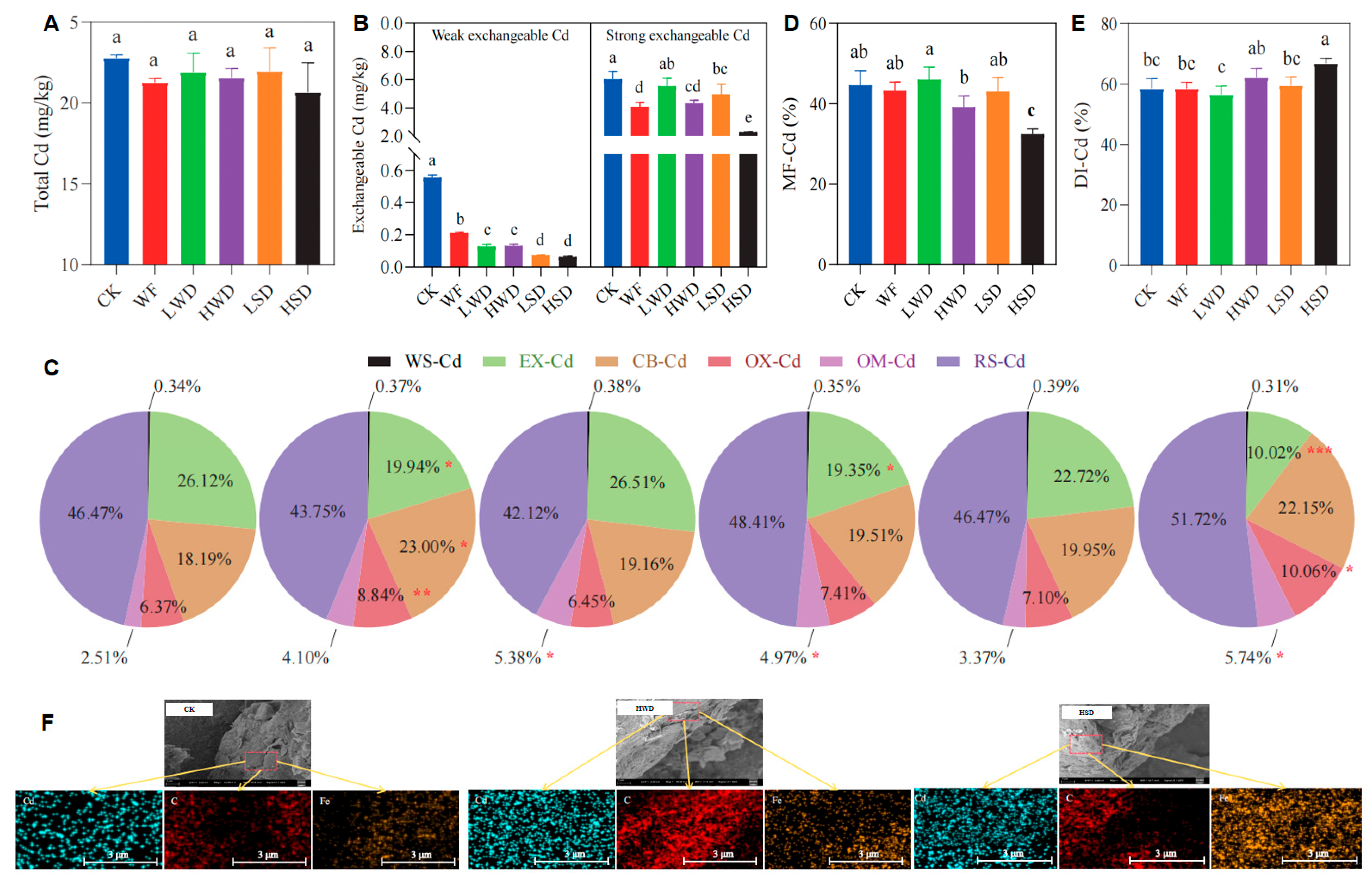
Figure 1. Effect of reductive soil disinfestation on soil Cd extractability, fractions, and transformation. Soil total and extractable Cd and its fractions are shown in (AC), respectively. Soil Cd transformation is shown by transfer factor (MF–Cd, (D)) and distribution index (DI–Cd, (E)). Scanning electron microscopy (SEM, (F)) images show the soil particle morphology and element distribution. Different lowercase letters represent significant difference among treatments at p < 0.05 using the least significant difference (LSD) method. In (C), significant difference relative to CK is shown by * at p < 0.05, ** at p < 0.01, and *** at p < 0.001 using Student’s t-test. Treatments included untreated soil (CK), flooded soil (WF), and soil treated with RSD using 0.7% or 2.1% wheat straw (LWD, HWD) and soybean meal (LSD, HSD).
Agriculture 16 00242 g001
Figure 2. Effect of reductive soil disinfestation on soil total organic carbon (TOC) (A) and total N (TN) (E), and the relationships between soil organic fractions (BD) and C/N ratios (FH). The DOC represents soil dissolved organic carbon, and treatments and different letters are defined in Figure 1.
Agriculture 16 00242 g002
Figure 3. Effect of reductive soil disinfestation on soil iron valence (A,B) and iron oxide morphology (CF), and the relationships between soil iron oxide forms and C/N ratios (G,H). Ferric ion: Fe(III); Ferrous iron: Fe(II); Free iron oxide: Free FeO (Fr–FeO); Non–free iron oxide: Non–free FeO (NFr–FeO); Amorphous iron oxide: Amorphous FeO (A–FeO); Crystalline iron oxide: Crystalline FeO (C–FeO); C/N ratio: Carbon/Nitrogen ratio. Treatments and different letters are defined in Figure 1.
Agriculture 16 00242 g003
Figure 4. Effect of reductive soil disinfestation on soil bacterial community diversity (A,B), structure (C,D), and network (E,F). Heatmap shows difference in the top 30 genera and network shows the relationship between top 500 genera with correlation of |r| > 0.80 at p < 0.01. Node size is proportional to the number of connections and edge thickness is proportional to the correlation coefficient. The color of the edges represents the positive and negative correlations between two nodes, with red indicating a positive correlation and green indicating a negative correlation. Treatments and different letters are defined in Figure 1.
Agriculture 16 00242 g004
Figure 5. Effect of reductive soil disinfestation on soil species composition of r- and K-strategy bacteria (A), iron-reducing bacteria (B), and functional prediction (D,E), as well as the relationships of copiotroph/oligotroph ratio and FeRB abundance with C/N ratios (C). Red asterisk: Minimum point of the fitted polynomial. Treatments and different letters are defined in Figure 1.
Agriculture 16 00242 g005
Figure 6. Mantel’s analysis and partial least squares path model (PLS-PM) showing correlation of r- and K-strategy bacteria, iron-reducing bacteria, and soil physicochemistry under reductive soil disinfestation with wheat straw (A,C) and soybean meal (B,D) amendments. In PLS-PM, path coefficients and coefficients of determination (R2) were calculated after 999 bootstraps, and significance levels are indicated by * at p < 0.05 ** at p < 0.01 and *** p < 0.001. The green and red colors of the arrows represent negative and positive effects, respectively. The goodness of fit (GoF) for the available Cd was 0.827 and 0.739, respectively. The path coefficients for outer models of the partial least squares path modeling are shown in Tables S1 and S2.
Agriculture 16 00242 g006
Figure 7. Conceptual framework elucidating the trade-offs between soil organic C dynamics and iron oxide transformations during RSD with diverse organic amendments. Arrows indicate substance transformation; wider arrows represent larger amounts of the resulting substance.
Agriculture 16 00242 g007
Disclaimer/Publisher’s Note: The statements, opinions and data contained in all publications are solely those of the individual author(s) and contributor(s) and not of MDPI and/or the editor(s). MDPI and/or the editor(s) disclaim responsibility for any injury to people or property resulting from any ideas, methods, instructions or products referred to in the content.