YOLOv11n-CGSD: Lightweight Detection of Dairy Cow Body Temperature from Infrared Thermography Images in Complex Barn Environments

 , ,
, , 
Simple Summary
Abstract
1. Introduction
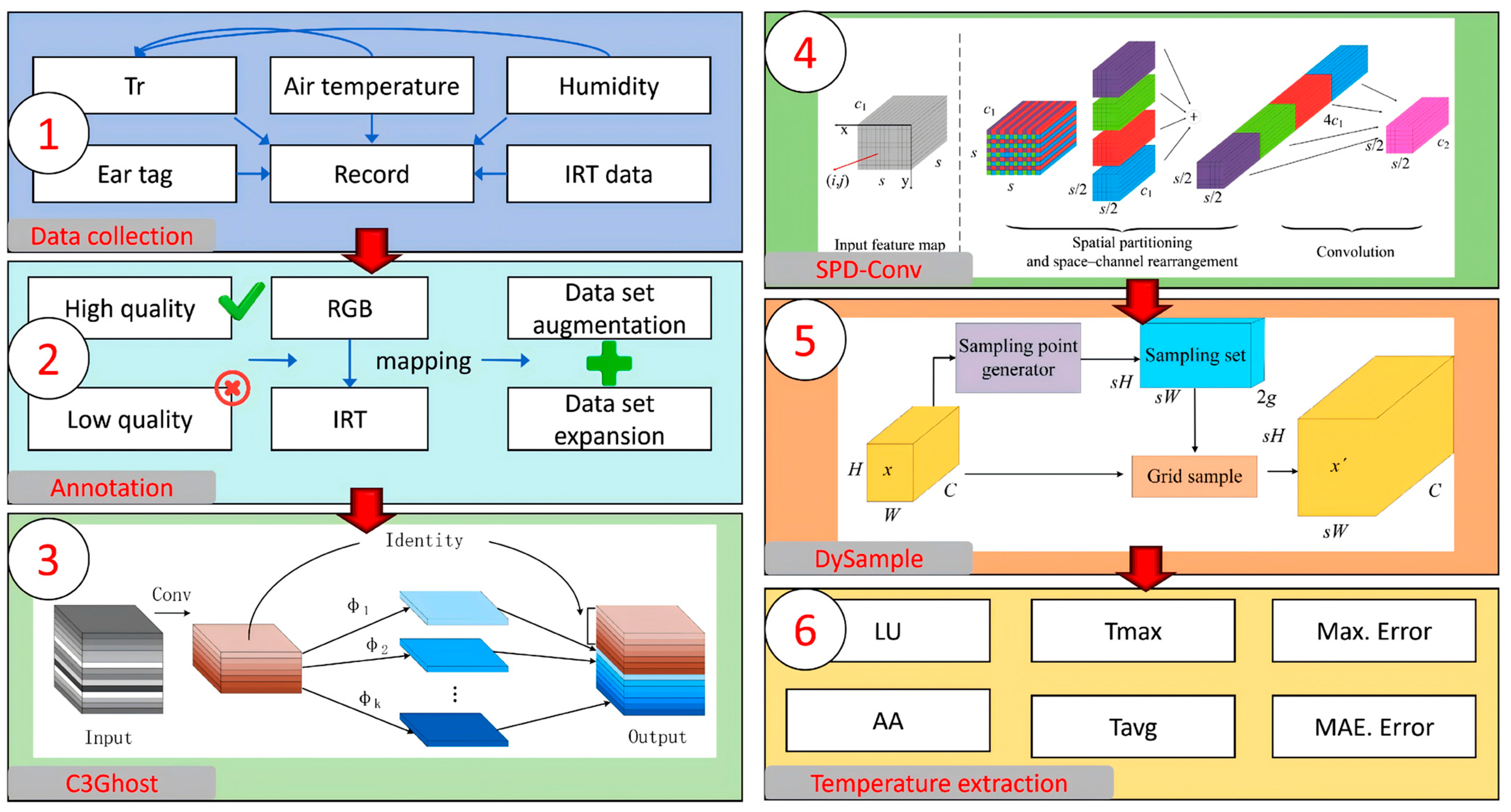
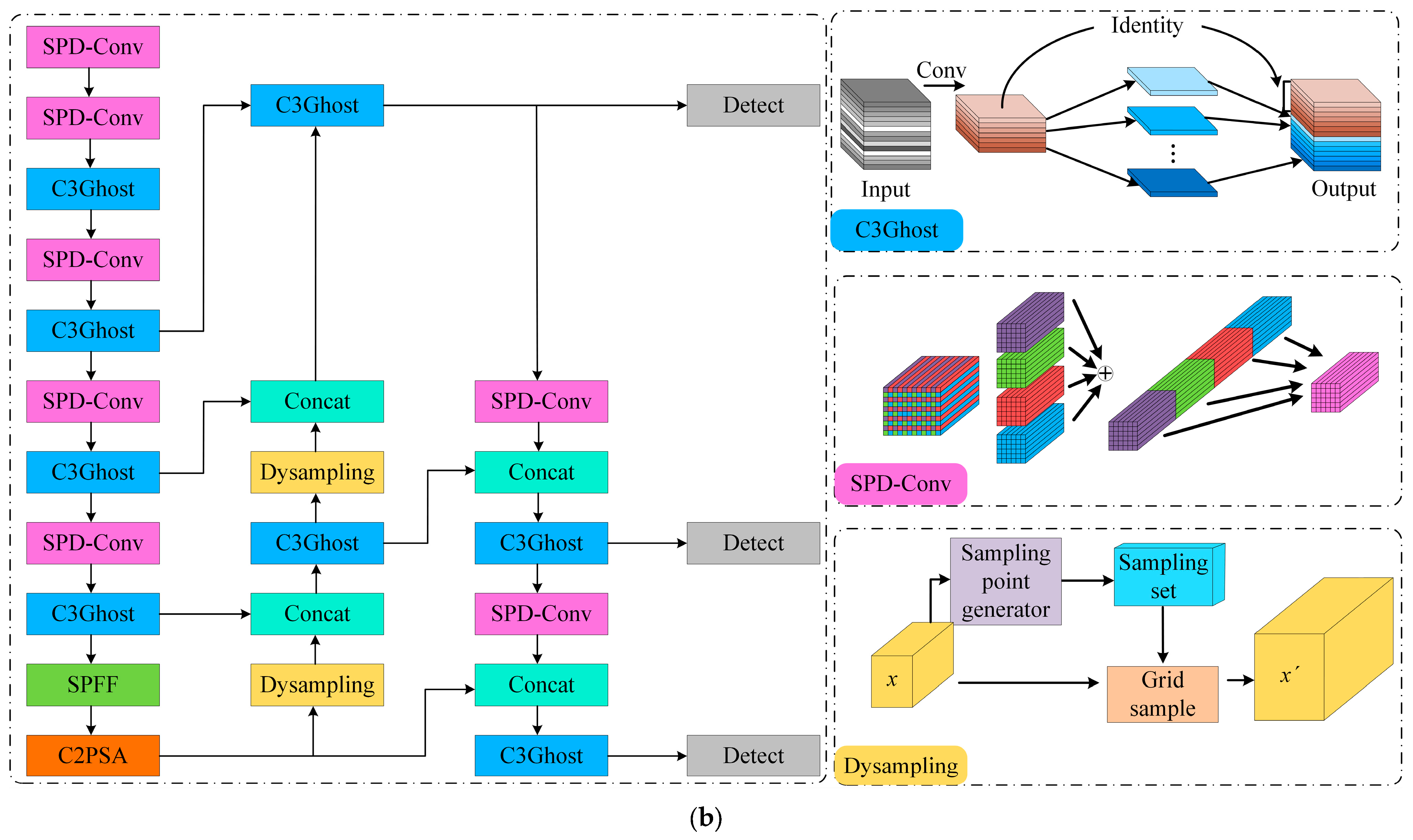
- A task-driven lightweight redesign of YOLOv11n for thermally crowded barn IRT ROI localisation. C3Ghost [45] reduces channel redundancy while retaining weak thermal cues, SPD-Conv [46] mitigates early downsampling information loss to preserve thermal gradients and boundaries, and DySample [47] performs content-adaptive resampling to alleviate boundary drift during multi-scale fusion.
- A dual-level evaluation linking ROI localisation to temperature-extraction reliability. Besides detection metrics, Tmax and Tavg temperature errors and efficiency indicators (Params, GFLOPs, FPS) are reported, together with ablations that isolate and validate the effects of C3Ghost, SPD-Conv, and DySample.
2. Materials and Analysis
2.1. Data Collection
2.2. Data Annotation
2.3. Data Set Structure
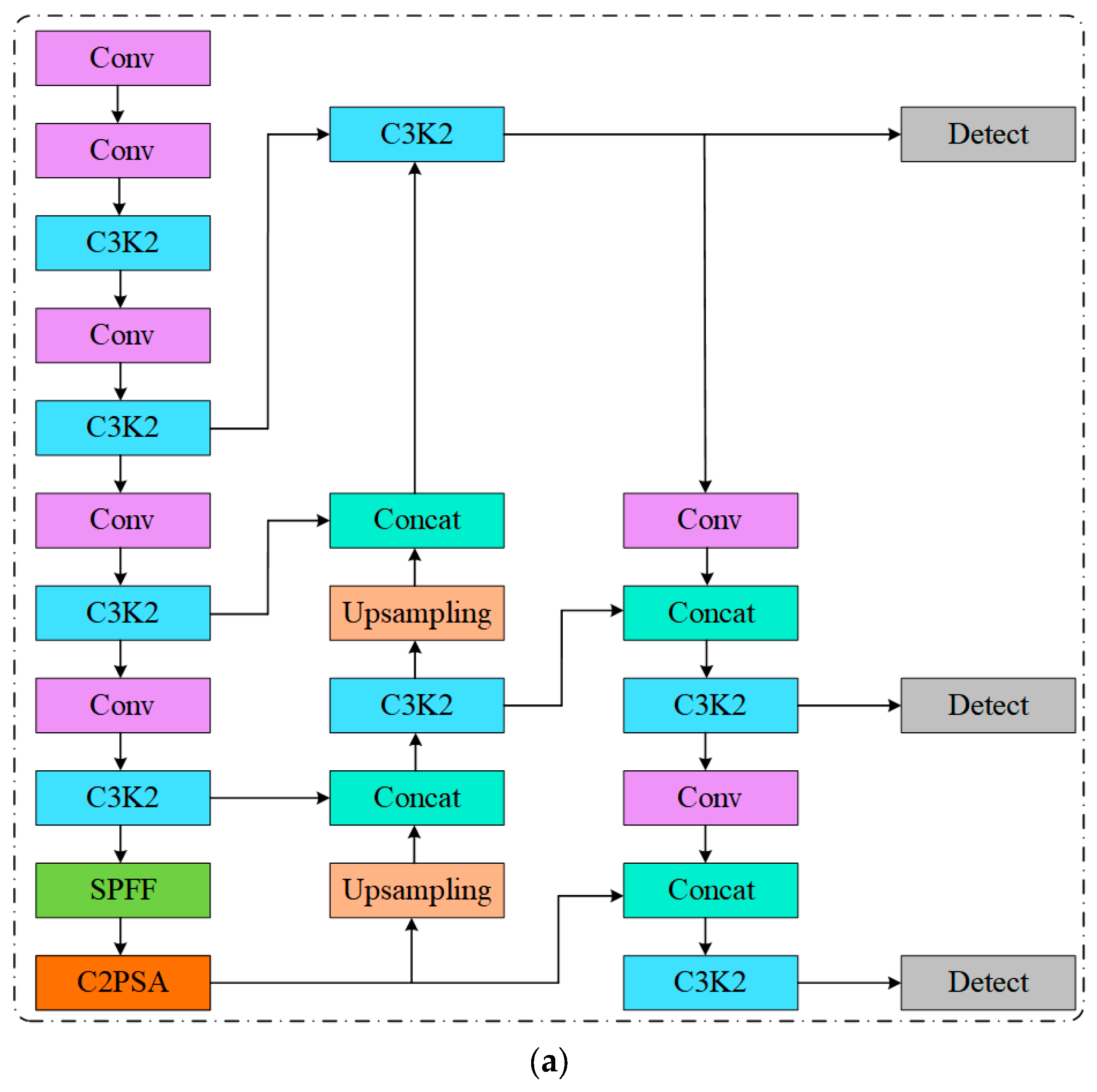
2.4. Construction of a Lightweight Model Based on YOLOv11n-CGSD
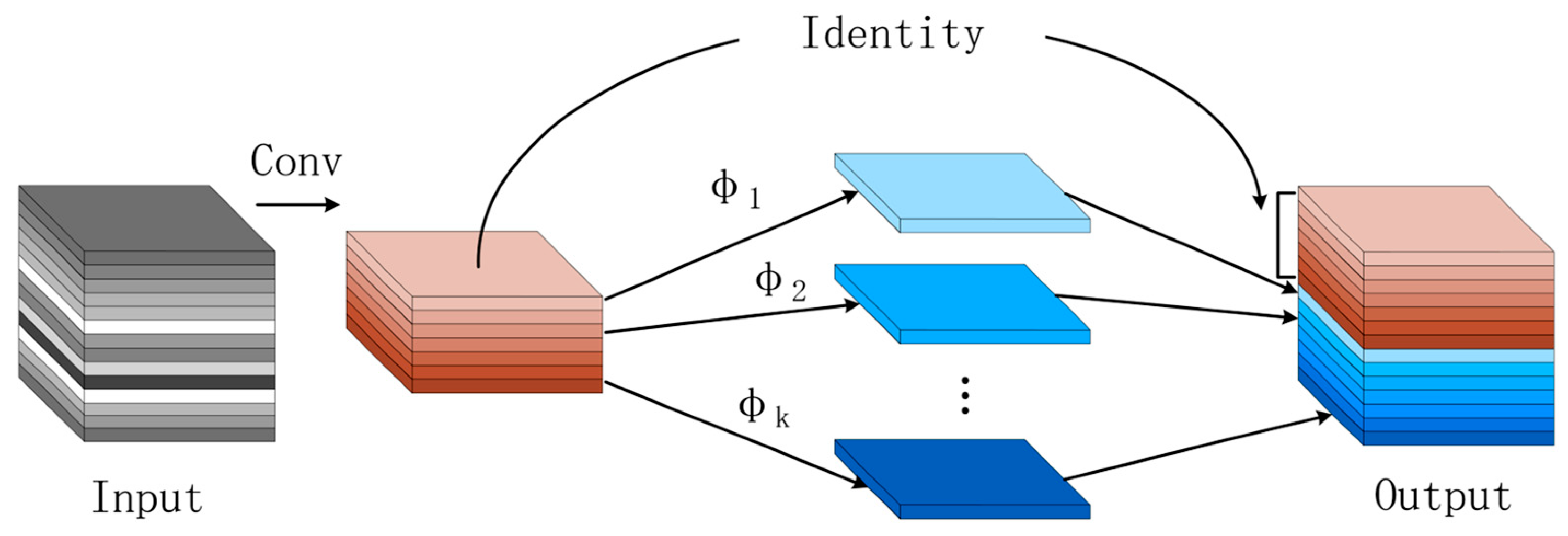
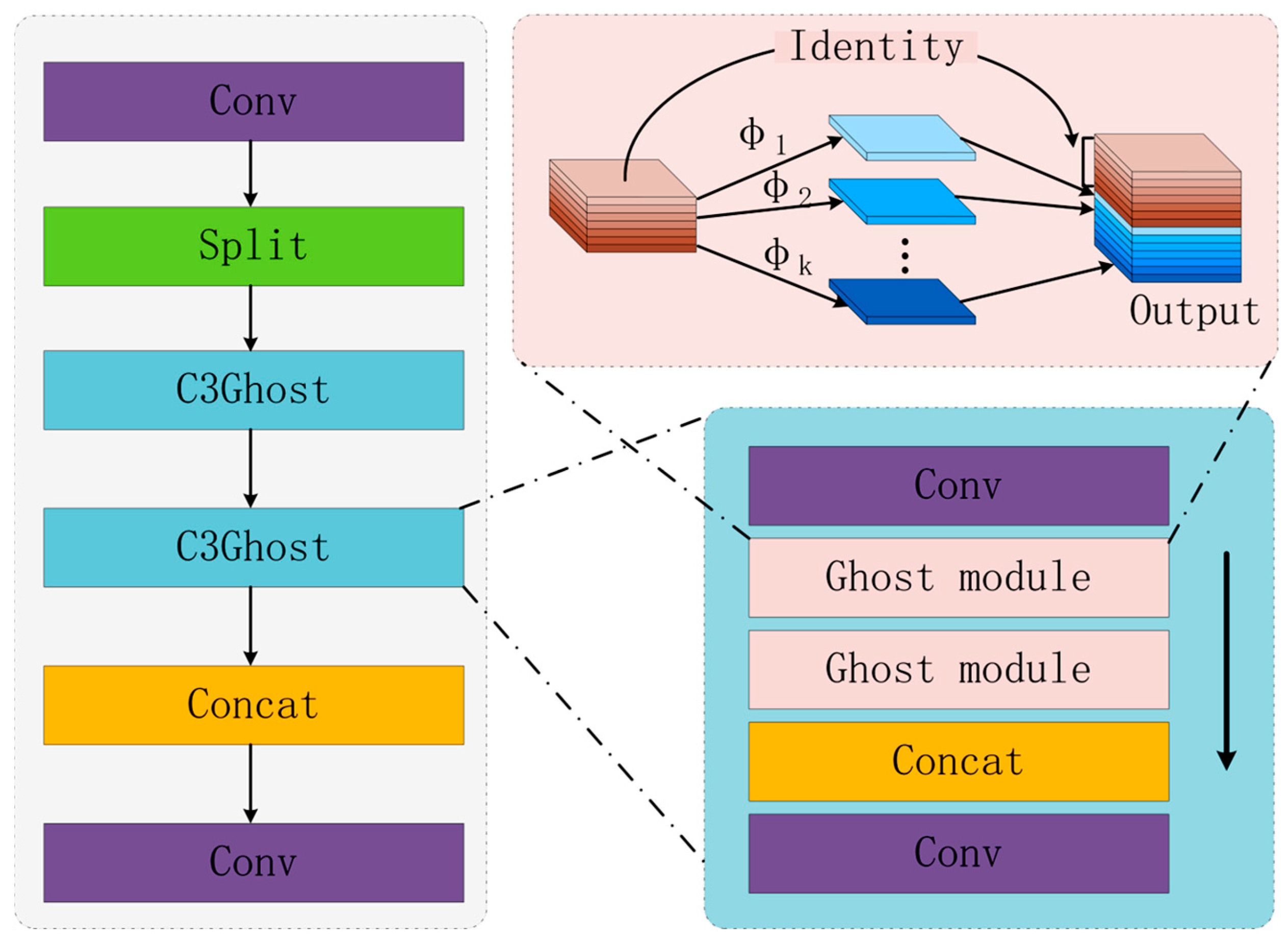
- C3Ghost-based lightweight reconstruction. The C3K2 module is replaced with C3Ghost to reduce channel redundancy while retaining low-contrast thermal textures and blurred boundary cues.
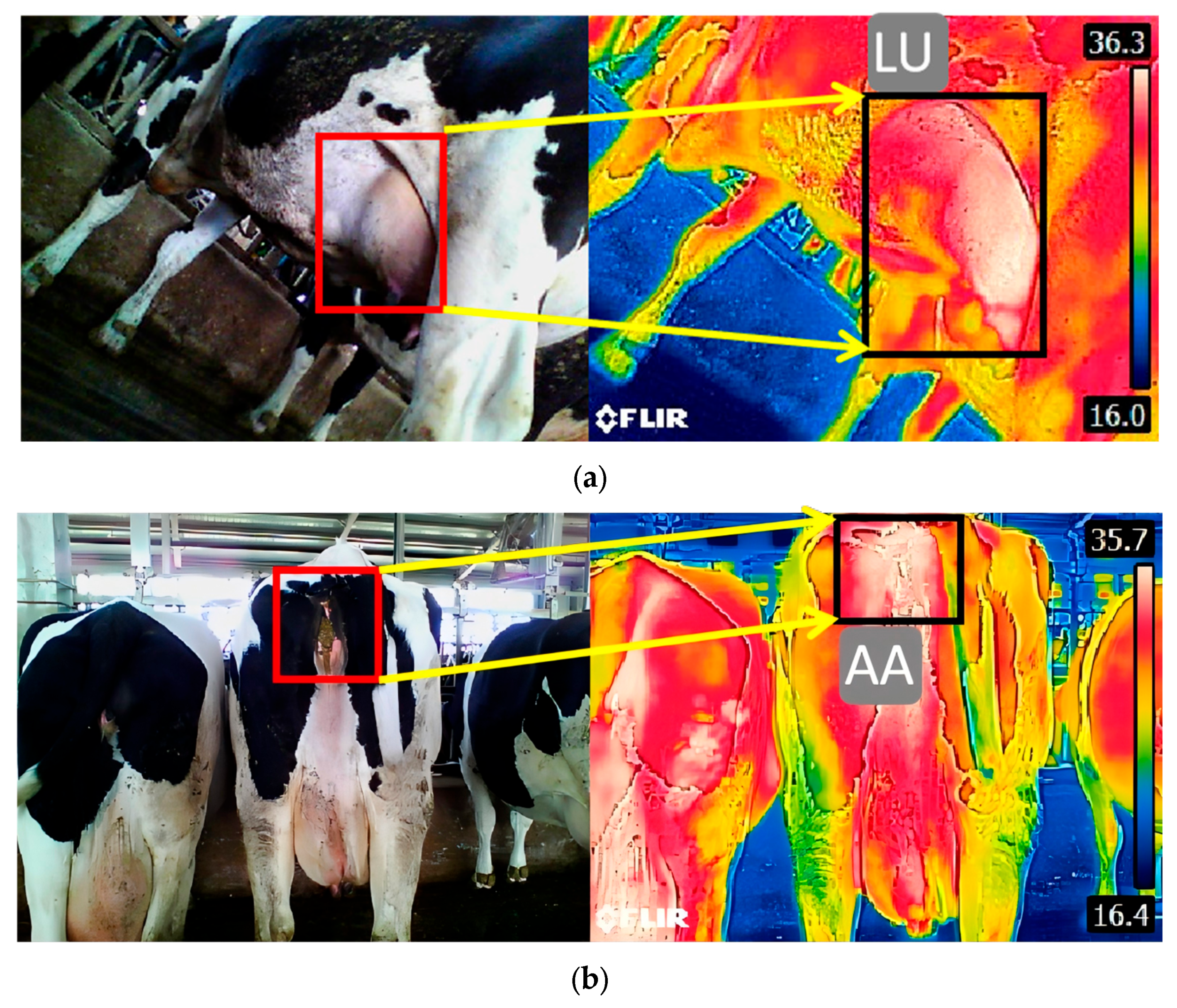
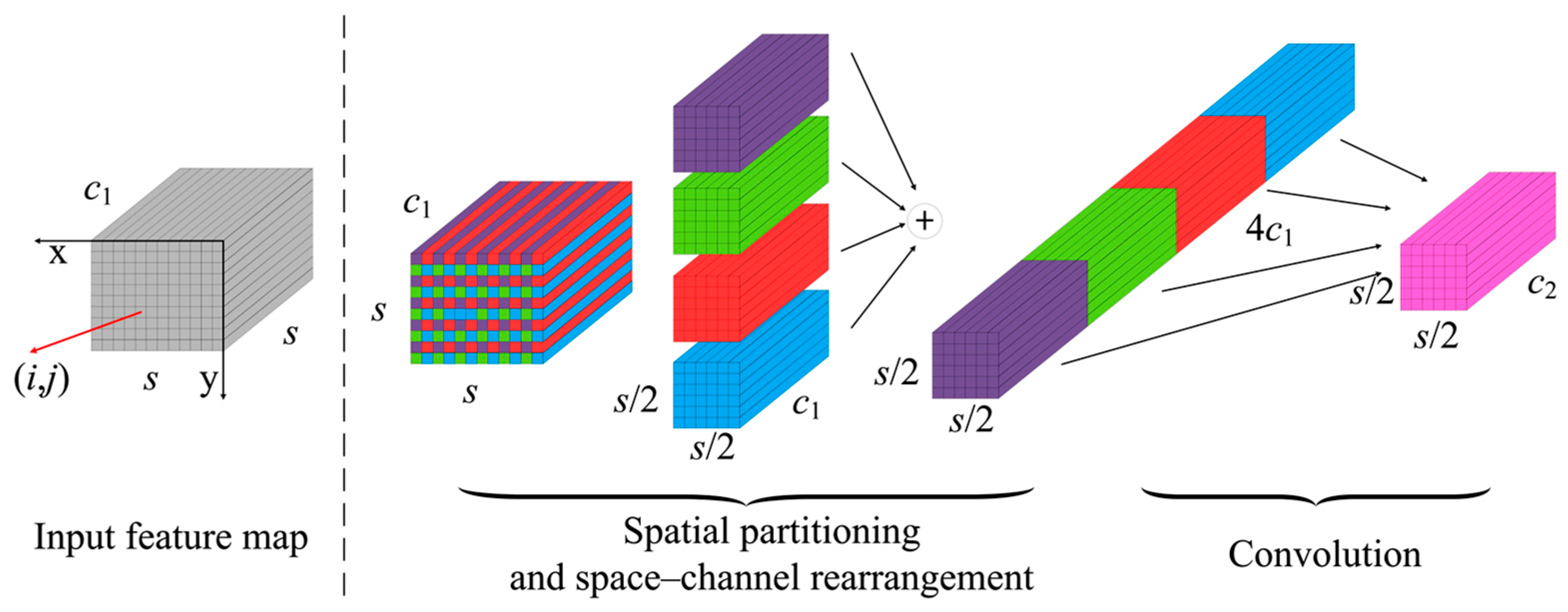
- SPD-Conv downsampling for information preservation. Strided downsampling is replaced with SPD-Conv to reduce resolution with minimal pixel discard, thereby preserving local thermal gradients and structural cues for small ROIs such as LU and AA.
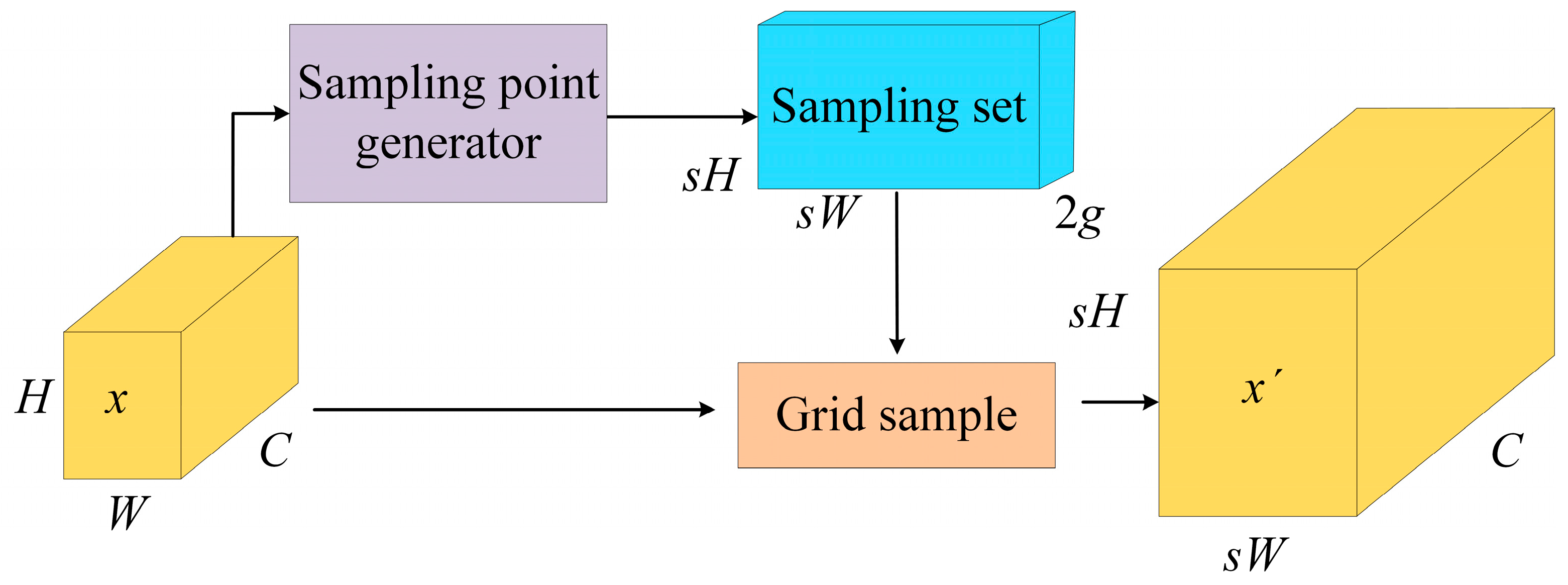
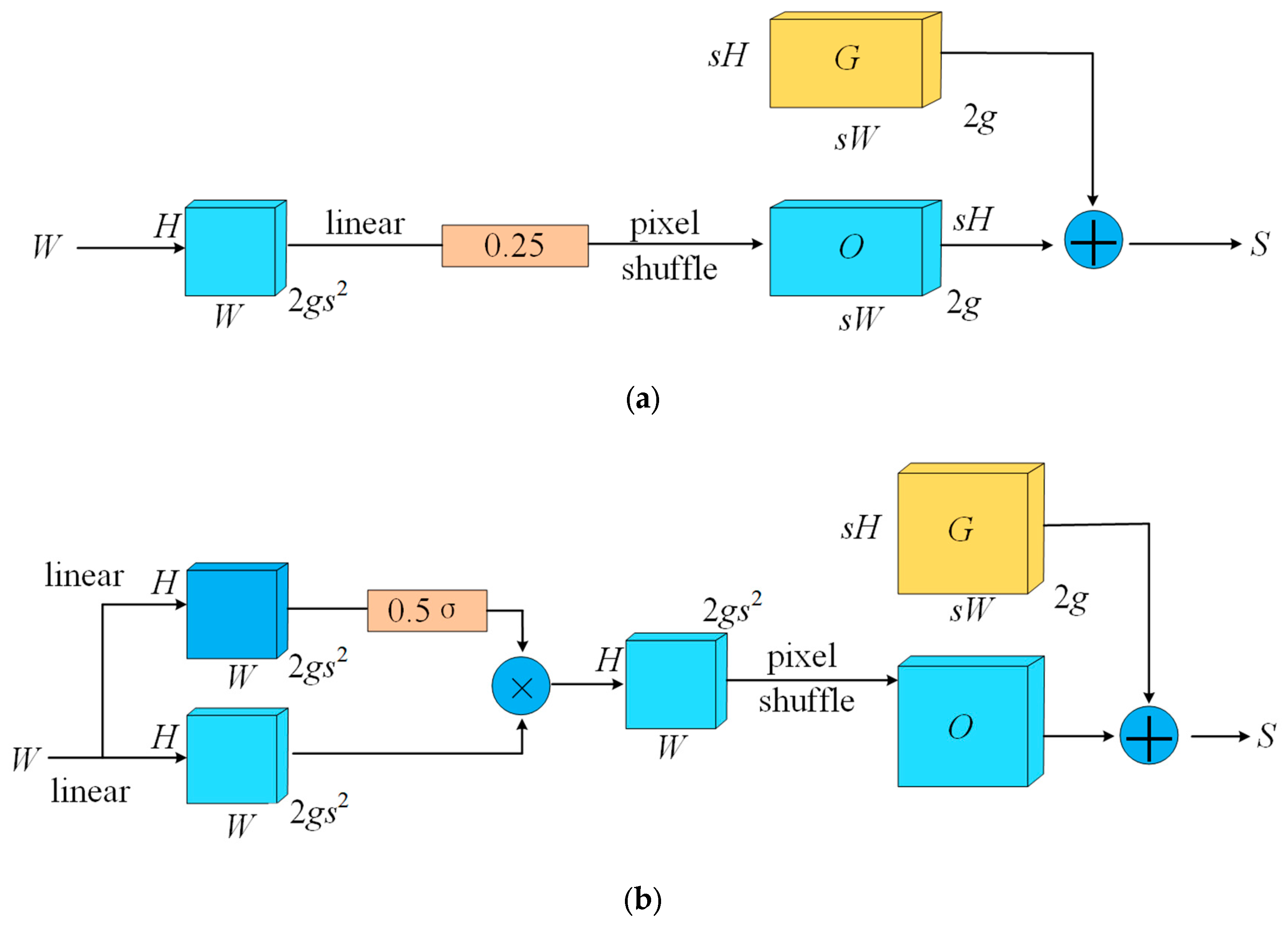
- DySample upsampling for boundary-aligned fusion. DySample is introduced in the neck to perform content-adaptive upsampling and scale alignment, improving boundary stability during multi-scale feature fusion.
2.4.1. C3Ghost-Based Lightweight Feature Representation Module
2.4.2. SPD-Conv-Based Small-Scale Structure-Sensitive Downsampling
2.4.3. DySample-Based Upsampling Module for Scale Alignment
2.5. Evaluation Indicators
3. Results
3.1. Training Results
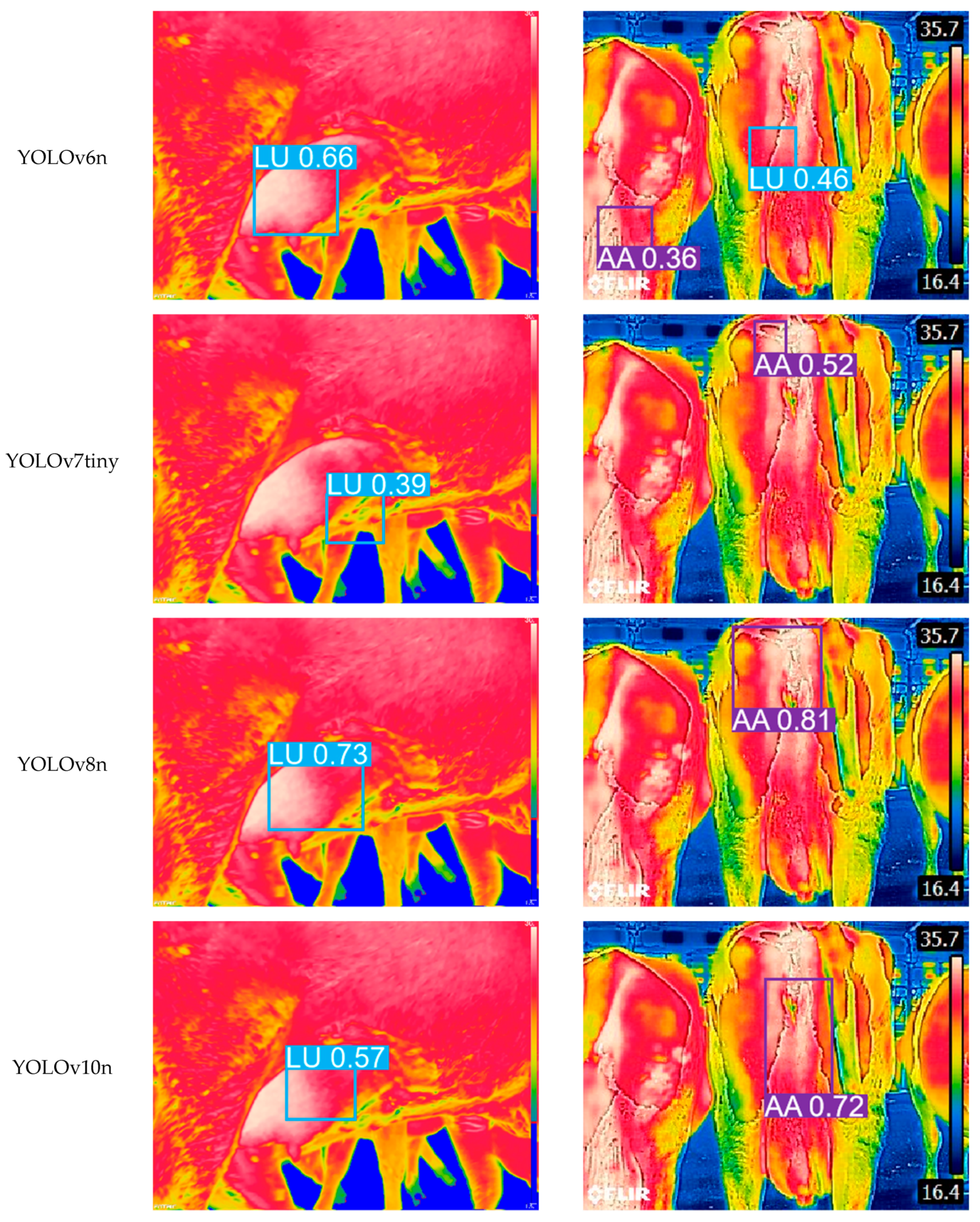
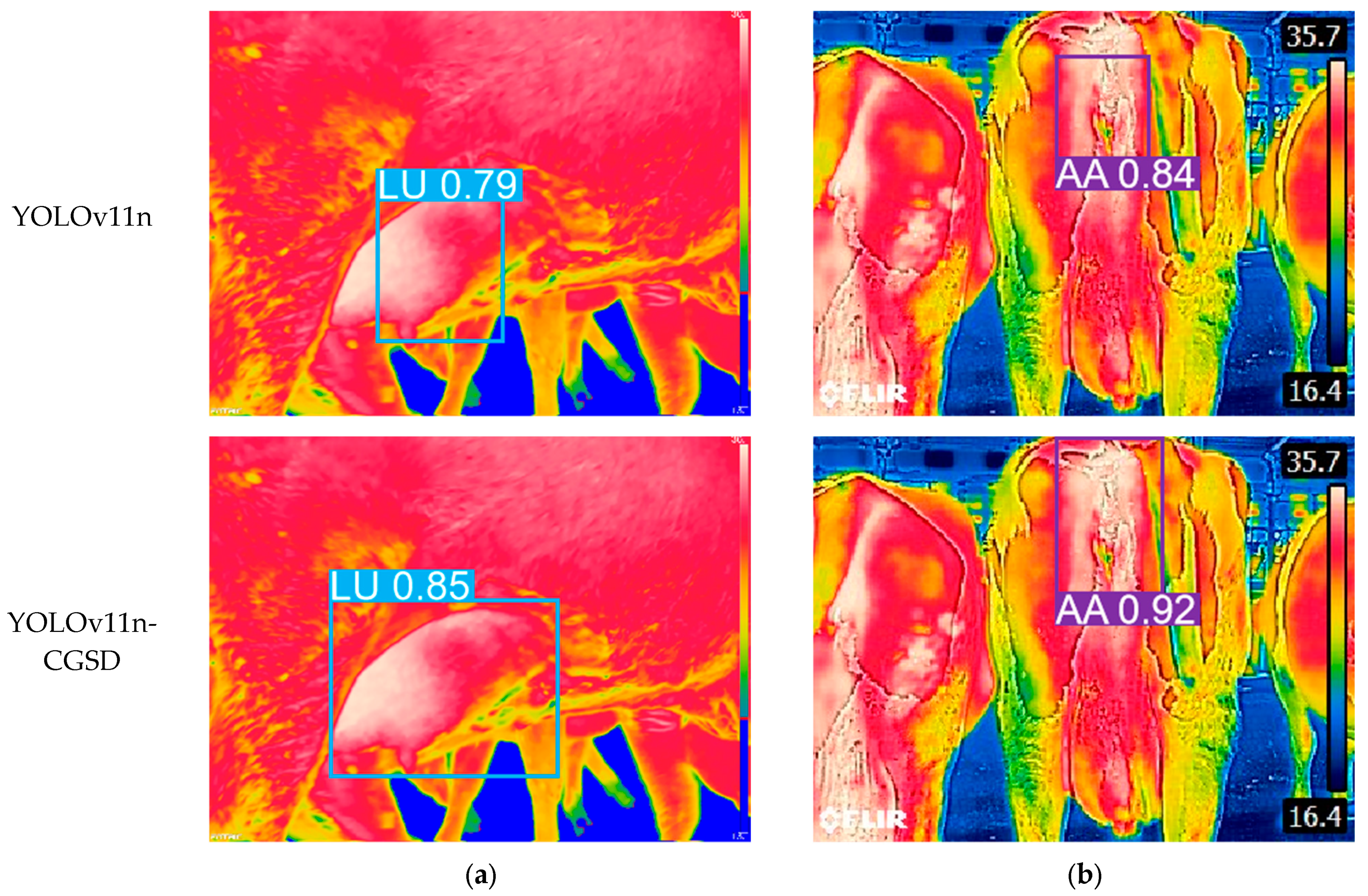
3.2. Performance Comparison of Different Models
3.3. Ablation Experiments
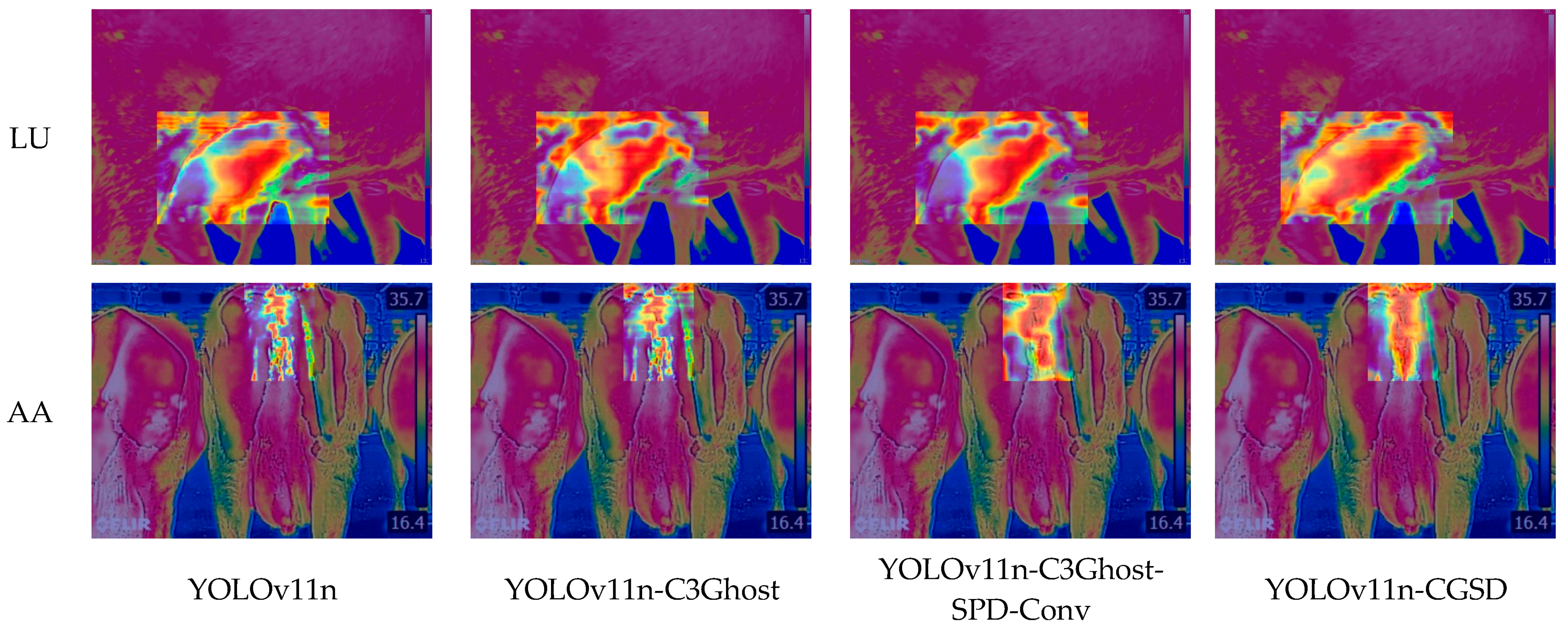
3.4. Visualisation Based on EigenCAM
3.5. Temperature Extraction Experiment
4. Discussion
- The current model relies solely on single-modality IRT images; under conditions of multiple-animal interference, dirt contamination, and large areas of thermally connected regions, its discrimination performance for LU remains weaker than that of RGB-based models.
- ROI boundaries are highly dependent on fine temperature gradients; once affected by emissivity changes, local contamination, or minor calibration errors, localisation bias can be amplified, and this uncertainty has not yet been systematically quantified.
- The dataset was collected from a single farm, so inter-farm variability in barn layout, camera setup, management practices, and background heat sources is not fully represented; accordingly, robustness to unseen farms cannot yet be firmly established;
- Seasonal conditions, posture, occlusion diversity, and thermal-environment heterogeneity were not comprehensively covered; changes in ambient temperature, ventilation, and heterogeneous heat backgrounds may shift radiometric patterns and reduce generalisation in field deployment.
- Only Tmax was compared with Tavg in this study; alternative robust statistics, including percentile-based temperature, trimmed mean, and hotspot-based aggregation, were not evaluated which may further reduce noise sensitivity.
- The reported FPS reflects GPU-based inference on an RTX 2080 Ti and may not directly translate to edge devices or CPU-only hardware; nevertheless, the lightweight design suggests deployment potential, and deployment-oriented benchmarking on typical farm edge platforms will be conducted in future work.
5. Conclusions
Author Contributions
Funding
Institutional Review Board Statement
Informed Consent Statement
Data Availability Statement
Acknowledgments
Conflicts of Interest
References
- Oliveira, C.P.; de Sousa, F.C.; da Silva, A.L.; Schultz, É.B.; Valderrama Londoño, R.I.; de Souza, P.A.R. Heat Stress in Dairy Cows: Impacts, Identification, and Mitigation Strategies—A Review. Animals 2025, 15, 249. [Google Scholar] [CrossRef]
- Giannone, C.; Bovo, M.; Ceccarelli, M.; Torreggiani, D.; Tassinari, P. Review of the Heat Stress-Induced Responses in Dairy Cattle. Animals 2023, 13, 3451. [Google Scholar] [CrossRef] [PubMed]
- Macmillan, K.; Colazo, M.G.; Cook, N.J. Evaluation of Infrared Thermography Compared to Rectal Temperature to Identify Illness in Early Postpartum Dairy Cows. Res. Vet. Sci. 2019, 125, 315–322. [Google Scholar] [CrossRef]
- McManus, R.; Boden, L.A.; Weir, W.; Viora, L.; Barker, R.; Kim, Y.; McBride, P.; Yang, S. Thermography for Disease Detection in Livestock: A Scoping Review. Front. Vet. Sci. 2022, 9, 965622. [Google Scholar] [CrossRef] [PubMed]
- Sathiyabarathi, M.; Jeyakumar, S.; Manimaran, A.; Pushpadass, H.A.; Sivaram, M.; Ramesha, K.P.; Das, D.N.; Kataktalware, M.A.; Jayaprakash, G.; Patbandha, T.K. Investigation of Body and Udder Skin Surface Temperature Differentials as an Early Indicator of Mastitis in Holstein Friesian Crossbred Cows Using Digital Infrared Thermography Technique. Vet. World 2016, 9, 1386–1391. [Google Scholar] [CrossRef] [PubMed]
- Sathiyabarathi, M.; Jeyakumar, S.; Manimaran, A.; Pushpadass, H.A.; Kumaresan, A.; Lathwal, S.S.; Sivaram, M.; Das, D.N.; Ramesha, K.P.; Jayaprakash, G. Infrared Thermography to Monitor Body and Udder Skin Surface Temperature Differences in Relation to Subclinical and Clinical Mastitis Condition in Karan Fries (Bos taurus × Bos indicus) Crossbred Cows. Indian J. Anim. Sci. 2018, 88, 694–699. [Google Scholar] [CrossRef]
- Yang, C.; Gu, X.; Cao, Z.; Zhang, X.; Hao, Y.; Liu, Y.; Shen, L.; Zhang, Y. Study on Possibility of Left and Right Quarter Skin Temperature Difference as a Detecting Indicator for Subclinical Mastitis in Dairy Cows. Acta Vet. Zootech. Sin. 2015, 46, 1663–1670. [Google Scholar]
- Isola, J.V.V.; Menegazzi, G.; Busanello, M.; dos Santos, S.B.; Agner, H.S.S.; Sarubbi, J. Differences in Body Temperature between Black-and-White and Red-and-White Holstein Cows Reared on a Hot Climate Using Infrared Thermography. J. Therm. Biol. 2020, 94, 102775. [Google Scholar] [CrossRef]
- Hajnal, É.; Kovács, L.; Vakulya, G. Dairy Cattle Rumen Bolus Developments with Special Regard to the Applicable Artificial Intelligence (AI) Methods. Sensors 2022, 22, 6812. [Google Scholar] [CrossRef]
- Hillman, P.E.; Gebremedhin, K.G.; Willard, S.T.; Lee, C.N.; Lee, J.A. Continuous Measurements of Vaginal Temperature of Female Cattle Using a Data Logger Encased in a Plastic Anchor. Appl. Eng. Agric. 2009, 25, 291–296. [Google Scholar] [CrossRef]
- Passawat, T.; Adisorn, Y.; Theera, R. Effect of Heat Stress on Subsequent Estrous Cycles Induced by PGF2α in Cross-Bred Holstein Dairy Cows. Animals 2024, 14, 2009. [Google Scholar]
- Salles, M.S.V.; da Silva, S.C.; Salles, F.A.; Roma, L.C.; El Faro, L.; Mac Lean, P.A.B.; de Oliveira, C.E.L.; Martello, L.S. Mapping the Body Surface Temperature of Cattle by Infrared Thermography. J. Therm. Biol. 2016, 62, 63–69. [Google Scholar] [CrossRef] [PubMed]
- Kim, S.-J.; Jin, X.-C.; Bharanidharan, R.; Kim, N.-Y. Distinguishing True from False Estrus in Hanwoo Cows Using Neck-Mounted IMU Sensors: Quantifying Behavioral Differences to Reduce False Positives. Agriculture 2025, 15, 2307. [Google Scholar] [CrossRef]
- Ipema, A.H.; Goense, D.; Hogewerf, P.H.; Houwers, H.W.J.; van Roest, H. Pilot Study to Monitor Body Temperature of Dairy Cows with a Rumen Bolus. Comput. Electron. Agric. 2008, 64, 49–52. [Google Scholar] [CrossRef]
- Lima, R.S.; Danielski, G.C.; Pires, A.C.S. Mastitis Detection and Prediction of Milk Composition Using Gas Sensor and Electrical Conductivity. Food Bioprocess Technol. 2018, 11, 551–560. [Google Scholar] [CrossRef]
- Chung, H.; Vu, H.; Kim, Y.; Choi, C.Y. Subcutaneous Temperature Monitoring through Ear Tag for Heat Stress Detection in Dairy Cows. Biosyst. Eng. 2023, 235, 202–214. [Google Scholar] [CrossRef]
- Yu, Z.; Han, Y.; Cha, L.; Chen, S.; Wang, Z.; Zhang, Y. Design of an Intelligent Wearable Device for Real-Time Cattle Health Monitoring. Front. Robot. AI 2024, 11, 1441960. [Google Scholar] [CrossRef]
- Fogarty, E.S.; Swain, D.L.; Cronin, G.; Trotter, M. Autonomous On-Animal Sensors in Sheep Research: A Systematic Review. Comput. Electron. Agric. 2018, 150, 245–256. [Google Scholar] [CrossRef]
- Ciliberti, M.G.; Albenzio, M.; Sevi, A. From Sensors to Sustainability: Integrating Welfare, Management, and Climate Resilience in Small Ruminant Farm Systems. Animals 2025, 15, 3240. [Google Scholar] [CrossRef]
- Zhenlong, W.; Sam, W.; Dong, L.; Tomas, N. How AI Improves Sustainable Chicken Farming: A Literature Review of Welfare, Economic, and Environmental Dimensions. Agriculture 2025, 19, 2028. [Google Scholar] [CrossRef]
- Geqi, Y.; Zhengxiang, S.; Hao, L. Critical Temperature-Humidity Index Thresholds Based on Surface Temperature for Lactating Dairy Cows in a Temperate Climate. Agriculture 2021, 11, 970. [Google Scholar] [CrossRef]
- Zhang, C.; Wu, X.; Xiao, D.; Zhang, X.; Lei, X.; Lin, S. An Automatic Ear Temperature Monitoring Method for Group-Housed Pigs Adopting Infrared Thermography. Animals 2025, 15, 2279. [Google Scholar] [CrossRef]
- Stanek, P.; Żółkiewski, P.; Januś, E. A Review on Mastitis in Dairy Cows Research: Current Status and Future Perspectives. Agriculture 2024, 14, 1292. [Google Scholar] [CrossRef]
- Alejandro, M.; Romero, G.; Sabater, J.M.; Diaz, J.R. Infrared Thermography as a Tool to Determine Teat Tissue Changes Caused by Machine Milking in Murciano-Granadina Goats. Livest. Sci. 2014, 160, 178–185. [Google Scholar] [CrossRef]
- Zhenqiang, C.; Jialiang, C.; Hongbo, Y.; Man, C. Application and Research Progress of Infrared Thermography in Temperature Measurement of Livestock and Poultry Animals: A Review. Comput. Electron. Agric. 2023, 205, 107586. [Google Scholar] [CrossRef]
- Bell, D.J.; Macrae, A.I.; Mitchell, M.A.; Mason, C.S.; Jennings, A.; Haskell, M.J. Comparison of Thermal Imaging and Rectal Temperature in the Diagnosis of Pyrexia in Pre-Weaned Calves Using on Farm Conditions. Res. Vet. Sci. 2020, 131, 259–265. [Google Scholar] [CrossRef] [PubMed]
- Marrero, M.G.; Rijos-Fernandez, C.; Velez-Robles, Y.; Ortiz-Colon, G.; Sanchez-Rodriguez, H.; Jimenez-Caban, E.; Curbelo-Rodriguez, J. Short-Milking-Tube Infrared Temperature as a Subclinical Mastitis Detection Tool in Tropical Dairy Farms. Appl. Anim. Sci. 2020, 36, 329–334. [Google Scholar] [CrossRef]
- Chu, M.; Liu, X.; Zeng, X.; Wang, Y.; Liu, G. Research Advances in the Automatic Detection Technology for Mastitis of Dairy Cows. Trans. Chin. Soc. Agric. Eng. 2023, 39, 1–12. [Google Scholar]
- Satheesan, L.; Kittur, P.; Alhussien, M.; Lal, G.; Kamboj, A.; Dang, A. Reliability of Udder Infrared Thermography as a Non-Invasive Technology for Early Detection of Sub-Clinical Mastitis in Sahiwal (Bos indicus) Cows Under Semi-Intensive Production System. J. Therm. Biol. 2024, 121, 103838. [Google Scholar] [CrossRef]
- Guo, Y.; Yang, S.; Chi, Y.; Wu, C.; Xu, H.; Shen, J.; Zheng, Y. Recognizing Mastitis Using Temperature Distribution from Thermal Infrared Images in Cow Udder Regions. Trans. Chin. Soc. Agric. Eng. 2022, 38, 250–259. [Google Scholar]
- Metzner, M.; Sauter-Louis, C.; Seemueller, A.; Petzl, W.; Zerbe, H. Infrared Thermography of the Udder After Experimentally Induced Escherichia coli Mastitis in Cows. Vet. J. 2015, 204, 360–362. [Google Scholar] [CrossRef] [PubMed]
- D’Alterio, G.; Casella, S.; Gatto, M.; Gianesella, M.; Piccione, G.; Morgante, M. Circadian Rhythm of Foot Temperature Assessed Using Infrared Thermography in Sheep. Czech J. Anim. Sci. 2011, 56, 293–300. [Google Scholar] [CrossRef]
- Watz, S.; Petzl, W.; Zerbe, H.; Rieger, A.; Glas, A.; Schröter, W.; Landgraf, T.; Metzner, M. Technical Note: Automatic Evaluation of Infrared Thermal Images by Computerized Active Shape Modeling of Bovine Udders Challenged with Escherichia coli. J. Dairy Sci. 2019, 102, 4541–4545. [Google Scholar] [CrossRef] [PubMed]
- Wang, C.S.; Du, P.F.; Wu, H.R.; Li, J.X.; Zhao, C.J.; Zhu, H.J. A Cucumber Leaf Disease Severity Classification Method Based on the Fusion of DeepLabV3+ and U-Net. Comput. Electron. Agric. 2021, 189, 106373. [Google Scholar] [CrossRef]
- Zhao, K.; Duan, Y.; Chen, J.; Li, Q.; Hong, X.; Zhang, R.; Wang, M. Detection of Respiratory Rate of Dairy Cows Based on Infrared Thermography and Deep Learning. Agriculture 2023, 13, 1939. [Google Scholar] [CrossRef]
- Shu, H.; Wang, K.; Guo, L.; Bindelle, J.; Wang, W. Automated Collection of Facial Temperatures in Dairy Cows via Improved UNet. Comput. Electron. Agric. 2024, 220, 108614. [Google Scholar] [CrossRef]
- Guo, S.-S.; Lee, K.-H.; Chang, L.; Tseng, C.-D.; Sie, S.-J.; Lin, G.-Z.; Chen, J.-Y.; Yeh, Y.-H.; Huang, Y.-J.; Lee, T.-F. Development of an Automated Body Temperature Detection Platform for Face Recognition in Cattle with YOLO V3-Tiny Deep Learning and Infrared Thermal Imaging. Appl. Sci. 2022, 12, 4036. [Google Scholar] [CrossRef]
- Yan, Y.; Sheng, Z.; Gu, Y.; Heng, Y.; Zhou, H. Non-contact Core Body Temperature Detection Method for Caged Laying Hens. Trans. Chin. Soc. Agric. Mach. 2024, 55, 312–321. [Google Scholar]
- Shen, M.; Lu, P.; Liu, L.; Sun, Y.; Xu, Y. Body Temperature Detection Method of Ross Broiler Based on Infrared Thermography. Trans. Chin. Soc. Agric. Mach. 2019, 50, 222–229. [Google Scholar]
- Wang, Y.; Kang, X.; He, Z.; Feng, Y.; Liu, G. Accurate Detection of Dairy Cow Mastitis with Deep Learning Technology: A New and Comprehensive Detection Method Based on Infrared Thermal Images. Animal 2022, 12, 100646. [Google Scholar] [CrossRef]
- Zhang, X.D.; Kang, X.; Feng, N.N.; Liu, G. Automatic Recognition of Dairy Cow Mastitis from Thermal Images by a Deep Learning Detector. Comput. Electron. Agric. 2020, 178, 105754. [Google Scholar] [CrossRef]
- Pezeshki, A.; Stordeur, P.; Wallemacq, H.; Schynts, F.; Stevens, M.; Boutet, P.; Peelman, L.J.; De Spiegeleer, B.; Duchateau, L.; Bureau, F.; et al. Variation of Inflammatory Dynamics and Mediators in Primiparous Cows after Intramammary Challenge with Escherichia coli. Vet. Res. 2011, 42, 15. [Google Scholar] [CrossRef] [PubMed]
- Chu, M.; Si, Y.; Li, Z.; Li, Q.; Liu, G. Multi-feature Image Layers Fusion for Accurate Detection of Dairy cow Mastitis Using Deep Learning. Comput. Electron. Agric. 2025, 239, 110937. [Google Scholar] [CrossRef]
- Velasco-Bolaños, J.; Ceballes-Serrano, C.C.; Velasquez-Mejia, D.; Riano-Rojas, J.C.; Giraldo, C.E.; Carmona, J.U.; Ceballos-Marquez, A. Application of Udder Surface Temperature by Infrared Thermography for Diagnosis of Subclinical Mastitis in Holstein Cows Located in Tropical Highlands. J. Dairy Sci. 2021, 104, 10310–10323. [Google Scholar] [CrossRef] [PubMed]
- Han, K.; Wang, Y.; Tian, Q.; Guo, J.; Xu, C.; Xu, C. GhostNet: More Features from Cheap Operations. arXiv 2020, arXiv:1911.11907. [Google Scholar] [CrossRef]
- Sunkara, R.; Luo, T. No More Strided Convolutions or Pooling: A New CNN Building Block for Low-Resolution Images and Small Objects. arXiv 2022, arXiv:2208.03641. [Google Scholar] [CrossRef]
- Liu, W.; Lu, H.; Fu, H.; Cao, Z. Learning to Upsample by Learning to Sample. arXiv 2023, arXiv:2308.15085. [Google Scholar] [CrossRef]
- Song, H.; Kang, Z.; Xue, H.; Hu, J.; Norton, T. EDC-YOLO-World-DB: A Model for Dairy Cow ROI Detection and Temperature Extraction Under Complex Conditions. Animals 2025, 15, 3361. [Google Scholar] [CrossRef]
- Francesco, C.; Alessandro, C. Real-Time Search and Rescue with Drones: A Deep Learning Approach for Small-Object Detection Based on YOLO. Drones 2025, 9, 514. [Google Scholar]
- Metzner, M.; Sauter-Louis, C.; Seemueller, A.; Petzl, W.; Klee, W. Infrared Thermography of the Udder Surface of Dairy Cattle: Characteristics, Methods, and Correlation with Rectal Temperature. Vet. J. 2014, 199, 57–62. [Google Scholar] [CrossRef]



| Instrument | Manufacturer | Function | Parameter | Value |
|---|---|---|---|---|
| FLIR E6 | Teledyne FLIR LLC, Wilsonville, OR, USA | Body temperature | RGB pixels | 640 × 480 |
| Infrared resolution | 320 × 240 | |||
| Emission | 0.98 | |||
| Field of view | 45° × 34° | |||
| Spatial resolution | 3.7 mrad | |||
| Thermal sensitivity NETD 1 | 50 mK | |||
| Temperature measurement range | −20–250 °C | |||
| Fotric 287 | FOTRIC USA Inc., Santa Clara, CA, USA | Body temperature | RGB pixels | 1024 × 768 |
| Infrared resolution | 512 × 384 | |||
| Emission | 0.98 | |||
| Field of view | 20° × 15° | |||
| Spatial resolution | 0.68 mrad | |||
| Thermal sensitivity NETD | 30 mK | |||
| Temperature measurement range | −40–150 °C | |||
| Thermometer | EWHA Co., Ltd., Liaocheng, Shandong, China | Rectal temperature (Tr) temperature | Measurement range | 35–43 °C |
| Stated measurement error | ±0.1 °C | |||
| Scale division | 0.1 °C | |||
| Sensing medium | mercury column | |||
| Ambient conditions | Shandong Renke Measurement & Control Technology Co., Ltd., Jinan, Shandong, China | temperature–humidity (T-RH) | Temperature measuring range | –40 to +80 °C |
| Relative humidity range | 0–100%RH | |||
| Temperature resolution | 0.1 °C | |||
| Relative humidity resolution | 0.1%RH |
| Model | P | R | mAP50 | mAP50-95 | Params | FPS | GFLOPs |
|---|---|---|---|---|---|---|---|
| YOLOv11n | 86.00 | 81.66 | 87.86 | 51.50 | 2.62M | 90 | 6.6 |
| YOLOv11n-C3Ghost | 85.64 | 81.72 | 86.35 | 49.12 | 2.36M | 87 | 6.9 |
| YOLOv11n-SPD-Conv | 86.77 | 80.80 | 88.55 | 52.35 | 2.32M | 115 | 5.7 |
| YOLOv11n-DySample | 89.54 | 84.19 | 89.25 | 53.44 | 2.60M | 85 | 6.5 |
| YOLOv11n-C3Ghost + SPD-Conv | 86.54 | 81.41 | 88.20 | 51.87 | 2.09M | 112 | 6.1 |
| YOLOv11n-SPD-Conv-DySample | 88.75 | 84.96 | 91.23 | 56.69 | 2.37M | 107 | 5.7 |
| YOLOv11n-C3Ghost + DySample | 88.86 | 85.52 | 89.80 | 54.10 | 2.37M | 81 | 6.9 |
| YOLOv11n-CGSD | 89.11 | 86.80 | 91.94 | 60.18 | 2.10M | 109 | 6.1 |
| Metrics | ROI | YOLOv11n | YOLOv11n-CGSD | ||
|---|---|---|---|---|---|
| Tmax | Tavg | Tmax | Tavg | ||
| Max. Error | LU | 0.3 | 3.4 | 0.2 | 1.7 |
| AA | 2.4 | 2.8 | 0.3 | 2.4 | |
| MAE. Error | LU | 0.183 | 2.46 | 0.136 | 1.05 |
| AA | 0.94 | 1.49 | 0.047 | 1.21 | |
| Metrics | ROI | ΔMAE (95% CI) | RMSE (v11n) | RMSE (CGSD) | ΔRMSE (95% CI) | Wilcoxon p |
|---|---|---|---|---|---|---|
| Tmax | LU | −0.047 [−0.092, −0.006] | 0.207 | 0.154 | −0.053 [−0.091, −0.015] | 0.135 |
| AA | −0.898 [−1.183, −0.603] | 1.283 | 0.091 | −1.185 [−1.422, −0.905] | 4.97 × 10⁻⁷ | |
| Tavg | LU | −1.406 [−1.814, −0.986] | 2.725 | 1.266 | −1.456 [−1.785, −1.118] | 1.65 × 10⁻⁷ |
| AA | −0.281 [−0.308, −0.239] | 1.706 | 1.473 | −0.235 [−0.274, −0.178] | 1.07 × 10⁻⁷ |
Disclaimer/Publisher’s Note: The statements, opinions and data contained in all publications are solely those of the individual author(s) and contributor(s) and not of MDPI and/or the editor(s). MDPI and/or the editor(s) disclaim responsibility for any injury to people or property resulting from any ideas, methods, instructions or products referred to in the content. |
© 2026 by the authors. Licensee MDPI, Basel, Switzerland. This article is an open access article distributed under the terms and conditions of the Creative Commons Attribution (CC BY) license.
Share and Cite
Kang, Z.; Song, H.; Xue, H.; Wu, M.; Bao, D.; Yan, C.; Shi, H.; Hu, J.; Norton, T. YOLOv11n-CGSD: Lightweight Detection of Dairy Cow Body Temperature from Infrared Thermography Images in Complex Barn Environments. Agriculture 2026, 16, 229. https://doi.org/10.3390/agriculture16020229
Kang Z, Song H, Xue H, Wu M, Bao D, Yan C, Shi H, Hu J, Norton T. YOLOv11n-CGSD: Lightweight Detection of Dairy Cow Body Temperature from Infrared Thermography Images in Complex Barn Environments. Agriculture. 2026; 16(2):229. https://doi.org/10.3390/agriculture16020229
Chicago/Turabian StyleKang, Zhongwei, Hang Song, Hang Xue, Miao Wu, Derui Bao, Chuang Yan, Hang Shi, Jun Hu, and Tomas Norton. 2026. "YOLOv11n-CGSD: Lightweight Detection of Dairy Cow Body Temperature from Infrared Thermography Images in Complex Barn Environments" Agriculture 16, no. 2: 229. https://doi.org/10.3390/agriculture16020229
APA StyleKang, Z., Song, H., Xue, H., Wu, M., Bao, D., Yan, C., Shi, H., Hu, J., & Norton, T. (2026). YOLOv11n-CGSD: Lightweight Detection of Dairy Cow Body Temperature from Infrared Thermography Images in Complex Barn Environments. Agriculture, 16(2), 229. https://doi.org/10.3390/agriculture16020229