Growth Without GH: A Case Series and Literature Review

 ,
, 
Abstract
1. Introduction
2. Case Report
2.1. Case 1
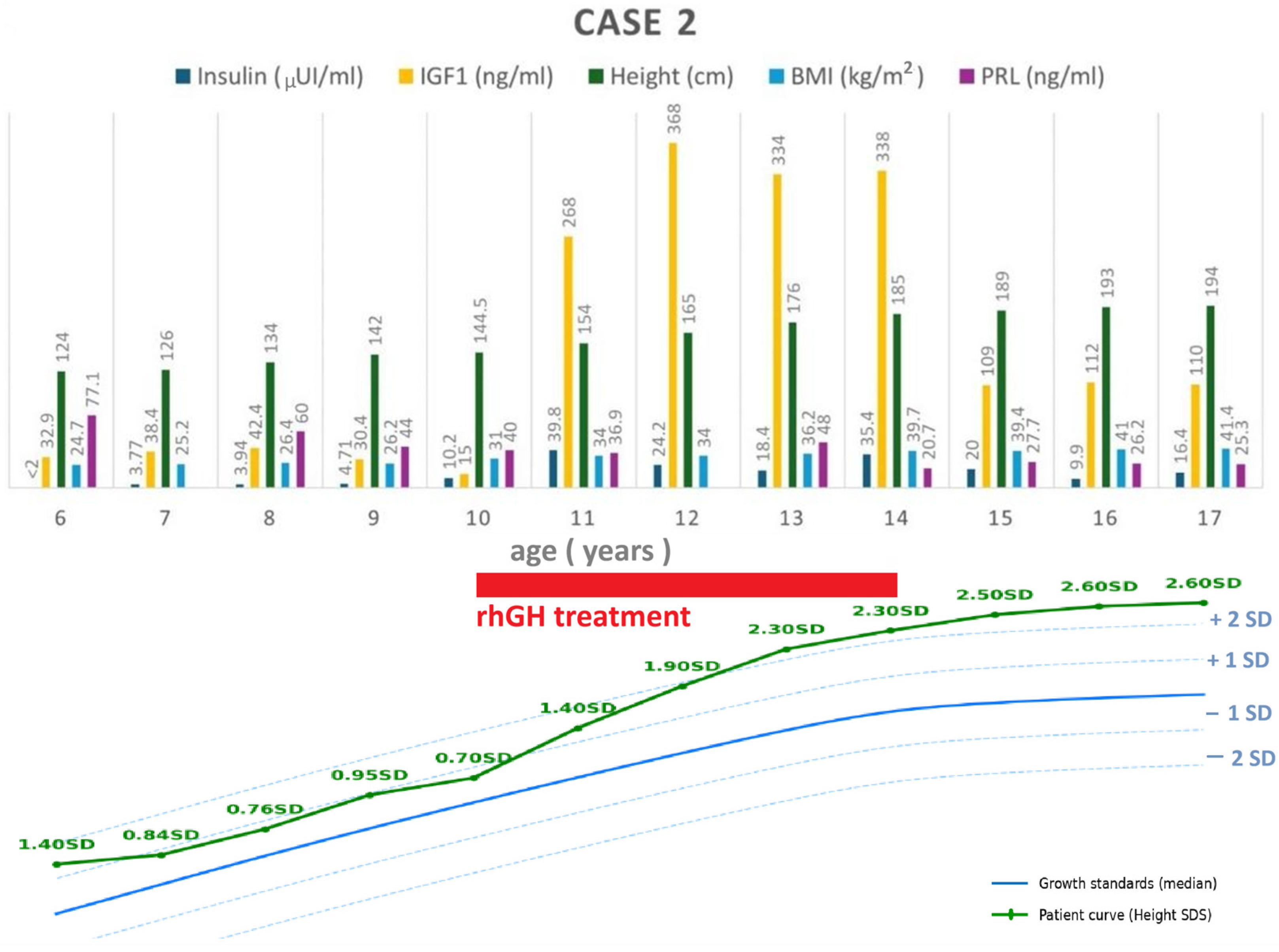
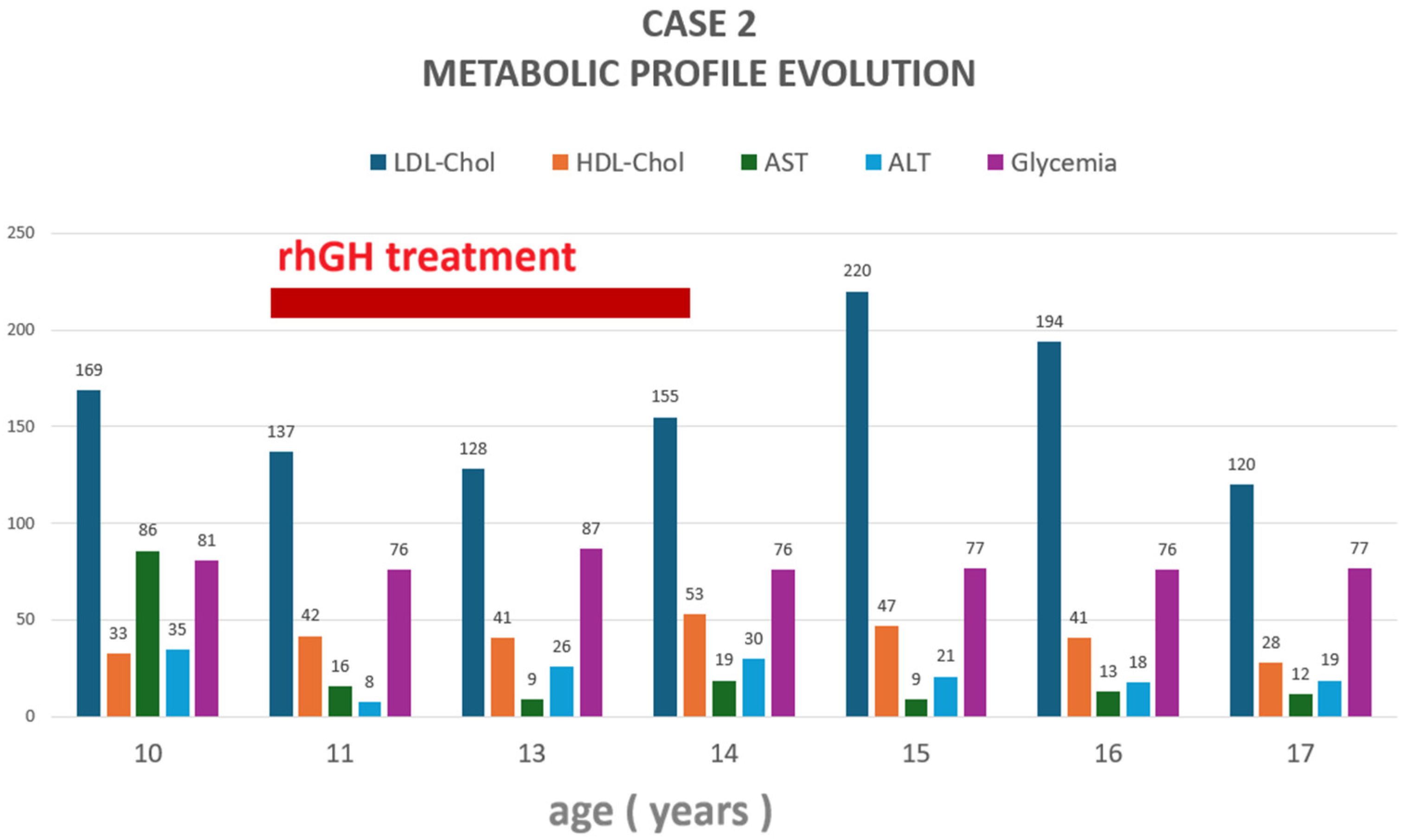
2.2. Case 2
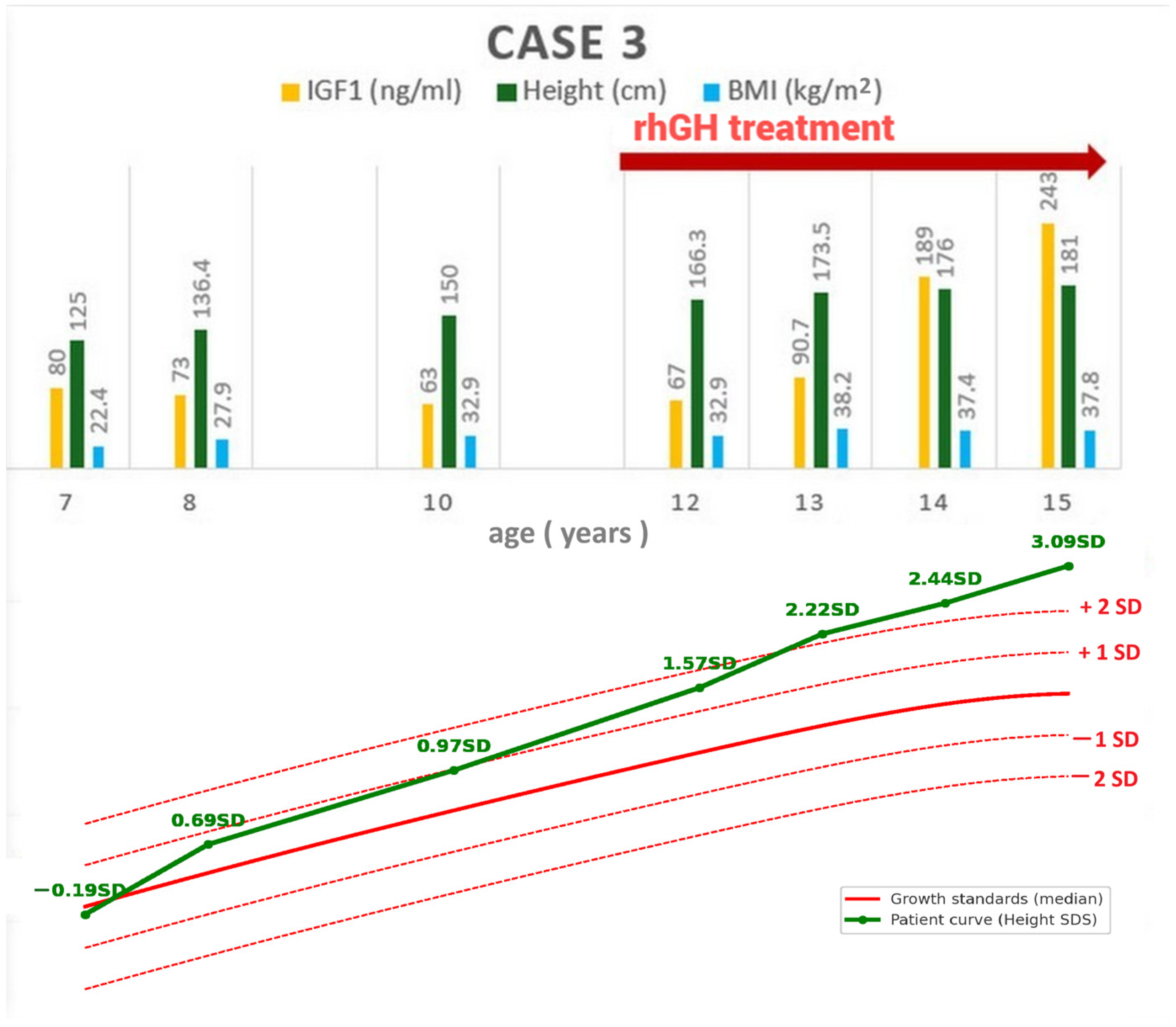
2.3. Case 3
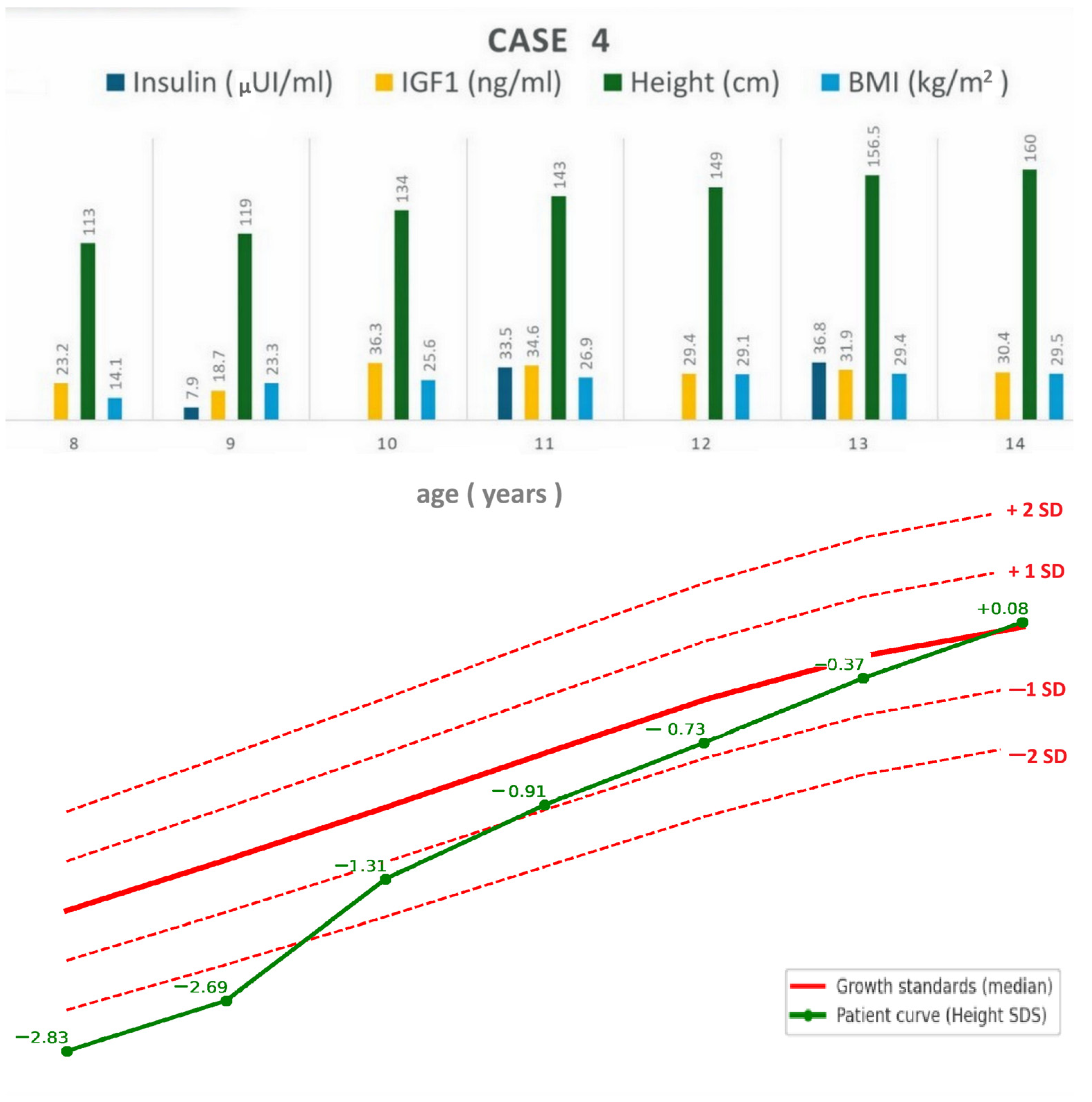
2.4. Case 4
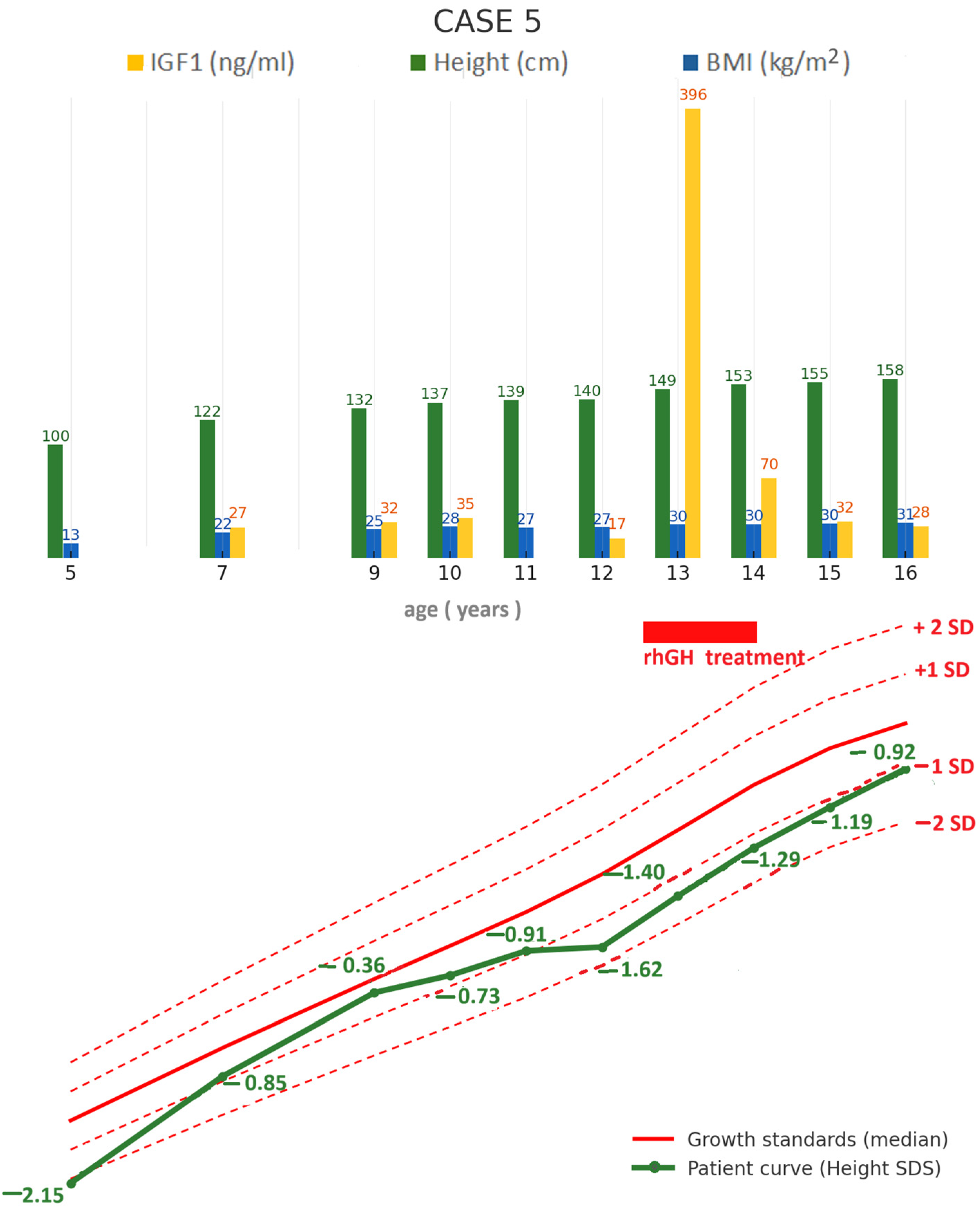
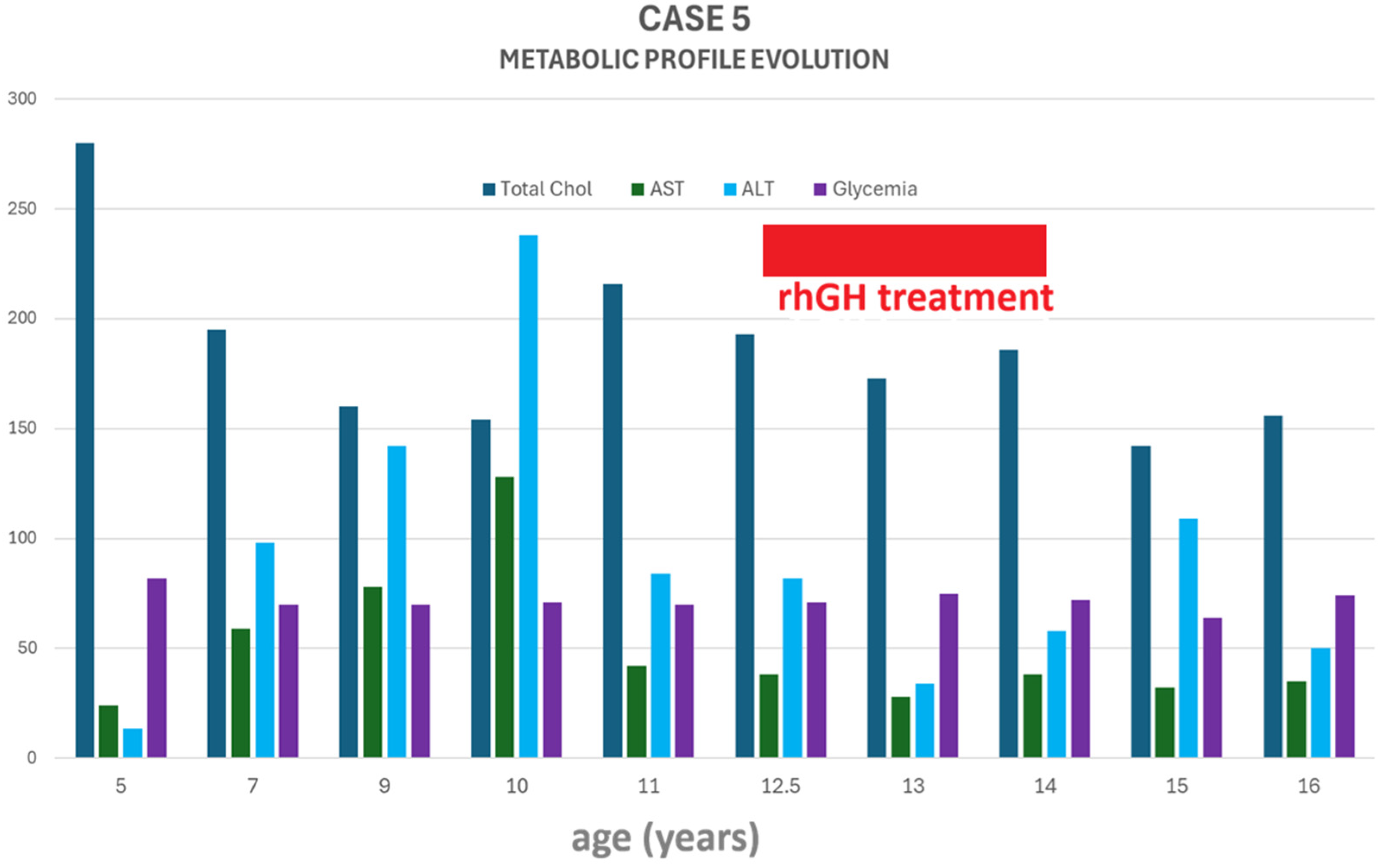
2.5. Case 5
3. Literature Review and Discussion
3.1. Growth Without GH: Overview and Historical Concept
3.2. Metabolic Pathways Supporting Growth in GH Deficiency
3.3. Genetic and Local Growth Plate Mechanisms
3.4. Metabolic Risk and GH Therapy Considerations
3.5. Bone Health Considerations
3.6. Clinical Implications
Author Contributions
Funding
Institutional Review Board Statement
Informed Consent Statement
Data Availability Statement
Conflicts of Interest
References
- Baron, J.; Sävendahl, L.; De Luca, F.; Dauber, A.; Phillip, M.; Wit, J.M.; Nilsson, O. Short and Tall Stature: A New Paradigm Emerges. Nat. Rev. Endocrinol. 2015, 11, 736–746. [Google Scholar] [CrossRef]
- Le Tissier, P.R.; Grattan, D.R. Growth Hormone and Prolactin: So Much Still to Learn. J. Neuroendocrinol. 2020, 32, 12909. [Google Scholar] [CrossRef]
- Aref, Y.; Fat, S.C.; Ray, E. Recent Insights into the Role of Hormones during Development and Their Functional Regulation. Front Endocrinol. 2024, 15, 1340432. [Google Scholar] [CrossRef]
- Perry, R.J.; Farquharson, C.; Ahmed, S.F. The Role of Sex Steroids in Controlling Pubertal Growth. Clin Endocrinol. 2008, 68, 4–15. [Google Scholar] [CrossRef] [PubMed]
- Nagasaki, K.; Tsumanuma, I.; Yoneoka, Y.; Jinguji, S.; Ogawa, Y.; Kikuchi, T.; Uchiyama, M. Metabolic Effects of Growth Hormone Replacement in Two Pediatric Patients with Growth without Growth Hormone. Endocr. J. 2010, 57, 771–775. [Google Scholar] [CrossRef] [PubMed][Green Version]
- Lazar, L.; Dan, S.; Phillip, M. Growth without Growth Hormone: Growth Pattern and Final Height of Five Patients with Idiopathic Combined Pituitary Hormone Deficiency. Clin Endocrinol. 2003, 59, 82–88. [Google Scholar] [CrossRef]
- Wu, R.; Xu, J. Pituitary Stalk Interruption Syndrome with Excessive Height Growth Combined with Congenital Absence of the Uterus and Ovaries: A Rare Case Report and Review of the Literature. Diabetes Metab. Syndr. Obes. 2024, 17, 1739. [Google Scholar] [CrossRef]
- Lee, S.S.; Han, A.-L.; Ahn, M.B.; Kim, S.H.; Cho, W.K.; Cho, K.S.; Park, S.H.; Jung, M.H.; Suh, B.-K. Growth without Growth Hormone in Combined Pituitary Hormone Deficiency Caused by Pituitary Stalk Interruption Syndrome. Ann. Pediatr. Endocrinol. Metab. 2017, 22, 55. [Google Scholar] [CrossRef] [PubMed]
- Arroyo, A.; Pernasetti, F.; Vasilyev, V.V.; Amato, P.; Yen, S.S.C.; Mellon, P.L. A Unique Case of Combined Pituitary Hormone Deficiency Caused by a PROP1 Gene Mutation (R120C) Associated with Normal Height and Absent Puberty. Clin. Endocrinol. 2002, 57, 283–291. [Google Scholar] [CrossRef]
- El Kholy, M.; Elsedfy, H.; Perin, L.; Abi Habid, W.; Thibaud, N.; Bozzola, M.; Rossignol, S.; Leneuve, P.; Godeau, F.; Chantot-Bastaraud, S.; et al. Normal Growth despite Combined Pituitary Hormone Deficiency. Horm. Res. Paediatr. 2020, 92, 133–142. [Google Scholar] [CrossRef]
- Hathout, E.H.; Baylink, D.J.; Mohan, S. Normal Growth despite GH, IGF-I and IGF-II Deficiency. Growth Horm. IGF Res. 1999, 9, 272–277. [Google Scholar] [CrossRef] [PubMed]
- Rochira, V.; Zirilli, L.; Maffei, L.; Premrou, V.; Aranda, C.; Baldi, M.; Ghigo, E.; Aimaretti, G.; Carani, C.; Lanfranco, F. Tall Stature without Growth Hormone: Four Male Patients with Aromatase Deficiency. J. Clin. Endocrinol. Metab. 2010, 95, 1626–1633. [Google Scholar] [CrossRef]
- Den Ouden, D.T.; Kroon, M.; Hoogland, P.H.; Geelhoed-Duijvestijn, P.H.L.M.; Wit, J.M. A 43-Year-Old Male with Untreated Panhypopituitarism Due to Absence of the Pituitary Stalk: From Dwarf to Giant. J. Clin. Endocrinol. Metab. 2002, 87, 5430–5434. [Google Scholar] [CrossRef]
- Faustini-Fustini, M.; Balestrieri, A.; Rochira, V.; Carani, C.; Den Ouden, D.T.; Kroon, M.; Hoogland, P.H.; Geelhoed-Duijvestijn, P.H.L.M.; Wit, J.M. The Apparent Paradox of Tall Stature with Hypopituitarism: New Insights from an Old Story. J. Clin. Endocrinol. Metab. 2003, 88, 4001–4004. [Google Scholar] [CrossRef][Green Version]
- Siklar, Z.; Camtosun, E.; Bolu, S.; Yildiz, M.; Akinci, A.; Bas, F.; Dündar, İ.; Bestas, A.; Ünal, E.; Kocaay, P.; et al. 17α Hydroxylase/17,20 Lyase Deficiency: Clinical Features and Genetic Insights from a Large Turkey Cohort. Endocrine 2024, 85, 1407–1416. [Google Scholar] [CrossRef]
- Agrogiannis, G.D.; Sifakis, S.; Patsouris, E.S.; Konstantinidou, A.E. Insulin-like Growth Factors in Embryonic and Fetal Growth and Skeletal Development (Review). Mol. Med. Rep. 2014, 10, 579. [Google Scholar] [CrossRef] [PubMed]
- Ornitz, D.M.; Marie, P.J. Fibroblast Growth Factor Signaling in Skeletal Development and Disease. Genes. Dev. 2015, 29, 1463–1486. [Google Scholar] [CrossRef]
- Ferruzzi, A.; Vrech, M.; Pietrobelli, A.; Cavarzere, P.; Zerman, N.; Guzzo, A.; Flodmark, C.E.; Piacentini, G.; Antoniazzi, F. The Influence of Growth Hormone on Pediatric Body Composition: A Systematic Review. Front Endocrinol. 2023, 14, 1093691. [Google Scholar] [CrossRef]
- Switkowski, K.M.; Jacques, P.F.; Must, A.; Fleisch, A.; Oken, E. Associations of Protein Intake in Early Childhood with Body Composition, Height, and Insulin-like Growth Factor I in Mid-Childhood and Early Adolescence. Am. J. Clin. Nutr. 2019, 109, 1154–1163. [Google Scholar] [CrossRef] [PubMed]
- Shim, K.S. Pubertal Growth and Epiphyseal Fusion. Ann. Pediatr. Endocrinol. Metab. 2015, 20, 8–12. [Google Scholar] [CrossRef]
- Satoh, M.; Hasegawa, Y. Factors Affecting Prepubertal and Pubertal Bone Age Progression. Front Endocrinol. 2022, 13, 967711. [Google Scholar] [CrossRef]
- Robson, H.; Siebler, T.; Shalet, S.M.; Williams, G.R. Interactions between GH, IGF-I, Glucocorticoids, and Thyroid Hormones during Skeletal Growth. Pediatr. Res. 2002, 52, 137–147. [Google Scholar] [CrossRef] [PubMed]
- Iwasaki, Y.; Nishiyama, M.; Corcoran, D.; Araki, T. Biological Roles of Growth Hormone/Prolactin from an Evolutionary Perspective. Endocr. J. 2024, 71, 827–837. [Google Scholar] [CrossRef] [PubMed]
- Holmes, L.B.; Frantz, A.G.; Rabkin, M.T.; Soeldner, J.S.; Crawford, J.D. Normal Growth with Subnormal Growth-Hormone Levels. New Engl. J. Med. 1968, 279, 559–566. [Google Scholar] [CrossRef]
- Costin, G.; Kogut, M.D.; Phillips, L.S.; Daughaday, W.H. Craniopharyngioma: The Role of Insulin in Promoting Postoperative Growth. J. Clin. Endocrinol. Metab. 1976, 42, 370–379. [Google Scholar] [CrossRef]
- Bistritzer, T.; Lovchik, J.C.; Chalew, S.A.; Kowarski, A.A. Growth Without Growth Hormone: The “Invisible” Gh Syndrome. Lancet 1988, 331, 321–323. [Google Scholar] [CrossRef]
- Geffner, M.E.; Bersch, N.; Kaplan, S.A.; Lippe, B.M.; Van Herle, A.; Joycelyn Elders, M.; Golde, D.W. Growth Without Growth Hormone: Evidence For A Potent Circulating Human Growth Factor. Lancet 1986, 327, 343–347. [Google Scholar] [CrossRef]
- Geffner, M.E. The Growth without Growth Hormone Syndrome. Endocrinol. Metab. Clin. N. Am. 1996, 25, 649–663. [Google Scholar] [CrossRef] [PubMed]
- Daughaday, W.H.; Rotwein, P.; Rotwein, P. Insulin-Like Growth Factors I and II. Peptide, Messenger Ribonucleic Acid and Gene Structures, Serum, and Tissue Concentrations. Endocr. Rev. 1989, 10, 68–91. [Google Scholar] [CrossRef]
- Bereket, A.; Lang, C.H.; Geffner, M.E.; Wilson, T.A. Normal Growth in a Patient with Septo-Optic Dysplasia despite Both Growth Hormone and IGF-I Deficiency. J. Pediatr. Endocrinol. Metab. 1998, 11, 69–75. [Google Scholar] [CrossRef]
- Guo, Q.; Zhao, J.; Yu, S. Clinical Features and Analysis in Pituitary Stalk Interruption Syndrome. Int. J. Endocrinol. 2024, 2024, 2493083. [Google Scholar] [CrossRef]
- Tiulpakov, A.N.; Mazerkina, N.A.; Brook, C.G.D.; Hindmarsh, P.C.; Peterkova, V.A.; Gorelyshev, S.K. Growth in Children with Craniopharyngioma Following Surgery. Clin. Endocrinol. 1998, 49, 733–738. [Google Scholar] [CrossRef]
- Bucher, H.; Zapf, J.; Torresani, T.; Prader, A.; Froesch, E.R.; Illig, R. Insulin-like Growth Factors I and II, Prolactin, and Insulin in 19 Growth Hormone-Deficient Children with Excessive, Normal, or Decreased Longitudinal Growth after Operation for Craniopharyngioma. N. Engl. J. Med. 1983, 309, 1142–1146. [Google Scholar] [CrossRef]
- Schoenle, E.J.; Zapf, J.; Prader, A.; Torresani, T.; Werder, E.A.; Zachmann, M. Replacement of Growth Hormone (GH) in Normally Growing GH-Deficient Patients Operated for Craniopharyngioma. J. Clin. Endocrinol. Metab. 1995, 80, 374–378. [Google Scholar] [CrossRef]
- Kageyama, K.; Watanobe, H.; Nasushita, R.; Nishie, M.; Horiba, N.; Suda, T. A Hypopituitary Patient Who Attained Tall Stature without Growth Hormone. Intern. Med. 1998, 37, 472–475. [Google Scholar] [CrossRef][Green Version]
- Pavlou, M.; Tsatsoulis, A.; Efstathiadou, Z.; Bitsis, S.; Papadopoulou, Z.L. A Study of the Growth-Promoting and Metabolic Effects of Growth Hormone (GH) in a Patient with the “Growth without GH” Syndrome. Growth Horm. IGF Res. 2001, 11, 225–230. [Google Scholar] [CrossRef]
- Makras, P.; Papadogias, D.; Kaltsas, G.; Kaklas, N.; Piaditis, G. Growth without Growth Hormone (GH): A Case Report. Hormones 2004, 3, 259–265. [Google Scholar] [CrossRef] [PubMed][Green Version]
- Lee, K.J.; Hahm, J.R.; Jung, T.S.; Jung, J.H.; Kim, S.K.; Baek, J.H.; Lee, W.H.; Yoo, H.; Chung, S. Il The Case of Accelerated Linear Growth Despite Growth Hormone and Insulin-like Growth Factor-I Deficiency. J. Korean Endocr. Soc. 2009, 24, 206–211. [Google Scholar] [CrossRef]
- Atay, Z.; Turan, S.; Haliloğlu, B.; Abalı, S.; Baş, S.; Güran, T.; Bereket, A. Growth without Growth Hormone Syndrome in a Patient with Craniopharyngioma. J. Clin. Res. Pediatr. Endocrinol. 2015, 7, 22. [Google Scholar]
- Chung, S. Growth and Puberty in Obese Children and Implications of Body Composition. J. Obes. Metab. Syndr. 2017, 26, 243–250. [Google Scholar] [CrossRef] [PubMed]
- Beghini, M.; Brandt, S.; Körber, I.; Kohlsdorf, K.; Vollbach, H.; Lennerz, B.; Denzer, C.; Shalitin, S.; Santini, F.; Blum, W.F.; et al. Serum IGF1 and Linear Growth in Children with Congenital Leptin Deficiency before and after Leptin Substitution. Int. J. Obes. 2021, 45, 1448–1456. [Google Scholar] [CrossRef]
- Livingstone, C.; Borai, A. Insulin-like Growth Factor-II: Its Role in Metabolic and Endocrine Disease. Cli.n Endocrinol. 2014, 80, 773–781. [Google Scholar] [CrossRef]
- Fowke, J.H.; Matthews, C.E.; Yu, H.; Cai, Q.; Cohen, S.; Buchowski, M.S.; Zheng, W.; Blot, W.J. Racial Differences in the Association between Body Mass Index (BMI) and Serum IGF-1, IGF-2, and IGFBP-3. Endocr. Relat. Cancer 2010, 17, 51. [Google Scholar] [CrossRef]
- Wongdee, K.; Krishnamra, N.; Charoenphandhu, N. Endochondral Bone Growth, Bone Calcium Accretion, and Bone Mineral Density: How Are They Related? J. Physiol. Sci. 2012, 62, 299. [Google Scholar] [CrossRef]
- Rassie, K.; Giri, R.; Joham, A.E.; Teede, H.; Mousa, A. Human Placental Lactogen in Relation to Maternal Metabolic Health and Fetal Outcomes: A Systematic Review and Meta-Analysis. Int. J. Mol. Sci. 2022, 23, 15621. [Google Scholar] [CrossRef]
- Adań, N.; Guzmán-Morales, J.; Ledesma-Colunga, M.G.; Perales-Canales, S.I.; Quintanar-Stéphano, A.; López-Barrera, F.; Méndez, I.; Moreno-Carranza, B.; Triebel, J.; Binart, N.; et al. Prolactin Promotes Cartilage Survival and Attenuates Inflammation in Inflammatory Arthritis. J. Clin. Investig. 2013, 123, 3902. [Google Scholar] [CrossRef] [PubMed]
- Kong, X.; Wu, W.; Yuan, Y.; Pandey, V.; Wu, Z.; Lu, X.; Zhang, W.; Chen, Y.; Wu, M.; Zhang, M.; et al. Human Growth Hormone and Human Prolactin Function as Autocrine/Paracrine Promoters of Progression of Hepatocellular Carcinoma. Oncotarget 2016, 7, 29465–29479. [Google Scholar] [CrossRef] [PubMed]
- Clemmons, D.R.; Underwood, L.E.; Ridgway, E.C.; Kliman, B.; van Wyk, J.J. Hyperprolactinemia Is Associated with Increased Immunoreactive Somatomedin C in Hypopituitarism. J. Clin. Endocrinol. Metab. 1981, 52, 731–735. [Google Scholar] [CrossRef]
- Rochira, V.; Balestrieri, A.; Madeo, B.; Spaggiari, A.; Carani, C. Congenital Estrogen Deficiency in Men: A New Syndrome with Different Phenotypes; Clinical and Therapeutic Implications in Men. Mol. Cell Endocrinol. 2002, 193, 19–28. [Google Scholar] [CrossRef] [PubMed]
- De Leonibus, C.; Marcovecchio, M.L.; Chiarelli, F. Update on Statural Growth and Pubertal Development in Obese Children. Pediatr. Rep. 2012, 4, e35. [Google Scholar] [CrossRef]
- Tatton-Brown, K. NSD1, EZH2 and DNMT3A Overgrowth Genes and Their Associated Overgrowth Syndromes. In Encyclopedia of Life Sciences (eLS); John Wiley and Sons, Ltd.: Chichester, UK, 2014. [Google Scholar] [CrossRef]
- Yue, S.; Whalen, P.; Jee, Y.H. Genetic Regulation of Linear Growth. Ann. Pediatr. Endocrinol. Metab. 2019, 24, 2–14. [Google Scholar] [CrossRef]
- Upners, E.N.; Jensen, R.B.; Rajpert-De Meyts, E.; Dunø, M.; Aksglaede, L.; Juul, A. Short Stature Homeobox-Containing Gene Duplications in 3.7% of Girls with Tall Stature and Normal Karyotypes. Acta Paediatr. 2017, 106, 1651–1657. [Google Scholar] [CrossRef]
- Boudin, E.; De Jong, T.R.; Prickett, T.C.R.; Lapauw, B.; Toye, K.; van Hoof, V.; Luyckx, I.; Verstraeten, A.; Heymans, H.S.A.; Dulfer, E.; et al. REPORT Bi-Allelic Loss-of-Function Mutations in the NPR-C Receptor Result in Enhanced Growth and Connective Tissue Abnormalities. Am. J. Human. Genet. 2018, 103, 288–295. [Google Scholar] [CrossRef]
- Hannema, S.E.; Van Duyvenvoorde, H.A.; Thomas, P.; Yang, R.B.; Mueller, T.D.; Gassner, B.; Oberwinkler, H.; Roelfsema, F.; Santen, G.W.E.; Prickett, T.; et al. An Activating Mutation in the Kinase Homology Domain of the Natriuretic Peptide Receptor-2 Causes Extremely Tall Stature Without Skeletal Deformities. J. Clin. Endocrinol. Metab. 2013, 98, E1988–E1998. [Google Scholar] [CrossRef] [PubMed]
- Rochira, V.; Fabbi, M.; Valassi, E.; Madeo, B.; Carani, C. Estrogens, Male Reproduction and Beyond. Andrologie 2000, 13, 51–61. [Google Scholar] [CrossRef]
- Abrams, P.; Boquete, H.; Fideleff, H.; Feldt-Rasmussen, U.; Jónsson, P.J.; Koltowska-Häggström, M.; Wilton, P.; Abs, R. GH Replacement in Hypopituitarism Improves Lipid Profile and Quality of Life Independently of Changes in Obesity Variables. Eur. J. Endocrinol. 2008, 159, 825–832. [Google Scholar] [CrossRef]
- Matsumoto, R.; Fukuoka, H.; Iguchi, G.; Nishizawa, H.; Bando, H.; Suda, K.; Takahashi, M.; Takahashi, Y. Long-Term Effects of Growth Hormone Replacement Therapy on Liver Function in Adult Patients with Growth Hormone Deficiency. Growth Horm. IGF Res. 2014, 24, 174–179. [Google Scholar] [CrossRef]
- Farella, I.; Chiarito, M.; Vitale, R.; D’Amato, G.; Faienza, M.F. The “Burden” of Childhood Obesity on Bone Health: A Look at Prevention and Treatment. Nutrients 2025, 17, 491. [Google Scholar] [CrossRef]
- Ma, C.M.; Lu, N.; Zhang, M.M.; Kong, F.S.; Lu, Q.; Yin, F.Z.; Zhang, X.; Wang, R. The Relationship between Obesity and Bone Mineral Density in Children and Adolescents: Analysis of the National Health and Nutrition Examination Survey. Arch. Osteoporos. 2023, 18, 25. [Google Scholar] [CrossRef] [PubMed]
- Kelley, J.C.; Crabtree, N.; Zemel, B.S. Bone Density in the Obese Child–Clinical Considerations and Diagnostic Challenges. Calcif. Tissue Int. 2017, 100, 514. [Google Scholar] [CrossRef]



| Work-Up | Case 1 | Case 2 | Case 3 | Case 4 | Case 5 |
|---|---|---|---|---|---|
| Diagnosis | |||||
| Age (y) | 43 | 5 | 7 | 8 | 5 |
| H (cm) | 182.5 | 117 | 125 | 113 | 100 |
| W (kg) | 81 | 31 | 35 | 18.5 | 13 |
| BMI (kg/m2) | 24.5 kg/m2 | 22.6 (>99th percentile) | 22.4 (9th percentile) | 14.1 (19th percentile) | 13 (<1st percentile) |
| Follow-up period | 2 y | 12 y | 8 y | 6 y | 12 y |
| hGH treatment | No | Yes, for 4 years | Yes, for 3 years | No | Yes, for 14 months |
| Last follow-up visit # | |||||
| Age (y) | 45 | 17 | 15 | 14 | 16 |
| H (cm) | 182.5 | 194 | 181 | 160 | 158 |
| W (kg) | 83 | 156 | 124 | 75.5 | 77.4 |
| BMI (kg/m2) | 25 | 42.5 (>99th percentile) | 37.8 (99th percentile) | 29.5 (96.5 percentile) | 31 (97th percentile) |
| IGF-1 (ng/mL) | <15 | 110 (162–584) | 243 (220–972) | 30.4 (220–972) | 27.7 (226–903) |
| FT4 (0.89–1.76 ng/dL) * | 1.13 | 1.45 | 1.18 | 1.13 | 1.14 |
| Prolactin (ng/mL) | 6 (NR 1.5–17) | 25.3 (NR 1.5–17) | 12 (NR 1.9–25) | 1.5 (NR 1.9–25) | 6.05 (NR 1.9–25) |
| E2 (pg/mL)/T (nmol/L) ** | T = 6.5 nmol/L (8.64–2.9) | T = 8.92 nmol/L (3.4–41) | E2 = 26 pg/mL (5–68) | E2 = 25 pg/mL (5–68) | E2 = 30 pg/mL (5–68) |
| Article | Number of Patients (N) | Etiology of GH Deficiency | Obesity/Hyperinsulinemia/ Hyperleptinemia | hGH Therapy | Final Height | Possible Explanation |
|---|---|---|---|---|---|---|
| Bereket et al. (1998) [30] | N = 1 | Septo-optic dysplasia | Obesity Hyperinsulinemia | No | Normal growth velocity | Unexplained growth not mediated by IGF-1 or insulin |
| Guo et al. (2024) [31] | N = 24 | Pituitary stalk interruption syndrome | Normal BMI | No hGH therapy in GH-deficient patients exhibiting normal growth | N = 4 with normal adult height without hGH therapy N = 8 short stature without hGH therapy N = 12 with a history of hGH therapy | Delayed epiphyseal fusion (hypogonadism) and mild hyperprolactinemia |
| Tiulpakov et al. (1988) [32] | N = 25 | Postsurgical GH deficiency (craniopharyngioma) | Obesity/hyperinsulinemia | No | Normal growth velocity (N = 4) Reduced growth velocity (N = 21) | Insulin increases IGF-1 bioavailability |
| Holmes et al. (1968) [24] | N = 9 | Postsurgical GH deficiency (craniopharyngioma—N = 8, third ventricle cyst—N = 1) | Frequently overweight; hyperinsulinemia discussed | No | Normal growth and adult height | Insulin/IGF-like circulating activity; GH-independent growth; delayed epiphyseal fusion in hypogonadism |
| Costin et al. (1976) [25] | N = 8 | Postsurgical panhypopituitarism (craniopharyngioma) | Obesity (n = 5) Hyperinsulinemia/higher than expected insulin levels (N = 7) | No | Normal postoperative growth (5 cm/year) for various periods of time | Insulin potentiating somatic growth; increased IGF bioactivity |
| Bucher et al. (1983) [33] | N = 19 | Postsurgical GH deficiency (craniopharyngioma) | Many obese/hyperinsulinemia | No | Mixed: excessive/normal growth (N = 13) Reduced growth (N = 6) | Hyperinsulinemia and normal IGF1-1 in excessive growth. Hyperprolactinemia and normal IGF-1 in normal growth |
| Geffner et al. (1986) [27] | N = 1 | Idiopathic | Normal insulin response to glucose | No | Increased growth velocity | Potent circulating growth factor, distinct from GH and IGF-1 |
| Bistritzer et al. (1988) [26] | N = 3 | Not mentioned | Absent | No | Normal growth rate | Unknown bioactive molecule with GH receptor binding affinity |
| Schoenle et al. (1995) [34] | N = 6 | Postsurgical panhypopituitarism (craniopharyngioma) | Overweight/obese | Yes, for 12 months (N = 6) | Normal growth maintained pre-GH therapy with no further increase in height velocity during treatment. Decreased BMI and skinfold thickness and increased calf circumference during hGH therapy | Maintained growth velocity unexplained |
| Kageyama et al. (1998) [35] | N = 1 | Congenital hypopituitarism | Normal body weight Insulin not measured | No | Tall stature | Several growth factors independent of the GH-IGF-I axis not yet identified. Delayed epiphyseal closure (hypogonadism) |
| Hathout et al. (1999) [11] | N = 1 | Septo-optic dysplasia | No evidence of hyperinsulinemia Marked hyperleptinemia | No | Normal linear growth | Bone growth is not mediated by IGF-1, IGF-2, leptin, or insulin. Unidentified growth factor or mechanism |
| Pavlou et al. (2001) [36] | N = 1 | Postsurgical panhypopituitarism (craniopharyngioma) | Obesity with central fat distribution Hyperinsulinemia | Not on long-term (4-day trial) | Accelerated height velocity | Hyperinsulinemia and mild hyperprolactinemia. Renal phosphate handling normalized during the 4-day hGH administration |
| Arroyo et al. (2002) [9] | N = 1 | PROP1 mutation | Obesity Hyperinsulinemia | No | Normal adult height | Low levels of circulating GH in infancy. Delayed epiphyseal fusion from hypogonadism |
| Den Ouden et al. (2002) [13] | N = 1 | Congenital (agenesis of the pituitary stalk) | Overweight (central fat deposition) | No | Tall adult height | Greater than expected effect of low IGF-1 levels in the setting of hypoestrogenism. Increased insulin levels (not proven). Extended growth period (hypogonadism) |
| Lazar et al. (2003) [6] | N = 5 | Idiopathic combined pituitary hormone deficiency | Normal body weight | No | Final height within target height (N = 4) or higher (N = 1) | Extended growth period (hypogonadism). Unknown growth factors |
| Makras et al. (2004) [37] | N = 1 | Hypothalamic hamartoma with panhypopituitarism and empty sella on follow-up | Obesity and hyperinsulinemia | No | Normal height within target, but still growing (open epiphyses) | Hyperinsulinemia |
| Lee KJ et al. (2009) [38] | Idiopathic | Normal BMI. Insulin resistance | Accelerated growth, reaching mid-parental height | Hyperinsulinemia and delayed fusion of epiphyseal plates (hypogonadism). Elevated IGF-2 levels | ||
| Nagasaki et al. (2010) [5] | N = 2 | Post-therapy for brain tumors (intracranial Langerhans histiocytosis that underwent chemotherapy, hypothalamic lesion with empty sella—N = 1, craniopharyngioma that underwent surgery and radiotherapy—N = 1) | Increased body fat Obesity Hyperinsulinemia Hyperleptinemia | Yes, for 12 months | Near-normal growth rate pre-treatment; growth velocity remained stable in the first case but increased in the second case during rhGH therapy. Improvement in transaminitis, decreased triglycerides, and visceral fat during GH replacement therapy | Leptin, insulin, and/or other GH-independent factors |
| Atay et al. (2015) [39] | N = 1 | Postsurgical panhypopituitarism (craniopharyngioma) | Obesity with hyperinsulinemia | No | Final height within normal range | Insulin-mediated growth; normal GH bioactivity despite deficient immunoreactivity or residual GH secretion despite provocative testing |
| Lee SS et al. (2017) [8] | N = 1 | CPHD due to pituitary stalk interruption syndrome | Normal BMI (Truncal adiposity) Normal insulin concentrations Mild hyperleptinemia | No | Normal height (above target height) | Mild hyperprolactinemia |
| El Kholy et al. (2019) [10] | N = 1 | Heterozygous missense HESX1 mutation (Q6H substitution) | Normal BMI Normal insulin sensitivity | No | Normal height | Growth not mediated by IGF-1 or insulin. Heterozygous missense mutations of various genes involved in intracellular signaling pathways (AKAP12, ARAP1, SH2B3, CDKN2A, GPR98, IGF2BP3, PIK3C2G) + variable penetrance of the heterozygous missense mutation |
| Wu & Xu (2024) [7] | N = 1 | CPHD due to pituitary stalk interruption syndrome | Normal body weight | No | Tall stature | Low IGFBP-3, possibly increasing the bioavailability of IGF-1. The patient also associated with consanguinity and a mosaic monosomy X karyotype |
Disclaimer/Publisher’s Note: The statements, opinions and data contained in all publications are solely those of the individual author(s) and contributor(s) and not of MDPI and/or the editor(s). MDPI and/or the editor(s) disclaim responsibility for any injury to people or property resulting from any ideas, methods, instructions or products referred to in the content. |
© 2025 by the authors. Licensee MDPI, Basel, Switzerland. This article is an open access article distributed under the terms and conditions of the Creative Commons Attribution (CC BY) license (https://creativecommons.org/licenses/by/4.0/).
Share and Cite
Bilha, S.C.; Preda, C.; Leustean, L.; Akad, N.; Matei, A.; Ungureanu, M.-C. Growth Without GH: A Case Series and Literature Review. J. Clin. Med. 2025, 14, 8957. https://doi.org/10.3390/jcm14248957
Bilha SC, Preda C, Leustean L, Akad N, Matei A, Ungureanu M-C. Growth Without GH: A Case Series and Literature Review. Journal of Clinical Medicine. 2025; 14(24):8957. https://doi.org/10.3390/jcm14248957
Chicago/Turabian StyleBilha, Stefana Catalina, Cristina Preda, Letitia Leustean, Nada Akad, Anca Matei, and Maria-Christina Ungureanu. 2025. "Growth Without GH: A Case Series and Literature Review" Journal of Clinical Medicine 14, no. 24: 8957. https://doi.org/10.3390/jcm14248957
APA StyleBilha, S. C., Preda, C., Leustean, L., Akad, N., Matei, A., & Ungureanu, M.-C. (2025). Growth Without GH: A Case Series and Literature Review. Journal of Clinical Medicine, 14(24), 8957. https://doi.org/10.3390/jcm14248957