1. Introduction
The limbus is the transitional zone between the cornea and sclera. It houses limbal stem cells (LSCs), which are responsible for the proliferation and differentiation of the corneal epithelium and are essential for wound healing. A deficiency of these cells, caused by genetic disorders, immune-mediated diseases, or trauma, leads to limbal stem cell deficiency (LSCD) [
1,
2]. Depending on the etiology, LSCD can be classified as primary or secondary. Primary limbal stem cell deficiency arises mainly from congenital and hereditary disorders. Recognized causes include congenital aniridia, erythrokeratodermia of the Burns type, keratitis associated with endocrine insufficiency, and ectrodactyly–ectodermal dysplasia (EEC) syndrome. In contrast, secondary limbal stem cell deficiency develops as a result of acquired damage to the limbal stem cell niche. Common etiological factors include chemical injuries caused by alkalis or acids, thermal burns, contact lens–related keratopathy, and repeated surgical interventions involving the limbus. In addition, inflammatory and immune-mediated conditions such as Stevens–Johnson syndrome and scarring pemphigoid are well-established causes. Secondary limbal stem cell deficiency may also result from infectious processes, including microbial keratitis, as well as from toxic or iatrogenic influences such as irradiation, chemotherapy, and graft-versus-host disease [
3].
LSCD results in vascularization, pannus formation, persistent epithelial defects, stromal scarring, chronic inflammation, and vision loss [
1]. The corneal surface appears irregular and dull, with epithelial and subepithelial opacities. In most cases, recurrent or persistent corneal erosions occur, which can lead to corneal ulcers and even perforation. The presence of goblet cells in the corneal epithelium is evidence of limbal insufficiency [
4,
5].
The therapy of LSCD depends on the cause, laterality, and severity of the disease. There is no topical or systemic causative treatment for LSCD [
6]. Conservative therapy includes intensive lubrication, autologous serum eye drops, plasma rich in growth factors, and the use of antibiotics and immunosuppressive drugs, depending on the presence or absence of corneal epithelialization, microbial infections, and the degree of inflammation. According to the International LSCD Working Group, established by the Cornea Society in 2012, the following measures should be considered before surgical LSC restoration: “Eyelid and conjunctival reconstruction, anti-inflammatory therapy, treatment of dry eye and meibomian gland dysfunction, minimization of ocular surface toxicity from medications, topical medications that promote epithelialization, and the use of scleral lenses” [
6].
A range of surgical options is available, as LSC restoration is currently only feasible through surgical intervention. Possible pathways for the treatment of limbal stem cell deficiency are recommended by the International LSCD Working Group [
6]: The surgical management of limbal stem cell deficiency is guided by disease stage and laterality. In unilateral and bilateral stage I and IIA disease, treatment initially consists of observation or conservative management with medical therapy and contact lens use. In cases showing progression, surgical intervention such as superficial corneal scar excision (SSCE) or pannus removal combined with amniotic membrane transplantation (AMT) is performed.
In more advanced disease stages (IIB and III), treatment strategies differ according to laterality. In unilateral limbal stem cell deficiency, management begins with medical therapy and contact lens support, followed by autologous limbal stem cell transplantation when indicated. Additional therapeutic options may be considered depending on individual clinical circumstances. In contrast, bilateral limbal stem cell deficiency requires alternative surgical approaches, as autologous tissue is unavailable. In these cases, allogeneic limbal stem cell transplantation represents a standard option, while keratoprosthesis or cultivated oral mucosal epithelial transplantation (COMET) may be employed in selected patients. However, all these procedures have risks and limitations. Transplantation of autologous tissue has the advantage of eliminating the need for immunosuppressive therapy [
6,
7]. However, any intervention on the limbus carries the risk of inducing iatrogenic limbal insufficiency. This procedure requires transplantation of 40–50% of the donor limbus, which can lead to iatrogenic LSCD in the healthy eye [
6,
8]. Ex vivo cultivation of LSCs is limited to specialized centers, very expensive, and not widely available.
In bilateral cases of severe LSCD, allo-LSC transplantation combined with penetrating keratoplasty (limbo-PK) or deep anterior lamellar keratoplasty (limbo-DALK) or implantation of a keratoprosthesis are the only vision-restoring therapies [
8,
9,
10]. Keratoprosthesis techniques such as the Boston Keratoprosthesis or, particularly, Osteo-Odonto-Keratoprosthesis (OOKP) are costly and not widely available. OOKP in particular is performed only in a few specialized centers.
Limbo-PK, first introduced by Reinhard T. et al. in 1993, combines penetrating keratoplasty with transplantation of allo-LSCs from the same donor [
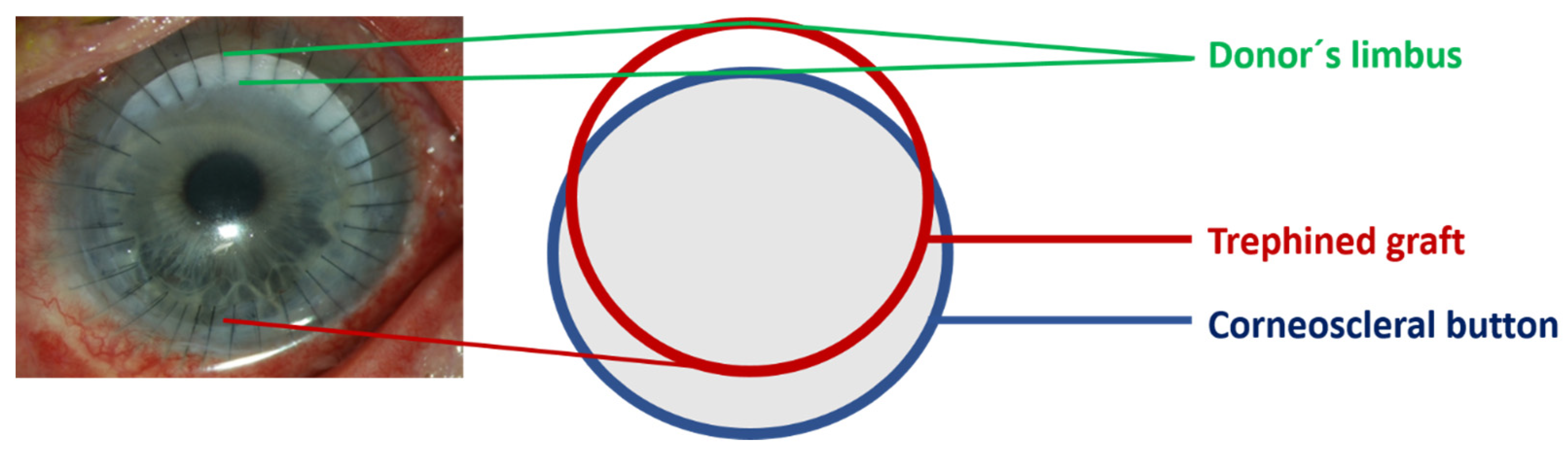
8]. Eccentric trepanation of the corneoscleral button results in a graft that includes LSCs covering approximately 40% of the circumference (
Figure 1). These grafts are then centrally fixed like conventional PK [
8]. The benefits of limbo-PK have been demonstrated in patients with complete limbal stem cell failure [
11]. Additionally, its indications have been expanded to include epithelial and stromal corneal dystrophies such as lattice and granular corneal dystrophy, which are associated with mutations in the transforming growth factor beta-induced (TGFBI) gene. In these cases, the aim of limbo-PK is to prevent or delay the recurrence of corneal dystrophy in the graft [
11].
The advantages of limbo-PK include the rapid restoration of visual acuity and the simultaneous transplantation of limbal stem cells in a single procedure without requiring special devices such as keratoprostheses. Furthermore, it can be performed in centers that already perform conventional keratoplasties without additional costs. However, the prognosis of this technique is limited due to a higher rate of immune-mediated graft rejection and the potential failure of the transplanted limbal stem cells, leading to recurrence of LSCD [
12,
13].
The aim of this study is to evaluate our experience with this surgical method in a German tertiary center.
2. Materials and Methods
2.1. Study Design
This retrospective cohort study was conducted at the Department of Ophthalmology of the Johannes Gutenberg University Mainz, Germany. We analyzed data from all consecutive patients who underwent limbo-PK between 2020 and 2024. According to local law (‘Landeskrankenhausgesetz’ §36, §37), no ethical approval was required for this retrospective review. This cohort study was conducted in accordance with the ethical principles for medical research involving human participants of the Declaration of Helsinki, developed by the World Medical Association.
Limbo-PK was performed in patients with LSCD stages IIB and III who had reduced vision due to corneal opacity and who, in our clinical assessment, had no realistic chance of success with PK alone without limbal transplantation. Most of these patients had undergone previous procedures, such as SLET or PK, which had been unsuccessful in the past. We present the patients’ characteristics, including preoperative procedures, pre- and postoperative VA, and further postoperative course of all patients in
Table 1.
The clinical diagnosis of LSCD was made according to anamnesis and clinical features typical of the disease. We collected the following baseline data of the recipients: age, gender, ocular history (especially regarding ocular concomitant diseases and the cause of LSCD), systemic and ocular medication, and the preoperative BCVA.
The primary endpoint was the epithelialization of the graft one year postoperatively and at the last follow-up. In addition, the postoperative best-corrected visual acuity (BCVA), ocular concomitant diseases, drug treatment, and the need for further eye surgery postoperatively were examined.
2.2. Donor Tissue
Donor tissue has been obtained from the Eye Bank of Rhineland-Palatinate, Mainz, Germany.
At the eye bank, the tissue has been stored at 34 °C in dextran-free cell culture medium (P04-09701 PanBiotech, Aidenbach, Germany) and transferred to 6% dextran-containing cell culture medium (P04-09702 PanBiotech, Aidenbach, Germany) at least 24 h before use. Both media were supplemented with gamma-irradiated fetal calf serum at 2% or 10% in the case of donors younger than 40 years (S-FBS-AU-035, Serana, Pessin, Germany). The diagnosis of malignant disease excludes donors for limbo-PK. The HLA-typed donor tissue was obtained from ETB-BISLIFE Multi Tissue Center (Haarlem, The Netherlands).
2.3. Surgery and Postoperative Care
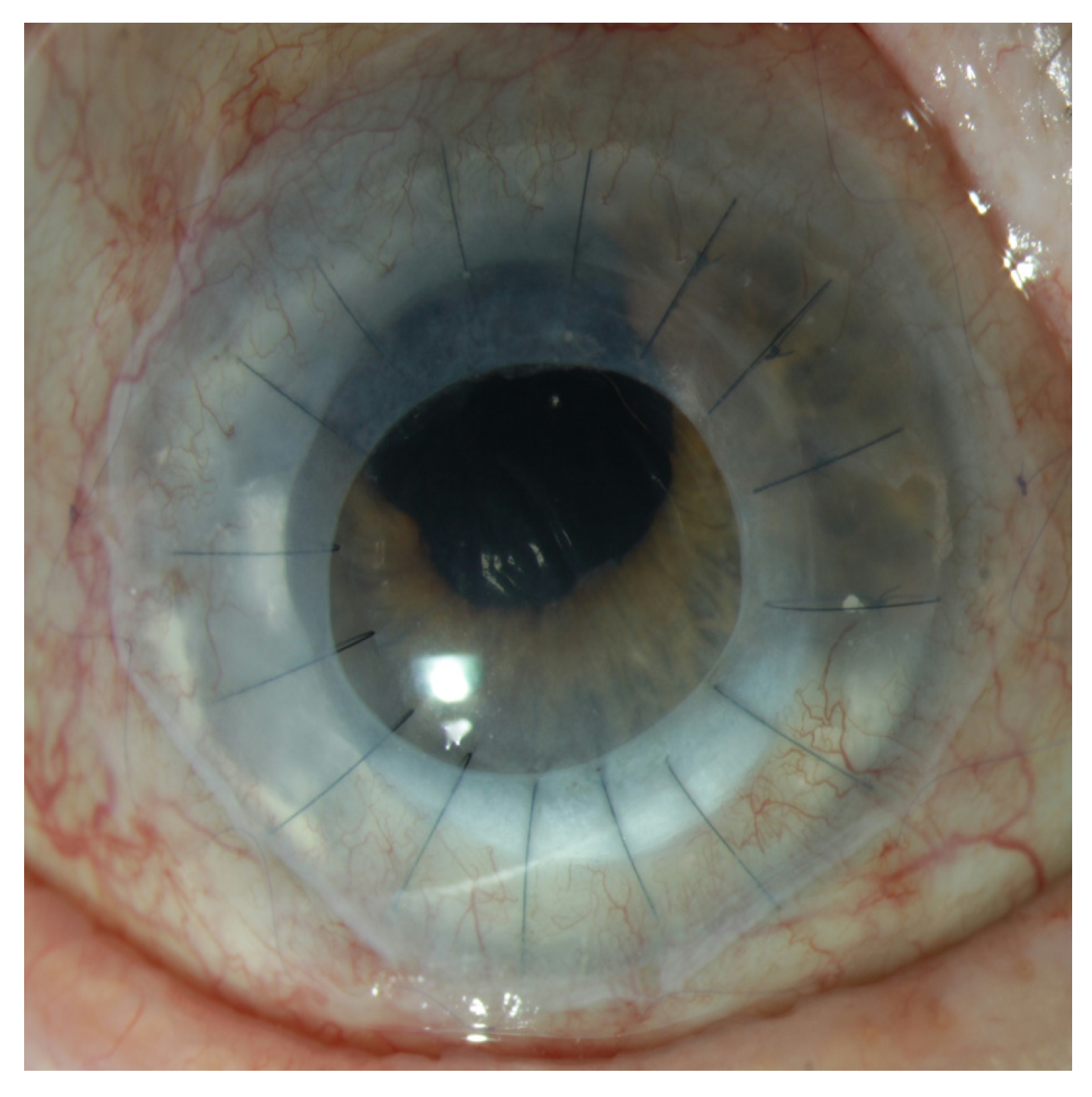
All patients underwent limbo-PK by the same surgeon under general anesthesia and were hospitalized for two to three nights. Eccentric trepanation was performed on the donor corneoscleral button (
Figure 1 and
Figure 2). The graft was then fixed centrally with 16 to 32 single nylon 10.0 stitches. Finally, an amniotic membrane (AM) patch with a diameter of 15 mm was placed over the cornea and sutured using 4 single 10-0 Vicryl stitches and one running suture. A bandage contact lens (Ø 20.5 mm) was placed on the ocular surface for the following 4 weeks.
All patients received topical postoperative immunosuppressive therapy (0.66 mg unpreserved dexamethasone dihydrogen phosphate disodium, 6 times a day) along with antibiotic eye drops (ofloxacin) for at least 1 week and artificial tears at least six times per day. In ten of the fourteen cases, systemic immunosuppressive therapy with either prednisolone (1 mg per kg body weight tapered by 20 mg every 5 days) and/or mycophenolatmofetil (MMF) (1 g twice daily) was taken. The decision regarding the application and method of systemic immunosuppression was made by the surgeon based on the clinical risk assessment.
During the period of immunosuppression, patients underwent regular check-ups and blood tests by their general practitioner to promptly identify any potential side effects of the medication. Unless serious side effects occurred, immunosuppression with MMF was continued for 3–6 months.
The recipients were followed up at regular intervals in our outpatient clinic and underwent slit lamp examination to detect symptoms of immune reactions, graft rejection, graft failure, or infection. Furthermore, intraocular pressure and fundus were examined at each visit.
2.4. Statistics
Descriptive statistics were conducted using absolute and relative frequencies for categorical data and median and range and mean and standard deviation for continuous data. The difference between pre- and postoperative BCVA was evaluated by the Wilcoxon test.
3. Results
3.1. Patients’ Characteristics
We included 14 eyes of 13 patients aged 59.8 ± 14.1 years (range: 39 to 83 years), 4 females. During the evaluated four-year period, we performed approximately 350 PKs. Indications for LSCD included chemical burns (n = 4), blast injuries (n = 4), thermal burns (n = 2), trauma (n = 1), graft-versus-host disease (n = 1), postoperative LSCD (n = 1), and ectrodactyly-ectodermal dysplasia (EEC) (n = 1). Five of the 13 patients suffered from bilateral LSCD. Eleven of the fourteen eyes had undergone multiple surgical procedures, including cataract surgeries (n = 8), penetrating keratoplasties (n = 10, four of them HLA-typed in #5, #9, #10 and #14), allogeneic simple limbal epithelial transplantations (allo-SLET, n = 5), amniotic membrane transplantations (AMT, n = 7), and cauterization (n = 1), prior to limbo-PK. Five eyes had secondary glaucoma.
The mean preoperative BCVA was 2.2 ± 0.6 logMAR (range: light perception to 0.7 logMAR), in these patients, limbo-keratoplasty was performed. Mean size of the limbo-keratoplasty-graft was 8.79 ± 0.68 mm (range: 7.25–9.5 mm). All Limbo-PKs were combined with AMT; three with additional cataract surgery and one with tarsorrhaphy. Postoperatively, all eyes received local immunosuppression, and 10 patients received additional systemic immunosuppression with either mycophenolate mofetil (MMF) only (n = 5), systemic prednisolone only (n = 2), or both (n = 3).
3.2. Outcome
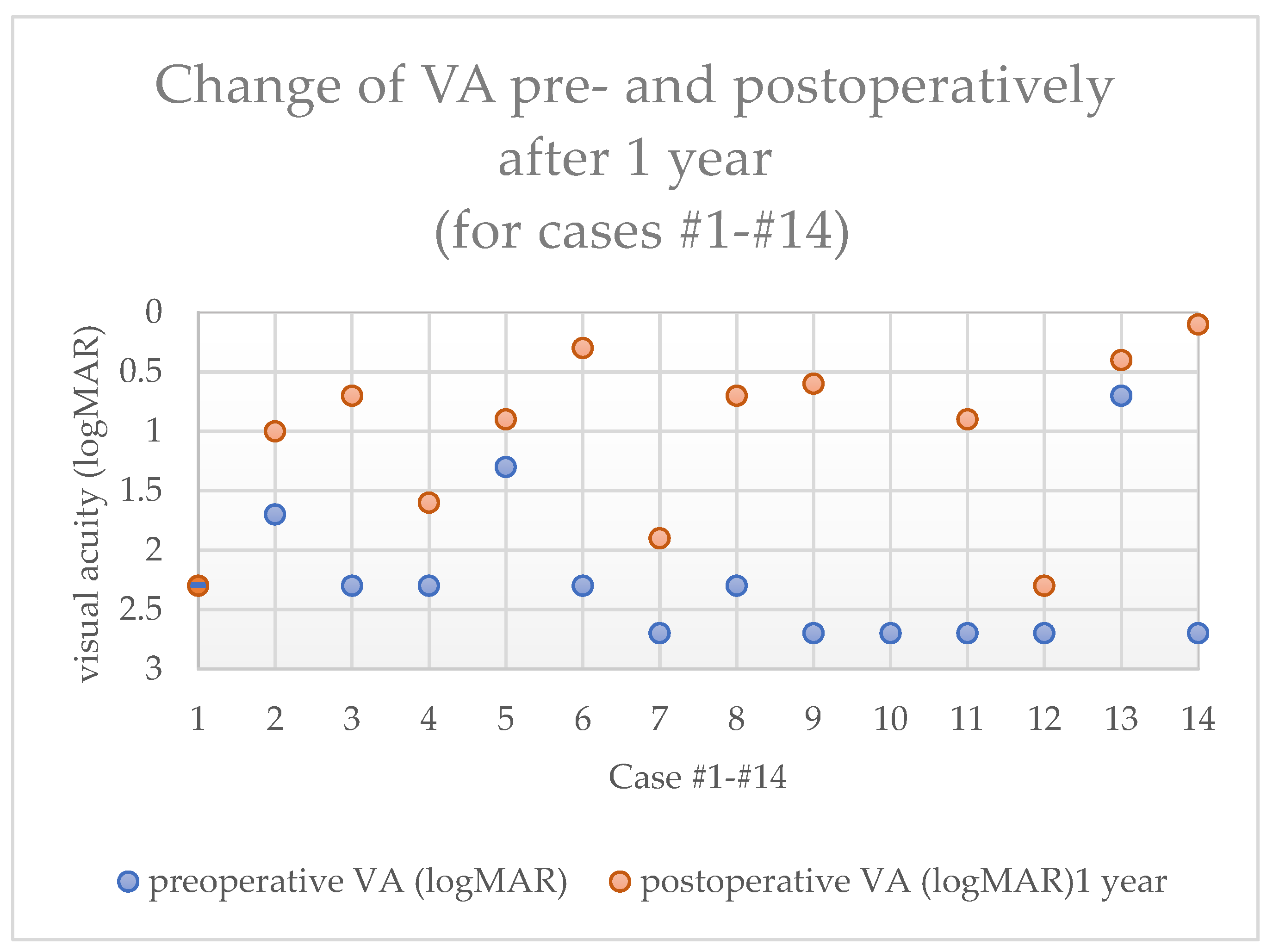
Visual acuity in the first five postoperative days was poor (hand movement to counting fingers) as expected, since AMT was performed in all cases. After dissolution of the amniotic membrane after 3–4 weeks, a rapid increase in visual acuity was observed in most cases. After one year, mean postoperative BCVA increased significantly to 1.0 ± 0.7 logMAR (range: 2.3 to 0.1,
p = 0.03) compared to preoperative BCVA (
Figure 3). The mean follow-up time of the last consultation in this study was 29.4 months ±12.6 (range: 10 to 52 months), and the mean BCVA at the last consultation was 1.6 ± 0.8 logMAR (range: 2.7 to 0.4).
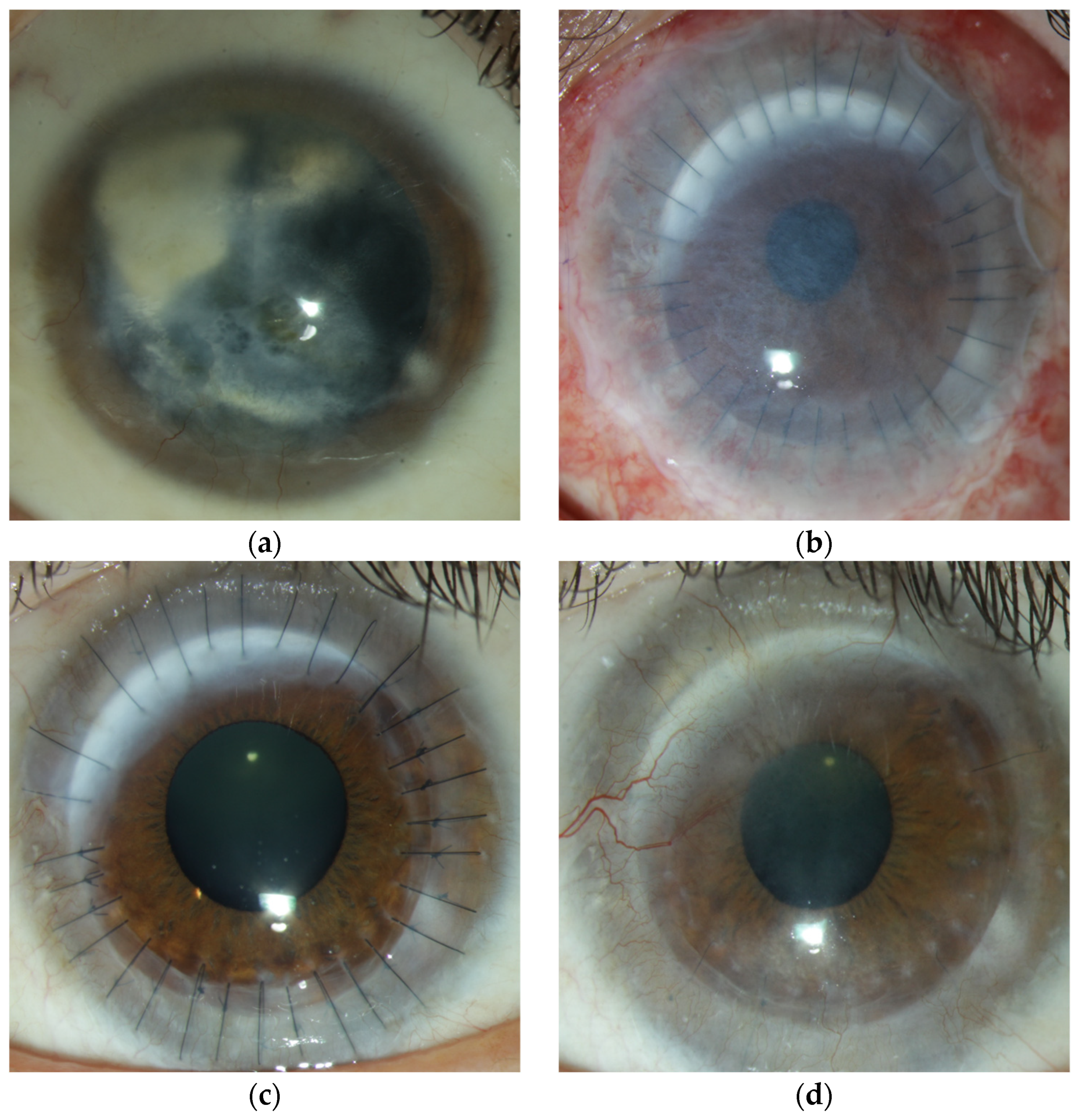
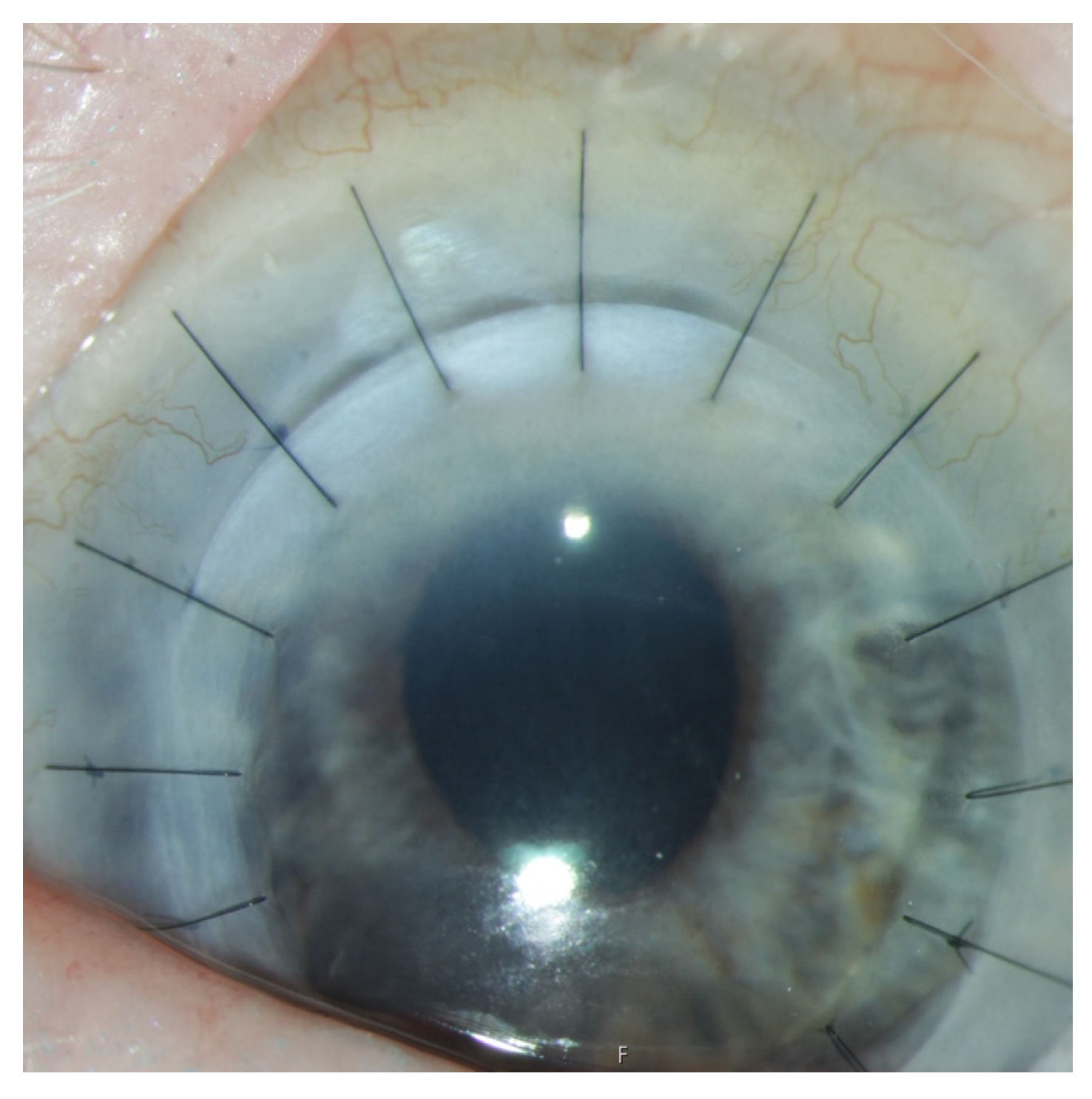
Eleven of the fourteen eyes showed a very satisfactory postoperative course. Especially patients without previous ophthalmologic surgery experienced an increase in visual acuity. The clinical course and treatment of eyes number 6 and 13 are shown in
Figure 4 and
Figure 5 as examples.
The re-epithelialization findings at the 1-year follow-up, and afterwards if longer follow-up was available, as well as the need for additional procedures, are listed in
Table 1 for each patient. At 1-year follow-up, 11 of 14 (78.6%) grafts were clear with closed epithelium.
The clinical course of the other three eyes is described below:
In eye number 5, two PKs had taken place in advance, and two AMTs had been necessary in the postoperative course due to a healing disorder of the epithelium. At the last follow-up (after 42 months), graft failure was observed with persisting corneal erosion, vascularization, and opacification, requiring Re-Re-Re-Limbo-PK + AMT. Eye number 7 showed corneal erosion and a beginning graft failure, which could be prevented by local steroid therapy. At the last follow-up (after 22 months), it showed signs of graft immune rejection and corneal erosion, since the patient had stopped applying the local immunosuppressive therapy. We recommended a Re-Limbo-PK but did not perform the surgery yet due to the patient’s wish.
In the case of eye number 12, nine PKs had already taken place in advance due to a severe GvHD with recurring LSCD. In the postoperative course of the described limbo-PK, the eye showed a new corneal ulcer and vascularization due to persisting LSCD, requiring Re-PK à chaud (after 6 months) and Re-Limbo-PK (after one year).
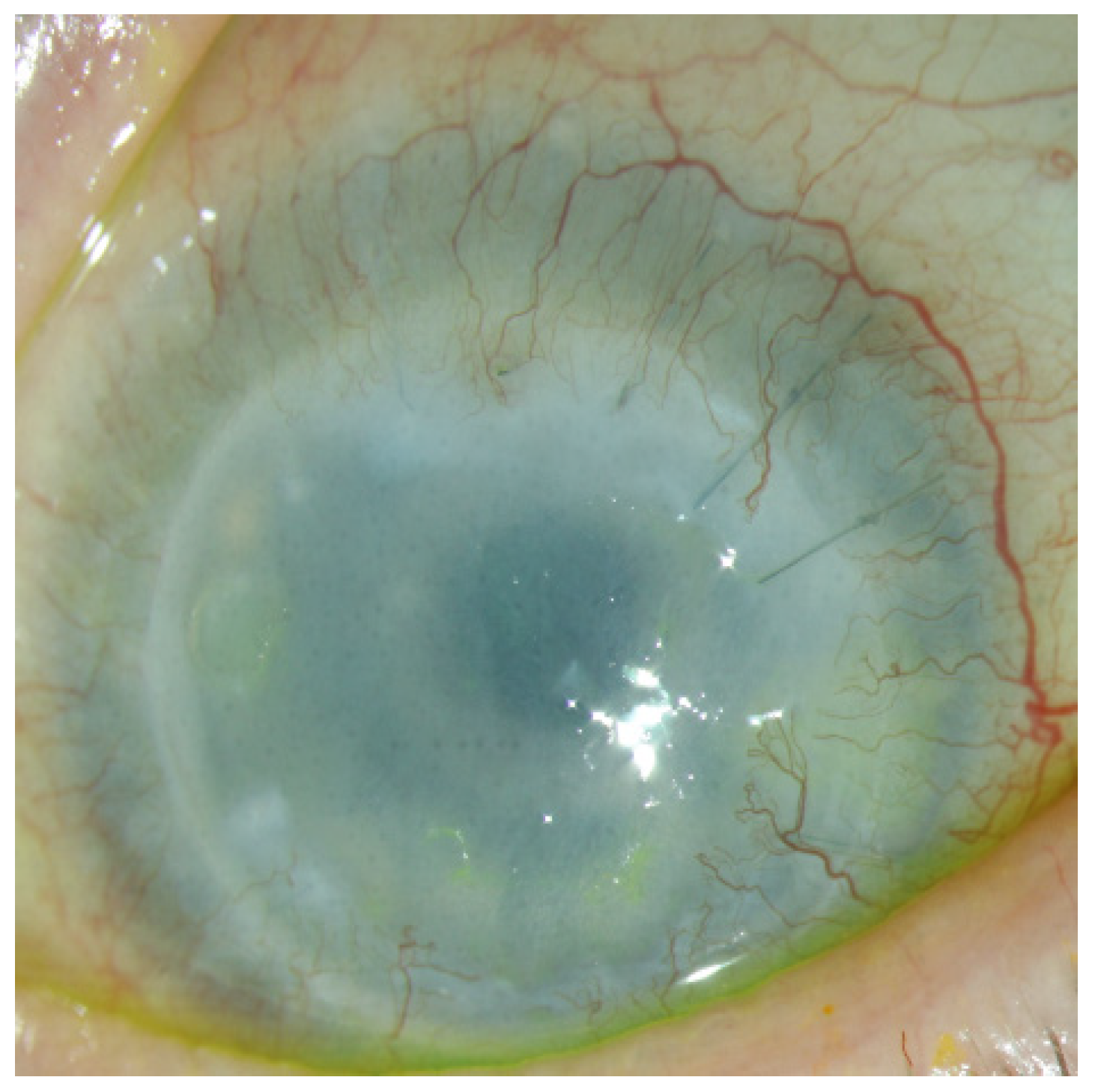
In total, at the last follow-up (10 to 52 months after PK), 9 of 14 eyes (64.3%) showed functioning grafts with closed epithelium. Five eyes showed epithelial defects due to graft failure: two eyes (number 7 and 10) due to graft immune rejection, and three (5, 12, and 14) due to recurring LSCD. In the two eyes (numbers 7 and 10), we suspected immune rejection with corneal edema and deterioration of the VA after limbo-PK. Both patients had ended immunosuppressive therapy early. In eye number 10, VA increased after reapplying immunosuppressive therapy, and no further surgeries were necessary. In eye number 7, graft rejection could not be prevented, and HLA-typed Re-Limbo-PK in combination with cataract surgery and AMT was recommended. Number 14 had already received four PKs in advance and showed a clear graft and satisfactory VA (0.1 logMAR) until the patient stopped the ophthalmologic check-ups in our clinic and presented again after 39 months with a cloudy and vascularized transplant due to recurrence of LSCD (
Figure 6).
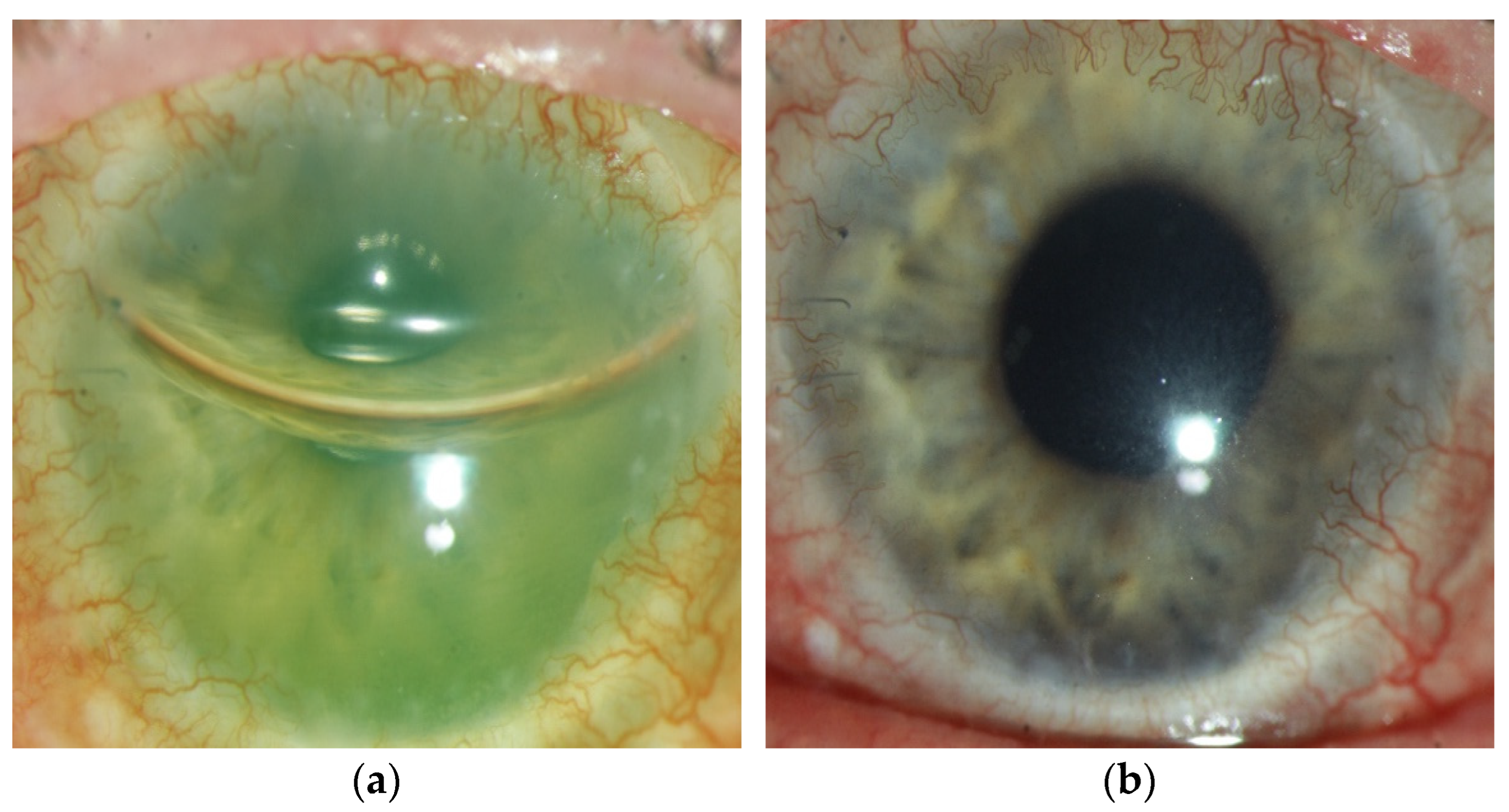
Eye number 2 showed a closed epithelium, but graft failure with corneal edema due to endothelial decompensation, requiring a DMEK. He showed a clear graft after DMEK (
Figure 7).
4. Discussion
The aim of our study was to report on and to evaluate our clinical practice with limbo-PK. Compared to older methods of limbo-PK, where oversized grafts with circular limbal stem cells were usually implanted, the newer, central limbo-PK we performed is less traumatic [
14]. Due to the smaller diameter of the transplant and only partial transplantation of stem cells, fewer immune reactions are provoked, and satisfactory postoperative results can be achieved [
15]. The mean size of the corneal graft was 8.8 mm in our study, which is well comparable to the study of Reinhard et al., who initially used this new technique in 1996. In their study of 1999, they described their grafts with diameters between 7.7 and 10.0 mm [
8].
Nevertheless, postoperative outcome varies greatly between different publications that have been issued since then. These independent nonrandomized case series showed heterogeneous compositions of the patient population regarding the extent of stem cell damage, drug therapy, genetic background, time of surgery, surgical method, and follow-up.
When comparing the results of our (also heterogeneous) cohort to those described in the literature, we were able to achieve satisfactory postoperative results after central limbo-PK with a closed epithelium in 79% of eyes after one year. After a mean follow-up of 27.4 months, 64.3% of eyes showed a still-functioning graft. In a cohort study with 206 eyes, Lang et al. report outcomes after Limbo-PK comparable to ours. After 2.5 years, a clear graft could be detected in 80% of cases after limbo-PK due to LSCD [
16]. What is outstanding about this study is the long follow-up period: After 19,1 years, no clear graft was documented in the patient group that received Limbo-PK due to LSCD. Patients with corneal dystrophies showed clear graft survival with 90% after 5 years [
16].
In contrast to this satisfactory outcome after 2.5 years, Reinhard et al. found postoperative graft failure in 18 of 25 eyes in their monocentric cohort study from 2004 after homologous penetrating central limbo-keratoplasty (HPCLK) [
8]. In this study, too, the limbo-PK took place due to LSCD, and the follow-up period of 12–41 months was comparable to that of our study, which ranged from 10 to 52 months. Although all patients in the study of Reinhard et al. received systemic immunosuppression with cyclosporin A (CSA) for at least one year postoperatively, immune rejection and resulting surface disorders could not be prevented. While the short-term results of the study were very promising and the majority of transplants were clear after 9.6 months, the high rate of graft failure became apparent at the end of the follow-up (after 2 months at the earliest and 29 months at the latest) [
8]. Our study showed very good postoperative results after one year, but during further follow-up, the number of cases with epithelial healing disorders with recurrence of LSCD or graft rejections rose to 5 of 14 eyes after a period of 29.4 ± 12.7 months. This development suggests that, over time, the reservoir of transplanted limbal stem cells decreases and is not able to generate sufficient epithelial cells, leading to new epithelial defects. We observed graft rejection only in two patients who discontinued immunosuppressive therapy.
From an immunological point of view, the cornea occupies a kind of special position within transplantation medicine. Its risk of rejection is often described as comparatively low compared to that of other organs. This is due to the avascularity of the cornea. Absence of vascular and lymphatic vessels limits contact with the recipient’s immune system [
17]. Furthermore, the anterior chamber fluid fulfills an immunosuppressive function: Anterior Chamber Associated Immune Deviation (ACAID) suppresses cellular components of a type IV immune reaction (late-type immune reaction) against the transplanted tissue [
18].
Postoperatively, the transplants are endangered by immune reactions against both the endothelial cells and the limbal stem cells [
8]. Immune rejection continues to be the primary cause of graft failure after “conventional” PK (without the limbus), responsible for more than half of graft loss cases. The survival rate in inflamed, vascularized host beds, so-called high-risk (HR) corneal transplantation—including Limbo-PK—decreases to below 35%.
Therefore, it seems logical that in cases where LSCs are transplanted due to LSCD, the recipient’s immune response to the donor corneal stem cells should be suppressed. Lifelong topical and even systemic immunosuppressants may be administered prophylactically to inhibit or regress corneal lymphangiogenesis and hemangiogenesis and to prevent immune-mediated graft rejection, if no undesirable side effects occur [
19,
20].
In the study of Reinhard et al., systemic treatment with 60–100 mg of fluocortolone was administered for three weeks postoperatively and given in the postoperative course if an immune reaction against a graft was suspected. CSA was administered to every patient for at least one year. Topical corticosteroids (prednisolone-21-acetate 1% eye drops) were administered in doses of five to seven drops daily, three drops over the long term. They observed 18 graft failures in their study of 25 patients. A total of 15 of these patients were still receiving systemic CSA at the time of graft failure. Reasons for the 18 graft failures included severe surface disorders, endothelial immune reactions, and a combination of surface disorders and endothelial immune reactions [
9].
The authors of this publication suspected that the frequency of graft failure was related to the potency of the immunosuppressive postoperative medication and to the therapy adherence of the patients. This thesis is supported by our findings: We administered more potent systemic immunosuppressants (either mycophenolate mofetil, Decortin H, or both) for three to six months to our patients postoperatively and achieved significantly lower postoperative rejection rates. It is therefore even more important to provide patients with consistent education about the necessity of local immunosuppressive therapy. Contrary to the authors’ belief that postoperative systematic immunosuppression is only justified in high-risk patients after limbo KPL, not only our study, but also common literature shows that a lower postoperative rejection rate can be achieved also for non-high-risk patients with long-term systematic immunosuppression. Birnbaum et al. showed a statistically significant, stronger effect of MMF compared with CSA in preventing immune reactions after high-risk keratoplasty [
21]. Furthermore, our study confirmed Decortin H as a sufficient systemic immunosuppressive single therapy for improving transplant survival: Four of our 14 patients were prescribed Decortin H only, and three of these patients showed a satisfactory postoperative outcome with closed epithelium.
A combination of limbo-PK with mitomycin C, amniotic membrane, and conjunctivoplasty is suggested by Eberwein et al. in their report on 20 cases with bilateral LSCD [
15]. They were able to achieve overall clear grafts and graft survival in 14 out of 20 cases. Thus, the surgical success rate of their study was 70%. Measured by the rate of necessary reoperations after limbo PK in our study, only four cases showed either epithelial healing disorder, requiring repeated amniotic membrane suturing, endothelial decompensation requiring DMEK, or vascularization of the cornea requiring cauterization of vessels. Two patients experienced a graft failure, whereas one of the patients did not apply the topical corticosteroids as prescribed. One patient did not take the systemic steroid therapy as prescribed and showed graft immune rejection after six months. We achieved these results with a combination of limbo-PK with amniotic membrane transplantation for every patient and achieved better surgical results compared to Reinhard et al., who performed simple limbo-PK without AMT in most cases.
It is also important to note that Reinhard et al. did not perform any HLA-typed limbo-PK in their study, as this work reviewed the early results of this surgical procedure. While rejection prophylaxis through matching for human leukocyte antigens (HLA) is controversial in “isolated” PK, meanwhile, it has been shown to improve graft survival in limbo-PK, especially in specific, high-risk cases [
12]. However, the low availability of corneal transplants, in general, as well as the additional waiting time and low HLA matchability are reasons for the rare use of HLA-matched transplants, in general [
22]. Four of our 14 cases received HLA-typed grafts. Three of these cases were chosen for HLA typing because they had already experienced graft failure in the past. Although the patients who received HLA-typed transplants were considered “high-risk keratoplasty”, two of the four eyes (eyes 9 and 10) showed a very satisfactory postoperative course with closed epithelium after one year and at the time of the last follow-up (12 and 35 months). They did not require reoperation and showed a clear transplant and a satisfactory postoperative course. However, eyes numbered 5 and 14 required reoperations due to graft failure and persisting corneal erosion and corneal ulcer.
Ten of the fourteen eyes in our study achieved a VA of at least 1.0 logMAR one year postoperatively. At the time of the last follow-up, five of the 14 eyes achieved a VA of at least 1.0 logMAR. Lang et al. found a vision better than 20/200 ft (equivalent to 1.0 logMAR) in 50% of their 150 patients after 3–7 years, which is comparable to the results after one year in our study. Lang et al. found rejection-free graft survival of 43% for eye burns, 25% for congenital aniridia, 30% for inflammatory disease, and 68% for all other indications [
12]. We suspected graft rejection in one case (eye number 7), which received Limbo-PK due to a thermal burn. However, in this case, we do not attribute the poor postoperative course to the pre-diagnosis, but to premature discontinuation of steroid therapy. Other grafts in the study remained clear for more than four years, which correlates with the prescribed median graft survival in the literature of 3 to 4 years [
12,
16].
We observed a relationship between preoperative factors and poor postoperative graft survival: Patients with previous PK in their medical history appeared to have a higher risk of graft failure. In our study, more than half of the eyes that had already undergone at least one PK prior to surgery showed either graft failure or a lack of epithelial closure after Limbo-PK. Furthermore, the diagnosis of GvHD seemed to be a high-risk factor for postoperative graft failure. The patient suffering from severe GvHD had already experienced eight PKs in his past and showed a particularly poor postoperative outcome with a renewed perforation after his Limbo-PK. In cases of GvHD or multiple ophthalmological operations in the medical history, HLA-typed limbo-PK or keratoprosthesis should therefore be considered. In the case of eye number 12, HLA-typed limbo-PK could not be waited for due to a perforation of the graft. However, most operations were performed due to LSCD following trauma, blast injuries, or thermal/chemical burns. For these cases, no correlation with the postoperative outcome could be found in the cohort.