The Role of Tyrosine and C-Reactive Protein in COPD Exacerbations


Abstract
1. Introduction
2. Materials and Methods
2.1. Patients and Study Design
2.2. Clinical Variables Related to COPD
2.3. Blood Sampling and Examination
2.4. Follow-Up Program
2.5. UPLC-Based Measurement
2.6. Statistical Analysis
3. Results
3.1. Baseline Characteristics
3.2. Identifying Amino Acids with Potential Prognostic Value
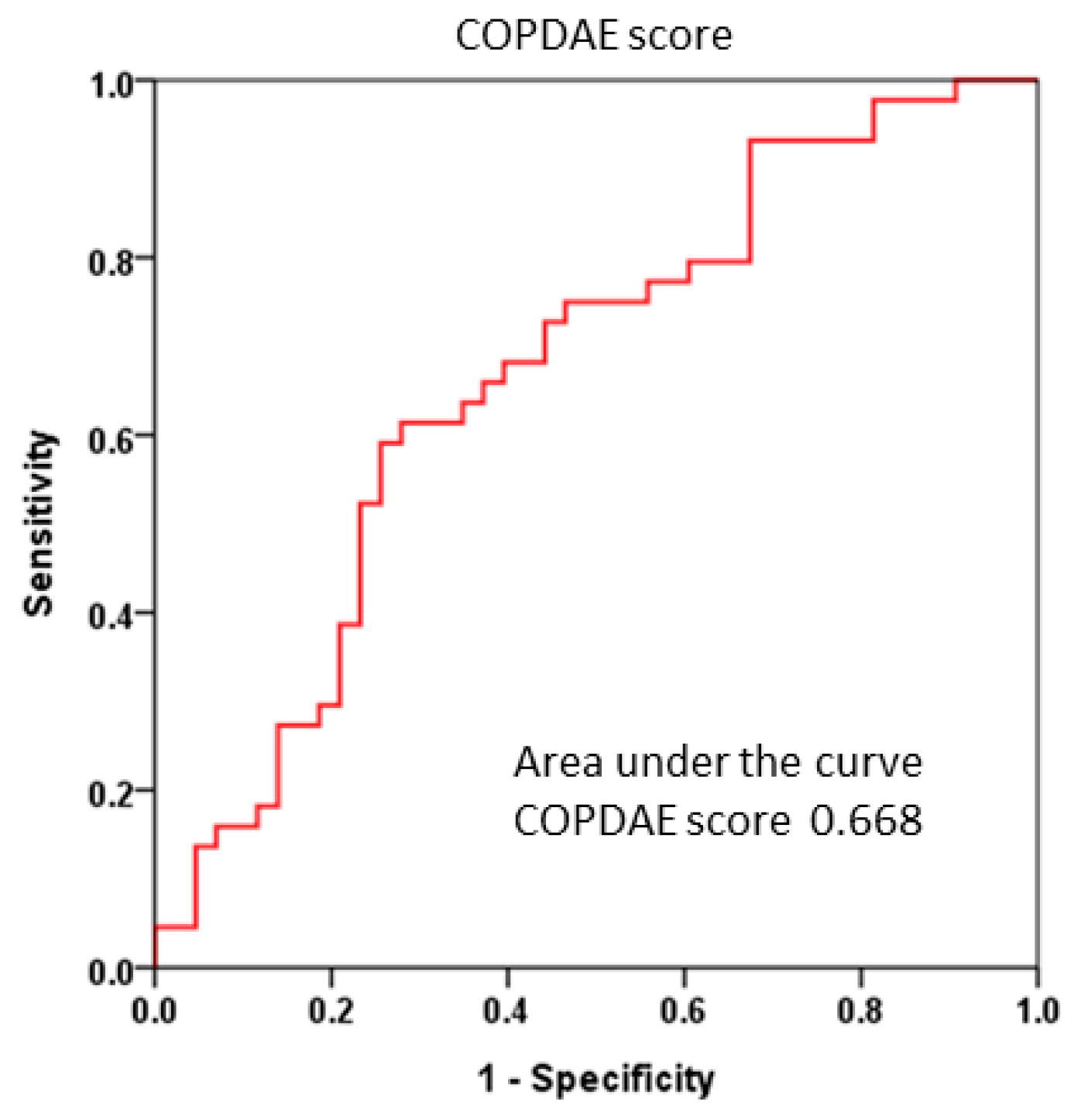
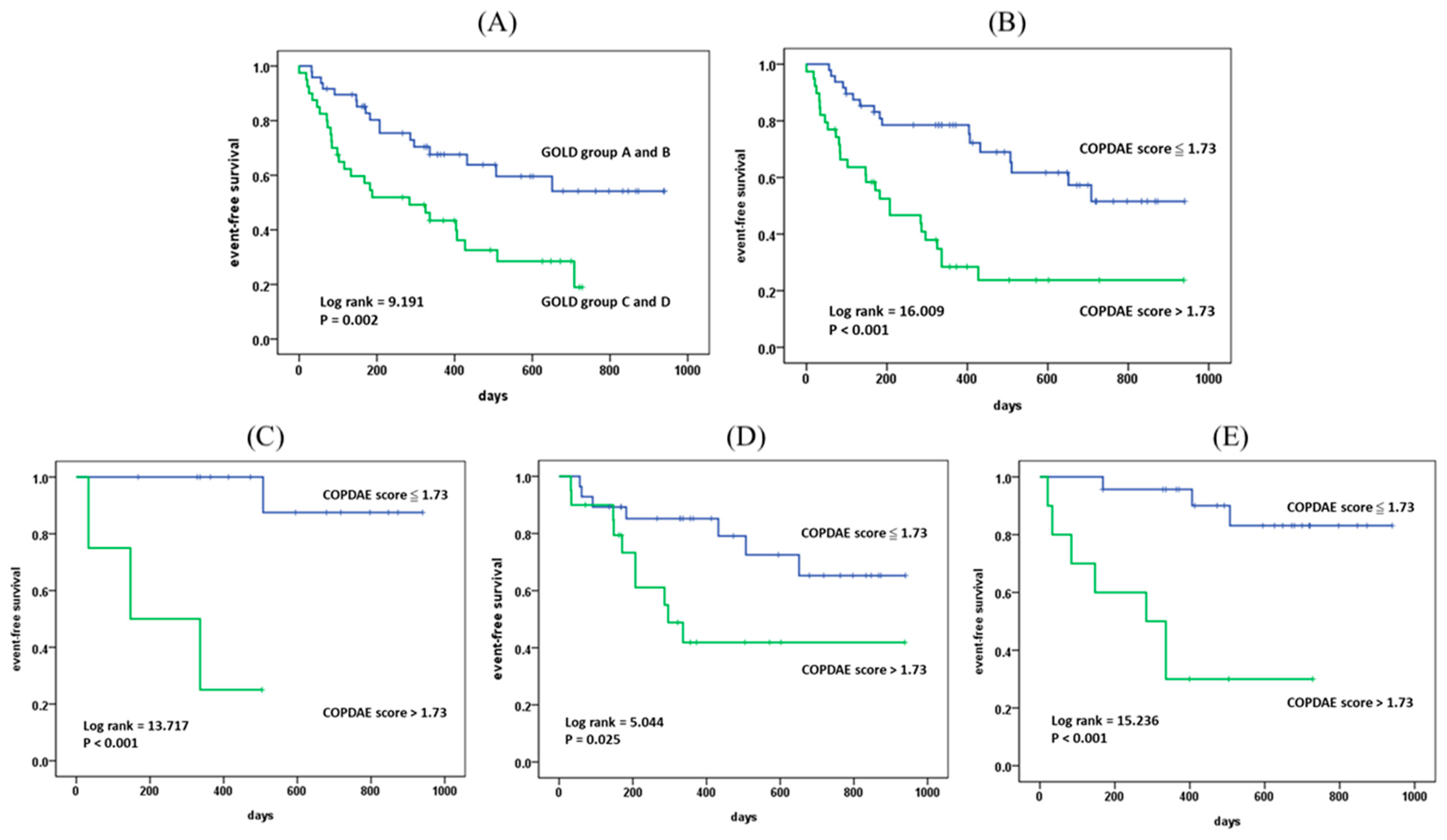
3.3. Prognostic Value of COPDAE Score and Existing Parameters for COPD AE
4. Discussion
5. Conclusions
Author Contributions
Funding
Institutional Review Board Statement
Informed Consent Statement
Data Availability Statement
Conflicts of Interest
Abbreviations
| AUC | Area Under the Curve |
| BMI | body mass index |
| CAT | chronic obstructive lung disease assessment test |
| CIs | Confidence Intervals |
| COPD | Chronic Obstructive Pulmonary Disease |
| CRP | C-reactive protein |
| CV | coefficients of variation |
| EDTA | Ethylenediaminetetraacetic Acid |
| FEV1 | forced expiratory volume in one second |
| 6MWD | six-minute walking distance |
| GOLD | Global Initiative for Chronic Obstructive Lung Disease |
| HPLC | high-performance liquid chromatography |
| HRs | Hazard Ratios |
| hsCRP | high-sensitivity C-reactive protein |
| ICS | inhaled corticosteroid |
| LABA | long-acting β adrenoceptor agonists |
| LAMA | long-acting muscarinic antagonists |
| L-DOPA | L-3,4-dihydroxyphenylalanine |
| mMRC | modified Medical Research Council questionnaire |
| NO | nitric oxide |
| ROC | Receivers Operating Characteristic |
| ROS | Reactive Oxygen Species |
| SpO2 | oxygen saturation |
| UPLC | ultra-performance liquid chromatography |
References
- Lozano, R.; Naghavi, M.; Foreman, K.; Lim, S.; Shibuya, K.; Aboyans, V.; Abraham, J.; Adair, T.; Aggarwal, R.; Ahn, S.Y. Global and regional mortality from 235 causes of death for 20 age groups in 1990 and 2010: A systematic analysis for the Global Burden of Disease Study 2010. Lancet 2012, 380, 2095–2128. [Google Scholar] [CrossRef] [PubMed]
- Burge, S.; Wedzicha, J. COPD exacerbations: Definitions and classifications. Eur. Respir. J. 2003, 21, 46s–53s. [Google Scholar] [CrossRef] [PubMed]
- Anthonisen, N.; Manfreda, J.; Warren, C.; Hershfield, E.; Harding, G.; Nelson, N. Antibiotic therapy in exacerbations of chronic obstructive pulmonary disease. Ann. Intern. Med. 1987, 106, 196–204. [Google Scholar] [CrossRef] [PubMed]
- Hunter, L.C.; Lee, R.J.; Butcher, I.; Weir, C.; Fischbacher, C.; McAllister, D.; Wild, S.; Hewitt, N.; Hardie, R. Patient characteristics associated with risk of first hospital admission and readmission for acute exacerbation of chronic obstructive pulmonary disease (COPD) following primary care COPD diagnosis: A cohort study using linked electronic patient records. BMJ Open 2016, 6, e009121. [Google Scholar] [CrossRef]
- Wageck, B.; Cox, N.S.; Holland, A.E. Recovery following acute exacerbations of chronic obstructive pulmonary disease—A review. COPD J. Chronic Obstr. Pulm. Dis. 2019, 16, 93–103. [Google Scholar] [CrossRef]
- Hoogendoorn, M.; Hoogenveen, R.T.; Rutten-van Mölken, M.P.; Vestbo, J.; Feenstra, T.L. Case fatality of COPD exacerbations: A meta-analysis and statistical modelling approach. Eur. Respir. J. 2011, 37, 508–515. [Google Scholar] [CrossRef]
- Burgel, P.-R.; Nesme-Meyer, P.; Chanez, P.; Caillaud, D.; Carré, P.; Perez, T.; Roche, N. Cough and sputum production are associated with frequent exacerbations and hospitalizations in COPD subjects. Chest 2009, 135, 975–982. [Google Scholar] [CrossRef]
- Niewoehner, D.E.; Lokhnygina, Y.; Rice, K.; Kuschner, W.G.; Sharafkhaneh, A.; Sarosi, G.A.; Krumpe, P.; Pieper, K.; Kesten, S. Risk indexes for exacerbations and hospitalizations due to COPD. Chest 2007, 131, 20–28. [Google Scholar] [CrossRef]
- Chen, Y.-W.R.; Leung, J.M.; Sin, D.D. A systematic review of diagnostic biomarkers of COPD exacerbation. PLoS ONE 2016, 11, e0158843. [Google Scholar] [CrossRef]
- Groenewegen, K.H.; Postma, D.S.; Hop, W.C.; Wielders, P.L.; Schlösser, N.J.; Wouters, E.F.; Group, C.S. Increased systemic inflammation is a risk factor for COPD exacerbations. Chest 2008, 133, 350–357. [Google Scholar] [CrossRef]
- Gumus, A.; Altintas, N.; Cinarka, H.; Kirbas, A.; Hazıroglu, M.; Karatas, M.; Sahin, U. Soluble urokinase-type plasminogen activator receptor is a novel biomarker predicting acute exacerbation in COPD. Int. J. Chron. Obstruct. Pulmon. Dis. 2015, 10, 357–365. [Google Scholar] [PubMed][Green Version]
- Vedel-Krogh, S.; Nielsen, S.F.; Lange, P.; Vestbo, J.; Nordestgaard, B.G. Blood eosinophils and exacerbations in chronic obstructive pulmonary disease. The Copenhagen General Population Study. Am. J. Respir. Crit. Care Med. 2016, 193, 965–974. [Google Scholar] [CrossRef] [PubMed]
- Hurst, J.R.; Vestbo, J.; Anzueto, A.; Locantore, N.; Müllerova, H.; Tal-Singer, R.; Miller, B.; Lomas, D.A.; Agusti, A.; MacNee, W. Susceptibility to exacerbation in chronic obstructive pulmonary disease. N. Engl. J. Med. 2010, 363, 1128–1138. [Google Scholar] [CrossRef] [PubMed]
- Mirza, S.; Clay, R.D.; Koslow, M.A.; Scanlon, P.D. COPD guidelines: A review of the 2018 GOLD report. Mayo Clin. Proc. 2018, 93, 1488–1502. [Google Scholar] [CrossRef]
- Beger, R.D.; Dunn, W.; Schmidt, M.A.; Gross, S.S.; Kirwan, J.A.; Cascante, M.; Brennan, L.; Wishart, D.S.; Oresic, M.; Hankemeier, T. Metabolomics enables precision medicine: “A white paper, community perspective”. Metabolomics 2016, 12, 149. [Google Scholar] [CrossRef]
- Ran, N.; Pang, Z.; Gu, Y.; Pan, H.; Zuo, X.; Guan, X.; Yuan, Y.; Wang, Z.; Guo, Y.; Cui, Z. An updated overview of metabolomic profile changes in chronic obstructive pulmonary disease. Metabolites 2019, 9, 111. [Google Scholar] [CrossRef]
- Yu, B.; Flexeder, C.; McGarrah, R.W., III; Wyss, A.; Morrison, A.C.; North, K.E.; Boerwinkle, E.; Kastenmüller, G.; Gieger, C.; Suhre, K. Metabolomics identifies novel blood biomarkers of pulmonary function and COPD in the general population. Metabolites 2019, 9, 61. [Google Scholar] [CrossRef]
- Labaki, W.W.; Gu, T.; Murray, S.; Curtis, J.L.; Yeomans, L.; Bowler, R.P.; Barr, R.G.; Comellas, A.P.; Hansel, N.N.; Cooper, C.B. Serum amino acid concentrations and clinical outcomes in smokers: SPIROMICS metabolomics study. Sci. Rep. 2019, 9, 11367. [Google Scholar] [CrossRef]
- Kuo, W.-K.; Liu, Y.-C.; Chu, C.-M.; Hua, C.-C.; Huang, C.-Y.; Liu, M.-H.; Wang, C.-H. Amino acid-based metabolic indexes identify patients with chronic obstructive pulmonary disease and further discriminates patients in advanced BODE stages. Int. J. Chron. Obstruct. Pulmon. Dis. 2019, 14, 2257–2266. [Google Scholar] [CrossRef]
- Kennedy, A.D.; Wittmann, B.M.; Evans, A.M.; Miller, L.A.; Toal, D.R.; Lonergan, S.; Elsea, S.H.; Pappan, K.L. Metabolomics in the clinic: A review of the shared and unique features of untargeted metabolomics for clinical research and clinical testing. J. Mass Spectrom. 2018, 53, 1143–1154. [Google Scholar] [CrossRef]
- Sheliya, K.; Shah, K. Ultra Performance Liquid Chromatography (UPLC): A modern chromatography technique. Pharma Sci. Monit. 2013, 4, 78–99. [Google Scholar]
- Zhao, H.; Dennery, P.A.; Yao, H. Metabolic reprogramming in the pathogenesis of chronic lung diseases, including BPD, COPD, and pulmonary fibrosis. Am. J. Physiol.-Lung Cell. Mol. Physiol. 2018, 314, L544–L554. [Google Scholar] [CrossRef] [PubMed]
- Marin, J.M.; Carrizo, S.J.; Casanova, C.; Martinez-Camblor, P.; Soriano, J.B.; Agusti, A.G.; Celli, B.R. Prediction of risk of COPD exacerbations by the BODE index. Respir. Med. 2009, 103, 373–378. [Google Scholar] [CrossRef] [PubMed]
- Dempsey, T.M.; Scanlon, P.D. Pulmonary function tests for the generalist: A brief review. Mayo Clin. Proc. 2018, 93, 763–771. [Google Scholar] [CrossRef] [PubMed]
- Bestall, J.; Paul, E.; Garrod, R.; Garnham, R.; Jones, P.; Wedzicha, J. Usefulness of the Medical Research Council (MRC) dyspnoea scale as a measure of disability in patients with chronic obstructive pulmonary disease. Thorax 1999, 54, 581–586. [Google Scholar] [CrossRef]
- Jones, P.; Harding, G.; Berry, P.; Wiklund, I.; Chen, W.; Leidy, N.K. Development and First Validation of the COPD Assessment Test. Eur. Respir. J. 2009, 34, 648–654. [Google Scholar] [CrossRef]
- ATS Committee on Proficiency Standards for Clinical Pulmonary Function Laboratories. ATS statement: Guidelines for the six-minute walk test. Am. J. Respir. Crit. Care Med. 2002, 166, 111–117. [Google Scholar] [CrossRef]
- Norman, K.; Stobäus, N.; Gonzalez, M.C.; Schulzke, J.-D.; Pirlich, M. Hand grip strength: Outcome predictor and marker of nutritional status. Clin. Nutr. 2011, 30, 135–142. [Google Scholar] [CrossRef]
- Singh, D.; Agusti, A.; Anzueto, A.; Barnes, P.J.; Bourbeau, J.; Celli, B.R.; Criner, G.J.; Frith, P.; Halpin, D.M.G.; Han, M.; et al. Global Strategy for the Diagnosis, Management, and Prevention of Chronic Obstructive Lung Disease: The GOLD science Committee Report 2019. Eur. Respir. J. 2019, 53, 1900164. [Google Scholar] [CrossRef]
- Patel, N. An update on COPD prevention, diagnosis, and management: The 2024 GOLD Report. Nurse Pract. 2024, 49, 29–36. [Google Scholar] [CrossRef]
- Perng, D.-W.; Chen, P.-K. The relationship between airway inflammation and exacerbation in chronic obstructive pulmonary disease. Tuberc. Respir. Dis. 2017, 80, 325. [Google Scholar] [CrossRef] [PubMed]
- Hogg, J.C.; Chu, F.; Utokaparch, S.; Woods, R.; Elliott, W.M.; Buzatu, L.; Cherniack, R.M.; Rogers, R.M.; Sciurba, F.C.; Coxson, H.O. The nature of small-airway obstruction in chronic obstructive pulmonary disease. N. Engl. J. Med. 2004, 350, 2645–2653. [Google Scholar] [CrossRef] [PubMed]
- Pesci, A.; Balbi, B.; Majori, M.; Cacciani, G.; Bertacco, S.; Alciato, P.; Donner, C. Inflammatory cells and mediators in bronchial lavage of patients with chronic obstructive pulmonary disease. Eur. Respir. J. 1998, 12, 380–386. [Google Scholar] [CrossRef] [PubMed]
- Lu, Z.; Huang, W.; Wang, L.; Xu, N.; Ding, Q.; Cao, C. Exhaled nitric oxide in patients with chronic obstructive pulmonary disease: A systematic review and meta-analysis. Int. J. Chron. Obstruct. Pulmon. Dis. 2018, 13, 2695–2705. [Google Scholar] [CrossRef]
- de Groot, L.E.; Van Der Veen, T.A.; Martinez, F.O.; Hamann, J.; Lutter, R.; Melgert, B.N. Oxidative stress and macrophages: Driving forces behind exacerbations of asthma and chronic obstructive pulmonary disease? Am. J. Physiol. Lung Cell Mol. Physiol. 2019, 316, L369–L384. [Google Scholar] [CrossRef]
- Becker, S.; Soukup, J.; Gallagher, J. Differential particulate air pollution induced oxidant stress in human granulocytes, monocytes and alveolar macrophages. Toxicol. Vitr. 2002, 16, 209–218. [Google Scholar] [CrossRef]
- Fahn, H.-J.; Wang, L.-S.; Kao, S.-H.; Chang, S.-C.; Huang, M.-H.; Wei, Y.-H. Smoking-associated mitochondrial DNA mutations and lipid peroxidation in human lung tissues. Am. J. Respir. Cell Mol. Biol. 1998, 19, 901–909. [Google Scholar] [CrossRef]
- Barnes, P.J. Oxidative stress-based therapeutics in COPD. Redox Biol. 2020, 33, 101544. [Google Scholar] [CrossRef]
- Nagatsu, T.; Levitt, M.; Udenfriend, S. Tyrosine hydroxylase: The initial step in norepinephrine biosynthesis. J. Biol. Chem. 1964, 239, 2910–2917. [Google Scholar] [CrossRef]
- Shahnawaz Khan, M.; Tabrez, S.; Priyadarshini, M.; Priyamvada, S.; M Khan, M. Targeting Parkinson’s-tyrosine hydroxylase and oxidative stress as points of interventions. CNS Neurol. Disord. Drug Targets 2012, 11, 369–380. [Google Scholar] [CrossRef]
- Ipson, B.R.; Fisher, A.L. Roles of the tyrosine isomers meta-tyrosine and ortho-tyrosine in oxidative stress. Ageing Res. Rev. 2016, 27, 93–107. [Google Scholar] [CrossRef]
- Vivekanandan-Giri, A.; Byun, J.; Pennathur, S. Quantitative analysis of amino acid oxidation markers by tandem mass spectrometry. Methods Enzymol. 2011, 491, 73–89. [Google Scholar]
- Karadag, F.; Kirdar, S.; Karul, A.B.; Ceylan, E. The value of C-reactive protein as a marker of systemic inflammation in stable chronic obstructive pulmonary disease. Eur. J. Intern. Med. 2008, 19, 104–108. [Google Scholar] [CrossRef]
- Daniels, J.M.; Schoorl, M.; Snijders, D.; Knol, D.L.; Lutter, R.; Jansen, H.M.; Boersma, W.G. Procalcitonin vs. C-reactive protein as predictive markers of response to antibiotic therapy in acute exacerbations of COPD. Chest 2010, 138, 1108–1115. [Google Scholar] [CrossRef]
- Fermont, J.M.; Masconi, K.L.; Jensen, M.T.; Ferrari, R.; Di Lorenzo, V.A.; Marott, J.M.; Schuetz, P.; Watz, H.; Waschki, B.; Müllerova, H. Biomarkers and clinical outcomes in COPD: A systematic review and meta-analysis. Thorax 2019, 74, 439–446. [Google Scholar] [CrossRef]


| All | Event (n = 44) | No Event (n = 44) | p Value | |
|---|---|---|---|---|
| Age (years) | 70.7 ± 9.8 | 71.5 ± 9.7 | 69.9 ± 9.9 | 0.434 |
| Male (%) | 78 (88.6) | 36 (81.8) | 42 (95.5) | 0.089 |
| Co-morbidity (%) | ||||
| Diabetes mellitus (%) | 16 (36.4) | 8 (18.2) | 8 (18.2) | 1.000 |
| Hypertension (%) | 47 (53.4) | 26 (59.1) | 21 (47.1) | 0.285 |
| Chronic kidney disease (%) | 3 (3.4) | 3 (6.8) | 0 (0.0) | 0.078 |
| Atrial fibrillation (%) | 7 (8.0) | 4 (9.1) | 3 (6.8) | 1.000 |
| Hyperlipidemia (%) | 9 (10.2) | 5 (11.4) | 4 (9.1) | 1.000 |
| BMI (kg/m2) | 23.9 ± 4.1 | 24.3 ± 4.6 | 23.4 ± 3.5 | 0.304 |
| FEV1 (%) | 53.1 ± 18.3 | 51.0 ± 18.6 | 55.1 ± 17.9 | 0.295 |
| mMRC (Points) | 1.9 ± 0.9 | 2.1 ± 0.9 | 1.6 ± 0.9 | 0.009 |
| CAT (Points) | 13.0 ± 8.3 | 14.3 ± 7.9 | 11.8 ± 8.7 | 0.149 |
| 6MWD (meters) | 323.2 ± 127.0 | 303.3 ± 120.7 | 343.2 ± 131.3 | 0.142 |
| Hand grip strength of dominant hand (kg) | 29.8 ± 8.6 | 29.1 ± 9.3 | 30.5 ± 8.0 | 0.450 |
| SpO2 (%) | 96.5 ± 2.1 | 96.1 ± 2.3 | 97.0 ± 1.7 | 0.044 |
| GOLD (%) | <0.001 | |||
| A | 18 (20.5) | 4 (9.1) | 14 (31.8) | |
| B | 30 (34.1) | 13 (29.5) | 17 (38.6) | |
| C | 15 (17.0) | 6 (13.6) | 9 (20.5) | |
| D | 25 (28.4) | 21 (47.7) | 4 (9.1) | |
| BODE stages | 0.241 | |||
| 1 | 33 (37.5) | 12 (27.3) | 21 (47.7) | |
| 2 | 27 (30.7) | 16 (36.4) | 11 (25.0) | |
| 3 | 17 (19.3) | 9 (20.5) | 8 (18.2) | |
| 4 | 11 (12.5) | 7 (15.9) | 4 (9.1) | |
| COPD medication | 0.056 | |||
| LABA or LAMA | 3 (3.4) | 0 | 3 (6.8) | |
| LABA+LAMA | 22 (25.0) | 9 (20.5) | 13 (29.5) | |
| ICS+LABA | 14 (15.9) | 5 (11.4) | 9 (20.5) | |
| LABA+LAMA+ICS | 49 (55.7) | 30 (68.2) | 19 (43.2) | |
| Additional oral steroid | 8 (9.1) | 7 (15.9) | 1 (2.3) | 0.058 |
| Event (n = 44) | No Event (n = 44) | Univariate † | Multivariate ‡ | |||
|---|---|---|---|---|---|---|
| Hazard Ratio (95% CI) | p Value | Hazard Ratio (95% CI) | p Value | |||
| Amino acids (μM) | ||||||
| Leucine | 121.0 ± 24.1 | 121.8 ± 28.5 | 1.00 (0.99–1.01) | 0.896 | ||
| Histidine | 83.9 ± 19.3 | 85.0 ± 16.9 | 1.00 (0.98–1.02) | 0.998 | ||
| Ornithine | 96.1 ± 35.5 | 97.8 ± 26.6 | 1.00 (0.99–1.00) | 0.899 | ||
| Phenylalanine | 64.8 ± 17.2 | 61.6 ± 12.8 | 1.01 (0.99–1.03) | 0.203 | ||
| Asparagine | 54.6 ± 12.2 | 58.3 ± 14.4 | 0.99 (0.97–1.02) | 0.508 | ||
| Taurine | 48.4 ± 16.5 | 48.9 ± 18.6 | 1.01 (0.99–1.02) | 0.510 | ||
| Serine | 121.0 ± 28.8 | 125.7 ± 31.5 | 1.00 (0.99–1.01) | 0.579 | ||
| Glutamine | 667.1 ± 130.9 | 688.1 ± 140.1 | 1.00 (1.00–1.00) | 0.602 | ||
| Arginine | 34.4 ± 12.2 | 37.8 ± 13.0 | 1.00 (0.98–1.03) | 0.790 | ||
| glycine | 261.5 ± 79.2 | 242.6 ± 68.7 | 1.00 (1.00–1.00) | 0.310 | ||
| Aspartic acid | 3.1 ± 2.3 | 2.8 ± 2.6 | 1.04 (0.94–1.15) | 0.410 | ||
| Threonine | 138.8 ± 37.8 | 141.3 ± 45.1 | 1.00 (1.00–1.01) | 0.582 | ||
| Alanine | 424.6 ± 166.7 | 397.1 ± 133.1 | 1.00 (1.00–1.00) | 0.152 | ||
| Proline | 147.3 ± 57.6 | 160.2 ± 79.4 | 1.00 (1.00–1.00) | 0.904 | ||
| Tyrosine | 65.3 ± 15.4 | 61.9 ± 13.7 | 1.02 (1.00–1.04) | 0.036 | 1.02 (1.00–1.05) | 0.017 |
| Methionine | 32.8 ± 7.8 | 32.3 ± 7.2 | 1.03 (0.99–1.07) | 0.109 | ||
| Valine | 281.3 ± 61.4 | 273.6 ± 77.1 | 1.00 (1.00–1.01) | 0.095 | ||
| Isoleucine | 68.4 ± 17.7 | 69.7 ± 21.8 | 1.00 (0.99–1.02) | 0.351 | ||
| Tryptophan | 40.1 ± 10.6 | 41.9 ± 13.0 | 1.01 (0.98–1.03) | 0.659 | ||
| Laboratory parameters | ||||||
| HsCRP (mg/L) | 2.6 (0.9–12.0) | 1.3 (0.5–2.9) * | 1.01 (1.00–1.04) | 0.122 | ||
| Log (HsCRP) | 0.5 ± 0.6 | 0.2 ± 0.5 * | 1.54 (0.98–2.45) | 0.064 | 1.66 (1.05–2.62) | 0.029 |
| Albumin (g/dL) | 4.3 ± 0.4 | 4.4 ± 0.4 | 0.83 (0.45–1.52) | 0.542 | ||
| Pre-albumin (g/dL) | 28.3 ± 7.0 | 27.7 ± 6.7 | 1.02 (0.97–1.06) | 0.474 | ||
| Transferrin (g/dL) | 238.2 ± 39.1 | 242.2 ± 42.7 | 1.00 (1.00–1.01) | 0.563 | ||
| Univariate † | Multivariate ‡ | |||
|---|---|---|---|---|
| Hazard Ratio (95% CI) | p Value | Hazard Ratio (95% CI) | p Value | |
| Age | 1.01 (0.98–1.04) | 0.576 | ||
| Sex | 0.54 (0.25–1.16) | 0.114 | ||
| mMRC | 1.79 (1.31–2.45) | <0.001 | ||
| GOLD | 1.89 (1.41–2.54) | <0.001 | 1.94 (1.42–2.65) | <0.001 |
| BODE | 1.45 (1.08–1.94) | 0.013 | ||
| SpO2 | 0.83 (0.73–0.95) | 0.007 | ||
| COPDAE score | 2.73 (1.43–5.21) | 0.002 | 2.97 (1.39–5.95) | 0.005 |
Disclaimer/Publisher’s Note: The statements, opinions and data contained in all publications are solely those of the individual author(s) and contributor(s) and not of MDPI and/or the editor(s). MDPI and/or the editor(s) disclaim responsibility for any injury to people or property resulting from any ideas, methods, instructions or products referred to in the content. |
© 2025 by the authors. Licensee MDPI, Basel, Switzerland. This article is an open access article distributed under the terms and conditions of the Creative Commons Attribution (CC BY) license (https://creativecommons.org/licenses/by/4.0/).
Share and Cite
Liu, P.-C.; Wang, C.-H.; Lin, W.-C.; Kuo, W.-K. The Role of Tyrosine and C-Reactive Protein in COPD Exacerbations. J. Clin. Med. 2025, 14, 8933. https://doi.org/10.3390/jcm14248933
Liu P-C, Wang C-H, Lin W-C, Kuo W-K. The Role of Tyrosine and C-Reactive Protein in COPD Exacerbations. Journal of Clinical Medicine. 2025; 14(24):8933. https://doi.org/10.3390/jcm14248933
Chicago/Turabian StyleLiu, Ping-Chi, Chao-Hung Wang, Wan-Chi Lin, and Wei-Ke Kuo. 2025. "The Role of Tyrosine and C-Reactive Protein in COPD Exacerbations" Journal of Clinical Medicine 14, no. 24: 8933. https://doi.org/10.3390/jcm14248933
APA StyleLiu, P.-C., Wang, C.-H., Lin, W.-C., & Kuo, W.-K. (2025). The Role of Tyrosine and C-Reactive Protein in COPD Exacerbations. Journal of Clinical Medicine, 14(24), 8933. https://doi.org/10.3390/jcm14248933