Platelet-Rich Plasma (PRP) and Recombinant Growth Factor Therapies in Cutaneous Wound Healing: Mechanisms, Clinical Applications, and Future Directions

 , , , ,
Abstract
1. Introduction
2. Materials and Methods
3. Discussion
3.1. Mechanisms of Action of PRP and Growth Factors
3.1.1. Platelet-Rich Plasma (PRP)

3.1.2. Recombinant Growth Factors

3.1.3. Comparative Biological Activity and Synergies

| Feature | Platelet-Rich Plasma (PRP) | Recombinant Growth Factor Therapy |
|---|---|---|
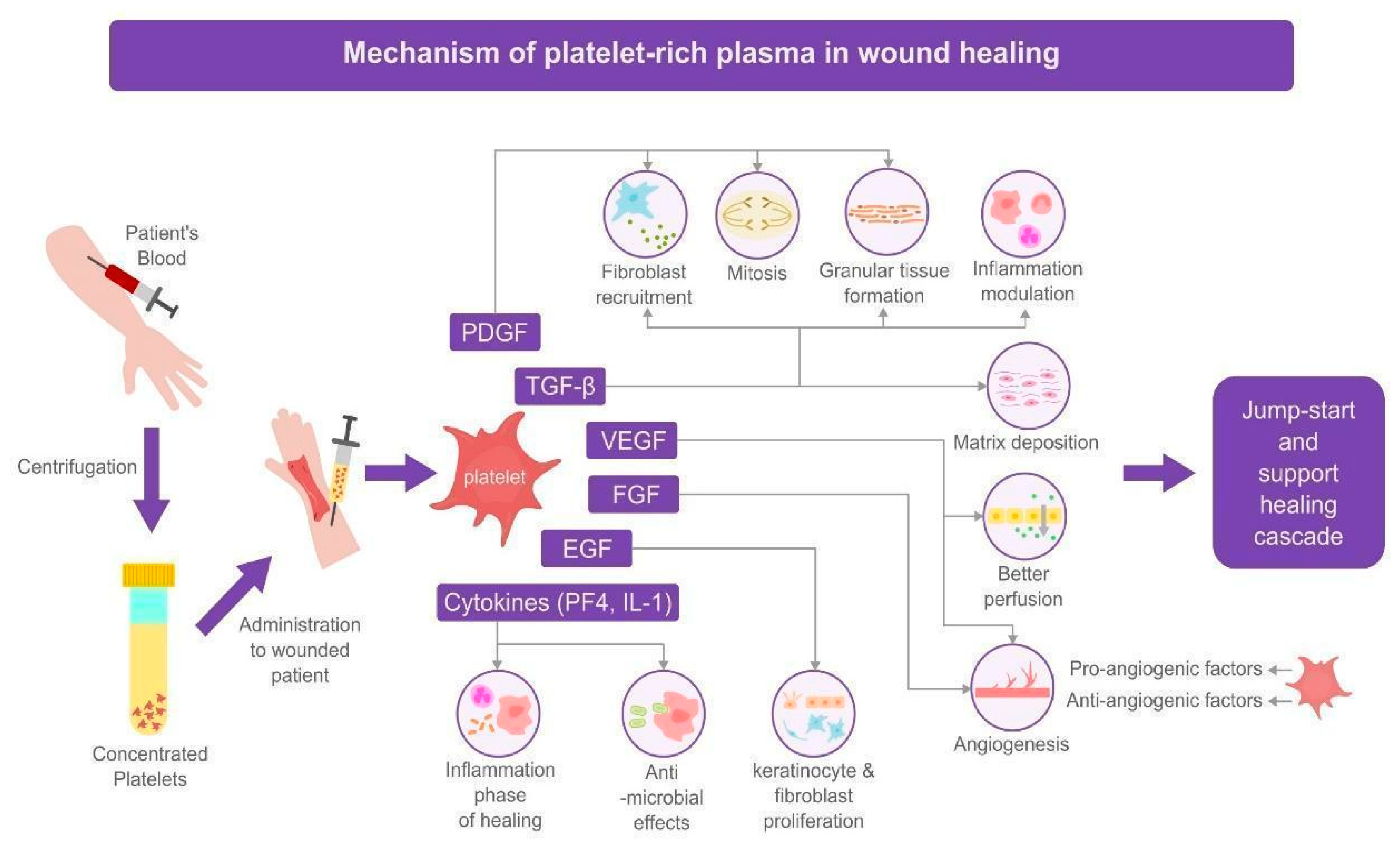
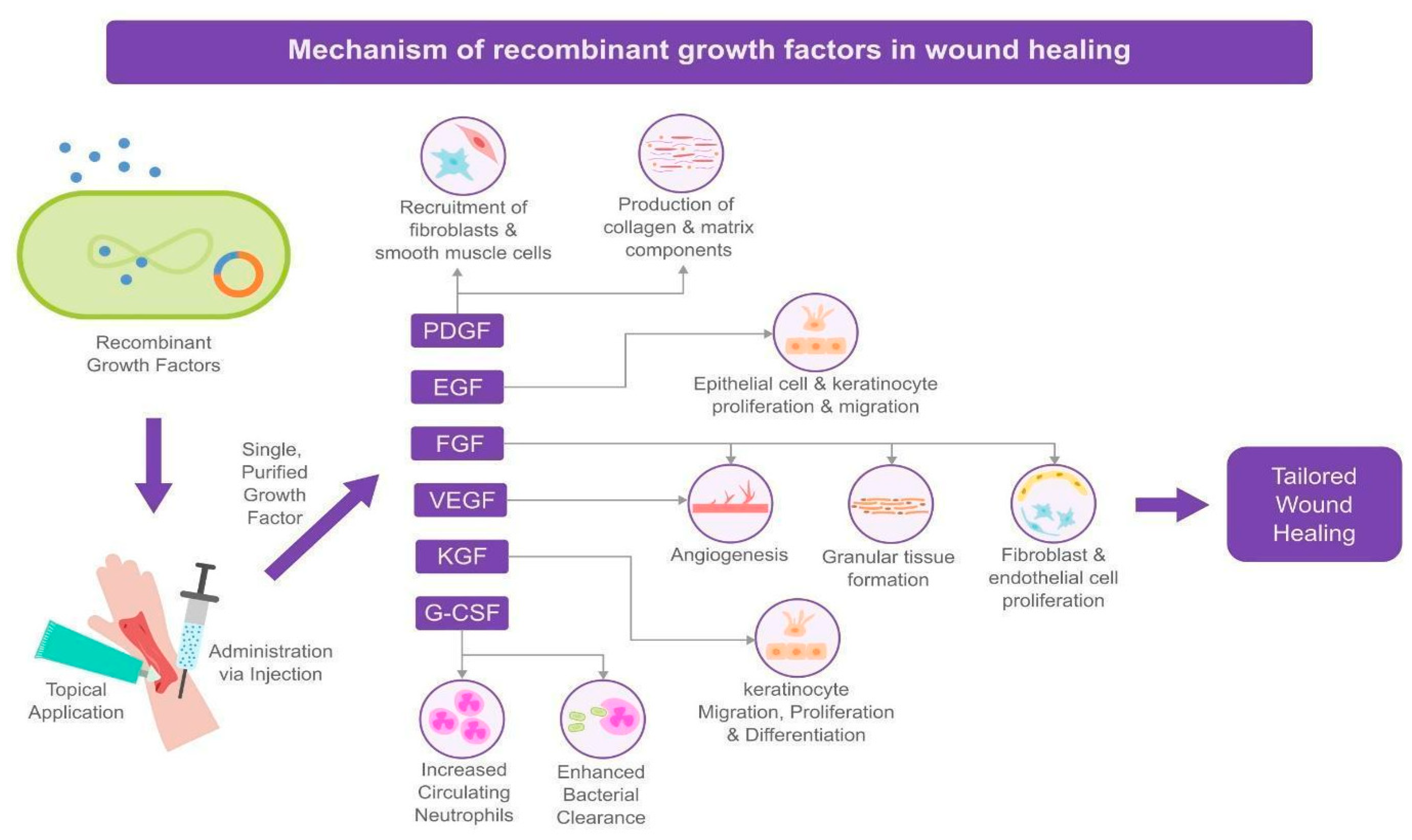
| Composition | Autologous platelet concentrate delivering a cocktail of growth factors, cytokines, fibrin, and ± leukocytes. | Single bioengineered growth factor (e.g., PDGF-BB) at a defined concentration. |
| Mechanism of Action | Releases multiple factors spanning all healing phases; fibrin clot doubles as a cellular scaffold. | Triggers the specific receptor pathway of that factor, targeting one key phase of repair. |
| Delivery/Form | Mixed bedside from patient blood; applied as clot/gel or peri-wound injection, patient-specific each time. | Factory-made gel/solution with fixed dose; applied or injected on a set schedule. |
| Advantages | Autologous, minimally immunogenic; broad biologic coverage and scaffold effect; useful across diverse wound types. | High, reproducible potency; standardized dosing simplifies trials; usable when blood draw is impractical. |
| Limitations | Content varies by patient and kit; needs centrifuge, immediate use, and often repeat applications. | Targets only one pathway; expensive, cold-chain sensitive, and carries factor-specific adverse-event warnings. |
3.2. Clinical Applications Across Wound Types

3.2.1. Diabetic Foot Ulcers
3.2.2. Pressure Injuries
3.2.3. Venous Leg Ulcers
3.2.4. Surgical and Traumatic Wounds
3.2.5. Burns
| Wound Type | Intervention | Study Type | Key Findings | References |
|---|---|---|---|---|
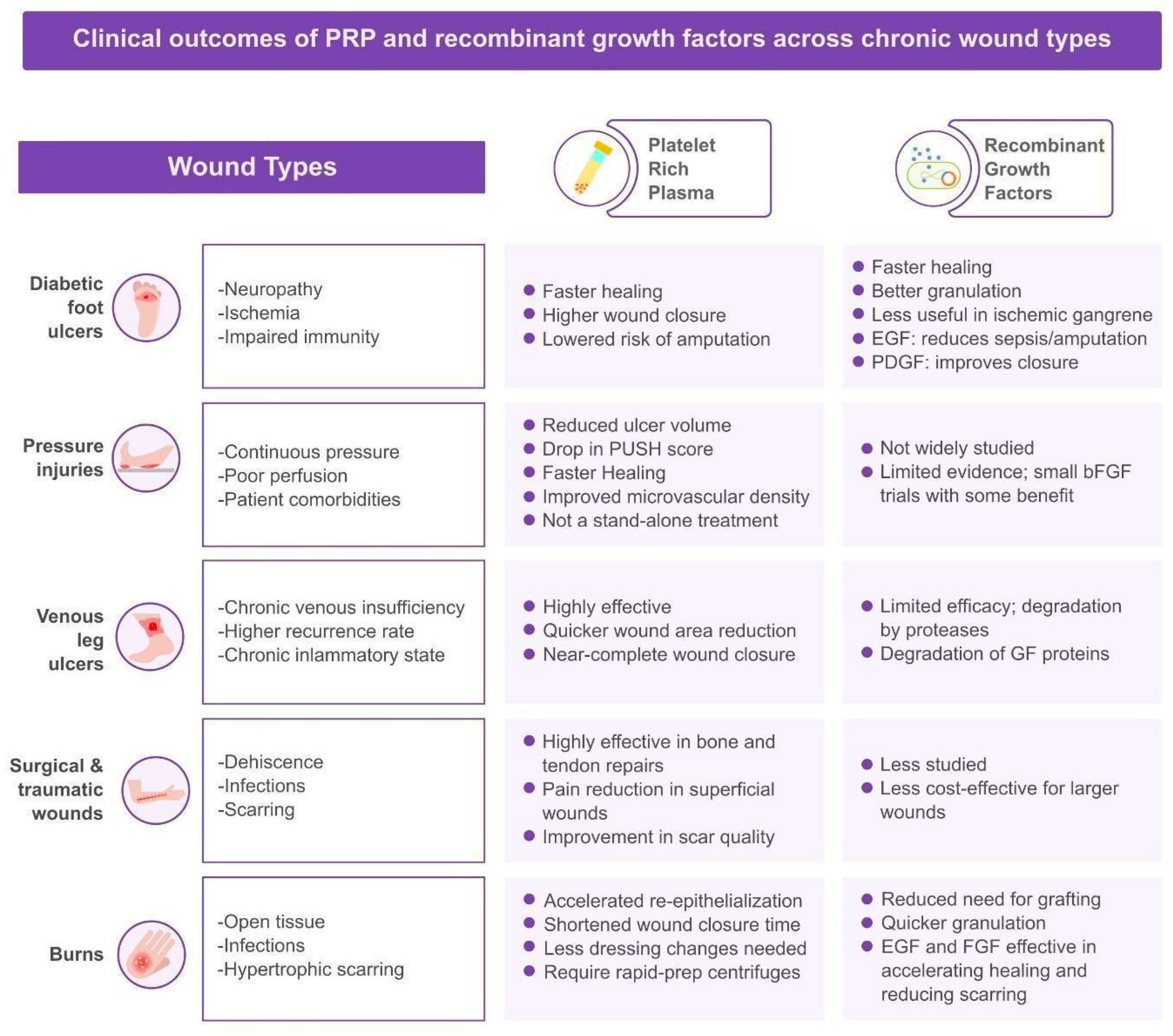
| Diabetic Foot Ulcer (DFU) | PRP (Autologous) | Systematic Review & Meta-Analysis (2022) | In chronic ulcers (including DFU), PRP increased complete closure (overall OR ≈ 5.3; DFU subgroup OR ≈ 2.3) and significantly reduced residual wound area versus standard care. | [5] |
| PDGF-BB (Becaplermin) | Network Meta-Analysis (2025) | PDGF-BB improved DFU healing compared with standard care and ranked among the most effective agents for reducing ulcer area in the network analysis. | [19] | |
| rh-EGF (Injection/Spray) | Phase III RCT/Pooled Analysis | Topical rh-EGF spray increased complete healing and shortened time to closure versus placebo; intralesional rh-EGF achieved ≥50% granulation by ~8 weeks and high limb-salvage rates in advanced DFU. | [34,35,36] | |
| Pressure Injury | PRP | Meta-Analysis (2024) | PRP increased healing rates (OR ≈ 3.4), reduced ulcer size and PUSH scores, and shortened healing time versus standard dressings, without higher adverse-event rates. | [8,44] |
| bFGF | Comparative Study/NMA | Topical bFGF accelerated granulation and re-epithelialization in chronic ulcers and burns; small studies suggest benefit in pressure ulcers, but evidence remains limited. | [2,21] | |
| Venous Leg Ulcer (VLU) | PRP | Systematic Review/RCT | Adjunct PRP with compression produced greater ulcer-area reduction and higher complete-healing rates at ~12 weeks than compression therapy alone across multiple RCTs. | [25] |
| Burns | PRP/PRF | Systematic Review & Meta-Analyses (2024/2025) | PRP/PRF shortened re-epithelialization of burns and donor sites and improved graft or donor-site quality; some trials also reported fewer dressing changes and infections. | [57,59,61] |
| rh-EGF/bFGF | Meta-Analysis (2022) | Topical EGF/bFGF reduced healing time in superficial burns by ~3 days and in deeper burns by >5 days versus conventional dressings and improved scar outcomes. | [62] |
3.3. Limitations and Practical Considerations for PRP and Recombinant Growth Factors
4. Future Directions
5. Conclusions
Author Contributions
Funding
Institutional Review Board Statement
Informed Consent Statement
Data Availability Statement
Conflicts of Interest
Abbreviations
| PRP | Platelet-Rich Plasma |
| PDGF-BB | Becaplermin |
| DFU | Diabetic Foot Ulcer |
| PDGF | Platelet-Derived Growth Factor |
| TGF-β | Transforming Growth Factor-β |
| EGF | Epidermal Growth Factor |
| VEGF | Vascular Endothelial Growth Factor |
| FGF | Fibroblast Growth Factor |
| IGF-1 | Insulin-like Growth Factor |
| RCT | Randomized Controlled Trial |
| HER1 | Human Epidermal Growth Factor Receptor 1 |
| bFGF | Basic Fibroblast Growth Factor |
| KGF | Keratinocyte Growth Factor |
| G-CSF | Granulocyte Colony-Stimulating Factor |
| rhEGF | Recombinant Human Epidermal Growth Factor |
| HGF | Hepatocyte Growth Factor |
| ANG-1 | Angiopoietin-1 |
| NMA | Network Meta-Analysis |
| PU | Pressure Ulcer |
| PUSH | Pressure Ulcer Scale for Healing |
| GM-CSF | Granulocyte–Macrophage Colony-Stimulating Factor |
| VLU | Venous Leg Ulcer |
| PRF | Platelet-Rich Fibrin |
References
- Reifs Jiménez, D.; Casanova-Lozano, L.; Grau-Carrión, S.; Reig-Bolaño, R. Artificial Intelligence Methods for Diagnostic and Decision-Making Assistance in Chronic Wounds: A Systematic Review. J. Med. Syst. 2025, 49, 29. [Google Scholar] [CrossRef]
- Thanigaimani, S.; Jin, H.; Ahmad, U.; Anbalagan, R.; Golledge, J. Comparative Efficacy of Growth Factor Therapy in Healing Diabetes-related Foot Ulcers: A Network Meta-analysis of Randomized Controlled Trials. Diabetes Metab. Res. Rev. 2023, 39, e3670. [Google Scholar] [CrossRef] [PubMed]
- Mullin, J.A.; Rahmani, E.; Kiick, K.L.; Sullivan, M.O. Growth Factors and Growth Factor Gene Therapies for Treating Chronic Wounds. Bioeng. Transl. Med. 2024, 9, e10642. [Google Scholar] [CrossRef]
- Berlanga, J.; Fernández, J.I.; López, E.; López, P.A.; del Río, A.; Valenzuela, C.; Baldomero, J.; Muzio, V.; Raíces, M.; Silva, R.; et al. Heberprot-P: A Novel Product for Treating Advanced Diabetic Foot Ulcer. MEDICC Rev. 2013, 15, 11–15. [Google Scholar] [CrossRef][Green Version]
- Meznerics, F.A.; Fehérvári, P.; Dembrovszky, F.; Kovács, K.D.; Kemény, L.V.; Csupor, D.; Hegyi, P.; Bánvölgyi, A. Platelet-Rich Plasma in Chronic Wound Management: A Systematic Review and Meta-Analysis of Randomized Clinical Trials. J. Clin. Med. 2022, 11, 7532. [Google Scholar] [CrossRef]
- Sun, Y.; Zhu, M.; Qiu, L. Efficacy of Mesenchymal Stem Cells and Platelet-Rich Plasma Therapies on Wound Healing: A Systematic Review and Meta-Analysis. Regen. Ther. 2025, 30, 75. [Google Scholar] [CrossRef]
- Jarvis, C.I. Becaplermin (Regranex) for Diabetic Foot Ulcers. Am. Fam. Physician 2008, 78, 255–256. [Google Scholar]
- Hu, Z.; Xv, H.; Feng, A.; Wang, S.; Han, X. Efficacy and Safety of Platelet-Rich Plasma for Pressure Ulcers: A Systematic Review and Meta-Analysis of Randomized Controlled Trials. Int. J. Low. Extrem. Wounds, 2024; online ahead of print. [Google Scholar] [CrossRef]
- Dhurat, R.; Sukesh, M. Principles and Methods of Preparation of Platelet-Rich Plasma: A Review and Author’s Perspective. J. Cutan. Aesthet. Surg. 2014, 7, 189–197. [Google Scholar] [CrossRef]
- Miron, R.J.; Fujioka-Kobayashi, M.; Hernandez, M.; Kandalam, U.; Zhang, Y.; Ghanaati, S.; Choukroun, J. Injectable Platelet Rich Fibrin (i-PRF): Opportunities in Regenerative Dentistry? Clin. Oral Investig. 2017, 21, 2619–2627. [Google Scholar] [CrossRef]
- Italiano, J.E., Jr.; Richardson, J.L.; Patel-Hett, S.; Battinelli, E.; Zaslavsky, A.; Short, S.; Ryeom, S.; Folkman, J.; Klement, G.L. Angiogenesis Is Regulated by a Novel Mechanism: Pro- and Antiangiogenic Proteins Are Organized into Separate Platelet α Granules and Differentially Released. Blood 2008, 111, 1227–1233. [Google Scholar] [CrossRef] [PubMed]
- Bao, P.; Kodra, A.; Tomic-Canic, M.; Golinko, M.S.; Ehrlich, H.P.; Brem, H. The Role of Vascular Endothelial Growth Factor in Wound Healing. J. Surg. Res. 2008, 153, 347. [Google Scholar] [CrossRef]
- Wu, P.I.-K.; Diaz, R.; Borg-Stein, J. Platelet-Rich Plasma. Phys. Med. Rehabil. Clin. N. Am. 2016, 27, 825–853. [Google Scholar] [CrossRef] [PubMed]
- Mariani, E.; Canella, V.; Berlingeri, A.; Bielli, A.; Cattini, L.; Landini, M.P.; Pulsatelli, L.; Filardo, G. Leukocyte Presence Does Not Increase Microbicidal Activity of Platelet-Rich Plasma In Vitro. BMC Microbiol. 2015, 15, 149. [Google Scholar] [CrossRef]
- Anitua, E.; Zalduendo, M.; Troya, M.; Padilla, S.; Orive, G. Leukocyte Inclusion within a Platelet Rich Plasma-Derived Fibrin Scaffold Stimulates a More Pro-Inflammatory Environment and Alters Fibrin Properties. PLoS ONE 2015, 10, e0121713. [Google Scholar] [CrossRef]
- de Carvalho, C.K.L.; Fernandes, B.L.; de Souza, M.A. Autologous Matrix of Platelet-Rich Fibrin in Wound Care Settings: A Systematic Review of Randomized Clinical Trials. J. Funct. Biomater. 2020, 11, 31. [Google Scholar] [CrossRef]
- Chicharro-Alcántara, D.; Rubio-Zaragoza, M.; Damiá-Giménez, E.; Carrillo-Poveda, J.M.; Cuervo-Serrato, B.; Peláez-Gorrea, P.; Sopena-Juncosa, J.J. Platelet Rich Plasma: New Insights for Cutaneous Wound Healing Management. J. Funct. Biomater. 2018, 9, 10. [Google Scholar] [CrossRef]
- Frykberg, R.G.; Banks, J. Challenges in the Treatment of Chronic Wounds. Adv. Wound Care 2015, 4, 560. [Google Scholar] [CrossRef]
- Tian, J.; Yao, G.; Tian, T.; Li, X.; Li, S.; Wu, C.; Zhang, S. Comparison of the Efficacy and Safety of Different Growth Factors in the Treatment of Diabetic Foot Ulcers: An Updated Network Meta-Analysis. Front. Endocrinol. 2025, 16, 1614597. [Google Scholar] [CrossRef]
- Yamakawa, S.; Hayashida, K. Advances in Surgical Applications of Growth Factors for Wound Healing. Burn. Trauma 2019, 7, 10. [Google Scholar] [CrossRef]
- Abdelhakim, M.; Lin, X.; Ogawa, R. The Japanese Experience with Basic Fibroblast Growth Factor in Cutaneous Wound Management and Scar Prevention: A Systematic Review of Clinical and Biological Aspects. Dermatol. Ther. 2020, 10, 569. [Google Scholar] [CrossRef] [PubMed]
- Okonkwo, U.A.; DiPietro, L.A. Diabetes and Wound Angiogenesis. Int. J. Mol. Sci. 2017, 18, 1419. [Google Scholar] [CrossRef] [PubMed]
- Blijlevens, N.; Sonis, S. Palifermin (Recombinant Keratinocyte Growth Factor-1): A Pleiotropic Growth Factor with Multiple Biological Activities in Preventing Chemotherapy- and Radiotherapy-Induced Mucositis. Ann. Oncol. 2007, 18, 817–826. [Google Scholar] [CrossRef] [PubMed]
- Cruciani, M.; Lipsky, B.A.; Mengoli, C.; de Lalla, F. Granulocyte-Colony Stimulating Factors as Adjunctive Therapy for Diabetic Foot Infections. Cochrane Database Syst. Rev. 2009, 3, CD006810. [Google Scholar] [CrossRef]
- Salgado-Pacheco, V.; Serra-Mas, M.; Otero-Viñas, M. Platelet-Rich Plasma Therapy for Chronic Cutaneous Wounds Stratified by Etiology: A Systematic Review of Randomized Clinical Trials. Drugs Ther. Perspect. 2024, 40, 31–42. [Google Scholar] [CrossRef]
- Huang, S.; Li, Q.; Li, X.; Ye, H.; Zhang, L.; Zhu, X. Recent Research Progress of Wound Healing Biomaterials Containing Platelet-Rich Plasma. Int. J. Nanomed. 2025, 20, 3961–3976. [Google Scholar] [CrossRef]
- Pessanha, F.S.; de Oliveira, B.G.R.B.; Oliveira, B.C.; Deutsch, G.; Teixeira, F.L.; Bokehi, L.C.; Calomino, M.A.; Rodrigues de Castilho, S.; Thiré, R.M.d.S.M.; Teixeira, L.A.; et al. Effectiveness of Epidermal Growth Factor Loaded Carboxymethylcellulose (EGF-CMC) Hydrogel in Biofilm Formation in Wounds of Diabetic Patients: A Randomized Clinical Trial. Gels 2023, 9, 117. [Google Scholar] [CrossRef]
- Kushibiki, T.; Mayumi, Y.; Nakayama, E.; Azuma, R.; Ojima, K.; Horiguchi, A.; Ishihara, M. Photocrosslinked Gelatin Hydrogel Improves Wound Healing and Skin Flap Survival by the Sustained Release of Basic Fibroblast Growth Factor. Sci. Rep. 2021, 11, 23094. [Google Scholar] [CrossRef]
- Shaabani, E.; Sharifiaghdam, M.; Faridi-Majidi, R.; Smedt, S.C.D.; Braeckmans, K.; Fraire, J.C. Gene Therapy to Enhance Angiogenesis in Chronic Wounds. Molecular Therapy. Nucleic Acids 2022, 29, 871. [Google Scholar] [CrossRef]
- Food and Drug Administration. REGRANEX (Becaplermin) Gel: Prescribing Information (BLA 103691/S-5134 Supplement); FDA: Silver Spring, MD, USA, 2018. Available online: https://www.accessdata.fda.gov/drugsatfda_docs/label/2018/103691s5134lbl.pdf (accessed on 25 July 2025).
- Bardill, J.R.; Laughter, M.R.; Stager, M.; Liechty, K.W.; Krebs, M.D.; Zgheib, C. Topical Gel-Based Biomaterials for the Treatment of Diabetic Foot Ulcers. Acta Biomater. 2022, 138, 73–91. [Google Scholar] [CrossRef]
- Waycaster, C.R.; Gilligan, A.M.; Motley, T.A. Cost-Effectiveness of Becaplermin Gel on Diabetic Foot Ulcer Healing: Changes in Wound Surface Area. J. Am. Podiatr. Med. Assoc. 2016, 106, 273–282. [Google Scholar] [CrossRef]
- Ziyadeh, N.; Fife, D.; Walker, A.M.; Wilkinson, G.S.; Seeger, J.D. A Matched Cohort Study of the Risk of Cancer in Users of Becaplermin. Adv. Skin Wound Care 2011, 24, 31–39. [Google Scholar] [CrossRef]
- Çetinkaya, Ö.A.; Çelik, S.U.; Erzincan, M.B.; Hazır, B.; Uncu, H. Intralesional Epidermal Growth Factor Application Is a Potential Therapeutic Strategy to Improve Diabetic Foot Ulcer Healing and Prevent Amputation. Turk. J. Surg. 2020, 36, 15–22. [Google Scholar] [CrossRef]
- Park, K.H.; Han, S.H.; Hong, J.P.; Han, S.-K.; Lee, D.-H.; Kim, B.S.; Ahn, J.H.; Lee, J.W. Topical Epidermal Growth Factor Spray for the Treatment of Chronic Diabetic Foot Ulcers: A Phase III Multicenter, Double-Blind, Randomized, Placebo-Controlled Trial. Diabetes Res. Clin. Pract. 2018, 142, 335–344. [Google Scholar] [CrossRef]
- Yang, Q.; Zhang, Y.; Yin, H.; Lu, Y. Topical Recombinant Human Epidermal Growth Factor for Diabetic Foot Ulcers: A Meta-Analysis of Randomized Controlled Clinical Trials. Ann. Vasc. Surg. 2020, 62, 442–451. [Google Scholar] [CrossRef]
- Xu, J.; Min, D.; Guo, G.; Liao, X.; Fu, Z. Experimental Study of Epidermal Growth Factor and Acidic Fibroblast Growth Factor in the Treatment of Diabetic Foot Wounds. Exp. Ther. Med. 2018, 15, 5365–5370. [Google Scholar] [CrossRef]
- Liu, Y.; Liu, Y.; Deng, J.; Li, W.; Nie, X. Fibroblast Growth Factor in Diabetic Foot Ulcer: Progress and Therapeutic Prospects. Front. Endocrinol. 2021, 12, 744868. [Google Scholar] [CrossRef] [PubMed]
- Barć, P.; Antkiewicz, M.; Frączkowska-Sioma, K.; Kupczyńska, D.; Lubieniecki, P.; Witkiewicz, W.; Małodobra-Mazur, M.; Baczyńska, D.; Janczak, D.; Skóra, J.P. Two-Stage Gene Therapy (VEGF, HGF and ANG1 Plasmids) as Adjunctive Therapy in the Treatment of Critical Lower Limb Ischemia in Diabetic Foot Syndrome. Int. J. Environ. Res. Public Health 2022, 19, 12818. [Google Scholar] [CrossRef] [PubMed]
- Bang, F.S.; Leeberg, V.; Ding, M.; Dreyer, C.H. The Effect of VEGF Stimulation in Diabetic Foot Ulcers: A Systematic Review. Wound Repair Regen. 2024, 32, 384–392. [Google Scholar] [CrossRef] [PubMed]
- Matheson, E.M.; Bragg, S.W.; Blackwelder, R.S. Diabetes-Related Foot Infections: Diagnosis and Treatment. Am. Fam. Physician 2021, 104, 386–394. [Google Scholar]
- Kottner, J.; Cuddigan, J.; Carville, K.; Balzer, K.; Berlowitz, D.; Law, S.; Litchford, M.; Mitchell, P.; Moore, Z.; Pittman, J.; et al. Prevention and Treatment of Pressure Ulcers/Injuries: The Protocol for the Second Update of the International Clinical Practice Guideline 2019. J. Tissue Viability 2019, 28, 51–58. [Google Scholar] [CrossRef] [PubMed]
- Putri, A.C.; Soedjana, H.; Hasibuan, L.; Sundoro, A.; Septrina, R.; Sisca, F. The Effect of Platelet Rich Plasma on Wound Healing in Pressure Ulcer Patient Grade III and IV. Int. Wound J. 2025, 22, e70458. [Google Scholar] [CrossRef]
- Mazzucco, L.; Balbo, V.; Zingarelli, E.M.; Desilvestri, M.; Marchioni, M.; Perrero, L.; Pollis, F.; Varvello, I. Treatment of Severe Pressure Ulcers with Protein-Enriched Filtered Platelet-Rich Plasma (PEFPRP): A Possible Management. Front. Bioeng. Biotechnol. 2024, 11, 1279149. [Google Scholar] [CrossRef] [PubMed]
- Li, S.; Xing, F.; Yan, T.; Zhang, S.; Chen, F. The Efficiency and Safety of Platelet-Rich Plasma Dressing in the Treatment of Chronic Wounds: A Systematic Review and Meta-Analysis of Randomized Controlled Trials. J. Pers. Med. 2023, 13, 430. [Google Scholar] [CrossRef] [PubMed]
- Singh, R.; Rohilla, R.K.; Dhayal, R.K.; Sen, R.; Sehgal, P.K. Role of Local Application of Autologous Platelet-Rich Plasma in the Management of Pressure Ulcers in Spinal Cord Injury Patients. Spinal Cord 2014, 52, 809–816. [Google Scholar] [CrossRef]
- Xu, P.; Wu, Y.; Zhou, L.; Yang, Z.; Zhang, X.; Hu, X.; Yang, J.; Wang, M.; Wang, B.; Luo, G.; et al. Platelet-Rich Plasma Accelerates Skin Wound Healing by Promoting Re-Epithelialization. Burn. Trauma 2020, 8, tkaa028. [Google Scholar] [CrossRef]
- Citty, S.W.; Cowan, L.J.; Wingfield, Z.; Stechmiller, J. Optimizing Nutrition Care for Pressure Injuries in Hospitalized Patients. Adv. Wound Care 2019, 8, 309. [Google Scholar] [CrossRef]
- Chen, M.; Chang, C.; Levian, B.; Woodley, D.T.; Li, W. Why Are There So Few FDA-Approved Therapeutics for Wound Healing? Int. J. Mol. Sci. 2023, 24, 15109. [Google Scholar] [CrossRef]
- Luo, B.; Sun, H.-T.; Wang, Y.-T.; Zhang, J.-C.; Xu, B.; Ji, X.-Z.; Xie, R.-Z.; Liu, Q.; Chen, R.-J. Clinical Efficacy of rhGM-CSF Gel and Medical Collagen Sponge on Deep Second-Degree Burns of Infants: A Randomized Clinical Trial. Medicine 2024, 103, e36304. [Google Scholar] [CrossRef]
- Gilligan, A.M.; Waycaster, C.R.; Milne, C.T. Cost Effectiveness of Becaplermin Gel on Wound Closure for the Treatment of Pressure Injuries. Wounds 2018, 30, 197–204. [Google Scholar]
- Knightly, N.; Lee, C.; O’Brien, L.; Qayyum, T.; Hurley, C.; Kelly, J. Role for Platelet Rich Plasma as an Adjuvant Therapy in Wound Healing and Burns. Eur. J. Plast. Surg. 2023, 46, 465–474. [Google Scholar] [CrossRef]
- Lee, Y.; Lee, M.H.; Phillips, S.A.; Stacey, M.C. Growth Factors for Treating Chronic Venous Leg Ulcers: A Systematic Review and Meta-Analysis. Wound Repair Regen. 2022, 30, 117–125. [Google Scholar] [CrossRef] [PubMed]
- Lee, Y.; Phillips, S.A.; Stacey, M.C. The Use of Growth Factors for the Treatment of Chronic Venous Leg Ulcers: A Systematic Review and Meta-Analysis. J. Vasc. Surg. 2018, 68, e88–e89. [Google Scholar] [CrossRef]
- Deng, Z.; Long, Z.-S.; Gong, F.-P.; Chen, G. The Efficacy and Safety of Platelet-Rich Plasma in the Tendon-Exposed Wounds: A Preliminary Study. J. Orthop. Surg. Res. 2022, 17, 497. [Google Scholar] [CrossRef] [PubMed]
- Reddy, S.S.P.; Francis, D.L.; Harish, R.; Raja, K.; Chopra, S.S. Efficacy of Recombinant Human Epidermal Growth Factor on Healing of Palatal Donor Sites: A Randomised, Controlled, Double-Blinded, Single-Centre Clinical Trial (EGF TRIAL). J. Clin. Periodontol. 2025, 52, 1245–1253. [Google Scholar] [CrossRef]
- Manasyan, A.; Stanton, E.W.; Malkoff, N.; Cannata, B.; Wallace, L.G.; Gillenwater, T.J. Use of Platelet-Rich Plasma and Platelet-Rich Fibrin in Burn Wound Healing and Skin Grafting: A Systematic Review. Eur. J. Plast. Surg. 2024, 47, 59. [Google Scholar] [CrossRef]
- Twu, O.; Mednik, S.; Scumpia, P.; Doaty, S.; Worswick, S. Use of Becaplermin for Nondiabetic Ulcers: Pyoderma Gangrenosum and Calciphylaxis. Dermatol. Ther. 2016, 29, 104–108. [Google Scholar] [CrossRef]
- Kao, Y.-C.; Lin, D.-Z.; Lee, S.-L.; Chen, C.; Wang, H.-J.; Chiu, W.-K. Assisted Therapy with Platelet-Rich Plasma for Burn Patients: A Meta-Analysis and Systematic Review. Burns 2021, 47, 1012–1023. [Google Scholar] [CrossRef]
- Marck, R.E.; Gardien, K.L.M.; Stekelenburg, C.M.; Vehmeijer, M.; Baas, D.; Tuinebreijer, W.E.; Breederveld, R.S.; Middelkoop, E. The Application of Platelet-Rich Plasma in the Treatment of Deep Dermal Burns: A Randomized, Double-Blind, Intra-Patient Controlled Study. Wound Repair Regen. 2016, 24, 712–720. [Google Scholar] [CrossRef]
- Yi, H.; Li, R.; Li, C. Platelet-Rich Plasma for the Management of Burn Wound: A Meta-Analysis. Int. J. Low. Extrem. Wounds, 2025; online ahead of print. [Google Scholar] [CrossRef]
- Wei, Y.; Li, J.; Huang, Y.; Lei, X.; Zhang, L.; Yin, M.; Deng, J.; Wang, X.; Fu, X.; Wu, J. The Clinical Effectiveness and Safety of Using Epidermal Growth Factor, Fibroblast Growth Factor and Granulocyte-Macrophage Colony Stimulating Factor as Therapeutics in Acute Skin Wound Healing: A Systematic Review and Meta-Analysis. Burn. Trauma 2022, 10, tkac002. [Google Scholar] [CrossRef]
- Lee, K.D.; Cha, E.C.; Lee, J.; Kang, S.Y.; Burm, J.S.; Cho, J. Treatment of Partial-Thickness Burn Wounds with Combined Advanced Therapies: Cultured Allogenic Keratinocyte and Epidermal Growth Factor. J. Wound Manag. Res. 2023, 19, 38–45. [Google Scholar] [CrossRef]
- Altalbawy, F.M.; Mukhlif, B.A.M.; Hussen, A.; Mohammed, J.S.; S, R.J.; Singh, A.; Mishra, S.B.; Chauhan, A.S.; Astaneh, M.E.; Fereydouni, N. Regenerative Potential of PRP-Based Scaffolds in Chronic Wound Healing: Mechanisms, Advances, and Therapeutic Insights. Regen. Ther. 2025, 30, 278. [Google Scholar] [CrossRef]
- Smith, J.; Rai, V. Platelet-Rich Plasma in Diabetic Foot Ulcer Healing: Contemplating the Facts. Int. J. Mol. Sci. 2024, 25, 12864. [Google Scholar] [CrossRef]
- He, M.; Chen, T.; Lv, Y.; Song, P.; Deng, B.; Guo, X.; Rui, S.; Boey, J.; Armstrong, D.G.; Ma, Y.; et al. The Role of Allogeneic Platelet-Rich Plasma in Patients with Diabetic Foot Ulcer: Current Perspectives and Future Challenges. Front. Bioeng. Biotechnol. 2022, 10. [Google Scholar] [CrossRef]
- Behera, S.; Mishra, B.; Cherian, J.J.; Kumar, G.; Mahapatra, S.; Mukherjee, A.; Roy, S.; Bagepally, B.S.; Sahoo, B.B.; Majhi, M.M.; et al. Efficacy and Safety of Platelet-Rich Plasma as an Adjunct Therapy to Split Thickness Skin Graft in Burn Patients with Granulating Raw Wounds: A Prospective, Randomized, Double-Blind Study—Study Protocol. Trials 2025, 26, 83. [Google Scholar] [CrossRef]
Disclaimer/Publisher’s Note: The statements, opinions and data contained in all publications are solely those of the individual author(s) and contributor(s) and not of MDPI and/or the editor(s). MDPI and/or the editor(s) disclaim responsibility for any injury to people or property resulting from any ideas, methods, instructions or products referred to in the content. |
© 2025 by the authors. Licensee MDPI, Basel, Switzerland. This article is an open access article distributed under the terms and conditions of the Creative Commons Attribution (CC BY) license (https://creativecommons.org/licenses/by/4.0/).
Share and Cite
Ahmed, A.-B.; Thatcher, S.; Khorsandi, J.; Ahmed, Z.; Lee, M.; Jaouhari, A.; Bond, B.; Merchant, A. Platelet-Rich Plasma (PRP) and Recombinant Growth Factor Therapies in Cutaneous Wound Healing: Mechanisms, Clinical Applications, and Future Directions. J. Clin. Med. 2025, 14, 8583. https://doi.org/10.3390/jcm14238583
Ahmed A-B, Thatcher S, Khorsandi J, Ahmed Z, Lee M, Jaouhari A, Bond B, Merchant A. Platelet-Rich Plasma (PRP) and Recombinant Growth Factor Therapies in Cutaneous Wound Healing: Mechanisms, Clinical Applications, and Future Directions. Journal of Clinical Medicine. 2025; 14(23):8583. https://doi.org/10.3390/jcm14238583
Chicago/Turabian StyleAhmed, Abu-Bakr, Spencer Thatcher, Joshua Khorsandi, Zahra Ahmed, Michael Lee, Adam Jaouhari, Braydon Bond, and Aftab Merchant. 2025. "Platelet-Rich Plasma (PRP) and Recombinant Growth Factor Therapies in Cutaneous Wound Healing: Mechanisms, Clinical Applications, and Future Directions" Journal of Clinical Medicine 14, no. 23: 8583. https://doi.org/10.3390/jcm14238583
APA StyleAhmed, A.-B., Thatcher, S., Khorsandi, J., Ahmed, Z., Lee, M., Jaouhari, A., Bond, B., & Merchant, A. (2025). Platelet-Rich Plasma (PRP) and Recombinant Growth Factor Therapies in Cutaneous Wound Healing: Mechanisms, Clinical Applications, and Future Directions. Journal of Clinical Medicine, 14(23), 8583. https://doi.org/10.3390/jcm14238583