
Safety, Tolerability, and Immunogenicity of RSVpreF Vaccine in Pregnant Individuals Living with HIV
 , , , , ,
Abstract
1. Introduction
2. Methods
2.1. Design
2.2. Interventions
2.3. Assessments and Endpoints
2.4. Statistics
3. Results
3.1. Participants
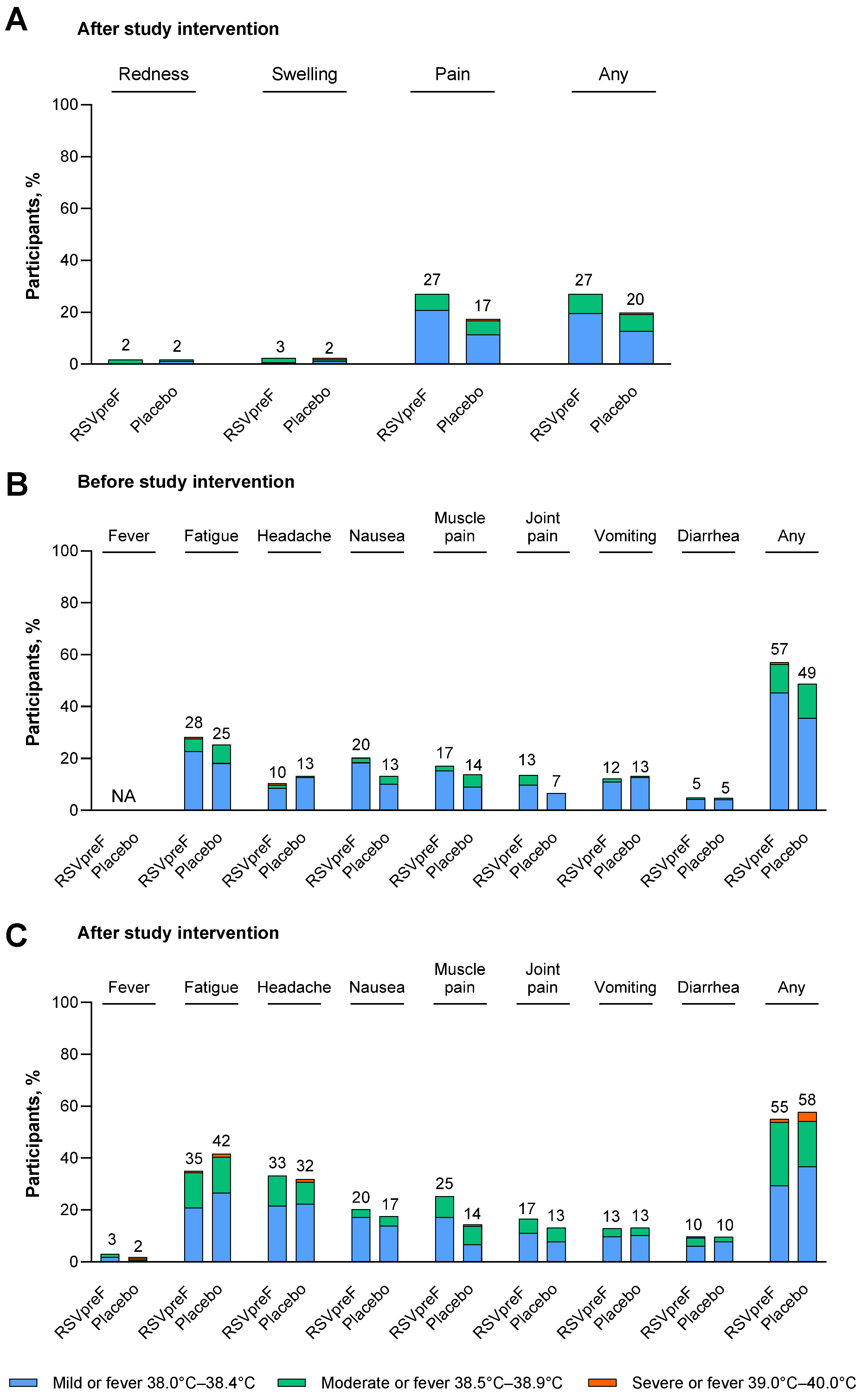
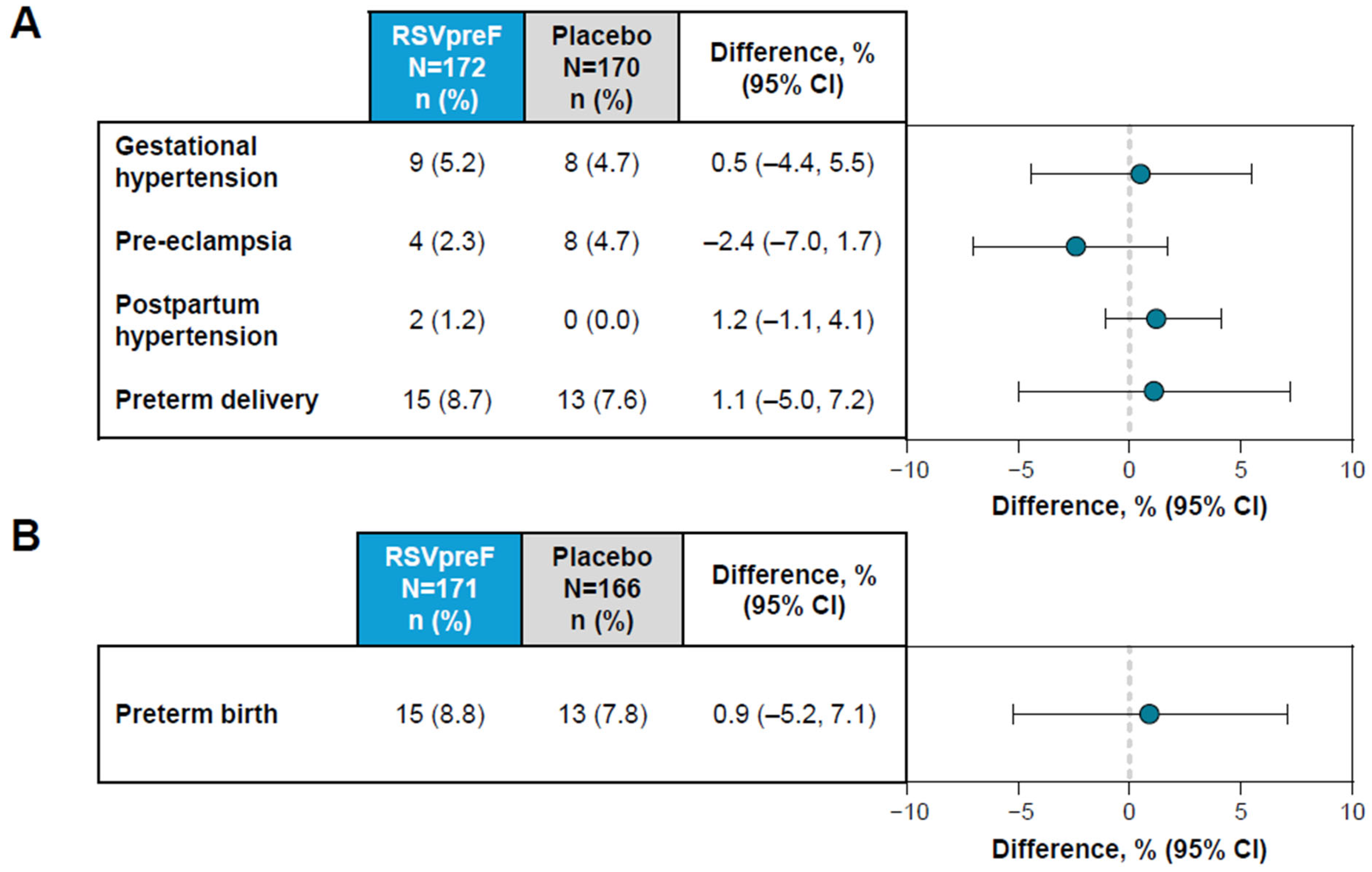
3.2. Safety
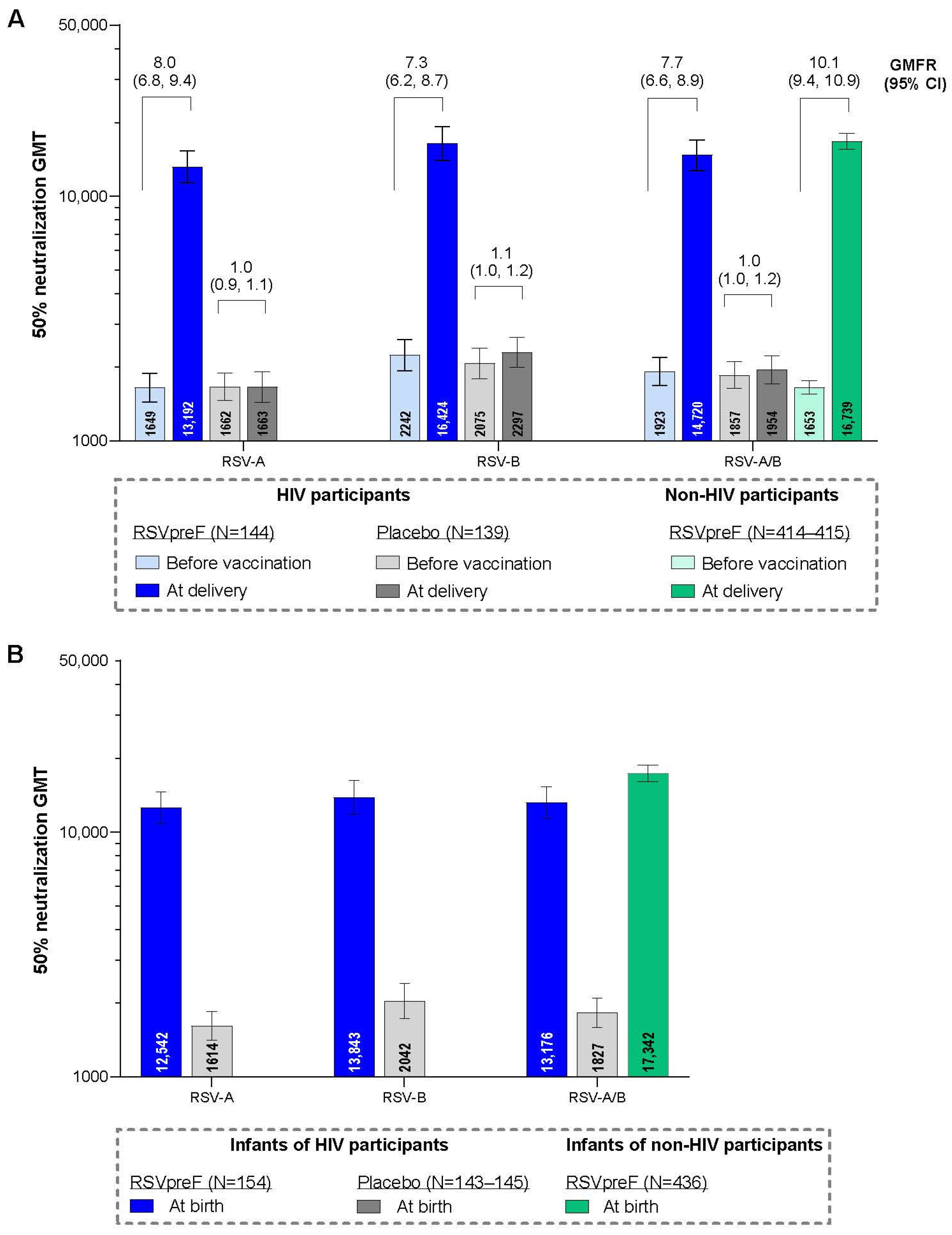
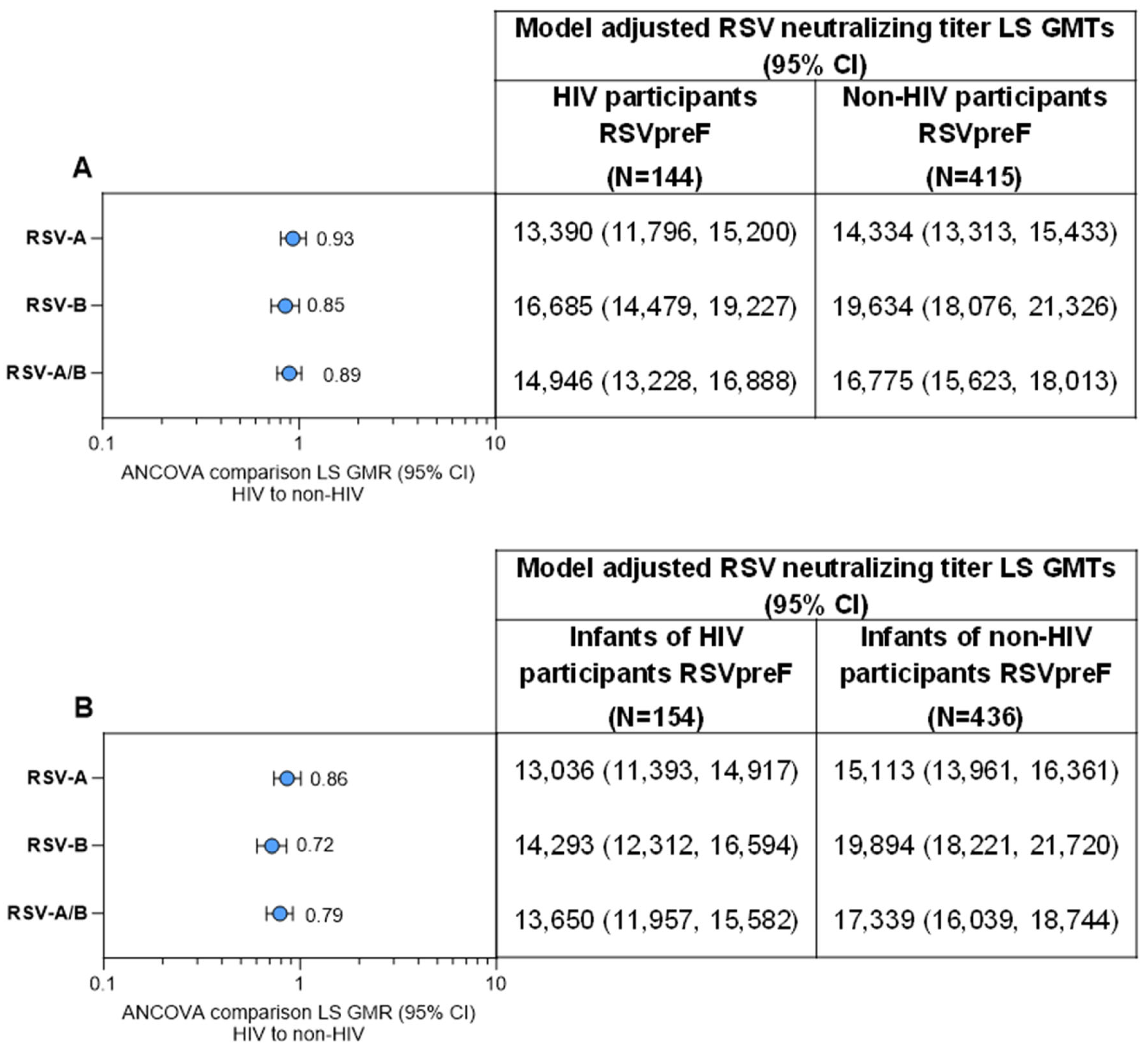
3.3. Immunogenicity
4. Discussion
5. Conclusions
Supplementary Materials
Author Contributions
Funding
Institutional Review Board Statement
Informed Consent Statement
Data Availability Statement
Acknowledgments
Conflicts of Interest
References
- World Health Organization. The Global Health Observatory. Data on the HIV Response. Available online: https://www.who.int/data/gho/data/themes/hiv-aids/data-on-the-hiv-aids-response (accessed on 29 July 2025).
- Armstrong-Mensah, E.; Ruiz, K.; Fofana, A.; Hawley, V. Perinatal HIV Transmission Prevention: Challenges among Women Living with HIV in sub-Saharan Africa. Int. J. Matern. Child Health AIDS 2020, 9, 354–359. [Google Scholar] [CrossRef]
- Graybill, L.A.; Kasaro, M.; Freeborn, K.; Walker, J.S.; Poole, C.; Powers, K.A.; Mollan, K.R.; Rosenberg, N.E.; Vermund, S.H.; Mutale, W.; et al. Incident HIV among pregnant and breast-feeding women in sub-Saharan Africa: A systematic review and meta-analysis. AIDS 2020, 34, 761–776. [Google Scholar] [CrossRef] [PubMed]
- Abu-Raya, B.; Kollmann, T.R.; Marchant, A.; MacGillivray, D.M. The immune system of HIV-exposed uninfected infants. Front. Immunol. 2016, 7, 383. [Google Scholar] [CrossRef]
- Mangold, J.F.; Goswami, R.; Nelson, A.N.; Martinez, D.R.; Fouda, G.G.; Permar, S.R. Maternal Intervention to Prevent Mother-to-Child Transmission of HIV: Moving Beyond Antiretroviral Therapy. Pediatr. Infect. Dis. J. 2021, 40, S5–S10. [Google Scholar] [CrossRef]
- Connor, E.M.; Sperling, R.S.; Gelber, R.; Kiselev, P.; Scott, G.; O’Sullivan, M.J.; VanDyke, R.; Bey, M.; Shearer, W.; Jacobson, R.L.; et al. Reduction of maternal-infant transmission of human immunodeficiency virus type 1 with zidovudine treatment. Pediatric AIDS Clinical Trials Group Protocol 076 Study Group. N. Engl. J. Med. 1994, 331, 1173–1180. [Google Scholar] [CrossRef]
- Fowler, M.G.; Qin, M.; Fiscus, S.A.; Currier, J.S.; Flynn, P.M.; Chipato, T.; McIntyre, J.; Gnanashanmugam, D.; Siberry, G.K.; Coletti, A.S.; et al. Benefits and risks of antiretroviral therapy for perinatal HIV prevention. N. Engl. J. Med. 2016, 375, 1726–1737. [Google Scholar] [CrossRef]
- Slogrove, A.L.; Powis, K.M.; Johnson, L.F.; Stover, J.; Mahy, M. Estimates of the global population of children who are HIV-exposed and uninfected, 2000–2018: A modelling study. Lancet. Glob. Health 2020, 8, e67–e75. [Google Scholar] [CrossRef]
- Ramokolo, V.; Goga, A.E.; Slogrove, A.L.; Powis, K.M. Unmasking the vulnerabilities of uninfected children exposed to HIV. BMJ 2019, 366, l4479. [Google Scholar] [CrossRef]
- Evans, C.; Jones, C.E.; Prendergast, A.J. HIV-exposed, uninfected infants: New global challenges in the era of paediatric HIV elimination. Lancet Infect. Dis. 2016, 16, e92–e107. [Google Scholar] [CrossRef]
- Labuda, S.M.; Huo, Y.; Kacanek, D.; Patel, K.; Huybrechts, K.; Jao, J.; Smith, C.; Hernandez-Diaz, S.; Scott, G.; Burchett, S.; et al. Rates of hospitalization and infection-related hospitalization among human immunodeficiency virus (HIV)-exposed uninfected children compared to HIV-unexposed uninfected children in the United States, 2007–2016. Clin. Infect. Dis. 2020, 71, 332–339. [Google Scholar] [CrossRef]
- Li, Y.; Wang, X.; Blau, D.M.; Caballero, M.T.; Feikin, D.R.; Gill, C.J.; Madhi, S.A.; Omer, S.B.; Simões, E.A.F.; Campbell, H.; et al. Global, regional, and national disease burden estimates of acute lower respiratory infections due to respiratory syncytial virus in children younger than 5 years in 2019: A systematic analysis. Lancet 2022, 399, 2047–2064. [Google Scholar] [CrossRef] [PubMed]
- Nyawanda, B.O.; Otieno, N.A.; Otieno, M.O.; Emukule, G.O.; Bigogo, G.; Onyango, C.O.; Lidechi, S.; Nyaundi, J.; Langley, G.E.; Widdowson, M.A.; et al. The impact of maternal human immunodeficiency virus infection on the burden of respiratory syncytial virus among pregnant women and their infants, Western Kenya. J. Infect. Dis. 2022, 225, 2097–2105. [Google Scholar] [CrossRef] [PubMed]
- Jallow, S.; Agosti, Y.; Kgagudi, P.; Vandecar, M.; Cutland, C.L.; Simoes, E.A.F.; Nunes, M.C.; Suchard, M.S.; Madhi, S.A. Impaired transplacental transfer of respiratory syncytial virus-neutralizing antibodies in human immunodeficiency virus-infected versus -uninfected pregnant women. Clin. Infect. Dis. Off. Publ. Infect. Dis. Soc. Am. 2019, 69, 151–154. [Google Scholar] [CrossRef] [PubMed]
- Patel, S.M.; Jallow, S.; Boiditswe, S.; Madhi, S.A.; Feemster, K.A.; Steenhoff, A.P.; Arscott-Mills, T.; Muthoga, C.; Ajibola, G.; Shapiro, R.; et al. Placental transfer of respiratory syncytial virus antibody among HIV-exposed, uninfected infants. J. Pediatr. Infect. Dis. Soc. 2020, 9, 349–356. [Google Scholar] [CrossRef]
- Cohen, C.; Moyes, J.; Tempia, S.; Groome, M.; Walaza, S.; Pretorius, M.; Naby, F.; Mekgoe, O.; Kahn, K.; von Gottberg, A.; et al. Epidemiology of acute lower respiratory tract infection in HIV-exposed uninfected infants. Pediatrics 2016, 137, e20153272. [Google Scholar] [CrossRef]
- Magura, J.; Nhari, S.R.; Nzimakwe, T.I. Barriers to ART adherence in sub-Saharan Africa: A scoping review toward achieving UNAIDS 95-95-95 targets. Front. Public Health 2025, 13, 1609743. [Google Scholar] [CrossRef]
- Edwards, K.M. Ensuring the safety of maternal immunization. Pediatrics 2021, 147, e2020047456. [Google Scholar] [CrossRef]
- Kampmann, B.; Madhi, S.A.; Munjal, I.; Simoes, E.A.F.; Pahud, B.A.; Llapur, C.; Baker, J.; Perez Marc, G.; Radley, D.; Shittu, E.; et al. Bivalent prefusion F vaccine in pregnancy to prevent RSV illness in infants. N. Engl. J. Med. 2023, 388, 1451–1464. [Google Scholar] [CrossRef]
- Simões, E.A.F.; Pahud, B.A.; Madhi, S.A.; Kampmann, B.; Shittu, E.; Radley, D.; Llapur, C.; Baker, J.; Pérez Marc, G.; Barnabas, S.L.; et al. Efficacy, safety, and immunogenicity of the MATISSE (Maternal Immunization Study for Safety and Efficacy) maternal respiratory syncytial virus prefusion F protein vaccine trial. Obstet. Gynecol. 2025, 145, 157–167. [Google Scholar] [CrossRef]
- Pfiizer Inc. Abrysvo® (Respiratory Syncytial Virus Vaccine). Full Prescribing Information; Pfiizer Inc.: New York, NY, USA, 2025. [Google Scholar]
- Electronic Medicines Compendium. Package Leaflet: Information for the User. Abrysvo® Powder and Solvent for Solution for Injection; Electronic Medicines Compendium: Surrey, UK, 2025; Available online: https://www.medicines.org.uk/emc/files/pil.15309.pdf (accessed on 8 April 2025).
- European Medicines Agency. Abrysvo (Respiratory Syncytial Virus Vaccine [Bivalent, Recombinant]); European Medicines Agency: Amsterdam, The Netherlands, 2025; Available online: https://www.ema.europa.eu/en/documents/overview/abrysvo-epar-medicine-overview_en.pdf (accessed on 11 November 2025).
- Therapeutic Goods Administration of Australia. Australian Product Information–ABRYSVO® (Recombinant Respiratory Syncytial Virus Pre-Fusion F Protein) Vaccine; Therapeutic Goods Administration of Australia: Canberra, Australia, 2024. Available online: https://www.tga.gov.au/sites/default/files/2024-05/auspar-abrysvo-240502-pi.pdf (accessed on 4 July 2024).
- Health Canada. Respiratory Syncytial Virus (RSV) Vaccines: Canadian Immunization Guide. Available online: https://www.canada.ca/en/public-health/services/publications/healthy-living/canadian-immunization-guide-part-4-active-vaccines/respiratory-syncytial-virus.html (accessed on 4 September 2025).
- Dubai Health Authority. Clinical Guidelines for Best Practice in Immunization; Dubai Health Authority: Dubai, United Arab Emirates, 2024. Available online: https://dha.gov.ae/uploads/102024/Clinical%20Guideline%20for%20Best%20Practice%20in%20Immunization20241028945.pdf (accessed on 4 September 2025).
- World Health Organization = Organisation Mondiale de la Santé. Report of the 4th Joint Meeting of the WHO Global Advisory Committee on Vaccine Safety and the Advisory Committee on Safety of Medicinal Products, 12–14 November 2024 = Rapport de la 4e Réunion Conjointe du Comité Consultatif Mondial de l’OMS Pour la Sécurité des Vaccins et du Comité Consultatif de l’OMS sur la Sécurité des Produits Médicaux, 12–14 November 2024; World Health Organization = Organisation Mondiale de la Santé: Genève, Switzerland, 2025; Volume 100, pp. 75–86. [Google Scholar]
- McMorrow, M.L.; Tempia, S.; Walaza, S.; Treurnicht, F.K.; Moyes, J.; Cohen, A.L.; Pretorius, M.; Hellferscee, O.; Wolter, N.; von Gottberg, A.; et al. The role of human immunodeficiency virus in influenza- and respiratory syncytial virus-associated hospitalizations in South African children, 2011–2016. Clin. Infect. Dis. 2019, 68, 773–780. [Google Scholar] [CrossRef]
- US Food and Drug Administration. Guidance for Industry: Toxicity Grading Scale for Healthy Adult and Adolescent Volunteers Enrolled in Preventive Vaccine Clinical Trials; US Food and Drug Administration: Silver Spring, MD, USA, 2007. Available online: https://www.fda.gov/media/73679/download (accessed on 22 April 2025).
- Walsh, E.E.; Falsey, A.R.; Scott, D.A.; Gurtman, A.; Zareba, A.M.; Jansen, K.U.; Gruber, W.C.; Dormitzer, P.R.; Swanson, K.A.; Radley, D.; et al. A randomized phase 1/2 study of a respiratory syncytial virus prefusion F vaccine. J. Infect. Dis. 2022, 225, 1357–1366. [Google Scholar] [CrossRef]
- Bengtson, A.M.; Sanfilippo, A.M.; Hughes, B.L.; Savitz, D.A. Maternal immunisation to improve the health of HIV-exposed infants. Lancet Infect. Dis. 2019, 19, e120–e131. [Google Scholar] [CrossRef] [PubMed]
- Nakabembe, E.; Cooper, J.; Amaral, K.; Tusubira, V.; Hsia, Y.; Abu-Raya, B.; Sekikubo, M.; Nakimuli, A.; Sadarangani, M.; Le Doare, K. The safety and immunogenicity of vaccines administered to pregnant women living with HIV: A systematic review and meta-analysis. EClinicalMedicine 2024, 69, 102448. [Google Scholar] [CrossRef] [PubMed]
- Dauby, N.; Gagneux-Brunon, A.; Martin, C.; Mussi-Pinhata, M.M.; Goetghebuer, T. Maternal immunization in women living with HIV. AIDS 2024, 38, 137–144. [Google Scholar] [CrossRef] [PubMed]
- Saso, A.; Kampmann, B. Maternal immunization: Nature meets nurture. Front. Microbiol. 2020, 11, 1499. [Google Scholar] [CrossRef]
- Shangase, N.; Kufa, T.; Cheyip, M.; Puren, A. PrEP Awareness and coverage: Results from the 2022 South Africa antenatal HIV sentinel survey. AIDS Behav. 2025, 29, 1692–1703. [Google Scholar] [CrossRef]
- UNAIDS. Country Factsheets. South Africa. 2024. Available online: https://www.unaids.org/en/regionscountries/countries/southafrica (accessed on 3 September 2025).
- Kufa-Chakezha, T.; Shangase, N.; Singh, B.; Cutler, E.; Aitken, S.; Cheyip, M.; Ayew, K.; Lombard, C.; Manda, S.; Puren, P. The 2022 Antenatal HIV Sentinel Survey-Key Findings; National Department of Health: Pretoria, South Africa, 2024. [Google Scholar]
- Anderson, K.; Kalk, E.; Madlala, H.P.; Nyemba, D.C.; Kassanjee, R.; Jacob, N.; Slogrove, A.; Smith, M.; Eley, B.S.; Cotton, M.F.; et al. Increased infectious-cause hospitalization among infants who are HIV-exposed uninfected compared with HIV-unexposed. AIDS 2021, 35, 2327–2339. [Google Scholar] [CrossRef]
- Simões, E.A.F.; Center, K.J.; Tita, A.T.N.; Swanson, K.A.; Radley, D.; Houghton, J.; McGrory, S.B.; Gomme, E.; Anderson, M.; Roberts, J.P.; et al. Prefusion F protein-based respiratory syncytial virus immunization in pregnancy. N. Engl. J. Med. 2022, 386, 1615–1626. [Google Scholar] [CrossRef]
- Madhi, S.A.; Kampmann, B.; Simões, E.A.F.; Zachariah, P.; Pahud, B.A.; Radley, D.; Sarwar, U.N.; Shittu, E.; Llapur, C.; Pérez Marc, G.; et al. Preterm birth frequency and associated outcomes from the MATISSE (Maternal Immunization Study for Safety and Efficacy) maternal trial of the bivalent respiratory syncytial virus prefusion F protein vaccine. Obstet. Gynecol. 2025, 145, 147–156. [Google Scholar] [CrossRef]
- Tukei, V.J.; Hoffman, H.J.; Greenberg, L.; Thabelo, R.; Nchephe, M.; Mots’oane, T.; Masitha, M.; Chabela, M.; Mokone, M.; Mofenson, L.; et al. Adverse pregnancy outcomes among HIV-positive women in the era of universal antiretroviral therapy remain elevated compared with HIV-negative women. Pediatr. Infect. Dis. J. 2021, 40, 821–826. [Google Scholar] [CrossRef]
- Asferie, W.N.; Aytenew, T.M.; Kassaw, A.; Hailemeskel, H.S.; Kebede, S.D.; Gashaw, B.T.; Kefale, D. Effect of maternal HIV infection on birth outcomes among HIV positive women in Sub Saharan Africa: A systematic review and meta-analysis. BMC Public Health 2025, 25, 459. [Google Scholar] [CrossRef]
- Worku, W.Z.; Azale, T.; Ayele, T.A.; Mekonnen, D.K. Effects of HIV infection on pregnancy outcomes among women attending antenatal care in referral hospitals of the Amhara Regional State, Ethiopia: A prospective cohort study. Int. J. Women’s Health 2022, 14, 1405–1423. [Google Scholar] [CrossRef]
- Deressa, A.T.; Cherie, A.; Belihu, T.M.; Tasisa, G.G. Factors associated with spontaneous preterm birth in Addis Ababa public hospitals, Ethiopia: Cross sectional study. BMC Pregnancy Childbirth 2018, 18, 332. [Google Scholar] [CrossRef]
- Ezechi, O.C.; Gab-Okafor, C.V.; Oladele, D.A.; Kalejaiye, O.O.; Oke, B.O.; Ohwodo, H.O.; Adu, R.A.; Ekama, S.O.; Musa, Z.; Onwujekwe, D.I.; et al. Pregnancy, obstetric and neonatal outcomes in HIV positive Nigerian women. Afr. J. Reprod. Health 2013, 17, 160–168. [Google Scholar] [CrossRef]
- Wedi, C.O.; Kirtley, S.; Hopewell, S.; Corrigan, R.; Kennedy, S.H.; Hemelaar, J. Perinatal outcomes associated with maternal HIV infection: A systematic review and meta-analysis. Lancet HIV 2016, 3, e33–e48. [Google Scholar] [CrossRef]
- Saums, M.K.; King, C.C.; Adams, J.C.; Sheth, A.N.; Badell, M.L.; Young, M.; Yee, L.M.; Chadwick, E.G.; Jamieson, D.J.; Haddad, L.B. Combination antiretroviral therapy and hypertensive disorders of pregnancy. Obstet. Gynecol. 2019, 134, 1205–1214. [Google Scholar] [CrossRef] [PubMed]
- Slogrove, A.L.; Davies, M.A.; Phelanyane, F.; De Beer, S.; Theron, G.; Williams, P.L.; Abrams, E.J.; Cotton, M.F.; Boulle, A. Hypertensive disorders of pregnancy and HIV: Analysis of a province-wide cohort during 2018 and 2019. AIDS 2023, 37, 1047–1055. [Google Scholar] [CrossRef] [PubMed]
- Imogie, S.A.; Sebitloane, H.M. Influence of HIV and its treatment on hypertensive disorders of pregnancy in women from a low- to middle-income country. Int. J. Gynecol. Obstet. 2023, 162, 479–484. [Google Scholar] [CrossRef]
- Phoswa, W.N. The role of HIV infection in the pathophysiology of gestational diabetes mellitus and hypertensive disorders of pregnancy. Front. Cardiovasc. Med. 2021, 8, 613930. [Google Scholar] [CrossRef] [PubMed]
- Son, M.; Riley, L.E.; Staniczenko, A.P.; Cron, J.; Yen, S.; Thomas, C.; Sholle, E.; Osborne, L.M.; Lipkind, H.S. Nonadjuvanted bivalent respiratory syncytial virus vaccination and perinatal outcomes. JAMA Netw. Open 2024, 7, e2419268. [Google Scholar] [CrossRef]
- DeSilva, M. RSVpreF Vaccine, Preterm Birth, and Small for Gestational Age at Birth Preliminary Results from the Vaccine Safety Datalink (23 October 2024 Presentation); Advisory Committee on Immunization Practices (ACIP), Ed.; Centers for Disease Control and Prevention (CDC): Atlanta, GA, USA, 2024. [Google Scholar]
- Regan, A.K. Perinatal outcomes after RSV vaccination during pregnancy—Addressing emerging concerns. JAMA Netw. Open 2024, 7, e2419229. [Google Scholar] [CrossRef]
- Lindsey, B.; Kampmann, B.; Jones, C. Maternal immunization as a strategy to decrease susceptibility to infection in newborn infants. Curr. Opin. Infect. Dis. 2013, 26, 248–253. [Google Scholar] [CrossRef] [PubMed]
- Alonso, S.; Vidal, M.; Ruiz-Olalla, G.; González, R.; Manaca, M.N.; Jairoce, C.; Vázquez-Santiago, M.; Balcells, R.; Vala, A.; Rupérez, M.; et al. Reduced placental transfer of antibodies against a wide range of microbial and vaccine antigens in HIV-infected women in Mozambique. Front. Immunol. 2021, 12, 614246. [Google Scholar] [CrossRef]
- Taton, M.; Willems, F.; Widomski, C.; Georges, D.; Martin, C.; Jiang, Y.; Renard, K.; Konopnicki, D.; Cogan, A.; Necsoi, C.; et al. HIV-related immune activation attenuates polyfunctional IgG and memory B-cell responses to Tdap immunization during pregnancy. EBioMedicine 2024, 104, 105179. [Google Scholar] [CrossRef] [PubMed]
- Abu-Raya, B.; Smolen, K.K.; Willems, F.; Kollmann, T.R.; Marchant, A. Transfer of maternal antimicrobial immunity to HIV-exposed uninfected newborns. Front. Immunol. 2016, 7, 338. [Google Scholar] [CrossRef] [PubMed]
- Atwell, J.E.; Lutz, C.S.; Sparrow, E.G.; Feikin, D.R. Biological factors that may impair transplacental transfer of RSV antibodies: Implications for maternal immunization policy and research priorities for low- and middle-income countries. Vaccine 2022, 40, 4361–4370. [Google Scholar] [CrossRef]
- Coler, C.; King-Nakaoka, E.; Every, E.; Chima, S.; Vong, A.; Del Rosario, B.; VanAbel, R.; Adams Waldorf, K.M. Impact of infections during pregnancy on transplacental antibody transfer. Vaccines 2024, 12, 1199. [Google Scholar] [CrossRef]
- Forbes, M.L.; Kumar, V.R.; Yogev, R.; Wu, X.; Robbie, G.J.; Ambrose, C.S. Serum palivizumab level is associated with decreased severity of respiratory syncytial virus disease in high-risk infants. Hum. Vaccin. Immunother. 2014, 10, 2789–2794. [Google Scholar] [CrossRef]
- Eke, A.C.; Lockman, S.; Mofenson, L.M. Antiretroviral Treatment of HIV/AIDS During Pregnancy. JAMA J. Am. Med. Assoc. 2023, 329, 1308–1309. [Google Scholar] [CrossRef]



| Characteristic | RSVpreF | Placebo | Total |
|---|---|---|---|
| Maternal demographic | (N = 172) | (N = 170) | (N = 342) |
| Age at vaccination, years | |||
| Mean (SD) | 31.3 (5.81) | 31.0 (6.01) | 31.1 (5.91) |
| Median (range) | 31.0 (19–44) | 31.0 (16–43) | 31.0 (16–44) |
| Gestational age at vaccination, weeks | |||
| Mean (SD) | 29.5 (3.76) | 29.4 (3.70) | 29.5 (3.72) |
| Median (range) | 29.30 (24.0–36.0) | 29.10 (24.0–36.0) | 29.30 (24.0–36.0) |
| Race, n (%) | |||
| Black | 171 (99.4) | 169 (99.4) | 340 (99.4) |
| Not reported | 1 (0.6) | 1 (0.6) | 2 (0.6) |
| Infant demographic and live birth outcome | (N = 171) | (N = 166) | (N = 337) |
| Sex, n (%) | |||
| Male | 91 (53.2) | 91 (54.8) | 182 (54.0) |
| Female | 80 (46.8) | 75 (45.2) | 155 (46.0) |
| Race, n (%) | |||
| Black | 170 (99.4) | 166 (100.0) | 336 (99.7) |
| Not reported | 1 (0.6) | 0 | 1 (0.3) |
Disclaimer/Publisher’s Note: The statements, opinions and data contained in all publications are solely those of the individual author(s) and contributor(s) and not of MDPI and/or the editor(s). MDPI and/or the editor(s) disclaim responsibility for any injury to people or property resulting from any ideas, methods, instructions or products referred to in the content. |
© 2025 by the authors. Licensee MDPI, Basel, Switzerland. This article is an open access article distributed under the terms and conditions of the Creative Commons Attribution (CC BY) license (https://creativecommons.org/licenses/by/4.0/).
Share and Cite
Myer, L.; Wasserman, E.; Tabasum, S.; Shittu, E.; Liu, Y.; Jose, L.; Horne, E.; Moraba, R.S.; Wilhase, A.; Zar, H.J.; et al. Safety, Tolerability, and Immunogenicity of RSVpreF Vaccine in Pregnant Individuals Living with HIV. Vaccines 2025, 13, 1218. https://doi.org/10.3390/vaccines13121218
Myer L, Wasserman E, Tabasum S, Shittu E, Liu Y, Jose L, Horne E, Moraba RS, Wilhase A, Zar HJ, et al. Safety, Tolerability, and Immunogenicity of RSVpreF Vaccine in Pregnant Individuals Living with HIV. Vaccines. 2025; 13(12):1218. https://doi.org/10.3390/vaccines13121218
Chicago/Turabian StyleMyer, Landon, Emily Wasserman, Saiqa Tabasum, Emma Shittu, Yanping Liu, Lisa Jose, Elizea Horne, Robert S. Moraba, Agatha Wilhase, Heather J. Zar, and et al. 2025. "Safety, Tolerability, and Immunogenicity of RSVpreF Vaccine in Pregnant Individuals Living with HIV" Vaccines 13, no. 12: 1218. https://doi.org/10.3390/vaccines13121218
APA StyleMyer, L., Wasserman, E., Tabasum, S., Shittu, E., Liu, Y., Jose, L., Horne, E., Moraba, R. S., Wilhase, A., Zar, H. J., Hussen, N., Mogashoa, M. S., Malahleha, M., Madhi, S. A., Sarwar, U. N., Snaggs, H., Erdem, R., Radley, D., Kalinina, E. V., ... Munjal, I. (2025). Safety, Tolerability, and Immunogenicity of RSVpreF Vaccine in Pregnant Individuals Living with HIV. Vaccines, 13(12), 1218. https://doi.org/10.3390/vaccines13121218